

The Impact of eHealth on the Quality and Safety of Health Care: A Systematic Overview
Open accessThe DOI matches its Crossref record; 165 of the 168 references it cites were found in a registry or an index; 4 of the 32 sources its claims cite were checked for support.
Abstract
BACKGROUND: There is considerable international interest in exploiting the potential of digital solutions to enhance the quality and safety of health care. Implementations of transformative eHealth technologies are underway globally, often at very considerable cost. In order to assess the impact of eHealth solutions on the quality and safety of health care, and to inform policy decisions on eHealth deployments, we undertook a systematic review of systematic reviews assessing the effectiveness and consequences of various eHealth technologies on the quality and safety of care. METHODS AND FINDINGS: We developed novel search strategies, conceptual maps of health care quality, safety, and eHealth interventions, and then systematically identified, scrutinised, and synthesised the systematic review literature. Major biomedical databases were searched to identify systematic reviews published between 1997 and 2010. Related theoretical, methodological, and technical material was also reviewed. We identified 53 systematic reviews that focused on assessing the impact of eHealth interventions on the quality and/or safety of health care and 55 supplementary systematic reviews providing relevant supportive information. This systematic review literature was found to be generally of substandard quality with regards to methodology, reporting, and utility. We thematically categorised eHealth technologies into three main areas: (1) storing, managing, and transmission of data; (2) clinical decision support; and (3) facilitating care from a distance. We found that despite support from policymakers, there was relatively little empirical evidence to substantiate many of the claims made in relation to these technologies. Whether the success of those relatively few solutions identified to improve quality and safety would continue if these were deployed beyond the contexts in which they were originally developed, has yet to be established. Importantly, best practice guidelines in effective development and deployment strategies are lacking. CONCLUSIONS: There is a large gap between the postulated and empirically demonstrated benefits of eHealth technologies. In addition, there is a lack of robust research on the risks of implementing these technologies and their cost-effectiveness has yet to be demonstrated, despite being frequently promoted by policymakers and "techno-enthusiasts" as if this was a given. In the light of the paucity of evidence in relation to improvements in patient outcomes, as well as the lack of evidence on their cost-effectiveness, it is vital that future eHealth technologies are evaluated against a comprehensive set of measures, ideally throughout all stages of the technology's life cycle. Such evaluation should be characterised by careful attention to socio-technical factors to maximise the likelihood of successful implementation and adoption.
Overview
CoChat Summary
TL;DR
This systematic overview of 108 reviews found that the empirical evidence for most common eHealth technologies’ benefits on quality and safety is weak, inconsistent, or absent. The paper argues that large-scale eHealth investments should not be justified by assumed gains alone, because patient-level and cost-effectiveness benefits were rarely demonstrated.
Key findings
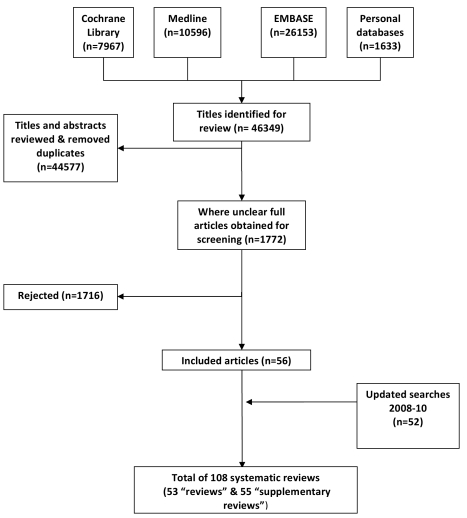
- The searches retrieved 46,349 references, and the authors included 108 reviews: 53 as the main empirical evidence base and 55 supplementary reviews for context.
- For EHRs, the paper found only weak evidence for benefits in time efficiency and data quality (legibility, completeness, comprehensiveness), while risks such as time costs, increased costs, and reduced patient-centeredness were mostly anecdotal.
- For PACS, there were only 3 reviews; evidence for improved organizational efficiency was weak, and overall cost-effectiveness could not be determined because economic findings were often contradictory and of poor quality.
- For CPOE and ePrescribing, the review reports moderate evidence for some organizational/practitioner benefits, but weak or inconsistent evidence for patient-level outcomes; for ePrescribing, there was no clear evidence of patient outcome benefit outside prescribing, and medication-error reductions were not clearly linked to patient harm reduction.
Methods
- Systematic overview of systematic reviews focused on clinician-oriented eHealth technologies related to storage/retrieval of data and support for clinical decision making; patient-focused interventions were excluded.
- Searched PubMed/MEDLINE, EMBASE, and the Cochrane Library for secondary research reports published from 1997 to 2007, with no language restrictions; searches were updated through end of April 2010.
- Performed dual-reviewer screening and critical appraisal (with arbitration by a third reviewer), then used narrative synthesis because the literature was too diverse for quantitative pooling; evidence was classified using a modified WHO Health Evidence Network approach as strong, moderate, or weak.
Limitations
- The paper states that poor indexing, reliance on English-language databases, and a novel multimethod approach meant some reviews may have been missed and the synthesis was “less rigorous” than a conventional systematic review because individual primary studies were not appraised.
- The authors note that they had to adapt the critical appraisal instrument, and that overlap in reviews plus inconsistent terminology required judgment calls about which reviews and primary studies mapped to which interventions.
- Evident from the text: the overview covers mostly economically developed country settings and clinician-orientated information systems, so the findings may not generalize well to patient-oriented technologies or other contexts.
Model-written summary. Check it against the paper before relying on it.
Integrity signals
Registry
Cites
Statistics
Figures
Verification
Claims the paper makes
4 Valid · 0 Not valid · 24 Not checked · 67 Own results and interpretations
Every source the paper cites for this claim was checked and supports it.
In the paper
“NHS Connecting for Health's difficulties with the implementation of EHRs into hospitals in England is a prime example of the challenges that can ensue if such socio-technical factors are given insufficient attention [148].”
§ The Impact of eHealth on the Quality and Safety of Health Care: A Systematic Overview > Discussion
What the sources say
- Supportedcites [148] Robertson AR Cresswell K Takian A Petrakaki D 2010 Prospective evaluation of the implementation and adoption of NHS Connecting for Health's electronic health record in secondary care in England: interim results from a national evaluation. BMJ 341 c4564 20813822 PMC2933355 source
The Methods (Data analysis; page not specified) explicitly frame implementation as a socio-technical process in which organisational, human, and technical factors shape one another. The Results (Trusts want systems that are tailored; page not specified) describe implementation difficulties caused by a centrally conceived standardised system that did not meet end users’ needs. This supports the citing sentence’s use of the programme as an example of challenges arising when those factors receive insufficient attention. (LLM, conf=0.90)
plainstates a cause- Asserted: passes — The authors put it forward as true.
- Checkable: passes — It can be checked against evidence.
- Load-bearing: unclear — It is unclear whether the paper’s conclusions depend on it.
- Based: passes — The paper gives a reason why it holds.
- Supported
The cited sources support only part of this claim — read each source’s verdict below.
In the paper
“Additionally, it is not unusual for insufficient time and effort to be devoted to the all-important customisation process [147].”
§ The Impact of eHealth on the Quality and Safety of Health Care: A Systematic Overview > Discussion
What the sources say
- Partly supportedcites [147] Pollock N Williams R Procter R 2003 Fitting standard software packages to non-standard organizations: the “biography' of an enterprise-wide system. Tech Anal Strat Manag 15 317 sourceExperimental — accuracy not yet measured
In “Building a Global Product” (pp. 16–17), the paper reports that the supplier had more requests for changes than resources and was pruning what it would deliver for a pilot site. This supports a resource constraint on adaptation in that case, but the paper does not establish that insufficient time and effort are often devoted to customisation across commercial systems. (LLM, conf=0.82)
plain- Asserted: passes — The authors put it forward as true.
- Checkable: passes — It can be checked against evidence.
- Load-bearing: unclear — It is unclear whether the paper’s conclusions depend on it.
- Based: passes — The paper gives a reason why it holds.
- Partly supported
The cited sources support only part of this claim — read each source’s verdict below.
In the paper
“Also of note is that we found virtually no evidence in support of the cost-effectiveness claims (Tables 2– 11) that are frequently being made by policy makers when constructing business cases to raise funding for the large-scale eHealth deployments that are now taking place in many parts of the world [1].”
§ The Impact of eHealth on the Quality and Safety of Health Care: A Systematic Overview > Discussion
What the sources say
- Partly supportedcites [1] Catwell L Sheikh A 2009 Evaluating eHealth interventions. PLoS Med 6 e1000126 doi: 10.1371/journal.pmed.1000126 19688038 PMC2719100 sourceExperimental — accuracy not yet measured
The ‘Recognising the Risk of Harm’ section says governments around the world are undertaking large eHealth rollouts, and the Conclusions call for scientific evidence to inform policy decisions. The paper does not specifically document frequent cost-effectiveness claims in policymakers’ funding business cases. The citing authors’ statement that ‘we found virtually no evidence’ refers to their own findings, not a finding attributed to this source. (LLM, conf=0.79)
plain- Asserted: passes — The authors put it forward as true.
- Checkable: passes — It can be checked against evidence.
- Load-bearing: passes — The paper’s conclusions depend on it.
- Based: passes — The paper gives a reason why it holds.
- Partly supported
A result the paper reports from its own data — it cites no other source for it, so there is none to check. The quote shows it is in the paper.
In the paper
“We found only anecdotal evidence of the fundamental expected benefits and risks relating to the organisational efficiency resulting from the storage and management facilities within the EHR and thus the potential for secondary uses (Table 2).”
§ The Impact of eHealth on the Quality and Safety of Health Care: A Systematic Overview > Results > Data Storage, Management, and Retrieval Systems
plain- Asserted: passes — The authors put it forward as true.
- Checkable: passes — It can be checked against evidence.
- Load-bearing: unclear — It is unclear whether the paper’s conclusions depend on it.
- Based: passes — The paper gives a reason why it holds.
In the paper
“Our final selection of 53 reviews provided the main empirical evidence base in relation to assessing the impact of the selected eHealth technologies (see Table 1 for our critical appraisal of these studies) [15]–[67], full details of which can be found in Table S2.”
§ The Impact of eHealth on the Quality and Safety of Health Care: A Systematic Overview > Results
What the sources say
- Not checked yetcites [15]–[67]
plain- Asserted: passes — The authors put it forward as true.
- Checkable: passes — It can be checked against evidence.
- Load-bearing: passes — The paper’s conclusions depend on it.
- Based: passes — The paper gives a reason why it holds.
41 more claims
Create a free account to see all 95 claims and to verify the 28 references still open.
- Probably not a substantial claim. 27
- It may state two separate claims as one. 28
Claims other papers make about this one
Each is checked against this paper’s own text: does it say what the citing paper says it does?
The source backs part of the claim, not all of it — or backs it for a different population, condition or comparison.
In the citing paper
“While such technologies can be effective [1,2], one of the main problems is that users’ adoption and long-term use remains lower than expected [3-5].”
From Opening the Black Box of Electronic Health: Collecting, Analyzing, and Interpreting Log Data (2017) · cites this paper as [5]
Experimental — accuracy not yet measuredThe cited source says what the claim attributes to it.
In the citing paper
“overall effectiveness in clinical practice is unclear.14”
From ‘Too much, too late’: mixed methods multi-channel video recording study of computerized decision support systems and GP prescribing (2013) · cites this paper as [14]
The cited source says what the claim attributes to it.
In the citing paper
“Several authors [1,2,4,6,62,76-87] note that a broader view is needed to assess the overall impact on health care.”
From A Holistic Framework to Improve the Uptake and Impact of eHealth Technologies (2011) · cites this paper as [2]
The cited source says what the claim attributes to it.
In the citing paper
“The foundation of the framework is based on the aforementioned principles, reviews in the field of eHealth [2,3,22,96-99], progressive insights from eHealth research (see Multimedia Appendix 4), and multidisciplinary theories from psychology, communication, and human–computer interaction design.”
From A Holistic Framework to Improve the Uptake and Impact of eHealth Technologies (2011) · cites this paper as [2]
The check wasn’t confident either way, so it gives no verdict — never disputed.
In the citing paper
“The scale, volume of data obtained, and real time nature of this evaluation of the implementation of electronic health records in English secondary healthcare settings are strengths of our work.1”
From Implementation and adoption of nationwide electronic health records in secondary care in England: final qualitative results from prospective national evaluation in early adopter hospitals (2011) · cites this paper as [1]
Experimental — accuracy not yet measured
5 more claims about this paper
Create a free account to see every claim other papers make about this one.
Citations
Cites
Older Adults' Reasons for Using Technology while Aging in Place
Peek, S. T. M., Luijkx, K. G., Rijnaard, M. D., Nieboer, M. E., van der Voort, C. S., Aarts, S., van Hoof, J., Vrijhoef, H. J. M., & Wouters, E. J. M. (2016) · Gerontology · doi:10.1159/000430949 · Cited by 19,690
To Err Is Human: Building a Safer Health System
(2000) · National Academies Press eBooks · doi:10.17226/9728 · Cited by 14,044
Crossing the Quality Chasm: A New Health System for the 21st Century
Baker, A. (2001) · BMJ · doi:10.1136/bmj.323.7322.1192 · Cited by 10,736
Wall, A. (2000) · British Journal of Healthcare Management · doi:10.12968/bjhc.2000.6.9.19311 · Cited by 5,903
Crossing the Quality Chasm: A New Health System for the 21st Century
Bloom, B. S. (2002) · JAMA: The Journal of the American Medical Association · doi:10.1001/jama.287.5.646-a · Cited by 3,726
Chaudhry, B., Wang, J., Wu, S., Maglione, M., Mojica, W., Roth, E., Morton, S. C., & Shekelle, P. G. (2006) · Annals of Internal Medicine · doi:10.7326/0003-4819-144-10-200605160-00125 · Cited by 3,159 · cited 2×
“Three related reviews – an update, a fuller report, and its more concise counterpart – were an exception due to the complementary nature of the reports rather than these being duplicative [22,55,56].”
BackgroundGarg, A. X., Adhikari, N. K. J., McDonald, H., Rosas-Arellano, M. P., Devereaux, P. J., Beyene, J., Sam, J., & Haynes, R. B. (2005) · JAMA · doi:10.1001/jama.293.10.1223 · Cited by 2,936 · cited 1×
“Evidence of the beneficial impact of such systems is limited, however, to a few academic clinical centres of excellence where the systems were developed in house, undergoing extensive evaluation with continual improvement, supported by a strong sense of local ownership by their clinical users [31,56].”
BackgroundKawamoto, K., Houlihan, C. A., Balas, E. A., & Lobach, D. F. (2005) · BMJ · doi:10.1136/bmj.38398.500764.8f · Cited by 2,703
The Technology Acceptance Model: Its past and its future in health care
Holden, R. J., & Karsh, B.-T. (2010) · Journal of Biomedical Informatics · doi:10.1016/j.jbi.2009.07.002 · Cited by 2,669
Critical appraisal skills programme
Singh, J. (2013) · Journal of Pharmacology and Pharmacotherapeutics · doi:10.4103/0976-500x.107697 · Cited by 2,556
Research works printed but not linked: 4
- Institute of Medicine 2007 Preventing medication errors. Washington (D.C.) National Academy Press
- Pagliari C Sloan D Gregor P Sullivan F Kahan JP 2004 EH1 E-Health scoping exercise. Review of wider Web-based information sources. Dundee University of Dundee
- Pagliari C Sloan D Gregor P Sullivan F Kahan JP 2004 EH1 E-Health scoping exercise. Review of the traditional research literature. Dundee University of Dundee
- Shekelle PG Goldzweig CL 2009 Costs and benefits of health technology information: an updated systematic review. Available: http://www.health.org.uk/public/cms/75/76/313/564/Costs%20and%20benefits%20of%20health%20information%20technology.pdf?realName=urByVX.pdf. Accessed 3 December 2010 19174390
Cited by
Items 201–300 of 1,002
Cresswell, K. M., Mozaffar, H., Lee, L., Williams, R., & Sheikh, A. (2016) · BMJ Quality & Safety · doi:10.1136/bmjqs-2015-004925 · Cited by 70
Self-citationEpidemiological study on dengue in southern Brazil under the perspective of climate and poverty
Bavia, L., Melanda, F. N., de Arruda, T. B., Mosimann, A. L. P., Silveira, G. F., Aoki, M. N., Kuczera, D., Sarzi, M. L., Costa, W. L., Costa, I. C., et al. (2020) · Scientific Reports · doi:10.1038/s41598-020-58542-1 · Cited by 78
AI-Driven Clinical Decision Support: Enhancing Disease Diagnosis Exploiting Patients Similarity
Comito, C., Falcone, D., & Forestiero, A. (2022) · IEEE Access · doi:10.1109/access.2022.3142100 · Cited by 74
“…(CDS), including systems that provide diagnosis, personalized medical measurement and treatment, could be helpful to the physicians by providing them with specific knowledge, patients’ information and intelligent applications, which can improve the efficiency of the decision-making processes [1].”
BackgroundKim, J., Vivas, A. C., Arvind, V., Lombardi, J., Reidler, J. S., Zuckerman, S. L., Lee, N. J., Vulapalli, M. M., Geng, E. A., Cho, B., et al. (2022) · Global Spine Journal · doi:10.1177/21925682211062831 · Cited by 65
“Systematic reviews show considerable improvement in the quality of clinical care when using electronic medical record based predictive analytics.(23) Automated identification of cases based on structured data often lacks sensitivity, due to variations in coding.”
BackgroundGhweeba, M., Lindenmeyer, A., Shishi, S., Kofi, M. A., Waheed, A., & Amer, S. A. A. M. (2017) · Journal of Medical Internet Research · doi:10.2196/jmir.6855 · Cited by 70
“Despite the advantages of using OHI, the Internet may also present a great risk for consumers when they are not aware of the quality standards of the obtained health information [14,15].”
Effects of eHealth on hospital practice: synthesis of the current literature
Eden, R., Burton-Jones, A., Scott, I., Staib, A., & Sullivan, C. (2018) · Australian Health Review · doi:10.1071/ah17255 · Cited by 61
Lost in digitalization? Municipality employment of welfare technologies
Frennert, S. (2018) · Disability and Rehabilitation Assistive Technology · doi:10.1080/17483107.2018.1496362 · Cited by 113
“eHealth is a wide-ranging term and relies on use of modern information and communication technologies in healthcare in order to meet the needs of citizens, patients, policymakers, healthcare professionals and clinics [2,3].”
BackgroundAirola, E. (2021) · Journal of Medical Internet Research · doi:10.2196/23804 · Cited by 63
“The main target is older adults living in rural and remote environments, as they are far removed from traditional health care services [1-4].”
BackgroundMcCormick, D., Bor, D. H., Woolhandler, S., & Himmelstein, D. U. (2012) · Health Affairs · doi:10.1377/hlthaff.2011.0876 · Cited by 69
Nakrem, S., Solbjør, M., Pettersen, I. N., & Kleiven, H. H. (2018) · BMC Health Services Research · doi:10.1186/s12913-018-2835-1 · Cited by 91
Mackey, T. K., & Liang, B. A. (2013) · Globalization and Health · doi:10.1186/1744-8603-9-45 · Cited by 84
“realized, e-Health technologies are expanding in global adoption [7,9,12].”
BackgroundSaving Patient Ryan Can Advanced Electronic Medical Records Make Patient Care Safer?
Hydari, M. Z., Telang, R., & Marella, W. M. (2014) · Management Science · doi:10.1287/mnsc.2018.3042 · Cited by 87
Houdt, S. V., Heyrman, J., Vanhaecht, K., Sermeus, W., & Lepeleire, J. D. (2013) · BMC Health Services Research · doi:10.1186/1472-6963-13-296 · Cited by 71
“A systematic review of the impact of eHealth on the quality and safety of healthcare concluded that there is a large gap between the postulated and the empirically demonstrated benefits of eHealth technologies [28].”
BackgroundAppari, A., Carian, E. K., Johnson, M. E., & Anthony, D. L. (2011) · Journal of the American Medical Informatics Association · doi:10.1136/amiajnl-2011-000289 · Cited by 75
“…IT and quality of care, particularly among studies using recent data, two recent meta-syntheses of review literature published during 1994 e 2010 (Black et al 11 and Lau et al 12 ) suggested that the gap between the postulated and empirically demonstrated bene fi ts of health IT is still signi…”
ResultCresswell, K., Morrison, Z., Crowe, S., Robertson, A., & Sheikh, A. (2011) · Journal of Innovation in Health Informatics · doi:10.14236/jhi.v19i4.814 · Cited by 61
Self-citationKarppinen, P., B, H. O.-K. A., Alahäivälä, T., Jokelainen, T., Keränen, A.-M., Salonurmi, T., & Savolainen, M. J. (2016) · International Journal of Medical Informatics · doi:10.1016/j.ijmedinf.2016.02.005 · Cited by 79
“[33] state that there is insufficient understanding of why some eHealth interventions do not work and why some succeed.”
BackgroundResultSalisbury, C., O’Cathain, A., Thomas, C., Edwards, L., Gaunt, D., Dixon, P., Hollinghurst, S., Nicholl, J., Large, S., Yardley, L., et al. (2016) · BMJ · doi:10.1136/bmj.i2647 · Cited by 64
Truitt, E., Thompson, R. W., Blazey-Martin, D., Nisai, D., & Salem, D. N. (2016) · Hospital Pharmacy · doi:10.1310/hpj5106-474 · Cited by 76
How Technology in Care at Home Affects Patient Self-Care and Self-Management: A Scoping Review
Peeters, J., Wiegers, T., & Friele, R. (2013) · International Journal of Environmental Research and Public Health · doi:10.3390/ijerph10115541 · Cited by 61
“There is a large gap between the postulated and empirically demonstrated benefits of technology [7].”
BackgroundKruszyńska-Fischbach, A., Sysko-Romańczuk, S., Napiórkowski, T. M., Napiórkowska, A., & Kozakiewicz, D. (2022) · International Journal of Environmental Research and Public Health · doi:10.3390/ijerph19073973 · Cited by 89
Westbrook, J. I., Braithwaite, J., Gibson, K., Paoloni, R., Callen, J. L., Georgiou, A., Creswick, N. J., & Robertson, L. (2009) · BMC Health Services Research · doi:10.1186/1472-6963-9-201 · Cited by 75
Health information technology in hospitals: current issues and future trends
Cresswell, K. M., & Sheikh, A. (2015) · Future Hospital Journal · doi:10.7861/futurehosp.2-1-50 · Cited by 75
Self-citationZenziper, Y., Kurnik, D., Matok, I., Halkin, H., Markovits, N., Ziv, A., Shamiss, A., & Loebstein, R. (2017) · International Journal of Medical Informatics · doi:10.1016/j.ijmedinf.2017.08.008 · Cited by 64
Bergey, M. R., Goldsack, J. C., & Robinson, E. J. (2019) · Social Science & Medicine · doi:10.1016/j.socscimed.2019.112387 · Cited by 71
Adopting electronic medical records: are they just electronic paper records?
Price, M., Singer, A. G., & Kim, J. (2013) · Canadian Family Physician · Cited by 92
Business concepts of systemic service innovations in e-Healthcare
Chen, S.-H., Wen, P.-C., & Yang, C.-K. (2014) · Technovation · doi:10.1016/j.technovation.2014.03.002 · Cited by 66
“This view becomes even more obvious when one looks at a few studies evaluating the effect of e-healthcare mainly on the patients, especially those from the medical field (for example, Free et al., 2013; Kesson et al., 2007; Minetaki et al., 2011; Black et al., 2011).”
BackgroundQuantifying the Quantified Self : A Study on the Motivations of Patients to Track Their Own Health
Gimpel, H., Nißen, M., & Görlitz, R. A. (2013) · AIS Electronic Library (AISeL) · Cited by 85
Climate change and eHealth: a promising strategy for health sector mitigation and adaptation
Holmner, Å., Rocklöv, J., Ng, N., & Nilsson, M. (2012) · Global Health Action · doi:10.3402/gha.v5i0.18428 · Cited by 66
Mozaffar, H., Cresswell, K. M., Williams, R., Bates, D. W., & Sheikh, A. (2017) · BMJ Quality & Safety · doi:10.1136/bmjqs-2016-005879 · Cited by 70
“To understand the roots of safety threats detailed investigation is required of the interactions of HIT with its organisational setting [15, 28, 29] through qualitative research strategies.[9, 15, 20, 28, 30]”
Self-citationCompetencias digitales clave de los profesionales sanitarios
Delgado, J. A. M., Alonso, F. J. M., Monte‐Boquet, E., de Tomás, J. F. Á., & Díez, J. M. C. (2019) · Educación Médica · doi:10.1016/j.edumed.2019.02.010 · Cited by 114
Digital health eco-systems: An epochal review of practice-oriented research
Stephanie, F. L., & Sharma, R. (2019) · International Journal of Information Management · doi:10.1016/j.ijinfomgt.2019.10.017 · Cited by 73
van Limburg, M., Wentzel, J., Sanderman, R., & van Gemert-Pijnen, L. (2015) · JMIR Research Protocols · doi:10.2196/resprot.4519 · Cited by 59
“In fact, Black et al [3] concluded in their systematic review that many eHealth projects provide little evidence for actually improving outcomes or being cost effective.”
BackgroundInfluentialCAMP: Co-Attention Memory Networks for Diagnosis Prediction in Healthcare
Gao, J., Wang, X., Wang, Y., Zhao, Y., Gao, J., Wang, J., Tang, W., & Xie, X. (2019) · Proceedings · doi:10.1109/icdm.2019.00120 · Cited by 70
“The broad adoption of EHR systems has opened the possibility of gaining knowledge by mining massive EHR data [29], [30].”
BackgroundRodrigues, D. A., Fiol-deRoque, M. A., Mateos-Campos, R., Figueiras, A., Herdeiro, M. T., & Roque, F. (2024) · Digital Health · doi:10.1177/20552076231225133 · Cited by 74
“3,4 In fact, in one study, the likelihood of medication errors in hospitals decreased 48% when a prescription drug order was performed through a computerized provider order entry (CPOE) system.”
BackgroundAbraham, J., Novak, L. L., Reynolds, T. L., Gettinger, A., & Zheng, K. (2016) · Yearbook of Medical Informatics · doi:10.15265/iy-2016-036 · Cited by 74
Schopf, T. R., Nedrebø, B., Hufthammer, K. O., Daphu, I., & Lærum, H. (2019) · BMC Health Services Research · doi:10.1186/s12913-019-4763-0 · Cited by 69
Debunking the myth of industry 4.0 in health care: insights from a systematic literature review
Cavallone, M., & Palumbo, R. (2020) · The TQM Journal · doi:10.1108/tqm-10-2019-0245 · Cited by 73
Stakeholder Perceptions of the Safety and Assurance of Artificial Intelligence in Healthcare
Sujan, M. A., White, S., Habli, I., & Reynolds, N. (2022) · Safety Science · doi:10.1016/j.ssci.2022.105870 · Cited by 79
Improving diagnostic accuracy using EHR in emergency departments: A simulation-based study
Ben‐Assuli, O., Sagi, D., Leshno, M., Ironi, A., & Ziv, A. (2015) · Journal of Biomedical Informatics · doi:10.1016/j.jbi.2015.03.004 · Cited by 71
State of advance care planning research: A descriptive overview of systematic reviews
Jimenez, G., Tan, W. S., Virk, A. K., Low, C. K., Car, J., & Ho, A. H. Y. (2019) · Palliative and Supportive Care · doi:10.1017/s1478951518000500 · Cited by 59
“Study type • SRs that (1) have been defined by the authors to be a systematic review within title, abstract, or text; and/or that (2) present evidence from the description of the methods that systematic review principles had been used in searching and appraising the evidence (Black et al., 2011) • Articles that are no…”
Self-citationRoutine Health Information System (RHIS) improvements for strengthened health system management
Leon, N., Balakrishna, Y., Hohlfeld, A., Odendaal, W., Schmidt, B., Zweigenthal, V., Watkins, J. A., & Daniels, K. (2020) · Cochrane Database of Systematic Reviews · doi:10.1002/14651858.cd012012.pub2 · Cited by 80
“[DOI: https://doi.org/10.1136/amiajnl-2012-001422] Black 2011 Black AD, Car J, Pagliari C, Anandan C, Cresswell K, Bokun T, et al. The impact of eHealth on the quality and safety of health care: a systematic overview.”
BackgroundInfluentialIntroducing Twitter as an assessed component of the undergraduate nursing curriculum: case study
Jones, R. B., Kelsey, J., Nelmes, P., Chinn, N., Chinn, T., & Proctor‐Childs, T. (2016) · Journal of Advanced Nursing · doi:10.1111/jan.12935 · Cited by 65
“Internet use and apps for health (ehealth) can improve quality of care and cost effectiveness (Black et al. 2011, McLean et al. 2013) but if not properly evaluated may risk patient safety (Ossebaard et al. 2013).”
BackgroundBennett, P., & Hardiker, N. R. (2016) · Journal of the American Medical Informatics Association · doi:10.1093/jamia/ocw151 · Cited by 63
Development of a clinical decision support system for diabetes care: A pilot study
Sim, L. L. W., Ban, K. H.-K., Tan, T. W., Sethi, S. K., & Loh, T. P. (2017) · PLoS ONE · doi:10.1371/journal.pone.0173021 · Cited by 69
Email for clinical communication between healthcare professionals
Goyder, C., Atherton, H., Car, M., Heneghan, C. J., & Car, J. (2015) · Cochrane Database of Systematic Reviews · doi:10.1002/14651858.cd007979.pub3 · Cited by 54
Self-citationEhn, M., Derneborg, M., Revenäs, Å., & Cicchetti, A. (2021) · International Journal of Medical Informatics · doi:10.1016/j.ijmedinf.2021.104547 · Cited by 61
Aslan, A., Mold, F., van Marwijk, H., & Armes, J. (2024) · BMC Health Services Research · doi:10.1186/s12913-023-10372-3 · Cited by 76
“E-health service refers to the use of information and communication technologies to promote access to quality healthcare services, such as electronic health records, mHealth, telemedicine, web-based health services, and clinical decision support systems [2].”
Backgroundvan Velthoven, M. H., Mastellos, N., Majeed, A., O’Donoghue, J., & Car, J. (2016) · BMC Medical Informatics and Decision Making · doi:10.1186/s12911-016-0332-1 · Cited by 61
“Both benefits, including data security, legibility, accessibility, completeness, comprehensiveness, efficiency, and risks such as paper persistence, patient disengagement, insecure data, increased time, and increased costs should be assessed [5].”
InfluentialSelf-citationPatient Autonomy and Quality of Care in Telehealthcare
Rubeis, G., Schochow, M., & Steger, F. (2017) · Science and Engineering Ethics · doi:10.1007/s11948-017-9885-3 · Cited by 59
“Telemedicine may be subdivided into clinicianorientated technologies and patient-oriented applications, the latter of which can be defined as telehealthcare (Bauer 2001, 137; Black et al. 2011, 9–10).”
BackgroundNational Immunization Program: Computerized System as a tool for new challenges
Sato, A. P. S. (2015) · Revista de Saúde Pública · doi:10.1590/s0034-8910.2015049005925 · Cited by 59
Telehealth for long term conditions
Car, J., Huckvale, K., & Hermens, H. (2012) · BMJ · doi:10.1136/bmj.e4201 · Cited by 52
Self-citationUndertaking sociotechnical evaluations of health information technologies
Cresswell, K. M., & Sheikh, A. (2014) · Journal of Innovation in Health Informatics · doi:10.14236/jhi.v21i2.54 · Cited by 52
“Drawing on our experience of conducting a number of recent studies of complex health information technologies, 10–16 we aim to provide a practical guide to undertaking sociotechnical evaluations: we consider the contexts in which such approaches are most usefully employed, explain what…”
BackgroundSelf-citationeHealth: Past And Future Perspectives
van Rooij, T., & Marsh, S. (2016) · Personalized Medicine · doi:10.2217/pme.15.40 · Cited by 67
Yadav, S., Kazanji, N., K C, N., Paudel, S., Falatko, J., Shoichet, S., Maddens, M., & Barnes, M. A. (2017) · Journal of the American Medical Informatics Association · doi:10.1093/jamia/ocw067 · Cited by 52
Hartkopf, A. D., Graf, J., Simoes, E., Keilmann, L., Sickenberger, N., Gaß, P., Wallwiener, D. R., Matthies, L. M., Taran, F., Lux, M. P., et al. (2017) · JMIR Cancer · doi:10.2196/cancer.6996 · Cited by 55
“Thus, the potential of electronic health (eHealth) solutions in health care research is becoming increasingly apparent [36,37].”
BackgroundMore room for telemedicine after COVID-19: lessons for primary care?
Garattini, L., Badinella Martini, M., & Zanetti, M. (2021) · The European Journal of Health Economics · doi:10.1007/s10198-020-01248-y · Cited by 53
Nji, A. M., Ali, I. M., Moyeh, M. N., Ngongang, E.-O., Mbange, A. E., Chedjou, J.-P., Ndikum, V., Evehe, M. S., Froeschl, G., Heumann, C., et al. (2015) · Malaria Journal · doi:10.1186/s12936-014-0521-2 · Cited by 52
Lanham, H. J., Sittig, D. F., Leykum, L. K., Parchman, M. L., Pugh, J. A., & McDaniel, R. R. (2014) · Journal of the American Medical Informatics Association · doi:10.1136/amiajnl-2012-001377 · Cited by 54
Frennert, S. (2019) · Disability and Rehabilitation Assistive Technology · doi:10.1080/17483107.2019.1642393 · Cited by 76
Takian, A., Petrakaki, D., Cornford, T., Sheikh, A., & Barber, N. (2012) · BMC Health Services Research · doi:10.1186/1472-6963-12-105 · Cited by 51
“Most EHR evaluations draw upon a broadly positivist ontology and pursue causality in term of an intervention’s impact and by making objective judgments concerning the outcomes and hence degree of success or failure of such initiatives (see for example the studies of EHR summarized in references 8 and 11) [8,11].”
BackgroundMethodSelf-citationUse of the Internet and Mobile Media for Delivery of Cognitive Behavioral Insomnia Therapy
Espie, C. A., Hames, P., & McKinstry, B. (2013) · Sleep Medicine Clinics · doi:10.1016/j.jsmc.2013.06.001 · Cited by 52
Self-citationSyse, A., Dzamarija, M. T., Kumar, B. N., & Díaz, E. (2018) · BMC Public Health · doi:10.1186/s12889-018-5435-4 · Cited by 51
Cresswell, K. M., Mozaffar, H., Shah, S., & Sheikh, A. (2016) · International Journal of Pharmacy Practice · doi:10.1111/ijpp.12274 · Cited by 51
“More specifically, terms in the first group were based on a search strategy we employed previously in a systematic review of the eHealth literature, focusing on functionality commonly associated with ePrescribing systems.([15]) The search terms in the second group related to the appropriate use of antibiotics, drawing…”
MethodSelf-citationGueye, C. S., Newby, G., Tulloch, J., Slutsker, L., Tanner, M., & Gosling, R. D. (2016) · Malaria Journal · doi:10.1186/s12936-016-1518-9 · Cited by 52
Mokhtari, G., Zhang, Q., Nourbakhsh, G., Ball, S., & Karunanithi, M. (2017) · IEEE Sensors Journal · doi:10.1109/jsen.2017.2647960 · Cited by 51
“The advances in recent digital technologies has shown promising solution in addressing this issue through supporting independent living of seniors in their own home via smart home platform [2].”
BackgroundeHealth Apps Replacing or Complementing Health Care Contacts: Scoping Review on Adverse Effects
Stevens, W. J. M., van der Sande, R., Beijer, L. J., Gerritsen, M. G., & Assendelft, W. J. (2019) · Journal of Medical Internet Research · doi:10.2196/10736 · Cited by 63
“The limited number of studies in this field have reported, for example, adverse events such as patients’ anxiety caused by monitoring vital signs [10].”
Xu, K., Hu, D., Liu, Y., Han, Y., Guo, X., Teng, F., & Zhou, Y. (2019) · The Journal of Nervous and Mental Disease · doi:10.1097/nmd.0000000000000974 · Cited by 56
Krasuska, M., Williams, R., Sheikh, A., Franklin, B. D., Heeney, C., Lane, W., Mozaffar, H., Mason, K., Eason, S., Hinder, S., et al. (2020) · Journal of Medical Internet Research · doi:10.2196/17022 · Cited by 62
“There is only limited evidence that meeting all criteria in any index of digital excellence leads to improved quality, safety, or efficiency outcomes, although some functionalities such as clinical decision support systems have been shown to improve practitioner performance [35,36].”
BackgroundSelf-citationMcCrorie, C., Benn, J., Johnson, O. A., & Scantlebury, A. (2019) · BMC Medical Informatics and Decision Making · doi:10.1186/s12911-019-0952-3 · Cited by 67
Improving the credibility of electronic health technologies
van Gemert-Pinjen, J., Wynchank, S., Covvey, H., & Ossebaard, H. (2012) · Bulletin of the World Health Organization · doi:10.2471/blt.11.099804 · Cited by 50
Hayward, J., Thomson, F., Milne, H., Buckingham, S., Sheikh, A., Fernando, B., Cresswell, K., Williams, R., & Pinnock, H. (2013) · Journal of the American Medical Informatics Association · doi:10.1136/amiajnl-2012-001484 · Cited by 48
Self-citationThe Role of eHealth in Optimizing Preventive Care in the Primary Care Setting
Carey, M. L., Noble, N., Mansfield, E. L., Waller, A. E., Henskens, F. A., & Sanson‐Fisher, R. (2015) · Journal of Medical Internet Research · doi:10.2196/jmir.3817 · Cited by 57
“…and management of patient lifestyle risk factors. eHealth technologies can support clinical practice by facilitating the accessibility of patient data and appropriate evidence-based guidelines, offering a potential strategy for improving the safety, quality, and efficiency of care [26,27].”
Healthcare information technology and economics
Payne, T. H., Bates, D. W., Berner, E. S., Bernstam, E. V., Covvey, H. D., Frisse, M. E., Graf, T. R., Greenes, R. A., Hoffer, E. P., Kuperman, G. J., et al. (2012) · Journal of the American Medical Informatics Association · doi:10.1136/amiajnl-2012-000821 · Cited by 64
Morrison, Z., Fernando, B., Kalra, D., Cresswell, K. M., & Sheikh, A. (2014) · Journal of the American Medical Informatics Association · doi:10.1136/amiajnl-2013-001666 · Cited by 64
Self-citationHealth-Enabling and Ambient Assistive Technologies: Past, Present, Future
Wolf, K.-H., Haux, R., Koch, S., Lovell, N. H., Marschollek, M., & Nakashima, N. (2016) · Yearbook of Medical Informatics · doi:10.15265/iys-2016-s008 · Cited by 58
Cresswell, K. M., Coleman, J. J., Slee, A., Williams, R., Sheikh, A., & ePrescribing Programme Team (2013) · PLoS ONE · doi:10.1371/journal.pone.0053369 · Cited by 68
“The design of our questionnaire was informed by the existing literature surrounding information technology (IT) implementations in healthcare settings [8,13,26–29], our own experiences from implementing and evaluating related applications [20,25], and a questionnaire from a scoping study of planned implementations con…”
BackgroundMethodSelf-citationThe essential role of infection-detection technologies for malaria elimination and eradication
Tietje, K. M., Hawkins, K., Clerk, C., Ebels, K., McGray, S., Crudder, C., Okell, L., & LaBarre, P. (2014) · Trends in Parasitology · doi:10.1016/j.pt.2014.03.003 · Cited by 57
Jung, M., Hackl, W. O., Kirrane, F., Borbolla, D., Jaspers, M. W., Oertle, M., Koutkias, V., Ferret, L., Massari, P., Lawton, K., et al. (2013) · Methods of Information in Medicine · doi:10.3414/me12-02-0007 · Cited by 48
van der Vaart, R., Atema, V., & Evers, A. W. M. (2016) · BMC Family Practice · doi:10.1186/s12875-016-0424-0 · Cited by 47
“When making the step to implementation in practice, more research is needed on whether and why interventions are effective and useful, and for whom, when, and how they can best be used [10, 16, 21].”
BackgroundWagner, K. D., Oman, R. F., Smith, K. P., Harding, R. W., Dawkins, A. D., Lu, M., Woodard, S., Berry, M. N., & Roget, N. A. (2019) · Journal of Substance Abuse Treatment · doi:10.1016/j.jsat.2019.04.011 · Cited by 49
SERIES: eHealth in primary care. Part 4: Addressing the challenges of implementation
Versluis, A., van Luenen, S., Meijer, E., Honkoop, P., Pinnock, H., Mohr, D. C., Neves, A. L., Chavannes, N. H., & van der Kleij, R. (2020) · European Journal of General Practice · doi:10.1080/13814788.2020.1826431 · Cited by 49
“Many new eHealth applications are not yet investigated on effectiveness [6,12].”
McCullough, J. S., Parente, S. L., & Town, R. (2013) · National Bureau of Economic Research · doi:10.3386/w18684 · Cited by 62
Bougioukas, K. I., Vounzoulaki, E., Mantsiou, C. D., Papanastasiou, G. D., Savvides, E. D., Ntzani, E. E., & Haidich, A.-B. (2021) · Journal of Clinical Epidemiology · doi:10.1016/j.jclinepi.2021.03.019 · Cited by 46
Geissbühler, A. (2013) · International Journal of Medical Informatics · doi:10.1016/j.ijmedinf.2012.11.002 · Cited by 53
Bélanger, E., Bartlett, G., Dawes, M. G., Rodríguez, C., & Hasson-Gidoni, I. (2012) · International Journal of Medical Informatics · doi:10.1016/j.ijmedinf.2012.07.008 · Cited by 57
“[18] A.”
BackgroundInfluentialEmail for the provision of information on disease prevention and health promotion
Sawmynaden, P., Atherton, H., Majeed, A., & Car, J. (2012) · Cochrane Database of Systematic Reviews · doi:10.1002/14651858.cd007982.pub2 · Cited by 47
Self-citationWu, J., Kao, H.-Y., & Sambamurthy, V. (2016) · International Journal of Information Management · doi:10.1016/j.ijinfomgt.2016.09.002 · Cited by 57
The Acceptance of e-Health Solutions Among Patients with Chronic Respiratory Conditions
Duplaga, M. (2013) · Telemedicine and e-Health · doi:10.1089/tmj.2012.0306 · Cited by 47
Transforming healthcare: policy discourses of IT and patient-centred care
Klecuń, E. (2016) · European Journal of Information Systems · doi:10.1057/ejis.2014.40 · Cited by 72
Plasmodium vivax Malaria Endemicity in Indonesia in 2010
Elyazar, I., Gething, P. W., Patil, A. P., Rogayah, H., Sariwati, E., Palupi, N. W., Tarmizi, S. N., Kusriastuti, R., Baird, J. K., & Hay, S. I. (2012) · PLoS ONE · doi:10.1371/journal.pone.0037325 · Cited by 53
The Future of Healthcare: The Impact of Digitalization on Healthcare Services Performance
Lapão, L. V. (2018) · Springer eBooks · doi:10.1007/978-3-319-99289-1_22 · Cited by 60
Measuring nursing benefits of an electronic medical record system: A scoping review
Jedwab, R. M., Chalmers, C., Dobroff, N. K., & Redley, B. (2019) · Collegian Journal of the Royal College of Nursing Australia · doi:10.1016/j.colegn.2019.01.003 · Cited by 58
Whipple, E. C., Dixon, B. E., & McGowan, J. J. (2012) · Informatics for Health and Social Care · doi:10.3109/17538157.2012.678451 · Cited by 50
Bowles, K. H., Adelsberger, M. C., Chittams, J. L., Liao, C., & Sockolow, P. S. (2014) · Applied Clinical Informatics · doi:10.4338/aci-2013-12-ra-0106 · Cited by 43
Van Cauwenberge, D., Van Biesen, W., Decruyenaere, J., Leune, T., & Sterckx, S. (2022) · BMC Medical Ethics · doi:10.1186/s12910-022-00787-8 · Cited by 43
“It is frequently assumed that AI-based CDSS will improve health care [1], although studies proving this hypothesis are scarce [2–4].”
BackgroundBibliometric analysis on the adoption of artificial intelligence applications in the e-health sector
Shaikh, A. K., Alhashmi, S. M., Khalique, N., Khedr, A. M., Raahemifar, K., & Bukhari, S. (2023) · Digital Health · doi:10.1177/20552076221149296 · Cited by 55
Snowdon, A. W., Hussein, A. A., Danforth, M., Wright, A., & Oakes, R. (2024) · Journal of Medical Internet Research · doi:10.2196/56316 · Cited by 57
de Oliveira, L. H., Camacho, L. A. B., Coutinho, E. S. F., Ruiz‐Matus, C., & Leite, J. P. G. (2015) · Vaccine · doi:10.1016/j.vaccine.2014.11.060 · Cited by 47
Patient-centred innovation to ensure access to diabetes care in Cambodia: the case of MoPoTsyo
van Olmen, J., Eggermont, N., van Pelt, M. H., Heang, H., Man, J. D., Schellevis, F., Peters, D. H., & Bigdeli, M. (2016) · Journal of Pharmaceutical Policy and Practice · doi:10.1186/s40545-016-0050-1 · Cited by 49
Telemedicine in palliative care: a review of systematic reviews.
Rogante, M., Giacomozzi, C., Grigioni, M., & Kairy, D. (2017) · Annali dell Istituto Superiore di Sanità · doi:10.4415/ann_16_03_16 · Cited by 43
“If the body of literature did not allow a quantitative synthesis of the evidence, key findings of each single review would be narratively reported [22].”
Metadata
- Authors
- Black, A. D., Car, J., Pagliari, C., Anandan, C., Cresswell, K., Bokun, T., McKinstry, B., Procter, R., Majeed, A., & Sheikh, A.
- Affiliations
- Imperial College London (GB)
- University of Edinburgh (GB)
- University of Manchester (GB)
- Corresponding author
- Sheikh, Aziz
- ORCID
- Venue
- PLoS Medicine
- Publisher
- Public Library of Science (PLoS)
- Published
- 2011-01-18
- Volume
- 8
- Issue
- 1
- Pages
- e1000387
- ISSN
- 1549-1277 (ISSN-L)
- 1549-1676
- PMC
- PMC3022523
- OpenAlex
- W2002144979
- Semantic Scholar
- 8989e6727eab5d5fc760d0c7a63fb3864fe49a4f
- Cited by
- 1,442
- References
- 168
- Citations by year
- 2026: 23 · 2025: 26 · 2024: 44 · 2023: 46 · 2022: 55 · 2021: 81 · 2020: 94 · 2019: 102 · 2018: 109 · 2017: 110 · 2016: 129 · 2015: 109 · 2014: 126 · 2013: 207 · 2012: 111
- FWCI
- 24.19
- Type
- journal article
- Language
- en
- Open access
- gold
- doi.org
- Locations
- PLoS Medicine (publishedVersion, cc-by)
- PubMed Central (publishedVersion, cc-by)
- PubMed (publishedVersion)
- RePEc: Research Papers in Economics (publishedVersion)
- Warwick Research Archive Portal (University of Warwick) (acceptedVersion)
- Research Publications (Maastricht University) (submittedVersion, cc-by)
- DOAJ (DOAJ: Directory of Open Access Journals) (submittedVersion, cc-by-sa)
- Figshare (submittedVersion, cc-by)
- Research Explorer (The University of Manchester) (submittedVersion)
- Edinburgh Research Explorer (University of Edinburgh) (submittedVersion, cc-by)
- Spiral (Imperial College London) (submittedVersion, other-oa)
- Research Publications (Maastricht University) (submittedVersion, other-oa)
- Funders
- Economic and Social Research Council
- Topics
- Health Sciences › Health Professions › Health Information Management › Electronic Health Records Systems
- Health Sciences › Medicine › Public Health, Environmental and Occupational Health › Telemedicine and Telehealth Implementation
- Health Sciences › Medicine › Public Health, Environmental and Occupational Health › Technology and Human Factors in Education and Health
- Keywords
- e-health, quality of care, patient safety, clinical decision support, telemedicine, health data management, digital health technologies, cost-effectiveness, evidence gaps, health policy
- MeSH terms
- Cost-Benefit Analysis, Delivery of Health Care, Health Policy, Medical Informatics, Quality of Health Care, Radiology Information Systems, Review Literature as Topic, Efficiency, Organizational, Electronic Prescribing, Electronic Health Records
About these checks
Registry, retraction, Cites and statistics results are computed, not judged, with one exception: a printed reference that no index lists is read once by a model before it counts as a citation error. Claims are extracted by a model and kept only when their quote appears verbatim in the text; each cited source is then checked, with a model’s help, for whether it says what the claim relies on. Those verdicts can be wrong — read the claim’s quote and the cited source before relying on one.
The claim verdicts this report counts are experimental: their accuracy is not yet measured.
A language model drew the claims from the paper on 2026-10-11, under version 3 of the claim definition (model deepseek-v4.1-flash, prompt extract-v3).
A second model labelled each claim on 2026-10-11 (model jev-1.13-20260917, definition revision gold-guideline-v0.2).
Cited sources are checked with a language model’s help (gpt-6-sol).
Statistics and arithmetic are recomputed, not judged.
Confidence bands are shown only for fields calibrated on our annotated test set. None is calibrated yet, so no band is shown.
What counts as a claim ›How we measure confidence ›How we check this ›
Are you an author, or do you see a problem with this page? Request a review
Data sources
Bibliographic data: Semantic Scholar, OpenAlex, Crossref.
Contains information from the Semantic Scholar Academic Graph Datasets, made available under the ODC Attribution License (ODC-BY 1.0).
Semantic Scholar’s data is described in: Kinney, R., et al. (2023). The Semantic Scholar Open Data Platform. arXiv:2301.10140.
