

The Impact of eHealth on the Quality and Safety of Health Care: A Systematic Overview
Open accessThe DOI matches its Crossref record; 165 of the 168 references it cites were found in a registry or an index; 4 of the 32 sources its claims cite were checked for support.
Abstract
BACKGROUND: There is considerable international interest in exploiting the potential of digital solutions to enhance the quality and safety of health care. Implementations of transformative eHealth technologies are underway globally, often at very considerable cost. In order to assess the impact of eHealth solutions on the quality and safety of health care, and to inform policy decisions on eHealth deployments, we undertook a systematic review of systematic reviews assessing the effectiveness and consequences of various eHealth technologies on the quality and safety of care. METHODS AND FINDINGS: We developed novel search strategies, conceptual maps of health care quality, safety, and eHealth interventions, and then systematically identified, scrutinised, and synthesised the systematic review literature. Major biomedical databases were searched to identify systematic reviews published between 1997 and 2010. Related theoretical, methodological, and technical material was also reviewed. We identified 53 systematic reviews that focused on assessing the impact of eHealth interventions on the quality and/or safety of health care and 55 supplementary systematic reviews providing relevant supportive information. This systematic review literature was found to be generally of substandard quality with regards to methodology, reporting, and utility. We thematically categorised eHealth technologies into three main areas: (1) storing, managing, and transmission of data; (2) clinical decision support; and (3) facilitating care from a distance. We found that despite support from policymakers, there was relatively little empirical evidence to substantiate many of the claims made in relation to these technologies. Whether the success of those relatively few solutions identified to improve quality and safety would continue if these were deployed beyond the contexts in which they were originally developed, has yet to be established. Importantly, best practice guidelines in effective development and deployment strategies are lacking. CONCLUSIONS: There is a large gap between the postulated and empirically demonstrated benefits of eHealth technologies. In addition, there is a lack of robust research on the risks of implementing these technologies and their cost-effectiveness has yet to be demonstrated, despite being frequently promoted by policymakers and "techno-enthusiasts" as if this was a given. In the light of the paucity of evidence in relation to improvements in patient outcomes, as well as the lack of evidence on their cost-effectiveness, it is vital that future eHealth technologies are evaluated against a comprehensive set of measures, ideally throughout all stages of the technology's life cycle. Such evaluation should be characterised by careful attention to socio-technical factors to maximise the likelihood of successful implementation and adoption.
Overview
CoChat Summary
TL;DR
This systematic overview of 108 reviews found that the empirical evidence for most common eHealth technologies’ benefits on quality and safety is weak, inconsistent, or absent. The paper argues that large-scale eHealth investments should not be justified by assumed gains alone, because patient-level and cost-effectiveness benefits were rarely demonstrated.
Key findings
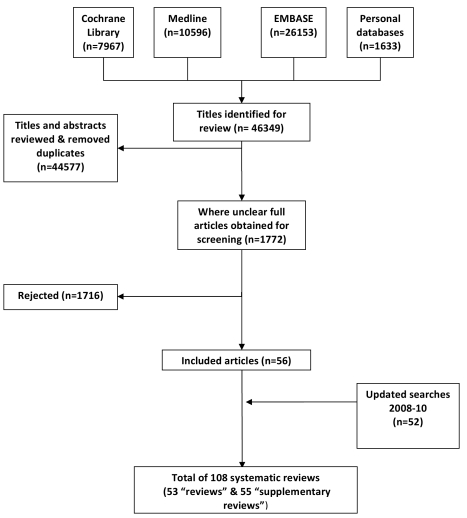
- The searches retrieved 46,349 references, and the authors included 108 reviews: 53 as the main empirical evidence base and 55 supplementary reviews for context.
- For EHRs, the paper found only weak evidence for benefits in time efficiency and data quality (legibility, completeness, comprehensiveness), while risks such as time costs, increased costs, and reduced patient-centeredness were mostly anecdotal.
- For PACS, there were only 3 reviews; evidence for improved organizational efficiency was weak, and overall cost-effectiveness could not be determined because economic findings were often contradictory and of poor quality.
- For CPOE and ePrescribing, the review reports moderate evidence for some organizational/practitioner benefits, but weak or inconsistent evidence for patient-level outcomes; for ePrescribing, there was no clear evidence of patient outcome benefit outside prescribing, and medication-error reductions were not clearly linked to patient harm reduction.
Methods
- Systematic overview of systematic reviews focused on clinician-oriented eHealth technologies related to storage/retrieval of data and support for clinical decision making; patient-focused interventions were excluded.
- Searched PubMed/MEDLINE, EMBASE, and the Cochrane Library for secondary research reports published from 1997 to 2007, with no language restrictions; searches were updated through end of April 2010.
- Performed dual-reviewer screening and critical appraisal (with arbitration by a third reviewer), then used narrative synthesis because the literature was too diverse for quantitative pooling; evidence was classified using a modified WHO Health Evidence Network approach as strong, moderate, or weak.
Limitations
- The paper states that poor indexing, reliance on English-language databases, and a novel multimethod approach meant some reviews may have been missed and the synthesis was “less rigorous” than a conventional systematic review because individual primary studies were not appraised.
- The authors note that they had to adapt the critical appraisal instrument, and that overlap in reviews plus inconsistent terminology required judgment calls about which reviews and primary studies mapped to which interventions.
- Evident from the text: the overview covers mostly economically developed country settings and clinician-orientated information systems, so the findings may not generalize well to patient-oriented technologies or other contexts.
Model-written summary. Check it against the paper before relying on it.
Integrity signals
Registry
Cites
Statistics
Figures
Verification
Claims the paper makes
4 Valid · 0 Not valid · 24 Not checked · 67 Own results and interpretations
Every source the paper cites for this claim was checked and supports it.
In the paper
“NHS Connecting for Health's difficulties with the implementation of EHRs into hospitals in England is a prime example of the challenges that can ensue if such socio-technical factors are given insufficient attention [148].”
§ The Impact of eHealth on the Quality and Safety of Health Care: A Systematic Overview > Discussion
What the sources say
- Supportedcites [148] Robertson AR Cresswell K Takian A Petrakaki D 2010 Prospective evaluation of the implementation and adoption of NHS Connecting for Health's electronic health record in secondary care in England: interim results from a national evaluation. BMJ 341 c4564 20813822 PMC2933355 source
The Methods (Data analysis; page not specified) explicitly frame implementation as a socio-technical process in which organisational, human, and technical factors shape one another. The Results (Trusts want systems that are tailored; page not specified) describe implementation difficulties caused by a centrally conceived standardised system that did not meet end users’ needs. This supports the citing sentence’s use of the programme as an example of challenges arising when those factors receive insufficient attention. (LLM, conf=0.90)
plainstates a cause- Asserted: passes — The authors put it forward as true.
- Checkable: passes — It can be checked against evidence.
- Load-bearing: unclear — It is unclear whether the paper’s conclusions depend on it.
- Based: passes — The paper gives a reason why it holds.
- Supported
The cited sources support only part of this claim — read each source’s verdict below.
In the paper
“Additionally, it is not unusual for insufficient time and effort to be devoted to the all-important customisation process [147].”
§ The Impact of eHealth on the Quality and Safety of Health Care: A Systematic Overview > Discussion
What the sources say
- Partly supportedcites [147] Pollock N Williams R Procter R 2003 Fitting standard software packages to non-standard organizations: the “biography' of an enterprise-wide system. Tech Anal Strat Manag 15 317 sourceExperimental — accuracy not yet measured
In “Building a Global Product” (pp. 16–17), the paper reports that the supplier had more requests for changes than resources and was pruning what it would deliver for a pilot site. This supports a resource constraint on adaptation in that case, but the paper does not establish that insufficient time and effort are often devoted to customisation across commercial systems. (LLM, conf=0.82)
plain- Asserted: passes — The authors put it forward as true.
- Checkable: passes — It can be checked against evidence.
- Load-bearing: unclear — It is unclear whether the paper’s conclusions depend on it.
- Based: passes — The paper gives a reason why it holds.
- Partly supported
The cited sources support only part of this claim — read each source’s verdict below.
In the paper
“Also of note is that we found virtually no evidence in support of the cost-effectiveness claims (Tables 2– 11) that are frequently being made by policy makers when constructing business cases to raise funding for the large-scale eHealth deployments that are now taking place in many parts of the world [1].”
§ The Impact of eHealth on the Quality and Safety of Health Care: A Systematic Overview > Discussion
What the sources say
- Partly supportedcites [1] Catwell L Sheikh A 2009 Evaluating eHealth interventions. PLoS Med 6 e1000126 doi: 10.1371/journal.pmed.1000126 19688038 PMC2719100 sourceExperimental — accuracy not yet measured
The ‘Recognising the Risk of Harm’ section says governments around the world are undertaking large eHealth rollouts, and the Conclusions call for scientific evidence to inform policy decisions. The paper does not specifically document frequent cost-effectiveness claims in policymakers’ funding business cases. The citing authors’ statement that ‘we found virtually no evidence’ refers to their own findings, not a finding attributed to this source. (LLM, conf=0.79)
plain- Asserted: passes — The authors put it forward as true.
- Checkable: passes — It can be checked against evidence.
- Load-bearing: passes — The paper’s conclusions depend on it.
- Based: passes — The paper gives a reason why it holds.
- Partly supported
A result the paper reports from its own data — it cites no other source for it, so there is none to check. The quote shows it is in the paper.
In the paper
“We found only anecdotal evidence of the fundamental expected benefits and risks relating to the organisational efficiency resulting from the storage and management facilities within the EHR and thus the potential for secondary uses (Table 2).”
§ The Impact of eHealth on the Quality and Safety of Health Care: A Systematic Overview > Results > Data Storage, Management, and Retrieval Systems
plain- Asserted: passes — The authors put it forward as true.
- Checkable: passes — It can be checked against evidence.
- Load-bearing: unclear — It is unclear whether the paper’s conclusions depend on it.
- Based: passes — The paper gives a reason why it holds.
In the paper
“Our final selection of 53 reviews provided the main empirical evidence base in relation to assessing the impact of the selected eHealth technologies (see Table 1 for our critical appraisal of these studies) [15]–[67], full details of which can be found in Table S2.”
§ The Impact of eHealth on the Quality and Safety of Health Care: A Systematic Overview > Results
What the sources say
- Not checked yetcites [15]–[67]
plain- Asserted: passes — The authors put it forward as true.
- Checkable: passes — It can be checked against evidence.
- Load-bearing: passes — The paper’s conclusions depend on it.
- Based: passes — The paper gives a reason why it holds.
41 more claims
Create a free account to see all 95 claims and to verify the 28 references still open.
- Probably not a substantial claim. 27
- It may state two separate claims as one. 28
Claims other papers make about this one
Each is checked against this paper’s own text: does it say what the citing paper says it does?
The source backs part of the claim, not all of it — or backs it for a different population, condition or comparison.
In the citing paper
“While such technologies can be effective [1,2], one of the main problems is that users’ adoption and long-term use remains lower than expected [3-5].”
From Opening the Black Box of Electronic Health: Collecting, Analyzing, and Interpreting Log Data (2017) · cites this paper as [5]
Experimental — accuracy not yet measuredThe cited source says what the claim attributes to it.
In the citing paper
“overall effectiveness in clinical practice is unclear.14”
From ‘Too much, too late’: mixed methods multi-channel video recording study of computerized decision support systems and GP prescribing (2013) · cites this paper as [14]
The cited source says what the claim attributes to it.
In the citing paper
“Several authors [1,2,4,6,62,76-87] note that a broader view is needed to assess the overall impact on health care.”
From A Holistic Framework to Improve the Uptake and Impact of eHealth Technologies (2011) · cites this paper as [2]
The cited source says what the claim attributes to it.
In the citing paper
“The foundation of the framework is based on the aforementioned principles, reviews in the field of eHealth [2,3,22,96-99], progressive insights from eHealth research (see Multimedia Appendix 4), and multidisciplinary theories from psychology, communication, and human–computer interaction design.”
From A Holistic Framework to Improve the Uptake and Impact of eHealth Technologies (2011) · cites this paper as [2]
The check wasn’t confident either way, so it gives no verdict — never disputed.
In the citing paper
“The scale, volume of data obtained, and real time nature of this evaluation of the implementation of electronic health records in English secondary healthcare settings are strengths of our work.1”
From Implementation and adoption of nationwide electronic health records in secondary care in England: final qualitative results from prospective national evaluation in early adopter hospitals (2011) · cites this paper as [1]
Experimental — accuracy not yet measured
5 more claims about this paper
Create a free account to see every claim other papers make about this one.
Citations
Cites
Older Adults' Reasons for Using Technology while Aging in Place
Peek, S. T. M., Luijkx, K. G., Rijnaard, M. D., Nieboer, M. E., van der Voort, C. S., Aarts, S., van Hoof, J., Vrijhoef, H. J. M., & Wouters, E. J. M. (2016) · Gerontology · doi:10.1159/000430949 · Cited by 19,690
To Err Is Human: Building a Safer Health System
(2000) · National Academies Press eBooks · doi:10.17226/9728 · Cited by 14,044
Crossing the Quality Chasm: A New Health System for the 21st Century
Baker, A. (2001) · BMJ · doi:10.1136/bmj.323.7322.1192 · Cited by 10,736
Wall, A. (2000) · British Journal of Healthcare Management · doi:10.12968/bjhc.2000.6.9.19311 · Cited by 5,903
Crossing the Quality Chasm: A New Health System for the 21st Century
Bloom, B. S. (2002) · JAMA: The Journal of the American Medical Association · doi:10.1001/jama.287.5.646-a · Cited by 3,726
Chaudhry, B., Wang, J., Wu, S., Maglione, M., Mojica, W., Roth, E., Morton, S. C., & Shekelle, P. G. (2006) · Annals of Internal Medicine · doi:10.7326/0003-4819-144-10-200605160-00125 · Cited by 3,159 · cited 2×
“Three related reviews – an update, a fuller report, and its more concise counterpart – were an exception due to the complementary nature of the reports rather than these being duplicative [22,55,56].”
BackgroundGarg, A. X., Adhikari, N. K. J., McDonald, H., Rosas-Arellano, M. P., Devereaux, P. J., Beyene, J., Sam, J., & Haynes, R. B. (2005) · JAMA · doi:10.1001/jama.293.10.1223 · Cited by 2,936 · cited 1×
“Evidence of the beneficial impact of such systems is limited, however, to a few academic clinical centres of excellence where the systems were developed in house, undergoing extensive evaluation with continual improvement, supported by a strong sense of local ownership by their clinical users [31,56].”
BackgroundKawamoto, K., Houlihan, C. A., Balas, E. A., & Lobach, D. F. (2005) · BMJ · doi:10.1136/bmj.38398.500764.8f · Cited by 2,703
The Technology Acceptance Model: Its past and its future in health care
Holden, R. J., & Karsh, B.-T. (2010) · Journal of Biomedical Informatics · doi:10.1016/j.jbi.2009.07.002 · Cited by 2,669
Critical appraisal skills programme
Singh, J. (2013) · Journal of Pharmacology and Pharmacotherapeutics · doi:10.4103/0976-500x.107697 · Cited by 2,556
Research works printed but not linked: 4
- Institute of Medicine 2007 Preventing medication errors. Washington (D.C.) National Academy Press
- Pagliari C Sloan D Gregor P Sullivan F Kahan JP 2004 EH1 E-Health scoping exercise. Review of wider Web-based information sources. Dundee University of Dundee
- Pagliari C Sloan D Gregor P Sullivan F Kahan JP 2004 EH1 E-Health scoping exercise. Review of the traditional research literature. Dundee University of Dundee
- Shekelle PG Goldzweig CL 2009 Costs and benefits of health technology information: an updated systematic review. Available: http://www.health.org.uk/public/cms/75/76/313/564/Costs%20and%20benefits%20of%20health%20information%20technology.pdf?realName=urByVX.pdf. Accessed 3 December 2010 19174390
Cited by
Items 801–900 of 1,002
Social-Health Operators as Mediators in E-Health System
Genova, A., & Tousijn, W. (2022) · Professions and Professionalism · doi:10.7577/pp.3814 · Cited by 8
“Its policy aims are to expand Europe’s super-computing capacity to develop innovative solutions for medicine; create a European health data space to foster targeted research, diagnosis and treatment (European Commission, 2020); and support “e-health” (Black et al., 2011;Oh, Rizo, Enkin, & Jadad, 2005).”
BackgroundJob, O. M., Bachmann, L. M., Schmid, M., Thiel, M. A., & Ivic, S. (2013) · BMJ Open · doi:10.1136/bmjopen-2012-002478 · Cited by 12
“Today, many authors believe that this innovation should improve safety and reduce costs.(4) ‘A better ARTICLE SUMMARY”
BackgroundMethodTowards a Software Engineering Approach for Cloud and IoT Services in Healthcare
González, L. P., Tamm, G., & Stantchev, V. (2016) · Lecture notes in computer science · doi:10.1007/978-3-319-42089-9_31 · Cited by 8
Special Applications of Pharmacoepidemiology
chapter:, T. F. I. C. T. W. S. O. T., Lee, D. J., Majumdar, S. R., Lipton, H. L., Soumerai, S. B., Vellozzi, C. J., Chen, R. T., Glanz, J. M., Marinac‐Dabic, D., Normand, S. T., et al. (2013) · Wiley eBooks · doi:10.1002/9781118344828.ch22 · Cited by 8
The need for independent evaluations of government-led health information technology initiatives
Sheikh, A., Atun, R. A., & Bates, D. W. (2014) · BMJ Quality & Safety · doi:10.1136/bmjqs-2014-003273 · Cited by 10
Self-citationKey global developments in health information technology
Cresswell, K. M., & Sheikh, A. (2016) · Journal of the Royal Society of Medicine · doi:10.1177/0141076816656484 · Cited by 8
Self-citationRothstein, J. D., Klemm, R., Niyeha, D., Smith, E., & Nordhagen, S. (2021) · Public Health Nutrition · doi:10.1017/s1368980020003742 · Cited by 7
The Impact of Electronic Health Records on Healthcare Service Delivery, Patient Safety, and Quality
Trout, K. E. (2016) · DigitalCommons@UNMC · Cited by 7
Cordasco, K. M., Yuan, A. H., Danz, M., Jackson, L., Yee, E. F. T., Tcheung, L. S., & Washington, D. L. (2019) · Journal for Healthcare Quality · doi:10.1097/jhq.0000000000000183 · Cited by 7
New Frontiers of Natural Language Processing in Surgery
Morris, M. X., Song, E. Y., Rajesh, A., Kass, N. M., Asaad, M., & Phillips, B. T. (2022) · The American Surgeon · doi:10.1177/00031348221117039 · Cited by 10
“46,47 This creates avenues to tackle current administrative challenges billing and coding, in particular a phenomenon called “ Diagnostic Related Group creep, ” in which patients are intentionally regrouped and up coded according to more intensive diagnostic classi fi cations to increase hospital…”
BackgroundTran, V. D., Tran, B. K., Huynh, D. T. M., Nguyen, T. Y., Nguyen, T. M. T., Pham, T. M. T., Vo, Q. L. D., Dorofeeva, V. V., Dewey, R. S., & Phạm, D. T. (2023) · Journal of Pharmaceutical Health Services Research · doi:10.1093/jphsr/rmad009 · Cited by 11
Khayyat, S. M., & Nazar, H. (2023) · PLoS ONE · doi:10.1371/journal.pone.0283836 · Cited by 7
Carrilho, J., Henriques, D. V., Campos, C., Midão, L., & Costa, E. M. (2023) · Frontiers in Digital Health · doi:10.3389/fdgth.2023.1216357 · Cited by 7
“By doing so, they enable the emergence of novel service delivery business models (6).”
BackgroundTorkman, R., Ghapanchi, A. H., & Ghanbarzadeh, R. (2024) · Informatics · doi:10.3390/informatics11030044 · Cited by 8
“While [23] noted improvements in patient safety, reduced medical errors, and enhanced care coordination, [24] found limited evidence of quality improvements.”
BackgroundExpert panel evaluation of health information technology effects on adverse events
Abramson, E. L., Kern, L. M., Brenner, S. K., Hufstader, M. A., Patel, V., & Kaushal, R. (2014) · Journal of Evaluation in Clinical Practice · doi:10.1111/jep.12139 · Cited by 10
Rangachari, P. (2014) · Journal of Hospital Administration · doi:10.5430/jha.v3n6p66 · Cited by 7
“Thus, the meaningful use of EHR medication reconciliation technology has the potential to dramatically improve patient safety, decrease healthcare costs, and engage patients & families in care delivery [36-38] .”
BackgroundQuality of pathology services: new strategic directions required
Isouard, G. (2013) · International Journal of Health Care Quality Assurance · doi:10.1108/ijhcqa-10-2011-0058 · Cited by 7
“Third, the introduction of CPoE has become a new challenge as recent evidence shows that it has been met with various levels of success and failure (Lapointe et al., 2011; Black et al., 2011).”
BackgroundRoelofsen, Y., van Vugt, M., Hendriks, S. H., van Hateren, K. J. J., Groenier, K. H., Snoek, F. J., Kleefstra, N., Huijsman, R., & Bilo, H. J. G. (2015) · Journal of Diabetes Research · doi:10.1155/2016/6343927 · Cited by 10
Chavannes, N. H., Puy, R. S. D., & Bai, C. (2015) · npj Primary Care Respiratory Medicine · doi:10.1038/npjpcrm.2015.45 · Cited by 7
Leading change: introducing an electronic medical record system to a paramedic service
Baird, S., & Boak, G. (2016) · Leadership in health services · doi:10.1108/lhs-04-2015-0012 · Cited by 14
Pan, L., Fu, X., Cai, F., Meng, Y., & Zhang, C. (2016) · IEEE International Conference on Bioinformatics and Biomedicine (BIBM) · doi:10.1109/bibm.2016.7822660 · Cited by 8
Networked information technologies and patient safety: a protocol for a realist synthesis
Keen, J., Greenhalgh, J., Randell, R., Gardner, P. H., Waring, J. J., Longo, R., Fistein, J., Abdulwahid, M., King, N. V., & Wright, J. M. (2019) · Systematic Reviews · doi:10.1186/s13643-019-1223-1 · Cited by 7
"Within the hour" and "wherever you are": Exploring the promises of digital healthcare apps
Lundgren, A. S., Lindberg, J., & Carlsson, E. (2021) · Journal of Digital Social Research · doi:10.33621/jdsr.v3i3.77 · Cited by 9
Health and the Internet: Beyond the Quality of Information
Lupiáñez‐Villanueva, F. (2011) · Revista Española de Cardiología (English Edition) · doi:10.1016/j.rec.2011.06.014 · Cited by 7
Georgiou, A., Lam, M. K., Allardice, J., Hart, G. K., & Westbrook, J. I. (2012) · Journal of Clinical Pathology · doi:10.1136/jclinpath-2011-200610 · Cited by 8
“Yet the uptake of CPOE/CDS in many areas remains low,(7) and there is a persistent gap between the postulated benefits of CPOE/CDS on the one hand, and what has been empirically demonstrated to date.(8) This situation has prompted increased research attention in the actual circumstances of each setting.”
BackgroundInternet Use for Health-Care Information by Subjects With COPD
Delgado, C. K., Gazzotti, M. R., Santoro, I. L., Carvalho, A. K., Jardim, J. R., & Nascimento, O. A. (2015) · Respiratory Care · doi:10.4187/respcare.03716 · Cited by 8
Closing the gap: enacting knowledge transfer between engineering and use of healthcare software
Weber, J. H., & Price, M. (2016) · IEEE/ACM International Workshop on Software Engineering for Healthcare (SEH) · doi:10.1145/2897683.2897692 · Cited by 9
Chua, S. C., Treadwell, E. L., Gidaszewski, B., Gibbs, E., Kirby, A. C., & Khajehei, M. (2018) · International Journal of Medical Informatics · doi:10.1016/j.ijmedinf.2018.09.020 · Cited by 7
Clinical Decision Support System for the Respiratory Diseases Diagnosis
Shakhmametova, G., Zulkarneev, R., & Evgrafov, A. (2019) · Scientific Conference on Information Technologies for Intelligent Decision Making Support (ITIDS) · doi:10.2991/itids-19.2019.19 · Cited by 7
“However, there are also problems associated with the gap between the potential and actually used functionality of the CDSS, which makes them insufficiently profitable today [7].”
BackgroundA Web-Based Communication Platform to Improve Home Care Services in Norway (DigiHelse): Pilot Study
Støme, L. N., Moger, T. A., Kidholm, K., & Kværner, K. J. (2020) · JMIR Formative Research · doi:10.2196/14780 · Cited by 8
“Access to data and valid information from a conceptual stage of development may, however, be demanding, which could explain the lack of empirical evidence concerning the effect of eHealth interventions [3,17].”
Kazemi, D. M., Troutman‐Jordan, M., Whitfield, J. E., & Pappa, E. V. (2021) · Journal of Gerontological Nursing · doi:10.3928/00989134-20210908-04 · Cited by 8
Dolan, S., Wittenauer, R., Njoroge, A., Onyango, P., Owiso, G., Shearer, J., Lober, W. B., Liu, S., Puttkammer, N. H., & Rabinowitz, P. M. (2023) · JMIR Formative Research · doi:10.2196/39777 · Cited by 8
“Despite global support for these technologies, there is mixed evidence on their empirical benefits, cost-effectiveness, and scalability [4-7].”
BackgroundStanimirović, D., & Vintar, M. (2015) · Health Information Management Journal · doi:10.1177/183335831504400203 · Cited by 7
“…the implementation of e-health projects offer many opportunities for the improvement of existing and largely obsolete BMs and their transformation in the direction of increasing added value for all stakeholders within the healthcare system (Li et al. 2012; Black et al. 2011; Dedding et al. 2011).”
BackgroundArchambault, P. M., Beaupré, P., Bégin, L., Dupuis, A., Côté, M., & Légaré, F. (2016) · JMIR Medical Informatics · doi:10.2196/medinform.4852 · Cited by 8
“Moreover, some health care professionals have rejected these ICTs on the grounds that they are slow, incompatible with work processes, difficult to access, costly to implement, and cannot be adapted to local practices [4-8].”
BackgroundPalas, M. J. U., Ashraf, M., Quazi, A. M., Grunfeld, H., & Hasan, N. (2017) · The International Technology Management Review · doi:10.2991/itmr.2017.6.3.1 · Cited by 10
Do user preferences align with human factors assessment scores of drug–drug interaction alerts?
Lowenstein, D., Zheng, W. Y., Burke, R. A., Kenny, E., Sandhu, A., Makeham, M., Westbrook, J. I., Day, R. O., & Baysari, M. T. (2019) · Health Informatics Journal · doi:10.1177/1460458219840210 · Cited by 7
“21 The most common liked and disliked features of alerts reported in free-text comments aligned well with the HF principles evaluated by the I-MeDeSA.”
MethodEstablishing an evidence base for e-health: a call for papers
Geissbühler, A., & Shorbaji, N. A. (2011) · Bulletin of the World Health Organization · doi:10.2471/blt.11.090274 · Cited by 7
An Overview about the Use of Healthcare Applications on Mobile Devices
Dias, C. M., Ribeiro, A. G., & Furtado, S. F. (2016) · IGI Global eBooks · doi:10.4018/978-1-4666-9978-6.ch024 · Cited by 7
Awasthi, R., Mishra, S. V., Cywiński, J. B., Maheshwari, K. K., Khanna, A. K., Papay, F., & Mathur, P. (2023) · medRxiv · doi:10.1101/2022.12.31.22284092 · Cited by 7
“Quality assessment of vast and ever-increasing AI models in healthcare is lagging 6 .”
BackgroundDigital health in humanitarian crises: A case study of Gaza and the West Bank
Ali, S., Irfan, B., Abdeljaber, W., Nasser, E. H., Wajahath, M., Nasser, M., & Saleh, K. J. (2025) · Digital Health · doi:10.1177/20552076251365010 · Cited by 8
“6,7 In many low-and middle-income countries (LMICs), especially areas of armed con fl ict, such as the occupied Palestinian Territories (oPT), including Gaza and the West Bank, paper records are still used extensively due to weakened or damaged healthcare infrastructure, which hinders the effective…”
Hillkirk, A. O., Roaldsen, K. S., & Johnsen, H. M. (2025) · JMIR Rehabilitation and Assistive Technologies · doi:10.2196/68233 · Cited by 7
Yamamoto, K., Sakaguchi, M., Ōnishi, A., Yokoyama, S., Matsui, Y., Yamamoto, W., Onizawa, H., Fujii, T., Murata, K., Tanaka, M., et al. (2024) · PLoS ONE · doi:10.1371/journal.pone.0302308 · Cited by 6
“It is necessary to standardize data and improve the medical system to enable the collection of high-quality time-series data that are useful for both medical care and analysis while balancing routine medical care and data analysis and eliminating unnecessary burdens as much as possible [58, 59].”
BackgroundQuantifying judicious use of health information technology
Tsang, S. (2012) · Journal of Evaluation in Clinical Practice · doi:10.1111/j.1365-2753.2012.01842.x · Cited by 6
Hunsinger, M., Smith, S. M., McKeown, A., Parkhurst, M. L., Gross, R. A., Lin, A. H., McDermott, M., Rappaport, B. A., Turk, D. C., & Dworkin, R. H. (2013) · Pain · doi:10.1016/j.pain.2013.12.011 · Cited by 6
Sheikh, A., Nurmatov, U. B., Cresswell, K. M., & Bates, D. W. (2013) · BMJ Open · doi:10.1136/bmjopen-2013-003737 · Cited by 9
Self-citationTinkering Around Healthcare Infrastructures: Nursing Practices and Junction Work
Piras, E. M., & Zanutto, A. (2016) · Springer eBooks · doi:10.1007/978-3-319-33464-6_11 · Cited by 7
Collaboration within the surgical suite: BoardProbe design for and with the surgical team
Rambourg, J., Conversy, S., Gaspard‐Boulinc, H., & Garbey, M. (2016) · Conference on l'Interaction Homme-Machine (IHM) · doi:10.1145/3004107.3004138 · Cited by 6
“[3] highlight the gap between the postulated and empirically demonstrated benefits of eHealth technologies, as well as the lack of best practice guidelines in effective development and deployment strategies.”
BackgroundInfluentialTowards an Awareness Interpretation for Physical and Cognitive Rehabilitation Systems
Teruel, M. Á., Navarro, E., & González, P. (2016) · Lecture notes in computer science · doi:10.1007/978-3-319-48746-5_13 · Cited by 6
Néri, E. D. R., Woods, D. J., & Fonteles, M. M. D. F. (2018) · Journal of Young Pharmacists · doi:10.5530/jyp.2018.10.96 · Cited by 7
eHealth technologies and the know-do gap: exploring the role of knowledge mobilisation
Asthana, S., Sheaff, R., Jones, R. B., & Chatterjee, A. (2020) · Evidence & Policy · doi:10.1332/174426420x15808912803267 · Cited by 7
“…production of evidence-based guidelines, formal dissemination) are often problematic in eHealth, where the nature of ‘evidence’ is often uncertain (Black et al, 2011) and where complex, interacting domains shape what happens in practice (Greenhalgh and Wieringa, 2011; van Gemert-Pijnen et al,…”
BackgroundBrown, A. H., Cavell, G. F., Dogra, N., & Whittlesea, C. (2022) · International Journal of Medical Informatics · doi:10.1016/j.ijmedinf.2022.104780 · Cited by 7
Bolton, P. A., & Burkle, F. M. (2013) · Oxford University Press eBooks · doi:10.1093/med/9780199586301.003.0021 · Cited by 6
Janevic, M. R., Murnane, E. L., Fillingim, R. B., Kerns, R. D., & Reid, M. C. (2023) · Psychosomatic Medicine · doi:10.1097/psy.0000000000001200 · Cited by 6
“We have also been inspired by recent conceptual frameworks, including lived informatics (53) and practice-based models of eHealth (54,55), that conceptualize digital technology in terms of functionality that can support health tracking, communication, decision making, and action.”
Faisal, N., Kosowan, L., Zafari, H., Zulkernine, F. H., Lix, L. M., Mahar, A. L., Singh, H., Renner, E. L., & Singer, A. G. (2023) · Canadian Liver Journal · doi:10.3138/canlivj-2023-0002 · Cited by 7
Realist Synthesis: An Innovative Approach to Literature Review for Complex Management Phenomena
Pittman, E. (2023) · Review of management literature · doi:10.1108/s2754-586520230000002008 · Cited by 14
Scott, I. A., Phelps, G. J., & Dalton, S. E. (2014) · Internal Medicine Journal · doi:10.1111/imj.12608 · Cited by 8
Stanimirović, D. (2015) · International Journal of Engineering Business Management · doi:10.5772/60992 · Cited by 9
“The strategic goals and objectives within the eHealth strategy should be implemented by the year 2023, facilitating a fully integrated national HIS enabling monitoring of on-going treatments and related costs, faster access to medical data, clinical services as well as cost evaluation, online ordering and coordination…”
Ahangama, S., & Poo, D. C. C. (2012) · IFIP International Federation for Information Processing/IFIP · doi:10.1007/978-3-642-35142-6_10 · Cited by 9
“In reviewing publications on the impact of eHealth on the quality and safety of health care between 1997 and 2010, Black et al.[17] have found only limited evidence indicating achievement of expected benefits and have even found some situations where implementation of eHealth leading to detrimental…”
Efficiency Evaluation of Hospitals in the Environment of the Slovak Republic
Sendek, S. (2014) · Acta Universitatis Agriculturae et Silviculturae Mendelianae Brunensis · doi:10.11118/actaun201462040697 · Cited by 6
Batley, H. A., Cousin, G. C. S., & Elrasheed, A. (2014) · Faculty Dental Journal · doi:10.1308/204268514x14017784506014 · Cited by 6
The Diffusion of a Personal Health Record for Patients with Type 2 Diabetes Mellitus in Primary Care
Sieverink, F., Braakman‐Jansen, L. M. A., Roelofsen, Y., Hendriks, S. H., Sanderman, R., Bilo, H. J. G., & van Gemert‐Pijnen, J. E. W. C. (2014) · University of Twente Research Information · Cited by 10
Evaluation of Biomedical and Health Information Resources
Friedman, C. P., & Wyatt, J. C. (2013) · Springer eBooks · doi:10.1007/978-1-4471-4474-8_11 · Cited by 8
Moving Toward a Virtual Knowledge Platform for Faith Community Nurses
Ziebarth, D. J., & Hunter, C. (2016) · CIN Computers Informatics Nursing · doi:10.1097/cin.0000000000000273 · Cited by 6
Mozaffar, H., Williams, R., Cresswell, K. M., Pollock, N., Morrison, Z., & Sheikh, A. (2017) · Health informatics · doi:10.1007/978-3-319-51020-0_9 · Cited by 10
“…safety and efficiency of healthcare, coupled with substantial financial support, have provoked widespread interest in the timely implementation of HEPMA systems in UK hospitals (Buntin et al. 2011; Black et al. 2011; McKibbon et al. 2011) and attracted a number of UK and overseas suppliers.”
BackgroundSelf-citationSchuh, H. B., Merritt, M. W., Igusa, T., Lee, B. Y., & Peters, D. H. (2017) · International Journal of Health Governance · doi:10.1108/ijhg-04-2017-0015 · Cited by 7
Robinson, E. J., Bergey, M. R., Brady, E., Mapp, A. M., & Goldsack, J. C. (2017) · JONA The Journal of Nursing Administration · doi:10.1097/nna.0000000000000555 · Cited by 9
E-Health und die Realität – was sehen wir heute schon in der Klinik?
Gehring, H., Rackebrandt, K., & Imhoff, M. (2018) · Bundesgesundheitsblatt - Gesundheitsforschung - Gesundheitsschutz · doi:10.1007/s00103-018-2690-6 · Cited by 8
“Die Definition KIS beinhaltet Krankenhausinformationssystem als zentralen Kern der Datenverwaltung, aber auch soziotechnologische Verbindungen [17, 28].”
BackgroundInfluentialEnabling technological innovation in healthcare: A knowledge creation model perspective
Centobelli, P., Cerchione, R., Esposito, E., & Riccio, E. (2021) · doi:10.1109/temscon-eur52034.2021.9488590 · Cited by 8
Rambourg, J., Gaspard‐Boulinc, H., Conversy, S., & Garbey, M. (2018) · ACM International Conference on Interactive Surfaces and Spaces (ISS) · doi:10.1145/3279778.3279804 · Cited by 8
“[7] highlight the gap between the postulated and empirically demonstrated benefits of eHealth Permission to make digital or hard copies of all or part of this work for personal or classroom use is granted without fee provided that copies are not made or distributed for profit or commercial advantage and that copies be…”
BackgroundThe Puzzle of Changing Relationships
Pedersen, J. S., Brereton, L., Newbould, J., & Nolte, E. (2013) · Cited by 7
Does use of computer technology for perinatal data collection influence data quality?
Craswell, A., Moxham, L. J., & Broadbent, M. (2014) · Health Informatics Journal · doi:10.1177/1460458214556372 · Cited by 8
Viveros, R. P., Hernández-Hernández, D. M., Vélez-Moreno, A. M. L., García-Sandoval, M. G., Reyes-Tellez, M. A., & Ureña-Bogarín, E. L. (2015) · Salud Pública de México · doi:10.21149/spm.v57i6.7642 · Cited by 6
Non-invasive monitoring environment: Toward solutions for assessing postures at work
Mariño, C., Vargas, J., Aldás, C., Morales, L., & Toasa, R. M. (2018) · Iberian Conference on Information Systems and Technologies (CISTI) · doi:10.23919/cisti.2018.8399204 · Cited by 6
“INTRODUCTION The development of information technology makes possible the access to new mechanisms to obtain data regarding cases of evaluation or monitoring of a person or a group of people, oriented to the worker as defined in the occupational health [1].”
BackgroundKonijnendijk, A., Boere‐Boonekamp, M. M., Haasnoot, M. E., & Need, A. (2019) · BMC Medical Informatics and Decision Making · doi:10.1186/s12911-019-0884-y · Cited by 6
Reflexión sobre la evaluación de impacto en eSalud. «No todo lo que brilla es oro»
Agudelo-Londoño, S. (2020) · trilogía Ciencia Tecnología Sociedad · doi:10.22430/21457778.1262 · Cited by 6
Information and communication technologies in neonatal health
Durán, P., Sommer, J., Otero, P., Daus, M., Benítez, S., Serruya, S. J., & de Francisco, L. A. (2020) · Revista Panamericana de Salud Pública · doi:10.26633/rpsp.2020.123 · Cited by 8
“There is a need for further expansion and experiences on implementing eHealth and evaluating results at a local, national and regional level (2).”
BackgroundBall, M. J., Boyer, C., Elkin, P. L., Ishikawa, K., Jaffe, C., March, A., Marín, H. D. F., Mykkänen, J., Rienhoff, O., Silva, J., et al. (2011) · Yearbook of Medical Informatics · doi:10.1055/s-0038-1638741 · Cited by 6
Wen, X., Song, Q., Ouyang, S., Yao, Z., & Luo, Y. (2024) · Digital Health · doi:10.1177/20552076241253079 · Cited by 6
Cresswell, K. M., & Williams, R. (2024) · BMC Health Services Research · doi:10.1186/s12913-024-11819-x · Cited by 8
“Digital transformation has come to be seen as an essential part of health service delivery, aimed at enhancing safety, quality, and efficiency [1–4].”
Self-citationSurvey of attitudes in a Danish public towards reuse of health data
Skovgaard, L., Ekstrøm, C. T., Svendsen, M. N., & Hoeyer, K. (2024) · PLoS ONE · doi:10.1371/journal.pone.0312558 · Cited by 8
An Ontology for Regulating eHealth Interoperability in Developing African Countries
Moodley, D., Seebregts, C. J., Pillay, A. W., & Meyer, T. A. (2014) · Lecture notes in computer science · doi:10.1007/978-3-642-53956-5_8 · Cited by 5
Yang, C., Yang, L., Xiang, X., Tang, Y., Wang, H., Bobai, N., & Zhang, X. (2012) · Drug Information Journal · doi:10.1177/0092861512454417 · Cited by 5
“Exploring the potential of digital solutions to enhance the quality and safety of health care is of international interest, and the implementation of eHealth technologies is diffused underway.(2) For example, computerized physician order entry (CPOE) systems are widely referred to a variety of computer-based systems t…”
BackgroundA holistic approach to exploring the divided standards landscape in E-Health research
Doyoung, E., & Lee, H. (2017) · ITU Kaleidoscope Academic Conference (ITU K) · doi:10.23919/itu-wt.2017.8246985 · Cited by 7
“It has been pointed out that eHealth and related technologies show a nonstandard use of terminology and lack consensus on taxonomy in the literature [3].”
BackgroundSung, S., Hørthe, H., Svendsen, Ø. V., van Duinen, A. J., Salvesen, Ø. O., Vandi, A., & Bolkan, H. A. (2021) · BMC Medical Education · doi:10.1186/s12909-021-03012-z · Cited by 5
“An early evaluation of eHealth solutions facilitates guidance and adjustment of further implementation and has been described as essential to increase the likelihood of successful adoption [8, 9].”
BackgroundFrisch, N. K., Gibson, P. C., Stowman, A. M., Goodwin, A. J., IV, Schwartz, M., Cortright, V., Hong, T., & Kalof, A. N. (2022) · American Journal of Clinical Pathology · doi:10.1093/ajcp/aqac004 · Cited by 5
Lyles, E., Paik, K., Kiogora, J., Hussein, H., Cordero‐Morales, A., Kiapi, L., & Doocy, S. (2023) · JMIR mhealth and uhealth · doi:10.2196/43878 · Cited by 6
“Innovative approaches to support facility and community care using digital solutions may help address these challenges and improve disease management in low-resource settings [1].”
DEVELOPING AN IPAD® APPLICATION FOR DATA COLLECTION IN A RHEUMATOLOGY RESEARCH CLINIC
Kaka, H., Ayearst, R., Tran, M., Touma, Z., Bagovich, M., Vinik, O., Somaily, M. Y., Haddad, A., Gladman, D. D., & Chandran, V. (2015) · International Journal of Technology Assessment in Health Care · doi:10.1017/s0266462315000069 · Cited by 5
“The EDC data collection process shares many similarities with data collection on electronic health record systems (EHR), and the latter have been studied extensively (3–5).”
MethodPires, M. R. G. M., Göttems, L. B. D., Filho, J. E. V., Silva, K. L., & Gamarski, R. (2015) · Ciência & Saúde Coletiva · doi:10.1590/1413-81232015206.00152014 · Cited by 5
Bellazzi, R., Sacchi, L., Ezio Caffi, B., de Vincenzi, A., Nai, M., Manicone, F., Larizza, C., & Bellazzi, R. (2012) · International Journal of Medical Informatics · doi:10.1016/j.ijmedinf.2012.01.007 · Cited by 7
Hoe eHealth een katalysator kan zijn voor innovaties in de gezondheidszorg
van Gemert-Pijnen, J., Kelders, S. M., Nijland, N., van Velzen, L., & Wentzel, J. (2011) · Bijblijven · doi:10.1007/s12414-011-0066-z · Cited by 6
Video observation in HIT development: lessons learned on benefits and challenges
Høstgaard, A. M. B., & Bertelsen, P. (2012) · BMC Medical Informatics and Decision Making · doi:10.1186/1472-6947-12-91 · Cited by 7
“Studies show that in HIT development many of the failures, besides budget and timeline overruns, are due to problems of an organizational nature, resulting in investments in health information technologies without gaining the expected benefits [3,5,6].”
BackgroundIT-Benchmarking of Clinical Workflows: Concept, Implementation, and Evaluation
Thye, J., Straede, M.-C., Liebe, J.-D., & Ursula, H. (2014) · Studies in health technology and informatics · doi:10.3233/978-1-61499-397-1-116 · Cited by 5
“Health IT (HIT) has become a production factor that is starting to demonstrate its contribution to the health care value chain [1-4].”
BackgroundFarré, A., Bem, D., Heath, G., Shaw, K. L., & Cummins, C. (2016) · BMJ Open · doi:10.1136/bmjopen-2016-011858 · Cited by 6
“In recent years, an increasing body of evidence supports that electronic prescribing (ePrescribing) or computerised provider/ physician order entry (CPOE) systems can improve medication safety and quality of healthcare services by reducing risks of medication errors(1) 2 and improving organisational efficiency and hea…”
BackgroundMethodStakeholder consensus on the purpose of clinical evaluation of electronic health records is required
Ericson, L., Hammar, T., Schönström, N., & Petersson, G. (2017) · Health Policy and Technology · doi:10.1016/j.hlpt.2017.02.005 · Cited by 9
Caring electronically for young outpatients who have epilepsy
Oppenheimer, J. E., Leviton, A., Chiujdea, M., Antonetty, A., Ojo, O. W., Garcia, S. M., Weas, S., Fleegler, E. W., Chan, E., & Loddenkemper, T. (2018) · Epilepsy & Behavior · doi:10.1016/j.yebeh.2018.06.018 · Cited by 5
Flynn, A. J., Adler‐Milstein, J., Boisvert, P., Gittlen, N., Lagoze, C., & Meng, G. (2018) · Europe PMC (PubMed Central) · Cited by 5
Castellanos, I., Ganslandt, T., Prokosch, H., Schüttler, J., & Bürkle, T. (2013) · Der Anaesthesist · doi:10.1007/s00101-013-2239-x · Cited by 7
Valdivieso, B., García‐Sempere, A., Sanfélix‐Gimeno, G., Faubel, R., Librero, J., Soriano, E., & Peiró, S. (2018) · Medicina Clínica (English Edition) · doi:10.1016/j.medcle.2018.03.028 · Cited by 7
Berut, C., & Saurugger, S. (2023) · French Politics · doi:10.1057/s41253-023-00223-2 · Cited by 5
Ethical Quality in eHealth: A Challenge with Many Facets
Rissanen, M. (2015) · Lecture notes in computer science · doi:10.1007/978-3-319-19156-0_15 · Cited by 5
Metadata
- Authors
- Black, A. D., Car, J., Pagliari, C., Anandan, C., Cresswell, K., Bokun, T., McKinstry, B., Procter, R., Majeed, A., & Sheikh, A.
- Affiliations
- Imperial College London (GB)
- University of Edinburgh (GB)
- University of Manchester (GB)
- Corresponding author
- Sheikh, Aziz
- ORCID
- Venue
- PLoS Medicine
- Publisher
- Public Library of Science (PLoS)
- Published
- 2011-01-18
- Volume
- 8
- Issue
- 1
- Pages
- e1000387
- ISSN
- 1549-1277 (ISSN-L)
- 1549-1676
- PMC
- PMC3022523
- OpenAlex
- W2002144979
- Semantic Scholar
- 8989e6727eab5d5fc760d0c7a63fb3864fe49a4f
- Cited by
- 1,442
- References
- 168
- Citations by year
- 2026: 23 · 2025: 26 · 2024: 44 · 2023: 46 · 2022: 55 · 2021: 81 · 2020: 94 · 2019: 102 · 2018: 109 · 2017: 110 · 2016: 129 · 2015: 109 · 2014: 126 · 2013: 207 · 2012: 111
- FWCI
- 24.19
- Type
- journal article
- Language
- en
- Open access
- gold
- doi.org
- Locations
- PLoS Medicine (publishedVersion, cc-by)
- PubMed Central (publishedVersion, cc-by)
- PubMed (publishedVersion)
- RePEc: Research Papers in Economics (publishedVersion)
- Warwick Research Archive Portal (University of Warwick) (acceptedVersion)
- Research Publications (Maastricht University) (submittedVersion, cc-by)
- DOAJ (DOAJ: Directory of Open Access Journals) (submittedVersion, cc-by-sa)
- Figshare (submittedVersion, cc-by)
- Research Explorer (The University of Manchester) (submittedVersion)
- Edinburgh Research Explorer (University of Edinburgh) (submittedVersion, cc-by)
- Spiral (Imperial College London) (submittedVersion, other-oa)
- Research Publications (Maastricht University) (submittedVersion, other-oa)
- Funders
- Economic and Social Research Council
- Topics
- Health Sciences › Health Professions › Health Information Management › Electronic Health Records Systems
- Health Sciences › Medicine › Public Health, Environmental and Occupational Health › Telemedicine and Telehealth Implementation
- Health Sciences › Medicine › Public Health, Environmental and Occupational Health › Technology and Human Factors in Education and Health
- Keywords
- e-health, quality of care, patient safety, clinical decision support, telemedicine, health data management, digital health technologies, cost-effectiveness, evidence gaps, health policy
- MeSH terms
- Cost-Benefit Analysis, Delivery of Health Care, Health Policy, Medical Informatics, Quality of Health Care, Radiology Information Systems, Review Literature as Topic, Efficiency, Organizational, Electronic Prescribing, Electronic Health Records
About these checks
Registry, retraction, Cites and statistics results are computed, not judged, with one exception: a printed reference that no index lists is read once by a model before it counts as a citation error. Claims are extracted by a model and kept only when their quote appears verbatim in the text; each cited source is then checked, with a model’s help, for whether it says what the claim relies on. Those verdicts can be wrong — read the claim’s quote and the cited source before relying on one.
The claim verdicts this report counts are experimental: their accuracy is not yet measured.
A language model drew the claims from the paper on 2026-10-11, under version 3 of the claim definition (model deepseek-v4.1-flash, prompt extract-v3).
A second model labelled each claim on 2026-10-11 (model jev-1.13-20260917, definition revision gold-guideline-v0.2).
Cited sources are checked with a language model’s help (gpt-6-sol).
Statistics and arithmetic are recomputed, not judged.
Confidence bands are shown only for fields calibrated on our annotated test set. None is calibrated yet, so no band is shown.
What counts as a claim ›How we measure confidence ›How we check this ›
Are you an author, or do you see a problem with this page? Request a review
Data sources
Bibliographic data: Semantic Scholar, OpenAlex, Crossref.
Contains information from the Semantic Scholar Academic Graph Datasets, made available under the ODC Attribution License (ODC-BY 1.0).
Semantic Scholar’s data is described in: Kinney, R., et al. (2023). The Semantic Scholar Open Data Platform. arXiv:2301.10140.
