

The Impact of eHealth on the Quality and Safety of Health Care: A Systematic Overview
Open accessThe DOI matches its Crossref record; 165 of the 168 references it cites were found in a registry or an index; 4 of the 32 sources its claims cite were checked for support.
Abstract
BACKGROUND: There is considerable international interest in exploiting the potential of digital solutions to enhance the quality and safety of health care. Implementations of transformative eHealth technologies are underway globally, often at very considerable cost. In order to assess the impact of eHealth solutions on the quality and safety of health care, and to inform policy decisions on eHealth deployments, we undertook a systematic review of systematic reviews assessing the effectiveness and consequences of various eHealth technologies on the quality and safety of care. METHODS AND FINDINGS: We developed novel search strategies, conceptual maps of health care quality, safety, and eHealth interventions, and then systematically identified, scrutinised, and synthesised the systematic review literature. Major biomedical databases were searched to identify systematic reviews published between 1997 and 2010. Related theoretical, methodological, and technical material was also reviewed. We identified 53 systematic reviews that focused on assessing the impact of eHealth interventions on the quality and/or safety of health care and 55 supplementary systematic reviews providing relevant supportive information. This systematic review literature was found to be generally of substandard quality with regards to methodology, reporting, and utility. We thematically categorised eHealth technologies into three main areas: (1) storing, managing, and transmission of data; (2) clinical decision support; and (3) facilitating care from a distance. We found that despite support from policymakers, there was relatively little empirical evidence to substantiate many of the claims made in relation to these technologies. Whether the success of those relatively few solutions identified to improve quality and safety would continue if these were deployed beyond the contexts in which they were originally developed, has yet to be established. Importantly, best practice guidelines in effective development and deployment strategies are lacking. CONCLUSIONS: There is a large gap between the postulated and empirically demonstrated benefits of eHealth technologies. In addition, there is a lack of robust research on the risks of implementing these technologies and their cost-effectiveness has yet to be demonstrated, despite being frequently promoted by policymakers and "techno-enthusiasts" as if this was a given. In the light of the paucity of evidence in relation to improvements in patient outcomes, as well as the lack of evidence on their cost-effectiveness, it is vital that future eHealth technologies are evaluated against a comprehensive set of measures, ideally throughout all stages of the technology's life cycle. Such evaluation should be characterised by careful attention to socio-technical factors to maximise the likelihood of successful implementation and adoption.
Overview
CoChat Summary
TL;DR
This systematic overview of 108 reviews found that the empirical evidence for most common eHealth technologies’ benefits on quality and safety is weak, inconsistent, or absent. The paper argues that large-scale eHealth investments should not be justified by assumed gains alone, because patient-level and cost-effectiveness benefits were rarely demonstrated.
Key findings
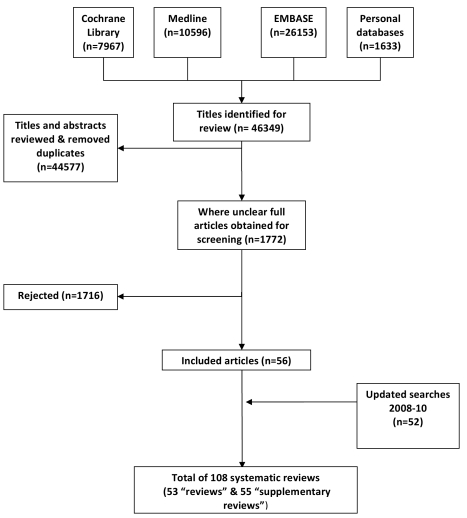
- The searches retrieved 46,349 references, and the authors included 108 reviews: 53 as the main empirical evidence base and 55 supplementary reviews for context.
- For EHRs, the paper found only weak evidence for benefits in time efficiency and data quality (legibility, completeness, comprehensiveness), while risks such as time costs, increased costs, and reduced patient-centeredness were mostly anecdotal.
- For PACS, there were only 3 reviews; evidence for improved organizational efficiency was weak, and overall cost-effectiveness could not be determined because economic findings were often contradictory and of poor quality.
- For CPOE and ePrescribing, the review reports moderate evidence for some organizational/practitioner benefits, but weak or inconsistent evidence for patient-level outcomes; for ePrescribing, there was no clear evidence of patient outcome benefit outside prescribing, and medication-error reductions were not clearly linked to patient harm reduction.
Methods
- Systematic overview of systematic reviews focused on clinician-oriented eHealth technologies related to storage/retrieval of data and support for clinical decision making; patient-focused interventions were excluded.
- Searched PubMed/MEDLINE, EMBASE, and the Cochrane Library for secondary research reports published from 1997 to 2007, with no language restrictions; searches were updated through end of April 2010.
- Performed dual-reviewer screening and critical appraisal (with arbitration by a third reviewer), then used narrative synthesis because the literature was too diverse for quantitative pooling; evidence was classified using a modified WHO Health Evidence Network approach as strong, moderate, or weak.
Limitations
- The paper states that poor indexing, reliance on English-language databases, and a novel multimethod approach meant some reviews may have been missed and the synthesis was “less rigorous” than a conventional systematic review because individual primary studies were not appraised.
- The authors note that they had to adapt the critical appraisal instrument, and that overlap in reviews plus inconsistent terminology required judgment calls about which reviews and primary studies mapped to which interventions.
- Evident from the text: the overview covers mostly economically developed country settings and clinician-orientated information systems, so the findings may not generalize well to patient-oriented technologies or other contexts.
Model-written summary. Check it against the paper before relying on it.
Integrity signals
Registry
Cites
Statistics
Figures
Verification
Claims the paper makes
4 Valid · 0 Not valid · 24 Not checked · 67 Own results and interpretations
Every source the paper cites for this claim was checked and supports it.
In the paper
“NHS Connecting for Health's difficulties with the implementation of EHRs into hospitals in England is a prime example of the challenges that can ensue if such socio-technical factors are given insufficient attention [148].”
§ The Impact of eHealth on the Quality and Safety of Health Care: A Systematic Overview > Discussion
What the sources say
- Supportedcites [148] Robertson AR Cresswell K Takian A Petrakaki D 2010 Prospective evaluation of the implementation and adoption of NHS Connecting for Health's electronic health record in secondary care in England: interim results from a national evaluation. BMJ 341 c4564 20813822 PMC2933355 source
The Methods (Data analysis; page not specified) explicitly frame implementation as a socio-technical process in which organisational, human, and technical factors shape one another. The Results (Trusts want systems that are tailored; page not specified) describe implementation difficulties caused by a centrally conceived standardised system that did not meet end users’ needs. This supports the citing sentence’s use of the programme as an example of challenges arising when those factors receive insufficient attention. (LLM, conf=0.90)
plainstates a cause- Asserted: passes — The authors put it forward as true.
- Checkable: passes — It can be checked against evidence.
- Load-bearing: unclear — It is unclear whether the paper’s conclusions depend on it.
- Based: passes — The paper gives a reason why it holds.
- Supported
The cited sources support only part of this claim — read each source’s verdict below.
In the paper
“Additionally, it is not unusual for insufficient time and effort to be devoted to the all-important customisation process [147].”
§ The Impact of eHealth on the Quality and Safety of Health Care: A Systematic Overview > Discussion
What the sources say
- Partly supportedcites [147] Pollock N Williams R Procter R 2003 Fitting standard software packages to non-standard organizations: the “biography' of an enterprise-wide system. Tech Anal Strat Manag 15 317 sourceExperimental — accuracy not yet measured
In “Building a Global Product” (pp. 16–17), the paper reports that the supplier had more requests for changes than resources and was pruning what it would deliver for a pilot site. This supports a resource constraint on adaptation in that case, but the paper does not establish that insufficient time and effort are often devoted to customisation across commercial systems. (LLM, conf=0.82)
plain- Asserted: passes — The authors put it forward as true.
- Checkable: passes — It can be checked against evidence.
- Load-bearing: unclear — It is unclear whether the paper’s conclusions depend on it.
- Based: passes — The paper gives a reason why it holds.
- Partly supported
The cited sources support only part of this claim — read each source’s verdict below.
In the paper
“Also of note is that we found virtually no evidence in support of the cost-effectiveness claims (Tables 2– 11) that are frequently being made by policy makers when constructing business cases to raise funding for the large-scale eHealth deployments that are now taking place in many parts of the world [1].”
§ The Impact of eHealth on the Quality and Safety of Health Care: A Systematic Overview > Discussion
What the sources say
- Partly supportedcites [1] Catwell L Sheikh A 2009 Evaluating eHealth interventions. PLoS Med 6 e1000126 doi: 10.1371/journal.pmed.1000126 19688038 PMC2719100 sourceExperimental — accuracy not yet measured
The ‘Recognising the Risk of Harm’ section says governments around the world are undertaking large eHealth rollouts, and the Conclusions call for scientific evidence to inform policy decisions. The paper does not specifically document frequent cost-effectiveness claims in policymakers’ funding business cases. The citing authors’ statement that ‘we found virtually no evidence’ refers to their own findings, not a finding attributed to this source. (LLM, conf=0.79)
plain- Asserted: passes — The authors put it forward as true.
- Checkable: passes — It can be checked against evidence.
- Load-bearing: passes — The paper’s conclusions depend on it.
- Based: passes — The paper gives a reason why it holds.
- Partly supported
A result the paper reports from its own data — it cites no other source for it, so there is none to check. The quote shows it is in the paper.
In the paper
“We found only anecdotal evidence of the fundamental expected benefits and risks relating to the organisational efficiency resulting from the storage and management facilities within the EHR and thus the potential for secondary uses (Table 2).”
§ The Impact of eHealth on the Quality and Safety of Health Care: A Systematic Overview > Results > Data Storage, Management, and Retrieval Systems
plain- Asserted: passes — The authors put it forward as true.
- Checkable: passes — It can be checked against evidence.
- Load-bearing: unclear — It is unclear whether the paper’s conclusions depend on it.
- Based: passes — The paper gives a reason why it holds.
In the paper
“Our final selection of 53 reviews provided the main empirical evidence base in relation to assessing the impact of the selected eHealth technologies (see Table 1 for our critical appraisal of these studies) [15]–[67], full details of which can be found in Table S2.”
§ The Impact of eHealth on the Quality and Safety of Health Care: A Systematic Overview > Results
What the sources say
- Not checked yetcites [15]–[67]
plain- Asserted: passes — The authors put it forward as true.
- Checkable: passes — It can be checked against evidence.
- Load-bearing: passes — The paper’s conclusions depend on it.
- Based: passes — The paper gives a reason why it holds.
41 more claims
Create a free account to see all 95 claims and to verify the 28 references still open.
- Probably not a substantial claim. 27
- It may state two separate claims as one. 28
Claims other papers make about this one
Each is checked against this paper’s own text: does it say what the citing paper says it does?
The source backs part of the claim, not all of it — or backs it for a different population, condition or comparison.
In the citing paper
“While such technologies can be effective [1,2], one of the main problems is that users’ adoption and long-term use remains lower than expected [3-5].”
From Opening the Black Box of Electronic Health: Collecting, Analyzing, and Interpreting Log Data (2017) · cites this paper as [5]
Experimental — accuracy not yet measuredThe cited source says what the claim attributes to it.
In the citing paper
“overall effectiveness in clinical practice is unclear.14”
From ‘Too much, too late’: mixed methods multi-channel video recording study of computerized decision support systems and GP prescribing (2013) · cites this paper as [14]
The cited source says what the claim attributes to it.
In the citing paper
“Several authors [1,2,4,6,62,76-87] note that a broader view is needed to assess the overall impact on health care.”
From A Holistic Framework to Improve the Uptake and Impact of eHealth Technologies (2011) · cites this paper as [2]
The cited source says what the claim attributes to it.
In the citing paper
“The foundation of the framework is based on the aforementioned principles, reviews in the field of eHealth [2,3,22,96-99], progressive insights from eHealth research (see Multimedia Appendix 4), and multidisciplinary theories from psychology, communication, and human–computer interaction design.”
From A Holistic Framework to Improve the Uptake and Impact of eHealth Technologies (2011) · cites this paper as [2]
The check wasn’t confident either way, so it gives no verdict — never disputed.
In the citing paper
“The scale, volume of data obtained, and real time nature of this evaluation of the implementation of electronic health records in English secondary healthcare settings are strengths of our work.1”
From Implementation and adoption of nationwide electronic health records in secondary care in England: final qualitative results from prospective national evaluation in early adopter hospitals (2011) · cites this paper as [1]
Experimental — accuracy not yet measured
5 more claims about this paper
Create a free account to see every claim other papers make about this one.
Citations
Cites
Older Adults' Reasons for Using Technology while Aging in Place
Peek, S. T. M., Luijkx, K. G., Rijnaard, M. D., Nieboer, M. E., van der Voort, C. S., Aarts, S., van Hoof, J., Vrijhoef, H. J. M., & Wouters, E. J. M. (2016) · Gerontology · doi:10.1159/000430949 · Cited by 19,690
To Err Is Human: Building a Safer Health System
(2000) · National Academies Press eBooks · doi:10.17226/9728 · Cited by 14,044
Crossing the Quality Chasm: A New Health System for the 21st Century
Baker, A. (2001) · BMJ · doi:10.1136/bmj.323.7322.1192 · Cited by 10,736
Wall, A. (2000) · British Journal of Healthcare Management · doi:10.12968/bjhc.2000.6.9.19311 · Cited by 5,903
Crossing the Quality Chasm: A New Health System for the 21st Century
Bloom, B. S. (2002) · JAMA: The Journal of the American Medical Association · doi:10.1001/jama.287.5.646-a · Cited by 3,726
Chaudhry, B., Wang, J., Wu, S., Maglione, M., Mojica, W., Roth, E., Morton, S. C., & Shekelle, P. G. (2006) · Annals of Internal Medicine · doi:10.7326/0003-4819-144-10-200605160-00125 · Cited by 3,159 · cited 2×
“Three related reviews – an update, a fuller report, and its more concise counterpart – were an exception due to the complementary nature of the reports rather than these being duplicative [22,55,56].”
BackgroundGarg, A. X., Adhikari, N. K. J., McDonald, H., Rosas-Arellano, M. P., Devereaux, P. J., Beyene, J., Sam, J., & Haynes, R. B. (2005) · JAMA · doi:10.1001/jama.293.10.1223 · Cited by 2,936 · cited 1×
“Evidence of the beneficial impact of such systems is limited, however, to a few academic clinical centres of excellence where the systems were developed in house, undergoing extensive evaluation with continual improvement, supported by a strong sense of local ownership by their clinical users [31,56].”
BackgroundKawamoto, K., Houlihan, C. A., Balas, E. A., & Lobach, D. F. (2005) · BMJ · doi:10.1136/bmj.38398.500764.8f · Cited by 2,703
The Technology Acceptance Model: Its past and its future in health care
Holden, R. J., & Karsh, B.-T. (2010) · Journal of Biomedical Informatics · doi:10.1016/j.jbi.2009.07.002 · Cited by 2,669
Critical appraisal skills programme
Singh, J. (2013) · Journal of Pharmacology and Pharmacotherapeutics · doi:10.4103/0976-500x.107697 · Cited by 2,556
Research works printed but not linked: 4
- Institute of Medicine 2007 Preventing medication errors. Washington (D.C.) National Academy Press
- Pagliari C Sloan D Gregor P Sullivan F Kahan JP 2004 EH1 E-Health scoping exercise. Review of wider Web-based information sources. Dundee University of Dundee
- Pagliari C Sloan D Gregor P Sullivan F Kahan JP 2004 EH1 E-Health scoping exercise. Review of the traditional research literature. Dundee University of Dundee
- Shekelle PG Goldzweig CL 2009 Costs and benefits of health technology information: an updated systematic review. Available: http://www.health.org.uk/public/cms/75/76/313/564/Costs%20and%20benefits%20of%20health%20information%20technology.pdf?realName=urByVX.pdf. Accessed 3 December 2010 19174390
Cited by
Items 301–400 of 1,002
Challenges for developing health-care knowledge in the digital age
Alrahbi, D., Khan, M., Gupta, S., Modgil, S., & Jabbour, C. J. C. (2020) · Journal of Knowledge Management · doi:10.1108/jkm-03-2020-0224 · Cited by 59
Frennert, S., Forsberg, A., & Östlund, B. (2013) · Journal of Technology in Human Services · doi:10.1080/15228835.2013.814557 · Cited by 57
Masino, A. J., Casper, T. C., Dean, J. M., Bell, J., Enríquez, R., Deakyne, S., Chamberlain, J., Alpern, E. R., Grundmeier, R. W., & The Pediatric Emergency Care Applied Research Network (2016) · Applied Clinical Informatics · doi:10.4338/aci-2016-08-ra-0129 · Cited by 43
“Unfortunately, improvements in healthcare quality have not been consistently observed after EHR implementation [1, 2].”
BackgroundDevelopment of an in-house hospital information system in a hospital in Pakistan
Sultan, F., Aziz, M. T., Khokhar, I., Qadri, H. A., Hydari, M. A., Mukhtar, A., Manzoor, W., & Yusuf, M. A. (2013) · International Journal of Medical Informatics · doi:10.1016/j.ijmedinf.2013.12.004 · Cited by 47
Duplaga, M. (2015) · BMC Medical Informatics and Decision Making · doi:10.1186/s12911-015-0157-3 · Cited by 42
“Development of eHealth environment is frequently indicated as a promising response to challenges associated with chronic care [5-9].”
BackgroundKauppinen, H., Ahonen, R. S., & Timonen, J. (2017) · International Journal of Medical Informatics · doi:10.1016/j.ijmedinf.2017.01.014 · Cited by 48
“Studies concerning the impacts of electronic prescribing systems on medication safety have been conducted in various settings, primarily in hospitals [18-20].”
BackgroundElectronic Health Records and Quality of Diabetes Care
Koppel, R., Majumdar, S. R., & Soumerai, S. B. (2011) · New England Journal of Medicine · doi:10.1056/nejmc1111722 · Cited by 42
Öberg, U., Isaksson, U., Jutterström, L., Orre, C. J., & Hörnsten, Å. (2018) · JMIR Diabetes · doi:10.2196/diabetes.9059 · Cited by 41
“However, a benefit for health care professionals using digitalized technology in self-management support is the option to be in contact with patients more frequently than semiannually or annually, as is common today [60,61].”
BackgroundAppari, A., Johnson, E. M., & Anthony, D. L. (2014) · PubMed · Cited by 46
Kip, H., Jong, N. B.-D., van Gemert‐Pijnen, J. E. W. C., & Kelders, S. M. (2025) · Journal of Medical Internet Research · doi:10.2196/59601 · Cited by 62
“Yet, there still is room for improvement as expected benefits are often not (fully) achieved in practice [9,10].”
Aytekin, A., Alan, H., Demirel, H., Onur, N., Yalman, A., LİVBERBER, T., & Açıkgöz, F. Y. (2025) · Sustainability · doi:10.3390/su17020456 · Cited by 59
Patel, M. S., Volpp, K. G. M., Small, D. S., Wynn, C., Zhu, J., Yang, L., Honeywell, S., & Day, S. C. (2016) · Healthcare · doi:10.1016/j.hjdsi.2016.04.005 · Cited by 46
Drinkwater, J., Stanley, N., Szilassy, E., Larkins, C., Hester, M., & Feder, G. S. (2017) · British Journal of General Practice · doi:10.3399/bjgp17x689353 · Cited by 47
Jolly, S. E., Navaneethan, S. D., Schold, J. D., Arrigain, S., Sharp, J. W., Jain, A., Schreiber, M. J., Simon, J. F., & Nally, J. V. (2014) · American Journal of Nephrology · doi:10.1159/000360306 · Cited by 46
The Impact of Health Information Technology on Hospital Productivity
Lee, J., McCullough, J. S., & Town, R. (2012) · National Bureau of Economic Research · doi:10.3386/w18025 · Cited by 50
White, N. M., Carter, H. E., Kularatna, S., Borg, D. N., Brain, D., Tariq, A., Abell, B., Blythe, R. D., & McPhail, S. (2023) · Journal of the American Medical Informatics Association · doi:10.1093/jamia/ocad040 · Cited by 49
“Reported heterogeneity is likely influenced by several factors related to the design and integration of CDSS into clinical workflows, including alert fatigue, administrative workarounds, and overreliance on recommendations.(2,8,16) Contextual factors affecting uptake and engagement with CDSS, and the impact of decisio…”
BackgroundMethodInfluentialLyngstad, M., Melby, L. M. H., Grimsmo, A., & Hellesø, R. (2013) · Home Health Care Management & Practice · doi:10.1177/1084822313480365 · Cited by 53
The undiagnosed pandemic: Burnout and depression within the surgical community
DeCaporale-Ryan, L. N., Sakran, J. V., Grant, S. B., Alseidi, A. A., Rosenberg, T., Goldberg, R. F., Sanfey, H. A., DuBose, J. J., Stawicki, S. P., Ricca, R. L., et al. (2017) · Current Problems in Surgery · doi:10.1067/j.cpsurg.2017.07.001 · Cited by 44
Hains, I. M., Georgiou, A., & Westbrook, J. I. (2012) · Journal of the American Medical Informatics Association · doi:10.1136/amiajnl-2011-000422 · Cited by 39
Integration as interdependent workaround
Ellingsen, G., Monteiro, E., & Røed, K. (2012) · International Journal of Medical Informatics · doi:10.1016/j.ijmedinf.2012.09.004 · Cited by 47
The good, the bad and the early adopters: providers' attitudes about a common, commercial EHR
Makam, A. N., Lanham, H. J., Batchelor, K., Moran, B., Howell‐Stampley, T., Kirk, L., Cherukuri, M., Samal, L., Santini, N., Leykum, L. K., et al. (2014) · Journal of Evaluation in Clinical Practice · doi:10.1111/jep.12076 · Cited by 40
Scott, V., & Gilson, L. (2017) · International Journal for Equity in Health · doi:10.1186/s12939-017-0660-5 · Cited by 44
Humanitarian medical supply chain in disaster response
Dolinskaya, I., Besiou, M., & Guerrero-Garcia, S. (2018) · Journal of Humanitarian Logistics and Supply Chain Management · doi:10.1108/jhlscm-01-2018-0002 · Cited by 39
Diabetes Care and Management Using Electronic Medical Records: A Systematic Review
Lessing, S., & Hayman, L. L. (2018) · Journal of Diabetes Science and Technology · doi:10.1177/1932296818815507 · Cited by 42
Adusumalli, S., Westover, J. E., Jacoby, D. S., Small, D. S., VanZandbergen, C., Chen, J., Cavella, A. M., Pepe, R. S., Rareshide, C. A. L., Snider, C. K., et al. (2020) · JAMA Cardiology · doi:10.1001/jamacardio.2020.4730 · Cited by 71
Advocating for Action Design Research on IT Value Creation in Healthcare
Sherer, S. A. (2014) · Journal of the Association for Information Systems · doi:10.17705/1jais.00384 · Cited by 61
“And some studies have actually found negative impacts (Black et al., 2011; Garg et al., 2005; Himmelstein et al., 2009; Reckmann, Westbrook, Koh, Lo, & Day, 2009).”
The impact of implementing a demand forecasting system into a low-income country's supply chain
Mueller, L. E., Haidari, L. A., Wateska, A. R., Phillips, R. J., Schmitz, M. M., Connor, D. L., Norman, B. A., Brown, S. T., Welling, J. S., & Lee, B. Y. (2016) · Vaccine · doi:10.1016/j.vaccine.2016.05.027 · Cited by 39
The Current and Future Role of Technology in Respiratory Care
Honkoop, P., Usmani, O. S., & Bonini, M. (2022) · Pulmonary Therapy · doi:10.1007/s41030-022-00191-y · Cited by 46
Khanal, S., Burgon, J., Leonard, S. A., Griffiths, M., & Eddowes, L. A. (2015) · Telemedicine Journal and e-Health · doi:10.1089/tmj.2014.0194 · Cited by 47
Talking with the alien: interaction with computers in the GP consultation
Dowell, A. C., Stubbe, M. H., Scott-Dowell, K., Macdonald, L., & Dew, K. P. (2013) · Australian Journal of Primary Health · doi:10.1071/py13036 · Cited by 40
“Whereas one recent systematic review (Black et al. 2011) concludes there is only limited evidence linking e-health technologies in general to improved patient outcomes, another shows that computer use increases the completeness of documentation, accuracy, comprehensiveness, consistency and reliability (Häyrinen et al.”
BackgroundLandis‐Lewis, Z., Brehaut, J., Hochheiser, H., Douglas, G. P., & Jacobson, R. S. (2015) · Implementation Science · doi:10.1186/s13012-014-0203-z · Cited by 45
“The potential for AF to improve health care would seem to be increased by unprecedented growth in the adoption of electronic health (eHealth) information technology [25,26], the definition of which can include any use of information and communication technology in the delivery of health care [27].”
BackgroundBonnici, T., Tarassenko, L., Clifton, D. A., & Watkinson, P. (2013) · Clinical Medicine · doi:10.7861/clinmedicine.13-3-252 · Cited by 45
Infrastructuring in Healthcare through the OpenEHR Architecture
Ulriksen, G.-H., Pedersen, R., & Ellingsen, G. (2017) · Computer Supported Cooperative Work (CSCW) · doi:10.1007/s10606-017-9269-x · Cited by 45
“Key words: information infrastructure, infrastructuring, openEHR, archetypes, standardisation, user participation”
BackgroundMacGregor, H., McKenzie, A., Jacobs, T., & Ullauri, A. (2018) · Globalization and Health · doi:10.1186/s12992-018-0351-z · Cited by 48
The Relationship between Nurses’ Training and Perceptions of Electronic Documentation Systems
Zaman, N., Goldberg, D. M., Kelly, S. E., Russell, R. S., & Drye, S. L. (2021) · Nursing Reports · doi:10.3390/nursrep11010002 · Cited by 46
“Using electronic documentation systems such as electronic health records (EHRs) and electronic medical records (EMRs) reduces medical errors that promote quality, efficiency, and safety of medical care by providing the correct information to treat patients in a timely manner [1–4].”
BackgroundEstablishing an evidence base for e-health: the proof is in the pudding
Al-Shorbaji, N., & Geissbühler, A. (2012) · Bulletin of the World Health Organization · doi:10.2471/blt.12.106146 · Cited by 47
Realising the potential of mHealth to improve asthma and allergy care: how to shape the future
Bousquet, J. J., Chavannes, N. H., Guldemond, N., Haahtela, T., Hellings, P. W., & Sheikh, A. (2017) · European Respiratory Journal · doi:10.1183/13993003.00447-2017 · Cited by 44
Self-citationHao, W.-R., Hsu, Y.-H., Chen, K.-C., Li, H.-C., Iqbal, U., Nguyen, P.-A., Huang, C.-W., Yang, H.-C., Lee, P., Li, M.-H., et al. (2015) · Computer Methods and Programs in Biomedicine · doi:10.1016/j.cmpb.2014.10.005 · Cited by 37
“ehealth is said to be improving quality and safety of healthcare and there is now considerable international interest in exploiting its potential in healthcare solutions [7,8].”
BackgroundUsing Data Envelopment Analysis to Analyse the Efficiency of Primary Care Units
Deidda, M., Lupiáñez‐Villanueva, F., Codagnone, C., & Maghiros, I. (2014) · Journal of Medical Systems · doi:10.1007/s10916-014-0122-1 · Cited by 47
“Furthermore, empirical evidence on the effect of ICT on the health sector is still limited and fragmented [3, 6, 33, 49].”
BackgroundReducing Excess Cardiac Biomarker Testing at an Academic Medical Center
Larochelle, M. R., Knight, A. M., Pantle, H. A., Riedel, S. F., & Trost, J. C. (2014) · Journal of General Internal Medicine · doi:10.1007/s11606-014-2919-5 · Cited by 41
McCulloh, R. J., Fouquet, S. D., Herigon, J., Biondi, E. A., Kennedy, B., Kerns, E., DePorre, A., Markham, J. L., Chan, Y. R., Nelson, K., et al. (2018) · Journal of the American Medical Informatics Association · doi:10.1093/jamia/ocy069 · Cited by 36
“Despite these recommendations, there are limited reports of successful development, implementation, and adoption of ECDS tools, particularly across varied institutional settings and in pediatric care settings.(5,6) In pediatrics, the evaluation of febrile infants for suspected severe infection/sepsis is a common clini…”
BackgroundScott, V., Schaay, N., Olckers, P., Nqana, N., Lehmann, U., & Gilson, L. (2014) · Health Policy and Planning · doi:10.1093/heapol/czu073 · Cited by 51
Hsiang, E. Y., Mehta, S. J., Small, D. S., Rareshide, C. A. L., Snider, C. K., Day, S. C., & Patel, M. S. (2019) · JAMA Network Open · doi:10.1001/jamanetworkopen.2019.15619 · Cited by 37
Faujdar, D. S., Sahay, S., Singh, T., Kaur, M., & Kumar, R. (2020) · International Journal of Medical Informatics · doi:10.1016/j.ijmedinf.2020.104235 · Cited by 36
Zhou, L., & Sordo, M. (2020) · Elsevier eBooks · doi:10.1016/b978-0-12-821259-2.00005-3 · Cited by 49
Devin, J. E., Cleary, B., & Cullinan, S. (2020) · Systematic Reviews · doi:10.1186/s13643-020-01510-7 · Cited by 43
Subbe, C. P., Tellier, G., & Barach, P. R. (2021) · BMJ Open · doi:10.1136/bmjopen-2020-047446 · Cited by 43
Enabling Guidelines for the Adoption of eHealth Solutions: Scoping Review
Støme, L. N., Wilhelmsen, C. R., & Kværner, K. J. (2021) · JMIR Formative Research · doi:10.2196/21357 · Cited by 44
“Research has found a discrepancy between the expected value of eHealth and mobile health interventions and the empirically demonstrated benefits [22,23].”
BackgroundDiscover the Expert: Context-Adaptive Expert Selection for Medical Diagnosis
Tekin, C., Atan, O., & van der Schaar, M. (2014) · IEEE Transactions on Emerging Topics in Computing · doi:10.1109/tetc.2014.2386133 · Cited by 45
“some applications [9], their effectiveness cannot be validated for other applications [10].”
BackgroundLizama, N., Johnson, C. E., Ghosh, M., Garg, N. K., Emery, J. D., & Saunders, C. M. (2015) · Asia-Pacific Journal of Clinical Oncology · doi:10.1111/ajco.12327 · Cited by 37
Improving clinical documentation: introduction of electronic health records in paediatrics
Koh, J., & Ahmed, M. (2021) · BMJ Open Quality · doi:10.1136/bmjoq-2020-000918 · Cited by 35
Voncken-Brewster, V., Tange, H. J., Moser, A., Nagykaldi, Z. J., de Vries, H., & van der Weijden, T. (2014) · BMC Family Practice · doi:10.1186/1471-2296-15-4 · Cited by 48
Krousel-Wood, M., McCoy, A. B., Ahia, C., Holt, E. W., Trapani, D. N., Luo, Q., Price-Haywood, E. G., Thomas, E. J., Sittig, D. F., & Milani, R. V. (2018) · Journal of the American Medical Informatics Association · doi:10.1093/jamia/ocx094 · Cited by 36
Neame, M. T., Chacko, J., Surace, A. E. A., Sinha, I. P., & Hawcutt, D. B. (2018) · Journal of the American Medical Informatics Association · doi:10.1093/jamia/ocy176 · Cited by 44
Nandi, S., & Schneider, H. M. (2020) · Health Research Policy and Systems · doi:10.1186/s12961-020-00555-3 · Cited by 46
Breitbart, E., Choudhury, K., Andersen, A. D., Bunde, H., Breitbart, M., Sideri, A. M., Fengler, S., & Zibert, J. (2020) · PLoS ONE · doi:10.1371/journal.pone.0235410 · Cited by 31
Suborning science for profit: Monsanto, glyphosate, and private science research misconduct
Glenna, L., & Bruce, A. B. (2021) · Research Policy · doi:10.1016/j.respol.2021.104290 · Cited by 45
Melchiorre, M. G., Lamura, G., & Barbabella, F. (2018) · PLoS ONE · doi:10.1371/journal.pone.0207292 · Cited by 42
How Should We Define eHealth, and Does the Definition Matter?
Chris, S., & Nøhr, C. (2012) · Studies in health technology and informatics · doi:10.3233/978-1-61499-101-4-881 · Cited by 34
Embedding online patient record access in UK primary care: a survey of stakeholder experiences
Pagliari, C., Shand, T., & Fisher, B. (2012) · JRSM Short Reports · doi:10.1258/shorts.2012.012009 · Cited by 41
Self-citationNurses' use of an integrated electronic health record: results of a case site analysis
Dowding, D., Turley, M., & Garrido, T. (2014) · Informatics for Health and Social Care · doi:10.3109/17538157.2014.948169 · Cited by 38
“help improve care efficiency, quality and safety [1-4].”
BackgroundExamining the infusion of mobile technology by healthcare practitioners in a hospital setting
O’Connor, Y., & O’Reilly, P. (2016) · Information Systems Frontiers · doi:10.1007/s10796-016-9728-9 · Cited by 40
“Despite the wide endorsement and support for the implementation of mHealth, Black et al. (2011) and Rahurkar et al. (2015) argue that empirical evidence surrounding the benefits of IT in health care remains to be firmly established.”
BackgroundOkpala, P. (2017) · International Journal of Healthcare Management · doi:10.1080/20479700.2017.1337623 · Cited by 35
Rosis, S. D., & Nuti, S. (2017) · The International Journal of Health Planning and Management · doi:10.1002/hpm.2443 · Cited by 39
“A few EH projects have overcome the “pilot phase” and become established as routine practice, changing how health care services are delivered.(11,15-18) In fact, EH works given the right approach, technology use, context, and implementation process.”
BackgroundChallenges of using big data for humanitarian relief: lessons from the literature
Sharma, P., & Joshi, A. (2019) · Journal of Humanitarian Logistics and Supply Chain Management · doi:10.1108/jhlscm-05-2018-0031 · Cited by 40
Biases and imperatives in handling medical technology
Hofmann, B. (2019) · Health Policy and Technology · doi:10.1016/j.hlpt.2019.10.005 · Cited by 38
“But also more ordinary hospital-based systems, such as picture archiving and communication systems (PACS) have been promoted and implemented without proper assessment (90, 91).”
BackgroundChristo, E. M., & Layal, M. (2019) · Studies in health technology and informatics · doi:10.3233/978-1-61499-951-5-103 · Cited by 38
Salam, R. A., Lassi, Z. S., Das, J. K., & Bhutta, Z. A. (2014) · Reproductive Health · doi:10.1186/1742-4755-11-s2-s3 · Cited by 53
Townsend, A. F., Adam, P., LI, L. C., McDonald, M., & Backman, C. L. (2013) · JMIR Research Protocols · doi:10.2196/resprot.2732 · Cited by 39
Fernando, B., Kalra, D., Morrison, Z., Byrne, E., & Sheikh, A. (2012) · BMJ Quality & Safety · doi:10.1136/bmjqs-2011-000450 · Cited by 43
Self-citationRecent perspectives of electronic medical record systems
Zhang, X., & Zhang, P. (2016) · Experimental and Therapeutic Medicine · doi:10.3892/etm.2016.3233 · Cited by 34
RetractedPearson, J., Walsh, N. E., Carter, D., Koskela, S., & Hurley, M. (2016) · JMIR Research Protocols · doi:10.2196/resprot.5446 · Cited by 40
“These Web-based solutions have poor uptake, lack effectiveness and adherence, and are often unsuccessfully implemented [26-29,33-36].”
BackgroundRawajfah, O. A., & Tubaishat, A. (2017) · Informatics for Health and Social Care · doi:10.1080/17538157.2017.1353998 · Cited by 37
“Huge expenditure was also documented in the UK (8) and other countries around the world (9).”
BackgroundBorkotoky, K., Unisa, S., & Gupta, A. K. (2017) · Journal of Biosocial Science · doi:10.1017/s0021932017000013 · Cited by 35
Thumé, E., Fehn, A. C., Acioli, S., & Fassa, M. E. G. (2018) · Saúde em Debate · doi:10.1590/0103-11042018s118 · Cited by 33
Cresswell, K. M., Sheikh, A., Franklin, B. D., Krasuska, M., Nguyen, H. T., Hinder, S., Lane, W., Mozaffar, H., Mason, K., Eason, S., et al. (2021) · Journal of Medical Internet Research · doi:10.2196/23372 · Cited by 40
“Digital transformation is now central to most health system strategies, as governments around the world seek to address the challenges associated with demographic shifts and the need for sustainable care provision to aging populations with complex long-term conditions [1,2].”
BackgroundSelf-citationTelephone delivered interventions for reducing morbidity and mortality in people with HIV infection
Gentry, S. V., van Velthoven, M. H., Car, L. T., & Car, J. (2013) · Cochrane Database of Systematic Reviews · doi:10.1002/14651858.cd009189.pub2 · Cited by 40
Self-citationEthics of implementing Electronic Health Records in developing countries: points to consider.
Were, M. C., & Meslin, E. M. (2011) · PubMed · Cited by 41
Campbell, M., & Rankin, J. M. (2016) · Sociology of Health & Illness · doi:10.1111/1467-9566.12489 · Cited by 47
Yuan, N., Dudley, R. A., Boscardin, W. J., & Lin, G. A. (2019) · Journal of the American Medical Informatics Association · doi:10.1093/jamia/ocz092 · Cited by 44
McKinnon, I., & Finch, T. L. (2018) · BMC Public Health · doi:10.1186/s12889-018-5271-6 · Cited by 37
“Integrating such records has proved difficult [46] although since this study all forensic nurses and physicians in London have access to the National Health Service (NHS) Summary Care Record (personal communication – Sergeant Cathy Nicholson via email 7 July 2016).”
BackgroundHenderson, E. J., & Rubin, G. P. (2013) · JRSM Short Reports · doi:10.1177/2042533313476691 · Cited by 31
Reis, W. C. T., Bonetti, A. D. F., Bottacin, W. E., Reis, A. S., de Souza, T. T., Pontarolo, R., Correr, C. J., & Fernández-Llimós, F. (2017) · Pharmacy Practice · doi:10.18549/pharmpract.2017.04.1036 · Cited by 42
“Most CDSS applied to the medication-use process have shown benefits in the process outcomes (62%), this situation is consistent with results noted in previous overviews.(64-69)”
ResultThe management of cardiovascular disease in the Netherlands: analysis of different programmes
Cramm, J. M., Tsiachristas, A., Walters, B. H., Adams, S., Bal, R. A., Huijsman, R., Mölken, M. R., & Nieboer, A. P. (2013) · International Journal of Integrated Care · doi:10.5334/ijic.889 · Cited by 33
“Given recent attention for high costs of implementing Information and Communication Technology systems in health care [38], we expected information and communications technology costs to be an important cost driver; however, cost analysis results indicated that, during the development phase, they were by far outweighe…”
An evaluation of e-prescribing at a national level
Parv, L., Kruus, P., Mõtte, K., & Ross, P. (2014) · Informatics for Health and Social Care · doi:10.3109/17538157.2014.948170 · Cited by 41
“Realizing the benefits is highly context-dependent (4,5) and highlights the need to define success factors in the case of each country and the implementation of each e-service.”
BackgroundMethodInformation Quality in Healthcare
Cabitza, F., & Batini, C. (2016) · Data-centric systems and applications · doi:10.1007/978-3-319-24106-7_13 · Cited by 40
Feather, J. S., Howson, M., Ritchie, L., Carter, P. D., Parry, D. T., & Koziol-McLain, J. (2016) · Journal of Medical Internet Research · doi:10.2196/jmir.5455 · Cited by 28
“It makes sense to assume that the proliferation of Web-based psychological interventions could not have occurred without strong supporting evidence, yet there is a notable gap between what is proposed by eHealth interventions and what is actually delivered [14].”
Wakefield, B. J., Turvey, C., Nazi, K. M., Holman, J. E., Hogan, T. P., Shimada, S. L., & Kennedy, D. R. (2017) · Journal of Medical Internet Research · doi:10.2196/jmir.7638 · Cited by 39
“More rigorous measurement is needed to determine the full benefit(s) of an eHealth-delivered intervention to both patients and the health care system [12].”
BackgroundGiunti, G., Guisado-Fernandez, E., Belani, H., & Lacalle-Remigio, J. R. (2019) · Journal of Medical Internet Research · doi:10.2196/14086 · Cited by 34
“The implementation of HIT in the different EU member states is very diverse, particularly regarding the development of EHRs [27], a central component of an integrated HIT [34].”
Oxford Handbook of Public Health Practice
(2013) · doi:10.1093/med/9780199586301.001.0001 · Cited by 35
Archambault, P. M., Bilodeau, A., Gagnon, M., Aubin, K., Lavoie, A., Lapointe, J., Poitras, J., Croteau, S., Pham-Dinh, M., & Légaré, F. (2012) · Journal of Medical Internet Research · doi:10.2196/jmir.1983 · Cited by 38
Brennan, J. R., McElligott, A., & Power, N. (2015) · Journal of Innovation in Health Informatics · doi:10.14236/jhi.v22i4.97 · Cited by 37
What is the safety case for health IT? A study of assurance practices in England
Habli, I., White, S., Sujan, M. A., Harrison, S., & Ugarte, M. (2018) · Safety Science · doi:10.1016/j.ssci.2018.09.001 · Cited by 35
Cremers, H., Theunissen, L., Hiddink, J., Kemps, H., Dekker, L., van de Ven, R., Monroy, M., van Waes, L., Scheele, K., & van Veghel, D. (2021) · Health Services Management Research · doi:10.1177/0951484821994421 · Cited by 33
Exploring the Frequency of Blood Pressure Documentation in Emergency Departments
Miltner, R. S., Johnson, K. D., & Deierhoi, R. J. (2013) · Journal of Nursing Scholarship · doi:10.1111/jnu.12060 · Cited by 35
Digital Health: Hope, Hype, and Amara’s Law
Dorn, S. D. (2015) · Gastroenterology · doi:10.1053/j.gastro.2015.07.024 · Cited by 39
“The overall evidence that EHRs improve safety and quality is spotty.(12) Costs savings remain elusive.”
BackgroundExploring adoption of augmented reality smart glasses: Applications in the medical industry
Başoğlu, N., Göken, M., Dabić, M., Güngör, D. Ö., & Daim, T. U. (2018) · Frontiers of Engineering Management · doi:10.15302/j-fem-2018056 · Cited by 40
Cresswell, K. M., McKinstry, B., Wolters, M. K., Shah, A. S. V., & Sheikh, A. (2018) · BMJ Health & Care Informatics · doi:10.14236/jhi.v25i4.1068 · Cited by 43
“3 Introduction Internationally, there is an increasing focus on digital data to improve healthcare quality, safety and efficiency.(1) A wide range of technological applications are being developed daily and these generate increasing amounts of health- and wellness-related data.”
BackgroundSelf-citationEvaluation of Digitalisation in Healthcare and the Quantification of the “Unmeasurable”
Cresswell, K. M., Anderson, S., Montgomery, C. M., Weir, C. J., Atter, M., & Williams, R. (2023) · Journal of General Internal Medicine · doi:10.1007/s11606-023-08405-y · Cited by 41
Self-citationSieverink, F., Kelders, S. M., Braakman-Jansen, L. M. A., & van Gemert-Pijnen, J. E. W. C. (2014) · Journal of Diabetes Science and Technology · doi:10.1177/1932296814525696 · Cited by 30
Metadata
- Authors
- Black, A. D., Car, J., Pagliari, C., Anandan, C., Cresswell, K., Bokun, T., McKinstry, B., Procter, R., Majeed, A., & Sheikh, A.
- Affiliations
- Imperial College London (GB)
- University of Edinburgh (GB)
- University of Manchester (GB)
- Corresponding author
- Sheikh, Aziz
- ORCID
- Venue
- PLoS Medicine
- Publisher
- Public Library of Science (PLoS)
- Published
- 2011-01-18
- Volume
- 8
- Issue
- 1
- Pages
- e1000387
- ISSN
- 1549-1277 (ISSN-L)
- 1549-1676
- PMC
- PMC3022523
- OpenAlex
- W2002144979
- Semantic Scholar
- 8989e6727eab5d5fc760d0c7a63fb3864fe49a4f
- Cited by
- 1,442
- References
- 168
- Citations by year
- 2026: 23 · 2025: 26 · 2024: 44 · 2023: 46 · 2022: 55 · 2021: 81 · 2020: 94 · 2019: 102 · 2018: 109 · 2017: 110 · 2016: 129 · 2015: 109 · 2014: 126 · 2013: 207 · 2012: 111
- FWCI
- 24.19
- Type
- journal article
- Language
- en
- Open access
- gold
- doi.org
- Locations
- PLoS Medicine (publishedVersion, cc-by)
- PubMed Central (publishedVersion, cc-by)
- PubMed (publishedVersion)
- RePEc: Research Papers in Economics (publishedVersion)
- Warwick Research Archive Portal (University of Warwick) (acceptedVersion)
- Research Publications (Maastricht University) (submittedVersion, cc-by)
- DOAJ (DOAJ: Directory of Open Access Journals) (submittedVersion, cc-by-sa)
- Figshare (submittedVersion, cc-by)
- Research Explorer (The University of Manchester) (submittedVersion)
- Edinburgh Research Explorer (University of Edinburgh) (submittedVersion, cc-by)
- Spiral (Imperial College London) (submittedVersion, other-oa)
- Research Publications (Maastricht University) (submittedVersion, other-oa)
- Funders
- Economic and Social Research Council
- Topics
- Health Sciences › Health Professions › Health Information Management › Electronic Health Records Systems
- Health Sciences › Medicine › Public Health, Environmental and Occupational Health › Telemedicine and Telehealth Implementation
- Health Sciences › Medicine › Public Health, Environmental and Occupational Health › Technology and Human Factors in Education and Health
- Keywords
- e-health, quality of care, patient safety, clinical decision support, telemedicine, health data management, digital health technologies, cost-effectiveness, evidence gaps, health policy
- MeSH terms
- Cost-Benefit Analysis, Delivery of Health Care, Health Policy, Medical Informatics, Quality of Health Care, Radiology Information Systems, Review Literature as Topic, Efficiency, Organizational, Electronic Prescribing, Electronic Health Records
About these checks
Registry, retraction, Cites and statistics results are computed, not judged, with one exception: a printed reference that no index lists is read once by a model before it counts as a citation error. Claims are extracted by a model and kept only when their quote appears verbatim in the text; each cited source is then checked, with a model’s help, for whether it says what the claim relies on. Those verdicts can be wrong — read the claim’s quote and the cited source before relying on one.
The claim verdicts this report counts are experimental: their accuracy is not yet measured.
A language model drew the claims from the paper on 2026-10-11, under version 3 of the claim definition (model deepseek-v4.1-flash, prompt extract-v3).
A second model labelled each claim on 2026-10-11 (model jev-1.13-20260917, definition revision gold-guideline-v0.2).
Cited sources are checked with a language model’s help (gpt-6-sol).
Statistics and arithmetic are recomputed, not judged.
Confidence bands are shown only for fields calibrated on our annotated test set. None is calibrated yet, so no band is shown.
What counts as a claim ›How we measure confidence ›How we check this ›
Are you an author, or do you see a problem with this page? Request a review
Data sources
Bibliographic data: Semantic Scholar, OpenAlex, Crossref.
Contains information from the Semantic Scholar Academic Graph Datasets, made available under the ODC Attribution License (ODC-BY 1.0).
Semantic Scholar’s data is described in: Kinney, R., et al. (2023). The Semantic Scholar Open Data Platform. arXiv:2301.10140.
