

The Impact of eHealth on the Quality and Safety of Health Care: A Systematic Overview
Open accessThe DOI matches its Crossref record; 165 of the 168 references it cites were found in a registry or an index; 4 of the 32 sources its claims cite were checked for support.
Abstract
BACKGROUND: There is considerable international interest in exploiting the potential of digital solutions to enhance the quality and safety of health care. Implementations of transformative eHealth technologies are underway globally, often at very considerable cost. In order to assess the impact of eHealth solutions on the quality and safety of health care, and to inform policy decisions on eHealth deployments, we undertook a systematic review of systematic reviews assessing the effectiveness and consequences of various eHealth technologies on the quality and safety of care. METHODS AND FINDINGS: We developed novel search strategies, conceptual maps of health care quality, safety, and eHealth interventions, and then systematically identified, scrutinised, and synthesised the systematic review literature. Major biomedical databases were searched to identify systematic reviews published between 1997 and 2010. Related theoretical, methodological, and technical material was also reviewed. We identified 53 systematic reviews that focused on assessing the impact of eHealth interventions on the quality and/or safety of health care and 55 supplementary systematic reviews providing relevant supportive information. This systematic review literature was found to be generally of substandard quality with regards to methodology, reporting, and utility. We thematically categorised eHealth technologies into three main areas: (1) storing, managing, and transmission of data; (2) clinical decision support; and (3) facilitating care from a distance. We found that despite support from policymakers, there was relatively little empirical evidence to substantiate many of the claims made in relation to these technologies. Whether the success of those relatively few solutions identified to improve quality and safety would continue if these were deployed beyond the contexts in which they were originally developed, has yet to be established. Importantly, best practice guidelines in effective development and deployment strategies are lacking. CONCLUSIONS: There is a large gap between the postulated and empirically demonstrated benefits of eHealth technologies. In addition, there is a lack of robust research on the risks of implementing these technologies and their cost-effectiveness has yet to be demonstrated, despite being frequently promoted by policymakers and "techno-enthusiasts" as if this was a given. In the light of the paucity of evidence in relation to improvements in patient outcomes, as well as the lack of evidence on their cost-effectiveness, it is vital that future eHealth technologies are evaluated against a comprehensive set of measures, ideally throughout all stages of the technology's life cycle. Such evaluation should be characterised by careful attention to socio-technical factors to maximise the likelihood of successful implementation and adoption.
Overview
CoChat Summary
TL;DR
This systematic overview of 108 reviews found that the empirical evidence for most common eHealth technologies’ benefits on quality and safety is weak, inconsistent, or absent. The paper argues that large-scale eHealth investments should not be justified by assumed gains alone, because patient-level and cost-effectiveness benefits were rarely demonstrated.
Key findings
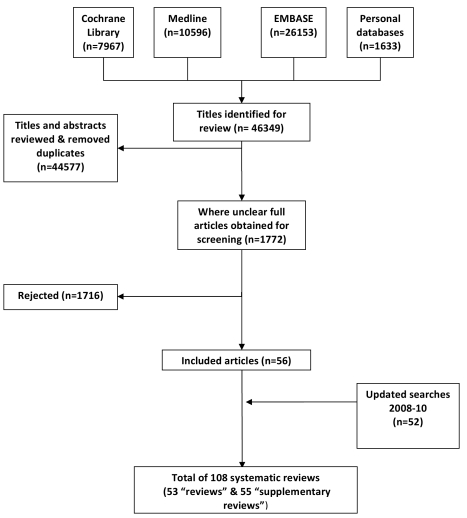
- The searches retrieved 46,349 references, and the authors included 108 reviews: 53 as the main empirical evidence base and 55 supplementary reviews for context.
- For EHRs, the paper found only weak evidence for benefits in time efficiency and data quality (legibility, completeness, comprehensiveness), while risks such as time costs, increased costs, and reduced patient-centeredness were mostly anecdotal.
- For PACS, there were only 3 reviews; evidence for improved organizational efficiency was weak, and overall cost-effectiveness could not be determined because economic findings were often contradictory and of poor quality.
- For CPOE and ePrescribing, the review reports moderate evidence for some organizational/practitioner benefits, but weak or inconsistent evidence for patient-level outcomes; for ePrescribing, there was no clear evidence of patient outcome benefit outside prescribing, and medication-error reductions were not clearly linked to patient harm reduction.
Methods
- Systematic overview of systematic reviews focused on clinician-oriented eHealth technologies related to storage/retrieval of data and support for clinical decision making; patient-focused interventions were excluded.
- Searched PubMed/MEDLINE, EMBASE, and the Cochrane Library for secondary research reports published from 1997 to 2007, with no language restrictions; searches were updated through end of April 2010.
- Performed dual-reviewer screening and critical appraisal (with arbitration by a third reviewer), then used narrative synthesis because the literature was too diverse for quantitative pooling; evidence was classified using a modified WHO Health Evidence Network approach as strong, moderate, or weak.
Limitations
- The paper states that poor indexing, reliance on English-language databases, and a novel multimethod approach meant some reviews may have been missed and the synthesis was “less rigorous” than a conventional systematic review because individual primary studies were not appraised.
- The authors note that they had to adapt the critical appraisal instrument, and that overlap in reviews plus inconsistent terminology required judgment calls about which reviews and primary studies mapped to which interventions.
- Evident from the text: the overview covers mostly economically developed country settings and clinician-orientated information systems, so the findings may not generalize well to patient-oriented technologies or other contexts.
Model-written summary. Check it against the paper before relying on it.
Integrity signals
Registry
Cites
Statistics
Figures
Verification
Claims the paper makes
4 Valid · 0 Not valid · 24 Not checked · 67 Own results and interpretations
Every source the paper cites for this claim was checked and supports it.
In the paper
“NHS Connecting for Health's difficulties with the implementation of EHRs into hospitals in England is a prime example of the challenges that can ensue if such socio-technical factors are given insufficient attention [148].”
§ The Impact of eHealth on the Quality and Safety of Health Care: A Systematic Overview > Discussion
What the sources say
- Supportedcites [148] Robertson AR Cresswell K Takian A Petrakaki D 2010 Prospective evaluation of the implementation and adoption of NHS Connecting for Health's electronic health record in secondary care in England: interim results from a national evaluation. BMJ 341 c4564 20813822 PMC2933355 source
The Methods (Data analysis; page not specified) explicitly frame implementation as a socio-technical process in which organisational, human, and technical factors shape one another. The Results (Trusts want systems that are tailored; page not specified) describe implementation difficulties caused by a centrally conceived standardised system that did not meet end users’ needs. This supports the citing sentence’s use of the programme as an example of challenges arising when those factors receive insufficient attention. (LLM, conf=0.90)
plainstates a cause- Asserted: passes — The authors put it forward as true.
- Checkable: passes — It can be checked against evidence.
- Load-bearing: unclear — It is unclear whether the paper’s conclusions depend on it.
- Based: passes — The paper gives a reason why it holds.
- Supported
The cited sources support only part of this claim — read each source’s verdict below.
In the paper
“Additionally, it is not unusual for insufficient time and effort to be devoted to the all-important customisation process [147].”
§ The Impact of eHealth on the Quality and Safety of Health Care: A Systematic Overview > Discussion
What the sources say
- Partly supportedcites [147] Pollock N Williams R Procter R 2003 Fitting standard software packages to non-standard organizations: the “biography' of an enterprise-wide system. Tech Anal Strat Manag 15 317 sourceExperimental — accuracy not yet measured
In “Building a Global Product” (pp. 16–17), the paper reports that the supplier had more requests for changes than resources and was pruning what it would deliver for a pilot site. This supports a resource constraint on adaptation in that case, but the paper does not establish that insufficient time and effort are often devoted to customisation across commercial systems. (LLM, conf=0.82)
plain- Asserted: passes — The authors put it forward as true.
- Checkable: passes — It can be checked against evidence.
- Load-bearing: unclear — It is unclear whether the paper’s conclusions depend on it.
- Based: passes — The paper gives a reason why it holds.
- Partly supported
The cited sources support only part of this claim — read each source’s verdict below.
In the paper
“Also of note is that we found virtually no evidence in support of the cost-effectiveness claims (Tables 2– 11) that are frequently being made by policy makers when constructing business cases to raise funding for the large-scale eHealth deployments that are now taking place in many parts of the world [1].”
§ The Impact of eHealth on the Quality and Safety of Health Care: A Systematic Overview > Discussion
What the sources say
- Partly supportedcites [1] Catwell L Sheikh A 2009 Evaluating eHealth interventions. PLoS Med 6 e1000126 doi: 10.1371/journal.pmed.1000126 19688038 PMC2719100 sourceExperimental — accuracy not yet measured
The ‘Recognising the Risk of Harm’ section says governments around the world are undertaking large eHealth rollouts, and the Conclusions call for scientific evidence to inform policy decisions. The paper does not specifically document frequent cost-effectiveness claims in policymakers’ funding business cases. The citing authors’ statement that ‘we found virtually no evidence’ refers to their own findings, not a finding attributed to this source. (LLM, conf=0.79)
plain- Asserted: passes — The authors put it forward as true.
- Checkable: passes — It can be checked against evidence.
- Load-bearing: passes — The paper’s conclusions depend on it.
- Based: passes — The paper gives a reason why it holds.
- Partly supported
A result the paper reports from its own data — it cites no other source for it, so there is none to check. The quote shows it is in the paper.
In the paper
“We found only anecdotal evidence of the fundamental expected benefits and risks relating to the organisational efficiency resulting from the storage and management facilities within the EHR and thus the potential for secondary uses (Table 2).”
§ The Impact of eHealth on the Quality and Safety of Health Care: A Systematic Overview > Results > Data Storage, Management, and Retrieval Systems
plain- Asserted: passes — The authors put it forward as true.
- Checkable: passes — It can be checked against evidence.
- Load-bearing: unclear — It is unclear whether the paper’s conclusions depend on it.
- Based: passes — The paper gives a reason why it holds.
In the paper
“Our final selection of 53 reviews provided the main empirical evidence base in relation to assessing the impact of the selected eHealth technologies (see Table 1 for our critical appraisal of these studies) [15]–[67], full details of which can be found in Table S2.”
§ The Impact of eHealth on the Quality and Safety of Health Care: A Systematic Overview > Results
What the sources say
- Not checked yetcites [15]–[67]
plain- Asserted: passes — The authors put it forward as true.
- Checkable: passes — It can be checked against evidence.
- Load-bearing: passes — The paper’s conclusions depend on it.
- Based: passes — The paper gives a reason why it holds.
41 more claims
Create a free account to see all 95 claims and to verify the 28 references still open.
- Probably not a substantial claim. 27
- It may state two separate claims as one. 28
Claims other papers make about this one
Each is checked against this paper’s own text: does it say what the citing paper says it does?
The source backs part of the claim, not all of it — or backs it for a different population, condition or comparison.
In the citing paper
“While such technologies can be effective [1,2], one of the main problems is that users’ adoption and long-term use remains lower than expected [3-5].”
From Opening the Black Box of Electronic Health: Collecting, Analyzing, and Interpreting Log Data (2017) · cites this paper as [5]
Experimental — accuracy not yet measuredThe cited source says what the claim attributes to it.
In the citing paper
“overall effectiveness in clinical practice is unclear.14”
From ‘Too much, too late’: mixed methods multi-channel video recording study of computerized decision support systems and GP prescribing (2013) · cites this paper as [14]
The cited source says what the claim attributes to it.
In the citing paper
“Several authors [1,2,4,6,62,76-87] note that a broader view is needed to assess the overall impact on health care.”
From A Holistic Framework to Improve the Uptake and Impact of eHealth Technologies (2011) · cites this paper as [2]
The cited source says what the claim attributes to it.
In the citing paper
“The foundation of the framework is based on the aforementioned principles, reviews in the field of eHealth [2,3,22,96-99], progressive insights from eHealth research (see Multimedia Appendix 4), and multidisciplinary theories from psychology, communication, and human–computer interaction design.”
From A Holistic Framework to Improve the Uptake and Impact of eHealth Technologies (2011) · cites this paper as [2]
The check wasn’t confident either way, so it gives no verdict — never disputed.
In the citing paper
“The scale, volume of data obtained, and real time nature of this evaluation of the implementation of electronic health records in English secondary healthcare settings are strengths of our work.1”
From Implementation and adoption of nationwide electronic health records in secondary care in England: final qualitative results from prospective national evaluation in early adopter hospitals (2011) · cites this paper as [1]
Experimental — accuracy not yet measured
5 more claims about this paper
Create a free account to see every claim other papers make about this one.
Citations
Cites
Older Adults' Reasons for Using Technology while Aging in Place
Peek, S. T. M., Luijkx, K. G., Rijnaard, M. D., Nieboer, M. E., van der Voort, C. S., Aarts, S., van Hoof, J., Vrijhoef, H. J. M., & Wouters, E. J. M. (2016) · Gerontology · doi:10.1159/000430949 · Cited by 19,690
To Err Is Human: Building a Safer Health System
(2000) · National Academies Press eBooks · doi:10.17226/9728 · Cited by 14,044
Crossing the Quality Chasm: A New Health System for the 21st Century
Baker, A. (2001) · BMJ · doi:10.1136/bmj.323.7322.1192 · Cited by 10,736
Wall, A. (2000) · British Journal of Healthcare Management · doi:10.12968/bjhc.2000.6.9.19311 · Cited by 5,903
Crossing the Quality Chasm: A New Health System for the 21st Century
Bloom, B. S. (2002) · JAMA: The Journal of the American Medical Association · doi:10.1001/jama.287.5.646-a · Cited by 3,726
Chaudhry, B., Wang, J., Wu, S., Maglione, M., Mojica, W., Roth, E., Morton, S. C., & Shekelle, P. G. (2006) · Annals of Internal Medicine · doi:10.7326/0003-4819-144-10-200605160-00125 · Cited by 3,159 · cited 2×
“Three related reviews – an update, a fuller report, and its more concise counterpart – were an exception due to the complementary nature of the reports rather than these being duplicative [22,55,56].”
BackgroundGarg, A. X., Adhikari, N. K. J., McDonald, H., Rosas-Arellano, M. P., Devereaux, P. J., Beyene, J., Sam, J., & Haynes, R. B. (2005) · JAMA · doi:10.1001/jama.293.10.1223 · Cited by 2,936 · cited 1×
“Evidence of the beneficial impact of such systems is limited, however, to a few academic clinical centres of excellence where the systems were developed in house, undergoing extensive evaluation with continual improvement, supported by a strong sense of local ownership by their clinical users [31,56].”
BackgroundKawamoto, K., Houlihan, C. A., Balas, E. A., & Lobach, D. F. (2005) · BMJ · doi:10.1136/bmj.38398.500764.8f · Cited by 2,703
The Technology Acceptance Model: Its past and its future in health care
Holden, R. J., & Karsh, B.-T. (2010) · Journal of Biomedical Informatics · doi:10.1016/j.jbi.2009.07.002 · Cited by 2,669
Critical appraisal skills programme
Singh, J. (2013) · Journal of Pharmacology and Pharmacotherapeutics · doi:10.4103/0976-500x.107697 · Cited by 2,556
Research works printed but not linked: 4
- Institute of Medicine 2007 Preventing medication errors. Washington (D.C.) National Academy Press
- Pagliari C Sloan D Gregor P Sullivan F Kahan JP 2004 EH1 E-Health scoping exercise. Review of wider Web-based information sources. Dundee University of Dundee
- Pagliari C Sloan D Gregor P Sullivan F Kahan JP 2004 EH1 E-Health scoping exercise. Review of the traditional research literature. Dundee University of Dundee
- Shekelle PG Goldzweig CL 2009 Costs and benefits of health technology information: an updated systematic review. Available: http://www.health.org.uk/public/cms/75/76/313/564/Costs%20and%20benefits%20of%20health%20information%20technology.pdf?realName=urByVX.pdf. Accessed 3 December 2010 19174390
Cited by
Items 401–500 of 1,002
A personal assistant for dementia to stay at home safe at reduced cost
Nijhof, N., van Gemert‐Pijnen, J. E. W. C., Burns, C. M., & Seydel, E. R. (2013) · Gerontechnology · doi:10.4017/gt.2013.11.3.005.00 · Cited by 35
Valdivieso, B., García‐Sempere, A., Sanfélix‐Gimeno, G., Faubel, R., Librero, J., Soriano, E., & Peiró, S. (2018) · Medicina Clínica · doi:10.1016/j.medcli.2018.03.013 · Cited by 40
Digitising an Australian university hospital: qualitative analysis of staff-reported impacts
Eden, R., Burton‐Jones, A., Grant, J., Collins, R., Staib, A. N., & Sullivan, C. M. (2019) · Australian Health Review · doi:10.1071/ah18218 · Cited by 30
Electronic Health Records reshaping the socio-technical practices in Long-Term Care of older persons
Hämäläinen, A., & Hirvonen, H. (2020) · Technology in Society · doi:10.1016/j.techsoc.2020.101316 · Cited by 34
The role of Design Science Research Methodology in developing pharmacy eHealth services
Gregório, J., Reis, L., Peyroteo, M., Maia, M. R., da Silva, M. M., & Lapão, L. V. (2021) · Research in Social and Administrative Pharmacy · doi:10.1016/j.sapharm.2021.05.016 · Cited by 40
Mudaly, T., Moodley, D., Pillay, A., & Seebregts, C. J. (2013) · Proceedings of the First International Conference on Enterprise Systems: ES 2013 · doi:10.1109/es.2013.6690083 · Cited by 28
“6 and 38 billion USD on their individual NHIS programs [32-34].”
BackgroundDesigning interorganizational information systems for supply chain integration: a framework
Kauremaa, J., & Tanskanen, K. (2016) · The International Journal of Logistics Management · doi:10.1108/ijlm-01-2013-0008 · Cited by 44
Car, L. T., Papachristou, N., Gallagher, J., Samra, R., Wazny, K., El-Khatib, M., Bull, A. R., Majeed, A., Aylin, P. P., Atun, R. A., et al. (2016) · BMC Family Practice · doi:10.1186/s12875-016-0552-6 · Cited by 34
Self-citationFlipped healthcare for better or worse
Hult, H. V., Hansson, A., Svensson, L. G., & Gellerstedt, M. (2019) · Health Informatics Journal · doi:10.1177/1460458219833099 · Cited by 38
“33,34 Besides frustrations with IT-centric approaches, our participants talked about health informatics as a dynamic facet of new work practices.”
BackgroundChancen und Risiken der Telemedizin in der Orthopädie und Unfallchirurgie
Holderried, M., Schlipf, M., Hoeper, A., Meier, R., Stöckle, U., & Kraus, T. M. (2017) · Zeitschrift für Orthopädie und Unfallchirurgie · doi:10.1055/s-0043-116941 · Cited by 32
Analyzing the response to epidemics: concept of evidence-based Haddon matrix
Anparasan, A., & Lejeune, M. A. (2017) · Journal of Humanitarian Logistics and Supply Chain Management · doi:10.1108/jhlscm-06-2017-0023 · Cited by 30
Health Information on the Internet: State of the Art and Analysis
Rozenkranz, N., Eckhardt, A., Kühne, M., & Rosenkranz, C. (2013) · Business & Information Systems Engineering · doi:10.1007/s12599-013-0274-4 · Cited by 31
An Exploratory Study of Home Healthcare Robots Adoption Applying the UTAUT Model
Alaiad, A., Zhou, L., & Koru, G. (2014) · International Journal of Healthcare Information Systems and Informatics · doi:10.4018/ijhisi.2014100104 · Cited by 33
Cresswell, K. M., Worth, A., & Sheikh, A. (2012) · Health Informatics Journal · doi:10.1177/1460458212445399 · Cited by 36
Self-citationMorgan, J. L., Baggari, S. R., Chung, W., Ritch, J., McIntire, D. D., & Sheffield, J. S. (2015) · Obstetrics and Gynecology · doi:10.1097/aog.0000000000000975 · Cited by 30
Computer-assisted initial diagnosis of rare diseases
Alves, R., Piñol, M., Vilaplana, J., Teixidó, I., Corella, J. C., Comas, J., Vilaprinyó, E., Albert Sorribas, B., & Solsona, F. (2016) · PeerJ · doi:10.7717/peerj.2211 · Cited by 33
“However, given that the cost-effectiveness of eHealth solutions appears to be debatable (Black et al., 2011; Free et al., 2013a; Free et al., 2013b; McLean et al., 2013; Eysenbach et al., 2002; Avery et al., 2012; Free et al., 2011;Howitt et al., 2012; Sheikh et al., 2014;Morrison et al., 2013;Huckvale et al., 2012; G…”
BackgroundVancea, M., & Solé‐Casals, J. (2016) · Aging and Disease · doi:10.14336/ad.2015.1214 · Cited by 34
“Such evaluation should focus on socio-technical factors to maximise the likelihood of successful implementation and adoption [25].”
BackgroundThe Burden of a Remote Trial in a Nursing Home Setting: Qualitative Study
Donnelly, S., Reginatto, B., Kearns, O., Carthy, M. M., Byrom, B., Muehlhausen, W., & Caulfield, B. (2018) · Journal of Medical Internet Research · doi:10.2196/jmir.9638 · Cited by 34
“The problem of “real-world” deployment is recognized within the literature, particularly in terms of workflow integration and conceptualization [39,40].”
BackgroundMcLeod, M. C., Karampatakis, G. D., Heyligen, L., McGinley, A., & Franklin, B. D. (2019) · BMC Health Services Research · doi:10.1186/s12913-019-3986-4 · Cited by 32
Conservation of Procrastination: Do Productivity Interventions Save Time Or Just Redistribute It?
Kovacs, G., Gregory, D. M., Ma, Z., Wu, Z., Emami, G., Ray, J., & Bernstein, M. S. (2019) · CHI Conference on Human Factors in Computing Systems · doi:10.1145/3290605.3300560 · Cited by 37
“While behavior change systems can be effective during experiments [7, 19, 59], many review papers are more restrained in whether behavior change systems remain effective outside studies and bring longitudinal behavioral change [10, 29, 44, 45].”
BackgroundAldebasi, B., Alhassan, A. I., Al-Nasser, S., & Abolfotouh, M. A. (2020) · BMC Medical Informatics and Decision Making · doi:10.1186/s12911-020-01233-8 · Cited by 29
“Globally, the functions of e-health services have been expanding rapidly, intending to improve health, reduce costs of healthcare, increase equity and quality of healthcare, and improve communication between healthcare providers and patients [4].”
BackgroundKey Success Factors Behind Electronic Medical Record Adoption in Thailand
Narattharaksa, K. C., Speece, M. W., Newton, C., & Bulyalert, D. (2011) · Journal of Health Organization and Management · doi:10.1108/jhom-10-2014-0180 · Cited by 38
Lau, A. Y., Proudfoot, J., Andrews, A., Liaw, S.-T., Crimmins, J., Arguel, A., & Coiera, E. (2013) · Journal of Medical Internet Research · doi:10.2196/jmir.2414 · Cited by 28
Takian, A., Sheikh, A., & Barber, N. (2014) · Health Informatics Journal · doi:10.1177/1460458213493196 · Cited by 38
“J Healthc Inf Manag 2007; 21(1): 24–32.”
Self-citationFuture Implications of eHealth Interventions for Chronic Pain Management in Underserved Populations
DeMonte, C. M., DeMonte, W. D., & Thorn, B. E. (2015) · Pain Management · doi:10.2217/pmt.15.9 · Cited by 27
The role of leadership in people-centred health systems: a sub-national study in The Gambia
Chigudu, S., Jasseh, M., D’Alessandro, U., Corrah, T., Demba, A., & Balen, J. (2014) · Health Policy and Planning · doi:10.1093/heapol/czu078 · Cited by 37
Challenges and Facilitators to Adoption of a Point-of-Care Electronic Health Record in Home Care
SOCKOLOW, P. S., Bowles, K. H., Adelsberger, M. C., Chittams, J. L., & Liao, C. (2014) · Home Health Care Services Quarterly · doi:10.1080/01621424.2013.870098 · Cited by 34
“However, study findings indicated the EHR had minimal impact on patient outcomes which is consistent with the hospital literature (Black et al., 2011; DesRoches et al., 2010; Lau, Kuziemsky, Price, & Gardner, 2010).”
ResultThe impact of electronic records on patient safety: a qualitative study
Scantlebury, A., Adamson, J., Watt, I. S., Sheard, L., Cairns, P. A., & Wright, J. (2016) · BMC Medical Informatics and Decision Making · doi:10.1186/s12911-016-0299-y · Cited by 37
“In reality, the literature is limited, as demonstrated in a recent systematic review [6] of eHealth technologies and their impact on the quality and safety of healthcare, which concluded that there is a gap between the proposed and empirically evidenced benefits of eHealth technologies.”
BackgroundLindberg, J., & Lundgren, A. S. (2022) · Journal of Rural Studies · doi:10.1016/j.jrurstud.2022.07.020 · Cited by 31
Bouwsma, E. V. A., Noordegraaf, A. V., Szlávik, Z., Brölmann, H. A. M., Emanuel, M. H., Lips, J. P., van Mechelen, W., Mozes, A., Thurkow, A. L., Huirne, J. A. F., et al. (2013) · Journal of Occupational Rehabilitation · doi:10.1007/s10926-013-9475-4 · Cited by 29
Muldoon, L. K., Dahrouge, S., Russell, G. M., Hogg, W. E., & Ward, N. M. (2012) · Healthcare policy · doi:10.12927/hcpol.2013.22885 · Cited by 33
“…to improve practice efficiency – group visits ( Jaber et al. 2006), advanced access scheduling (murray et al. 2003), use of electronic health records (Black et al. 2011), collaboration with community resources for chronic disease management and non–visit-based care delivered by telephone or…”
BackgroundPatient-specific computer-based decision support in primary healthcare—a randomized trial
Kortteisto, T., Raitanen, J., Komulainen, J., Kunnamo, I., Mäkelä, M., Rissanen, P., & Kaila, M. (2014) · Implementation Science · doi:10.1186/1748-5908-9-15 · Cited by 27
“Our results reaffirm previous evidence [39-41] that implementation of computer-based decision support is problematic.”
Resultdos Santos, A. D. F., da Mata-Machado, A. T. G., de Melo, M. D. C. B., Sobrinho, D. F., Araújo, L. L., Silva, É. A., Lima, A., de Abreu, D. M. X., & da Rocha, H. A. (2018) · Telemedicine Journal and e-Health · doi:10.1089/tmj.2018.0166 · Cited by 33
“30 33 In women’s health care, review studies have not shown improved results associated with TM versus conventional methods so far—although, in general, they have concluded that results are comparable.”
Santolini, E., West, R. M., & Giannoudis, P. V. (2019) · International Orthopaedics · doi:10.1007/s00264-019-04376-0 · Cited by 30
Pharmaceutical supply chains and management innovation?
Papalexi, M., Bamford, D., Nikitas, A., Breen, L., & Tipi, N. S. (2021) · Supply Chain Management An International Journal · doi:10.1108/scm-12-2019-0456 · Cited by 36
Enabling patient-centered communication and care through health information technology
Rutten, L. J. F., Agunwamba, A. A., Greene, S. M., Mazor, K. M., Ebbert, J. O., Sauver, J. L. S., & Dearing, J. W. (2014) · Journal of Communications In Healthcare · doi:10.1179/1753807614y.0000000067 · Cited by 28
“3,5,6 Fulfilling the promise of HIT will require careful efforts to ensure that HIT supports patient-centered communication and care processes.”
BackgroundBailie, R. S., Bailie, J., Chakraborty, A., & Swift, K. (2014) · Australian Journal of Primary Health · doi:10.1071/py14071 · Cited by 32
“This study limitation is inherent in the study finding regarding limited staff capability in the effective use of EHRs, which is consistent with other research that identifies staff skills and confidence as being an important limitation on effective use of EHRs (Majeed et al. 2008; Kelly et al. 2009; Riley et al. 2010…”
BackgroundResultInfluentialRejeb, O., Pilet, C., Hamana, S., Xie, X., Durand, T., Aloui, S., Doly, A., Biron, P., Perrier, L., & Augusto, V. (2017) · Health Care Management Science · doi:10.1007/s10729-017-9402-x · Cited by 35
“international interest in exploiting the potential of information and communication solutions to enhance the quality and safety of health-care [7, 14].”
BackgroundeHealth, ICT and its relationship with self-reported health outcomes in the EU countries
Tavares, A. I. (2018) · International Journal of Medical Informatics · doi:10.1016/j.ijmedinf.2018.01.014 · Cited by 34
Impact of digital health on the safety and quality of health care
Shaw, T. J., Hines, M., & Kielly-Carroll, C. (2018) · Cited by 38
Avdagovska, M., Menon, D., & Stafinski, T. (2020) · Journal of Medical Internet Research · doi:10.2196/24568 · Cited by 31
“Furthermore, studies show that the majority of health information technology investments are struggling to achieve the anticipated benefits [18-21].”
BackgroundBurgin, A., O'Rourke, R., & Tully, M. P. (2013) · Research in Social and Administrative Pharmacy · doi:10.1016/j.sapharm.2013.11.005 · Cited by 33
“Prior to data collection, overarching topics were identified from both the literature and informal discussion with users of the electronic systems.(3,10,32) The topics listed below provided some structure for the focus group discussion schedule shown in Appendix 1:”
BackgroundHassan, S., Vikanes, Å. V., Laine, K., Zimmo, K., Zimmo, M., Bjertness, E., & Fosse, E. T. (2017) · BMC Pregnancy and Childbirth · doi:10.1186/s12884-017-1296-6 · Cited by 27
A review of measurement practice in studies of clinical decision support systems 1998–2017
Scott, P., Brown, A. W., Adedeji, T., Wyatt, J. C., Georgiou, A., Eisenstein, E. L., & Friedman, C. P. (2019) · Journal of the American Medical Informatics Association · doi:10.1093/jamia/ocz035 · Cited by 31
Evaluating health information technologies: A systematic review of framework recommendations
Neame, M. T., Sefton, G., Roberts, M., Harkness, D., Sinha, I. P., & Hawcutt, D. B. (2020) · International Journal of Medical Informatics · doi:10.1016/j.ijmedinf.2020.104247 · Cited by 29
Leblanc, G., Gagnon, M., & Sanderson, D. (2012) · CIN Computers Informatics Nursing · doi:10.1097/nxn.0b013e318257db17 · Cited by 31
Sweidan, M., Williamson, M. F., Reeve, J. F., Harvey, K. J., O’Neill, J. A., Schattner, P. L., & Snowdon, T. (2010) · BMC Medical Informatics and Decision Making · doi:10.1186/1472-6947-10-21 · Cited by 34
Cyber society and digital policies: Challenges to evaluation?
Leeuw, F. L., & Leeuw, B. (2012) · Evaluation · doi:10.1177/1356389011431777 · Cited by 32
Van der Feltz-Cornelis, C., Van Os, J., Knappe, S., Schumann, G., Vieta, E., Wittchen, H.-U., Lewis, S. M., Elfeddali, I., Wahlbeck, K., Linszen, D., et al. (2014) · Neuropsychiatric Disease and Treatment · doi:10.2147/ndt.s59958 · Cited by 26
“12 An important issue is the risk of health care provider withdrawal and patient disengagement found in e-Health research 25–30 and the need to examine e-Health and m-Health as tools to augment the process of face-to-face care, rather than replace it.”
Swallow, V. M., Carolan, I., Smith, T., Webb, N. J. A., Knafl, K., Santacroce, S. J., Campbell, M., Harper-Jones, M., Hanif, N., & Hall, A. G. (2014) · Informatics for Health and Social Care · doi:10.3109/17538157.2014.948174 · Cited by 26
“has invested $38 billion in eHealth) (17), their overall quality should be exemplary.”
BackgroundDrawing on human factors engineering to evaluate the effectiveness of health information technology
Cresswell, K. M., BLANDFORD, A. E., & Sheikh, A. (2017) · Journal of the Royal Society of Medicine · doi:10.1177/0141076817712252 · Cited by 31
“There are substantial global investments being made in health information technology as governments and providers strive to improve the safety, quality and efficiency of healthcare.(1) Accompanying this trend is a growing health information technology industry projected to be worth around $230 billion by 2020, with a…”
BackgroundSelf-citationSpithoff, S., Mathieson, S., Sullivan, F., Guan, Q., Sud, A., Hum, S., & O'Brien, M. A. (2020) · The Journal of the American Board of Family Medicine · doi:10.3122/jabfm.2020.04.190199 · Cited by 25
“Another reason may be a general excitement and overconfidence in e-health technologies.(95) Funders and developers may be too eager to solve the problem of unsafe opioid prescribing using eHealth technologies and are not ensuring that developers are building on information from the medical literature.”
BackgroundKarekla, M., & Savvides, S. N. (2021) · Translational Behavioral Medicine · doi:10.1093/tbm/ibz128 · Cited by 25
Evaluating Artificial Intelligence in Clinical Settings—Let Us Not Reinvent the Wheel
Cresswell, K. M., de Keizer, N. F., Magrabi, F., Williams, R., Rigby, M., Prgomet, M., Kukhareva, P., Wong, Z. S.-Y., Scott, P., Craven, C. K., et al. (2024) · Journal of Medical Internet Research · doi:10.2196/46407 · Cited by 32
“…digitized records and repositories can lead to improved quality, safety, and efficiency, but hard to assess and take a long time to materialize [33,34] Patient data are stored in a centralized repository Promising proof-of-concept studies, but limited implementation [31,32] AI algorithms can…”
Self-citationThe impact of digital literacy in enhancing individuals’ health in China
Yang, J., Shen, Q., Tong, X., & Mukhopadhaya, P. (2025) · BMC Public Health · doi:10.1186/s12889-025-21454-8 · Cited by 37
“Individuals now enjoy reduced travel costs and improved convenience in seeking medical advice through online consultations [5].”
Personal health information management among healthy older adults: Varying needs and approaches
Turner, A. M., Taylor, J. O., Hartzler, A. L., Osterhage, K. P., Bosold, A. L., Painter, I. S., & Demiris, G. (2020) · Journal of the American Medical Informatics Association · doi:10.1093/jamia/ocaa121 · Cited by 27
“However, research has only begun to ascertain the broader impacts of HIT on healthcare quality across diverse populations, including older adults.(10,11) Although older adults have generally been slower to adopt new technologies than their younger counterparts, there has been a steady increase in digital technology us…”
BackgroundStewart, E. M., Milton, A. C., Yee, H. F., Song, M. J., Roberts, A., Davenport, T. A., & Hickie, I. B. (2022) · Journal of Medical Internet Research · doi:10.2196/26015 · Cited by 30
“Overall, these findings are consistent with results from a prior systematic review of eHealth solutions in adults, which found a gap between the postulated and empirically demonstrated benefits of eHealth technologies, a lack of robust research trials into validity and efficacy, and inadequate investigation of risks o…”
ResultBiesen, W. V., Cauwenberge, D. V., Decruyenaere, J. M. A., Leune, T., & Sterckx, S. (2022) · BMC Medical Informatics and Decision Making · doi:10.1186/s12911-022-01933-3 · Cited by 26
“In addition, the problem of alert fatigue is a well-established downside of interruptive messaging in CDSS [5, 14].”
BackgroundInfluentialHammar, T., Hovstadius, B., Lidström, B., Petersson, G., & Eiermann, B. (2014) · International Journal of Clinical Pharmacy · doi:10.1007/s11096-014-9976-z · Cited by 26
“Information technology in the medication management process has also been suggested to improve medication appropriateness and safety [13–18].”
BackgroundCresswell, K. M., Slee, A., Coleman, J. J., Williams, R., Bates, D. W., & Sheikh, A. (2013) · PLoS ONE · doi:10.1371/journal.pone.0079394 · Cited by 32
“Hospital electronic prescribing (henceforth referred to as ePrescribing) systems are being implemented by healthcare organizations in an attempt to improve the safety, quality, and efficiency of the medication use process [1–4].”
BackgroundSelf-citationWikis and Collaborative Writing Applications in Health Care: A Scoping Review Protocol
Archambault, P. M., van de Belt, T. H., Grajales, F. J., III, Eysenbach, G., Aubin, K., Gold, I., Gagnon, M., Kuziemsky, C. E., Turgeon, A. F., Poitras, J., et al. (2012) · JMIR Research Protocols · doi:10.2196/resprot.1993 · Cited by 33
“While researchers have conducted systematic reviews on information and communication technologies [71,72] and other social media (virtual communities of practice [73], virtual peer-to-peer communities, and electronic support groups [74]), none have reviewed collaborative writing applications.”
UNRWA’s innovative e-Health for 5 million Palestine refugees in the Near East
Ballout, G., Al-Shorbaji, N., KISHK, N. M. A., Turki, Y., Zeidan, W., & Seita, A. (2018) · BMJ Innovations · doi:10.1136/bmjinnov-2017-000262 · Cited by 25
Baines, D. L., Gahir, I. K., Hussain, A., Khan, A., Schneider, P. J., Hasan, S. S., & Babar, Z. (2018) · Frontiers in Pharmacology · doi:10.3389/fphar.2018.00678 · Cited by 33
“A deficiency of scientific studies is a widespread problem in all areas of healthcare provision, including pharmacy (Chaudhry et al., 2006; Atienza et al., 2010; Black et al., 2011; FIP/WHO, 2011).”
BackgroundUse, cost, and digital divide in online public health care: lessons from Denmark
Andersen, K. N., Nielsen, J. A., & Kim, S. (2019) · Transforming Government People Process and Policy · doi:10.1108/tg-06-2018-0041 · Cited by 33
Nijhof, N., van Gemert-Pijnen, J. E. W. C., de Jong, G. E. N., Ankoné, J. W., & Seydel, E. R. (2012) · Technology and Disability · doi:10.3233/tad-2012-0339 · Cited by 24
“There are a lot of ongoing eHealth initiatives, but the number of evaluations being generated is rather small [20–22].”
Using Log-Data as a Starting Point to Make eHealth More Persuasive
Kelders, S. M., & van Gemert-Pijnen, J. E. W. C. (2013) · Lecture Notes in Computer Science · doi:10.1007/978-3-642-37157-8_13 · Cited by 24
Automating Clinical Documentation with Digital Scribes: Understanding the Impact on Physicians
Li, B., Crampton, N. H., Yeates, T., Xia, Y., Tian, X., & Truong, K. N. (2021) · CHI Conference on Human Factors in Computing Systems · doi:10.1145/3411764.3445172 · Cited by 33
“Some studies attribute these consequences to the lack of user-experience considerations for physicians and other health professionals prior to deployment of such systems [6, 24, 45].”
BackgroundReturn on Investment in Electronic Health Records in Primary Care Practices: A Mixed-Methods Study
Jang, Y., Lortie, M. A., & Sanche, S. (2014) · JMIR Medical Informatics · doi:10.2196/medinform.3631 · Cited by 29
“Various studies on EHR impact and adoption also raise the need for cost-benefit analysis of EHR investments [5,20].”
Inzaule, S. C., Samuels, J. O., Akinbiyi, G., Asadu, E. C., Khamofu, H., Mpazanje, R., Ilesanmi, O., Ndembi, N., Odafe, S. F., Sigaloff, K., et al. (2017) · JAIDS Journal of Acquired Immune Deficiency Syndromes · doi:10.1097/qai.0000000000001553 · Cited by 24
Jalil, S., Myers, T., Atkinson, I., & Soden, M. (2019) · JMIR Human Factors · doi:10.2196/humanfactors.9481 · Cited by 29
““What happens inside the interventions” (eg, how patients felt about using the device and the development of the interventions not achieving a match between technology and context) is rarely a focus of attention in clinical trials [7,8].”
Marckini, D. N., Samuel, B. P., Parker, J., & Cook, S. C. (2019) · Congenital Heart Disease · doi:10.1111/chd.12745 · Cited by 26
Coiera, E. W. (2013) · The Medical Journal of Australia · doi:10.5694/mja13.10101 · Cited by 24
Cresswell, K. M., Coleman, J. J., Slee, A., Morrison, Z., & Sheikh, A. (2013) · Journal of the Royal Society of Medicine · doi:10.1177/0141076813502955 · Cited by 25
Self-citationJointCalc: A web-based personalised patient decision support tool for joint replacement
Зотов, Е. В., Hills, A. F., de Mello, F. L., Aram, P., Sayers, A. E., Blom, A. W., McCloskey, E. V., Wilkinson, J. M., & Kadirkamanathan, V. (2020) · International Journal of Medical Informatics · doi:10.1016/j.ijmedinf.2020.104217 · Cited by 25
“Despite estimating the high value of HIS deployment, empirical data poorly supports the theoretical usefulness and efficiency of these systems in healthcare [14].”
BackgroundDrug-Food Interactions with a Focus on Mediterranean Diet
Spanakis, M., Patelarou, E., & Patelarou, A. E. (2022) · Applied Sciences · doi:10.3390/app122010207 · Cited by 29
Radecki, R. P., & Sittig, D. F. (2011) · JAMA · doi:10.1001/jama.2011.937 · Cited by 23
“For instance, whereas EHRs with clinical decision support (CDS) interventions integrated into computerized physician order entry (CPOE) have measurably improved clinicians’ performance on process metrics,(1) their effect on patient outcomes remains unconfirmed.(2) Recently, the US Department of Health and Human Servic…”
BackgroundVirga, P. H., Jin, B., Thomas, J., & Virodov, S. (2012) · International Journal of Medical Informatics · doi:10.1016/j.ijmedinf.2012.06.006 · Cited by 24
“3 Recent literature reviews document abundant evidence on the use of electronic health information technology as a beneficial contributor to efficiency, provider satisfaction, patient safety, medication adherence, and many other indicators of health care quality [1–7].”
BackgroundEducation as ehealth infrastructure: considerations in advancing a national agenda for ehealth
Hilberts, S., & Gray, K. M. (2013) · Advances in Health Sciences Education · doi:10.1007/s10459-013-9442-z · Cited by 27
“…vision of ehealth that has been articulated in national health reform strategies around the world in recent years has not been realised fully in many places, perhaps partly because ‘‘best practice guidelines in effective development and deployment strategies are lacking’’ (Black et al. 2011, p. 1).”
BackgroundMotulsky, A., Lamothe, L., & Sicotte, C. (2013) · International Journal of Medical Informatics · doi:10.1016/j.ijmedinf.2013.01.012 · Cited by 28
“[4] A.”
BackgroundDoocy, S., Paik, K., Lyles, E., Tam, H. H., Fahed, Z., Winkler, E., Kontunen, K., Mkanna, A., & Burnham, G. M. (2017) · PubMed · doi:10.1371/currents.dis.e98c648aac93797b1996a37de099be74 · Cited by 23
Data work: A condition for integrations in health care
Bjørnstad, C., & Ellingsen, G. (2019) · Health Informatics Journal · doi:10.1177/1460458219833114 · Cited by 34
“20 Transferring data is not sufficient to make integration useful.”
BackgroundSafety for older adults using telecare: Perceptions of homecare professionals
Johannessen, T. B., Storm, M., & Holm, A. L. (2019) · Nursing Open · doi:10.1002/nop2.328 · Cited by 34
“There is also an extensive global interest in exploiting the po‐ tential of digital technologies to enhance the quality and safety of health care (Black et al., 2011).”
BackgroundDomestication of a Robotic Medication-Dispensing Service Among Older People in Finnish Lapland
Airola, E., & Rasi, P. (2020) · Human Technology · doi:10.17011/ht/urn.202008245639 · Cited by 28
“Ehealth provides various technological solutions in health-care (Black et al., 2011; Eysenbach, 2001).”
BackgroundEmpowering or misleading? Online health information provision challenges
Dahl, S. V., & Eagle, L. C. (2016) · Marketing Intelligence & Planning · doi:10.1108/mip-07-2015-0127 · Cited by 29
“The concept of active information seeking patients who are empowered to effectively manage their general health and well-being or chronic medical conditions (Black et al., 2011) needs to be viewed in a holistic manner, incorporating medical professional support for, or resistance to PE and an understanding of all sour…”
BackgroundInfluentialWildenbos, G. A., Peute, L., & Jaspers, M. (2016) · Yearbook of Medical Informatics · doi:10.15265/iy-2016-031 · Cited by 29
A Standardized SOA Based Solution to Guarantee the Secure Access to EHR
Gazzarata, G., Gazzarata, R., & Giacomini, M. L. (2015) · Procedia Computer Science · doi:10.1016/j.procs.2015.08.582 · Cited by 29
Terlouw, G., Kuipers, D., Veldmeijer, L., Veer, J. V. ‘., Prins, J., & Pierie, J.-P. E. N. (2022) · JMIR Human Factors · doi:10.2196/31167 · Cited by 29
“This organizational feature of boundary objects can be of great value in health care innovation, where the promise of innovations outweighs their actual impact [8-13].”
BackgroundCan We Improve Adherence to Preventive Therapies for Cardiovascular Health?
Ockene, J. K., Schneider, K. L., Lemon, S. C., & Ockene, I. S. (2011) · Circulation · doi:10.1161/circulationaha.110.968479 · Cited by 25
WHO Malaria Policy Advisory Committee and Secretariat (2012) · Malaria Journal · doi:10.1186/1475-2875-11-137 · Cited by 22
Zenziper, Y., Kurnik, D., Markovits, N., Ziv, A., Shamiss, A., Halkin, H., & Loebstein, R. (2014) · PubMed · Cited by 25
Electronic siloing: An unintended consequence of the electronic health record
Stoller, J. K. (2013) · Cleveland Clinic Journal of Medicine · doi:10.3949/ccjm.80a.12172 · Cited by 22
Venkateswaran, M., Mørkrid, K., Ghanem, B., Abbas, E., Ward, I. A., Baniode, M., Norheim, O. F., & Frøen, J. F. (2018) · Trials · doi:10.1186/s13063-017-2386-5 · Cited by 23
“However, robust research and evidence evaluating such interventions are scarce [17].”
BackgroundFarré, A., Heath, G., Shaw, K. L., Bem, D., & Cummins, C. (2019) · BMJ Quality & Safety · doi:10.1136/bmjqs-2018-009082 · Cited by 25
“7 9 However, the translation of such improvements into reduced harm for patients is still unclear.”
Cerqueira, O., Gill, M. S., Swar, B., Prentice, K. A., Gwin, S., & Beasley, B. W. (2021) · BMJ Quality & Safety · doi:10.1136/bmjqs-2020-012283 · Cited by 24
Product Diversity and Spectrum of Choice in Hospital ePrescribing Systems in England
Mozaffar, H., Williams, R., Cresswell, K. M., Morison, Z., Slee, A., Sheikh, A., & the ePrescribing Programme (2014) · PLoS ONE · doi:10.1371/journal.pone.0092516 · Cited by 29
“The main demonstrated benefits of implementing ePrescribing systems include reduction of duplicate prescribing, dosing errors and issuing of and issuing of, contraindicated drugs, and enhancing adherence with formulary recommendations [2,4–10].”
BackgroundSelf-citationNeher, M., Nygårdh, A., Broström, A., Lundgren, J., & Johansson, P. (2022) · Journal of Medical Internet Research · doi:10.2196/28870 · Cited by 21
“Many European health care systems see a proliferation in eHealth technologies, and policy decisions to implement them seem to be made despite the scarcity of convincing research data concerning both claims of cost-effectiveness and their real impact on the quality and safety of health care [3,4].”
Graven, M., Allen, P., Smith, I., & MacDonald, N. E. (2013) · International Journal of Medical Informatics · doi:10.1016/j.ijmedinf.2013.06.003 · Cited by 21
Comparative performance of seven long-running telemedicine networks delivering humanitarian services
Wootton, R., Geissbuhler, A., Jethwani, K., Kovarik, C., Person, D. A., Vladzymyrskyy, A., Zanaboni, P., & Zolfo, M. (2012) · Journal of Telemedicine and Telecare · doi:10.1258/jtt.2012.120315 · Cited by 21
Devan, H., Perry, M., van Hattem, A., Thurlow, G. R., Shepherd, S., Muchemwa, C., & Grainger, R. (2019) · Patient Education and Counseling · doi:10.1016/j.pec.2019.04.009 · Cited by 26
Hammar, T., Lidström, B., Petersson, G., Gustafson, Y., & Eiermann, B. (2015) · International Journal of Clinical Pharmacy · doi:10.1007/s11096-015-0146-8 · Cited by 26
“Information technology has the potential to improve safety and efficiency in the medication management process [11–14].”
Background
Metadata
- Authors
- Black, A. D., Car, J., Pagliari, C., Anandan, C., Cresswell, K., Bokun, T., McKinstry, B., Procter, R., Majeed, A., & Sheikh, A.
- Affiliations
- Imperial College London (GB)
- University of Edinburgh (GB)
- University of Manchester (GB)
- Corresponding author
- Sheikh, Aziz
- ORCID
- Venue
- PLoS Medicine
- Publisher
- Public Library of Science (PLoS)
- Published
- 2011-01-18
- Volume
- 8
- Issue
- 1
- Pages
- e1000387
- ISSN
- 1549-1277 (ISSN-L)
- 1549-1676
- PMC
- PMC3022523
- OpenAlex
- W2002144979
- Semantic Scholar
- 8989e6727eab5d5fc760d0c7a63fb3864fe49a4f
- Cited by
- 1,442
- References
- 168
- Citations by year
- 2026: 23 · 2025: 26 · 2024: 44 · 2023: 46 · 2022: 55 · 2021: 81 · 2020: 94 · 2019: 102 · 2018: 109 · 2017: 110 · 2016: 129 · 2015: 109 · 2014: 126 · 2013: 207 · 2012: 111
- FWCI
- 24.19
- Type
- journal article
- Language
- en
- Open access
- gold
- doi.org
- Locations
- PLoS Medicine (publishedVersion, cc-by)
- PubMed Central (publishedVersion, cc-by)
- PubMed (publishedVersion)
- RePEc: Research Papers in Economics (publishedVersion)
- Warwick Research Archive Portal (University of Warwick) (acceptedVersion)
- Research Publications (Maastricht University) (submittedVersion, cc-by)
- DOAJ (DOAJ: Directory of Open Access Journals) (submittedVersion, cc-by-sa)
- Figshare (submittedVersion, cc-by)
- Research Explorer (The University of Manchester) (submittedVersion)
- Edinburgh Research Explorer (University of Edinburgh) (submittedVersion, cc-by)
- Spiral (Imperial College London) (submittedVersion, other-oa)
- Research Publications (Maastricht University) (submittedVersion, other-oa)
- Funders
- Economic and Social Research Council
- Topics
- Health Sciences › Health Professions › Health Information Management › Electronic Health Records Systems
- Health Sciences › Medicine › Public Health, Environmental and Occupational Health › Telemedicine and Telehealth Implementation
- Health Sciences › Medicine › Public Health, Environmental and Occupational Health › Technology and Human Factors in Education and Health
- Keywords
- e-health, quality of care, patient safety, clinical decision support, telemedicine, health data management, digital health technologies, cost-effectiveness, evidence gaps, health policy
- MeSH terms
- Cost-Benefit Analysis, Delivery of Health Care, Health Policy, Medical Informatics, Quality of Health Care, Radiology Information Systems, Review Literature as Topic, Efficiency, Organizational, Electronic Prescribing, Electronic Health Records
About these checks
Registry, retraction, Cites and statistics results are computed, not judged, with one exception: a printed reference that no index lists is read once by a model before it counts as a citation error. Claims are extracted by a model and kept only when their quote appears verbatim in the text; each cited source is then checked, with a model’s help, for whether it says what the claim relies on. Those verdicts can be wrong — read the claim’s quote and the cited source before relying on one.
The claim verdicts this report counts are experimental: their accuracy is not yet measured.
A language model drew the claims from the paper on 2026-10-11, under version 3 of the claim definition (model deepseek-v4.1-flash, prompt extract-v3).
A second model labelled each claim on 2026-10-11 (model jev-1.13-20260917, definition revision gold-guideline-v0.2).
Cited sources are checked with a language model’s help (gpt-6-sol).
Statistics and arithmetic are recomputed, not judged.
Confidence bands are shown only for fields calibrated on our annotated test set. None is calibrated yet, so no band is shown.
What counts as a claim ›How we measure confidence ›How we check this ›
Are you an author, or do you see a problem with this page? Request a review
Data sources
Bibliographic data: Semantic Scholar, OpenAlex, Crossref.
Contains information from the Semantic Scholar Academic Graph Datasets, made available under the ODC Attribution License (ODC-BY 1.0).
Semantic Scholar’s data is described in: Kinney, R., et al. (2023). The Semantic Scholar Open Data Platform. arXiv:2301.10140.
