

World Health Organization Global Estimates and Regional Comparisons of the Burden of Foodborne Disease in 2010
Open accessThe DOI matches its Crossref record; 38 of the 40 references it cites were found in a registry or an index; 6 of the 25 sources its claims cite were checked for support.
Abstract
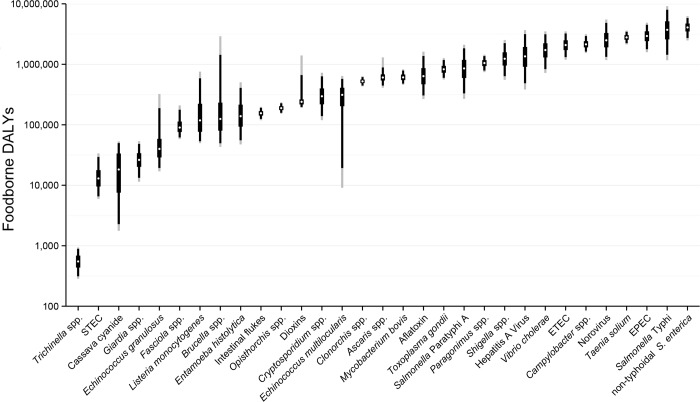
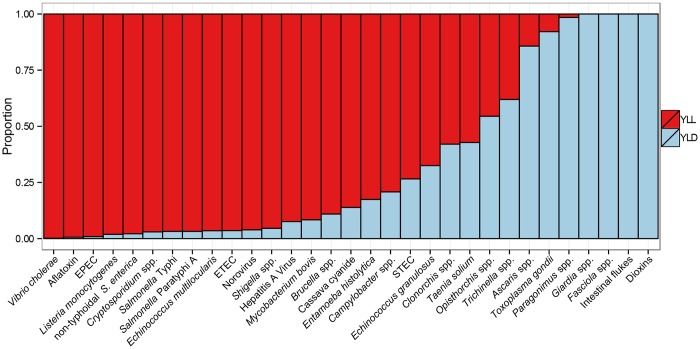
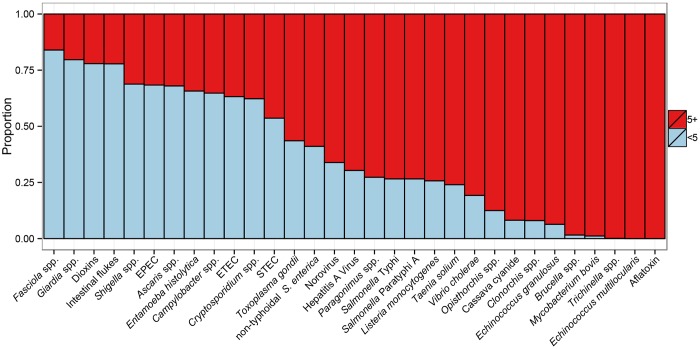
The global burden of foodborne disease caused by 31 hazards in 2010 was 33 million DALYs; children under five years old bore 40% of this burden.
Overview
CoChat Summary
## TL;DR
The WHO Foodborne Disease Burden Epidemiology Reference Group estimated that 31 foodborne hazards caused 600 million illnesses, 420,000 deaths, and 33 million DALYs worldwide in 2010. The burden was concentrated in low-income regions and in children under 5, with diarrheal disease agents—especially norovirus, Campylobacter spp., and non-typhoidal Salmonella enterica—accounting for most illness and death.
## Key findings
- Thirty-one hazards caused an estimated 600 million (95% UI 420–960 million) illnesses, 420,000 (95% UI 310,000–600,000) deaths, and 33 million (95% UI 25–46 million) DALYs in 2010.
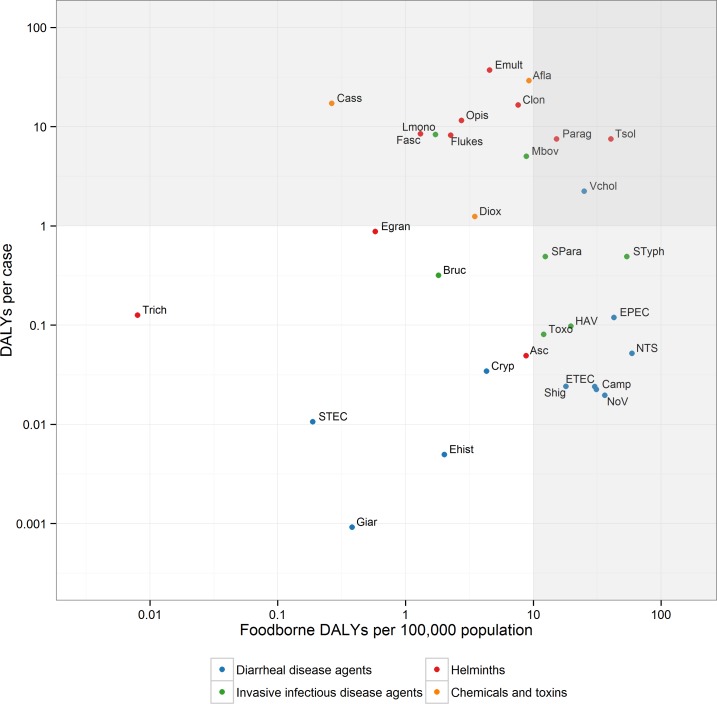
- Diarrheal disease agents accounted for 550 million illnesses and 230,000 deaths; the most frequent illness agents were norovirus (120 million cases) and Campylobacter spp. (96 million cases).
- Non-typhoidal Salmonella enterica caused 59,000 deaths and 4.0 million DALYs; other major death causes included Salmonella Typhi (52,000 deaths), Taenia solium (28,000), hepatitis A virus (28,000), and aflatoxin (20,000; 95% UI 8,000–51,000).
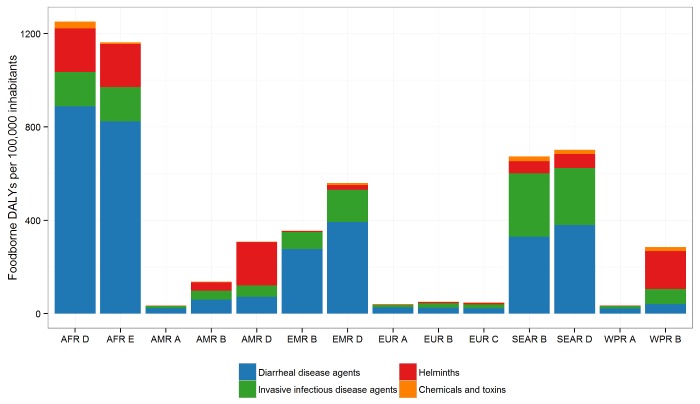
- 40% of the foodborne disease burden was borne by children under 5; the highest burden per 100,000 population was in AFR D (1,300 DALYs) and AFR E (1,200 DALYs), with SEAR B (690), SEAR D (710), and EMR D (570) also high.
## Methods
- The study was a WHO FERG global burden estimation using 31 selected foodborne hazards identified on the basis of high incidence/mortality and data availability.
- It estimated incidence, duration, mortality, YLLs, YLDs, and DALYs for 2010 using systematic reviews, other literature, surveillance data, and expert inputs; estimates were made at country level (194 countries) and then presented at subregional level because of uncertainty.
- For attribution, 12 hazards were judged 100% foodborne; for the other 19 hazards, the authors used structured expert elicitation (Cooke’s Classical Method) to estimate the foodborne fraction, and propagated uncertainty with Monte Carlo simulation in R.
## Limitations
- The paper states its estimates are limited by data gaps and attribution uncertainty; for most hazards, the 95% DALY uncertainty interval ranged from one-fourth to four times the median.
- The authors say the estimates are conservative (underestimates rather than overestimates) because they focused on a subset of more than 100 potential hazards, excluded some hazards or outcomes, and could not always include all relevant disease outcomes.
- They note that country-level estimates were not reliable enough to present, so results are shown at subregion level; this follows from the text and is not presented as a separate explicit limitation.
Model-written summary. Check it against the paper before relying on it.
Integrity signals
Registry
Cites
Statistics
Figures
Verification
Claims the paper makes
5 Valid · 5 Not valid · 16 Not checked · 102 Own results and interpretations
The cited sources that could be checked couldn’t confirm or dispute this claim.
In the paper
“Contaminants in food were not even included as risk factors in previous studies of the global burden of all diseases [3].”
§ World Health Organization Global Estimates and Regional Comparisons of the Burden of Foodborne Disease in 2010 > Introduction
What the sources say
- Could not verifycites [3] Lim SS, Vos T, Flaxman AD, Danaei G, Shibuya K, Adair-Rohani H, et al A comparative risk assessment of burden of disease and injury attributable to 67 risk factors and risk factor clusters in 21 regions, 1990–2010: a systematic analysis for the Global Burden of Disease Study 2010. Lancet. 2012; 380(9859): 2224– 60. 10.1016/S0140-6736(12)61766-8 23245609 PMC4156511 sourceExperimental — accuracy not yet measured
The Discussion describes dietary risk factors such as sodium intake and diets low in fruits or vegetables, but does not address contaminants in food. Searches for food contaminants, foodborne disease, and specific contaminants found no passage establishing whether previous global burden studies included them as risk factors. Page numbers were not available in our copy. (LLM, conf=0.73)
plain- Asserted: passes — The authors put it forward as true.
- Checkable: passes — It can be checked against evidence.
- Load-bearing: passes — The paper’s conclusions depend on it.
- Based: passes — The paper gives a reason why it holds.
- Could not verify
Every source the paper cites for this claim was checked and supports it.
In the paper
“Inclusion of these outcomes would likely considerably increase the burden of enteric infections [43].”
§ World Health Organization Global Estimates and Regional Comparisons of the Burden of Foodborne Disease in 2010 > Introduction > Limitations
What the sources say
- Supportedcites [43] Haagsma JA, Siersema PD, De Wit NJ, Havelaar AH. Disease burden of post-infectious irritable bowel syndrome in The Netherlands. Epidemiol Infect. 2010; 138: 1650– 6. 10.1017/S0950268810000531 20223049 source
The DISCUSSION of our copy states that the annual non-fatal burden of PI-IBS (over 2300 YLD) 'almost doubl[es] the total non-fatal burden of disease for the selected pathogens' and that ignoring PI-IBS in burden-of-disease studies results in an underestimation; it further concludes that including PI-IBS in estimates for the selected bacterial pathogens 'might still underestimate the burden of disease of foodborne disease'. The RESULTS quantify this (Salmonella +86%, Campylobacter +92%, Shigella +151% when PI-IBS is included), and the Abstract repeats the underestimation point, so the hedged claim that including functional bowel disorders would considerably increase the burden of enteric infections is stated by the source. The source's own scope is three bacterial pathogens in The Netherlands (with norovirus PI-IBS discussed as comparable to Campylobacter), which the citing sentence generalises to enteric infections, but the paper itself makes that extrapolation. (LLM, conf=0.85)
hedgedstates a possible cause- Asserted: passes — The authors put it forward as true.
- Checkable: passes — It can be checked against evidence.
- Load-bearing: unclear — It is unclear whether the paper’s conclusions depend on it.
- Based: passes — The paper gives a reason why it holds.
- Supported
A result the paper states — it cites no source for it, so there is none to check. The quote shows it is in the paper.
In the paper
“Foodborne diarrheal disease agents, particularly non-typhoidal Salmonella enterica, caused 230,000 (95% UI 160,000–320,000) deaths”
§ World Health Organization Global Estimates and Regional Comparisons of the Burden of Foodborne Disease in 2010 > Summary Points
plainstates a cause- Asserted: passes — The authors put it forward as true.
- Checkable: passes — It can be checked against evidence.
- Load-bearing: unclear — It is unclear whether the paper’s conclusions depend on it.
- Based: passes — The paper gives a reason why it holds.
A result the paper states — it cites no source for it, so there is none to check. The quote shows it is in the paper.
In the paper
“the burden of Opisthorchis spp. was concentrated in the SEAR B region”
§ World Health Organization Global Estimates and Regional Comparisons of the Burden of Foodborne Disease in 2010 > Summary Points
plainstates an association- Asserted: passes — The authors put it forward as true.
- Checkable: passes — It can be checked against evidence.
- Load-bearing: unclear — It is unclear whether the paper’s conclusions depend on it.
- Based: passes — The paper gives a reason why it holds.
A result the paper states — it cites no source for it, so there is none to check. The quote shows it is in the paper.
In the paper
“The burden of aflatoxin was high in the AFR D, Western Pacific (WPR) B and SEAR B subregions”
§ World Health Organization Global Estimates and Regional Comparisons of the Burden of Foodborne Disease in 2010 > Summary Points
plain- Asserted: passes — The authors put it forward as true.
- Checkable: passes — It can be checked against evidence.
- Load-bearing: unclear — It is unclear whether the paper’s conclusions depend on it.
- Based: passes — The paper gives a reason why it holds.
48 more claims
Create a free account to see all 128 claims and to verify the 5 references still open.
- Probably not a substantial claim. 63
- It may state two separate claims as one. 28
Claims other papers make about this one
Each is checked against this paper’s own text: does it say what the citing paper says it does?
The source backs part of the claim, not all of it — or backs it for a different population, condition or comparison.
In the citing paper
“The FERG found that hazards accounted for around 420,000 deaths in LMIC, imposing a burden of around 33 million DALY lost each year (Havelaar et al., 2015).”
From Burden of foodborne disease in low-income and middle-income countries and opportunities for scaling food safety interventions (2023) · cites this paper as Havelaar et al., 2015
Experimental — accuracy not yet measuredThe source backs part of the claim, not all of it — or backs it for a different population, condition or comparison.
In the citing paper
“Children aged under 5 years were disproportionately affected.This group makes up 9% of the world's population, yet they experience 38% of all FBD, represent 30% of deaths related to FBD, and bear 40% of global DALY lost from FBD (Havelaar et al., 2015).”
From Burden of foodborne disease in low-income and middle-income countries and opportunities for scaling food safety interventions (2023) · cites this paper as Havelaar et al., 2015
Experimental — accuracy not yet measuredThe cited source says what the claim attributes to it.
In the citing paper
“This paper, which represents the work of more than 60 experts over a period of 10 years, can be considered the most definitive and comprehensive guide to the health burden of FBD (Havelaar et al., 2015).”
From Burden of foodborne disease in low-income and middle-income countries and opportunities for scaling food safety interventions (2023) · cites this paper as Havelaar et al., 2015
The cited source says what the claim attributes to it.
In the citing paper
“Although LLMICs bear a high burden of foodborne disease [2]”
From Food Safety Knowledge, Attitude, and Practices (KAP) of Urban Consumers in Low-Income and Lower-Middle-Income Countries (LLMICs): A Scoping Review (2026) · cites this paper as [2]
Citations
Cites
R: A Language and Environment for Statistical Computing
R Core Team (2025) · doi:10.32614/r.manuals · Cited by 352,181
Lim, S. S., Vos, T., Flaxman, A. D., Danaei, G., Shibuya, K., Adair-Rohani, H., AlMazroa, M. A., Amann, M., Anderson, H. R., Andrews, K. G., et al. (2012) · The Lancet · doi:10.1016/s0140-6736(12)61766-8 · Cited by 11,805 · cited 1×
“Contaminants in food were not even included as risk factors in previous studies of the global burden of all diseases [3].”
BackgroundMurray, C. J. L., Vos, T., Lozano, R., Naghavi, M., Flaxman, A. D., Michaud, C., Ezzati, M., Shibuya, K., Salomon, J. A., Abdalla, S., et al. (2012) · The Lancet · doi:10.1016/s0140-6736(12)61689-4 · Cited by 8,888
Foodborne illness acquired in the United States—Major pathogens
Scallan, E., Hoekstra, R. M., Angulo, F. J., Tauxe, R. V., Widdowson, M.-A., Roy, S. L., Jones, J. L., & Griffin, P. M. (2011) · Emerging Infectious Diseases · doi:10.3201/eid1701.p11101 · Cited by 7,657 · cited 1×
“Several high-income countries have published national estimates of FBD. Estimates of food-related illnesses and deaths in the USA were reported in the late 1990s [28] and updated to cover the period 2000 – 2008 [29,30].”
BackgroundSelf-citationFood-Related Illness and Death in the United States
Mead, P. S., Slutsker, L., Dietz, V., McCaig, L. F., Bresee, J. S., Shapiro, C., Griffin, P. M., & Tauxe, R. V. (1999) · Emerging Infectious Diseases · doi:10.3201/eid0505.990502 · Cited by 7,235
Global mortality, disability, and the contribution of risk factors: Global Burden of Disease Study
Murray, C. J., & Lopez, A. D. (1997) · The Lancet · doi:10.1016/s0140-6736(96)07495-8 · Cited by 4,492 · cited 1×
“The DALY measure combines the years of life lost (YLL) due to premature death and the years lived with disability (YLD) from a disease or condition, for varying degrees of severity, making time the common metric for death and disability [20].”
BackgroundSelected major risk factors and global and regional burden of disease
Ezzati, M., Lopez, A. D., Rodgers, A., Vander Hoorn, S., & Murray, C. J. (2002) · The Lancet · doi:10.1016/s0140-6736(02)11403-6 · Cited by 3,594
Kirk, M. D., Pires, S. M., Black, R. E., Caipo, M., Crump, J. A., Devleesschauwer, B., Döpfer, D., Fazil, A., Fischer-Walker, C. L., Hald, T., et al. (2015) · PLoS Medicine · doi:10.1371/journal.pmed.1001921 · Cited by 1,625 · cited 2×
“Detailed descriptions of methods to estimate incidence and mortality of all 31 hazards can be found in papers in the collection on enteric diseases [11], parasitic diseases [18], and chemicals and toxins [19].”
BackgroundMethodSelf-citationSalomon, J. A., Vos, T., Hogan, D. R., Gagnon, M., Naghavi, M., Mokdad, A., Begum, N., Shah, R., Karyana, M., Kosen, S., et al. (2012) · The Lancet · doi:10.1016/s0140-6736(12)61680-8 · Cited by 1,322
Global burden of aflatoxin-induced hepatocellular carcinoma: A risk assessment
Liu, Y., & Wu, F. (2010) · Environmental Health Perspectives · doi:10.1289/ehp.0901388 · Cited by 1,224
Research works printed but not linked: 2
- Gibb H, Devleesschauwer B, Bolger PM, Bellinger D, Wu F, Ezendam J, et al WHO estimates of the global and regional burden from chemicals and toxins in food, 2010. F1000Research. In Press. PMC4755404 26918123
- Devleesschauwer B, Haagsma JA, Angulo FJ, Bellinger D, Cole D, Döpfer D, et al Methodological Framework for World Health Organization Estimates of the Global Burden of Foodborne Disease. PLoS ONE 10: e0142498 10.1371/journal.pone.0142498 PMC4668830 26633883 · DOI · Paper page
Cited by
Items 1,301–1,400 of 2,051
Hunderra, G. C., Israel, W., Gebeyehu, A., Mulugeta, W., Ngusie, G., & Belay, S. (2025) · Journal of Food Protection · doi:10.1016/j.jfp.2025.100614 · Cited by 5
Berezhanskiy, P. V., Mahmoudizeh, A., & Fakhri, Y. (2025) · Reviews on Environmental Health · doi:10.1515/reveh-2025-0047 · Cited by 4
Venâncio, I., Martins, I., Martins, R. M., Oleastro, M., & Ferreira, S. M. P. (2025) · Water · doi:10.3390/w17182767 · Cited by 3
Ye, S., Duan, J., Yuan, J., Liu, G., Lin, J., & Wang, Y. (2025) · Analytica Chimica Acta · doi:10.1016/j.aca.2025.344735 · Cited by 4
Meunier, D., Corona-Torres, R., Boulton, K., Wu, Z., Ballantyne, M., Glendinning, L., Ahmad, A. A., Borowska, D., Taylor, L., Vervelde, L., et al. (2025) · eLife · doi:10.7554/elife.106252.3 · Cited by 14
Xin, C., Hoang, T. T., Duong, T. Q., Nhật, T. T., Pham, H. T. T., Dang, S. T. T., Hương, L. Q., Nhung, L. T. H., Butt, S., Hang, T. T. T., et al. (2025) · PLoS neglected tropical diseases · doi:10.1371/journal.pntd.0013615 · Cited by 7
“Campylobacter spp. and non-typhoidal Salmonella (NTS) are major bacterial pathogens causing intestinal infections and gastroenteritis in humans, accounting for an estimated 80,000 deaths globally in 2010 [1].”
Wang, Q.-Q., Ma, Q., Chen, S., Han, K., Wu, H., Feng, Z., Ran, Q., Ren, J.-K., Wang, X.-M., Sun, B.-Y., et al. (2025) · Food Chemistry · doi:10.1016/j.foodchem.2025.147027 · Cited by 3
Della, D., Millar, R., Pellegrino, A., Dogan, O., Tiwari, U., Boloña, P. S., Duffy, G., Bernini, V., & O’Brien, T. (2025) · Food Control · doi:10.1016/j.foodcont.2025.111583 · Cited by 3
Yuan, J., Wang, Y., Kang, X., Guo, C., Ji, H., Wu, L., & Qin, Y. (2025) · European Polymer Journal · doi:10.1016/j.eurpolymj.2025.114466 · Cited by 5
Singh, G., Singh, L., Kurmi, B. D., & Patel, P. (2025) · Electroanalysis · doi:10.1002/elan.70091 · Cited by 3
Almutairi, O., Moussa, I. M. I., Marzouk, E., Abalkhail, A., & Elbehiry, A. (2026) · Biology · doi:10.3390/biology15010104 · Cited by 4
“The use of explicit criteria supports reproducibility and aligns with best practices in foodborne pathogen surveillance [30,31].”
Álvarez-Espejo, D. M., Fredes-García, D., Díaz-Gavidia, C., Gutiérrez, S., Barrón-Montenegro, R., Álvarez, F. P., Constenla-Albornoz, R., Cadet-Arenas, V., Reyes-Jara, A., Olivares‐Pacheco, J., et al. (2026) · Foods · doi:10.3390/foods15030410 · Cited by 3
Zhang, Z., Chen, W., Liu, X., et al. (2026) · One Health · doi:10.1016/j.onehlt.2026.101348 · Cited by 3
Zheng, G., Chen, L., Dong, G., Ye, K., Liu, Z., & Wang, L. (2026) · Frontiers in Microbiology · doi:10.3389/fmicb.2026.1809070 · Cited by 8
Roy, K. A. D., Desai, S. S., Abishad, P., Krishnan, R., Vinod, V. K., Sruthimol, J. J., Kothakotta, A., Barbuddhe, S. B., Rawool, D. B., & Vergis, J. (2026) · RSC Advances · doi:10.1039/d6ra01488g · Cited by 6
Sophian, A., Yulianto, W., & Syahadat, F. U. (2026) · Exploration of Foods and Foodomics · doi:10.37349/eff.2026.1010140 · Cited by 5
Bittsánszky, A., Bilicki, V., Sudár, G., Süth, M., Kusza, S., & Tóth, A. J. (2026) · Veterinary Sciences · doi:10.3390/vetsci13060574 · Cited by 4
Food safety knowledge and practices among university students in the northern region of Ghana
Lawal, M., Adzitey, F., Ayamdoo, J., Damba, Y., & Zakaria, R. (2023) · Journal of Agriculture and Food Sciences · doi:10.4314/jafs.v21i1.6 · Cited by 3
Significant Risk of Shiga Toxin-Producing E. coli in Certain Halal Foods
Saeed, S. A. R. M. (2023) · Springer eBooks · doi:10.1007/978-3-031-41459-6_23 · Cited by 4
Mugo-Kamiri, L., Imungi, J. K., Njue, L. G., Diiro, G., Ombura, F. L. O., Akutse, K. S., Tanga, C. M., Khamis, F. M., & Subramanian, S. (2024) · Frontiers in Microbiology · doi:10.3389/fmicb.2024.1385433 · Cited by 3
Rhouma, M., Gaucher, M., Souhail, B., Békal, S., & Sandérs, P. (2024) · Agriculture & Food Security · doi:10.1186/s40066-024-00476-2 · Cited by 7
“Thirty-one foodborne hazards including 29 microbial (bacteria, viruses, parasites) and 3 chemical hazards were considered in the 2015 WHO estimation of the global burden of FBDs [3].”
BackgroundApplication of AMPs in the Food and Beverage Industry
Choudhary, S., Shanu, K., & Devi, S. (2024) · Springer eBooks · doi:10.1007/978-981-97-3413-9_10 · Cited by 4
Effect of post-chilling processes and modified atmosphere packing on Campylobacter in broiler meat
Calvo‐Fernandez, C., Takeuchi-Storm, N., Nauta, M. J., et al. (2024) · Food Control · doi:10.1016/j.foodcont.2024.111087 · Cited by 3
Hassen, A., Keba, A., Ebrai, M. S., Mamo, H., Kejela, T., Tessema, T. S., Vipham, J., Kovač, J., & Zewdu, A. (2024) · International Journal of Food Microbiology · doi:10.1016/j.ijfoodmicro.2024.111021 · Cited by 3
Qin, M., Li, L., Wang, L., Zhang, Y., Zhang, L., Song, Y., & Chen, J. (2024) · Nutrients · doi:10.3390/nu16244381 · Cited by 4
Samad, M. A. (2025) · Journal of Veterinary Medical and One Health Research · doi:10.36111/jvmohr.2024.6(1-2).0038 · Cited by 4
Food safety certification in urban food markets: the willingness to pay for safer meat in Peru
Ebata, A., Espinoza, M., & Ton, G. (2025) · Food Security · doi:10.1007/s12571-024-01512-6 · Cited by 7
“At the global level, an estimated total of 600 million cases of illness were caused by foodborne diseases according to the World Health Organization’s (WHO) report in 2010 (Havelaar et al., 2015a, b).”
Halogen-Acid-Modified Bi2S3 Nanorod Array for the Selective Detection of Food Spoilage Gases
Qin, P., Liu, S.-H., Wang, C., et al. (2025) · ACS Applied Nano Materials · doi:10.1021/acsanm.4c07036 · Cited by 3
Ali, W., Hu, Z., Tang, Z., Liu, S., Nasir, Z. A., Coulon, F., Liu, P., & Cheng, Y. (2025) · Risk Analysis · doi:10.1111/risa.70000 · Cited by 3
“The disease health risk burden was quantified using DALYs and the annual probability of infection, which were employed to estimate the burden of S. aureus and E. coli bioaerosol exposure (Havelaar et al., 2012, 2015).”
Teshale, A. M., Abegaz, W. E., Azmeraye, B. M., Degefaw, D. M., LaPolt, D., Bonger, Z. T., Kalayu, A. A., Tigabu, E., Gazu, L., Yimer, G., et al. (2025) · PLOS Global Public Health · doi:10.1371/journal.pgph.0004407 · Cited by 3
“These pathogens are commonly transmitted through consumption of contaminated food and water, contact with animals, or person-to-person exposure [5].”
Kowalcyk, B. B., Gorris, L. G. M., Buffer, J., Stolte-Carroll, K., Bakin, B. C., Howell, A., Degefaw, D. M., Azmeraye, B. M., Morgan, K. M., Binkley, L., et al. (2025) · Journal of Food Protection · doi:10.1016/j.jfp.2025.100525 · Cited by 3
“…are the most comprehensive estimates available, lack of data may have led to under-or over-estimates of the disease burden associated with some hazards (e.g., STEC) and the omission of other hazards (e.g., rotavirus, Lathyrus sativus ) from the WHO global estimates study (Havelaar et al., 2015).”
InfluentialSelf-citationGarsow, A. V., Hagos, S., Djimeu, E. W., Fokou, C., Swartz, H., Gebremedhin, G., Chacha, B., & Lambertini, E. (2025) · International Journal of Environmental Research and Public Health · doi:10.3390/ijerph22111645 · Cited by 5
“The Food Epidemiology Reference Group (FERG), a working group of the World Health Organization, estimated that 600 million people each year (approximately one in ten) become ill from food they eat [1,2].”
Yeh, H., Kojima, K., & Mobley, J. A. (2018) · Veterinary Immunology and Immunopathology · doi:10.1016/j.vetimm.2018.05.006 · Cited by 3
Impact of Syrian refugees on congenital TORCH infections screening in Turkey
Çoşkun, B., Çoşkun, B., Gülümser, Ç., et al. (2020) · Journal of obstetrics and gynaecology research · doi:10.1111/jog.14273 · Cited by 3
Park, S., Nam, E. W., Kim, Y., Lee, S., Kim, S. I., & Yoon, H. (2020) · Journal of Microbiology and Biotechnology · doi:10.4014/jmb.2007.07036 · Cited by 4
Abutineh, I., Kreitman, K. R., Kothadia, J. P., Ali, B., Jain, R., Clark, I., Maliakkal, B. J., & Nair, S. P. (2021) · Case Reports in Hepatology · doi:10.1155/2021/5512883 · Cited by 3
Predicting Food-Safety Risk and Determining Cost-Effective Risk-Reduction Strategies
Nganje, W. E., Burbidge, L. D., Denkyirah, E. K., & Ndembe, E. (2021) · Journal of risk and financial management · doi:10.3390/jrfm14090408 · Cited by 5
“A leading cause of global mortality is foodborne disease, which is estimated to about 600 million illnesses and 42,000 deaths annually (Havelaar et al. 2015).”
BackgroundFactors of Food Premises Not Attaining "A" Grading in Sabah, Malaysia Borneo
Kaur, N., Esa, W., Zahlan, Y., et al. (2021) · Universal Journal of Public Health · doi:10.13189/ujph.2021.090517 · Cited by 3
“The main bulk of foodborne disease is reported in the subregions of Africa, followed by Southeast Asia and the Eastern Mediterranean regions [2].”
BackgroundA Semi‐supervised Classification Method of Parasites Using Contrastive Learning
Ren, Y., Jiang, H., Zhu, H., Tian, Y., & Hu, J. (2021) · IEEJ Transactions on Electrical and Electronic Engineering · doi:10.1002/tee.23525 · Cited by 5
“Toxoplasma is estimated to infect one-third of the world’s population, life-threatening in the pregnancy and the immunocompromised [5].”
BackgroundGarsow, A. V., Méndez, D. F. S., Torres, O. R., et al. (2021) · World Mycotoxin Journal · doi:10.3920/wmj2021.2701 · Cited by 3
Hashem, M. A., Enany, M. E., Huda, E. I., et al. (2022) · Food Research · doi:10.26656/fr.2017.6(2).539 · Cited by 3
“Egypt as one of the Middle East countries is a particular one of concern in regard to food poisoning diseases according to Havelaar et al. (2015).”
BackgroundGahamanyi, N., Mboera, L. E. G., Matee, M. I., Mutangana, D., Amachawadi, R. G. G., Yoon, K.-Y., Mabwi, H. A., Hyun, K., Pan, C.-H., & Komba, E. V. G. (2021) · East African Journal of Science Technology and Innovation · doi:10.37425/eajsti.v3i1.399 · Cited by 3
Antimicrobials From Plants - Food Preservation and Shelf Life Extension
Lin, H., & Tsao, R. (2019) · Elsevier eBooks · doi:10.1016/b978-0-444-64046-8.00249-4 · Cited by 7
Fanissa, F., Effendi, M. H., Tyasningsih, W., & Ugbo, E. N. (2022) · Biodiversitas Journal of Biological Diversity · doi:10.13057/biodiv/d230606 · Cited by 15
Zoonoses in Food-Chain Animals with Respect to Human Disease and Public Health Relevance
Simon, S., Lamparter, M. C., Pietsch, M., Borowiak, M., Fruth, A., Rabsch, W., & Fischer, J. (2023) · Springer eBooks · doi:10.1007/978-3-030-85877-3_7-1 · Cited by 3
Ndambi, A., Kilelu, C., van Knippenberg, C., & van der Lee, J. (2023) · NJAS Impact in Agricultural and Life Sciences · doi:10.1080/27685241.2023.2194258 · Cited by 6
“The socio-economic costs of such diseases are still largely unknown (Havelaar et al., 2015).”
BackgroundHagenimana, T. (2022) · Journal of Regulatory Science · doi:10.21423/jrs-v10i1hagenimana · Cited by 5
Grace, D., & Cook, E. A. J. (2023) · Springer eBooks · doi:10.1007/978-3-030-85877-3_46-1 · Cited by 5
Vohra, P., Bremner, A., Nicholls, B., et al. (2023) · Vaccine · doi:10.1016/j.vaccine.2023.05.046 · Cited by 3
Indrotristanto, N., Andarwulan, N., Hariyadi, R. D., et al. (2023) · Food Control · doi:10.1016/j.foodcont.2023.109932 · Cited by 3
Aktar, T., Fakhruzzaman, M., Akter, M. R., et al. (2023) · Asian-Australasian Journal of Food Safety and Security · doi:10.3329/aajfss.v7i1.62735 · Cited by 3
Fei, X., Schroll, C., Huang, K., Christensen, J. P., Christensen, H. K., Lemire, S., Kilstrup, M., Thomsen, L. E., Jelsbak, L., & Olsen, J. E. (2023) · Microbial Pathogenesis · doi:10.1016/j.micpath.2023.106236 · Cited by 6
Zoonoses and Poverty: The Multiple Burdens of Zoonoses in Low- and Middle-Income Countries
Grace, D., & Cook, E. A. J. (2023) · Springer eBooks · doi:10.1007/978-3-031-27164-9_46 · Cited by 6
Introductory Chapter: Food Safety
Ahmad, R. S., Munawar, H., Saima, H., & Siddique, F. (2023) · Food science and nutrition · doi:10.5772/intechopen.113289 · Cited by 8
Colonization of Raphanus sativus by human pathogenic microorganisms
Szymańska, S., Deja-Sikora, E., Sikora, M., et al. (2024) · Frontiers in Microbiology · doi:10.3389/fmicb.2024.1296372 · Cited by 3
Hamilton, A. N., & Gibson, K. E. (2024) · Food and Environmental Virology · doi:10.1007/s12560-024-09597-0 · Cited by 4
“From the layers of printed cheese and cookies to surimi, choco-late, turkey, and even cell-cultured meat, the possibilities 1,300 fatalities in the United States, alongside a staggering 600 million illnesses and over 418,000 deaths globally (Havelaar et al., 2015; Scallan et al., 2011).”
BackgroundInfluentialEconomic evidence for the control of meatborne parasites in Europe: A scoping review
Dadios, N., Imazaki, P. H. D., Millins, C., & Thomas, L. F. (2024) · Food Control · doi:10.1016/j.foodcont.2024.110659 · Cited by 4
Hamza, M. K., Sivaraman, G. K., & Mothadaka, M. P. (2024) · BMC Microbiology · doi:10.1186/s12866-024-03469-0 · Cited by 4
“Such an ominous situation has the potential to result in foodborne diseases caused by a wide range of biological and chemical contaminants such as viruses, bacteria, parasites, chemical toxins, heavy metals, allergens, etc. [2].”
BackgroundBurcham, Z. M., Tweedie, J. L., Farfán-García, A. E., Nolan, V. G., Donohoe, D. R., Gomez-Duarte, O. G., & Johnson, J. G. (2024) · mSphere · doi:10.1128/msphere.00342-24 · Cited by 3
Nordhagen, S., Hagos, S., Gebremedhin, G., & Lee, J. (2024) · Public Health Nutrition · doi:10.1017/s1368980024002131 · Cited by 7
“Inadequate consumption of vegetables is a top dietary risk in sub-Saharan Africa (50) .”
InfluentialSumana, M. N., Rao, M. R., Deepashree, R., et al. (2024) · Infectious Disease Reports · doi:10.3390/idr16060094 · Cited by 3
“It is an important zoonotic pathogen that can cause infections in humans and domestic birds (Chickens) [2,3].”
InfluentialKeba, A., Tola, A., Kaylegian, K. E., Kebede, M., & Zewdu, A. (2025) · Frontiers in Sustainable Food Systems · doi:10.3389/fsufs.2024.1539559 · Cited by 5
Quality Assurance and Control in Food and Dairy Products
Srivastava, A., Sharma, S., & Sahu, J. K. (2025) · Food engineering series · doi:10.1007/978-3-031-75834-8_3 · Cited by 3
Tangestani, M., Jafari, A. J., Kermani, M., Kalantary, R. R., & Arfaeinia, H. (2025) · Results in Chemistry · doi:10.1016/j.rechem.2025.102196 · Cited by 6
Moges, M., Rødland, E. K., & Ambelu, A. (2025) · BMC Infectious Diseases · doi:10.1186/s12879-025-10977-5 · Cited by 13
Manzanares-Pedrosa, A., Correa‐Fiz, F., Andrade, F., et al. (2025) · Poultry Science · doi:10.1016/j.psj.2025.105302 · Cited by 3
“Campylobacter jejuni and Campylobacter coli are the leading bacterial causes of human gastroenteritis worldwide, accounting for approximately 500 million cases annually (EFSA and ECDC, 2023a; Havelaar et al., 2015).”
Setiawati, Y., Purbowati, M. R., & Ulfa, M. (2018) · Herb-Medicine Journal Terbitan Berkala Ilmiah Herbal Kedokteran dan Kesehatan · doi:10.30595/hmj.v1i1.2482 · Cited by 3
Zhu, S., Zeng, M., Guo, W. Y., Feng, G., & Wu, H. (2019) · Journal of Environmental Science and Health Part C · doi:10.1080/10590501.2019.1591698 · Cited by 3
SUGIANTI, G. R., Wirawan, I. M. A., & Utami, N. W. A. (2019) · Journal of UOEH · doi:10.7888/juoeh.41.353 · Cited by 3
Investigation of Alternative Biocidal Options against Foodborne Multidrug Resistant Pathogens
Meade, E., Savage, M., & Garvey, M. (2020) · European Journal of Experimental Biology · Cited by 3
Lamprecht, C., Guenther, L., & Joubert, M. (2022) · Health Risk & Society · doi:10.1080/13698575.2022.2033177 · Cited by 4
“Foodborne diseases are very common, and it has been shown that low- and middleincome countries in sub-Saharan Africa are among those most affected by outbreaks (Havelaar et al., 2015), implying a high likelihood of future outbreaks.”
BackgroundSandrasaigaran, P., Kuan, C. H., Radu, S., Gobal, D., Abidin, U. F. U. Z., Rukayadi, Y., & Hasan, H. (2023) · Food Research · doi:10.26656/fr.2017.7(2).829 · Cited by 3
“The typhoid fever causing Salmonella enterica serovar Typhi and S . enterica ser. Paratyphi are largely restricted to the human host, non - zoonotic and are commonly witnessed in many underdeveloped countries due to poor sanitation practices (Havelaar et al ., 2015).”
BackgroundHolm, R. H., Mwangende, J., Tembo, M. D., & Singini, W. (2016) · Environment Development and Sustainability · doi:10.1007/s10668-016-9867-7 · Cited by 3
“Havelaar et al. (2015) reports globally, the most frequent causes of foodborne illness are diarrheal disease agents, but also may include invasive infectious disease agents, helminths, chemicals and toxins.”
BackgroundKoopmans, M., Bosch, A., & Guyader, S. L. (2017) · Elsevier eBooks · doi:10.1016/b978-0-12-385007-2.00014-0 · Cited by 3
Paudyal, N., Pan, H., Li, X., Fang, W., & Yue, M. (2018) · Foodborne Pathogens and Disease · doi:10.1089/fpd.2017.2402 · Cited by 3
“N ontyphoidal Salmonella enterica infections account for the highest burden of foodborne diseases globally (Havelaar et al. , 2015; Kirk et al. , 2015).”
RetractedKim, H., Oh, Y., Thollot, Y., et al. (2019) · Infectious Diseases and Therapy · doi:10.1007/s40121-019-0230-9 · Cited by 3
Hamed, S., Samie, S. E. R. A. E., Ismail, Y., & Fayed, S. (2018) · Benha Medical Journal · doi:10.4103/bmfj.bmfj_175_18 · Cited by 4
“Worldwide, Salmonella spp. were estimated as the major causes of diarrheal and invasive foodborne deaths accounted for 93.8 million gastroenteritis cases, 111 000 deaths, and around 8.6 million disability-adjusted life years (Havelaar et al., 2015; Majowicz et al., 2010) [3,4].”
BackgroundInfluentialEpidemiology of Foodborne Illnesses
Hedberg, C. W. (2019) · ASM Press eBooks · doi:10.1128/9781555819972.ch8 · Cited by 4
Anal, A. K., Waché, Y., Louzier, V., Laurent, R., Mens, F., Avalllone, S., Mahakarnchanakul, W., Udompijitkul, P., Tantikitti, C., Nguyen, T.-T.-T., et al. (2019) · Food Control · doi:10.1016/j.foodcont.2019.106913 · Cited by 3
Kinavouidi, D. J. K., Kayath, C. A., Nieko, N. P. M. D., Mokémiabeka, S. N., Moukala, D. C. R., & Nguimbi, E. (2022) · Advances in Microbiology · doi:10.4236/aim.2022.124020 · Cited by 4
Bossé, J. T., Li, Y., Atherton, T., Walker, S., Williamson, S. M., Rogers, J., Chaudhuri, R. R., Weinert, L. A., Holden, M. T. G., Maskell, D. J., et al. (2015) · Veterinary Microbiology · doi:10.1016/j.vetmic.2015.07.002 · Cited by 3
Rushton, J., Gilbert, W., Coyne, L., Thomas, L. F., Pinchbeck, G. L., & Williams, N. J. (2018) · CGSPace A Repository of Agricultural Research Outputs (Consultative Group for International Agricultural Research) · Cited by 6
Foodborne disease in Kenya: County-level cost estimates and the case for greater public investment
Hoffmann, V., & Baral, S. (2019) · CGSPace A Repository of Agricultural Research Outputs (Consultative Group for International Agricultural Research) · doi:10.2499/p15738coll2.133525 · Cited by 8
“We translate the WHO estimate of 1,140 DALYs due to FBD per 100,000 people in Kenya (S. Jaffee, personal communication, January 9, 2019), to county level DALY burdens by scaling the national figure by the child diarrhea rate in each county relative to the national average, and then multiplying by county population (Co…”
BackgroundInfluentialErol, İ., Mutuş, B., Ayaz, N. D., et al. (2023) · SSRN Electronic Journal · doi:10.2139/ssrn.4507813 · Cited by 3
Kalule, J. B., Bester, L. A., Banda, D. L., et al. (2023) · medRxiv · doi:10.1101/2023.10.11.23296874 · Cited by 3
Effect of bacteriocin RSQ01 on milk microbiota during pasteurized milk preservation
Fu, C.-M., Luo, S., Tang, D.-R., Zhang, Y., Xu, J., Lin, L., & Zhang, Q. (2025) · Journal of Dairy Science · doi:10.3168/jds.2025-26395 · Cited by 4
Khue, D. N., Lại, Q. D., Le, P. K., Tam, L. N., & Thanh, N. B. (2025) · Journal of Food Safety · doi:10.1111/jfs.70019 · Cited by 2
Review of Recent Advances in Aptasensor for the Detection of Pathogenic Escherichia coli O157 : H7
Lin, M., Quintela, I. A., Wu, V. C. H., & Lin, C. (2025) · Journal of Food Safety · doi:10.1111/jfs.70017 · Cited by 3
Bateman, K. R., Scaletti, E. R., Widmalm, G., Miller, M. J., & Stenmark, P. (2025) · Journal of Biological Chemistry · doi:10.1016/j.jbc.2025.110295 · Cited by 5
Risk factors associated with long-term shedding infections of non-typhoidal Salmonella in humans
Rohringer, A., Veneti, L., Stüken, A., van Boetzelaer, E., Lund, H. M., Nordeng, Z., MacDonald, E., & Naseer, U. (2025) · European Journal of Clinical Microbiology & Infectious Diseases · doi:10.1007/s10096-025-05165-x · Cited by 2
Mayyas, A. H., Al‐Qadiri, H. M., Al‐Holy, M., et al. (2025) · Poultry Science · doi:10.1016/j.psj.2025.105657 · Cited by 2
“The economic burden of diseases caused by contaminated food, such as Campylobacter spp., is substantial, encompassing healthcare costs, productivity losses, and trade restrictions (Havelaar et al., 2015).”
The Role of Poultry Food Matrices in Transmitting Salmonella
Bharathan, G., & Srikumar, S. (2025) · IntechOpen eBooks · doi:10.5772/intechopen.1012025 · Cited by 2
Elleuch, N., Sellami, S., Toumi, E., Jridi, C., Lhoste, J., Shova, S. G., & Boujelbene, M. (2025) · Journal of Molecular Structure · doi:10.1016/j.molstruc.2025.144271 · Cited by 2
Zoubi, M. R. A., Alzoubi, M., Hussein, N., Albtoush, I., Naqrash, M. M., Alshwaiyat, N. M., Al‐Mugheed, K., Alabdullah, A. A. S., & Abdelaliem, S. M. F. (2025) · Scientific Reports · doi:10.1038/s41598-025-13807-5 · Cited by 2
Luan, L., Tang, J., Luo, Y., et al. (2025) · Spectrochimica Acta Part A Molecular and Biomolecular Spectroscopy · doi:10.1016/j.saa.2025.127078 · Cited by 2
Plante, D., Barrera, J. A. B., Lord, M., Harlow, J., Iugovaz, I., & Nasheri, N. (2025) · Food and Environmental Virology · doi:10.1007/s12560-025-09668-w · Cited by 3
Lu, Q., Tang, Z., Guan, G., Yang, D., Liu, C., Du, C., Zhi, K., Wang, H., & Lu, F. (2025) · Virulence · doi:10.1080/21505594.2025.2580174 · Cited by 2
“Although this disease is typically self-limiting, it can progress to bacteremia and systemic disease, impacting around 200 million individuals worldwide and causing over 200,000 fatalities annually [3,4].”
Hemeda, S., Abdallh, M. G. A., Ibrahim, B., et al. (2025) · Scientific Reports · doi:10.1038/s41598-025-23273-8 · Cited by 2
“In contrast, Salmonella spp. were recovered at a lower rate, which diverges from reports in other regions where it is a leading cause of egg-related foodborne illnesses 40 .”
Keng, B. M. H., Han, P., Low, A., Aung, K. T., Khor, W. C., Maiwald, M., Loo, L. H., Oon, L. L. E., Koh, T. H., Chew, K. L., et al. (2025) · Microbiology Spectrum · doi:10.1128/spectrum.02725-25 · Cited by 4
Dai, Y., Huang, J., Zhang, M., Pang, X., Li, X., Sun, J. Y., & Lu, Y. (2025) · Food Bioscience · doi:10.1016/j.fbio.2025.107904 · Cited by 2
Metadata
- Authors
- Havelaar, A. H., Kirk, M. D., Torgerson, P. R., Gibb, H. J., Hald, T., Lake, R. J., Praet, N., Bellinger, D. C., de Silva, N. R., Gargouri, N., Speybroeck, N., Cawthorne, A., Mathers, C., Stein, C., Angulo, F. J., Devleesschauwer, B., & on behalf of World Health Organization Foodborne Disease Burden Epidemiology Reference Group
- Affiliations
- Utrecht University (NL)
- Australian National University (AU)
- University of Zurich (CH)
- Technical University of Denmark (DK)
- New Zealand Institute for Public Health and Forensic Science (NZ)
- Instituut voor Tropische Geneeskunde (BE)
- Boston Children's Hospital (US)
- UCLouvain (BE)
- World Health Organization (CH)
- Centers for Disease Control and Prevention (US)
- Ghent University (BE)
- Corresponding author
- Havelaar, Arie H.
- ORCID
- Venue
- PLoS Medicine
- Publisher
- Public Library of Science (PLoS)
- Published
- 2015-12-03
- Volume
- 12
- Issue
- 12
- Pages
- e1001923
- ISSN
- 1549-1277 (ISSN-L)
- 1549-1676
- PMC
- PMC4668832
- OpenAlex
- W2186140012
- Cited by
- 2,067
- References
- 40
- Citations by year
- 2026: 220 · 2025: 251 · 2024: 235 · 2023: 267 · 2022: 217 · 2021: 219 · 2020: 206 · 2019: 153 · 2018: 149 · 2017: 90 · 2016: 51 · 2015: 3
- FWCI
- 130.65
- Type
- journal article
- Language
- en
- Open access
- gold
- doi.org
- Licence
- Locations
- PLoS Medicine (publishedVersion, cc-by)
- Europe PMC (PubMed Central) (publishedVersion, cc-by)
- PubMed Central (publishedVersion, cc-by)
- PubMed (publishedVersion)
- EUR Research Repository (Erasmus University Rotterdam) (publishedVersion, cc-by)
- Zurich Open Repository and Archive (University of Zurich) (acceptedVersion, cc-by)
- ResearchOnline (Glasgow Caledonian University) (acceptedVersion, cc-by)
- Ghent University Academic Bibliography (Ghent University) (submittedVersion, other-oa)
- EUR Research Repository (Erasmus University Rotterdam) (submittedVersion, other-oa)
- CGSPace A Repository of Agricultural Research Outputs (Consultative Group for International Agricultural Research) (submittedVersion, other-oa)
- Digital Access to Libraries (submittedVersion, other-oa)
- DOAJ (DOAJ: Directory of Open Access Journals) (submittedVersion, cc-by-sa)
- Utrecht University Repository (Utrecht University) (submittedVersion, other-oa)
- ANU Open Research (Australian National University) (submittedVersion)
- Technical University of Denmark, DTU Orbit (Technical University of Denmark, DTU) (submittedVersion, cc-by)
- Bristol Research (University of Bristol) (submittedVersion, cc-by)
- Rivm (National Institute for Public Health and the Environment) (submittedVersion)
- Zurich Open Repository and Archive (University of Zurich) (submittedVersion, cc-by)
- Zurich Open Repository and Archive (University of Zurich)
- Funders
- World Health Organization
- University of Pittsburgh
- Institute for Health Metrics and Evaluation
- Topics
- Life Sciences › Agricultural and Biological Sciences › Food Science › Salmonella and Campylobacter epidemiology
- Life Sciences › Agricultural and Biological Sciences › Food Science › Food Safety and Hygiene
- Health Sciences › Medicine › Infectious Diseases › Viral gastroenteritis research and epidemiology
- Keywords
- food poisoning, disease burden, disability-adjusted life years, food safety hazards, diarrheal disease, norovirus, Campylobacter, non-typhoidal Salmonella, Salmonella typhi, Taenia solium, hepatitis A virus, parasitic helminths, child mortality, regional comparison, food safety policy
- MeSH terms
- Foodborne Diseases, Humans, Global Health, World Health Organization, Incidence, Prevalence, Cost of Illness, Quality-Adjusted Life Years
About these checks
Registry, retraction, Cites and statistics results are computed, not judged, with one exception: a printed reference that no index lists is read once by a model before it counts as a citation error. Claims are extracted by a model and kept only when their quote appears verbatim in the text; each cited source is then checked, with a model’s help, for whether it says what the claim relies on. Those verdicts can be wrong — read the claim’s quote and the cited source before relying on one.
The claim verdicts this report counts are experimental: their accuracy is not yet measured.
A language model drew the claims from the paper on 2026-10-10, under version 3 of the claim definition (model deepseek-v4.1-flash, prompt extract-v3).
A second model labelled each claim on 2026-10-10 (model jev-1.13-20260917, definition revision gold-guideline-v0.2).
Cited sources are checked with a language model’s help (gpt-6-sol and qwen3.8-omni-flash).
Statistics and arithmetic are recomputed, not judged.
Confidence bands are shown only for fields calibrated on our annotated test set. None is calibrated yet, so no band is shown.
What counts as a claim ›How we measure confidence ›How we check this ›
Are you an author, or do you see a problem with this page? Request a review
Data sources
Bibliographic data: Semantic Scholar, OpenAlex, Crossref.
Contains information from the Semantic Scholar Academic Graph Datasets, made available under the ODC Attribution License (ODC-BY 1.0).
Semantic Scholar’s data is described in: Kinney, R., et al. (2023). The Semantic Scholar Open Data Platform. arXiv:2301.10140.
