

World Health Organization Global Estimates and Regional Comparisons of the Burden of Foodborne Disease in 2010
Open accessThe DOI matches its Crossref record; 38 of the 40 references it cites were found in a registry or an index; 6 of the 25 sources its claims cite were checked for support.
Abstract
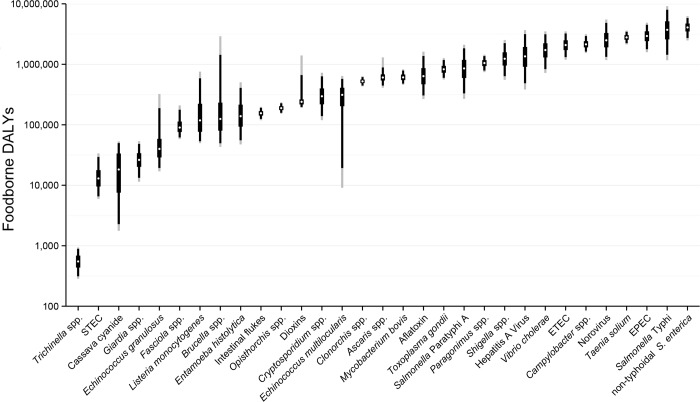
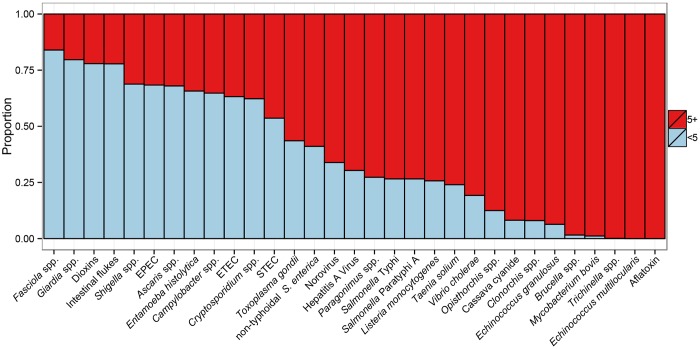
The global burden of foodborne disease caused by 31 hazards in 2010 was 33 million DALYs; children under five years old bore 40% of this burden.
Overview
CoChat Summary
## TL;DR
The WHO Foodborne Disease Burden Epidemiology Reference Group estimated that 31 foodborne hazards caused 600 million illnesses, 420,000 deaths, and 33 million DALYs worldwide in 2010. The burden was concentrated in low-income regions and in children under 5, with diarrheal disease agents—especially norovirus, Campylobacter spp., and non-typhoidal Salmonella enterica—accounting for most illness and death.
## Key findings
- Thirty-one hazards caused an estimated 600 million (95% UI 420–960 million) illnesses, 420,000 (95% UI 310,000–600,000) deaths, and 33 million (95% UI 25–46 million) DALYs in 2010.
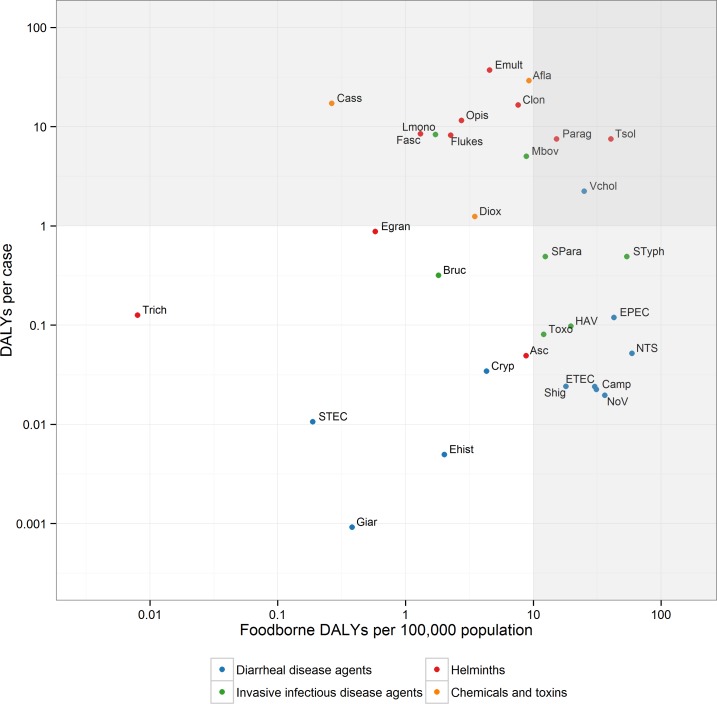
- Diarrheal disease agents accounted for 550 million illnesses and 230,000 deaths; the most frequent illness agents were norovirus (120 million cases) and Campylobacter spp. (96 million cases).
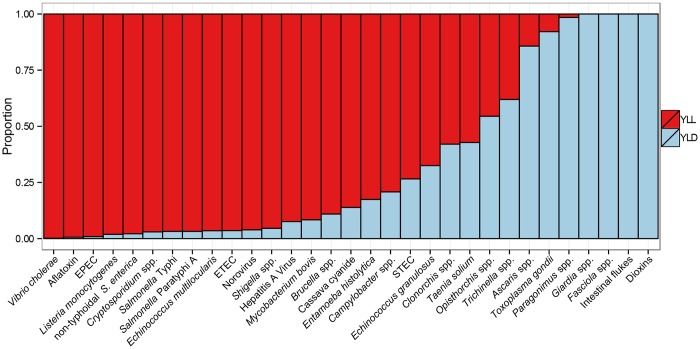
- Non-typhoidal Salmonella enterica caused 59,000 deaths and 4.0 million DALYs; other major death causes included Salmonella Typhi (52,000 deaths), Taenia solium (28,000), hepatitis A virus (28,000), and aflatoxin (20,000; 95% UI 8,000–51,000).
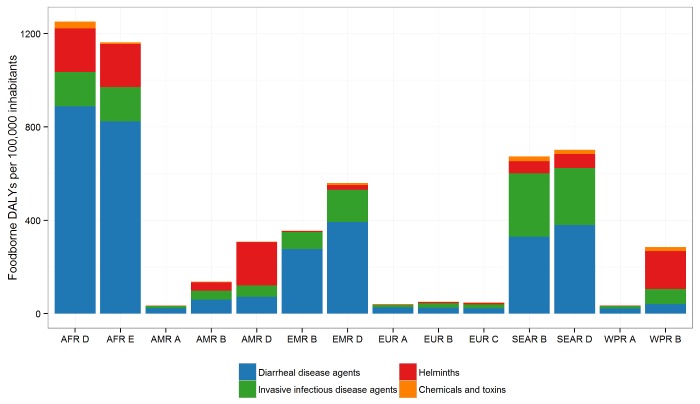
- 40% of the foodborne disease burden was borne by children under 5; the highest burden per 100,000 population was in AFR D (1,300 DALYs) and AFR E (1,200 DALYs), with SEAR B (690), SEAR D (710), and EMR D (570) also high.
## Methods
- The study was a WHO FERG global burden estimation using 31 selected foodborne hazards identified on the basis of high incidence/mortality and data availability.
- It estimated incidence, duration, mortality, YLLs, YLDs, and DALYs for 2010 using systematic reviews, other literature, surveillance data, and expert inputs; estimates were made at country level (194 countries) and then presented at subregional level because of uncertainty.
- For attribution, 12 hazards were judged 100% foodborne; for the other 19 hazards, the authors used structured expert elicitation (Cooke’s Classical Method) to estimate the foodborne fraction, and propagated uncertainty with Monte Carlo simulation in R.
## Limitations
- The paper states its estimates are limited by data gaps and attribution uncertainty; for most hazards, the 95% DALY uncertainty interval ranged from one-fourth to four times the median.
- The authors say the estimates are conservative (underestimates rather than overestimates) because they focused on a subset of more than 100 potential hazards, excluded some hazards or outcomes, and could not always include all relevant disease outcomes.
- They note that country-level estimates were not reliable enough to present, so results are shown at subregion level; this follows from the text and is not presented as a separate explicit limitation.
Model-written summary. Check it against the paper before relying on it.
Integrity signals
Registry
Cites
Statistics
Figures
Verification
Claims the paper makes
5 Valid · 5 Not valid · 16 Not checked · 102 Own results and interpretations
The cited sources that could be checked couldn’t confirm or dispute this claim.
In the paper
“Contaminants in food were not even included as risk factors in previous studies of the global burden of all diseases [3].”
§ World Health Organization Global Estimates and Regional Comparisons of the Burden of Foodborne Disease in 2010 > Introduction
What the sources say
- Could not verifycites [3] Lim SS, Vos T, Flaxman AD, Danaei G, Shibuya K, Adair-Rohani H, et al A comparative risk assessment of burden of disease and injury attributable to 67 risk factors and risk factor clusters in 21 regions, 1990–2010: a systematic analysis for the Global Burden of Disease Study 2010. Lancet. 2012; 380(9859): 2224– 60. 10.1016/S0140-6736(12)61766-8 23245609 PMC4156511 sourceExperimental — accuracy not yet measured
The Discussion describes dietary risk factors such as sodium intake and diets low in fruits or vegetables, but does not address contaminants in food. Searches for food contaminants, foodborne disease, and specific contaminants found no passage establishing whether previous global burden studies included them as risk factors. Page numbers were not available in our copy. (LLM, conf=0.73)
plain- Asserted: passes — The authors put it forward as true.
- Checkable: passes — It can be checked against evidence.
- Load-bearing: passes — The paper’s conclusions depend on it.
- Based: passes — The paper gives a reason why it holds.
- Could not verify
Every source the paper cites for this claim was checked and supports it.
In the paper
“Inclusion of these outcomes would likely considerably increase the burden of enteric infections [43].”
§ World Health Organization Global Estimates and Regional Comparisons of the Burden of Foodborne Disease in 2010 > Introduction > Limitations
What the sources say
- Supportedcites [43] Haagsma JA, Siersema PD, De Wit NJ, Havelaar AH. Disease burden of post-infectious irritable bowel syndrome in The Netherlands. Epidemiol Infect. 2010; 138: 1650– 6. 10.1017/S0950268810000531 20223049 source
The DISCUSSION of our copy states that the annual non-fatal burden of PI-IBS (over 2300 YLD) 'almost doubl[es] the total non-fatal burden of disease for the selected pathogens' and that ignoring PI-IBS in burden-of-disease studies results in an underestimation; it further concludes that including PI-IBS in estimates for the selected bacterial pathogens 'might still underestimate the burden of disease of foodborne disease'. The RESULTS quantify this (Salmonella +86%, Campylobacter +92%, Shigella +151% when PI-IBS is included), and the Abstract repeats the underestimation point, so the hedged claim that including functional bowel disorders would considerably increase the burden of enteric infections is stated by the source. The source's own scope is three bacterial pathogens in The Netherlands (with norovirus PI-IBS discussed as comparable to Campylobacter), which the citing sentence generalises to enteric infections, but the paper itself makes that extrapolation. (LLM, conf=0.85)
hedgedstates a possible cause- Asserted: passes — The authors put it forward as true.
- Checkable: passes — It can be checked against evidence.
- Load-bearing: unclear — It is unclear whether the paper’s conclusions depend on it.
- Based: passes — The paper gives a reason why it holds.
- Supported
A result the paper states — it cites no source for it, so there is none to check. The quote shows it is in the paper.
In the paper
“Foodborne diarrheal disease agents, particularly non-typhoidal Salmonella enterica, caused 230,000 (95% UI 160,000–320,000) deaths”
§ World Health Organization Global Estimates and Regional Comparisons of the Burden of Foodborne Disease in 2010 > Summary Points
plainstates a cause- Asserted: passes — The authors put it forward as true.
- Checkable: passes — It can be checked against evidence.
- Load-bearing: unclear — It is unclear whether the paper’s conclusions depend on it.
- Based: passes — The paper gives a reason why it holds.
A result the paper states — it cites no source for it, so there is none to check. The quote shows it is in the paper.
In the paper
“the burden of Opisthorchis spp. was concentrated in the SEAR B region”
§ World Health Organization Global Estimates and Regional Comparisons of the Burden of Foodborne Disease in 2010 > Summary Points
plainstates an association- Asserted: passes — The authors put it forward as true.
- Checkable: passes — It can be checked against evidence.
- Load-bearing: unclear — It is unclear whether the paper’s conclusions depend on it.
- Based: passes — The paper gives a reason why it holds.
A result the paper states — it cites no source for it, so there is none to check. The quote shows it is in the paper.
In the paper
“The burden of aflatoxin was high in the AFR D, Western Pacific (WPR) B and SEAR B subregions”
§ World Health Organization Global Estimates and Regional Comparisons of the Burden of Foodborne Disease in 2010 > Summary Points
plain- Asserted: passes — The authors put it forward as true.
- Checkable: passes — It can be checked against evidence.
- Load-bearing: unclear — It is unclear whether the paper’s conclusions depend on it.
- Based: passes — The paper gives a reason why it holds.
48 more claims
Create a free account to see all 128 claims and to verify the 5 references still open.
- Probably not a substantial claim. 63
- It may state two separate claims as one. 28
Claims other papers make about this one
Each is checked against this paper’s own text: does it say what the citing paper says it does?
The source backs part of the claim, not all of it — or backs it for a different population, condition or comparison.
In the citing paper
“The FERG found that hazards accounted for around 420,000 deaths in LMIC, imposing a burden of around 33 million DALY lost each year (Havelaar et al., 2015).”
From Burden of foodborne disease in low-income and middle-income countries and opportunities for scaling food safety interventions (2023) · cites this paper as Havelaar et al., 2015
Experimental — accuracy not yet measuredThe source backs part of the claim, not all of it — or backs it for a different population, condition or comparison.
In the citing paper
“Children aged under 5 years were disproportionately affected.This group makes up 9% of the world's population, yet they experience 38% of all FBD, represent 30% of deaths related to FBD, and bear 40% of global DALY lost from FBD (Havelaar et al., 2015).”
From Burden of foodborne disease in low-income and middle-income countries and opportunities for scaling food safety interventions (2023) · cites this paper as Havelaar et al., 2015
Experimental — accuracy not yet measuredThe cited source says what the claim attributes to it.
In the citing paper
“This paper, which represents the work of more than 60 experts over a period of 10 years, can be considered the most definitive and comprehensive guide to the health burden of FBD (Havelaar et al., 2015).”
From Burden of foodborne disease in low-income and middle-income countries and opportunities for scaling food safety interventions (2023) · cites this paper as Havelaar et al., 2015
The cited source says what the claim attributes to it.
In the citing paper
“Although LLMICs bear a high burden of foodborne disease [2]”
From Food Safety Knowledge, Attitude, and Practices (KAP) of Urban Consumers in Low-Income and Lower-Middle-Income Countries (LLMICs): A Scoping Review (2026) · cites this paper as [2]
Citations
Cites
R: A Language and Environment for Statistical Computing
R Core Team (2025) · doi:10.32614/r.manuals · Cited by 352,181
Lim, S. S., Vos, T., Flaxman, A. D., Danaei, G., Shibuya, K., Adair-Rohani, H., AlMazroa, M. A., Amann, M., Anderson, H. R., Andrews, K. G., et al. (2012) · The Lancet · doi:10.1016/s0140-6736(12)61766-8 · Cited by 11,805 · cited 1×
“Contaminants in food were not even included as risk factors in previous studies of the global burden of all diseases [3].”
BackgroundMurray, C. J. L., Vos, T., Lozano, R., Naghavi, M., Flaxman, A. D., Michaud, C., Ezzati, M., Shibuya, K., Salomon, J. A., Abdalla, S., et al. (2012) · The Lancet · doi:10.1016/s0140-6736(12)61689-4 · Cited by 8,888
Foodborne illness acquired in the United States—Major pathogens
Scallan, E., Hoekstra, R. M., Angulo, F. J., Tauxe, R. V., Widdowson, M.-A., Roy, S. L., Jones, J. L., & Griffin, P. M. (2011) · Emerging Infectious Diseases · doi:10.3201/eid1701.p11101 · Cited by 7,657 · cited 1×
“Several high-income countries have published national estimates of FBD. Estimates of food-related illnesses and deaths in the USA were reported in the late 1990s [28] and updated to cover the period 2000 – 2008 [29,30].”
BackgroundSelf-citationFood-Related Illness and Death in the United States
Mead, P. S., Slutsker, L., Dietz, V., McCaig, L. F., Bresee, J. S., Shapiro, C., Griffin, P. M., & Tauxe, R. V. (1999) · Emerging Infectious Diseases · doi:10.3201/eid0505.990502 · Cited by 7,235
Global mortality, disability, and the contribution of risk factors: Global Burden of Disease Study
Murray, C. J., & Lopez, A. D. (1997) · The Lancet · doi:10.1016/s0140-6736(96)07495-8 · Cited by 4,492 · cited 1×
“The DALY measure combines the years of life lost (YLL) due to premature death and the years lived with disability (YLD) from a disease or condition, for varying degrees of severity, making time the common metric for death and disability [20].”
BackgroundSelected major risk factors and global and regional burden of disease
Ezzati, M., Lopez, A. D., Rodgers, A., Vander Hoorn, S., & Murray, C. J. (2002) · The Lancet · doi:10.1016/s0140-6736(02)11403-6 · Cited by 3,594
Kirk, M. D., Pires, S. M., Black, R. E., Caipo, M., Crump, J. A., Devleesschauwer, B., Döpfer, D., Fazil, A., Fischer-Walker, C. L., Hald, T., et al. (2015) · PLoS Medicine · doi:10.1371/journal.pmed.1001921 · Cited by 1,625 · cited 2×
“Detailed descriptions of methods to estimate incidence and mortality of all 31 hazards can be found in papers in the collection on enteric diseases [11], parasitic diseases [18], and chemicals and toxins [19].”
BackgroundMethodSelf-citationSalomon, J. A., Vos, T., Hogan, D. R., Gagnon, M., Naghavi, M., Mokdad, A., Begum, N., Shah, R., Karyana, M., Kosen, S., et al. (2012) · The Lancet · doi:10.1016/s0140-6736(12)61680-8 · Cited by 1,322
Global burden of aflatoxin-induced hepatocellular carcinoma: A risk assessment
Liu, Y., & Wu, F. (2010) · Environmental Health Perspectives · doi:10.1289/ehp.0901388 · Cited by 1,224
Research works printed but not linked: 2
- Gibb H, Devleesschauwer B, Bolger PM, Bellinger D, Wu F, Ezendam J, et al WHO estimates of the global and regional burden from chemicals and toxins in food, 2010. F1000Research. In Press. PMC4755404 26918123
- Devleesschauwer B, Haagsma JA, Angulo FJ, Bellinger D, Cole D, Döpfer D, et al Methodological Framework for World Health Organization Estimates of the Global Burden of Foodborne Disease. PLoS ONE 10: e0142498 10.1371/journal.pone.0142498 PMC4668830 26633883 · DOI · Paper page
Cited by
Items 1,401–1,500 of 2,051
Liu, Q., Liu, Y., Yang, H., Su, Q., Li, L., Meng, X., Li, M., Jia, X., Ma, P., Fan, B., et al. (2025) · Foods · doi:10.3390/foods14234073 · Cited by 4
“According to statistics from the World Health Organization (WHO), approximately 600 million people worldwide suffer from foodborne diseases each year, of whom 420,000 die [1].”
Adegoke, A. A., Igoche, K. O., Owolawi, O., Ekpenyong, M., Omololu, A. J., & Aiyegoro, O. A. (2025) · F1000Research · doi:10.12688/f1000research.171697.1 · Cited by 1
Socio-Demographic Correlates of Basic Food Needs: A Maslow’s Hierarchy Analysis
Defta, N., Barbu, A., Ion, V. A., Vidu, L., Peț, E., Cune, L.-C., & Badulescu, L. A. (2025) · Foods · doi:10.3390/foods15010057 · Cited by 5
Islam, S. A., Lebu, S., & Brown, J. (2026) · PLOS Water · doi:10.1371/journal.pwat.0000455 · Cited by 2
Toumi, E., Sellami, S., Abed, F. E., Elleuch, N., Shova, S. G., & Boujelbene, M. (2026) · Journal of Molecular Structure · doi:10.1016/j.molstruc.2026.145885 · Cited by 2
Worker exposure to bioaerosols from sludge dewatering facilities: risks and mitigations
Cui, B., Ali, W., Wan, W.-D., Hu, Y.-N., Liu, S., Lai, T.-N., Yan, Y., Hu, Z., Jin, T., Li, X., et al. (2026) · Water Research · doi:10.1016/j.watres.2026.125729 · Cited by 2
Fetsch, A., Cuesta, I. E., Alinaghi, M., Ehling-Schulz, M., & Johler, S. (2026) · Food Microbiology · doi:10.1016/j.fm.2026.105081 · Cited by 3
Gelma, G., Melese, M., & Merera, O. (2026) · Science Discovery Animals · doi:10.11648/j.sdan.20260101.14 · Cited by 2
Gull, M., & Saini, T. C. (2026) · Discover Social Science and Health · doi:10.1007/s44155-026-00405-7 · Cited by 4
Wu, X., Xu, Y., Qin, R., Luo, Y., Hou, Y., Zhou, Z., Qu, R., Ma, S., Chen, J., Zhu, F., et al. (2026) · Infectious Diseases of Poverty · doi:10.1186/s40249-026-01431-y · Cited by 2
“The specific subtypes are as follows: Norovirus VP1 covers subtypes GI.3, GI.6, GII.2, GII.4, and GII.6; Rotavirus VP4 covers genotypes P[4], P[6], and P[8], VP6 is restricted to group A (predominant clinical group), and VP7 covers genotypes G1, G2, G3, G9, and G12; both Hexon protein and short…”
Kolenda, R., Hassan, M. M., Arrieta-Gisasola, A., Kamara, A., Ansorge, R., Sidorczuk, K., Acton, L., Thilliez, G. J. A., Baker, D., Burdukiewicz, M., et al. (2026) · Microbiome · doi:10.1186/s40168-025-02322-4 · Cited by 3
“Foodborne pathogens remain one of the major causes of human infections worldwide [43].”
Electronic nose technology for food quality monitoring
Sun, J., Fu, Q., Kot-Cheung, S. K., Qi, D., & Zhang, H. (2026) · Food Control · doi:10.1016/j.foodcont.2026.112495 · Cited by 2
Panzenhagen, P., Cabral, C. C., Suffys, P. N., et al. (2017) · Genome Announcements · doi:10.1128/genomea.00197-17 · Cited by 2
Targeted Proteomics for Rapid and Sensitive Detection of Foodborne Pathogens
Shevchuk, O. (2020) · Elsevier eBooks · doi:10.1016/b978-0-08-100596-5.22841-2 · Cited by 5
The use of foodborne infection to evaluate bacterial pathogenesis and host response
Chu, T. H., Qiu, Z., & Sheridan, B. S. (2022) · Methods in cell biology · doi:10.1016/bs.mcb.2021.12.020 · Cited by 2
Morris, J. G., & Havelaar, A. H. (2021) · Elsevier eBooks · doi:10.1016/b978-0-12-819519-2.00021-9 · Cited by 2
Self-citationDecontamination of Salmonella enterica spp. on shell eggs by Allium cepa L. dry scales extracts
Mihajilov‐Krstev, T., Joković, N. M., Tamindžija, D., et al. (2022) · Kragujevac Journal of Science · doi:10.5937/kgjsci2244127m · Cited by 2
Current trends in zoonoses and foodborne pathogens linked to the consumption of meat
Fegan, N., McAuley, C. M., Gray, J. A., Duffy, L. L., Namvar, A., & Warriner, K. (2022) · Elsevier eBooks · doi:10.1016/b978-0-323-85879-3.00020-9 · Cited by 7
Hygiene Practices in the Restaurants of Dhaka North City Corporation, Bangladesh
Bari, F. S., Islam, S., Moulik, S., Ghosh, S. K., Asaduzzaman, M., Mannan, M. A., & Mondol, A. S. (2022) · Food science and quality management · doi:10.7176/fsqm/119-05 · Cited by 2
Host Cellular Response during Enterohaemorrhagic Escherichia coli Shiga Toxin Exposure
Lee, K., Park, S. Y., & Lee, M. (2022) · Microbiology and Biotechnology Letters · doi:10.48022/mbl.2209.09004 · Cited by 4
Tabarani, C. M., la Hoz, A. D., Wanger, A. R., Flores, A. R., & Arias, C. A. (2023) · The Pediatric Infectious Disease Journal · doi:10.1097/inf.0000000000003949 · Cited by 2
Yeh, H., Frye, J. G., Jackson, C. R., Read, Q. D., Line, J. E., & Hinton, A. (2023) · Journal of Microbiological Methods · doi:10.1016/j.mimet.2023.106757 · Cited by 3
Bovine Reservoir of STEC and EPEC: Advances and New Contributions
Padola, N. L., Castro, V., Etcheverría, A. I., et al. (2023) · Springer eBooks · doi:10.1007/978-3-031-29882-0_5 · Cited by 2
Ivanova, O. E., Blumenkrants, D. A., Krylova, E. V., Soltynskaya, I. V., Goncharova, A., Chaikin, E., Ahmetzyanova, A. A., & Панин, А. Н. (2023) · Veterinary World · doi:10.14202/vetworld.2023.1451-1460 · Cited by 2
Brown, J. A., O'Bannon, T., Havelaar, A. H., et al. (2023) · Meat and Muscle Biology · doi:10.22175/mmb.16091 · Cited by 2
Self-citationMathematical Modeling of Toxoplasmosis in Cats with Two Time Delays under Environmental Effects
Sultana, S., González‐Parra, G., & Arenas, A. J. (2023) · Mathematics · doi:10.3390/math11163463 · Cited by 2
Kinyua, C., & Thebe, V. (2023) · Sustainability · doi:10.3390/su151713067 · Cited by 3
Susilowati, A. Y., Jannah, S. N., Kusumaningrum, H. P., et al. (2022) · Jurnal Teknologi Pangan · doi:10.14710/jtp.2022.29488 · Cited by 2
Jain, V., & Roy, S. K. (2023) · Chromatographia · doi:10.1007/s10337-023-04281-0 · Cited by 2
Sawadogo, A., Cissé, H., Taale, E., Kambou, A. E. S., Ouédraogo, C. P., Séré, L., Sondo, A., Zongo, C., & Savadogo, A. (2023) · Journal of Applied Life Sciences International · doi:10.9734/jalsi/2023/v26i6627 · Cited by 2
Plasmonic Nanobiosensor for Detection of in Aqueous Samples
Ahmed, M. M., Basak, M., Paul, A., et al. (2023) · IEEE Sensors Letters · doi:10.1109/lsens.2023.3337938 · Cited by 2
Dong, F., Ni, T., Chen, Y., Sun, Y., Zheng, Z., Li, Y., Gong, C., Ren, L., Yan, X., & Wang, G. (2023) · Foodborne Pathogens and Disease · doi:10.1089/fpd.2023.0112 · Cited by 3
“World Health Organization estimated that each year worldwide, unsafe food causes 600 million cases of foodborne diseases and 420,000 deaths (World Health Organization, 2023).”
Apenteng, J. A., Agyepong, N., Tetteh, R. A., Asante, J., Yeboah, E. E. A., Turkson, T., Sarpong, E. A., Akoto, V. A., & Danquah, T. S. (2023) · Advances in Infectious Diseases · doi:10.4236/aid.2023.134055 · Cited by 2
Burns, L., Mauff, F. L., & Gruenheid, S. (2024) · Gut Microbes · doi:10.1080/19490976.2024.2305477 · Cited by 3
Ahmed, I., Mir, F. A., Bhat, M., Aasif, M., Yatoo, G. N., & Banday, J. A. (2024) · ChemistrySelect · doi:10.1002/slct.202305130 · Cited by 3
Microbial risk assessment of dairy products from retail marketplaces in Basrah province, Iraq
Aldeewan, A. B., Jaber, N. N., Abdulhameed, M. F., & Abbas, B. A. (2024) · Open Veterinary Journal · doi:10.5455/ovj.2024.v14.i3.4 · Cited by 5
“Typhoid fever, brucellosis, and other bacterial diseases are the most common food-borne diseases reported in the Middle East and North Africa (Havelaar et al ., 2015).”
BackgroundDoes Salmonella diarizonae 58:r:z53 Isolated from a Mallard Duck Pose a Threat to Human Health?
Wódz, K., Piechowicz, L., Tokarska-Pietrzak, E., et al. (2024) · International Journal of Molecular Sciences · doi:10.3390/ijms25115664 · Cited by 2
“Some serotypes of Salmonella enterica subsp. enterica are particularly well described and are known to cause a wide range of food-and water-borne illnesses [2–7].”
BackgroundRaygoza-Alcantar, L. N., Pérez, L. D., Rosas‐Espinoza, V. C., et al. (2024) · Symbiosis · doi:10.1007/s13199-024-00998-0 · Cited by 2
“According to the World Health Organization (2013), enteropathogenic E. coli and non-typhoid S. enterica, which cause diarrheal diseases, are responsible for the deaths of approximately 37,000 and 59,000 humans, respectively (Havelaar et al. 2015).”
Audiat‐Perrin, F., Guillier, L., Augustin, J.-C., Bornert, G., Fédérighi, M., Gautier, M., Silva, N. J., Pouillot, R., Mérad, M., on behalf of the Anses Working Group on Prioritization of food risks, et al. (2024) · Foodborne Pathogens and Disease · doi:10.1089/fpd.2023.0105 · Cited by 2
“DALYs per case estimates for each pathogen were taken primarily from published studies (Cassini et al., 2018; Havelaar et al., 2015; Havelaar et al., 2012).”
Self-citationZoonotic Bridge: Unraveling the Role of Wild Birds in Spreading the Bacterial Pathogenic Diseases
Ramzan, M. S., Ahmad, M. I., Bilal, T., Zafar, N., Neelam, N., & Ashraf, M. A. (2024) · Albus Scientia · doi:10.56512/as.2024.2.e240810 · Cited by 3
Hamilton, A. N., & Gibson, K. E. (2024) · Journal of Food Protection · doi:10.1016/j.jfp.2024.100409 · Cited by 2
Enterically transmitted viral hepatitis-hepatitis A and E
Kar, P., & Karna, R. (2024) · Elsevier eBooks · doi:10.1016/b978-0-443-26710-9.00020-1 · Cited by 3
Akhter, J., Bakht, P., Gupta, R., & Pathania, R. (2024) · ACS Infectious Diseases · doi:10.1021/acsinfecdis.4c00428 · Cited by 2
Patil, D. M. (2024) · Journal of Food and Drug Analysis · doi:10.38212/2224-6614.3532 · Cited by 2
“Bacterial infections are predicted to cause 60% of foodborne illnesses and 65% of deaths worldwide (about ~187,000) [2,3].”
Ibrahim, S., Hassanin, F., Abou-Elroos, N., et al. (2024) · Egyptian Journal of Veterinary Science · doi:10.21608/ejvs.2024.329367.2437 · Cited by 2
Yeh, H., & Read, Q. D. (2024) · Veterinary Immunology and Immunopathology · doi:10.1016/j.vetimm.2024.110870 · Cited by 2
Andarge, G. A., Seid, K., Lakew, G., Yirsaw, A. N., Berhie, A. Y., Belayneh, A. G., Bogale, S. K., Bogale, E. K., & Getachew, E. (2025) · BMC Pediatrics · doi:10.1186/s12887-024-05319-4 · Cited by 2
“Furthermore, dietary contamination results in diar-rheal diseases that cause approximately 230,000 deaths every year [6].”
Makhunga, S., Hlongwa, M., & Hlongwana, K. W. (2025) · Sustainability · doi:10.3390/su17031163 · Cited by 2
Batch, V., Kress, M., Gama, A. P., Ng'ong'ola‐Manani, T. A., Chiutsi‐Phiri, G., Corner, P. L., Kumwenda, S., Kaonga, C. C., Kamndaya, M. S., Monjerezi, M., et al. (2025) · Frontiers in Nutrition · doi:10.3389/fnut.2025.1524580 · Cited by 2
Chen, Z., Zhang, S., Zhao, Z., et al. (2025) · Journal of Food Composition and Analysis · doi:10.1016/j.jfca.2025.107617 · Cited by 2
Gil, M., Kim, S.-H., Woo, H.-J., et al. (2025) · Food Control · doi:10.1016/j.foodcont.2025.111456 · Cited by 2
Shawarma and Salmonella Enteritidis: Tracing a 2020 Foodborne Outbreak in Ain Al-Basha, Jordan
Alsulaiman, J., Slaihat, A., Kheirallah, K. A., et al. (2025) · International Journal of General Medicine · doi:10.2147/ijgm.s517468 · Cited by 2
Ojeda, A. E., Deblais, L., Mummed, B., Brhane, M., Hassen, K. A., Ahmedo, B. U., Weldesenbet, Y. D., Chen, D., Li, X., Saleem, C., et al. (2025) · Gut Pathogens · doi:10.1186/s13099-025-00725-0 · Cited by 5
“They have been identified as a leading cause of bacterial gastroenteritis, resulting in 166 million cases of diarrhea globally in 2020, of which 96 million were foodborne [1].”
Self-citationMurefu, T. R., Muriithi, A. N., & Musundire, R. (2025) · Discover Food · doi:10.1007/s44187-025-00586-1 · Cited by 2
“Foodborne illness risks are increased by improper handling and processing as it allows populations of harmful bacteria to increase, inefficient toxicant removal or cross-contamination between raw and cooked foods [39].”
Mehdi, L. Y., & Wannas, N. S. (2017) · Journal of the Faculty of Medicine Baghdad · doi:10.32007/med.1936/jfacmedbagdad.v59i2.9 · Cited by 3
Antibacterial activity of chitosan biofilm for the conservation of fertile and table eggs
Prado-Rebolledo, O. F., Tellez, I. G., García-Márquez, L. J., Aldaco, L. L. E., & García-Casillas, A. C. (2020) · Arquivo Brasileiro de Medicina Veterinária e Zootecnia · doi:10.1590/1678-4162-11373 · Cited by 2
“According to the World Health Organization (WHO) report published in 2015, the foodborne disease is a leading cause of mortality and morbidity, causing an estimated 600 million human infections/year and 42,000 deaths/year (Havelaar et al., 2015).”
Bayomi, R. M. E., El-Mesalamy, Y. M., Hafez, A.-E. E., & Ahmed, H. A. (2020) · Zagazig Veterinary Journal/Zagazig Veterinary Journal (Online) · doi:10.21608/zvjz.2020.35870.1114 · Cited by 4
Yahumin, S., Rodrigues, K. F., & Chin, G. J. W. L. (2022) · Malaysian Journal of Microbiology · doi:10.21161/mjm.211280 · Cited by 2
Smartphone-based Sensing in Food Safety and Quality Analysis
Choi, J. R. (2017) · Royal Society of Chemistry eBooks · doi:10.1039/9781788010528-00332 · Cited by 3
Pathogenic bacteria in turkey meat: A review
Silva, H. O., Vidal, A. M. C., & Rossi, O. D. (2017) · Revista Brasileira de Higiene e Sanidade Animal · doi:10.5935/1981-2965.20170034 · Cited by 2
Molecular Characterization of Escherichia coli from Pork Meat by Whole Cell Protein Finger Printing
Reddy, M. V. B. (2017) · Journal of Pure and Applied Microbiology · doi:10.22207/jpam.11.4.49 · Cited by 2
The Ecology of Bacterial Agents of Foodborne Illness
Gill, A. O., & Austin, J. W. (2018) · Advances in environmental microbiology · doi:10.1007/978-3-319-92373-4_4 · Cited by 2
Benavides, M. C. M., & Osorio, P. A. (2019) · Revista de Investigaciones Universidad del Quindío · doi:10.33975/riuq.vol31n1.278 · Cited by 2
Sexually Transmitted Hepatitis
Rossotti, R., & Puoti, M. (2020) · Springer eBooks · doi:10.1007/978-3-030-02200-6_13 · Cited by 3
Heimesaat, M. M., Weschka, D., Kløve, S., Genger, C., Biesemeier, N., Mousavi, S., & Bereswill, S. (2020) · European Journal of Microbiology and Immunology · doi:10.1556/1886.2020.00012 · Cited by 2
Okafor-Elenwo, E. J., & Imade, O. S. (2020) · Nigerian Journal of Pure and Applied Sciences · doi:10.48198/njpas/20.a06 · Cited by 2
Başaran, B. (2021) · Akademik Gıda · doi:10.24323/akademik-gida.1011221 · Cited by 9
de Oliveira, L. M., Oliveira, Y. L. D. C., de Oliveira, Y. L. M., Ramos, A. C. S., Andrade, G. F., Sá, V. L., Geraldi, R. M., Pinheiro, C. S., Bueno, L. L., Fujiwara, R. T., et al. (2021) · Parasite Immunology · doi:10.1111/pim.12899 · Cited by 4
Page, N. A., Nadan, S., & Mans, J. (2019) · Elsevier eBooks · doi:10.1016/b978-0-323-54843-4.00011-8 · Cited by 3
Muendo, C. M., Kikuvi, G. M., & Mambo, S. (2022) · Pan African Medical Journal · doi:10.11604/pamj.2022.41.232.33755 · Cited by 2
Leveraging Livestock Production Systems for Human Nutrition in Developing Countries
Dominic, D. M., & Meena, H. R. (2022) · IntechOpen eBooks · doi:10.5772/intechopen.101399 · Cited by 4
Waage, J. K. (2022) · Indonesian Journal of Applied Environmental Studies · doi:10.33751/injast.v3i1.5075 · Cited by 4
Fighting Listeria monocytogenes with Bacteriophages: Biotechnology for Food Safety
Estorninho, M. J., & Teixeira, P. C. M. (2023) · Sustainable development goals series · doi:10.1007/978-3-031-24888-7_21 · Cited by 2
Foodborne Pathogens at the Livestock–Wildlife–Human Interface in Rural Western Uganda
Dias‐Alves, A., Espunyes, J., Ayats, T., et al. (2023) · EcoHealth · doi:10.1007/s10393-023-01639-6 · Cited by 2
“tries, which are transmitted to humans through food contamination, but also by direct contact with animals, including wildlife, and by contaminated environment (Havelaar et al. 2015).”
BackgroundPrevalence of Fascioliasis in Slaughtered Ruminants at Muyinga Slaughterhouse, Burundi
Minani, S., Nsengiyumva, E., Bigirimana, A., et al. (2023) · Veterinary Sciences Research and Reviews · doi:10.17582/journal.vsrr/2023/9.1.65.73 · Cited by 2
Eufrásio, R., & Lopes, F. (2023) · Territorium · doi:10.14195/1647-7723_30-1_7 · Cited by 2
Galanis, E., Goshtasebi, A., Hung, Y. W., Chan, J., Matsell, D. G., Chapman, K. M., Kaplan, G. G., Patrick, D., Zhang, B. Y., Taylor, M., et al. (2023) · Canada Communicable Disease Report · doi:10.14745/ccdr.v49i78a01 · Cited by 2
Stenrød, M., Lang, K., Almvik, M., Holten, R., Christiansen, A. L., Liu, X., & Jing, Q. (2023) · Sustainability Sciences in Asia and Africa · doi:10.1007/978-981-99-2828-6_3 · Cited by 4
Pontello, M. M., & Gori, M. (2023) · Sustainable development goals series · doi:10.1007/978-3-031-33851-9_23 · Cited by 2
Nanotechnology as a Tool to Improve the Biological Activity of Thymol: A Review
Mittu, B., Sharma, R., Bhat, A., Deep, S., & Singh, M. (2023) · Bioequivalence & Bioavailability International Journal · doi:10.23880/beba-16000220 · Cited by 2
Sharma, S. H., Sharan, U., Kaur, R., et al. (2024) · Frontiers in Tropical Diseases · doi:10.3389/fitd.2024.1393570 · Cited by 2
Corrosion of Household Utensils: Causes, Effects and Remedies
Kanyamumba, L., Ujah, C. O., Kallon, D. V. V., & Dumbuya, M. (2023) · International Journal of Home Economics Hospitality and Allied Research · doi:10.57012/ijhhr.v3n1.005 · Cited by 4
Lamar, F. G., Mondlane-Milisse, A., Brito, D. R. A., Mucache, H. N., Jesser, K. J., Fagnant-Sperati, C. S., Victor, C. P., Shioda, K., Fafetine, J. M., Saíde, J. Â. O., et al. (2024) · International Journal of Food Microbiology · doi:10.1016/j.ijfoodmicro.2024.110960 · Cited by 4
Welding cooling rate effects on microstructure of an API 5l x100 steel
Freitas, D. D., Machado, I. G., Mazzaferro, J. A. E., et al. (2016) · International Journal of Engineering & Technology · doi:10.14419/ijet.v5i2.6113 · Cited by 2
Kimsean, P., Sreng, K., Has, P., et al. (2017) · Outbreak Surveillance Investigation & Response (OSIR) Journal · doi:10.59096/osir.v9i4.263205 · Cited by 2
Nfongeh, J. F. (2018) · Advances in Bioscience and Bioengineering · doi:10.11648/j.abb.20180602.12 · Cited by 2
Whole-Genome Sequences of Salmonella enterica Serovar I 4,[5],12:i:− Isolates from Swine
Gonzalez, S., Harvey, R. B., Scott, H. M., et al. (2019) · Microbiology Resource Announcements · doi:10.1128/mra.00223-19 · Cited by 2
Kuhn, K. G., & Ethelberg, S. (2020) · Methods in molecular biology · doi:10.1007/978-1-0716-0791-6_3 · Cited by 3
Microfluidic devices for pathogen detection
Ahmadi, S., Rabiee, N., Bagherzadeh, M., et al. (2020) · Elsevier eBooks · doi:10.1016/b978-0-12-818791-3.00006-1 · Cited by 2
Espedido, M., & Young, I. (2021) · Food Protection Trends · doi:10.4315/1541-9576-41.2.204 · Cited by 3
Munir, S., & Raana, S. (2024) · Advances in environmental engineering and green technologies book series · doi:10.4018/979-8-3693-3061-6.ch022 · Cited by 2
Introduction to the special issue on risk analysis of Campylobacter in broilers and broiler meat
Nauta, M. J. (2016) · Microbial Risk Analysis · doi:10.1016/j.mran.2016.08.001 · Cited by 2
Nichols, M. C., Stevenson, L. M., Behravesh, C. B., & Tauxe, R. V. (2018) · Wiley eBooks · doi:10.1002/9781119194521.ch3 · Cited by 2
Psifidi, A., Kranis, A., Rothwell, L. M., Bremner, A., Russell, K., Robledo, D., Bush, S. J., Fife, M. S., Hocking, P. M., Banos, G., et al. (2020) · bioRxiv (Cold Spring Harbor Laboratory) · doi:10.1101/2020.04.14.040832 · Cited by 2
Huang, J., Zhou, C., Zhou, G., & Ye, K. (2020) · bioRxiv (Cold Spring Harbor Laboratory) · doi:10.1101/2020.06.21.164061 · Cited by 2
Tao, D., Zhang, D., Hu, R., et al. (2021) · Research Square · doi:10.21203/rs.3.rs-496521/v1 · Cited by 2
Gebremedhin, E. Z., Hirpa, G., Borana, B. M., et al. (2020) · doi:10.21203/rs.3.rs-27928/v1 · Cited by 2
Policies for High Quality, Safe, and Sustainable Food Supply in the Greater Mekong Subregion:
Bank, A. D. (2019) · doi:10.22617/tcs189546-2 · Cited by 2
König, F., Svensson, S. L., & Sharma, C. M. (2023) · bioRxiv (Cold Spring Harbor Laboratory) · doi:10.1101/2023.04.21.537696 · Cited by 2
“The Epsilonproteobacterium Campylobacter jejuni is the currently most prevalent cause of bacterial foodborne illness worldwide (Havelaar et al., 2015).”
BackgroundChain, L. C. A., Raaijmakers, I., Policy, L. I., Snoek, H. M., Obeng, E., Jaspers, P., Nombré, A., & Piters, B. D. S. (2023) · doi:10.18174/632359 · Cited by 2
Metadata
- Authors
- Havelaar, A. H., Kirk, M. D., Torgerson, P. R., Gibb, H. J., Hald, T., Lake, R. J., Praet, N., Bellinger, D. C., de Silva, N. R., Gargouri, N., Speybroeck, N., Cawthorne, A., Mathers, C., Stein, C., Angulo, F. J., Devleesschauwer, B., & on behalf of World Health Organization Foodborne Disease Burden Epidemiology Reference Group
- Affiliations
- Utrecht University (NL)
- Australian National University (AU)
- University of Zurich (CH)
- Technical University of Denmark (DK)
- New Zealand Institute for Public Health and Forensic Science (NZ)
- Instituut voor Tropische Geneeskunde (BE)
- Boston Children's Hospital (US)
- UCLouvain (BE)
- World Health Organization (CH)
- Centers for Disease Control and Prevention (US)
- Ghent University (BE)
- Corresponding author
- Havelaar, Arie H.
- ORCID
- Venue
- PLoS Medicine
- Publisher
- Public Library of Science (PLoS)
- Published
- 2015-12-03
- Volume
- 12
- Issue
- 12
- Pages
- e1001923
- ISSN
- 1549-1277 (ISSN-L)
- 1549-1676
- PMC
- PMC4668832
- OpenAlex
- W2186140012
- Cited by
- 2,067
- References
- 40
- Citations by year
- 2026: 220 · 2025: 251 · 2024: 235 · 2023: 267 · 2022: 217 · 2021: 219 · 2020: 206 · 2019: 153 · 2018: 149 · 2017: 90 · 2016: 51 · 2015: 3
- FWCI
- 130.65
- Type
- journal article
- Language
- en
- Open access
- gold
- doi.org
- Licence
- Locations
- PLoS Medicine (publishedVersion, cc-by)
- Europe PMC (PubMed Central) (publishedVersion, cc-by)
- PubMed Central (publishedVersion, cc-by)
- PubMed (publishedVersion)
- EUR Research Repository (Erasmus University Rotterdam) (publishedVersion, cc-by)
- Zurich Open Repository and Archive (University of Zurich) (acceptedVersion, cc-by)
- ResearchOnline (Glasgow Caledonian University) (acceptedVersion, cc-by)
- Ghent University Academic Bibliography (Ghent University) (submittedVersion, other-oa)
- EUR Research Repository (Erasmus University Rotterdam) (submittedVersion, other-oa)
- CGSPace A Repository of Agricultural Research Outputs (Consultative Group for International Agricultural Research) (submittedVersion, other-oa)
- Digital Access to Libraries (submittedVersion, other-oa)
- DOAJ (DOAJ: Directory of Open Access Journals) (submittedVersion, cc-by-sa)
- Utrecht University Repository (Utrecht University) (submittedVersion, other-oa)
- ANU Open Research (Australian National University) (submittedVersion)
- Technical University of Denmark, DTU Orbit (Technical University of Denmark, DTU) (submittedVersion, cc-by)
- Bristol Research (University of Bristol) (submittedVersion, cc-by)
- Rivm (National Institute for Public Health and the Environment) (submittedVersion)
- Zurich Open Repository and Archive (University of Zurich) (submittedVersion, cc-by)
- Zurich Open Repository and Archive (University of Zurich)
- Funders
- World Health Organization
- University of Pittsburgh
- Institute for Health Metrics and Evaluation
- Topics
- Life Sciences › Agricultural and Biological Sciences › Food Science › Salmonella and Campylobacter epidemiology
- Life Sciences › Agricultural and Biological Sciences › Food Science › Food Safety and Hygiene
- Health Sciences › Medicine › Infectious Diseases › Viral gastroenteritis research and epidemiology
- Keywords
- food poisoning, disease burden, disability-adjusted life years, food safety hazards, diarrheal disease, norovirus, Campylobacter, non-typhoidal Salmonella, Salmonella typhi, Taenia solium, hepatitis A virus, parasitic helminths, child mortality, regional comparison, food safety policy
- MeSH terms
- Foodborne Diseases, Humans, Global Health, World Health Organization, Incidence, Prevalence, Cost of Illness, Quality-Adjusted Life Years
About these checks
Registry, retraction, Cites and statistics results are computed, not judged, with one exception: a printed reference that no index lists is read once by a model before it counts as a citation error. Claims are extracted by a model and kept only when their quote appears verbatim in the text; each cited source is then checked, with a model’s help, for whether it says what the claim relies on. Those verdicts can be wrong — read the claim’s quote and the cited source before relying on one.
The claim verdicts this report counts are experimental: their accuracy is not yet measured.
A language model drew the claims from the paper on 2026-10-10, under version 3 of the claim definition (model deepseek-v4.1-flash, prompt extract-v3).
A second model labelled each claim on 2026-10-10 (model jev-1.13-20260917, definition revision gold-guideline-v0.2).
Cited sources are checked with a language model’s help (gpt-6-sol and qwen3.8-omni-flash).
Statistics and arithmetic are recomputed, not judged.
Confidence bands are shown only for fields calibrated on our annotated test set. None is calibrated yet, so no band is shown.
What counts as a claim ›How we measure confidence ›How we check this ›
Are you an author, or do you see a problem with this page? Request a review
Data sources
Bibliographic data: Semantic Scholar, OpenAlex, Crossref.
Contains information from the Semantic Scholar Academic Graph Datasets, made available under the ODC Attribution License (ODC-BY 1.0).
Semantic Scholar’s data is described in: Kinney, R., et al. (2023). The Semantic Scholar Open Data Platform. arXiv:2301.10140.
