

World Health Organization Global Estimates and Regional Comparisons of the Burden of Foodborne Disease in 2010
Open accessThe DOI matches its Crossref record; 38 of the 40 references it cites were found in a registry or an index; 6 of the 25 sources its claims cite were checked for support.
Abstract
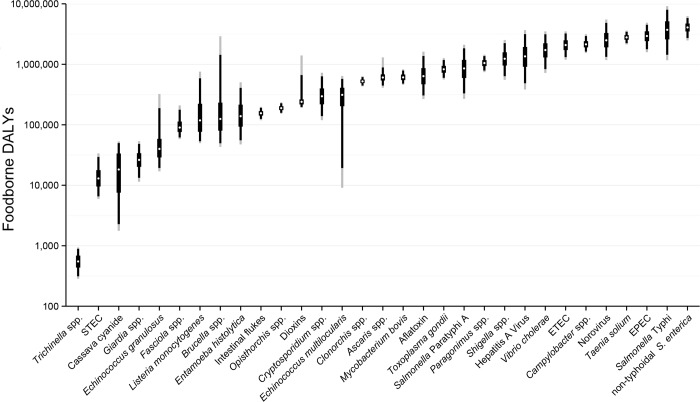
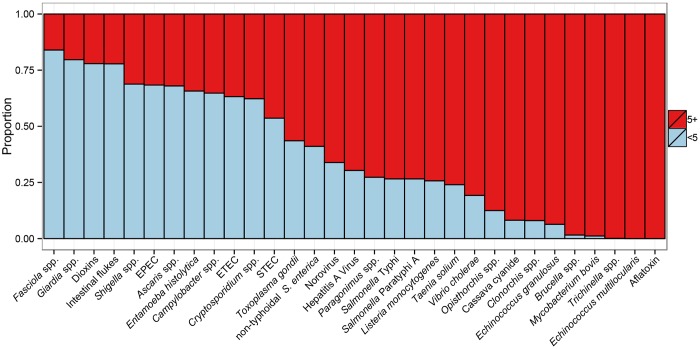
The global burden of foodborne disease caused by 31 hazards in 2010 was 33 million DALYs; children under five years old bore 40% of this burden.
Overview
CoChat Summary
## TL;DR
The WHO Foodborne Disease Burden Epidemiology Reference Group estimated that 31 foodborne hazards caused 600 million illnesses, 420,000 deaths, and 33 million DALYs worldwide in 2010. The burden was concentrated in low-income regions and in children under 5, with diarrheal disease agents—especially norovirus, Campylobacter spp., and non-typhoidal Salmonella enterica—accounting for most illness and death.
## Key findings
- Thirty-one hazards caused an estimated 600 million (95% UI 420–960 million) illnesses, 420,000 (95% UI 310,000–600,000) deaths, and 33 million (95% UI 25–46 million) DALYs in 2010.
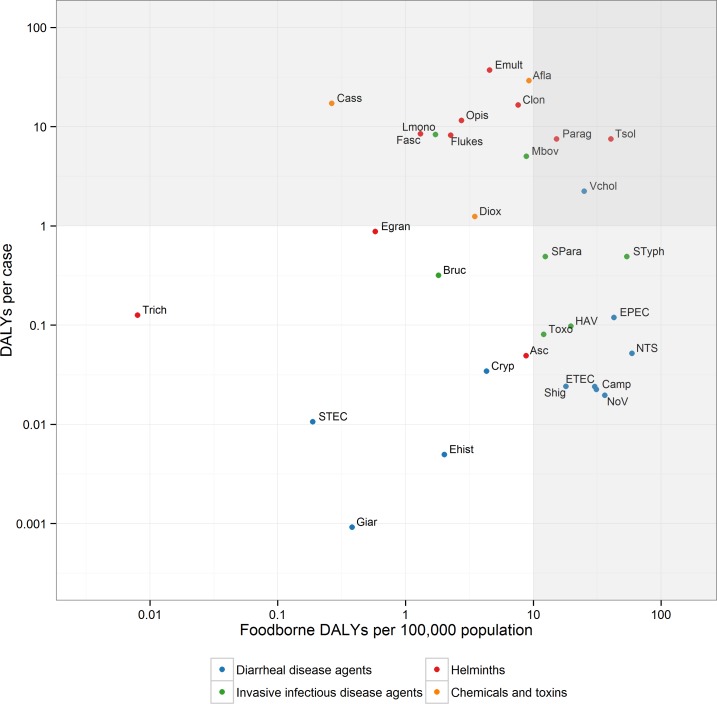
- Diarrheal disease agents accounted for 550 million illnesses and 230,000 deaths; the most frequent illness agents were norovirus (120 million cases) and Campylobacter spp. (96 million cases).
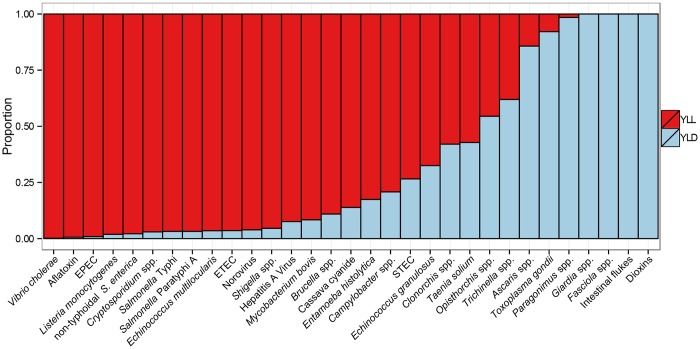
- Non-typhoidal Salmonella enterica caused 59,000 deaths and 4.0 million DALYs; other major death causes included Salmonella Typhi (52,000 deaths), Taenia solium (28,000), hepatitis A virus (28,000), and aflatoxin (20,000; 95% UI 8,000–51,000).
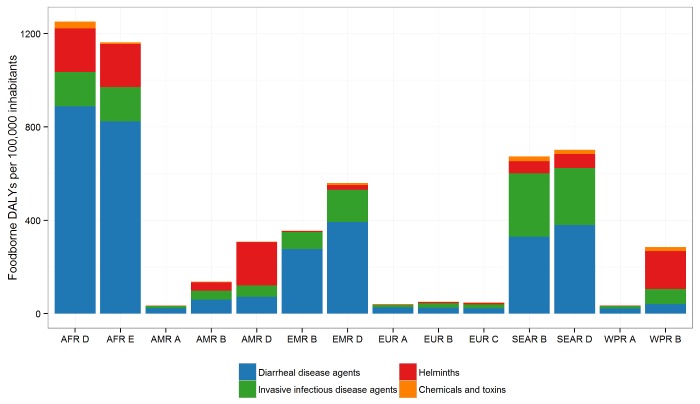
- 40% of the foodborne disease burden was borne by children under 5; the highest burden per 100,000 population was in AFR D (1,300 DALYs) and AFR E (1,200 DALYs), with SEAR B (690), SEAR D (710), and EMR D (570) also high.
## Methods
- The study was a WHO FERG global burden estimation using 31 selected foodborne hazards identified on the basis of high incidence/mortality and data availability.
- It estimated incidence, duration, mortality, YLLs, YLDs, and DALYs for 2010 using systematic reviews, other literature, surveillance data, and expert inputs; estimates were made at country level (194 countries) and then presented at subregional level because of uncertainty.
- For attribution, 12 hazards were judged 100% foodborne; for the other 19 hazards, the authors used structured expert elicitation (Cooke’s Classical Method) to estimate the foodborne fraction, and propagated uncertainty with Monte Carlo simulation in R.
## Limitations
- The paper states its estimates are limited by data gaps and attribution uncertainty; for most hazards, the 95% DALY uncertainty interval ranged from one-fourth to four times the median.
- The authors say the estimates are conservative (underestimates rather than overestimates) because they focused on a subset of more than 100 potential hazards, excluded some hazards or outcomes, and could not always include all relevant disease outcomes.
- They note that country-level estimates were not reliable enough to present, so results are shown at subregion level; this follows from the text and is not presented as a separate explicit limitation.
Model-written summary. Check it against the paper before relying on it.
Integrity signals
Registry
Cites
Statistics
Figures
Verification
Claims the paper makes
5 Valid · 5 Not valid · 16 Not checked · 102 Own results and interpretations
The cited sources that could be checked couldn’t confirm or dispute this claim.
In the paper
“Contaminants in food were not even included as risk factors in previous studies of the global burden of all diseases [3].”
§ World Health Organization Global Estimates and Regional Comparisons of the Burden of Foodborne Disease in 2010 > Introduction
What the sources say
- Could not verifycites [3] Lim SS, Vos T, Flaxman AD, Danaei G, Shibuya K, Adair-Rohani H, et al A comparative risk assessment of burden of disease and injury attributable to 67 risk factors and risk factor clusters in 21 regions, 1990–2010: a systematic analysis for the Global Burden of Disease Study 2010. Lancet. 2012; 380(9859): 2224– 60. 10.1016/S0140-6736(12)61766-8 23245609 PMC4156511 sourceExperimental — accuracy not yet measured
The Discussion describes dietary risk factors such as sodium intake and diets low in fruits or vegetables, but does not address contaminants in food. Searches for food contaminants, foodborne disease, and specific contaminants found no passage establishing whether previous global burden studies included them as risk factors. Page numbers were not available in our copy. (LLM, conf=0.73)
plain- Asserted: passes — The authors put it forward as true.
- Checkable: passes — It can be checked against evidence.
- Load-bearing: passes — The paper’s conclusions depend on it.
- Based: passes — The paper gives a reason why it holds.
- Could not verify
Every source the paper cites for this claim was checked and supports it.
In the paper
“Inclusion of these outcomes would likely considerably increase the burden of enteric infections [43].”
§ World Health Organization Global Estimates and Regional Comparisons of the Burden of Foodborne Disease in 2010 > Introduction > Limitations
What the sources say
- Supportedcites [43] Haagsma JA, Siersema PD, De Wit NJ, Havelaar AH. Disease burden of post-infectious irritable bowel syndrome in The Netherlands. Epidemiol Infect. 2010; 138: 1650– 6. 10.1017/S0950268810000531 20223049 source
The DISCUSSION of our copy states that the annual non-fatal burden of PI-IBS (over 2300 YLD) 'almost doubl[es] the total non-fatal burden of disease for the selected pathogens' and that ignoring PI-IBS in burden-of-disease studies results in an underestimation; it further concludes that including PI-IBS in estimates for the selected bacterial pathogens 'might still underestimate the burden of disease of foodborne disease'. The RESULTS quantify this (Salmonella +86%, Campylobacter +92%, Shigella +151% when PI-IBS is included), and the Abstract repeats the underestimation point, so the hedged claim that including functional bowel disorders would considerably increase the burden of enteric infections is stated by the source. The source's own scope is three bacterial pathogens in The Netherlands (with norovirus PI-IBS discussed as comparable to Campylobacter), which the citing sentence generalises to enteric infections, but the paper itself makes that extrapolation. (LLM, conf=0.85)
hedgedstates a possible cause- Asserted: passes — The authors put it forward as true.
- Checkable: passes — It can be checked against evidence.
- Load-bearing: unclear — It is unclear whether the paper’s conclusions depend on it.
- Based: passes — The paper gives a reason why it holds.
- Supported
A result the paper states — it cites no source for it, so there is none to check. The quote shows it is in the paper.
In the paper
“Foodborne diarrheal disease agents, particularly non-typhoidal Salmonella enterica, caused 230,000 (95% UI 160,000–320,000) deaths”
§ World Health Organization Global Estimates and Regional Comparisons of the Burden of Foodborne Disease in 2010 > Summary Points
plainstates a cause- Asserted: passes — The authors put it forward as true.
- Checkable: passes — It can be checked against evidence.
- Load-bearing: unclear — It is unclear whether the paper’s conclusions depend on it.
- Based: passes — The paper gives a reason why it holds.
A result the paper states — it cites no source for it, so there is none to check. The quote shows it is in the paper.
In the paper
“the burden of Opisthorchis spp. was concentrated in the SEAR B region”
§ World Health Organization Global Estimates and Regional Comparisons of the Burden of Foodborne Disease in 2010 > Summary Points
plainstates an association- Asserted: passes — The authors put it forward as true.
- Checkable: passes — It can be checked against evidence.
- Load-bearing: unclear — It is unclear whether the paper’s conclusions depend on it.
- Based: passes — The paper gives a reason why it holds.
A result the paper states — it cites no source for it, so there is none to check. The quote shows it is in the paper.
In the paper
“The burden of aflatoxin was high in the AFR D, Western Pacific (WPR) B and SEAR B subregions”
§ World Health Organization Global Estimates and Regional Comparisons of the Burden of Foodborne Disease in 2010 > Summary Points
plain- Asserted: passes — The authors put it forward as true.
- Checkable: passes — It can be checked against evidence.
- Load-bearing: unclear — It is unclear whether the paper’s conclusions depend on it.
- Based: passes — The paper gives a reason why it holds.
48 more claims
Create a free account to see all 128 claims and to verify the 5 references still open.
- Probably not a substantial claim. 63
- It may state two separate claims as one. 28
Claims other papers make about this one
Each is checked against this paper’s own text: does it say what the citing paper says it does?
The source backs part of the claim, not all of it — or backs it for a different population, condition or comparison.
In the citing paper
“The FERG found that hazards accounted for around 420,000 deaths in LMIC, imposing a burden of around 33 million DALY lost each year (Havelaar et al., 2015).”
From Burden of foodborne disease in low-income and middle-income countries and opportunities for scaling food safety interventions (2023) · cites this paper as Havelaar et al., 2015
Experimental — accuracy not yet measuredThe source backs part of the claim, not all of it — or backs it for a different population, condition or comparison.
In the citing paper
“Children aged under 5 years were disproportionately affected.This group makes up 9% of the world's population, yet they experience 38% of all FBD, represent 30% of deaths related to FBD, and bear 40% of global DALY lost from FBD (Havelaar et al., 2015).”
From Burden of foodborne disease in low-income and middle-income countries and opportunities for scaling food safety interventions (2023) · cites this paper as Havelaar et al., 2015
Experimental — accuracy not yet measuredThe cited source says what the claim attributes to it.
In the citing paper
“This paper, which represents the work of more than 60 experts over a period of 10 years, can be considered the most definitive and comprehensive guide to the health burden of FBD (Havelaar et al., 2015).”
From Burden of foodborne disease in low-income and middle-income countries and opportunities for scaling food safety interventions (2023) · cites this paper as Havelaar et al., 2015
The cited source says what the claim attributes to it.
In the citing paper
“Although LLMICs bear a high burden of foodborne disease [2]”
From Food Safety Knowledge, Attitude, and Practices (KAP) of Urban Consumers in Low-Income and Lower-Middle-Income Countries (LLMICs): A Scoping Review (2026) · cites this paper as [2]
Citations
Cites
R: A Language and Environment for Statistical Computing
R Core Team (2025) · doi:10.32614/r.manuals · Cited by 352,181
Lim, S. S., Vos, T., Flaxman, A. D., Danaei, G., Shibuya, K., Adair-Rohani, H., AlMazroa, M. A., Amann, M., Anderson, H. R., Andrews, K. G., et al. (2012) · The Lancet · doi:10.1016/s0140-6736(12)61766-8 · Cited by 11,805 · cited 1×
“Contaminants in food were not even included as risk factors in previous studies of the global burden of all diseases [3].”
BackgroundMurray, C. J. L., Vos, T., Lozano, R., Naghavi, M., Flaxman, A. D., Michaud, C., Ezzati, M., Shibuya, K., Salomon, J. A., Abdalla, S., et al. (2012) · The Lancet · doi:10.1016/s0140-6736(12)61689-4 · Cited by 8,888
Foodborne illness acquired in the United States—Major pathogens
Scallan, E., Hoekstra, R. M., Angulo, F. J., Tauxe, R. V., Widdowson, M.-A., Roy, S. L., Jones, J. L., & Griffin, P. M. (2011) · Emerging Infectious Diseases · doi:10.3201/eid1701.p11101 · Cited by 7,657 · cited 1×
“Several high-income countries have published national estimates of FBD. Estimates of food-related illnesses and deaths in the USA were reported in the late 1990s [28] and updated to cover the period 2000 – 2008 [29,30].”
BackgroundSelf-citationFood-Related Illness and Death in the United States
Mead, P. S., Slutsker, L., Dietz, V., McCaig, L. F., Bresee, J. S., Shapiro, C., Griffin, P. M., & Tauxe, R. V. (1999) · Emerging Infectious Diseases · doi:10.3201/eid0505.990502 · Cited by 7,235
Global mortality, disability, and the contribution of risk factors: Global Burden of Disease Study
Murray, C. J., & Lopez, A. D. (1997) · The Lancet · doi:10.1016/s0140-6736(96)07495-8 · Cited by 4,492 · cited 1×
“The DALY measure combines the years of life lost (YLL) due to premature death and the years lived with disability (YLD) from a disease or condition, for varying degrees of severity, making time the common metric for death and disability [20].”
BackgroundSelected major risk factors and global and regional burden of disease
Ezzati, M., Lopez, A. D., Rodgers, A., Vander Hoorn, S., & Murray, C. J. (2002) · The Lancet · doi:10.1016/s0140-6736(02)11403-6 · Cited by 3,594
Kirk, M. D., Pires, S. M., Black, R. E., Caipo, M., Crump, J. A., Devleesschauwer, B., Döpfer, D., Fazil, A., Fischer-Walker, C. L., Hald, T., et al. (2015) · PLoS Medicine · doi:10.1371/journal.pmed.1001921 · Cited by 1,625 · cited 2×
“Detailed descriptions of methods to estimate incidence and mortality of all 31 hazards can be found in papers in the collection on enteric diseases [11], parasitic diseases [18], and chemicals and toxins [19].”
BackgroundMethodSelf-citationSalomon, J. A., Vos, T., Hogan, D. R., Gagnon, M., Naghavi, M., Mokdad, A., Begum, N., Shah, R., Karyana, M., Kosen, S., et al. (2012) · The Lancet · doi:10.1016/s0140-6736(12)61680-8 · Cited by 1,322
Global burden of aflatoxin-induced hepatocellular carcinoma: A risk assessment
Liu, Y., & Wu, F. (2010) · Environmental Health Perspectives · doi:10.1289/ehp.0901388 · Cited by 1,224
Research works printed but not linked: 2
- Gibb H, Devleesschauwer B, Bolger PM, Bellinger D, Wu F, Ezendam J, et al WHO estimates of the global and regional burden from chemicals and toxins in food, 2010. F1000Research. In Press. PMC4755404 26918123
- Devleesschauwer B, Haagsma JA, Angulo FJ, Bellinger D, Cole D, Döpfer D, et al Methodological Framework for World Health Organization Estimates of the Global Burden of Foodborne Disease. PLoS ONE 10: e0142498 10.1371/journal.pone.0142498 PMC4668830 26633883 · DOI · Paper page
Cited by
Items 1,501–1,600 of 2,051
Evaluation of Behavior of Consumers with Respect to Expired FoodPreprint
Córdova‐Ramos, J. S., García, D., Montenegro, L. O., Ruiz, A., Mendez, A., Huaman, T. G., & Ruiz, J. M. (2023) · Preprints.org · doi:10.20944/preprints202308.1290.v1 · Cited by 3
Iwuagwu, U. O., Amadi, A. N., Nworuh, B. O., et al. (2023) · medRxiv · doi:10.1101/2023.10.04.23296550 · Cited by 2
Ravanipour, M., Ravanipour, M., & Hamidi, A. (2024) · Research Square · doi:10.21203/rs.3.rs-4259188/v1 · Cited by 6
A small protein essential for flagellar assembly and virulence of Campylobacter jejuniPreprint
Alzheimer, M., Froschauer, K., Svensson, S. L., Hopp, E., Drobnič, T., Henderson, L. D., Ribardo, D. A., Hendrixson, D. R., Bischler, T., Beeby, M., et al. (2025) · bioRxiv (Cold Spring Harbor Laboratory) · doi:10.1101/2025.04.02.646747 · Cited by 2
Okyere, P. B., Twumasi-Ankrah, S., Newton, S., Darko, S. N., Boahen, K. G., Owusu, M., Kim, Y. J., Jeon, H. J., Marks, F., Adu‐Sarkodie, Y., et al. (2025) · medRxiv · doi:10.1101/2025.04.17.25326003 · Cited by 7
Meunier, D., Corona-Torres, R., Boulton, K., et al. (2025) · eLife · doi:10.7554/elife.106252.2 · Cited by 2
Yao, F., He, J., Nyaruaba, R., Chen, F., Zhou, J., Yang, H., Wei, H., & Li, Y. (2026) · bioRxiv (Cold Spring Harbor Laboratory) · doi:10.64898/2026.04.11.717860 · Cited by 2
Implications of Biosecurity in Food Safety
Pal, V., Tripathi, N. K., & Goel, A. K. (2019) · Defence Life Science Journal · doi:10.14429/dlsj.4.14917 · Cited by 1
Na, Y., & Jia, Z. (2021) · Canadian Journal of Infectious Diseases and Medical Microbiology · doi:10.1155/2021/9963047 · Cited by 1
Singh, C., Biswas, B., Naveen, K. G., Haripriya, H., Pandey, S., & Naik, B. N. (2021) · Indian Journal of Community Health · doi:10.47203/ijch.2021.v33i03.013 · Cited by 1
Naveen Kumar, R., Uday Kumar, P., Bhaskar, V., et al. (2022) · Indian Journal of Microbiology Research · doi:10.18231/j.ijmr.2022.040 · Cited by 1
Whole-genome sequencing for food safety
French, N. P. (2022) · Elsevier eBooks · doi:10.1016/b978-0-12-819470-6.00065-2 · Cited by 2
Chen, T., Li, Y., Liu, J., Wang, Y., & Wei, S. (2023) · Ecotoxicology and Environmental Safety · doi:10.1016/j.ecoenv.2023.114748 · Cited by 1
Phages and Their Derived Proteins As Promising Alternatives to Mitigate MDR Salmonellae
Sritha, K. S., & Bhat, S. G. (2023) · Springer eBooks · doi:10.1007/978-981-16-9723-4_36-1 · Cited by 1
Quorum Quenching Applications in Plant Biotechnology
Dharavath, R., Ganesh, A., & Srividya, A. (2023) · Royal Society of Chemistry eBooks · doi:10.1039/bk9781837671380-00354 · Cited by 1
MOLECULAR IDENTIFICATION OF BACTERIAL SPECIES IN STREET VENDED CHOLAY CHAT USING 16S RRNA GENE
Marri, A., Soomro, A. A., Shaikh, N., et al. (2023) · Pakistan Journal of Biotechnology · doi:10.34016/pjbt.2023.20.02.800 · Cited by 1
“According to Havelaar et al .”
BackgroundSingh, P., Sharma, M., & Rawat, R. (2024) · Springer eBooks · doi:10.1007/978-3-031-51417-3_11 · Cited by 1
Tanyitiku, M. N. (2024) · African Journal of Agriculture and Food Science · doi:10.52589/ajafs-dpamm68w · Cited by 1
Lachapelle, V., Comeau, G., Quessy, S., et al. (2024) · Animals · doi:10.3390/ani14071020 · Cited by 1
“…risk assessments include hazards that have been well studied and that can be quantified for their human health impacts based on a defined metric [85], animal health risk assessments have been conducted in recent years, but no official quantification has been carried out, with studies relying on…”
BackgroundAssessment of the burden of salmonellosis in the Republic of North Macedonia
Kostova, A., Ристовска, Г., & Kotev, D. (2024) · Archives of Public Health · doi:10.3889/aph.2024.6113 · Cited by 1
Tanyitiku, M. N., Agwanande, W., Akwa, T. E., Laison, R. M., & Petcheu, I. C. N. (2025) · Advances in Infectious Diseases · doi:10.4236/aid.2025.151014 · Cited by 3
Tomat, D., Casabonne, C., Aquili, V. D., et al. (2025) · Viruses · doi:10.3390/v17040474 · Cited by 1
Assessment of Human Taeniasis and Other Intestinal Parasites in Narok County, Kenya
Oduori, D. O., Kitala, P. M., Wachira, T. M., et al. (2025) · Veterinary Medicine International · doi:10.1155/vmi/9226601 · Cited by 1
“Tis parasite is responsible for a disease burden of 516,000 DALYs [27, 28].”
A systematic review of the methodological considerations in Campylobacter burden of disease studies
Tumulty, M., Bari, C. D., Devleesschauwer, B., Pires, S. M., & Kabir, Z. (2025) · PLoS neglected tropical diseases · doi:10.1371/journal.pntd.0012681 · Cited by 4
Self-citationTransmission of AMR Campylobacter and Escherichia Coli During the Processing of Chicken Meat
Food Standards Agency, Onarinde, B. A., Akinyemi, M. O., et al. (2025) · FSA research and evidence. · doi:10.46756/001c.133588 · Cited by 1
Development of a Dynamic Stochastic Compartmental Model of Zoonotic Toxocariasis Transmission
Antonopoulos, A., Giannelli, A., Morgan, E. R., & Charlier, J. (2025) · Zoonoses and Public Health · doi:10.1111/zph.13226 · Cited by 2
“…globe, and up to $2.5 billion in economic costs annually (Antonopoulos et al. 2024), although this is significantly less than the estimated disease burden of common foodborne pathogens such as Campylobacter spp. or E. coli , which each cause the loss of over 2,000,000 DALYs (Havelaar et al. 2015).”
InfluentialLateral Flow Based Immunosensors for Monitoring Food Quality and Safety
Poudyal, D. C., Dhamu, V. N., Samson, M., et al. (2025) · Royal Society of Chemistry eBooks · doi:10.1039/9781837674787-00151 · Cited by 1
Worku, M., Tessema, B., Ferede, G., Ochieng, L., Abera, S., Mutua, F. K., Moodley, A., Gelaw, B., & Grace, D. (2025) · American Journal of Tropical Medicine and Hygiene · doi:10.4269/ajtmh.24-0578 · Cited by 3
Comparative evaluation of four commercial analyzers for the serological screening of hepatitis A
Song, J., Kim, J., Kim, S., & Park, Y. (2025) · Virology Journal · doi:10.1186/s12985-025-02770-2 · Cited by 1
Abera, N. A., Haile, A. F., & Eguale, T. (2025) · Scientific Reports · doi:10.1038/s41598-025-04978-2 · Cited by 1
“This finding is in line with study done in Ghana 17 .”
Zhang, J., Wang, H., Ni, Y., Yan, Z., Chi, D., Li, K., & Zhang, R. (2025) · International Journal of Antimicrobial Agents · doi:10.1016/j.ijantimicag.2025.107580 · Cited by 1
Chen, J., Qi, X., Wang, J., He, Y., Zhang, H., Zhu, B., & Chen, L. (2025) · Food Microbiology · doi:10.1016/j.fm.2025.104905 · Cited by 2
Cui, J., Zhao, T., Song, W., et al. (2025) · Food Control · doi:10.1016/j.foodcont.2025.111663 · Cited by 1
Hao, L., Chen, S., Liang, J., Wu, H., Zhang, Y., Zhang, S., & Xu, Y. (2025) · LWT · doi:10.1016/j.lwt.2025.118362 · Cited by 1
Watier-Grillot, S., Sauvageot, C., Thiébaut, E., de Santi, V. P., & Chesnay, A. (2025) · Journal of Microbiological Methods · doi:10.1016/j.mimet.2025.107251 · Cited by 1
Advances in rapid on-site detection techniques for food safety and authenticity
Li, G., Su, Z., Li, F., Liu, J., Shi, Y., Chen, J., Wang, P., & Wang, R. (2025) · Advances in food and nutrition research · doi:10.1016/bs.afnr.2025.08.004 · Cited by 1
Epidemiological profile of the collective Foodborne Toxi-Infections in Marrakech city (Morocco)
Abdelaziz, A. M., Kaddouri, M., Fadeli, S. E., Ouhammou, M., Abbad, I., Barakate, M., Yassir, B., Alia, O. A. E., & Boutoial, K. (2025) · Clinical Epidemiology and Global Health · doi:10.1016/j.cegh.2025.102189 · Cited by 3
Nasiri, M., Gassler, B., & Teuber, R. (2025) · Q Open · doi:10.1093/qopen/qoaf027 · Cited by 1
Jridi, C., Sellami, S., Elleuch, N., Shova, S. G., Ledoux-Rak, I. N., & Boujelbene, M. (2025) · Journal of Molecular Structure · doi:10.1016/j.molstruc.2025.144341 · Cited by 2
Noémia, A. M., Jamal, K., & Issa-Zacharia, A. (2025) · African Journal of Food Science · doi:10.5897/ajfs2025.2356 · Cited by 1
Xu, Y., Gao, J., Zhang, Z., et al. (2025) · Food Control · doi:10.1016/j.foodcont.2025.111792 · Cited by 1
Yu, D., Lee, J., Rhee, M. S., et al. (2025) · Foods · doi:10.3390/foods14213592 · Cited by 1
“The World Health Organization (WHO) reports that bacterial pathogens are responsible for approximately 60% of foodborne illnesses and 65% of foodborne deaths worldwide [2].”
Kamal, A., Huda, T. M. N., Simi, S. M., Thomas, E., Sultana, F., Sultana, J., Haque, R. S., Rafa, S. I., Gautam, O. P., WINCH, P. J., et al. (2026) · JMIR Research Protocols · doi:10.2196/68633 · Cited by 3
Le, T. T. H., Hoffmann, V., Ambler, K., Murphy, M., Dang-Xuan, S., Lindahl, J. F., Rajala, E. L., Lâm, S., Boqvist, S., Unger, F., et al. (2025) · Preventive Veterinary Medicine · doi:10.1016/j.prevetmed.2025.106757 · Cited by 2
Hanea, A. M., McLure, A., Daughtry, B., Smiljanic, S., & Glass, K. (2025) · Foodborne Pathogens and Disease · doi:10.1177/15353141251403442 · Cited by 2
Semi-supervised Bayesian integration of multiple spatial proteomics datasets
Coleman, S. D., Breckels, L. M., Waller, R. F., Lilley, K. S., Wallace, C., Crook, O. M., & Kirk, P. (2025) · PLoS Computational Biology · doi:10.1371/journal.pcbi.1013799 · Cited by 1
“The Apicomplexa phylum of highly successful obligate parasites that can invade practically all warm-blooded animals [97–101].”
Mandel, T., Condoleo, R., Zarea, A. A. K., Mäesaar, M., Roasto, M., Reinik, M., Alba, P., & Iulietto, M. F. (2025) · Food Reviews International · doi:10.1080/87559129.2025.2578312 · Cited by 3
“[1,2] Among the foodborne hazards, Campylobacter is considered the most common bacterial cause of human gastroenteritis in the world.”
Damtew, Y. T., Varghese, B. M., Anikeeva, O., Tong, M., Hansen, A. L., Dear, K. B. G., Zhang, Y., Driscoll, T., Capon, T., Gourley, M., et al. (2025) · The Lancet Planetary Health · doi:10.1016/j.lanplh.2025.101383 · Cited by 2
Dokuta, S., Yadoung, S., Khamnoi, P., Hongjaisee, S., Chuttong, B., & Hongsibsong, S. (2025) · Foods · doi:10.3390/foods15010080 · Cited by 1
“Foodborne disease is a major public health concern worldwide and can result in long-term impairment or death [1,2].”
Mallappa, A., Suresh, K. P., Patil, S. S., et al. (2025) · Journal of Infection and Public Health · doi:10.1016/j.jiph.2025.103117 · Cited by 1
Kraiprom, T., Sakpetch, P., Salaipeth, L., Chantakun, K., Awapak, D., Hwanhlem, N., & Kanjan, P. (2026) · Journal of Agriculture and Food Research · doi:10.1016/j.jafr.2026.102651 · Cited by 1
Sneha, E. N. P., Sanjumon, E. S., Nguyen‐Viet, H., Dubal, Z. B., Bhilegaonkar, K. N., Ayoub, H., Randolph, D., Akash, B., Gangwar, A., Manoj, S., et al. (2026) · Frontiers in Microbiology · doi:10.3389/fmicb.2025.1750419 · Cited by 3
Benikdes, A., Hazzab, A., Korichi, K., & Fatmi, B. (2026) · Water Environment Research · doi:10.1002/wer.70284 · Cited by 1
“Incidence peaks between June and August, driven by socio-economic and environmental factors, informal food markets, and cold chain disruptions (Allioua et al. 2021; Benamrouche et al. 2022; Havelaar et al. 2015; Taiwo et al. 2025; Zlaoui et al. 2021).”
Raghuram, V., Mafuna, T., Ramnath, V., Gourlé, H., Blom, J., Magwedere, K., Carroll, L. M., & Matle, I. (2026) · Microbial Genomics · doi:10.1099/mgen.0.001633 · Cited by 2
“Foodborne zoonotic pathogen Salmonella enterica imposes a massive burden on global public health [1, 2].”
Bnina, E. B., Missaoui, J., Gannouni, M. F., Achour, L., & Bahloul, B. (2026) · OpenNano · doi:10.1016/j.onano.2026.100286 · Cited by 3
Tectorigenin combats Salmonella Typhimurium infection through type I fimbriae targeting
Ding, Y., Huang, W., Zhang, J., Qiu, J., Zhou, Y., wang, L., & Wang, J. (2026) · Microbiological Research · doi:10.1016/j.micres.2026.128476 · Cited by 2
Rahman, M. M., Krishnakumar, A., Vidhyadhiraja, A., Rana, M. M., Sarnaik, D., Aguirre-Cruz, G., Stanciu, L., & Rahimi, R. (2026) · Sensors and Actuators B Chemical · doi:10.1016/j.snb.2026.139663 · Cited by 4
Timarán, D. A. V., López, P. A. P., Oviedo, F. H., & Betancourth–Chaves, P. (2026) · Veterinary Research Communications · doi:10.1007/s11259-025-11036-9 · Cited by 1
“Environmental and management-related factors are widely recognized as drivers of pathogen transmission in animal production systems, particularly in tropical regions where sanitation and water quality are variable (Havelaar et al. 2019).”
Yu, X., Liu, X., Du, X., et al. (2026) · Frontiers in Public Health · doi:10.3389/fpubh.2026.1708582 · Cited by 1
Weller, D. L., Sevilla, S., Hetrick, E. E., Rose, E. B., Forstedt, J. J., Caravas, J., Ray, L. C., Payne, D. C., Steele, M. K., Hoekstra, R. M., et al. (2026) · Zoonoses · doi:10.15212/zoonoses-2025-0030 · Cited by 5
“…600 million illnesses caused by 31 foodborne hazards occurred in 2010, including approximately 95.6 million Campylobacter, 78.7 million non-typhoidal Salmonella (NTS), 51.0 million Shigella, 1.2 million Shiga toxin-producing Escherichia coli (STEC), and 14,169 Listeria monocytogenes infections [1].”
InfluentialFood Safety Legislation, Standards, and Measures in Ethiopia: A Scoping Review
Birara, A., & Motbainor, A. (2026) · Environmental Health Insights · doi:10.1177/11786302261425324 · Cited by 2
Plaza, N., Pérez-Reytor, D., Corsini, G., GARCÍA, K. P., & Urrutia, Í. M. (2026) · Frontiers in Cellular and Infection Microbiology · doi:10.3389/fcimb.2026.1795935 · Cited by 2
“…bacterial pathogens worldwide and together account for a substantial proportion of the global burden of foodborne disease (Letchumanan et al., 2014; Havelaar et al., 2015), while relying on effector protein repertoires delivered by specialized secretion systems to subvert key host cellular…”
Mwangi, A. W., Kunyanga, C. N., Ngala, S., Kaindi, D. W. M., Sogin, J. H., Gitau, G. K., & Ndiritu, A. K. (2026) · Frontiers in Sustainable Food Systems · doi:10.3389/fsufs.2026.1786685 · Cited by 1
Rasambainarivo, F., Nilsson, I. G., Cheeks, D., Yang, W., & Metcalf, C. J. E. (2026) · PLoS neglected tropical diseases · doi:10.1371/journal.pntd.0014058 · Cited by 1
“Toxoplasmosis, caused by the protozoan parasite, Toxoplasma gondii , is a worldwide zoonosis (Fig 1) and a leading cause of severe foodborne infection [1,2].”
Reframing disease burden: validation of DALY-per-case as a per-diagnosis severity metric
Freihat, O. (2026) · Population Health Metrics · doi:10.1186/s12963-026-00469-2 · Cited by 1
“The significance of DALY-per-case lies in complementing existing indicators, extending burden-of-disease concepts from foodborne and infectious diseases [17, 18].”
He, W., Zhang, S., Qi, Y., Wang, Y., Bai, L., Xu, J., Liu, Z., Wu, J., & Wang, Y. (2026) · Food Research International · doi:10.1016/j.foodres.2026.118933 · Cited by 1
Epidemiological characteristics of foodborne disease outbreaks in Chongqing from 2003 to 2023
Chen, J., Liu, Q., Luo, S., He, Y., Cheng, L., Feng, P., Li, D., & Jiang, W. (2026) · PLoS ONE · doi:10.1371/journal.pone.0342130 · Cited by 1
“Due to their high incidence, widespread nature, and the large number of individuals affected, foodborne diseases have emerged as one of the most pressing public health challenges worldwide [5].”
Wu, Z., Wang, K. H., Shang, Z., et al. (2026) · Microchemical Journal · doi:10.1016/j.microc.2026.117713 · Cited by 1
Gu, L., Hou, M., Wang, Y., Wang, K., Jiang, J., Yu, J., Liang, S., Zhong, Y., Pan, Q., Lu, J., et al. (2026) · Probiotics and Antimicrobial Proteins · doi:10.1007/s12602-026-10974-3 · Cited by 1
“Salmonella infection commonly leads to gastroenteritis, diarrhea, fever, sepsis, and elevated morbidity and mortality in both animals and humans [ 4 , 5 ].”
Zhang, M., Wang, H., Lu, M., et al. (2026) · Journal of Molecular Structure · doi:10.1016/j.molstruc.2026.146084 · Cited by 1
Ham, J.-H., Jeon, Y.-J., Lee, S., Jeon, Y., Kim, D., You, J., Jung, D.-H., & Kim, H.-Y. (2026) · Current Research in Microbial Sciences · doi:10.1016/j.crmicr.2026.100588 · Cited by 3
“E. coli ( E. coli ) is exceptional as a major cause of diarrhea and hemorrhagic colitis among these pathogens, affecting > 111 million people and causing almost 63,000 deaths annually worldwide (Havelaar et al., 2015).”
Fu, C.-R., Chen, J.-J., Zheng, X.-W., Zhang, W.-T., Chen, Y., Li, M., & Liu, C. (2026) · Journal of food process engineering · doi:10.1111/jfpe.70408 · Cited by 2
Gunapati, S. N. R., Gunaseelan, S. K., Dutta, A., & Mitra, D. (2026) · ACS Omega · doi:10.1021/acsomega.6c01238 · Cited by 4
Elleuch, N., Lhoste, J., Amiard, F., Shova, S. G., Boujelbene, M., & Sellami, S. (2026) · RSC Advances · doi:10.1039/d6ra01859a · Cited by 1
Arbab, S., Ullah, H., Wang, W., et al. (2026) · PLoS ONE · doi:10.1371/journal.pone.0346434 · Cited by 1
“These findings also support the importance of a One Health framework that links human, animal, and environmental health in efforts to limit AMR transmission [42].”
AI–microbial hybrid biosensors: the next generation of intelligent detection systems
Soor, T. A. H., Mustafa, A. M., Abdulkarim, M. M., & Abdullah, H. O. (2026) · Future Microbiology · doi:10.1080/17460913.2026.2678101 · Cited by 1
Jerada, R., Ouabane, M., Conte, R., et al. (2026) · Plant Biosystems - An International Journal Dealing with all Aspects of Plant Biology · doi:10.1007/s44473-026-00191-9 · Cited by 1
Jakobsen, L. S., Agudo, A., Vaes, L., Huthiel, M. A., Natour, F. A., Bari, C. D., Devleesschauwer, B., Nane, G. F., Pires, S. M., Thomsen, S. T., et al. (2026) · The Lancet Global Health · doi:10.1016/j.langlo.2026.103986 · Cited by 6
Self-citationFood systems policy coherence: A ten-country assessment
Nordhagen, S., Tankari, M., Morrison, J., Collins, J., Parsons, K., Resnick, D., & Bedeau, J. V. (2026) · Food Policy · doi:10.1016/j.foodpol.2026.103113 · Cited by 1
Hou, Y., Lian, J., & Lian, J. (2026) · Analytical Methods · doi:10.1039/d6ay00650g · Cited by 1
Liu, Y., & Huang, K. (2026) · ACS Applied Materials & Interfaces · doi:10.1021/acsami.6c07515 · Cited by 1
Nguyen, H. L., & Nguyen, T. B. N. (2026) · Nanomaterials · doi:10.3390/nano16140887 · Cited by 2
Anueyiagu, K. N., Josephine, M. A., Hauwa, A. D., Otetah, F. C., Ezekiel, Y. V., Sunday, L. M., Dare, D. L., & Pam, M. Z. (2026) · Journal of Veterinary Medicine and Animal Health · doi:10.5897/jvmah2026.1106 · Cited by 1
Odinga, E. S., Ohore, O. E., Zhou, S., Zhao, Z., Zhang, H., & Yang, G. (2026) · One Health · doi:10.1016/j.onehlt.2026.101531 · Cited by 1
“Notably, environmental contamination such as irrigation water tainted with animal waste can introduce resistant Salmonella into crops, creating a continuum of transmission that extends from soil and water to the human gut microbiota via the food chain [17,30,36,56].”
Hanna‐Wakim, L., Sacre, Y., & Hoteit, M. (2026) · Foods · doi:10.3390/foods15152658 · Cited by 1
Han, K., Ren, J., Sun, B., et al. (2026) · Food Research International · doi:10.1016/j.foodres.2026.120301 · Cited by 1
Recent advances in understanding apicomplexan parasites (version 1; referees: 2 approved)
Seeber, F., & Steinfelder, S. (2016) · Cited by 1
Soni, M., Gaurav, A., Joseph, B., et al. (2019) · International Journal of Current Microbiology and Applied Sciences · doi:10.20546/ijcmas.2019.810.156 · Cited by 1
Foustine, S., Andre, A., Setiadi, B., et al. (2019) · Indonesian Journal of Life Sciences · doi:10.54250/ijls.v1i2.21 · Cited by 1
“Food-borne bacteria is one of the leading causes of food-borne diseases such as diarrhea, typhoid, and salmonellosis (Havelaar et al., 2015).”
BackgroundHollande, C., Parlati, L., & Pol, S. (2021) · EMC - Tratado de Medicina · doi:10.1016/s1636-5410(21)44688-x · Cited by 1
Transition to a Sustainable and Healthy Agri-Food System
Huntjens, P. (2021) · Springer eBooks · doi:10.1007/978-3-030-67130-3_6 · Cited by 4
Use of UHF compact Circularly Polarized antenna for food analysis
Lic, T. V., Canh, D. T. N., Trinh, L. H., et al. (2021) · IEEE International Symposium on Antennas and Propagation and USNC-URSI Radio Science Meeting (AP-S/URSI) · doi:10.1109/aps/ursi47566.2021.9703750 · Cited by 1
Soliman, R., Magdy, M. M., Samir, A., et al. (2021) · BULGARIAN JOURNAL OF VETERINARY MEDICINE · doi:10.15547/bjvm.2019-0131 · Cited by 1
The Challenge of Food and Nutritional Security
McKune, S. L. (2021) · Oxford University Press eBooks · doi:10.1093/oxfordhb/9780198816959.013.13 · Cited by 2
Wikswo, M. E., Karst, S. M., & Hall, A. J. (2021) · Elsevier eBooks · doi:10.1016/b978-0-12-819519-2.00002-5 · Cited by 2
Foods of Animal Origin: A Prescription for Global Health
(2019) · Animal Frontiers · doi:10.1093/af/vfz042 · Cited by 1
Varlı, S. N., & Bilici, S. (2022) · Tekirdağ Ziraat Fakültesi Dergisi · doi:10.33462/jotaf.977523 · Cited by 1
Hantash, T., Apenteng, O. O., Nauta, M. J., & Vigre, H. (2023) · Risk Analysis · doi:10.1111/risa.14081 · Cited by 2
Campylobacter: Animal Reservoirs, Human Infections, and Options for Control
Wagenaar, J. A., Newell, D. G., Kalupahana, R. S., & Mughini‐Gras, L. (2023) · Springer eBooks · doi:10.1007/978-3-030-85877-3_6-1 · Cited by 3
Metadata
- Authors
- Havelaar, A. H., Kirk, M. D., Torgerson, P. R., Gibb, H. J., Hald, T., Lake, R. J., Praet, N., Bellinger, D. C., de Silva, N. R., Gargouri, N., Speybroeck, N., Cawthorne, A., Mathers, C., Stein, C., Angulo, F. J., Devleesschauwer, B., & on behalf of World Health Organization Foodborne Disease Burden Epidemiology Reference Group
- Affiliations
- Utrecht University (NL)
- Australian National University (AU)
- University of Zurich (CH)
- Technical University of Denmark (DK)
- New Zealand Institute for Public Health and Forensic Science (NZ)
- Instituut voor Tropische Geneeskunde (BE)
- Boston Children's Hospital (US)
- UCLouvain (BE)
- World Health Organization (CH)
- Centers for Disease Control and Prevention (US)
- Ghent University (BE)
- Corresponding author
- Havelaar, Arie H.
- ORCID
- Venue
- PLoS Medicine
- Publisher
- Public Library of Science (PLoS)
- Published
- 2015-12-03
- Volume
- 12
- Issue
- 12
- Pages
- e1001923
- ISSN
- 1549-1277 (ISSN-L)
- 1549-1676
- PMC
- PMC4668832
- OpenAlex
- W2186140012
- Cited by
- 2,067
- References
- 40
- Citations by year
- 2026: 220 · 2025: 251 · 2024: 235 · 2023: 267 · 2022: 217 · 2021: 219 · 2020: 206 · 2019: 153 · 2018: 149 · 2017: 90 · 2016: 51 · 2015: 3
- FWCI
- 130.65
- Type
- journal article
- Language
- en
- Open access
- gold
- doi.org
- Licence
- Locations
- PLoS Medicine (publishedVersion, cc-by)
- Europe PMC (PubMed Central) (publishedVersion, cc-by)
- PubMed Central (publishedVersion, cc-by)
- PubMed (publishedVersion)
- EUR Research Repository (Erasmus University Rotterdam) (publishedVersion, cc-by)
- Zurich Open Repository and Archive (University of Zurich) (acceptedVersion, cc-by)
- ResearchOnline (Glasgow Caledonian University) (acceptedVersion, cc-by)
- Ghent University Academic Bibliography (Ghent University) (submittedVersion, other-oa)
- EUR Research Repository (Erasmus University Rotterdam) (submittedVersion, other-oa)
- CGSPace A Repository of Agricultural Research Outputs (Consultative Group for International Agricultural Research) (submittedVersion, other-oa)
- Digital Access to Libraries (submittedVersion, other-oa)
- DOAJ (DOAJ: Directory of Open Access Journals) (submittedVersion, cc-by-sa)
- Utrecht University Repository (Utrecht University) (submittedVersion, other-oa)
- ANU Open Research (Australian National University) (submittedVersion)
- Technical University of Denmark, DTU Orbit (Technical University of Denmark, DTU) (submittedVersion, cc-by)
- Bristol Research (University of Bristol) (submittedVersion, cc-by)
- Rivm (National Institute for Public Health and the Environment) (submittedVersion)
- Zurich Open Repository and Archive (University of Zurich) (submittedVersion, cc-by)
- Zurich Open Repository and Archive (University of Zurich)
- Funders
- World Health Organization
- University of Pittsburgh
- Institute for Health Metrics and Evaluation
- Topics
- Life Sciences › Agricultural and Biological Sciences › Food Science › Salmonella and Campylobacter epidemiology
- Life Sciences › Agricultural and Biological Sciences › Food Science › Food Safety and Hygiene
- Health Sciences › Medicine › Infectious Diseases › Viral gastroenteritis research and epidemiology
- Keywords
- food poisoning, disease burden, disability-adjusted life years, food safety hazards, diarrheal disease, norovirus, Campylobacter, non-typhoidal Salmonella, Salmonella typhi, Taenia solium, hepatitis A virus, parasitic helminths, child mortality, regional comparison, food safety policy
- MeSH terms
- Foodborne Diseases, Humans, Global Health, World Health Organization, Incidence, Prevalence, Cost of Illness, Quality-Adjusted Life Years
About these checks
Registry, retraction, Cites and statistics results are computed, not judged, with one exception: a printed reference that no index lists is read once by a model before it counts as a citation error. Claims are extracted by a model and kept only when their quote appears verbatim in the text; each cited source is then checked, with a model’s help, for whether it says what the claim relies on. Those verdicts can be wrong — read the claim’s quote and the cited source before relying on one.
The claim verdicts this report counts are experimental: their accuracy is not yet measured.
A language model drew the claims from the paper on 2026-10-10, under version 3 of the claim definition (model deepseek-v4.1-flash, prompt extract-v3).
A second model labelled each claim on 2026-10-10 (model jev-1.13-20260917, definition revision gold-guideline-v0.2).
Cited sources are checked with a language model’s help (gpt-6-sol and qwen3.8-omni-flash).
Statistics and arithmetic are recomputed, not judged.
Confidence bands are shown only for fields calibrated on our annotated test set. None is calibrated yet, so no band is shown.
What counts as a claim ›How we measure confidence ›How we check this ›
Are you an author, or do you see a problem with this page? Request a review
Data sources
Bibliographic data: Semantic Scholar, OpenAlex, Crossref.
Contains information from the Semantic Scholar Academic Graph Datasets, made available under the ODC Attribution License (ODC-BY 1.0).
Semantic Scholar’s data is described in: Kinney, R., et al. (2023). The Semantic Scholar Open Data Platform. arXiv:2301.10140.
