

A new aging measure captures morbidity and mortality risk across diverse subpopulations from NHANES IV: A cohort study
Open accessPublished version of a preprint
The DOI matches its Crossref record; 35 of the 35 references it cites were found in a registry or an index.
Abstract
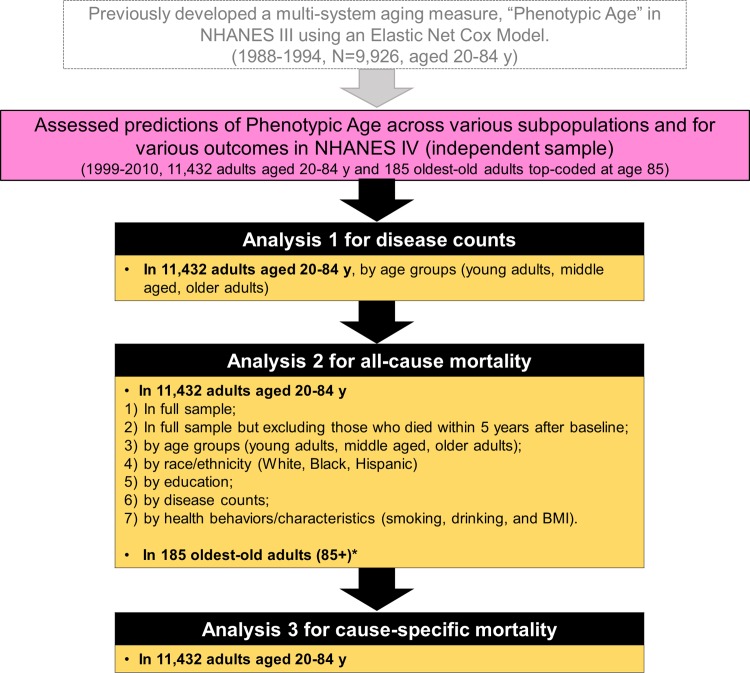
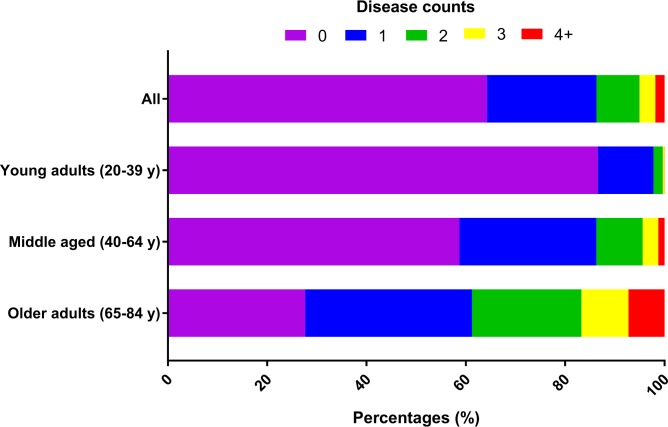
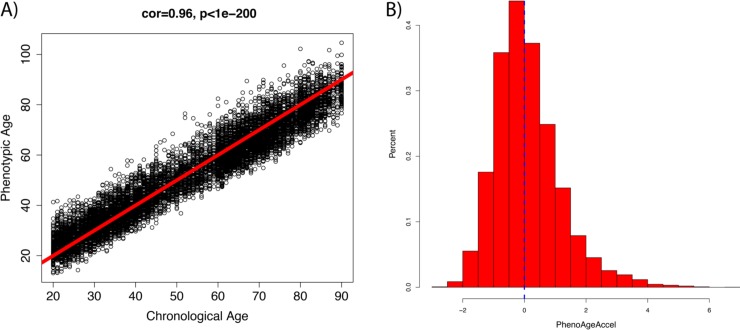
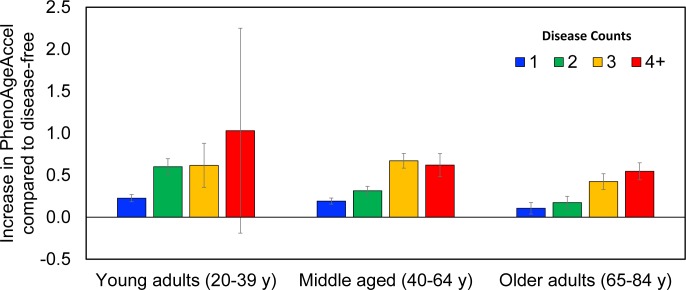
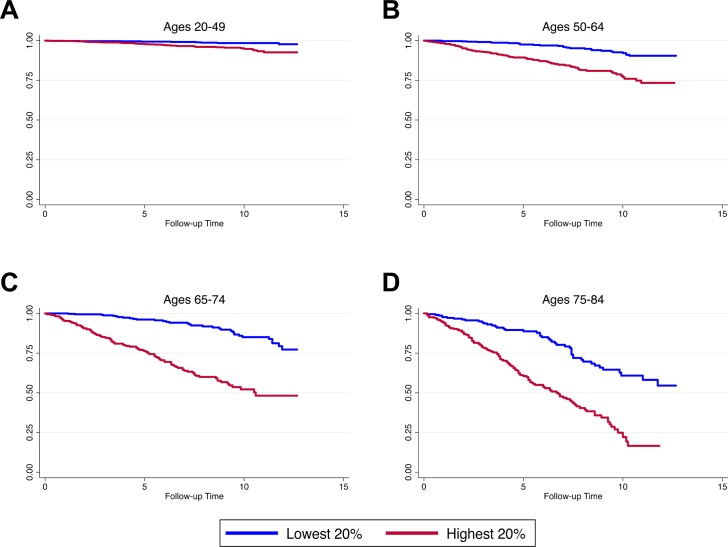
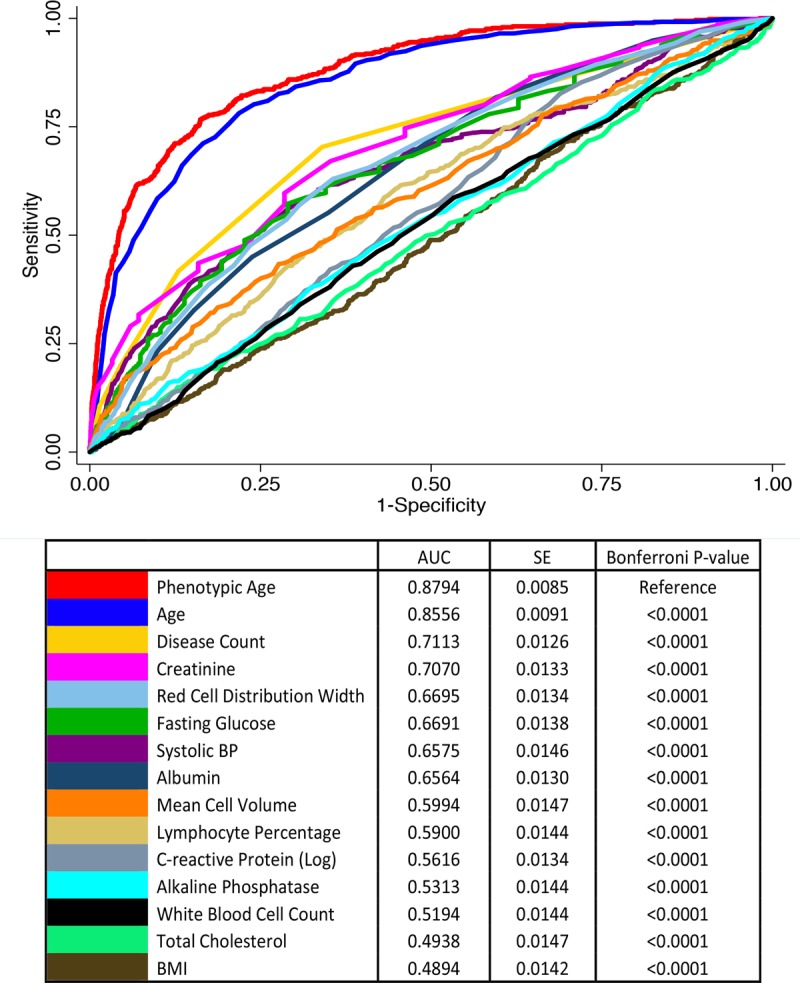
BACKGROUND: A person's rate of aging has important implications for his/her risk of death and disease; thus, quantifying aging using observable characteristics has important applications for clinical, basic, and observational research. Based on routine clinical chemistry biomarkers, we previously developed a novel aging measure, Phenotypic Age, representing the expected age within the population that corresponds to a person's estimated mortality risk. The aim of this study was to assess its applicability for differentiating risk for a variety of health outcomes within diverse subpopulations that include healthy and unhealthy groups, distinct age groups, and persons with various race/ethnic, socioeconomic, and health behavior characteristics. METHODS AND FINDINGS: Phenotypic Age was calculated based on a linear combination of chronological age and 9 multi-system clinical chemistry biomarkers in accordance with our previously established method. We also estimated Phenotypic Age Acceleration (PhenoAgeAccel), which represents Phenotypic Age after accounting for chronological age (i.e., whether a person appears older [positive value] or younger [negative value] than expected, physiologically). All analyses were conducted using NHANES IV (1999-2010, an independent sample from that originally used to develop the measure). Our analytic sample consisted of 11,432 adults aged 20-84 years and 185 oldest-old adults top-coded at age 85 years. We observed a total of 1,012 deaths, ascertained over 12.6 years of follow-up (based on National Death Index data through December 31, 2011). Proportional hazard models and receiver operating characteristic curves were used to evaluate all-cause and cause-specific mortality predictions. Overall, participants with more diseases had older Phenotypic Age. For instance, among young adults, those with 1 disease were 0.2 years older phenotypically than disease-free persons, and those with 2 or 3 diseases were about 0.6 years older phenotypically. After adjusting for chronological age and sex, Phenotypic Age was significantly associated with all-cause mortality and cause-specific mortality (with the exception of cerebrovascular disease mortality). Results for all-cause mortality were robust to stratifications by age, race/ethnicity, education, disease count, and health behaviors. Further, Phenotypic Age was associated with mortality among seemingly healthy participants-defined as those who reported being disease-free and who had normal BMI-as well as among oldest-old adults, even after adjustment for disease prevalence. The main limitation of this study was the lack of longitudinal data on Phenotypic Age and disease incidence. CONCLUSIONS: In a nationally representative US adult population, Phenotypic Age was associated with mortality even after adjusting for chronological age. Overall, this association was robust across different stratifications, particularly by age, disease count, health behaviors, and cause of death. We also observed a strong association between Phenotypic Age and the disease count an individual had. These findings suggest that this new aging measure may serve as a useful tool to facilitate identification of at-risk individuals and evaluation of the efficacy of interventions, and may also facilitate investigation into potential biological mechanisms of aging. Nevertheless, further evaluation in other cohorts is needed.
Overview
The claims and statistics of this paper haven’t been checked yet.
Free: it reads the open-access text and checks the first 5 claims that cite a source we can check. Create a free account to check every claim.
Integrity signals
Registry
Cites
Statistics
Figures
Verification
Claims the paper makes
The claims and statistics of this paper haven’t been checked yet.
Free: it reads the open-access text and checks the first 5 claims that cite a source we can check. Create a free account to check every claim.
Self-check
Percentages, sums and reported differences re-computed from the paper’s own numbers.
The self-check needs the paper’s full text.
Citations
Cites
A Proportional Hazards Model for the Subdistribution of a Competing Risk
Fine, J. P., & Gray, R. J. (1999) · Journal of the American Statistical Association · doi:10.1080/01621459.1999.10474144 · Cited by 14,290 · cited 1×
“Cause-specific mortality risk as a function of Phenotypic Age was assessed via Fine and Gray’s competing risk models [26].”
MethodDNA methylation age of human tissues and cell types
Horvath, S. (2013) · Genome Biology · doi:10.1186/gb-2013-14-10-r115 · Cited by 7,075
Self-citationAn epigenetic biomarker of aging for lifespan and healthspan
Levine, M. E., Lu, A. T., Quach, A., Chen, B. H., Assimes, T. L., Bandinelli, S., Hou, L., Baccarelli, A. A., Stewart, J. D., Li, Y., et al. (2018) · Aging · doi:10.18632/aging.101414 · Cited by 3,675 · cited 3×
“We calculated Phenotypic Age in accordance with the method described previously [12].”
MethodInfluentialSelf-citationFrailty in relation to the accumulation of deficits
Rockwood, K., & Mitnitski, A. (2007) · The Journals of Gerontology Series A: Biological Sciences and Medical Sciences · doi:10.1093/gerona/62.7.722 · Cited by 3,076 · cited 1×
“Many of the measures of aging, such as those based on deficit accumulation [14,27], include measures of morbidity in their construction, and thus it is impossible to disentangle aging and disease, or determine the usefulness of such measures in healthy populations.”
BackgroundAccumulation of Deficits as a Proxy Measure of Aging
Mitnitski, A. B., Mogilner, A. J., & Rockwood, K. (2001) · The Scientific World JOURNAL · doi:10.1100/tsw.2001.58 · Cited by 2,893 · cited 1×
“Many of the measures of aging, such as those based on deficit accumulation [14,27], include measures of morbidity in their construction, and thus it is impossible to disentangle aging and disease, or determine the usefulness of such measures in healthy populations.”
BackgroundGeroscience: Linking Aging to Chronic Disease
Kennedy, B. K., Berger, S. L., Brunet, A., Campisi, J., Cuervo, A. M., Epel, E. S., Franceschi, C., Lithgow, G. J., Morimoto, R. I., Pessin, J. E., et al. (2014) · Cell · doi:10.1016/j.cell.2014.10.039 · Cited by 2,764
National Health and Nutrition Examination Survey
(2010) · Handbook of Disease Burdens and Quality of Life Measures · doi:10.1007/978-0-387-78665-0_6177 · Cited by 2,087
A Proportional Hazards Model for the Subdistribution of a Competing Risk
Fine, J. P., & Gray, R. J. (1999) · Journal of the American Statistical Association · doi:10.2307/2670170 · Cited by 1,375
National Health and Nutrition Examination Survey
(2008) · Encyclopedia of Epidemiology · doi:10.4135/9781412953948.n305 · Cited by 1,342
DNA methylation age of blood predicts all-cause mortality in later life
Marioni, R. E., Shah, S., McRae, A. F., Chen, B. H., Colicino, E., Harris, S. E., Gibson, J., Henders, A. K., Redmond, P., Cox, S. R., et al. (2015) · Genome Biology · doi:10.1186/s13059-015-0584-6 · Cited by 1,261
Self-citation
Cited by
Items 101–200 of 777
Associations between cadmium exposure and whole-body aging: mediation analysis in the NHANES
Zhang, Y., Liu, M., & Xie, R. (2023) · BMC Public Health · doi:10.1186/s12889-023-16643-2 · Cited by 38
“Although everyone ages, the pace at which biological aging occurs varies, and inequalities in aging rates between individuals manifest as differences in mortality and disease vulnerability [13].”
BackgroundWang, S., Jurdi, N. E., Thyagarajan, B., Prizment, A. E., & Blaes, A. H. (2024) · International Journal of Molecular Sciences · doi:10.3390/ijms25063319 · Cited by 41
“Both BioAge and PhenoAge have been found to be significantly associated with an increased risk of mortality in previous studies [34,35], indicating their capacity to estimate an individual’s biological age.”
BackgroundA Novel Metabolomic Aging Clock Predicting Health Outcomes and Its Genetic and Modifiable Factors
Jia, X., Fan, J., Wu, X., Cao, X., Ma, L., Abdelrahman, Z., Zhao, F., Zhu, H., Bizzarri, D., van den Akker, E. B., et al. (2024) · Advanced Science · doi:10.1002/advs.202406670 · Cited by 41
Self-citationCardiovascular Aging and Exercise: Implications for Heart Failure Prevention and Management.
Subramanian, V., Tucker, W., Peters, A. E., Upadhya, B., Kitzman, D., & Pandey, A. (2025) · Circulation Research · doi:10.1161/circresaha.125.325531 · Cited by 32
Xu, Y., Wang, X., Belsky, D. W., McCall, W. V., Liu, Y., & Su, S. (2022) · The Journals of Gerontology Series A · doi:10.1093/gerona/glac199 · Cited by 34
Ruan, Z., Li, D., Huang, D., Liang, M., Xu, Y., Qiu, Z., & Chen, X. (2023) · BMJ Open · doi:10.1136/bmjopen-2023-076746 · Cited by 35
Boen, C., Yang, Y. C., Aiello, A. E., Dennis, A. C., Harris, K. M., Kwon, D., & Belsky, D. W. (2023) · Demography · doi:10.1215/00703370-11057546 · Cited by 40
“…Shippee 2009; Gee et al. 2012; Geronimus et al. 2010; Graetz et al. 2022; Hayward et al. 2000), generating divergent age patterns of physiological dysregulation and biological aging and contributing to the racial patterning of morbidity and mortality risk (Graf, Crowe et al. 2022; Liu et al. 2018).”
InfluentialZheng, G., Chang, Q., Zhang, Y., Liu, Y., Ji, C., Yang, H., Chen, L., Xia, Y., & Zhao, Y. (2024) · Aging Cell · doi:10.1111/acel.14453 · Cited by 36
“The original PhenoAge algorithm was constructed from elastic-net Gompertz regression of mortality on 42 biomarkers in the NHANES III (Liu et al., 2018).”
InfluentialTOMM40 genetic variants associated with healthy aging and longevity: a systematic review
Chen, S., Sarasua, S. M., Davis, N. J., DeLuca, J. M., Boccuto, L., Thielke, S. M., & Yu, C. (2022) · BMC Geriatrics · doi:10.1186/s12877-022-03337-4 · Cited by 33
The Association between Dietary Nutrient Intake and Acceleration of Aging: Evidence from NHANES
Ma, J., Li, P., Jiang, Y., Yang, X., Luo, Y., Tao, L., Guo, X., & Gao, B. (2024) · Nutrients · doi:10.3390/nu16111635 · Cited by 32
“Studies have shown that accelerated aging is a significant risk factor for numerous diseases, including heart disease [6], chronic respiratory disease [7], depression [8], cancer [2], and others.”
BackgroundMethodInfluentialMian, O., Belsky, D. W., Cohen, A. A., Anderson, L. N., Gonzalez, A., Ma, J., Sloboda, D. M., Bowdish, D. M., & Verschoor, C. P. (2022) · Psychoneuroendocrinology · doi:10.1016/j.psyneuen.2022.105821 · Cited by 32
“baseline collection) that matched the original set employed by Levine and colleagues (Liu et al., 2018): albumin, creatinine, glycated hemoglobin (HbA1C), C-reactive protein, lymphocyte percentage, mean cell volume, red”
MethodInfluentialMultidimensional associations between nutrient intake and healthy ageing in humans
Senior, A. M., Legault, V., Lavoie, F. B., Presse, N., Gaudreau, P., Turcot, V., Raubenheimer, D., Couteur, D. G. L., Simpson, S. J., & Cohen, A. A. (2022) · BMC Biology · doi:10.1186/s12915-022-01395-z · Cited by 35
“We calculated PhenoAge as described elsewhere [36, 37], although because CRP (C-reactive protein) is not available in the NuAge cohort, we used the mean CRP value from NHANES IV 1999–2010 [37] for all individuals.”
MethodAnthropoAge, a novel approach to integrate body composition into the estimation of biological age
Fermín‐Martínez, C. A., Márquez‐Salinas, A., Guerra, E. C., Zavala‐Romero, L., Antonio‐Villa, N. E., Fernández‐Chirino, L., Sandoval-Colin, D. E., Barquera‐Guevara, D. A., Muñoz, A. C., Vargas‐Vázquez, A., et al. (2022) · Aging Cell · doi:10.1111/acel.13756 · Cited by 32
“Following the methods by Liu et al.(6), we also developed a metric to estimate accelerated aging”
BackgroundMethodInfluentialHormone Therapy and Biological Aging in Postmenopausal Women
Liu, Y., & Li, C. (2024) · JAMA Network Open · doi:10.1001/jamanetworkopen.2024.30839 · Cited by 40
Epidemiological and genetic overlap among biological aging clocks: New challenges in biogerontology
Gialluisi, A., Santoro, A., Tirozzi, A., Cerletti, C., Donati, M. B., de Gaetano, G., Franceschi, C., & Iacoviello, L. (2021) · Ageing Research Reviews · doi:10.1016/j.arr.2021.101502 · Cited by 33
Pan, L., Liu, Y., Huang, C., Huang, Y., Lin, R., Wei, K., Zhou, Y., Yao, Y., Qin, G., & Yu, Y. (2025) · BMC Medicine · doi:10.1186/s12916-024-03832-y · Cited by 39
“Multiple studies have demonstrated that PhenoAgeAccel has a strong predictive capability over chronological age and clinical applicability in capturing morbidity and mortality across diverse populations [10, 11].”
Hao, M., Zhang, H., Wu, J., Huang, Y., Li, X., Wang, M., Wang, S., Wang, J., Chen, J., Bao, Z., et al. (2025) · Advanced Science · doi:10.1002/advs.202501765 · Cited by 49
Hastings, W. J., Almeida, D. M., & Shalev, I. (2021) · The Journals of Gerontology Series A · doi:10.1093/gerona/glab187 · Cited by 34
“For PhenoAge, biomarkers are selected based on associations with mortality (17).”
BackgroundDuan, S., Wu, Y., Zhu, J., Wang, X., & Fang, Y. (2024) · Environment International · doi:10.1016/j.envint.2024.108616 · Cited by 29
Does Periodontitis Affect the Association of Biological Aging with Mortality?
Liu, Y., Xu, S., Cai, Q., Chen, Y., Zhu, P., Du, M., Visser, A., & Li, A. (2023) · Journal of Dental Research · doi:10.1177/00220345231179117 · Cited by 31
“Several measurements were developed based on the above mechanisms to calculate biological age, such as epigenetic clocks, leukocyte telomere length, metabolic age score, and phenotypic age acceleration (PhenoAgeAccel) (Hertel et al. 2016; Liu et al. 2018; Drew 2022; Nguyen et al. 2022).”
BackgroundMethodInfluentialZhang, D., Leeuwenburgh, C., Zhou, D., Yan, G., Pahor, M., Licht, J. D., & Braithwaite, D. (2022) · JAMA Network Open · doi:10.1001/jamanetworkopen.2022.18183 · Cited by 32
He, Y., Yu, J., Li, Y., Wan, Z., Yi, L., Liao, X., Zhao, Q., & Li, D. (2024) · Frontiers in Public Health · doi:10.3389/fpubh.2024.1423016 · Cited by 32
Ori, A. P. S., Loohuis, L. M. O., Guintivano, J., Hannon, E. J., Dempster, E. L., Clair, D. S., Bass, N. J., McQuillin, A., Mill, J. S., Sullivan, P. F., et al. (2024) · Clinical Epigenetics · doi:10.1186/s13148-024-01660-8 · Cited by 32
“A 1-year increase in phenotypic age is associated with a 9% increased risk of all-cause mortality and a 10% and 20% increase of cardio-vascular disease and diabetes mortality risk, respectively [17, 40].”
BackgroundSelf-citationYang, Q., Zhu, X., Zhang, L., & Luo, F. (2025) · Cardiovascular Diabetology · doi:10.1186/s12933-025-02695-8 · Cited by 29
“Accelerated demographic aging poses a pressing challenge to public health systems globally, given its established role as a primary etiological contributor to the pathogenesis of prevalent noncommunicable conditions [1, 2].”
InfluentialTalifu, Z., Ren, Z., Chen, C., Guo, S., Wu, Y., Li, Y., Su, B., & Zheng, X. (2025) · Aging Cell · doi:10.1111/acel.70142 · Cited by 33
“Furthermore, PhenoAge incorporates a broader range of clinical biomarkers, enabling a more comprehensive assessment of the health impacts resulting from physiological changes across different systems (Liu et al. 2018).”
Ng, T. P., Zhong, X., Gao, Q., Gwee, X., Chua, D. Q. L., & Larbi, A. (2020) · Gerontology · doi:10.1159/000511211 · Cited by 28
Day-to-day deviations in sleep parameters and biological aging: Findings from the NHANES 2011-2014
Wang, X., Xu, Y., Li, X., Mansuri, A., McCall, W. V., Liu, Y., & Su, S. (2023) · Sleep Health · doi:10.1016/j.sleh.2023.07.018 · Cited by 28
Association between Gut Microbiota and Biological Aging: A Two-Sample Mendelian Randomization Study
Ye, C., Li, Z., Ye, C., Li, Y., Wu, K., & Zhu, C. (2024) · Microorganisms · doi:10.3390/microorganisms12020370 · Cited by 26
“Previous studies showed that Bioage and PhenoAge are reliable predictors of aging outcomes [6,7,38].”
Hu, Y., Wang, X., Huan, J.-M., Zhang, L., Lin, L., Li, Y., & Li, Y. (2022) · Frontiers in Nutrition · doi:10.3389/fnut.2022.1048448 · Cited by 25
Cuevas, A. G., Cole, S. W., Belsky, D. W., McSorley, A.-M. M., Shon, J. M., & Chang, V. W. (2024) · Brain Behavior & Immunity - Health · doi:10.1016/j.bbih.2024.100774 · Cited by 33
“In response, a second generation of clocks were developed by applying machine learning tools to develop algorithms to predict survival time (Levine et al., 2018; Liu et al., 2018).”
MethodAging measures and cancer in the Health and Retirement Study (HRS)
Wang, S., Prizment, A. E., Moshele, P., Vivek, S., Guan, W., Blaes, A. H., Nelson, H. H., & Thyagarajan, B. (2025) · Nature Communications · doi:10.1038/s41467-025-60913-z · Cited by 27
Testing Proposed Quantifications of Biological Aging in Taiwanese Older Adults
Gaydosh, L. M., Belsky, D. W., Glei, D. A., & Goldman, N. (2019) · The Journals of Gerontology Series A · doi:10.1093/gerona/glz223 · Cited by 27
“For example, we were unable to test the algorithm recently proposed by Liu and colleagues (9) because SEBAS data did not include two of the nine biomarkers included in that algorithm—alkaline phosphatase and red cell distribution width (Supplementary Table 2).”
Methodvan Holstein, Y., van Deudekom, F. J., Trompet, S., Postmus, I., den Boogaard, A. U., van der Elst, M. J. T., de Glas, N. A., van Heemst, D., Labots, G., Altena, M., et al. (2021) · BMC Geriatrics · doi:10.1186/s12877-020-01975-0 · Cited by 25
Proteomics and Epidemiological Models of Human Aging
Ubaida‐Mohien, C., Moaddel, R., Moore, A. Z., Kuo, P., Faghri, F., Tharakan, R., Tanaka, T., Nalls, M. A., & Ferrucci, L. (2021) · Frontiers in Physiology · doi:10.3389/fphys.2021.674013 · Cited by 24
Self-citationZhu, J., Yang, Y., Zeng, Y., Han, X., Chen, W., Hu, Y., Qu, Y., Yang, H., Valdimarsdóttir, U. A., Fang, F., et al. (2023) · The Journals of Gerontology Series A · doi:10.1093/gerona/glad064 · Cited by 27
“It was established using data from 11 617 adults at 20 or above in the U.S. National Health and Nutrition Examination Survey, showing a good predictive value for multiple aging-related diseases and overall mortality (13,14).”
Verschoor, C. P., Belsky, D. W., Ma, J., Cohen, A. A., Griffith, L. E., & Raina, P. S. (2020) · The Journals of Gerontology Series A · doi:10.1093/gerona/glaa151 · Cited by 26
“Levine’s phenotypic age approach (31), which does not train its algorithm using CA, supports this, as it was shown to outperform BA with regards to predicting mortality.”
MethodMárquez‐Salinas, A., Fermín‐Martínez, C. A., Antonio‐Villa, N. E., Vargas‐Vázquez, A., Guerra, E. C., Campos-Muñoz, A., Zavala‐Romero, L., Mehta, R., Bahena-López, J. P., Ortíz‐Brizuela, E., et al. (2021) · The Journals of Gerontology Series A · doi:10.1093/gerona/glab078 · Cited by 24
“individual’s CA, while negative and positive values represent the biochemical profile of a chronologically younger and a chronologically older individual, respectively [12,13].”
BackgroundAssociation Between Chewing Capacity and Mortality Risk: The Role of Diet and Ageing
Du, M., Deng, K., Yin, J., Wu, C., Hu, S., Guo, L., Luo, Z., Tonetti, M. S., Tjakkes, G. E., Visser, A., et al. (2025) · Journal Of Clinical Periodontology · doi:10.1111/jcpe.14122 · Cited by 24
A proteomic signature of healthspan
Kuo, C., Liu, P., Drouard, G., Vuoksimaa, E., Kaprio, J. A., Ollikainen, M., Chen, Z., Pilling, L. C., Atkins, J. L., Fortinsky, R. H., et al. (2025) · Proceedings of the National Academy of Sciences · doi:10.1073/pnas.2414086122 · Cited by 26
Goudsmit, J., van den Biggelaar, A. H. J., Koudstaal, W., Hofman, A., Koff, W. C., Schenkelberg, T., Alter, G., Mina, M. J., & Wu, J. W. (2021) · European Journal of Epidemiology · doi:10.1007/s10654-021-00767-z · Cited by 23
“They further showed that using nine multi-system clinical chemistry biomarkers (albumin, creatinine, glucose, C-reactive protein, lymphocyte percent, mean cell volume, red blood cell distribution width, alkaline phosphatase, and white blood cell count), the difference between an individual’s biological versus chronolo…”
BackgroundAssociation between biological aging and diabetic retinopathy
Tang, H., Luo, N., Zhang, X., Huang, J., Yang, Q., Lin, H., & Zhang, X. (2024) · Scientific Reports · doi:10.1038/s41598-024-60913-x · Cited by 27
“of the comprehensive changes associated with the multifactorial process of aging 8 .”
BackgroundYusri, K., Kumar, S., Fong, S., Gruber, J., & Sorrentino, V. (2024) · International Journal of Molecular Sciences · doi:10.3390/ijms25126793 · Cited by 26
“Recently, second-generation clocks have been constructed, aiming to predict future mortality more directly from biological parameters [26,27,431–433].”
BackgroundChen, L., Tan, K. M. L., Xu, J., Mishra, P., Mir, S. A., Gong, M., Narasimhan, K., Ng, B., Lai, J. S., Tint, M. T., et al. (2024) · Genome Medicine · doi:10.1186/s13073-024-01403-7 · Cited by 27
“A measure of biological age, known as Phenotypic Age or PhenoAge, was developed using clinical data from the third National Health and Nutrition Examination Survey (NHANES) [13], and validated in the fourth NHANES [9].”
BackgroundMethodInfluentialBiological Aging in Maltreated Children Followed up into Middle Adulthood
Graf, G. H.-J., Li, X., Kwon, D., Belsky, D. W., & Widom, C. S. (2022) · Psychoneuroendocrinology · doi:10.1016/j.psyneuen.2022.105848 · Cited by 28
Social determinants of health, accelerated biological aging, and long-term health outcomes
Li, J., Li, J., Xu, X. H., Shen, W., Sun, Y., Fu, Y., Tan, X. W., Wang, N., Qi, L., Wang, B., et al. (2025) · Nature Communications · doi:10.1038/s41467-025-67622-7 · Cited by 28
“Furthermore, most previous studies have limited sample sizes (n 3000) and assessed aging metrics at epigenetic, mRNA, or other molecular levels, which may restrict their wide use in large population-based cohort studies due to concerns about cost and practicality 7,23 .”
Feng, Y., Lin, H., Tan, H., & Liu, X. (2024) · The journal of nutrition health & aging · doi:10.1016/j.jnha.2024.100203 · Cited by 21
Zhao, Z., Zhou, J., Shi, A., Wang, J., Li, H., Yin, X., Gao, J., Wu, Y., Li, J., Sun, Y. X., et al. (2024) · Journal of Hazardous Materials · doi:10.1016/j.jhazmat.2024.136090 · Cited by 22
Zhang, X., Zhao, H., Li, Z., Liu, X., Zhang, Y., Yang, N., Zhang, T., Yang, X., & Lü, M. (2024) · Aging Cell · doi:10.1111/acel.14427 · Cited by 27
“Phenotypic Age (PhenoAge) models BA as the average biological state associated with a specific level of mortality risk within the reference population, with the assumption that BA increases exponentially over time (Liu et al., 2018 ).”
Hong, L., Liu, Q., Liu, W., Song, J., Wan, S., Huo, Z., Zhang, Y., Shi, D., Liang, R., Chen, B., et al. (2025) · Journal of Hazardous Materials · doi:10.1016/j.jhazmat.2025.138929 · Cited by 24
Li, K., Wu, J., Zhou, Q., Zhao, J., Li, Y., Yang, M., Yang, Y., Hu, Y., Xu, J., Zhao, M., et al. (2023) · Journal of Hazardous Materials · doi:10.1016/j.jhazmat.2023.132779 · Cited by 20
Longitudinal machine learning uncouples healthy aging factors from chronic disease risks
Cohen, N. M., Lifshitz, A., Jaschek, R., Rinott, E., Balicer, R. D., Shlush, L. I., Barbash, G. I., & Tanay, A. (2023) · Nature Aging · doi:10.1038/s43587-023-00536-5 · Cited by 22
“While multiple studies reported on modeling all-cause mortality and biological age using common clinical markers 18 without a longitudinal model, the impact of specific diseases on aging and the impact of aging itself on the predisposition to disease cannot be decoupled.”
Feng, Y., Xu, W., Tang, S., Ye, Z., Fang, P., Abdullah, G., Yang, H., Kong, D., Huang, H., Wang, Y., et al. (2024) · Diabetes Research and Clinical Practice · doi:10.1016/j.diabres.2024.111749 · Cited by 20
Ye, Z., Lang, H., Xie, Z., Duan, S., Peng, B., Chen, X., Fang, Y., & Xin, J. (2024) · BMC Medicine · doi:10.1186/s12916-024-03640-4 · Cited by 23
“The formula for calculating the Phenoage was as follows: We further calculated phenotypic age acceleration (PhenoAgeAccel) characterized by the residuals from linear regression of the Phenoage on chronological age [19].”
MethodTan, M., Jiang, Z.-N., Li, Y. C., Li, Z., & Niu, B. (2025) · Cardiovascular Diabetology · doi:10.1186/s12933-025-02940-0 · Cited by 22
“While aging is an inevitable part of life, the rate at which it occurs varies among individuals, leading to differences in susceptibility to disease and death [5].”
Immune cells are associated with mortality: the Health and Retirement Study
Seshadri, G., Vivek, S., Prizment, A. E., Crimmins, E. M., Klopack, E. T., Faul, J. D., Guan, W., Meier, H. C. S., & Thyagarajan, B. (2023) · Frontiers in Immunology · doi:10.3389/fimmu.2023.1280144 · Cited by 21
Self-citationWang, X., Peng, Y., Liu, F., Wang, P., Si, C., Gong, J., Zhou, H., Zhang, M., & Song, F. (2024) · Preventive Medicine · doi:10.1016/j.ypmed.2024.107928 · Cited by 20
Wang, H., Liu, Z., Fan, H. X., Guo, C., Zhang, X., Li, Y., Han, X., & Zhang, T. (2024) · Archives of Gerontology and Geriatrics · doi:10.1016/j.archger.2024.105477 · Cited by 21
Self-citationXu, X., & Xu, Z. (2024) · Clinical Cardiology · doi:10.1002/clc.24321 · Cited by 21
“Previous studies have found that generalizability of PhenoAge can facilitate the identification of individuals at different risk of disease and mortality in assessing the risk of various aging outcomes [9, 27].”
InfluentialAssociation between plant and animal protein and biological aging: findings from the UK Biobank
Xu, X., Hu, J., Pang, X., Wang, X., Xu, H. Y., Yan, X., Zhang, J., Pan, S., Wei, W., & Li, Y. (2024) · European Journal of Nutrition · doi:10.1007/s00394-024-03494-9 · Cited by 20
Cardoso, B. R., Liu, J., Machado, P. P., Kwon, D., Belsky, D. W., & Steele, E. M. (2024) · Age and Ageing · doi:10.1093/ageing/afae268 · Cited by 21
Zeng, Z., Yu, C., Chen, R., Li, Z., Wang, P., Wang, X., Li, X., & Zheng, Z. (2025) · Cardiovascular Diabetology · doi:10.1186/s12933-025-02855-w · Cited by 18
“PhenoAge was derived from chronological age and nine biomarkers: concentrations of albumin, alkaline phosphatase, creatinine, glucose, C-reactive protein, lymphocyte percentage, mean cell volume, red blood cell distribution width, and white blood cell count (Supplementary Methods 1, Table S2) [9].”
InfluentialBiological aging and generational shifts in early-onset cancer risk
Tian, R., Zong, X., Ren, D., Tica, S., Hong, D. Y., Oduyale, O. K., Buenrostro, J. D., Govindan, R., & Cao, Y. (2026) · Nature Medicine · doi:10.1038/s41591-026-04448-w · Cited by 18
“Although trained on mortality, PhenoAge has been shown to correlate with morbidity 49 , and is therefore used here as a systemic indicator of biological aging and a mortality-and morbidity-based aging measure.”
An interpretable machine learning model of biological age
Wood, T. R., Kelly, C., Roberts, M., & Walsh, B. (2019) · F1000Research · doi:10.12688/f1000research.17555.1 · Cited by 21
Wei, K., Peng, S., Liu, N., Li, G., Wang, J., Chen, X., He, L., Chen, Q., Lv, Y., Guo, H., et al. (2022) · The Journals of Gerontology Series A · doi:10.1093/gerona/glac081 · Cited by 18
Han, W. M., Apornpong, T., Gatechompol, S., Ubolyam, S., Chattranukulchai, P., Wattanachanya, L., Siwamogsatham, S., Kerr, S. J., Erlandson, K. M., & Avihingsanon, A. (2022) · BMC Geriatrics · doi:10.1186/s12877-022-03720-1 · Cited by 19
“Recent studies have demonstrated that a novel aging marker “PhenoAge”, which is composed of age, indicators from complete blood count, metabolic markers such as glucose and albumin, markers of organ injury including liver, kidney, and systemic inflammatory marker, can facilitate the identification of at-risk individua…”
BackgroundMethodDeficit Accumulation Index and Biological Markers of Aging in Survivors of Childhood Cancer
Williams, A. M., Mandelblatt, J. S., Wang, M., Dong, Q., Armstrong, G. T., Bhakta, N. H., Brinkman, T. M., Ehrhardt, M. J., Mulrooney, D. A., Gilmore, N. J., et al. (2023) · JAMA Network Open · doi:10.1001/jamanetworkopen.2023.44015 · Cited by 19
Association between dietary quality and accelerated aging: a cross-sectional study of two cohorts
Chen, Y., Zheng, X. M., Wang, Y., Liu, C., Shi, J., Liu, T., Lin, S., Xie, H., Zhang, H., Liu, X., et al. (2024) · Food & Function · doi:10.1039/d4fo02360a · Cited by 18
Xu, C., Song, Z., Wang, J., & Li, C.-C. (2024) · The journal of nutrition health & aging · doi:10.1016/j.jnha.2024.100323 · Cited by 20
Zhu, T., Tian, Y., Wang, J., Wu, Z., Xie, W., Liu, H., Li, X., Tao, L., & Guo, X. (2025) · Nutrients · doi:10.3390/nu17081397 · Cited by 22
“Specifically, KDM-BA and PhenoAge are composite indices derived from clinical biomarkers that span multiple physiological domains, including inflammation (e.g., C-reactive protein), immunity (e.g., immune cell counts), and organ function (e.g., albumin) [29,50].”
Wu, Y., Wu, Q., Pan, R., Yi, W., Li, Y., Jin, X., Liang, Y., Mei, L., Yan, S., Sun, X., et al. (2023) · Environmental Science and Pollution Research · doi:10.1007/s11356-023-25418-6 · Cited by 19
“Phenotypic age (PA) was calculated based on chronological age and nine biomarkers (including chronological age, albumin, creatinine, glucose, C-reactive protein (CRP), lymphocyte percentage, mean cell volume, erythrocyte distribution width, alkaline phosphatase, and white blood cell count) selected based on a tenfold…”
MethodHan, M., Fang, J., Zhang, Y., Song, X., Jin, L., & Ma, Y. (2023) · BMC Geriatrics · doi:10.1186/s12877-023-03874-6 · Cited by 19
“Despite these limitations, PhenoAgeAccel is a marker that may be used to monitor the aging process before symptoms of diseases appear [10].”
BackgroundZhang, J., Yu, S., Zhao, G., Jiang, X., Zhu, Y., & Liu, Z. (2022) · Frontiers in Neurology · doi:10.3389/fneur.2022.858439 · Cited by 20
Self-citationYang, B. T., Jia, Y., Yan, M., Zhao, X., Gu, Z., Qin, Y., Liu, Z., Yang, Y., Wang, P., & Wang, W. (2024) · Environmental Pollution · doi:10.1016/j.envpol.2024.124669 · Cited by 17
Self-citationWei, W., Qi, X., Cheng, B., Zhang, N., Zhao, Y., Qin, X., He, D., Chu, X., Shi, S., Cai, Q., et al. (2024) · Communications Medicine · doi:10.1038/s43856-024-00706-5 · Cited by 19
“In contrast, PhenoAge is rooted in a weighted combination of select biomarkers that are aligned with known age-related mortality risks 10 .”
Loss of toll-like receptor 4 ameliorates cardiovascular dysfunction in aged mice
Liu, H., Chu, S., & Wu, Z. (2021) · Immunity & Ageing · doi:10.1186/s12979-021-00251-y · Cited by 17
Behavioral Interventions to Improve Home-Based Office-Workers’ Health
Bartmann, N., Cloughesy, J. N., Probst, B. M., Romagnoli, G., & Woerner, A. (2022) · Trends in Psychology · doi:10.1007/s43076-021-00122-x · Cited by 19
“, 2011) and extend life expectancy by up to 14 years (Liu et al., 2018).”
Andrasfay, T., Kim, J. K., Ailshire, J., & Crimmins, E. M. (2023) · The Journals of Gerontology Series B · doi:10.1093/geronb/gbad055 · Cited by 21
Self-citationTian, Y., Wang, J., Zhu, T., Li, X., Zhang, H., Zhao, X., Yang, X., Luo, Y., Tao, L., Wu, Z., et al. (2025) · Nutrients · doi:10.3390/nu17111783 · Cited by 19
“We assessed BA using widely validated algorithms: PhenoAge [13] and KDMAge [14].”
InfluentialKwan, K. J. S., Xie, S.-S., Li, H., Lin, X.-G., Lu, Y., Chen, B., Ge, K., Tang, S.-Y., Zhang, H., Jiang, S., et al. (2025) · Scientific Reports · doi:10.1038/s41598-025-12495-5 · Cited by 20
Predicting healthspan and disease risks through biological age
Li, G., Cheng, L., Wong, I. N., Yin, Y., Chen, J., Liu, L., & Zhang, K. (2025) · Trends in Molecular Medicine · doi:10.1016/j.molmed.2025.10.006 · Cited by 21
LipidClock: A Lipid-Based Predictor of Biological Age
Unfried, M., Ng, L. F., Cazenave‐Gassiot, A., Batchu, K. C., Kennedy, B. K., Wenk, M. R., Tolwinski, N. S., & Gruber, J. (2022) · Frontiers in Aging · doi:10.3389/fragi.2022.828239 · Cited by 18
Liu, Y., Wang, J., Wei, Z., Wang, Y., Wu, M., Wang, J., Chen, X., & Chen, R. (2024) · The journal of nutrition health & aging · doi:10.1016/j.jnha.2024.100405 · Cited by 18
Freeman, D. W., Hooten, N. N., Kim, Y., Mode, N. A., Ejiogu, N., Zonderman, A. B., & Evans, M. K. (2020) · PLoS ONE · doi:10.1371/journal.pone.0237059 · Cited by 18
Phenotype correlations reveal the relationships of physiological systems underlying human ageing
Hao, M., Zhang, H., Hu, Z., Jiang, X., Song, Q., Wang, X., Wang, J., Liu, Z., Wang, X., Li, Y., et al. (2021) · Aging Cell · doi:10.1111/acel.13519 · Cited by 18
Self-citationPredicting physiological aging rates from a range of quantitative traits using machine learning
Sun, E., Qian, Y., Oppong, R., Butler, T. J., Zhao, J. Y., Chen, B. H., Tanaka, T., Kang, J., Sidore, C., Cucca, F., et al. (2021) · Aging · doi:10.18632/aging.203660 · Cited by 16
Self-citationSedentary behavior accelerates biological aging mediated by body mass index in adults
Che, J., Huai, J., Luo, L., Tang, Y., & Zeng, T. (2025) · Scientific Reports · doi:10.1038/s41598-025-06325-x · Cited by 16
“The final equation for calculating Phenotypic Age is provided below 7,15 : where . xb = − 19.907 − 0.0336 × albumin + 0.0095 × creatinine + 0.1953 × glucose + 0.0954 × ln(CRP) − 0.0120 × lymphocyte percent + 0.0268 × mean cell volume + 0.3306 × red cell distribution width + 0.00188 × alkaline…”
InfluentialAssociation of the dietary inflammatory index with phenotypic age in the United States adults
Sun, M., Fang, J., Gao, W., He, Y., Ma, Y., & Jin, L. (2023) · Epidemiology and Health · doi:10.4178/epih.e2023051 · Cited by 16
“PhenoAge was selected through a Cox proportional hazards elastic net model for mortality based on 10-fold cross-validation [5,6], and PhenoAge was found to represent a person’s expected age within the population, consistent with a person’s estimated mortality hazard as a function of his/her profile…”
BackgroundMethodCao, B., Xue, Y., & Liu, D. (2023) · Archives of Gerontology and Geriatrics · doi:10.1016/j.archger.2023.105176 · Cited by 15
Relationship between Composite Dietary Antioxidant Index and Aging
Wang, H., & Chen, Y. (2023) · Healthcare · doi:10.3390/healthcare11202722 · Cited by 15
“We define phenotypic aging as when PhenoAgeAccel is greater than 0, and phenotypic rejuvenation as when it is less than or equal to 0 [6].”
BackgroundMethodGuo, Q., Dong, D., Zhou, Q., Huang, S., Qiao, X., Dang, Z., Wang, X., & Zhao, Y. (2024) · Frontiers in Cardiovascular Medicine · doi:10.3389/fcvm.2024.1466752 · Cited by 15
Waziry, R., Gu, Y., Boehme, A. K., & Williams, O. A. (2023) · Neurology · doi:10.1212/wnl.0000000000207909 · Cited by 18
“Among available and validated measures of biological aging based on physiologic parameters, we opted to use Phenotypic Age described in detail by Liu et al. 18 This clock uses the following 9 parameters: albumin, creatinine, glucose, [log] C-reactive protein (CRP), lymphocyte percent, mean cell…”
MethodXi, J., Zhang, Z., Hou, B., Wu, Y., Zhang, Y., & Liu, W. J. (2025) · Diabetes Research and Clinical Practice · doi:10.1016/j.diabres.2025.112375 · Cited by 14
Discordant Biological and Chronological Age: Implications for Cognitive Decline and Frailty
Shaaban, C. E., Rosano, C., Zhu, X., Rutherford, B. R., Witonsky, K. R., Rosso, A. L., Yaffe, K. S., & Brown, P. J. (2023) · The Journals of Gerontology Series A · doi:10.1093/gerona/glad174 · Cited by 15
Wang, M., Yang, M., Liang, S., Wang, N., Wang, Y., Sambou, M. L., Qin, N., Zhu, M., Wang, C., Jiang, Y., et al. (2023) · SLEEP · doi:10.1093/sleep/zsad299 · Cited by 17
Chen, H., Tang, H., Zhang, X., Huang, J., Luo, N., Guo, Q., & Wang, X. (2024) · Revista Española de Cardiología (English Edition) · doi:10.1016/j.rec.2024.04.004 · Cited by 18
Wu, D., Jia, Y., Liu, Y., & Shang, M. (2024) · Frontiers in Nutrition · doi:10.3389/fnut.2024.1424156 · Cited by 15
Lu, T. Y., Wang, J., Jiang, C. Q., Jin, Y. L., Cheng, K. K., Lam, T. H., Zhang, W. S., & Xu, L. (2024) · GeroScience · doi:10.1007/s11357-024-01329-3 · Cited by 17
“Age acceleration (AA) indicates how quickly these changes are happening compared to chronological age [3].”
Zhang, Z., Wang, J., Yu, B., Sun, Y., Chen, Y., Lu, Y., Wang, N., & Xia, F. (2024) · Journal of Endocrinological Investigation · doi:10.1007/s40618-024-02436-w · Cited by 15
“In addition, PhenoAge acceleration (PhenoAgeAccel) has been validated to predict risk of health-related outcomes, such as cancer and cardiovascular disease [6, 8].”
Xu, C., Wang, J., Song, Z., Deng, H.-Y., & Li, C.-C. (2024) · Aging Clinical and Experimental Research · doi:10.1007/s40520-024-02854-z · Cited by 16
“A novel measure of biological aging, phenotypic age acceleration (PhenoAgeAccel), has been developed based on multisystem clinical biomarkers [26, 27].”
BackgroundMethodSun, M., & Bao, S. (2024) · Frontiers in Aging Neuroscience · doi:10.3389/fnagi.2024.1507035 · Cited by 14
Metadata
- Authors
- Liu, Z., Kuo, P.-L., Horvath, S., Crimmins, E., Ferrucci, L., & Levine, M.
- Affiliations
- Yale University (US)
- National Institutes of Health (US)
- University of California, Los Angeles (US)
- University of Southern California (US)
- Corresponding author
- Liu, Zuyun
- Kuo, Pei-Lun
- Horvath, Steve
- Crimmins, Eileen
- Ferrucci, Luigi
- Levine, Morgan
- Venue
- PLOS Medicine
- Publisher
- Public Library of Science (PLoS)
- Published
- 2018-12-31
- Volume
- 15
- Issue
- 12
- Pages
- e1002718
- ISSN
- 1549-1277 (ISSN-L)
- 1549-1676
- PMC
- PMC6312200
- OpenAlex
- W2908077673
- Cited by
- 754
- References
- 35
- Citations by year
- 2026: 178 · 2025: 206 · 2024: 161 · 2023: 75 · 2022: 48 · 2021: 43 · 2020: 23 · 2019: 18 · 2018: 2
- FWCI
- 11.90
- Type
- journal article
- Language
- en
- Update notices
- correction (2019-02-25)
- Open access
- gold
- doi.org
- Licence
- public-domain
- creativecommons.org/publicdomain/zero/1.0/ (vor)
- Locations
- PLoS Medicine (publishedVersion, public-domain)
- bioRxiv (Cold Spring Harbor Laboratory) (acceptedVersion, cc-by-nc)
- Europe PMC (PubMed Central) (publishedVersion, public-domain)
- PubMed Central (publishedVersion, public-domain)
- PubMed Central (publishedVersion, cc-by)
- PubMed (publishedVersion)
- RePEc: Research Papers in Economics (submittedVersion)
- DOAJ (DOAJ: Directory of Open Access Journals) (submittedVersion, cc-by-sa)
- eScholarship (California Digital Library) (submittedVersion)
- eScholarship (California Digital Library) (submittedVersion, public-domain)
- Figshare (submittedVersion, cc-by)
- Funders
- National Institute on Aging (4R00AG052604-02)
- Topics
- Health Sciences › Medicine › Geriatrics and Gerontology › Frailty in Older Adults
- Life Sciences › Biochemistry, Genetics and Molecular Biology › Aging › Genetics, Aging, and Longevity in Model Organisms
- Social Sciences › Psychology › Developmental and Educational Psychology › Aging and Gerontology Research
- Keywords
- phenotypic age, phenotypic age acceleration, biological aging, mortality prediction, morbidity, all-cause mortality, cause-specific mortality, oldest old, healthy young adults, racial and ethnic differences, socioeconomic status, health behavior, disease burden, mortality risk stratification
- MeSH terms
- Adult, Aged, Aged, 80 and over, Aging, Female, Follow-Up Studies, Humans, Male, Middle Aged, Morbidity, Mortality, Nutrition Surveys, Population Surveillance, Risk Factors, Cohort Studies, Young Adult
About these checks
Registry, retraction, Cites and statistics results are computed, not judged, with one exception: a printed reference that no index lists is read once by a model before it counts as a citation error. Claims are extracted by a model and kept only when their quote appears verbatim in the text; each cited source is then checked, with a model’s help, for whether it says what the claim relies on. Those verdicts can be wrong — read the claim’s quote and the cited source before relying on one.
Statistics and arithmetic are recomputed, not judged.
Confidence bands are shown only for fields calibrated on our annotated test set. None is calibrated yet, so no band is shown.
What counts as a claim ›How we measure confidence ›How we check this ›
Are you an author, or do you see a problem with this page? Request a review
Data sources
Bibliographic data: Semantic Scholar, OpenAlex, Crossref.
Contains information from the Semantic Scholar Academic Graph Datasets, made available under the ODC Attribution License (ODC-BY 1.0).
Semantic Scholar’s data is described in: Kinney, R., et al. (2023). The Semantic Scholar Open Data Platform. arXiv:2301.10140.
