

A new aging measure captures morbidity and mortality risk across diverse subpopulations from NHANES IV: A cohort study
Open accessPublished version of a preprint
The DOI matches its Crossref record; 35 of the 35 references it cites were found in a registry or an index.
Abstract
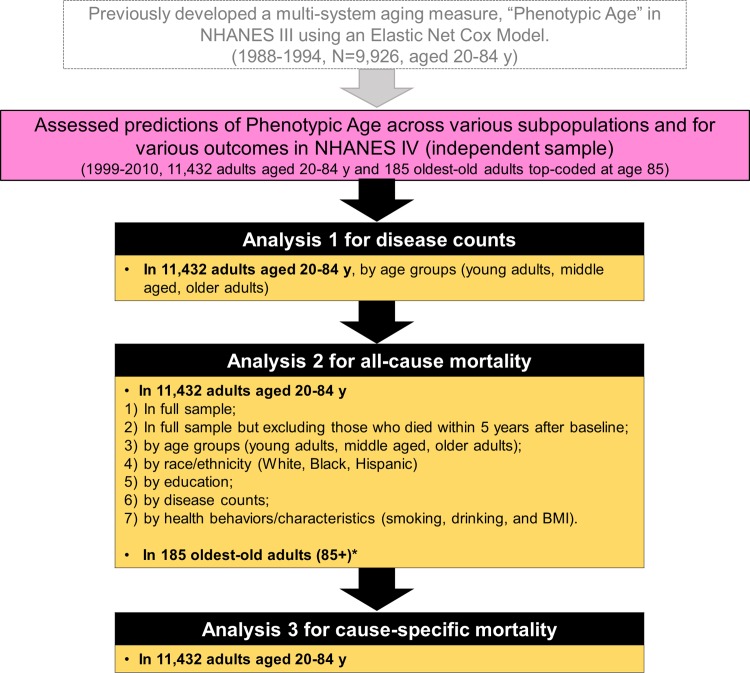
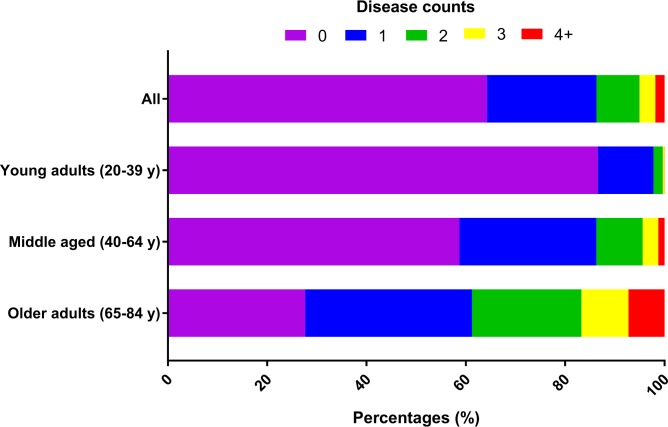
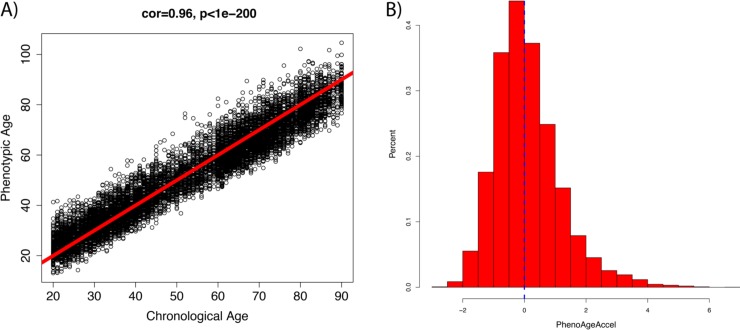
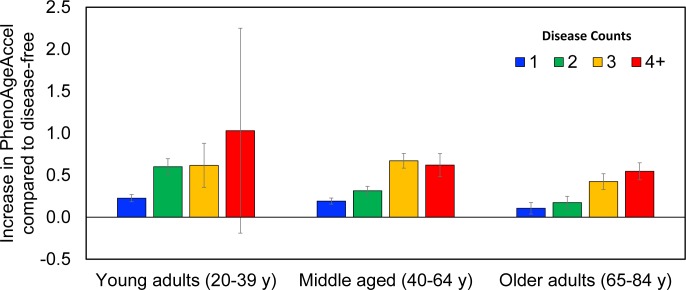
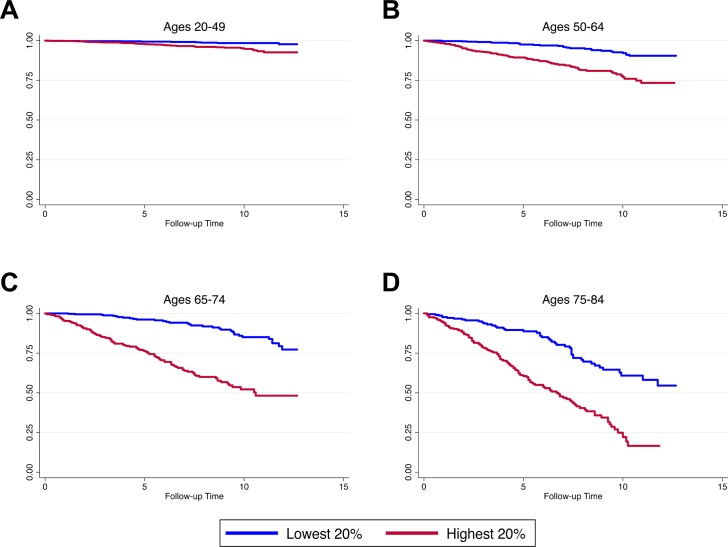
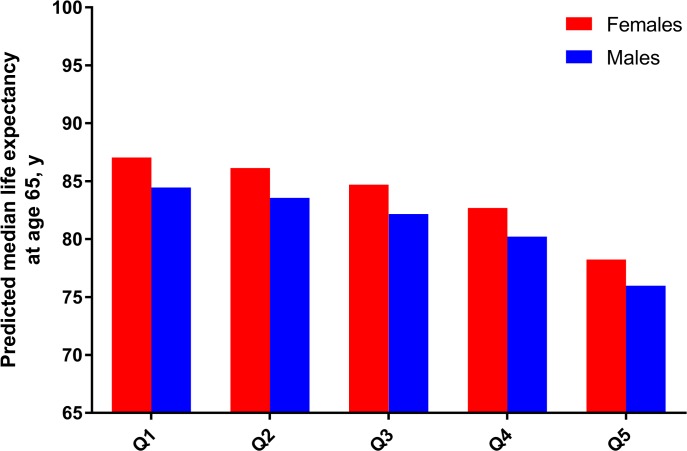
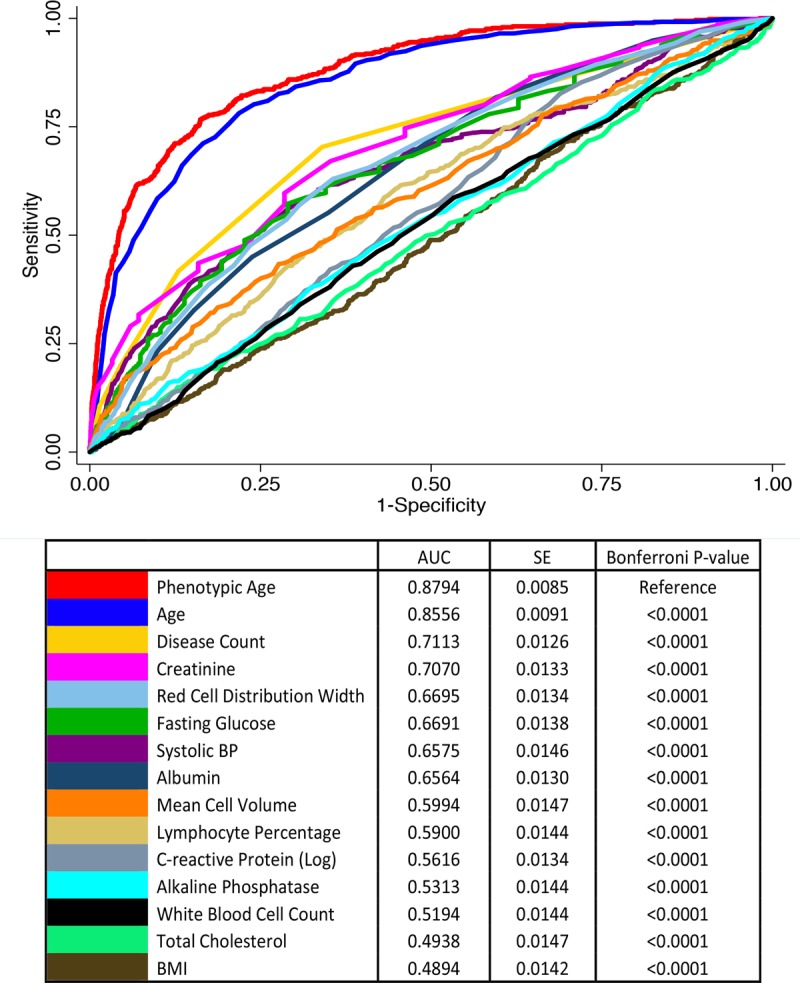
BACKGROUND: A person's rate of aging has important implications for his/her risk of death and disease; thus, quantifying aging using observable characteristics has important applications for clinical, basic, and observational research. Based on routine clinical chemistry biomarkers, we previously developed a novel aging measure, Phenotypic Age, representing the expected age within the population that corresponds to a person's estimated mortality risk. The aim of this study was to assess its applicability for differentiating risk for a variety of health outcomes within diverse subpopulations that include healthy and unhealthy groups, distinct age groups, and persons with various race/ethnic, socioeconomic, and health behavior characteristics. METHODS AND FINDINGS: Phenotypic Age was calculated based on a linear combination of chronological age and 9 multi-system clinical chemistry biomarkers in accordance with our previously established method. We also estimated Phenotypic Age Acceleration (PhenoAgeAccel), which represents Phenotypic Age after accounting for chronological age (i.e., whether a person appears older [positive value] or younger [negative value] than expected, physiologically). All analyses were conducted using NHANES IV (1999-2010, an independent sample from that originally used to develop the measure). Our analytic sample consisted of 11,432 adults aged 20-84 years and 185 oldest-old adults top-coded at age 85 years. We observed a total of 1,012 deaths, ascertained over 12.6 years of follow-up (based on National Death Index data through December 31, 2011). Proportional hazard models and receiver operating characteristic curves were used to evaluate all-cause and cause-specific mortality predictions. Overall, participants with more diseases had older Phenotypic Age. For instance, among young adults, those with 1 disease were 0.2 years older phenotypically than disease-free persons, and those with 2 or 3 diseases were about 0.6 years older phenotypically. After adjusting for chronological age and sex, Phenotypic Age was significantly associated with all-cause mortality and cause-specific mortality (with the exception of cerebrovascular disease mortality). Results for all-cause mortality were robust to stratifications by age, race/ethnicity, education, disease count, and health behaviors. Further, Phenotypic Age was associated with mortality among seemingly healthy participants-defined as those who reported being disease-free and who had normal BMI-as well as among oldest-old adults, even after adjustment for disease prevalence. The main limitation of this study was the lack of longitudinal data on Phenotypic Age and disease incidence. CONCLUSIONS: In a nationally representative US adult population, Phenotypic Age was associated with mortality even after adjusting for chronological age. Overall, this association was robust across different stratifications, particularly by age, disease count, health behaviors, and cause of death. We also observed a strong association between Phenotypic Age and the disease count an individual had. These findings suggest that this new aging measure may serve as a useful tool to facilitate identification of at-risk individuals and evaluation of the efficacy of interventions, and may also facilitate investigation into potential biological mechanisms of aging. Nevertheless, further evaluation in other cohorts is needed.
Overview
The claims and statistics of this paper haven’t been checked yet.
Free: it reads the open-access text and checks the first 5 claims that cite a source we can check. Create a free account to check every claim.
Integrity signals
Registry
Cites
Statistics
Figures
Verification
Claims the paper makes
The claims and statistics of this paper haven’t been checked yet.
Free: it reads the open-access text and checks the first 5 claims that cite a source we can check. Create a free account to check every claim.
Self-check
Percentages, sums and reported differences re-computed from the paper’s own numbers.
The self-check needs the paper’s full text.
Citations
Cites
A Proportional Hazards Model for the Subdistribution of a Competing Risk
Fine, J. P., & Gray, R. J. (1999) · Journal of the American Statistical Association · doi:10.1080/01621459.1999.10474144 · Cited by 14,290 · cited 1×
“Cause-specific mortality risk as a function of Phenotypic Age was assessed via Fine and Gray’s competing risk models [26].”
MethodDNA methylation age of human tissues and cell types
Horvath, S. (2013) · Genome Biology · doi:10.1186/gb-2013-14-10-r115 · Cited by 7,075
Self-citationAn epigenetic biomarker of aging for lifespan and healthspan
Levine, M. E., Lu, A. T., Quach, A., Chen, B. H., Assimes, T. L., Bandinelli, S., Hou, L., Baccarelli, A. A., Stewart, J. D., Li, Y., et al. (2018) · Aging · doi:10.18632/aging.101414 · Cited by 3,675 · cited 3×
“We calculated Phenotypic Age in accordance with the method described previously [12].”
MethodInfluentialSelf-citationFrailty in relation to the accumulation of deficits
Rockwood, K., & Mitnitski, A. (2007) · The Journals of Gerontology Series A: Biological Sciences and Medical Sciences · doi:10.1093/gerona/62.7.722 · Cited by 3,076 · cited 1×
“Many of the measures of aging, such as those based on deficit accumulation [14,27], include measures of morbidity in their construction, and thus it is impossible to disentangle aging and disease, or determine the usefulness of such measures in healthy populations.”
BackgroundAccumulation of Deficits as a Proxy Measure of Aging
Mitnitski, A. B., Mogilner, A. J., & Rockwood, K. (2001) · The Scientific World JOURNAL · doi:10.1100/tsw.2001.58 · Cited by 2,893 · cited 1×
“Many of the measures of aging, such as those based on deficit accumulation [14,27], include measures of morbidity in their construction, and thus it is impossible to disentangle aging and disease, or determine the usefulness of such measures in healthy populations.”
BackgroundGeroscience: Linking Aging to Chronic Disease
Kennedy, B. K., Berger, S. L., Brunet, A., Campisi, J., Cuervo, A. M., Epel, E. S., Franceschi, C., Lithgow, G. J., Morimoto, R. I., Pessin, J. E., et al. (2014) · Cell · doi:10.1016/j.cell.2014.10.039 · Cited by 2,764
National Health and Nutrition Examination Survey
(2010) · Handbook of Disease Burdens and Quality of Life Measures · doi:10.1007/978-0-387-78665-0_6177 · Cited by 2,087
A Proportional Hazards Model for the Subdistribution of a Competing Risk
Fine, J. P., & Gray, R. J. (1999) · Journal of the American Statistical Association · doi:10.2307/2670170 · Cited by 1,375
National Health and Nutrition Examination Survey
(2008) · Encyclopedia of Epidemiology · doi:10.4135/9781412953948.n305 · Cited by 1,342
DNA methylation age of blood predicts all-cause mortality in later life
Marioni, R. E., Shah, S., McRae, A. F., Chen, B. H., Colicino, E., Harris, S. E., Gibson, J., Henders, A. K., Redmond, P., Cox, S. R., et al. (2015) · Genome Biology · doi:10.1186/s13059-015-0584-6 · Cited by 1,261
Self-citation
Cited by
Items 301–400 of 777
LinAge2: providing actionable insights and benchmarking with epigenetic clocks
Fong, S., Denisov, K. A., Nefedova, A. A., Kennedy, B. K., & Gruber, J. (2025) · npj Aging · doi:10.1038/s41514-025-00221-4 · Cited by 8
Buendía-Roldán, I., Palma‐Lopez, A., Chan-Padilla, D., Herrera, I., Maldonado, M., Fernández, R., Martínez‐Briseño, D., Mejía, M. E., & Selman, M. (2020) · BMC Pulmonary Medicine · doi:10.1186/s12890-020-01204-9 · Cited by 9
Johnson, A. A., & Shokhirev, M. N. (2021) · Rejuvenation Research · doi:10.1089/rej.2021.0012 · Cited by 7
Zhang, J., Cao, X., Chen, C., Liu, H., Ren, Z., Xiao, J., Han, L., Wu, X., & Liu, Z. (2022) · Frontiers in Medicine · doi:10.3389/fmed.2022.831260 · Cited by 7
“Accel > 0 (< 0) than expected based on his/her CA [4, 16].”
BackgroundMethodResultInfluentialSelf-citationZhang, L., Yu, J., Jia, X., Su, Z., Hu, Y., Zhang, J., Yang, W. Y. L., Chen, X., Hoogendijk, E. O., Huang, H., et al. (2025) · Journal of Cachexia Sarcopenia and Muscle · doi:10.1002/jcsm.13862 · Cited by 9
Self-citationProvost, G., Tanner, K., Legault, V., Ferrucci, L., Bandinelli, S., Fried, L. P., Belsky, D. W., Laurent, B., & Cohen, A. A. (2025) · The Journals of Gerontology Series A · doi:10.1093/gerona/glaf179 · Cited by 8
Self-citationLi, Y., Luo, Z., Zhang, Z., Huang, N., Li, X., Li, J., Zou, K., & Wang, J. (2025) · Diabetes Research and Clinical Practice · doi:10.1016/j.diabres.2025.112988 · Cited by 6
Luo, L., Fu, J., Wang, X., & Sui, X. (2025) · Scientific Reports · doi:10.1038/s41598-025-30747-2 · Cited by 7
“PhenoAge, a measure of biological age, is determined through analysis of clinical laboratory blood components using the PhenoAge algorithm 19,20 .”
Kan, H., Jiang, Z., Chen, M., Yin, T., Pan, M., Zheng, M., Chen, A., Zhang, Y., Xu, J., Chen, R., et al. (2025) · Environmental Pollution · doi:10.1016/j.envpol.2025.127611 · Cited by 6
Xiang, S., Li, Y., Li, Y., Xie, S., Wang, C., Che, X., & Du, Y. (2026) · The journal of nutrition health & aging · doi:10.1016/j.jnha.2026.100775 · Cited by 6
“Prior studies have shown strong links between PhenoAgeAccel and diseases such as cardiovascular disease, chronic kidney disease, and all-cause mortality in diverse populations [7,11,12].”
Bai, P., Zhou, S., Shao, X., Lin, Y., Liu, H., & Yu, P. (2024) · International Journal of Cardiology · doi:10.1016/j.ijcard.2024.131770 · Cited by 8
Liu, X., Jin, M. S., Yang, Z., Zhang, Z., Huang, N., Huang, T., & Li, N. (2024) · Age and Ageing · doi:10.1093/ageing/afae272 · Cited by 6
Zhong, J., Fang, J., Wang, Y., Lin, P., Wan, B., Wang, M., Deng, L., & Tang, X. (2024) · Nutrition Journal · doi:10.1186/s12937-024-01052-x · Cited by 6
Zhang, P., Zhu, W., Wang, Y., Kourkoumelis, N., Zhu, C., Zhang, X., & Zhang, W. (2024) · Nutrition and Diabetes · doi:10.1038/s41387-024-00353-8 · Cited by 7
Liu, Y., Xu, M., Wang, L., Li, M., Li, M., & Mu, S. (2025) · Lipids in Health and Disease · doi:10.1186/s12944-025-02446-4 · Cited by 9
“In accordance with the literature [6, 19], PhenoAge was calculated on the basis of the following parameters: age, creatinine, albumin, glucose, and alkaline phosphatase levels; mean cell volume; lymphocyte percentage; white blood cell count; red cell distribution width; C-reactive protein level.”
Jiang, Z., Yu, Y., Qi, J., Liu, Y., Jiang, Y., Zhang, H., Chen, H., Guan, X., Zhang, P., Wang, T., et al. (2025) · The Journals of Gerontology Series A · doi:10.1093/gerona/glaf046 · Cited by 6
Cai, Y., Gao, J., Xie, Y., Wu, M., Liao, G., Zeng, C.-R., Cai, J., Chen, Z., Liu, P., Chen, Y., et al. (2025) · QJM · doi:10.1093/qjmed/hcaf091 · Cited by 7
Zhou, S., Chen, G., Fong, T.-L., Tang, G., Xiong, R.-G., Sun, Y. X., Lu, J. A., Wang, N., & Feng, Y. (2025) · Archives of Gerontology and Geriatrics · doi:10.1016/j.archger.2025.105856 · Cited by 7
Fu, Z., Zhou, S., Weng, Z., Liang, G., & Gu, A. (2025) · Ecotoxicology and Environmental Safety · doi:10.1016/j.ecoenv.2025.118274 · Cited by 6
Liu, G., Mao, Q., Tian, X., Zhang, C., Zhang, Y., He, J., & Kong, Y. (2025) · BMC Gastroenterology · doi:10.1186/s12876-025-03955-3 · Cited by 8
“…to result from the accumulation of molecular changes, or “hallmarks,” that impair the function and resilience of tissues and organs, eventually leading to disease and death [8–12], and homeostatic dysregulation (HD) [13] are among the most advanced algorithms for estimating biological aging.”
Two-photon imaging of oxidative stress in living erythrocytes as a measure for human aging
Tsakanova, G., Arakelova, E., Ayvazyan, V., Ayvazyan, A., Tatikyan, S., Grigoryan, R., Sargsyan, N., & Arakelyan, A. (2020) · Biomedical Optics Express · doi:10.1364/boe.393898 · Cited by 7
Biological vascular age and its relationship with cardiovascular risk factors
Akopyan, A. A., Strazhesko, I. D., Klyashtorny, V. G., & Orlova, Y. A. (2022) · CARDIOVASCULAR THERAPY AND PREVENTION · doi:10.15829/1728-8800-2022-2877 · Cited by 6
Titanji, B. K., Lee, M., Wang, Z., Chen, J., Hui, Q., Re, V. L., So‐Armah, K., Justice, A. C., Xu, K., Freiberg, M. S., et al. (2022) · Frontiers in Genetics · doi:10.2139/ssrn.4149559 · Cited by 6
Zhang, C., Ling, Z., Xiang, L., Zhang, Y., Li, L., Yang, S., Xiao, Y., Shen, M., & Xiao, S. (2024) · Psychiatry Research · doi:10.1016/j.psychres.2024.115930 · Cited by 7
“The KDM-biological age and phenotypic age were constructed using biomarkers by different algorithms and have been shown to be robust predictors of aging(Levine, 2013; Liu et al., 2018).”
Association between Accelerated Biological Aging, Diet, and Gut Microbiome
Sharma, S., Prizment, A. E., Nelson, H. H., Zhang, L., Staley, C. M., Poynter, J. N., Seshadri, G., Ellison, A., & Thyagarajan, B. (2024) · Microorganisms · doi:10.3390/microorganisms12081719 · Cited by 6
“This biological aging measure has been associated with morbidity and mortality in diverse populations, including both healthy individuals and patients with heart disease, across a broad age range (20–85 years) [5–8].”
BackgroundPhenotypic age mediates effects of Life's Essential 8 on reduced mortality risk in US adults
Zhao, Y., Haiming, Y., Jiao, R., Wang, Y., Xiao, M., Song, M., Yu, H., Liao, C., Pang, Y., Gao, W., et al. (2024) · Precision Clinical Medicine · doi:10.1093/pcmedi/pbae019 · Cited by 7
“Consistent with pr e vious study, as the de v elopment of PhenoAge was based on the NHANES sample [ 3 ], whether PhenoAge can be applied to populations from other countries is still unknown.”
BackgroundResultInfluentialBMI Mediates the Association between Macronutrient Subtypes and Phenotypic Age Acceleration
He, K., Xu, T., Song, X., Fang, J., Jiang, K., Hu, C., He, X., Tao, Y., & Jin, L. (2024) · Nutrients · doi:10.3390/nu16203436 · Cited by 6
Proteomic landscape of multidimensional aging phenotypes
Cao, Z. W., Chen, H., Min, J., & Xu, C. (2025) · Genome Medicine · doi:10.1186/s13073-025-01558-x · Cited by 8
“…[3], indicators of cellular deterioration such as leukocyte telomere length (LTL) [4], biological age assessments like PhenoAge acceleration [5] and Klemera and Doubal’s method biological age (KDM-BA) acceleration [6], and comprehensive traits such as the frailty phenotype, which includes…”
30 SCHIZOPHRENIA IS CHARACTERIZED BY AGE- AND SEX-SPECIFIC EFFECTS ON EPIGENETIC AGING
Ori, A. P. S., Loohuis, L. M. O., Guintivano, J., Clair, D. S., McQuillin, A., Mill, J. S., Sullivan, P. F., Kahn, R. S., Horvath, S., & Ophoff, R. A. (2019) · European Neuropsychopharmacology · doi:10.1016/j.euroneuro.2019.07.171 · Cited by 7
Self-citationMuscari, A., Bianchi, G. P., Forti, P., Magalotti, D., Pandolfi, P., Zoli, M., & the Pianoro Study Group (2021) · GeroScience · doi:10.1007/s11357-021-00381-7 · Cited by 6
“In our previous study [16], in addition to NTproBNP, 10 other laboratory variables were considered that had previously been used as possible markers of biological age [6, 11, 19, 20].”
BackgroundMethodFang, F., Liu, Z.-Y., Lyu, J., Miao, M.-Y., Gu, J.-M., Qian, Y.-W., Shao, X.-P., Wan, Z.-X., Qin, L.-Q., Yang, J., et al. (2025) · American Journal of Clinical Nutrition · doi:10.1016/j.ajcnut.2025.05.020 · Cited by 6
Zuo, D., Sang, M., Sun, X., Chen, G., & Ji, K. (2025) · Frontiers in Nutrition · doi:10.3389/fnut.2025.1624173 · Cited by 6
Li, S., Zhou, J., Zhang, D., & Du, Q. (2025) · Frontiers in Nutrition · doi:10.3389/fnut.2025.1602821 · Cited by 6
“The findings suggested that PhenoAge reflects beyond the number of comorbidities in individuals (4).”
Yu, Q., Shang, B., Sun, H. S., Jiang, W., Cao, Q., & Zou, X. (2025) · Blood Pressure Monitoring · doi:10.1097/mbp.0000000000000766 · Cited by 5
“It quantifies the disparity between biological aging and chronological aging and has been validated as a robust biomarker for distinguishing susceptibility to various health outcomes [10,11].”
Chen, X., Yin, X., Chen, X., Gao, Y., Ye, N., & He, X. (2025) · Scientific Reports · doi:10.1038/s41598-024-80462-7 · Cited by 7
“This study revealed that a one-year increase in biological aging corresponded to a 9% increase in mortality risk 34 .”
Luo, Z., Ren, H., Ahmed, W. L., Wang, S., & Zhou, F. (2025) · Ageing Research Reviews · doi:10.1016/j.arr.2025.102942 · Cited by 4
Yin, X., Zhang, C., Ding, K., Kong, S., Li, X., Bu, X., Yang, F., Cheng, D., Sun, J., Liu, X., et al. (2025) · International Journal of Surgery · doi:10.1097/js9.0000000000004076 · Cited by 8
Huang, D., Wu, H., Zhou, J., Yin, S., Wang, R., & Quan, Z. (2025) · Renal Failure · doi:10.1080/0886022x.2025.2586892 · Cited by 5
“…the associations between biological aging and adverse health outcomes, including increased cardiovascular events and all-cause mortality [8,15,16], emphasize the necessity of investigating the mediating role of biological aging in the relationship between the Cally index and mortality in…”
Williams, A. M., Phillips, N. S., Dong, Q., Ehrhardt, M. J., Gilmore, N. J., Loh, K. P., Meng, X., Ness, K. K., Hudson, M. M., Robison, L. L., et al. (2025) · Nature Communications · doi:10.1038/s41467-025-65664-5 · Cited by 7
Rao, Z., Wang, S., Li, A., Blaha, M. J., Coresh, J., Ganz, P., Marshall, C. H., Pankow, J. S., Platz, E. A., Post, W. S., et al. (2025) · Aging Cell · doi:10.1111/acel.70317 · Cited by 7
“…of proteomic-based aging measures as alternatives to epigenetic clocks and traditional clinical biomarker–based age estimates, such as BioAge, derived using the Klemera–Doubal method (KDM) (Klemera and Doubal 2006), and PhenoAge (Liu et al. 2019), which integrates predefined clinical biomarkers.”
InfluentialXu, X., Li, Y., Wang, Y., Song, B. R., Zhan, J. J., Zong, G., Chen, X., Xu, K., Sun, L., Feng, C., et al. (2025) · npj Science of Food · doi:10.1038/s41538-025-00625-2 · Cited by 6
Associations of phthalates with accelerated aging and the mitigating role of physical activity
Qian, T., Zhang, J., Liu, J., Wu, J., Ruan, Z., Shi, W., Fan, Y., Ye, D., & Fang, X. (2024) · Ecotoxicology and Environmental Safety · doi:10.1016/j.ecoenv.2024.116438 · Cited by 5
Fu, Z., Zhang, X., Zhong, C., Gao, Z., & Yan, Q. (2024) · Frontiers in Public Health · doi:10.3389/fpubh.2024.1379252 · Cited by 6
“We used the data available in the NAHNES public database to construct KDM-BA and PhenoAge using blood chemistry-derived measurement methods, which are among the best-validated algorithms to present biological age (12–14).”
MethodZhang, Q., Chen, G., Feng, Y., Li, M., Liu, X., Ma, L., Zhang, J., & Wang, S. (2024) · Food & Function · doi:10.1039/d4fo00147h · Cited by 6
Chen, H., Tang, H., Zhang, X., Huang, J., Luo, N., Guo, Q., & Wang, X. (2024) · Revista Española de Cardiología · doi:10.1016/j.recesp.2024.04.004 · Cited by 5
Tao, M., Lin, C., Lu, M., & Gordon, S. C. (2024) · The Journals of Gerontology Series A · doi:10.1093/gerona/glae232 · Cited by 5
Liu, X., Huang, Y., Fu, J., Mohedaner, M., Danzengzhuoga, Yang, G., Yang, Z., Li, X., Ma, X., Zhang, Q., et al. (2024) · Aging Medicine · doi:10.1002/agm2.12379 · Cited by 6
Self-citationRajasuriar, R., Hisham, S., Lim, J. S., Cheong, J. Y., Ho, W. Y., Yap, S. H., Zulhaimi, N. S., Neelamegam, M., Cheung, C. S. K., Wong, V., et al. (2024) · Journal of the International AIDS Society · doi:10.1002/jia2.26404 · Cited by 5
Age-specific relationships between free triiodothyronine and biological aging
Liu, C., Han, X.-C., Hua, L., & Zhong, X. (2025) · HORMONES · doi:10.1007/s42000-025-00670-2 · Cited by 6
“The algorithm and detailed calculation methods have been described in the previous literature [13, 17, 18].”
Panomics: New Databases for Advancing Cardiology
Vakili, D., Radenković, D., Chawla, S., & Bhatt, D. L. (2021) · Frontiers in Cardiovascular Medicine · doi:10.3389/fcvm.2021.587768 · Cited by 7
Locatello, L. G., Comini, L. V., Bettiol, A., Vannacci, A., Spinelli, G., & Mannelli, G. (2020) · European Archives of Oto-Rhino-Laryngology · doi:10.1007/s00405-020-06084-7 · Cited by 5
Han, W. M., Sazzad, H. M. S., Bloch, M., Baker, D. A., Roth, N., Bowden-Reid, E., Smith, D. E., Hoy, J., Woolley, I. J., Finlayson, R. J., et al. (2024) · Cell Reports Medicine · doi:10.1016/j.xcrm.2024.101835 · Cited by 6
“Given that CRP is a component of phenotypic age and has been shown to be elevated in people with CH, 22,31 and that PAA is associated with an increased risk of morbidity and mortality in the general population, 31 these results warrant further validation in larger cohorts of people without HIV.”
Zhang, H., Chen, K., Gao, T., Yan, Y., Liu, Y., Liu, Y., Zhu, K., Qi, J., Chu, Z., Wang, T., et al. (2025) · npj Parkinson's Disease · doi:10.1038/s41531-024-00861-5 · Cited by 5
Li, Y., Peng, D., Yu, Z., Deng, J., Zhao, L., & Cao, R. (2025) · Scientific Reports · doi:10.1038/s41598-025-96668-2 · Cited by 6
“Accel) was calculated as the residual from a linear regression model of PhenoAge against chronological age to quantify phenotypic aging 30,31 .”
Lifestyles modify the biological aging process: evidence from multiple cohorts
Jia, J., Wen, C., Tu, H., Pan, J., Lü, W., Yang, M., Xu, A., Tsai, M., Wang, S., Chu, D. T., et al. (2025) · American Journal of Epidemiology · doi:10.1093/aje/kwaf138 · Cited by 5
Zhao, W.-Q., Gao, R., Fan, J.-Y., & Bu, X.-L. (2025) · European journal of medical research · doi:10.1186/s40001-025-03176-0 · Cited by 5
“Recently, an innovative method for assessing biological aging has been introduced, calculating phenotypic age acceleration (PhenoAge-accel) through a linear combination of chronological age and multiple markers of inflammation and immune function [9, 10].”
Wang, B., Chen, Q., Yi, L., Zhang, Y., Yu, H., Liu, X., Jiang, Y., Zhang, T., & Zhao, G. (2025) · GeroScience · doi:10.1007/s11357-025-01995-x · Cited by 5
“…biomarkers, we used NHANES data to compare them with those generated using the default KDM biomarker set, which includes albumin, ALT, lymphocyte count, mean corpuscular volume, creatinine, C-reactive protein, glycated hemoglobin, white blood cell count, and red cell distribution width [14].”
Gestational Diabetes Mellitus and Accelerated Biological Aging in Middle-Aged and Elderly Women
Wang, B., Wang, N., Yin, X., Huang, Y.-H., Yu, G., Yang, J., Chong, Y. S., Lu, Y., Williams, M. A., Hu, F. B., et al. (2025) · Diabetes Care · doi:10.2337/dc25-1842 · Cited by 6
Genetic Correlates of Biological Aging and the Influence on Prediction of Mortality
Akeju, O., Mens, M. M. J., Warmerdam, R., Dijkema, M. X. L., van den Biggelaar, A. H. J., Franke, L., Goudsmit, J., & Wu, J. W. (2024) · The Journals of Gerontology Series A · doi:10.1093/gerona/glae024 · Cited by 5
Accelerated aging mediates the association between rheumatoid arthritis and depression severity
Wu, T., Xiong, Y., Wang, L., Wu, J. H., Yin, Y., & Wang, M. (2025) · Journal of Affective Disorders · doi:10.1016/j.jad.2025.02.096 · Cited by 4
Complex metal interaction networks and the mediating role of biological aging in dyslipidemia
Yin, G., Chen, X., Zhao, M., Xu, J., & Xu, Q. (2025) · Environmental Pollution · doi:10.1016/j.envpol.2025.126047 · Cited by 5
Li, C., Xiang, Y., Liu, M., Wang, Z., Wu, Y., Yang, Q., & Huang, L. (2025) · Ecotoxicology and Environmental Safety · doi:10.1016/j.ecoenv.2025.118361 · Cited by 5
Liao, F., Lv, Q., Xu, Y., Zan, J., & Xie, Y. (2025) · Frontiers in Allergy · doi:10.3389/falgy.2025.1593351 · Cited by 4
Hu, W., Shen, Z., Tian, G., Liu, B.-P., & Jia, C.-X. (2025) · Translational Psychiatry · doi:10.1038/s41398-025-03412-5 · Cited by 4
“Biological age has been demonstrated as a better predictor of aging-related adverse outcomes than chronological age [6, 7].”
Mei, Y., Su, W., Zhao, J., Zhou, Q., Li, X., Li, Y., Yang, M., Wu, J., Hu, Y., & Li, A. (2025) · Hygiene and Environmental Health Advances · doi:10.1016/j.heha.2025.100149 · Cited by 4
Jia, S., Huo, X., Liu, L., Sun, L., & Chen, X. (2024) · The journal of nutrition health & aging · doi:10.1016/j.jnha.2024.100222 · Cited by 4
Pala, D., Xie, Y., Xu, J., & Shen, L. (2024) · International Journal of Medical Informatics · doi:10.1016/j.ijmedinf.2024.105661 · Cited by 4
DNA Methylomes and Epigenetic Age Acceleration Associations with Poor Metabolic Control in T1D
Pérez, R. F., Fernández-Morera, J. L., Romano-García, J., Torre, E. L. M., Delgado, E., Fraga, M. F., & Fernández, A. F. (2020) · Biomedicines · doi:10.3390/biomedicines9010013 · Cited by 4
“The residuals thus obtained represent epigenetic age acceleration values, which take into account chronological and sex differences [28].”
BackgroundMethodRadenković, D., Zhavoronkov, A. A., & Bischof, E. Y. (2021) · Springer eBooks · doi:10.1007/978-3-030-58080-3_248-1 · Cited by 7
“Surrogate biomarkers of biological age, termed deep aging clocks, have been shown to estimate disease mortality [6], discern the age of developmental tissue [7], and estimate time remaining before onset of age-related pathologies [8].”
BackgroundYou, Y. X., Rivan, N. F. M., Singh, D. K. A., Rajab, N. F., Ludin, A. F. M., Din, N. C., Chin, A., Fenech, M. F., Kamaruddin, M. Z. A., & Shahar, S. (2022) · International Journal of Environmental Research and Public Health · doi:10.3390/ijerph19158943 · Cited by 4
“The threats faced by ageing populations, in terms of falling ill, encountering accidents, or death, differ from populations in a younger chronological age category [3].”
BackgroundAlves, S., Paúl, C., & Ribeiro, Ó. M. (2022) · Frontiers in Medicine · doi:10.3389/fmed.2022.1031143 · Cited by 5
α-Klotho: the hidden link between dietary inflammatory index and accelerated ageing
Li, R., Zhou, B., Deng, X., Tian, W., Huang, Y., Wang, J., & Xu, L. (2024) · British Journal Of Nutrition · doi:10.1017/s0007114524001417 · Cited by 4
“NHANES adopts a complex multistage sampling design, selecting representative samples from various states across the USA every year, covering populations of all ages, races, sex and regions (17) .”
Pyrkov, T. V., Avchaciov, K., Tarkhov, A. E., Menshikov, L. I., Gudkov, A. V., & Fedichev, P. O. (2019) · bioRxiv (Cold Spring Harbor Laboratory) · doi:10.1101/618876 · Cited by 4
Muscari, A., Forti, P., Brizi, M., Magalotti, D., Capelli, E., Potì, S., Piro, F., Pandolfi, P., Perlangeli, V., Ramazzotti, E., et al. (2023) · Clinical Interventions in Aging · doi:10.2147/cia.s422371 · Cited by 4
“10,11 However, despite this plenty of potential indicators, none of them is routinely used in laboratories, either because of the difficulty of affecting their values or due to the complexity of measurements, or because of a non-demonstrated superiority compared to chronological age, or for all…”
Zhang, Y., Wang, Y., Cheng, X., Tian, Z., Zhang, Y. T., Liu, W., Liu, X., Hu, B., Tao, F., Bi, A., et al. (2025) · Environmental Pollution · doi:10.1016/j.envpol.2025.126474 · Cited by 3
Zheng, X., Han, W., Li, Y., Jiang, M., Ren, X., Yang, P., Jia, Y., Sun, L., Wang, R., Shi, M., et al. (2025) · Stroke and Vascular Neurology · doi:10.1136/svn-2024-003690 · Cited by 4
Bellido, N. H., Hernández‐Vicente, A., García‐Mendívil, L., Ramos-Marquès, E., Hernando, D., Cebollada, A., Köhler, R., Garatachea, N., Pueyo, E., & Ordovás, L. (2025) · GeroScience · doi:10.1007/s11357-025-01784-6 · Cited by 4
“In other cases, some methods even include CA as an age-related marker [2, 7, 8], in which case they are not strictly speaking aging clocks.”
Chen, M., Gao, Q.-M., Zhu, X., Zhang, J., Xia, R., & Zhang, Q. (2025) · Journal of Affective Disorders · doi:10.1016/j.jad.2025.119995 · Cited by 6
Farina, M. P., Kim, J. K., & Crimmins, E. M. (2025) · Demography · doi:10.1215/00703370-12175545 · Cited by 4
Self-citationAccelerated biological ageing and cardiovascular disease trajectories: a multistate analysis
Yang, W., Zhou, L., Zhu, M., Chen, Y., Li, D., Sun, L., & Wang, Y. (2025) · Heart · doi:10.1136/heartjnl-2025-325881 · Cited by 4
“5 6 9 However, most prior research has examined these relationships through static associations, overlooking the dynamic and sequential nature of disease progression.”
Zhang, Y., Gong, F., Zhang, A., Wang, G.-W., Liu, Y., & Li, T. (2025) · European journal of medical research · doi:10.1186/s40001-025-03150-w · Cited by 3
“And individuals with higher PhenoAgeAccel tend to exhibit a greater burden of chronic diseases, reduced physical function, and impaired cognitive performance (6).”
Chen, C., Li, C., Zhu, Q., Yang, Y., Jia, S., Zhang, X., & Xia, S. (2025) · European journal of medical research · doi:10.1186/s40001-025-03218-7 · Cited by 3
“Moreover, PAA may reflect a state of multimorbidity [15].”
InfluentialAI-driven chemotoxicity prediction in colorectal cancer: impact of race, SDOH, and biological aging
Han, C. J., Burd, C. E., Plascak, J. J., Tounkara, F., Rosko, A. E., Noonan, A. M., Tan, A., Ah, D. M. V., & Ning, X. (2025) · BMC Cancer · doi:10.1186/s12885-025-14831-4 · Cited by 3
“This method, validated in multiple studies including cancer patients, is based on the following measures [35, 40, 41]: Liver function — albumin (g/L) and alkaline phosphatase (U/L); Kidney function— creatinine (umol/L); Metabolism— glucose (mmol/L), Inflammation— C-reactive protein (CRP) (mg/dl);…”
Wei, J., Li, Y., & Liu, Y. (2025) · PLoS ONE · doi:10.1371/journal.pone.0334621 · Cited by 3
“Therefore, we aimed to investigate whether biological age acceleration (defined as the residual difference between estimated BA and CA, calculated from KDM-BA and PA [14–16]) is associated with all-cause and cardiovascular mortality among HSV-positive adults.”
Li, J., Liang, W., Song, J., Zhang, K., Gong, M., & Mang, J. (2025) · Journal of Affective Disorders · doi:10.1016/j.jad.2025.120564 · Cited by 4
Body fat distribution and aging: Unveiling association and potential intervention strategies
Bai, Y.-S., Yu, S., Xia, L., Liang, X., Meng, L. M., Zhao, D., Li, T., Li, C.-X., Li, B., & Li, M. (2025) · Nutrition · doi:10.1016/j.nut.2025.113034 · Cited by 3
Wu, Z., Zhang, N., Wang, H., Yang, Y., Shen, H., Zhang, Q., Cao, Y., Du, Y., & Ji, D. (2025) · JMIR Aging · doi:10.2196/72020 · Cited by 3
“Previous research has explored the associations between various dietary patterns and diseases such as cancer, hypertension, and Alzheimer disease [27,32,33].”
Jiang, J., Yin, X., Kong, S., Li, X., Yang, F., Liu, X., Ge, Y., Sun, J., Chen, L., Shi, H., et al. (2025) · Annals of Medicine · doi:10.1080/07853890.2025.2603045 · Cited by 4
“This algorithm incorporates a composite of routinely available clinical biomarkers (including albumin, creatinine, glucose, and C-reactive protein) that collectively reflect the integrity of multiple organ systems [17–19].”
Ogbu, C. E., Ogbu, S. C., Ogbu, C. P., & Umerah, C. (2026) · iLiver · doi:10.1016/j.iliver.2026.100222 · Cited by 4
“8,9 10-12 Telomere length also provides a related cellular marker of replicative aging.”
Gao, R., Liao, Y., Zheng, Q., Xu, Z., Zhao, X., Guo, Q., Wang, Z., Duan, J., Wan, R., Xu, J., et al. (2026) · EBioMedicine · doi:10.1016/j.ebiom.2026.106162 · Cited by 3
“31 In the onset study, PhenoAgeAccel was first treated as a continuous variable and then analysed as an ordinal variable categorised into quartiles (Q1–Q4) for interpretability.”
Longitudinal multimorbidity trajectories shape personalized glycaemic patterns
Zhang, K., Chen, J., Yan, Y., Wang, H., Miao, Z., Gou, W., Xiao, C., Shi, R., Jia, X. F., Du, W., et al. (2026) · Nature Metabolism · doi:10.1038/s42255-026-01512-0 · Cited by 3
“Notably, heterogeneous ageing acceleration rates drive divergent multimorbidity conditions 12,13 .”
Wang, F., Huo, Z., Song, J., Wan, S., ZHANG, Y., Hong, L., Liu, Q., Xiong, Y., Chen, P., Guo, Y., et al. (2026) · Food Frontiers · doi:10.1002/fft2.70317 · Cited by 3
Wang, L., Sun, K., Lu, S., Zheng, Y., Jia, X., Zhao, Y., Shen, L., Zhang, J., Shao, J., Tan, X., et al. (2026) · JNCI Journal of the National Cancer Institute · doi:10.1093/jnci/djag268 · Cited by 3
Self-citationHo, K. M., Lee, A. S. Y., Wu, W. K. K., Chan, M. T. V., Ling, L., Lipman, J., Roberts, J. A., Litton, E., Joynt, G. M., & Wong, M. C. S. (2023) · 老年心脏病学杂志:英文版 · doi:10.26599/1671-5411.2023.11.004 · Cited by 3
Xia, T., Qian, Y., Zhang, Y., & Shan, G. (2025) · BMC Public Health · doi:10.1186/s12889-024-21249-3 · Cited by 3
Li, J., Shang, B., Liu, H., Lin, X., Ning, L., Li, F., & Ma, J. (2025) · Journal of Affective Disorders · doi:10.1016/j.jad.2025.03.179 · Cited by 4
Zhu+, Y., Gao, Y., Lu, Y., Wang, Y., Pan, Z., Sheng, H., Li, J., Chen, Y., Lou, J., Chen, F.-X., et al. (2025) · Tobacco Induced Diseases · doi:10.18332/tid/203865 · Cited by 4
“To accurately assess biological aging, several metrics have been developed, among which phenotypic age stands out as a robust mortality predictor, offering a more precise reflection of biological aging than chronological age alone, and thus holds significant practical utility 4 .”
Assessing thyroid health: phenotypic age compared to chronological age
Yang, D., Lu, C., Zhang, H., Shi, X., Sun, Y., Shao, Y., Fan, S., Tian, L., & Teng, D. (2025) · Frontiers in Endocrinology · doi:10.3389/fendo.2025.1594139 · Cited by 6
Chen, J., Wang, C., Duan, P., Bi, Y., Meng, Y., Feng, W., Jin, Z., Li, H., Wang, H. H., Li, X., et al. (2025) · Frontiers in Public Health · doi:10.3389/fpubh.2025.1635195 · Cited by 5
Connections between cross-tissue and intra-tissue biomarkers of aging biology in older adults
Waziry, R., Gu, Y., Williams, O., & Hägg, S. (2023) · Epigenetics Communications · doi:10.1186/s43682-023-00022-4 · Cited by 3
“Among available and validated measures of biological aging based on physiologic parameters, we opted to use physiology-based phenotypic age described in detail by Liu et al. [34].”
Method
Metadata
- Authors
- Liu, Z., Kuo, P.-L., Horvath, S., Crimmins, E., Ferrucci, L., & Levine, M.
- Affiliations
- Yale University (US)
- National Institutes of Health (US)
- University of California, Los Angeles (US)
- University of Southern California (US)
- Corresponding author
- Liu, Zuyun
- Kuo, Pei-Lun
- Horvath, Steve
- Crimmins, Eileen
- Ferrucci, Luigi
- Levine, Morgan
- Venue
- PLOS Medicine
- Publisher
- Public Library of Science (PLoS)
- Published
- 2018-12-31
- Volume
- 15
- Issue
- 12
- Pages
- e1002718
- ISSN
- 1549-1277 (ISSN-L)
- 1549-1676
- PMC
- PMC6312200
- OpenAlex
- W2908077673
- Cited by
- 754
- References
- 35
- Citations by year
- 2026: 178 · 2025: 206 · 2024: 161 · 2023: 75 · 2022: 48 · 2021: 43 · 2020: 23 · 2019: 18 · 2018: 2
- FWCI
- 11.90
- Type
- journal article
- Language
- en
- Update notices
- correction (2019-02-25)
- Open access
- gold
- doi.org
- Licence
- public-domain
- creativecommons.org/publicdomain/zero/1.0/ (vor)
- Locations
- PLoS Medicine (publishedVersion, public-domain)
- bioRxiv (Cold Spring Harbor Laboratory) (acceptedVersion, cc-by-nc)
- Europe PMC (PubMed Central) (publishedVersion, public-domain)
- PubMed Central (publishedVersion, public-domain)
- PubMed Central (publishedVersion, cc-by)
- PubMed (publishedVersion)
- RePEc: Research Papers in Economics (submittedVersion)
- DOAJ (DOAJ: Directory of Open Access Journals) (submittedVersion, cc-by-sa)
- eScholarship (California Digital Library) (submittedVersion)
- eScholarship (California Digital Library) (submittedVersion, public-domain)
- Figshare (submittedVersion, cc-by)
- Funders
- National Institute on Aging (4R00AG052604-02)
- Topics
- Health Sciences › Medicine › Geriatrics and Gerontology › Frailty in Older Adults
- Life Sciences › Biochemistry, Genetics and Molecular Biology › Aging › Genetics, Aging, and Longevity in Model Organisms
- Social Sciences › Psychology › Developmental and Educational Psychology › Aging and Gerontology Research
- Keywords
- phenotypic age, phenotypic age acceleration, biological aging, mortality prediction, morbidity, all-cause mortality, cause-specific mortality, oldest old, healthy young adults, racial and ethnic differences, socioeconomic status, health behavior, disease burden, mortality risk stratification
- MeSH terms
- Adult, Aged, Aged, 80 and over, Aging, Female, Follow-Up Studies, Humans, Male, Middle Aged, Morbidity, Mortality, Nutrition Surveys, Population Surveillance, Risk Factors, Cohort Studies, Young Adult
About these checks
Registry, retraction, Cites and statistics results are computed, not judged, with one exception: a printed reference that no index lists is read once by a model before it counts as a citation error. Claims are extracted by a model and kept only when their quote appears verbatim in the text; each cited source is then checked, with a model’s help, for whether it says what the claim relies on. Those verdicts can be wrong — read the claim’s quote and the cited source before relying on one.
Statistics and arithmetic are recomputed, not judged.
Confidence bands are shown only for fields calibrated on our annotated test set. None is calibrated yet, so no band is shown.
What counts as a claim ›How we measure confidence ›How we check this ›
Are you an author, or do you see a problem with this page? Request a review
Data sources
Bibliographic data: Semantic Scholar, OpenAlex, Crossref.
Contains information from the Semantic Scholar Academic Graph Datasets, made available under the ODC Attribution License (ODC-BY 1.0).
Semantic Scholar’s data is described in: Kinney, R., et al. (2023). The Semantic Scholar Open Data Platform. arXiv:2301.10140.
