

A new aging measure captures morbidity and mortality risk across diverse subpopulations from NHANES IV: A cohort study
Open accessPublished version of a preprint
The DOI matches its Crossref record; 35 of the 35 references it cites were found in a registry or an index.
Abstract
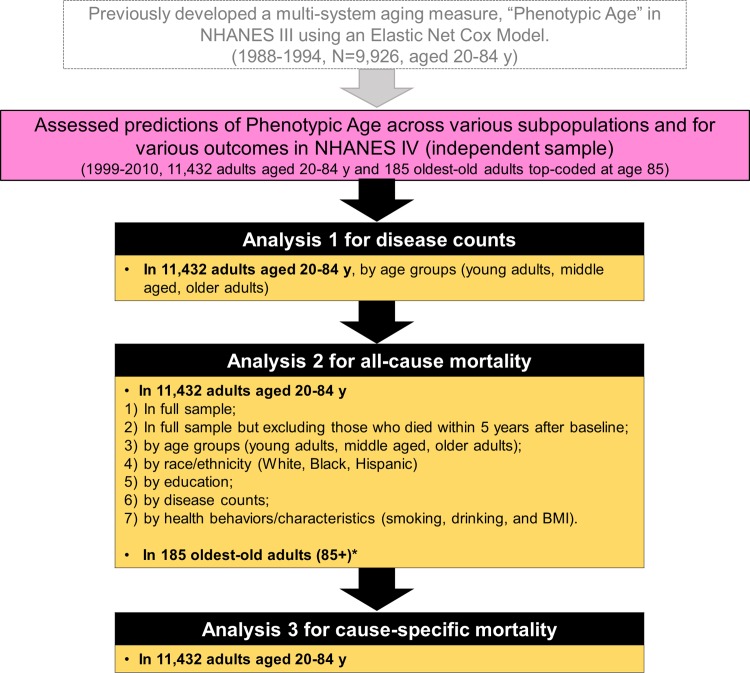
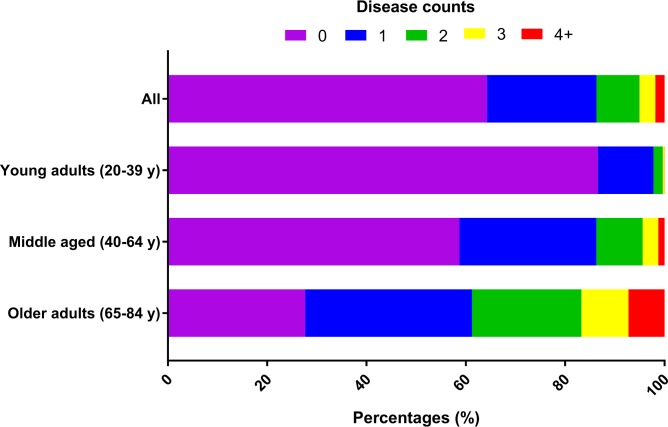
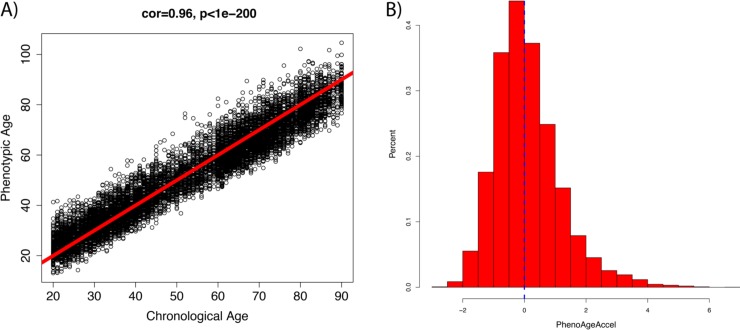
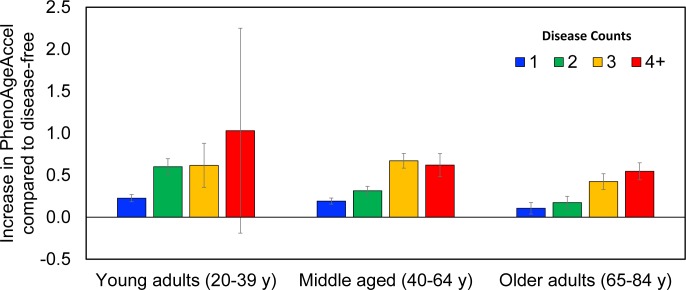
BACKGROUND: A person's rate of aging has important implications for his/her risk of death and disease; thus, quantifying aging using observable characteristics has important applications for clinical, basic, and observational research. Based on routine clinical chemistry biomarkers, we previously developed a novel aging measure, Phenotypic Age, representing the expected age within the population that corresponds to a person's estimated mortality risk. The aim of this study was to assess its applicability for differentiating risk for a variety of health outcomes within diverse subpopulations that include healthy and unhealthy groups, distinct age groups, and persons with various race/ethnic, socioeconomic, and health behavior characteristics. METHODS AND FINDINGS: Phenotypic Age was calculated based on a linear combination of chronological age and 9 multi-system clinical chemistry biomarkers in accordance with our previously established method. We also estimated Phenotypic Age Acceleration (PhenoAgeAccel), which represents Phenotypic Age after accounting for chronological age (i.e., whether a person appears older [positive value] or younger [negative value] than expected, physiologically). All analyses were conducted using NHANES IV (1999-2010, an independent sample from that originally used to develop the measure). Our analytic sample consisted of 11,432 adults aged 20-84 years and 185 oldest-old adults top-coded at age 85 years. We observed a total of 1,012 deaths, ascertained over 12.6 years of follow-up (based on National Death Index data through December 31, 2011). Proportional hazard models and receiver operating characteristic curves were used to evaluate all-cause and cause-specific mortality predictions. Overall, participants with more diseases had older Phenotypic Age. For instance, among young adults, those with 1 disease were 0.2 years older phenotypically than disease-free persons, and those with 2 or 3 diseases were about 0.6 years older phenotypically. After adjusting for chronological age and sex, Phenotypic Age was significantly associated with all-cause mortality and cause-specific mortality (with the exception of cerebrovascular disease mortality). Results for all-cause mortality were robust to stratifications by age, race/ethnicity, education, disease count, and health behaviors. Further, Phenotypic Age was associated with mortality among seemingly healthy participants-defined as those who reported being disease-free and who had normal BMI-as well as among oldest-old adults, even after adjustment for disease prevalence. The main limitation of this study was the lack of longitudinal data on Phenotypic Age and disease incidence. CONCLUSIONS: In a nationally representative US adult population, Phenotypic Age was associated with mortality even after adjusting for chronological age. Overall, this association was robust across different stratifications, particularly by age, disease count, health behaviors, and cause of death. We also observed a strong association between Phenotypic Age and the disease count an individual had. These findings suggest that this new aging measure may serve as a useful tool to facilitate identification of at-risk individuals and evaluation of the efficacy of interventions, and may also facilitate investigation into potential biological mechanisms of aging. Nevertheless, further evaluation in other cohorts is needed.
Overview
The claims and statistics of this paper haven’t been checked yet.
Free: it reads the open-access text and checks the first 5 claims that cite a source we can check. Create a free account to check every claim.
Integrity signals
Registry
Cites
Statistics
Figures
Verification
Claims the paper makes
The claims and statistics of this paper haven’t been checked yet.
Free: it reads the open-access text and checks the first 5 claims that cite a source we can check. Create a free account to check every claim.
Self-check
Percentages, sums and reported differences re-computed from the paper’s own numbers.
The self-check needs the paper’s full text.
Citations
Cites
A Proportional Hazards Model for the Subdistribution of a Competing Risk
Fine, J. P., & Gray, R. J. (1999) · Journal of the American Statistical Association · doi:10.1080/01621459.1999.10474144 · Cited by 14,290 · cited 1×
“Cause-specific mortality risk as a function of Phenotypic Age was assessed via Fine and Gray’s competing risk models [26].”
MethodDNA methylation age of human tissues and cell types
Horvath, S. (2013) · Genome Biology · doi:10.1186/gb-2013-14-10-r115 · Cited by 7,075
Self-citationAn epigenetic biomarker of aging for lifespan and healthspan
Levine, M. E., Lu, A. T., Quach, A., Chen, B. H., Assimes, T. L., Bandinelli, S., Hou, L., Baccarelli, A. A., Stewart, J. D., Li, Y., et al. (2018) · Aging · doi:10.18632/aging.101414 · Cited by 3,675 · cited 3×
“We calculated Phenotypic Age in accordance with the method described previously [12].”
MethodInfluentialSelf-citationFrailty in relation to the accumulation of deficits
Rockwood, K., & Mitnitski, A. (2007) · The Journals of Gerontology Series A: Biological Sciences and Medical Sciences · doi:10.1093/gerona/62.7.722 · Cited by 3,076 · cited 1×
“Many of the measures of aging, such as those based on deficit accumulation [14,27], include measures of morbidity in their construction, and thus it is impossible to disentangle aging and disease, or determine the usefulness of such measures in healthy populations.”
BackgroundAccumulation of Deficits as a Proxy Measure of Aging
Mitnitski, A. B., Mogilner, A. J., & Rockwood, K. (2001) · The Scientific World JOURNAL · doi:10.1100/tsw.2001.58 · Cited by 2,893 · cited 1×
“Many of the measures of aging, such as those based on deficit accumulation [14,27], include measures of morbidity in their construction, and thus it is impossible to disentangle aging and disease, or determine the usefulness of such measures in healthy populations.”
BackgroundGeroscience: Linking Aging to Chronic Disease
Kennedy, B. K., Berger, S. L., Brunet, A., Campisi, J., Cuervo, A. M., Epel, E. S., Franceschi, C., Lithgow, G. J., Morimoto, R. I., Pessin, J. E., et al. (2014) · Cell · doi:10.1016/j.cell.2014.10.039 · Cited by 2,764
National Health and Nutrition Examination Survey
(2010) · Handbook of Disease Burdens and Quality of Life Measures · doi:10.1007/978-0-387-78665-0_6177 · Cited by 2,087
A Proportional Hazards Model for the Subdistribution of a Competing Risk
Fine, J. P., & Gray, R. J. (1999) · Journal of the American Statistical Association · doi:10.2307/2670170 · Cited by 1,375
National Health and Nutrition Examination Survey
(2008) · Encyclopedia of Epidemiology · doi:10.4135/9781412953948.n305 · Cited by 1,342
DNA methylation age of blood predicts all-cause mortality in later life
Marioni, R. E., Shah, S., McRae, A. F., Chen, B. H., Colicino, E., Harris, S. E., Gibson, J., Henders, A. K., Redmond, P., Cox, S. R., et al. (2015) · Genome Biology · doi:10.1186/s13059-015-0584-6 · Cited by 1,261
Self-citation
Cited by
Items 601–700 of 777
Lin, S., Liu, M., Lu, X., Song, Y., Li, H., Hu, F., Fan, L., Xie, X., Lin, S., & Wu, S. (2025) · iScience · doi:10.1016/j.isci.2025.114478 · Cited by 1
“15 A UK Biobank study further supports these results, showing that participants with older biological ages face higher risks along the trajectory from the first occurrence of cardiovascular metabolic disease (CMD) to cardiometabolic multimorbidity (CMM) and ultimately to death.”
Levy, J. J., Titus, A. J., Petersen, C. L., Chen, Y., Salas, L. A., & Christensen, B. C. (2020) · Figshare · doi:10.6084/m9.figshare.11999295
Senior, A. M., Legault, V., Lavoie, F. B., Presse, N., Gaudreau, P., Turcot, V., Raubenheimer, D., Couteur, D. G. L., Simpson, S. J., & Cohen, A. A. (2022) · Figshare · doi:10.6084/m9.figshare.20787152
Han, M., Fang, J., Zhang, Y., Song, X., Jin, L., & Ma, Y. (2023) · Figshare · doi:10.6084/m9.figshare.22617895
Ori, A. P. S., Loohuis, L. M. O., Guintivano, J., Hannon, E. J., Dempster, E., St. Clair, D., Bass, N., McQuillin, A., Mill, J., Sullivan, P. F., et al. (2024) · Figshare · doi:10.6084/m9.figshare.26703769
Self-citationOri, A. P. S., Loohuis, L. M. O., Guintivano, J., Hannon, E. J., Dempster, E., St. Clair, D., Bass, N., McQuillin, A., Mill, J., Sullivan, P. F., et al. (2024) · Figshare · doi:10.6084/m9.figshare.26703760
Self-citationOri, A. P. S., Loohuis, L. M. O., Guintivano, J., Hannon, E. J., Dempster, E., St. Clair, D., Bass, N., McQuillin, A., Mill, J., Sullivan, P. F., et al. (2024) · Figshare · doi:10.6084/m9.figshare.26703763
Self-citationRamasubramanian, R., Meier, H. C. S., Vivek, S., Klopack, E. T., Crimmins, E. M., Faul, J., Nikolich‐Žugich, J., & Thyagarajan, B. (2022) · Figshare · doi:10.6084/m9.figshare.20347480
Self-citationSol, J., Ortega, M., Portero-Otín, M., Piñol-Ripoll, G., Ribas-Ripoll, V., Artigues-Barberà, E., Butí, M., Pamplona, R., & Jové, M. (2024) · Figshare · doi:10.6084/m9.figshare.26664556
Sol, J., Ortega, M., Portero-Otín, M., Piñol-Ripoll, G., Ribas-Ripoll, V., Artigues-Barberà, E., Butí, M., Pamplona, R., & Jové, M. (2024) · Figshare · doi:10.6084/m9.figshare.26664553
Han, W. M., Apornpong, T., Gatechompol, S., Ubolyam, S., Chattranukulchai, P., Wattanachanya, L., Siwamogsatham, S., Kerr, S. J., Erlandson, K. M., & Avihingsanon, A. (2023) · Figshare · doi:10.6084/m9.figshare.22616144
Sol, J., Ortega, M., Portero‐Otín, M., Piñol-Ripoll, G., Ribas-Ripoll, V., Artigues-Barberà, E., Butí, M., Pamplona, R., & Jové, M. (2024) · Figshare · doi:10.6084/m9.figshare.26664535
Ori, A. P. S., Loohuis, L. M. O., Guintivano, J., Hannon, E. J., Dempster, E., St. Clair, D., Bass, N., McQuillin, A., Mill, J., Sullivan, P. F., et al. (2024) · Figshare · doi:10.6084/m9.figshare.26703766
Self-citationWang, S., Li, W., Li, S., Tu, H., Jia, J., Zhao, W., Xu, A., Xu, W., Tsai, M. K., Chu, D. T., et al. (2023) · Figshare · doi:10.6084/m9.figshare.23983335
Chen, L., Zhao, Y., Liu, F., Chen, H., Tan, T., Yao, P., & Tang, Y. (2022) · Figshare · doi:10.6084/m9.figshare.20088212
Ori, A. P. S., Loohuis, L. M. O., Guintivano, J., Hannon, E. J., Dempster, E., St. Clair, D., Bass, N., McQuillin, A., Mill, J., Sullivan, P. F., et al. (2024) · Figshare · doi:10.6084/m9.figshare.26703775
Self-citationSol, J., Ortega, M., Portero‐Otín, M., Piñol-Ripoll, G., Ribas-Ripoll, V., Artigues-Barberà, E., Butí, M., Pamplona, R., & Jové, M. (2024) · Figshare · doi:10.6084/m9.figshare.26664544
Chen, L., Zhao, Y., Liu, F., Chen, H., Tan, T., Yao, P., & Tang, Y. (2022) · Figshare · doi:10.6084/m9.figshare.20088215
Su, X., Zhang, Z., Qiu, S., Zeng, B., Yang, M., Huang, X., Zou, X., & Yang, L. (2024) · Figshare · doi:10.6084/m9.figshare.26612903
Ori, A. P. S., Loohuis, L. M. O., Guintivano, J., Hannon, E. J., Dempster, E., St. Clair, D., Bass, N., McQuillin, A., Mill, J., Sullivan, P. F., et al. (2024) · Figshare · doi:10.6084/m9.figshare.26703772
Self-citationSol, J., Ortega, M., Portero‐Otín, M., Piñol-Ripoll, G., Ribas-Ripoll, V., Artigues-Barberà, E., Butí, M., Pamplona, R., & Jové, M. (2024) · Figshare · doi:10.6084/m9.figshare.26664541
Sol, J., Ortega, M., Portero‐Otín, M., Piñol-Ripoll, G., Ribas-Ripoll, V., Artigues-Barberà, E., Butí, M., Pamplona, R., & Jové, M. (2024) · Figshare · doi:10.6084/m9.figshare.26664550
Zhang, Y., Liu, M., & Xie, R. (2023) · Figshare · doi:10.6084/m9.figshare.24070280
Sol, J. (2023) · Tesis Doctorals en Xarxa (Consorci de Serveis Universitaris de Catalunya)
Feng, T., Li, Y., Liu, Y., Zeng, C., & Feng, Y. (2025) · Journal of Human Nutrition and Dietetics · doi:10.1111/jhn.70184
Li, R. Q., Lu, T. Y., Wang, J., Zhang, W. S., Du, J., Jin, Y. L., Kan, J. T., Lam, T. H., Cheng, K. K., Huang, E. Y. Z., et al. (2025) · Nutrition Journal · doi:10.1186/s12937-025-01256-9 · Cited by 1
“Phenotypic age was calculated using a weighted linear combination score, comprising chronological age in years and eight biomarkers: albumin, creatinine, glucose, C-reactive protein, lymphocyte percentage, mean corpuscular volume, red cell distribution width, and white blood cell count [12].”
Zhang, H., Tian, W., Qi, G., Zhou, B., & Sun, Y. (2026) · The journal of nutrition health & aging · doi:10.1016/j.jnha.2026.100770
“Accelerated aging has been demonstrated to have a substantial correlation with mortality and various chronic diseases, including cancer, cardiovascular disease, chronic respiratory illnesses, and depression, and among others [4,8 – 10].”
Sun, X., Ren, J., Zhang, Z., Pei, H., Zhang, C., Wang, Z., Zhu, S., Wen, R., Zhang, X., & Ma, Y. (2026) · Molecular Nutrition & Food Research · doi:10.1002/mnfr.70364
The mediating role of insulin resistance in depression driving phenotypic age acceleration
Zhang, L., Yang, Q., Yu, J., & Hu, Y. (2026) · Annals of General Psychiatry · doi:10.1186/s12991-026-00629-6 · Cited by 1
“…aging pace is reflected by the differences in susceptibility to death and disease, one possible method to measure aging pace is to compare individuals’ observable characteristics to the expected characteristics usually observed in the general population under a specific given chronological age [8].”
InfluentialHu, Y., Sun, H., Zhu, C., Hu, J., Tao, J., Li, B., Cai, Q., Wu, Y. L., Chen, S., wu, S., et al. (2026) · Frontiers in Cardiovascular Medicine · doi:10.3389/fcvm.2025.1651743
3884 Identifying biomarkers of accelerated ageing in cancer patients from routine clinical data
Bottomley, C., Liuu, É., Echarte, B., Harari, D., Kalsi, T., de Pablo, C., & Welch, C. (2026) · Mechanisms of Ageing and Development · doi:10.1016/j.mad.2026.112234
Ринатовна, Г. И., Александровна, Б. С., Веремеев, А. В., Savicheva, A. A., Isaykina, О. Y., Имаева, А. Э., & Balanova, Y. А. (2026) · CARDIOVASCULAR THERAPY AND PREVENTION · doi:10.15829/1728-8800-2025-4686
Ning, J.-D., Zhu, P.-P., Ma, X., Long, Y., Deng, J.-M., Tao, Y., Ou, C., & Li, L. (2026) · International Journal of Environmental Health Research · doi:10.1080/09603123.2026.2630856
“These methods have been validated across multi-ethnic cohorts and are recognized as valuable tools for identifying individuals at risk of aging-related diseases (Klemera and Doubal 2006; Levine 2013; Liu et al. 2018; Graf et al. 2022).”
Cheng, W., Chen, L., Kang, P., Tang, B., Zhang, S., Zhang, G., Du, Z., & Huang, Y. (2026) · Neurobiology of Disease · doi:10.1016/j.nbd.2026.107332 · Cited by 1
Thakurdesai, P. A., Deshpande, P., DESAI, N., & RAJE, D. V. (2026) · International Journal of Pharmacy and Pharmaceutical Sciences · doi:10.22159/ijpps.2026v18i5.57976
Önder, T., & Ateş, Ö. (2026) · Journal of Neuro-Oncology · doi:10.1007/s11060-026-05494-7
“Laboratory parameters included albumin, creatinine, glucose, alkaline phosphatase, white blood cell count, and C-reactive protein (CRP), together with chronological age [19 , 20 ].”
InfluentialYg, N., Yang, L., Yong, H., & Li, M. (2026) · Science Progress · doi:10.1177/00368504261426679
Multimodal Ageing Biomarkers and Plasma Proteomic Signatures Associated With All‐Cause Mortality
Pyrgioti, M., Mesa‐Eguiagaray, I., Redmond, P. H., Corley, J., Bastin, M. E., Hernández, M. V., Russ, T. C., Wardlaw, J. M., Hannon, E. J., Deary, I. J., et al. (2026) · Aging Cell · doi:10.1111/acel.70747
Li, N., Liang, N., Zhang, X., & Dong, Y. (2026) · Journal of Hypertension · doi:10.1097/hjh.0000000000004295
“Left ventricular mass index (LVMI) is a robust marker of structural remodeling, whereas excess LVMI (eLVMI) quantifies left ventricular mass chronological age incompletely reflects inter-individual biological aging [5].”
Shu, H., Huang, H., Xu, X., & He, R. (2026) · Frontiers in Neurology · doi:10.3389/fneur.2026.1780191
Lee, J.-M., Das, A., Yun, T., & Lee, A. (2026) · medRxiv · doi:10.64898/2026.03.12.26348280
Yao, Y., Yin, S., Si, K., Li, D., Yuan, L., Yang, Y., Li, Z., & Wu, G. (2026) · Frontiers in Public Health · doi:10.3389/fpubh.2026.1761874 · Cited by 1
“Biological age (BA) was estimated using two widely validated algorithms, the Klemera-Doubal Method (KDM) and PhenoAge, which incorporate clinical biomarkers and physical measurements to predict age-related health outcomes (20, 21).”
Wang, Y., Zhang, L., Xiong, X., Muhammad, I., Li, X., & Cai, J. (2026) · Scientific Reports · doi:10.1038/s41598-026-45531-z
Bao, Y., & Peng, J. (2026) · Journal of the Neurological Sciences · doi:10.1016/j.jns.2026.125881
Maneig integral i multidisciplinari de les persones grans amb VIH
Loste, C. (2025) · Tesis Doctorals en Xarxa (Consorci de Serveis Universitaris de Catalunya)
Cui, S., Zhang, X., Wang, T., & Jiao, L. (2026) · Journal of the Neurological Sciences · doi:10.1016/j.jns.2026.125880
Chen, X., Jin, T., Li, I. H., Yu, Y., Ji, B., & Huang, M. (2026) · Journal of Affective Disorders · doi:10.1016/j.jad.2026.121735
Exploring explanations of machine learning models for data analysis and knowledge extraction
Doumard, E. (2024) · theses.fr (ABES) · doi:10.70675/474f0d09z8507z4028z9f9dz2a32132fd572
Wu, Q., Yu, Z., Cao, J., Li, H., & Zhang, S. (2026) · Brain Behavior & Immunity - Health · doi:10.1016/j.bbih.2026.101240 · Cited by 1
“We analyzed data from the National Health and Nutrition Examination Survey (NHANES), a nationally representative cross-sectional survey assessing the health of the noninstitutionalized U.S. population (Liu et al., 2018).”
Zeng, N., Tian, T., Zhou, Q., Li, Y., Geng, X., Xie, F., Han, R., Wang, Y., Wang, Y., Li, Y., et al. (2026) · BMC Cardiovascular Disorders · doi:10.1186/s12872-026-05810-z
“Meanwhile, PhenoAgeAccel was associated with chronic diseases counts a person had among apparently healthy adults, and it was highly predictive of all-cause and cardiovascular mortality even after adjusting for chronological age [28].”
Su, W., Hu, Y., Zhao, J., Yang, M., Wu, J., Wen, D., Lin, Z., Zhao, J., Li, Y., Li, J., et al. (2026) · Food Science & Nutrition · doi:10.1002/fsn3.71753
“For the age acceleration metrics, KDMAgeAccel > 0 or PhenoAgeAccel > 0 indicates that an individual is biologically older than their chronological age, suggesting an advanced BA process and elevated risks of disease and mortality (Liu et al. 2018).”
Ning, Y., Sun, J., Zhou, J., Wang, Y., Shang, Z., Li, M., Li, H., Sun, Y. X., Wu, Y., Assimes, T. L., et al. (2026) · Journal of Cannabis Research · doi:10.1186/s42238-026-00396-x
“…a composite biomarker derived from the following parameters: albumin, creatinine, glucose, lymphocyte percentage, mean cell volume, red cell distribution width, alkaline phosphatase, white blood cell count, and chronological age, as described in prior studies (Liu et al. 2018, Qiu et al. 2023).”
Wang, J., Guo, X., Wang, X., Song, Z., 毛思帅, & Li, Y. (2026) · Frontiers in Endocrinology · doi:10.3389/fendo.2026.1824716 · Cited by 1
Huang, W., Zhang, S., Chen, W., Wang, W., Lin, Y., Zhang, S., & Huang, F. (2026) · The journal of nutrition health & aging · doi:10.1016/j.jnha.2026.100846 · Cited by 1
“Accordingly, PhenoAge was calculated using these ten variables in this study: CA, albumin, creatinine, glucose, C-reactive protein, lymphocyte percentage, mean cell volume, red blood cell distribution width, alkaline phosphatase, and white blood cell count [26].”
Asthana, S., on behalf of the Longevity India Team, Collaborators, Bhat, A., Mahadevan, G., Kothegala, L., Negi, S., Yadav, S., Sudhakaran, A., Roy, A., et al. (2026) · Aging · doi:10.18632/aging.206373
Wang, Q. P., Meng, J., Fan, A., Meng, C., Liu, B., Yu, J., Li, D., Yin, Y., Jin, T., Zhou, Z., et al. (2026) · Research Square · doi:10.21203/rs.3.rs-9584154/v1
Lv, M., Jiang, Z., Deng, C., Du, Z., Bai, B., Wang, Z., Adilijiang, A., Zheng, Y.-Y., & Xie, X. J. (2026) · Clinical Epigenetics · doi:10.1186/s13148-026-02141-w
“Phenotypic age is a novel indicator of biological aging, calculated based on a combination of chronological age and nine clinical chemistry biomarkers [33].”
Ye, J., Lim, X., Franck, M., Li, W., Goh, D., Chen, H., Chung, Z., Yang, W., Zhu, Z., Sitjar, P. H. S., et al. (2026) · medRxiv · doi:10.64898/2026.05.05.26352428
Modifiable lifestyle factors and 4.9-Year changes in phenotypic age in the Taiwan biobank
Lin, W. (2026) · Frontiers in Aging · doi:10.3389/fragi.2026.1802176
“PhenoAge has been shown to effectively capture morbidity and mortality risk across diverse populations (Liu et al., 2019).”
Xu, H., Pan, S., Qi, H., Liu, X., Geng, G., Qi, X., Wei, W., Li, Y., & Wang, X. (2026) · Free Radical Biology and Medicine · doi:10.1016/j.freeradbiomed.2026.04.163 · Cited by 1
Zhang, L., Yang, Q., Xu, C., Hu, Y., Xiao, L., & Yu, J. (2026) · European Archives of Psychiatry and Clinical Neuroscience · doi:10.1007/s00406-026-02258-2
Wu, Z., Bian, C., Zhang, N., Zhang, Q., Shen, H., Yang, Y., He, H., Cao, Y., & Ji, D. (2026) · Food and Chemical Toxicology · doi:10.1016/j.fct.2026.116150
Zhang, J., Yang, R., Zhou, J., Feng, J., Zhang, J., Zeng, Z., & Zhan, Y. (2026) · European journal of medical research · doi:10.1186/s40001-026-04554-y
“…glucose, C-reactive protein (CRP), lymphocyte percent, mean cell volume, red blood cell distribution width, alkaline phosphatase, and white blood cell count), PhenoAge was developed to represent the expected age within a certain population that corresponds to one’s estimated mortality risk[15, 16].”
Guo, J., Wang, X. W., & Zhao, R. (2026) · Romanian Journal of Internal Medicine · doi:10.2478/rjim-2026-0010
“A positive PhenoAgeAccel indicates that an individual’s biological age is higher than their chronological age, signifying accelerated aging [27].”
Xie, F., Yue, S., Zhao, J., Geng, X., Zeng, N., Han, R., Wang, Y., Wang, Y., Xu, W., & Fan, J. (2026) · Nutrition & Metabolism · doi:10.1186/s12986-026-01131-2
“…(Phe-noAgeAccel) reflects the deviation between phenotypic age and chronological age, which is used to quantify the rate of biological aging [11], and it has been proven to be associated with the risk of diseases such as tumors [12], cardiovascular and cerebrovascular diseases [13], chronic…”
InfluentialLiu, F., Pan, L., Wu, H., & Yu, Y. (2026) · Maturitas · doi:10.1016/j.maturitas.2026.108981
Biological aging clock from routine clinical and anthropometric measurements in diverse populationsPreprint
Mejía‐García, A., Su, C., Zheng, T. M., Tsao, H., Richard, A., Hamitouche, D., Yoshiji, S., Mooser, V., Lettre, G., Harroud, A., et al. (2026) · medRxiv · doi:10.64898/2026.05.20.26353724
Ten tips on how to prevent falls in dialysis patients
Shirai, N., Saitoh, M., Tsubaki, A., Morishita, S., Kojima, S., Osawa, Y., & Yamamoto, S. (2026) · Clinical Kidney Journal · doi:10.1093/ckj/sfag167
“For assessing biological age, it is practical to use blood biochemical indicators [ 15 ] and functional indicators as surrogate indicators, such as walking speed and grip strength [ 16 ].”
Dong, X., Zhong, X., Lin, Y. Y., Xie, B., Li, X., He, B., Chen, F., & Yan, L. (2026) · Mediators of Inflammation · doi:10.1155/mi/3674573
Li, X., Guan, J., Liu, Y., Luo, S., Gong, Y., 江红轲, & Shao, C. (2026) · Obesities · doi:10.3390/obesities6030033
“Following Morgan E. Levine’s methodology [23], we derived this measure using ten variables: chronological age; hepatic markers (albumin, alkaline phosphatase); renal function (creatinine); glucose; C-reactive protein; and immune parameters (lymphocyte percentage, mean corpuscular volume, red cell…”
Allen, G. S. (2026) · Research Square · doi:10.21203/rs.3.rs-9829732/v1
Gupta, A., & Chawla, S. (2026) · OMICS A Journal of Integrative Biology · doi:10.1177/15578100261457662
“Developed by Levine and colleagues in 2018, DNAm Phe-noAge (https://dnamage.clockfoundation.org/) is an advanced epigenetic biomarker for biological age estimation (Levine et al., 2018; Liu et al., 2018).”
Liu, B.-X., Zhou, H., Ge, X., Zhang, Z., Jiang, W., Liu, W. T., Yu, P., Liu, J., Li, Y., Wu, Q., et al. (2026) · Research Square · doi:10.21203/rs.3.rs-9884549/v1
Zhu, J., Meng, W., Guo, J., Zhu, T., & Sheng, N. (2026) · Journal of obstetrics and gynaecology research · doi:10.1111/jog.70363
“Because biological aging cannot be adequately captured by a single measure [10], we characterized it from two complementary dimensions in the current study: clinical biomarker-based phenotypic aging clocks [16, 17] and aging-related diseases [18] reflecting the accumulation of aging hallmarks.”
InfluentialHuang, A., Xiang, W., Ma, J. X., Xu, Z., Nie, Y., Zhu, Z., Song, J., Deng, Y., Yao, Y., Wang, H., et al. (2026) · Clinical & Experimental Allergy · doi:10.1111/cea.70371
Self-citationAssociations of Multiomics Biological Aging With Diabetic Retinopathy and Life Expectancy
Yu, J., Gao, Y., Zhang, Y. S., Xu, J., Chen, H., Ho, M., Kam, K. W., Young, A. L., Pang, C. P., Tham, C. C. Y., et al. (2026) · Investigative Ophthalmology & Visual Science · doi:10.1167/iovs.67.6.36
“…from chronological age and nine clinical biomarkers; the residuals from regressing PhenoAge on chronological age, which were used to derive PhenoAge acceleration (PhenoAgeAccel) 30 ; and leukocyte telomere length (LTL), measured by quantitative polymerase chain reaction (Supplementary Methods).”
Mortality associated biological age improves independently of weight loss after bariatric surgery
Morawitz, K. H., Pommer, W., Tsuprykov, O., Krautschneider, H., von Germar, S., Patzke, N., & Graßmann, F. (2026) · npj Aging · doi:10.1038/s41514-026-00429-y
Zhao, Y. T., & Wang, Y. (2026) · Geriatrics and gerontology international/Geriatrics & gerontology international · doi:10.1111/ggi.70603
“Several of these components are directly or closely related to the disease entities under investigation, particularly type 2 diabetes, chronic kidney disease, and cardiovascular disease [2].”
Tan, X., Chi, K., Lai, C., Li, C. H. P., Li, Q., Zhuang, M., Cao, J., Wu, Q., Sun, W., Shang, X., et al. (2026) · Diabetology & Metabolic Syndrome · doi:10.1186/s13098-026-02215-y
“Six cause-specific mortality outcomes were assessed in our study:heart disease (I00–I09, I11, I13, I20–I51), chronic lower respiratory disease (J40-J47), cerebrovascular disease (I60–I69), DM (E10 –E14), influenza or pneumonia (J09–J18), and nephritis/nephrosis (N00–N07, N17–N19, N25–N27) [28].”
Tian, R., Huang, Y., Chen, M., Lai, S., Liang, H., Huang, X., Lin, L., Wen, J., Jun, L., & Deng, L. (2026) · Research Square · doi:10.21203/rs.3.rs-8930822/v1
Neuromuscular disorders: biomarkers, precision diagnosis, and targeted therapeutics
(2026) · Frontiers research topics · doi:10.3389/978-2-8325-8213-8
Zhao, X., Li, Q., Luo, T., Fang, W., Liu, Q., Li, H., Su, J., Jiang, X., & Yu, J. (2026) · Frontiers in Endocrinology · doi:10.3389/fendo.2026.1874574
“KDM biological age and PhenoAge were calculated or extracted according to published algorithms (Klemera & Doubal, 2006; Liu et al., 2018; Kwon & Belsky, 2021).”
DXA ‐Measured Visceral Adipose Tissue and Accelerated Biological Aging in Middle‐Aged Adults
O'Shea, R., Hui, J., Bharat, C., Murray, K., Arscott, G. M., Hunter, M. L., Walsh, J. P., & Zhu, K. (2026) · Obesity · doi:10.1002/oby.70239
“…was computed as the residuals from a linear regression model of phenotypic age on chronological age in the pooled sample as per the published method, without stratification by sex, where a positive value of PhenoAgeAccel represents a person's biological age older than chronological age [15].”
InfluentialWen, M., Hou, Y., Shi, K., Zuo, J., Zhang, C., Zhang, S., Shen, Z., & Jie, W. (2026) · Cardiology Research and Practice · doi:10.1155/crp/1206757
“PhenoAgeAccel was defned as the residual obtained from regressing PhenoAge on chronological age, representing the extent of accelerated biological aging in years compared to chronological age [18].”
Zhang, H., Tian, W., Qi, G., & Wei, X. (2026) · Experimental Gerontology · doi:10.1016/j.exger.2026.113218
Biological aging might help to explain the rising risk of early-onset cancer
(2026) · Nature Medicine · doi:10.1038/s41591-026-04517-0
Reproductive behaviors, genetic susceptibility and accelerated aging risk
Zhong, J., Kong, D., Luo, G., Dong, Y., Yu, M., Zhang, P., Xu, Y., Liu, X., & Sun, W. T. (2026) · npj Aging · doi:10.1038/s41514-026-00440-3
“Recent advances in aging biomarkers, including epigenetic clocks (PhenoAge), Klemera-Doubal BA (KDM-BA) and neuroimaging-derived BrainAGE, provide tools to quantify acceleration patterns 13 – 15 .”
Xu, Q., Liu, Z. H., Zhao, R., Cui, Z., Xing, X., Chen, X., & Suo, C. (2026) · International Journal of Public Health · doi:10.3389/ijph.2026.1609591
“Previous studies have linked combinations of biomarkers to mortality risk [10, 20].”
Self-citationSurgery-associated accelerated biological aging: Evidence from a cross-sectional study
Wang, X. L., Chen, L., Liu, K., Niu, M., You, W., Zhang, L., Yuan, X., Guo, X., Li, N., & Li, Z. (2026) · The journal of nutrition health & aging · doi:10.1016/j.jnha.2026.100924 · Cited by 1
“…on blood chemistry indicators (PhenoAge) has been shown to identify high-risk individuals in the general population who are susceptible to all-cause mortality and coexistence of multiple diseases [23,24], and studies have demonstrated the superiority of PhenoAge over DNA methylation methods [18].”
Gu, L., Yang, J., Shen, J., Zhen, Q., Hou, Y., Shen, T., Zhu, Y., Peng, Y., 李灵俊, Wang, B., et al. (2026) · Diabetes Research and Clinical Practice · doi:10.1016/j.diabres.2026.113424
Wu, Y., Xia, X., Jing, P., Ye, F., & Wang, Q. (2026) · Journal of Affective Disorders · doi:10.1016/j.jad.2026.122255
Luo, Y., Dai, X., Chen, Z., Jiang, J., Liu, J., Fu, X., Wang, F., & Li, X. (2026) · Cardiovascular Toxicology · doi:10.1007/s12012-026-10154-3
“Following reported studies, we measured biological aging markers, namely Klemera-Doubal method biological age (KDM-BA) and Phenotypic Age (PhenoAge), based on several clinical biomarker algorithms [14, 20 ].”
Grech, M., Grech, G., Schembri, J., Fenech, A., & Fava, S. (2026) · 老年心脏病学杂志:英文版 · doi:10.26599/1671-5411.2026.06.007
Önder, T., & Ateş, Ö. (2026) · Clinical Breast Cancer · doi:10.1016/j.clbc.2026.07.013
Liu, X., Yang, S., Zhang, C. H., Chen, P., & Li, J. N. (2026) · BMC Gastroenterology · doi:10.1186/s12876-026-05103-x
“Furthermore, while accelerated BA measures have been linked to all-cause and cancer-related mortality [22, 26], as well as Fig.”
Feng, J. (2026) · Research Square · doi:10.21203/rs.3.rs-10435801/v1
Li, J., Li, J., Xu, X., Wang, N., Lu, Y., & Wang, B. (2026) · Cardiovascular Diabetology · doi:10.1186/s12933-026-03304-y
“…the absence of a universally accepted gold-standard biomarker of aging, we included the frailty index [29], phenotypic age (PhenoAge) acceleration [30], telomere length [31], and longevity [32] as complementary measures to capture aging in a multidimensional manner, in line with previous studies.”
Decoding aging clocks from a metabolomic perspective
Qu, X., You, Q., Fan, M., & Xu, S. (2026) · PeerJ · doi:10.7717/peerj.21508
“Consequently, the inclusion of individuals with severe comorbid conditions or those in specific physiological states (such as pregnancy) may confound the identification and interpretation of biological aging biomarkers ( Liu et al., 2018 ; Wang et al., 2024 ).”
Vennu, V. S. (2026) · Journal of Aging Research · doi:10.1155/jare/3289222
Metadata
- Authors
- Liu, Z., Kuo, P.-L., Horvath, S., Crimmins, E., Ferrucci, L., & Levine, M.
- Affiliations
- Yale University (US)
- National Institutes of Health (US)
- University of California, Los Angeles (US)
- University of Southern California (US)
- Corresponding author
- Liu, Zuyun
- Kuo, Pei-Lun
- Horvath, Steve
- Crimmins, Eileen
- Ferrucci, Luigi
- Levine, Morgan
- Venue
- PLOS Medicine
- Publisher
- Public Library of Science (PLoS)
- Published
- 2018-12-31
- Volume
- 15
- Issue
- 12
- Pages
- e1002718
- ISSN
- 1549-1277 (ISSN-L)
- 1549-1676
- PMC
- PMC6312200
- OpenAlex
- W2908077673
- Cited by
- 754
- References
- 35
- Citations by year
- 2026: 178 · 2025: 206 · 2024: 161 · 2023: 75 · 2022: 48 · 2021: 43 · 2020: 23 · 2019: 18 · 2018: 2
- FWCI
- 11.90
- Type
- journal article
- Language
- en
- Update notices
- correction (2019-02-25)
- Open access
- gold
- doi.org
- Licence
- public-domain
- creativecommons.org/publicdomain/zero/1.0/ (vor)
- Locations
- PLoS Medicine (publishedVersion, public-domain)
- bioRxiv (Cold Spring Harbor Laboratory) (acceptedVersion, cc-by-nc)
- Europe PMC (PubMed Central) (publishedVersion, public-domain)
- PubMed Central (publishedVersion, public-domain)
- PubMed Central (publishedVersion, cc-by)
- PubMed (publishedVersion)
- RePEc: Research Papers in Economics (submittedVersion)
- DOAJ (DOAJ: Directory of Open Access Journals) (submittedVersion, cc-by-sa)
- eScholarship (California Digital Library) (submittedVersion)
- eScholarship (California Digital Library) (submittedVersion, public-domain)
- Figshare (submittedVersion, cc-by)
- Funders
- National Institute on Aging (4R00AG052604-02)
- Topics
- Health Sciences › Medicine › Geriatrics and Gerontology › Frailty in Older Adults
- Life Sciences › Biochemistry, Genetics and Molecular Biology › Aging › Genetics, Aging, and Longevity in Model Organisms
- Social Sciences › Psychology › Developmental and Educational Psychology › Aging and Gerontology Research
- Keywords
- phenotypic age, phenotypic age acceleration, biological aging, mortality prediction, morbidity, all-cause mortality, cause-specific mortality, oldest old, healthy young adults, racial and ethnic differences, socioeconomic status, health behavior, disease burden, mortality risk stratification
- MeSH terms
- Adult, Aged, Aged, 80 and over, Aging, Female, Follow-Up Studies, Humans, Male, Middle Aged, Morbidity, Mortality, Nutrition Surveys, Population Surveillance, Risk Factors, Cohort Studies, Young Adult
About these checks
Registry, retraction, Cites and statistics results are computed, not judged, with one exception: a printed reference that no index lists is read once by a model before it counts as a citation error. Claims are extracted by a model and kept only when their quote appears verbatim in the text; each cited source is then checked, with a model’s help, for whether it says what the claim relies on. Those verdicts can be wrong — read the claim’s quote and the cited source before relying on one.
Statistics and arithmetic are recomputed, not judged.
Confidence bands are shown only for fields calibrated on our annotated test set. None is calibrated yet, so no band is shown.
What counts as a claim ›How we measure confidence ›How we check this ›
Are you an author, or do you see a problem with this page? Request a review
Data sources
Bibliographic data: Semantic Scholar, OpenAlex, Crossref.
Contains information from the Semantic Scholar Academic Graph Datasets, made available under the ODC Attribution License (ODC-BY 1.0).
Semantic Scholar’s data is described in: Kinney, R., et al. (2023). The Semantic Scholar Open Data Platform. arXiv:2301.10140.
