

A new aging measure captures morbidity and mortality risk across diverse subpopulations from NHANES IV: A cohort study
Open accessPublished version of a preprint
The DOI matches its Crossref record; 35 of the 35 references it cites were found in a registry or an index.
Abstract
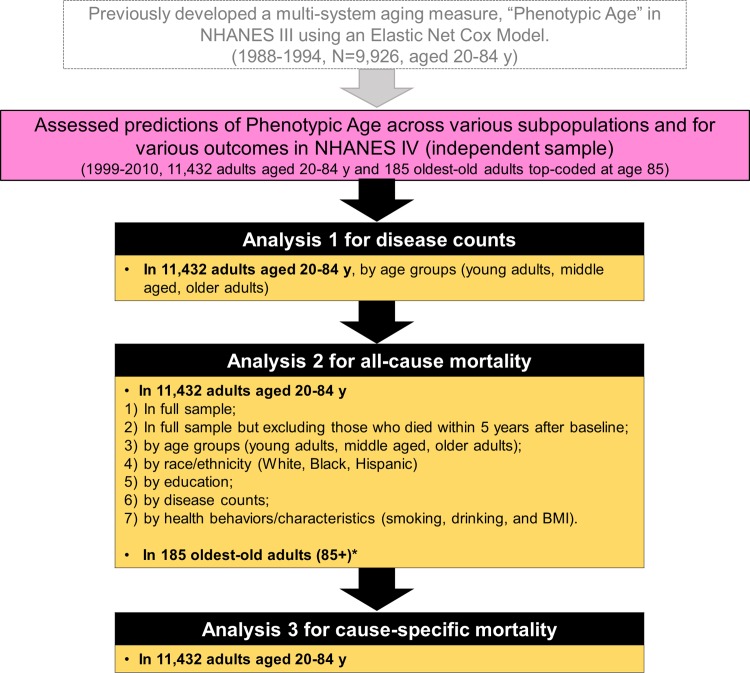
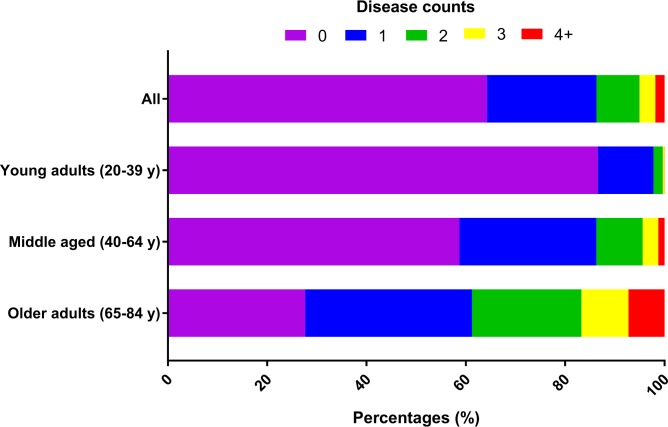
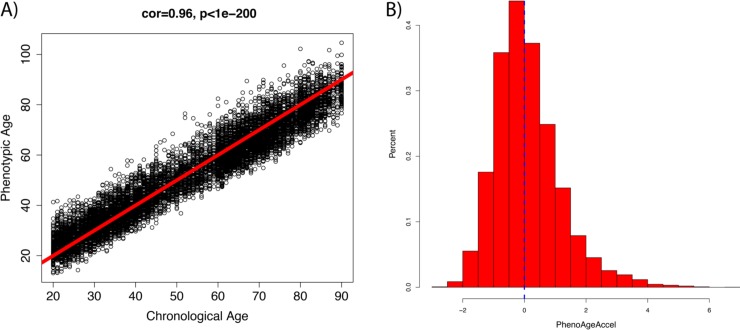
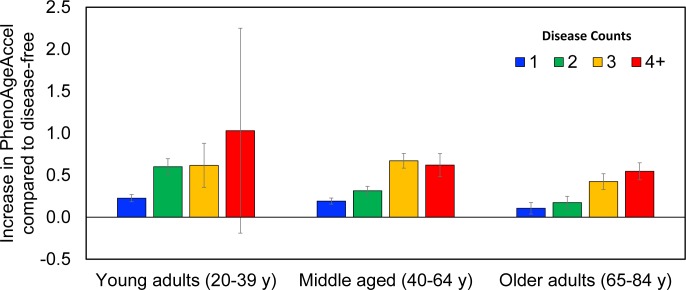
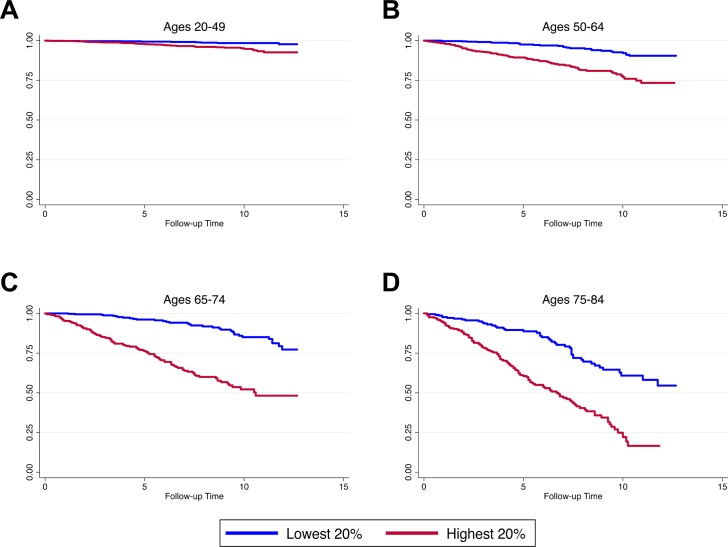
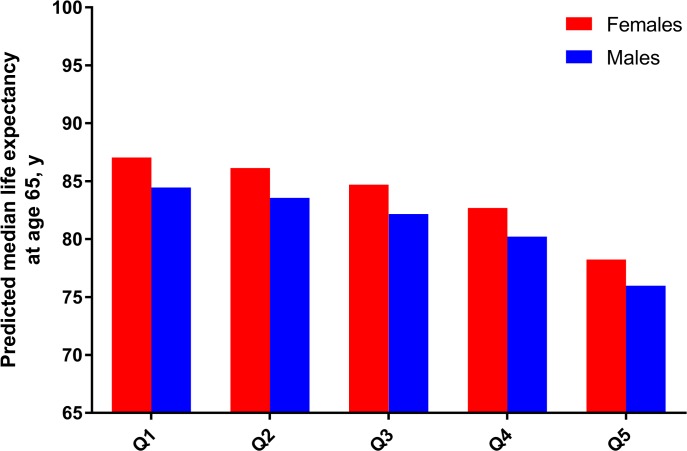
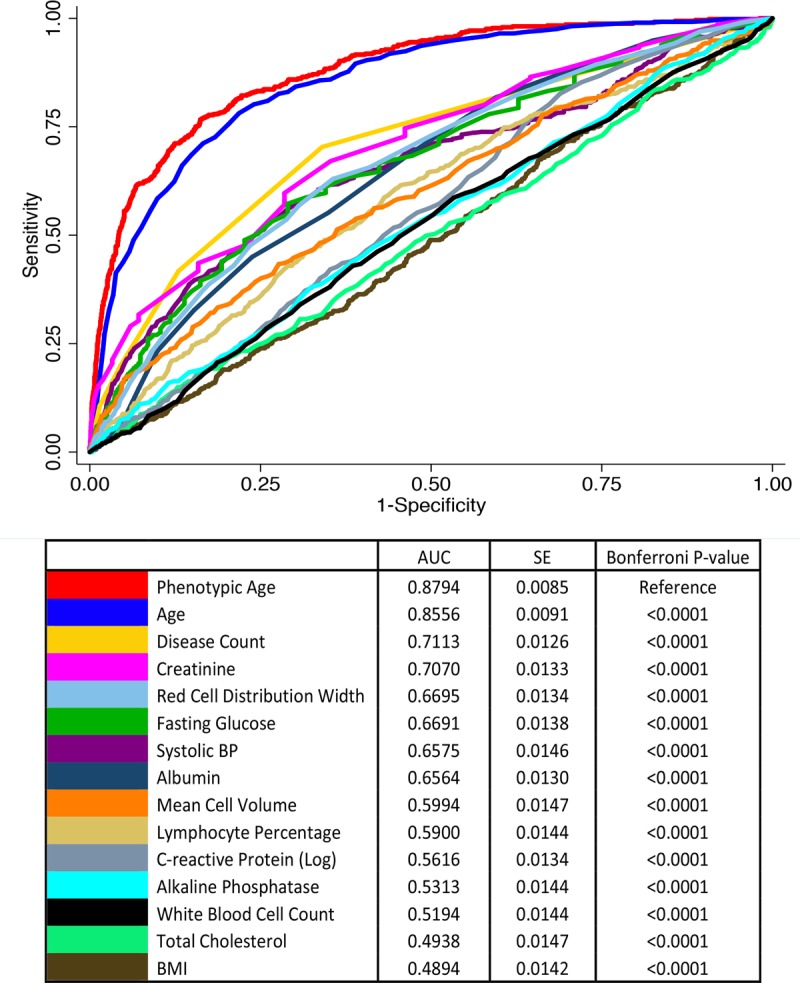
BACKGROUND: A person's rate of aging has important implications for his/her risk of death and disease; thus, quantifying aging using observable characteristics has important applications for clinical, basic, and observational research. Based on routine clinical chemistry biomarkers, we previously developed a novel aging measure, Phenotypic Age, representing the expected age within the population that corresponds to a person's estimated mortality risk. The aim of this study was to assess its applicability for differentiating risk for a variety of health outcomes within diverse subpopulations that include healthy and unhealthy groups, distinct age groups, and persons with various race/ethnic, socioeconomic, and health behavior characteristics. METHODS AND FINDINGS: Phenotypic Age was calculated based on a linear combination of chronological age and 9 multi-system clinical chemistry biomarkers in accordance with our previously established method. We also estimated Phenotypic Age Acceleration (PhenoAgeAccel), which represents Phenotypic Age after accounting for chronological age (i.e., whether a person appears older [positive value] or younger [negative value] than expected, physiologically). All analyses were conducted using NHANES IV (1999-2010, an independent sample from that originally used to develop the measure). Our analytic sample consisted of 11,432 adults aged 20-84 years and 185 oldest-old adults top-coded at age 85 years. We observed a total of 1,012 deaths, ascertained over 12.6 years of follow-up (based on National Death Index data through December 31, 2011). Proportional hazard models and receiver operating characteristic curves were used to evaluate all-cause and cause-specific mortality predictions. Overall, participants with more diseases had older Phenotypic Age. For instance, among young adults, those with 1 disease were 0.2 years older phenotypically than disease-free persons, and those with 2 or 3 diseases were about 0.6 years older phenotypically. After adjusting for chronological age and sex, Phenotypic Age was significantly associated with all-cause mortality and cause-specific mortality (with the exception of cerebrovascular disease mortality). Results for all-cause mortality were robust to stratifications by age, race/ethnicity, education, disease count, and health behaviors. Further, Phenotypic Age was associated with mortality among seemingly healthy participants-defined as those who reported being disease-free and who had normal BMI-as well as among oldest-old adults, even after adjustment for disease prevalence. The main limitation of this study was the lack of longitudinal data on Phenotypic Age and disease incidence. CONCLUSIONS: In a nationally representative US adult population, Phenotypic Age was associated with mortality even after adjusting for chronological age. Overall, this association was robust across different stratifications, particularly by age, disease count, health behaviors, and cause of death. We also observed a strong association between Phenotypic Age and the disease count an individual had. These findings suggest that this new aging measure may serve as a useful tool to facilitate identification of at-risk individuals and evaluation of the efficacy of interventions, and may also facilitate investigation into potential biological mechanisms of aging. Nevertheless, further evaluation in other cohorts is needed.
Overview
The claims and statistics of this paper haven’t been checked yet.
Free: it reads the open-access text and checks the first 5 claims that cite a source we can check. Create a free account to check every claim.
Integrity signals
Registry
Cites
Statistics
Figures
Verification
Claims the paper makes
The claims and statistics of this paper haven’t been checked yet.
Free: it reads the open-access text and checks the first 5 claims that cite a source we can check. Create a free account to check every claim.
Self-check
Percentages, sums and reported differences re-computed from the paper’s own numbers.
The self-check needs the paper’s full text.
Citations
Cites
A Proportional Hazards Model for the Subdistribution of a Competing Risk
Fine, J. P., & Gray, R. J. (1999) · Journal of the American Statistical Association · doi:10.1080/01621459.1999.10474144 · Cited by 14,290 · cited 1×
“Cause-specific mortality risk as a function of Phenotypic Age was assessed via Fine and Gray’s competing risk models [26].”
MethodDNA methylation age of human tissues and cell types
Horvath, S. (2013) · Genome Biology · doi:10.1186/gb-2013-14-10-r115 · Cited by 7,075
Self-citationAn epigenetic biomarker of aging for lifespan and healthspan
Levine, M. E., Lu, A. T., Quach, A., Chen, B. H., Assimes, T. L., Bandinelli, S., Hou, L., Baccarelli, A. A., Stewart, J. D., Li, Y., et al. (2018) · Aging · doi:10.18632/aging.101414 · Cited by 3,675 · cited 3×
“We calculated Phenotypic Age in accordance with the method described previously [12].”
MethodInfluentialSelf-citationFrailty in relation to the accumulation of deficits
Rockwood, K., & Mitnitski, A. (2007) · The Journals of Gerontology Series A: Biological Sciences and Medical Sciences · doi:10.1093/gerona/62.7.722 · Cited by 3,076 · cited 1×
“Many of the measures of aging, such as those based on deficit accumulation [14,27], include measures of morbidity in their construction, and thus it is impossible to disentangle aging and disease, or determine the usefulness of such measures in healthy populations.”
BackgroundAccumulation of Deficits as a Proxy Measure of Aging
Mitnitski, A. B., Mogilner, A. J., & Rockwood, K. (2001) · The Scientific World JOURNAL · doi:10.1100/tsw.2001.58 · Cited by 2,893 · cited 1×
“Many of the measures of aging, such as those based on deficit accumulation [14,27], include measures of morbidity in their construction, and thus it is impossible to disentangle aging and disease, or determine the usefulness of such measures in healthy populations.”
BackgroundGeroscience: Linking Aging to Chronic Disease
Kennedy, B. K., Berger, S. L., Brunet, A., Campisi, J., Cuervo, A. M., Epel, E. S., Franceschi, C., Lithgow, G. J., Morimoto, R. I., Pessin, J. E., et al. (2014) · Cell · doi:10.1016/j.cell.2014.10.039 · Cited by 2,764
National Health and Nutrition Examination Survey
(2010) · Handbook of Disease Burdens and Quality of Life Measures · doi:10.1007/978-0-387-78665-0_6177 · Cited by 2,087
A Proportional Hazards Model for the Subdistribution of a Competing Risk
Fine, J. P., & Gray, R. J. (1999) · Journal of the American Statistical Association · doi:10.2307/2670170 · Cited by 1,375
National Health and Nutrition Examination Survey
(2008) · Encyclopedia of Epidemiology · doi:10.4135/9781412953948.n305 · Cited by 1,342
DNA methylation age of blood predicts all-cause mortality in later life
Marioni, R. E., Shah, S., McRae, A. F., Chen, B. H., Colicino, E., Harris, S. E., Gibson, J., Henders, A. K., Redmond, P., Cox, S. R., et al. (2015) · Genome Biology · doi:10.1186/s13059-015-0584-6 · Cited by 1,261
Self-citation
Cited by
Items 201–300 of 777
Biological age construction for prediction of mortality in the Chinese population
Wang, K., Gao, J., Liu, Y., Liu, Z., Li, Y., Chen, S., Sun, L., Wu, S., & Gao, X. (2025) · GeroScience · doi:10.1007/s11357-025-01612-x · Cited by 17
“…standardized for Americans in the calculation of Pheno-Age for UK populations [24, 25], or applying the identical algorithm for both sexes [5–8, 26 ] , which may support the desirable mortality prediction performance of The associations between BA accelerations and mortality can serve as an…”
Self-citationCai, Y.-W., Gao, J., Wu, M., Xie, Y.-X., You, S., Liao, G.-H., Chen, Z.-T., Liu, P., Wang, J., Chen, Y.-X., et al. (2025) · American Journal of Clinical Nutrition · doi:10.1016/j.ajcnut.2025.04.030 · Cited by 18
Guo, S.-M., Liu, Y., He, S.-R., Wu, M., Tseng, W., Wu, R., & Wu, I. (2021) · Aging · doi:10.18632/aging.202820 · Cited by 16
MethylNet: An Automated and Modular Deep Learning Approach for DNA Methylation AnalysisPreprint
Levy, J. J., Titus, A., Petersen, C. L., Chen, Y., Salas, L. A., & Christensen, B. C. (2019) · bioRxiv (Cold Spring Harbor Laboratory) · doi:10.1101/692665 · Cited by 14
Life course traumas and cardiovascular disease—the mediating role of accelerated aging
Cao, X., Zhang, J., Ma, C., Li, X., Kuo, C., Levine, M. E., Hu, G., Allore, H. G., Chen, X., Wu, X., et al. (2022) · Annals of the New York Academy of Sciences · doi:10.1111/nyas.14843 · Cited by 16
Self-citationHo, K. M. (2023) · Heart & Lung · doi:10.1016/j.hrtlng.2023.08.010 · Cited by 14
From cup to clock: exploring coffee's role in slowing down biological aging
Chen, X., Yin, X., Gao, Y., Chen, X., Ye, N., & He, X. (2024) · Food & Function · doi:10.1039/d3fo04177h · Cited by 14
Zhu, G., Guo, B., & Liang, J. (2024) · Bone · doi:10.1016/j.bone.2024.117255 · Cited by 15
Dietary carotenoid intakes and biological aging among US adults, NHANES 1999–2018
Qi, X., Wang, X., Cheng, L., Li, Y., Dang, K., Yang, S., Wang, Y., Zhou, R., Zhang, C., & Li, Y. (2025) · Nutrition Journal · doi:10.1186/s12937-025-01079-8 · Cited by 17
Dai, Q., Sun, H., Yang, X., Chen, S., Zhang, X., Yin, Z., Zhao, X., Wu, S., Cao, Z., Wu, Y., et al. (2025) · BMC Public Health · doi:10.1186/s12889-025-22114-7 · Cited by 13
“Additionally, while one study demonstrated BA’s predictive power for mortality across all ages [17], most cohorts focused on specific age ranges, typically excluding young and very elderly individuals [13, 18–22].”
InfluentialEarly menopause, hysterectomy, and biological aging: Health and Retirement Study
Kim, J. K., & Crimmins, E. M. (2025) · Menopause The Journal of The North American Menopause Society · doi:10.1097/gme.0000000000002555 · Cited by 13
“31 This measure combines 22 biomarkers from original biological age, 52 phenotypic age 53 and the Targeting Aging with Metformin (TAME) assays 54 that represent different aspects of physiological systems with changes linked to aging.”
Self-citationBeyond Chronological Age: A Multidimensional Approach to Survival Prediction in Older Adults
Salignon, J., Rizzuto, D., Calderón‐Larrañaga, A., Zucchelli, A., Fratiglioni, L., Riedel, C. G., & Vetrano, D. L. (2022) · The Journals of Gerontology Series A · doi:10.1093/gerona/glac186 · Cited by 14
“Still, due to its high predictive performance, chronological age remains largely employed in the new generation of age clocks (16), and the extent of its contribution to these clocks is not always reported among the studies’ findings.”
BackgroundGong, J., Zhang, Q., & Liu, X. (2022) · Journal of Endocrinological Investigation · doi:10.1007/s40618-022-01992-3 · Cited by 13
“Phenotypic age acceleration (PhenoAgeAccel), representing phenotypic age after accounting for chronological age (a positive value means the person appears older than expected) indicates biological ageing [5, 6].”
BackgroundMethodLi, H., Miao, S., Zhang, M., Zhāng, P., Li, Y., & Duan, R. (2023) · BMC Geriatrics · doi:10.1186/s12877-023-04479-9 · Cited by 14
Tao, M., Drake, C. L., & Lin, C. (2024) · Sleep Health · doi:10.1016/j.sleh.2023.11.015 · Cited by 13
Liu, Y., Jin, Z., & Fu, S. (2024) · BioMetals · doi:10.1007/s10534-024-00609-x · Cited by 12
“1 A flowchart of the participant screening process of the study protein, percentage of lymphocytes, mean cell volume, erythrocyte distribution width, alkaline phosphatase, and leukocyte count) (Levine et al. 2018; Liu et al. 2018).”
He, Z., Yu, Q., He, B., Liu, J., Gao, W., & Chen, X. (2024) · BMC Gastroenterology · doi:10.1186/s12876-024-03454-x · Cited by 14
“NHANES comprises questionnaire surveys and clinical information targeting the U.S. population, providing a nationally representative and reliable large-scale dataset widely utilized in epidemiological research [21].”
BackgroundZhao, R., Lu, H., Yuan, H., Chen, S., Xu, K., Zhang, T., Liu, Z., Jiang, Y., Suo, C., & Chen, X. (2024) · GeroScience · doi:10.1007/s11357-024-01411-w · Cited by 16
“…composite indices of biological age, such as DNA methylation clock [3], telomere length [1], phenotypic age [11], and frailty index [27, 28], have been demonstrated effectiveness in assessing biological age; however, they may struggle to differentiate the rate of aging across organs [29, 30].”
Self-citationZhao, H., Zhang, X., Li, Y., Wang, W., Lai, W., Zhang, W., Kang, K., Zhong, X., & Guo, L. (2024) · Aging Cell · doi:10.1111/acel.14430 · Cited by 13
“The PhenoAge algorithm was derived from an extensive analysis of mortality risks (Liu et al., 2018 ).”
Low Social Engagement and Risk of Death in Older Adults
Abugroun, A., Shah, S. J., Covinsky, K. E., Hubbard, C. C., Newman, J. C., & Fang, M. C. (2025) · Journal of the American Geriatrics Society · doi:10.1111/jgs.19511 · Cited by 15
Li, B., Ming, Z., Wang, Y., Zhang, Y., Zhou, R., Zhang, C., Wu, Y., Wang, G., Xie, H., Li, Y., et al. (2025) · Redox Biology · doi:10.1016/j.redox.2025.103733 · Cited by 14
“Notably, phenotypic age (PhenoAge), a composite metric derived from clinical biomarkers, surpasses chronological age in predicting mortality risk and systemic aging trajectories [11].”
Metabolomic aging clock predicts risk of different cardiovascular diseases in the UK Biobank
You, G., Wang, K., Shen, R., Chen, X., Jiang, J., Sun, Y., Wu, D., Xu, J., Huang, K., & Yao, C. (2025) · Metabolism · doi:10.1016/j.metabol.2025.156467 · Cited by 17
Hacking Aging: A Strategy to Use Big Data From Medical Studies to Extend Human Life
Fedichev, P. O. (2018) · Frontiers in Genetics · doi:10.3389/fgene.2018.00483 · Cited by 13
Buendía-Roldán, I., Fernández-Plata, R., Bartolo, A. V., Mejía, M. E., Jaramillo, L. E., Martínez‐Briseño, D., Santiago-Ruiz, A., Tapia-Aguilar, H., Gómez-Zamora, B., Pardo, A., et al. (2020) · ERJ Open Research · doi:10.1183/23120541.00084-2020 · Cited by 12
Galkin, F., Kochetov, K., Keller, M., Zhavoronkov, A. A., & Etcoff, N. L. (2022) · Aging · doi:10.18632/aging.204061 · Cited by 15
Cheng, G., Wang, M., Sun, H., Lai, J., Feng, Y., Liu, H., Shang, Y., Zhao, Y., Zuo, B., & Lu, Y. (2023) · Frontiers in Endocrinology · doi:10.3389/fendo.2023.1218045 · Cited by 12
Li, J., Sun, M., Wang, X., Wang, F., Dong, Y., Fang, J., Xie, Z., Li, X., Guo, R., Wang, Y., et al. (2024) · Nutrients · doi:10.3390/nu16050575 · Cited by 13
Wu, D., Qu, C., Huang, P., Geng, X., Zhang, J., Shen, Y., Rao, Z., & Zhao, J. (2024) · Frontiers in Public Health · doi:10.3389/fpubh.2024.1295477 · Cited by 16
Associations between body mass index, biological age and frailty in the critically ill
Ho, K. M. (2024) · Obesity Research & Clinical Practice · doi:10.1016/j.orcp.2024.05.004 · Cited by 11
The association between SII and aging: evidence from NHANES 1999–2018
Wang, N., Ren, L., Li, Z., Hu, Y., Zhou, J., Sun, Q., Pei, B., Li, X., Peng, W., Yu, J., et al. (2024) · Frontiers in Public Health · doi:10.3389/fpubh.2024.1418385 · Cited by 11
Guo, C., Yang, J., Ma, J., Chen, J., Chen, S., Zheng, Y., Huang, B., Yu, J. Z., Li, T., & He, S. (2024) · Environment International · doi:10.1016/j.envint.2024.109019 · Cited by 11
Wu, D., Jia, Y., Liu, Y., Pan, X., Li, P., & Shang, M. (2024) · Scientific Reports · doi:10.1038/s41598-024-77359-w · Cited by 12
“Through large-scale data analysis across diverse populations, Levine and colleagues found that the algorithm demonstrates robust predictive performance across different races, genders, and socioeconomic backgrounds, further enhancing its applicability in various research contexts 22,25 .”
BackgroundTong, C.-C., Xue, Y., Wang, W., & Chen, X. (2024) · BMC Public Health · doi:10.1186/s12889-024-20808-y · Cited by 14
Zhang, S., Liu, Y., Qi, J., Yu, Y., Gao, T., Zhang, X., Sun, D., Wang, T., & Zeng, P. (2024) · Ecotoxicology and Environmental Safety · doi:10.1016/j.ecoenv.2024.117582 · Cited by 12
Bao, S., Jimu, W., Mu, N., Yan, F., Xing, S., Li, T., & Zhou, Z. (2025) · Frontiers in Nutrition · doi:10.3389/fnut.2024.1503702 · Cited by 17
Luo, J., Zhu, P., & Zhou, S.-J. (2025) · BMC Gastroenterology · doi:10.1186/s12876-025-03871-6 · Cited by 13
“Furthermore, both RDW and albumin are closely linked to phenotypic age and biological age [20, 21].”
Wang, S., Wen, C. P., Li, W., Li, S., Sun, M., Xu, A., Tsai, M. K., Chu, D. T., Tsai, S. P., Tu, H., et al. (2022) · The Journals of Gerontology Series A · doi:10.1093/gerona/glac161 · Cited by 12
Su, X., Zhang, Z., Qiu, S., Zeng, B., Yang, M., Huang, X., Zou, X., & Yang, L. (2023) · BMC Public Health · doi:10.1186/s12889-023-16483-0 · Cited by 12
“Since 1999, this survey has become an ongoing program, taking a nationally representative sample survey of around 5,000 people each year, and focusing on the health and nutritional status of the national population to meet emerging health needs [22].”
BackgroundAbugroun, A., Shah, S. J., Fitzmaurice, G. M., Hubbard, C. C., Newman, J. C., Covinsky, K. E., & Fang, M. C. (2024) · The American Journal of Medicine · doi:10.1016/j.amjmed.2024.10.029 · Cited by 13
Delving into biomarkers and predictive modeling for CVD mortality: a 20-year cohort study
Wu, Z., Hilowle, A. A., Ying, Z., Zhao, C., & Yang, S. (2025) · Scientific Reports · doi:10.1038/s41598-025-88790-y · Cited by 12
He, J., Chen, Y., Xu, S., Hou, P., Cui, Y., Su, K., Guo, X., Wang, M., & Zhang, M. (2025) · International Journal of Surgery · doi:10.1097/js9.0000000000002544 · Cited by 13
The Problem of Integrating of Biological and Clinical Markers of Aging
Mitnitski, A., & Rockwood, K. J. (2019) · Healthy ageing and longevity · doi:10.1007/978-3-030-24970-0_23 · Cited by 11
Metabolic health and lifestyle medicine should be a cornerstone of future pandemic preparedness
Wood, T. R., & Johannsson, G. (2020) · Lifestyle Medicine · doi:10.1002/lim2.2 · Cited by 12
Helix pomatia albumen gland water soluble protein extract as powerful antiaging agent
Tsakanova, G., Ayvazyan, V., Arakelova, E., Ayvazyan, A., Tatikyan, S., Djavadovna, L., Babayan, N., Grigoryan, R., Sargsyan, N., & Arakelyan, A. (2021) · Experimental Gerontology · doi:10.1016/j.exger.2021.111244 · Cited by 11
Secci, R., Hartmann, A., Walter, M., Grabe, H. J., der Auwera, S. V., Kowald, A., Palmer, D. H., Rimbach, G. H., Fuellen, G., & Barrantes, I. (2021) · Critical Reviews in Food Science and Nutrition · doi:10.1080/10408398.2021.1975638 · Cited by 11
“It has a profound and wide-reaching effect on health; in fact, dysbioses of microbial communities in the skin, lungs, oral cavity, and the gut have all been implicated in the susceptibility to various inflammatory and neoplastic syndromes (Lloyd-Price, Abu-Ali, and Huttenhower 2016; Gilbert et al.”
BackgroundDecreased cobalamin sensitivity and biological aging acceleration in the general population
Tang, F., Qiu, H., Liu, Y., Guo, J., Huang, Z., Fang, S., Zhang, Y., & Wang, S. (2024) · The journal of nutrition health & aging · doi:10.1016/j.jnha.2024.100262 · Cited by 10
Huang, Z., Liu, N., Chen, S., Chen, Z., & Wang, P. (2024) · Frontiers in Endocrinology · doi:10.3389/fendo.2024.1416234 · Cited by 12
Zhao, J., Zhou, H., Wu, R., Ruan, C., Wang, C., Ding, J., Zhang, T., Fang, Z., Zheng, H., Zhang, L., et al. (2024) · Annals of Hepatology · doi:10.1016/j.aohep.2024.101579 · Cited by 13
Zhang, Z., Sheng, N., Qu, Y., Xue, Z., Zhao, F., Wu, B., Lv, C., Dong, F., Wang, J., Song, H., et al. (2025) · Environmental Science & Technology · doi:10.1021/acs.est.4c13048 · Cited by 13
Zhao, Y., Wang, Y., Chen, L., Chen, H., Tang, Y., He, Y., & Yao, P. (2025) · Nutrients · doi:10.3390/nu17101618 · Cited by 11
“PhenoAge was derived from 10 aging-related variables, as outlined in a previously published method [23].”
Ou, Y., Wang, Z., Yuan, Y., He, Y., Li, W., Ren, H., Li, J., Chen, S., & Liu, Y. (2025) · Clinical Epigenetics · doi:10.1186/s13148-025-01919-8 · Cited by 12
Waziry, R., Albert Hofman, D., Ghanbari, M., Tiemeier, H. W., Ikram, M. A., Viswanathan, A., Klap, J. M., Ikram, M. K., & Goudsmit, J. (2022) · Journal of Stroke and Cerebrovascular Diseases · doi:10.1016/j.jstrokecerebrovasdis.2022.106568 · Cited by 10
Dietary Live Microbes Intake Associated With Biological Aging and Mortality
Zhu, X., Chen, W., Xue, J., Dai, W., Maimaitituerxun, R., Liu, Y., Hui, X., Zhou, Q., Zhou, Q., Chen, C., et al. (2024) · The Journals of Gerontology Series A · doi:10.1093/gerona/glae202 · Cited by 10
Causal Association of Arterial Stiffness With the Risk of Chronic Kidney Disease
Tian, X., Chen, S., Xia, X., Xu, Q., Zhang, Y., Zhang, X., Wang, P., Wu, S., & Wang, A. (2023) · JACC Asia · doi:10.1016/j.jacasi.2023.10.010 · Cited by 10
Zhan, Y., Yang, R., Feng, J., Bai, G., Shi, X., Zhang, J., & Zhang, J. (2025) · BMC Public Health · doi:10.1186/s12889-025-21430-2 · Cited by 11
Associations between shift work and biological age acceleration: A population-based study
Wang, J., Hu, W., Liu, B.-P., & Jia, C.-X. (2025) · GeroScience · doi:10.1007/s11357-025-01575-z · Cited by 12
Bo, Y., Sun, L., Hou, S., Zhang, F., Zhang, H., Feng, X., Zhuo, S., Feng, S., Chang, H., Zhang, X., et al. (2025) · Neurology · doi:10.1212/wnl.0000000000213616 · Cited by 9
Xie, B., Li, M., Wang, Q., Fu, C., Wang, X., & Zhu, D. (2025) · npj Aging · doi:10.1038/s41514-025-00249-6 · Cited by 11
Zhang, W., McDermott, S. W., Salzberg, D., Hollis, N. D., & Hardin, J. W. (2023) · American Journal of Health Promotion · doi:10.1177/08901171231161470 · Cited by 9
“Intervention and Control Group Assignment: A computergenerated random number system was used to make the Intervention and Control group assignment, stratified by the age group of the Member: either 18-45 years or 46-64 years, since age is associated with differences in overall health status and we did not have access…”
MethodSol, J., Ortega, M., Portero‐Otín, M., Piñol‐Ripoll, G., Ribas, V. J., Artigues-Barberà, E., Butí, M., Pamplona, R., & Jové, M. (2024) · BMC Medicine · doi:10.1186/s12916-023-03206-w · Cited by 9
“Previous studies [16–18] reported that although the changes related to aging are common in all persons, the speed of loss of organ and tissue functionality differs between individuals, even at early ages, implying that aging has an inter-individual effect and remarking the differences between…”
ResultFan, G., Liu, Q., Bi, J., Fang, Q., Luo, F., Huang, X., Li, H., Guo, W., Liu, B., Yan, L., et al. (2024) · Human Reproduction · doi:10.1093/humrep/deae250 · Cited by 12
Hu, Z., Xu, J., Shen, R., Lin, L., Su, Y., Xie, C., You, G., Zhou, Y., & Huang, K. (2025) · American Journal of Hematology · doi:10.1002/ajh.27605 · Cited by 10
“As an indicator of biological aging, it was first proposed and proven to be a strong predictor of all-cause mortality [8].”
InfluentialSingle- and combined-phthalate exposures are associated with biological ageing among adults
Xiao, Z., Li, Q., Wang, Z., & Zhang, H. (2023) · Ecotoxicology and Environmental Safety · doi:10.1016/j.ecoenv.2023.115715 · Cited by 10
Frailty-Diagnostik in verschiedenen AINS-Settings
Drewniok, N., Mörgeli, R., & Eckardt‐Felmberg, R. (2022) · AINS - Anästhesiologie · Intensivmedizin · Notfallmedizin · Schmerztherapie · doi:10.1055/a-1760-8228 · Cited by 9
“Als Ursache für solche Entwicklungen wurden lange alleine das Alter von Patient*innen sowie die Schwere der Operation angesehen und als Entscheidungshilfe zur Beurteilung des Erfolges von Interventionen herangezogen [1].”
BackgroundBiological Age is a Universal Marker of Aging, Stress, and Frailty
Pyrkov, T. V., & Fedichev, P. O. (2019) · Healthy Ageing and Longevity · doi:10.1007/978-3-030-24970-0_3 · Cited by 8
Cao, Q., Song, Y., Huan, C., Jia, Z., Gao, Q., Ma, X., Zhou, G., Chen, S., Wei, J., Wang, Y., et al. (2024) · BMC Public Health · doi:10.1186/s12889-024-20349-4 · Cited by 9
“KDMAccel and PAAccel were calculated as KDM and PA minus actual age, respectively [22].”
MethodMartínez-Enguita, D., Hillerton, T., Åkesson, J., Kling, D., Lerm, M., & Gustafsson, M. (2025) · Frontiers in Aging · doi:10.3389/fragi.2024.1526146 · Cited by 9
Zhang, Y., Luo, P., Tang, Y.-N., Wang, J., Gao, S., Fan, Y., & Wang, K. (2025) · Nutrition & Metabolism · doi:10.1186/s12986-025-00942-z · Cited by 9
“The choice of covariates was based on previous literature [21–25] as well as clinical experience.”
Qi, X., Sui, J., Yang, Z., Dahlen, A., Zhang, K., & Wu, B. (2025) · Diabetes Research and Clinical Practice · doi:10.1016/j.diabres.2025.112437 · Cited by 11
Retirement Makes You Old? Causal Effect of Retirement on Biological Age
Furuya, S., & Fletcher, J. M. (2024) · Demography · doi:10.1215/00703370-11380637 · Cited by 11
Zheng, X. M., Chen, Y., Lin, S., Liu, C., Liu, T., Liu, C., Wang, Z.-W., Liu, X., Shi, J., Bu, Z., et al. (2024) · Nutrition Journal · doi:10.1186/s12937-024-00999-1 · Cited by 8
“PhenoAge was calculated using chronological age and nine biological markers: albumin, logarithm of C-reactive protein, erythrocyte distribution width, lymphocyte percentage, mean cell volume, creatinine, white blood cell count, glucose, and alkaline phosphatase [12, 19].”
BackgroundMethodInfluentialCao, B., Zhao, X., Lu, Z., & Zhang, H. (2025) · The journal of nutrition health & aging · doi:10.1016/j.jnha.2025.100505 · Cited by 8
Zhao, Y., Yang, X., He, D., Wei, W., Cheng, B., & Zhang, F. (2025) · GeroScience · doi:10.1007/s11357-025-01597-7 · Cited by 8
“We measured biological age using the best-vali-dated algorithms that could be implemented with data available in the UKB, the PhenoAge [27, 28, 31], using blood-chemistry-derived measures [32].”
Impact of the Clinical Frailty Score on Outcomes of Critically Ill Patients in a Tertiary Care ICU
Jain, A., Jain, R., Gupta, P., Gupta, D., Saxena, S., Jain, S. S., Panwar, P., Meena, M., Jain, R., & Acharya, H. K. (2025) · Indian Journal of Critical Care Medicine · doi:10.5005/jp-journals-10071-24949 · Cited by 8
Yang, G., Du, X., Jiang, X., Wang, J., Shi, S., & Zhong, V. W. (2025) · GeroScience · doi:10.1007/s11357-025-01671-0 · Cited by 11
Lin, T., Fan, X., Zeng, L., Li, Q., Wang, F., & Lu, H. (2025) · The journal of nutrition health & aging · doi:10.1016/j.jnha.2025.100562 · Cited by 10
Fermín‐Martínez, C. A., Ramírez‐García, D., Antonio‐Villa, N. E., Perezalonso-Espinosa, J., Aguilar-Ramirez, D. J., García‐Peña, C., Gutiérrez‐Robledo, L. M., Seiglie, J. A., & Bello‐Chavolla, O. Y. (2025) · npj Aging · doi:10.1038/s41514-025-00232-1 · Cited by 8
Wang, Y., Chen, K., Yu, J., Tu, Y., Zhao, Y., Zhang, Y., Hu, Y., Yang, H. J., Yan, H., & Zheng, C. (2025) · BMC Gastroenterology · doi:10.1186/s12876-025-04018-3 · Cited by 13
Elementary Laboratory Assays as Biomarkers of Ageing: Support for Treatment of COVID-19?
Lung, T., Cesare, P. D., Risch, L., Nydegger, U. E., & Risch, M. (2021) · Gerontology · doi:10.1159/000517659 · Cited by 10
Chavan, P. P., Weitlauf, J. C., LaMonte, M. J., Sisto, S. A., Tomita, M., Gallagher-Thompson, D. E., Shadyab, A. H., Bidwell, J. T., Manson, J. E., Kroenke, C. H., et al. (2023) · Journal of the American Geriatrics Society · doi:10.1111/jgs.18620 · Cited by 9
Wu, D., Shen, Y., Qu, C., Huang, P., Geng, X., Zhang, J., Rao, Z., Wei, Q., Liu, S., & Zhao, J. (2024) · Epidemiology and Health · doi:10.4178/epih.e2024023 · Cited by 8
“PhenoAgeAccel in this study is calculated by regressing pheno-Figure typic age on actual age using a linear model [16].”
MethodHuang, Y., Zhou, A., Huang, Y., Wang, Y., Liu, X., & Liu, X. (2024) · Frontiers in Public Health · doi:10.3389/fpubh.2024.1505066 · Cited by 8
Anthony, N. P., & Ho, K. M. (2025) · Acute and Critical Care · doi:10.4266/acc.000200 · Cited by 7
“We calculated the biological age (or “PhenoAge”) of our study patients according to the equations described by Levine et al. [7,8,11] using data from the third National Health and Nutrition Examination Survey (NHANES) III and IV studies.”
Physical Fitness, Biological Aging, and Healthy Longevity
Chen, Z., Collings, P. J., Wang, M., Shi, Q., Luo, S., Yeung, S. L. A., Brage, S., Gonzales, T. I., & Kim, Y. (2025) · Journal of the American Medical Directors Association · doi:10.1016/j.jamda.2025.105792 · Cited by 7
Xu, J., Zhou, H., & Wang, Z. (2025) · Cardiovascular Diabetology · doi:10.1186/s12933-025-02931-1 · Cited by 8
Allostatic load and biological aging among middle aged adults
Teferi, H. M., Shelton, R. C., Conneely, K. N., Vivo, I. D., Factor-Litvak, P. R., Kezios, K., Cirillo, P. M., Cohn, B. A., Link, B. G., & Suglia, S. F. (2025) · Psychoneuroendocrinology · doi:10.1016/j.psyneuen.2025.107661 · Cited by 7
Sex differences in cardiovascular disease risk and the role of biological aging pace
Liu, Y., & Li, C. (2025) · European Journal of Preventive Cardiology · doi:10.1093/eurjpc/zwaf726 · Cited by 8
Yang, B., Zhao, X., Yan, M., Jia, Y., Gu, Z., Hao, X., Wang, S., Li, Z., Zhao, X., Yang, Y., et al. (2026) · Environment International · doi:10.1016/j.envint.2026.110124 · Cited by 7
Biological age and brain age in midlife: relationship to multimorbidity and mental health
Zhang, F., Chang, H., Schaefer, S. M., & Gou, J. (2023) · Neurobiology of Aging · doi:10.1016/j.neurobiolaging.2023.09.003 · Cited by 9
Zhang, J., Wang, X.-Y., Yang, S., Xie, X., Pan, S.-J., Xu, X., & Li, Y. (2024) · Food & Function · doi:10.1039/d4fo01241k · Cited by 7
Dietary diversity contributes to delay biological aging
Liao, W., & Li, M. (2024) · Frontiers in Medicine · doi:10.3389/fmed.2024.1463569 · Cited by 7
Chen, D., Su, Z., Zhang, Y., Bai, Y., Hu, G., Zhou, Y., & Liang, Z. (2024) · Heart & Lung · doi:10.1016/j.hrtlng.2024.10.012 · Cited by 7
Associations between biological age and complications after major cancer surgery
Dubowitz, J. A., Cooper, B., Ismail, H., Riedel, B., & Ho, K. M. (2024) · Anaesthesia · doi:10.1111/anae.16507 · Cited by 7
“Accelerated biological ageing (PhenoAgeAccel) was de fi ned as a patient ’ s biological age being older than their chronological age [4].”
Gao, Y., Gao, K., Shi, R.-J., Huang, X., Dang, P., Liu, H., Zheng, X., & Xue, Y. (2025) · IJC Heart & Vasculature · doi:10.1016/j.ijcha.2025.101670 · Cited by 8
“…been demonstrated that phenotypic age acceleration (PhenoAgeAccel), the residual of regressing PhenoAge on chronological age, can predict mortality risk by indicating whether an individual ’ s biological age is older (positive value) or younger (negative value) than their chronological age [15].”
InfluentialYu, X., Lophatananon, A., Holmes, V., Muir, K. R., & Guo, H. (2025) · npj Dementia · doi:10.1038/s44400-025-00006-2 · Cited by 8
Sarcopenic obesity, physical activity, and their combined impact on biological aging in US adults
Wang, C., Zheng, R., Song, W., Sun, X., Du, X., & Lu, C. (2025) · BMC Public Health · doi:10.1186/s12889-025-23424-6 · Cited by 8
Manca, A., Fiorito, G., Morrone, M., Boi, A., Mercante, B., Martinez, G., Ventura, L., Delitala, A., Cano, A., Catte, M. G., et al. (2023) · Frontiers in Physiology · doi:10.3389/fphys.2023.1164943 · Cited by 9
“Persons of the same chronological age may vary in their pace of aging, suggesting that chronological age is an inadequate proxy of biological aging (Liu et al., 2018).”
BackgroundBiomarkers of aging through the life course: a recent literature update
Gaylord, A., Cohen, A. A., & Kupsco, A. J. (2023) · Current Opinion in Epidemiology and Public Health · doi:10.1097/pxh.0000000000000018 · Cited by 7
Jia, Q., Chen, C., Xu, A., Wang, S., He, X., Shen, G., Luo, Y., Tu, H., Sun, T., & Wu, X. (2024) · iScience · doi:10.1016/j.isci.2024.108891 · Cited by 7
Jiang, G., Zhang, W., Kang, H., Wang, J., Liu, Z., Wang, Z., Huang, D., & Gao, A. (2024) · Preventive Medicine · doi:10.1016/j.ypmed.2024.108091 · Cited by 7
Self-citation
Metadata
- Authors
- Liu, Z., Kuo, P.-L., Horvath, S., Crimmins, E., Ferrucci, L., & Levine, M.
- Affiliations
- Yale University (US)
- National Institutes of Health (US)
- University of California, Los Angeles (US)
- University of Southern California (US)
- Corresponding author
- Liu, Zuyun
- Kuo, Pei-Lun
- Horvath, Steve
- Crimmins, Eileen
- Ferrucci, Luigi
- Levine, Morgan
- Venue
- PLOS Medicine
- Publisher
- Public Library of Science (PLoS)
- Published
- 2018-12-31
- Volume
- 15
- Issue
- 12
- Pages
- e1002718
- ISSN
- 1549-1277 (ISSN-L)
- 1549-1676
- PMC
- PMC6312200
- OpenAlex
- W2908077673
- Cited by
- 754
- References
- 35
- Citations by year
- 2026: 178 · 2025: 206 · 2024: 161 · 2023: 75 · 2022: 48 · 2021: 43 · 2020: 23 · 2019: 18 · 2018: 2
- FWCI
- 11.90
- Type
- journal article
- Language
- en
- Update notices
- correction (2019-02-25)
- Open access
- gold
- doi.org
- Licence
- public-domain
- creativecommons.org/publicdomain/zero/1.0/ (vor)
- Locations
- PLoS Medicine (publishedVersion, public-domain)
- bioRxiv (Cold Spring Harbor Laboratory) (acceptedVersion, cc-by-nc)
- Europe PMC (PubMed Central) (publishedVersion, public-domain)
- PubMed Central (publishedVersion, public-domain)
- PubMed Central (publishedVersion, cc-by)
- PubMed (publishedVersion)
- RePEc: Research Papers in Economics (submittedVersion)
- DOAJ (DOAJ: Directory of Open Access Journals) (submittedVersion, cc-by-sa)
- eScholarship (California Digital Library) (submittedVersion)
- eScholarship (California Digital Library) (submittedVersion, public-domain)
- Figshare (submittedVersion, cc-by)
- Funders
- National Institute on Aging (4R00AG052604-02)
- Topics
- Health Sciences › Medicine › Geriatrics and Gerontology › Frailty in Older Adults
- Life Sciences › Biochemistry, Genetics and Molecular Biology › Aging › Genetics, Aging, and Longevity in Model Organisms
- Social Sciences › Psychology › Developmental and Educational Psychology › Aging and Gerontology Research
- Keywords
- phenotypic age, phenotypic age acceleration, biological aging, mortality prediction, morbidity, all-cause mortality, cause-specific mortality, oldest old, healthy young adults, racial and ethnic differences, socioeconomic status, health behavior, disease burden, mortality risk stratification
- MeSH terms
- Adult, Aged, Aged, 80 and over, Aging, Female, Follow-Up Studies, Humans, Male, Middle Aged, Morbidity, Mortality, Nutrition Surveys, Population Surveillance, Risk Factors, Cohort Studies, Young Adult
About these checks
Registry, retraction, Cites and statistics results are computed, not judged, with one exception: a printed reference that no index lists is read once by a model before it counts as a citation error. Claims are extracted by a model and kept only when their quote appears verbatim in the text; each cited source is then checked, with a model’s help, for whether it says what the claim relies on. Those verdicts can be wrong — read the claim’s quote and the cited source before relying on one.
Statistics and arithmetic are recomputed, not judged.
Confidence bands are shown only for fields calibrated on our annotated test set. None is calibrated yet, so no band is shown.
What counts as a claim ›How we measure confidence ›How we check this ›
Are you an author, or do you see a problem with this page? Request a review
Data sources
Bibliographic data: Semantic Scholar, OpenAlex, Crossref.
Contains information from the Semantic Scholar Academic Graph Datasets, made available under the ODC Attribution License (ODC-BY 1.0).
Semantic Scholar’s data is described in: Kinney, R., et al. (2023). The Semantic Scholar Open Data Platform. arXiv:2301.10140.
