

A new aging measure captures morbidity and mortality risk across diverse subpopulations from NHANES IV: A cohort study
Open accessPublished version of a preprint
The DOI matches its Crossref record; 35 of the 35 references it cites were found in a registry or an index.
Abstract
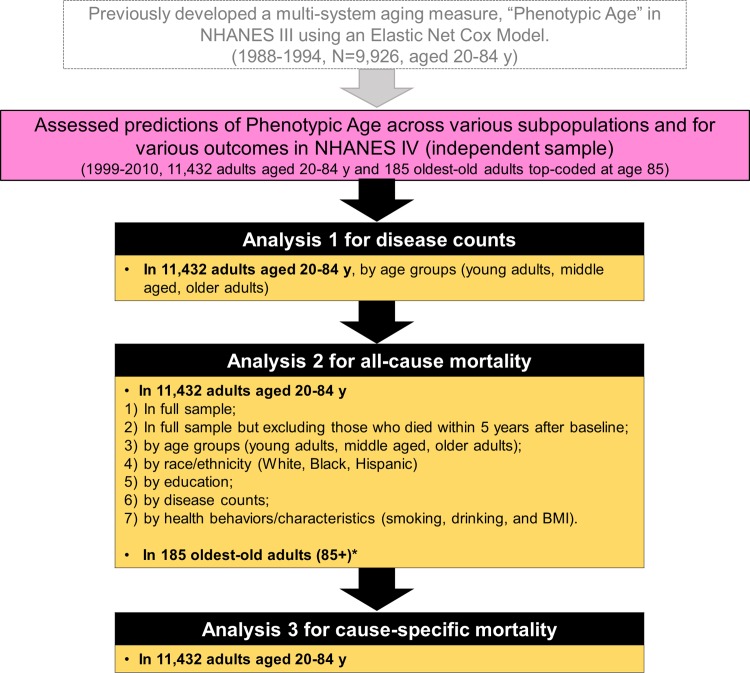
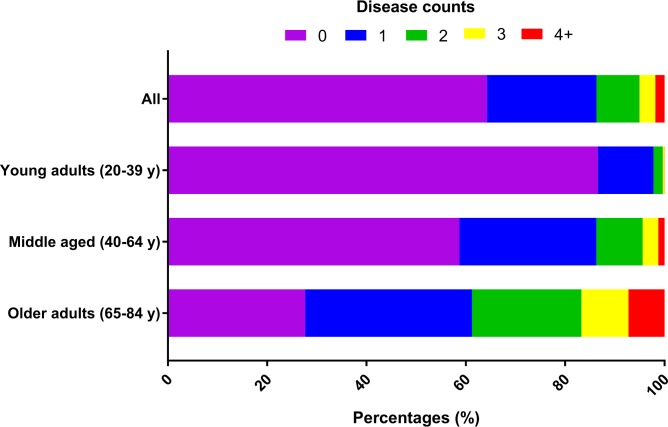
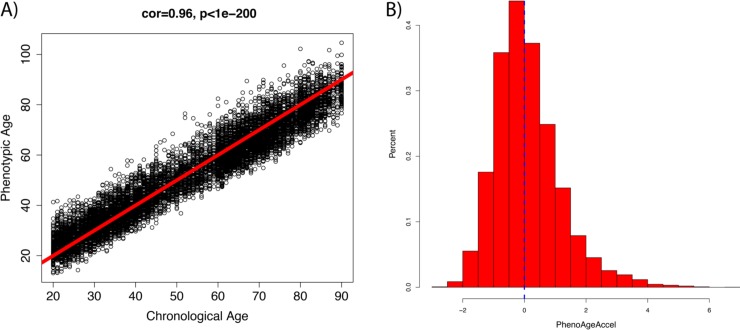
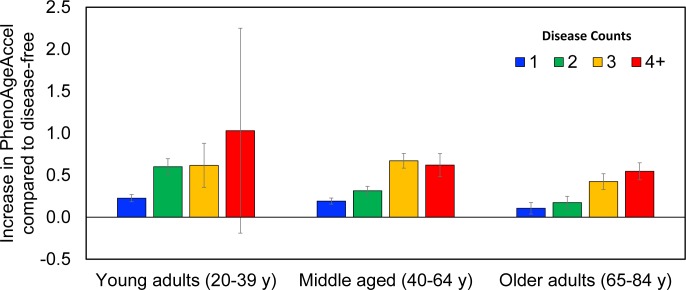
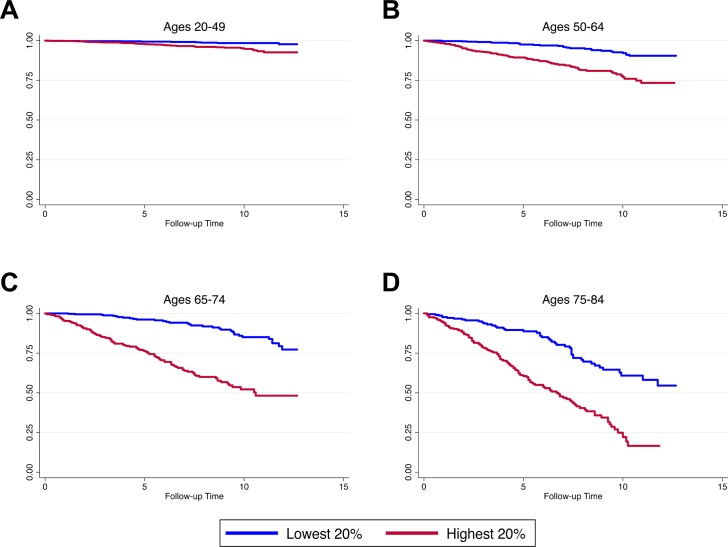
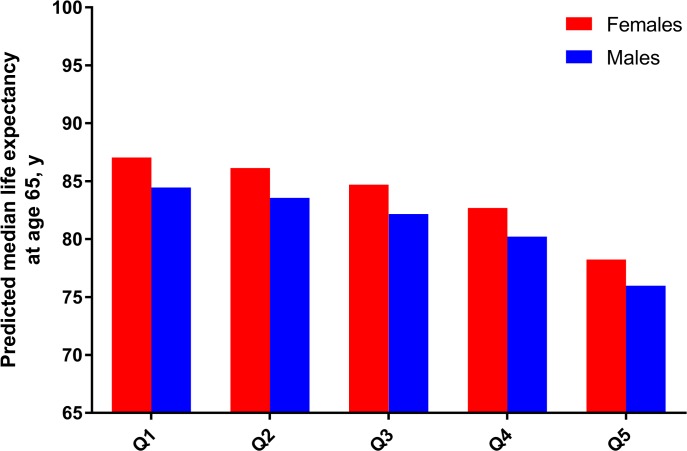
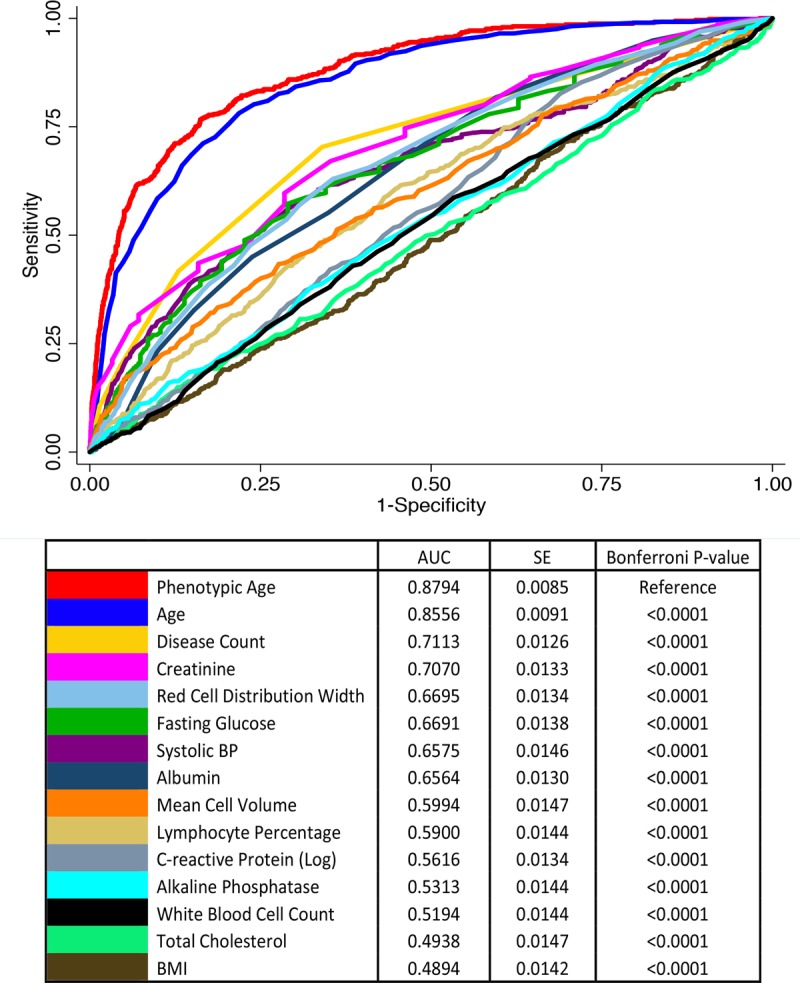
BACKGROUND: A person's rate of aging has important implications for his/her risk of death and disease; thus, quantifying aging using observable characteristics has important applications for clinical, basic, and observational research. Based on routine clinical chemistry biomarkers, we previously developed a novel aging measure, Phenotypic Age, representing the expected age within the population that corresponds to a person's estimated mortality risk. The aim of this study was to assess its applicability for differentiating risk for a variety of health outcomes within diverse subpopulations that include healthy and unhealthy groups, distinct age groups, and persons with various race/ethnic, socioeconomic, and health behavior characteristics. METHODS AND FINDINGS: Phenotypic Age was calculated based on a linear combination of chronological age and 9 multi-system clinical chemistry biomarkers in accordance with our previously established method. We also estimated Phenotypic Age Acceleration (PhenoAgeAccel), which represents Phenotypic Age after accounting for chronological age (i.e., whether a person appears older [positive value] or younger [negative value] than expected, physiologically). All analyses were conducted using NHANES IV (1999-2010, an independent sample from that originally used to develop the measure). Our analytic sample consisted of 11,432 adults aged 20-84 years and 185 oldest-old adults top-coded at age 85 years. We observed a total of 1,012 deaths, ascertained over 12.6 years of follow-up (based on National Death Index data through December 31, 2011). Proportional hazard models and receiver operating characteristic curves were used to evaluate all-cause and cause-specific mortality predictions. Overall, participants with more diseases had older Phenotypic Age. For instance, among young adults, those with 1 disease were 0.2 years older phenotypically than disease-free persons, and those with 2 or 3 diseases were about 0.6 years older phenotypically. After adjusting for chronological age and sex, Phenotypic Age was significantly associated with all-cause mortality and cause-specific mortality (with the exception of cerebrovascular disease mortality). Results for all-cause mortality were robust to stratifications by age, race/ethnicity, education, disease count, and health behaviors. Further, Phenotypic Age was associated with mortality among seemingly healthy participants-defined as those who reported being disease-free and who had normal BMI-as well as among oldest-old adults, even after adjustment for disease prevalence. The main limitation of this study was the lack of longitudinal data on Phenotypic Age and disease incidence. CONCLUSIONS: In a nationally representative US adult population, Phenotypic Age was associated with mortality even after adjusting for chronological age. Overall, this association was robust across different stratifications, particularly by age, disease count, health behaviors, and cause of death. We also observed a strong association between Phenotypic Age and the disease count an individual had. These findings suggest that this new aging measure may serve as a useful tool to facilitate identification of at-risk individuals and evaluation of the efficacy of interventions, and may also facilitate investigation into potential biological mechanisms of aging. Nevertheless, further evaluation in other cohorts is needed.
Overview
The claims and statistics of this paper haven’t been checked yet.
Free: it reads the open-access text and checks the first 5 claims that cite a source we can check. Create a free account to check every claim.
Integrity signals
Registry
Cites
Statistics
Figures
Verification
Claims the paper makes
The claims and statistics of this paper haven’t been checked yet.
Free: it reads the open-access text and checks the first 5 claims that cite a source we can check. Create a free account to check every claim.
Self-check
Percentages, sums and reported differences re-computed from the paper’s own numbers.
The self-check needs the paper’s full text.
Citations
Cites
A Proportional Hazards Model for the Subdistribution of a Competing Risk
Fine, J. P., & Gray, R. J. (1999) · Journal of the American Statistical Association · doi:10.1080/01621459.1999.10474144 · Cited by 14,290 · cited 1×
“Cause-specific mortality risk as a function of Phenotypic Age was assessed via Fine and Gray’s competing risk models [26].”
MethodDNA methylation age of human tissues and cell types
Horvath, S. (2013) · Genome Biology · doi:10.1186/gb-2013-14-10-r115 · Cited by 7,075
Self-citationAn epigenetic biomarker of aging for lifespan and healthspan
Levine, M. E., Lu, A. T., Quach, A., Chen, B. H., Assimes, T. L., Bandinelli, S., Hou, L., Baccarelli, A. A., Stewart, J. D., Li, Y., et al. (2018) · Aging · doi:10.18632/aging.101414 · Cited by 3,675 · cited 3×
“We calculated Phenotypic Age in accordance with the method described previously [12].”
MethodInfluentialSelf-citationFrailty in relation to the accumulation of deficits
Rockwood, K., & Mitnitski, A. (2007) · The Journals of Gerontology Series A: Biological Sciences and Medical Sciences · doi:10.1093/gerona/62.7.722 · Cited by 3,076 · cited 1×
“Many of the measures of aging, such as those based on deficit accumulation [14,27], include measures of morbidity in their construction, and thus it is impossible to disentangle aging and disease, or determine the usefulness of such measures in healthy populations.”
BackgroundAccumulation of Deficits as a Proxy Measure of Aging
Mitnitski, A. B., Mogilner, A. J., & Rockwood, K. (2001) · The Scientific World JOURNAL · doi:10.1100/tsw.2001.58 · Cited by 2,893 · cited 1×
“Many of the measures of aging, such as those based on deficit accumulation [14,27], include measures of morbidity in their construction, and thus it is impossible to disentangle aging and disease, or determine the usefulness of such measures in healthy populations.”
BackgroundGeroscience: Linking Aging to Chronic Disease
Kennedy, B. K., Berger, S. L., Brunet, A., Campisi, J., Cuervo, A. M., Epel, E. S., Franceschi, C., Lithgow, G. J., Morimoto, R. I., Pessin, J. E., et al. (2014) · Cell · doi:10.1016/j.cell.2014.10.039 · Cited by 2,764
National Health and Nutrition Examination Survey
(2010) · Handbook of Disease Burdens and Quality of Life Measures · doi:10.1007/978-0-387-78665-0_6177 · Cited by 2,087
A Proportional Hazards Model for the Subdistribution of a Competing Risk
Fine, J. P., & Gray, R. J. (1999) · Journal of the American Statistical Association · doi:10.2307/2670170 · Cited by 1,375
National Health and Nutrition Examination Survey
(2008) · Encyclopedia of Epidemiology · doi:10.4135/9781412953948.n305 · Cited by 1,342
DNA methylation age of blood predicts all-cause mortality in later life
Marioni, R. E., Shah, S., McRae, A. F., Chen, B. H., Colicino, E., Harris, S. E., Gibson, J., Henders, A. K., Redmond, P., Cox, S. R., et al. (2015) · Genome Biology · doi:10.1186/s13059-015-0584-6 · Cited by 1,261
Self-citation
Cited by
Items 401–500 of 777
Hou, J., Sun, H., Lu, B., Yue, Y., Li, X., Ban, K., Fu, M., Zhang, B., & Luo, X. (2024) · The Science of The Total Environment · doi:10.1016/j.scitotenv.2024.172638 · Cited by 3
Childhood Maltreatment and Biological Aging in Middle Adulthood: The Role of Psychiatric Symptoms
Widom, C. S., Do, H., Miller, Q. C., Javakhishvili, M., Indik, C. E., & Belsky, D. W. (2024) · Biological Psychiatry Global Open Science · doi:10.1016/j.bpsgos.2024.100341 · Cited by 6
Fermín‐Martínez, C. A., Ramírez‐García, D., Antonio‐Villa, N. E., López-Teros, M. T., Seiglie, J. A., Castrejón‐Pérez, R. C., García‐Peña, C., Gutiérrez‐Robledo, L. M., & Bello‐Chavolla, O. Y. (2024) · Gaceta Médica de México · doi:10.24875/gmm.24000115 · Cited by 8
Li, Y., Ma, L., Fan, L., Wu, C., Luo, D., & Jiang, F. (2025) · Journal of Cosmetic Dermatology · doi:10.1111/jocd.16762 · Cited by 3
“In this research, we used BioAgeAccel and PhenoAgeAccel as metrics to characterize findings related to accelerated aging [35].”
Huang, Y., Da, L., Dong, Y., Li, Z., Liu, Y., Li, Z., Wu, X., & Li, W. (2025) · GeroScience · doi:10.1007/s11357-025-01577-x · Cited by 5
Li, L., Wang, S., Yang, H., Xie, J., & Wang, M. (2025) · Frontiers in Public Health · doi:10.3389/fpubh.2025.1593214 · Cited by 5
Dong, F., Ma, Y., & Chen, X. (2025) · Obesity · doi:10.1002/oby.24326 · Cited by 3
“Afterward, PhenoAgeAccel was estimated as the residuals from regressing PhenoAge on the chronological age (the regression and residuals were based on the total participants) [28].”
Arning, N., Fryer, H. R., & Wilson, D. J. (2026) · Proceedings of the National Academy of Sciences · doi:10.1073/pnas.2514138122 · Cited by 3
“Phenotypic age acceleration [which estimates excess aging via blood biomarkers (81)], shorter leukocyte telomere length, physical frailty including falls, and slower walking pace were associated with worse COVID - 19 outcomes (64 , 70 , 82 –98).”
D'Ancona, G., Savardi, M., Massussi, M., van der Valk, V., Scherptong, R. W. C., Signoroni, A., Farina, D., Murero, M., İnce, H., Benussi, S., et al. (2024) · Journal of Thoracic Disease · doi:10.21037/jtd-24-322 · Cited by 3
Pala, D., Xu, J., Xie, Y., Zhang, Y., & Shen, L. (2024) · Informatics for Health and Social Care · doi:10.1080/17538157.2024.2400247 · Cited by 2
“PhenoAge has been extensively used in numerous scientific research studies, 6–8 mostly concerning its usefulness in predicting mortality and age-related conditions.”
Social Vulnerability and Biological Aging in New York City: An Electronic Health Records-Based Study
Knobel, P., Colicino, E., Kloog, I., Litke, R. R., Lane, K., Federman, A. D., Mobbs, C. V., & Yitshak‐Sade, M. (2025) · Journal of Urban Health · doi:10.1007/s11524-024-00948-7 · Cited by 2
“Phenotypic age acceleration (PhenoAgeAccel) measures the degree to which a person is younger or older than their chronological age [7] and predicts the risk of morbidity and mortality better than chronological age [7, 8].”
Higher dietary intake of live microbes is inversely associated with accelerated biological aging
Gan, D., Wang, X., Wu, X., & Han, S. (2025) · Food & Function · doi:10.1039/d4fo04230a · Cited by 3
Cao, Y., Pelekos, G., Jin, L., Li, A., Du, M., Hu, S., Liu, Z., & Deng, K. (2025) · Journal of Periodontal & Implant Science · doi:10.5051/jpis.2403420171 · Cited by 2
Self-citationYang, Y., Sun, Z., Lin, J., Wang, Q., Sun, X., Tong, T., Zhang, X., Li, C., & Yao, K. (2025) · Aging Clinical and Experimental Research · doi:10.1007/s40520-025-03104-6 · Cited by 2
“Compared to DNA methylation-based algorithms, those relying on clinically observable data demonstrate stronger predictive performance and greater utility [9].”
Xu, J., Hu, Z., Liu, H., Su, Y., Shen, R., Xie, C., Zhou, Y., & Huang, K. (2025) · International Journal of Surgery · doi:10.1097/js9.0000000000002898 · Cited by 3
“Phenotypic age acceleration (PhenoAgeAccel) is a novel biological aging metric based on multiple systemic indicators, capturing the disparity between individuals’ biological and chronological age [8] .”
InfluentialSong, X., Hu, C., Tian, Z., He, Y. H., He, X., Jiang, K., Huang, Y., Tao, Y., & Jin, L. (2025) · Public Health · doi:10.1016/j.puhe.2025.105874 · Cited by 2
Accelerated Biological Aging, Genetic Predisposition, and Incident Valvular Heart Disease
Zhu, Y., Suo, X. H., Guo, J., Lu, S., Zhang, J.-X., Bo, Y., Han, Z., & Qiu, C. (2025) · JACC Asia · doi:10.1016/j.jacasi.2025.06.011 · Cited by 2
Yu, D., Cheng, T. Y. D., Shi, Y., Qiu, X., Geng, L., Yang, Y., Zhou, L., & Wen, Z. (2025) · Food Science & Nutrition · doi:10.1002/fsn3.70815 · Cited by 3
“Phenotypic age acceleration (PAA) and PA are significantly associated with all-cause and cause-specific mortality, helping to identify high-risk individuals for multiple diseases and causes of death (Levine et al. 2018; Liu et al. 2018).”
Arif, T., Thomas, A., Belsky, D. W., & Gu, Y. (2025) · The Journals of Gerontology Series A · doi:10.1093/gerona/glaf194 · Cited by 3
Li, X., Lian, P., Chen, H., Zhang, L., Zhang, Z., Wang, J., Xing, N., Jiang, T., Chen, Z., Zhang, X., et al. (2025) · GeroScience · doi:10.1007/s11357-025-01846-9 · Cited by 2
Kojima, S., Inoue, Y., Karayama, M., Hashimoto, D., Asada, K., Matsuura, S., Imokawa, S., Matsui, T., Matsuda, H., Inami, N., et al. (2025) · Clinical Lung Cancer · doi:10.1016/j.cllc.2025.10.009 · Cited by 3
Zhan, Y., Shi, R., Ruan, X., Yao, C., Chun, T. T. S., Liu, J., Ali, S., Ma, R., Huang, D., Huang, J., et al. (2025) · BMC Medicine · doi:10.1186/s12916-025-04409-z · Cited by 2
“Nine biomarkers related to ChronAge were included in the calculation based on the parametric proportional risk model of the Gompertz distribution [15] (Details in Additional file 3: Supplementary methods).”
Plasma fatty acids and the likelihood of healthy aging: a prospective cohort study
Lyu, J., Miao, M.-Y., Fang, F., Cai, X., Liu, Z., Qian, Y.-W., Gu, J.-M., Yang, J., Qin, L., Song, C., et al. (2025) · American Journal of Clinical Nutrition · doi:10.1016/j.ajcnut.2025.11.002 · Cited by 2
Self-citationGlycemic status-dependent proteomic signatures of biological aging for health risk prediction
Li, J., Li, J., Xu, X., Yu, Y., Shen, W., Sun, Y., Fu, Y., Tan, X. W., Wang, N., Lu, Y., et al. (2025) · GeroScience · doi:10.1007/s11357-025-01950-w · Cited by 2
“Previous studies have suggested that impaired glycemic status, including prediabetes and diabetes, is associated with increased biological aging or brain [36, 37], the role of protein metabolism in accelerated aging process associated with diabetes or prediabetes is largely over-looked [38, 39].”
EAT-Lancet and plant-based diets, plasma metabolomic signatures, and biological aging
Li, J., Li, J., Xu, X., Zhang, K., Wang, N., Lu, Q., Wang, B., & Lu, Y. (2025) · npj Aging · doi:10.1038/s41514-025-00306-0 · Cited by 3
“Across-sectionalstudyusingdata from the US National Health and Nutrition Examination Survey (NHANES) 1999 – 2010 found that per 10-unit higher PDI and hPDI scores were associated with 0.80-and 0.83-year decreases in PhenoAge accelera-tionand1.”
InfluentialAssociations of accelerated biological aging with steatotic liver disease and fibrosis
Liu, J., Wu, J., & Wang, B. (2025) · Journal of Hepatology · doi:10.1016/j.jhep.2025.12.003 · Cited by 2
Lou, C., Wang, G., Xiong, Z., Jiang, Y. C., Li, Y., Zhu, M. Q., Yang, H., Wang, L., He, L., Chang, H., et al. (2025) · Cell Reports Medicine · doi:10.1016/j.xcrm.2025.102481 · Cited by 3
“This involved two validated algorithms: the Klemera-Doubal method (BioKDMAge) 109 and the phenotypic age calculation (BioPhenoAge) 110 using clinical biomarkers, both computed with the R package BioAge.”
The advanced lung cancer inflammation Index as a potential novel biomarker for hypertension
Mao, Y., Tang, W., Zheng, Z., Li, X., & Zhou, Z. (2025) · Journal of the Renin-Angiotensin-Aldosterone System · doi:10.1177/14703203251405024 · Cited by 2
“18,19 All study procedures were approved by the Research Ethics Review Board of the National Center for Health Statistics, and written informed consent was obtained from all participants prior to enrollment.”
Iuorio, M. S., Vincentis, A. D., Lelli, D., Bandinelli, S., Ferrucci, L., Incalzi, R. A., & Pedone, C. (2025) · The Journals of Gerontology Series A · doi:10.1093/gerona/glaf285 · Cited by 2
Self-citationHui, S., Hou, Z., & Li, D. (2025) · Cancers · doi:10.3390/cancers18010111 · Cited by 2
“These metrics are individualized measures that integrate data from various clinical biomarkers to assess age-related deficits in system integrity [25].”
Hu, D., van Heemst, D., Feng, Q., van Dijk, K. W., & Noordam, R. (2026) · GeroScience · doi:10.1007/s11357-026-02138-6 · Cited by 2
“In recent studies, biological aging is also increasingly recognized as a shared disease pathway and key predictor of age-related outcomes, including cardiometabolic diseases and mortality [12, 13].”
Jawad, B. N., Holm, N. N., Tavenier, J., Anjum, U. N. N., Altintas, I., Niazi, S., Nielsen, R. L., Houlind, M. B., Mansouri, A., Iversen, K. K., et al. (2026) · Communications Medicine · doi:10.1038/s43856-026-01428-6 · Cited by 3
“Thismethodologyhasalsobeenemployed in previous studies 2,36,46 .”
Huang, J., Chen, P., Zhuang, J., Wang, Z., Liu, Z., Li, W., & Zhang, C. (2026) · Clinical Epigenetics · doi:10.1186/s13148-026-02100-5 · Cited by 2
“Unlike chronological age, biological age integrates multiple physiological indicators—such as inflammatory markers, metabolic state, and immune function—pro-viding a more accurate reflection of an individual’s true aging status [15].”
Self-citationAlonso-Pérez, E., O’Sullivan, J. L., Fuellen, G., Gellert, P. R., & Rudolf, H. (2026) · Annals of Epidemiology · doi:10.1016/j.annepidem.2026.110075 · Cited by 2
Wang, M., Cai, X., Gao, P., Yang, Y., Ding, Y., Zhang, Z., Sun, J., Zhang, Y., Liu, D., Wang, Y., et al. (2026) · Neurology · doi:10.1212/wnl.0000000000214818 · Cited by 2
Biological age acceleration, longitudinal change and mortality risk in the Dutch Lifelines cohort
Zuo, S., Rivillas, J. C., van Zutphen, T., & Vonk, J. M. (2026) · GeroScience · doi:10.1007/s11357-026-02241-8 · Cited by 2
Association between biological aging and clinical mortality among patients with rheumatoid arthritis
Zheng, X., Ke, X., Gao, J., Luo, X., Yang, F., Liu, T., Zheng, Z., & Zhu, P. (2026) · Clinical Rheumatology · doi:10.1007/s10067-026-08110-1 · Cited by 2
A comparison of deep multiomics profiles across ethnicity, geography, and age
Bararpour, N., Cao, J. Z., Wu, Y., Gupta, S., Hoopmann, M. R., Qin, R., Midha, M. K., Mireault, M., Juanes‐Velasco, P., Hanson, C. R., et al. (2026) · Cell · doi:10.1016/j.cell.2026.04.032 · Cited by 5
Shao, Z., Zhao, Y. Q., Haiming, Y., Meng, X., Song, M., Liao, C., Pang, Y., Gao, W. J., Huang, T., Yu, C., et al. (2026) · Journal of Translational Internal Medicine · doi:10.1515/jtim-2026-0046 · Cited by 2
“[6] Although C-reactive protein (CRP), a biomarker of frailty susceptibility, [25,26] is included in the composition of PhenoAge, our study revealed a weak correlation between PhenoAge and FI ( r = 0.24, P 0.001).”
InfluentialSu, Y. A. N. G. A. N., Xiang, F., Fang, Y., Ding, X., & Jiang, W. (2026) · International Urology and Nephrology · doi:10.1007/s11255-026-05255-5 · Cited by 2
Vasilieva, Т. P., Karimov, D. О., Gundarov, I. А., & Gorbacheva, N. А. (2026) · Health Risk Analysis · doi:10.21668/health.risk/2026.3.14.eng · Cited by 2
Obtaining Longevity Footprints in DNA Methylation Data Using Different Machine Learning Approaches
Kalyakulina, A., Yusipov, I., & Ivanchenko, M. (2023) · Healthy ageing and longevity · doi:10.1007/978-3-031-35176-1_4 · Cited by 2
Bayesian Quantile Regression Models for Complex Survey Data Under Informative Sampling
Nascimento, M. L., & Gonçalves, K. C. M. (2024) · Journal of Survey Statistics and Methodology · doi:10.1093/jssam/smae015 · Cited by 2
Liu, L., Zhou, H., Wang, X., Wen, F., Zhang, G., Yu, J., Shen, H., & Huang, R. (2024) · Frontiers in Public Health · doi:10.3389/fpubh.2024.1405533 · Cited by 2
Ngestiningsih, D., Rosetya, M. I., Fatimah, D. N., Pemayun, T. G. D., & Sofro, M. A. U. (2024) · Indonesia Journal of Biomedical Science · doi:10.15562/ijbs.v18i2.577 · Cited by 4
Zhao, R., Yuan, H., Chen, S., Xu, K., Zhang, T., Liu, Z., Jiang, Y., Suo, C., & Chen, X. (2024) · International Journal of Cancer · doi:10.1002/ijc.35161 · Cited by 2
Self-citationChen, X., Shi, F., Yu, W., He, C., Gou, S., & Fu, P. (2024) · Frontiers in Public Health · doi:10.3389/fpubh.2024.1488558 · Cited by 3
Zhang, Y., Zhang, C., He, P., Tian, X., Kong, Y., & Zhou, Y. (2025) · International Urology and Nephrology · doi:10.1007/s11255-025-04481-7 · Cited by 2
“…that integrate standard clinical parameters are emerging as some of the most accurate tools for predicting morbidity and mortality [11], including Phe-noAge (PA), Klemera–Doubal method (KDM), allostatic load (AL), and homeostatic dysregulation (HD) using blood chemistry measurements [8, 12].”
Zhou, Y., Zhou, J., Zhao, L., Wang, J., Li, H., Yin, X., Gao, J., Wu, Y., Li, J., Sun, Y. X., et al. (2025) · Clinical Nutrition · doi:10.1016/j.clnu.2025.04.029 · Cited by 4
Zhou, Z., Jiang, H., Ren, J. L., Li, Y., Su, C., Zhang, X., Shao, Y., Xia, W., Wang, Y., Wu, F., et al. (2025) · BMJ Open · doi:10.1136/bmjopen-2024-093052 · Cited by 2
Gaydosh, L. M., Hargrove, T. W., Kelly, A. L., Koss, K. J., Schneper, L. M., Notterman, D. A., & Mitchell, C. M. (2025) · Psychoneuroendocrinology · doi:10.1016/j.psyneuen.2025.107499 · Cited by 2
“…predicting mortality, healthspan, and cognitive aging, is sensitive to social exposures including education, and reproduces established racial/ethnic disparities in health (Bell et al., 2019; Levine et al., 2018; Liu et al., 2018; Marioni et al., 2019; Oblak et al., 2021; Raffington et al., 2023a).”
Yang, Q., Zhu, S., Luo, Y., Ai, H., Feng, L., Zhang, L., & Luo, F. (2025) · Biogerontology · doi:10.1007/s10522-025-10266-3 · Cited by 4
“Actually, some studies have demonstrated that these indicators only presented weak to moderate associations with aging outcomes after excluding what can be explained by chronological age (Marioni et al. 2015; Horvath et al. 2016; Chen et al. 2016; Belsky et al. 2018; Liu et al. 2018).”
InfluentialGuo, H., Liu, Y., Yang, R., Li, X., Teng, Y., Wei, W., & Zhang, D. (2025) · BMC Public Health · doi:10.1186/s12889-025-24534-x · Cited by 3
Envisioning Arti's ‘Cadillac study’ to assess aging trajectories in cancer survivors
Guida, J., Green, P. A., & Gallicchio, L. M. (2019) · Journal of Geriatric Oncology · doi:10.1016/j.jgo.2019.06.009 · Cited by 2
Uncertainty-Based Biological Age Estimation of Brain MRI Scans
Armanious, K., Abdulatif, S., Shi, W., Hepp, T., Gatidis, S., & Yang, B. (2021) · IEEE International Conference on Acoustics Speech and Signal Processing · doi:10.1109/icassp39728.2021.9414112 · Cited by 2
Wearable-ome meets epigenome: A novel approach to measuring biological age with wearable devicesPreprint
Sugden, C., du Preez, F. B., Olivier, L. R., & Deffur, A. (2023) · bioRxiv (Cold Spring Harbor Laboratory) · doi:10.1101/2023.04.11.536462 · Cited by 2
DNA Methylation Clocks in Age-related Disease
Fransquet, P., Wrigglesworth, J., & Ryan, J. L. (2022) · Elsevier eBooks · doi:10.1016/b978-0-323-91909-8.00011-6 · Cited by 2
Duan, S., Zhang, Y., Chen, H., Zhu, J., Wu, Y., & Fang, Y. (2024) · Exposure and Health · doi:10.1007/s12403-024-00663-3 · Cited by 1
“This determines the extent to which an individual appears older (positive value) or younger (negative value) than expected (Liu et al. 2018a).”
InfluentialHuang, J., Zhou, S., Li, X., Zhao, Y., Feng, H., & Hu, M. (2024) · Journal of Applied Gerontology · doi:10.1177/07334648241297049 · Cited by 1
“The NHANES sample was designed to represent the population of the US.”
InfluentialCancer history and accelerated aging: findings from a nationally representative sample in the US
Han, X., Ogongo, M. K., Tian, F., Zhao, J., Zhiyuan, Z., Liu, Z., & Yabroff, K. R. (2024) · Cancer Causes & Control · doi:10.1007/s10552-024-01941-w · Cited by 3
“Compared to other measures that only capture a small number of changes involved in the multifactorial aging process, the Phenotypic Age may represent the manifestations of multiple hallmarks of aging occurring at the cellular and intracellular levels [7].”
InfluentialSelf-citationLi, H., Cui, X., Shang, Z., Yang, W., Lu, A., Guo, H., Cheng, Z., Zhou, J., Wei, Y., Li, M., et al. (2025) · Archives of Gerontology and Geriatrics · doi:10.1016/j.archger.2025.105777 · Cited by 2
The association between biological aging markers and valvular heart diseases
Liu, X. Z., Da, L. U. O., Zheng, H. U., Hangyu, T. I. A. N., Jiang, H. F., & Chen, J. (2025) · Journal of Zhejiang University (Medical Sciences) · doi:10.3724/zdxbyxb-2024-0416 · Cited by 1
Association of biological age acceleration with poor outcome after endovascular thrombectomy
Qian, M., Wang, W., Chen, S., Yan, E., Wei, B., Liu, L., Chen, J., & Wu, H. (2025) · Neurological Sciences · doi:10.1007/s10072-025-08261-0 · Cited by 1
“Phenotypic age, a measure of biological age derived from phenotypic, molecular biological, or compound indicators, has been developed [12].”
Wang, J., Song, Z., Xu, C., & Li, C.-C. (2025) · Frontiers in Nutrition · doi:10.3389/fnut.2025.1504441 · Cited by 2
Xiong, J., Yin, L., Li, X., Wang, H., & Yu, B. (2025) · Aging Clinical and Experimental Research · doi:10.1007/s40520-025-03116-2 · Cited by 1
“…creatinine, glucose, C-reactive protein (CRP), percentage of lymphocytes, mean cell volume, red blood cell distribution width, alkaline phosphatase, and white blood cell count) to derive phenotypic age, and calculated phenotypic age in accordance with the method described previously [32, 33 ].”
Shen, Y., Shen, W., Shen, Y., Chen, B., Wu, C., & Jiang, L. (2025) · Frontiers in Sports and Active Living · doi:10.3389/fspor.2025.1503135 · Cited by 1
Liang, J., Wang, Y., Lu, Z., Long, G., Wang, B., & Xu, C. (2025) · Ecotoxicology and Environmental Safety · doi:10.1016/j.ecoenv.2025.118645 · Cited by 1
Feng, Y., Yu, L., & Wang, J. (2025) · PLoS ONE · doi:10.1371/journal.pone.0328107 · Cited by 2
“…methods to NHANES III (1988–1994) datasets, encompasses 10 markers: serum albumin, serum creatinine, plasma glucose, white blood cell count, blood lymphocyte percent, red cell distribution width, mean red cell volume, serum C-reactive protein, serum alkaline phosphatase and chronological age [18].”
Wang, P., Wang, Y., Huang, W., Xiang, P., Bai, B., Xie, B., & Shi, D. (2025) · The Journals of Gerontology Series A · doi:10.1093/gerona/glaf175 · Cited by 1
Tian, R., Qiu, S., Zhang, J., Chen, M., Yu, H., Lau, W., Lyu, J., & Deng, L. (2025) · Frontiers in Immunology · doi:10.3389/fimmu.2025.1620027 · Cited by 1
“PhenoAge acceleration (PhenoAgeAccel), re fl ecting deviations in biological aging relative to chronological age, was calculated as the residual from regressing PhenoAge on chronological age (26).”
Cao, T., Wu, L., Gong, M., Zhang, Y., Ding, J., Feng, X.-M., Fan, N.-F., Yang, X., & Yan, Y. (2025) · American Journal of Epidemiology · doi:10.1093/aje/kwaf196 · Cited by 3
Liu, Y., & Qiao, K. (2025) · Medicine · doi:10.1097/md.0000000000044786 · Cited by 1
Relationship between weekends catch-up sleep and risk of aging
Yao, N., Shen, L., Qi, L., Li, W., Liu, C., Han, F., Duan, N., Yu, G., & Qu, J. (2025) · PLoS ONE · doi:10.1371/journal.pone.0332584 · Cited by 1
“Coincidentally, Liu et al. developed a widely validated and used phenotypic age calculation formula based on NHANES data [17].”
Pan, Z., Zeng, J., Chen, Z., Chen, S., Yang, J., Li, H., Wang, S., Wang, J., Li, N., Gong, Y., et al. (2025) · The Journals of Gerontology Series A · doi:10.1093/gerona/glaf215 · Cited by 1
Li, Y., Han, W., Yang, P., Jia, Y., Sun, L., Wang, R., Shi, M., Zheng, X., Zhang, Y., & Zhu, Z. (2025) · Experimental Gerontology · doi:10.1016/j.exger.2025.112933 · Cited by 2
Gong, H., Wang, J., Lin, X., & Huang, S. (2025) · Frontiers in Neurology · doi:10.3389/fneur.2025.1599600 · Cited by 1
Liu, X., Chen, X., Yang, W., Ding, G., Zhao, Y., Li, Y., Chen, N., & Cui, J. (2025) · Diabetes Obesity and Metabolism · doi:10.1111/dom.70261 · Cited by 1
“19,20 Emerging evidence suggests that lifestyle interventions, including exercise training, can decelerate biological aging processes.”
Lu, J. K., Wang, W., Guan, L., van der Velde, J. H. P. M., Hoeks, J., Schrauwen, P., Salomons, G. S., Houtkooper, R. H., Maier, A. B., & Janssens, G. E. (2025) · GeroScience · doi:10.1007/s11357-025-01999-7 · Cited by 1
Dong, F., Ping, P., Ma, Y., & Chen, X. (2025) · The Aging Male · doi:10.1080/13685538.2025.2576049 · Cited by 1
“Furthermore, an accompanying index, PhenoAge acceleration (PhenoAgeAccel), can be simultaneously calculated in order to evaluate whether PhenoAge increases or decreases with increasing chronological age [15,16].”
Chu, X., Zhang, L., Zhu, H., Gao, S., Wang, Z., Wang, S., Liang, N., & Lu, J. (2025) · HORMONES · doi:10.1007/s42000-025-00736-1 · Cited by 1
Gao, W., Luo, N., Ou, Y., Lu, J., Tian, C., & Zhong, S. (2025) · Urolithiasis · doi:10.1007/s00240-025-01921-y · Cited by 2
Tang, Y. N., Zhou, X., Chen, Q. N., Yu, Z., Juaiti, M., & Zha, L. (2025) · Reviews in Cardiovascular Medicine · doi:10.31083/rcm46778 · Cited by 1
“Previous studies have shown that increased biological age is significantly associated with higher mortality and elevated risks of various cardiovascular diseases, including heart failure [9,10].”
InfluentialLong, Y., Zhu, Y., Lin, M., Li, Q., Liang, J., Wang, C., Zeng, R., Luo, D., Zhang, L., Ma, Y., et al. (2026) · Cancer Epidemiology · doi:10.1016/j.canep.2025.102985 · Cited by 1
Wei, K., & Chen, X. (2026) · The journal of nutrition health & aging · doi:10.1016/j.jnha.2026.100778 · Cited by 1
“PhenoAge follows Levine ’ s method [4], while KD-BioAge uses the Klemera – Doubal method with biomarkers selected from prior all-subsets regression optimizing mortality prediction [13].”
Yan, Z., Xu, Y., & Du, X. (2026) · Geriatrics and gerontology international/Geriatrics & gerontology international · doi:10.1111/ggi.70331 · Cited by 1
Biological aging predicts mortality in Parkinson’s patients: evidence from UK Biobank
Duan, Q., Su, W., Yin, K., He, S.-Y., Liu, R.-Y., Wen, X.-J., Gu, X., Chen, T., Cao, B., & Chen, Y. (2026) · npj Parkinson s Disease · doi:10.1038/s41531-026-01268-0 · Cited by 2
“ThePhenoAge algorithm is derived from multivariable analyses of mortality risk, and all of its component biomarkers are routinely available from standard laboratory tests 13 .”
Lyu, Z., Xu, Q., Zhang, Y., Xia, X., Wang, Y., Meng, X., & Wang, A. T. (2026) · Journal of the American Heart Association · doi:10.1161/jaha.125.043901 · Cited by 1
Biological Age Acceleration and All-Cause Mortality in Moderate to Severe Aortic Valve Stenosis
Zheng, Y., Xu, X., Xiong, Z., Li, B., Wen, H., Guo, Y., Liu, M., Zhou, H., Xu, X., Zhang, S., et al. (2026) · JACC Asia · doi:10.1016/j.jacasi.2025.11.019 · Cited by 2
Zhong, H., Bao, S., Cao, W., He, X., & Ban, Z. (2026) · Tobacco Induced Diseases · doi:10.18332/tid/216136 · Cited by 1
“This cross-sectional study draws on data from the NHANES, a nationally representative program that provides comprehensive information on the health and nutrition of the US population through standardized interviews and examinations 5 .”
Ding, X., Zhang, J., Liang, R., Yang, S., Nie, X., Zhou, M., & Chen, W. (2026) · Environment International · doi:10.1016/j.envint.2026.110125 · Cited by 1
Yang, W., Cai, S., Chen, X., Yan, D., Yang, F., Yang, H., Wang, R., Song, C., & Zhou, G. (2026) · Journal of Pain Research · doi:10.2147/jpr.s555970 · Cited by 1
Zhang, Y., Tian, Z., Wei, R., Lin, F., Cheng, X., Wang, Y., Zhang, Y., Liu, W., Liu, X., Hu, B., et al. (2026) · Ecotoxicology and Environmental Safety · doi:10.1016/j.ecoenv.2026.119907 · Cited by 1
Wen, X., An, S., Zhou, X., Bi, X., & Sun, S. (2026) · Journal of Orthopaedics · doi:10.1016/j.jor.2026.02.050 · Cited by 1
Zeng, C.-R., Cai, Y.-W., Wu, M.-X., Huang, Z.-G., Gao, Q.-Y., Gao, J., Liao, G.-H., Wang, J.-F., Zhang, H.-F., & Chen, Y. (2026) · Clinical Nutrition · doi:10.1016/j.clnu.2026.106611 · Cited by 2
Association of biological age markers with stroke prevalence: Insights from a cross-sectional study
Zhang, X., Xing, Z., Jiang, Y., Li, W., Guo, S., Zhou, B., Li, J., Sun, Y., Cui, S., Lyu, X., et al. (2026) · Journal of the Neurological Sciences · doi:10.1016/j.jns.2026.125843 · Cited by 1
Li, R. Q., Peng, S. X., Zhang, R. H., Lu, T. Y., Zhang, W. S., Wang, J., Wang, Y., Yang, L., Yeung, S. B., Lam, T. H., et al. (2026) · Aging Cell · doi:10.1111/acel.70422 · Cited by 1
“Phenotypic age was determined using a weighted linear combination of chronological age (in years) and eight biomarkers: albumin, creatinine, glucose, C-reactive protein, lymphocyte percentage, mean corpuscular volume, red cell distribution width, and white blood cell count (Liu et al. 2018”
Wang, D., Alsalman, Z. M., Fang, Y., Wang, Z., Li, D., & Zhang, W. (2026) · The journal of nutrition health & aging · doi:10.1016/j.jnha.2026.100820 · Cited by 1
“The biological age proposed by Klemera and Doubal [5,6], an epigenetic biomarker telomere length [7,8] and phenotypic age [7,9] have been used to estimate aging.”
InfluentialLu, Y., Yu, Z., Chen, H., & Shen, H. (2026) · Journal of International Medical Research · doi:10.1177/03000605261425322 · Cited by 1
“16,17 This aging measure provides a valuable tool for identifying high-risk individuals and advancing research on the mechanisms of aging.”
Polypharmacy, anticholinergic burden and inflammation in relation to accelerated biological ageing
Wei, K., Chen, C., Sun, S., Li, D., Yang, Y., Liu, Y., Zhang, M., Hu, K. N., & Chen, Q. (2026) · Age and Ageing · doi:10.1093/ageing/afag048 · Cited by 1
Li, X., Chen, L., Weng, Y., & Shi, Y. (2026) · Cancer Treatment and Research Communications · doi:10.1016/j.ctarc.2026.101182 · Cited by 1
Metadata
- Authors
- Liu, Z., Kuo, P.-L., Horvath, S., Crimmins, E., Ferrucci, L., & Levine, M.
- Affiliations
- Yale University (US)
- National Institutes of Health (US)
- University of California, Los Angeles (US)
- University of Southern California (US)
- Corresponding author
- Liu, Zuyun
- Kuo, Pei-Lun
- Horvath, Steve
- Crimmins, Eileen
- Ferrucci, Luigi
- Levine, Morgan
- Venue
- PLOS Medicine
- Publisher
- Public Library of Science (PLoS)
- Published
- 2018-12-31
- Volume
- 15
- Issue
- 12
- Pages
- e1002718
- ISSN
- 1549-1277 (ISSN-L)
- 1549-1676
- PMC
- PMC6312200
- OpenAlex
- W2908077673
- Cited by
- 754
- References
- 35
- Citations by year
- 2026: 178 · 2025: 206 · 2024: 161 · 2023: 75 · 2022: 48 · 2021: 43 · 2020: 23 · 2019: 18 · 2018: 2
- FWCI
- 11.90
- Type
- journal article
- Language
- en
- Update notices
- correction (2019-02-25)
- Open access
- gold
- doi.org
- Licence
- public-domain
- creativecommons.org/publicdomain/zero/1.0/ (vor)
- Locations
- PLoS Medicine (publishedVersion, public-domain)
- bioRxiv (Cold Spring Harbor Laboratory) (acceptedVersion, cc-by-nc)
- Europe PMC (PubMed Central) (publishedVersion, public-domain)
- PubMed Central (publishedVersion, public-domain)
- PubMed Central (publishedVersion, cc-by)
- PubMed (publishedVersion)
- RePEc: Research Papers in Economics (submittedVersion)
- DOAJ (DOAJ: Directory of Open Access Journals) (submittedVersion, cc-by-sa)
- eScholarship (California Digital Library) (submittedVersion)
- eScholarship (California Digital Library) (submittedVersion, public-domain)
- Figshare (submittedVersion, cc-by)
- Funders
- National Institute on Aging (4R00AG052604-02)
- Topics
- Health Sciences › Medicine › Geriatrics and Gerontology › Frailty in Older Adults
- Life Sciences › Biochemistry, Genetics and Molecular Biology › Aging › Genetics, Aging, and Longevity in Model Organisms
- Social Sciences › Psychology › Developmental and Educational Psychology › Aging and Gerontology Research
- Keywords
- phenotypic age, phenotypic age acceleration, biological aging, mortality prediction, morbidity, all-cause mortality, cause-specific mortality, oldest old, healthy young adults, racial and ethnic differences, socioeconomic status, health behavior, disease burden, mortality risk stratification
- MeSH terms
- Adult, Aged, Aged, 80 and over, Aging, Female, Follow-Up Studies, Humans, Male, Middle Aged, Morbidity, Mortality, Nutrition Surveys, Population Surveillance, Risk Factors, Cohort Studies, Young Adult
About these checks
Registry, retraction, Cites and statistics results are computed, not judged, with one exception: a printed reference that no index lists is read once by a model before it counts as a citation error. Claims are extracted by a model and kept only when their quote appears verbatim in the text; each cited source is then checked, with a model’s help, for whether it says what the claim relies on. Those verdicts can be wrong — read the claim’s quote and the cited source before relying on one.
Statistics and arithmetic are recomputed, not judged.
Confidence bands are shown only for fields calibrated on our annotated test set. None is calibrated yet, so no band is shown.
What counts as a claim ›How we measure confidence ›How we check this ›
Are you an author, or do you see a problem with this page? Request a review
Data sources
Bibliographic data: Semantic Scholar, OpenAlex, Crossref.
Contains information from the Semantic Scholar Academic Graph Datasets, made available under the ODC Attribution License (ODC-BY 1.0).
Semantic Scholar’s data is described in: Kinney, R., et al. (2023). The Semantic Scholar Open Data Platform. arXiv:2301.10140.
