

A new aging measure captures morbidity and mortality risk across diverse subpopulations from NHANES IV: A cohort study
Open accessPublished version of a preprint
The DOI matches its Crossref record; 35 of the 35 references it cites were found in a registry or an index.
Abstract
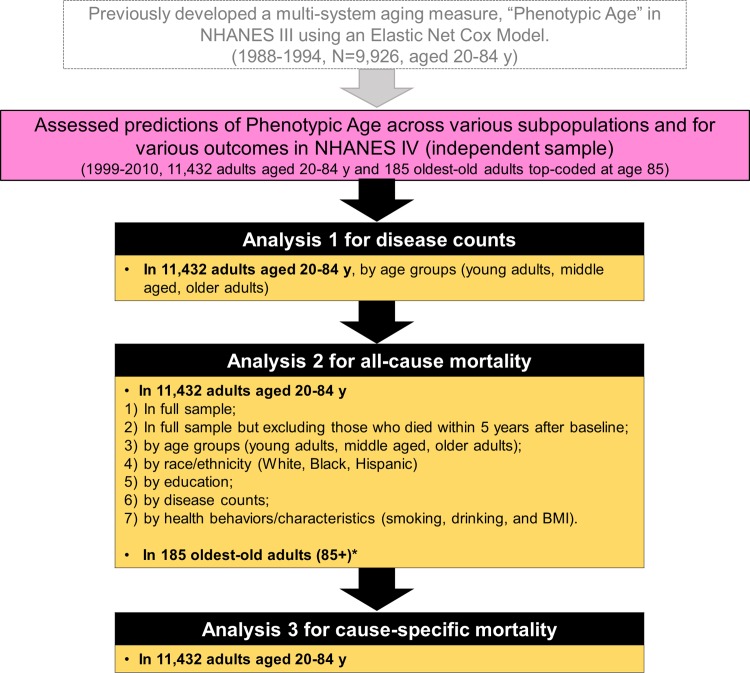
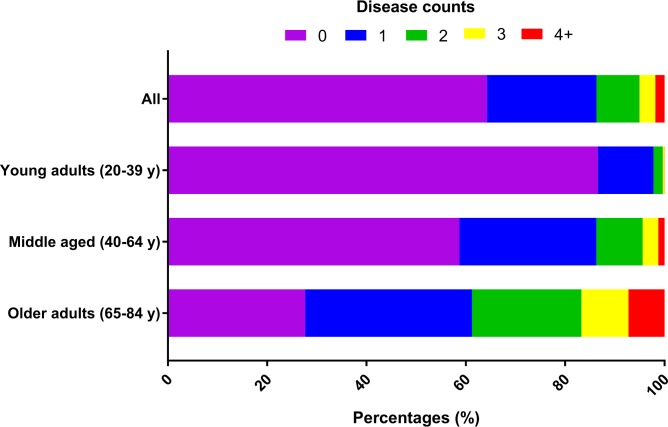
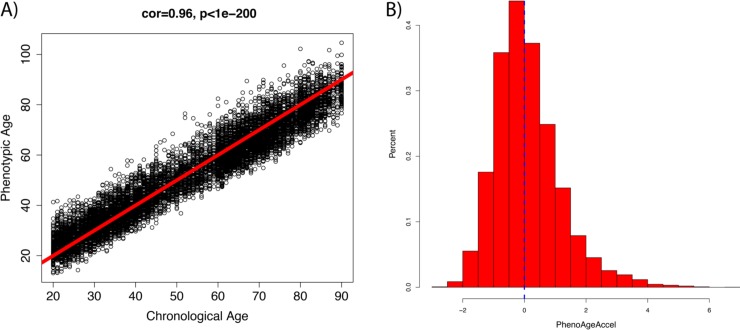
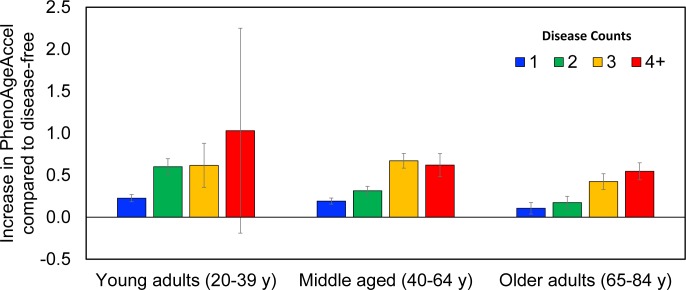
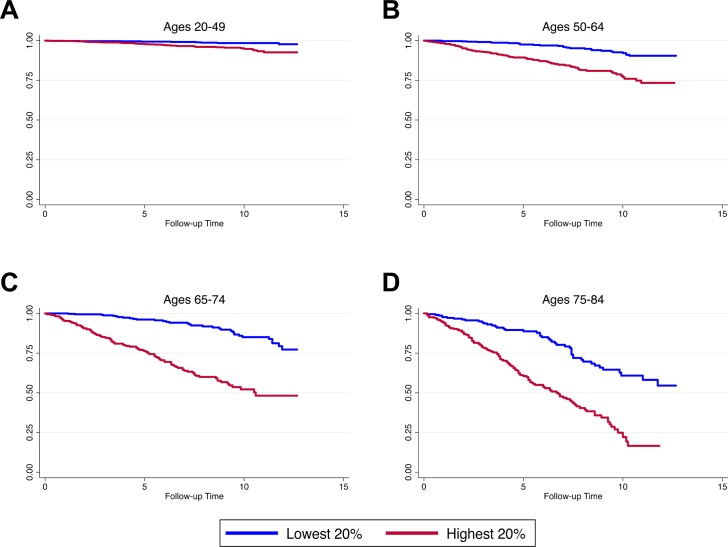
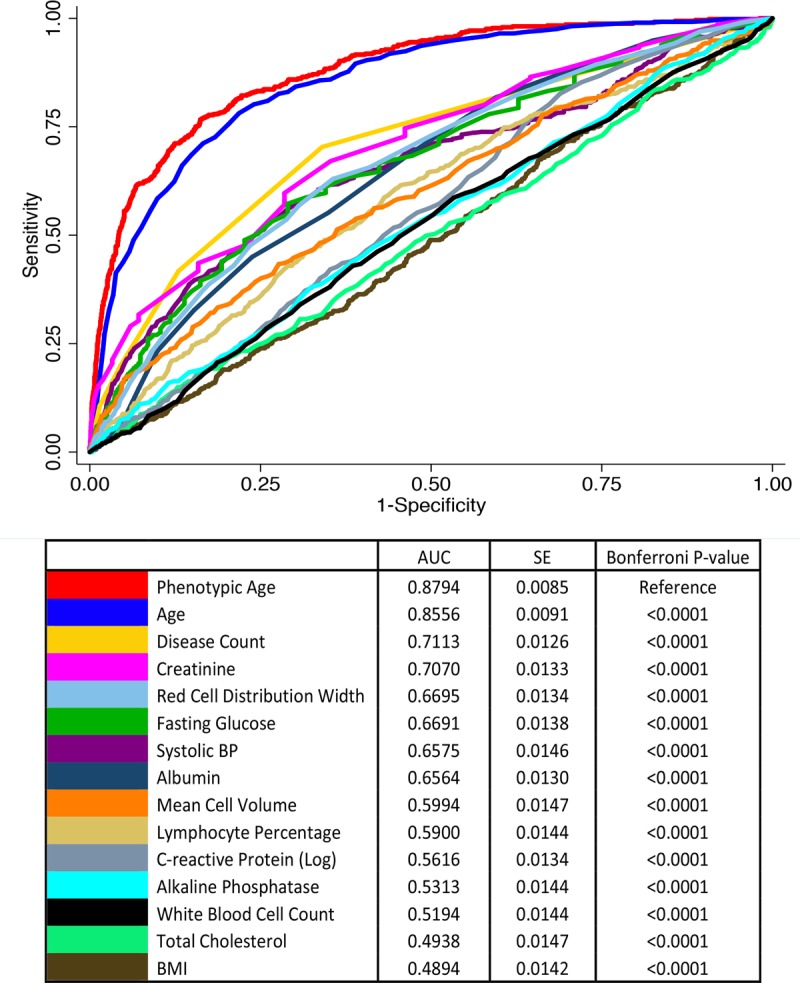
BACKGROUND: A person's rate of aging has important implications for his/her risk of death and disease; thus, quantifying aging using observable characteristics has important applications for clinical, basic, and observational research. Based on routine clinical chemistry biomarkers, we previously developed a novel aging measure, Phenotypic Age, representing the expected age within the population that corresponds to a person's estimated mortality risk. The aim of this study was to assess its applicability for differentiating risk for a variety of health outcomes within diverse subpopulations that include healthy and unhealthy groups, distinct age groups, and persons with various race/ethnic, socioeconomic, and health behavior characteristics. METHODS AND FINDINGS: Phenotypic Age was calculated based on a linear combination of chronological age and 9 multi-system clinical chemistry biomarkers in accordance with our previously established method. We also estimated Phenotypic Age Acceleration (PhenoAgeAccel), which represents Phenotypic Age after accounting for chronological age (i.e., whether a person appears older [positive value] or younger [negative value] than expected, physiologically). All analyses were conducted using NHANES IV (1999-2010, an independent sample from that originally used to develop the measure). Our analytic sample consisted of 11,432 adults aged 20-84 years and 185 oldest-old adults top-coded at age 85 years. We observed a total of 1,012 deaths, ascertained over 12.6 years of follow-up (based on National Death Index data through December 31, 2011). Proportional hazard models and receiver operating characteristic curves were used to evaluate all-cause and cause-specific mortality predictions. Overall, participants with more diseases had older Phenotypic Age. For instance, among young adults, those with 1 disease were 0.2 years older phenotypically than disease-free persons, and those with 2 or 3 diseases were about 0.6 years older phenotypically. After adjusting for chronological age and sex, Phenotypic Age was significantly associated with all-cause mortality and cause-specific mortality (with the exception of cerebrovascular disease mortality). Results for all-cause mortality were robust to stratifications by age, race/ethnicity, education, disease count, and health behaviors. Further, Phenotypic Age was associated with mortality among seemingly healthy participants-defined as those who reported being disease-free and who had normal BMI-as well as among oldest-old adults, even after adjustment for disease prevalence. The main limitation of this study was the lack of longitudinal data on Phenotypic Age and disease incidence. CONCLUSIONS: In a nationally representative US adult population, Phenotypic Age was associated with mortality even after adjusting for chronological age. Overall, this association was robust across different stratifications, particularly by age, disease count, health behaviors, and cause of death. We also observed a strong association between Phenotypic Age and the disease count an individual had. These findings suggest that this new aging measure may serve as a useful tool to facilitate identification of at-risk individuals and evaluation of the efficacy of interventions, and may also facilitate investigation into potential biological mechanisms of aging. Nevertheless, further evaluation in other cohorts is needed.
Overview
The claims and statistics of this paper haven’t been checked yet.
Free: it reads the open-access text and checks the first 5 claims that cite a source we can check. Create a free account to check every claim.
Integrity signals
Registry
Cites
Statistics
Figures
Verification
Claims the paper makes
The claims and statistics of this paper haven’t been checked yet.
Free: it reads the open-access text and checks the first 5 claims that cite a source we can check. Create a free account to check every claim.
Self-check
Percentages, sums and reported differences re-computed from the paper’s own numbers.
The self-check needs the paper’s full text.
Citations
Cites
A Proportional Hazards Model for the Subdistribution of a Competing Risk
Fine, J. P., & Gray, R. J. (1999) · Journal of the American Statistical Association · doi:10.1080/01621459.1999.10474144 · Cited by 14,290 · cited 1×
“Cause-specific mortality risk as a function of Phenotypic Age was assessed via Fine and Gray’s competing risk models [26].”
MethodDNA methylation age of human tissues and cell types
Horvath, S. (2013) · Genome Biology · doi:10.1186/gb-2013-14-10-r115 · Cited by 7,075
Self-citationAn epigenetic biomarker of aging for lifespan and healthspan
Levine, M. E., Lu, A. T., Quach, A., Chen, B. H., Assimes, T. L., Bandinelli, S., Hou, L., Baccarelli, A. A., Stewart, J. D., Li, Y., et al. (2018) · Aging · doi:10.18632/aging.101414 · Cited by 3,675 · cited 3×
“We calculated Phenotypic Age in accordance with the method described previously [12].”
MethodInfluentialSelf-citationFrailty in relation to the accumulation of deficits
Rockwood, K., & Mitnitski, A. (2007) · The Journals of Gerontology Series A: Biological Sciences and Medical Sciences · doi:10.1093/gerona/62.7.722 · Cited by 3,076 · cited 1×
“Many of the measures of aging, such as those based on deficit accumulation [14,27], include measures of morbidity in their construction, and thus it is impossible to disentangle aging and disease, or determine the usefulness of such measures in healthy populations.”
BackgroundAccumulation of Deficits as a Proxy Measure of Aging
Mitnitski, A. B., Mogilner, A. J., & Rockwood, K. (2001) · The Scientific World JOURNAL · doi:10.1100/tsw.2001.58 · Cited by 2,893 · cited 1×
“Many of the measures of aging, such as those based on deficit accumulation [14,27], include measures of morbidity in their construction, and thus it is impossible to disentangle aging and disease, or determine the usefulness of such measures in healthy populations.”
BackgroundGeroscience: Linking Aging to Chronic Disease
Kennedy, B. K., Berger, S. L., Brunet, A., Campisi, J., Cuervo, A. M., Epel, E. S., Franceschi, C., Lithgow, G. J., Morimoto, R. I., Pessin, J. E., et al. (2014) · Cell · doi:10.1016/j.cell.2014.10.039 · Cited by 2,764
National Health and Nutrition Examination Survey
(2010) · Handbook of Disease Burdens and Quality of Life Measures · doi:10.1007/978-0-387-78665-0_6177 · Cited by 2,087
A Proportional Hazards Model for the Subdistribution of a Competing Risk
Fine, J. P., & Gray, R. J. (1999) · Journal of the American Statistical Association · doi:10.2307/2670170 · Cited by 1,375
National Health and Nutrition Examination Survey
(2008) · Encyclopedia of Epidemiology · doi:10.4135/9781412953948.n305 · Cited by 1,342
DNA methylation age of blood predicts all-cause mortality in later life
Marioni, R. E., Shah, S., McRae, A. F., Chen, B. H., Colicino, E., Harris, S. E., Gibson, J., Henders, A. K., Redmond, P., Cox, S. R., et al. (2015) · Genome Biology · doi:10.1186/s13059-015-0584-6 · Cited by 1,261
Self-citation
Cited by
Items 701–777 of 777
Liu, N., Qi, R., Wang, Y., & Zhou, J. (2026) · Archives of Medical Science · doi:10.5114/aoms/222389
Oh, J., Cho, J., Hong, Y.-C., Yoon, H.-J., & Ha, E. (2026) · BMC Cardiovascular Disorders · doi:10.1186/s12872-026-06325-3
“More recently, second-generation BA measures, such as Phenotypic Age, have been developed using all-cause mortality as the training outcome and combine clinical biomarkers with chronological age to estimate biological aging [12].”
Huang, X., Zhang, X., Yu, X., Wang, T., She, Y., Wang, M., Yang, Y., Liu, Y., Feng, L., Hao, X., et al. (2026) · GeroScience · doi:10.1007/s11357-026-02439-w
Pu, X., Bai, B., Yu, J., Zhang, K., Zhou, T., Xie, B., Wang, P., & Shi, D. (2026) · Clinical Epigenetics · doi:10.1186/s13148-026-02219-5
“Clinical biomarker-based measures such as KDM-BA and Pheno-Age capture multisystem physiological dysregulation and have been associated with functional impairment, morbidity, and mortality, whereas shorter LTL has also been associated with an increased risk of mortality [16, 17].”
Wang, T., Wang, T., Wang, J., & Li, J. (2026) · npj Aging · doi:10.1038/s41514-026-00459-6
Feng, J. (2026) · Research Square · doi:10.21203/rs.3.rs-10599297/v1
Li, Y., Liu, B., Sui, S., Li, L., Wang, Q., Fu, X., & He, Y. (2026) · Research Square · doi:10.21203/rs.3.rs-10468463/v1
Proteinuria and PhenoAge acceleration: an association requiring recalculation
Cevher, Ş. K., & Çankaya, E. (2026) · International Urology and Nephrology · doi:10.1007/s11255-026-05323-w
Zhang, Z., Hou, X., & Xu, S. (2026) · International Urology and Nephrology · doi:10.1007/s11255-026-05322-x
Accelerated biological aging predicts poor outcomes in frail ICU patients
Ho, L., Rogers, F. B., Rai, S., Nicola, H., Abdo, W. F., Al-Fares, A. A., Katsounas, A., Larson, N. J., Chu, M. H. M., Wong, M. K. H., et al. (2026) · iScience · doi:10.1016/j.isci.2026.116701
“Together with prior studies linking PhenoAge to long-term health span and survival, 1,2 these results support PhenoAgeAccel as a biologically meaningful marker of vulnerability that modifies both baseline risk and the pace of mortality risk acceleration.”
Molecular Heterogeneity of Aging: Insights from Integrated Plasma ProteomePreprint
Sarygina, E. V., Blinova, V. G., Gordeeva, A. I., Kliuchnikova, A. A., Kozlova, A. S., Tarbeeva, S. N., Abdurakhimov, A., Ilgisonis, E. V., Novikova, S. E., Zgoda, V. G., et al. (2026) · Research Square · doi:10.21203/rs.3.rs-10578768/v1
Li, J., Wang, Y., Liang, Y., Yun, H. E., 荆二勇, Qiang, S. H. E. N., Yu, J., Michael, C., Liang, C., & Kaszynski, R. H. (2026) · medRxiv · doi:10.64898/2026.08.11.26360226
Sun, R., Hang, W., Zhou, L., Chen, J., Zhao, C., Chen, C., & Wang, F. (2026) · International Journal of Drug Discovery and Pharmacology · doi:10.53941/ijddp.2026.100020
“Among the methods widely applied and validated in numerous studies, the Klemera–Doubal Method Biological Age (KDM-BA) and Phenotypic Age (PhenoAge) are most notable, alongside traditional approaches such as multiple linear regression (MLR) and principal component analysis (PCA) [19,20].”
InfluentialSex differences in aging acceleration: higher susceptibility in women, greater preventability in men
Ren, Z., Quan, S., Li, F., & Jia, L. (2026) · npj Aging · doi:10.1038/s41514-026-00485-4
Tuminello, S., Anika, R., Turner, W. M., Joyama, Y., Lazaro, L., & Taioli, E. (2026) · GeroScience · doi:10.1007/s11357-026-02484-5
An aging essential 8: closing the gap between geroscience and the public it serves
Grimolizzi, F. (2026) · Biogerontology · doi:10.1007/s10522-026-10497-y
“…laboratory panel, namely albumin, creatinine, glucose, C-reactive protein, lymphocyte percentage, mean corpuscular volume, red cell distribution width, alkaline phosphatase and white cell count, combined with chronological age using a published equation (Liu et al. 2018; Levine et al. 2018).”
Anika, R., Untalan, M., Taioli, E., & Tuminello, S. (2026) · International Journal of Environmental Research and Public Health · doi:10.3390/ijerph23091126
Fermín‐Martínez, C. A., Garcia-Gonzalez, S. B., Castañeda, E. G. L., Ramirez-Rivera, D. L., Carrillo-Herrera, K. B., Cabrera-Quintana, L. A., López-Teros, M. T., Antonio‐Villa, N. E., Gonçalves, N. G., García‐Peña, C., et al. (2026) · Revista de investigaci�n Cl�nica · doi:10.1016/j.ric.2026.100053
How education gets under the skin: Pathways linking educational advantage to slower biological aging
Lisch, M., & Farina, M. P. (2026) · Social Science & Medicine · doi:10.1016/j.socscimed.2026.119795
ЦИФРОВОЙ ФИЗИОЛОГИЧЕСКИЙ ПРОФИЛЬ ЧЕЛОВЕКА: КОНЦЕПЦИЯ ИНТЕГРАЛЬНОГО ИНДЕКСА ФИЗИОЛОГИЧЕСКОГО ВОЗРАСТА
Ponomareva, G. V., Владимирович, Т. О., Александрович, М. А., Kutin, E. S., & Попова, А. О. (2026) · CyberLeninK (CyberLeninka) · doi:10.24412/2588-0500-2026_10_03_14
Liu, S., Wang, W., Li, C., Lai, Y., Zhou, Z., Han, M., Zhang, Y.-J., Zhang, Y., Tang, K., Sun, H., et al. (2026) · International Journal of Rheumatic Diseases · doi:10.1111/1756-185x.70853
“KDMAge was calculated to measure the deterioration of system integrity, while PhenoAge was computed from the Gompertz proportional hazard model to assess the risk of mortality [16–20].”
Tang, T. H.-C., Chan, P., Kwong, R. T.-S., Chan, H. S.-Y., Yung, S.-K., Lam, K. W., Chu, M.-Y., Wu, T.-C., Lam, W., Leung, W.-S., et al. (2026) · The Journals of Gerontology Series A · doi:10.1093/gerona/glag221
“19 Our study aims to characterize longitudinal changes in PhenoAge and phenotypic age acceleration (PAA) over five years in a predominantly Asian cohort with stable HIV control, starting at least one year after ART initiation and documented plasma HIV suppression.”
A Scalable Biological Clock for Metabolic Disease Prediction from the Phenome India CohortPreprint
Tiwari, P., Garg, M., Pattanayak, S., Sarkar, I., Roy, R., Bhatraju, N. K., Verma, A., Sreeshma Raj, K., Prakash, S., Kumar, V. S., et al. (2026) · medRxiv · doi:10.64898/2026.08.29.26361656
Baousi, A., Dobinda, K., Zhu, J., Yu, X., Muir, K. R., Lophatananon, A., McMillan, B., Clarkson, P., Tang, E. Y. H., & Guo, H. (2026) · medRxiv · doi:10.64898/2026.09.01.26360731
Wang, B., Shen, K., Qian, C., Yi, L., Zhang, Y., Yu, H., Liu, X., Jiang, Y., Zhang, T., & Zhao, G. (2026) · GeroScience · doi:10.1007/s11357-026-02514-2
Wu, Y., Gasparrini, A., Su, B., Talifu, Z., Mukadam, N., Tian, Y., Warren‐Gash, C., & Zheng, X. (2026) · Ecotoxicology and Environmental Safety · doi:10.1016/j.ecoenv.2026.120733
You, X., Xu, W., Sun, Y., Cao, M., Xi, J., Wang, T., Zhang, X., Luan, Y., Zhou, C., & Cao, Y. (2026) · Archives of Toxicology · doi:10.1007/s00204-026-04539-0
Liu, Y., Zhang, M., & Liu, Y. (2026) · Frontiers in Nutrition · doi:10.3389/fnut.2026.1895132
Wang, J., Crimmins, E. M., Kim, J. K., Chang, N., Dey, S., Lee, J., Thyagarajan, B., & Vivek, S. (2026) · GeroScience · doi:10.1007/s11357-026-02505-3
Self-citationZhou, Y., Liu, Q., Zhao, Y., Hou, X., Jiang, L., Zhu, J., Liu, J., Yan, Z., & Liu, X. (2026) · Aging and Health Research · doi:10.1016/j.ahr.2026.100297
Guo, H., Wang, Y., Guan, Y., Yang, P., Zhao, Q., Маслов, Л. Н., Naryzhnaya, N. V., Guan, Y., & Ma, H. (2026) · Biological Trace Element Research · doi:10.1007/s12011-026-05336-7
Accelerated biological ageing is associated with a large drusen burden
Ørskov, M., Cehofski, L. J., Faber, C., Forte, P., Hansen, M. S., Muttuvelu, D. V., Niazi, S., Schou, M. G., Shekho, N., Reiter, G. S., et al. (2026) · Acta Ophthalmologica · doi:10.1111/aos.70237
Yu, L., Xiong, S., Liu, M., Xiao, Z., Hu, J., Yang, W., Wu, Y., He, X., Zhang, Y., Zhang, L., et al. (2026) · Frontiers in Public Health · doi:10.3389/fpubh.2026.1964801
“This algorithm was originally developed by applying elastic-net Gompertz regression to 42 clinical biomarkers to estimate mortality risk in the United States National Health and Nutrition Examination Survey (NHANES) III (36, 37).”
Qian, Y. (2026) · Medicine · doi:10.1097/md.0000000000050734
“Phenotypic age was calculated using the method proposed by Levine et al [16] , integrating 9 biomarkers (albumin, creatinine, glucose, C-reactive protein, lymphocyte percentage, red cell distribution width, mean cell volume, alkaline phosphatase, and white blood cell count) along with chronological…”
Active commuting and biological aging: Cross-sectional evidence from the UK Biobank
Wang, Z., Liu, M.-J., Hua, Z.-Q., Luo, J.-H., Liao, J.-J., Li, Z., & Tao, L.-Y. (2026) · Journal of Transport & Health · doi:10.1016/j.jth.2026.102442
Sun, S., Li, C., Yu, W., Zhang, G., Liu, C., Lin, Y., & Chen, Y. (2026) · Science Progress · doi:10.1177/00368504261490509
“10 13 Although accumulating evidence supports associations between biological aging and multiple chronic conditions, including cardiovascular and metabolic diseases, systematic epidemiological evidence linking PhenoAgeAccel to CD and FI remains limited.”
Yu, J., Zhu, Z., Qi, X., Lu, H., & Wu, B. (2026) · GeroScience · doi:10.1007/s11357-026-02543-x
Wang, Z., Zhong, X., Cai, Y., Wang, J., Lin, B., Liu, L., Li, S., He, H., Yao, D., Yan, C., et al. (2026) · Cardiovascular Diabetology – Endocrinology Reports · doi:10.1186/s40842-026-00331-2
Cao, Y., Wang, Y., Zheng, W., & Zhang, B. (2026) · Research Square · doi:10.21203/rs.3.rs-10668089/v1
Biological Age Modeling Using Electronic Health RecordsPreprint
Edakalavan, S., Morris, A., Methé, B. A., Radder, J., Königshoff, M., & Nouraie, S. M. (2026) · Research Square · doi:10.21203/rs.3.rs-10464023/v1
Liu, Q., Wang, X., Shu, Z., Xia, Y., Zhang, Q., Ahmad, M., Wayne, R., Yang, M., Li, L., & Welsh, P. I. (2026) · Diabetes Obesity and Metabolism · doi:10.1111/dom.71372
Pietzner, A., Rohwer, N., & Weylandt, K. H. (2026) · medRxiv · doi:10.64898/2026.09.21.26363464
Li, Y., Peng, Z., Zhang, J., Cao, H., & Zhang, J. (2026) · iScience · doi:10.1016/j.isci.2026.117035
“Liu et al. 16 validated PhenoAge in the NHANES cohort, demonstrating its robust predictive ability for all-cause mortality and metabolic diseases across diverse populations.”
Ye, Q., Jiang, S., Chen, J., Pan, W., Liu, J., & Zhao, G. (2026) · Nutrition and Cancer · doi:10.1080/01635581.2026.2741965
Clonal hematopoiesis and biological aging: an interaction that increases cancer risk?
Tobin, J., & Vassiliou, G. S. (2026) · JNCI Journal of the National Cancer Institute · doi:10.1093/jnci/djag309
Wen, X., Zhang, H., 范瑞新, Zhuo, L., Liu, J., Wang, Z., Song, J., 孙图成, & Wu, J. (2026) · JTCVS Open · doi:10.1016/j.xjon.2026.102129
Erzetič, K. (2026) · Repository of the University of Primorsk (University of Primorska)
Biological aging acceleration associated with electronic cigarette use in the United States
Ni, Y., Argos, M., & Rule, A. M. (2026) · Environmental Epidemiology · doi:10.1097/ee9.0000000000000536
“19 The absolute value of PhenoAgeAccel reflects the intensity of deviation between biological and chronological age.”
Authors' reply to “Sex and weighting in abbreviated DASI-based perioperative risk prediction”
Wijeysundera, D. N., Xu, K., McIsaac, D. I., Abdellatif, S., Abolfathi, M., Ackland, G. L., Ahmad, T., Azazi, E. A., Ali, M., Alibhai, S. M. H., et al. (2026) · EClinicalMedicine · doi:10.1016/j.eclinm.2026.104254
Allen, G. S. (2026) · Research Square · doi:10.21203/rs.3.rs-9829732/v2
Dietary preference, biological aging, and incident dementia: a prospective cohort study
Sun, M., Huang, F., Sun, N., Ding, H., Shi, F., Wang, S., Yao, J., & He, Q. (2026) · GeroScience · doi:10.1007/s11357-026-02567-3
Cao, T., Wu, L.-J., Yang, X.-H., Fan, N., Ding, J., Gong, M., Feng, X.-M., Li, Y.-H., & Yan, Y. (2026) · Hepatology International · doi:10.1007/s12072-026-11155-8
Personality traits and biological aging: the mediating role of coping behavior
Peng, S., Li, Z., Huang, T., & HaiLun, L. (2026) · Frontiers in Psychology · doi:10.3389/fpsyg.2026.1876764
“PhenoAge acceleration reflects a multisystem physiological profile and captures aging-related risk beyond chronological age (Liu et al., 2018; Li et al., 2020).”
InfluentialWang, Z., Wang, H.-F., Li, H.-R., Chen, L.-F., Zhang, Z., Li, H.-Z., Li, J., Tong, H., & Li, K.-F. (2026) · World Journal of Gastroenterology · doi:10.3748/wjg.123835
Feng, H., 谢锦峰, Liu, K., Wang, R., 刘建永, & Teng, Y. (2026) · Clinical and Applied Thrombosis/Hemostasis · doi:10.1177/10760296261496971
Hu, G., Liu, Y., & Zhang, Y. (2026) · Journal of Alzheimer s Disease · doi:10.1177/13872877261494123
Zhang, Y., Zhang, C., Wang, X., & Zhou, Y. (2026) · Renal Failure · doi:10.1080/0886022x.2026.2738248
“…heterogeneity in physiological aging beyond chronological age and has been associated with morbidity and mortality across adult populations [8,9]. among existing biological age measures, Phenoage and KdMage are blood chemistry-based algorithms that integrate routinely measured biomarkers…”
Patel, K., Connor, A. A., Sanghvi, M., Elaileh, A., Rizk, E., Semaan, S., Dib, Y. E., Todd, J., Moore, L. W., Succar, L., et al. (2026) · Frontiers in Transplantation · doi:10.3389/frtra.2026.1964045
Bello‐Chavolla, O. Y., & Fermín‐Martínez, C. A. (2026) · Advances in biogerontology · doi:10.1016/bs.abger.2026.08.002
Sun, Y., Qu, Z., Ren, K., & Cui, Z. L. (2026) · arXiv (Cornell University) · doi:10.48550/arxiv.2610.20868
“BA measures have been associated with mortality, frailty, functional decline, and multiple age-related diseases, highlighting their potential value as biomarkers of healthy aging (Levine et al., 2018; Liu et al., 2018).”
Todorović, N. (2026) · Clinical Nutrition · doi:10.1016/j.clnu.2026.106823
Blood-based PhenoAge may reflect disease burden rather than biological aging in cancerPreprint
Simhal, A. K., Lee, J., Tan, K. S., McCormick, P. J., Fischer, G. W., Scarpa, J. R., Sapiro, G., & Mincer, J. S. (2026) · medRxiv · doi:10.64898/2026.10.15.26365671
Qi, X., Liu, S., Zheng, Q., Li, B., Dai, P., & Su, Y. (2026) · Research Square · doi:10.21203/rs.3.rs-10712456/v1
Allen, G. S. (2026) · Research Square · doi:10.21203/rs.3.rs-9829732/v3
Павловна, В. Т., Олегович, К. Д., Алексеевич, Г. И., & Анатольевна, Г. Н. (n.d.) · CyberLeninK (CyberLeninka)
Tang, R., Yu, J., & Ji, X. (2026) · Frontiers in Endocrinology · doi:10.3389/fendo.2026.1970011
Du, M., Zhang, W., Xia, L., Liu, Y., Song, Y., Li, J., Zhan, Y., Zhang, Z., Chen, Y., Li, J., et al. (2026) · Science Progress · doi:10.1177/00368504261502626
Beyond age prediction: a task-oriented framework for evaluating molecular aging clocks
Simayijiang, H., Ye, P., 张流利, Wu, J., Li, Z., & Long, Y. (2026) · Biogerontology · doi:10.1007/s10522-026-10535-9
“This illustrates a key point: biological aging models may become more meaningful when they are trained on clinically relevant outcomes rather than chronological age alone (Levine et al. 2018; Liu et al. 2018).”
Huang, X., Yang, Y., Huang, F., Lin, W., Li, Q., Yin, Y., & Zhu, P. (2026) · Aging Cell · doi:10.1111/acel.70795
Organelle Aging Predicts Human DiseasePreprint
Ying, K., Roh, K. K., Chen, K. L., Bot, V. A., Ding, D. Y., Farinas, A., Ma, C., Oh, H. S., Isakova, A., & Wyss‐Coray, T. (2026) · bioRxiv (Cold Spring Harbor Laboratory) · doi:10.64898/2026.11.01.763400
王, 震. (2026) · Advances in Clinical Medicine · doi:10.12677/acm.2026.16113641
Biological aging measures for all-cause mortality prediction in two population-based cohortsPreprint
Mostafaei, S., Lindh, J., Qin, C., Mak, J. K. L., & Hägg, S. (2026) · Research Square · doi:10.21203/rs.3.rs-11252530/v1
Elovainio, M. J., Pulkki-Råbäck, L., Komulainen, K., Pahkala, K., Rovio, S., Lehtimäki, T. J., Viikari, J., Raitakari, O. T., & Henders, A. K. (2026) · BMJ Public Health · doi:10.1136/bmjph-2025-004548
Shafi, F., Kanwal, I., Akram, Z., Tassadaq, A., Tassadaq, A., & Kashif, M. (2026) · Pakistan Journal of Medical and Health Sciences · doi:10.53350/pjmhs02026207.6
Zhu, H., Zhenzhu, Y., & Hu, Q. (2026) · Frontiers in Nutrition · doi:10.3389/fnut.2026.1999036
Wu, J., Kang, Z., Wu, D., & 王大庆 (2026) · Diabetes Research and Clinical Practice · doi:10.1016/j.diabres.2026.113647
Metadata
- Authors
- Liu, Z., Kuo, P.-L., Horvath, S., Crimmins, E., Ferrucci, L., & Levine, M.
- Affiliations
- Yale University (US)
- National Institutes of Health (US)
- University of California, Los Angeles (US)
- University of Southern California (US)
- Corresponding author
- Liu, Zuyun
- Kuo, Pei-Lun
- Horvath, Steve
- Crimmins, Eileen
- Ferrucci, Luigi
- Levine, Morgan
- Venue
- PLOS Medicine
- Publisher
- Public Library of Science (PLoS)
- Published
- 2018-12-31
- Volume
- 15
- Issue
- 12
- Pages
- e1002718
- ISSN
- 1549-1277 (ISSN-L)
- 1549-1676
- PMC
- PMC6312200
- OpenAlex
- W2908077673
- Cited by
- 754
- References
- 35
- Citations by year
- 2026: 178 · 2025: 206 · 2024: 161 · 2023: 75 · 2022: 48 · 2021: 43 · 2020: 23 · 2019: 18 · 2018: 2
- FWCI
- 11.90
- Type
- journal article
- Language
- en
- Update notices
- correction (2019-02-25)
- Open access
- gold
- doi.org
- Licence
- public-domain
- creativecommons.org/publicdomain/zero/1.0/ (vor)
- Locations
- PLoS Medicine (publishedVersion, public-domain)
- bioRxiv (Cold Spring Harbor Laboratory) (acceptedVersion, cc-by-nc)
- Europe PMC (PubMed Central) (publishedVersion, public-domain)
- PubMed Central (publishedVersion, public-domain)
- PubMed Central (publishedVersion, cc-by)
- PubMed (publishedVersion)
- RePEc: Research Papers in Economics (submittedVersion)
- DOAJ (DOAJ: Directory of Open Access Journals) (submittedVersion, cc-by-sa)
- eScholarship (California Digital Library) (submittedVersion)
- eScholarship (California Digital Library) (submittedVersion, public-domain)
- Figshare (submittedVersion, cc-by)
- Funders
- National Institute on Aging (4R00AG052604-02)
- Topics
- Health Sciences › Medicine › Geriatrics and Gerontology › Frailty in Older Adults
- Life Sciences › Biochemistry, Genetics and Molecular Biology › Aging › Genetics, Aging, and Longevity in Model Organisms
- Social Sciences › Psychology › Developmental and Educational Psychology › Aging and Gerontology Research
- Keywords
- phenotypic age, phenotypic age acceleration, biological aging, mortality prediction, morbidity, all-cause mortality, cause-specific mortality, oldest old, healthy young adults, racial and ethnic differences, socioeconomic status, health behavior, disease burden, mortality risk stratification
- MeSH terms
- Adult, Aged, Aged, 80 and over, Aging, Female, Follow-Up Studies, Humans, Male, Middle Aged, Morbidity, Mortality, Nutrition Surveys, Population Surveillance, Risk Factors, Cohort Studies, Young Adult
About these checks
Registry, retraction, Cites and statistics results are computed, not judged, with one exception: a printed reference that no index lists is read once by a model before it counts as a citation error. Claims are extracted by a model and kept only when their quote appears verbatim in the text; each cited source is then checked, with a model’s help, for whether it says what the claim relies on. Those verdicts can be wrong — read the claim’s quote and the cited source before relying on one.
Statistics and arithmetic are recomputed, not judged.
Confidence bands are shown only for fields calibrated on our annotated test set. None is calibrated yet, so no band is shown.
What counts as a claim ›How we measure confidence ›How we check this ›
Are you an author, or do you see a problem with this page? Request a review
Data sources
Bibliographic data: Semantic Scholar, OpenAlex, Crossref.
Contains information from the Semantic Scholar Academic Graph Datasets, made available under the ODC Attribution License (ODC-BY 1.0).
Semantic Scholar’s data is described in: Kinney, R., et al. (2023). The Semantic Scholar Open Data Platform. arXiv:2301.10140.
