

A new aging measure captures morbidity and mortality risk across diverse subpopulations from NHANES IV: A cohort study
Open accessPublished version of a preprint
The DOI matches its Crossref record; 35 of the 35 references it cites were found in a registry or an index.
Abstract
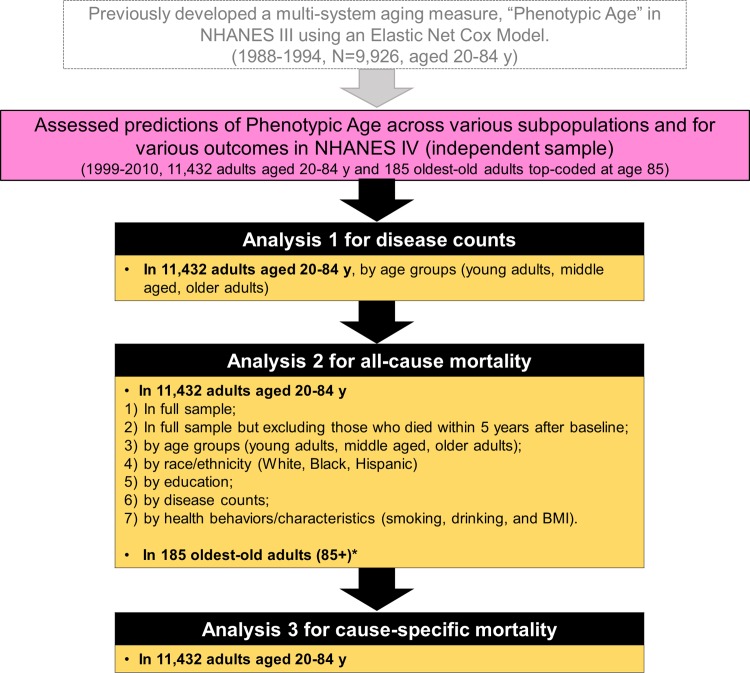
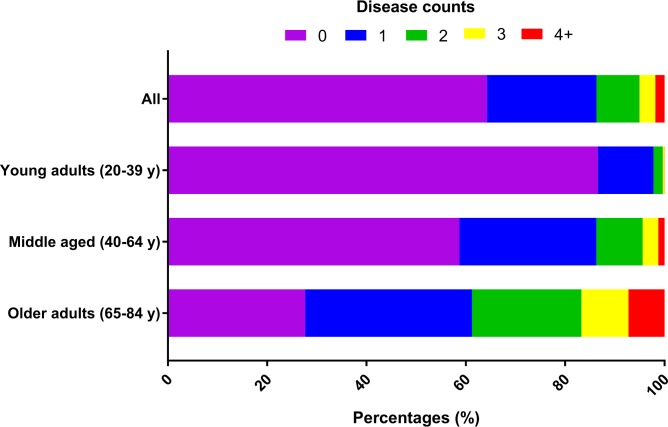
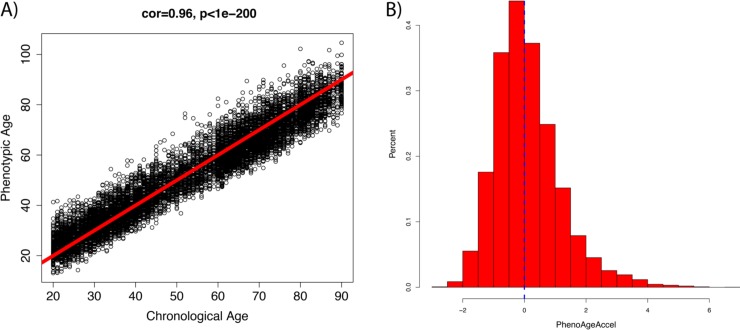
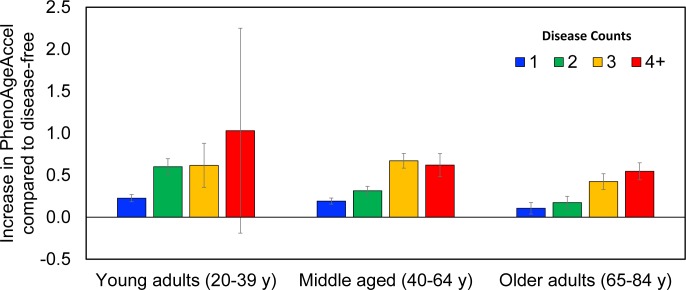
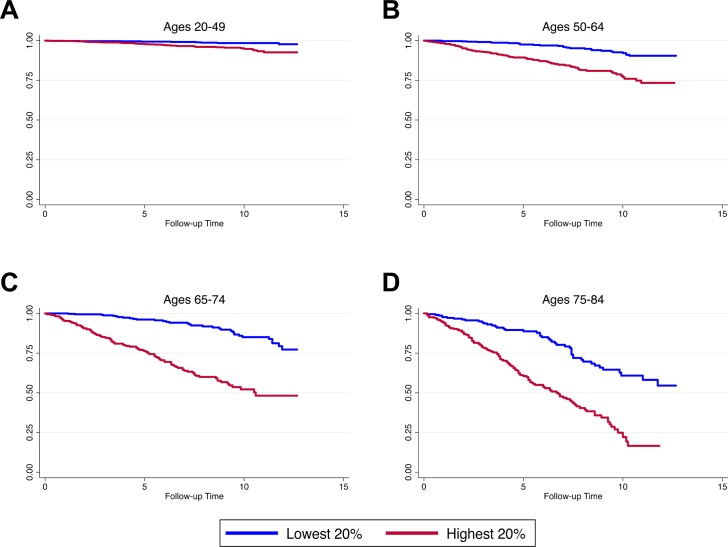
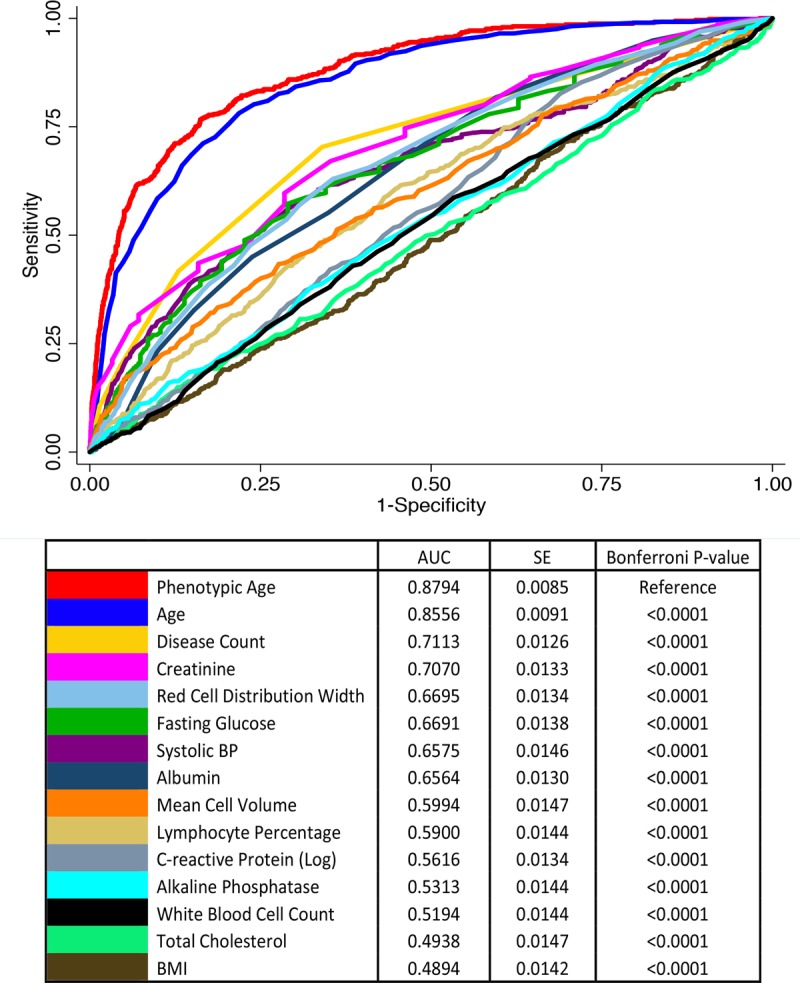
BACKGROUND: A person's rate of aging has important implications for his/her risk of death and disease; thus, quantifying aging using observable characteristics has important applications for clinical, basic, and observational research. Based on routine clinical chemistry biomarkers, we previously developed a novel aging measure, Phenotypic Age, representing the expected age within the population that corresponds to a person's estimated mortality risk. The aim of this study was to assess its applicability for differentiating risk for a variety of health outcomes within diverse subpopulations that include healthy and unhealthy groups, distinct age groups, and persons with various race/ethnic, socioeconomic, and health behavior characteristics. METHODS AND FINDINGS: Phenotypic Age was calculated based on a linear combination of chronological age and 9 multi-system clinical chemistry biomarkers in accordance with our previously established method. We also estimated Phenotypic Age Acceleration (PhenoAgeAccel), which represents Phenotypic Age after accounting for chronological age (i.e., whether a person appears older [positive value] or younger [negative value] than expected, physiologically). All analyses were conducted using NHANES IV (1999-2010, an independent sample from that originally used to develop the measure). Our analytic sample consisted of 11,432 adults aged 20-84 years and 185 oldest-old adults top-coded at age 85 years. We observed a total of 1,012 deaths, ascertained over 12.6 years of follow-up (based on National Death Index data through December 31, 2011). Proportional hazard models and receiver operating characteristic curves were used to evaluate all-cause and cause-specific mortality predictions. Overall, participants with more diseases had older Phenotypic Age. For instance, among young adults, those with 1 disease were 0.2 years older phenotypically than disease-free persons, and those with 2 or 3 diseases were about 0.6 years older phenotypically. After adjusting for chronological age and sex, Phenotypic Age was significantly associated with all-cause mortality and cause-specific mortality (with the exception of cerebrovascular disease mortality). Results for all-cause mortality were robust to stratifications by age, race/ethnicity, education, disease count, and health behaviors. Further, Phenotypic Age was associated with mortality among seemingly healthy participants-defined as those who reported being disease-free and who had normal BMI-as well as among oldest-old adults, even after adjustment for disease prevalence. The main limitation of this study was the lack of longitudinal data on Phenotypic Age and disease incidence. CONCLUSIONS: In a nationally representative US adult population, Phenotypic Age was associated with mortality even after adjusting for chronological age. Overall, this association was robust across different stratifications, particularly by age, disease count, health behaviors, and cause of death. We also observed a strong association between Phenotypic Age and the disease count an individual had. These findings suggest that this new aging measure may serve as a useful tool to facilitate identification of at-risk individuals and evaluation of the efficacy of interventions, and may also facilitate investigation into potential biological mechanisms of aging. Nevertheless, further evaluation in other cohorts is needed.
Overview
The claims and statistics of this paper haven’t been checked yet.
Free: it reads the open-access text and checks the first 5 claims that cite a source we can check. Create a free account to check every claim.
Integrity signals
Registry
Cites
Statistics
Figures
Verification
Claims the paper makes
The claims and statistics of this paper haven’t been checked yet.
Free: it reads the open-access text and checks the first 5 claims that cite a source we can check. Create a free account to check every claim.
Self-check
Percentages, sums and reported differences re-computed from the paper’s own numbers.
The self-check needs the paper’s full text.
Citations
Cites
A Proportional Hazards Model for the Subdistribution of a Competing Risk
Fine, J. P., & Gray, R. J. (1999) · Journal of the American Statistical Association · doi:10.1080/01621459.1999.10474144 · Cited by 14,290 · cited 1×
“Cause-specific mortality risk as a function of Phenotypic Age was assessed via Fine and Gray’s competing risk models [26].”
MethodDNA methylation age of human tissues and cell types
Horvath, S. (2013) · Genome Biology · doi:10.1186/gb-2013-14-10-r115 · Cited by 7,075
Self-citationAn epigenetic biomarker of aging for lifespan and healthspan
Levine, M. E., Lu, A. T., Quach, A., Chen, B. H., Assimes, T. L., Bandinelli, S., Hou, L., Baccarelli, A. A., Stewart, J. D., Li, Y., et al. (2018) · Aging · doi:10.18632/aging.101414 · Cited by 3,675 · cited 3×
“We calculated Phenotypic Age in accordance with the method described previously [12].”
MethodInfluentialSelf-citationFrailty in relation to the accumulation of deficits
Rockwood, K., & Mitnitski, A. (2007) · The Journals of Gerontology Series A: Biological Sciences and Medical Sciences · doi:10.1093/gerona/62.7.722 · Cited by 3,076 · cited 1×
“Many of the measures of aging, such as those based on deficit accumulation [14,27], include measures of morbidity in their construction, and thus it is impossible to disentangle aging and disease, or determine the usefulness of such measures in healthy populations.”
BackgroundAccumulation of Deficits as a Proxy Measure of Aging
Mitnitski, A. B., Mogilner, A. J., & Rockwood, K. (2001) · The Scientific World JOURNAL · doi:10.1100/tsw.2001.58 · Cited by 2,893 · cited 1×
“Many of the measures of aging, such as those based on deficit accumulation [14,27], include measures of morbidity in their construction, and thus it is impossible to disentangle aging and disease, or determine the usefulness of such measures in healthy populations.”
BackgroundGeroscience: Linking Aging to Chronic Disease
Kennedy, B. K., Berger, S. L., Brunet, A., Campisi, J., Cuervo, A. M., Epel, E. S., Franceschi, C., Lithgow, G. J., Morimoto, R. I., Pessin, J. E., et al. (2014) · Cell · doi:10.1016/j.cell.2014.10.039 · Cited by 2,764
National Health and Nutrition Examination Survey
(2010) · Handbook of Disease Burdens and Quality of Life Measures · doi:10.1007/978-0-387-78665-0_6177 · Cited by 2,087
A Proportional Hazards Model for the Subdistribution of a Competing Risk
Fine, J. P., & Gray, R. J. (1999) · Journal of the American Statistical Association · doi:10.2307/2670170 · Cited by 1,375
National Health and Nutrition Examination Survey
(2008) · Encyclopedia of Epidemiology · doi:10.4135/9781412953948.n305 · Cited by 1,342
DNA methylation age of blood predicts all-cause mortality in later life
Marioni, R. E., Shah, S., McRae, A. F., Chen, B. H., Colicino, E., Harris, S. E., Gibson, J., Henders, A. K., Redmond, P., Cox, S. R., et al. (2015) · Genome Biology · doi:10.1186/s13059-015-0584-6 · Cited by 1,261
Self-citation
Cited by
Items 501–600 of 777
VerseAge: A phenotypic age predictor based on a shallow random network architecture
Warner, B., Garcia, E. F., Ratner, E. R., Douglas, C., Datta, A., & Lendasse, A. (2025) · IEEE International Conference on Future Machine Learning and Data Science (FMLDS) · doi:10.1109/fmlds67896.2025.00097 · Cited by 1
“Alternatively, phenotypic clocks trained on routinely collected blood and urine chemistry, and physiological measurements have shown to be robust measurements of aging and mortality [10-17].”
Wang, Y., Zhu, H., Yuan, C., Liu, J., Wang, X., & 段宇 (2026) · HORMONES · doi:10.1007/s42000-026-00773-4 · Cited by 1
Associations of eating duration and shift work with accelerated biological aging among U.S. workers
Ren, X., Li, J., & Chen, L. (2026) · The journal of nutrition health & aging · doi:10.1016/j.jnha.2026.100831 · Cited by 1
“Biological aging, accumulation of damage with age at the molecular level, can powerfully predict age-related morbidity and mortality [3], and it is modifiable by lifestyle factors [4,5].”
Zhou, H., Yang, D., Wang, W., & Fan, C. (2026) · Clinical and Experimental Hypertension · doi:10.1080/10641963.2026.2652127 · Cited by 1
Wang, Z., Liao, J., Fan, D., Pei, M., Li, Z., Dai, Q., Wang, H., Li, N., & Tao, L. (2026) · GeroScience · doi:10.1007/s11357-026-02213-y · Cited by 1
Su, H., & Liu, X. (2026) · American Heart Journal Plus Cardiology Research and Practice · doi:10.1016/j.ahjo.2026.100785 · Cited by 1
“It combines markers related to inflammation, metabolism, immune function, and organ health to assess the biological aging process [5].”
Mai, W., Zhong, G., He, Z., Liu, T., Mao, L., & Yang, J. (2026) · Maturitas · doi:10.1016/j.maturitas.2026.108952 · Cited by 3
Fast food, fast aging? A cross-sectional study in the UK
Li, G., Cui, Y., Huang, W., Sichen, L., Wang, X., & Li, N. (2026) · BMC Public Health · doi:10.1186/s12889-026-27534-7 · Cited by 1
“PhenoAge incorporates inflammatory and metabolic biomarkers to estimate mortality risk, whereas KDM reflects deviation from physiological aging trajectories [29, 30].”
Short‐Term Dietary Intervention Alters Physiological Profiles Relevant to Ageing
Andrews, C. J., Ribeiro, R. V., Gosby, A. K., Couteur, D. G. L., Raubenheimer, D., Tan, J., Simpson, S. J., & Senior, A. M. (2026) · Aging Cell · doi:10.1111/acel.70507 · Cited by 1
Lv, Z., Li, K., Liu, C., Liu, P., Kou, Z., Zhang, M., & Gao, D. (2026) · The Journals of Gerontology Series A · doi:10.1093/gerona/glag098 · Cited by 1
Wang, R., Chen, Y., Yin, X., Wang, X., Zan, J., & Zhang, Y. (2026) · Heart & Lung · doi:10.1016/j.hrtlng.2026.102824 · Cited by 1
Fujii, R., Tsuboi, Y., Cárdenas, A., Okuzono, S. S., Valeri, L., Yamada, H., Yamazaki, M., Okumiyama, H., Murakami, K., Umematsu, R., et al. (2026) · Environmental Research · doi:10.1016/j.envres.2026.124600 · Cited by 1
Wu, Y., Xiang, H., Huang, Y. Q., Zhang, Y., Ye, Z., Zhang, Y., Yang, S., Gan, X., Zhang, Y., Chen, D. W., et al. (2026) · The Journals of Gerontology Series A · doi:10.1093/gerona/glag120 · Cited by 1
Predicting biological age and clinical biomarkers from DNA methylation profiles of cheek mucosa
Shoji, T., Tomo, Y., & Nakaki, R. (2026) · Epigenetics Communications · doi:10.64898/2026.05.12.724485 · Cited by 1
Yuan, G., Liu, Y., Qi, J., Lin, H., Jiang, Y., Wang, X., Yan, Y., Wang, T., Zhang, S., & Zeng, P. (2026) · Geriatrics and gerontology international/Geriatrics & gerontology international · doi:10.1111/ggi.70557 · Cited by 1
“Recently developed biological aging measures, such as Phenotypic Age (PhenoAge) [11] and the Klemera-Doubal method biological age (KDM-BA) [12], integrate multiple clinical biomarkers and provide more accurate predictions of disease risk, mortality, and functional decline [13, 14].”
InfluentialCheng, H., Lin, C., Chen, S., Lin, W., & Lu, F. (2026) · Respiratory Medicine · doi:10.1016/j.rmed.2026.108931 · Cited by 1
Yang, X., Li, S., Xue, Q., Yan, P., Li, Q., Gong, Y., Fan, X., Zhu, W., Wu, S. L., Zhang, S., et al. (2026) · Frontiers in Endocrinology · doi:10.3389/fendo.2026.1853319 · Cited by 1
Saxena, S., Singhal, S., Gurjar, M., Kumar, K., & Mudgal, S. K. (2026) · Medicina Intensiva (English Edition) · doi:10.1016/j.medine.2026.502565 · Cited by 1
Li, J., Ma, H., & Wang, G. (2026) · CNS Neuroscience & Therapeutics · doi:10.1002/cns.71059 · Cited by 1
Epidemiology, Genetics and Epigenetics of Biological Aging: One or More Aging Systems?
Gialluisi, A., Izzi, B., de Gaetano, G., & Iacoviello, L. (2023) · Healthy ageing and longevity · doi:10.1007/978-3-031-35176-1_6 · Cited by 1
The AGE Presents Introduction to Geroscience video lecture series
Bitto, A., Lee, M. B., Hill, C. M., Korstanje, R., & Kaeberlein, M. R. (2021) · GeroScience · doi:10.1007/s11357-021-00403-4 · Cited by 1
Pala, D., Xie, Y., Xu, J., Zhang, Y., & Shen, L. (2023) · IEEE International Conference on Bioinformatics and Biomedicine (BIBM) · doi:10.1109/bibm58861.2023.10386026 · Cited by 1
“Phenotypic Age was calculated for each individual with the following method defined by Liu et al. [8] ( The outcome variable of our study, i.e. the difference between phenotypic age and chronological age, was calculated simply by subtracting chronological age from the score calculated with this…”
MethodÉtain, B., Cynthia Marie-claire, A., Spano, L., Bellivier, F., Leboyer, M., Gard, S., Antoine Lefrere, A., Belzeaux-R, R., Courtet, P., Dubertret, C., et al. (2024) · Bipolar Disorders · doi:10.1111/bdi.13480 · Cited by 1
“15,16 In a study including older individuals, biological age was associated with physician-observed morbidity and subjective health, over and above the effects of chronological age, as well as alternative biomarkers including TL or EpiAge.”
Luo, X., Chen, M., & Xu, J. (2024) · Frontiers in Medicine · doi:10.3389/fmed.2024.1486807 · Cited by 2
“Previous studies have shown that KDM biological age (BA) and phenotypic age (PA) more accurately predict an individual’s aging level through algorithmic assessments (16).”
Li, Q. (2024) · European journal of medical research · doi:10.1186/s40001-024-02174-y · Cited by 1
Li, X., Wang, J., Zhang, M., Li, Y., Li, X., Zhang, J., Zhang, L., Zhang, Y., & Qiu, Z. (2024) · Heliyon · doi:10.1016/j.heliyon.2024.e41506 · Cited by 1
Medición de la edad biológica con biomarcadores: una revisión de alcance
Espíndola-Fernández, D. A., Posada-Cano, A., Aristizábal-Ocampo, D., & Gallo‐Villegas, J. (2024) · Medicina · doi:10.56050/01205498.2339 · Cited by 1
Xia, T., Xing, G., Shan, G., & Xing, S. (2025) · Scientific Reports · doi:10.1038/s41598-025-10436-w · Cited by 1
Masci, P. G., Andreozzi, G., Anton, E. P., Abdollahi, A., Mospan, R., Ruijsink, B., Cecelja, M., Chowienczyk, P., Mohamed, A. T., Young, A. A., et al. (2025) · European Heart Journal - Cardiovascular Imaging · doi:10.1093/ehjci/jeaf337 · Cited by 2
Body Clock: Matching Personalized Multimorbidity and Fast Aging Using Information EntropyPreprint
Salimi, S., Vehtari, A., Salive, M. E., & Ferrucci, L. (2021) · medRxiv · doi:10.1101/2021.03.29.21254372 · Cited by 1
Self-citationValerievich, D. R., Lelekova, V. A., Sergeevich, M. V., & Иванович, Т. О. (2021) · Research Square · doi:10.21203/rs.3.rs-820273/v1 · Cited by 1
Bian, L., Ma, Z., Fu, X., Chen, J., Wang, T., Yan, C., Dai, J., Ma, H., Hu, Z., Shen, H., et al. (2024) · eLife · doi:10.7554/elife.91101.1 · Cited by 1
Ratio of Glucose to Albumin Level, Risks of Incident Diabetes, Cardiovascular Disease and MortalityPreprint
Meng, H., Liu, X., Huang, Y., Li, X., Wang, S., Wu, J., Li, Y., Hu, Z., Jiang, S., & Zhang, H. (2024) · SSRN Electronic Journal · doi:10.2139/ssrn.4805808 · Cited by 1
Behavioural Interventions to Improve Home-Based Office-Workers’ HealthPreprint
Bartmann, N., Cloughesy, J. N., Probst, B. M., Romagnoli, G., & Woerner, A. (2021) · SocArXiv (OSF Preprints) · doi:10.31235/osf.io/nvp8b · Cited by 1
Longitudinal dynamics of organ-specific proteomic aging clocks over a decade of midlifePreprint
Neirynck, R. E., Chirinos, J. A., Damme, M. V., Coussement, L., Segers, P., Buyzere, M. D., Rietzschel, E. R., & Meyer, T. D. (2026) · bioRxiv (Cold Spring Harbor Laboratory) · doi:10.64898/2026.02.17.706320 · Cited by 1
“The pace of this decline varies between individuals 2 and even between organs within the same person 3,4 .”
Biological aging markers and polygenic risk scores for mortality prediction: a multicohort studyPreprint
Mostafaei, S., Lindh, J., Qin, C., Mak, J. K. L., & Hägg, S. (2026) · Research Square · doi:10.21203/rs.3.rs-9600666/v1 · Cited by 1
Does Real Age Feedback Really Motivate Us to Change our Lifestyle? Results from an Online Experiment
Bartmann, N., Rayburn-Reeves, R. M., Lindemans, J. W., & Dan Ariely, C. (2022) · Health Communication · doi:10.1080/10410236.2022.2030078
“In fact, engaging in a healthy lifestyle can extend life expectancy by up to 14 years (Liu et al., 2018), yet most people find healthy living difficult to implement.”
BackgroundRadenković, D., Zhavoronkov, A. A., & Bischof, E. Y. (2022) · Springer eBooks · doi:10.1007/978-3-030-64573-1_248
Душкин, Р., Lelekova, V. A., Максимов, В., Золман, О., & Иванович, Т. О. (2021) · doi:10.24108/preprints-3112261
Pyrkov, T. V., Avchaciov, K., Tarkhov, A. E., Men’shikov, L. I., Gudkov, A. V., & Fedichev, P. O. (2020) · Research Square · doi:10.21203/rs.3.rs-90381/v1
Translational research in the fastest-growing population: older adults
Justice, J. N., High, K. P., & Kritchevsky, S. B. (2021) · Elsevier eBooks · doi:10.1016/b978-0-12-820493-1.00032-5
Sun, M., Ma, Z., Zhang, Y., Han, M., Jia, W., Hu, D., Gong, X., Xia, J., Wu, C., & Ma, Y. (2023) · Research Square · doi:10.21203/rs.3.rs-3211652/v1
Chen, L., Zhao, Y., Chen, H., Tan, T., Yao, P., & Tang, Y. (2021) · Research Square · doi:10.21203/rs.3.rs-961620/v1
Лев, И. В., Агарков, Н. М., & Kopylov, A. E. (2023) · Бюллетень Восточно-Сибирского научного центра Сибирского отделения Российской академии медицинских наук · doi:10.29413/abs.2023-8.4.19
Cancer epidemiological database linkage study of China: Design, methods, and quality evaluation
Zang, Z., Sun, K., Zhang, M., Zheng, R., Zhao, Y., Zhang, S., Zhang, X., Wang, S., Wang, X., Chang, S., et al. (2024) · Chinese Medical Journal · doi:10.1097/cm9.0000000000003067
Chang, H., & Zhang, F. (2024) · iDEA - Drexel University Institutional Repository · doi:10.17918/00001911
Агарков, Н. М., Фабрикантов, О. Л., & Лев, И. В. (2024) · Ophthalmology in Russia · doi:10.18008/1816-5095-2024-2-348-353
Na, L., Li, C., Li, M., Wang, Y., Li, B., Lian, Y., Fu, J., Li, X., & Zhou, J. (2024) · medRxiv · doi:10.1101/2024.07.11.24310308
“Recently, aging measures based on clinically observable data, such as PAA, have been shown to strongly predict susceptibility to various metabolic diseases 18 .”
BackgroundAssociation between biological aging and Asthma-COPD overlap based on Nhanes 2005-2018Preprint
Sun, T., Yang, S., Li, S., Li, H., Yu, J., & Wang, J. (2024) · Research Square · doi:10.21203/rs.3.rs-4598620/v1
Monoterpenes in Your Beverage: A Flavoring Catalyst for Faster Aging?Preprint
Zhao, A., Li, Z., Gao, X., & Wu, J. (2024) · Research Square · doi:10.21203/rs.3.rs-5035701/v1
Genetic and dietary influences on life span
Gu, Y., Lee, J. H., & Mayeux, R. P. (2024) · Elsevier eBooks · doi:10.1016/b978-0-443-19176-3.00059-5
Jin, Y., Li, S., Feng, S., Huang, L., Qu, S., Cheng, X., Wang, R., Liu, S., Mohamed, Z. A., & Yao, Y. (2024) · Research Square · doi:10.21203/rs.3.rs-5240208/v1
The uncertain death. Estimating mortality structure by random sampling
Moser, D., Pichler, S., Santos, A. L., Klimscha, F., & Fuchs, K. (2024) · International Journal of Osteoarchaeology · doi:10.1002/oa.3363 · Cited by 1
Hao, M., Zhang, H., Wu, J., Li, X., Huang, Y., Wang, M., Wang, S., Wang, J., Chen, J., Bao, Z. J., et al. (2024) · Qeios · doi:10.32388/hqlgwq · Cited by 1
Zhou, Y., Cai, Y., Zheng, P., Chen, X., Mu, Z., Xu, C., & Mao, S. (2024) · Research Square · doi:10.21203/rs.3.rs-5535673/v1
Hao, M., Zhang, H., Wu, J., Li, X., Huang, Y., Wang, M., Wang, S., Wang, J., Chen, J., Bao, Z., et al. (2024) · SSRN Electronic Journal · doi:10.2139/ssrn.5048701
Yogurt consumption and risk of accelerated aging: A population-based study from the NHANES 2003–2006
Yue, X., Liu, H., Guo, W., Gao, Y., & Shi, S. (2024) · Frontiers in Nutrition · doi:10.3389/fnut.2024.1482980
Accurate prediction of postoperative complications in older patients: a long way to go
Ding, Z., Liao, Q., & Tang, Y. (2025) · Anaesthesia · doi:10.1111/anae.16540
Chen, H. H., Li, L., Zhang, H., Zhang, L., Long, Y., Feng, J., Ma, Y., Wu, Y., Meng, M., Zeng, R., et al. (2025) · Research Square · doi:10.21203/rs.3.rs-5705746/v1
Masci, P. G., Andreozzi, G., Anton, E. P., Abdollahi, A., Mospan, R., Ruijsink, B., Cecelja, M., Chowienczyk, P., Mohamed, A., Young, A. A., et al. (2025) · SSRN Electronic Journal · doi:10.2139/ssrn.5122488
Ding, S., Jia, Q., Xu, S., Xie, Q., He, Y., Zhang, L., Li, H., Zha, X., Qiu, Y., Cai, K., et al. (2025) · Research Square · doi:10.21203/rs.3.rs-6175507/v1 · Cited by 1
The regulatory effect of blood group on ferritin levels in aging: a retrospective study
Xiaolin, N., Yao, F., & Pan, M. (2025) · PeerJ · doi:10.7717/peerj.19281
“Rapid population ageing has emerged as a significant public health challenge in China and globally, as the deterioration of tissues and organs associated with ageing is a primary contributor to many chronic diseases ( Liu et al., 2018 ).”
Translational Geroscience: A life course perspective
Belsky, D. W., Wilson, D. M., & Ferrucci, L. (2025) · Oxford University Press eBooks · doi:10.1093/oso/9780198895961.003.0014
Self-citationLiu, D.-Y., Yu, X., Huang, R., Tian, B.-H., Yuan, Q., & Zhang, H. (2025) · Computational and Structural Biotechnology Reports · doi:10.1016/j.csbr.2025.100045
Chen, G., Zhou, S., Xun, Y., Fong, T. L., Tang, G., Wang, J., Li, H., Yin, X., Gao, J., Zhu, G., et al. (2025) · PLoS ONE · doi:10.1371/journal.pone.0323264 · Cited by 1
“Biological ageing was calculated for both PhenoAge [8] and ENABL Age [9] for all participants surveyed in NHANES.”
Liu, C., He, L. N., Xiao, Y., Zhao, H., Yang, Z., Wei, H. Y., Chen, H., Liu, T., Zhang, K., & Luo, B. (2025) · Journal of the American Medical Directors Association · doi:10.1016/j.jamda.2025.105709
Xiao, W., Li, W., Ruan, Z., Sun, B., Yang, Y., Wang, J., Wang, Y., & Lu, W. (2025) · European Journal of Nutrition · doi:10.1007/s00394-025-03642-9
Yan, X., Le, X., & Wang, S. (2025) · medRxiv · doi:10.1101/2025.06.16.25329679
“Researchers have also developed several clinical measures of WBA, including the Klemera-Doubal Age (Klemera & Doubal, 2006), Phenotypic Age (Liu et al., 2018), and Homeostatic Dysregulation (Cohen et al., 2013).”
Fawaz, A. M., Mokhtar, A., Hassan, M. A., Dora, O. E. E., Ibrahim, N. F., & Farrag, N. S. (2025) · Research Square · doi:10.21203/rs.3.rs-7000076/v1
Qian, W., Xu, B., Yuan, F., & Wu, X. (2025) · International Journal of Women s Health · doi:10.2147/ijwh.s532242
“23,24 Then, aging acceleration was assessed by comparing the phenotypic age with the chronological age of participants.”
Does genetic risk for depression accelerate biological aging?Preprint
Kirilina, D. (2025) · medRxiv · doi:10.1101/2025.07.23.25328503
Zhang, Y., Li, J., Lü, L., Li, Y., Yang, Z., Yang, S., Zhu, X., He, R., Pan, X., & Zhu, G. (2025) · Stem Cell Research & Therapy · doi:10.1186/s13287-025-04533-w
“…this limitation, we utilized epigenetic clocks and age-sensitive in-depth phenotyping to provide a multidimensional perspective on aging and its effects on various tissues, organs, and systems, thereby opening new avenues for novel approaches to studying aging-related phenotypic outcomes [11–13].”
Association between acid-suppressant use and self-reported stroke
Zuo, X., Yue, X., & Tao, H. (2025) · BMC Neurology · doi:10.1186/s12883-025-04334-x
“Since its continuous implementation in 1999, NHANES has been widely used in public health and epidemiological research due to its comprehensive and nationally representative data [16].”
Wu, X., Zhao, X., Ge, A., Han, Z., Hou, C., Yu, H., Xiao, J., Fan, M., Burgess, S., Li, J., et al. (2025) · Aging · doi:10.18632/aging.206306 · Cited by 1
“PhenoAgeAccel and BioAgeAccel, recognized as the best validated measures for biological aging that could also be implemented with data available in the UK Biobank [6, 9, 45], were designed based on different assumptions to capture distinct aspects of the aging process.”
Gavaldà, M., Peña, R. R., Fanjul, F. J., Valera, J. L., Cosío, B. G., Sala, E., González‐Freire, M., & Riera, M. (2025) · Open Respiratory Archives · doi:10.1016/j.opresp.2025.100489
Thompson, T., Tanwar, V., Hoskinson, W., Peterson, K. R., SOTHERN, M. S., McKibbin, C. L., Missikpode, C., Kapahi, P., & Dhar, S. (2025) · medRxiv · doi:10.1101/2025.09.04.25335119
“28 As such, natural oral supplementation offers an attainable, convenient and easily accessible therapeutic for postmenopausal women with obesity at increased risk of aging-related nutrient deficiencies.”
Combining blood biochemistry and glycan ages for an even more prognostic biological agePreprint
Frkatović-Hodžić, A., Bortz, J., Guarglia, A., Macdonald-Dunlop, E., Mijakovac, A., Briški, N. Š., Ward, P., Polašek, O., Lauc, G., Geer, M. R., et al. (2025) · medRxiv · doi:10.1101/2025.09.14.25335700
“PlasmaAge BA and BAA were calculated using the models derived from UK Biobank, whilst phenoAge was calculated in accordance with Liu et al (Liu et al. 2018), and GlycansAge was calculated according to Krištić et al. (Krištić et al. 2014), using GP6, GP14 and GP15 glycan peaks.”
InfluentialLiu, H., Deng, Z., Gong, Z., Bai, Y., Li, Y., Zhou, Q., Ma, J., Gao, J., & Lian, X. (2025) · Frontiers in Aging · doi:10.3389/fragi.2025.1667490 · Cited by 2
Guo, Z., Tan, Y., Huang, F., Nie, J., Lin, X., Fu, Y., Yao, H., Wu, X., Yang, G., Wan, Q.-L., et al. (2025) · Hygiene and Environmental Health Advances · doi:10.1016/j.heha.2025.100152
The role of C-reactive proteins in tobacco smoke exposure and the risk of depression
Yan, B., Hu, J., Xi, J., Luo, L., Zheng, X., Luo, S., & Hu, W. (2025) · Psychology Health & Medicine · doi:10.1080/13548506.2025.2565525 · Cited by 1
Zhou, H., Liang, J., Mak, J. K. L., Cui, Z., Ling, D., Hägg, S., & Wang, Q. (2025) · Journal of Bone and Mineral Metabolism · doi:10.1007/s00774-025-01649-0
“1007/ s00774- 025-01646-3. we used are confirmed to be associated with mortality [4] and age-related disease in prior studies [5] and thus serve as reasonable mechanistic endpoints.”
Liu, Y., & Li, C. (2025) · npj Aging · doi:10.1038/s41514-025-00274-5
“…hasbeenassociatedwithmorbidity(suchascongestiveheartfailure,stroke, cancer,type2diabetes,hypertension,andmyocardialinfarction)andmor-tality(includingall-causeandcause-speci fi c mortality) risks, independent of chronological age 27 .”
InfluentialYang, J., Lee, C.-L., Chiu, Y., Chiu, S. Y., Wang, L.-J., Sheng, T.-W., Wang, S.-C., Huang, S.-C., Huang, S.-H., Lin, C.-M., et al. (2025) · Journal of Infection and Public Health · doi:10.1016/j.jiph.2025.102989
Association between blood-derived biological aging and bone mineral density among US adults
Wu, L., Wang, J., Liu, X., Wang, X., & Yue, X. (2025) · BMC Musculoskeletal Disorders · doi:10.1186/s12891-025-09213-7 · Cited by 1
“Furthermore, biological age provides crucial information about overall health status and is closely associated with the incidence and mortality of age-related diseases [12, 13].”
Lee, S., Lee, Y., Jeong, Y., & Kim, J.-E. (2025) · Journal of the American Medical Directors Association · doi:10.1016/j.jamda.2025.105927
Lin, S., Zheng, X. M., Wang, Z., Liu, T., Liu, C., Chen, Y., Bu, Z., Laviano, A., & Shi, H. (2024) · Precision Nutrition · doi:10.1097/pn9.0000000000000084
“Such models provide researchers with a method to assess the degree of individual aging based on serum parameters, which can help in the early detection of aging-related disease risk [8,9] and implementation of health interventions.”
Wang, J., Zhang, J., Liu, K., Wang, J., Wang, Y., Ma, X., Li, Z., He, S., Liu, X., Chen, P., et al. (2025) · BMC Medicine · doi:10.1186/s12916-025-04389-0
“PhenoAge was calculated using data from the NHANES dataset, applying nine biomarkers and chronological age [38, 45].”
Ji, W., Zhang, Y., Cheng, Y., Lai, C., Chen, J., Feng, R., Zhao, H., Wang, K., & Hu, Z. (2025) · Journal of Affective Disorders · doi:10.1016/j.jad.2025.120568 · Cited by 1
Integration of Machine Learning in Plant Breeding
Yahyaoui, A., & Melki, M. N. E. (2025) · Wiley eBooks · doi:10.1002/9781394192595.ch15
Liu, H., Yang, J., Zhao, W., & Liu, T. (2025) · Irish Journal of Medical Science (1971 -) · doi:10.1007/s11845-025-04145-6
A Residual Approach to Estimate Biological Age from Gompertz ModelingPreprint
Zhang, H., Zhang, S., Wang, X., Huang, Y., Dong, K., Guo, X. A., Li, X., Jiang, S., Hu, Z., Wang, X., et al. (2025) · medRxiv · doi:10.1101/2025.11.06.25339716 · Cited by 1
Lin, C., Wei, E., Lai, Q., Jiang, H., Lin, M., Hu, F., Fan, L., & Yao, E. (2025) · IJC Heart & Vasculature · doi:10.1016/j.ijcha.2025.101838 · Cited by 1
“Biological age was calculated using two validated algorithms, the KDM-BA and PhenoAge [9,13,14], implemented via the R package BioAge with blood-chemistry-derived measures [15].”
Guo, C., Zhang, Z., Yan, L., Han, S., Su, Y., Wang, F., Yeh, J., Li, P., Jian, C., Song, X., et al. (2025) · Heart Rhythm · doi:10.1016/j.hrthm.2025.10.064
Self-citationTriviño, J. M., Lassó, A., Paredes, C. M., & Peñeñory, V. M. (2025) · Research Square · doi:10.21203/rs.3.rs-8273858/v1
Comment on “The role of phenotypic age acceleration in aneurysmal subarachnoid hemorrhage”
Zhang, C., Wang, C., & Feng, Y. (2025) · International Journal of Surgery · doi:10.1097/js9.0000000000004319
Blood aging: From definition and mechanisms to clinical practice
Yin, Q., Zhang, Y., Yi, X., Li, J., Dai, Y., & Jin, F. (2025) · Mechanisms of Ageing and Development · doi:10.1016/j.mad.2025.112144
Metadata
- Authors
- Liu, Z., Kuo, P.-L., Horvath, S., Crimmins, E., Ferrucci, L., & Levine, M.
- Affiliations
- Yale University (US)
- National Institutes of Health (US)
- University of California, Los Angeles (US)
- University of Southern California (US)
- Corresponding author
- Liu, Zuyun
- Kuo, Pei-Lun
- Horvath, Steve
- Crimmins, Eileen
- Ferrucci, Luigi
- Levine, Morgan
- Venue
- PLOS Medicine
- Publisher
- Public Library of Science (PLoS)
- Published
- 2018-12-31
- Volume
- 15
- Issue
- 12
- Pages
- e1002718
- ISSN
- 1549-1277 (ISSN-L)
- 1549-1676
- PMC
- PMC6312200
- OpenAlex
- W2908077673
- Cited by
- 754
- References
- 35
- Citations by year
- 2026: 178 · 2025: 206 · 2024: 161 · 2023: 75 · 2022: 48 · 2021: 43 · 2020: 23 · 2019: 18 · 2018: 2
- FWCI
- 11.90
- Type
- journal article
- Language
- en
- Update notices
- correction (2019-02-25)
- Open access
- gold
- doi.org
- Licence
- public-domain
- creativecommons.org/publicdomain/zero/1.0/ (vor)
- Locations
- PLoS Medicine (publishedVersion, public-domain)
- bioRxiv (Cold Spring Harbor Laboratory) (acceptedVersion, cc-by-nc)
- Europe PMC (PubMed Central) (publishedVersion, public-domain)
- PubMed Central (publishedVersion, public-domain)
- PubMed Central (publishedVersion, cc-by)
- PubMed (publishedVersion)
- RePEc: Research Papers in Economics (submittedVersion)
- DOAJ (DOAJ: Directory of Open Access Journals) (submittedVersion, cc-by-sa)
- eScholarship (California Digital Library) (submittedVersion)
- eScholarship (California Digital Library) (submittedVersion, public-domain)
- Figshare (submittedVersion, cc-by)
- Funders
- National Institute on Aging (4R00AG052604-02)
- Topics
- Health Sciences › Medicine › Geriatrics and Gerontology › Frailty in Older Adults
- Life Sciences › Biochemistry, Genetics and Molecular Biology › Aging › Genetics, Aging, and Longevity in Model Organisms
- Social Sciences › Psychology › Developmental and Educational Psychology › Aging and Gerontology Research
- Keywords
- phenotypic age, phenotypic age acceleration, biological aging, mortality prediction, morbidity, all-cause mortality, cause-specific mortality, oldest old, healthy young adults, racial and ethnic differences, socioeconomic status, health behavior, disease burden, mortality risk stratification
- MeSH terms
- Adult, Aged, Aged, 80 and over, Aging, Female, Follow-Up Studies, Humans, Male, Middle Aged, Morbidity, Mortality, Nutrition Surveys, Population Surveillance, Risk Factors, Cohort Studies, Young Adult
About these checks
Registry, retraction, Cites and statistics results are computed, not judged, with one exception: a printed reference that no index lists is read once by a model before it counts as a citation error. Claims are extracted by a model and kept only when their quote appears verbatim in the text; each cited source is then checked, with a model’s help, for whether it says what the claim relies on. Those verdicts can be wrong — read the claim’s quote and the cited source before relying on one.
Statistics and arithmetic are recomputed, not judged.
Confidence bands are shown only for fields calibrated on our annotated test set. None is calibrated yet, so no band is shown.
What counts as a claim ›How we measure confidence ›How we check this ›
Are you an author, or do you see a problem with this page? Request a review
Data sources
Bibliographic data: Semantic Scholar, OpenAlex, Crossref.
Contains information from the Semantic Scholar Academic Graph Datasets, made available under the ODC Attribution License (ODC-BY 1.0).
Semantic Scholar’s data is described in: Kinney, R., et al. (2023). The Semantic Scholar Open Data Platform. arXiv:2301.10140.
