

A p53-Dependent Response Limits Epidermal Stem Cell Functionality and Organismal Size in Mice with Short Telomeres
Open accessThe DOI matches its Crossref record; 46 of the 46 references it cites were found in a registry or an index.
Abstract
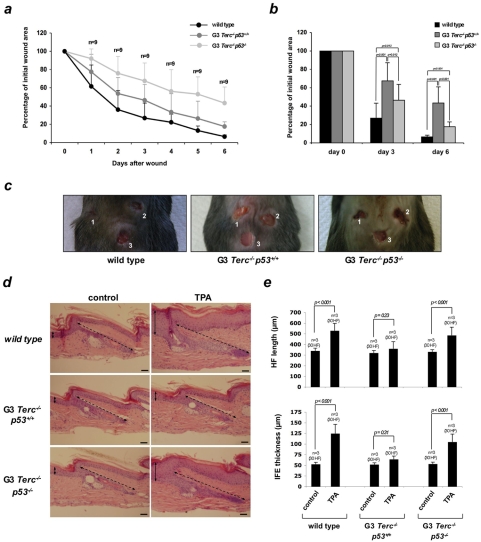
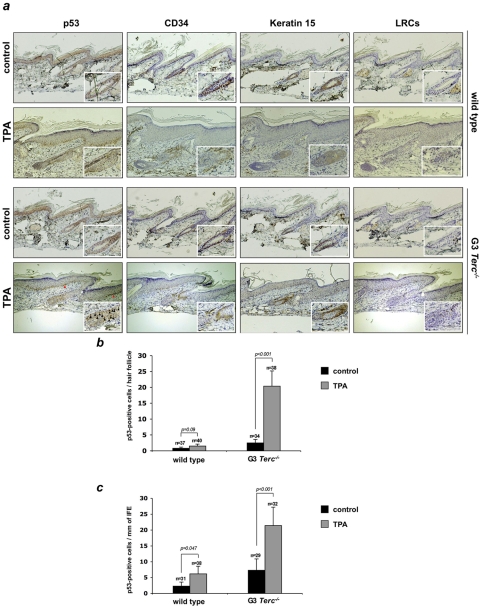
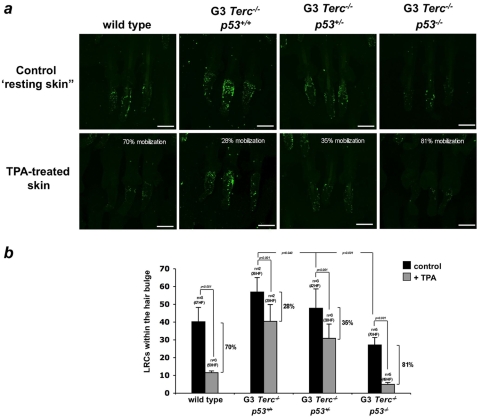
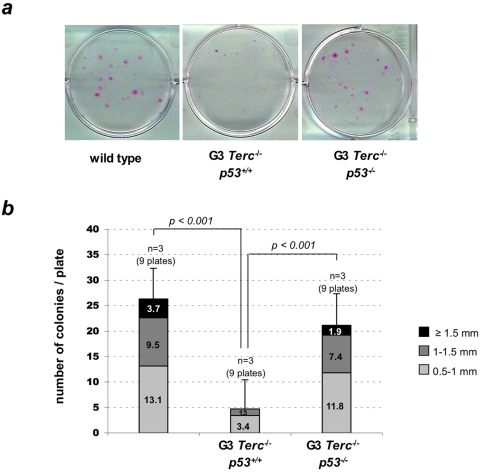
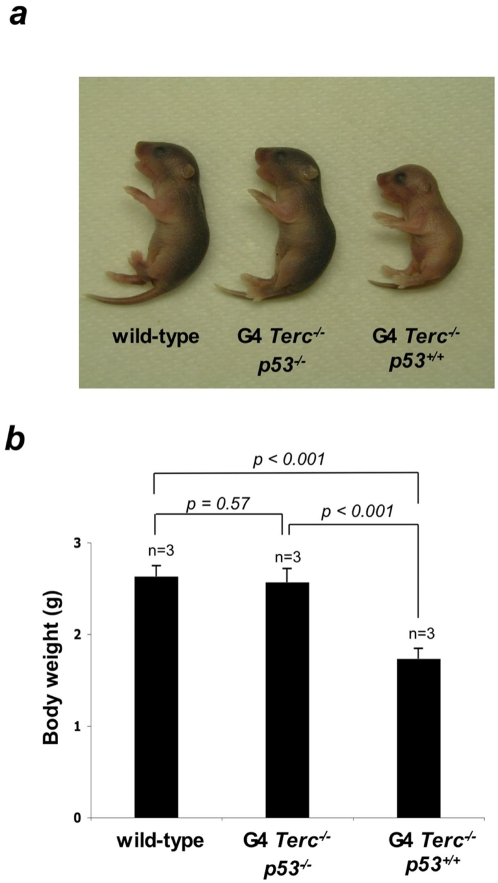
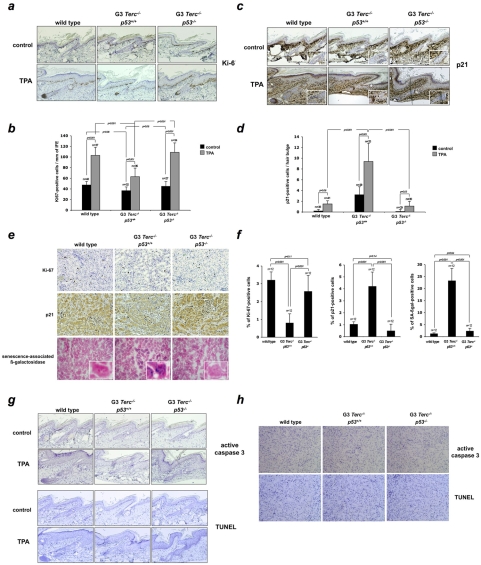
Telomere maintenance is essential to ensure proper size and function of organs with a high turnover. In particular, a dwarf phenotype as well as phenotypes associated to premature loss of tissue regeneration, including the skin (hair loss, hair graying, decreased wound healing), are found in mice deficient for telomerase, the enzyme responsible for maintaining telomere length. Coincidental with the appearance of these phenotypes, p53 is found activated in several tissues from these mice, where is thought to trigger cellular senescence and/or apoptotic responses. Here, we show that p53 abrogation rescues both the small size phenotype and restitutes the functionality of epidermal stem cells (ESC) of telomerase-deficient mice with dysfunctional telomeres. In particular, p53 ablation restores hair growth, skin renewal and wound healing responses upon mitogenic induction, as well as rescues ESCmobilization defects in vivo and defective ESC clonogenic activity in vitro. This recovery of ESC functions is accompanied by a downregulation of senescence markers and an increased proliferation in the skin and kidney of telomerase-deficient mice with critically short telomeres without changes in apoptosis rates. Together, these findings indicate the existence of a p53-dependent senescence response acting on stem/progenitor cells with dysfunctional telomeres that is actively limiting their contribution to tissue regeneration, thereby impinging on tissue fitness.
Overview
The claims and statistics of this paper haven’t been checked yet.
Free: it reads the open-access text and checks the first 5 claims that cite a source we can check. Create a free account to check every claim.
Integrity signals
Registry
Cites
Statistics
Figures
Verification
Claims the paper makes
The claims and statistics of this paper haven’t been checked yet.
Free: it reads the open-access text and checks the first 5 claims that cite a source we can check. Create a free account to check every claim.
Claims other papers make about this one
Each is checked against this paper’s own text: does it say what the citing paper says it does?
The source backs part of the claim, not all of it — or backs it for a different population, condition or comparison.
In the citing paper
“Skin aging associated with ROS accumulation, thus, was found to be rescued in the skin of late-generation p53 knockout mice [120].”
From Ultraviolet Radiation‐Induced Skin Aging: The Role of DNA Damage and Oxidative Stress in Epidermal Stem Cell Damage Mediated Skin Aging (2016) · cites this paper as [120]
Experimental — accuracy not yet measuredThe source backs part of the claim, not all of it — or backs it for a different population, condition or comparison.
In the citing paper
“In these mice, there were improved wound healing, hair growth, and skin renewal to levels comparable to those of wild-type mice, as well as increased ESC numbers and improved mobilization capacity [120].”
From Ultraviolet Radiation‐Induced Skin Aging: The Role of DNA Damage and Oxidative Stress in Epidermal Stem Cell Damage Mediated Skin Aging (2016) · cites this paper as [120]
Experimental — accuracy not yet measured
Self-check
Percentages, sums and reported differences re-computed from the paper’s own numbers.
The self-check needs the paper’s full text.
Citations
Cites
Shelterin: the protein complex that shapes and safeguards human telomeres
de Lange, T. (2005) · Genes & Development · doi:10.1101/gad.1346005 · Cited by 3,056
A DNA damage checkpoint response in telomere-initiated senescence
Fagagna, F. D. D., Reaper, P. M., Clay-Farrace, L., Fiegler, H., Carr, P., von Zglinicki, T., Saretzki, G., Carter, N. P., & Jackson, S. P. (2003) · Nature · doi:10.1038/nature02118 · Cited by 2,917
Cotsarelis, G., Sun, T.-T., & Lavker, R. M. (1990) · Cell · doi:10.1016/0092-8674(90)90696-c · Cited by 2,276
Defining the Epithelial Stem Cell Niche in Skin
Tumbar, T., Guasch, G., Greco, V., Blanpain, C., Lowry, W. E., Rendl, M., & Fuchs, E. (2004) · Science · doi:10.1126/science.1092436 · Cited by 2,031 · cited 1×
“Confocal microscopy of skin whole-mounts revealed that LRCs accumulated at the bulge area of the hair follicle in all the examined genotypes, in agreement with the known location of the hair follicle stem cell niche [9,33–36] (Fig.”
ResultCellular senescence in cancer and aging.
Collado, M., Blasco, M. A., & Serrano, M. (2007) · Cell · doi:10.1016/j.cell.2007.07.003 · Cited by 1,708 · cited 2×
“Senescence is associated with a decline in proliferation that culminates in a permanent arrest of the cell cycle [41].”
BackgroundSelf-citationBlanpain, C., Lowry, W. E., Geoghegan, A., Polak, L., & Fuchs, E. (2004) · Cell · doi:10.1016/j.cell.2004.08.012 · Cited by 1,428
DNA Damage Foci at Dysfunctional Telomeres
Takai, H., Smogorzewska, A., & de Lange, T. (2003) · Current Biology · doi:10.1016/s0960-9822(03)00542-6 · Cited by 1,409
Longevity, Stress Response, and Cancer in Aging Telomerase-Deficient Mice
Rudolph, K. L., Chang, S., Lee, H.-W., Blasco, M., Gottlieb, G. J., Greider, C., & DePinho, R. A. (1999) · Cell · doi:10.1016/s0092-8674(00)80580-2 · Cited by 1,349 · cited 5×
“, all mice were dead with in the first 40 weeks of life; not shown) prevented the analysis of the role of p53 in additional skin defects associated to critically short telomeres, such as hair graying and alopecia [27,28].”
BackgroundMethodInfluentialSelf-citationTelomeric Repeat–Containing RNA and RNA Surveillance Factors at Mammalian Chromosome Ends
Azzalin, C. M., Reichenbach, P., Khoriauli, L., Giulotto, E., & Lingner, J. (2007) · Science · doi:10.1126/science.1147182 · Cited by 1,329
Three clonal types of keratinocyte with different capacities for multiplication.
Barrandon, Y., & Green, H. (1987) · Proceedings of the National Academy of Sciences · doi:10.1073/pnas.84.8.2302 · Cited by 1,294
Cited by
Targeting p53 pathways: mechanisms, structures, and advances in therapy
Wang, H., Guo, M., Wei, H., & Chen, Y. (2023) · Signal Transduction and Targeted Therapy · doi:10.1038/s41392-023-01347-1 · Cited by 1,016
Linking functional decline of telomeres, mitochondria and stem cells during ageing
Sahin, E., & DePinho, R. A. (2010) · Nature · doi:10.1038/nature08982 · Cited by 759
Telomeric and extra-telomeric roles for telomerase and the telomere-binding proteins
Martínez, P., & Blasco, M. A. (2011) · Nature Reviews Cancer · doi:10.1038/nrc3025 · Cited by 468
Self-citationAxis of ageing: telomeres, p53 and mitochondria
Sahin, E., & DePinho, R. A. (2012) · Nature Reviews Molecular Cell Biology · doi:10.1038/nrm3352 · Cited by 345
Panich, U., Sittithumcharee, G., Rathviboon, N., & Jirawatnotai, S. (2016) · Stem Cells International · doi:10.1155/2016/7370642 · Cited by 374
“In these mice, there were improved wound healing, hair growth, and skin renewal to levels comparable to those of wild-type mice, as well as increased ESC numbers and improved mobilization capacity [120].”
Basal Cell Carcinomas Arise from Hair Follicle Stem Cells in Ptch1+/− Mice
Wang, G. Y., Wang, J., Mancianti, M.-L., & Epstein, E. H. (2011) · Cancer Cell · doi:10.1016/j.ccr.2010.11.007 · Cited by 226
Changes in Regenerative Capacity through Lifespan
Yun, M. (2015) · International Journal of Molecular Sciences · doi:10.3390/ijms161025392 · Cited by 216
“and improved wound healing responses and functionality in various tissues such as intestines, skin and the haematopoietic system [95,96].”
BackgroundTelomeres in cancer and ageing
Donate, L. E., & Blasco, M. A. (2011) · Philosophical Transactions of the Royal Society B: Biological Sciences · doi:10.1098/rstb.2010.0291 · Cited by 190
Self-citationAssessing cell and organ senescence biomarkers
de Jesus, B. B., & Blasco, M. A. (2012) · Circulation Research · doi:10.1161/circresaha.111.247866 · Cited by 187
Self-citationTelomere Shortening in Neural Stem Cells Disrupts Neuronal Differentiation and Neuritogenesis
Ferrón, S. R., Marqués-Torrejón, M. Á., Mira, H., Flores, I., Taylor, K., Blasco, M. A., & Fariñas, I. (2009) · The Journal of Neuroscience · doi:10.1523/jneurosci.3836-09.2009 · Cited by 179
“At G4 (in a pure C57BL/6 genetic background) to G6 (in mixed C57BL/6/129Sv background), Tercnull mice exhibit a high incidence of critically short telomeres, reduced fertility, and premature aging phenotypes including shorter life span (Blasco et al., 1997; Herrera et al., 1999; Rudolph et al., 1999; Flores et al., 20…”
BackgroundInfluentialSelf-citationRole of shelterin in cancer and aging
Martínez, P., & Blasco, M. A. (2010) · Aging Cell · doi:10.1111/j.1474-9726.2010.00596.x · Cited by 136
Self-citationp53, Stem Cells, and Reprogramming: Tumor Suppression beyond Guarding the Genome
Spike, B. T., & Wahl, G. M. (2011) · Genes & Cancer · doi:10.1177/1947601911410224 · Cited by 135
The role of telomeres and telomerase in stem cell aging
Flores, I., & Blasco, M. A. (2010) · FEBS Letters · doi:10.1016/j.febslet.2010.07.042 · Cited by 114
Self-citationTelomere Shortening Reduces Regenerative Capacity after Acute Kidney Injury
Westhoff, J. H., Schildhorn, C., Jacobi, C., Hömme, M., Hartner, A., Braun, H., Kryzer, C., Wang, C., von Zglinicki, T., Kränzlin, B., et al. (2010) · Journal of the American Society of Nephrology · doi:10.1681/asn.2009010072 · Cited by 139
Telomerase Is Required for Zebrafish Lifespan
Henriques, C. M., Carneiro, M. C., Tenente, I. M., Jacinto, A., & Ferreira, M. G. (2013) · PLoS Genetics · doi:10.1371/journal.pgen.1003214 · Cited by 133
“However, the apoptotic response in terttp53 zebrafish differs from the tert/tp53 KO mice [44,48], since apoptosis increases in comparison to tert single mutants, whereas it decreases in mice.”
BackgroundHadjiargyrou, M., & O'Keefe, R. J. (2014) · Journal of Bone and Mineral Research · doi:10.1002/jbmr.2373 · Cited by 126
Premature aging in telomerase-deficient zebrafish
Anchelin, M., Alcaraz-Pérez, F., Martínez, C. M., Bernabé-García, M., Mulero, V., & Cayuela, M. L. (2013) · Disease Models & Mechanisms · doi:10.1242/dmm.011635 · Cited by 114
“4B), as found in late generations of telomerase-deficient mice, which have fewer functional stem cells within tissues (Flores and Blasco, 2009; Flores et al., 2005).”
Aylon, Y., & Oren, M. (2011) · Current Opinion in Genetics & Development · doi:10.1016/j.gde.2010.10.002 · Cited by 106
“Germline deletion of p53 in mice with critically short telomeres spares damaged SCs from apoptosis and protracts their survival [53,54].”
BackgroundInfluentialBegus-Nahrmann, Y., Lechel, A., Obenauf, A. C., Nalapareddy, K., Peit, E., Hoffmann, E., Schlaudraff, F., Liss, B., Schirmacher, P., Kestler, H., et al. (2009) · Nature Genetics · doi:10.1038/ng.426 · Cited by 88
A second chance for telomerase reverse transcriptase in anticancer immunotherapy
Zanetti, M. (2016) · Nature Reviews Clinical Oncology · doi:10.1038/nrclinonc.2016.67 · Cited by 109
Ning, Y., Cai, G., Zhuo, L., Gao, J., Dong, D. F., Cui, S., Feng, Z., Shi, S., Bai, X., Sun, X., et al. (2013) · Mechanisms of Ageing and Development · doi:10.1016/j.mad.2013.11.006 · Cited by 99
Varela, E., Schneider, R. P., Ortega, S., & Blasco, M. A. (2011) · Proceedings of the National Academy of Sciences · doi:10.1073/pnas.1105414108 · Cited by 90
Self-citationNiwa, O., Barcellos‐Hoff, M. H., Globus, R. K., Harrison, J. D., Hendry, J. H., Jacob, P., Martin, M. T., Seed, T. M., Shay, J. W., Story, M. D., et al. (2015) · Annals of the ICRP · doi:10.1177/0146645315595585 · Cited by 103
Gannon, H. S., Donehower, L. A., Lyle, S., & Jones, S. N. (2011) · Developmental Biology · doi:10.1016/j.ydbio.2011.02.007 · Cited by 87
“…the activity of p63, a p53 family member that has been recently demonstrated to regulate senescence in fibroblasts and epithelial cells in a p53-independent manner (Guo et al., 2009; Flores and Blasco, 2009) and to induce premature aging phenotypes in the skin of mice (Flores and Blasco, 2009).”
BackgroundBayne, S., Li, H., Jones, M. E. E., Pinto, A. R., Sinderen, M. L. V., Drummond, A. E., Simpson, E. R., & Liu, J. (2011) · Protein & Cell · doi:10.1007/s13238-011-1033-2 · Cited by 96
Age-related changes in the function of autophagy in rat kidneys
Cui, J., Bai, X.-Y., Shi, S., Cui, S., Hong, Q., Cai, G., & Chen, X. (2012) · AGE · doi:10.1007/s11357-011-9237-1 · Cited by 75
30 years and a long way into p53 research
Hainaut, P. L., & Wiman, K. G. (2009) · The Lancet Oncology · doi:10.1016/s1470-2045(09)70198-6 · Cited by 89
Telomere Length Maintenance, Shortening, and Lengthening
Zhao, Z., Pan, X., Liu, L., & Liu, N. (2014) · Journal of Cellular Physiology · doi:10.1002/jcp.24537 · Cited by 66
Craene, B. D., Denecker, G., Vermassen, P., Taminau, J., Mauch, C., Derore, A., Jonkers, J., Fuchs, E. V., & Berx, G. (2013) · Cell Death and Differentiation · doi:10.1038/cdd.2013.148 · Cited by 61
Hafsi, H., & Hainaut, P. (2011) · Antioxidants & Redox Signaling · doi:10.1089/ars.2010.3771 · Cited by 53
Missios, P., Zhou, Y., Guachalla, L. M., von Figura, G., Wegner, A., Chakkarappan, S. R., Binz, T., Gompf, A., Hartleben, G., Burkhalter, M. D., et al. (2014) · Nature Communications · doi:10.1038/ncomms5924 · Cited by 46
Regulation of telomerase activity by apparently opposing elements
Liu, J., Chen, S., Cong, Y.-S., Nicholls, C., Zhou, S.-F., Tao, Z., & Li, H. (2010) · Ageing Research Reviews · doi:10.1016/j.arr.2010.03.002 · Cited by 47
Transcription factor E4F1 is essential for epidermal stem cell maintenance and skin homeostasis
Lacroix, M., Caramel, J., Goguet-Rubio, P., Linares, L. K., Estrach, S., Hatchi, E., Rodier, G., Lledo, G., de Bettignies, C., Thepot, A., et al. (2010) · Proceedings of the National Academy of Sciences · doi:10.1073/pnas.1010167107 · Cited by 55
Telomeres And Telomerase in Adult Stem Cells and Pluripotent Embryonic Stem Cells
Marión, R. M., & Blasco, M. A. (2010) · Advances in experimental medicine and biology · doi:10.1007/978-1-4419-7037-4_9 · Cited by 53
Self-citationTherapeutic targeting of the p53 pathway in cancer stem cells
Prabhu, V. V., Allen, J. E., Hong, B., Zhang, S., Cheng, H., & El‐Deiry, W. S. (2012) · Expert Opinion on Therapeutic Targets · doi:10.1517/14728222.2012.726985 · Cited by 42
Dual role for mammalian DNA polymerase ζ in maintaining genome stability and proliferative responses
Lange, S. S., Bedford, E., Reh, S., Wittschieben, J. P., Carbajal, S., Kusewitt, D. F., DiGiovanni, J., & Wood, R. D. (2013) · Proceedings of the National Academy of Sciences · doi:10.1073/pnas.1217425110 · Cited by 52
Impact papers on aging in 2009
Blagosklonny, M. V., Campisi, J., Sinclair, D. A., Bartke, A., Blasco, M. A., Bonner, W. M., Bohr, V. A., Brosh, R. M., Brunet, A., DePinho, R. A., et al. (2010) · Aging · doi:10.18632/aging.100132 · Cited by 47
Self-citationMitochondria, its DNA and telomeres in ageing and human population
Zole, E., & Ranka, R. (2018) · Biogerontology · doi:10.1007/s10522-018-9748-6 · Cited by 43
Telomerase and CD4 T Cell Immunity in Cancer
Dosset, M., Castro, A., Carter, H. K., & Zanetti, M. (2020) · Cancers · doi:10.3390/cancers12061687 · Cited by 33
Stone, R. C., Aviv, A., & Paus, R. (2021) · Journal of Investigative Dermatology · doi:10.1016/j.jid.2020.12.006 · Cited by 31
Pgc-1α controls epidermal stem cell fate and skin repair by sustaining NAD+ homeostasis during aging
Wong, W., Crane, E. D., Zhang, H., Li, J., Day, T. A., Green, A. E., Menzies, K. J., & Crane, J. D. (2022) · Molecular Metabolism · doi:10.1016/j.molmet.2022.101575 · Cited by 30
Age-by-disease biological interactions: implications for late-life depression
McKinney, B. C., Oh, H., & Sibille, E. L. (2012) · Frontiers in Genetics · doi:10.3389/fgene.2012.00237 · Cited by 22
Chawalitpong, S., Ichikawa, S., Uchibori, Y., Nakamura, S., & Katayama, S. (2019) · Journal of Agricultural and Food Chemistry · doi:10.1021/acs.jafc.9b02725 · Cited by 21
Association of telomere instability with senescence of porcine cells
Ji, G., Liu, K., Okuka, M., Liu, N., & Liu, L. (2012) · BMC Cell Biology · doi:10.1186/1471-2121-13-36 · Cited by 18
The Cell Biology of Stem Cells
Meshorer, E., & Plath, K. (2010) · Advances in experimental medicine and biology · doi:10.1007/978-1-4419-7037-4 · Cited by 23
Zhang, K., Wang, L., Hong, X., Chen, H., Shi, Y., Liu, Y., Liu, J., & Liu, J. (2021) · Cells · doi:10.3390/cells10112892 · Cited by 18
Telomere dysfunction and cell cycle checkpoints in hematopoietic stem cell aging
Ju, Z., Zhang, J., Gao, Y., & Cheng, T. (2011) · International Journal of Hematology · doi:10.1007/s12185-011-0882-z · Cited by 15
Vakili, S. A., George, A., Ayatollahi, S. A., Martorell, M., Ostrander, E. A., Salehi, B., Martins, N. A., & Sharifi‐Rad, J. (2020) · Cellular and Molecular Biology · doi:10.14715/cmb/2020.66.4.15 · Cited by 14
Helpers of the cellular gatekeeper—miRNAs dance in P53 network
Shi, M., Liu, D., Shen, B., & Guo, N. (2009) · Biochimica et Biophysica Acta (BBA) - Reviews on Cancer · doi:10.1016/j.bbcan.2009.12.001 · Cited by 16
Hosni, W., & Baştu, E. (2011) · Climacteric · doi:10.3109/13697137.2011.636848 · Cited by 14
Hartwig, F. P., & Collares, T. V. (2013) · Ageing Research Reviews · doi:10.1016/j.arr.2013.03.003 · Cited by 11
Changes in the Mitochondria in the Aging Process—Can α-Tocopherol Affect Them?
Napolitano, G., Fasciolo, G., Tomajoli, M. T. M., & Venditti, P. (2023) · International Journal of Molecular Sciences · doi:10.3390/ijms241512453 · Cited by 14
Cheng, P., Sun, X., Yin, D., Xu, F., Yang, K., Qin, L., Dong, Y., Guo, F., Chen, A., Zhang, W., et al. (2015) · Cell & Bioscience · doi:10.1186/2045-3701-5-5 · Cited by 14
Hainaut, P. L., Wiman, K. G., & Olivier, M. (2012) · Springer eBooks · doi:10.1007/978-1-4614-3676-8 · Cited by 10
Akıncılar, S. C., Fidan, K., Kumar, N., Ng, Q. F., Majee, P., Wu, L., Han, D. J., Chan, C. H. T., Chua, J. Y. H., Idzham, K., et al. (2025) · Nature Cell Biology · doi:10.1038/s41556-025-01706-w · Cited by 9
TP53: Coordinator of the Processes That Underlie the Hallmarks of Cancer
Hainaut, P. L. (2012) · Springer eBooks · doi:10.1007/978-1-4614-3676-8_1 · Cited by 11
Approaches to Targeting Cancer Stem Cells in Solid Tumors
Caldas-Lopes, E., Gomez-Arteaga, A., & Guzmán, M. L. (2019) · Current Stem Cell Research & Therapy · doi:10.2174/1574888x14666190222164429 · Cited by 6
Oxidative Telomere Attrition, Nutritional Antioxidants and Biological Aging
Glade, M. J. (2015) · International Journal Of Nutrition · doi:10.14302/issn.2379-7835.ijn-14-606 · Cited by 3
Zhang, K., Wang, L., Chen, H., Shi, Y., Liu, Y., Liu, J., Hong, X., & Liu, J. (2021) · Clinical and Experimental Pharmacology and Physiology · doi:10.1111/1440-1681.13472 · Cited by 4
RetractedMcKay, R. D. G., van der Kooy, D., Zwaka, T. P., & Lin, H. (2009) · Cell stem cell · doi:10.1016/j.stem.2009.10.012 · Cited by 4
Extracting Extra-Telomeric Phenotypes from Telomerase Mouse Models
Sung, Y. H., Ali, M., & Lee, H. (2013) · Yonsei Medical Journal · doi:10.3349/ymj.2014.55.1.1 · Cited by 5
Zole, E., Baumanis, E., Freimane, L., Dāle, R., Leiše, A., Lietuvietis, V., & Ranka, R. (2024) · Biomedicines · doi:10.3390/biomedicines12102349 · Cited by 5
Wu, X., Zhu, J.-W., Liu, H., Lu, Z., & Zheng, M. (2012) · Archives of Dermatological Research · doi:10.1007/s00403-012-1233-5 · Cited by 3
Murine Models of Dysfunctional Telomeres and Telomerase
Liu, Y., & Harrington, L. A. (2012) · Wiley eBooks · doi:10.1002/9781118268667.ch9 · Cited by 3
Entity versus property: tracking the nature, genesis and role of stem cells in cancer
Altaba, A. R. I., & Brand, A. H. (2009) · EMBO Reports · doi:10.1038/embor.2009.169 · Cited by 4
A Multilevel Approach to the Causes of Genetic Instability in Stem Cells
González, E. A. P. (2022) · Springer eBooks · doi:10.1007/978-981-16-6016-0_26-1 · Cited by 4
A Multilevel Approach to the Causes of Genetic Instability in Stem Cells
González, E. A. P. (2022) · Springer eBooks · doi:10.1007/978-981-19-2655-6_26 · Cited by 4
Age and Disease Related Telomere Manifestations - A Review
Nasir, N. F. M., Kannan, T. P., Sulaiman, S. A., Shamsuddin, S., Ahmad, A., & Stângaciu, Ş. (2014) · IOSR Journal of Dental and Medical Sciences · doi:10.9790/0853-13626368 · Cited by 1
Aging, mitochondrial dysfunctions, and vitamin E
Napolitano, G., Fasciolo, G., & Venditti, P. (2022) · Elsevier eBooks · doi:10.1016/b978-0-323-90256-4.00025-4 · Cited by 1
El Ying y el Yang de los telómeros: cáncer y envejecimiento
Blasco, M. A. (2010) · Anales de la Real Academia Nacional de Farmacia · Cited by 1
Self-citationMehdipour, P., & Parsa, N. (2012) · Springer eBooks · doi:10.1007/978-94-007-4632-9_7
Wu, X., Zhu, J.-W., Lu, Z., & Xue, D. (2012) · Medical Hypotheses · doi:10.1016/j.mehy.2012.07.011
THE ROLE OF DENDRITIC BDNF TRANSCRIPTS ON ALTERED INHIBITORY CIRCUITRY IN AGING AND DEPRESSION
Oh, H. (2015) · D-Scholarship@Pitt (University of Pittsburgh)
Stress and cellular aging Associations between stress-related factors and leukocyte telomere length
Savolainen, K. (2016) · Helda - University of Helsinki Institutional Repository
Zole, E., Baumanis, E., Freimane, L., Dāle, R., Leiše, A., Lietuvietis, V., & Ranka, R. (2024) · bioRxiv (Cold Spring Harbor Laboratory) · doi:10.1101/2024.05.07.592713
Regulation of CDH3/P-CADHERIN in Normal and Tumour Epithelial Tissues
Nobre, A. R. (2013) · Portuguese National Funding Agency for Science, Research and Technology (RCAAP Project by FCT) · doi:10.34626/nm48-9q82
Processing of Alternative DNA Structures in the Human Telomere
Nora, G. J. (2010) · D-Scholarship@Pitt (University of Pittsburgh)
Aït-Hamou, N. (2016) · theses.fr (ABES) · doi:10.70675/005b27ebz3792z4cc1zacb7zae990c676666 · Cited by 1
Co-regulatory mechanisms of skin and hair aging
Wu, H., Liu, H.-B., Cui, Y.-X., Li, L., & Zhang, Y. (2026) · Experimental Gerontology · doi:10.1016/j.exger.2026.113200
Contribution of lipids and epilipids to the hallmarks of skin aging
Грубер, Ф., Bauer, C., & Kremslehner, C. (2026) · Free Radical Biology and Medicine · doi:10.1016/j.freeradbiomed.2026.06.024
Mdm2-p53 Signaling in Tissue Homeostasis and the DNA Damage Response: A Dissertation
Gannon, H. (2012) · eScholarship@UMassChan · doi:10.13028/sfjc-xh51 · Cited by 1
Metadata
- Authors
- Flores, I., & Blasco, M. A.
- Affiliations
- Spanish National Cancer Research Centre (ES)
- ORCID
- Flores, Ignacio
- Venue
- PLoS ONE
- Publisher
- Public Library of Science (PLoS)
- Published
- 2009-03-19
- Volume
- 4
- Issue
- 3
- Pages
- e4934
- ISSN
- 1932-6203 (ISSN-L)
- PMC
- PMC2654505
- OpenAlex
- W1983400015
- Cited by
- 83
- References
- 46
- Citations by year
- 2026: 2 · 2025: 1 · 2024: 2 · 2023: 2 · 2022: 4 · 2021: 3 · 2020: 2 · 2019: 2 · 2018: 1 · 2016: 4 · 2015: 5 · 2014: 3 · 2013: 9 · 2012: 14
- FWCI
- 9.53
- Type
- journal article
- Language
- en
- Open access
- gold
- doi.org
- Locations
- PLoS ONE (publishedVersion, cc-by)
- PubMed Central (publishedVersion, cc-by)
- PubMed (publishedVersion)
- DOAJ (DOAJ: Directory of Open Access Journals) (submittedVersion, cc-by-sa)
- Figshare (submittedVersion, cc-by)
- Funders
- European Commission (FI6R-CT-2003 508842, RISC-RAD FI6R-CT-2003-508842, LSHC-CT-2003-506803, LSHC-CT-2004-502943, FIGH-CT-2002-00217, FOOD-CT-2003-506850)
- Topics
- Life Sciences › Biochemistry, Genetics and Molecular Biology › Cell Biology › Telomeres, Telomerase, and Senescence
- Health Sciences › Medicine › Dermatology › Hair Growth and Disorders
- Life Sciences › Biochemistry, Genetics and Molecular Biology › Aging › Genetics, Aging, and Longevity in Model Organisms
- Keywords
- p53, telomere shortening, epidermal stem cells, cellular senescence, tissue regeneration, hair growth, wound healing, stem cell mobilization, clonogenic activity, stem cell proliferation
- MeSH terms
- Epidermal Cells, Animals, Epidermis, Kidney, Phenotype, Stem Cells, Wound Healing, Tumor Suppressor Protein p53, Telomere, Cellular Senescence, Mice, Knockout, Hair Follicle, Telomerase, Cell Proliferation, Mice
About these checks
Registry, retraction, Cites and statistics results are computed, not judged, with one exception: a printed reference that no index lists is read once by a model before it counts as a citation error. Claims are extracted by a model and kept only when their quote appears verbatim in the text; each cited source is then checked, with a model’s help, for whether it says what the claim relies on. Those verdicts can be wrong — read the claim’s quote and the cited source before relying on one.
Statistics and arithmetic are recomputed, not judged.
Confidence bands are shown only for fields calibrated on our annotated test set. None is calibrated yet, so no band is shown.
What counts as a claim ›How we measure confidence ›How we check this ›
Are you an author, or do you see a problem with this page? Request a review
Data sources
Bibliographic data: Semantic Scholar, OpenAlex, Crossref.
Contains information from the Semantic Scholar Academic Graph Datasets, made available under the ODC Attribution License (ODC-BY 1.0).
Semantic Scholar’s data is described in: Kinney, R., et al. (2023). The Semantic Scholar Open Data Platform. arXiv:2301.10140.
