

The DOI matches its Crossref record; 51 of the 52 references it cites were found in a registry or an index.
Inhibition of mTOR by Rapamycin Abolishes Cognitive Deficits and Reduces Amyloid-β Levels in a Mouse Model of Alzheimer's Disease
Open accessAbstract
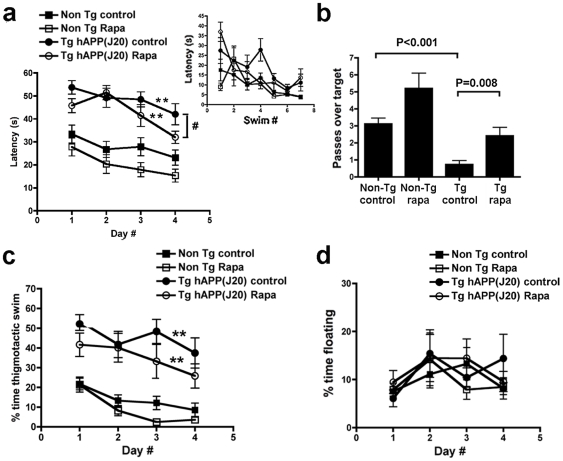
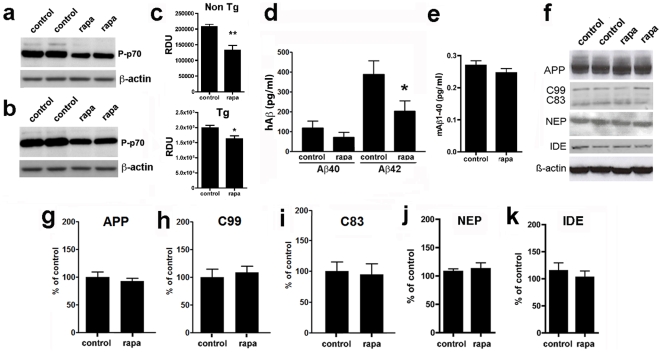
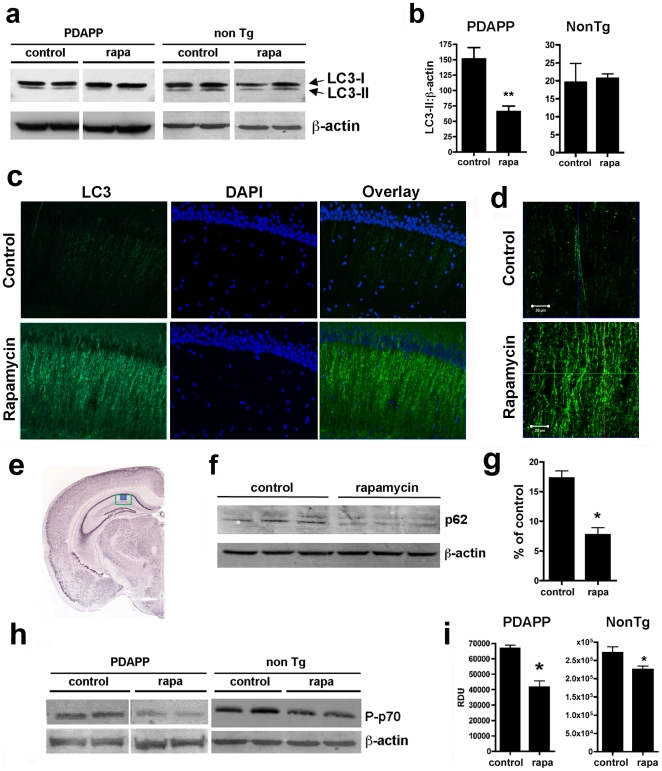
BACKGROUND: Reduced TOR signaling has been shown to significantly increase lifespan in a variety of organisms [1], [2], [3], [4]. It was recently demonstrated that long-term treatment with rapamycin, an inhibitor of the mTOR pathway[5], or ablation of the mTOR target p70S6K[6] extends lifespan in mice, possibly by delaying aging. Whether inhibition of the mTOR pathway would delay or prevent age-associated disease such as AD remained to be determined. METHODOLOGY/PRINCIPAL FINDINGS: We used rapamycin administration and behavioral tools in a mouse model of AD as well as standard biochemical and immunohistochemical measures in brain tissue to provide answers for this question. Here we show that long-term inhibition of mTOR by rapamycin prevented AD-like cognitive deficits and lowered levels of Abeta(42), a major toxic species in AD[7], in the PDAPP transgenic mouse model. These data indicate that inhibition of the mTOR pathway can reduce Abeta(42) levels in vivo and block or delay AD in mice. As expected from the inhibition of mTOR, autophagy was increased in neurons of rapamycin-treated transgenic, but not in non-transgenic, PDAPP mice, suggesting that the reduction in Abeta and the improvement in cognitive function are due in part to increased autophagy, possibly as a response to high levels of Abeta. CONCLUSIONS/SIGNIFICANCE: Our data suggest that inhibition of mTOR by rapamycin, an intervention that extends lifespan in mice, can slow or block AD progression in a transgenic mouse model of the disease. Rapamycin, already used in clinical settings, may be a potentially effective therapeutic agent for the treatment of AD.
Overview
The claims and statistics of this paper haven’t been checked yet.
Run the check — free, no account needed. It reads the open-access text and checks the sources it cites.
Integrity signals
Registry
Cites
Statistics
Figures
Verification
Claims the paper makes
The claims and statistics of this paper haven’t been checked yet.
Run the check — free, no account needed. It reads the open-access text and checks the sources it cites.
Claims other papers make about this one
Each is checked against this paper’s own text: does it say what the citing paper says it does?
The cited source says what the claim attributes to it.
In the citing paper
“Some studies have suggested that inhibition of mTOR activity may lead to cognitive improvement in mouse models of AD [54].”
From Tuberous Sclerosis Protein 2 (TSC2) Modulates CCN4 Cytoprotection During Apoptotic Amyloid Toxicity in Microglia (2013) · cites this paper as [54]
The cited source says what the claim attributes to it.
In the citing paper
“While rapamycin itself is not a strong inducer of autophagy compared to mTOR kinase inhibitors 53, the effects of rapamycin on the pathology of mouse models of Alzheimer’s disease has been attributed in part to increased autophagy 79,80.”
From Targeting the biology of aging with mTOR inhibitors (2023) · cites this paper as [80]
Self-check
Percentages, sums and reported differences re-computed from the paper’s own numbers.
The self-check needs the paper’s full text.
Citations
Cites
Developments of a water-maze procedure for studying spatial learning in the rat
Morris, R. (1984) · Journal of Neuroscience Methods · doi:10.1016/0165-0270(84)90007-4 · Cited by 7,180
LC3, a mammalian homologue of yeast Apg8p, is localized in autophagosome membranes after processing.
Kabeya, Y., Mizushima, N., Ueno, T., Yamamoto, A., Kirisako, T., Noda, T., Kominami, E., Ohsumi, Y., & Yoshimori, T. (2000) · The EMBO Journal · doi:10.1093/emboj/19.21.5720 · Cited by 6,605
Alzheimer's Disease Is a Synaptic Failure
Selkoe, D. J. (2002) · Science · doi:10.1126/science.1074069 · Cited by 4,420
Rapamycin fed late in life extends lifespan in genetically heterogeneous mice
Harrison, D. E., Strong, R., Sharp, Z. D., Nelson, J. F., Astle, C. M., Flurkey, K., Nadon, N. L., Wilkinson, J. E., Frenkel, K., Carter, C. S., et al. (2009) · Nature · doi:10.1038/nature08221 · Cited by 3,766
Self-citationBjørkøy, G., Lamark, T., Brech, A., Outzen, H., Perander, M., Øvervatn, A., Stenmark, H., & Johansen, T. (2005) · The Journal of Cell Biology · doi:10.1083/jcb.200507002 · Cited by 3,276
Prolonged Rapamycin Treatment Inhibits mTORC2 Assembly and Akt/PKB
Sarbassov, D. D., Ali, S. M., Sengupta, S., Sheen, J.-H., Hsu, P. P., Bagley, A. F., Markhard, A. L., & Sabatini, D. M. (2006) · Molecular Cell · doi:10.1016/j.molcel.2006.03.029 · Cited by 2,365
Ravikumar, B., Vacher, C., Berger, Z., Davies, J. E., Luo, S., Oroz, L. G., Scaravilli, F., Easton, D. F., Duden, R., O'Kane, C. J., et al. (2004) · Nature Genetics · doi:10.1038/ng1362 · Cited by 2,347
A mammalian protein targeted by G1-arresting rapamycin–receptor complex
Brown, E. J., Albers, M. W., Bum Shin, T., ichikawa, K., Keith, C. T., Lane, W. S., & Schreiber, S. L. (1994) · Nature · doi:10.1038/369756a0 · Cited by 2,053
FoxO3 Controls Autophagy in Skeletal Muscle In Vivo
Mammucari, C., Milan, G., Romanello, V., Masiero, E., Rudolf, R., Del Piccolo, P., Burden, S. J., Di Lisi, R., Sandri, C., Zhao, J., et al. (2007) · Cell Metabolism · doi:10.1016/j.cmet.2007.11.001 · Cited by 1,953
Reducing Endogenous Tau Ameliorates Amyloid ß-Induced Deficits in an Alzheimer's Disease Mouse Model
Roberson, E. D., Scearce-Levie, K., Palop, J. J., Yan, F., Cheng, I. H., Wu, T., Gerstein, H., Yu, G.-Q., & Mucke, L. (2007) · Science · doi:10.1126/science.1141736 · Cited by 1,892
Cited by
Sorted by citations
Items 901–998 of 998
Santamaría, A. J., Saraiva, P. M., Solano, J. P., & Guest, J. D. (2022) · Elsevier eBooks · doi:10.1016/b978-0-12-819835-3.00031-9 · Cited by 1
Crosstalk Between Autophagy and Nutrigenomics in Neurodegenerative Diseases
Russell, A. E., Badr, A., Rai, A., Carafice, C., Rai, A., Daily, K. P., Whitham, O. D., Amer, A. O., Brown, C. M., & Dakhlallah, D. A. (2022) · Nutritional neurosciences · doi:10.1007/978-981-16-9205-5_13 · Cited by 1
Chemical Biology Approaches to Understanding Neuronal O−GlcNAcylation
Huynh, D. T., & Boyce, M. (2022) · Israel Journal of Chemistry · doi:10.1002/ijch.202200071 · Cited by 1
The Role of Atg8 Homologue in Lewy Body Disease
Tanji, K., Mori, F., & Wakabayashi, K. (2013) · Elsevier eBooks · doi:10.1016/b978-0-12-405877-4.00027-5 · Cited by 1
Yeast as a Model for Studying Aβ Aggregation, Toxicity and Clearance
Bharadwaj, P. (2011) · Australasian Journal of Paramedicine · Cited by 1
Clark, T., Ciccarese, P., & Goble, C. (2013) · arXiv (Cornell University) · doi:10.48550/arxiv.1305.3506 · Cited by 1
The Role of BiP Co-chaperone SIL1 in Marinesco-Sjögren Syndrome Pathogenesis
Ichhaporia, V. P. (2018) · doi:10.21007/etd.cghs.2018.0470 · Cited by 1
Exenatide Stimulates Hippocampal Autophagic Activity in Alzeheimer Rat ModelPreprint
Abdo, E., Saad, M. A., Firgany, A. E. D., Mosaad, Y. M., & Eldusoky, S. (2020) · doi:10.22541/au.159103395.53489994
Levitin, M. O., Rawlins, L. E., Sánchez-Andrade, G., Arshad, O. A., Collins, S. C., Sawiak, S. J., Iffland, P. H., Andersson, M. H. L., Bupp, C. P., Cambridge, E. L., et al. (2022) · bioRxiv (Cold Spring Harbor Laboratory) · doi:10.1101/2022.07.15.500213 · Cited by 1
Sonsalla, M. M., Babygirija, R., Johnson, M., Cai, Y. S., Cole, M., Yeh, C., Grunow, I., Liu, Y., Vertein, D., Calubag, M. F., et al. (2024) · bioRxiv (Cold Spring Harbor Laboratory) · doi:10.1101/2024.06.27.600472 · Cited by 1
Age-associated microglia populations identified from several single cell transcriptome dataPreprint
Sugai, A., Moridono, H., Bilgic, M., Gotoh, Y., & Kishi, Y. (2025) · bioRxiv (Cold Spring Harbor Laboratory) · doi:10.1101/2025.07.28.665226 · Cited by 1
mTOR regulates longevity through a bile-acid like hormonal mechanism and DHS-26/DHRS1Preprint
Schilling, K., Zaufel, A., Morris, K. M., Löhrke, A., Saini, R., Knölker, H., Moustafa, T., & Antebi, A. (2026) · eLife · doi:10.64898/2026.05.13.724957 · Cited by 1
Duarte‐Silva, S., Silva‐Fernandes, A., Neves‐Carvalho, A., Soares‐Cunha, C., Teixeira‐Castro, A., & Maciel, P. (2015) · Neuroscience · doi:10.1016/j.neuroscience.2015.11.030 · Cited by 29
The novel role of the neuropeptides orexin and QRFP and their involvement in Alzheimer's disease
Davies, J. (2014) · Brunel University Research Archive (BURA) (Brunel University London)
Neural repair: basic cellular and molecular processes
Selzer, M. E., Clarke, S., Cohen, L. G., Kwakkel, G., & Miller, R. H. (2014) · Cambridge University Press eBooks · doi:10.1017/cbo9780511995583.020
Genetic and non-genetic factors responsible for mitochondrial failure and Alzheimer’s disease
Gao, K., Niu, M., Zhai, X., Huang, Y., Tian, X., & Li, T. (2014) · Genetika · doi:10.2298/gensr1402631g
Regulation of the Target of Rapamycin Signaling Pathway in Saccharomyces cerevisiae
Pracheil, T. (2013) · ScholarWorks @ The University of New Orleans (The University of New Orleans)
Patel, N. T. (2014) · Human Biology
The role of mTor in the pathogenesis of tau-related pathologies in Alzheimer Disease
Tang, Z. (2014) · Figshare
Amyloid-IndependentMechanismsinAlzheimer'sDisease Pathogenesis
Nixon, R. (2010)
Organelle specific mechanisms of neuronal cell death
Putkonen, N. (2012) · Työväentutkimus Vuosikirja
Yanos, M. E. (2014) · ResearchWorks at the University of Washington (University of Washington)
Investigating the function of CLU in Alzheimer's Disease in in vitro and in vivo models
Vithal, T. (2016) · Open Access Victoria University of Wellington | Te Herenga Waka (Figshare) · doi:10.26686/wgtn.17014223.v1
THE POTENTIAL OF AUTOPHAGY REGULATION IN THE TREATMENT OF NEURODEGENERATIVE DISEASES
Winslow, A. R., Green-Thompson, Z. W., & Rubinsztein, D. C. (2012) · WORLD SCIENTIFIC eBooks · doi:10.1142/9789814350457_0013
Lithium Ameliorates Motor Disturbance by Enhancing Autophagy in Tauopathy Model Mice
Motoi, Y., Shimada, K., & Matsumoto, S. (2015) · Elsevier eBooks · doi:10.1016/b978-0-12-801043-3.00008-x
Physiological Role of Autophagy and Implications in Disease
Karanasios, E., & Ktistakis, N. T. (2016) · Springer eBooks · doi:10.1007/978-3-319-33145-4_5
MicroRNA Regulation of mTOR Function
Zambrotta, M. E., & Houlé, J. D. (2014) · Elsevier eBooks · doi:10.1016/b978-0-12-405544-5.00029-0
Is Selective Autophagy Distinct from Starvation-Induced Autophagy?
Guillebaud, G., & Germain, M. (2016) · Elsevier eBooks · doi:10.1016/b978-0-12-802937-4.00005-3
Neurochemical Aspects of β-Amyloid Cascade Hypothesis for Alzheimer’s Disease
Farooqui, A. A. (2017) · Elsevier eBooks · doi:10.1016/b978-0-12-809937-7.00001-x · Cited by 1
Type II Diabetes and Metabolic Syndrome as Risk Factors for Alzheimer’s Disease
Farooqui, A. A. (2017) · Elsevier eBooks · doi:10.1016/b978-0-12-809937-7.00005-7
Tan, S. (2017) · DR-NTU (Nanyang Technological University) · doi:10.32657/10356/72655
Targeting Unselective Autophagy of Cellular Aggregates
Seneci, P. (2015) · Elsevier eBooks · doi:10.1016/b978-0-12-801944-3.00004-7
Unselective Disposal of Cellular Aggregates
Seneci, P. (2015) · Elsevier eBooks · doi:10.1016/b978-0-12-800186-8.00004-3
Mechanisms Regulating Target Selection and Degradation by Selective Autophagy
Kamber, R. A. (2016) · Digital Access to Scholarship at Harvard (DASH) (Harvard University)
The role of autophagy in aging-related osteoarthritis
de Figueroa, P. L. (2017) · LA Referencia (Red Federada de Repositorios Institucionales de Publicaciones Científicas)
Light induced synaptic vesicle autophagyPreprint
Hoffmann, S., Orlando, M., Andrzejak, E., Trimbuch, T., Rosenmund, C., Ackermann, F., & Garner, C. C. (2018) · bioRxiv (Cold Spring Harbor Laboratory) · doi:10.1101/440719
de Freitas, A. C. S. (2018) · Digital Library of Theses and Dissertations (Universidade de São Paulo) · doi:10.11606/t.17.2018.tde-19072018-152632
Prion Proteins and Neuronal Death in the Cerebellum
Ragagnin, A., Wang, Q., Guillemain, A., Dole, S., Wilding, A.-S., Demais, V., Royer, C., Haeberlé, A., Vitale, N., Gasman, S., et al. (2019) · IntechOpen eBooks · doi:10.5772/intechopen.80701
Could Antibiotics Be Therapeutic Agents in Alzheimer’s Disease?
Gómez, O., Pintado, C., Rodríguez-Pérez, M., & Burgos‐Ramos, E. (2019) · Frontiers in clinical drug research. Alzheimer disorders · doi:10.2174/9789811401893119080005
Leri, M., Bucciantini, M., & Stefani, M. (2019) · Florence Research (University of Florence)
Autophagic Dysfunction in Neurodegeneration
Kaira, M., Ahlawat, A., Walia, V., & Garg, M. (2020) · Advances in medical diagnosis, treatment, and care (AMDTC) book series · doi:10.4018/978-1-7998-1317-0.ch002
Microglial Mitophagy and Neurodegenerative Disorders
Oyindamola, E. A., Agyemang, M. K., Owusu-Sarfo, J., Yeboah, K. O., & Osafo, N. (2020) · Advances in medical diagnosis, treatment, and care (AMDTC) book series · doi:10.4018/978-1-7998-1317-0.ch004
mTOR-Autophagy: A Key for Geniposide Protection in APP/PS1 Transgenic Mice
Zhang, Z., Gao, W., Wang, X., Zhang, D., Liu, Y., Wang, X., & Li, L. (2020) · Vide Leaf, Hyderabad eBooks · doi:10.37247/paaging.1.2020.1
Mammalian target of rapamycin complexes
Querfurth, H. W., & Lee, H. (2020) · Elsevier eBooks · doi:10.1016/b978-0-12-815868-5.00021-9
From brain to muscle and back : novel approaches to harness the benefits of exercise
Kelahmetoglu, Y. (2020) · Figshare
Mammalian target of rapamycin complexes
Querfurth, H. W., & Lee, H. (2020) · Elsevier eBooks · doi:10.1016/b978-0-12-815868-5.00022-0
Koch, B. M. E. (2019) · eDiss (Georg-August-Universität Göttingen) · doi:10.53846/goediss-7716
Aging, mitochondria, and autophagy
Wu, L., Zhang, Y., & Ren, J. T. (2021) · Elsevier eBooks · doi:10.1016/b978-0-323-85666-9.00005-x
The role of autophagy in Alzheimer disease
Jaeger, P. A. (2011) · Universitätsbibliothek der FU Berlin Hochschulschriftenstelle u. Dokumentenserver · doi:10.17169/refubium-8320
Characterisation of the ghrelinergic system in human models of neurodegenerative diseases
Carisi, M. C. (2021) · Cronfa (Swansea University) · doi:10.23889/suthesis.58915
Quelles perspectives de traitements curatifs à court et à long terme pour la maladie d’Alzheimer ?
Delrieu, J., & Ousset, P. (2022) · La Presse Médicale Formation · doi:10.1016/j.lpmfor.2022.01.012 · Cited by 2
Impaired autophagy as an etiological factor of various disease entities
Kocot, A. M., & Wróblewska, B. (2022) · Lekarz Wojskowy · doi:10.53301/lw/143317
Rosenzweig, S. A. (2020) · Faculty Opinions – Post-Publication Peer Review of the Biomedical Literature · doi:10.3410/f.735351451.793572343
Mao, X. (2022) · MOspace Institutional Repository (University of Missouri) · doi:10.32469/10355/91609
Disrupted cellular quality control mechanisms in aging
Carvalho, C., Pires, J. F., Moreira, P. I., & Raimundo, N. (2022) · Elsevier eBooks · doi:10.1016/b978-0-12-823761-8.00016-1
Understanding, Targeting, and Hijacking Autophagy
Xia, H., Xu, X., Zhou, M., Zhang, M., & Ye, L. (2022) · Wiley eBooks · doi:10.1002/9781119774198.ch6
Ho, C., Lai, H.-Y., Wang, L.-M., & Soong, B. (2023) · Contemporary clinical neuroscience · doi:10.1007/978-3-031-24345-5_19
The Mechanistic Approach Involved in the Progression of Neurodegenerative Disorders
Rather, M. A., Khan, A., Alsharani, S., Jahan, S., Siddiqui, A. J., Mehan, S., & Alexiou, A. T. (2023) · Springer eBooks · doi:10.1007/978-981-99-3848-3_2
Prasanth, M. I., Malar, D. S., & Tencomnao, T. (2024) · BENTHAM SCIENCE PUBLISHERS eBooks · doi:10.2174/9789815238273124020008
Taylor, M. J., Ahmed, S. A., Badenoch, E. G., Bennett, D., & Tuxworth, R. I. (2024) · bioRxiv (Cold Spring Harbor Laboratory) · doi:10.1101/2024.04.25.591136
Patel, B., & Acharya, N. S. (2024) · Journal of Young Pharmacists · doi:10.5530/jyp.2024.16.22
Enhancing Mitochondrial Function: A Novel Therapeutic Target for Alzheimer's Disease
Iqbal, A., Ali, F., Qayyum, A., Arshad, F., Choudhary, S., & Sajid, M. (2024) · Current Drug Therapy · doi:10.2174/0115748855291425240802100148
Mitochondrial Therapies for Neurodegenerative Diseases: Emerging Approaches and Challenges
Angelim, M. K. S. C. (2025) · Premier journal of science. · doi:10.70389/pjs.100068
Autophagy and Neurodegenerative Diseases
Barbosa, A. D., Palmer, J. E., Li, X., & Rubinsztein, D. C. (2025) · Learning materials in biosciences · doi:10.1007/978-3-031-88121-3_6
The Role of Extracellular Vesicles in the Regulation of Autophagy
Yakovlev, A. A. (2025) · Neurochemical Journal · doi:10.1134/s1819712425700035
Özkurt, Ç., Köse, S., Karasu, Ç., Kortholt, A., & Kelicen‐Uğur, P. (2025) · Research Square · doi:10.21203/rs.3.rs-7094261/v1
Gao, M., Hu, W., Meng, D., Yao, P., Yang, S., Tong, Y., Wang, L., Zhang, Y., Wang, Q., Ji, J., et al. (2025) · Molecular & Cellular Proteomics · doi:10.1016/j.mcpro.2025.101060
Cheng, A., Shawa, H., Uttke, Z., & Cotter, D. G. (2025) · PubMed Central
Changes in Plasma Aβ42/40 Ratio and p-Tau181 in Amyloid-Positive Patients Treated with Sirolimus
Leibowitz, J., Kumi, F., Naseif, A., Leibowitz, E. J., & Baumeister, C. (2025) · Bratislavské lekárske listy/Bratislava medical journal · doi:10.1007/s44411-025-00323-1
Çınar, E., Çakmaklı, G. Y., Akyel, H., Ulusoy, A., Tel, B. C., & Elibol, B. (2025) · Pharmacology Biochemistry and Behavior · doi:10.1016/j.pbb.2025.174096
PF-04691502, a PI3K/mTOR Dual Inhibitor, Ameliorates AD-like Pathology in a Mouse Model of AD
Lanza, M., Basilotta, R., Caccamo, A., Casili, G., Repici, A., Oddo, S., & Esposito, E. (2025) · Cells · doi:10.3390/cells14181474
Li, X., Zhang, H., Yang, L., Dong, X., Han, Y., Su, Y., Li, W., & Li, W. (2023) · Figshare · doi:10.6084/m9.figshare.22631611
Li, X., Zhang, H., Yang, L., Dong, X., Han, Y., Su, Y., Li, W., & Li, W. (2023) · Figshare · doi:10.6084/m9.figshare.22631608
Li, X., Zhang, H., Yang, L., Dong, X., Han, Y., Su, Y., Li, W., & Li, W. (2023) · Figshare · doi:10.6084/m9.figshare.22631629
Hiltunen, A. E., Kangas, S. M., Ohlmeier, S., Pietilä, I., Hiltunen, J., Tanila, H., McKerlie, C., Govindan, S., Tuominen, H., Kaarteenaho, R., et al. (2020) · Figshare · doi:10.6084/m9.figshare.13357553
Jiang, R., Wu, X.-F., Wang, B., Guan, R.-X., Lv, L.-M., Li, A.-P., Lei, L., Ma, Y., Li, N., Li, Q.-F., et al. (2020) · Figshare · doi:10.6084/m9.figshare.12195525
Li, X., Zhang, H., Yang, L., Dong, X., Han, Y., Su, Y., Li, W., & Li, W. (2023) · Figshare · doi:10.6084/m9.figshare.22631614
Li, X., Zhang, H., Yang, L., Dong, X., Han, Y., Su, Y., Li, W., & Li, W. (2023) · Figshare · doi:10.6084/m9.figshare.22631617
Emon, M. A., Domingo-Fernández, D., Hoyt, C. T., & Hofmann‐Apitius, M. (2020) · Figshare · doi:10.6084/m9.figshare.12441401
Li, X., Zhang, H., Yang, L., Dong, X., Han, Y., Su, Y., Li, W., & Li, W. (2023) · Figshare · doi:10.6084/m9.figshare.22631626
Hiltunen, A. E., Kangas, S. M., Ohlmeier, S., Pietilä, I., Hiltunen, J., Tanila, H., McKerlie, C., Govindan, S., Tuominen, H., Kaarteenaho, R., et al. (2020) · Figshare · doi:10.6084/m9.figshare.13357556
Jiang, R., Wu, X., Wang, B., Guan, R.-X., Lv, L.-M., Li, A.-P., Lei, L., Ma, Y., Li, N., Li, Q.-F., et al. (2020) · Figshare · doi:10.6084/m9.figshare.12195534
Trends and Research Frontiers in Mammalian Target of Rapamycin and Alzheimer’s Disease
Ma, Z., Xiao, Z., Yang, Z., Huang, B., & Wang, X. (2026) · Molecular Neurobiology · doi:10.1007/s12035-026-05714-1
Whitley, S. C., Zhong, R., Baumberger, S., & Richardson, C. E. (2026) · PLoS ONE · doi:10.1371/journal.pone.0345575
Recherche de thérapies innovantes dans un modèle murin de myopathies inflammatoires
Prevel, N. (2014) · theses.fr (ABES) · doi:10.70675/ec50f816zfc5fz48d3z983ezcaa43e89d0b1
Mécanisme d’activation neuronale de mTORC1 et de son altération par le peptide amyloïde β
Khamsing, D. (2017) · theses.fr (ABES) · doi:10.70675/8081dbf0zf76bz43bdza502z6c0c6c419856
A reliable and reproducible multiplex RT-qPCR assay for mTOR gene expression analysis
Олегович, К. Д., Михайловна, С. В., Андреевич, Б. А., Маслаков, Г. П., Nechaeva, D. M., Kariakina, A. E., Fadeyev, F. A., Сергеевна, В. Е., & Зорников, Д. Л. (2026) · Bulletin of Russian State Medical University · doi:10.24075/brsmu.2026.011
Pineau, L. (2023) · theses.fr (ABES) · doi:10.70675/39c790cfzdf57z416bzb9cez06eca43d9cda
Functional characterization of the GATOR1 complex in cisplatin resistance
Pan, Z. (2024) · theses.fr (ABES) · doi:10.70675/2ddcf286zc553z40fdzb34ez875b3288c76b
Metadata
- Authors
- Spilman, P., Podlutskaya, N., Hart, M. J., Debnath, J., Gorostiza, O., Bredesen, D., Richardson, A., Strong, R., & Galvan, V.
- Affiliations
- Buck Institute for Research on Aging (US)
- The University of Texas at San Antonio Health Science Center (US)
- University of California, San Francisco (US)
- Venue
- PLoS ONE
- Publisher
- Public Library of Science (PLoS)
- Published
- 2010-04-01
- Volume
- 5
- Issue
- 4
- Pages
- e9979
- ISSN
- 1932-6203 (ISSN-L)
- PMC
- PMC2848616
- OpenAlex
- W2037653131
- Cited by
- 1,033
- References
- 52
- Citations by year
- 2026: 46 · 2025: 50 · 2024: 41 · 2023: 63 · 2022: 61 · 2021: 75 · 2020: 91 · 2019: 82 · 2018: 72 · 2017: 57 · 2016: 68 · 2015: 75 · 2014: 72 · 2013: 62 · 2012: 58
- FWCI
- 39.00
- Type
- journal article
- Language
- en
- Update notices
- Open access
- gold
- doi.org
- Locations
- PLoS ONE (publishedVersion, cc-by)
- PubMed Central (publishedVersion, cc-by)
- PubMed (publishedVersion)
- DOAJ (DOAJ: Directory of Open Access Journals) (submittedVersion, cc-by-sa)
- eScholarship (California Digital Library) (submittedVersion)
- eScholarship (California Digital Library) (submittedVersion, cc-by)
- Funders
- U.S. Department of Veterans Affairs
- Alzheimer's Association (NIRG-DDC-120433)
- Buck Institute for Research on Aging
- University of Texas Health Science Center at San Antonio
- National Institute on Aging (P30AG13319, P30AG013319, U01AG022307)
- National Cancer Institute (R01CA126792)
- Topics
- Life Sciences › Neuroscience › Cellular and Molecular Neuroscience › Alzheimer's disease research and treatments
- Life Sciences › Biochemistry, Genetics and Molecular Biology › Cell Biology › Autophagy in Disease and Therapy
- Health Sciences › Medicine › Psychiatry and Mental health › Dementia and Cognitive Impairment Research
- Keywords
- rapamycin, mTOR inhibition, Alzheimer's disease, amyloid-beta 42, cognitive impairment, autophagy, lifespan extension, neuroprotection, therapeutic target
- MeSH terms
- Aging, Alzheimer Disease, Animals, Autophagy, Cognition Disorders, Disease Models, Animal, Immunosuppressive Agents, Signal Transduction, Amyloid beta-Peptides, Sirolimus, Mice, TOR Serine-Threonine Kinases
About these checks
Registry, retraction, Cites and statistics results are computed, not judged, with one exception: a printed reference that no index lists is read once by a model before it counts as a citation error. Claims are extracted by a model and kept only when their quote appears verbatim in the text; each cited source is then checked, with a model’s help, for whether it says what the claim relies on. Those verdicts can be wrong — read the claim’s quote and the cited source before relying on one.
Statistics and arithmetic are recomputed, not judged.
Confidence bands are shown only for fields calibrated on our annotated test set. None is calibrated yet, so no band is shown.
What counts as a claim ›How we measure confidence ›How we check this ›
Are you an author, or do you see a problem with this page? Request a review
