

The DOI matches its Crossref record; 51 of the 52 references it cites were found in a registry or an index.
Inhibition of mTOR by Rapamycin Abolishes Cognitive Deficits and Reduces Amyloid-β Levels in a Mouse Model of Alzheimer's Disease
Open accessAbstract
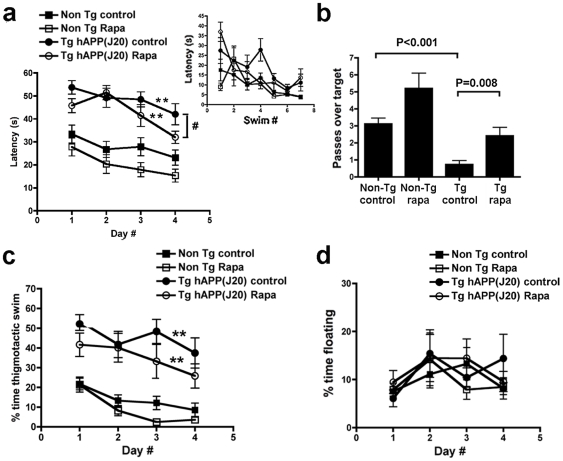
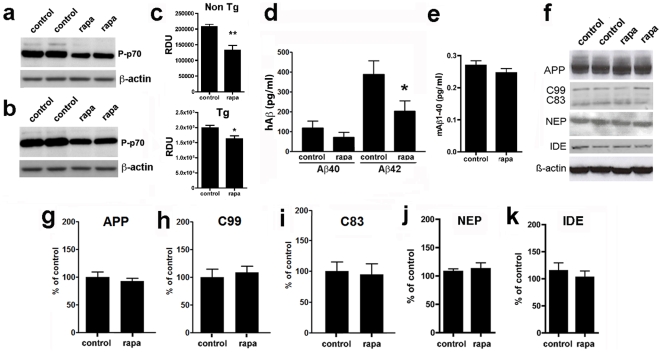
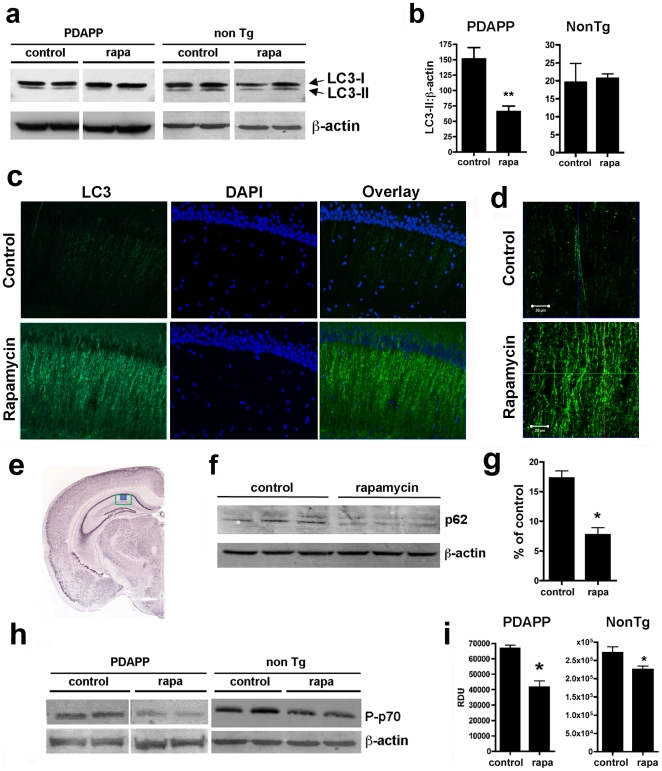
BACKGROUND: Reduced TOR signaling has been shown to significantly increase lifespan in a variety of organisms [1], [2], [3], [4]. It was recently demonstrated that long-term treatment with rapamycin, an inhibitor of the mTOR pathway[5], or ablation of the mTOR target p70S6K[6] extends lifespan in mice, possibly by delaying aging. Whether inhibition of the mTOR pathway would delay or prevent age-associated disease such as AD remained to be determined. METHODOLOGY/PRINCIPAL FINDINGS: We used rapamycin administration and behavioral tools in a mouse model of AD as well as standard biochemical and immunohistochemical measures in brain tissue to provide answers for this question. Here we show that long-term inhibition of mTOR by rapamycin prevented AD-like cognitive deficits and lowered levels of Abeta(42), a major toxic species in AD[7], in the PDAPP transgenic mouse model. These data indicate that inhibition of the mTOR pathway can reduce Abeta(42) levels in vivo and block or delay AD in mice. As expected from the inhibition of mTOR, autophagy was increased in neurons of rapamycin-treated transgenic, but not in non-transgenic, PDAPP mice, suggesting that the reduction in Abeta and the improvement in cognitive function are due in part to increased autophagy, possibly as a response to high levels of Abeta. CONCLUSIONS/SIGNIFICANCE: Our data suggest that inhibition of mTOR by rapamycin, an intervention that extends lifespan in mice, can slow or block AD progression in a transgenic mouse model of the disease. Rapamycin, already used in clinical settings, may be a potentially effective therapeutic agent for the treatment of AD.
Overview
The claims and statistics of this paper haven’t been checked yet.
Run the check — free, no account needed. It reads the open-access text and checks the sources it cites.
Integrity signals
Registry
Cites
Statistics
Figures
Verification
Claims the paper makes
The claims and statistics of this paper haven’t been checked yet.
Run the check — free, no account needed. It reads the open-access text and checks the sources it cites.
Claims other papers make about this one
Each is checked against this paper’s own text: does it say what the citing paper says it does?
The cited source says what the claim attributes to it.
In the citing paper
“Some studies have suggested that inhibition of mTOR activity may lead to cognitive improvement in mouse models of AD [54].”
From Tuberous Sclerosis Protein 2 (TSC2) Modulates CCN4 Cytoprotection During Apoptotic Amyloid Toxicity in Microglia (2013) · cites this paper as [54]
The cited source says what the claim attributes to it.
In the citing paper
“While rapamycin itself is not a strong inducer of autophagy compared to mTOR kinase inhibitors 53, the effects of rapamycin on the pathology of mouse models of Alzheimer’s disease has been attributed in part to increased autophagy 79,80.”
From Targeting the biology of aging with mTOR inhibitors (2023) · cites this paper as [80]
Self-check
Percentages, sums and reported differences re-computed from the paper’s own numbers.
The self-check needs the paper’s full text.
Citations
Cites
Developments of a water-maze procedure for studying spatial learning in the rat
Morris, R. (1984) · Journal of Neuroscience Methods · doi:10.1016/0165-0270(84)90007-4 · Cited by 7,180
LC3, a mammalian homologue of yeast Apg8p, is localized in autophagosome membranes after processing.
Kabeya, Y., Mizushima, N., Ueno, T., Yamamoto, A., Kirisako, T., Noda, T., Kominami, E., Ohsumi, Y., & Yoshimori, T. (2000) · The EMBO Journal · doi:10.1093/emboj/19.21.5720 · Cited by 6,605
Alzheimer's Disease Is a Synaptic Failure
Selkoe, D. J. (2002) · Science · doi:10.1126/science.1074069 · Cited by 4,420
Rapamycin fed late in life extends lifespan in genetically heterogeneous mice
Harrison, D. E., Strong, R., Sharp, Z. D., Nelson, J. F., Astle, C. M., Flurkey, K., Nadon, N. L., Wilkinson, J. E., Frenkel, K., Carter, C. S., et al. (2009) · Nature · doi:10.1038/nature08221 · Cited by 3,766
Self-citationBjørkøy, G., Lamark, T., Brech, A., Outzen, H., Perander, M., Øvervatn, A., Stenmark, H., & Johansen, T. (2005) · The Journal of Cell Biology · doi:10.1083/jcb.200507002 · Cited by 3,276
Prolonged Rapamycin Treatment Inhibits mTORC2 Assembly and Akt/PKB
Sarbassov, D. D., Ali, S. M., Sengupta, S., Sheen, J.-H., Hsu, P. P., Bagley, A. F., Markhard, A. L., & Sabatini, D. M. (2006) · Molecular Cell · doi:10.1016/j.molcel.2006.03.029 · Cited by 2,365
Ravikumar, B., Vacher, C., Berger, Z., Davies, J. E., Luo, S., Oroz, L. G., Scaravilli, F., Easton, D. F., Duden, R., O'Kane, C. J., et al. (2004) · Nature Genetics · doi:10.1038/ng1362 · Cited by 2,347
A mammalian protein targeted by G1-arresting rapamycin–receptor complex
Brown, E. J., Albers, M. W., Bum Shin, T., ichikawa, K., Keith, C. T., Lane, W. S., & Schreiber, S. L. (1994) · Nature · doi:10.1038/369756a0 · Cited by 2,053
FoxO3 Controls Autophagy in Skeletal Muscle In Vivo
Mammucari, C., Milan, G., Romanello, V., Masiero, E., Rudolf, R., Del Piccolo, P., Burden, S. J., Di Lisi, R., Sandri, C., Zhao, J., et al. (2007) · Cell Metabolism · doi:10.1016/j.cmet.2007.11.001 · Cited by 1,953
Reducing Endogenous Tau Ameliorates Amyloid ß-Induced Deficits in an Alzheimer's Disease Mouse Model
Roberson, E. D., Scearce-Levie, K., Palop, J. J., Yan, F., Cheng, I. H., Wu, T., Gerstein, H., Yu, G.-Q., & Mucke, L. (2007) · Science · doi:10.1126/science.1141736 · Cited by 1,892
Cited by
Sorted by citations
Items 601–700 of 998
Finding Ponce de Leon’s Pill: Challenges in Screening for Anti-Aging Molecules
Kumar, S., & Lombard, D. B. (2016) · F1000Research · doi:10.12688/f1000research.7821.1 · Cited by 25
Brose, R. D., Lehrmann, E., Zhang, Y., Reeves, R. H., Smith, K. D., & Mattson, M. P. (2018) · Neurobiology of Aging · doi:10.1016/j.neurobiolaging.2018.08.021 · Cited by 26
Impaired autophagy in amyloid-beta pathology: A traditional review of recent Alzheimer's research
Yuan, M., Wang, Y., Huang, Z., Jing, F., Qiao, P., Zou, Q., Li, J., & Cai, Z. (2022) · Journal of Biomedical Research · doi:10.7555/jbr.36.20220145 · Cited by 26
Small Molecules and Alzheimer’s Disease: Misfolding, Metabolism and Imaging
Patel, V., Zhang, X., Tautiva, N., Nyabera, A., Owa, O., Baidya, M., Sung, H., Taunk, P., Abdollahi, S., Charles, S., et al. (2015) · Current Alzheimer Research · doi:10.2174/1567205012666150504145646 · Cited by 25
Hepatic S6K1 Partially Regulates Lifespan of Mice with Mitochondrial Complex I Deficiency
Ito, T. K., Lu, C., Khan, J., Nguyen, Q., Huang, H. Z., Kim, D., Phillips, J., Tan, J., Lee, Y., Nguyen, T., et al. (2017) · Frontiers in Genetics · doi:10.3389/fgene.2017.00113 · Cited by 27
Neuroprotective Effects of Flavonoid Compounds on Neuronal Death Associated to Alzheimer’s Disease
Sureda, A., Capó, X., & Tejada, S. (2017) · Current Medicinal Chemistry · doi:10.2174/0929867325666171226103237 · Cited by 25
O’Keefe, L. V., & Denton, D. (2018) · BioMed Research International · doi:10.1155/2018/5195416 · Cited by 25
The Concept of Hormesis in Cancer Therapy – Is Less More?
Gaya, A., Akle, C. A., Mudan, S., & Grange, J. M. (2015) · Cureus · doi:10.7759/cureus.261 · Cited by 24
Chaplot, K., Pimpale, L. G., Ramalingam, B., Deivasigamani, S., Kamat, S. S., & Ratnaparkhi, G. S. (2019) · Disease Models & Mechanisms · doi:10.1242/dmm.033803 · Cited by 22
Iron Overload Impairs Autophagy: Effects of Rapamycin in Ameliorating Iron-Related Memory Deficits
Uberti, V. H., de Freitas, B. S., Molz, P., Bromberg, E., & Schröder, N. (2019) · Molecular Neurobiology · doi:10.1007/s12035-019-01794-4 · Cited by 25
The role of Wnt/mTOR signaling in spinal cord injury
Peng, C. M., Liao, H.-Y., & Zhang, H. (2022) · Journal of Clinical Orthopaedics and Trauma · doi:10.1016/j.jcot.2022.101760 · Cited by 24
Vicente, M. C., Addo-Osafo, K., & Vossel, K. A. (2024) · Frontiers in Neurology · doi:10.3389/fneur.2024.1277613 · Cited by 25
Mitochondrial deficiency: a double-edged sword for aging and neurodegeneration
Troulinaki, K., & Bano, D. (2012) · Frontiers in Genetics · doi:10.3389/fgene.2012.00244 · Cited by 24
Cerebral mTOR signal and pro-inflammatory cytokines in Alzheimer’s disease rats
Wang, X., Li, G., Hu, H., Ma, C., Ma, D., Liu, X., & Jiang, X. (2016) · Translational Neuroscience · doi:10.1515/tnsci-2016-0022 · Cited by 26
Weber, J. J., Sena, P. P., Singer, E., & Nguyen, H. P. (2019) · BioMed Research International · doi:10.1155/2019/4741252 · Cited by 27
Mammalian Target of Rapamycin at the Crossroad Between Alzheimer’s Disease and Diabetes
Liang, H., Nie, J., Skike, C. E. V., Valentine, J. M., & Orr, M. E. (2019) · Advances in experimental medicine and biology · doi:10.1007/978-981-13-3540-2_10 · Cited by 24
Verschuuren, M., Verstraelen, P., Barriga, G. G.-D., Cilissen, I., Coninx, E., Verslegers, M., Larsen, P. H., Nuydens, R., & Vos, W. H. D. (2019) · Acta Neuropathologica Communications · doi:10.1186/s40478-019-0741-3 · Cited by 21
Fanoudi, S., Hosseini, M., Alavi, M. S., Boroushaki, M. T., Hosseini, A., & Sadeghnia, H. R. (2018) · EXCLI journal · doi:10.17179/excli2018-1626 · Cited by 25
Wang, J., Yu, Z., Tao, Y., Liu, Y., Wang, Y., Guo, Q., Xue, J., Wen, X., Zhang, Q., Xu, X., et al. (2021) · CNS Neuroscience & Therapeutics · doi:10.1111/cns.13573 · Cited by 23
Elucidating the role of DEPTOR in Alzheimer’s disease
Davies, J., Zachariades, E., Rogers‐Broadway, K., & Karteris, E. (2014) · International Journal of Molecular Medicine · doi:10.3892/ijmm.2014.1895 · Cited by 22
The use of geroprotectors to prevent multimorbidity: Opportunities and challenges
Morsli, S., & Bellantuono, I. (2020) · Mechanisms of Ageing and Development · doi:10.1016/j.mad.2020.111391 · Cited by 24
Mitochondrial defects: An emerging theranostic avenue towards Alzheimer's associated dysregulations
Mani, S., Swargiary, G., Singh, M., Agarwal, S., Dey, A., Ojha, S. K., & Jha, N. K. (2021) · Life Sciences · doi:10.1016/j.lfs.2021.119985 · Cited by 24
Can We Treat Neurodegenerative Proteinopathies by Enhancing Protein Degradation?
Engelender, S., Stefanis, L., Oddo, S., & Bellucci, A. (2022) · Movement Disorders · doi:10.1002/mds.29058 · Cited by 23
Jiao, F., Zhou, B., & Meng, L. (2022) · CNS Neuroscience & Therapeutics · doi:10.1111/cns.13985 · Cited by 21
Li, X., Huang, L., Kong, L., Su, Y., Zhou, H., Ji, P., Sun, R., Wang, C., Li, W., & Li, W. (2022) · Molecular Medicine Reports · doi:10.3892/mmr.2022.12893 · Cited by 25
Hull, A. J., Atilano, M. L., Gergi, L., & Kinghorn, K. J. (2024) · Philosophical Transactions of the Royal Society B Biological Sciences · doi:10.1098/rstb.2022.0381 · Cited by 24
mTOR Pathway – Novel Modulator of Astrocyte Activity
Latacz, A., Russell, J. A., Oclon, E. A., Zubel–Łojek, J., & Pierzchała, K. (2015) · Folia Biologica · doi:10.3409/fb63_2.95 · Cited by 23
VGF expression by T lymphocytes in patients with Alzheimer's disease
Busse, S., Steiner, J., Glorius, S., Dobrowolny, H., Greiner-Bohl, S., Mawrin, C., Bommhardt, U., Hartig, R., Bogerts, B., & Busse, M. (2015) · Oncotarget · doi:10.18632/oncotarget.3569 · Cited by 23
The Mitochondrion: A Potential Therapeutic Target for Alzheimer’s Disease
Lu, M., Zhao, X., Yao, P.-P., Xu, D.-E., & Ma, Q. (2018) · Neuroscience Bulletin · doi:10.1007/s12264-018-0310-y · Cited by 23
Zhong, S., Pei, D., Shi, L., Cui, Y., & Hong, Z. (2019) · Neuroscience Letters · doi:10.1016/j.neulet.2019.03.028 · Cited by 23
NVP-BEZ235 (Dactolisib) Has Protective Effects in a Transgenic Mouse Model of Alzheimer’s Disease
Bellozi, P. M. Q., Gomes, G. F., de Oliveira, L. R., Olmo, I. G., Vieira, É. L. M., Ribeiro, F. M., Fiebich, B. L., & de Oliveira, A. C. P. (2019) · Frontiers in Pharmacology · doi:10.3389/fphar.2019.01345 · Cited by 22
Gumeni, S., Vantaggiato, C., Montopoli, M., & Orso, G. (2021) · Frontiers in Neuroscience · doi:10.3389/fnins.2021.660714 · Cited by 21
Koinuma, S., Shimozawa, N., Yasutomi, Y., & Kimura, N. (2021) · Neurobiology of Aging · doi:10.1016/j.neurobiolaging.2021.06.022 · Cited by 22
Roles and Mechanisms of Astragaloside IV in Combating Neuronal Aging
Zaman, Q., Zhang, D., Obireddy, S. R., Wong, W., & Lai, W. (2022) · Aging and Disease · doi:10.14336/ad.2022.0126 · Cited by 22
Harris‐White, M. E., Ferbas, K. G., Johnson, M. F., Eslami, P., Poteshkina, A., Venkova, K. M., Christov, A., & Hensley, K. (2015) · Neurobiology of Disease · doi:10.1016/j.nbd.2015.03.007 · Cited by 22
Recent advances in autophagy-based neuroprotection
Radad, K., Moldzio, R., Al-Shraim, M. M., Kranner, B., Krewenka, C., & Rausch, W. (2015) · Expert Review of Neurotherapeutics · doi:10.1586/14737175.2015.1002087 · Cited by 22
Metabolic engineering of resveratrol and other longevity boosting compounds
Wang, Y., Chen, H., & Yu, O. S. (2010) · BioFactors · doi:10.1002/biof.126 · Cited by 24
Redox imbalance and metabolic defects in the context of Alzheimer disease
Domenico, F. D., Lanzillotta, C., & Marzia Perluigi, A. (2024) · FEBS Letters · doi:10.1002/1873-3468.14840 · Cited by 22
Reid, J. J., Linden, M. A., Peelor, F. F., Miller, R. A., Hamilton, K. L., & Miller, B. F. (2019) · The Journals of Gerontology Series A · doi:10.1093/gerona/glz069 · Cited by 22
Protective role of anticancer drugs in neurodegenerative disorders: A drug repurposing approach
Advani, D., Gupta, R. V., Tripathi, R. S., Sharma, S., Ambasta, R. K., & Kumar, P. (2020) · Neurochemistry International · doi:10.1016/j.neuint.2020.104841 · Cited by 24
de Wet, S., du Toit, A., & Loos, B. (2021) · Cells · doi:10.3390/cells10010095 · Cited by 23
Peripheral Pathways to Neurovascular Unit Dysfunction, Cognitive Impairment, and Alzheimer’s Disease
Nelson, A. R. (2022) · Frontiers in Aging Neuroscience · doi:10.3389/fnagi.2022.858429 · Cited by 24
Khonsari, F., Heydari, M., Sharifzadeh, M. S., Valizadeh, H., Dinarvand, R., & Atyabi, F. (2022) · Biomaterials Advances · doi:10.1016/j.bioadv.2022.212827 · Cited by 21
Current Advances in Mitochondrial Targeted Interventions in Alzheimer’s Disease
de Sousa, T. S., Moreira, P. I., & Cardoso, S. (2023) · Biomedicines · doi:10.3390/biomedicines11092331 · Cited by 22
Babygirija, R., Sonsalla, M. M., Mill, J., James, I., Han, J. H., Green, C. L., Calubag, M. F., Wade, G., Tobon, A., Michael, J., et al. (2024) · Nature Communications · doi:10.1038/s41467-024-49589-z · Cited by 22
Muñoz, A. R., Pacheco, C. R., Aguayo, L. G., & Opazo, C. (2014) · Biochimica et Biophysica Acta (BBA) - Molecular Basis of Disease · doi:10.1016/j.bbadis.2014.04.019 · Cited by 22
Shen, W., Lu, K., Wang, J., Wu, A., & Yue, Y. (2016) · Molecular Medicine Reports · doi:10.3892/mmr.2016.5700 · Cited by 26
Cell Death-Autophagy Loop and Glutamate-Glutamine Cycle in Amyotrophic Lateral Sclerosis
Yuan, S., Zhang, Z.-W., & Li, Z.-L. (2017) · Frontiers in Molecular Neuroscience · doi:10.3389/fnmol.2017.00231 · Cited by 21
Cracking novel shared targets between epilepsy and Alzheimer’s disease: need of the hour
Garg, N., Joshi, R., & Medhi, B. (2018) · Reviews in the Neurosciences · doi:10.1515/revneuro-2017-0064 · Cited by 21
Genetic enhancement of macroautophagy in vertebrate models of neurodegenerative diseases
Ejlerskov, P., Ashkenazi, A., & Rubinsztein, D. C. (2018) · Neurobiology of Disease · doi:10.1016/j.nbd.2018.04.001 · Cited by 20
Lee, J., Yanckello, L. M., Ma, D., Hoffman, J. D., Parikh, I. J., Thalman, S. W., Bauer, B., Hartz, A. M. S., Hyder, F., & Lin, A. (2018) · Frontiers in Aging Neuroscience · doi:10.3389/fnagi.2018.00225 · Cited by 20
Dehydropachymic acid decreases bafilomycin A1 induced β-Amyloid accumulation in PC12 cells
Yu, M., Xu, X., Jiang, N., Wei, W., Li, F., He, L., & Luo, X. (2017) · Journal of Ethnopharmacology · doi:10.1016/j.jep.2017.01.007 · Cited by 21
Heard, D. S., Tuttle, C. S. L., Lautenschlager, N. T., & Maier, A. B. (2018) · Frontiers in Physiology · doi:10.3389/fphys.2018.01520 · Cited by 20
Singer, E., Walter, C., Fabbro, D., Rageot, D., Beaufils, F., Wymann, M. P., Rischert, N., Rieß, O., Hillmann, P., & Nguyen, H. P. (2019) · Neuropharmacology · doi:10.1016/j.neuropharm.2019.107812 · Cited by 20
Seranova, E., Palhegyi, A. M., Verma, S., Dimova, S., Lasry, R., Naama, M., Sun, C., Barrett, T. G., Rosenstock, T. R., Kumar, D., et al. (2020) · Journal of Molecular Biology · doi:10.1016/j.jmb.2020.01.024 · Cited by 20
A Glimmer of Hope: Maintain Mitochondrial Homeostasis to Mitigate Alzheimer’s Disease
Li, W., Kui, L., Tsirukis, D. I., Gong, X., & Tang, M. (2020) · Aging and Disease · doi:10.14336/ad.2020.0105 · Cited by 21
The role of autophagy in neurodegenerative diseases
Kochergin, I. A., & Zakharova, M. N. (2016) · Neurochemical Journal · doi:10.1134/s1819712416010098 · Cited by 20
Ordóñez‐Gutiérrez, L., Benito‐Cuesta, I., Abad, J. L., Casas, J., Fabriàs, G., & Wandosell, F. G. (2018) · Pharmaceutical Research · doi:10.1007/s11095-017-2312-2 · Cited by 19
Repurposing digoxin for geroprotection in patients with frailty and multimorbidity
Lee, H., Wilson, D. V., Bunting, K. V., Kotecha, D., & Jackson, T. (2023) · Ageing Research Reviews · doi:10.1016/j.arr.2023.101860 · Cited by 19
Antibiotics acting as neuroprotectants via mechanisms independent of their anti-infective activities
Stock, M. L., Fiedler, K. J., Acharya, S., Lange, J. K., Mlynarczyk, G. S. A., Anderson, S. J., Schmidt-McCormack, G. R., Kanuri, S. H., Kondru, N. C., Brewer, M. T., et al. (2013) · Neuropharmacology · doi:10.1016/j.neuropharm.2013.04.059 · Cited by 20
Ashabi, G., Ahmadiani, A., Abdi, A., Abraki, S. B., & Khodagholi, F. (2013) · Toxicology in Vitro · doi:10.1016/j.tiv.2013.05.005 · Cited by 18
Cellular prion protein modulates β-amyloid deposition in aged APP/PS1 transgenic mice
Ordóñez‐Gutiérrez, L., Torres, J. M., Gavı́n, R., Antón, M., Arroba, A. I., Espinosa, J. C., Vergara, C., del Rı́o, J. A., & Wandosell, F. G. (2013) · Neurobiology of Aging · doi:10.1016/j.neurobiolaging.2013.05.019 · Cited by 19
Ichhaporia, V. P., Kim, J., Kavdia, K., Vogel, P., HORNER, L. H., Frase, S., & Hendershot, L. M. (2018) · Disease Models & Mechanisms · doi:10.1242/dmm.033043 · Cited by 20
Jiang, Y., Zhou, Y., Ma, H., Cao, X., Li, Z., Chen, F., & Wang, H. (2019) · Neurochemical Research · doi:10.1007/s11064-019-02918-x · Cited by 19
Palomino, O. M., García-Aguilar, A., González, A., Guillén, C., Benito, M., & Goya, L. (2021) · Molecules · doi:10.3390/molecules26164829 · Cited by 20
Wang, X., Xia, W., Li, K., Zhang, Y., Ge, W., & Ma, C. (2019) · Journal of the Neurological Sciences · doi:10.1016/j.jns.2019.02.022 · Cited by 20
Gao, L., Liu, F., & Liu, R. (2023) · International Journal of Environmental Research and Public Health · doi:10.3390/ijerph20031893 · Cited by 18
mTOR pathway – a potential therapeutic target in stroke
Melanis, K., Stefanou, M., Themistoklis, K. M., & Papasilekas, T. (2023) · Therapeutic Advances in Neurological Disorders · doi:10.1177/17562864231187770 · Cited by 20
Nam, H., Jones, D., Cooksey, R. C., Gao, Y. M., SINK, S. T., Cox, J. E., & McClain, D. A. (2016) · Diabetes · doi:10.2337/db15-0580 · Cited by 18
Rolle des alternden visuellen Systems bei Glaukomen
Unterlauft, J. D., & Böhm, M. (2017) · Der Ophthalmologe · doi:10.1007/s00347-016-0430-6 · Cited by 19
Walker, K. A., Chawla, S., Nogueras‐Ortiz, C. J., Coresh, J., Sharrett, A. R., Wong, D. F., Jack, C. R., Spychalla, A. J., Gottesman, R. F., & Kapogiannis, D. (2020) · Neurobiology of Aging · doi:10.1016/j.neurobiolaging.2020.09.022 · Cited by 18
Chen, R., Zhang, T., Sun, Y.-Y., Sun, Y.-M., Chen, W., Shi, N., Shen, F., Zhang, Y., Liu, K.-Y., & Sun, X.-J. (2015) · Neural Regeneration Research · doi:10.4103/1673-5374.165511 · Cited by 20
Autophagy in alzheimer disease pathogenesis and its therapeutic values
Angst, G., Jia, N., Esqueda, L. T., Fan, Y., Cai, Q., & Wang, C. (2025) · Autophagy Reports · doi:10.1080/27694127.2025.2471677 · Cited by 22
Involvement of mTOR signaling in sphingosylphosphorylcholine-induced hypopigmentation effects
Jeong, H., Lee, S. H., Yun, H., Baek, K. J., Kwon, N. S., Park, K., & Kim, D. (2011) · Journal of Biomedical Science · doi:10.1186/1423-0127-18-55 · Cited by 17
Convergence of Synapses, Endosomes, and Prions in the Biology of Neurodegenerative Diseases
Gouras, G. K. (2013) · International Journal of Cell Biology · doi:10.1155/2013/141083 · Cited by 17
Wang, Z., & Yang, W. (2018) · Neurochemistry International · doi:10.1016/j.neuint.2018.12.018 · Cited by 17
Targeting Autophagy In Disease: Recent Advances In Drug Discovery
Kim, D., Hwang, H., & Kwon, H. J. (2020) · Expert Opinion on Drug Discovery · doi:10.1080/17460441.2020.1773429 · Cited by 17
Activation of mTOR Ameliorates Fragile X Premutation rCGG Repeat-Mediated Neurodegeneration
Lin, Y., Tang, C., He, H., & Duan, R. (2013) · PLoS ONE · doi:10.1371/journal.pone.0062572 · Cited by 16
Control of Aβ release from human neurons by differentiation status and RET signaling
Scholz, D., Chernyshova, Y., & Leist, M. (2012) · Neurobiology of Aging · doi:10.1016/j.neurobiolaging.2012.03.012 · Cited by 18
[Corrigendum] Rapamycin-induced autophagy activity promotes bone fracture healing in rats
Yang, G., Duan, X., Lin, D., Ten, L., Luo, D., Wang, L., & Lian, K. (2021) · Experimental and Therapeutic Medicine · doi:10.3892/etm.2021.9749 · Cited by 17
Pterostilbene: A natural neuroprotective stilbene with anti-Alzheimer's disease properties
Gao, S., Zhang, H., Li, N., Zhang, L., Zhu, Z., & Xu, C. (2024) · Journal of Pharmaceutical Analysis · doi:10.1016/j.jpha.2024.101043 · Cited by 18
Yang, N., Liu, X., Niu, X., Wang, X., Jiang, R., Yuan, N., Wang, J., Zhang, C., Lim, K., & Lu, L. (2021) · Stem Cell Reviews and Reports · doi:10.1007/s12015-021-10265-0 · Cited by 16
Identification of PSMB5 as a genetic modifier of fragile X–associated tremor/ataxia syndrome
Kong, H. E., Lim, J.-H., Linsalata, A. E., Kang, Y., Malik, I., Allen, E. G., Cao, Y., Shubeck, L., Johnston, R., Huang, Y., et al. (2022) · Proceedings of the National Academy of Sciences · doi:10.1073/pnas.2118124119 · Cited by 16
Modulation of autophagy as a therapeutic target for Alzheimer’s disease
Steele, J., Fan, E. Y., Kelahmetaglu, Y., Tian, Y., & Bustos, V. (2013) · Postdoc Journal · doi:10.14304/surya.jpr.v1n2.3 · Cited by 16
Impairment of autophagy by TTR V30M aggregates: in vivo reversal by TUDCA and curcumin
Teixeira, C. A., Almeida, M. R., & Saraiva, M. J. (2016) · Clinical Science · doi:10.1042/cs20160075 · Cited by 19
Zhang, Z., Gao, W., Wang, X., Zhang, D., Liu, Y., & Li, L. (2020) · Neuroscience Letters · doi:10.1016/j.neulet.2020.134749 · Cited by 17
Vargová, I., Urdzíková, L. M., Kárová, K., Šmejkalová, B., Sursal, T., Cimermanova, V., Turnovcová, K., Gandhi, C. D., Jhanwar‐Uniyal, M., & Jendelová, P. (2021) · Biomedicines · doi:10.3390/biomedicines9060593 · Cited by 17
Stronger is not always better: Could a bodybuilding dietary supplement lead to ALS?
Manuel, M., & Heckman, C. J. (2010) · Experimental Neurology · doi:10.1016/j.expneurol.2010.12.007 · Cited by 16
Apomorphine and Alzheimer Aβ: Roles for regulated α cleavage, autophagy, and antioxidation?
Steele, J., & Gandy, S. (2011) · Annals of Neurology · doi:10.1002/ana.22359 · Cited by 16
Cdc14 Phosphatase Promotes TORC1-Regulated Autophagy in Yeast
Kondo, A., Mostofa, M. G., Miyake, K., Terasawa, M., Islam, N., Yeasmin, A. M. S. T., Waliullah, T. M., Kanki, T., & Ushimaru, T. (2018) · Journal of Molecular Biology · doi:10.1016/j.jmb.2018.04.007 · Cited by 18
Emendation of autophagic dysfuction in neurological disorders: a potential therapeutic target
Sainani, S. R., Pansare, P. A., Rode, K., Bhalchim, V. M., Doke, R. R., & Desai, S. M. (2020) · International Journal of Neuroscience · doi:10.1080/00207454.2020.1822356 · Cited by 16
Zhang, Y., Chen, D., Zhang, M., Bian, J., Qian, S., & Kou, X. (2022) · Brain Research Bulletin · doi:10.1016/j.brainresbull.2022.01.007 · Cited by 16
Dysregulation of mTOR by tau in Alzheimer's disease
Bloom, G. S., & Norambuena, A. (2023) · Cytoskeleton · doi:10.1002/cm.21782 · Cited by 15
A monocarboxylate transporter rescues frontotemporal dementia and Alzheimer’s disease models
Xu, D., Vincent, A. J., González‐Gutiérrez, A., Aleyakpo, B., Anoar, S., Giblin, A., Atilano, M. L., Adams, M. L., Shen, D., Thoeng, A., et al. (2023) · PLoS Genetics · doi:10.1371/journal.pgen.1010893 · Cited by 15
Rather, M. A., Khan, A., Jahan, S., Siddiqui, A. J., & Wang, L. (2024) · Neuroscience · doi:10.1016/j.neuroscience.2024.05.042 · Cited by 18
Revealing brain mechanisms of mTOR-mediated translational regulation: Implications for chronic pain
Cho, C., Michailidis, V., & Martin, L. J. (2018) · Neurobiology of Pain · doi:10.1016/j.ynpai.2018.03.002 · Cited by 16
Duval, N., Vacano, G. N., & Patterson, D. W. (2018) · Frontiers in Aging Neuroscience · doi:10.3389/fnagi.2018.00263 · Cited by 16
Jo, M., Lee, S., Kim, K., Lee, S., Kim, S. R., & Kim, H. (2019) · Biochemical and Biophysical Research Communications · doi:10.1016/j.bbrc.2019.04.088 · Cited by 15
Margrett, J. A., Schofield, T. J., Martin, P., Poon, L. W., Masaki, K., Donlon, T. A., Kallianpur, K. J., & Willcox, B. J. (2021) · The Journals of Gerontology Series A · doi:10.1093/gerona/glab327 · Cited by 16
Effect of Nrf2 loss on senescence and cognition of tau-based P301S mice
Riordan, R., Wang, R., Yu, Z., Ross, G., Valerio, J., Dimas-Muñoz, J., Heredia, V., Magnusson, K. R., Galván, V., & Pérez, V. (2023) · GeroScience · doi:10.1007/s11357-023-00760-2 · Cited by 15
Metadata
- Authors
- Spilman, P., Podlutskaya, N., Hart, M. J., Debnath, J., Gorostiza, O., Bredesen, D., Richardson, A., Strong, R., & Galvan, V.
- Affiliations
- Buck Institute for Research on Aging (US)
- The University of Texas at San Antonio Health Science Center (US)
- University of California, San Francisco (US)
- Venue
- PLoS ONE
- Publisher
- Public Library of Science (PLoS)
- Published
- 2010-04-01
- Volume
- 5
- Issue
- 4
- Pages
- e9979
- ISSN
- 1932-6203 (ISSN-L)
- PMC
- PMC2848616
- OpenAlex
- W2037653131
- Cited by
- 1,033
- References
- 52
- Citations by year
- 2026: 46 · 2025: 50 · 2024: 41 · 2023: 63 · 2022: 61 · 2021: 75 · 2020: 91 · 2019: 82 · 2018: 72 · 2017: 57 · 2016: 68 · 2015: 75 · 2014: 72 · 2013: 62 · 2012: 58
- FWCI
- 39.00
- Type
- journal article
- Language
- en
- Update notices
- Open access
- gold
- doi.org
- Locations
- PLoS ONE (publishedVersion, cc-by)
- PubMed Central (publishedVersion, cc-by)
- PubMed (publishedVersion)
- DOAJ (DOAJ: Directory of Open Access Journals) (submittedVersion, cc-by-sa)
- eScholarship (California Digital Library) (submittedVersion)
- eScholarship (California Digital Library) (submittedVersion, cc-by)
- Funders
- U.S. Department of Veterans Affairs
- Alzheimer's Association (NIRG-DDC-120433)
- Buck Institute for Research on Aging
- University of Texas Health Science Center at San Antonio
- National Institute on Aging (P30AG13319, P30AG013319, U01AG022307)
- National Cancer Institute (R01CA126792)
- Topics
- Life Sciences › Neuroscience › Cellular and Molecular Neuroscience › Alzheimer's disease research and treatments
- Life Sciences › Biochemistry, Genetics and Molecular Biology › Cell Biology › Autophagy in Disease and Therapy
- Health Sciences › Medicine › Psychiatry and Mental health › Dementia and Cognitive Impairment Research
- Keywords
- rapamycin, mTOR inhibition, Alzheimer's disease, amyloid-beta 42, cognitive impairment, autophagy, lifespan extension, neuroprotection, therapeutic target
- MeSH terms
- Aging, Alzheimer Disease, Animals, Autophagy, Cognition Disorders, Disease Models, Animal, Immunosuppressive Agents, Signal Transduction, Amyloid beta-Peptides, Sirolimus, Mice, TOR Serine-Threonine Kinases
About these checks
Registry, retraction, Cites and statistics results are computed, not judged, with one exception: a printed reference that no index lists is read once by a model before it counts as a citation error. Claims are extracted by a model and kept only when their quote appears verbatim in the text; each cited source is then checked, with a model’s help, for whether it says what the claim relies on. Those verdicts can be wrong — read the claim’s quote and the cited source before relying on one.
Statistics and arithmetic are recomputed, not judged.
Confidence bands are shown only for fields calibrated on our annotated test set. None is calibrated yet, so no band is shown.
What counts as a claim ›How we measure confidence ›How we check this ›
Are you an author, or do you see a problem with this page? Request a review
