

The DOI matches its Crossref record; 51 of the 52 references it cites were found in a registry or an index.
Inhibition of mTOR by Rapamycin Abolishes Cognitive Deficits and Reduces Amyloid-β Levels in a Mouse Model of Alzheimer's Disease
Open accessAbstract
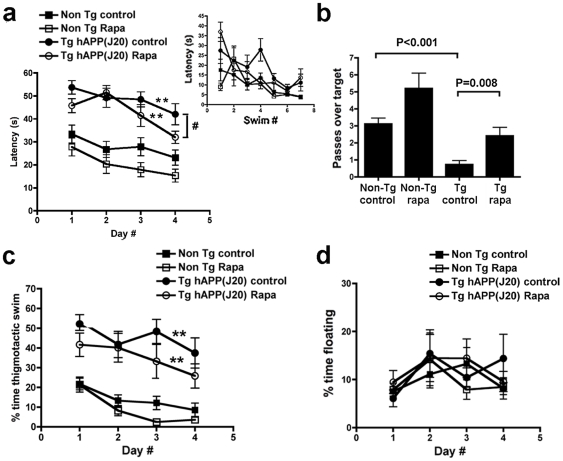
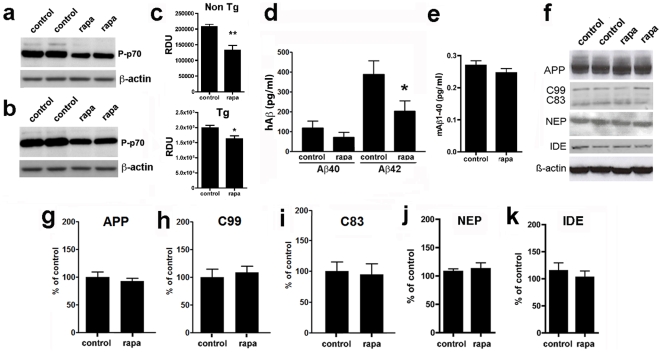
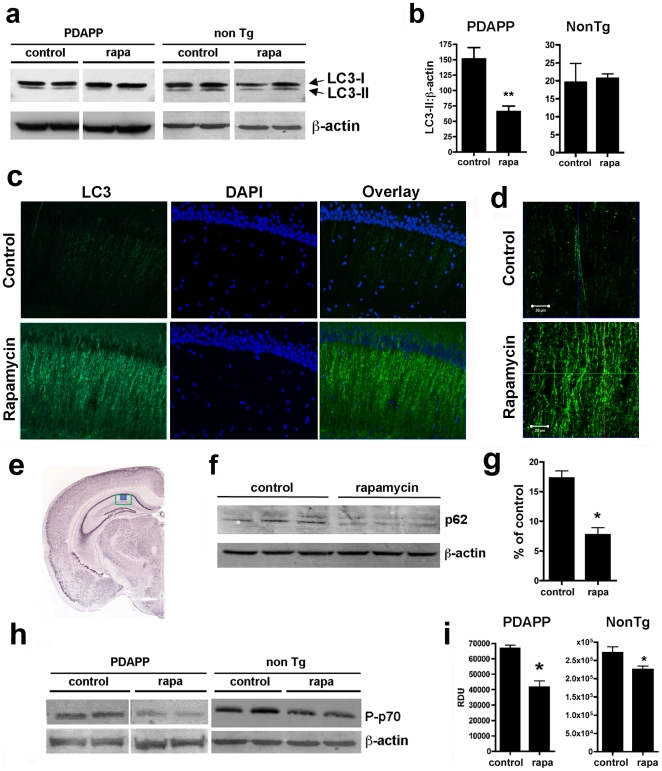
BACKGROUND: Reduced TOR signaling has been shown to significantly increase lifespan in a variety of organisms [1], [2], [3], [4]. It was recently demonstrated that long-term treatment with rapamycin, an inhibitor of the mTOR pathway[5], or ablation of the mTOR target p70S6K[6] extends lifespan in mice, possibly by delaying aging. Whether inhibition of the mTOR pathway would delay or prevent age-associated disease such as AD remained to be determined. METHODOLOGY/PRINCIPAL FINDINGS: We used rapamycin administration and behavioral tools in a mouse model of AD as well as standard biochemical and immunohistochemical measures in brain tissue to provide answers for this question. Here we show that long-term inhibition of mTOR by rapamycin prevented AD-like cognitive deficits and lowered levels of Abeta(42), a major toxic species in AD[7], in the PDAPP transgenic mouse model. These data indicate that inhibition of the mTOR pathway can reduce Abeta(42) levels in vivo and block or delay AD in mice. As expected from the inhibition of mTOR, autophagy was increased in neurons of rapamycin-treated transgenic, but not in non-transgenic, PDAPP mice, suggesting that the reduction in Abeta and the improvement in cognitive function are due in part to increased autophagy, possibly as a response to high levels of Abeta. CONCLUSIONS/SIGNIFICANCE: Our data suggest that inhibition of mTOR by rapamycin, an intervention that extends lifespan in mice, can slow or block AD progression in a transgenic mouse model of the disease. Rapamycin, already used in clinical settings, may be a potentially effective therapeutic agent for the treatment of AD.
Overview
The claims and statistics of this paper haven’t been checked yet.
Run the check — free, no account needed. It reads the open-access text and checks the sources it cites.
Integrity signals
Registry
Cites
Statistics
Figures
Verification
Claims the paper makes
The claims and statistics of this paper haven’t been checked yet.
Run the check — free, no account needed. It reads the open-access text and checks the sources it cites.
Claims other papers make about this one
Each is checked against this paper’s own text: does it say what the citing paper says it does?
The cited source says what the claim attributes to it.
In the citing paper
“Some studies have suggested that inhibition of mTOR activity may lead to cognitive improvement in mouse models of AD [54].”
From Tuberous Sclerosis Protein 2 (TSC2) Modulates CCN4 Cytoprotection During Apoptotic Amyloid Toxicity in Microglia (2013) · cites this paper as [54]
The cited source says what the claim attributes to it.
In the citing paper
“While rapamycin itself is not a strong inducer of autophagy compared to mTOR kinase inhibitors 53, the effects of rapamycin on the pathology of mouse models of Alzheimer’s disease has been attributed in part to increased autophagy 79,80.”
From Targeting the biology of aging with mTOR inhibitors (2023) · cites this paper as [80]
Self-check
Percentages, sums and reported differences re-computed from the paper’s own numbers.
The self-check needs the paper’s full text.
Citations
Cites
Developments of a water-maze procedure for studying spatial learning in the rat
Morris, R. (1984) · Journal of Neuroscience Methods · doi:10.1016/0165-0270(84)90007-4 · Cited by 7,180
LC3, a mammalian homologue of yeast Apg8p, is localized in autophagosome membranes after processing.
Kabeya, Y., Mizushima, N., Ueno, T., Yamamoto, A., Kirisako, T., Noda, T., Kominami, E., Ohsumi, Y., & Yoshimori, T. (2000) · The EMBO Journal · doi:10.1093/emboj/19.21.5720 · Cited by 6,605
Alzheimer's Disease Is a Synaptic Failure
Selkoe, D. J. (2002) · Science · doi:10.1126/science.1074069 · Cited by 4,420
Rapamycin fed late in life extends lifespan in genetically heterogeneous mice
Harrison, D. E., Strong, R., Sharp, Z. D., Nelson, J. F., Astle, C. M., Flurkey, K., Nadon, N. L., Wilkinson, J. E., Frenkel, K., Carter, C. S., et al. (2009) · Nature · doi:10.1038/nature08221 · Cited by 3,766
Self-citationBjørkøy, G., Lamark, T., Brech, A., Outzen, H., Perander, M., Øvervatn, A., Stenmark, H., & Johansen, T. (2005) · The Journal of Cell Biology · doi:10.1083/jcb.200507002 · Cited by 3,276
Prolonged Rapamycin Treatment Inhibits mTORC2 Assembly and Akt/PKB
Sarbassov, D. D., Ali, S. M., Sengupta, S., Sheen, J.-H., Hsu, P. P., Bagley, A. F., Markhard, A. L., & Sabatini, D. M. (2006) · Molecular Cell · doi:10.1016/j.molcel.2006.03.029 · Cited by 2,365
Ravikumar, B., Vacher, C., Berger, Z., Davies, J. E., Luo, S., Oroz, L. G., Scaravilli, F., Easton, D. F., Duden, R., O'Kane, C. J., et al. (2004) · Nature Genetics · doi:10.1038/ng1362 · Cited by 2,347
A mammalian protein targeted by G1-arresting rapamycin–receptor complex
Brown, E. J., Albers, M. W., Bum Shin, T., ichikawa, K., Keith, C. T., Lane, W. S., & Schreiber, S. L. (1994) · Nature · doi:10.1038/369756a0 · Cited by 2,053
FoxO3 Controls Autophagy in Skeletal Muscle In Vivo
Mammucari, C., Milan, G., Romanello, V., Masiero, E., Rudolf, R., Del Piccolo, P., Burden, S. J., Di Lisi, R., Sandri, C., Zhao, J., et al. (2007) · Cell Metabolism · doi:10.1016/j.cmet.2007.11.001 · Cited by 1,953
Reducing Endogenous Tau Ameliorates Amyloid ß-Induced Deficits in an Alzheimer's Disease Mouse Model
Roberson, E. D., Scearce-Levie, K., Palop, J. J., Yan, F., Cheng, I. H., Wu, T., Gerstein, H., Yu, G.-Q., & Mucke, L. (2007) · Science · doi:10.1126/science.1141736 · Cited by 1,892
Cited by
Sorted by citations
Items 801–900 of 998
Les nouveaux traitements de la maladie d’Alzheimer
Delrieu, J., & Vellas, B. J. (2020) · Bulletin de l Académie Nationale de Médecine · doi:10.1016/j.banm.2020.01.018 · Cited by 11
Schreiber, K. H., O’Leary, M. N., & Kennedy, B. K. (2015) · Elsevier eBooks · doi:10.1016/b978-0-12-411596-5.00002-2 · Cited by 7
A perspective on autophagy and transcription factor EB in Alcohol-Associated Alzheimer’s disease
Zhang, C., Chen, H., Rodriguez, Y., Ma, X., Swerdlow, R. H., Zhang, J., & Ding, W. (2023) · Biochemical Pharmacology · doi:10.1016/j.bcp.2023.115576 · Cited by 8
mTORC2: A neglected player in aging regulation
Xu, W., Chen, H., & Xiao, H. (2024) · Journal of Cellular Physiology · doi:10.1002/jcp.31363 · Cited by 7
Deb, B., LaVopa, A., McDougal, E., Powers, J., Denard, C. A., & Jang, Y. (2024) · Biomacromolecules · doi:10.1021/acs.biomac.4c01095 · Cited by 6
Inborn errors of canonical autophagy in neurodegenerative diseases
Freisem, D., Hoenigsperger, H., Catanese, A., & Sparrer, K. M. J. (2024) · Human Molecular Genetics · doi:10.1093/hmg/ddae179 · Cited by 6
mTOR Involvement in the Mechanisms of Memory
Giovannini, M. G., & Lana, D. (2016) · Elsevier eBooks · doi:10.1016/b978-0-12-802733-2.00018-9 · Cited by 7
Bharadwaj, P., & Martins, R. N. (2020) · Neural Regeneration Research · doi:10.4103/1673-5374.280318 · Cited by 6
Effects of Rapamycin on Insulin Brain Endothelial Cell Binding and Blood–Brain Barrier Transport
Nguyen, S., Banks, W. A., & Rhea, E. M. (2021) · Medical Sciences · doi:10.3390/medsci9030056 · Cited by 6
Effects and Mechanisms of Rapamycin Action on Experimental Neurodegeneration
Pupyshev, A. B., Короленко, Т. А., & Tikhonova, M. A. (2018) · Neurochemical Journal · doi:10.1134/s1819712418030108 · Cited by 6
The Role of S6K1 in Aging and Alzheimer’s Disease: Mechanistic Insights and Therapeutic Potential
Oddo, S., Lanza, M., Casili, G., & Caccamo, A. (2025) · International Journal of Molecular Sciences · doi:10.3390/ijms26135923 · Cited by 6
Babygirija, R., Green, C. L., Sonsalla, M. M., Le, I. M. F., Xiao, F., Yandell, S., Calubag, M. F., Trautman, M. E., Tobon, A., Matoska, R., et al. (2026) · Advanced Science · doi:10.1002/advs.202515220 · Cited by 7
Rihani, S. B. A., Elfakhri, K. H., Ebrahim, H. Y., Al-Ghraiybah, N. F., Alkhalifa, A. E., Sayed, K. A. E., & Kaddoumi, A. (2024) · ACS Chemical Neuroscience · doi:10.1021/acschemneuro.4c00326 · Cited by 5
Johnson, E. A., Nowar, R., Viola, K. L., Huang, W., Zhou, S., Bicca, M. A., Zhu, W., Kranz, D. L., Klein, W. L., & Silverman, R. B. (2025) · Proceedings of the National Academy of Sciences · doi:10.1073/pnas.2402117122 · Cited by 5
Iron blocks autophagic flux and induces autophagosomes accumulation in microglia
Fu, D., Liang, X., Jiang, Y., Liu, J., Lin, X., Yang, Q., Chen, X., Huang, P., Wang, W. J., & Wu, W. (2023) · Food and Chemical Toxicology · doi:10.1016/j.fct.2023.114054 · Cited by 5
Potential Therapeutic Strategies to Prevent the Progression of Alzheimer to Disease States
Aso, E., & Ferrer, I. (2013) · InTech eBooks · doi:10.5772/54783 · Cited by 5
UBB+1 reduces amyloid-β cytotoxicity by activation of autophagy in yeast
Chen, X., Muñoz‐Arellano, A. J., & Petranović, D. (2021) · Aging · doi:10.18632/aging.203681 · Cited by 5
Rahimi, B., Aliaghaei, A., Ramezani, F., Behroozi, Z., & Nasirinezhad, F. (2022) · Physiology & Behavior · doi:10.1016/j.physbeh.2022.113807 · Cited by 5
Fagone, P., Mangano, K., Martino, G., Quattropani, M. C. A., Pennisi, M., Bella, R., Fisicaro, F., Nicoletti, F., & Petralia, M. C. (2022) · Genes · doi:10.3390/genes13040703 · Cited by 6
Miwa, S., Czapiewski, R., Wan, T., Bell, A., Hill, K. N., von Zglinicki, T., & Saretzki, G. C. (2020) · Vide Leaf, Hyderabad eBooks · doi:10.37247/paaging.1.2020.3 · Cited by 5
Autophagy Upregulation as a Therapeutic Strategy for Neurodegenerative Diseases
Tanasa, M. P., & Rubinsztein, D. C. (2013) · Springer eBooks · doi:10.1007/978-94-007-6214-5_15 · Cited by 5
Wu, M., Gao, Y., & Chen, B. (2022) · Neuroreport · doi:10.1097/wnr.0000000000001837 · Cited by 5
Extension of Life Span in Laboratory Mice
Unnikrishnan, A., Deepa, S. S., Herd, H. R., & Richardson, A. G. (2018) · Elsevier eBooks · doi:10.1016/b978-0-12-811353-0.00019-1 · Cited by 7
Self-citationThe Lysosome in Aging‐Related Neurodegenerative Diseases
Nixon, R. A. (2016) · Wiley eBooks · doi:10.1002/9781118978320.ch9 · Cited by 5
Saleh, R. O., Jabir, M. S., Mohammed, J. S., Ahmad, I. S., Ganesan, S., Shankhyan, A., Nanda, A., Ray, S., Zwamel, A. H., & Hussein, A. R. (2025) · Journal of Biochemical and Molecular Toxicology · doi:10.1002/jbt.70405 · Cited by 6
Autophagy and GLUT1 trafficking: an overview of molecular mechanisms
Petrosino, S., & Grumati, P. (2025) · American Journal of Physiology-Cell Physiology · doi:10.1152/ajpcell.00551.2025 · Cited by 4
Navigating the Autophagy Maze: ATG and Their Impact on Neurodegenerative Diseases
Amirian, R., Merati, A., Babamohamadi, M., Mirahmadi, Y., Esfahani, M. L., Rahmani, S., Izadi, Z., & Rezazadeh, D. (2025) · Molecular Neurobiology · doi:10.1007/s12035-025-05332-3 · Cited by 4
Mechanistic Links Between the Gut Microbiome and Longevity Therapeutics
Garzon-Escamilla, N., Medina-Cardena, M., Roy, P., Trent, J., Jamous, J., Somesan, Y., & Denslow, S. (2026) · Biomedicines · doi:10.3390/biomedicines14020316 · Cited by 5
Guan, P.-P., Jia, J.-F., & Wang, P. (2021) · Journal of Functional Foods · doi:10.1016/j.jff.2021.104527 · Cited by 4
Is the Relationship Between Cardiovascular Disease and Alzheimer’s Disease Genetic? A Scoping Review
Moore, A. K., & Ritchie, M. D. (2024) · Genes · doi:10.3390/genes15121509 · Cited by 5
Role of Tau Protein Hyperphosphorylation in Diabetic Retinal Neurodegeneration
Mu, J., Zhang, Z., Jiang, C., Geng, H., & Duan, J. (2025) · Journal of Ophthalmology · doi:10.1155/joph/3278794 · Cited by 5
Neuronal Autophagy and Prion Proteins
Ragagnin, A., Guillemain, A., Nancy, J., & Bailly, Y. J. R. (2013) · InTech eBooks · doi:10.5772/55646 · Cited by 5
Contribution of Diabetes and Metabolic Syndrome in the Pathogenesis of Alzheimer’s Disease
Farooqui, A. A., & Farooqui, T. (2018) · Elsevier eBooks · doi:10.1016/b978-0-12-811959-4.00019-5 · Cited by 4
Ahanger, I. A., Sharma, A., & Islam, A. (2021) · Springer eBooks · doi:10.1007/978-981-16-4558-7_3 · Cited by 4
Gianessi, L., Magini, A., Dominici, R., Giovagnoli, S., & Dolcetta, D. (2023) · International Journal of Molecular Sciences · doi:10.3390/ijms242417478 · Cited by 4
Autophagic Flux Failure in Neurodegeneration: Identifying the Defect and Compensating Flux Offset
Ntsapi, C., Swart, C., Lumkwana, D., & Loos, B. (2016) · InTech eBooks · doi:10.5772/64197 · Cited by 4
Beclin 1 Complex and Neurodegenerative Disorders
Kareem, O., Bader, G. N., Pottoo, F. H., Amir, M., Barkat, M. A., & Pandey, M. (2020) · Advances in medical diagnosis, treatment, and care (AMDTC) book series · doi:10.4018/978-1-7998-1317-0.ch009 · Cited by 4
Role of Mitochondrial Heat-shock Proteins and Immunophilins in Neuro Degenerative Diseases
Daneri-Becerra, C., Ciucci, S. M., Mazaira, G. I., & Galigniana, M. D. (2021) · Current Drug Targets · doi:10.2174/1389450121999201230204320 · Cited by 5
Azam, T., Zhang, H., Zhou, F., & Wang, X. (2022) · Frontiers in Aging · doi:10.3389/fragi.2022.888190 · Cited by 4
Minimotifs dysfunction is pervasive in neurodegenerative disorders
Sharma, S., Young, R. J., Chen, J., Chen, X., Oh, E. C. T., & Schiller, M. R. (2018) · Alzheimer s & Dementia Translational Research & Clinical Interventions · doi:10.1016/j.trci.2018.06.005 · Cited by 4
Köse, S., Çınar, E., Akyel, H., Cakir-Aktas, C., Tel, B. C., Karataş, H., & Kelicen‐Uğur, P. (2024) · Life Sciences · doi:10.1016/j.lfs.2024.123105 · Cited by 3
Porta, C. G., Mahfooz, K., Komorowska, J., Garcia‐Ratés, S., & Greenfield, S. A. (2024) · International Journal of Molecular Sciences · doi:10.3390/ijms252312837 · Cited by 3
Autophagy in cancer and protein conformational disorders
Attanasio, S. (2025) · FEBS Letters · doi:10.1002/1873-3468.70061 · Cited by 5
Siciliano, B., Henkel, N., Ryan, W. G., Imami, A. S., Vergis, J. M., Xu, C., Arvay, T. O., Sahay, S., Pulvender, P., Hamoud, A.-R. A., et al. (2025) · Brain Behavior & Immunity - Health · doi:10.1016/j.bbih.2025.101044 · Cited by 4
Mitochondrial-nuclear crosstalk: A central axis in Alzheimer’s disease
Samantaray, K., Sinha, A., Tomar, D., & Jadiya, P. (2026) · Ageing Research Reviews · doi:10.1016/j.arr.2026.103150 · Cited by 3
Targeting inflammaging in Alzheimer’s disease: molecular pathways and emerging pharmacotherapies
Alotaibi, M. O., Al‐kuraishy, H. M., Fahad, E. H., Abdelaziz, A. M., & Batiha, G. E. (2026) · Inflammopharmacology · doi:10.1007/s10787-026-02281-8 · Cited by 3
Banerjee, A., Thekkekkara, D., Manjula, S. N., Nair, S. P., & Lalitha, M. S. (2025) · 3 Biotech · doi:10.1007/s13205-025-04306-5 · Cited by 4
Wang, Q., Hu, F.-R., Gou, X., Wang, S., & Ji, N. (2025) · Frontiers in Bioscience-Landmark · doi:10.31083/fbl36597 · Cited by 4
Nutrient sensing receptor GPRC6A regulates mTORC1 signaling and Tau biology
Ma, C., Campbell, K., Kovalenko, A., Li, J., Sandusky‐Beltran, L. A., Liang, H., Hunt, J. B., Calahatian, J. I. T., Kallupurackal, M., Pandey, S., et al. (2025) · Neurobiology of Disease · doi:10.1016/j.nbd.2025.107054 · Cited by 3
Celebi-Birand, E. D., Karoglu-Eravsar, E. T., Doldur-Balli, F., & Adams, M. M. (2016) · Elsevier eBooks · doi:10.1016/b978-0-12-802733-2.00007-4 · Cited by 3
Protein Quality Control in Neurodegeneration and Neuroprotection
Akhter, Y., Nabi, J., Hamid, H., Tabassum, N., Pottoo, F. H., & Sharma, A. (2020) · Advances in medical diagnosis, treatment, and care (AMDTC) book series · doi:10.4018/978-1-7998-1317-0.ch001 · Cited by 3
Autophagy, the “Master” Regulator of Cellular Quality Control: What Happens when Autophagy Fails?
Raquel, A., Catarina, R. A., & Morais, S. (2013) · InTech eBooks · doi:10.5772/55196 · Cited by 4
Tjernberg peptide: a double edged sword in Alzheimer’s disease
Kumaraswamy, P., Sethuraman, S., & Krishnan, U. M. (2015) · RSC Advances · doi:10.1039/c5ra10746f · Cited by 3
Modern Concepts of Alzheimer,s Disease Pathogenesis: Novel Approaches to Pharmacotherapy (Review)
Komleva, Y., Kuvacheva, N. V., Lopatina, O., Gorina, Y., Frolova, O., Teplyashina, E., Petrova, M., & Salmina, A. (2015) · Современные технологии в медицине · doi:10.17691/stm2015.7.3.19 · Cited by 2
Wolfe, D. M., & Nixon, R. A. (2012) · WORLD SCIENTIFIC eBooks · doi:10.1142/9789814350457_0010 · Cited by 3
Cai, H.-Y., Hou, S.-J., Wen, R., Feng, Q.-F., Xi, Y., Zhang, S., Qiao, J., & Wu, M. (2023) · Journal of Alzheimer s Disease · doi:10.3233/jad-230128 · Cited by 4
Oleanolic Acid and Alzheimer’s Disease: Mechanistic Hypothesis of Therapeutic Potential
Espinosa-Cabello, J. M., Fernández‐Aparicio, Á., González‐Jiménez, E., Perez-Muñoz, G., Castellano, J. M., & Perona, J. S. (2026) · Applied Sciences · doi:10.3390/app16010494 · Cited by 2
Cancer therapy-related cardiovascular aging: mechanisms, monitoring, and intervention strategies
Lin, X., Wu, Z., Liu, Y., & Liao, X. (2026) · Frontiers in Cardiovascular Medicine · doi:10.3389/fcvm.2025.1668623 · Cited by 2
do Nascimento, N. B., Farias, H. R., Schons, T., Padilha, A. P. Z., da Costa, M. S., Peres, A. M., Santos¹, L. F. D. S., Dantas, R. M., Ramos, J. M. O., Rodrigues, M. S., et al. (2026) · Neurochemical Research · doi:10.1007/s11064-025-04658-7 · Cited by 2
Cerebrovascular dysfunction links aging to neurological disease
Skike, C. E. V., & Galván, V. (2020) · Aging · doi:10.18632/aging.103854 · Cited by 2
Jeffs, Q. L., Prather, J. F., & Todd, W. D. (2023) · Frontiers in Neuroscience · doi:10.3389/fnins.2023.1295998 · Cited by 2
Aziz, N., Wal, P., Singh, Y. K., Kumar, P., & Singh, B. (2024) · Current Drug Therapy · doi:10.2174/0115748855299317241014051505 · Cited by 2
Hu, J., Hu, Z., Xia, J., Chen, Y., Cordato, D. J., Cheng, Q., & Wang, J. (2025) · Animal Models and Experimental Medicine · doi:10.1002/ame2.12528 · Cited by 3
Misfolded Protein Linked Strategies Toward Biomarker Development for Neurodegenerative Diseases
Kumar, S., Narayanan, K., Mishra, S., Padmanabhan, P., Radda, G. K., & Gulyás, B. Z. (2018) · Molecular Neurobiology · doi:10.1007/s12035-018-1232-4 · Cited by 2
Everolimus for neurological and psychiatric diseases: Friend or foe?
Jiang, Z.-C., Li, H., & Zhu, B. (2016) · Journal of Psychiatric Research · doi:10.1016/j.jpsychires.2016.06.015 · Cited by 2
Neurodegenerative Diseases and Autophagy
Fleming, A., Vicinanza, M., Renna, M., Puri, C., Ricketts, T., Füllgrabe, J., López, A., de Jager, S. M., Ashkenazi, A., Tanasa, M. P., et al. (2018) · Elsevier eBooks · doi:10.1016/b978-0-12-811304-2.00011-0 · Cited by 2
Genotype and Sex Differences in Longevity in Transgenic Mouse Models of Alzheimer’s Disease
Brown, R. E., Shin, S., Woodland, N., & Rae, E. A. (2018) · Elsevier eBooks · doi:10.1016/b978-0-12-811353-0.00042-7 · Cited by 2
Autophagy Induction: A Promising Antiaging Strategy
Singh, A. K., Singh, S., & Rizvi, S. I. (2018) · Springer eBooks · doi:10.1007/978-981-13-1699-9_11 · Cited by 2
Bhratee, A., Kumar, M., Alam, M. R., Anand, P., & Singh, S. (2023) · Current Pharmacology Reports · doi:10.1007/s40495-023-00325-z · Cited by 2
Hegde, R. N., Chiki, A., Petricca, L., Martufi, P., Arbez, N., Mouchiroud, L., Auwerx, J., Landles, C., Bates, G., Singh-Bains, M. K., et al. (2019) · bioRxiv · doi:10.1101/869586 · Cited by 2
Pazarcı, Ö., Doğan, H. O., Kılınç, S., & Çamurcu, Y. (2019) · TURKISH JOURNAL OF MEDICAL SCIENCES · doi:10.3906/sag-1809-117 · Cited by 2
A Balance Between Autophagy and Other Cell Death Modalities in Cancer
Gorbunova, A. S., Kopeina, G. S., & Zhivotovsky, B. (2022) · Methods in molecular biology · doi:10.1007/978-1-0716-2071-7_1 · Cited by 1
Autophagy Mechanisms for Brain Recovery. Keep It Clean, Keep It Alive
Nobili, A., Barbera, L. L., Mastrantonio, R., Palazzo, C., Molinari, M., D’Amelio, M., & Viscomi, M. T. (2023) · Contemporary clinical neuroscience · doi:10.1007/978-3-031-24930-3_2 · Cited by 1
Cogs in the autophagic machine—equipped to combat dementia-prone neurodegenerative diseases
de Wet, S., Theart, R. P., & Loos, B. (2023) · Frontiers in Molecular Neuroscience · doi:10.3389/fnmol.2023.1225227 · Cited by 1
Yadav, E., Mandal, A. K., Sah, A. K., Poudel, S., Pathak, P., Khalilullah, H., Jaremko, M., Emwas, A.-H. M., Yadav, P. S., & Verma, A. (2024) · CNS & Neurological Disorders - Drug Targets · doi:10.2174/0118715273298025240905130205 · Cited by 2
Duckhorn, J. C., Kim, D. K., & Huang, Y. A. (2025) · Neural Regeneration Research · doi:10.4103/nrr.nrr-d-25-00243 · Cited by 2
Devare, M. N., Le, V., Chung, V., Vu, T. J., & Kaeberlein, M. R. (2025) · GeroScience · doi:10.1007/s11357-025-01861-w · Cited by 1
Error-prone translation as a driver of proteostasis collapse and neurodegeneration
Akbergenov, R., Wolfer, D. P., Gillingham, D. G., & Shcherbakov, D. (2025) · Neural Regeneration Research · doi:10.4103/nrr.nrr-d-25-00795 · Cited by 1
Chemical and Molecular Strategies in Restoring Autophagic Flux in TDP-43 Proteinopathy
Jamerlan, A., & Hulme, J. (2026) · Molecules · doi:10.3390/molecules31060924 · Cited by 1
From comorbidity to continuum: Alzheimer’s disease and epilepsy are connected-now what?
Alves, S. S., Manzine, P. R., dos Santos, F. M., Migliaccio, M. M., Alves, L. D. C., da Silva-Júnior, R. M. P., Becerra-Hernández, L. V., González-Acosta, C. A., Buriticá, E., Cominetti, M. R., et al. (2026) · Neuroscience & Biobehavioral Reviews · doi:10.1016/j.neubiorev.2026.106682 · Cited by 1
Bench to bedside: is rapamycin headed for the docTOR?
Lamming, D. W. (2026) · GeroScience · doi:10.1007/s11357-026-02306-8 · Cited by 1
Li, E., Zhang, P., & Feng, W. (2026) · Frontiers in Immunology · doi:10.3389/fimmu.2026.1783786 · Cited by 1
mTOR, Aging, and Cancer: A Dangerous Link
Sharp, Z. D., & Hasty, P. (2015) · Springer eBooks · doi:10.1007/978-2-8178-0492-7_13 · Cited by 2
The Many Facets of Screening Library Design
Boehm, M., Zhang, L., Bodycombe, N. E., Maciejewski, M., & Wassermann, A. M. (2016) · ACS symposium series · doi:10.1021/bk-2016-1222.ch016 · Cited by 1
Vaiserman, A. M. (2016) · Elsevier eBooks · doi:10.1016/b978-0-12-409547-2.12295-4 · Cited by 1
Vangavaragu, J. R., Vissavajjhala, P., & Reddy, C. D. (2015) · Elsevier eBooks · doi:10.1016/b978-0-12-418680-4.00002-6 · Cited by 1
Marzia Perluigi, A., Domenico, F. D., & Butterfield, D. A. (2021) · Elsevier eBooks · doi:10.1016/b978-0-12-818845-3.00009-8 · Cited by 1
Food for Memory: A Review of the Effects of Diet on Alzheimer's Disease Progression
Krishnan, A., & Katchur, N. J. (2021) · Journal of Student Research · doi:10.47611/jsrhs.v10i4.2320 · Cited by 1
Drug discovery in Alzheimer’s disease by regulating autophagy
Hamano, T., & Endo, Y. (2022) · Elsevier eBooks · doi:10.1016/b978-0-323-89906-2.00002-2 · Cited by 1
MicroRNA Regulation of mTOR Function
Zambrotta, M. E., & Houlé, J. D. (2015) · Elsevier eBooks · doi:10.1016/b978-0-12-820719-2.00022-3 · Cited by 1
Fernandes, H. R., Gomes, G. F., de Oliveira, A. C. P., & Campos, S. (2023) · Science of Computer Programming · doi:10.1016/j.scico.2023.103028 · Cited by 1
Nanocrystals: a new herald for the management of Alzheimer’s disease
Patel, V. F., Rajput, M. S., Patel, A. K., Patel, M., & Patel, R. J. (2024) · Journal of Dispersion Science and Technology · doi:10.1080/01932691.2024.2409443 · Cited by 1
Mechanistic Target of Rapamycin
McKee-Muir, O. C., & Russell, R. C. (2017) · Elsevier eBooks · doi:10.1016/b978-0-12-812146-7.00009-3 · Cited by 2
An Overview of Alzheimer’s Disease Pathogenesis and the Outlook for Its Treatment
王, 天. (2018) · Advances in Clinical Medicine · doi:10.12677/acm.2018.81016 · Cited by 1
Insulin resistance, diabetes, and metabolic syndrome
Farooqui, A. A. (2020) · Elsevier eBooks · doi:10.1016/b978-0-12-819603-8.00002-x · Cited by 1
Statistical Model Checking in Drug Repurposing for Alzheimer’s Disease
Fernandes, H. R., Gomes, G. F., de Oliveira, A. C. P., & Campos, S. (2020) · Lecture notes in computer science · doi:10.1007/978-3-030-63882-5_5 · Cited by 1
MicroRNAs Regulating Autophagy in Neurodegeneration
Lai, Q., Kovzel, N., Konovalov, R., & Vinnikov, I. A. (2021) · Advances in experimental medicine and biology · doi:10.1007/978-981-16-2830-6_11 · Cited by 1
A leucine-derived fatty acid unlocks the mTOR to development
Yeh, C., & Lamming, D. W. (2021) · Developmental Cell · doi:10.1016/j.devcel.2021.09.017 · Cited by 1
O’Brien, K., & Blair, P. (2021) · Springer eBooks · doi:10.1007/978-3-030-78559-8_9 · Cited by 1
Metadata
- Authors
- Spilman, P., Podlutskaya, N., Hart, M. J., Debnath, J., Gorostiza, O., Bredesen, D., Richardson, A., Strong, R., & Galvan, V.
- Affiliations
- Buck Institute for Research on Aging (US)
- The University of Texas at San Antonio Health Science Center (US)
- University of California, San Francisco (US)
- Venue
- PLoS ONE
- Publisher
- Public Library of Science (PLoS)
- Published
- 2010-04-01
- Volume
- 5
- Issue
- 4
- Pages
- e9979
- ISSN
- 1932-6203 (ISSN-L)
- PMC
- PMC2848616
- OpenAlex
- W2037653131
- Cited by
- 1,033
- References
- 52
- Citations by year
- 2026: 46 · 2025: 50 · 2024: 41 · 2023: 63 · 2022: 61 · 2021: 75 · 2020: 91 · 2019: 82 · 2018: 72 · 2017: 57 · 2016: 68 · 2015: 75 · 2014: 72 · 2013: 62 · 2012: 58
- FWCI
- 39.00
- Type
- journal article
- Language
- en
- Update notices
- Open access
- gold
- doi.org
- Locations
- PLoS ONE (publishedVersion, cc-by)
- PubMed Central (publishedVersion, cc-by)
- PubMed (publishedVersion)
- DOAJ (DOAJ: Directory of Open Access Journals) (submittedVersion, cc-by-sa)
- eScholarship (California Digital Library) (submittedVersion)
- eScholarship (California Digital Library) (submittedVersion, cc-by)
- Funders
- U.S. Department of Veterans Affairs
- Alzheimer's Association (NIRG-DDC-120433)
- Buck Institute for Research on Aging
- University of Texas Health Science Center at San Antonio
- National Institute on Aging (P30AG13319, P30AG013319, U01AG022307)
- National Cancer Institute (R01CA126792)
- Topics
- Life Sciences › Neuroscience › Cellular and Molecular Neuroscience › Alzheimer's disease research and treatments
- Life Sciences › Biochemistry, Genetics and Molecular Biology › Cell Biology › Autophagy in Disease and Therapy
- Health Sciences › Medicine › Psychiatry and Mental health › Dementia and Cognitive Impairment Research
- Keywords
- rapamycin, mTOR inhibition, Alzheimer's disease, amyloid-beta 42, cognitive impairment, autophagy, lifespan extension, neuroprotection, therapeutic target
- MeSH terms
- Aging, Alzheimer Disease, Animals, Autophagy, Cognition Disorders, Disease Models, Animal, Immunosuppressive Agents, Signal Transduction, Amyloid beta-Peptides, Sirolimus, Mice, TOR Serine-Threonine Kinases
About these checks
Registry, retraction, Cites and statistics results are computed, not judged, with one exception: a printed reference that no index lists is read once by a model before it counts as a citation error. Claims are extracted by a model and kept only when their quote appears verbatim in the text; each cited source is then checked, with a model’s help, for whether it says what the claim relies on. Those verdicts can be wrong — read the claim’s quote and the cited source before relying on one.
Statistics and arithmetic are recomputed, not judged.
Confidence bands are shown only for fields calibrated on our annotated test set. None is calibrated yet, so no band is shown.
What counts as a claim ›How we measure confidence ›How we check this ›
Are you an author, or do you see a problem with this page? Request a review
