

The DOI matches its Crossref record; 81 of the 81 references it cites were found in a registry or an index.
Desire and dread from the nucleus accumbens: cortical glutamate and subcortical GABA differentially generate motivation and hedonic impact in the rat.
Open accessAbstract
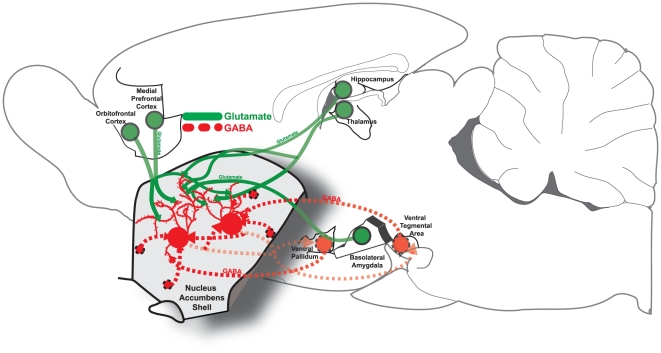
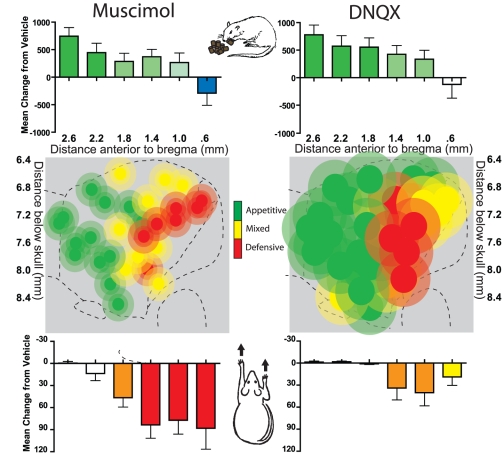
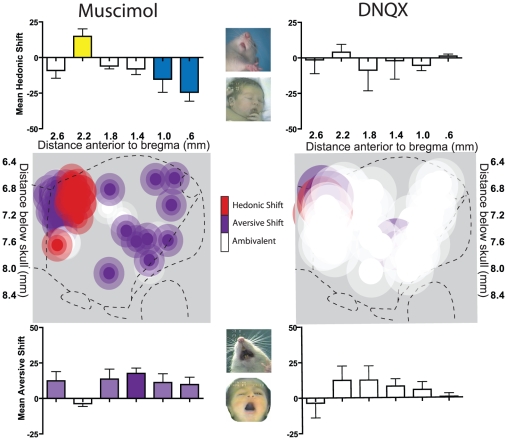
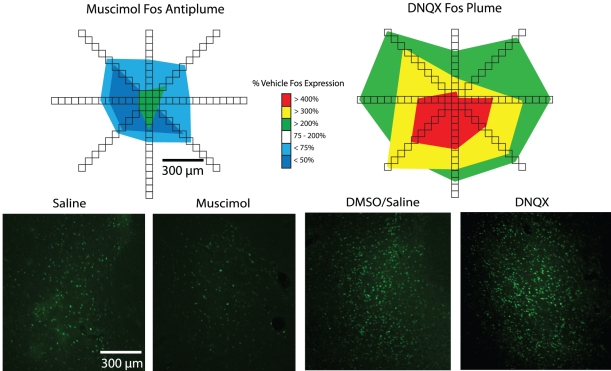
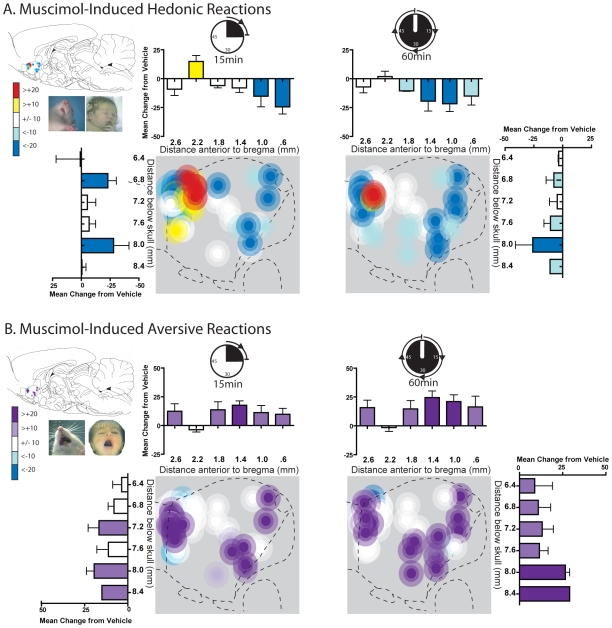
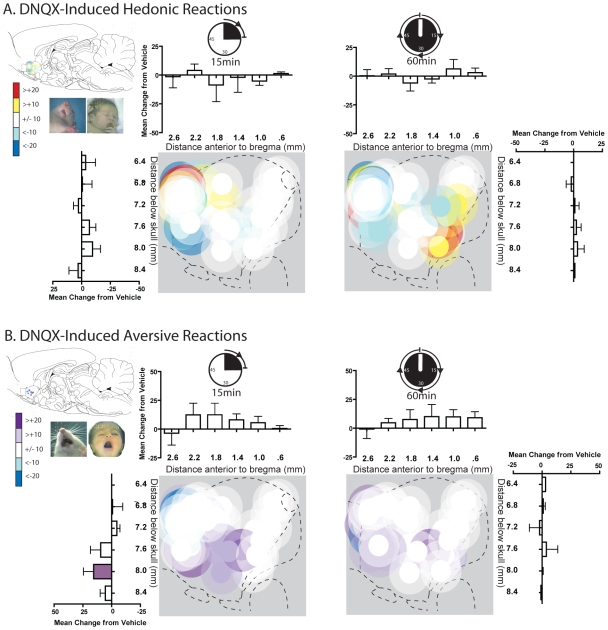
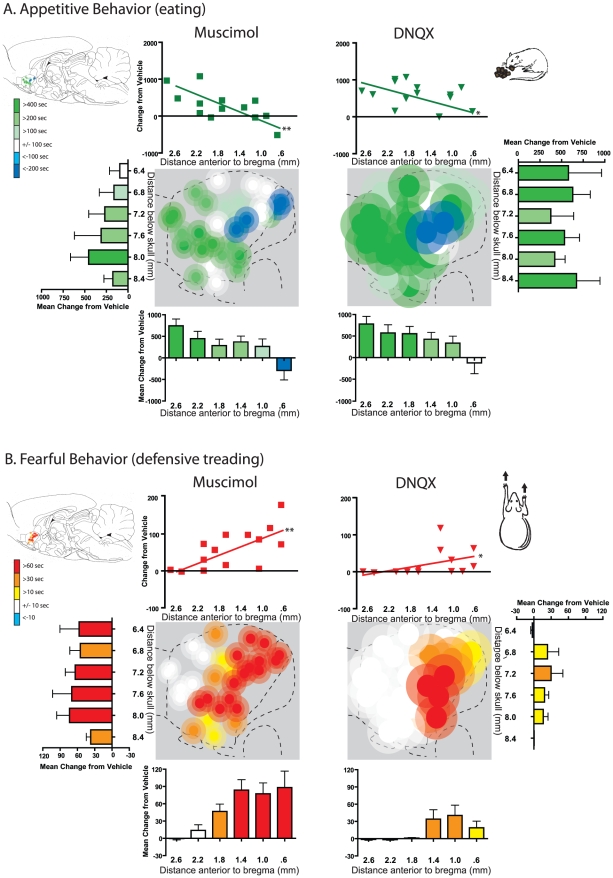
BACKGROUND: GABAergic signals to the nucleus accumbens (NAc) shell arise from predominantly subcortical sources whereas glutamatergic signals arise mainly from cortical-related sources. Here we contrasted GABAergic and glutamatergic generation of hedonics versus motivation processes, as a proxy for comparing subcortical and cortical controls of emotion. Local disruptions of either signals in medial shell of NAc generate intense motivated behaviors corresponding to desire and/or dread, along a rostrocaudal gradient. GABA or glutamate disruptions in rostral shell generate appetitive motivation whereas disruptions in caudal shell elicit fearful motivation. However, GABA and glutamate signals in NAc differ in important ways, despite the similarity of their rostrocaudal motivation gradients. METHODOLOGY/PRINCIPAL FINDINGS: Microinjections of a GABA(A) agonist (muscimol), or of a glutamate AMPA antagonist (DNQX) in medial shell of rats were assessed for generation of hedonic "liking" or "disliking" by measuring orofacial affective reactions to sucrose-quinine taste. Motivation generation was independently assessed measuring effects on eating versus natural defensive behaviors. For GABAergic microinjections, we found that the desire-dread motivation gradient was mirrored by an equivalent hedonic gradient that amplified affective taste "liking" (at rostral sites) versus "disliking" (at caudal sites). However, manipulation of glutamatergic signals completely failed to alter pleasure-displeasure reactions to sensory hedonic impact, despite producing a strong rostrocaudal gradient of motivation. CONCLUSIONS/SIGNIFICANCE: We conclude that the nucleus accumbens contains two functional affective keyboards for amino-acid signals: a motivation-generating keyboard and a hedonic-generating keyboard. Corticolimbic glutamate signals and subcortical GABA signals equivalently engage the motivation keyboard to generate desire and-or dread. Only subcortical GABA signals additionally engage the hedonic keyboard to amplify affective "liking" and "disliking" reactions. We thus suggest that top-down cortical glutamate signals powerfully regulate motivation components, but are relatively unable to penetrate core hedonic components of emotion. That may carry implications of limits to therapeutic regulation of pathological emotions.
Overview
The claims and statistics of this paper haven’t been checked yet.
Run the check — free, no account needed. It reads the open-access text and checks the sources it cites.
Integrity signals
Registry
Cites
Statistics
Figures
Verification
Claims the paper makes
The claims and statistics of this paper haven’t been checked yet.
Run the check — free, no account needed. It reads the open-access text and checks the sources it cites.
Claims other papers make about this one
Each is checked against this paper’s own text: does it say what the citing paper says it does?
The cited source says what the claim attributes to it.
In the citing paper
“This ‘disgust-plus-fear’ mode is produced when the posterior shell zone receives microinjections of a drug that activates GABA receptors, such as muscimol (Faure et al., 2010; Ho and Berridge, 2014).”
From Evolving Concepts of Emotion and Motivation (2018) · cites this paper as Faure et al., 2010
In the citing paper
“However, neural mechanisms that generate ‘disgust’ and ‘fear’ reactions are mostly distinct, though they do partly overlap in the posterior shell of nucleus accumbens (Faure et al., 2010; Maren et al., 2013; Ho and Berridge, 2014; Perusini and Fanselow, 2015; Paré and Quirk, 2017).”
From Evolving Concepts of Emotion and Motivation (2018) · cites this paper as Faure et al., 2010
In the citing paper
“In this GABA-related mode, the normally ‘liked’ taste of sucrose instead elicits ‘disgust’ gapes and headshakes from rats, as though the taste were bitter quinine.”
From Evolving Concepts of Emotion and Motivation (2018) · cites this paper as Faure et al., 2010
In the citing paper
“Yet our animal brain-manipulation studies show one interesting overlap in neural generators for intense ‘disgust’ and ‘fear’ reactions in nucleus accumbens, involving a shift in neural mode of function at the same brain location.”
From Evolving Concepts of Emotion and Motivation (2018) · cites this paper as Faure et al., 2010
In the citing paper
“The posterior portion of its medial shell has two ‘fear’ generating neurochemical modes (glutamate AMPA receptor blockade versus GABA receptor activation), and only the GABA mode also generates excessive ‘disgust’.”
From Evolving Concepts of Emotion and Motivation (2018) · cites this paper as Faure et al., 2010
Self-check
Percentages, sums and reported differences re-computed from the paper’s own numbers.
The self-check needs the paper’s full text.
Citations
Cites
The Rat Brain in Stereotaxic Coordinates
Paxinos, G., & Watson, C. (1983) · Elsevier eBooks · doi:10.1016/c2009-0-63235-9 · Cited by 28,585
Core affect and the psychological construction of emotion.
Russell, J. A. (2003) · Psychological Review · doi:10.1037/0033-295x.110.1.145 · Cited by 6,113
AChE-stained horizontal sections of the rat brain in stereotaxic coordinates
Paxinos, G., WATSON, C. R. R., & Emson, P. C. (1980) · Journal of Neuroscience Methods · doi:10.1016/0165-0270(80)90021-7 · Cited by 4,514
Kapur, S. (2003) · American Journal of Psychiatry · doi:10.1176/appi.ajp.160.1.13 · Cited by 2,813
The Neural Basis of Addiction: A Pathology of Motivation and Choice
Kalivas, P. W., & Volkow, N. D. (2005) · American Journal of Psychiatry · doi:10.1176/appi.ajp.162.8.1403 · Cited by 2,757
The Dopamine Hypothesis of Schizophrenia: Version III--The Final Common Pathway
Howes, O. D., & Kapur, S. (2009) · Schizophrenia Bulletin · doi:10.1093/schbul/sbp006 · Cited by 2,693
The human orbitofrontal cortex: linking reward to hedonic experience
Kringelbach, M. L. (2005) · Nature Reviews Neuroscience · doi:10.1038/nrn1747 · Cited by 2,180
Emotion and motivation: the role of the amygdala, ventral striatum, and prefrontal cortex
Cardinal, R. N., Parkinson, J. A., Hall, J., & Everitt, B. J. (2002) · Neuroscience & Biobehavioral Reviews · doi:10.1016/s0149-7634(02)00007-6 · Cited by 2,129
van Os, J., & Kapur, S. (2009) · The Lancet · doi:10.1016/s0140-6736(09)60995-8 · Cited by 1,971
Barrett, L. F., Mesquita, B., Ochsner, K. N., & Gross, J. J. (2007) · Annual Review of Psychology · doi:10.1146/annurev.psych.58.110405.085709 · Cited by 1,425 · cited 1×
“This feature might also conceivably set limits on the range of emotional processes that can be effectively adjusted by cognitive therapies that recruit top-down circuits [45,46,47,48,49,50,51,52].”
Background
Research works printed but not linked: 1
- H Moore, 2001, Interactions between prefrontal cortical, hippocampal, and amygdalar inputs in regulating the activity of nucleus accumbens neurons., Biological Psychiatry, 49, 34
Cited by
Sorted by citations
Berridge, K. C., & Kringelbach, M. L. (2015) · Neuron · doi:10.1016/j.neuron.2015.02.018 · Cited by 1,730
Self-citationThe neurobiology of anhedonia and other reward-related deficits
Der-Avakian, A., & Markou, A. (2012) · Trends in Neurosciences · doi:10.1016/j.tins.2011.11.005 · Cited by 1,130
The Nucleus Accumbens: An Interface Between Cognition, Emotion, and Action
Floresco, S. B. (2015) · Annual Review of Psychology · doi:10.1146/annurev-psych-010213-115159 · Cited by 938
Disentangling the Roles of Approach, Activation and Valence in Instrumental and Pavlovian Responding
Huys, Q. J. M., Cools, R., Gölzer, M., Friedel, E., Heinz, A., Dolan, R. J., & Dayan, P. (2011) · PLoS Computational Biology · doi:10.1371/journal.pcbi.1002028 · Cited by 436
“Liking” and “wanting” in eating and food reward: Brain mechanisms and clinical implications
Morales, I., & Berridge, K. C. (2020) · Physiology & Behavior · doi:10.1016/j.physbeh.2020.113152 · Cited by 346
Self-citationCastro, D. C., Cole, S. L., & Berridge, K. C. (2015) · Frontiers in Systems Neuroscience · doi:10.3389/fnsys.2015.00090 · Cited by 355
Self-citationFacial expressions of emotion states and their neuronal correlates in mice
Dolensek, N., Gehrlach, D. A., Klein, A. S., & Gogolla, N. (2020) · Science · doi:10.1126/science.aaz9468 · Cited by 327
Accumbal D1R Neurons Projecting to Lateral Hypothalamus Authorize Feeding
O’Connor, E. C., Kremer, Y., Lefort, S., Harada, M., Pascoli, V., Rohner, C., & Lüscher, C. (2015) · Neuron · doi:10.1016/j.neuron.2015.09.038 · Cited by 325
Evolving Concepts of Emotion and Motivation
Berridge, K. C. (2018) · Frontiers in Psychology · doi:10.3389/fpsyg.2018.01647 · Cited by 273
Self-citationPeciña, S., & Berridge, K. C. (2013) · European Journal of Neuroscience · doi:10.1111/ejn.12174 · Cited by 216
Self-citationAffective valence in the brain: modules or modes?
Berridge, K. C. (2019) · Nature reviews. Neuroscience · doi:10.1038/s41583-019-0122-8 · Cited by 196
Self-citationMapping brain circuits of reward and motivation: In the footsteps of Ann Kelley
Richard, J. M., Castro, D. C., DiFeliceantonio, A. G., Robinson, M. J. F., & Berridge, K. C. (2012) · Neuroscience & Biobehavioral Reviews · doi:10.1016/j.neubiorev.2012.12.008 · Cited by 183
Self-citationSerotonin and decision making processes
Homberg, J. R. (2012) · Neuroscience & Biobehavioral Reviews · doi:10.1016/j.neubiorev.2011.06.001 · Cited by 167
Wang, S., Leri, F., & Rizvi, S. J. (2021) · Progress in Neuro-Psychopharmacology and Biological Psychiatry · doi:10.1016/j.pnpbp.2021.110289 · Cited by 171
Battery-free, lightweight, injectable microsystem for in vivo wireless pharmacology and optogenetics
Zhang, Y., Castro, D. C., Han, Y., Wu, Y., Guo, H., Weng, Z., Xue, Y., Ausra, J., Wang, X. S., Li, R., et al. (2019) · Proceedings of the National Academy of Sciences · doi:10.1073/pnas.1909850116 · Cited by 158
Advances in the neurobiological bases for food ‘liking’ versus ‘wanting’
Castro, D. C., & Berridge, K. C. (2014) · Physiology & Behavior · doi:10.1016/j.physbeh.2014.05.022 · Cited by 175
Self-citationCurrent perspectives on incentive salience and applications to clinical disorders
Olney, J. J., Warlow, S. M., Naffziger, E. E., & Berridge, K. C. (2018) · Current Opinion in Behavioral Sciences · doi:10.1016/j.cobeha.2018.01.007 · Cited by 157
Self-citationFlagel, S. B., Cameron, C., Pickup, K. N., Watson, S. J., Akil, H., & Robinson, T. E. (2011) · Neuroscience · doi:10.1016/j.neuroscience.2011.09.004 · Cited by 153
Mapping anhedonia-specific dysfunction in a transdiagnostic approach: an ALE meta-analysis
Zhang, B., Lin, P., Shi, H., Öngür, D., Auerbach, R. P., Wang, X., Yao, S., & Wang, X. (2016) · Brain Imaging and Behavior · doi:10.1007/s11682-015-9457-6 · Cited by 152
Richard, J. M., & Berridge, K. C. (2011) · Journal of Neuroscience · doi:10.1523/jneurosci.1339-11.2011 · Cited by 158
Self-citationEnhanced Control of Attention by Stimulating Mesolimbic-Corticopetal Cholinergic Circuitry
Peters, M. M. M. S., Demeter, E., Lustig, C., Bruno, J., & Sarter, M. (2011) · Journal of Neuroscience · doi:10.1523/jneurosci.1902-11.2011 · Cited by 147
Architectural Representation of Valence in the Limbic System
Namburi, P., Al‐Hasani, R., Calhoon, G. G., Bruchas, M. R., & Tye, K. M. (2015) · Neuropsychopharmacology · doi:10.1038/npp.2015.358 · Cited by 148
Castro, D. C., Terry, R. A., & Berridge, K. C. (2016) · Neuropsychopharmacology · doi:10.1038/npp.2016.10 · Cited by 132
Self-citationOptogenetic self-stimulation in the nucleus accumbens: D1 reward versus D2 ambivalence
Cole, S. L., Robinson, M. J. F., & Berridge, K. C. (2018) · PLoS ONE · doi:10.1371/journal.pone.0207694 · Cited by 108
Self-citationHo, C., & Berridge, K. C. (2014) · European Journal of Neuroscience · doi:10.1111/ejn.12720 · Cited by 124
Self-citationMurrough, J. W., Collins, K. A., Fields, J., DeWilde, K. E., Phillips, M. L., Mathew, S. J., Wong, E., Tang, C. Y., Charney, D. S., & Iosifescu, D. V. (2015) · Translational Psychiatry · doi:10.1038/tp.2015.10 · Cited by 109
Resendez, S. L., Dome, M., Gormley, G., Franco, D., Nevárez, N., Hamid, A. A., & Aragona, B. J. (2013) · The Journal of Neuroscience · doi:10.1523/jneurosci.4123-12.2013 · Cited by 93
Coordinated Reductions in Excitatory Input to the Nucleus Accumbens Underlie Food Consumption
Reed, S. J., Lafferty, C. K., Mendoza, J. A., Yang, A. K., Davidson, T. J., Grosenick, L., Deisseroth, K. A., & Britt, J. P. (2018) · Neuron · doi:10.1016/j.neuron.2018.07.051 · Cited by 93
Ventral arkypallidal neurons inhibit accumbal firing to promote reward consumption
Vachez, Y. M., Tooley, J. R., Abiraman, K., Matikainen‐Ankney, B. A., Casey, E., Earnest, T., Ramos, L. M., Silberberg, H., Godynyuk, E. A., Uddin, O., et al. (2021) · Nature Neuroscience · doi:10.1038/s41593-020-00772-7 · Cited by 77
Huys, Q. J. M., Guitart‐Masip, M., Dolan, R. J., & Dayan, P. (2015) · Clinical Psychological Science · doi:10.1177/2167702614562040 · Cited by 85
Russell, S. E., Puttick, D. J., Sawyer, A. M., Potter, D. N., Mague, S. D., Carlezon, W. A., & Chartoff, E. H. (2016) · Journal of Neuroscience · doi:10.1523/jneurosci.2875-12.2016 · Cited by 73
Plasse, G., Schrama, R., van Seters, S., Vanderschuren, L. J. M. J., & Westenberg, H. G. M. (2012) · PLoS ONE · doi:10.1371/journal.pone.0033455 · Cited by 83
Liu, R., Wang, Y., Chen, X., Zhang, Z., Xiao, L., & Zhou, Y. (2021) · NeuroImage Clinical · doi:10.1016/j.nicl.2021.102599 · Cited by 84
Expressions of emotions across species
Zych, A. D., & Gogolla, N. (2021) · Current Opinion in Neurobiology · doi:10.1016/j.conb.2021.01.003 · Cited by 85
Stratford, T. R., & Wirtshafter, D. (2012) · Brain Research · doi:10.1016/j.brainres.2012.10.043 · Cited by 77
Zahm, D. S., Parsley, K. P., Schwartz, Z. M., & Cheng, A. Y. (2012) · The Journal of Comparative Neurology · doi:10.1002/cne.23157 · Cited by 76
Reward systems and cognitions in Major Depressive Disorder
Cléry-Melin, M.-L., Jollant, F., & Gorwood, P. A. P. M. (2018) · CNS Spectrums · doi:10.1017/s1092852918001335 · Cited by 73
Prefrontal cortex to accumbens projections in sleep regulation of reward
Liu, Z., Wang, Y., Cai, L., Li, Y., Chen, B., Dong, Y., & Huang, Y. H. (2016) · The Journal of Neuroscience · doi:10.1523/jneurosci.0347-16.2016 · Cited by 66
Li, Y., Wang, H., Qi, K., Chen, X., Li, S., Sui, N., & Kirouac, G. J. (2010) · Physiology & Behavior · doi:10.1016/j.physbeh.2010.10.006 · Cited by 65
Ramaekers, J. G., van Wel, J. H. P., Spronk, D. B., Franke, B., Kenis, G., Toennes, S. W., Kuypers, K. P. C., Theunissen, E. L., Stiers, P. L. J., & Verkes, R. (2015) · Brain Imaging and Behavior · doi:10.1007/s11682-015-9488-z · Cited by 63
Unpleasantness, Motivational Oomph, and Painfulness
Corns, J. (2014) · Mind & Language · doi:10.1111/mila.12048 · Cited by 60
Cromwell, H. C., Abe, N., Barrett, K. C., Caldwell‐Harris, C. L., Gendolla, G. H. E., Koncz, R., & Sachdev, P. S. (2020) · Neuroscience & Biobehavioral Reviews · doi:10.1016/j.neubiorev.2020.02.032 · Cited by 57
Methylphenidate reduces functional connectivity of nucleus accumbens in brain reward circuit
Ramaekers, J. G., Evers, E. A. T., Theunissen, E. L., Kuypers, K. P. C., Goulas, A., & Stiers, P. L. J. (2013) · Psychopharmacology · doi:10.1007/s00213-013-3105-x · Cited by 52
Parekh, P. K., Becker-Krail, D., Sundaravelu, P., Ishigaki, S., Okado, H., Sobue, G., Huang, Y., & McClung, C. A. (2018) · Biological Psychiatry · doi:10.1016/j.biopsych.2017.06.022 · Cited by 48
Richard, J. M., & Berridge, K. C. (2010) · European Journal of Neuroscience · doi:10.1111/j.1460-9568.2010.07553.x · Cited by 51
Self-citationHippocampal Input to the Nucleus Accumbens Shell Enhances Food Palatability
Yang, A. K., Mendoza, J. A., Lafferty, C. K., Lacroix, F., & Britt, J. P. (2019) · Biological Psychiatry · doi:10.1016/j.biopsych.2019.09.007 · Cited by 43
Hamel, L., Thangarasa, T., Samadi, O., & Ito, R. (2017) · eNeuro · doi:10.1523/eneuro.0330-16.2017 · Cited by 41
Naneix, F., Darlot, F., Coutureau, É., & Cador, M. (2016) · European Journal of Neuroscience · doi:10.1111/ejn.13149 · Cited by 43
Morales, I. (2022) · Appetite · doi:10.1016/j.appet.2022.106146 · Cited by 39
Single doses of THC and cocaine decrease proficiency of impulse control in heavy cannabis users
van Wel, J. H. P., Kuypers, K. P. C., Theunissen, E. L., Toennes, S. W., Spronk, D. B., Verkes, R. J., & Ramaekers, J. G. (2013) · British Journal of Pharmacology · doi:10.1111/bph.12425 · Cited by 44
Richard, J. M., Plawecki, A. M., & Berridge, K. C. (2013) · European Journal of Neuroscience · doi:10.1111/ejn.12194 · Cited by 37
Self-citationResistance to antidepressant drugs
Willner, P., Scheel‐Krüger, J., & Belzung, C. (2014) · Behavioural Pharmacology · doi:10.1097/fbp.0000000000000066 · Cited by 36
Curry, T., Egeto, P., Wang, H., Podnos, A., Wasserman, D., & Yeomans, J. S. (2013) · Genes Brain & Behavior · doi:10.1111/gbb.12037 · Cited by 34
Urstadt, K. R., & Stanley, B. G. (2015) · Frontiers in Systems Neuroscience · doi:10.3389/fnsys.2015.00008 · Cited by 33
Newman, S. M., Pascal, L., Sadeghian, K., & Baldo, B. A. (2013) · Biological Psychiatry · doi:10.1016/j.biopsych.2012.11.027 · Cited by 33
Altered emotional and motivational processing in the transgenic rat model for Huntington’s disease
Faure, A., Höhn, S., von Hörsten, S., Delatour, B., Raber, K. A., Leblanc-Veyrac, P., Samson-Desvignes, N., Doyère, V., & Massioui, N. E. (2010) · Neurobiology of Learning and Memory · doi:10.1016/j.nlm.2010.11.010 · Cited by 35
Self-citationHurley, S. W., & Carelli, R. M. (2020) · Journal of Neuroscience · doi:10.1523/jneurosci.0137-20.2020 · Cited by 29
Altered reward expectancy in individuals with recent methamphetamine dependence
Bischoff‐Grethe, A., Connolly, C. G., Jordan, S. J., Brown, G. G., Paulus, M. P., Tapert, S. F., Heaton, R. K., Woods, S. P., Grant, I., & the TMARC Group (2016) · Journal of Psychopharmacology · doi:10.1177/0269881116668590 · Cited by 28
Desire or Dread from Nucleus Accumbens Inhibitions: Reversed by Same-Site Optogenetic Excitations
Baumgartner, H. M., Cole, S. L., Olney, J. J., & Berridge, K. C. (2020) · Journal of Neuroscience · doi:10.1523/jneurosci.2902-19.2020 · Cited by 28
Self-citationLiu, Y., Wang, Y., Zhao, Z., Xie, G., Zhang, C., Chen, R., & Zhang, Y. (2024) · Nature Metabolism · doi:10.1038/s42255-024-01100-0 · Cited by 28
From Desire to Dread—A Neurocircuitry Based Model for Food Avoidance in Anorexia Nervosa
Frank, G. (2021) · Journal of Clinical Medicine · doi:10.3390/jcm10112228 · Cited by 24
Acute Food Deprivation Rapidly Modifies Valence-Coding Microcircuits in the AmygdalaPreprint
Calhoon, G. G., Sutton, A. K., Chang, C.-J., Libster, A. M., Glober, G. F., Lévêque, C. L., Murphy, G., Namburi, P., Leppla, C. A., Siciliano, C. A., et al. (2018) · bioRxiv (Cold Spring Harbor Laboratory) · doi:10.1101/285189 · Cited by 26
Carr, K. D. (2020) · Physiology & Behavior · doi:10.1016/j.physbeh.2020.112850 · Cited by 24
Stratford, T. R., & Wirtshafter, D. (2012) · Pharmacology Biochemistry and Behavior · doi:10.1016/j.pbb.2012.02.010 · Cited by 23
Flook, E. A., Luchsinger, J. R., Silveri, M. M., Winder, D. G., Benningfield, M. M., & Blackford, J. U. (2020) · Addiction Biology · doi:10.1111/adb.12861 · Cited by 22
Khan, H. A., Urstadt, K. R., Mostovoi, N. A., & Berridge, K. C. (2019) · Cognitive Affective & Behavioral Neuroscience · doi:10.3758/s13415-019-00758-4 · Cited by 21
Self-citationHurley, S. W., West, E. A., & Carelli, R. M. (2017) · Biological Psychiatry · doi:10.1016/j.biopsych.2017.05.009 · Cited by 20
From valence encoding to motivated behavior: A focus on the nucleus accumbens circuitry
Vieitas‐Gaspar, N., Soares‐Cunha, C., & Rodrigues, A. J. (2025) · Neuroscience & Biobehavioral Reviews · doi:10.1016/j.neubiorev.2025.106125 · Cited by 20
Reduced Expression of Nogo-A Leads to Motivational Deficits in Rats
Enkel, T., Berger, S. M., Schönig, K., Tews, B., & Bartsch, D. (2014) · Frontiers in Behavioral Neuroscience · doi:10.3389/fnbeh.2014.00010 · Cited by 18
A behavioral and micro positron emission tomography imaging study in a rat model of hypothyroidism
Yu, J., Tang, Y.-Y., Feng, H., & Cheng, X. (2014) · Behavioural Brain Research · doi:10.1016/j.bbr.2014.06.019 · Cited by 15
Hakim, J. D., Chami, J., & Keay, K. A. (2019) · Behavioural Brain Research · doi:10.1016/j.bbr.2019.112416 · Cited by 13
Li, Y., Ruan, Y., He, Y., Cai, Q., Pan, X., Zhang, Y. L., Liu, C., Pu, Z., Yang, J., Chen, M., et al. (2020) · Neuropharmacology · doi:10.1016/j.neuropharm.2020.108010 · Cited by 11
Frank, G., Shott, M. E., Pryor, T. L., Swindle, S., & Stoddard, J. (2022) · International Journal of Eating Disorders · doi:10.1002/eat.23814 · Cited by 10
Zhang, M., Luo, Y., Wang, J., Sun, Y., Xie, B., Zhang, L., Cong, B., Ma, C., & Wen, D. (2023) · Journal of Psychiatric Research · doi:10.1016/j.jpsychires.2023.05.057 · Cited by 8
Compulsion and choice in addiction
Holton, R., & Berridge, K. C. (2016) · Oxford University Press eBooks · doi:10.1093/acprof:oso/9780198727224.003.0009 · Cited by 8
Self-citationWilson, K.-E., Limburg, S., Duggan, M. K., Lawther, A. J., Williams, S. J., Lawrence, A. J., Hale, M. W., & Djouma, E. (2018) · Journal of Psychopharmacology · doi:10.1177/0269881118780015 · Cited by 8
Liu, M., Tan, X., Liu, E., Hang, Z., Song, R., Mu, S., Han, W., Yue, Q., & Sun, J. (2022) · International Journal of Molecular Sciences · doi:10.3390/ijms23137305 · Cited by 6
Serotonin and Emotional Decision-Making
Puig‐Pérez, S. (2019) · IntechOpen eBooks · doi:10.5772/intechopen.81506 · Cited by 6
Value-based cognition and drug dependency
Loganathan, K. (2021) · Addictive Behaviors · doi:10.1016/j.addbeh.2021.107070 · Cited by 8
Pulman, K. G. T., Somerville, E. M., & Clifton, P. G. (2012) · PLoS ONE · doi:10.1371/journal.pone.0040057 · Cited by 5
Attentional Modulation of Brain Responses to Primary Appetitive and Aversive Stimuli
Field, B. A., Buck, C. L., McClure, S. M., Nystrom, L. E., Kahneman, D. J., & Cohen, J. D. (2015) · PLoS ONE · doi:10.1371/journal.pone.0130880 · Cited by 5
Rivera-Irizarry, J. K., Hámor, P. U., Rowson, S. A., Asfouri, J. J., Liu, D., Zallar, L. J., Garcia, A. F., Skelly, M. J., & Pleil, K. E. (2023) · bioRxiv (Cold Spring Harbor Laboratory) · doi:10.1101/2023.07.03.547570 · Cited by 6
Why Don’t You Just Eat? Neuroscience and the Enigma of Eating Disorders
Pinson, C. K., & Frank, G. (2024) · FOCUS The Journal of Lifelong Learning in Psychiatry · doi:10.1176/appi.focus.20240006 · Cited by 16
Kovalenko, I. L., Galyamina, A. G., Смагин, Д. А., & Kudryavtseva, N. N. (2020) · Vavilov Journal of Genetics and Breeding · doi:10.18699/vj20.42-o · Cited by 4
The Ventral Pallidum as a Limbic Pleasure Generator.
Ho, C. (2010) · Deep Blue (University of Michigan) · Cited by 4
Nguyen, D. T., & Berridge, K. C. (2025) · Communications Biology · doi:10.1038/s42003-025-08944-6 · Cited by 3
Self-citationde Carvalho, R. P., Vale, B. D. M., Dsouki, N. A., Cafarchio, E. M., Junior, L. A. D. L., Aronsson, P., & Sato, M. A. (2023) · Brain Research · doi:10.1016/j.brainres.2023.148520 · Cited by 4
Diaz, J. C., Dunaway, K., Sheil, E., Sadeghian, K., Auger, A. P., & Baldo, B. A. (2022) · Behavioral Neuroscience · doi:10.1037/bne0000511 · Cited by 2
Contributions of Philip Teitelbaum to affective neuroscience
Berridge, K. C. (2011) · Behavioural Brain Research · doi:10.1016/j.bbr.2011.10.030 · Cited by 2
Self-citationAnhedonia in Parkinson’s Disease and Other Movement Disorders
Spalletta, G., Assogna, F., Caltagirone, C., & Leentjens, A. F. G. (2014) · Springer eBooks · doi:10.1007/978-94-017-8610-2_13 · Cited by 1
A molecularly defined NAcSh D1 subtype controls feeding and energy homeostasisPreprint
Liu, Y., Wang, Y., Zhao, Z., Xie, G., Zhang, C., Chen, R., & Zhang, Y. (2023) · bioRxiv (Cold Spring Harbor Laboratory) · doi:10.1101/2023.02.27.530275 · Cited by 1
The nucleus accumbens shell regulates hedonic feeding via a rostral hotspotPreprint
Marinescu, A., Kamal, E., Leary, P., Batista, K. N. I., Klug, M., Savić, N., Foll, C. L., & Labouesse, M. A. (2025) · eLife · doi:10.7554/elife.108639 · Cited by 1
Otaka, M. (2015) · D-Scholarship@Pitt (University of Pittsburgh)
Wilensky, A. (2012) · Deep Blue (University of Michigan)
Motivational Systems: Rewards and Incentive Value
LaLumiere, R. T., & Kalivas, P. W. (2012) · Wiley eBooks · doi:10.1002/9781118133880.hop203014
Nguyen, R. H. (2019) · Carolina Digital Repository (University of North Carolina at Chapel Hill) · doi:10.17615/4fvb-6v35
Hamel, L. (2014) · TSpace (University of Toronto)
The Neural Encoding of Reward in the Striatal-Pallidal Circuitry
Chan, C. L. (2017) · e-Publications@Marquette (Marquette University)
Mechanisms of Motivation in the Nucleus Accumbens
Cole, S. L. (2017) · Deep Blue (University of Michigan)
Metadata
- Authors
- Faure, A., Richard, J. M., & Berridge, K. C.
- Affiliations
- University of Michigan (US)
- Corresponding author
- Faure, Alexis
- Venue
- PLoS ONE
- Publisher
- Public Library of Science (PLoS)
- Published
- 2010-06-18
- Volume
- 5
- Issue
- 6
- Pages
- e11223
- ISSN
- 1932-6203 (ISSN-L)
- PMC
- PMC2887893
- OpenAlex
- W2084903850
- Cited by
- 114
- References
- 81
- Citations by year
- 2026: 1 · 2025: 6 · 2024: 3 · 2023: 4 · 2022: 4 · 2021: 6 · 2020: 10 · 2019: 10 · 2018: 8 · 2017: 5 · 2016: 6 · 2015: 11 · 2014: 11 · 2013: 7 · 2012: 9
- FWCI
- 3.75
- Type
- journal article
- Language
- en
- Open access
- gold
- doi.org
- Locations
- PLoS ONE (publishedVersion, cc-by)
- PubMed Central (publishedVersion, cc-by)
- PubMed (publishedVersion)
- DOAJ (DOAJ: Directory of Open Access Journals) (submittedVersion, cc-by-sa)
- Funders
- National Institutes of Health
- National Institute of Mental Health (MH-63649, R01MH063649)
- National Institute on Drug Abuse (DA015188, R01DA015188)
- Topics
- Life Sciences › Neuroscience › Cellular and Molecular Neuroscience › Neurotransmitter Receptor Influence on Behavior
- Life Sciences › Neuroscience › Cellular and Molecular Neuroscience › Neuroscience and Neuropharmacology Research
- Life Sciences › Neuroscience › Cognitive Neuroscience › Memory and Neural Mechanisms
- Keywords
- nucleus accumbens shell, GABAergic neurotransmission, glutamatergic signaling, motivation, desire, dread, appetitive motivation, muscimol, DNQX, rostrocaudal gradient, emotion regulation
- MeSH terms
- Animals, Fear, Feeding Behavior, gamma-Aminobutyric Acid, Motivation, Muscimol, Nucleus Accumbens, Quinoxalines, Glutamic Acid, Rats
About these checks
Registry, retraction, Cites and statistics results are computed, not judged, with one exception: a printed reference that no index lists is read once by a model before it counts as a citation error. Claims are extracted by a model and kept only when their quote appears verbatim in the text; each cited source is then checked, with a model’s help, for whether it says what the claim relies on. Those verdicts can be wrong — read the claim’s quote and the cited source before relying on one.
Statistics and arithmetic are recomputed, not judged.
Confidence bands are shown only for fields calibrated on our annotated test set. None is calibrated yet, so no band is shown.
What counts as a claim ›How we measure confidence ›How we check this ›
Are you an author, or do you see a problem with this page? Request a review
