

Red and Processed Meat and Colorectal Cancer Incidence: Meta-Analysis of Prospective Studies
Open accessThe DOI matches its Crossref record; 71 of the 72 references it cites were found in a registry or an index.
Abstract
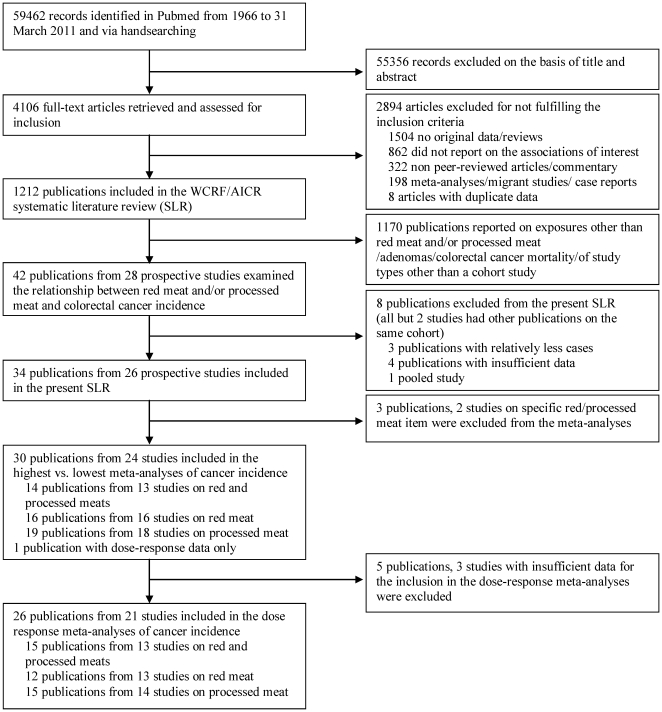
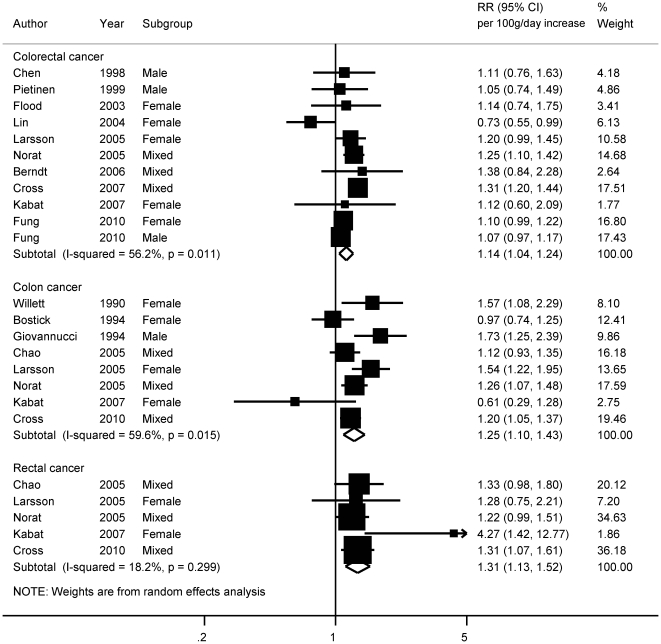
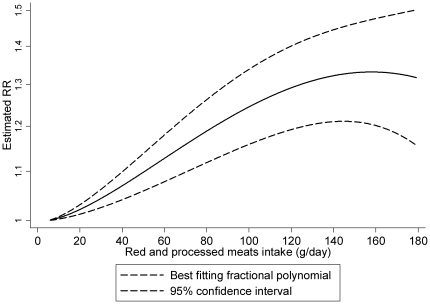
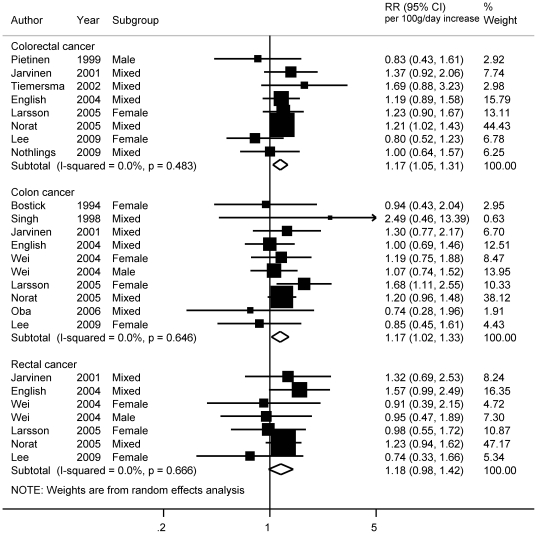
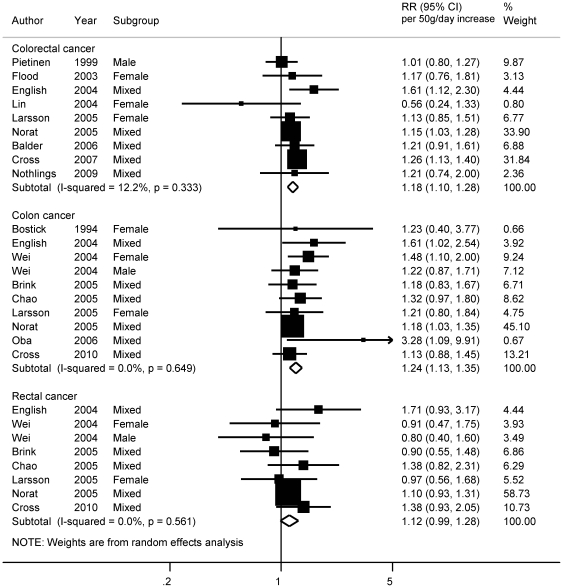
BACKGROUND: The evidence that red and processed meat influences colorectal carcinogenesis was judged convincing in the 2007 World Cancer Research Fund/American Institute of Cancer Research report. Since then, ten prospective studies have published new results. Here we update the evidence from prospective studies and explore whether there is a non-linear association of red and processed meats with colorectal cancer risk. METHODS AND FINDINGS: Relevant prospective studies were identified in PubMed until March 2011. For each study, relative risks and 95% confidence intervals (CI) were extracted and pooled with a random-effects model, weighting for the inverse of the variance, in highest versus lowest intake comparison, and dose-response meta-analyses. Red and processed meats intake was associated with increased colorectal cancer risk. The summary relative risk (RR) of colorectal cancer for the highest versus the lowest intake was 1.22 (95% CI = 1.11-1.34) and the RR for every 100 g/day increase was 1.14 (95% CI = 1.04-1.24). Non-linear dose-response meta-analyses revealed that colorectal cancer risk increases approximately linearly with increasing intake of red and processed meats up to approximately 140 g/day, where the curve approaches its plateau. The associations were similar for colon and rectal cancer risk. When analyzed separately, colorectal cancer risk was related to intake of fresh red meat (RR(for 100 g/day increase) = 1.17, 95% CI = 1.05-1.31) and processed meat (RR (for 50 g/day increase) = 1.18, 95% CI = 1.10-1.28). Similar results were observed for colon cancer, but for rectal cancer, no significant associations were observed. CONCLUSIONS: High intake of red and processed meat is associated with significant increased risk of colorectal, colon and rectal cancers. The overall evidence of prospective studies supports limiting red and processed meat consumption as one of the dietary recommendations for the prevention of colorectal cancer.
Overview
The claims and statistics of this paper haven’t been checked yet.
Free: it reads the open-access text and checks the first 5 claims that cite a source we can check. Create a free account to check every claim.
Integrity signals
Registry
Cites
Statistics
Figures
Verification
Claims the paper makes
The claims and statistics of this paper haven’t been checked yet.
Free: it reads the open-access text and checks the first 5 claims that cite a source we can check. Create a free account to check every claim.
Claims other papers make about this one
Each is checked against this paper’s own text: does it say what the citing paper says it does?
The cited source says what the claim attributes to it.
In the citing paper
“quality and obesity 54,55 , and processed meat with colorectal cancer 56 .”
From Ultra‐processed foods and the nutrition transition: global, regional and national trends, food systems transformations and political economy drivers (2020) · cites this paper as [56]
Self-check
Percentages, sums and reported differences re-computed from the paper’s own numbers.
The self-check needs the paper’s full text.
Citations
Cites
Meta-analysis in clinical trials
DerSimonian, R., & Laird, N. (1986) · Controlled Clinical Trials · doi:10.1016/0197-2456(86)90046-2 · Cited by 39,552 · cited 1×
“We present the results from the randomeffects meta-analysis that accounts for between-study heterogeneity [31] unless otherwise specified.”
MethodQuantifying heterogeneity in a meta‐analysis
Higgins, J. P. T., & Thompson, S. G. (2002) · Statistics in Medicine · doi:10.1002/sim.1186 · Cited by 36,763 · cited 1×
“To assess heterogeneity, we computed the Cochran Q test and I(2) statistic [36].”
MethodEstimates of worldwide burden of cancer in 2008: GLOBOCAN 2008
Ferlay, J., Shin, H., Bray, F., Forman, D., Mathers, C., & Parkin, D. M. (2010) · International Journal of Cancer · doi:10.1002/ijc.25516 · Cited by 21,293 · cited 1×
“Incidence rates are highest in North America, Western Europe, Australia/New Zealand, and in Asian countries that have experienced nutrition transition, such as Japan, Singapore, and North-Korea [1].”
BackgroundFood, nutrition, physical activity, and the prevention of cancer: a global perspective
(2008) · Choice Reviews Online · doi:10.5860/choice.45-5024 · Cited by 5,350
Publication and related bias in meta-analysis
Sterne, J. A. C., Gavaghan, D., & Egger, M. (2000) · Journal of Clinical Epidemiology · doi:10.1016/s0895-4356(00)00242-0 · Cited by 2,282
Lazcano-Ponce, E. C. (2009) · Salud Pública de México · Cited by 1,669
Worldwide Variations in Colorectal Cancer
Center, M. M., Jemal, A., Smith, R. A., & Ward, E. (2009) · CA: A Cancer Journal for Clinicians · doi:10.3322/caac.20038 · Cited by 1,276 · cited 1×
“carcinogenesis is indicated by the increase in colorectal cancer incidence in parallel with economic development and adoption of a western lifestyle [4], as well as by the results of migration studies that demonstrate a greater lifetime incidence of colorectal cancer among immigrants to high-incidence, industrialized…”
BackgroundWillett, W. C., Stampfer, M. J., Colditz, G. A., Rosner, B. A., & Speizer, F. E. (1990) · New England Journal of Medicine · doi:10.1056/nejm199012133232404 · Cited by 1,248 · cited 6×
“References: Chen, 1998 [51]; Pietinen, 1999 [57]; Flood, 2003 [33]; Lin, 2004 [56]; Larsson, 2005 [34]; Norat, 2005 [50]; Berndt, 2006 [19]; Cross, 2007 [22]; Kabat, 2007 [24]; Fung, 2010 [23]; Willett, 1990 [58]; Bostick, 1994 [52]; Giovannuccci, 1994 [55]; Chao, 2005 [54]; Cross, 2010 [21].”
ResultInfluentialGeneralized Least Squares for Trend Estimation of Summarized Dose–response Data
Orsini, N., Bellocco, R., & Greenland, S. (2006) · The Stata Journal: Promoting communications on statistics and Stata · doi:10.1177/1536867x0600600103 · Cited by 1,241 · cited 1×
“In linear dose-response meta-analyses, we pooled the relative risk estimates per unit of intake increase (with its standard error) reported in the studies, or computed by us from the categorical data using generalized least-squares for trend estimation [32].”
MethodCairns, S. R., Scholefield, J. H., Steele, R. J., Dunlop, M. G., Thomas, H. J. W., Evans, G. D., Eaden, J. A., Rutter, M. D., Atkin, W. P., Saunders, B. P., et al. (2010) · Gut · doi:10.1136/gut.2009.179804 · Cited by 1,141 · cited 1×
“Screening and surveillance of adenomatous polyps, a precursor of colorectal cancer, is currently the cornerstone for primary prevention of colorectal cancer [6].”
Background
Research works printed but not linked: 2
- 2003, Food, Nutrition, Physical Activity, and the Prevention of Cancer: a Global Perspective, Systematic Literature Review Specification Manual
- A Tobias, 1999, Assessing the influence of a single study in meta-analysis., Stata Tech Bull, 47, 15
Cited by
Items 601–700 of 912
Host Microbiomes Influence the Effects of Diet on Inflammation and Cancer
Mahmood, R., Voisin, A., Olof, H., Khorasaniha, R., Lawal, S. A., & Armstrong, H. (2023) · Cancers · doi:10.3390/cancers15020521 · Cited by 4
Chen, A. Y., Matich, E. K., Laryea, J. A., Hsu, P.-C., & Su, L. J. (2024) · Nutrients · doi:10.3390/nu16234200 · Cited by 4
Lanting, C. I., Vroome, D. E. M. M., Elias, S. G., Brandt, V. D. P. A., Leeuwen, V. F. E., Kampman, E., Kiemeney, L. A. L. M., Peeters, P. H. M., Vries, D. E., & Bausch-Goldbohm, R. A. (2014) · Research Publications (Maastricht University) · Cited by 7
Self-citationJawhara, M., Sørensen, S. B., Heitmann, B. L., Halldorsson, T. I., Pedersen, A. K., & Andersen, V. C. (2020) · Nutrients · doi:10.3390/nu12061765 · Cited by 5
“High red meat intake has been associated with an increased risk of developing chronic inflammatory diseases and colorectal cancer [23,53].”
BackgroundMousavi, S. N., Abbasi, S., & Azarikia, F. (2021) · Journal of Food Processing and Preservation · doi:10.1111/jfpp.15592 · Cited by 4
Meat and Cancer Evidence for and Against
Sødring, M. S., Oostindjer, M., Dragsted, L. O., Haug, A., Paulsen, J. E., & Egelandsdal, B. (2017) · Elsevier eBooks · doi:10.1016/b978-0-08-100593-4.00020-5 · Cited by 4
Dwan, C., & Miles, A. (2018) · Health Risk & Society · doi:10.1080/13698575.2018.1494267 · Cited by 5
“…confounds could not be ruled out of some studies), although one meta-analysis of colorectal cancer reported a 17 per cent increased risk per 100g of red meat eaten daily (Chan et al., 2011); and there is good mechanistic evidence supporting a link between red meat consumption and colorectal cancer.”
Insights Into the Relationship Between Gut Microbiota and Colorectal Cancer
Mota, J. F., Walter, J., & Prado, C. M. M. (2018) · Current Colorectal Cancer Reports · doi:10.1007/s11888-018-0419-4 · Cited by 7
Meat in the Human Diet: A Biosocial Perspective
Leroy, F., & SMET, S. D. (2019) · Springer eBooks · doi:10.1007/978-3-030-05484-7_1 · Cited by 4
Matre, Å. O., Parys, A. V., Olsén, T., Haugsgjerd, T. R., Baravelli, C. M., Nygard, O. K., Dierkes, J., & Lysne, V. (2021) · Frontiers in Nutrition · doi:10.3389/fnut.2021.642612 · Cited by 5
“Particularly, dietary intakes of red and processed meat have gained attention for their association with increased colorectal cancer risk (9).”
BackgroundResultDietary Habits and Global Incidence of Colon Cancer
Shinde, S., Sinha, V., Dixit, V., Dwivedi, M. K., Vishvakarma, N. K., Tiwari, A. K., Pandey, S., & Shukla, D. (2021) · Springer eBooks · doi:10.1007/978-3-030-64668-4_2 · Cited by 8
Ma, C., Zhang, X., Zhao, X., Zhang, N., Zhou, S., Zhang, Y., & Li, P. (2021) · Frontiers in Genetics · doi:10.3389/fgene.2021.690530 · Cited by 4
Κοκκινοπούλου, Ά., McGowan, R., Brogan, Y., Armstrong, J., Pagkalos, I. G., Hassapidou, M. N., & Kafatos, A. (2022) · Nutrients · doi:10.3390/nu14071383 · Cited by 5
“When red meat and processed meat were examined separately, they found both were associated with an increased risk of colorectal cancer [22].”
BackgroundRetractedMa, Z., Zhenguo, L. I., Wang, H., Wang, R., & Han, X. (2022) · Chinese Journal of Chromatography · doi:10.3724/sp.j.1123.2022.01001 · Cited by 4
Consumption Expenditure on Processed Meat and Its Correlates: An Ethnic Comparison
Cheah, Y. K., Appannah, G., & Adzis, A. B. A. (2022) · Nutrition and Cancer · doi:10.1080/01635581.2022.2123534 · Cited by 4
“As revealed in another meta-analysis, consuming 50 grams of processed meat daily is related to 18% increases in the probability of developing colorectal cancer (4).”
Frieler, M., Moore, M., & Longacre, M. L. (2023) · Journal of Cancer Education · doi:10.1007/s13187-023-02273-0 · Cited by 5
Overview of the Major Causes of Human Cancer
Boffetta, P., Boccia, S., & Vecchia, C. L. (2014) · Springer eBooks · doi:10.1007/978-3-319-05068-3_5 · Cited by 4
Fleischkonsum und Krebsrisiko – darf man noch Fleisch essen?
Rohrmann, S., Cabaset, S., & Linseisen, J. (2017) · Praxis · doi:10.1024/1661-8157/a002747 · Cited by 5
“In der EPIC-Kohorte erklärte die endogene Bildung von NNitrosoverbindungen einen Teil des Zusammenhanges zwischen dem Verzehr von rotem Fleisch und Fleischprodukten und dem Risiko von Magenkrebs[28]; in einer Studien in China war eine hohe endogene Bildung von NOC mit einem erhöhten Dickdarmkrebsrisiko verbunden [29].”
BackgroundChinese consensus on the prevention of colorectal cancer (2016, S hanghai)
Fang, J., Yong Quan, S. H. I., Chen, Y., Li, J., & Sheng, J. Q. (2017) · Journal of Digestive Diseases · doi:10.1111/1751-2980.12450 · Cited by 6
Mechanistic Hypotheses on Colorectal Cancer and Red Meat Intake: A Review
Surya, R. (2020) · IOP Conference Series Earth and Environmental Science · doi:10.1088/1755-1315/426/1/012176 · Cited by 5
Usher‐Smith, J. A., Häggström, C., Wennberg, P., Lindvall, K., Strelitz, J., Sharp, S. J., & Griffin, S. J. (2021) · Preventive Medicine · doi:10.1016/j.ypmed.2021.106712 · Cited by 4
“…fibre, the evidence comes from prospective cohort studies in which between-individual differences in single lifestyle factors (Aune et al., 2012; Vieira et al., 2015; Liu et al., 2013; Chan et al., 2011; Aune et al., 2011) at one time-point have been associated with risk of specific cancers.”
Lance, P. (2019) · Springer eBooks · doi:10.1007/978-3-030-15935-1_14 · Cited by 5
Late effect of the food consumption on colorectal cancer rate
Ganjavi, M., & Faraji, B. (2018) · International Journal of Food Sciences and Nutrition · doi:10.1080/09637486.2018.1472747 · Cited by 4
“On the other hand, many research studies in different parts of the world talked about the increasing effects of high intake of red meat on CRC rate (Chao et al. 2005; Larsson and Wolk 2006; Chan et al. 2011; McCullough et al. 2013; Safari et al. 2013; Chen et al. 2015; Tayyem et al. 2017).”
BackgroundDiscovery and characterisation of dietary patterns in two Nordic countries
Edberg, A., Freyhult, E., Sand, S., Fagt, S., Knudsen, V. K., Andersen, L. F., Lindroos, A. K., Soeria‐Atmadja, D., Gustafsson, M. G., & Hammerling, U. (2013) · doi:10.6027/tn2013-548 · Cited by 4
A recipe for a disaster: food, climate change, and cancer
Nogueira, L., Sakka, R., & Jovanovic, C. E. S. (2025) · Cancer Causes & Control · doi:10.1007/s10552-025-01996-3 · Cited by 4
“[37–39] Meat consumption is also associated with worse cancer mortality [40–42].”
The Role of Xenobiotics and Anelloviruses in Colorectal Cancer: Mechanisms and Perspectives
Aguayo, F., Tapia, J. C., Calaf, G. M., Muñoz, J. P., Osorio, J. C., Guzmán-Venegas, M., Moreno-León, C., Lévican, J., & Andrade-Madrigal, C. (2025) · International Journal of Molecular Sciences · doi:10.3390/ijms26094354 · Cited by 5
“The WCRF/AICR concludes there is “convincing” evidence that processed meat causes CRC and “probable” evidence that red meat causes CRC [64].”
Review: A vade-mecum for ruminant grazing and health
Fleming, A., Wescombe, P. A., & Gregorini, P. (2025) · animal · doi:10.1016/j.animal.2025.101548 · Cited by 3
Red meat intake and the risk of endometrial cancer: Meta-analysis of observational studies
Ju, W. (2015) · World Journal of Meta-Analysis · doi:10.13105/wjma.v3.i2.125 · Cited by 3
Друк, И. В., Semenova, E. V., Логинова, Е. Н., Korennova, O. Y., Анатольевич, С. А., Lyalyukova, E. A., & Nadey, E. V. (2022) · Экспериментальная и клиническая гастроэнтерология · doi:10.31146/1682-8658-ecg-205-9-116-128 · Cited by 4
Gastrointestinal Malignancy: Genetic Implications to Clinical Applications
Trembath, H. E., Yeh, J. J., & Lopez, N. (2024) · Cancer treatment and research · doi:10.1007/978-3-031-61238-1_15 · Cited by 3
Seo, E.-B., Oh, S.-M., & Han, A. (2024) · Food & Nutrition Research · doi:10.29219/fnr.v68.10844 · Cited by 6
Koralnik, L. R., Lafont, E., Akerele, C. A., Bonner, M., Musselman, A., Ruby, E., Gonen, O., Lotan, E., Lee, J. J., Clemente, J. C., et al. (2025) · Schizophrenia Research · doi:10.1016/j.schres.2025.04.025 · Cited by 5
Abbasi, M. M., Babaahmadi, P., Nozari, F., Khosravi, F., Golkar, Z., Tavasoli, Z., Alizadeh, V., Nouriani, M., Jafari, M., Shabani, N., et al. (2025) · BMC Gastroenterology · doi:10.1186/s12876-025-03859-2 · Cited by 5
“Chan D. S. et al. [75] reported that high intake of red meat is related to a 17% increased risk of CRC. Finally, the DASH diet supplies necessary calcium, which binds to fatty acids and bile to decrease their carcinogenic potential through insoluble complex formation [28, 31, 73].”
Effect of Ranolazine on 1, 2 - Dimethyl hydrazine induced colon cancer in mice
Pemmireddy, R., Alvala, R., Sama, V., & Sriramoju, A. (2019) · Asian Journal of Pharmacy and Pharmacology · doi:10.31024/ajpp.2019.5.6.15 · Cited by 3
Characterization of in vitro 3D cultures
Mousavi, N. (2021) · Apmis · doi:10.1111/apm.13168 · Cited by 3
Nakamura, Y., Narita, A., Sutoh, Y., Imaeda, N., Goto, C., Matsui, K., Takashima, N., Kadota, A., Miura, K., Nakatochi, M., et al. (2021) · Journal of Nutritional Science · doi:10.1017/jns.2021.49 · Cited by 3
Cheng, C.-C., Lai, I.-L., Huang, S.-H., Tsai, W., Hsieh, P., Yeh, C.-Y., Chiang, S.-F., Hung, H., & You, J. (2022) · Cancers · doi:10.3390/cancers14030489 · Cited by 3
“(93–95% of CRC cases [2]) are wide-ranging and include positive family history [3], longterm inflammatory bowel disease, type 2 diabetes [4], previous CRC or adenoma, male sex, and lifestyle (low physical activity [5], smoking [6], alcohol consumption [7], obesity [8], low-fiber diet, and red and processed meat ingest…”
BackgroundDiet, Physical Activity, and Cancer Prevention
Murphy, R. A. (2022) · Nutrition and health · doi:10.1007/978-3-030-82515-7_14 · Cited by 4
Metformin, Microbiota and Health
Paz, G. S., & Fernandes, J. (2022) · Journal of Exploratory Research in Pharmacology · doi:10.14218/jerp.2022.00032 · Cited by 3
Santo, S. G. E., Silva, T., Vinken, M., Cogliati, B., Barbisan, L. F., & Romualdo, G. R. (2022) · Antioxidants · doi:10.3390/antiox11122368 · Cited by 3
“In these countries, the so-called “Westernization of lifestyle”, which includes the use of tobacco and alcoholic beverages, physical inactivity, increased intake of processed red meats, low dietary fiber, fruits, and vegetables, accounts for the increased CRC risk and burden [5–9].”
Rochefort, G., Brassard, D., Desroches, S., Robitaille, J., Lemieux, S., Provencher, V., & Lamarche, B. (2023) · Frontiers in Nutrition · doi:10.3389/fnut.2023.1148137 · Cited by 5
Diet, Deficiencies, and Inflammatory Bowel Diseases: a Comprehensive Review
Cornet, N., & Battat, R. J. (2023) · Current Treatment Options in Gastroenterology · doi:10.1007/s11938-023-00415-3 · Cited by 3
Sowing potential transformative changes in the fishing and agrifood systems – Conference report
Moranta, J., del Corral, D. F., López‐López, L., Gómez, S., Agujetas, J., Albo‐Puigserver, M., Brent, Z. W., Bathily, L., Calvário, R., Cavallé, M., et al. (2023) · Marine Policy · doi:10.1016/j.marpol.2023.105673 · Cited by 4
Berberian, P., Obimba, C., Glickman-Simon, R., & Sethi, T. (2015) · EXPLORE · doi:10.1016/j.explore.2015.07.011 · Cited by 3
Hill, B. T. (2013) · Springer eBooks · doi:10.1007/978-3-642-40489-4_2 · Cited by 3
Human Nutrition from the Gastroenterologist’s Perspective
Grossi, E., & Pace, F. (2016) · Springer eBooks · doi:10.1007/978-3-319-30361-1 · Cited by 3
A Review on Food-Associated Carcinogenesis
Gall‐Tros̆elj, K., Guéraud, F., Glavan, T. M., Pierre, F., & Žarković, N. (2016) · CRC Press eBooks · doi:10.1201/9781315371443-4 · Cited by 3
XRCC2 Arg188His polymorphism and colorectal cancer risk: a meta-analysis
Wang, Z., Wei, Y., An, L., Xi, C., Wang, K., Hong, D., Shi, Y., Zang, A., Su, S., & Li, W. (2021) · Journal of International Medical Research · doi:10.1177/03000605211039473 · Cited by 3
Electrodes for Unique Anatomical Access in Electroporation
Maglietti, F. H., Tellado, M. N., & Impellizeri, J. A. (2021) · Springer eBooks · doi:10.1007/978-3-030-80668-2_13 · Cited by 3
Smolle, M. A., Kashofer, K., Riedl, J. M., Stotz, M., & Gerger, A. (2019) · Anticancer Research · doi:10.21873/anticanres.13184 · Cited by 3
Association of behavioral risk factors with the development of malignant neoplasms
Каприн, А. Д., Чиссов, В. И., Александрова, Л. М., & Starinsky, V. V. (2021) · Russian Journal of Preventive Medicine · doi:10.17116/profmed202124021109 · Cited by 3
Diet and Nutrition in the Etiology and Prevention of Cancer
Clinton, S. K., Grainger, E. M., & Giovannucci, E. L. (2017) · Wiley eBooks · doi:10.1002/9781119000822.hfcm037 · Cited by 3
Liang, J., Lin, Y., Huang, Z., Ni, J., Lin, H., Cai, Y., Qi, J., Yao, L., Yang, L., Lin, D., et al. (2024) · Research Square · doi:10.1101/2024.11.30.24318246 · Cited by 4
Czech-Załubska, K., Didkowska, A., Klich, D., Jackowska-Tracz, A., Zarzynska, J. M., & Anusz, K. (2024) · Nutrients · doi:10.3390/nu16060827 · Cited by 2
Wong, M. C. S., Yau, S. T. Y., Leung, E. Y., Wang, H., & Huang, J. (2024) · JGH Open · doi:10.1002/jgh3.13062 · Cited by 2
Pei, B., Liu, P., Peng, S., & Zhou, F. (2024) · Discover Oncology · doi:10.1007/s12672-024-01639-0 · Cited by 2
The Prevalence of Polyketide Synthase-Positive E. coli in Cystic Fibrosis
Chan, C., Coffey, M. J., Murphy, C., McKay, I. R., Abdu, J., Paida, K., Tam, R. Y., Wrigley-Carr, H., Prentice, B. J., Owens, L., et al. (2025) · Microorganisms · doi:10.3390/microorganisms13030681 · Cited by 2
“From the dietary intake survey results, 5 dietary variables (total fat, saturated fat, meat, total sugar, and total fibre) were selected for analysis in our study, based on previous associations with CRC risk [24–26].”
Händel, M. N., Rohde, J. F., Larsen, S. C., Sørensen, T. I. A., & Heitmann, B. L. (2025) · Nutrition Reviews · doi:10.1093/nutrit/nuaf030 · Cited by 5
Khan, S. H., Younus, H., & Khan, M. A. (2025) · Journal of drug targeting · doi:10.1080/1061186x.2025.2593461 · Cited by 4
Georgoulia, K. K., Tsekouras, V., & Mavrikou, S. (2025) · Pharmaceuticals · doi:10.3390/ph19010013 · Cited by 2
“The risk of CRC is enhanced by a number of environmental lifestyle variables that are modifiable, including smoking, excessive alcohol use, increasing body weight, and consumption of red and processed meat [33].”
From filets to fibers: Revealing the structural complexity of whole-cut chicken breast alternatives
van Seventer, N., Abello, N., Oosterlinck, F., & Nijsse, J. (2026) · LWT · doi:10.1016/j.lwt.2026.119077 · Cited by 2
Shashikumar, U., Naik, H. N., Veerabhadra, J. E., Krishnamoorthi, V., Tsai, P., Huang, P.-C., Chen, Y.-H., Jauhari, S., Lin, Y.-C., Ponnusamy, V. K., et al. (2026) · Current Pollution Reports · doi:10.1007/s40726-026-00398-6 · Cited by 2
Aune, D., Schlesinger, S., & Sobiecki, J. G. (2026) · European Journal of Epidemiology · doi:10.1007/s10654-026-01380-8 · Cited by 2
“…to contribute to the observed associations independently of BMI, with red and processed meat intake being an established risk factor for colorectal cancer [65], and a recent meta-analysis additionally reporting increased myeloma, and of vegan diets and colorectal cancer and prostate cancer (Fig.”
Self-citationLi, M.-L., Lin, Y.-S., Wu, P.-Y., Chang, L.-H., Huang, S.-M., & Hsu, K. (2026) · Food Research International · doi:10.1016/j.foodres.2026.119368 · Cited by 3
Dauletnazarov, N. K., Вязовиченко, Ю. Е., & Викторович, Т. Н. (2025) · Epidemiology and Vaccinal Prevention · doi:10.31631/2073-3046-2025-24-1-90-100 · Cited by 2
Jones, B., & Coe, S. (2025) · Nutrition Research Reviews · doi:10.1017/s0954422425100073 · Cited by 2
Prevention of Colorectal Neoplasia
Dolejs, S. C., Gayed, B. N., & Fajardo, A. D. (2016) · Clinics in Colon and Rectal Surgery · doi:10.1055/s-0036-1584086 · Cited by 2
Health And Greenhouse Gas Emission Implications Of Reducing Meat Intakes In Hong Kong
Yip, C. S. C., & Fielding, R. (2017) · The HKU Scholars Hub (University of Hong Kong) · doi:10.5281/zenodo.1339753 · Cited by 4
Dietary energy density and risk of prostate cancer: (A case–control study)
Jalilpiran, Y., Mehranfar, S., Jafari, A., Mohajeri, S. A. R., & Faghih, S. (2021) · Clinical Nutrition ESPEN · doi:10.1016/j.clnesp.2021.03.028 · Cited by 2
Effect of Glucosamine and Ascorbic Acid Addition on Beef Burger Textural and Sensory Attributes
Soladoye, O. P., Hrynets, Y., Betti, M., & Pietrasik, Z. (2021) · Polish Journal of Food and Nutrition Sciences · doi:10.31883/pjfns/142926 · Cited by 2
“…on-line: 27 October 2021 INTRODUCTION In recent years, epidemiological studies are associating red and processed meat with several human disease conditions including cardiovascular disease, colorectal/colon cancer, diabetes and thrombosis, among others [Chan et al., 2011; Micha et al., 2010].”
BackgroundOcena wiedzy młodych dorosłych na temat czynników ryzyka i profilaktyki raka jelita grubego
Hreńczuk, M. K., & Sidorczuk, P. (2022) · Medycyna Ogólna i Nauki o Zdrowiu · doi:10.26444/monz/147112 · Cited by 2
Nutritional Health in Premenopausal Women: A Cross-Sectional Study from Turkey
Esen, S. A., Esen, İ., & Açıkgöz, Y. (2022) · International Journal of Preventive Medicine · doi:10.4103/ijpvm.ijpvm_141_20 · Cited by 2
Role of Diet in the Pathogenesis of Colorectal Polyps and Cancer
Patel, A. A., Houston, K., Saadeh, M., Vilela, A., Yoo, B. S., D’Souza, S. M., & Johnson, D. A. (2022) · Recent Progress in Nutrition · doi:10.21926/rpn.2203018 · Cited by 2
Fecteau, R. E., & Kieber‐Emmons, A. (2022) · Springer eBooks · doi:10.1007/978-3-030-94953-2_8 · Cited by 2
An Insight on Gut Flora, Colorectal Cancer Mechanism, and Treatment Strategies
Kumar, R., Kaur, A., & Rajput, D. (2023) · Advanced Gut & Microbiome Research · doi:10.1155/2023/7429949 · Cited by 4
“Red and processed meat diet rises linearly with the risk of CRC up to a threshold of 140 g per day, according to a comprehensive assessment of data from 13 prospective studies [148].”
BackgroundCardiovascular Health and Colorectal Cancer Screening in Black Men: A Cross-Sectional Analysis
Hornbuckle, K., Williams, A., Joseph, J. J., Nolan, T. S., Gray, D. M., Gregory, J., & Ewing, A. P. (2024) · American Journal of Men s Health · doi:10.1177/15579883241249642 · Cited by 2
“…a diet high in saturated fats, red and processed meats; and low in fruits, vegetables, and fiber has been linked to both CRC and CVD, the exclusion of diet from our study could have impacted overall CVH scores (Chan et al., 2011; Fan et al., 2017; Handy et al., 2018; Knudsen et al., 2022).”
BackgroundLi, J., Gao, R., Zhao, C., Xiang, H., Le, X., Zhang, X., Cai, Q., He, L., Li, Q., Hu, L., et al. (2024) · Biomedicine & Pharmacotherapy · doi:10.1016/j.biopha.2024.117694 · Cited by 2
Impact of diet on risk of colorectal cancer: how strong is the evidence?
Johnson, I. T. (2012) · Colorectal Cancer · doi:10.2217/crc.12.4 · Cited by 2
Identification and chemoprevention in subjects at moderate risk of colorectal cancer
Benamouzig, R., & Uzzan, B. (2011) · Best Practice & Research Clinical Gastroenterology · doi:10.1016/j.bpg.2011.09.001 · Cited by 2
Diet and colorectal cancer risk and survival
Winkels, R. M., van Duijnhoven, F. J., Heine-Bröring, R. C., & Kampman, E. (2013) · Colorectal Cancer · doi:10.2217/crc.12.76 · Cited by 3
Self-citationCelada, P. A., & Sánchez-Muniz, F. J. (2016) · Anales de la Real Academia Nacional de Farmacia · Cited by 14
Prevention, Information Technology, and Cancer
Morgan, G. D., & Fiore, M. C. (2016) · Elsevier eBooks · doi:10.1016/b978-0-12-802115-6.00006-9 · Cited by 2
“The overall evidence from prospective studies supports limiting red and processed meat consumption as one of the dietary recommendations for the prevention of colorectal cancer [21].”
BackgroundMolecular Pathogenesis of Colorectal Cancer
Král, J., Slyšková, J., Vodička, P., & Špičák, J. (2016) · Klinicka onkologie · doi:10.14735/amko2016419 · Cited by 4
Comparison of Risk Factors and Molecular Analysis of Right-Sided Colon and Left Sided Colon Cancer
Luisetto, M. (2019) · Advances in Cancer Research & Clinical Imaging · doi:10.33552/acrci.2019.02.000533 · Cited by 3
STUDY OF FOOD ADDITIVES COMPOSITION IN COMMERCIALLY PROCESSED BEEF PRODUCTS
Zulkarnain, M. R., Pricillia, G., & Okinurshabani, Y. (2021) · Jurnal Teknologi dan Industri Pangan · doi:10.6066/jtip.2021.32.1.72 · Cited by 3
“The risk of colorectal cancer will be 18% increased by eating 50 grams of processed meat daily and 17% increased by eating 100 g of red meat daily (Chan et al., 2011).”
BackgroundVakil, D. (2023) · UC Merced Undergraduate Research Journal · doi:10.5070/m416162606 · Cited by 2
Consumption Frequency and Perceptions of the Healthfulness of Selected Meat Products
Gager, J. V., McLean‐Meyinsse, P. E., & Atkinson, C. (2016) · RePEc: Research Papers in Economics · doi:10.22004/ag.econ.232297 · Cited by 2
“Other investigators have established relationships between the consumption of red and processed meat and risks for developing chronic diseases, such cardiovascular disease and type 2 diabetes (Micha et al. 2012), and some cancers (Chan et al. 2011).”
BackgroundRisk Factors in Colorectal Cancer
Jacenik, D., Cygankiewicz, A. I., & Krajewska, W. M. (2017) · Springer eBooks · doi:10.1007/978-3-319-59885-7_12 · Cited by 2
Sharafeldin, N., Slattery, M. L., Liu, Q., Franco‐Villalobos, C., Caan, B. J., Potter, J. D., & Yasui, Y. (2017) · International Journal of Environmental Research and Public Health · doi:10.3390/ijerph14101146 · Cited by 3
CONSUMO ALIMENTAR E ESTADO NUTRICIONAL DE CARTEIROS PEDESTRES DE PORTO ALEGRE
Rizzi, P., Forte, G. C., & Schneider, A. P. (2017) · Clinical & Biomedical Research · doi:10.4322/2357-9730.74926 · Cited by 3
“Mulheres 5,51 (2,94-7,67) 12 < 0,001 Vitamina C (mg/dia) Homens 73,86 (34,25-134,98) 90 0,020”
Regulation and legislative issues
Lalor, F., & Wall, P. G. (2016) · Wiley eBooks · doi:10.1002/9781118350676.ch16 · Cited by 2
Laestadius, L. I. (2017) · Journal of Evaluation in Clinical Practice · doi:10.1111/jep.12707 · Cited by 2
Role of Preoperative Intravenous Iron Therapy to Correct Anemia before Major Surgery
Elhenawy, A. M. (2018) · ERA: Education and Research Archive (University of Alberta) · doi:10.7939/r3mw28w1m · Cited by 2
Johnson, R. B., Bail, J. R., Behring, M. P., Orlandella, R. M., Williams, V., Halilova, K. I., & Hoenemeyer, T. W. (2020) · Frontiers in Oncology · doi:10.3389/fonc.2020.00240 · Cited by 3
Red and Processed Meat Consumption: What's at Stake?
Bradbury, K. E. (2022) · Journal of Nutrition · doi:10.1093/jn/nxac036 · Cited by 3
“These expert bodies have made their judgments based largely on the results of meta-analyses of prospective cohort studies, most of which consisted of predominantly white participants (1, 3).”
Pande, M., & Frazier, M. L. (2014) · Wiley eBooks · doi:10.1002/9781118337929.ch1 · Cited by 2
Diet and Environment in Colorectal Cancer Development, Roles of
Martín, A., & Thakur, B. K. (2018) · Elsevier eBooks · doi:10.1016/b978-0-12-801238-3.66026-9 · Cited by 2
Epidemiology of Cancer and Principles of Prevention
Boccia, S., Vecchia, C. L., & Boffetta, P. (2015) · Springer eBooks · doi:10.1007/978-3-319-13620-2_5 · Cited by 2
“A high intake of red and processed meat, instead, has been associated with an increased risk of colorectal cancer in a meta-analysis of prospective studies [24],”
BackgroundLifestyle Changes May Prevent Cancer
Novakovi, B., Jovii, J., & Grujii, M. (2012) · InTech eBooks · doi:10.5772/30564 · Cited by 1
“The majority of case-control studies suggested a positive link between meat consumption and colorectal cancer risk (WCRF & AICR, 2007; Gonzalez, 2006; Chan et al., 2011).”
Owusu-Apenten, R., & Vieira, E. R. (2022) · Food science text series · doi:10.1007/978-3-030-65433-7_17 · Cited by 3
Metadata
- Authors
- Chan, D. S. M., Lau, R., Aune, D., Vieira, R., Greenwood, D. C., Kampman, E., & Norat, T.
- Affiliations
- Imperial College London (GB)
- University of Leeds (GB)
- Wageningen University & Research (NL)
- Corresponding author
- Norat, Teresa
- Venue
- PLoS ONE
- Publisher
- Public Library of Science (PLoS)
- Published
- 2011-06-06
- Volume
- 6
- Issue
- 6
- Pages
- e20456
- ISSN
- 1932-6203 (ISSN-L)
- PMC
- PMC3108955
- OpenAlex
- W2072090020
- Cited by
- 903
- References
- 72
- Citations by year
- 2026: 29 · 2025: 46 · 2024: 53 · 2023: 67 · 2022: 58 · 2021: 72 · 2020: 69 · 2019: 67 · 2018: 79 · 2017: 73 · 2016: 71 · 2015: 61 · 2014: 62 · 2013: 59 · 2012: 32
- FWCI
- 7.52
- Type
- journal article
- Language
- en
- Open access
- gold
- doi.org
- Locations
- PLoS ONE (publishedVersion, cc-by)
- Europe PMC (PubMed Central) (publishedVersion, cc-by)
- PubMed Central (publishedVersion, cc-by)
- PubMed (publishedVersion)
- Radboud Repository (Radboud University) (publishedVersion)
- White Rose Research Online (University of Leeds, The University of Sheffield, University of York) (acceptedVersion)
- Socio-Environmental Systems Modeling (acceptedVersion)
- RePEc: Research Papers in Economics (submittedVersion)
- DOAJ (DOAJ: Directory of Open Access Journals) (submittedVersion, cc-by-sa)
- Figshare (submittedVersion, cc-by)
- Spiral (Imperial College London) (submittedVersion, other-oa)
- Radboud Repository (Radboud University) (submittedVersion, other-oa)
- Data Archiving and Networked Services (DANS) (submittedVersion, other-oa)
- Funders
- World Cancer Research Fund International (2007/SP01)
- World Cancer Research Fund (2007/SP01)
- Wageningen University and Research
- Topics
- Health Sciences › Medicine › Public Health, Environmental and Occupational Health › Nutritional Studies and Diet
- Health Sciences › Medicine › Oncology › Colorectal Cancer Screening and Detection
- Life Sciences › Agricultural and Biological Sciences › Animal Science and Zoology › Meat and Animal Product Quality
- Keywords
- red meat, processed meat, colorectal cancer, colon cancer, rectal cancer, cancer risk, dietary intake, dose-response relationship, nonlinear relationship, colorectal cancer prevention, dietary recommendations
- MeSH terms
- Female, Food Handling, Humans, Male, Meat, Pigmentation, Prospective Studies, Colorectal Neoplasms, Publication Bias
About these checks
Registry, retraction, Cites and statistics results are computed, not judged, with one exception: a printed reference that no index lists is read once by a model before it counts as a citation error. Claims are extracted by a model and kept only when their quote appears verbatim in the text; each cited source is then checked, with a model’s help, for whether it says what the claim relies on. Those verdicts can be wrong — read the claim’s quote and the cited source before relying on one.
Statistics and arithmetic are recomputed, not judged.
Confidence bands are shown only for fields calibrated on our annotated test set. None is calibrated yet, so no band is shown.
What counts as a claim ›How we measure confidence ›How we check this ›
Are you an author, or do you see a problem with this page? Request a review
Data sources
Bibliographic data: Semantic Scholar, OpenAlex, Crossref.
Contains information from the Semantic Scholar Academic Graph Datasets, made available under the ODC Attribution License (ODC-BY 1.0).
Semantic Scholar’s data is described in: Kinney, R., et al. (2023). The Semantic Scholar Open Data Platform. arXiv:2301.10140.
