

Red and Processed Meat and Colorectal Cancer Incidence: Meta-Analysis of Prospective Studies
Open accessThe DOI matches its Crossref record; 71 of the 72 references it cites were found in a registry or an index.
Abstract
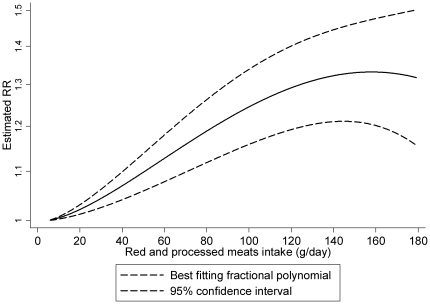
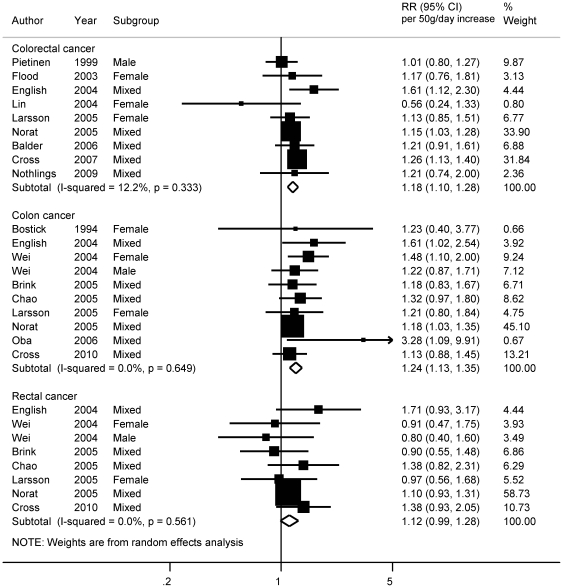
BACKGROUND: The evidence that red and processed meat influences colorectal carcinogenesis was judged convincing in the 2007 World Cancer Research Fund/American Institute of Cancer Research report. Since then, ten prospective studies have published new results. Here we update the evidence from prospective studies and explore whether there is a non-linear association of red and processed meats with colorectal cancer risk. METHODS AND FINDINGS: Relevant prospective studies were identified in PubMed until March 2011. For each study, relative risks and 95% confidence intervals (CI) were extracted and pooled with a random-effects model, weighting for the inverse of the variance, in highest versus lowest intake comparison, and dose-response meta-analyses. Red and processed meats intake was associated with increased colorectal cancer risk. The summary relative risk (RR) of colorectal cancer for the highest versus the lowest intake was 1.22 (95% CI = 1.11-1.34) and the RR for every 100 g/day increase was 1.14 (95% CI = 1.04-1.24). Non-linear dose-response meta-analyses revealed that colorectal cancer risk increases approximately linearly with increasing intake of red and processed meats up to approximately 140 g/day, where the curve approaches its plateau. The associations were similar for colon and rectal cancer risk. When analyzed separately, colorectal cancer risk was related to intake of fresh red meat (RR(for 100 g/day increase) = 1.17, 95% CI = 1.05-1.31) and processed meat (RR (for 50 g/day increase) = 1.18, 95% CI = 1.10-1.28). Similar results were observed for colon cancer, but for rectal cancer, no significant associations were observed. CONCLUSIONS: High intake of red and processed meat is associated with significant increased risk of colorectal, colon and rectal cancers. The overall evidence of prospective studies supports limiting red and processed meat consumption as one of the dietary recommendations for the prevention of colorectal cancer.
Overview
The claims and statistics of this paper haven’t been checked yet.
Free: it reads the open-access text and checks the first 5 claims that cite a source we can check. Create a free account to check every claim.
Integrity signals
Registry
Cites
Statistics
Figures
Verification
Claims the paper makes
The claims and statistics of this paper haven’t been checked yet.
Free: it reads the open-access text and checks the first 5 claims that cite a source we can check. Create a free account to check every claim.
Claims other papers make about this one
Each is checked against this paper’s own text: does it say what the citing paper says it does?
The cited source says what the claim attributes to it.
In the citing paper
“quality and obesity 54,55 , and processed meat with colorectal cancer 56 .”
From Ultra‐processed foods and the nutrition transition: global, regional and national trends, food systems transformations and political economy drivers (2020) · cites this paper as [56]
Self-check
Percentages, sums and reported differences re-computed from the paper’s own numbers.
The self-check needs the paper’s full text.
Citations
Cites
Meta-analysis in clinical trials
DerSimonian, R., & Laird, N. (1986) · Controlled Clinical Trials · doi:10.1016/0197-2456(86)90046-2 · Cited by 39,552 · cited 1×
“We present the results from the randomeffects meta-analysis that accounts for between-study heterogeneity [31] unless otherwise specified.”
MethodQuantifying heterogeneity in a meta‐analysis
Higgins, J. P. T., & Thompson, S. G. (2002) · Statistics in Medicine · doi:10.1002/sim.1186 · Cited by 36,763 · cited 1×
“To assess heterogeneity, we computed the Cochran Q test and I(2) statistic [36].”
MethodEstimates of worldwide burden of cancer in 2008: GLOBOCAN 2008
Ferlay, J., Shin, H., Bray, F., Forman, D., Mathers, C., & Parkin, D. M. (2010) · International Journal of Cancer · doi:10.1002/ijc.25516 · Cited by 21,293 · cited 1×
“Incidence rates are highest in North America, Western Europe, Australia/New Zealand, and in Asian countries that have experienced nutrition transition, such as Japan, Singapore, and North-Korea [1].”
BackgroundFood, nutrition, physical activity, and the prevention of cancer: a global perspective
(2008) · Choice Reviews Online · doi:10.5860/choice.45-5024 · Cited by 5,350
Publication and related bias in meta-analysis
Sterne, J. A. C., Gavaghan, D., & Egger, M. (2000) · Journal of Clinical Epidemiology · doi:10.1016/s0895-4356(00)00242-0 · Cited by 2,282
Lazcano-Ponce, E. C. (2009) · Salud Pública de México · Cited by 1,669
Worldwide Variations in Colorectal Cancer
Center, M. M., Jemal, A., Smith, R. A., & Ward, E. (2009) · CA: A Cancer Journal for Clinicians · doi:10.3322/caac.20038 · Cited by 1,276 · cited 1×
“carcinogenesis is indicated by the increase in colorectal cancer incidence in parallel with economic development and adoption of a western lifestyle [4], as well as by the results of migration studies that demonstrate a greater lifetime incidence of colorectal cancer among immigrants to high-incidence, industrialized…”
BackgroundWillett, W. C., Stampfer, M. J., Colditz, G. A., Rosner, B. A., & Speizer, F. E. (1990) · New England Journal of Medicine · doi:10.1056/nejm199012133232404 · Cited by 1,248 · cited 6×
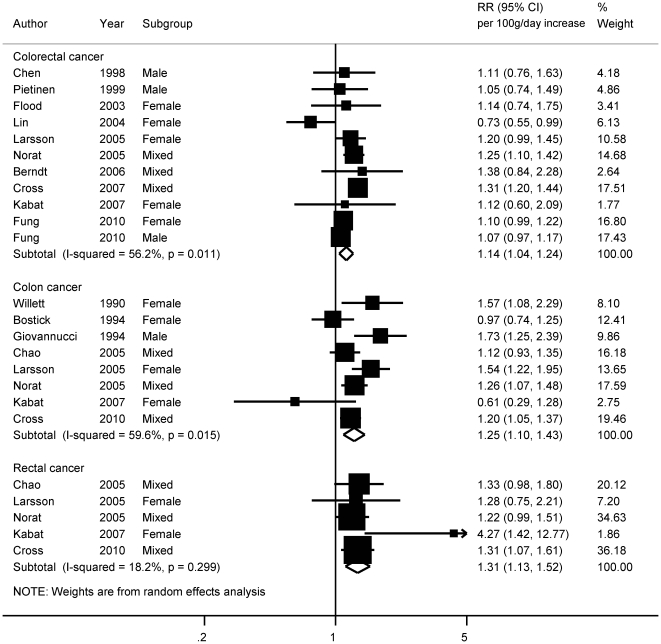
“References: Chen, 1998 [51]; Pietinen, 1999 [57]; Flood, 2003 [33]; Lin, 2004 [56]; Larsson, 2005 [34]; Norat, 2005 [50]; Berndt, 2006 [19]; Cross, 2007 [22]; Kabat, 2007 [24]; Fung, 2010 [23]; Willett, 1990 [58]; Bostick, 1994 [52]; Giovannuccci, 1994 [55]; Chao, 2005 [54]; Cross, 2010 [21].”
ResultInfluentialGeneralized Least Squares for Trend Estimation of Summarized Dose–response Data
Orsini, N., Bellocco, R., & Greenland, S. (2006) · The Stata Journal: Promoting communications on statistics and Stata · doi:10.1177/1536867x0600600103 · Cited by 1,241 · cited 1×
“In linear dose-response meta-analyses, we pooled the relative risk estimates per unit of intake increase (with its standard error) reported in the studies, or computed by us from the categorical data using generalized least-squares for trend estimation [32].”
MethodCairns, S. R., Scholefield, J. H., Steele, R. J., Dunlop, M. G., Thomas, H. J. W., Evans, G. D., Eaden, J. A., Rutter, M. D., Atkin, W. P., Saunders, B. P., et al. (2010) · Gut · doi:10.1136/gut.2009.179804 · Cited by 1,141 · cited 1×
“Screening and surveillance of adenomatous polyps, a precursor of colorectal cancer, is currently the cornerstone for primary prevention of colorectal cancer [6].”
Background
Research works printed but not linked: 2
- 2003, Food, Nutrition, Physical Activity, and the Prevention of Cancer: a Global Perspective, Systematic Literature Review Specification Manual
- A Tobias, 1999, Assessing the influence of a single study in meta-analysis., Stata Tech Bull, 47, 15
Cited by
Items 701–800 of 912
Role of Lifestyle Modification and Diet in the Prevention of Cancer
Chatterjee, M., Ganguly, S., & Dutta, S. (2023) · Springer eBooks · doi:10.1007/978-981-99-7703-1_8 · Cited by 3
Current Research on Small Circular Molecules: A Comprehensive Overview on SPHINX/BMMF
Habermann, D., Franz, C. M. A. P., & Klempt, M. (2024) · Genes · doi:10.3390/genes15060678 · Cited by 2
“In the case of intestinal cancer, previous studies have indicated that the consumption of red meat and processed red meat correlates with the incidence of colorectal cancer [20–24].”
BackgroundSvatetz, C. A. G. (2024) · FMC - Formación Médica Continuada en Atención Primaria · doi:10.1016/j.fmc.2024.02.008 · Cited by 1
Awareness and usage of a dietary guide by cancer patients and clinicians: a national survey study
Dai, X.-T., Zhang, X., Huang, J., Yuan, P., Li, F., Kang, Y., Ling, Y., Ye, W.-F., Wang, K., Yu, F., et al. (2025) · Supportive Care in Cancer · doi:10.1007/s00520-025-09574-8 · Cited by 2
Yamanaka‐Okumura, H., YAMAMOTO, S., Kenzaka, M., NAKAO, S., Natsume, S., NISHIYAMA, H., Imafuku, M., Oue, C., & Taketani, Y. (2025) · Journal of Nutritional Science and Vitaminology · doi:10.3177/jnsv.71.211 · Cited by 2
Tan, J., Chen, X., Peng, Z., Bai, H., Shi, L., Sun, Y., & Chen, J. (2025) · Journal of the International Society of Sports Nutrition · doi:10.1080/15502783.2025.2564239 · Cited by 1
“Previous epidemiological studies have suggested that higher intake of processed meats [36] was associated with an increased risk of various chronic diseases [37,38].”
Feng, D., Wen, K., Xue, J., Xiao, Y., Gu, H., Peng, L., Luo, Y., Xiang, L., Wang, Y., & Liu, D. (2025) · Frontiers in Nutrition · doi:10.3389/fnut.2025.1651848 · Cited by 1
Risk Factors in the Development of Colorectal Cancer
Morsy, H., & Tudyka, V. (2025) · IntechOpen eBooks · doi:10.5772/intechopen.1012856 · Cited by 1
Said, K. B., Alshammari, K. F., Ahmed, R. M. E., Zakout, Y. M.-A., Moursi, S. A., Binsaleh, N. K., ALSHAMMARY, F. M., Alotaibi, A. A., Alzugahibi, M. S., Alshammari, M. A., et al. (2025) · Current Medical Research and Opinion · doi:10.1080/03007995.2025.2580036 · Cited by 1
Panigrahi, A., Mohanty, S. S., Behera, P., Dandsena, R. S., Sahu, P., & Pati, S. (2025) · Frontiers in Oncology · doi:10.3389/fonc.2025.1671298 · Cited by 1
Integration of microbiome and transcriptome information in helping diagnosis of colorectal cancer
He, Z., Zhu, W., Zeng, Y., Li, S.-L., Ma, J., Yang, Z., Wang, H., Zhang, H., Liu, B., & Wang, T. (2025) · Discover Oncology · doi:10.1007/s12672-025-04036-3 · Cited by 1
“Major causes of COAD include smoking [1], excessive alcohol consumption [2], consumption of red and processed meats [3], weight gain [4], and diabetes [5].”
Moreno, K. C. V. (2023) · RCMOS - Revista Científica Multidisciplinar O Saber · doi:10.51473/rcmos.v1i1.2023.1811 · Cited by 1
Bovine milk fat and cancer risk: A double-edged sword?
Strittmatter, L. E., Piotrowsky, A., Marongiu, L., Venturelli, S., & Leischner, C. (2025) · The Journal of Nutritional Biochemistry · doi:10.1016/j.jnutbio.2025.110233 · Cited by 1
Guedes, A. R., Renato, C., Silva, A., & Gaivão, I. (2026) · Mutagenesis · doi:10.1093/mutage/geag001 · Cited by 1
Kamel, M., Wong, C., Grunvald, E. L., Galli, A., Iqbal, S., Rattol, A., Jackson, T., Straube, S., & Lytvyak, E. (2026) · Current Oncology · doi:10.3390/curroncol33040222 · Cited by 1
Brandt, K., Konorev, D., Bellamri, M., Yao, L., Villalta, P. W., Burnett, T. S., Abe, J. V., White, K., Wilkens, L. R., Marchand, L. L., et al. (2026) · Chemical Research in Toxicology · doi:10.1021/acs.chemrestox.6c00140 · Cited by 1
Prevention of Colorectal Cancer
Lance, P., & Thompson, P. A. (2013) · Springer eBooks · doi:10.1007/978-3-642-38983-2_13 · Cited by 1
Behavioral Differences Leading to Disparities in Energy Balance and Cancer
Spruijt‐Metz, D., Cook, L. T., Wen, C. K. F., García, R., O’Reilly, G. A., Hsu, Y., Unger, J. B., & Nguyen‐Rodriguez, S. T. (2014) · Springer eBooks · doi:10.1007/978-3-319-06103-0_3 · Cited by 2
“Similar to findings on fish and PUFA intake, studies examining the impact of red meat consumption on various cancers are mixed, with stronger support for the impact on certain cancers (such as esophageal) than others (including prostate, gastric, pancreatic, and colorectal cancers) [49–56].”
ResultAntiproliferative Effect of Opuntia humifusa Ethanol Extract on Human Carcinoma HT-29 Cells
Park, S. Y., Kim, Y. A., & Ly, S. Y. (2014) · Journal of the Korean Society of Food Science and Nutrition · doi:10.3746/jkfn.2014.43.12.1827 · Cited by 2
Jongen, A. C. H. M., van Woerden, V., van Vugt, J. L. A., de Hoogt, P. A., de Wijkerslooth, E. M. L., Tegels, J. J. W., Bouvy, N. D., & Stoot, J. H. M. B. (2016) · InTech eBooks · doi:10.5772/64775 · Cited by 2
Kubis, H., Alshubrami, M., Alrajhi, S., & Cox, W. M. (2017) · Saudi Journal of Obesity · doi:10.4103/sjo.sjo_15_17 · Cited by 1
Gesunde Ernährung und Lebensstil und ihre Bedeutung in der Prävention von Krebs
Biesalski, H. K. (2021) · Der Onkologe · doi:10.1007/s00761-021-01046-y · Cited by 1
Johnson, I. T. (2014) · Elsevier eBooks · doi:10.1016/b978-0-12-801238-3.00239-7 · Cited by 1
Kjøttkonsum og kreftrisiko - hva sier forskningen?
Kværner, A. S., Bøhn, S. K., Henriksen, H. B., Paur, I., Ræder, H., & Blomhoff, R. (2015) · Norsk tidsskrift for ernæring · doi:10.18261/ntfe.13.4.4 · Cited by 1
Pathology of Digestive System Malignancies
Parthymos, I., Bumci, R., & GOUSSIA, A. C. (2023) · Springer eBooks · doi:10.1007/978-3-031-33517-4_18 · Cited by 1
Carneiro, P. B. F., Rodrigues, E. A., Lampugnani, L. D., Braz, K. N. D. S., Assunção, G. S. A., de Oliveira, C. C., de Queiroz, D. A., Rossini, A., da Silveira, É. F., Alegranci, P., et al. (2023) · Cancer Screening and Prevention · doi:10.14218/csp.2023.00009s · Cited by 4
How to achieve a planetary health diet through system and paradigm change?
(2024) · Frontiers research topics · doi:10.3389/978-2-8325-4826-4 · Cited by 1
Sollano, J. D., Lontok, M. A., Lusong, M. A. D., Romano, R. P., Macatula, T. C., Payawal, D. A., Bocobo, J., Dy, F. T., Bondoc, E. M., Olympia, E. G., et al. (2017) · Philippine Journal of Internal Medicine · doi:10.65564/pjim.18681e5810 · Cited by 4
Nutrition and colorectal cancer
Morois, S., & Boutron‐Ruault, M. (2012) · Cited by 1
Das präventive und therapeutische Potenzial vegetarischer und veganer Ernährung
Keller, M. (2013) · Zeitschrift für Komplementärmedizin · doi:10.1055/s-0033-1357231 · Cited by 4
Devine, C. E. (2016) · Elsevier eBooks · doi:10.1016/b978-0-08-100596-5.03411-9 · Cited by 1
Kowall, B., & Stang, A. (2017) · Das Gesundheitswesen · doi:10.1055/s-0043-122232 · Cited by 1
Cierniak, A., Łabno, A., Winiarski, M., Dembiński, M., Budzyński, P., & Kalemba-Drożdż, M. (2017) · Państwo i Społeczeństwo · doi:10.31749/pismzp2017/19183 · Cited by 1
The CXCL12 rs1801157 polymorphism and risk of colorectal cancer: a meta-analysis
Xu, K., Dai, H., Wang, S., Zhang, J., & Liu, T. (2018) · OncoTargets and Therapy · doi:10.2147/ott.s151514 · Cited by 1
Histological impact of nutritional style alteration in mice
Salih, K. M., Jouda, J., Asad, S. S., Faraj, Y. F., Mohammed, I. K., & Altaee, A. S. A. (2019) · Journal of Contemporary Medical Sciences · doi:10.22317/jcms.v5i2.571 · Cited by 1
Relationship Between Microbiome and Colorectal Cancer
Yang, J., & Yu, J. Q. (2019) · Elsevier eBooks · doi:10.1016/b978-0-08-100596-5.22881-3 · Cited by 1
A retrospective study for Colorectal Cancer in Vlore, Albania-suggestions for further implications
Kamberi, F., & Jaho, J. (2020) · Archives of Cancer Science and Therapy · doi:10.29328/journal.acst.1001013 · Cited by 3
“The increased risk of colorectal cancer is signi icantly associated with a high intake of red and processed meat [8], while the risk for colorectal cancer decreases with a high intake of dietary iber [9].”
BackgroundEffect of alteration in nutritional style on liver function tests and general stool examination
Jouda, J., Mohammed, I. K., Asad, S. S., Faraj, Y. F., & Salih, K. M. (2020) · AIP conference proceedings · doi:10.1063/5.0000232 · Cited by 1
Should we reduce consumption of red meat?
Fadnes, L. T., Arnesen, E., & Aune, D. (2020) · Tidsskrift for Den norske legeforening · doi:10.4045/tidsskr.19.0786 · Cited by 2
Self-citationTrends, Risk Factors, and Preventions in Colorectal Cancer
Engin, Ö., Kılınç, G., & Salimoğlu, S. (2020) · Springer eBooks · doi:10.1007/978-3-030-57273-0_10 · Cited by 1
Hasan, S. A. H. S. J., Pawirotaroeno, R. A. O., Hasan, S. A. H. S. J., & Abzianidze, E. (2020) · Global Medical Genetics · doi:10.1055/s-0040-1721814 · Cited by 1
Holloway, J. W., & Wu, J. (2019) · Springer eBooks · doi:10.1007/978-981-13-7856-0_4 · Cited by 1
Meat and cancer evidence for and against
Sødring, M. S., Dragsted, L. O., Müller, M. H. B., Paulsen, J. E., Haug, A., & Egelandsdal, B. (2022) · Elsevier eBooks · doi:10.1016/b978-0-323-85879-3.00012-x · Cited by 2
Alimentation, Bacterial Metabolites, and Host Intestinal Epithelium
Blachier, F. (2023) · Springer eBooks · doi:10.1007/978-3-031-26322-4_4 · Cited by 1
Bujanda-Miguel, G., Martínez-Roca, A., García-Heredia, A., Guill-Berbegal, D., Roche, E., & Jover, R. (2023) · Frontiers in Nutrition · doi:10.3389/fnut.2023.1186808 · Cited by 1
Hachlaf, M., LKHOYAALI, S., Lemsyeh, H., Nadir, W., -, T. K., Abdi, C., el Ghissassi, B., Mrabti, H. H., Boutayeb, S., & Errihani, H. (2024) · International Journal of Innovative Science and Research Technology (IJISRT) · doi:10.38124/ijisrt/ijisrt24sep803 · Cited by 1
Dragsted, L. O., Alexander, J., Amdam, G. V., Bryan, N. S., Chen, D., Haug, A., Karlsson, A. H., de Kok, T. M. C. M., Kulseng, B. E., Martin, R. J., et al. (2014) · Meat Science · doi:10.1016/j.meatsci.2014.07.032 · Cited by 1
“It is less vague and may also prevent any unnecessary misunderstandings that epidemiological associations between red meat consumption and CRC risk are being questioned.”
InfluentialHo, V. (2014) · QSpace (Queen's University Library) · Cited by 1
Katz, D. L. (2022) · American Journal of Health Promotion · doi:10.1177/08901171221088661 · Cited by 1
A role for deferasirox as an anti-neoplastic and chemosensitising agent in gastrointestinal cancer
Bedford, M. (2015) · University of Birmingham Institutional Research Archive (University of Birmingham) · Cited by 1
Effects of modified bioactive pectins on colon cancer cells in vitro
Maxwell, E. G. (2014) · UEA Digital Repository (University of East Anglia) · Cited by 1
Nutritional Prevention Of Colorectal Cancer: Attitudes And Practices Of Primary Care Providers
Dykstra, A. J. (2014) · UA Campus Repository (The University of Arizona)
Risk Factors of Colorectal Cancer in Northwest Iran
(2014) · Journal of Clinical Research & Governance · doi:10.13183/jcrg.v3i2.86
“Although there is no agreement yet on the most important causes of colorectal cancer, high consumption of red meat and alcohol, low consumption of vegetables, fruits, and micronutrients, and low physical activity are likely to play an important role in the observed increase in incidence and mortality risks [16, 6]; th…”
ResultCoelho, D. (2013) · Digital Library of Theses and Dissertations (Universidade de São Paulo) · doi:10.11606/t.42.2013.tde-29052014-161540
La santé en Afrique : pourquoi la France et l’Europe devraient être plus engagées
Kérouedan, D. (2012) · DOAJ (DOAJ: Directory of Open Access Journals) · Cited by 1
Health in Africa: what can France and Europe do about it?
Kérouedan, D. (2012) · DOAJ (DOAJ: Directory of Open Access Journals)
Piazzolla, L. P. (2015) · RIUnB Institutional Repository (University of Brasília) · doi:10.26512/2015.03.t.18258
de Medeiros, M. J. (2015) · Digital Library of Theses and Dissertations (Universidade de São Paulo) · doi:10.11606/t.6.2015.tde-01062015-113524 · Cited by 7
Uncovering the links between diet and the incidence of bowel cancer
Τheodoratou, E. (2013) · Expert Review of Anticancer Therapy · doi:10.1586/14737140.2013.852973
Primary Prevention of Colorectal Neoplasias: Ample Evidence, Lack of Guidelines
Seretis, F. (2014) · Journal of Clinical Medicine Research · doi:10.14740/jocmr1772w
“On the contrary, the risk increase for the development of CRC, as estimated in linear dose-response models, is 14% for every 100 g/day increase of total red and processed meats, 25% in colon cancer and 31% in rectal cancer [13].”
BackgroundStudies of healthful dietary protein sources in the elderly are needed
Bernstein, A. M., Golubić, M., & Roizen, M. F. (2014) · American Journal of Clinical Nutrition · doi:10.3945/ajcn.114.085639
Sáez, G., & Alfonso, L. (2014) · LA Referencia (Red Federada de Repositorios Institucionales de Publicaciones Científicas) · Cited by 1
Kasviksiin pohjautuvan ruokavalion vaikutus elimistön proteiiniaineenvaihduntaan kuntoilijoilla
Lamminen, R. (2014) · Jyväskylä University Digital Archive (University of Jyväskylä)
From Dietary Guidelines to Dietary Guidance?
Clevers, E., & Urlings, M. J. E. (2015) · European Journal of Nutrition & Food Safety · doi:10.9734/ejnfs/2015/17435 · Cited by 1
“First, red meat intake is associated with an increased risk for colorectal cancer [81,82], and probably other cancers [83,84] as well as type-II diabetes [85].”
BackgroundColon Cancer Risk and Prevention
Engin, Ö., Uyar, M. E., Sunamak, O., & İpekçi, F. (2015) · Springer eBooks · doi:10.1007/978-3-319-17993-3_13
Vierci, G., Pederzani, C., Cabrera, G. A. G., Duarte, N. C., & Ferro, E. G. (2013)
Kang, M. S., & Keku, T. O. (2014) · Springer eBooks · doi:10.1007/978-3-319-06103-0_7
Lack of AMACR Immunostaining is an Independent Predictor of Poor Prognosis in Colorectal Carcinoma
Emam, E., & Gomaa, W. M. (2016) · Journal of Clinical & Experimental Pathology · doi:10.4172/2161-0681.1000279
“The main source of branching fatty acids in humans is red meat and dairy products [3-5] Prolonged meat and fatty meals consumption increases the risk of incidence of CRC to 20-30% and is also linked to an increased incidence of mortality in CRC patients [3].”
BackgroundGastrointestinal Malignancy: Genetic Implications to Clinical Applications
Lopez, N., & Yeh, J. J. (2016) · Cancer treatment and research · doi:10.1007/978-3-319-34244-3_19
Bazzoli, F., & Rabitti, S. (2016) · Springer eBooks · doi:10.1007/978-3-319-30361-1_1
King, K. E., & Sheean, P. (2016) · Journal of Clinical Nutrition & Dietetics · doi:10.4172/2472-1921.100025 · Cited by 1
The role of red and processed meat in colorectal cancer development: A perspective
Smet, S. D. (2016) · Journal of Animal Science · doi:10.2527/jam2016-0908
Fang, L. (2013) · MOspace Institutional Repository (University of Missouri) · doi:10.32469/10355/43056
Harlos, C. H., Singh, H., Nugent, Z. J., Demers, A., Mahmud, S. M., & Czaykowski, P. (2016) · Current Oncology · doi:10.3747/co.23.3304
Komplementäre Medizin und Prävention
Schmidt, T., Kubin, T., & Barnes, B. (2016) · Der Onkologe · doi:10.1007/s00761-016-0151-0
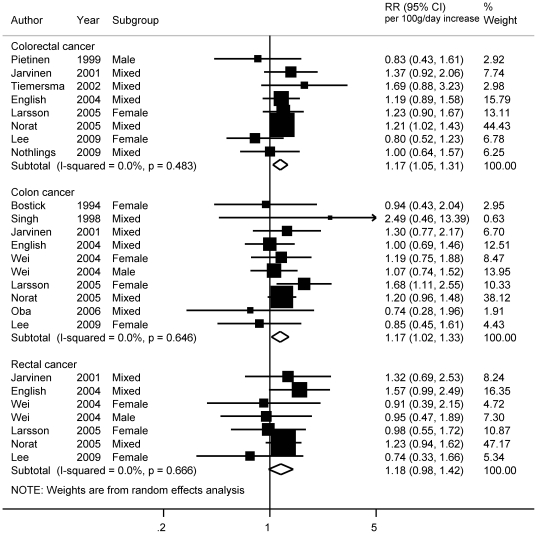
“Als Teil der Begründung für diese Einschätzungen wird eine Metaanalyse vonStudien zumKolonkarzinom herangezogen, die statistisch signifikante relative Risiken von 1,17 (100 g/Tag mehr rotes Fleisch) und 1,18 (50 g/Tag mehr verarbeitetes Fleisch) identifiziert hat [7].”
BackgroundCOLON CANCER AND PREGNANCY. BRIEF REPORT OF TWO CASES.
Illia, R. (2017) · Journal of Gynecology & Neonatal Biology · doi:10.15436/2380-5595.16.1276
D’Arcy, M. E. (2016) · Carolina Digital Repository (University of North Carolina at Chapel Hill) · doi:10.17615/vdtb-2232
Nutrient Composition of School Provided and Packed Lunches of Upper Elementary School Children
Oda, K. (2016) · OhioLink ETD Center (Ohio Library and Information Network)
The Origins of Diffuse Low-Grade Gliomas
Darlix, A., Gozé, C., Rigau, V., Bauchet, L., Taillandier, L., & Duffau, H. (2017) · Springer eBooks · doi:10.1007/978-3-319-55466-2_34
Patient’s Guide in Colorectal Cancer: Prophylaxis, Diet, and Lifestyle
Zielińska, M., & Włodarczyk, J. (2017) · Springer eBooks · doi:10.1007/978-3-319-59885-7_17
Cancer, Heart Diseases and Common Risk Factors: Diet and Physical Activity
Tralongo, P., Lestuzzi, C., & Furlanello, F. (2017) · Springer eBooks · doi:10.1007/978-3-319-40236-9_3 · Cited by 2
Evolution of Colon Cancer and Pregnancy: A Report of Two Cases
Illia, R., Bas, C., Rotholtz, N. A., Cabrera, M. P. C., Lobenstein, G., Uranga Imaz, M., Manrique, G., & Fiameni, F. (2017) · International Journal of Pregnancy & Child Birth · doi:10.15406/ipcb.2017.03.00050
Feitosa, M. R. (2017) · Digital Library of Theses and Dissertations (Universidade de São Paulo) · doi:10.11606/t.17.2017.tde-06062017-164100
Determinação dos principais patótipos de Escherichia coli isoladas de pacientes com câncer de reto.
Castro, R. L. S. (2018) · Digital Library of Theses and Dissertations (Universidade de São Paulo) · doi:10.11606/d.42.2018.tde-13032018-155407
Healthy Dietary Pattern for the Primary Prevention of Colorectal Cancer
Tayyem, R. (2018) · Springer eBooks · doi:10.1007/978-3-319-75693-6_11
The Cellular Function of USP22 and its Role in Tissue Maintenance and Tumor Formation
Kosinsky, R. L. (2018) · eDiss (Georg-August-Universität Göttingen) · doi:10.53846/goediss-6724
Obesity and dietary approaches to cancer prevention
Renehan, A. G. (2018) · Wiley eBooks · doi:10.1002/9781118990957.ch26
Towards Plant-Based Diet in Nigeria: Hindsight From Western Meat Production and Consumption
Ajadi, E. (2018) · Advances in marketing, customer relationship management, and e-services book series · doi:10.4018/978-1-5225-4757-0.ch016 · Cited by 2
“…problems such as obesity, diabetes, cardiovascular diseases, cancer and antibiotics resistance (AbioyeKuteyi et al., 2004; Azevedo & Alla, 2008; Chan et al., 2011; Ferrucci et al., 2010); increase in greenhouse gases (GHGs) resulting in climate change (Goodland & Anhang, 2009; Raphaely &…”
BackgroundCan nut consumption improve colon cancer survival?
Aune, D. (2018) · Translational Gastroenterology and Hepatology · doi:10.21037/tgh.2018.09.14
“Risk factors of incident colon cancer have been comprehensively examined in many previous studies and both dietary and other lifestyle factors have been associated with colon cancer incidence (2-6).”
BackgroundSelf-citationLee, H. N., Lee, J. E., Kang, M., Shim, J. E., & Paik, H. Y. (2018) · Daehan imsang geon-gang jeungjin hakoeji/Daehan imsang geon'gang jeungjin haghoeji · doi:10.15384/kjhp.2018.18.3.127
Tomaz, M. D. A. R. (2018) · Portuguese National Funding Agency for Science, Research and Technology (RCAAP Project by FCT) · doi:10.34626/775x-q944
McFarlane, M. J. (2026) · Warwick Research Archive Portal (University of Warwick) · doi:10.82444/warw.33769063
The Hippies Were Right: Diet and Cancer Risk
Stubbins, R., & Bernicker, E. (2019) · Springer eBooks · doi:10.1007/978-3-030-05855-5_9
Behavioral Approaches to Cancer Prevention
Philip, E. J., & Ostroff, J. S. (2017) · Wiley eBooks · doi:10.1002/9781119000822.hfcm036
Examining the increasing incidence of colorectal cancer in younger adults
Murphy, C. C. (2016) · Carolina Digital Repository (University of North Carolina at Chapel Hill) · doi:10.17615/5cpb-yj70
The Role Of The Cell-Surface Protease Tmprss13 In Colorectal Cancer
Varela, F. A. (2019) · Human Biology · Cited by 1
Gastrointestinal Cancer Prevention: Diet, Lifestyle, and Therapeutic Prevention
Tran, P. N., & Zell, J. A. (2019) · Springer eBooks · doi:10.1007/978-3-030-18890-0_29 · Cited by 1
Herzberg, C. (2019) · eDiss (Georg-August-Universität Göttingen) · doi:10.53846/goediss-7706
Nutrition and Colorectal Cancer Prevention
Johnson, I. T. (2019) · Royal Society of Chemistry eBooks · doi:10.1039/9781788016506-00319
Metadata
- Authors
- Chan, D. S. M., Lau, R., Aune, D., Vieira, R., Greenwood, D. C., Kampman, E., & Norat, T.
- Affiliations
- Imperial College London (GB)
- University of Leeds (GB)
- Wageningen University & Research (NL)
- Corresponding author
- Norat, Teresa
- Venue
- PLoS ONE
- Publisher
- Public Library of Science (PLoS)
- Published
- 2011-06-06
- Volume
- 6
- Issue
- 6
- Pages
- e20456
- ISSN
- 1932-6203 (ISSN-L)
- PMC
- PMC3108955
- OpenAlex
- W2072090020
- Cited by
- 903
- References
- 72
- Citations by year
- 2026: 29 · 2025: 46 · 2024: 53 · 2023: 67 · 2022: 58 · 2021: 72 · 2020: 69 · 2019: 67 · 2018: 79 · 2017: 73 · 2016: 71 · 2015: 61 · 2014: 62 · 2013: 59 · 2012: 32
- FWCI
- 7.52
- Type
- journal article
- Language
- en
- Open access
- gold
- doi.org
- Locations
- PLoS ONE (publishedVersion, cc-by)
- Europe PMC (PubMed Central) (publishedVersion, cc-by)
- PubMed Central (publishedVersion, cc-by)
- PubMed (publishedVersion)
- Radboud Repository (Radboud University) (publishedVersion)
- White Rose Research Online (University of Leeds, The University of Sheffield, University of York) (acceptedVersion)
- Socio-Environmental Systems Modeling (acceptedVersion)
- RePEc: Research Papers in Economics (submittedVersion)
- DOAJ (DOAJ: Directory of Open Access Journals) (submittedVersion, cc-by-sa)
- Figshare (submittedVersion, cc-by)
- Spiral (Imperial College London) (submittedVersion, other-oa)
- Radboud Repository (Radboud University) (submittedVersion, other-oa)
- Data Archiving and Networked Services (DANS) (submittedVersion, other-oa)
- Funders
- World Cancer Research Fund International (2007/SP01)
- World Cancer Research Fund (2007/SP01)
- Wageningen University and Research
- Topics
- Health Sciences › Medicine › Public Health, Environmental and Occupational Health › Nutritional Studies and Diet
- Health Sciences › Medicine › Oncology › Colorectal Cancer Screening and Detection
- Life Sciences › Agricultural and Biological Sciences › Animal Science and Zoology › Meat and Animal Product Quality
- Keywords
- red meat, processed meat, colorectal cancer, colon cancer, rectal cancer, cancer risk, dietary intake, dose-response relationship, nonlinear relationship, colorectal cancer prevention, dietary recommendations
- MeSH terms
- Female, Food Handling, Humans, Male, Meat, Pigmentation, Prospective Studies, Colorectal Neoplasms, Publication Bias
About these checks
Registry, retraction, Cites and statistics results are computed, not judged, with one exception: a printed reference that no index lists is read once by a model before it counts as a citation error. Claims are extracted by a model and kept only when their quote appears verbatim in the text; each cited source is then checked, with a model’s help, for whether it says what the claim relies on. Those verdicts can be wrong — read the claim’s quote and the cited source before relying on one.
Statistics and arithmetic are recomputed, not judged.
Confidence bands are shown only for fields calibrated on our annotated test set. None is calibrated yet, so no band is shown.
What counts as a claim ›How we measure confidence ›How we check this ›
Are you an author, or do you see a problem with this page? Request a review
Data sources
Bibliographic data: Semantic Scholar, OpenAlex, Crossref.
Contains information from the Semantic Scholar Academic Graph Datasets, made available under the ODC Attribution License (ODC-BY 1.0).
Semantic Scholar’s data is described in: Kinney, R., et al. (2023). The Semantic Scholar Open Data Platform. arXiv:2301.10140.
