

Red and Processed Meat and Colorectal Cancer Incidence: Meta-Analysis of Prospective Studies
Open accessThe DOI matches its Crossref record; 71 of the 72 references it cites were found in a registry or an index.
Abstract
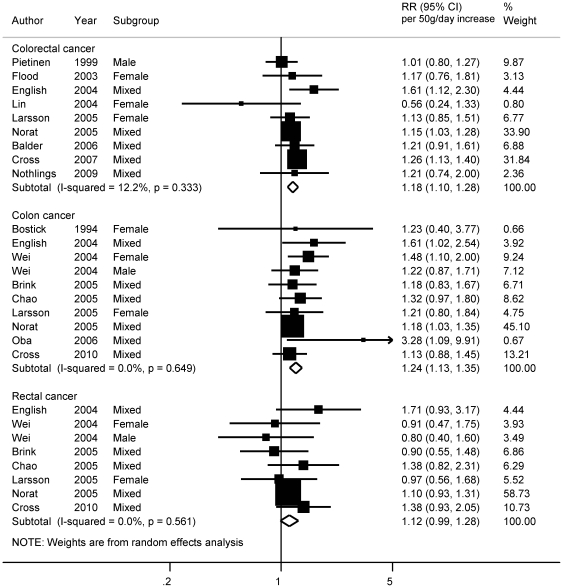
BACKGROUND: The evidence that red and processed meat influences colorectal carcinogenesis was judged convincing in the 2007 World Cancer Research Fund/American Institute of Cancer Research report. Since then, ten prospective studies have published new results. Here we update the evidence from prospective studies and explore whether there is a non-linear association of red and processed meats with colorectal cancer risk. METHODS AND FINDINGS: Relevant prospective studies were identified in PubMed until March 2011. For each study, relative risks and 95% confidence intervals (CI) were extracted and pooled with a random-effects model, weighting for the inverse of the variance, in highest versus lowest intake comparison, and dose-response meta-analyses. Red and processed meats intake was associated with increased colorectal cancer risk. The summary relative risk (RR) of colorectal cancer for the highest versus the lowest intake was 1.22 (95% CI = 1.11-1.34) and the RR for every 100 g/day increase was 1.14 (95% CI = 1.04-1.24). Non-linear dose-response meta-analyses revealed that colorectal cancer risk increases approximately linearly with increasing intake of red and processed meats up to approximately 140 g/day, where the curve approaches its plateau. The associations were similar for colon and rectal cancer risk. When analyzed separately, colorectal cancer risk was related to intake of fresh red meat (RR(for 100 g/day increase) = 1.17, 95% CI = 1.05-1.31) and processed meat (RR (for 50 g/day increase) = 1.18, 95% CI = 1.10-1.28). Similar results were observed for colon cancer, but for rectal cancer, no significant associations were observed. CONCLUSIONS: High intake of red and processed meat is associated with significant increased risk of colorectal, colon and rectal cancers. The overall evidence of prospective studies supports limiting red and processed meat consumption as one of the dietary recommendations for the prevention of colorectal cancer.
Overview
The claims and statistics of this paper haven’t been checked yet.
Free: it reads the open-access text and checks the first 5 claims that cite a source we can check. Create a free account to check every claim.
Integrity signals
Registry
Cites
Statistics
Figures
Verification
Claims the paper makes
The claims and statistics of this paper haven’t been checked yet.
Free: it reads the open-access text and checks the first 5 claims that cite a source we can check. Create a free account to check every claim.
Claims other papers make about this one
Each is checked against this paper’s own text: does it say what the citing paper says it does?
The cited source says what the claim attributes to it.
In the citing paper
“quality and obesity 54,55 , and processed meat with colorectal cancer 56 .”
From Ultra‐processed foods and the nutrition transition: global, regional and national trends, food systems transformations and political economy drivers (2020) · cites this paper as [56]
Self-check
Percentages, sums and reported differences re-computed from the paper’s own numbers.
The self-check needs the paper’s full text.
Citations
Cites
Meta-analysis in clinical trials
DerSimonian, R., & Laird, N. (1986) · Controlled Clinical Trials · doi:10.1016/0197-2456(86)90046-2 · Cited by 39,552 · cited 1×
“We present the results from the randomeffects meta-analysis that accounts for between-study heterogeneity [31] unless otherwise specified.”
MethodQuantifying heterogeneity in a meta‐analysis
Higgins, J. P. T., & Thompson, S. G. (2002) · Statistics in Medicine · doi:10.1002/sim.1186 · Cited by 36,763 · cited 1×
“To assess heterogeneity, we computed the Cochran Q test and I(2) statistic [36].”
MethodEstimates of worldwide burden of cancer in 2008: GLOBOCAN 2008
Ferlay, J., Shin, H., Bray, F., Forman, D., Mathers, C., & Parkin, D. M. (2010) · International Journal of Cancer · doi:10.1002/ijc.25516 · Cited by 21,293 · cited 1×
“Incidence rates are highest in North America, Western Europe, Australia/New Zealand, and in Asian countries that have experienced nutrition transition, such as Japan, Singapore, and North-Korea [1].”
BackgroundFood, nutrition, physical activity, and the prevention of cancer: a global perspective
(2008) · Choice Reviews Online · doi:10.5860/choice.45-5024 · Cited by 5,350
Publication and related bias in meta-analysis
Sterne, J. A. C., Gavaghan, D., & Egger, M. (2000) · Journal of Clinical Epidemiology · doi:10.1016/s0895-4356(00)00242-0 · Cited by 2,282
Lazcano-Ponce, E. C. (2009) · Salud Pública de México · Cited by 1,669
Worldwide Variations in Colorectal Cancer
Center, M. M., Jemal, A., Smith, R. A., & Ward, E. (2009) · CA: A Cancer Journal for Clinicians · doi:10.3322/caac.20038 · Cited by 1,276 · cited 1×
“carcinogenesis is indicated by the increase in colorectal cancer incidence in parallel with economic development and adoption of a western lifestyle [4], as well as by the results of migration studies that demonstrate a greater lifetime incidence of colorectal cancer among immigrants to high-incidence, industrialized…”
BackgroundWillett, W. C., Stampfer, M. J., Colditz, G. A., Rosner, B. A., & Speizer, F. E. (1990) · New England Journal of Medicine · doi:10.1056/nejm199012133232404 · Cited by 1,248 · cited 6×
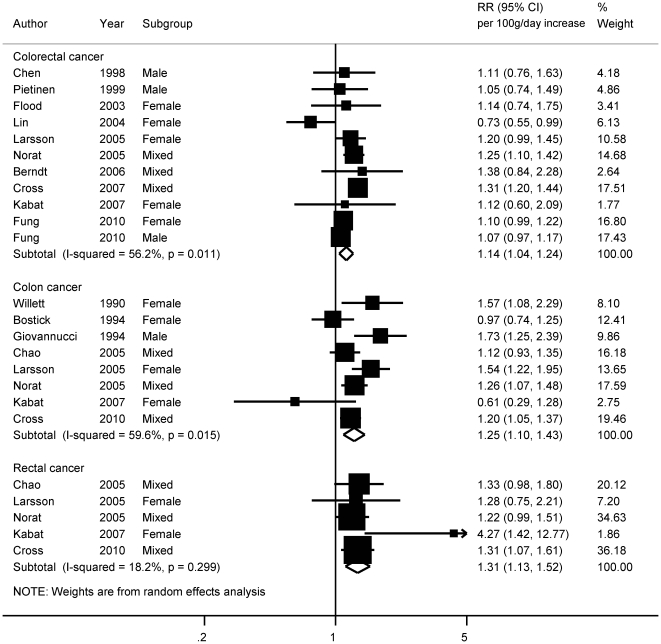
“References: Chen, 1998 [51]; Pietinen, 1999 [57]; Flood, 2003 [33]; Lin, 2004 [56]; Larsson, 2005 [34]; Norat, 2005 [50]; Berndt, 2006 [19]; Cross, 2007 [22]; Kabat, 2007 [24]; Fung, 2010 [23]; Willett, 1990 [58]; Bostick, 1994 [52]; Giovannuccci, 1994 [55]; Chao, 2005 [54]; Cross, 2010 [21].”
ResultInfluentialGeneralized Least Squares for Trend Estimation of Summarized Dose–response Data
Orsini, N., Bellocco, R., & Greenland, S. (2006) · The Stata Journal: Promoting communications on statistics and Stata · doi:10.1177/1536867x0600600103 · Cited by 1,241 · cited 1×
“In linear dose-response meta-analyses, we pooled the relative risk estimates per unit of intake increase (with its standard error) reported in the studies, or computed by us from the categorical data using generalized least-squares for trend estimation [32].”
MethodCairns, S. R., Scholefield, J. H., Steele, R. J., Dunlop, M. G., Thomas, H. J. W., Evans, G. D., Eaden, J. A., Rutter, M. D., Atkin, W. P., Saunders, B. P., et al. (2010) · Gut · doi:10.1136/gut.2009.179804 · Cited by 1,141 · cited 1×
“Screening and surveillance of adenomatous polyps, a precursor of colorectal cancer, is currently the cornerstone for primary prevention of colorectal cancer [6].”
Background
Research works printed but not linked: 2
- 2003, Food, Nutrition, Physical Activity, and the Prevention of Cancer: a Global Perspective, Systematic Literature Review Specification Manual
- A Tobias, 1999, Assessing the influence of a single study in meta-analysis., Stata Tech Bull, 47, 15
Cited by
Items 201–300 of 912
Food, microbiome and colorectal cancer
Niederreiter, L., Adolph, T. E., & Tilg, H. (2018) · Digestive and Liver Disease · doi:10.1016/j.dld.2018.03.030 · Cited by 61
Mills, C. E., Khatri, J., Maskell, P., Odongerel, C., & Webb, A. J. (2016) · British Journal of Clinical Pharmacology · doi:10.1111/bcp.12918 · Cited by 63
“This key conclusion was based on a meta-analysis of colorectal cancer in ten cohort studies by [51].”
MethodRed and Processed Meat and Mortality in a Low Meat Intake Population
Alshahrani, S. M., Fraser, G. E., Sabaté, J., Knutsen, R., Shavlik, D., Mashchak, A., Lloren, J. I., & Orlich, M. J. (2019) · Nutrients · doi:10.3390/nu11030622 · Cited by 54
Lennerz, B. S., Mey, J. T., Henn, O., & Ludwig, D. S. (2021) · Current Developments in Nutrition · doi:10.1093/cdn/nzab133 · Cited by 70
“…be associated with significant nutritional deficiencies (13) and confer negative health effects compared with a plant-based diet (14, 15), including poor gut and gut-microbiota health (16–19), an adverse cardiovascular disease risk pattern (20, 21), and other chronic health complications (22).”
HECKE, T. V., Vossen, E., Bussche, J. V., Raes, K., Vanhaecke, L., & SMET, S. D. (2014) · PLoS ONE · doi:10.1371/journal.pone.0101122 · Cited by 70
“Several meta-analyses have reported a significant epidemiological association between colorectal cancer (CRC) and high intake of red and processed meat [1,2].”
BackgroundRohani-Rasaf, M., Abdollahi, M., Jazayeri, S., Kalantari, N., & Asadi‐Lari, M. (2013) · Asian Pacific Journal of Cancer Prevention · doi:10.7314/apjcp.2013.14.3.1669 · Cited by 59
Vegetarians and different types of meat eaters among the Finnish adult population from 2007 to 2017
Lehto, E., Kaartinen, N. E., Sääksjärvi, K., Männistö, S., & Jallinoja, P. T. (2021) · British Journal Of Nutrition · doi:10.1017/s0007114521001719 · Cited by 63
“As regards health, high-RPM consumption has been associated with higher risk of type 2 diabetes(7), some types of cancer(8), stroke(9) and cardiovascular and all-cause mortality(10,11).”
BackgroundDiet and Lifestyle in Survivors of Colorectal Cancer
Lee, J., Jeon, J. Y., & Meyerhardt, J. A. (2014) · Hematology/Oncology Clinics of North America · doi:10.1016/j.hoc.2014.09.005 · Cited by 60
“Among the diverse dietary factors, there is relatively consistent evidence that red and processed meat is related to an increased risk of colorectal cancer.(21) Recently, McCullough and colleagues(8) collected diet information from 2315 participants diagnosed with colorectal cancer in 1992/1993, 1999, and 2003, and fo…”
BackgroundDeveci, G., Çelik, E., Ağagündüz, D., Bartkienė, E., Rocha, J. M., & Özoğul, F. (2023) · Fermentation · doi:10.3390/fermentation9110923 · Cited by 59
Chiang, V. S., & Quek, S. Y. (2015) · Critical Reviews in Food Science and Nutrition · doi:10.1080/10408398.2014.967833 · Cited by 60
“Moreover, this positive association was observed in various other studies including different populations from Shanghai, US, and Sweden as well as a 2011 metaanalysis that included the relevant PubMed publications from 1966 to 2011 (Chiu et al., 2003; Sinha et al., 2005; Larsson et al., 2005; Chan et al., 2011).”
BackgroundResultInfluentialHill, E. R., O’Connor, L. E., Wang, Y., Clark, C. M., McGowan, B. S., Forman, M. R., & Campbell, W. W. (2022) · Critical Reviews in Food Science and Nutrition · doi:10.1080/10408398.2022.2123778 · Cited by 59
“Intake of “red and processed meat” is associated with several different types of cancers such as gastric, colorectal, and breast (Chan et al. 2011; Farvid et al. 2018; Kim, Kim et al. 2019) as well as end stage renal disease (Lew et al. 2017).”
BackgroundColorectal cancer in alaska native people, 2005-2009.
Kelly, J. J., Alberts, S. R., Sacco, F. D., & Lanier, A. P. (2012) · Europe PMC (PubMed Central) · Cited by 54
Gene–Environment Interaction Involving Recently Identified Colorectal Cancer Susceptibility Loci
Kantor, E. D., Hutter, C. M., Minnier, J., Berndt, S. I., Brenner, H., Caan, B. J., Campbell, P. T., Carlson, C. S., Casey, G., Chan, A. T., et al. (2014) · Cancer Epidemiology Biomarkers & Prevention · doi:10.1158/1055-9965.epi-14-0062 · Cited by 57
Lane, M., Howland, G., West, M., Hockey, M., Marx, W., Loughman, A., O’Hely, M., Jacka, F., & Rocks, T. (2020) · Obesity Research & Clinical Practice · doi:10.1016/j.orcp.2020.04.006 · Cited by 50
Händel, M. N., Rohde, J. F., Jacobsen, R., Nielsen, S. M., Christensen, R., Alexander, D. D., Frederiksen, P., & Heitmann, B. L. (2020) · European Journal of Clinical Nutrition · doi:10.1038/s41430-020-0576-9 · Cited by 55
Do lifestyle factors influence colorectal cancer risk in Lynch syndrome?
van Duijnhoven, F. J. B., Botma, A., Winkels, R. M., Nagengast, F. M., Vasen, H. F. A., & Kampman, E. (2013) · Familial Cancer · doi:10.1007/s10689-013-9645-8 · Cited by 57
Self-citationFogelholm, M., Kanerva, N., & Männistö, S. (2015) · European Journal of Clinical Nutrition · doi:10.1038/ejcn.2015.63 · Cited by 61
HECKE, T. V., Wouters, A., Rombouts, C., Izzati, T., Berardo, A., Vossen, E., Claeys, E., Camp, J. V., Raes, K., Vanhaecke, L., et al. (2016) · Journal of Agricultural and Food Chemistry · doi:10.1021/acs.jafc.5b05915 · Cited by 56
Van Hecke, T., Jakobsen, L. M. A., Vossen, E., Guéraud, F., De Vos, F., Pierre, F., Bertram, H. C. S., & De Smet, S. (2016) · Food & Function · doi:10.1039/c6fo00462h · Cited by 48
“52 Low-grade inflammation is associated with an increased risk to develop CRC and breast 53 cancer(12), CHD(13) and diabetes(14).”
BackgroundInfluentialRole of Microbiome in Carcinogenesis Process and Epigenetic Regulation of Colorectal Cancer
Farhana, L., Banerjee, H. N., Verma, M., & Majumdar, A. P. N. (2018) · Methods in molecular biology · doi:10.1007/978-1-4939-8751-1_3 · Cited by 54
HECKE, T. V., Vrieze, J. D., Boon, N., Vos, W. H. D., Vossen, E., & SMET, S. D. (2018) · Molecular Nutrition & Food Research · doi:10.1002/mnfr.201800962 · Cited by 53
Chemical hazards in foods of animal origin
Smulders, F. J. M., Rietjens, I. M. C. M., & Rose, M. (2018) · Wageningen Academic Publishers eBooks · doi:10.3920/978-90-8686-877-3 · Cited by 53
“…to an increased risk of all-cause mortality (Rohrmann and Linseisen, 2016), colorectal cancer (Aune et al., 2013; Bouvard et al., 2015; Chan et al., 2011), coronary heart disease (Micha et al., 2010; updated by Micha et al., 2012) and type 2 diabetes (Micha et al., 2012; Pan et al.,…”
BackgroundInfluentialD’Alessandro, A., Lampignano, L., & De Pergola, G. (2019) · Nutrients · doi:10.3390/nu11061296 · Cited by 46
“7800 NR Chan 2011 [64] 9 50 g CRC incidence 1.”
BackgroundInfluentialKim, D., Kim, Y., & Kim, Y. (2019) · Journal of Cancer Prevention · doi:10.15430/jcp.2019.24.4.224 · Cited by 50
“Numerous reports have additionally suggested that dietary factors related to the CRC risk include a low consumption of fruits and vegetables, a low fiber diet, a low residual diet [12], and high consumption of red/processed meats [13].”
BackgroundLupoli, R., Vitale, M., Calabrese, I., Giosuè, A., Riccardi, G., & Vaccaro, O. (2021) · Nutrients · doi:10.3390/nu13020676 · Cited by 57
Hammerling, U., Laurila, J. B., Grafström, R., & Ilbäck, N. (2015) · Critical Reviews in Food Science and Nutrition · doi:10.1080/10408398.2014.972498 · Cited by 59
“…higher than the aforementioned intake levels and thus exceeds those recommended by the WCRF. Hazard risk ratios vary across reports, but appear to centre around 1.20 for fresh red meat and about 1.30 for processed meat in recently conducted large metaanalyses (Chan et al., 2011; Aune et al., 2013).”
BackgroundInfluentialThe cancer risk related to meat and meat products
Johnson, I. T. (2016) · British Medical Bulletin · doi:10.1093/bmb/ldw051 · Cited by 57
“(Reproduced from Chan et al.(11)) 76 I.”
BackgroundMethodResultInfluential27-hydroxycholesterol decreases cell proliferation in colon cancer cell lines
Warns, J. A., Marwarha, G., Freking, N., & Ghribi, O. (2018) · Biochimie · doi:10.1016/j.biochi.2018.07.006 · Cited by 49
“There are several risk factors for CRC including age [3], family history of polyps [4], alcohol consumption [5], consumption of westernized diet [6, 7], and inflammatory bowel disease [8].”
BackgroundThøgersen, R., Castro-Mejía, J. L., Sundekilde, U. K., Hansen, L. H., Hansen, A. K., Nielsen, D. S., & Bertram, H. C. (2018) · Molecular Nutrition & Food Research · doi:10.1002/mnfr.201800608 · Cited by 49
Targeting of oncogenic signaling pathways by berberine for treatment of colorectal cancer
Hallajzadeh, J., Dana, P. M., Mobini, M., Asemi, Z., Mansournia, M. A., Sharifi, M., & Yousefi, B. (2020) · Medical Oncology · doi:10.1007/s12032-020-01367-9 · Cited by 49
Mazumder, K., Biswas, B., Kerr, P. G., BLANCHARD, C. L., Nabila, A., Golder, M., Aziz, M. G., & Farahnaky, A. (2021) · Scientific Reports · doi:10.1038/s41598-021-00838-x · Cited by 50
Chen, L., Li, L., Wang, Y., Li, P., Luo, L., Yang, B. Y., Wang, H., & Chen, M. (2013) · Cancer Causes & Control · doi:10.1007/s10552-013-0261-6 · Cited by 54
Nutrient-Gene Interaction in Colon Cancer, from the Membrane to Cellular Physiology
Hou, T. Y., Davidson, L. A., Kim, E., Fan, Y., Fuentes, N. R., Triff, K., & Chapkin, R. S. (2016) · Annual Review of Nutrition · doi:10.1146/annurev-nutr-071715-051039 · Cited by 46
“Overwhelming evidence indicates that the consumption of red and processed meat is associated with an increased risk of colorectal cancer (14, 16, 27, 40, 116, 147, 175, 178).”
BackgroundShen, X.-J., Zhou, J.-D., Dong, J.-Y., Ding, W.-Q., & Wu, J.-C. (2012) · British Journal of Nutrition · doi:10.1017/s0007114512003546 · Cited by 45
“High red meat intake((27)) and cigarette smoking((28)) have been shown to be associated with a significant high risk of developing colorectal cancer.”
BackgroundChoy, Y. Y., Fraga, M., Mackenzie, G. G., Waterhouse, A. L., Cremonini, E., & Oteiza, P. I. (2016) · Molecular Carcinogenesis · doi:10.1002/mc.22461 · Cited by 45
“In this regard, high consumption of red and processedmeats is associated with an increased risk of CRC [3], while diets rich in fruits, vegetables, and fiber can lower it [4–7].”
BackgroundXu, L., Zhao, J., Li, Z., Sun, J., Lu, Y., Zhang, R., Zhu, Y., Ding, K., Rudan, I., Τheodoratou, E., et al. (2023) · Journal of Global Health · doi:10.7189/jogh.13.04096 · Cited by 47
Meng, Y., Tan, Z., Zhen, J., Xiao, D., Cai, L., Dong, W., & Chen, C. (2025) · BMC Medicine · doi:10.1186/s12916-025-03867-9 · Cited by 56
Primary prevention of colorectal cancer: Myth or reality?
Teixeira, M. C., Braghiroli, M. I., Sabbaga, J., & Hoff, P. M. (2014) · World Journal of Gastroenterology · doi:10.3748/wjg.v20.i41.15060 · Cited by 57
Ross, A. B., Svelander, C. A., Undeland, I., Pinto, R. C., & Sandberg, A. (2015) · Journal of Nutrition · doi:10.3945/jn.115.214262 · Cited by 51
“Greater intake of fish is associated with a decreased risk of lung and colorectal cancer (2, 3) and childhood allergy (4, 5), as well as a reduction in coronary heart disease and stroke risk (6), whereas a high intake of red meat is generally associated with negative health outcomes, including an increased risk of car…”
Adherence to the WHO’s Healthy Diet Indicator and Overall Cancer Risk in the EPIC-NL Cohort
Berentzen, N. E., Beulens, J. W. J., Hoevenaar‐Blom, M. P., Kampman, E., Bueno-de-Mesquita, H. B., Romaguera, D., Peeters, P. H. M., & May, A. M. (2013) · PLoS ONE · doi:10.1371/journal.pone.0070535 · Cited by 50
“For example, red meat and dairy products were not included in the HDI, whereas red meat is an established risk factor for colon cancer, and milk has been shown to be protective for this type of cancer [35–39].”
BackgroundSelf-citationKunzmann, A. T., Coleman, H. G., Huang, W., Cantwell, M. M., Kitahara, C. M., & Berndt, S. I. (2015) · International Journal of Cancer · doi:10.1002/ijc.29922 · Cited by 45
Molecular Alterations of Colorectal Cancer with Inflammatory Bowel Disease
Yashiro, M. (2015) · Digestive Diseases and Sciences · doi:10.1007/s10620-015-3646-4 · Cited by 49
Bastide, N. M., Naud, N., Nassy, G., Vendeuvre, J., Taché, S., Guéraud, F., Hobbs, D. A., Kuhnle, G., Corpet, D. E., & Pierre, F. H. F. (2017) · Nutrition and Cancer · doi:10.1080/01635581.2017.1263745 · Cited by 47
“Several human studies strongly suggest that the formation of ATNC can explain the positive links between processed meat intake and CRC (10,11,47).”
BackgroundInfluentialEffect of Dietary Red Meat on Colorectal Cancer Risk—A Review
Hur, S. J., Yoon, Y., Jo, C., Jeong, J. Y., & Lee, K. T. (2019) · Comprehensive Reviews in Food Science and Food Safety · doi:10.1111/1541-4337.12501 · Cited by 49
Red Meat Intake, NAT2, and Risk of Colorectal Cancer: A Pooled Analysis of 11 Studies
Ananthakrishnan, A. N., Du, M., Berndt, S. I., Brenner, H., Caan, B. J., Casey, G., Chang-Claude, J., Duggan, D., Fuchs, C. S., Gallinger, S., et al. (2015) · Cancer Epidemiology, Biomarkers & Prevention · doi:10.1158/1055-9965.epi-14-0897 · Cited by 43
“Nonetheless, a recent meta-analysis of prospective studies has concluded that red meat intake is associated with risk of colorectal cancer (46).”
Mota, J. D. O., Boué, G., Guillou, S., Pierre, F., & Membré, J. (2019) · Food and Chemical Toxicology · doi:10.1016/j.fct.2019.05.023 · Cited by 52
Bile acids as carcinogens in the colon and at other sites in the gastrointestinal system
Bernstein, H., & Bernstein, C. (2022) · Experimental Biology and Medicine · doi:10.1177/15353702221131858 · Cited by 50
EMAS position statement: Diet and health in midlife and beyond
Lambrinoudaki, I. V., Ceasu, I., Depypere, H. T., Erel, C. T., Rees, M., Schenck-Gustafsson, K. G., Simoncini, T., Trémollières, F., van der Schouw, Y. T., & Pérez-López, F. R. (2012) · Maturitas · doi:10.1016/j.maturitas.2012.10.019 · Cited by 50
Human papillomavirus and colorectal cancer
Ibragimova, M. K., Tsyganov, M. M., & Литвяков, Н. В. (2018) · Medical Oncology · doi:10.1007/s12032-018-1201-9 · Cited by 44
Associations of the Baltic Sea diet with obesity-related markers of inflammation
Kanerva, N., Loo, B.-M., Eriksson, J. G., Leiviskä, J., Kaartinen, N. E., Jula, A. M., & Männistö, S. (2014) · Annals of Medicine · doi:10.3109/07853890.2013.870020 · Cited by 56
Carr, P. R., Jansen, L., Bienert, S., Roth, W., Herpel, E., Kloor, M., Bläker, H., Chang-Claude, J. C., Brenner, H., & Hoffmeister, M. (2017) · European Journal of Epidemiology · doi:10.1007/s10654-017-0275-6 · Cited by 42
“provided summary estimates for colorectal subsites, however no significant associations were observed with red and processed meat intake, although the results were based on only two cohort studies [3].”
ResultA Comprehensive Overview of Colon Cancer- A Grim Reaper of the 21st Century
Kumar, R., Harilal, S., Carradori, S., & Mathew, B. (2020) · Current Medicinal Chemistry · doi:10.2174/0929867327666201026143757 · Cited by 48
Global red and processed meat trade and non-communicable diseases
Chung, M. G., Li, Y., & Liu, J. (2021) · BMJ Global Health · doi:10.1136/bmjgh-2021-006394 · Cited by 50
Schmid, A., Gille, D., Piccinali, P., Bütikofer, U., Chollet, M., Altintzoglou, T., Honkanen, P., Walther, B., & Stoffers, H. (2017) · Food & Nutrition Research · doi:10.1080/16546628.2017.1308111 · Cited by 47
Malcomson, F. C., Wiggins, C., Parra-Soto, S. L., Ho, F. K. W., Celis-Morales, C. A., Sharp, L., & Mathers, J. C. (2023) · Cancer · doi:10.1002/cncr.34842 · Cited by 52
“For example, the strong associations between greater consumption of red and processed meats and colorectal cancer risk may suggest that adherence to this recommendation should be given a greater weighting when investigating this cancer site.(39) Alternative score weightings should be explored further in future studies.”
BackgroundHang, J., Cai, B., Xue, P., Wang, L., Hu, H. X., Zhou, Y., Ren, S., Wu, J., Zhu, M., Chen, D., et al. (2015) · PLoS ONE · doi:10.1371/journal.pone.0143696 · Cited by 44
“The HLI score was derived by assigning a score of 1 respectively to the following behaviors: exercise 3 or more times per week [34], sleep duration of less than 8 hours/day [17] and having a healthy diet which means limited red meat consumption and ample servings of vegetables [6,32].”
MethodDietary Intake and Systemic Inflammation: Can We Use Food as Medicine?
Graff, E., Vedantam, S., Parianos, M., Khakoo, N. S., Beiling, M., & Pearlman, M. Y. (2023) · Current Nutrition Reports · doi:10.1007/s13668-023-00458-z · Cited by 43
S-Nitroso-N-acetylcysteine Generates Less Carcinogenic N-Nitrosamines in Meat Products than Nitrite
Shpaizer, A., Nussinovich, A., Kanner, J., & Tirosh, O. (2018) · Journal of Agricultural and Food Chemistry · doi:10.1021/acs.jafc.8b04549 · Cited by 41
Carr, P. R., Jansen, L., Walter, V., Kloor, M., Roth, W., Bläker, H., Chang-Claude, J. C., Brenner, H., & Hoffmeister, M. (2015) · American Journal of Clinical Nutrition · doi:10.3945/ajcn.115.121145 · Cited by 38
An Update on Colorectal Cancer
Xue, L., Williamson, A. J., Gaines, S., Andolfi, C., Paul-Olson, T., Neerukonda, A. R., Steinhagen, E. F., Smith, R. K., Cannon, L. M., Polite, B. N., et al. (2018) · Current Problems in Surgery · doi:10.1067/j.cpsurg.2018.02.003 · Cited by 44
Mitry, P., Wawro, N., Rohrmann, S., Giesbertz, P., Daniel, H., & Linseisen, J. (2018) · European Journal of Clinical Nutrition · doi:10.1038/s41430-018-0248-1 · Cited by 41
Hone, M., Nugent, A. P., Walton, J., McNulty, B. A., & Egan, B. (2020) · Journal of Human Nutrition and Dietetics · doi:10.1111/jhn.12736 · Cited by 48
“For 349 example, the consumption of highly processed meats, which are associated with an increased risk of 350 heart disease, stroke, diabetes mellitus and cancers (50,51), should continue to be discouraged.”
BackgroundSecular trends in meat and seafood consumption patterns among Chinese adults, 1991–2011
Wang, Z. H., Zhai, F., Wang, H. J., Zhang, J. G., Du, W., Su, C., Zhang, J., Jiang, H., & Zhang, B. (2014) · European Journal of Clinical Nutrition · doi:10.1038/ejcn.2014.225 · Cited by 42
Wu, G., Liu, J., Wu, Z., Wu, X., & Yao, X. (2017) · Oncology Letters · doi:10.3892/ol.2017.6499 · Cited by 39
“Epidemiological studies have demonstrated that a number of risk factors contribute to the initiation and progression of CRC, including advanced age, hereditary components, obesity, excess alcohol and red meat, smoking and a lack of physical exercise (3-6).”
Catalán, M., Ferreira, J., & Carrasco‐Pozo, C. (2020) · Molecules · doi:10.3390/molecules25184138 · Cited by 37
“The daily intake of 100 g of red meat increased the risk of CRC by 17% [3].”
BackgroundGrummon, A. H., Goodman, D., Jaacks, L. M., Taillie, L. S., Chauvenet, C., Salvia, M. G., & Rimm, E. B. (2021) · Public Health Nutrition · doi:10.1017/s1368980021003098 · Cited by 43
“Health harms Type 2 diabetes • Meta-analyses have found that both unprocessed and processed red meat intake are associated with increased risk of type 2 diabetes(3,72) Weight gain • A systematic review(45) and a meta-analysis(44) found that red and processed meat intake is associated with weight gain and increased ris…”
BackgroundBerberine as a Potential Agent for the Treatment of Colorectal Cancer
Jiang, X., Jiang, Z., Jiang, M., & Sun, Y. (2022) · Frontiers in Medicine · doi:10.3389/fmed.2022.886996 · Cited by 48
“In addition, several acquired environmental lifestyles have been recognized as important risk factors for CRC, such as obesity and overweight (48), lack of physical exercise (49), excessive drinking (50), smoking (51, 52), high Diet Inflammatory Index (DII) scores (53, 54), and sedentary lifestyles (55).”
BackgroundPrevention of colorectal cancer and dietary management.
Hou, N., Huo, D., & Dignam, J. J. (2013) · PubMed · doi:10.3978/j.issn.2304-3865.2013.04.03 · Cited by 54
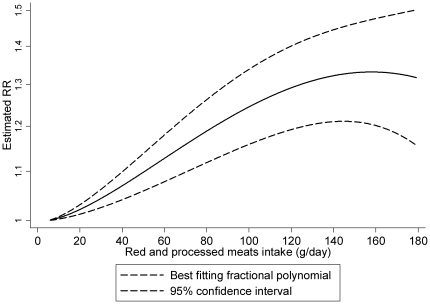
“24) associated with every 100 g/day increase of meat intake until a plateau was encountered at 140 g/day (12).”
BackgroundSpada, M., Piras, C., Diana, G., Leoni, V. P., Frau, D. V., Serreli, G., Simbula, G., Loi, R., Noto, A., Murgia, F., et al. (2023) · Antioxidants · doi:10.3390/antiox12030683 · Cited by 44
“In addition, some lifestyle habits have been recognized as risk factors for the onset of the disease, such as excess body weight [5], cigarette smoking [6], a sedentary lifestyle [7], the consumption of processed meats [8] and a low intake of dietary fiber [9,10].”
BackgroundChu, A. H. Y., Lin, K., Croker, H. A., Kefyalew, S. S., Becerra‐Tomás, N., Dossus, L., González‐Gil, E. M., Ahmadi, N., Park, Y., Krebs, J. R., et al. (2025) · American Journal of Clinical Nutrition · doi:10.1016/j.ajcnut.2025.02.021 · Cited by 53
“No clear associations emerged for meat patterns, contrary to previous meta-analyses [90 – 92].”
Self-citationAromatic DNA Adducts and Risk of Gastrointestinal Cancers: A Case–Cohort Study within the EPIC–Spain
Agudo, A., Peluso, M. E. M., Munnia, A., Luján‐Barroso, L., Sánchez, M., Molina‐Montes, E., Sánchez‐Cantalejo, E., Navarro, C., Tormo, M.-J., Chirlaque, M., et al. (2012) · Cancer Epidemiology Biomarkers & Prevention · doi:10.1158/1055-9965.epi-11-1205 · Cited by 36
Progress Against GI Cancer During the American Society of Clinical Oncology's First 50 Years
Mayer, R. J., Venook, A. P., & Schilsky, R. L. (2014) · Journal of Clinical Oncology · doi:10.1200/jco.2014.55.4121 · Cited by 40
Schwedhelm, C., Pischon, T., Rohrmann, S., Himmerich, H., Linseisen, J., & Nimptsch, K. (2016) · Journal of Nutrition · doi:10.3945/jn.116.237180 · Cited by 38
Social Influence and Meat-Eating Behaviour
Ge, J., Scalco, A. R., & Craig, T. P. (2022) · Sustainability · doi:10.3390/su14137935 · Cited by 41
Runte, M., Nuessli, J., & Ammann, J. (2023) · Food Quality and Preference · doi:10.1016/j.foodqual.2023.105057 · Cited by 39
Food for thought: A meta-analysis of animal food demand elasticities across world regions
Bouyssou, C. G., Jensen, J. D., & Yu, W. (2023) · Food Policy · doi:10.1016/j.foodpol.2023.102581 · Cited by 41
Isakov, N. F., Kariv, R., Webb, M., Ivancovsky, D., Margalit, D., & Zelber‐Sagi, S. (2018) · World Journal of Gastroenterology · doi:10.3748/wjg.v24.i24.2617 · Cited by 46
Erben, V., Carr, P. R., Holleczek, B., Stegmaier, C., Hoffmeister, M., & Brenner, H. (2018) · International Journal of Cancer · doi:10.1002/ijc.32011 · Cited by 36
HARMONIES: A Hybrid Approach for Microbiome Networks Inference via Exploiting Sparsity
Jiang, S., Xiao, G., Koh, A. Y., Chen, Y., Yao, B., Li, Q., & Zhan, X. (2020) · Frontiers in Genetics · doi:10.3389/fgene.2020.00445 · Cited by 39
“Of interest, Parvimonas were closely associated with animal-based diets, which have previously been shown to be significantly associated with increased risk for CRC Chan et al. (2011).”
BackgroundGoethals, S., HECKE, T. V., Vossen, E., Vanhaecke, L., Camp, J. V., & SMET, S. D. (2020) · Food Research International · doi:10.1016/j.foodres.2020.109585 · Cited by 39
Mainar, M. S., Xhaferi, R., Samapundo, S., Devlieghere, F., & Leroy, F. (2016) · Food Control · doi:10.1016/j.foodcont.2016.04.056 · Cited by 40
Stavropoulou, D. A., Vuyst, L. D., & Leroy, F. (2018) · Journal of Applied Microbiology · doi:10.1111/jam.14054 · Cited by 43
“Intake of these compounds has been linked to the risk of cardiovascular disease and cancer, so that a market demand for their reduction or removal has emerged, despite the potential food safety hazards from a microbiological point of view connected to this alteration (Chan et al. 2011; Allison and Fouladkhah 2018).”
BackgroundTangestani, H., Salari-Moghaddam, A., Ghalandari, H., & Emamat, H. (2020) · Clinical Nutrition · doi:10.1016/j.clnu.2020.02.002 · Cited by 34
Nucleotide excision repair gene polymorphisms, meat intake and colon cancer risk
Steck, S. E., Butler, L. M., Keku, T. O., Antwi, S. O., Galanko, J. A., Sandler, R. S., & Hu, J. J. (2014) · Mutation research. Fundamental and molecular mechanisms of mutagenesis · doi:10.1016/j.mrfmmm.2014.02.004 · Cited by 42
Liu, Z., Zhang, K., & Du, X. L. (2016) · BMC Cancer · doi:10.1186/s12885-016-2324-z · Cited by 36
Mediterranean Diet and cancer risk: an open issue
D'Alessandro, A., Pergola, G. D., & Silvestris, F. (2016) · International Journal of Food Sciences and Nutrition · doi:10.1080/09637486.2016.1191444 · Cited by 42
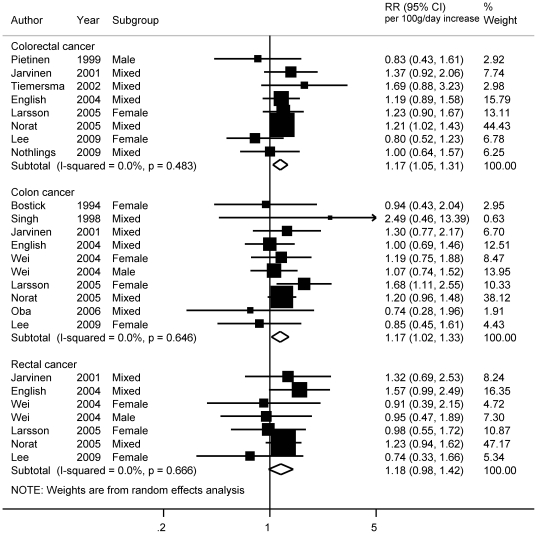
“In a metaanalysis of prospective studies every 100 g/day of red meat increased the risk of colorectal cancer by 17% (summary RR: 1.17; 95% CI: 1.05, 1.31) and every 50 g/day of processed meat by 18% (summary RR:1.18; 95% CI: 1.10–1.28) (Chan et al. 2011).”
InfluentialMarandi, Y., Hashemzade, S., Tayebinia, H., Karimi, J., Zamani, A., & Khodadadi, I. (2021) · PubMed Central · doi:10.22038/ijbms.2021.52355.11835 · Cited by 33
“Its incidence is high in developed countries, and factors such as intestinal disorders, high fat diet, smoking, consumption of red meat and processed meat-rich diets, excessive alcohol consumption, and physical inactivity are predominant contributors to CRC (2, 3).”
BackgroundNonlinear association between magnesium intake and the risk of colorectal cancer
Qu, X., Jin, F., Hao, Y., Zhu, Z., Li, H., Tang, T., & Dai, K. (2012) · European Journal of Gastroenterology & Hepatology · doi:10.1097/meg.0b013e32835c073c · Cited by 35
Added sugar, glycemic index and load in colon cancer risk
Galeone, C., Pelucchi, C., & Vecchia, C. L. (2012) · Current Opinion in Clinical Nutrition and Metabolic Care · doi:10.1097/mco.0b013e3283539f81 · Cited by 32
“Epidemiological studies that have considered the association of colon cancer risk with high intake of dietary sugars, independently from their contribution on energy intake, and consequently overweight, obesity and aspects of the metabolic syndrome [1,6,7], have, however, yielded conflicting results.”
BackgroundResultParker, M. K., Misyak, S. A., Gohlke, J. M., & Hedrick, V. E. (2023) · American Journal of Clinical Nutrition · doi:10.1016/j.ajcnut.2023.09.009 · Cited by 34
MicroRNA-455 suppresses the oncogenic function of HDAC2 in human colorectal cancer
Mao, Q. D., Zhang, W., Zhao, K., Cao, B., Yuan, H., Wei, L., Song, M., & Liu, X. (2017) · Brazilian Journal of Medical and Biological Research · doi:10.1590/1414-431x20176103 · Cited by 34
Nimptsch, K., Bernstein, A. M., Giovannucci, E. L., Fuchs, C. S., Willett, W. C., & Wu, K. (2013) · American Journal of Epidemiology · doi:10.1093/aje/kwt099 · Cited by 37
“In a recent meta-analysis that included 21 prospective studies, higher intakes of red and processed meats were significantly positively associated with the risk of colorectal cancer (2).”
BackgroundExpression and replication of virus-like circular DNA in human cells
Eilebrecht, S., Hotz‐Wagenblatt, A., Sarachaga, V., Burk‐Körner, A., Falida, K., Chakraborty, D., Nikitina, E., Tessmer, C., Whitley, C., Sauerland, C., et al. (2018) · Scientific Reports · doi:10.1038/s41598-018-21317-w · Cited by 39
“176 expression is plotted on the x-axis and the log(2)-fold expression change upon CMI1.”
BackgroundInfluentialLindberg, L., Reid-McCann, R., Smyth, B. M., Woodside, J. V., & Nugent, A. P. (2024) · Trends in Food Science & Technology · doi:10.1016/j.tifs.2024.104483 · Cited by 35
Meat products in human nutrition and health – About hazards and risks
SMET, S. D., & HECKE, T. V. (2024) · Meat Science · doi:10.1016/j.meatsci.2024.109628 · Cited by 37
Holmes, D. I. R. (2015) · Nature · doi:10.1038/521s2a · Cited by 33
Salter, A. M. (2012) · Animal Frontiers · doi:10.2527/af.2013-0004 · Cited by 43
“In a recent update, drawing data from 24 prospective studies, Chan et al. (2011) reported that the risk of developing colorectal cancer increased 14% for every 100 g/day increase of total red and processed meats.”
BackgroundHereditary hemochromatosis promotes colitis and colon cancer and causes bacterial dysbiosis in mice
Sivaprakasam, S., Ristić, B., Mudaliar, N. S., Hamood, A. N., Colmer‐Hamood, J. A., Wachtel, M. S., Nevels, A., Kottapalli, K. R., & Ganapathy, V. (2020) · Biochemical Journal · doi:10.1042/bcj20200392 · Cited by 32
Hossain, M. J., Chowdhury, U. N., Islam, M. B., Uddin, S., Ahmed, M. B., Quinn, J. M. W., & Moni, M. A. (2021) · Computers in Biology and Medicine · doi:10.1016/j.compbiomed.2021.104539 · Cited by 38
Budhathoki, S., Iwasaki, M., Yamaji, T., Sasazuki, S., Takachi, R., Sakamoto, H., Yoshida, T., & Tsugane, S. (2015) · Cancer Epidemiology Biomarkers & Prevention · doi:10.1158/1055-9965.epi-14-1051 · Cited by 37
“org Cancer Epidemiol Biomarkers Prev; 24(3) March 2015 617”
BackgroundInfluential
Metadata
- Authors
- Chan, D. S. M., Lau, R., Aune, D., Vieira, R., Greenwood, D. C., Kampman, E., & Norat, T.
- Affiliations
- Imperial College London (GB)
- University of Leeds (GB)
- Wageningen University & Research (NL)
- Corresponding author
- Norat, Teresa
- Venue
- PLoS ONE
- Publisher
- Public Library of Science (PLoS)
- Published
- 2011-06-06
- Volume
- 6
- Issue
- 6
- Pages
- e20456
- ISSN
- 1932-6203 (ISSN-L)
- PMC
- PMC3108955
- OpenAlex
- W2072090020
- Cited by
- 903
- References
- 72
- Citations by year
- 2026: 29 · 2025: 46 · 2024: 53 · 2023: 67 · 2022: 58 · 2021: 72 · 2020: 69 · 2019: 67 · 2018: 79 · 2017: 73 · 2016: 71 · 2015: 61 · 2014: 62 · 2013: 59 · 2012: 32
- FWCI
- 7.52
- Type
- journal article
- Language
- en
- Open access
- gold
- doi.org
- Locations
- PLoS ONE (publishedVersion, cc-by)
- Europe PMC (PubMed Central) (publishedVersion, cc-by)
- PubMed Central (publishedVersion, cc-by)
- PubMed (publishedVersion)
- Radboud Repository (Radboud University) (publishedVersion)
- White Rose Research Online (University of Leeds, The University of Sheffield, University of York) (acceptedVersion)
- Socio-Environmental Systems Modeling (acceptedVersion)
- RePEc: Research Papers in Economics (submittedVersion)
- DOAJ (DOAJ: Directory of Open Access Journals) (submittedVersion, cc-by-sa)
- Figshare (submittedVersion, cc-by)
- Spiral (Imperial College London) (submittedVersion, other-oa)
- Radboud Repository (Radboud University) (submittedVersion, other-oa)
- Data Archiving and Networked Services (DANS) (submittedVersion, other-oa)
- Funders
- World Cancer Research Fund International (2007/SP01)
- World Cancer Research Fund (2007/SP01)
- Wageningen University and Research
- Topics
- Health Sciences › Medicine › Public Health, Environmental and Occupational Health › Nutritional Studies and Diet
- Health Sciences › Medicine › Oncology › Colorectal Cancer Screening and Detection
- Life Sciences › Agricultural and Biological Sciences › Animal Science and Zoology › Meat and Animal Product Quality
- Keywords
- red meat, processed meat, colorectal cancer, colon cancer, rectal cancer, cancer risk, dietary intake, dose-response relationship, nonlinear relationship, colorectal cancer prevention, dietary recommendations
- MeSH terms
- Female, Food Handling, Humans, Male, Meat, Pigmentation, Prospective Studies, Colorectal Neoplasms, Publication Bias
About these checks
Registry, retraction, Cites and statistics results are computed, not judged, with one exception: a printed reference that no index lists is read once by a model before it counts as a citation error. Claims are extracted by a model and kept only when their quote appears verbatim in the text; each cited source is then checked, with a model’s help, for whether it says what the claim relies on. Those verdicts can be wrong — read the claim’s quote and the cited source before relying on one.
Statistics and arithmetic are recomputed, not judged.
Confidence bands are shown only for fields calibrated on our annotated test set. None is calibrated yet, so no band is shown.
What counts as a claim ›How we measure confidence ›How we check this ›
Are you an author, or do you see a problem with this page? Request a review
Data sources
Bibliographic data: Semantic Scholar, OpenAlex, Crossref.
Contains information from the Semantic Scholar Academic Graph Datasets, made available under the ODC Attribution License (ODC-BY 1.0).
Semantic Scholar’s data is described in: Kinney, R., et al. (2023). The Semantic Scholar Open Data Platform. arXiv:2301.10140.
