

Red and Processed Meat and Colorectal Cancer Incidence: Meta-Analysis of Prospective Studies
Open accessThe DOI matches its Crossref record; 71 of the 72 references it cites were found in a registry or an index.
Abstract
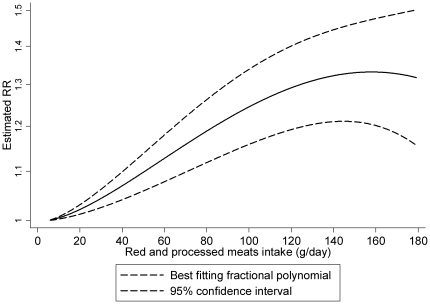
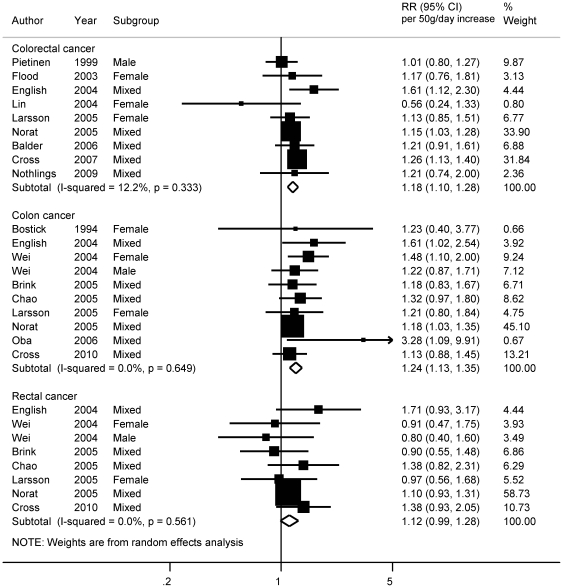
BACKGROUND: The evidence that red and processed meat influences colorectal carcinogenesis was judged convincing in the 2007 World Cancer Research Fund/American Institute of Cancer Research report. Since then, ten prospective studies have published new results. Here we update the evidence from prospective studies and explore whether there is a non-linear association of red and processed meats with colorectal cancer risk. METHODS AND FINDINGS: Relevant prospective studies were identified in PubMed until March 2011. For each study, relative risks and 95% confidence intervals (CI) were extracted and pooled with a random-effects model, weighting for the inverse of the variance, in highest versus lowest intake comparison, and dose-response meta-analyses. Red and processed meats intake was associated with increased colorectal cancer risk. The summary relative risk (RR) of colorectal cancer for the highest versus the lowest intake was 1.22 (95% CI = 1.11-1.34) and the RR for every 100 g/day increase was 1.14 (95% CI = 1.04-1.24). Non-linear dose-response meta-analyses revealed that colorectal cancer risk increases approximately linearly with increasing intake of red and processed meats up to approximately 140 g/day, where the curve approaches its plateau. The associations were similar for colon and rectal cancer risk. When analyzed separately, colorectal cancer risk was related to intake of fresh red meat (RR(for 100 g/day increase) = 1.17, 95% CI = 1.05-1.31) and processed meat (RR (for 50 g/day increase) = 1.18, 95% CI = 1.10-1.28). Similar results were observed for colon cancer, but for rectal cancer, no significant associations were observed. CONCLUSIONS: High intake of red and processed meat is associated with significant increased risk of colorectal, colon and rectal cancers. The overall evidence of prospective studies supports limiting red and processed meat consumption as one of the dietary recommendations for the prevention of colorectal cancer.
Overview
The claims and statistics of this paper haven’t been checked yet.
Free: it reads the open-access text and checks the first 5 claims that cite a source we can check. Create a free account to check every claim.
Integrity signals
Registry
Cites
Statistics
Figures
Verification
Claims the paper makes
The claims and statistics of this paper haven’t been checked yet.
Free: it reads the open-access text and checks the first 5 claims that cite a source we can check. Create a free account to check every claim.
Claims other papers make about this one
Each is checked against this paper’s own text: does it say what the citing paper says it does?
The cited source says what the claim attributes to it.
In the citing paper
“quality and obesity 54,55 , and processed meat with colorectal cancer 56 .”
From Ultra‐processed foods and the nutrition transition: global, regional and national trends, food systems transformations and political economy drivers (2020) · cites this paper as [56]
Self-check
Percentages, sums and reported differences re-computed from the paper’s own numbers.
The self-check needs the paper’s full text.
Citations
Cites
Meta-analysis in clinical trials
DerSimonian, R., & Laird, N. (1986) · Controlled Clinical Trials · doi:10.1016/0197-2456(86)90046-2 · Cited by 39,552 · cited 1×
“We present the results from the randomeffects meta-analysis that accounts for between-study heterogeneity [31] unless otherwise specified.”
MethodQuantifying heterogeneity in a meta‐analysis
Higgins, J. P. T., & Thompson, S. G. (2002) · Statistics in Medicine · doi:10.1002/sim.1186 · Cited by 36,763 · cited 1×
“To assess heterogeneity, we computed the Cochran Q test and I(2) statistic [36].”
MethodEstimates of worldwide burden of cancer in 2008: GLOBOCAN 2008
Ferlay, J., Shin, H., Bray, F., Forman, D., Mathers, C., & Parkin, D. M. (2010) · International Journal of Cancer · doi:10.1002/ijc.25516 · Cited by 21,293 · cited 1×
“Incidence rates are highest in North America, Western Europe, Australia/New Zealand, and in Asian countries that have experienced nutrition transition, such as Japan, Singapore, and North-Korea [1].”
BackgroundFood, nutrition, physical activity, and the prevention of cancer: a global perspective
(2008) · Choice Reviews Online · doi:10.5860/choice.45-5024 · Cited by 5,350
Publication and related bias in meta-analysis
Sterne, J. A. C., Gavaghan, D., & Egger, M. (2000) · Journal of Clinical Epidemiology · doi:10.1016/s0895-4356(00)00242-0 · Cited by 2,282
Lazcano-Ponce, E. C. (2009) · Salud Pública de México · Cited by 1,669
Worldwide Variations in Colorectal Cancer
Center, M. M., Jemal, A., Smith, R. A., & Ward, E. (2009) · CA: A Cancer Journal for Clinicians · doi:10.3322/caac.20038 · Cited by 1,276 · cited 1×
“carcinogenesis is indicated by the increase in colorectal cancer incidence in parallel with economic development and adoption of a western lifestyle [4], as well as by the results of migration studies that demonstrate a greater lifetime incidence of colorectal cancer among immigrants to high-incidence, industrialized…”
BackgroundWillett, W. C., Stampfer, M. J., Colditz, G. A., Rosner, B. A., & Speizer, F. E. (1990) · New England Journal of Medicine · doi:10.1056/nejm199012133232404 · Cited by 1,248 · cited 6×
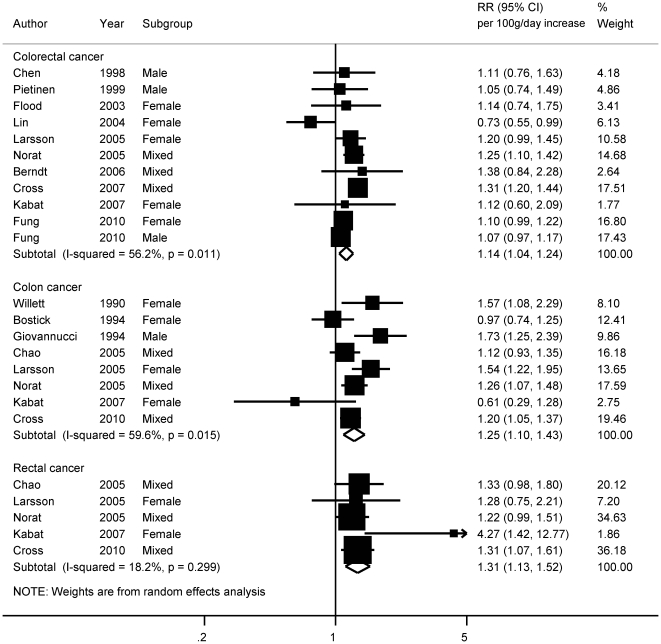
“References: Chen, 1998 [51]; Pietinen, 1999 [57]; Flood, 2003 [33]; Lin, 2004 [56]; Larsson, 2005 [34]; Norat, 2005 [50]; Berndt, 2006 [19]; Cross, 2007 [22]; Kabat, 2007 [24]; Fung, 2010 [23]; Willett, 1990 [58]; Bostick, 1994 [52]; Giovannuccci, 1994 [55]; Chao, 2005 [54]; Cross, 2010 [21].”
ResultInfluentialGeneralized Least Squares for Trend Estimation of Summarized Dose–response Data
Orsini, N., Bellocco, R., & Greenland, S. (2006) · The Stata Journal: Promoting communications on statistics and Stata · doi:10.1177/1536867x0600600103 · Cited by 1,241 · cited 1×
“In linear dose-response meta-analyses, we pooled the relative risk estimates per unit of intake increase (with its standard error) reported in the studies, or computed by us from the categorical data using generalized least-squares for trend estimation [32].”
MethodCairns, S. R., Scholefield, J. H., Steele, R. J., Dunlop, M. G., Thomas, H. J. W., Evans, G. D., Eaden, J. A., Rutter, M. D., Atkin, W. P., Saunders, B. P., et al. (2010) · Gut · doi:10.1136/gut.2009.179804 · Cited by 1,141 · cited 1×
“Screening and surveillance of adenomatous polyps, a precursor of colorectal cancer, is currently the cornerstone for primary prevention of colorectal cancer [6].”
Background
Research works printed but not linked: 2
- 2003, Food, Nutrition, Physical Activity, and the Prevention of Cancer: a Global Perspective, Systematic Literature Review Specification Manual
- A Tobias, 1999, Assessing the influence of a single study in meta-analysis., Stata Tech Bull, 47, 15
Cited by
Items 101–200 of 912
Health-Promoting Phytonutrients Are Higher in Grass-Fed Meat and Milk
van Vliet, S., Provenza, F. D., & Kronberg, S. L. (2021) · Frontiers in Sustainable Food Systems · doi:10.3389/fsufs.2020.555426 · Cited by 141
“, 2019), cancer (Ganmaa et al., 2002; Chan et al., 2011; Fraser et al., 2020), type II diabetes (Pan et al.”
Backgroundzur Hausen, H. (2012) · International Journal of Cancer · doi:10.1002/ijc.27413 · Cited by 118
Armstrong, H., Bording-Jorgensen, M., Dijk, S., & Wine, E. (2018) · Cancers · doi:10.3390/cancers10030083 · Cited by 118
“In these studies, red meat includes fresh, minced, and frozen lamb, beef, pork, and processed meats including, sausages, bacon, ham, and salami [204].”
BackgroundHECKE, T. V., Ho, P.-T., Goethals, S., & SMET, S. D. (2017) · Food Research International · doi:10.1016/j.foodres.2017.09.090 · Cited by 121
The Role of p53 Dysfunction in Colorectal Cancer and Its Implication for Therapy
Michel, M., Kaps, L., Maderer, A., Galle, P. R., & Moehler, M. (2021) · Cancers · doi:10.3390/cancers13102296 · Cited by 108
Dietary Manipulation of Oncogenic MicroRNA Expression in Human Rectal Mucosa: A Randomized Trial
Humphreys, K. J., Conlon, M. A., Young, G. P., Topping, D. L., Hu, Y. C., Winter, J. M., Bird, A. R., Cobiac, L., Kennedy, N. A., Michael, M., et al. (2014) · Cancer Prevention Research · doi:10.1158/1940-6207.capr-14-0053 · Cited by 117
“(1, 2), with intake of more than 500 g of cooked red meat per week significantly increasing colorectal cancer risk (1).”
BackgroundDjupegot, I. L., Nenseth, C. B., Bere, E., Bjørnarå, H. B. T., Helland, S. H., Øverby, N. C., Torstveit, M. K., & Stea, T. H. (2017) · BMC Public Health · doi:10.1186/s12889-017-4408-3 · Cited by 109
Red Meat and Colorectal Cancer: A Quantitative Update on the State of the Epidemiologic Science
Alexander, D. D., Weed, D. L., Miller, P. E., & Mohamed, M. A. (2015) · Journal of the American College of Nutrition · doi:10.1080/07315724.2014.992553 · Cited by 110
Short, S. P., Pilat, J. M., & Williams, C. S. (2018) · Free Radical Biology and Medicine · doi:10.1016/j.freeradbiomed.2018.05.066 · Cited by 116
Crowe, W., Elliott, C. T., & Green, B. D. (2019) · Nutrients · doi:10.3390/nu11112673 · Cited by 122
Wong, M. C. S., Lam, T. Y. T., Tsoi, K. K. F., Hirai, H. W., Chan, V. C. W., Ching, J. Y. L., Chan, F. K. L., & Sung, J. J. �. (2013) · Gut · doi:10.1136/gutjnl-2013-305639 · Cited by 107
Tuan, J., & Chen, Y. (2015) · Gastrointestinal Tumors · doi:10.1159/000442831 · Cited by 124
Meat consumption, heterocyclic amines and colorectal cancer risk: The Multiethnic Cohort Study
Ollberding, N. J., Wilkens, L. R., Henderson, B. E., Kolonel, L. N., & Le Marchand, L. (2012) · International Journal of Cancer · doi:10.1002/ijc.27546 · Cited by 106
“These findings, however, are in contrast to a recent meta-analysis of prospective studies conducted by Chan et al.(10) that reported a summary relative risk of 1.”
ResultInfluentialSustainable ruminant production to help feed the planet
Pulina, G., Francesconi, A. H. D., Stefanon, B., Sevi, A., Calamari, L., Lacetera, N., DELL’ORTO, V., Pilla, F., Ajmone‐Marsan, P., Mele, M. L., et al. (2016) · Italian Journal of Animal Science · doi:10.1080/1828051x.2016.1260500 · Cited by 136
“A linear and positive relationship between red and processed meat intake and cancer risk was obtained by considering the results of a single meta-analysis (Chan et al. 2011).”
BackgroundMeat intake and risk of diverticulitis among men
Cao, Y., Strate, L. L., Keeley, B. R., Tam, I., Wu, K., Giovannucci, E. L., & Chan, A. T. (2017) · Gut · doi:10.1136/gutjnl-2016-313082 · Cited by 114
Carr, P. R., Alwers, E., Bienert, S., Weberpals, J. G., Kloor, M., Brenner, H., & Hoffmeister, M. (2018) · Annals of Oncology · doi:10.1093/annonc/mdy059 · Cited by 112
“According to the World Cancer Research Fund International [3], the major risk factors for CRC include consumption of red and processed meat [4, 5], alcoholic drinks [6], body fatness [7] and smoking [8].”
MethodTrepanowski, J. F., & Ioannidis, J. P. A. (2018) · Advances in Nutrition · doi:10.1093/advances/nmy014 · Cited by 105
“18/50 g processedmeat (22) is too small to avoid residual uncertainty given the other problems that we discuss below.”
Food Processing and the Mediterranean Diet
Hoffman, R., & Gerber, M. (2015) · Nutrients · doi:10.3390/nu7095371 · Cited by 104
“Since this study, six prospective studies [193–198], three meta-analyses [199–201] and one analysis of pooled studies [202] have shown some inconsistencies in relation to processed meat which might be related to different processing methods of meat between countries.”
ResultProcessed meat: the real villain?
Rohrmann, S., & Linseisen, J. (2016) · Proceedings of the Nutrition Society · doi:10.1017/s0029665115004255 · Cited by 102
“Another factor that contributes to heterogeneity in study results is differences in adjustment variables as shown in a meta-analysis of meat consumption and colorectal cancer risk((84)).”
Burden of cancer attributable to obesity, type 2 diabetes and associated risk factors
López-Suárez, A. (2018) · Metabolism · doi:10.1016/j.metabol.2018.10.013 · Cited by 117
Seyedsadjadi, N., & Grant, R. (2020) · Antioxidants · doi:10.3390/antiox10010015 · Cited by 102
Alvandi, E., Wong, W. K. M., Joglekar, M. V., Spring, K. J., & Hardikar, A. A. (2022) · BMC Medicine · doi:10.1186/s12916-022-02529-4 · Cited by 101
“According to several meta-analyses, high consumption of processed and unprocessed meat is related to high CRC risk [7, 8], and high fiber intake is suggested as a protective factor against CRC progression and incidence [9–11].”
BackgroundRed and Processed Meat Consumption and Risk of Depression: A Systematic Review and Meta-Analysis
Nucci, D., Fatigoni, C., Amerio, A., Odone, A., & Gianfredi, V. (2020) · International Journal of Environmental Research and Public Health · doi:10.3390/ijerph17186686 · Cited by 119
HECKE, T. V., Camp, J. V., & SMET, S. D. (2017) · Comprehensive Reviews in Food Science and Food Safety · doi:10.1111/1541-4337.12248 · Cited by 109
Briggs, A. D. M., Kehlbacher, A., Tiffin, R., Garnett, T., Rayner, M., & Scarborough, P. (2013) · BMJ Open · doi:10.1136/bmjopen-2013-003543 · Cited by 97
Cascella, M., Bimonte, S., Barbieri, A., Vecchio, V. D., Caliendo, D., Schiavone, V., Fusco, R., Granata, V., Arra, C., & Cuomo, A. (2018) · Infectious Agents and Cancer · doi:10.1186/s13027-018-0174-9 · Cited by 113
“[5] proved evidence that dietary factors, as well as red and processed meat, may be thought of the leading causes of 80% CRC cases.”
BackgroundWolstenholme, E., Carfora, V., Catellani, P., Poortinga, W., & Whitmarsh, L. E. (2021) · Appetite · doi:10.1016/j.appet.2021.105467 · Cited by 114
“Furthermore, red and processed meat consumption is associated with an increased risk of contracting non-communicable diseases including colorectal, colon and rectal cancers (Chan et al., 2011; Walker, Rhubart-Berg, McKenzie, Kelling, & Lawrence, 2005).”
BackgroundRed meat intake in chronic kidney disease patients: Two sides of the coin
Mafra, D., Borges, N. A., Cardozo, L. F. M. D. F., Anjos, J. S., Black, A. P., Moraes, C., Bergman, P., Lindholm, B., & Stenvinkel, P. (2018) · Nutrition · doi:10.1016/j.nut.2017.08.015 · Cited by 93
Pollinator Deficits, Food Consumption, and Consequences for Human Health: A Modeling Study
Smith, M. R., Mueller, N. D., Springmann, M., Sulser, T. B., Garibaldi, L. A., Gerber, J., Wiebe, K., & Myers, S. S. (2022) · Environmental Health Perspectives · doi:10.1289/ehp10947 · Cited by 116
Cutroneo, S., Angelino, D., Tedeschi, T., Pellegrini, N., Martini, D., & SINU Young Working Group (2022) · Frontiers in Nutrition · doi:10.3389/fnut.2022.852831 · Cited by 110
Pierre, F. H. F., Martin, O. C. B., Santarelli, R. L., Taché, S., Naud, N., Guéraud, F., Audebert, M., Dupuy, J., Meunier, N., Attaix, D., et al. (2013) · American Journal of Clinical Nutrition · doi:10.3945/ajcn.113.061069 · Cited by 116
“Epidemiologic studies have suggested that there is an association between colorectal cancer and intake of meat (2), and risk associated with cured meat is higher than with fresh red meat (3).”
BackgroundBurden of colorectal cancer in Central and South America
Sierra, M. S., & Forman, D. (2016) · Cancer Epidemiology · doi:10.1016/j.canep.2016.03.010 · Cited by 101
Colorectal adenocarcinoma: risks, prevention and diagnosis
Thrumurthy, S. G., Thrumurthy, S. S. D., Gilbert, C. E., Ross, P. J., & Haji, A. (2016) · BMJ · doi:10.1136/bmj.i3590 · Cited by 106
Morgan, E. H., Schoonees, A., Sriram, U., Faure, M. C., & Seguin‐Fowler, R. A. (2020) · Cochrane Database of Systematic Reviews · doi:10.1002/14651858.cd012547.pub2 · Cited by 115
Early-onset colorectal cancer: Current insights and future directions
Wu, C. W., & Lui, R. N.-S. (2022) · World Journal of Gastrointestinal Oncology · doi:10.4251/wjgo.v14.i1.230 · Cited by 95
Nutritional and Phytochemical Content of High-Protein Crops
Multari, S., Neacsu, M., Scobbie, L., Cantlay, L. L., Duncan, G., Vaughan, N. J., Stewart, D., & Russell, W. R. (2016) · Journal of Agricultural and Food Chemistry · doi:10.1021/acs.jafc.6b00926 · Cited by 99
Nutritional importance of animal-sourced foods in a healthy diet
Sheffield, S. R., Fiorotto, M. L., & Davis, T. A. (2024) · Frontiers in Nutrition · doi:10.3389/fnut.2024.1424912 · Cited by 108
Hu, Y., He, Y., Ji, J., Zheng, S., & Cheng, Y. (2020) · International Journal of Nanomedicine · doi:10.2147/ijn.s232777 · Cited by 87
Grosso, G., Vignera, S. L., Condorelli, R. A., Godos, J., Marventano, S., Tieri, M., Ghelfi, F., Titta, L., Lafranconi, A., Gambera, A., et al. (2022) · International Journal of Food Sciences and Nutrition · doi:10.1080/09637486.2022.2050996 · Cited by 95
“Subgroup analyses by sex showed no significant association with risk of colorectal, colon and rectal cancers (Chan et al. 2011).”
BackgroundInfluentialFrom the Earth Summit to Rio+20: integration of health and sustainable development
Haines, A., Alleyne, G. A. O., Kickbusch, I., & Dora, C. F. C. (2012) · The Lancet · doi:10.1016/s0140-6736(12)60779-x · Cited by 107
Wu, S., Sun, H., Wang, Y., Yang, X., Meng, Q., Yang, H., Zhu, H., Tang, W., Li, X., Aschner, M., et al. (2019) · Cancer Research · doi:10.1158/0008-5472.can-19-0773 · Cited by 84
The Effect of Natural Antioxidants on Quality and Shelf Life of Beef and Beef Products
Horbańczuk, O. K., Kurek, M. A., Atanasov, A. G., Brnčić, M., & Brnčić, S. R. (2019) · Food Technology and Biotechnology · doi:10.17113/ftb.57.04.19.6267 · Cited by 96
Time trends of colorectal cancer incidence and associated lifestyle factors in South Korea
Khil, H., Kim, S., Hong, S., Gil, H., Cheon, E., Lee, D. H., Kim, Y. A., & Keum, N. (2021) · Scientific Reports · doi:10.1038/s41598-021-81877-2 · Cited by 90
Superheated steam processing: An emerging technology to improve food quality and safety
Fang, J., Liu, C., Law, C. L., MUJUMDAR, A. S., Xiao, H., & Zhang, C. (2022) · Critical Reviews in Food Science and Nutrition · doi:10.1080/10408398.2022.2059440 · Cited by 91
“This is because processing the meat by curing, smoking, fermentation, or other methods generates chemicals such as acrylamide, heterocyclic aromatic amines (HAAs), and polyaromatic hydrocarbons (PAHs), which are carcinogens or suspected carcinogens (Chan et al. 2011).”
BackgroundDietary Patterns and the Risk of Colorectal Cancer
Fung, T. T., & Brown, L. S. (2012) · Current Nutrition Reports · doi:10.1007/s13668-012-0031-1 · Cited by 94
Iron in red meat–friend or foe
Czerwonka, M., & Tokarz, A. (2016) · Meat Science · doi:10.1016/j.meatsci.2016.09.012 · Cited by 92
Alsheridah, N., & Akhtar, S. (2018) · BMC Cancer · doi:10.1186/s12885-018-5132-9 · Cited by 86
Viral infections and colorectal cancer: A systematic review of epidemiological studies
Chen, H., Chen, X., Waterboer, T., Castro, F. A., & Brenner, H. (2014) · International Journal of Cancer · doi:10.1002/ijc.29180 · Cited by 78
“Numerous epidemiological studies have identified life style and environmental factors contributing to the occurrence of CRC, such as high consumption of red meat or tobacco smoking.(3,4) However, most of these risk factors at best confer a moderate risk.”
BackgroundHECKE, T. V., Bussche, J. V., Vanhaecke, L., Vossen, E., Camp, J. V., & SMET, S. D. (2014) · Journal of Agricultural and Food Chemistry · doi:10.1021/jf4057583 · Cited by 92
Griffin, L. E., Djuric, Z., Angiletta, C. J., Mitchell, C. M., Baugh, M. E., Davy, K. P., & Neilson, A. P. (2019) · Food & Function · doi:10.1039/c9fo00333a · Cited by 76
Qiao, L., & Feng, Y. (2013) · Cancer Causes & Control · doi:10.1007/s10552-013-0197-x · Cited by 90
Dietary heme iron and the risk of colorectal cancer with specific mutations in KRAS and APC
Gilsing, A. M. J., Fransen, F., de Kok, T. M. C. M., Goldbohm, A., Schouten, L. J., de Bruïne, A. P., van Engeland, M., van den Brandt, P. A., de Goeij, A. F. P. M., & Weijenberg, M. P. (2013) · Carcinogenesis · doi:10.1093/carcin/bgt290 · Cited by 93
“Experimental studies suggest a role for dietary heme iron, which is present at 5-fold higher concentrations in red than white meat (4) and could explain why white meat, in contrast to red meat, is not associated with cancer risk (3).”
BackgroundRed meat consumption and healthy ageing: A review
Kouvari, M., Tyrovolas, S., & Panagiotakos, D. B. (2015) · Maturitas · doi:10.1016/j.maturitas.2015.11.006 · Cited by 95
Lane, M. M., Lotfaliany, M., Forbes, M., Loughman, A., Rocks, T., O'Neil, A. E., Machado, P. P., Jacka, F. N., Hodge, A. M., & Marx, W. (2022) · Nutrients · doi:10.3390/nu14163309 · Cited by 83
Pham, N. M., Mizoue, T., Tanaka, K., Tsuji, I., Tamakoshi, A., Matsuo, K., Wakai, K., Nagata, C., Inoue, M., Tsugane, S., et al. (2014) · Japanese Journal of Clinical Oncology · doi:10.1093/jjco/hyu061 · Cited by 73
“There is substantial evidence for a positive association between processed meat consumption and colorectal cancer (11,12,14,17).”
BackgroundPetimar, J., Smith-Warner, S. A., Fung, T. T., Rosner, B., Chan, A. T., Hu, F. B., Giovannucci, E. L., & Tabung, F. K. (2018) · The American Journal of Clinical Nutrition · doi:10.1093/ajcn/nqy171 · Cited by 74
Bergsten, E., Mestivier, D., Donnadieu, F., Pédron, T., Barau, C., Tsoumtsa, L. L., Mettouchi, A., Lemichez, E., Gorgette, O., Chamaillard, M., et al. (2023) · Gut Microbes · doi:10.1080/19490976.2023.2265138 · Cited by 79
Pes, G. M., Tolu, F., Dore, M. P., Sechi, G., Errigo, A., Canelada, A., & Poulain, M. (2014) · European Journal of Clinical Nutrition · doi:10.1038/ejcn.2014.230 · Cited by 83
Xu, X., Yu, E., Gao, X., Song, N., Liu, L., Wei, X., Zhang, W., & Fu, C. (2013) · International Journal of Cancer · doi:10.1002/ijc.27625 · Cited by 71
“In this regard, a more recent meta-analysis of 24 prospective studies of CRC showed an increased risk of 17% (95% confidence interval [CI] 1⁄4 5–31%) per 100 g/day increased intake of red meat and of 18% (95% CI 1⁄4 10–28) per 50 g/day increased intake of processed meat.(3) One underlying cause might be the formation…”
BackgroundDietary patterns and colorectal cancer risk in a Korean population: A case-control study
Park, Y., Lee, J., Oh, J. H., Shin, A., & Kim, J. (2016) · Medicine · doi:10.1097/md.0000000000003759 · Cited by 81
“To conduct a case-control study, newly diagnosed CRC patients were considered eligible for enrollment when they were admitted to the Center for Colorectal Cancer, National Cancer Center (NCC) in Korea from August 2010 to August 2013.”
The Mediterranean diet and risk of colorectal cancer in the UK Women’s Cohort Study
Jones, P., Cade, J. E., Evans, C. E., Hancock, N., & Greenwood, D. C. (2017) · International Journal of Epidemiology · doi:10.1093/ije/dyx155 · Cited by 72
“The potential of an increased fibre(23,24) and fish consumption(25,26) to decrease CRC risk has been previously reported, as has the association of high intakes of red and processed meat with increased risk of colorectal, colon and rectal cancers.(27) Notwithstanding, a systematic review and meta-analysis by Magalhaes…”
ResultSelf-citationPreventing Colorectal Cancer through Prebiotics
Mahdavi, M., Laforest‐Lapointe, I., & Massé, É. (2021) · Microorganisms · doi:10.3390/microorganisms9061325 · Cited by 84
“Indeed, based on the conclusions of a recent meta-analysis, there is a striking correlation between meat consumption and CRC rates [10].”
BackgroundProperties and physiological effects of dietary fiber-enriched meat products: a review
Mishra, B. P., Mishra, J., Paital, B., Rath, P. K., Jena, M. K., Reddy, B. V. V., Pati, P. K., Panda, S. K., & Sahoo, D. K. (2023) · Frontiers in Nutrition · doi:10.3389/fnut.2023.1275341 · Cited by 90
Industrial Farm Animal Production: A Comprehensive Moral Critique
Rossi, J. P., & Garner, S. A. (2014) · Journal of Agricultural and Environmental Ethics · doi:10.1007/s10806-014-9497-8 · Cited by 89
“Meat consumption, in particular red meat, processed meat, and grilled, cured, and smoked meat and fish show an increased risk of many cancers (World Cancer Research Fund 2007; Cross et al. 2007; Chan et al. 2011).”
BackgroundIdentifying Molecular Targets of Lifestyle Modifications in Colon Cancer Prevention
Derry, M. M., Raina, K., Agarwal, C., & Agarwal, R. (2013) · Frontiers in Oncology · doi:10.3389/fonc.2013.00119 · Cited by 79
“Red meat is considered the intake of mutton, lamb, veal, pork, and beef, and processed meat is defined as the total intake of cured or preserved meats, sausages, ham, and bacon (Chan et al., 2011).”
BackgroundLiposome technologies towards colorectal cancer therapeutics
Sang, R., Stratton, B., Engel, A. F., & Deng, W. (2021) · Acta Biomaterialia · doi:10.1016/j.actbio.2021.03.055 · Cited by 73
Chiavarini, M., Bertarelli, G., Minelli, L., & Fabiani, R. (2017) · Nutrients · doi:10.3390/nu9050514 · Cited by 85
“The results of these studies have been revised and analyzed in several meta-analysis which have concluded that the intake of red or processed meat is associated to an increased CRA and CRC risk [2,3].”
ResultTurati, F., Bravi, F., Maso, M. D., Bosetti, C., Polesel, J., Serraino, D., Dalmartello, M., Giacosa, A., Montella, M., Tavani, A., et al. (2017) · European Journal of Cancer · doi:10.1016/j.ejca.2017.08.015 · Cited by 83
Zhang, Y., Dong, L., Zhang, J., Shi, J., Wang, Y., & Wang, S. (2021) · Annual Review of Food Science and Technology · doi:10.1146/annurev-food-062320-012215 · Cited by 72
Microbe-based therapies for colorectal cancer: Advantages and limitations
Saeed, M., Shoaib, A., Kandimalla, R., Javed, S., Almatroudi, A., Gupta, R. C., & Aqil, F. (2021) · Seminars in Cancer Biology · doi:10.1016/j.semcancer.2021.05.018 · Cited by 75
Influence of Dietary Phytochemicals and Microbiota on Colon Cancer Risk
MacDonald, R. S., & Wagner, K. A. (2012) · Journal of Agricultural and Food Chemistry · doi:10.1021/jf204230r · Cited by 79
The EAT-Lancet Commission's Dietary Composition May Not Prevent Noncommunicable Disease Mortality
Zagmutt, F. J., Pouzou, J. G., & Costard, S. (2020) · Journal of Nutrition · doi:10.1093/jn/nxaa020 · Cited by 80
“(9) on the association between red meat consumption and risk of colorectal cancer (CRC) was selected over any of the other meta-analyses on the same subject published between 2015 and 2018, e.”
BackgroundPiccinin, E., Cariello, M., & Moschetta, A. (2020) · Molecular Aspects of Medicine · doi:10.1016/j.mam.2020.100933 · Cited by 73
Pierre, A.-S., Minville-Walz, M., Fèvre, C., Hichami, A., Gresti, J., Pichon, L., Bellenger, S., Bellenger, J., Ghiringhelli, F., Narce, M., et al. (2013) · Biochimica et Biophysica Acta (BBA) - Molecular and Cell Biology of Lipids · doi:10.1016/j.bbalip.2013.01.005 · Cited by 76
“However, the presence of CLA in foods does not assume of antitumor effect since long-term consumption of red meat from beef, another possible source of CLA, increases the risk of colon cancer [4,5].”
A blueprint for the primary prevention of cancer: Targeting established, modifiable risk factors
Gapstur, S. M., Drope, J. M., Jacobs, E. J., Teras, L. R., McCullough, M. L., Douglas, C. E., Patel, A. V., Wender, R. C., & Brawley, O. W. (2018) · CA A Cancer Journal for Clinicians · doi:10.3322/caac.21496 · Cited by 78
Mainar, M. S., & Leroy, F. (2015) · International Journal of Food Microbiology · doi:10.1016/j.ijfoodmicro.2015.03.009 · Cited by 73
Collins, K. K. (2014) · Diabetes Spectrum · doi:10.2337/diaspect.27.4.276 · Cited by 78
Is Timing Important? The Role of Diet and Lifestyle During Early Life on Colorectal Neoplasia
Nimptsch, K., & Wu, K. (2018) · Current Colorectal Cancer Reports · doi:10.1007/s11888-018-0396-7 · Cited by 63
Panahi, Y., Saberi-Karimian, M., Valizadeh, O., Behnam, B., Saadat, A., Jamialahmadi, T., Majeed, M., & Sahebkar, A. (2021) · Advances in experimental medicine and biology · doi:10.1007/978-3-030-73234-9_1 · Cited by 66
Meat Consumption in Sao Paulo – Brazil: Trend in the Last Decade
de Carvalho, A. M., César, C. L. G., Fisberg, R. M., & Marchioni, D. M. (2014) · PLoS ONE · doi:10.1371/journal.pone.0096667 · Cited by 61
“Some studies show the relationship between processed meat intake and cardiovascular diseases and diabetes [3], and other studies show the relationship between red and processed meat intake and colorectal cancer [4–8], weight gain [9] and high death risk [10–12].”
BackgroundSayer, R. D., Wright, A. J., Chen, N., & Campbell, W. W. (2015) · American Journal of Clinical Nutrition · doi:10.3945/ajcn.115.111757 · Cited by 70
Parr, C. L., Hjartåker, A., Lund, E., & Veierød, M. B. (2013) · International Journal of Cancer · doi:10.1002/ijc.28101 · Cited by 78
“In the most recent dose–response meta-analysis of prospective studies of meat intake and CRC incidence, Chan et al.1 reported a pooled relative risk increase of 18% for total CRC per 50 g/day increase in processed meat intake (men and women combined), which is very similar to our estimated 21%.”
BackgroundResultInfluentialFarvid, M. S., Malekshah, A. F., Pourshams, A., Poustchi, H., Sepanlou, S. G., Sharafkhah, M., Khoshnia, M., Farvid, M., Abnet, C. C., Kamangar, F., et al. (2017) · American Journal of Preventive Medicine · doi:10.1016/j.amepre.2016.10.041 · Cited by 67
Lucas, A. L., Bravi, F., Boffetta, P., Polesel, J., Serraino, D., Vecchia, C. L., & Bosetti, C. (2015) · Cancer Epidemiology · doi:10.1016/j.canep.2015.10.026 · Cited by 61
Rising Rates of Colorectal Cancer among Younger Iranians: Is Diet to Blame?
Arani, S. H., & Kerachian, M. A. (2017) · Current Oncology · doi:10.3747/co.23.3226 · Cited by 70
A summary of meat intakes and health burdens
Yip, C. S. C., Lam, W., & Fielding, R. (2017) · European Journal of Clinical Nutrition · doi:10.1038/ejcn.2017.117 · Cited by 79
Tumour heterogeneity and evolutionary dynamics in colorectal cancer
Chan, D. K. H., & Buczacki, S. J. A. (2021) · Oncogenesis · doi:10.1038/s41389-021-00342-x · Cited by 74
Self-citationGilsing, A. M. J., Schouten, L. J., Goldbohm, R. A., Dagnelie, P. C., van den Brandt, P. A., & Weijenberg, M. P. (2015) · Scientific Reports · doi:10.1038/srep13484 · Cited by 74
Characteristics of pork belly consumption in South Korea and their health implication
Choe, J., Yang, H., Lee, S., & Go, G. (2015) · Journal of Animal Science and Technology · doi:10.1186/s40781-015-0057-1 · Cited by 66
Hoffmann, S., Schönbrodt, F. D., Elsas, R., Wilson, R., Strasser, U., & Boulesteix, A. (2021) · Royal Society Open Science · doi:10.1098/rsos.201925 · Cited by 88
“These variables may for instance include body mass index, smoking, physical activity, socioeconomic status and the consumption of alcohol, fruits and vegetables [40, 41].”
BackgroundÅkesson, A., Andersen, L. F., Kristjánsdóttir, Á. G., Roos, E., Trolle, E., Voutilainen, E., & Wirfält, E. (2013) · Food & Nutrition Research · doi:10.3402/fnr.v57i0.22790 · Cited by 58
“…and processed meat and color-ectal cancer, we decided to base the conclusions in this SR on the Summary Colorectal Cancer Report of May 2011, part of the continuous update project (6, 7); accordingly, the papers identified in the search on meat and colorectal cancer were not included in this SR.”
BackgroundFreshwater ecotoxicity impacts from pesticide use in animal and vegetable foods produced in Sweden
Nordborg, M., Davis, J., Cederberg, C., & Woodhouse, A. (2017) · The Science of The Total Environment · doi:10.1016/j.scitotenv.2016.12.153 · Cited by 75
“A strong body of scientific evidence links over-consumption of meat, in particular red meat and processed meat, to a number of diseases such as diabetes, coronary heart disease, and certain types of cancer (Micha et al., 2012, Chan et al., 2011).”
BackgroundEgeberg, R., Olsen, A., Christensen, J., Halkjær, J., Jakobsen, M. U., Overvad, K., & Tjønneland, A. M. (2013) · Journal of Nutrition · doi:10.3945/jn.112.168799 · Cited by 73
Livestock and Sustainable Food Systems: Status, Trends, and Priority Actions
Herrero, M., Mason-D’Croz, D., Thornton, P. K., Fanzo, J., Rushton, J., Godde, C., Bellows, A. L., Ruiz, A. D. G., Palmer, J., Chang, J., et al. (2023) · Springer eBooks · doi:10.1007/978-3-031-15703-5_20 · Cited by 75
Comparison of protein quality and digestibility between plant-based and meat-based burgers
Cutroneo, S., Prandi, B., Faccini, A., Pellegrini, N., Sforza, S., & Tedeschi, T. (2023) · Food Research International · doi:10.1016/j.foodres.2023.113183 · Cited by 70
HECKE, T. V., Vossen, E., Hemeryck, L., Bussche, J. V., Vanhaecke, L., & SMET, S. D. (2015) · Food Chemistry · doi:10.1016/j.foodchem.2015.04.029 · Cited by 67
Jamin, E. L., Riu, A., Douki, T., Debrauwer, L., Cravedi, J., Zalko, D., & Audebert, M. (2013) · PLoS ONE · doi:10.1371/journal.pone.0058591 · Cited by 57
“The implication of dietary habits in colorectal carcinogenesis is suggested by several epidemiological studies [2,3], with a possible link between colorectal carcinogenesis and”
BackgroundBrenner, H., Altenhofen, L., Stock, C., & Hoffmeister, M. (2014) · Cancer Epidemiology Biomarkers & Prevention · doi:10.1158/1055-9965.epi-14-0367 · Cited by 67
“Potential mechanisms underlying these differences might include, among other factors, higher exposure to cigarette smoking and higher consumption of red meat among men, which have been related to increased prevalence of adenomas and CRC risk (20-22), as well as hormonal factors.”
BackgroundDietary patterns during high school and risk of colorectal adenoma in a cohort of middle-aged women
Nimptsch, K., Malik, V., Fung, T. T., Pischon, T., Hu, F. B., Willett, W. C., Fuchs, C. S., Ogino, S., Chan, A. T., Giovannucci, E. L., et al. (2013) · International Journal of Cancer · doi:10.1002/ijc.28578 · Cited by 65
Subsite-Specific Dietary Risk Factors for Colorectal Cancer: A Review of Cohort Studies
Hjartåker, A., Aagnes, B., Robsahm, T. E., Langseth, H., Bray, F., & Larsen, I. K. (2013) · Journal of Oncology · doi:10.1155/2013/703854 · Cited by 62
“Also, although meta- [20–23] and pooled analyses [24–26] have provided quantitative synthesis for several of the dietary risk factors, little emphasis has been placed on subsite risks.”
Background
Metadata
- Authors
- Chan, D. S. M., Lau, R., Aune, D., Vieira, R., Greenwood, D. C., Kampman, E., & Norat, T.
- Affiliations
- Imperial College London (GB)
- University of Leeds (GB)
- Wageningen University & Research (NL)
- Corresponding author
- Norat, Teresa
- Venue
- PLoS ONE
- Publisher
- Public Library of Science (PLoS)
- Published
- 2011-06-06
- Volume
- 6
- Issue
- 6
- Pages
- e20456
- ISSN
- 1932-6203 (ISSN-L)
- PMC
- PMC3108955
- OpenAlex
- W2072090020
- Cited by
- 903
- References
- 72
- Citations by year
- 2026: 29 · 2025: 46 · 2024: 53 · 2023: 67 · 2022: 58 · 2021: 72 · 2020: 69 · 2019: 67 · 2018: 79 · 2017: 73 · 2016: 71 · 2015: 61 · 2014: 62 · 2013: 59 · 2012: 32
- FWCI
- 7.52
- Type
- journal article
- Language
- en
- Open access
- gold
- doi.org
- Locations
- PLoS ONE (publishedVersion, cc-by)
- Europe PMC (PubMed Central) (publishedVersion, cc-by)
- PubMed Central (publishedVersion, cc-by)
- PubMed (publishedVersion)
- Radboud Repository (Radboud University) (publishedVersion)
- White Rose Research Online (University of Leeds, The University of Sheffield, University of York) (acceptedVersion)
- Socio-Environmental Systems Modeling (acceptedVersion)
- RePEc: Research Papers in Economics (submittedVersion)
- DOAJ (DOAJ: Directory of Open Access Journals) (submittedVersion, cc-by-sa)
- Figshare (submittedVersion, cc-by)
- Spiral (Imperial College London) (submittedVersion, other-oa)
- Radboud Repository (Radboud University) (submittedVersion, other-oa)
- Data Archiving and Networked Services (DANS) (submittedVersion, other-oa)
- Funders
- World Cancer Research Fund International (2007/SP01)
- World Cancer Research Fund (2007/SP01)
- Wageningen University and Research
- Topics
- Health Sciences › Medicine › Public Health, Environmental and Occupational Health › Nutritional Studies and Diet
- Health Sciences › Medicine › Oncology › Colorectal Cancer Screening and Detection
- Life Sciences › Agricultural and Biological Sciences › Animal Science and Zoology › Meat and Animal Product Quality
- Keywords
- red meat, processed meat, colorectal cancer, colon cancer, rectal cancer, cancer risk, dietary intake, dose-response relationship, nonlinear relationship, colorectal cancer prevention, dietary recommendations
- MeSH terms
- Female, Food Handling, Humans, Male, Meat, Pigmentation, Prospective Studies, Colorectal Neoplasms, Publication Bias
About these checks
Registry, retraction, Cites and statistics results are computed, not judged, with one exception: a printed reference that no index lists is read once by a model before it counts as a citation error. Claims are extracted by a model and kept only when their quote appears verbatim in the text; each cited source is then checked, with a model’s help, for whether it says what the claim relies on. Those verdicts can be wrong — read the claim’s quote and the cited source before relying on one.
Statistics and arithmetic are recomputed, not judged.
Confidence bands are shown only for fields calibrated on our annotated test set. None is calibrated yet, so no band is shown.
What counts as a claim ›How we measure confidence ›How we check this ›
Are you an author, or do you see a problem with this page? Request a review
Data sources
Bibliographic data: Semantic Scholar, OpenAlex, Crossref.
Contains information from the Semantic Scholar Academic Graph Datasets, made available under the ODC Attribution License (ODC-BY 1.0).
Semantic Scholar’s data is described in: Kinney, R., et al. (2023). The Semantic Scholar Open Data Platform. arXiv:2301.10140.
