

Red and Processed Meat and Colorectal Cancer Incidence: Meta-Analysis of Prospective Studies
Open accessThe DOI matches its Crossref record; 71 of the 72 references it cites were found in a registry or an index.
Abstract
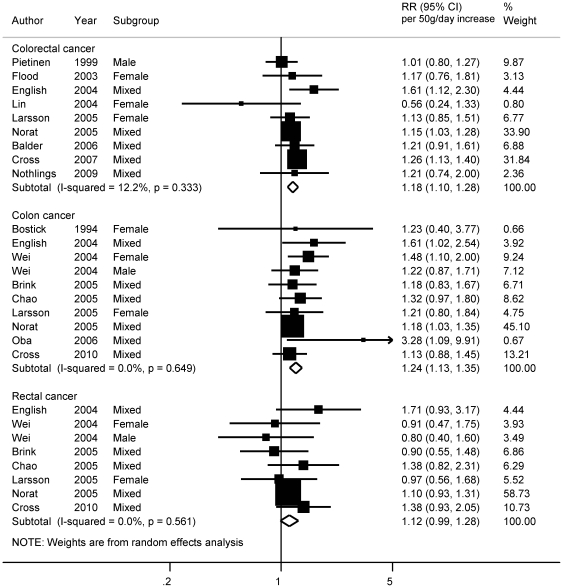
BACKGROUND: The evidence that red and processed meat influences colorectal carcinogenesis was judged convincing in the 2007 World Cancer Research Fund/American Institute of Cancer Research report. Since then, ten prospective studies have published new results. Here we update the evidence from prospective studies and explore whether there is a non-linear association of red and processed meats with colorectal cancer risk. METHODS AND FINDINGS: Relevant prospective studies were identified in PubMed until March 2011. For each study, relative risks and 95% confidence intervals (CI) were extracted and pooled with a random-effects model, weighting for the inverse of the variance, in highest versus lowest intake comparison, and dose-response meta-analyses. Red and processed meats intake was associated with increased colorectal cancer risk. The summary relative risk (RR) of colorectal cancer for the highest versus the lowest intake was 1.22 (95% CI = 1.11-1.34) and the RR for every 100 g/day increase was 1.14 (95% CI = 1.04-1.24). Non-linear dose-response meta-analyses revealed that colorectal cancer risk increases approximately linearly with increasing intake of red and processed meats up to approximately 140 g/day, where the curve approaches its plateau. The associations were similar for colon and rectal cancer risk. When analyzed separately, colorectal cancer risk was related to intake of fresh red meat (RR(for 100 g/day increase) = 1.17, 95% CI = 1.05-1.31) and processed meat (RR (for 50 g/day increase) = 1.18, 95% CI = 1.10-1.28). Similar results were observed for colon cancer, but for rectal cancer, no significant associations were observed. CONCLUSIONS: High intake of red and processed meat is associated with significant increased risk of colorectal, colon and rectal cancers. The overall evidence of prospective studies supports limiting red and processed meat consumption as one of the dietary recommendations for the prevention of colorectal cancer.
Overview
The claims and statistics of this paper haven’t been checked yet.
Free: it reads the open-access text and checks the first 5 claims that cite a source we can check. Create a free account to check every claim.
Integrity signals
Registry
Cites
Statistics
Figures
Verification
Claims the paper makes
The claims and statistics of this paper haven’t been checked yet.
Free: it reads the open-access text and checks the first 5 claims that cite a source we can check. Create a free account to check every claim.
Claims other papers make about this one
Each is checked against this paper’s own text: does it say what the citing paper says it does?
The cited source says what the claim attributes to it.
In the citing paper
“quality and obesity 54,55 , and processed meat with colorectal cancer 56 .”
From Ultra‐processed foods and the nutrition transition: global, regional and national trends, food systems transformations and political economy drivers (2020) · cites this paper as [56]
Self-check
Percentages, sums and reported differences re-computed from the paper’s own numbers.
The self-check needs the paper’s full text.
Citations
Cites
Meta-analysis in clinical trials
DerSimonian, R., & Laird, N. (1986) · Controlled Clinical Trials · doi:10.1016/0197-2456(86)90046-2 · Cited by 39,552 · cited 1×
“We present the results from the randomeffects meta-analysis that accounts for between-study heterogeneity [31] unless otherwise specified.”
MethodQuantifying heterogeneity in a meta‐analysis
Higgins, J. P. T., & Thompson, S. G. (2002) · Statistics in Medicine · doi:10.1002/sim.1186 · Cited by 36,763 · cited 1×
“To assess heterogeneity, we computed the Cochran Q test and I(2) statistic [36].”
MethodEstimates of worldwide burden of cancer in 2008: GLOBOCAN 2008
Ferlay, J., Shin, H., Bray, F., Forman, D., Mathers, C., & Parkin, D. M. (2010) · International Journal of Cancer · doi:10.1002/ijc.25516 · Cited by 21,293 · cited 1×
“Incidence rates are highest in North America, Western Europe, Australia/New Zealand, and in Asian countries that have experienced nutrition transition, such as Japan, Singapore, and North-Korea [1].”
BackgroundFood, nutrition, physical activity, and the prevention of cancer: a global perspective
(2008) · Choice Reviews Online · doi:10.5860/choice.45-5024 · Cited by 5,350
Publication and related bias in meta-analysis
Sterne, J. A. C., Gavaghan, D., & Egger, M. (2000) · Journal of Clinical Epidemiology · doi:10.1016/s0895-4356(00)00242-0 · Cited by 2,282
Lazcano-Ponce, E. C. (2009) · Salud Pública de México · Cited by 1,669
Worldwide Variations in Colorectal Cancer
Center, M. M., Jemal, A., Smith, R. A., & Ward, E. (2009) · CA: A Cancer Journal for Clinicians · doi:10.3322/caac.20038 · Cited by 1,276 · cited 1×
“carcinogenesis is indicated by the increase in colorectal cancer incidence in parallel with economic development and adoption of a western lifestyle [4], as well as by the results of migration studies that demonstrate a greater lifetime incidence of colorectal cancer among immigrants to high-incidence, industrialized…”
BackgroundWillett, W. C., Stampfer, M. J., Colditz, G. A., Rosner, B. A., & Speizer, F. E. (1990) · New England Journal of Medicine · doi:10.1056/nejm199012133232404 · Cited by 1,248 · cited 6×
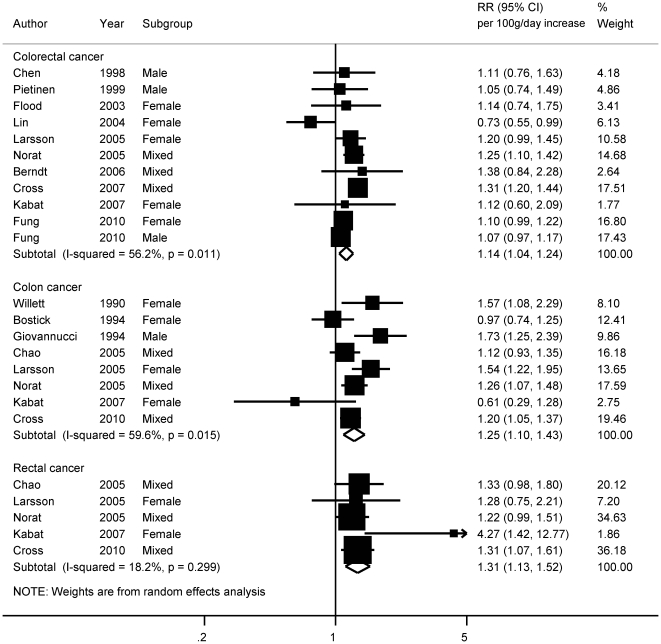
“References: Chen, 1998 [51]; Pietinen, 1999 [57]; Flood, 2003 [33]; Lin, 2004 [56]; Larsson, 2005 [34]; Norat, 2005 [50]; Berndt, 2006 [19]; Cross, 2007 [22]; Kabat, 2007 [24]; Fung, 2010 [23]; Willett, 1990 [58]; Bostick, 1994 [52]; Giovannuccci, 1994 [55]; Chao, 2005 [54]; Cross, 2010 [21].”
ResultInfluentialGeneralized Least Squares for Trend Estimation of Summarized Dose–response Data
Orsini, N., Bellocco, R., & Greenland, S. (2006) · The Stata Journal: Promoting communications on statistics and Stata · doi:10.1177/1536867x0600600103 · Cited by 1,241 · cited 1×
“In linear dose-response meta-analyses, we pooled the relative risk estimates per unit of intake increase (with its standard error) reported in the studies, or computed by us from the categorical data using generalized least-squares for trend estimation [32].”
MethodCairns, S. R., Scholefield, J. H., Steele, R. J., Dunlop, M. G., Thomas, H. J. W., Evans, G. D., Eaden, J. A., Rutter, M. D., Atkin, W. P., Saunders, B. P., et al. (2010) · Gut · doi:10.1136/gut.2009.179804 · Cited by 1,141 · cited 1×
“Screening and surveillance of adenomatous polyps, a precursor of colorectal cancer, is currently the cornerstone for primary prevention of colorectal cancer [6].”
Background
Research works printed but not linked: 2
- 2003, Food, Nutrition, Physical Activity, and the Prevention of Cancer: a Global Perspective, Systematic Literature Review Specification Manual
- A Tobias, 1999, Assessing the influence of a single study in meta-analysis., Stata Tech Bull, 47, 15
Cited by
Dekker, E., Tanis, P. J., Vleugels, J. L. A., Kasi, P. M., & Wallace, M. B. (2019) · The Lancet · doi:10.1016/s0140-6736(19)32319-0 · Cited by 4,974
Brenner, H., Kloor, M., & Pox, C. P. (2014) · The Lancet · doi:10.1016/s0140-6736(13)61649-9 · Cited by 2,762
Epidemiology of colorectal cancer: incidence, mortality, survival, and risk factors
Rawla, P., Sunkara, T., & Barsouk, A. (2019) · Gastroenterology Review · doi:10.5114/pg.2018.81072 · Cited by 2,323
Carcinogenicity of consumption of red and processed meat
Bouvard, V., Loomis, D., Guyton, K. Z., Grosse, Y., Ghissassi, F. E., Benbrahim-Tallaa, L., Guha, N., Mattock, H., & Straif, K. (2015) · The Lancet Oncology · doi:10.1016/s1470-2045(15)00444-1 · Cited by 1,882
Global obesity: trends, risk factors and policy implications
Malik, V. S., Willett, W. C., & Hu, F. B. (2013) · Nature Reviews Endocrinology · doi:10.1038/nrendo.2012.199 · Cited by 1,408
Gut microbiota in colorectal cancer: mechanisms of action and clinical applications
Wong, S. H., & Yu, J. (2019) · Nature Reviews Gastroenterology & Hepatology · doi:10.1038/s41575-019-0209-8 · Cited by 1,331
Kushi, L. H., Doyle, C., McCullough, M., Rock, C. L., Demark‐Wahnefried, W., Bandera, E. V., Gapstur, S., Patel, A. V., Andrews, K., Gansler, T., et al. (2012) · CA: A Cancer Journal for Clinicians · doi:10.3322/caac.20140 · Cited by 1,325
“Should I avoid processed meats? A number of epidemiologic studies have linked the high consumption of processed meats with an increased risk of colorectal and stomach cancers.(2,15,135) This association may be due in part to nitrites, which are added to many luncheon meats, hams, and hot dogs to maintain color and to…”
BackgroundInfluentialBaker, P., Machado, P., Santos, T., Sievert, K., Backholer, K., Hadjikakou, M., Russell, C., Huse, O., Bell, C., Scrinis, G., et al. (2020) · Obesity Reviews · doi:10.1111/obr.13126 · Cited by 1,194
“Ecological studies and systematic reviews find that regular consumption of certain types of UPFs associates with adverse outcomes, including sugar-sweetened beverages (SSBs) with obesity and type 2 diabetes, fast food with poor diet quality and obesity(54,55) and processed meat with colorectal cancer.(56) The level of…”
BackgroundSawicki, T., Ruszkowska, M., Danielewicz, A., Niedźwiedzka, E., Arłukowicz, T., & Przybyłowicz, K. E. (2021) · Cancers · doi:10.3390/cancers13092025 · Cited by 921
Food choices, health and environment: Effects of cutting Europe's meat and dairy intake
Westhoek, H., Lesschen, J. P., Rood, T., Wagner, S., De Marco, A., Murphy-Bokern, D., Leip, A., van Grinsven, H., Sutton, M. A., & Oenema, O. (2014) · Global Environmental Change · doi:10.1016/j.gloenvcha.2014.02.004 · Cited by 778
“There are also indications that the intake of red meat is associated with an increased risk of colorectal cancer (CRC) (Norat et al., 2002; Chan et al., 2011, Pan et al., 2012).”
BackgroundThe Western Diet–Microbiome-Host Interaction and Its Role in Metabolic Disease
Zinöcker, M. K., & Lindseth, I. A. (2018) · doi:10.20944/preprints201803.0064.v1 · Cited by 776
Colorectal Cancer and Nutrition
Thanikachalam, K., & Khan, G. (2019) · Nutrients · doi:10.3390/nu11010164 · Cited by 729
“Chan DS, 2011 [11] Meta-analysis of ten cohort studies N/A Positive association—17% increased risk per 100 g per day of red meat and an 18% increase per 50 g per day of processed meat”
BackgroundNutrients, foods, and colorectal cancer prevention
Song, M., Garrett, W. S., & Chan, A. T. (2015) · Gastroenterology · doi:10.1053/j.gastro.2014.12.035 · Cited by 700
Epidemiology and Mechanisms of the Increasing Incidence of Colon and Rectal Cancers in Young Adults
Stoffel, E. M., & Murphy, C. C. (2020) · Gastroenterology · doi:10.1053/j.gastro.2019.07.055 · Cited by 637
Increasing Incidence of Early-Onset Colorectal Cancer
Sinicrope, F. A. (2022) · New England Journal of Medicine · doi:10.1056/nejmra2200869 · Cited by 534
Statistically controlling for confounding constructs is harder than you think
Westfall, J., & Yarkoni, T. (2016) · PLOS ONE · doi:10.1371/journal.pone.0152719 · Cited by 547
Potential health hazards of eating red meat
Wolk, A. (2017) · Journal of Internal Medicine · doi:10.1111/joim.12543 · Cited by 519
Abete, I., Romaguera, D., Vieira, A. R., Lopez de Munain, A., & Norat, T. (2014) · British Journal of Nutrition · doi:10.1017/s000711451400124x · Cited by 448
“…meta-analyses have found a higher incidence of CVD, diabetes and some types of cancers to be related to higher red and processed meat consumption (6–10) , while no association or a tendency towards an inverse association between white meat consumption and total mortality has been observed in some…”
Self-citationThe 2015 Dutch food-based dietary guidelines
for the Committee Dutch Dietary Guidelines 2015, Kromhout, D., Spaaij, C. J. K., de Goede, J., & Weggemans, R. M. (2016) · European Journal of Clinical Nutrition · doi:10.1038/ejcn.2016.52 · Cited by 401
Historical review of the causes of cancer
Blackadar, C. B. (2016) · World Journal of Clinical Oncology · doi:10.5306/wjco.v7.i1.54 · Cited by 389
Participation and yield of a population-based colorectal cancer screening programme in China
Chen, H., Li, N., Ren, J., Feng, X., Lyu, Z., Wei, L., Li, X., Guo, L., Zheng, Z., Zou, S., et al. (2019) · Gut · doi:10.1136/gutjnl-2018-317124 · Cited by 375
Lonnie, M., Hooker, E., Brunstrom, J., Corfe, B., Green, M., Watson, A., Williams, E., Stevenson, E., Penson, S., & Johnstone, A. (2018) · Nutrients · doi:10.3390/nu10030360 · Cited by 362
Red Meat and Processed Meat Consumption and All-Cause Mortality: A Meta-Analysis
Larsson, S. C., & Orsini, N. (2014) · American Journal of Epidemiology · doi:10.1093/aje/kwt261 · Cited by 353
Potential of Fava Bean as Future Protein Supply to Partially Replace Meat Intake in the Human Diet
Multari, S., Stewart, D., & Russell, W. R. (2015) · Comprehensive Reviews in Food Science and Food Safety · doi:10.1111/1541-4337.12146 · Cited by 344
Vegetarian Dietary Patterns and the Risk of Colorectal Cancers
Orlich, M. J., Singh, P. N., Sabaté, J., Fan, J., Sveen, L., Bennett, H., Knutsen, S. F., Beeson, W. L., Jaceldo-Siegl, K., Butler, T. L., et al. (2015) · JAMA Internal Medicine · doi:10.1001/jamainternmed.2015.59 · Cited by 334
Meat: The balance between nutrition and health. A review
De Smet, S., & Vossen, E. (2016) · Meat Science · doi:10.1016/j.meatsci.2016.04.008 · Cited by 296
Spaander, M. C. W., Zauber, A. G., Syngal, S., Blaser, M. J., Sung, J. J., You, Y. N., & Kuipers, E. J. (2023) · Nature Reviews Disease Primers · doi:10.1038/s41572-023-00432-7 · Cited by 288
The global and regional costs of healthy and sustainable dietary patterns: a modelling study
Springmann, M., Clark, M. A., Rayner, M., Scarborough, P., & Webb, P. (2021) · The Lancet Planetary Health · doi:10.1016/s2542-5196(21)00251-5 · Cited by 284
Prevalence and risk factors of colorectal cancer in Asia
Wong, M. C., Ding, H., Wang, J., Chan, P. S., & Huang, J. (2019) · Intestinal Research · doi:10.5217/ir.2019.00021 · Cited by 274
Larsson, S. C., & Wolk, A. (2012) · British Journal of Cancer · doi:10.1038/bjc.2011.585 · Cited by 281
“High consumption of red meat and/or processed meat has been associated with increased risk of some gastrointestinal cancers, such as colorectal (Larsson and Wolk, 2006; Chan et al, 2011) and stomach cancer (Larsson et al, 2006b).”
BackgroundThe association of diet, gut microbiota and colorectal cancer: what we eat may imply what we get
Yang, J., & Yu, J. (2018) · Protein & Cell · doi:10.1007/s13238-018-0543-6 · Cited by 275
Risk Factors for the Diagnosis of Colorectal Cancer
Lewandowska, A., Rudzki, G., Lewandowski, T., Stryjkowska-Góra, A., & Rudzki, S. (2022) · Cancer Control · doi:10.1177/10732748211056692 · Cited by 254
Obesity and cancer: existing and new hypotheses for a causal connection
Stone, T. W., McPherson, M., & Gail Darlington, L. (2018) · eBioMedicine · doi:10.1016/j.ebiom.2018.02.022 · Cited by 262
Nitrate and nitrite in the diet: How to assess their benefit and risk for human health
Habermeyer, M., Roth, A., Guth, S., Diel, P., Engel, K., Epe, B., Fürst, P., Heinz, V., Humpf, H., Joost, H., et al. (2015) · Molecular Nutrition & Food Research · doi:10.1002/mnfr.201400286 · Cited by 243
“Prospective cohort studies suggest an association of red meat and nitrite-preserved meat intake with an increased risk for colon cancer [251, 256-259].”
BackgroundChen, Y., Liu, L., Wang, X., Wang, J., Yan, Z., Cheng, J., Gong, G., & Li, G. (2013) · Cancer Epidemiology, Biomarkers & Prevention · doi:10.1158/1055-9965.epi-13-0042 · Cited by 243
“Unfortunately, in this report, no results on the association between obesity and gastric cancer risk were reported (12).”
ResultDiet, nutrition, and cancer risk: what do we know and what is the way forward?
Key, T. J., Bradbury, K. E., Perez-Cornago, A., Sinha, R., Tsilidis, K. K., & Tsugane, S. (2020) · BMJ · doi:10.1136/bmj.m511 · Cited by 237
Nutritional Value of Commercial Protein-Rich Plant Products
Mattila, P., Mäkinen, S., Eurola, M., Jalava, T., Pihlava, J.-M., Hellström, J., & Pihlanto, A. (2018) · Plant Foods for Human Nutrition · doi:10.1007/s11130-018-0660-7 · Cited by 229
“High animal protein intake has been linked to increased risk of type 2 diabetes, cardiovascular disease, colorectal cancer and early deaths, whereas plant proteins have shown significant protective effects [1, 2].”
BackgroundBianchi, F., Garnett, E., Dorsel, C., Aveyard, P., & Jebb, S. A. (2018) · The Lancet Planetary Health · doi:10.1016/s2542-5196(18)30188-8 · Cited by 220
Baena, R., & Salinas, P. (2015) · Maturitas · doi:10.1016/j.maturitas.2014.12.017 · Cited by 219
Fardet, A., & Boirie, Y. (2014) · Nutrition Reviews · doi:10.1111/nure.12153 · Cited by 221
Race-dependent association of sulfidogenic bacteria with colorectal cancer
Yazici, C., Wolf, P. G., Kim, H., Cross, T.-W. L., Vermillion, K., Carroll, T., Augustus, G. J., Mutlu, E., Tussing-Humphreys, L., Braunschweig, C., et al. (2017) · Gut · doi:10.1136/gutjnl-2016-313321 · Cited by 215
Consumers’ perceived barriers to following a plant-based diet
Pohjolainen, P., Vinnari, M., & Jokinen, P. (2015) · British Food Journal · doi:10.1108/bfj-09-2013-0252 · Cited by 209
Diet and Nutrient Factors in Colorectal Cancer Risk
Vargas, A. J., & Thompson, P. A. (2012) · Nutrition in Clinical Practice · doi:10.1177/0884533612454885 · Cited by 213
Strategies to reduce meat consumption: A systematic literature review of experimental studies
Harguess, J. M., Crespo, N. C., & Hong, M. Y. (2020) · Appetite · doi:10.1016/j.appet.2019.104478 · Cited by 204
Plant-Based Meats, Human Health, and Climate Change
van Vliet, S., Kronberg, S. L., & Provenza, F. D. (2020) · Frontiers in Sustainable Food Systems · doi:10.3389/fsufs.2020.00128 · Cited by 202
Cai, X., Liu, C., Zhang, T., Zhu, Y., Dong, X., & Xue, P. (2018) · Journal of Cellular Biochemistry · doi:10.1002/jcb.26651 · Cited by 207
European Code against Cancer 4th Edition: Diet and cancer
Norat, T., Scoccianti, C., Boutron-Ruault, M.-C., Anderson, A., Berrino, F., Cecchini, M., Espina, C., Key, T., Leitzmann, M., Powers, H., et al. (2015) · Cancer Epidemiology · doi:10.1016/j.canep.2014.12.016 · Cited by 206
“Numerous studies have shown an association between high intake of processed meat (such as ham, bacon, sausages, and hot dogs), red meat (mainly beef, pork or lamb) and colorectal cancer [4,95] (Table 2).”
BackgroundSelf-citationKunzmann, A. T., Coleman, H. G., Huang, W.-Y., Kitahara, C. M., Cantwell, M. M., & Berndt, S. I. (2015) · The American Journal of Clinical Nutrition · doi:10.3945/ajcn.115.113282 · Cited by 197
“Given the elevated risk of colorectal cancer for those consuming high intakes of processed meat (30), this novelfinding suggests thatfibermay reduce someof that excess risk and therefore warrants further investigation.”
BackgroundRed meat and colorectal cancer
Aykan, N. F. (2015) · Oncology Reviews · doi:10.4081/oncol.2015.288 · Cited by 188
Hooda, J., Shah, A., & Zhang, L. (2014) · Nutrients · doi:10.3390/nu6031080 · Cited by 193
“The study showed similar results for colon cancer, but no significant association is found for rectal cancer [54].”
BackgroundResultMechanisms Linking Colorectal Cancer to the Consumption of (Processed) Red Meat: A Review
Demeyer, D., Mertens, B., De Smet, S., & Ulens, M. (2016) · Critical Reviews in Food Science and Nutrition · doi:10.1080/10408398.2013.873886 · Cited by 192
“intake to CRC risk has accumulated over the last decades (Cross et al., 2010; Fung et al., 2010; Reedy et al., 2010; Chan et al., 2011; Shin et al., 2011; Ferrucci et al., 2012; Magalhaes et al., 2012; Johnson et al., 2013), and suggests that the CRC inducing effect is more pronounced for processed red meat compared t…”
BackgroundMeat consumption and cancer risk: a critical review of published meta-analyses
Lippi, G., Mattiuzzi, C., & Cervellin, G. (2016) · Critical Reviews in Oncology/Hematology · doi:10.1016/j.critrevonc.2015.11.008 · Cited by 189
“colorectal cancer risk and meat intake by searching Medline until March 2011 (14).”
BackgroundDevelopment pathways toward “zero hunger”
Blesh, J., Hoey, L., Jones, A. D., Friedmann, H., & Perfecto, I. (2019) · World Development · doi:10.1016/j.worlddev.2019.02.004 · Cited by 181
Colorectal Cancer Disparity in African Americans
Augustus, G. J., & Ellis, N. A. (2018) · The American Journal of Pathology · doi:10.1016/j.ajpath.2017.07.023 · Cited by 176
Health effects associated with consumption of unprocessed red meat: a Burden of Proof study
Lescinsky, H., Afshin, A., Ashbaugh, C., Bisignano, C., Brauer, M., Ferrara, G., Hay, S. I., He, J., Iannucci, V., Marczak, L. B., et al. (2022) · Nature Medicine · doi:10.1038/s41591-022-01968-z · Cited by 172
Evidence that supports the prescription of low-carbohydrate high-fat diets: A narrative review
Noakes, T. D., & Windt, J. (2017) · British Journal of Sports Medicine · doi:10.1136/bjsports-2016-096491 · Cited by 178
The role of red and processed meat in colorectal cancer development: a perspective
Oostindjer, M., Alexander, J., Amdam, G. V., Andersen, G., Bryan, N. S., Chen, D., Corpet, D. E., De Smet, S., Dragsted, L. O., Haug, A., et al. (2014) · Meat Science · doi:10.1016/j.meatsci.2014.02.011 · Cited by 177
“More recent studies show, however, that beef meat promotes colon carcinogenesis in carcinogen-treated rats, which is consistent with epidemiological data (Chan et al., 2011), provided that the animal feed contains little calcium.”
BackgroundResultDifferences in Survival between Colon and Rectal Cancer from SEER Data
Lee, Y.-C., Lee, Y.-L., Chuang, J.-P., & Lee, J.-C. (2013) · PLoS ONE · doi:10.1371/journal.pone.0078709 · Cited by 178
Red meat, diseases, and healthy alternatives: A critical review
Ekmekcioglu, C., Wallner, P., Kundi, M., Weisz, U., Haas, W., & Hutter, H.-P. (2018) · Critical Reviews in Food Science and Nutrition · doi:10.1080/10408398.2016.1158148 · Cited by 173
Obesity and colorectal cancer: molecular features of adipose tissue
Martinez-Useros, J., & Garcia-Foncillas, J. (2016) · Journal of Translational Medicine · doi:10.1186/s12967-016-0772-5 · Cited by 167
“Thus, colon cancer has been associated with red and processed meat intake [8].”
BackgroundAune, D., Chan, D. S. M., Vieira, A. R., Navarro Rosenblatt, D. A., Vieira, R., Greenwood, D. C., Kampman, E., & Norat, T. (2013) · Cancer Causes & Control · doi:10.1007/s10552-012-0139-z · Cited by 169
“The findings of this meta-analysis are consistent with the previously reported increased risks of colorectal cancer associated with red and processed meat intake [5, 9] and provide further support for an association between red and processed meat intake and colorectal carcinogenesis.”
BackgroundResultInfluentialSelf-citationDiet and cancer: Risk factors and epidemiological evidence
Baena Ruiz, R., & Salinas Hernández, P. (2014) · Maturitas · doi:10.1016/j.maturitas.2013.11.010 · Cited by 166
“Diversity of study populations (occidental or Asiatic) and different dose of tea intake could explain the lack of positive results in humans [50].”
BackgroundResultAbid, Z., Cross, A. J., & Sinha, R. (2014) · The American Journal of Clinical Nutrition · doi:10.3945/ajcn.113.071597 · Cited by 164
Gut Microbiota in Colorectal Cancer: Biological Role and Therapeutic Opportunities
Pandey, H., Tang, D. W. T., Wong, S. H., & Lal, D. (2023) · Cancers · doi:10.3390/cancers15030866 · Cited by 159
Springmann, M., Mason-D’Croz, D., Robinson, S., Wiebe, K., Godfray, H. C. J., Rayner, M., & Scarborough, P. (2018) · PLOS ONE · doi:10.1371/journal.pone.0204139 · Cited by 164
“We treated red and processed meat consumption as two separate risk factors, and adopted the relevant relative risk parameters describing the association between red and processed meat consumption and mortality from meta-analyses of prospective cohort studies (Table A1 in S1 File) [19,4,6,5].”
MethodBianchi, F., Dorsel, C., Garnett, E., Aveyard, P., & Jebb, S. A. (2018) · International Journal of Behavioral Nutrition and Physical Activity · doi:10.1186/s12966-018-0729-6 · Cited by 163
Epidemiology and risk factors of colorectal polyps
Øines, M., Helsingen, L. M., Bretthauer, M., & Emilsson, L. (2017) · Best Practice & Research Clinical Gastroenterology · doi:10.1016/j.bpg.2017.06.004 · Cited by 159
Attributable causes of colorectal cancer in China
Gu, M., Huang, Q.-C., Bao, C., Li, Y., Li, X., Ye, D., Ye, Z.-H., Chen, K., & Wang, J. (2018) · BMC Cancer · doi:10.1186/s12885-017-3968-z · Cited by 171
“RRs for vegetable and fruit [12] and red or processed meat intake [11] were abstracted from two large studies of meta-analyses on the dose-response association with colorectal cancer incidence.”
BackgroundEstévez, M., & Xiong, Y. L. (2019) · Journal of Food Science · doi:10.1111/1750-3841.14460 · Cited by 160
Meat subtypes and their association with colorectal cancer: Systematic review and meta‐analysis
Carr, P. R., Walter, V., Brenner, H., & Hoffmeister, M. (2016) · International Journal of Cancer · doi:10.1002/ijc.29423 · Cited by 157
“The most recent systematic review and meta-analysis from 2011 supports this conclusion that a high intake of red and processed meat significantly increases the risk of CRC.(1) A number of mechanisms have been proposed to explain the association between red and processed meat with CRC.”
BackgroundResultInfluentialReview of the association between meat consumption and risk of colorectal cancer
Kim, E., Coelho, D., & Blachier, F. (2013) · Nutrition Research · doi:10.1016/j.nutres.2013.07.018 · Cited by 192
“[26] Chan DS, Lau R, Aune D, et al.”
BackgroundMainar, M. S., Stavropoulou, D. A., & Leroy, F. (2016) · International Journal of Food Microbiology · doi:10.1016/j.ijfoodmicro.2016.05.021 · Cited by 167
“Meat products that are manufactured using nitrate and/or nitrite as curing agents could increase exogenous exposure to nitrosamines and other N-nitroso compounds, as well as their precursors (Chan et al., 2011).”
BackgroundThe Role of Gut Barrier Dysfunction and Microbiome Dysbiosis in Colorectal Cancer Development
Genua, F., Raghunathan, V., Jenab, M., Gallagher, W. M., & Hughes, D. J. (2021) · Frontiers in Oncology · doi:10.3389/fonc.2021.626349 · Cited by 173
Adverse Effects Associated with Protein Intake above the Recommended Dietary Allowance for Adults
Delimaris, I. (2013) · ISRN Nutrition · doi:10.5402/2013/126929 · Cited by 146
Norat, T., Aune, D., Chan, D. S. M., & Romaguera, D. (2013) · Cancer treatment and research · doi:10.1007/978-3-642-38007-5_3 · Cited by 174
“The methods used for the CUP meta-analyses are described in detail elsewhere [11].”
MethodSelf-citationIs the future of meat palatable? Perceptions ofin vitromeat as evidenced by online news comments
Laestadius, L. I., & Caldwell, M. A. (2015) · Public Health Nutrition · doi:10.1017/s1368980015000622 · Cited by 163
Key, T. J., Appleby, P. N., Crowe, F. L., Bradbury, K. E., Schmidt, J. A., & Travis, R. C. (2014) · The American Journal of Clinical Nutrition · doi:10.3945/ajcn.113.071266 · Cited by 149
“This conclusion was restated in a subsequent update on colorectal cancer (17), but this review did not include the null results of a large pooled analysis reported in an abstract (18).”
ResultCarr, P. R., Weigl, K., Jansen, L., Walter, V., Erben, V., Chang-Claude, J. C., Brenner, H., & Hoffmeister, M. (2018) · Gastroenterology · doi:10.1053/j.gastro.2018.08.044 · Cited by 165
Mediterranean diet and cancer: epidemiological evidence and mechanism of selected aspects
Grosso, G., Buscemi, S., Galvano, F., Mistretta, A., Marventano, S., Vela, V. L., Drago, F., Gangi, S., Basile, F., & Biondi, A. (2013) · BMC Surgery · doi:10.1186/1471-2482-13-s2-s14 · Cited by 150
“Frequent fish intake has been related to decreased risk of several neoplasms whereas red meat intake demonstrated detrimental effects, especially increasing the risk of colorectal cancer [68], through production of N-nitroso compounds and, when cooked at high temperatures, heterocyclic amines and polycyclic aromatic h…”
BackgroundRadhakrishnan, E., Bava, S. V., Narayanan, S. S., Nath, L. R., Thulasidasan, A. K. T., Soniya, E. V., & Anto, R. J. (2014) · PLoS ONE · doi:10.1371/journal.pone.0104401 · Cited by 159
“The variations in dietary pattern and increased consumptions of red and processed meat contribute to this increase in incidence of colon cancer [1,2].”
BackgroundDoes environmental friendliness equal healthiness? Swiss consumers’ perception of protein products
Lazzarini, G. A., Zimmermann, J., Visschers, V. H. M., & Siegrist, M. (2016) · Appetite · doi:10.1016/j.appet.2016.06.038 · Cited by 145
Characterization of the Degree of Food Processing in Relation With Its Health Potential and Effects
Fardet, A. (2018) · Advances in Food and Nutrition Research · doi:10.1016/bs.afnr.2018.02.002 · Cited by 93
Colon cancer stem cells: Potential target for the treatment of colorectal cancer
Gupta, R., Bhatt, L. K., Johnston, T. P., & Prabhavalkar, K. S. (2019) · Cancer Biology & Therapy · doi:10.1080/15384047.2019.1599660 · Cited by 158
Bernstein, A. M., Song, M., Zhang, X., Pan, A., Wang, M., Fuchs, C. S., Le, N., Chan, A. T., Willett, W. C., Ogino, S., et al. (2015) · PLOS ONE · doi:10.1371/journal.pone.0135959 · Cited by 141
“In 2007, the World Cancer Research Fund/American Institute for Cancer Research (WCRF/AICR) stated there was convincing evidence linking high red and processed meat consumption with an increased risk of CRC [33] and subsequent systematic reviews and meta-analyses, which included studies published after the WCRF/AICR re…”
BackgroundResultInfluentialARNTL2 and SERPINE1: potential biomarkers for tumor aggressiveness in colorectal cancer
Mazzoccoli, G., Pazienza, V., Panza, A., Valvano, M. R., Benegiamo, G., Vinciguerra, M., Andriulli, A., & Piepoli, A. (2011) · Journal of Cancer Research and Clinical Oncology · doi:10.1007/s00432-011-1126-6 · Cited by 155
“Colorectal cancer is among the most common tumors in adults and is the third most frequently diagnosed cancer worldwide, causing about half a million deaths every year (Chan et al. 2011).”
BackgroundMcNeill, S. H., & Elswyk, M. E. V. (2012) · Meat Science · doi:10.1016/j.meatsci.2012.03.014 · Cited by 171
Lifestyle Modifications and Colorectal Cancer
Durko, Ł., & Malecka-Panas, E. I. (2014) · Current Colorectal Cancer Reports · doi:10.1007/s11888-013-0203-4 · Cited by 168
Nature, Nurture, and Cancer Risks: Genetic and Nutritional Contributions to Cancer
Τheodoratou, E., Timofeeva, M. N., Li, X., Meng, X., & Ioannidis, J. P. A. (2017) · Annual Review of Nutrition · doi:10.1146/annurev-nutr-071715-051004 · Cited by 158
Research gaps in evaluating the relationship of meat and health
Klurfeld, D. M. (2015) · Meat Science · doi:10.1016/j.meatsci.2015.05.022 · Cited by 176
Hoffman, R., & Gerber, M. (2013) · Nutrition Reviews · doi:10.1111/nure.12040 · Cited by 125
Aston, L. M., Smith, J. N., & Powles, J. W. (2012) · BMJ Open · doi:10.1136/bmjopen-2012-001072 · Cited by 129
“A recent update of the WCRF/AICR meta-analysis does not change the RR estimates given in that report and used in our analyses.(23) Using meta-analyses of the association between intakes of different types of meat and the risks of vascular disease and diabetes, we have avoided simply regarding meat as a vehicle for die…”
MethodDellaValle, C. T., Xiao, Q., Yang, G., Shu, X.-O., Aschebrook‐Kilfoy, B., Zheng, W., Lan Li, H., Ji, B., Rothman, N., Chow, W., et al. (2014) · International Journal of Cancer · doi:10.1002/ijc.28612 · Cited by 127
Bax, M.-L., Buffière, C., Hafnaoui, N., Gaudichon, C., Savary-Auzeloux, I., Dardevet, D., Santé-Lhoutellier, V., & Rémond, D. (2013) · PLoS ONE · doi:10.1371/journal.pone.0061252 · Cited by 127
“Conversely, epidemiological studies have reported a possible link between excessive red meat intake and colorectal cancer risk [13,14].”
BackgroundRole of diet and food intake in age‐related macular degeneration: a systematic review
Chapman, N. A., Jacobs, R. J., & Braakhuis, A. J. (2018) · Clinical and Experimental Ophthalmology · doi:10.1111/ceo.13343 · Cited by 138
MicroRNAs potential utility in colon cancer: Early detection, prognosis, and chemosensitivity
Hollis, M. V., Nair, K., Vyas, A., Chaturvedi, L. S., Gambhir, S., & Vyas, D. (2015) · World Journal of Gastroenterology · doi:10.3748/wjg.v21.i27.8284 · Cited by 133
Carr, P. R., Weigl, K., Edelmann, D., Jansen, L., Chang-Claude, J., Brenner, H., & Hoffmeister, M. (2020) · Gastroenterology · doi:10.1053/j.gastro.2020.03.016 · Cited by 119
“No colonoscopy Low genetic risk Unfavorable lifestyle 164 (40)/88 (26) Intermediate lifestyle 157 (38)/123 (36) Favorable lifestyle 87 (21)/134 (39) Intermediate genetic risk Unfavorable lifestyle 260 (41)/97 (30) Intermediate lifestyle 216 (34)/120 (37) Favorable lifestyle 153 (24)/108 (33) High genetic risk Unfavora…”
BackgroundJayedi, A., & Shab-Bidar, S. (2020) · Advances in Nutrition · doi:10.1093/advances/nmaa029 · Cited by 124
“Meta-analyses of prospective cohort studies have suggested that higher consumption of meat, especially processed meat, may increase the risk of major public health concerns such as T2D (84), CHD (85), and breast and colorectal cancers (86, 87).”
BackgroundLatino‐Martel, P., Cottet, V., Druesne‐Pecollo, N., Pierre, F. H. F., Touillaud, M. S., Touvier, M., Vasson, M., Deschasaux, M., Merdy, J. L., Barrandon, É., et al. (2016) · Critical Reviews in Oncology/Hematology · doi:10.1016/j.critrevonc.2016.01.002 · Cited by 152
Meeting the global protein supply requirements of a growing and ageing population
Smith, K., Watson, A. W., Lonnie, M., Peeters, W., Oonincx, D. G. A. B., Tsoutsoura, N., Simon‐Miquel, G., Szepe, K. J., Cochetel, N., Pearson, A. G., et al. (2024) · European Journal of Nutrition · doi:10.1007/s00394-024-03358-2 · Cited by 153
“Moreover, processed meat is classified as a carcinogen to humans [ 15 ], and the excessive consumption of red and processed meats are associated with colorectal cancer [ 16 ].”
BackgroundMeat, fish, and esophageal cancer risk: a systematic review and dose-response meta-analysis
Salehi, M., Moradi-Lakeh, M., Salehi, M. H., Nojomi, M., & Kolahdooz, F. (2013) · Nutrition Reviews · doi:10.1111/nure.12028 · Cited by 122
Metadata
- Authors
- Chan, D. S. M., Lau, R., Aune, D., Vieira, R., Greenwood, D. C., Kampman, E., & Norat, T.
- Affiliations
- Imperial College London (GB)
- University of Leeds (GB)
- Wageningen University & Research (NL)
- Corresponding author
- Norat, Teresa
- Venue
- PLoS ONE
- Publisher
- Public Library of Science (PLoS)
- Published
- 2011-06-06
- Volume
- 6
- Issue
- 6
- Pages
- e20456
- ISSN
- 1932-6203 (ISSN-L)
- PMC
- PMC3108955
- OpenAlex
- W2072090020
- Cited by
- 903
- References
- 72
- Citations by year
- 2026: 29 · 2025: 46 · 2024: 53 · 2023: 67 · 2022: 58 · 2021: 72 · 2020: 69 · 2019: 67 · 2018: 79 · 2017: 73 · 2016: 71 · 2015: 61 · 2014: 62 · 2013: 59 · 2012: 32
- FWCI
- 7.52
- Type
- journal article
- Language
- en
- Open access
- gold
- doi.org
- Locations
- PLoS ONE (publishedVersion, cc-by)
- Europe PMC (PubMed Central) (publishedVersion, cc-by)
- PubMed Central (publishedVersion, cc-by)
- PubMed (publishedVersion)
- Radboud Repository (Radboud University) (publishedVersion)
- White Rose Research Online (University of Leeds, The University of Sheffield, University of York) (acceptedVersion)
- Socio-Environmental Systems Modeling (acceptedVersion)
- RePEc: Research Papers in Economics (submittedVersion)
- DOAJ (DOAJ: Directory of Open Access Journals) (submittedVersion, cc-by-sa)
- Figshare (submittedVersion, cc-by)
- Spiral (Imperial College London) (submittedVersion, other-oa)
- Radboud Repository (Radboud University) (submittedVersion, other-oa)
- Data Archiving and Networked Services (DANS) (submittedVersion, other-oa)
- Funders
- World Cancer Research Fund International (2007/SP01)
- World Cancer Research Fund (2007/SP01)
- Wageningen University and Research
- Topics
- Health Sciences › Medicine › Public Health, Environmental and Occupational Health › Nutritional Studies and Diet
- Health Sciences › Medicine › Oncology › Colorectal Cancer Screening and Detection
- Life Sciences › Agricultural and Biological Sciences › Animal Science and Zoology › Meat and Animal Product Quality
- Keywords
- red meat, processed meat, colorectal cancer, colon cancer, rectal cancer, cancer risk, dietary intake, dose-response relationship, nonlinear relationship, colorectal cancer prevention, dietary recommendations
- MeSH terms
- Female, Food Handling, Humans, Male, Meat, Pigmentation, Prospective Studies, Colorectal Neoplasms, Publication Bias
About these checks
Registry, retraction, Cites and statistics results are computed, not judged, with one exception: a printed reference that no index lists is read once by a model before it counts as a citation error. Claims are extracted by a model and kept only when their quote appears verbatim in the text; each cited source is then checked, with a model’s help, for whether it says what the claim relies on. Those verdicts can be wrong — read the claim’s quote and the cited source before relying on one.
Statistics and arithmetic are recomputed, not judged.
Confidence bands are shown only for fields calibrated on our annotated test set. None is calibrated yet, so no band is shown.
What counts as a claim ›How we measure confidence ›How we check this ›
Are you an author, or do you see a problem with this page? Request a review
Data sources
Bibliographic data: Semantic Scholar, OpenAlex, Crossref.
Contains information from the Semantic Scholar Academic Graph Datasets, made available under the ODC Attribution License (ODC-BY 1.0).
Semantic Scholar’s data is described in: Kinney, R., et al. (2023). The Semantic Scholar Open Data Platform. arXiv:2301.10140.
