

Red and Processed Meat and Colorectal Cancer Incidence: Meta-Analysis of Prospective Studies
Open accessThe DOI matches its Crossref record; 71 of the 72 references it cites were found in a registry or an index.
Abstract
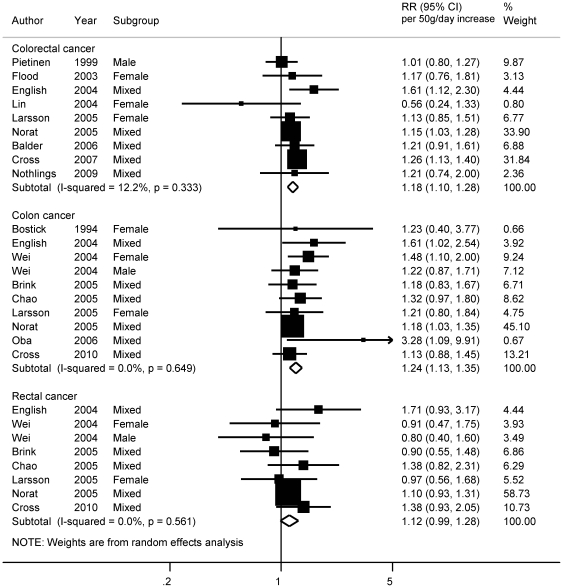
BACKGROUND: The evidence that red and processed meat influences colorectal carcinogenesis was judged convincing in the 2007 World Cancer Research Fund/American Institute of Cancer Research report. Since then, ten prospective studies have published new results. Here we update the evidence from prospective studies and explore whether there is a non-linear association of red and processed meats with colorectal cancer risk. METHODS AND FINDINGS: Relevant prospective studies were identified in PubMed until March 2011. For each study, relative risks and 95% confidence intervals (CI) were extracted and pooled with a random-effects model, weighting for the inverse of the variance, in highest versus lowest intake comparison, and dose-response meta-analyses. Red and processed meats intake was associated with increased colorectal cancer risk. The summary relative risk (RR) of colorectal cancer for the highest versus the lowest intake was 1.22 (95% CI = 1.11-1.34) and the RR for every 100 g/day increase was 1.14 (95% CI = 1.04-1.24). Non-linear dose-response meta-analyses revealed that colorectal cancer risk increases approximately linearly with increasing intake of red and processed meats up to approximately 140 g/day, where the curve approaches its plateau. The associations were similar for colon and rectal cancer risk. When analyzed separately, colorectal cancer risk was related to intake of fresh red meat (RR(for 100 g/day increase) = 1.17, 95% CI = 1.05-1.31) and processed meat (RR (for 50 g/day increase) = 1.18, 95% CI = 1.10-1.28). Similar results were observed for colon cancer, but for rectal cancer, no significant associations were observed. CONCLUSIONS: High intake of red and processed meat is associated with significant increased risk of colorectal, colon and rectal cancers. The overall evidence of prospective studies supports limiting red and processed meat consumption as one of the dietary recommendations for the prevention of colorectal cancer.
Overview
The claims and statistics of this paper haven’t been checked yet.
Free: it reads the open-access text and checks the first 5 claims that cite a source we can check. Create a free account to check every claim.
Integrity signals
Registry
Cites
Statistics
Figures
Verification
Claims the paper makes
The claims and statistics of this paper haven’t been checked yet.
Free: it reads the open-access text and checks the first 5 claims that cite a source we can check. Create a free account to check every claim.
Claims other papers make about this one
Each is checked against this paper’s own text: does it say what the citing paper says it does?
The cited source says what the claim attributes to it.
In the citing paper
“quality and obesity 54,55 , and processed meat with colorectal cancer 56 .”
From Ultra‐processed foods and the nutrition transition: global, regional and national trends, food systems transformations and political economy drivers (2020) · cites this paper as [56]
Self-check
Percentages, sums and reported differences re-computed from the paper’s own numbers.
The self-check needs the paper’s full text.
Citations
Cites
Meta-analysis in clinical trials
DerSimonian, R., & Laird, N. (1986) · Controlled Clinical Trials · doi:10.1016/0197-2456(86)90046-2 · Cited by 39,552 · cited 1×
“We present the results from the randomeffects meta-analysis that accounts for between-study heterogeneity [31] unless otherwise specified.”
MethodQuantifying heterogeneity in a meta‐analysis
Higgins, J. P. T., & Thompson, S. G. (2002) · Statistics in Medicine · doi:10.1002/sim.1186 · Cited by 36,763 · cited 1×
“To assess heterogeneity, we computed the Cochran Q test and I(2) statistic [36].”
MethodEstimates of worldwide burden of cancer in 2008: GLOBOCAN 2008
Ferlay, J., Shin, H., Bray, F., Forman, D., Mathers, C., & Parkin, D. M. (2010) · International Journal of Cancer · doi:10.1002/ijc.25516 · Cited by 21,293 · cited 1×
“Incidence rates are highest in North America, Western Europe, Australia/New Zealand, and in Asian countries that have experienced nutrition transition, such as Japan, Singapore, and North-Korea [1].”
BackgroundFood, nutrition, physical activity, and the prevention of cancer: a global perspective
(2008) · Choice Reviews Online · doi:10.5860/choice.45-5024 · Cited by 5,350
Publication and related bias in meta-analysis
Sterne, J. A. C., Gavaghan, D., & Egger, M. (2000) · Journal of Clinical Epidemiology · doi:10.1016/s0895-4356(00)00242-0 · Cited by 2,282
Lazcano-Ponce, E. C. (2009) · Salud Pública de México · Cited by 1,669
Worldwide Variations in Colorectal Cancer
Center, M. M., Jemal, A., Smith, R. A., & Ward, E. (2009) · CA: A Cancer Journal for Clinicians · doi:10.3322/caac.20038 · Cited by 1,276 · cited 1×
“carcinogenesis is indicated by the increase in colorectal cancer incidence in parallel with economic development and adoption of a western lifestyle [4], as well as by the results of migration studies that demonstrate a greater lifetime incidence of colorectal cancer among immigrants to high-incidence, industrialized…”
BackgroundWillett, W. C., Stampfer, M. J., Colditz, G. A., Rosner, B. A., & Speizer, F. E. (1990) · New England Journal of Medicine · doi:10.1056/nejm199012133232404 · Cited by 1,248 · cited 6×
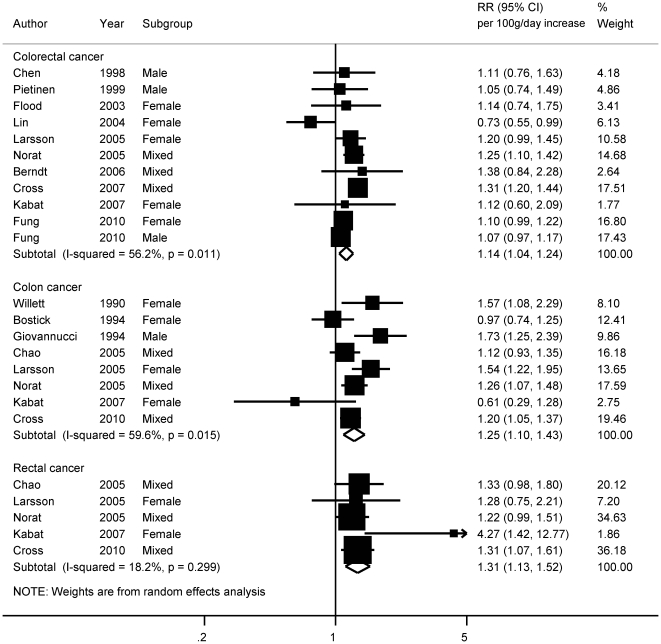
“References: Chen, 1998 [51]; Pietinen, 1999 [57]; Flood, 2003 [33]; Lin, 2004 [56]; Larsson, 2005 [34]; Norat, 2005 [50]; Berndt, 2006 [19]; Cross, 2007 [22]; Kabat, 2007 [24]; Fung, 2010 [23]; Willett, 1990 [58]; Bostick, 1994 [52]; Giovannuccci, 1994 [55]; Chao, 2005 [54]; Cross, 2010 [21].”
ResultInfluentialGeneralized Least Squares for Trend Estimation of Summarized Dose–response Data
Orsini, N., Bellocco, R., & Greenland, S. (2006) · The Stata Journal: Promoting communications on statistics and Stata · doi:10.1177/1536867x0600600103 · Cited by 1,241 · cited 1×
“In linear dose-response meta-analyses, we pooled the relative risk estimates per unit of intake increase (with its standard error) reported in the studies, or computed by us from the categorical data using generalized least-squares for trend estimation [32].”
MethodCairns, S. R., Scholefield, J. H., Steele, R. J., Dunlop, M. G., Thomas, H. J. W., Evans, G. D., Eaden, J. A., Rutter, M. D., Atkin, W. P., Saunders, B. P., et al. (2010) · Gut · doi:10.1136/gut.2009.179804 · Cited by 1,141 · cited 1×
“Screening and surveillance of adenomatous polyps, a precursor of colorectal cancer, is currently the cornerstone for primary prevention of colorectal cancer [6].”
Background
Research works printed but not linked: 2
- 2003, Food, Nutrition, Physical Activity, and the Prevention of Cancer: a Global Perspective, Systematic Literature Review Specification Manual
- A Tobias, 1999, Assessing the influence of a single study in meta-analysis., Stata Tech Bull, 47, 15
Cited by
Items 301–400 of 912
Thøgersen, R., & Bertram, H. C. (2020) · Trends in Food Science & Technology · doi:10.1016/j.tifs.2020.12.015 · Cited by 34
Dietary sialic acids: distribution, structure, and functions
Zhang, T., Wu, J., & Zhan, X. (2023) · Critical Reviews in Food Science and Nutrition · doi:10.1080/10408398.2023.2202254 · Cited by 30
“For instance, every 100 g/day increase in the consumption of red meat or processed meat is associated with a 14% increase in CRC risk (Chan et al. 2011).”
Santarelli, R. L., Naud, N., Taché, S., Guéraud, F., Vendeuvre, J., Zhou, L., Anwar, M. M., Mirvish, S. S., Corpet, D. E., & Pierre, F. H. F. (2013) · International Journal of Cancer · doi:10.1002/ijc.28286 · Cited by 30
Metabolic Syndrome, Obesity, and Gastrointestinal Cancer
Fujihara, S., Mori, H., Kobara, H., Nishiyama, N., Kobayashi, M., Oryu, M., & Masaki, T. (2012) · Gastroenterology Research and Practice · doi:10.1155/2012/483623 · Cited by 35
“Of note, high intake of red meat and processed meat was associated with increased risk of colorectal, colon, and rectal cancers [99, 100].”
BackgroundGarborg, K. K. (2015) · Surgical Clinics of North America · doi:10.1016/j.suc.2015.05.007 · Cited by 36
Screening of human bocavirus in surgically excised cancer specimens
Abdel-Moneim, A. S., El-Fol, H. A. E.-K., Kamel, M. M., Soliman, A. S. A., Mahdi, E. A., El-Gammal, A. S., & Mahran, T. Z. M. (2016) · Archives of Virology · doi:10.1007/s00705-016-2885-9 · Cited by 30
Ventajas y desventajas nutricionales de ser vegano o vegetariano.
Allende, D. R., Díaz, F. F., & Durán‐Agüero, S. (2017) · Revista chilena de nutrición · doi:10.4067/s0717-75182017000300218 · Cited by 86
Gratz, S. W., Hazim, S. N., Richardson, A. J., Scobbie, L., Johnstone, A. M., Fyfe, C., Holtrop, G., Lobley, G. E., & Russell, W. R. (2018) · European Journal of Nutrition · doi:10.1007/s00394-018-1629-x · Cited by 32
Consumption of aquatic products and meats in Chinese residents: A nationwide survey
Wang, Q., Liu, S., Wang, H., Su, C., Liu, A., & Jiang, L. (2022) · Frontiers in Nutrition · doi:10.3389/fnut.2022.927417 · Cited by 38
Liu, H., Hu, Y., Qi, B., Yan, C., Wang, L., Zhang, Y., & Chen, L. (2022) · Frontiers in Pharmacology · doi:10.3389/fphar.2022.940508 · Cited by 36
“Smoking, alcohol consumption, red meat consumption, and family history of colon cancer are all considered to be the risk factors for this cancer (Young et al., 2010; Chan et al., 2011; Fedirko et al., 2011).”
BackgroundThøgersen, R., Gray, N., Kuhnle, G., HECKE, T. V., SMET, S. D., Young, J. F., Sundekilde, U. K., Hansen, A. K., & Bertram, H. C. (2019) · Food Chemistry · doi:10.1016/j.foodchem.2019.125339 · Cited by 29
Predictors of Advanced Colorectal Neoplasia for Colorectal Cancer Screening
Wong, M. C. S., Lam, T. Y. T., Tsoi, K. K. F., Chan, V. C. W., Hirai, H. W., Ching, J. Y. L., & Sung, J. J. �. (2014) · American Journal of Preventive Medicine · doi:10.1016/j.amepre.2013.12.008 · Cited by 28
Competing Endogenous RNAs (ceRNAs) in Colorectal Cancer: A Review
Akhbari, M. H., Zafari, Z., & Sheykhhasan, M. (2022) · Expert Reviews in Molecular Medicine · doi:10.1017/erm.2022.21 · Cited by 31
Dingenen, L. V., Segers, C., Wouters, S., Mysara, M., Leys, N., Kumar‐Singh, S., Malhotra‐Kumar, S., & Houdt, R. V. (2023) · Frontiers in Cellular and Infection Microbiology · doi:10.3389/fcimb.2023.1298264 · Cited by 31
“…have been identi fi ed as CRC risk factors, next to age, gender, family history, colitis, alcohol consumption, high consumption of red and processed meat, obesity and diabetes (Taylor et al., 2010; Chan et al., 2011; Fedirko et al., 2011; Jiang et al., 2011; Jess et al., 2012; Ma et al., 2013).”
BackgroundSpringfield, S., Odoms‐Young, A. M., Tussing-Humphreys, L. M., Freels, S. A., & Stolley, M. R. (2019) · Journal of Cancer Survivorship · doi:10.1007/s11764-019-00748-y · Cited by 35
“Red and processed meats in particular are associated with increased cancer risk, heart disease, and all-cause mortality [36, 46, 47].”
Antonio, J., Evans, C., Ferrando, A. A., Stout, J. R., Antonio, B., Cintineo, H. P., Harty, P., Arent, S. M., Candow, D. G., Forbes, S. C., et al. (2024) · Journal of the International Society of Sports Nutrition · doi:10.1080/15502783.2024.2341903 · Cited by 27
The Role of Non-Canonical Hsp70s (Hsp110/Grp170) in Cancer
Chakafana, G., & Shonhai, A. (2021) · Cells · doi:10.3390/cells10020254 · Cited by 28
Gaspar, R. S., Rossi, L., Hone, T., & Dornelles, A. Z. (2021) · The Lancet Regional Health - Americas · doi:10.1016/j.lana.2021.100042 · Cited by 37
“…associations found be-tween particular risk factors (e.g., diet high in red meat) and income inequality that were not extended to their respective NCD (e.g., colon and rectum cancer [41] ) can be of important strategi-cal benefit for healthcare planning and efficiency from a preventive perspective.”
BackgroundRodríguez-Martín, N. M., Córdoba, P., Sarriá, B., Verardo, V., Pedroche, J., Alcalá-Santiago, Á., García‐Villanova, B., & Molina‐Montes, E. (2023) · Foods · doi:10.3390/foods12061151 · Cited by 32
“Indeed, PB foods are considered a protective factor against the development of cancer [19,64], and of cardiovascular diseases (CVD) [63].”
BackgroundChen, T., Zheng, B., Yang, P., Zhang, Z., Su, Y., Chen, Y., Luo, L., Luo, D., Lin, Y., Xie, R., et al. (2023) · Clinical Oncology · doi:10.1016/j.clon.2023.05.008 · Cited by 29
Azadbakht, L., Onvani, S., & Haghighatdoost, F. (2015) · Journal of Research in Medical Sciences · doi:10.4103/1735-1995.166233 · Cited by 32
Dose–response meta-analysis of poultry intake and colorectal cancer incidence and mortality
Shi, Y., Yu, P.-W., & Zeng, D.-Z. (2014) · European Journal of Nutrition · doi:10.1007/s00394-014-0705-0 · Cited by 30
Štorcelová, M., Vician, M., Reis, R. D. F., Zeman, M., & Herichová, I. (2013) · Molecular Biology Reports · doi:10.1007/s11033-013-2749-2 · Cited by 29
Naghibzadeh‐Tahami, A., Yazdi‐Feyzabadi, V., Khanjani, N., Ashrafi‐Asgarabad, A., Alizaeh, H., Borhaninejad, V. R., Moradi-Joo, M., Zeinali, M., Zahedi, M. J., Afshar, M. A., et al. (2016) · PubMed Central · Cited by 30
Adherence to the Mediterranean diet and risk of lung cancer in the Netherlands Cohort Study
Schulpen, M., & van den Brandt, P. A. (2018) · British Journal Of Nutrition · doi:10.1017/s0007114517003737 · Cited by 30
“Similarly, mMED variants include total meat consumption, whereas aMED variants consider the intake of red and processed meats, speci fi cally (11,46 – 48) .”
Saliba, W., Rennert, H. S., Gronich, N., Gruber, S. B., & Rennert, G. (2019) · European Journal of Cancer Prevention · doi:10.1097/cej.0000000000000451 · Cited by 31
“5) for the highest intake compared with the lowest intake (Chan et al., 2011).”
BackgroundNutrition and gut health: the impact of specific dietary components – it's not just five-a-day
Rhodes, J. M. (2020) · Proceedings of The Nutrition Society · doi:10.1017/s0029665120000026 · Cited by 34
“However, a sub-study (EPIC-Oxford) of 63 550 people showed an increased incidence rate ratio for colorectal cancer in vegetarians compared with meat eaters (IRR 1⋅39 (95% CI 1⋅01, 1⋅91))((10)) even though meta-analysis of twenty one prospective cohort studies has shown a strong association between colorectal cancer ri…”
BackgroundGenetics, diet, microbiota, and metabolome: partners in crime for colon carcinogenesis
Vecchia, M. L., Sala, G., Sculco, M., Aspesi, A., & Dianzani, I. (2024) · Clinical and Experimental Medicine · doi:10.1007/s10238-024-01505-x · Cited by 32
“Consumption of red and processed meats is linked to an elevated risk of CRC [4, 97].”
Alessandra, D. M., Maria, V., Cecilia, C., Augusto, S., & Marcello, V. (2014) · International Journal of Environmental Protection and Policy · doi:10.11648/j.ijepp.20140202.14 · Cited by 30
Maximova, K., Moez, E. K., Dabravolskaj, J., Ferdinands, A. R., Dinu, I. A., Siou, G. L., Rajabi, A. A., & Veugelers, P. J. (2020) · Nutrients · doi:10.3390/nu12082265 · Cited by 30
“European studies [6,23,24], with the strongest evidence for CRC [58].”
BackgroundMethodDoes human papillomavirus cause human colorectal cancer? Applying Bradford Hill criteria postulates
Usman, M., Hameed, Y., & Ahmad, M. (2020) · ecancermedicalscience · doi:10.3332/ecancer.2020.1107 · Cited by 28
A comprehensive analysis of the microbiota composition and gene expression in colorectal cancer
Zhang, Q., Zhao, H., Wu, D., Cao, D., & Ma, W. (2020) · BMC Microbiology · doi:10.1186/s12866-020-01938-w · Cited by 27
A Review Study of a Green Diet and Healthy Ageing
Fong, B. Y. F., Chiu, W.-K., Chan, W. F. M., & Lam, T. Y. (2021) · International Journal of Environmental Research and Public Health · doi:10.3390/ijerph18158024 · Cited by 27
“Considering personal, social and cultural values, these explain the probable reasons behind the polarised general public views of meat consumption, even when there are substantial findings supporting the associations of red and processed meat consumption with non-communicable diseases [44], such as CVD [86], colorecta…”
Backgroundvan de Veerdonk, W., Hoeck, S., Peeters, M., & Hal, G. F. V. (2019) · Preventive Medicine · doi:10.1016/j.ypmed.2019.06.004 · Cited by 26
Lenighan, Y. M., Nugent, A. P., MOLONEY, A. P., Monahan, F. J., Walton, J., Flynn, A., Roche, H. M., & McNulty, B. A. (2019) · Public Health Nutrition · doi:10.1017/s1368980019003471 · Cited by 28
Wolf, P. G., Byrd, D. A., Cares, K., Dai, H., Odoms‐Young, A. M., Gaskins, H. R., Ridlon, J. M., & Tussing-Humphreys, L. M. (2022) · mSystems · doi:10.1128/msystems.01174-21 · Cited by 29
Dietary Habits and Gaming Behaviors of Portuguese and Brazilian Esports Players
Ribeiro, F. J., Teixeira, R., & Poínhos, R. (2023) · Nutrients · doi:10.3390/nu15194200 · Cited by 32
“Red and processed meat is linked to an increased risk of colon cancer, with a 17% (95% CI: 5 to 31%) higher relative risk for daily consumption of 100 g of red meat and 18% for 50 g of processed meat [64].”
BackgroundYarnall, J. M., Crouch, D. J. M., & Lewis, C. M. (2013) · Cancer Epidemiology · doi:10.1016/j.canep.2012.12.008 · Cited by 33
“In addition to alcohol, BMI, smoking and exercise, we chose to model the most consistent and well validated dietary findings, which suggest that low levels of fibre and high levels of red and processed meat are both significant risk factors [6,7].”
BackgroundMethodThe role of diet in cancer: the epidemiologic link
Stępień, M., Chajès, V., & Romieu, I. (2016) · Salud Pública de México · doi:10.21149/spm.v58i2.7795 · Cited by 33
GSTM1, GSTT1, and GSTP1 polymorphisms and colorectal cancer risk in Polish nonsmokers
Klusek, J. E., Nasierowska-Guttmejer, A. M., Kowalik, A., Wawrzycka, I., Lewitowicz, P., Chrapek, M., & Głuszek, S. (2018) · Oncotarget · doi:10.18632/oncotarget.25031 · Cited by 25
“Previous studies have also highlighted the link between processed red meat and colorectal cancer [4, 5, 6].”
BackgroundPeptides in Colorectal Cancer: Current State of Knowledge
Avilés‐Gaxiola, S., Gutiérrez‐Grijalva, E. P., León‐Félix, J., Angulo-Escalante, M. A., & Heredia, J. B. (2020) · Plant Foods for Human Nutrition · doi:10.1007/s11130-020-00856-6 · Cited by 30
How microRNAs influence both hereditary and inflammatory-mediated colon cancers
Hutchison, J. C., Cohen, Z., Onyeagucha, B. C., Funk, J. L., & Nelson, M. A. (2013) · Cancer Genetics · doi:10.1016/j.cancergen.2013.06.005 · Cited by 28
“Colon cancer is predominantly a disease of industrialized countries that practice a Western diet and lifestyle; epidemiological studies indicate many risk factors, including obesity, excessive alcohol consumption, excessive red meat as well as processed meat consumption (4), a diet high in fat, smoking, low socioecono…”
Antioncogenic potential of probiotics: Challenges and future prospective
Chattaraj, S., Mitra, D., Chattaraj, A., Chattaraj, M., Kundu, M., Ganguly, A., & MOHAPATRA, P. K. D. (2023) · Indian Journal of Microbiology Research · doi:10.18231/j.ijmr.2023.001 · Cited by 26
Barbir, A., Linseisen, J., Hermann, S., Kaaks, R., Teucher, B., Eichholzer, M., & Rohrmann, S. (2012) · Cancer Causes & Control · doi:10.1007/s10552-012-0017-8 · Cited by 24
Tollosa, D. N., Camp, J. V., Huybrechts, I., Huybregts, L., Loco, J. V., SMET, S. D., Sterck, E., Rabâi, C., HECKE, T. V., Vanhaecke, L., et al. (2017) · Nutrients · doi:10.3390/nu9111257 · Cited by 25
Kałuża, J., Harris, H. R., Lindén, A., & Wolk, A. (2018) · European Journal of Nutrition · doi:10.1007/s00394-018-1658-5 · Cited by 29
“The results of recent systematic reviews [2] and metaanalyses indicate that high consumption of red meat and/ or processed red meat is associated with increased risk of all-cause mortality [3] as well as major chronic diseases, including cardiovascular disease [4], stroke [5], some cancers [6, 7], and diabetes [8].”
ResultVulcan, A., Manjer, J., Ericson, U., & Ohlsson, B. (2017) · Food & Nutrition Research · doi:10.1080/16546628.2017.1341810 · Cited by 33
“A metaanalysis indicated that the risk increases by 17% per 100 g daily intake of red meat and by 18% per 50 g daily intake of processed red meat [6].”
BackgroundPhytochemical Modulation of MiRNAs in Colorectal Cancer
Ganapathy, A. K., & Ezekiel, U. R. (2019) · Medicines · doi:10.3390/medicines6020048 · Cited by 25
“Increased red and processed meat consumption has been associated with a significantly increased risk of CRC incidence [3].”
BackgroundChenni, F. Z., Taché, S., Naud, N., Guéraud, F., Hobbs, D. A., Kunhle, G. C. G., Pierre, F. H. F., & Corpet, D. E. (2013) · Nutrition and Cancer · doi:10.1080/01635581.2013.749291 · Cited by 31
“Epidemiological and animal studies show that high intake of red and processed meat can increase the risk of developing colon cancer (1,2).”
BackgroundChaiyasut, C., Pattananandecha, T., Sirilun, S., Suwannalert, P., Peerajan, S., & Sivamaruthi, B. S. (2016) · Food Science and Technology · doi:10.1590/1678-457x.26216 · Cited by 30
Microbial carcinogenic toxins and dietary anti-cancer protectants
Stone, T. W., & Darlington, L. G. (2017) · Cellular and Molecular Life Sciences · doi:10.1007/s00018-017-2487-z · Cited by 26
Meat subtypes and colorectal cancer risk: A pooled analysis of 6 cohort studies in Japan
Islam, Z., Akter, S., Kashino, I., Mizoue, T., Sawada, N., Mori, N., Yamagiwa, Y., Tsugane, S., Naito, M., Tamakoshi, A., et al. (2019) · Cancer Science · doi:10.1111/cas.14188 · Cited by 24
Wolf, P. G., Gaskins, H. R., Ridlon, J. M., Freels, S. A., Hamm, A., Goldberg, S., Petrilli, P., Schering, T., Vergis, S., Gomez‐Perez, S. L., et al. (2020) · Contemporary Clinical Trials Communications · doi:10.1016/j.conctc.2020.100611 · Cited by 24
“In addition, a 2011 meta-analysis revealed increased CRC risk in subjects who consumed abundant red and processed meat [14].”
BackgroundGut Microbial Signatures in Sporadic and Hereditary Colorectal Cancer
Mori, G., & Pasca, M. R. (2021) · International Journal of Molecular Sciences · doi:10.3390/ijms22031312 · Cited by 30
Tschanz, L., Kaelin, I., Wróbel, A., Rohrmann, S., & Sych, J. M. (2022) · Public Health Nutrition · doi:10.1017/s136898002200101x · Cited by 26
“In addition, these results indicate that a consumption level of more than 50–100 g/d of red meat is considered to be associated with health risks(2,4).”
BackgroundZebrafish xenograft as a tool for the study of colorectal cancer: a review
Fontana, C. M., & Doan, H. V. (2024) · Cell Death and Disease · doi:10.1038/s41419-023-06291-0 · Cited by 28
Gene-Diet Interactions and Their Impact on Colorectal Cancer Risk
Kantor, E. D., & Giovannucci, E. L. (2014) · Current Nutrition Reports · doi:10.1007/s13668-014-0114-2 · Cited by 25
Impact of red meat consumption on the metabolome of rats
Jakobsen, L. M. A., Yde, C. C., HECKE, T. V., Jessen, R., Young, J. F., SMET, S. D., & Bertram, H. C. (2016) · Molecular Nutrition & Food Research · doi:10.1002/mnfr.201600387 · Cited by 22
Sayer, R. D., Speaker, K. J., Pan, Z., Peters, J. C., Wyatt, H. R., & Hill, J. O. (2017) · Obesity Science & Practice · doi:10.1002/osp4.118 · Cited by 23
“Recommendations to limit or restrict red meat consumption (17,18) are common due to positive associations between its consumption and cardiovascular diseases (19), type 2 diabetes (20) and cancer (21,22) in observational studies.”
BackgroundThomson, C. A., Crane, T. E., Garcia, D. O., Wertheim, B. C., Hingle, M. D., Snetselaar, L., Datta, M., Rohan, T. E., LeBlanc, E. S., Chlebowski, R. T., et al. (2017) · Journal of the Academy of Nutrition and Dietetics · doi:10.1016/j.jand.2017.06.010 · Cited by 24
Yahya, F., & Ting, H. T. (2020) · International Journal on Food Agriculture and Natural Resources · doi:10.46676/ij-fanres.v1i1.2 · Cited by 23
“However, consuming processed food frequently will bring unhealthy effects to human and at the same time, increase the risk of cancer [6].”
BackgroundRole of genetic & environment risk factors in the aetiology of colorectal cancer in malaysia
Ramzi, N. H., Chahil, J. K., Lye, S. H., Munretnam, K., Sahadevappa, K. I., Sahadevappa, Velapasamy, S., Adli, N., Hashim, N., Cheah, S. K., et al. (2014) · Europe PMC (PubMed Central) · doi:10.13140/2.1.1836.8641 · Cited by 22
Cell-based Immunotherapy for Colorectal Cancer with Cytokine-induced Killer Cells
Kim, J. S., Kim, Y. G., Park, E. J., Kim, B., Lee, H. K., Hong, J. T., Kim, Y., & Han, S. (2016) · Immune Network · doi:10.4110/in.2016.16.2.99 · Cited by 21
“2: 99-108, April, 2016 100 family history of CRC (6-12).”
Educational level and colorectal cancer risk: the mediating roles of lifestyle and dietary factors
Li, L., Fang, Y., Abulimiti, A., Huang, C., Liu, K., Chen, Y., & Zhang, C. (2021) · European Journal of Cancer Prevention · doi:10.1097/cej.0000000000000697 · Cited by 25
“Multiple epidemiological studies have suggested that red and processed meat intake was positively associated with the colorectal cancer risk (Chan et al., 2011; Johnson et al., 2013).”
BackgroundZhao, Z., Ba, C., Wang, W., Wang, X., Xue, R., & Wu, X. (2012) · Genetic Testing and Molecular Biomarkers · doi:10.1089/gtmb.2012.0266 · Cited by 21
“…including obesity (Pendyala and Holt, 2008), smoking (Kasahara et al., 2008; Limsui and Limburg, 2008), alcohol or red meat intake (Larsson et al., 2005; Chan et al., 2011), a lack of physical exercise, and a variety of genetic factors (Giacosa et al., 1999; Sahin et al., 2012; Tug et al., 2012).”
BackgroundThe etiopathogenesis of diffuse low-grade gliomas
Darlix, A., Gozé, C., Rigau, V., Bauchet, L., Taillandier, L., & Duffau, H. (2016) · Critical Reviews in Oncology/Hematology · doi:10.1016/j.critrevonc.2016.11.014 · Cited by 26
Meat Consumption and Health Outcomes
Boutron‐Ruault, M., Mesrine, S., & Pierre, F. H. F. (2017) · Elsevier eBooks · doi:10.1016/b978-0-12-803968-7.00012-5 · Cited by 31
Yu, S., Xie, H., Zhang, J., Wang, D., Song, Y., Zhang, S., Zheng, S. S., & Wang, J. (2017) · Molecular Medicine Reports · doi:10.3892/mmr.2017.7794 · Cited by 21
“Numerous risk factors involved in CRC initiation and progression have been identified, including older age, hereditary components, obesity, excess alcohol and red meat consumption, smoking and a lack of physical exercise (3-6).”
Erben, V., Carr, P. R., Holleczek, B., Stegmaier, C., Hoffmeister, M., & Brenner, H. (2018) · Preventive Medicine · doi:10.1016/j.ypmed.2018.02.025 · Cited by 23
Hur, S. J., Jo, C., Yoon, Y., Jeong, J. Y., & Lee, K. T. (2018) · Critical Reviews in Food Science and Nutrition · doi:10.1080/10408398.2018.1495615 · Cited by 26
“For example, the IARC report published in October 2015 mentioned that “50 grams daily of processed meat or 100 grams daily of red meat might increase the risk of colorectal cancer by 18 percent and 17 percent, respectively” by citing the results of Chan et al. (2011).”
BackgroundMethodThe Mediterranean Diet and Cancer: What Do Human and Molecular Studies Have to Say about It?
Hernáez, Á., & Estruch, R. (2019) · Nutrients · doi:10.3390/nu11092155 · Cited by 24
“As observed in meta-analyses of prospective human trials, red meat consumption is associated with increases in the risk of developing colorectal [31], lung [32], and pancreatic cancer [33], and processed meat intake is linked to incremented risk of suffering colorectal [34], breast [35], gastric [36], prostate [37], a…”
BackgroundCooking and Diet Quality: A Focus on Meat
Alfaia, C. M., Lopes, A. F., & Prates, J. A. M. (2013) · Springer eBooks · doi:10.1007/978-1-4614-7339-8_20 · Cited by 21
Biological clues to potent DNA-damaging activities in food and flavoring
Hossain, M. Z., Gilbert, S. F., Patel, K. G., Ghosh, S., Bhunia, A. K., & Kern, S. E. (2013) · Food and Chemical Toxicology · doi:10.1016/j.fct.2013.01.058 · Cited by 21
Lopez, B. A. A., Pinto-Colmenarez, R., Caliwag, F. M. C., Ponce-Lujan, L., Madera, M. D. F., Cortés, A. V. G., Martínez, A. G. M., Martinez, I. G. Z., & León, F. G. (2024) · Cureus · doi:10.7759/cureus.70933 · Cited by 32
“This association can be explained by the formation of N-nitroso compounds when red meat is broken down in the gut, many of which are carcinogenic [9].”
BackgroundLifestyle Modification in Colorectal Cancer Patients: An Integrative Oncology Approach
Jafri, S. H. R., & Mills, G. M. (2013) · Future Oncology · doi:10.2217/fon.12.184 · Cited by 23
Yang, H., Yue, G. G., Leung, P. C., Wong, C. K., & Lau, C. B. (2021) · Pharmacological Research · doi:10.1016/j.phrs.2021.106031 · Cited by 23
Jarak, I., Santos, A. I., Pinto, A. H., Domingues, C., da Silva, I. S., Melo, R., Veiga, F., & Figueiras, A. (2023) · International Journal of Pharmaceutics · doi:10.1016/j.ijpharm.2023.123456 · Cited by 21
Smaller meat portions contribute the most to reducing meat consumption in the United Kingdom
Vonderschmidt, A., Jaacks, L. M., Alexander, P., Green, R., Bellows, A. L., & Stewart, C. (2024) · Nature Food · doi:10.1038/s43016-024-01070-2 · Cited by 27
Wu, Z., Li, Y., Li, S., Zhu, L., Li, G., Yu, Z., Zhao, X., Ge, J., Cui, B., Dong, X., et al. (2013) · Medical Oncology · doi:10.1007/s12032-013-0565-0 · Cited by 20
Interactions between meat intake and genetic variation in relation to colorectal cancer
Andersen, V. C., & Vogel, U. B. (2014) · Genes & Nutrition · doi:10.1007/s12263-014-0448-9 · Cited by 21
“Data from (Chen et al. 1998; Tiemersma et al. 2002; Sorensen et al. 2008; Chan et al. 2011) have been presented in a previous review (Andersen et al.”
BackgroundMethodThe gut microbiome and potential implications for early-onset colorectal cancer
Mukherji, R., & Weinberg, B. A. (2020) · Colorectal Cancer · doi:10.2217/crc-2020-0007 · Cited by 23
de Batlle, J., Gràcia‐Lavedan, E., Romaguera, D., Méndez, M. A., Castaño‐Vinyals, G., Martín, V., Aragonés, N., Gómez‐Acebo, I., Olmedo‐Requena, R., Jiménez‐Moleón, J. J., et al. (2016) · European Journal of Nutrition · doi:10.1007/s00394-016-1350-6 · Cited by 20
Aspirin for prevention of colorectal cancer in the elderly: friend or foe?
Perisetti, A., Goyal, H., Tharian, B., Inamdar, S., & Mehta, J. L. (2020) · Annals of Gastroenterology · doi:10.20524/aog.2020.0556 · Cited by 21
Dietary Proteins: Functions, Health Benefits and Healthy Aging
Shevkani, K., & Chourasia, S. (2021) · Healthy ageing and longevity · doi:10.1007/978-3-030-83017-5_1 · Cited by 26
Händel, M. N., Rohde, J. F., Jacobsen, R., & Heitmann, B. L. (2021) · Nutrients · doi:10.3390/nu13103601 · Cited by 21
Zhang, L., Liu, Y., La, X., Yan, S.-N., Chen, Y., Liang, J., & Li, Z. (2022) · Naunyn-Schmiedeberg s Archives of Pharmacology · doi:10.1007/s00210-022-02345-w · Cited by 21
Zhao, Z., Pu, Z., Yin, Z., Yu, P., Hao, Y., Wang, Q., Guo, M., & Zhao, Q. (2016) · Scientific Reports · doi:10.1038/srep27334 · Cited by 19
Lankarani, K. B., Khosravizadegan, Z., Naghibzadeh‐Tahami, A., Akbari, M., Khodadost, M., Honarvar, B., Khodadost, B., Goodarzi, F., Jokari, K., Akbari, M., et al. (2017) · International Journal of Cancer Management · doi:10.5812/ijcm.8227 · Cited by 21
“However, a direct association was found between low consumption of fiber, high consumption of fatty foods and red meat with colorectal cancer (7, 19, 20, 45, 46).”
BackgroundRada, D., Evans, C., Jones, P. J., Greenwood, D. C., Hancock, N., & Cade, J. E. (2018) · International Journal of Cancer · doi:10.1002/ijc.31362 · Cited by 27
Self-citationAhmad, M. I., Ijaz, M. U., Haq, I. U., & Li, C. (2020) · Food Science of Animal Resources · doi:10.5851/kosfa.2019.e96 · Cited by 20
Henriksson, P. J. G., Cucurachi, S., Guinée, J. B., Heijungs, R., Troell, M. F., & Ziegler, F. (2021) · Global Food Security · doi:10.1016/j.gfs.2021.100508 · Cited by 22
Sikavi, D. R., Nguyen, L. H., Haruki, K., Ugai, T., Ma, W., Wang, D. D., Thompson, K. N., Yan, Y., Branck, T. A., Wilkinson, J. E., et al. (2021) · Clinical and Translational Gastroenterology · doi:10.14309/ctg.0000000000000338 · Cited by 20
“Diet has played a long-recognized role in altering CRC risk (8,50,66).”
BackgroundSubar, A. F., Kushi, L. H., Lerman, J., & Freedman, L. S. (2017) · American Journal of Epidemiology · doi:10.1093/aje/kwx072 · Cited by 20
“With them, important strides have been made in our understanding of associations such as those between dietary fiber and cardiovascular disease (92), trans fatty acids and cardiovascular disease (93), alcohol and breast cancer (94), and red/processed meat and colorectal cancer (95, 96).”
BackgroundModeel, S., Siwach, S., Dolkar, P., Chaurasia, M., Yadav, P., Atri, A., Yadav, A., Negi, T., & Negi, R. K. (2025) · Cancer Pathogenesis and Therapy · doi:10.1016/j.cpt.2025.06.007 · Cited by 25
“9,112,113 It promotes oxidative stress and causes lipid peroxidation in gut cells.”
Wu, S., Meng, Q., Zhang, C., Sun, H., Lu, R., Gao, N., Yang, H., Li, X., Aschner, M., & Chen, R. (2018) · International Journal of Cancer · doi:10.1002/ijc.31318 · Cited by 18
Expected long-term impact of screening endoscopy on colorectal cancer incidence: a modelling study
Brenner, H., Kretschmann, J., Stock, C., & Hoffmeister, M. (2016) · Oncotarget · doi:10.18632/oncotarget.10178 · Cited by 20
“[21–23]).”
Schönbach, J.-K., Thiele, S., & Lhachimi, S. K. (2018) · Preventive Medicine · doi:10.1016/j.ypmed.2018.11.011 · Cited by 21
Dietary Pattern and Its Correlates among Lithuanian Young Adults: Mediterranean Diet Approach
Miežienė, B., Emeljanovas, A., Fatkulina, N., & Stukas, R. (2020) · Nutrients · doi:10.3390/nu12072025 · Cited by 21
Carrasco‐Pozo, C., Tan, K. N., & Avery, V. M. (2020) · Antioxidants · doi:10.3390/antiox9111109 · Cited by 18
“For example, the risk of CRC increases by 17% with a daily intake of 100 g of red meat [9].”
BackgroundHerchenroeder, L., Forestell, C. A., & Bravo, A. J. (2022) · The Journal of Social Psychology · doi:10.1080/00224545.2022.2081529 · Cited by 21
“, 2014), cancer (Chan et al., 2011; Wang et al., 2016), and cardiovascular disease (Bechthold et al.”
Background
Metadata
- Authors
- Chan, D. S. M., Lau, R., Aune, D., Vieira, R., Greenwood, D. C., Kampman, E., & Norat, T.
- Affiliations
- Imperial College London (GB)
- University of Leeds (GB)
- Wageningen University & Research (NL)
- Corresponding author
- Norat, Teresa
- Venue
- PLoS ONE
- Publisher
- Public Library of Science (PLoS)
- Published
- 2011-06-06
- Volume
- 6
- Issue
- 6
- Pages
- e20456
- ISSN
- 1932-6203 (ISSN-L)
- PMC
- PMC3108955
- OpenAlex
- W2072090020
- Cited by
- 903
- References
- 72
- Citations by year
- 2026: 29 · 2025: 46 · 2024: 53 · 2023: 67 · 2022: 58 · 2021: 72 · 2020: 69 · 2019: 67 · 2018: 79 · 2017: 73 · 2016: 71 · 2015: 61 · 2014: 62 · 2013: 59 · 2012: 32
- FWCI
- 7.52
- Type
- journal article
- Language
- en
- Open access
- gold
- doi.org
- Locations
- PLoS ONE (publishedVersion, cc-by)
- Europe PMC (PubMed Central) (publishedVersion, cc-by)
- PubMed Central (publishedVersion, cc-by)
- PubMed (publishedVersion)
- Radboud Repository (Radboud University) (publishedVersion)
- White Rose Research Online (University of Leeds, The University of Sheffield, University of York) (acceptedVersion)
- Socio-Environmental Systems Modeling (acceptedVersion)
- RePEc: Research Papers in Economics (submittedVersion)
- DOAJ (DOAJ: Directory of Open Access Journals) (submittedVersion, cc-by-sa)
- Figshare (submittedVersion, cc-by)
- Spiral (Imperial College London) (submittedVersion, other-oa)
- Radboud Repository (Radboud University) (submittedVersion, other-oa)
- Data Archiving and Networked Services (DANS) (submittedVersion, other-oa)
- Funders
- World Cancer Research Fund International (2007/SP01)
- World Cancer Research Fund (2007/SP01)
- Wageningen University and Research
- Topics
- Health Sciences › Medicine › Public Health, Environmental and Occupational Health › Nutritional Studies and Diet
- Health Sciences › Medicine › Oncology › Colorectal Cancer Screening and Detection
- Life Sciences › Agricultural and Biological Sciences › Animal Science and Zoology › Meat and Animal Product Quality
- Keywords
- red meat, processed meat, colorectal cancer, colon cancer, rectal cancer, cancer risk, dietary intake, dose-response relationship, nonlinear relationship, colorectal cancer prevention, dietary recommendations
- MeSH terms
- Female, Food Handling, Humans, Male, Meat, Pigmentation, Prospective Studies, Colorectal Neoplasms, Publication Bias
About these checks
Registry, retraction, Cites and statistics results are computed, not judged, with one exception: a printed reference that no index lists is read once by a model before it counts as a citation error. Claims are extracted by a model and kept only when their quote appears verbatim in the text; each cited source is then checked, with a model’s help, for whether it says what the claim relies on. Those verdicts can be wrong — read the claim’s quote and the cited source before relying on one.
Statistics and arithmetic are recomputed, not judged.
Confidence bands are shown only for fields calibrated on our annotated test set. None is calibrated yet, so no band is shown.
What counts as a claim ›How we measure confidence ›How we check this ›
Are you an author, or do you see a problem with this page? Request a review
Data sources
Bibliographic data: Semantic Scholar, OpenAlex, Crossref.
Contains information from the Semantic Scholar Academic Graph Datasets, made available under the ODC Attribution License (ODC-BY 1.0).
Semantic Scholar’s data is described in: Kinney, R., et al. (2023). The Semantic Scholar Open Data Platform. arXiv:2301.10140.
