

Therapist Experience and Knowledge Acquisition in Internet-Delivered CBT for Social Anxiety Disorder: A Randomized Controlled Trial
Open accessThe DOI matches its Crossref record; 79 of the 80 references it cites were found in a registry or an index.
Abstract
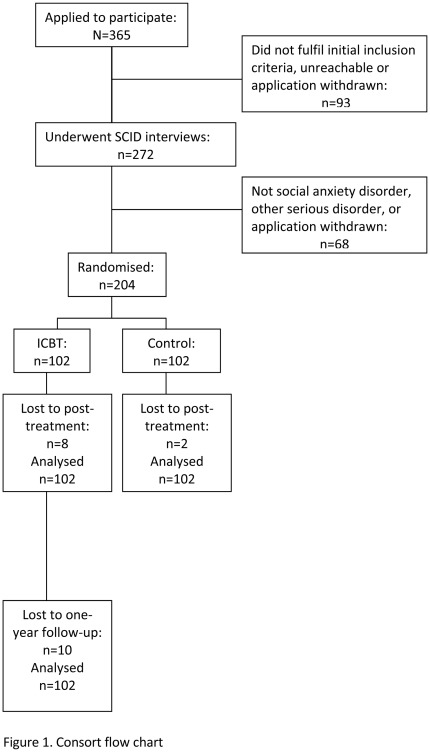
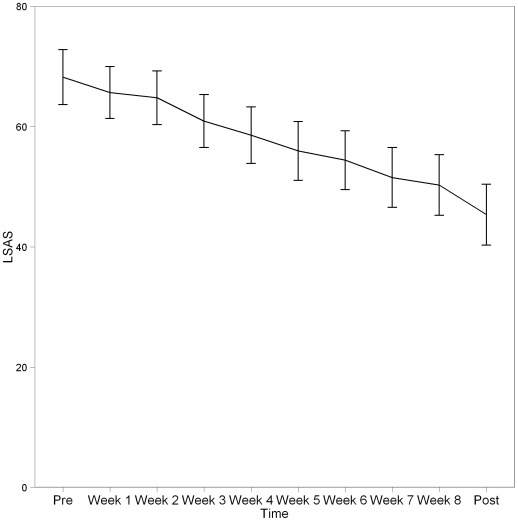
BACKGROUND: Guided internet-delivered cognitive behavior therapy (ICBT) has been tested in several trials on social anxiety disorder (SAD) with moderate to large effects. The aims of this study were threefold. First, to compare the effects of ICBT including online discussion forum with a moderated online discussion forum only. Second, to investigate if knowledge about SAD increased following treatment and third to compare the effects of inexperienced versus experienced therapists on patient outcomes. METHODS: A total of 204 participants with a primary diagnosis of SAD were included and randomized to either guided ICBT or the control condition. ICBT consisted of a 9-week treatment program which was guided by either psychology students at MSc level (n = 6) or by licensed psychologists with previous experience of ICBT (n = 7). A knowledge test dealing with social anxiety was administered before and after treatment. Measures of social anxiety and secondary outcomes dealing with general anxiety, depression, and quality of life were administered before and after treatment. In addition, a 1-year follow-up was conducted on the treated individuals. RESULTS: Immediately following treatment, the ICBT group showed superior outcome on the Liebowitz Social Anxiety Scale self-report version with a between group posttreatment Hedges g effect size of g = 0.75. In addition, significant differences on all the secondary outcomes were observed. Gains were well maintained one year later. Knowledge, as assessed by the knowledge test, increased following treatment with little gain in the control group. Therapist experience did not result in different outcomes, but experienced therapists logged in less frequently compared to the inexperienced therapists, suggesting that they needed less time to support patients. DISCUSSION: We conclude that guided ICBT reduce symptoms of SAD, increase knowledge about SAD and that therapist experience does not make a difference apart from the finding that experienced therapist may require less time to guide patients. TRIAL REGISTRATION: UMIN.ac.jp UMIN000001383.
Overview
The claims and statistics of this paper haven’t been checked yet.
Free: it reads the open-access text and checks the first 5 claims that cite a source we can check. Create a free account to check every claim.
Integrity signals
Registry
Cites
Statistics
Figures
Verification
Claims the paper makes
The claims and statistics of this paper haven’t been checked yet.
Free: it reads the open-access text and checks the first 5 claims that cite a source we can check. Create a free account to check every claim.
Claims other papers make about this one
Each is checked against this paper’s own text: does it say what the citing paper says it does?
The source backs part of the claim, not all of it — or backs it for a different population, condition or comparison.
In the citing paper
“while the amount and nature of the therapists’ experience has not been found to greatly influence the clinical outcome of internet therapy [40].”
From Study protocol for a randomised controlled trial of internet-based cognitive-behavioural therapy for obsessive-compulsive disorder (2014) · cites this paper as [40]
Experimental — accuracy not yet measuredThe cited source says what the claim attributes to it.
In the citing paper
“novice clinicians can be as effective as clinicians who have more experience with ICBT 30”
From Internet-delivered psychological treatments: from innovation to implementation (2019) · cites this paper as [30]
The cited source says what the claim attributes to it.
In the citing paper
“Studies have investigated whether ICBT influences knowledge acquisition in social anxiety disorder 30 , eating dis orders 92 and, most recently, adolescents with depression 93 .The studies show that improvements in knowledge occur following ICBT.”
From Internet-delivered psychological treatments: from innovation to implementation (2019) · cites this paper as [30]
Self-check
Percentages, sums and reported differences re-computed from the paper’s own numbers.
The self-check needs the paper’s full text.
Citations
Cites
Diagnostic and Statistical Manual of Mental Disorders
Williams, J. B. W., & First, M. (2013) · Encyclopedia of Social Work · doi:10.1093/acrefore/9780199975839.013.104 · Cited by 109,519
Diagnostic and Statistical Manual of Mental Disorders.
Widiger, T. A. (2000) · Encyclopedia of Psychology, Vol. 3. · doi:10.1037/10518-009 · Cited by 19,744
An inventory for measuring clinical anxiety: Psychometric properties.
Beck, A. T., Epstein, N., Brown, G., & Steer, R. A. (1988) · Journal of Consulting and Clinical Psychology · doi:10.1037/0022-006x.56.6.893 · Cited by 14,407 · cited 2×
“Three secondary measures were used to measure general anxiety, depression and quality of life: the Beck Anxiety Inventory (BAI) [51], the MADRS-S [52], and the Quality of Life Inventory (QOLI) [53].”
MethodDiagnostic and Statistical Manual of Mental Disorders
Siegel, L. J., & Fletcher‐Janzem, E. (2008) · Encyclopedia of Special Education · doi:10.1002/9780470373699.speced0655 · Cited by 8,477
Jacobson, N. S., & Truax, P. (1991) · Journal of Consulting and Clinical Psychology · doi:10.1037/0022-006x.59.1.12 · Cited by 7,770 · cited 1×
“Clinically significant improvement was determined for the LSAS-SR in accordance with Jacobson and Truax criteria [59] by using the Reliable Change Index for each individual and a posttest score within two standard deviations (SDs) of the mean of the normal population [47].”
MethodMoher, D., Schulz, K. F., & Altman, D. G. (2001) · The Lancet · doi:10.1016/s0140-6736(00)04337-3 · Cited by 5,373
Structured Clinical Interview for DSM-IV Axis I Disorders
Spitzer, R. L., First, M. B., & Gibbon, M. (1997) · Medical Entomology and Zoology · Cited by 4,096
Mattick, R. P., & Clarke, J. C. (1998) · Behaviour Research and Therapy · doi:10.1016/s0005-7967(97)10031-6 · Cited by 3,367 · cited 7×
“Four social anxiety questionnaires were used as outcome measures: the Liebowitz Social Anxiety Scale self- PLoS ONE | www.plosone.org 2 May 2012 | Volume 7 | Issue 5 | e37411 report version (LSAS-SR) [46,47], the Social Phobia Scale (SPS) [48], the Social Interaction Anxiety Scale (SIAS) [48], and the SPSQ [49].”
MethodInfluential(1997) · American Psychiatric Press eBooks · Cited by 3,056
Moher, D., Schulz, K. F., & Altman, D. G. (2001) · BMC Medical Research Methodology · doi:10.1186/1471-2288-1-2 · Cited by 2,755 · cited 1×
“We regarded the LSAS-SR as the primary outcome measure [50].”
Method
Cited by
Carlbring, P., Andersson, G., Cuijpers, P., Riper, H., & Hedman-Lagerlöf, E. (2018) · Cognitive Behaviour Therapy · doi:10.1080/16506073.2017.1401115 · Cited by 1,232
Self-citationThe impact of guidance on Internet-based mental health interventions — A systematic review
Baumeister, H., Reichler, L., Munzinger, M., & Lin, J. (2014) · Internet Interventions · doi:10.1016/j.invent.2014.08.003 · Cited by 1,037
“…Low Uncleare Higha Highb Low Low Highd Unclearc Low Dose–response Klein et al. (2009) Low Uncleare Higha Highb Low Low Low Unclearc Low Qualification Andersson et al. (2012) Low Low Unclearh Highb Low Low Low Low Uncleari Johnston et al. (2011) Low Low Unclearh Highb Low Low Highd Low Highj…”
BackgroundMethodResultInfluentialEmotion, Emotion Regulation, and Psychopathology: An Affective Science Perspective
Gross, J. J., & Jazaieri, H. (2014) · Clinical Psychological Science · doi:10.1177/2167702614536164 · Cited by 1,087
Andersson, G., Cuijpers, P., Carlbring, P., Riper, H., & Hedman, E. (2014) · World Psychiatry · doi:10.1002/wps.20151 · Cited by 1,077
“For example, there are very few studies on knowledge acquisition following CBT and even fewer on ICBT (49), and this can be something that differs between the therapy formats (in particular in the long run).”
BackgroundSelf-citationAndrews, G., Basu, A., Cuijpers, P., Craske, M. G., McEvoy, P., English, C. L., & Newby, J. M. (2018) · Journal of Anxiety Disorders · doi:10.1016/j.janxdis.2018.01.001 · Cited by 922
Internet-delivered psychological treatments: from innovation to implementation
Andersson, G., Titov, N., Dear, B. F., Rozental, A., & Carlbring, P. (2019) · World Psychiatry · doi:10.1002/wps.20610 · Cited by 750
Self-citationTherapist-supported Internet cognitive behavioural therapy for anxiety disorders in adults
Olthuis, J. V., Watt, M. C., Bailey, K., Hayden, J. A., & Stewart, S. H. (2016) · Cochrane Database of Systematic Reviews · doi:10.1002/14651858.cd011565.pub2 · Cited by 390
Andersson, G., Carlbring, P., Titov, N., & Lindefors, N. (2019) · The Canadian Journal of Psychiatry · doi:10.1177/0706743719839381 · Cited by 324
Self-citationArnberg, F. K., Linton, S. J., Hultcrantz, M., Heintz, E., & Jonsson, U. (2014) · PLoS ONE · doi:10.1371/journal.pone.0098118 · Cited by 330
Internet interventions: Past, present and future
Andersson, G. (2018) · Internet Interventions · doi:10.1016/j.invent.2018.03.008 · Cited by 315
Self-citationInternet-based mindfulness treatment for anxiety disorders: a randomized controlled trial
Boettcher, J., Åström, V., Påhlsson, D., Schenström, O., Andersson, G., & Carlbring, P. (2014) · Behavior Therapy · doi:10.1016/j.beth.2013.11.003 · Cited by 245
Self-citationHauser-Ulrich, S., Künzli, H., Meier-Peterhans, D., & Kowatsch, T. (2020) · JMIR mHealth and uHealth · doi:10.2196/15806 · Cited by 210
Domhardt, M., Geßlein, H., von Rezori, R. E., & Baumeister, H. (2019) · Depression and Anxiety · doi:10.1002/da.22860 · Cited by 218
Andersson, G., Paxling, B., Wiwe, M., Vernmark, K., Felix, C. B., Lundborg, L., Furmark, T., Cuijpers, P., & Carlbring, P. (2012) · Behaviour Research and Therapy · doi:10.1016/j.brat.2012.05.003 · Cited by 202
Self-citationMusiat, P., & Tarrier, N. (2014) · Psychological Medicine · doi:10.1017/s0033291714000245 · Cited by 188
“The authors conclude that ‘ the highly structured iCBT protocol leaves less room for therapist effects and it is possible that therapist experience would have been more important in a less structured treatment ’ (Andersson et al. 2012).”
BackgroundResultAndersson, G., Hesser, H., Veilord, A., Svedling, L., Andersson, F., Sleman, O., Mauritzson, L., Sarkohi, A., Claesson, E., Zetterqvist, V., et al. (2013) · Journal of Affective Disorders · doi:10.1016/j.jad.2013.08.022 · Cited by 195
“We have recently found that knowledge can increase following guided ICBT for social anxiety disorder (Andersson et al., 2012).”
BackgroundSelf-citationMeta-analysis of technology-assisted interventions for social anxiety disorder
Kampmann, I. L., Emmelkamp, P. M. G., & Morina, N. (2016) · Journal of Anxiety Disorders · doi:10.1016/j.janxdis.2016.06.007 · Cited by 180
Pauley, D., Cuijpers, P., Papola, D., Miguel, C., & Karyotaki, E. (2021) · Psychological Medicine · doi:10.1017/s0033291721001999 · Cited by 170
“…mixed anxiety disorder samples (Bell, Colhoun, Carter, & Frampton, 2012) or studies on interventions other than cognitive behavioral therapy, such as internet-delivered psychodynamic therapy (Andersson, Carlbring, & Furmark, 2012) or acceptance and commitment-based therapy (Ivanova et al., 2016).”
Effectiveness of Guided Internet-Based Cognitive Behavior Therapy in Regular Clinical Settings
Andersson, G., & Hedman, E. (2013) · Verhaltenstherapie · doi:10.1159/000354779 · Cited by 165
“As a starting point, we can conclude that the therapeutic alliance in guided ICBT is usually rated as high by patients [Knaevelsrud and Maercker, 2006; Andersson et al., 2012b; Bergman-Nordgren et al., 2013], but that it rarely predicts outcome.”
BackgroundResultSelf-citationBerger, T., Boettcher, J., & Caspar, F. (2014) · Psychotherapy · doi:10.1037/a0032527 · Cited by 158
Månsson, K. N. T., Frick, A., Boraxbekk, C.-J., Marquand, A. F., Williams, S. C. R., Carlbring, P., Andersson, G., & Furmark, T. (2015) · Translational Psychiatry · doi:10.1038/tp.2015.22 · Cited by 154
Self-citationTherapist-supported Internet cognitive behavioural therapy for anxiety disorders in adults
Olthuis, J. V., Watt, M. C., Bailey, K., Hayden, J. A., & Stewart, S. H. (2015) · Cochrane Database of Systematic Reviews · doi:10.1002/14651858.cd011565 · Cited by 150
Rooksby, M., Elouafkaoui, P., Humphris, G., Clarkson, J., & Freeman, R. (2015) · Journal of Anxiety Disorders · doi:10.1016/j.janxdis.2014.11.006 · Cited by 143
Barnett, P., Goulding, L., Casetta, C., Jordan, H., Sheridan-Rains, L., Steare, T., Williams, J., Wood, L., Gaughran, F., & Johnson, S. (2021) · Journal of Medical Internet Research · doi:10.2196/26492 · Cited by 136
“Multimedia Appendix 2 [20-36,38,40-276] and Multimedia Appendix 3 [40-276] present further details of the study overlap.”
BackgroundGoldin, P. R., Lee, I., Ziv, M., Jazaieri, H., Heimberg, R. G., & Gross, J. J. (2014) · Behaviour Research and Therapy · doi:10.1016/j.brat.2014.02.005 · Cited by 130
Pihlaja, S., Stenberg, J.-H., Joutsenniemi, K., Mehik, H., Ritola, V., & Joffe, G. (2018) · Internet Interventions · doi:10.1016/j.invent.2017.11.005 · Cited by 134
“While all the alliance analyses were reported in secondary analysis articles, the original articles (E. Andersson et al., 2012; Andersson et al., 2012a; Carlbring et al., 2011; Herbst et al., 2014; Paxling et al., 2011; Vernmark et al., 2010) were studied in order to gather the study details and…”
BackgroundMethodResultInfluentialLy, K. H., Asplund, K., & Andersson, G. (2014) · Internet Interventions · doi:10.1016/j.invent.2014.06.003 · Cited by 133
“However, there are research suggesting that therapist experience does not make a difference apart from the finding that experienced therapist may require less time to guide patients (Andersson et al., 2012).”
BackgroundSelf-citationGuided internet-based CBT for common mental disorders
Andersson, G., Carlbring, P., Ljótsson, B., & Hedman, E. (2013) · Journal of Contemporary Psychotherapy · doi:10.1007/s10879-013-9237-9 · Cited by 119
“The client can go back to read and repeat instructions which probably facilitates learning (Andersson et al. 2012a).”
BackgroundInfluentialSelf-citationLong-term effects of internet-supported cognitive behaviour therapy
Andersson, G., Rozental, A., Shafran, R., & Carlbring, P. (2018) · Expert Review of Neurotherapeutics · doi:10.1080/14737175.2018.1400381 · Cited by 117
Self-citationCuijpers, P., Gentili, C., Banos, R. M., Garcia-Campayo, J., Botella, C., & Cristea, I. A. (2016) · Journal of Anxiety Disorders · doi:10.1016/j.janxdis.2016.09.003 · Cited by 123
Dagöö, J., Asplund, R. P., Bsenko, H. A., Hjerling, S., Holmberg, A., Westh, S., Öberg, L., Ljótsson, B., Carlbring, P., Furmark, T., et al. (2014) · Journal of Anxiety Disorders · doi:10.1016/j.janxdis.2014.02.003 · Cited by 121
Self-citationModeration and mediation of the effect of attention training in social anxiety disorder
Kuckertz, J. M., Gildebrant, E., Liliequist, B., Karlström, P., Väppling, C., Bodlund, O., Stenlund, T., Hofmann, S. G., Andersson, G., Amir, N., et al. (2014) · Behaviour Research and Therapy · doi:10.1016/j.brat.2013.12.003 · Cited by 117
Self-citationPugh, N. E., Hadjistavropoulos, H. D., & Dirkse, D. (2016) · PLOS ONE · doi:10.1371/journal.pone.0149186 · Cited by 114
“, modules) results in less variation in the delivery of TA-ICBT than is observed in face-toface therapy; therefore, similar outcomes may arise regardless of therapist experience [52].”
BackgroundMayo-Wilson, E., & Montgomery, P. (2013) · Cochrane Database of Systematic Reviews · doi:10.1002/14651858.cd005330.pub4 · Cited by 112
Neuroplasticity in response to cognitive behavior therapy for social anxiety disorder
Månsson, K. N. T., Salami, A., Frick, A., Carlbring, P., Andersson, G., Furmark, T., & Boraxbekk, C.-J. (2016) · Translational Psychiatry · doi:10.1038/tp.2015.218 · Cited by 110
Self-citationKaiser, J., Hanschmidt, F., & Kersting, A. (2021) · Computers in Human Behavior · doi:10.1016/j.chb.2020.106512 · Cited by 106
Ivarsson, D., Blom, M., Hesser, H., Carlbring, P., Enderby, P., Nordberg, R., & Andersson, G. (2014) · Internet Interventions · doi:10.1016/j.invent.2014.03.002 · Cited by 101
“In other studies we have used moderated online discussion groups as control condition (e.g., Andersson et al., 2012), but decided not to include an online discussion forum in this trial due to the sensitivity of the topic and ethical concerns of sharing trauma narratives.”
MethodSelf-citationOnline interventions for anxiety disorders
Christensen, H., Batterham, P., & Calear, A. (2014) · Current Opinion in Psychiatry · doi:10.1097/yco.0000000000000019 · Cited by 95
Månsson, K. N. T., Carlbring, P., Frick, A., Engman, J., Olsson, C.-J., Bodlund, O., Furmark, T., & Andersson, G. (2013) · Psychiatry Research: Neuroimaging · doi:10.1016/j.pscychresns.2013.08.012 · Cited by 92
“Internet-delivered cognitive behavior therapy (iCBT) has been demonstrated to be efficacious in at least fifteen controlled trials of SAD (Andersson et al., 2012).”
MethodSelf-citationMahoney, A., Mackenzie, A., Williams, A. D., Smith, J. S., & Andrews, G. (2014) · Behaviour Research and Therapy · doi:10.1016/j.brat.2014.09.012 · Cited by 98
Zilcha-Mano, S., & Errázuriz, P. (2015) · Journal of Counseling Psychology · doi:10.1037/cou0000103 · Cited by 86
Tulbure, B. T., Szentagotai, A., David, O., Ștefan, S., Månsson, K. N. T., David, D., & Andersson, G. (2015) · PLOS ONE · doi:10.1371/journal.pone.0123997 · Cited by 81
“, LSAS-SR, SPIN, BDI-II); and similar procedures were previously used in other clinical trials for selecting SAD participants [25, 36].”
MethodSelf-citationLindner, P., Andersson, G., Öst, L.-G., & Carlbring, P. (2013) · Cognitive Behaviour Therapy · doi:10.1080/16506073.2013.806584 · Cited by 82
Self-citationStrandskov, S. W., Ghaderi, A., Andersson, H., Parmskog, N., Hjort, E., Wärn, A. S., Jannert, M., & Andersson, G. (2017) · Behavior Therapy · doi:10.1016/j.beth.2017.02.002 · Cited by 68
Self-citationSomebody to lean on: Social relationships predict post-treatment depression severity in adults
Hallgren, M., Lundin, A., Tee, F. Y., Burström, B., & Forsell, Y. (2017) · Psychiatry Research · doi:10.1016/j.psychres.2016.12.060 · Cited by 78
Shim, M., Mahaffey, B., Bleidistel, M., & Gonzalez, A. (2017) · Clinical Psychology Review · doi:10.1016/j.cpr.2017.09.003 · Cited by 72
“Four studies (Andersson et al., 2012; Johnston et al., 2011; Kobak et al., 2015; Robinson et al., 2010; Titov et al., 2010) investigated outcomes from clinicians and non-clinicians (lay technicians) support conditions.”
BackgroundTherapist behaviours in internet-based cognitive behaviour therapy (ICBT) for depressive symptoms
Holländare, F., Gustafsson, S. A., Berglind, M., Grape, F., Carlbring, P., Andersson, G., Hadjistavropoulos, H., & Tillfors, M. (2016) · Internet Interventions · doi:10.1016/j.invent.2015.11.002 · Cited by 65
“Despite these differences, because patients tend to report high ratings of therapeutic alliance in ICBT trials (Andersson et al., 2012b), it is still reasonable to assume that there are therapist behaviours that are associated with outcome in ICBT.”
BackgroundSelf-citationGuo, S., Deng, W., Wang, H., Liu, J., Liu, X., Yang, X., He, C., Zhang, Q., Liu, B., Dong, X., et al. (2021) · Clinical Psychology & Psychotherapy · doi:10.1002/cpp.2528 · Cited by 70
Boettcher, J., Hasselrot, J., Sund, E., Andersson, G., & Carlbring, P. (2014) · Cognitive Behaviour Therapy · doi:10.1080/16506073.2013.809141 · Cited by 68
Self-citationKindred, R., Bates, G. W., & McBride, N. L. (2022) · Journal of Anxiety Disorders · doi:10.1016/j.janxdis.2022.102640 · Cited by 88
Internet-Based Interventions for Social Anxiety Disorder - an Overview
Boettcher, J., Carlbring, P., Renneberg, B., & Berger, T. (2013) · Verhaltenstherapie · doi:10.1159/000354747 · Cited by 67
“The influence of the therapeutic relationship has been examined in guided ICBT for depression and anxiety, including SAD [Andersson et al., 2012b].”
BackgroundInfluentialSelf-citationMewton, L., Smith, J., Rossouw, P., & Andrews, G. (2014) · Psychology Research and Behavior Management · doi:10.2147/prbm.s40879 · Cited by 57
Internet-Delivered Cognitive Therapy for Social Anxiety Disorder: A Development Pilot Series
Stott, R., Wild, J., Grey, N., Liness, S., Warnock-Parkes, E., Commins, S., Readings, J., Bremner, G., Woodward, E., Ehlers, A., et al. (2013) · Behavioural and Cognitive Psychotherapy · doi:10.1017/s1352465813000404 · Cited by 61
“…internet-delivered CBT programmes for social anxiety that have proved appealing to patients and have been shown to be superior to no treatment (Andersson, Carlbring and Furmark, 2012; Berger, Hohl and Caspar, 2009; Carlbring et al., 2007; Furmark et al., 2009; Hedman et al., 2011; Titov,…”
Hallberg, J., Kaldo, V., Arver, S., Dhejne, C., Jokinen, J., & Öberg, K. G. (2019) · The Journal of Sexual Medicine · doi:10.1016/j.jsxm.2019.03.005 · Cited by 60
Romijn, G., Batelaan, N., Kok, R., Koning, J., van Balkom, A., Titov, N., & Riper, H. (2019) · Journal of Medical Internet Research · doi:10.2196/11706 · Cited by 52
Schulz, A., Stolz, T., Vincent, A., Krieger, T., Andersson, G., & Berger, T. (2016) · Behaviour Research and Therapy · doi:10.1016/j.brat.2016.07.001 · Cited by 64
Self-citationInternet-Delivered Cognitive Behavior Therapy for Anxiety Disorders Is Here to Stay
Andrews, G., Newby, J. M., & Williams, A. D. (2015) · Current Psychiatry Reports · doi:10.1007/s11920-014-0533-1 · Cited by 48
Halmetoja, C. O., Malmquist, A., Carlbring, P., & Andersson, G. (2014) · Internet Interventions · doi:10.1016/j.invent.2014.08.001 · Cited by 46
“(Andersson et al., 2012).”
BackgroundMethodInfluentialSelf-citationEsfandiari, N., Mazaheri, M. A., Akbari-Zardkhaneh, S., Sadeghi-Firoozabadi, V., & Cheraghi, M. (2021) · International Journal of Preventive Medicine · doi:10.4103/ijpvm.ijpvm_208_21 · Cited by 45
“For example, there are very few studies on gaining knowledge following CBT and even fewer on ICBT,[31] and the therapy formats may vary in this regard.”
BackgroundInfluentialInternet-assisted cognitive behavioral therapy
Andersson, G., & Carlbring, P. (2017) · Psychiatric Clinics of North America · doi:10.1016/j.psc.2017.08.004 · Cited by 45
Cougle, J. R., Wilver, N. L., Day, T. N., Summers, B. J., Okey, S. A., & Carlton, C. N. (2019) · Behavior Therapy · doi:10.1016/j.beth.2019.05.009 · Cited by 54
Andersson, E., Rück, C., Lavebratt, C., Hedman, E., Schalling, M., Lindefors, N., Eriksson, E., Carlbring, P., Andersson, G., & Furmark, T. (2013) · PLoS ONE · doi:10.1371/journal.pone.0079015 · Cited by 43
“The outcomes of the respective clinical trials are reported elsewhere [34,35].”
BackgroundMethodSelf-citationLearning cognitive behavior therapy
Gumport, N. B., Williams, J. J., & Harvey, A. G. (2015) · Journal of Behavior Therapy and Experimental Psychiatry · doi:10.1016/j.jbtep.2015.03.015 · Cited by 40
Thew, G. R. (2020) · The Cognitive Behaviour Therapist · doi:10.1017/s1754470x20000033 · Cited by 36
“…et al ., 2017; Kiluk et al ., 2014; Knaevelsrud and Maercker, 2007; Perera-Delcourt and Sharkey, 2019; Schneider et al ., 2016), and that these are in line with the strength of those reported for face-to-face interventions (Andersson et al ., 2012b; Knaevelsrud and Maercker, 2007).”
InfluentialBerg, M., Rozental, A., de Brun Mangs, J., Näsman, M., Strömberg, K., Viberg, L., Wallner, E., Åhman, H., Silfvernagel, K., Zetterqvist, M., et al. (2020) · Frontiers in Psychiatry · doi:10.3389/fpsyt.2020.00503 · Cited by 35
Self-citationBeukes, E. W., Andersson, G., Fagelson, M., & Manchaiah, V. (2021) · American Journal of Audiology · doi:10.1044/2021_aja-20-00222 · Cited by 34
“Likewise, no significant difference in outcomes was found when comparing guidance by a psychologist versus a student psychologist for social anxiety (Andersson et al., 2012).”
BackgroundSelf-citationBerg, M., Malmquist, A., Rozental, A., Topooco, N., & Andersson, G. (2020) · BMC Psychiatry · doi:10.1186/s12888-020-02833-4 · Cited by 34
Self-citationALAVI, N., & HIRJI, A. (2020) · Journal of Psychiatric Practice · doi:10.1097/pra.0000000000000455 · Cited by 33
Lindegaard, T., Hesslow, T., Nilsson, M., Johansson, R., Carlbring, P., Lilliengren, P., & Andersson, G. (2020) · Internet Interventions · doi:10.1016/j.invent.2020.100316 · Cited by 38
Self-citationMånsson, K. N. T., Salami, A., Carlbring, P., Boraxbekk, C., Andersson, G., & Furmark, T. (2016) · Behavioural Brain Research · doi:10.1016/j.bbr.2016.11.018 · Cited by 35
Self-citationBerg, M., Rozental, A., Johansson, S., Liljethörn, L., Radvogin, E., Topooco, N., & Andersson, G. (2019) · Internet Interventions · doi:10.1016/j.invent.2018.10.001 · Cited by 29
Self-citationWalsh, L., Roddy, M. K., Scott, K., Lewis, C. C., & Jensen‐Doss, A. (2018) · Psychotherapy Research · doi:10.1080/10503307.2018.1469802 · Cited by 35
Hallberg, J., Kaldo, V., Arver, S., Dhejne, C., Piwowar, M., Jokinen, J., & Öberg, K. G. (2020) · The Journal of Sexual Medicine · doi:10.1016/j.jsxm.2020.07.018 · Cited by 28
Scholten, W., Seldenrijk, A., Hoogendoorn, A. W., Bosman, R. C., Muntingh, A., Karyotaki, E., Andersson, G., Berger, T., Carlbring, P., Furmark, T., et al. (2023) · JAMA Psychiatry · doi:10.1001/jamapsychiatry.2023.1291 · Cited by 33
Self-citationDigitally Delivered Psychological Interventions for Anxiety Disorders: a Comprehensive Review
Stefanopoulou, E., Lewis, D., Taylor, M., Broscombe, J., & Larkin, J. (2018) · Psychiatric Quarterly · doi:10.1007/s11126-018-9620-5 · Cited by 34
Jackson, H. M., Calear, A. L., Batterham, P. J., Ohan, J. L., Farmer, G. M., & Farrer, L. M. (2023) · Journal of Medical Internet Research · doi:10.2196/44673 · Cited by 25
“None of the studies reported significant findings for the primary outcomes of depression (n=2), anxiety (n=1), or social anxiety (n=1) [69,72,73], although 1 study reported a small significant correlation between knowledge acquisition and improvement in the secondary outcome of social anxiety [69].”
InfluentialPfeiffer, E., Ormhaug, S. M., Tutus, D., Holt, T., Rosner, R., Wentzel Larsen, T., & Jensen, T. K. (2020) · European Journal of Psychotraumatology · doi:10.1080/20008198.2020.1776048 · Cited by 23
Nordmo, M., Sinding, A. I., Carlbring, P., Andersson, G., Havik, O. E., & Nordgreen, T. (2015) · Internet Interventions · doi:10.1016/j.invent.2015.10.003 · Cited by 23
“The ICBT-programme for SAD was developed in Sweden and has been used in several randomized controlled clinical trials (e.g. Andersson et al., 2006; Andersson et al., 2012; Carlbring et al., 2006, 2007; Furmark et al., 2009) and has been shown to be effective in routine care (El Alaoui et al., 2015).”
MethodSelf-citationStatus Update on Social Anxiety Disorder
McGinn, L. K., & Newman, M. G. (2013) · International Journal of Cognitive Therapy · doi:10.1521/ijct.2013.6.2.88 · Cited by 33
“Three recent studies showed that gains in I-CBT were maintained at 1 year (Andersson et al., 2012), 2.”
Păsărelu, C.-R., Dobrean, A., Andersson, G., & Zaharie, G. C. (2021) · Internet Interventions · doi:10.1016/j.invent.2021.100479 · Cited by 29
Self-citationInternet-Based Cognitive Behavior Therapy
Andersson, G., Carlbring, P., & Hadjistavropoulos, H. D. (2017) · Elsevier eBooks · doi:10.1016/b978-0-12-803457-6.00021-0 · Cited by 30
Self-citationMaj, A., Michalak, N., Graczykowska, A., & Andersson, G. (2023) · Internet Interventions · doi:10.1016/j.invent.2023.100654 · Cited by 22
“Other studies compared it with treatment as usual (k = 3), or active control groups, in the form of an online discussion forum/group (k = 6)(Andersson et al., 2005; Andersson et al., 2012; Boettcher et al., 2014; Carlbring et al., 2011; Hedman et al., 2011a, 2011b; Johansson et al., 2012), face-to-face individual CBT…”
ResultSelf-citationMechler, J., Lindqvist, K., Magnusson, K., Ringström, A., Krafman, J. D., Alvinzi, P., Kassius, L., Sowa, J., Andersson, G., & Carlbring, P. (2024) · npj Mental Health Research · doi:10.1038/s44184-024-00063-0 · Cited by 22
Self-citationThe efficacy of psychotherapy for social anxiety disorder, a systematic review and meta-analysis
de Ponti, N., Matbouriahi, M., Franco, P., Harrer, M., Miguel, C., Papola, D., Sicimoğlu, A., Cuijpers, P. J., & Karyotaki, E. (2024) · Journal of Anxiety Disorders · doi:10.1016/j.janxdis.2024.102881 · Cited by 37
Moritz, S., Hauschildt, M., Murray, S. C., Pedersen, A., Krausz, M., & Jelinek, L. (2018) · Journal of Obsessive-Compulsive and Related Disorders · doi:10.1016/j.jocrd.2017.12.009 · Cited by 18
Are Trials of Computerized Therapy Generalizable? A Multidimensional Meta-analysis
Wilks, C. R., Zieve, G. G., & Lessing, H. K. (2016) · Telemedicine and e-Health · doi:10.1089/tmj.2015.0129 · Cited by 18
Henry, J. A., Goodworth, M.-C., Lima, E., Zaugg, T., & Thielman, E. J. (2022) · Ear & Hearing · doi:10.1097/aud.0000000000001150 · Cited by 18
“…et al. 2008); (2) social anxiety disorder was treated as effectively when psychology students provided support versus licensed psychologists (Andersson et al. 2012); and (3) both clinician- and technician-assisted CBT were effective in the treatment of depression (Titov et al. 2010) and…”
BackgroundSchulz, A., Stolz, T., & Berger, T. (2014) · BMC Psychiatry · doi:10.1186/1471-244x-14-115 · Cited by 20
“The use of an online discussion alone, without self-help guide, does not seem to lead to substantial changes in social anxiety [21].”
BackgroundTillfors, M., Furmark, T., Carlbring, P., & Andersson, G. (2015) · Journal of Anxiety Disorders · doi:10.1016/j.janxdis.2015.05.007 · Cited by 18
Self-citationAlavi, N., Stephenson, C., Omrani, M., Gerritsen, C. J., Martin, M. S., Knyahnytskyi, A., Zhu, Y., Kumar, A., Jagayat, J., Shirazi, A., et al. (2021) · JMIR Research Protocols · doi:10.2196/30845 · Cited by 21
Boettcher, J., Andersson, G., & Carlbring, P. (2013) · Trials · doi:10.1186/1745-6215-14-68 · Cited by 16
Self-citationDahlin, M., Johansson, A., Romare, H., Carlbring, P., & Andersson, G. (2022) · Internet Interventions · doi:10.1016/j.invent.2022.100531 · Cited by 15
Self-citationLinardon, J., Broadbent, J., Shatte, A. B. R., & Fuller‐Tyszkiewicz, M. (2022) · Computers in Human Behavior · doi:10.1016/j.chb.2022.107332 · Cited by 19
Johnsen, H. M., & Haddeland, K. (2021) · Internet Interventions · doi:10.1016/j.invent.2021.100389 · Cited by 19
“The effect of therapist-guided ICBT has been investigated in many randomized controlled trials (Ciuca et al., 2018; Jones et al., 2016; Andersson et al., 2012), as attested by systematic reviews and metaanalyses (Polak et al., 2021; Andrews et al., 2018; Carlbring et al., 2018; Olthuis et al.,…”
MethodSasseville, M., LeBlanc, A., Tchuente, J., Boucher, M., Dugas, M., Mbemba, G. I. C., Barony, R., Chouinard, M., Beaulieu, M., Beaudet, N., et al. (2023) · Systematic Reviews · doi:10.1186/s13643-023-02241-1 · Cited by 22
“Andersson [24] 2012 Sweden Generalized anxiety disorder 81 Internet or website/mobile application Anxiety/depression”
BackgroundBerg, M., Andersson, G., & Rozental, A. (2020) · SAGE Open · doi:10.1177/2158244019899095 · Cited by 15
“Andersson et al. (2012) constructed a test of 11 multiple-choice items related to social anxiety and its treatment, whereas Strandskov et al. (2017) designed a multiple-choice test of 16 items to measure knowledge about symptoms and CBT treatment in eating disorders.”
BackgroundMethodInfluentialSelf-citationKyrios, M., Nedeljkovic, M., Moulding, R., Klein, B., Austin, D., Meyer, D., & Ahern, C. (2014) · BMC Psychiatry · doi:10.1186/1471-244x-14-209 · Cited by 12
“therapists’ experience has not been found to greatly influence the clinical outcome of internet therapy [40].”
BackgroundLopes, R. D. C. T., Šipka, D., Krieger, T., Klein, J. P., & Berger, T. (2021) · Internet Interventions · doi:10.1016/j.invent.2021.100480 · Cited by 13
Pan, J., Carlbring, P., & Lu, L. (2022) · Internet Interventions · doi:10.1016/j.invent.2022.100600 · Cited by 18
Self-citationInternet-Based Cognitive Behavior Therapy for Social Anxiety Disorder
Hedman‐Lagerlöf, E., Botella, C., & Berger, T. (2016) · Springer eBooks · doi:10.1007/978-3-319-06083-5_4 · Cited by 16
Metadata
- Authors
- Andersson, G., Carlbring, P., Furmark, T., & on behalf of the S. O. F. I. E. Research Group
- Affiliations
- Linköping University (SE)
- Umeå University (SE)
- Uppsala University (SE)
- Corresponding author
- Andersson, Gerhard
- Venue
- PLoS ONE
- Publisher
- Public Library of Science (PLoS)
- Published
- 2012-05-23
- Volume
- 7
- Issue
- 5
- Pages
- e37411
- ISSN
- 1932-6203 (ISSN-L)
- PMC
- PMC3359350
- OpenAlex
- W1981160108
- Cited by
- 166
- References
- 80
- Citations by year
- 2026: 4 · 2025: 6 · 2024: 8 · 2023: 17 · 2022: 9 · 2021: 14 · 2020: 15 · 2019: 8 · 2018: 7 · 2017: 11 · 2016: 10 · 2015: 14 · 2014: 22 · 2013: 19 · 2012: 2
- FWCI
- 25.43
- Type
- journal article
- Language
- en
- Open access
- gold
- doi.org
- Locations
- PLoS ONE (publishedVersion, cc-by)
- PubMed Central (publishedVersion, cc-by)
- PubMed (publishedVersion)
- DiVA (Linkoping University) (submittedVersion, other-oa)
- DiVA at Umeå University (Umeå University) (submittedVersion, other-oa)
- Uppsala University Publications (Uppsala University) (submittedVersion, other-oa)
- RePEc: Research Papers in Economics (submittedVersion)
- DOAJ (DOAJ: Directory of Open Access Journals) (submittedVersion, cc-by-sa)
- Figshare (submittedVersion, cc-by)
- Funders
- Vetenskapsrådet
- Topics
- Social Sciences › Psychology › Applied Psychology › Digital Mental Health Interventions
- Social Sciences › Psychology › Experimental and Cognitive Psychology › Anxiety, Depression, Psychometrics, Treatment, Cognitive Processes
- Social Sciences › Psychology › Clinical Psychology › Psychological Treatments and Assessments
- Keywords
- internet-based cognitive behavioral therapy, social anxiety disorder, therapist experience, online forums, knowledge acquisition, maintenance of treatment effects, general anxiety, depression, quality of life, licensed psychologists, psychology students
- MeSH terms
- Anxiety Disorders, Humans, Health Knowledge, Attitudes, Practice, Patients, Phobic Disorders, Cognitive Behavioral Therapy, Treatment Outcome, Internet
About these checks
Registry, retraction, Cites and statistics results are computed, not judged, with one exception: a printed reference that no index lists is read once by a model before it counts as a citation error. Claims are extracted by a model and kept only when their quote appears verbatim in the text; each cited source is then checked, with a model’s help, for whether it says what the claim relies on. Those verdicts can be wrong — read the claim’s quote and the cited source before relying on one.
Statistics and arithmetic are recomputed, not judged.
Confidence bands are shown only for fields calibrated on our annotated test set. None is calibrated yet, so no band is shown.
What counts as a claim ›How we measure confidence ›How we check this ›
Are you an author, or do you see a problem with this page? Request a review
Data sources
Bibliographic data: Semantic Scholar, OpenAlex, Crossref.
Contains information from the Semantic Scholar Academic Graph Datasets, made available under the ODC Attribution License (ODC-BY 1.0).
Semantic Scholar’s data is described in: Kinney, R., et al. (2023). The Semantic Scholar Open Data Platform. arXiv:2301.10140.
