

The DOI matches its Crossref record; 33 of the 33 references it cites were found in a registry or an index.
Well-Being and the Risk of Depression under Stress
Open accessAbstract
Improving our ability to accurately predict individual risk for depression would have profound public health benefits. While there has been growing interest in understanding the relation between measures of positive emotion, such as well-being, and depression, it is not clear whether low well-being is an independent predictor of short term depression risk. We assessed whether low well-being is a risk factor for depressive symptoms. Medical internship is a well-established period of stress when levels of depressive symptoms increase dramatically. 1621 individuals beginning medical internship were assessed for well-being, depressive symptoms, and a set of psychological and demographic traits prior to starting internship year and again for depressive symptoms at 3 month intervals during the year. Low subjective well-being significantly predicted increased depression symptom scores during the stress of medical internship and accounted for individual level inter-variability in depression symptom trends across time. Assessing well-being may have utility in predicting future depression risk.
Overview
The claims and statistics of this paper haven’t been checked yet.
Run the check — free, no account needed. It reads the open-access text and checks the sources it cites.
Integrity signals
Registry
Cites
Statistics
Figures
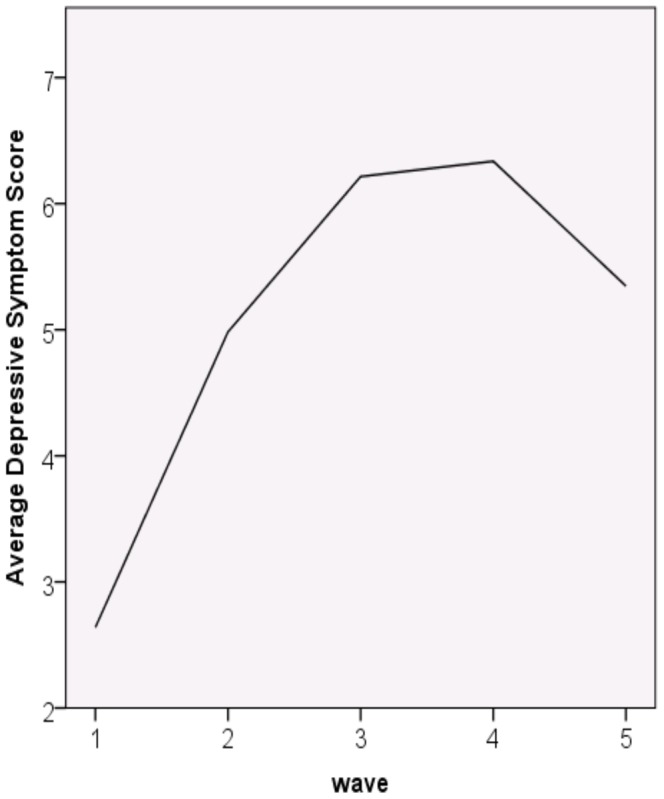
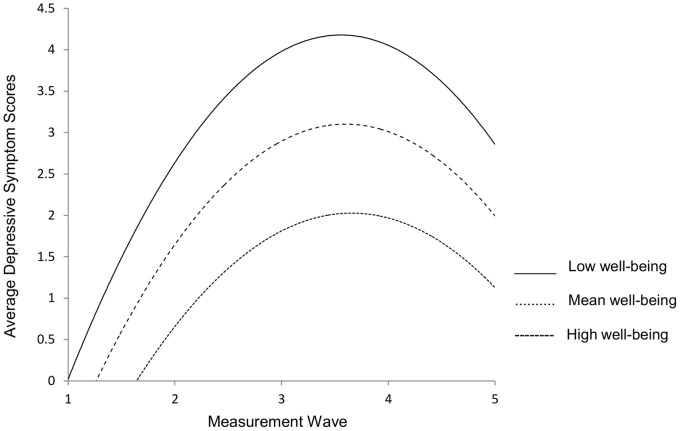
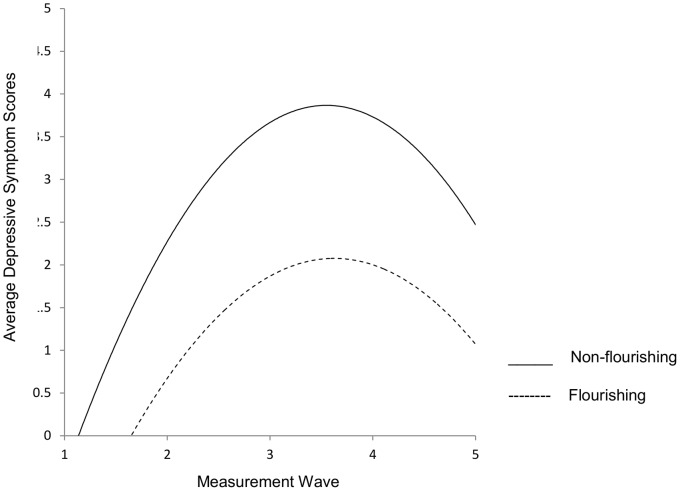
Verification
Claims the paper makes
The claims and statistics of this paper haven’t been checked yet.
Run the check — free, no account needed. It reads the open-access text and checks the sources it cites.
Claims other papers make about this one
Each is checked against this paper’s own text: does it say what the citing paper says it does?
The cited source says what the claim attributes to it.
In the citing paper
“as evidence suggests that low levels of wellbeing may increase the risk of experiencing mental ill-health over time [116–118].”
From The Mental Health of Elite-Level Coaches: A Systematic Scoping Review (2024) · cites this paper as [117]
In the citing paper
“Higher levels of psychological well-being are associated with better physical health [15] and buffer against future disorders [16, 65], suggesting that people with higher levels are potentially more resilient [66, 67].”
From Can We Increase Psychological Well-Being? The Effects of Interventions on Psychological Well-Being: A Meta-Analysis of Randomized Controlled Trials (2016) · cites this paper as [65]
Self-check
Percentages, sums and reported differences re-computed from the paper’s own numbers.
The self-check needs the paper’s full text.
Citations
Cites
The PHQ-9: Validity of a brief depression severity measure
Kroenke, K., Spitzer, R. L., & Williams, J. B. W. (2001) · Journal of General Internal Medicine · doi:10.1046/j.1525-1497.2001.016009606.x · Cited by 44,910
Subjective well-being: Three decades of progress.
Diener, E., Suh, E. M., Lucas, R. E., & Smith, H. L. (1999) · Psychological Bulletin · doi:10.1037/0033-2909.125.2.276 · Cited by 12,910
The structure of psychological well-being revisited.
Ryff, C. D., & Keyes, C. L. M. (1995) · Journal of Personality and Social Psychology · doi:10.1037//0022-3514.69.4.719 · Cited by 10,285 · cited 1×
“Well-being has consistently been correlated with depression and other mental disorders in cross-sectional studies [11], [12], [13] but longitudinal studies are lacking.”
BackgroundSpitzer, R. L. (1999) · JAMA · doi:10.1001/jama.282.18.1737 · Cited by 9,802
The mental health continuum: from languishing to flourishing in life.
Keyes, C. L. M. (2002) · Journal of Health and Social Behavior · doi:10.2307/3090197 · Cited by 5,133 · cited 1×
“In recent years, some have suggested that positive psychological characteristics may be a protective factor for depression distinct from the absence of negative characteristics [8], [9].”
BackgroundHammen, C. (2005) · Annual Review of Clinical Psychology · doi:10.1146/annurev.clinpsy.1.102803.143938 · Cited by 2,979 · cited 1×
“Most work on identifying depression risk factors has focused on demographic factors and negative risk factors such as adverse childhood environments, negative emotionality, and prior psychiatric history [5–7].”
BackgroundThe functioning and well-being of depressed patients. Results from the Medical Outcomes Study
Wells, K. B. (1989) · JAMA · doi:10.1001/jama.262.7.914 · Cited by 2,826
Gender differences in depression: Critical review
Piccinelli, M., & Wilkinson, G. (2000) · British Journal of Psychiatry · doi:10.1192/bjp.177.6.486 · Cited by 2,376 · cited 1×
“Knowing that low well-being may increase the chances of developing depression could allow individuals and caregivers to take preventative steps before the onset of depressive symptoms [5].”
Keyes, C. L. M. (2007) · American Psychologist · doi:10.1037/0003-066x.62.2.95 · Cited by 2,268
The Functioning and Well-being of Depressed Patients: Results From the Medical Outcomes Study
Wells, K. B. (1989) · JAMA · doi:10.1001/jama.1989.03430070062031 · Cited by 2,130
Evaluating the psychometric properties of the mental health continuum-short form (MHC-SF)
Lamers, S. M. A., Westerhof, G. J., Bohlmeijer, E. T., ten Klooster, P. M., & Keyes, C. L. M. (2011) · Journal of Clinical Psychology · doi:10.1002/jclp.20741 · Cited by 1,402 · cited 5×
“Measures The baseline survey assessed: 1) demographics (age, race/ ethnicity, gender) 2) medical specialty 3) personal history of depression 4) family history of depression 5) depressive symptoms using the nine item Patient Health Questionnaire (PHQ-9) [20] 6) neuroticism levels using the NEO Five Factor Inventory [21…”
MethodInfluentialRebooting psychotherapy research and practice to reduce the burden of mental illness
Kazdin, A. E., & Blase, S. L. (2011) · Perspectives on Psychological Science · doi:10.1177/1745691610393527 · Cited by 1,254 · cited 1×
“Identifying early signs of individual-level depression risk has the potential to improve our ability to prevent depression and reduce the associated burden [4].”
BackgroundPositive Psychology in Clinical Practice
Lee Duckworth, A., Steen, T. A., & Seligman, M. E. P. (2005) · Annual Review of Clinical Psychology · doi:10.1146/annurev.clinpsy.1.102803.144154 · Cited by 1,095
A growth curve approach to the measurement of change.
Rogosa, D., Brandt, D., & Zimowski, M. F. (1982) · Psychological Bulletin · doi:10.1037/0033-2909.92.3.726 · Cited by 1,084 · cited 1×
“Growth curve models offer several advantages including the ability to analyze individual growth patterns for variables of interest across multiple points of time and robustness against missing data [24], [25].”
BackgroundKessler, R. C., Akiskal, H. S., Ames, M., Birnbaum, H., Greenberg, P., .A, R. M., Jin, R., Merikangas, K. R., Simon, G. E., & Wang, P. S. (2006) · American Journal of Psychiatry · doi:10.1176/ajp.2006.163.9.1561 · Cited by 868
Kessler, R. C., Akiskal, H. S., Ames, M., Birnbaum, H., Greenberg, P., .A, R. M., Jin, R., Merikangas, K. R., Simon, G. E., & Wang, P. S. (2006) · American Journal of Psychiatry · doi:10.1176/appi.ajp.163.9.1561 · Cited by 868 · cited 1×
“Depression is the leading cause of lost worker productivity and days lost to disability [1], [2] and accounts for an annual capital loss of $36 billion [3].”
BackgroundChange in Level of Positive Mental Health as a Predictor of Future Risk of Mental Illness
Keyes, C. L. M., Dhingra, S. S., & Simoes, E. J. (2010) · American Journal of Public Health · doi:10.2105/ajph.2010.192245 · Cited by 778 · cited 1×
“depression, generalized anxiety disorder) [14].”
Wood, A. M., & Joseph, S. (2010) · Journal of Affective Disorders · doi:10.1016/j.jad.2009.06.032 · Cited by 624 · cited 1×
“The two longitudinal studies that have assessed the predictive value of well-being specifically on depression have had gaps of 10 [15] and 15 [16] years between assessments, limiting their applicability to clinical evaluations.”
BackgroundMerikangas, K. R., Ames, M., Cui, L., Stang, P. E., Ustun, T. B., Von Korff, M., & Kessler, R. C. (2007) · Archives of General Psychiatry · doi:10.1001/archpsyc.64.10.1180 · Cited by 464
Taylor, S. E., Way, B. M., Welch, W. T., Hilmert, C. J., Lehman, B. J., & Eisenberger, N. I. (2006) · Biological Psychiatry · doi:10.1016/j.biopsych.2006.04.019 · Cited by 432 · cited 2×
“Measures The baseline survey assessed: 1) demographics (age, race/ ethnicity, gender) 2) medical specialty 3) personal history of depression 4) family history of depression 5) depressive symptoms using the nine item Patient Health Questionnaire (PHQ-9) [20] 6) neuroticism levels using the NEO Five Factor Inventory [21…”
MethodSen, S., Kranzler, H. R., Krystal, J. H., Speller, H., Chan, G., Gelernter, J., & Guille, C. (2010) · Archives of General Psychiatry · doi:10.1001/archgenpsychiatry.2010.41 · Cited by 411 · cited 1×
“In previous cohorts of the Intern Health Study, depressive symptoms increased from 4% prior to internship to a mean of 26% during internship [19].”
Costa, P. T., & McCrae, R. R. (1997) · Journal of Personality Assessment · doi:10.1207/s15327752jpa6801_7 · Cited by 381
Watson, D., & Naragon-Gainey, K. (2010) · Clinical Psychology Review · doi:10.1016/j.cpr.2009.11.002 · Cited by 349 · cited 2×
“Our findings also suggest that efforts specifically designed to increase well-being may be effective in protecting against depression and may aid in decreasing the overall health care costs associated with the disorder [12], [21], [27], [28].”
BackgroundLife satisfaction and depression in a 15-year follow-up of healthy adults
Koivumaa-Honkanen, H. T., Kaprio, J. A., Honkanen, R., Viinam�ki, H., & Koskenvuo, M. J. (2004) · Social Psychiatry and Psychiatric Epidemiology · doi:10.1007/s00127-004-0833-6 · Cited by 346 · cited 1×
“The two longitudinal studies that have assessed the predictive value of well-being specifically on depression have had gaps of 10 [15] and 15 [16] years between assessments, limiting their applicability to clinical evaluations.”
BackgroundRisk factors for chronic depression—a systematic review
Hölzel, L., Härter, M., Reese, C., & Kriston, L. (2011) · Journal of Affective Disorders · doi:10.1016/j.jad.2010.03.025 · Cited by 285 · cited 1×
“Most work on identifying depression risk factors has focused on demographic factors and negative risk factors such as adverse childhood environments, negative emotionality, and prior psychiatric history [5–7].”
BackgroundAnalysis of change: Modeling individual growth.
Francis, D. J., Fletcher, J. M., Stuebing, K. K., Davidson, K. C., & al, E. (1991) · Journal of Consulting and Clinical Psychology · doi:10.1037//0022-006x.59.1.27 · Cited by 275 · cited 1×
“Growth curve models offer several advantages including the ability to analyze individual growth patterns for variables of interest across multiple points of time and robustness against missing data [24], [25].”
BackgroundFledderus, M., Bohlmeijer, E. T., Pieterse, M. E., & Schreurs, K. M. G. (2012) · Psychological Medicine · doi:10.1017/s0033291711001206 · Cited by 209 · cited 1×
“Our findings also suggest that efforts specifically designed to increase well-being may be effective in protecting against depression and may aid in decreasing the overall health care costs associated with the disorder [12], [21], [27], [28].”
BackgroundAnalysis of change: Modeling individual growth.
Francis, D. J., Fletcher, J. M., Stuebing, K. K., Davidson, K. C., & Thompson, N. M. (1991) · Journal of Consulting and Clinical Psychology · doi:10.1037/0022-006x.59.1.27 · Cited by 183
Dyrbye, L. N., Harper, W., Moutier, C., Durning, S. J., Power, D. V., Massie, F. S., Eacker, A., Thomas, M. R., Satele, D., Sloan, J. A., et al. (2012) · Academic Medicine · doi:10.1097/acm.0b013e31825cfa35 · Cited by 169
Effects of the 2011 Duty Hour Reforms on Interns and Their Patients
Sen, S., Kranzler, H. R., Didwania, A. K., Schwartz, A. C., Amarnath, S. R., Kolars, J. C., Dalack, G. W., Nichols, B., & Guille, C. (2013) · JAMA Internal Medicine · doi:10.1001/jamainternmed.2013.351 · Cited by 158
Self-citationThe Stress of Residency: A Review of the Literature
Butterfield, P. S. (1988) · Archives of Internal Medicine · doi:10.1001/archinte.1988.00380060192034 · Cited by 112
PERSISTENCE OF THE "HYDRALAZINE SYNDROME"
Hildreth, E. A. (1960) · JAMA · doi:10.1001/jama.1960.03020240045009 · Cited by 50
Medical Residents' Emotional Well-being
Shanafelt, T. D., & Habermann, T. M. (2002) · JAMA · doi:10.1001/jama.288.15.1846 · Cited by 28
Cited by
Sorted by citations
A systematic review and meta-analysis of psychological interventions to improve mental wellbeing
van Agteren, J., Iasiello, M., Lo, L., Bartholomaeus, J., Kopsaftis, Z., Carey, M., & Kyrios, M. (2021) · Nature Human Behaviour · doi:10.1038/s41562-021-01093-w · Cited by 510
Weiss, L. A., Westerhof, G. J., & Bohlmeijer, E. T. (2016) · PLOS ONE · doi:10.1371/journal.pone.0158092 · Cited by 405
“Higher levels of psychological well-being are associated with better physical health [15] and buffer against future disorders [16, 65], suggesting that people with higher levels are potentially more resilient [66, 67].”
BackgroundTrompetter, H. R., de Kleine, E., & Bohlmeijer, E. T. (2017) · Cognitive Therapy and Research · doi:10.1007/s10608-016-9774-0 · Cited by 368
“In addition, positive mental health longitudinally protects against psychopathology at later moments in time (Grant et al. 2013; Keyes et al. 2010; Lamers et al. 2015; Wood and Joseph 2010).”
BackgroundIasiello, M., van Agteren, J., & Muir Cochrane, E. (2020) · Evidence Base · doi:10.21307/eb-2020-001 · Cited by 270
“Expanding on this were a small number of longitudinal studies that focused on the stability of group members over time, with the aim of determining whether: (1) current levels of positive mental health influence future scores of measures of mental illness, (2) change in levels of positive mental health influence futur…”
BackgroundResultWersebe, H., Lieb, R., Meyer, A. H., Hofer, P., & Gloster, A. T. (2018) · International Journal of Clinical and Health Psychology · doi:10.1016/j.ijchp.2017.09.002 · Cited by 250
“…changes in participants’ ives and thus provides support for the theory that PF nd well-being are strongly linked (Ciarrochi & Kashdan, 013; Hayes, 2013). unding he work was supported in part by the Swiss National Scince Foundation (FNSNF) under Grant no. 100014 149524/1 PP00P1…”
Metadata
- Authors
- Grant, F., Guille, C., & Sen, S.
- Affiliations
- University of Maryland, Baltimore County (US)
- Medical University of South Carolina (US)
- University of Michigan (US)
- Corresponding author
- Sen, Srijan
- Venue
- PLoS ONE
- Publisher
- Public Library of Science (PLoS)
- Published
- 2013-07-01
- Volume
- 8
- Issue
- 7
- Pages
- e67395
- ISSN
- 1932-6203 (ISSN-L)
- PMC
- PMC3698120
- OpenAlex
- W2059436066
- Cited by
- 189
- References
- 32
- Citations by year
- 2026: 13 · 2025: 13 · 2024: 32 · 2023: 22 · 2022: 23 · 2021: 22 · 2020: 15 · 2019: 14 · 2018: 6 · 2017: 8 · 2016: 13 · 2015: 7 · 2014: 1
- FWCI
- 10.51
- Type
- journal article
- Language
- en
- Open access
- gold
- doi.org
- Locations
- PLoS ONE (publishedVersion, cc-by)
- Europe PMC (PubMed Central) (publishedVersion, other-oa)
- PubMed Central (publishedVersion, cc-by)
- PubMed (publishedVersion)
- RePEc: Research Papers in Economics (submittedVersion)
- DOAJ (DOAJ: Directory of Open Access Journals) (submittedVersion, cc-by-sa)
- Funders
- National Institute of Mental Health (K23MH095109, R01MH101459, MH095109)
- National Institute of General Medical Sciences (R25GM055036)
- National Center for Research Resources (UL1RR024986)
- Topics
- Social Sciences › Psychology › Social Psychology › Psychological Well-being and Life Satisfaction
- Health Sciences › Health Professions › General Health Professions › Healthcare professionals’ stress and burnout
- Social Sciences › Psychology › Experimental and Cognitive Psychology › Anxiety, Depression, Psychometrics, Treatment, Cognitive Processes
- Keywords
- subjective well-being, depression risk, depressive symptoms, stress, medical internship, positive emotions, depression prediction
- MeSH terms
- Adult, Depression, Female, Humans, Male, Personal Satisfaction, Surveys and Questionnaires, Risk Factors, Stress, Psychological
About these checks
Registry, retraction, Cites and statistics results are computed, not judged, with one exception: a printed reference that no index lists is read once by a model before it counts as a citation error. Claims are extracted by a model and kept only when their quote appears verbatim in the text; each cited source is then checked, with a model’s help, for whether it says what the claim relies on. Those verdicts can be wrong — read the claim’s quote and the cited source before relying on one.
Statistics and arithmetic are recomputed, not judged.
Confidence bands are shown only for fields calibrated on our annotated test set. None is calibrated yet, so no band is shown.
What counts as a claim ›How we measure confidence ›How we check this ›
Are you an author, or do you see a problem with this page? Request a review
