

The DOI matches its Crossref record; 48 of the 48 references it cites were found in a registry or an index.
CYLD Deubiquitinates RIP1 in the TNFα-Induced Necrosome to Facilitate Kinase Activation and Programmed Necrosis
Open accessAbstract
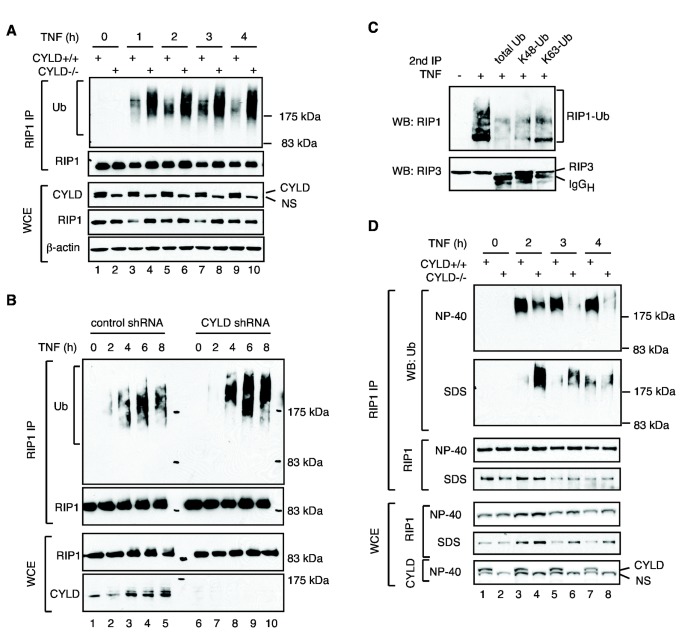
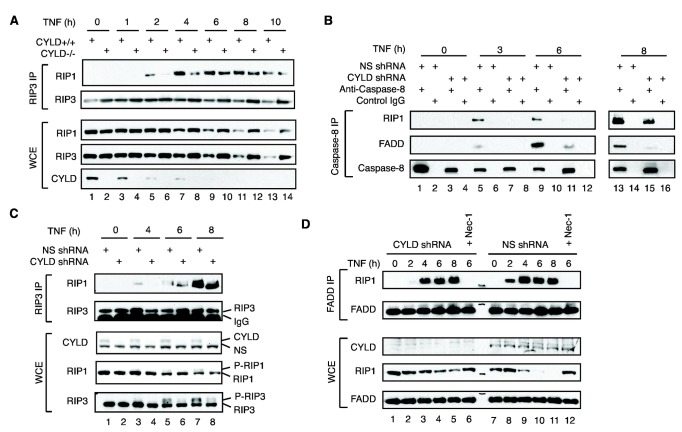
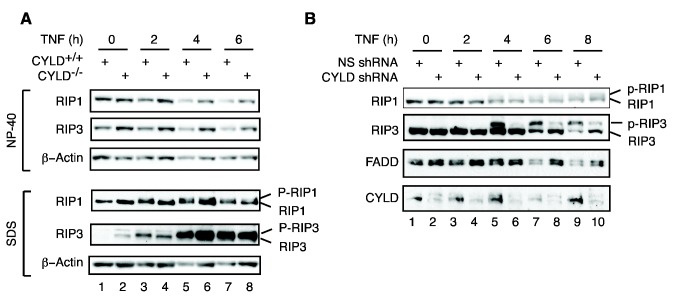
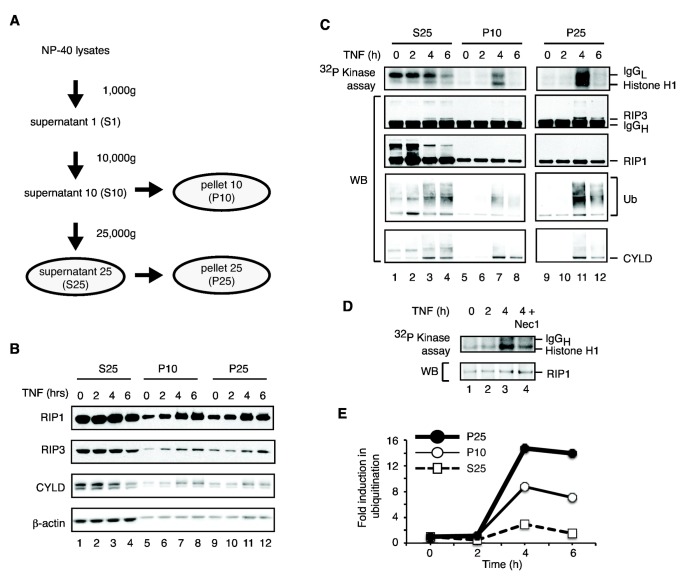
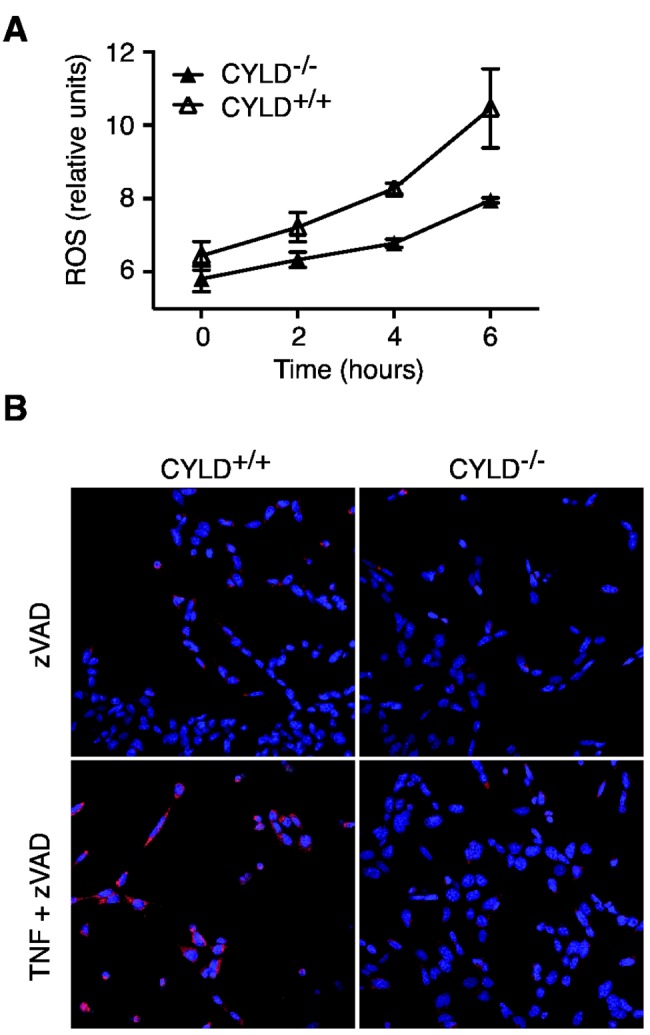
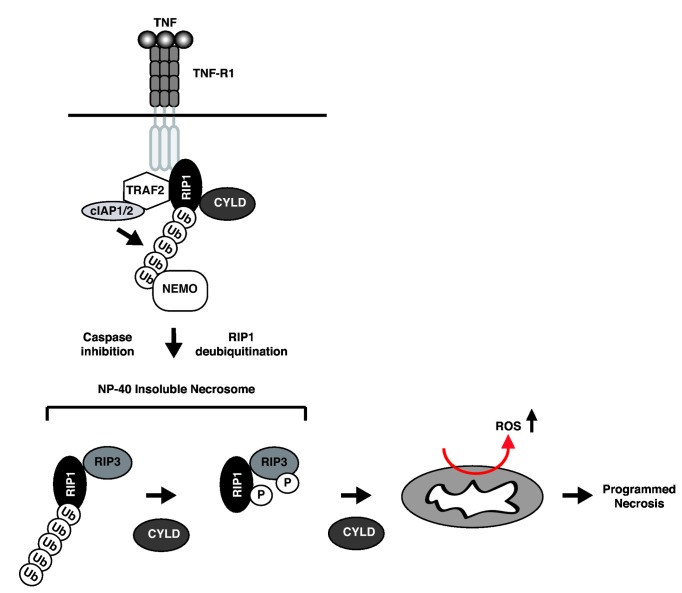
BACKGROUND: Necroptosis/programmed necrosis is initiated by a macro-molecular protein complex termed the necrosome. Receptor interacting protein kinase 1 (RIPK1/RIP1) and RIP3 are key components of the necrosome. TNFα is a prototypic inducer of necrosome activation, and it is widely believed that deubiquitination of RIP1 at the TNFR-1 signaling complex precedes transition of RIP1 into the cytosol where it forms the RIP1-RIP3 necrosome. Cylindromatosis (CYLD) is believed to promote programmed necrosis by facilitating RIP1 deubiquitination at this membrane receptor complex. METHODOLOGY/PRINCIPAL FINDINGS: We demonstrate that RIP1 is indeed the primary target of CYLD in TNFα-induced programmed necrosis. We observed that CYLD does not regulate RIP1 ubiquitination at the TNF receptor. TNF and zVAD-induced programmed necrosis was highly attenuated in CYLD(-/-) cells. However, in the presence of cycloheximide or SMAC mimetics, programmed necrosis was only moderately reduced in CYLD(-/-) cells. Under the latter conditions, RIP1-RIP3 necrosome formation is only delayed, but not abolished in CYLD(-/-) cells. We further demonstrate that RIP1 within the NP-40 insoluble necrosome is ubiquitinated and that CYLD regulates RIP1 ubiquitination in this compartment. Hence, RIP1 ubiquitination in this late-forming complex is greatly increased in CYLD(-/-) cells. Increased RIP1 ubiquitination impairs RIP1 and RIP3 phosphorylation, a signature of kinase activation. CONCLUSIONS/SIGNIFICANCE: Our results show that CYLD regulates RIP1 ubiquitination in the TNFα-induced necrosome, but not in the TNFR-1 signaling complex. In cells sensitized to programmed necrosis with SMAC mimetics, CYLD is not essential for necrosome assembly. Since SMAC mimetics induces the loss of the E3 ligases cIAP1 and cIAP2, reduced RIP1 ubiquitination could lead to reduced requirement for CYLD to remove ubiquitin chains from RIP1 in the TNFR-1 complex. As increased RIP1 ubiquitination in the necrosome correlates with impaired RIP1 and RIP3 phosphorylation and function, these results suggest that CYLD controls RIP1 kinase activity during necrosome assembly.
Overview
The claims and statistics of this paper haven’t been checked yet.
Run the check — free, no account needed. It reads the open-access text and checks the sources it cites.
Integrity signals
Registry
Cites
Statistics
Figures
Verification
Claims the paper makes
The claims and statistics of this paper haven’t been checked yet.
Run the check — free, no account needed. It reads the open-access text and checks the sources it cites.
Claims other papers make about this one
Each is checked against this paper’s own text: does it say what the citing paper says it does?
In the citing paper
“Accordingly, necroptosis relies on the deubiquitinating activity of CYLD [338], which is also a proteolytic target of CASP8 [494–496].”
From Molecular mechanisms of cell death: recommendations of the nomenclature committee on cell death 2018. (2018) · cites this paper as [495]
Self-check
Percentages, sums and reported differences re-computed from the paper’s own numbers.
The self-check needs the paper’s full text.
Citations
Cites
Induction of TNF receptor I-mediated apoptosis via two sequential signaling complexes
Micheau, O., & Tschopp, J. (2003) · Cell · doi:10.1016/s0092-8674(03)00521-x · Cited by 2,738
Mixed Lineage Kinase Domain-like Protein Mediates Necrosis Signaling Downstream of RIP3 Kinase
Sun, L., Wang, H., Wang, Z., He, S., Chen, S., Liao, D., Wang, L., Yan, J., Liu, W., Lei, X., et al. (2012) · Cell · doi:10.1016/j.cell.2011.11.031 · Cited by 2,698
Cho, Y., Challa, S., Moquin, D., Genga, R., Ray, T. D., Guildford, M., & Chan, F. K.-M. (2009) · Cell · doi:10.1016/j.cell.2009.05.037 · Cited by 2,435
Self-citationMolecular mechanisms of necroptosis: an ordered cellular explosion
Vandenabeele, P., Galluzzi, L., Vanden Berghe, T., & Kroemer, G. (2010) · Nature Reviews Molecular Cell Biology · doi:10.1038/nrm2970 · Cited by 2,382
Receptor Interacting Protein Kinase-3 Determines Cellular Necrotic Response to TNF-α
He, S., Wang, L., Miao, L., Wang, T., Du, F., Zhao, L., & Wang, X. (2009) · Cell · doi:10.1016/j.cell.2009.05.021 · Cited by 2,214
RIP3, an Energy Metabolism Regulator That Switches TNF-Induced Cell Death from Apoptosis to Necrosis
Zhang, D.-W., Shao, J., Lin, J., Zhang, N., Lu, B.-J., Lin, S.-C., Dong, M.-Q., & Han, J. (2009) · Science · doi:10.1126/science.1172308 · Cited by 1,931
De-ubiquitination and ubiquitin ligase domains of A20 downregulate NF-κB signalling
Wertz, I. E., O’Rourke, K. M., Zhou, H., Eby, M. T., Aravind, L., Seshagiri, S., Wu, P., Wiesmann, C., Baker, R. T., Boone, D. L., et al. (2004) · Nature · doi:10.1038/nature02794 · Cited by 1,889
TNF-α Induces Two Distinct Caspase-8 Activation Pathways
Wang, L., Du, F., & Wang, X. (2008) · Cell · doi:10.1016/j.cell.2008.03.036 · Cited by 1,398
Catalytic activity of the caspase-8–FLIPL complex inhibits RIPK3-dependent necrosis
Oberst, A., Dillon, C. P., Weinlich, R., McCormick, L. L., Fitzgerald, P., Pop, C., Hakem, R., Salvesen, G. S., & Green, D. R. (2011) · Nature · doi:10.1038/nature09852 · Cited by 1,278 · cited 1×
“necrosis during embryonic development [7-9], to enforce”
Li, J., McQuade, T., Siemer, A. B., Napetschnig, J., Moriwaki, K., Hsiao, Y.-S., Damko, E., Moquin, D., Walz, T., McDermott, A., et al. (2012) · Cell · doi:10.1016/j.cell.2012.06.019 · Cited by 1,222
Self-citation
Cited by
Sorted by citations
Galluzzi, L., Vitale, I., Aaronson, S. A., Abrams, J. M., Adam, D., Agostinis, P., Alnemri, E. S., Altucci, L., Amelio, I., Andrews, D. W., et al. (2018) · Cell Death & Differentiation · doi:10.1038/s41418-017-0012-4 · Cited by 6,680
Self-citationNecroptosis, pyroptosis and apoptosis: an intricate game of cell death
Bertheloot, D., Latz, E., & Franklin, B. S. (2021) · Cellular and Molecular Immunology · doi:10.1038/s41423-020-00630-3 · Cited by 2,297
Regulated necrosis: the expanding network of non-apoptotic cell death pathways
Berghe, T. V., Linkermann, A., Jouan-Lanhouet, S., Walczak, H., & Vandenabeele, P. (2014) · Nature Reviews Molecular Cell Biology · doi:10.1038/nrm3737 · Cited by 1,735
The role of necroptosis in cancer biology and therapy
Gong, Y., Fan, Z., Luo, G., Yang, C., Huang, Q., Fan, K., He, C., Jin, K., Ni, Q., Yu, X., et al. (2019) · Molecular Cancer · doi:10.1186/s12943-019-1029-8 · Cited by 1,073
Necroptosis in development, inflammation and disease
Weinlich, R., Oberst, A., Beere, H. M., & Green, D. R. (2017) · Nature Reviews Molecular Cell Biology · doi:10.1038/nrm.2016.149 · Cited by 1,016
Necroptosis: Mechanisms and Relevance to Disease
Galluzzi, L., Kepp, O., Chan, F. K.-M., & Kroemer, G. (2016) · Annual Review of Pathology Mechanisms of Disease · doi:10.1146/annurev-pathol-052016-100247 · Cited by 740
Self-citationZhang, Y., Su, S. S., Zhao, S., Yang, Z., Zhong, C., Chen, X., Cai, Q., Yang, Z.-H., Huang, D., Wu, R., et al. (2017) · Nature Communications · doi:10.1038/ncomms14329 · Cited by 609
RIPK1 Blocks Early Postnatal Lethality Mediated by Caspase-8 and RIPK3
Dillon, C. P., Weinlich, R., Rodriguez, D. A., Cripps, J. G., Quarato, G., Gurung, P., Verbist, K. C., Brewer, T. L., Llambi, F., Gong, Y.-N., et al. (2014) · Cell · doi:10.1016/j.cell.2014.04.018 · Cited by 562
Ubiquitination in the regulation of inflammatory cell death and cancer
Cockram, P. E., Kist, M., Prakash, S., Chen, S., Wertz, I. E., & Vucic, D. (2021) · Cell Death and Differentiation · doi:10.1038/s41418-020-00708-5 · Cited by 536
Necroptosis in health and diseases
Zhou, W., & Yuan, J. (2014) · Seminars in Cell & Developmental Biology · doi:10.1016/j.semcdb.2014.07.013 · Cited by 414
Targeting RIPK1 for the treatment of human diseases
Degterev, A., Ofengeim, D., & Yuan, J. (2019) · Proceedings of the National Academy of Sciences · doi:10.1073/pnas.1901179116 · Cited by 415
Immunogenic cell death in cancer: targeting necroptosis to induce antitumour immunity
Meier, P., Legrand, A. J., Adam, D., & Silke, J. (2024) · Nature reviews. Cancer · doi:10.1038/s41568-024-00674-x · Cited by 435
Newton, K., & Manning, G. (2016) · Annual Review of Biochemistry · doi:10.1146/annurev-biochem-060815-014830 · Cited by 410
RIPK1 and RIPK3: critical regulators of inflammation and cell death
Newton, K. (2015) · Trends in Cell Biology · doi:10.1016/j.tcb.2015.01.001 · Cited by 377
Programmed Necrosis in the Cross Talk of Cell Death and Inflammation
Chan, F. K.-M., Luz, N. F., & Moriwaki, K. (2014) · Annual Review of Immunology · doi:10.1146/annurev-immunol-032414-112248 · Cited by 359
Self-citationNecroptosis in development and diseasesPreprint
Shan, B., Pan, H., Najafov, A., & Yuan, J. (2018) · Genes & Development · doi:10.1101/gad.312561.118 · Cited by 352
The DNA damage-induced cell death response: a roadmap to kill cancer cells
Matt, S., & Hofmann, T. G. (2016) · Cellular and Molecular Life Sciences · doi:10.1007/s00018-016-2130-4 · Cited by 298
RIPK1 and RIPK3 Kinases Promote Cell-Death-Independent Inflammation by Toll-like Receptor 4
Najjar, M., Saleh, D., Zelic, M., Nogusa, S., Shah, S., Tai, A., Finger, J. N., Polykratis, A., Gough, P. J., Bertin, J., et al. (2016) · Immunity · doi:10.1016/j.immuni.2016.06.007 · Cited by 292
Onizawa, M., Oshima, S., Schulze-Topphoff, U., Oses-Prieto, J. A., Lu, T., Tavares, R., Prodhomme, T., Duong, B., Whang, M. I., Advincula, R., et al. (2015) · Nature Immunology · doi:10.1038/ni.3172 · Cited by 284
CYLD, A20 and OTULIN deubiquitinases in NF-κB signaling and cell death: so similar, yet so different
Lork, M., Verhelst, K., & Beyaert, R. (2017) · Cell Death & Differentiation · doi:10.1038/cdd.2017.46 · Cited by 282
Moriwaki, K., Bertin, J., Gough, P. J., Orlowski, G. M., & Chan, F. K. (2015) · Cell Death and Disease · doi:10.1038/cddis.2015.16 · Cited by 251
Self-citationRIP kinases: key decision makers in cell death and innate immunity
Humphries, F., Yang, S., Wang, B., & Moynagh, P. N. (2014) · Cell Death and Differentiation · doi:10.1038/cdd.2014.126 · Cited by 249
TNF-mediated neuroinflammation is linked to neuronal necroptosis in Alzheimer's disease hippocampus
Jayaraman, A., Htike, T. T., James, R., Picón, C., & Reynolds, R. (2021) · Acta Neuropathologica Communications · doi:10.1186/s40478-021-01264-w · Cited by 244
Menon, M. B., Gropengießer, J., Fischer, J., Novikova, L., Deuretzbacher, A., Lafera, J., Schimmeck, H., Czymmeck, N., Ronkina, N., Kotlyarov, A., et al. (2017) · Nature Cell Biology · doi:10.1038/ncb3614 · Cited by 238
Reactive oxygen species regulate Smac mimetic/TNFα-induced necroptotic signaling and cell death
Schenk, B., & Fulda, S. (2015) · Oncogene · doi:10.1038/onc.2015.35 · Cited by 235
The role of Ubiquitination in Apoptosis and Necroptosis
Roberts, J. Z., Crawford, N., & Longley, D. B. (2021) · Cell Death and Differentiation · doi:10.1038/s41418-021-00922-9 · Cited by 239
The double-edged functions of necroptosis
Ye, K., Chen, Z., & Xu, Y. (2023) · Cell Death and Disease · doi:10.1038/s41419-023-05691-6 · Cited by 239
Karunakaran, D., Nguyen, M.-A., Geoffrion, M., Vreeken, D., Lister, Z., Cheng, H. S., Otte, N., Essebier, P., Wyatt, H., Kandiah, J. W., et al. (2020) · Circulation · doi:10.1161/circulationaha.118.038379 · Cited by 220
Necroptosis in anti-viral inflammation
Nailwal, H., & Chan, F. K.-M. (2018) · Cell Death and Differentiation · doi:10.1038/s41418-018-0172-x · Cited by 219
Self-citationMolecular crosstalk between apoptosis, necroptosis, and survival signaling
Berghe, T. V., Kaiser, W. J., Bertrand, M. J. M., & Vandenabeele, P. (2015) · Molecular & Cellular Oncology · doi:10.4161/23723556.2014.975093 · Cited by 209
Necroptosis in neurodegenerative diseases: a potential therapeutic target
Zhang, S., Tang, M., Luo, H., Shi, C.-H., & Xu, Y.-M. (2017) · Cell Death and Disease · doi:10.1038/cddis.2017.286 · Cited by 202
Inhibitory feedback control of NF-κB signalling in health and disease
Prescott, J. A., Mitchell, J. P., & Cook, S. J. (2021) · Biochemical Journal · doi:10.1042/bcj20210139 · Cited by 198
Complex Pathologic Roles of RIPK1 and RIPK3: Moving Beyond Necroptosis
Wegner, K. W., Saleh, D., & Degterev, A. (2017) · Trends in Pharmacological Sciences · doi:10.1016/j.tips.2016.12.005 · Cited by 189
Necroptosis: an alternative cell death program defending against cancer
Chen, D., Yu, J., & Zhang, L. (2016) · Biochimica et Biophysica Acta (BBA) - Reviews on Cancer · doi:10.1016/j.bbcan.2016.03.003 · Cited by 192
The molecular relationships between apoptosis, autophagy and necroptosis
Lalaoui, N., Lindqvist, L., Sandow, J. J., & Ekert, P. G. (2015) · Seminars in Cell and Developmental Biology · doi:10.1016/j.semcdb.2015.02.003 · Cited by 181
Poly-ubiquitination in TNFR1-mediated necroptosis
Dondelinger, Y., Darding, M., Bertrand, M. J. M., & Walczak, H. (2016) · Cellular and Molecular Life Sciences · doi:10.1007/s00018-016-2191-4 · Cited by 173
Nuclear RIPK3 and MLKL contribute to cytosolic necrosome formation and necroptosis
Weber, K., Roelandt, R., Bruggeman, I., Estornes, Y., & Vandenabeele, P. (2018) · Communications Biology · doi:10.1038/s42003-017-0007-1 · Cited by 170
Cell Death in the Developing Brain after Hypoxia-Ischemia
Thornton, C., Leaw, B., Mallard, C. E., Nair, S., Jinnai, M., & Hagberg, H. (2017) · Frontiers in Cellular Neuroscience · doi:10.3389/fncel.2017.00248 · Cited by 166
A RIPK3–Caspase 8 Complex Mediates Atypical Pro–IL-1β Processing
Moriwaki, K., Bertin, J., Gough, P. J., & Chan, F. K.-M. (2015) · The Journal of Immunology · doi:10.4049/jimmunol.1402167 · Cited by 164
Self-citationNecroptosis, in vivo detection in experimental disease models
Jouan-Lanhouet, S., Riquet, F. B., Duprez, L., Berghe, T. V., Takahashi, N., & Vandenabeele, P. (2014) · Seminars in Cell and Developmental Biology · doi:10.1016/j.semcdb.2014.08.010 · Cited by 166
Staying Alive: Cell Death in Antiviral Immunity
Upton, J. W., & Chan, F. K.-M. (2014) · Molecular Cell · doi:10.1016/j.molcel.2014.01.027 · Cited by 160
Self-citationProgrammed necrosis and necroptosis signalling
Feoktistova, M., & Leverkus, M. (2014) · FEBS Journal · doi:10.1111/febs.13120 · Cited by 159
RIP1/RIP3-regulated necroptosis as a target for multifaceted disease therapy (Review)
Liu, Y., Liu, T., Lei, T., Zhang, D., Du, S., Girani, L., Qi, D., Chen, L., Tong, R., & Wang, Y. (2019) · International Journal of Molecular Medicine · doi:10.3892/ijmm.2019.4244 · Cited by 157
Human TBK1 deficiency leads to autoinflammation driven by TNF-induced cell death
Taft, J., Markson, M., Legarda, D., Patel, R., Chan, M., Malle, L., Richardson, A., Gruber, C., Martín-Fernández, M., Mancini, G. M. S., et al. (2021) · Cell · doi:10.1016/j.cell.2021.07.026 · Cited by 151
The Structural Basis of Necroptotic Cell Death Signaling
Petrie, E. J., Czabotar, P. E., & Murphy, J. M. (2018) · Trends in Biochemical Sciences · doi:10.1016/j.tibs.2018.11.002 · Cited by 157
Insight into Crosstalk between Ferroptosis and Necroptosis: Novel Therapeutics in Ischemic Stroke
Zhou, Y., Liao, J., Mei, Z., Liu, X., & Ge, J. (2021) · Oxidative Medicine and Cellular Longevity · doi:10.1155/2021/9991001 · Cited by 151
Ubiquitin-Mediated Regulation of RIPK1 Kinase Activity Independent of IKK and MK2
Annibaldi, A., John, S. W., Berghe, T. V., Swatek, K. N., Ruan, J., Liccardi, G., Bianchi, K., Elliott, P. R., Choi, S. M., Coillie, S. V., et al. (2018) · Molecular Cell · doi:10.1016/j.molcel.2018.01.027 · Cited by 153
Cell death checkpoints in the TNF pathway
Huyghe, J., Priem, D., & Bertrand, M. J. M. (2023) · Trends in Immunology · doi:10.1016/j.it.2023.05.007 · Cited by 147
Insights on the crosstalk among different cell death mechanisms
Eskander, G., AbdelHamid, S. G., Wahdan, S. A., & Radwan, S. M. (2025) · Cell Death Discovery · doi:10.1038/s41420-025-02328-9 · Cited by 150
Role of necroptosis in the pathogenesis of solid organ injury
Zhao, H., Jaffer, T., Eguchi, S., Wang, Z., Linkermann, A., & Ma, D. (2015) · Cell Death and Disease · doi:10.1038/cddis.2015.316 · Cited by 143
Induction of necroptotic cell death by viral activation of the RIG-I or STING pathway
Schock, S., Chandra, N. V., Sun, Y., Irie, T., Kitagawa, Y., Gotoh, B., Coscoy, L., & Winoto, A. (2017) · Cell Death and Differentiation · doi:10.1038/cdd.2016.153 · Cited by 141
SPATA2-Mediated Binding of CYLD to HOIP Enables CYLD Recruitment to Signaling Complexes
Kupka, S., De Miguel, D., Draber, P., Martino, L., Surinova, S., Rittinger, K., & Walczak, H. (2016) · Cell Reports · doi:10.1016/j.celrep.2016.07.086 · Cited by 135
Necroptosis: is there a role for mitochondria?
Marshall, K. D., & Baines, C. P. (2014) · Frontiers in Physiology · doi:10.3389/fphys.2014.00323 · Cited by 131
An outline of necrosome triggers
Berghe, T. V., Hassannia, B., & Vandenabeele, P. (2016) · Cellular and Molecular Life Sciences · doi:10.1007/s00018-016-2189-y · Cited by 134
Cell Death Pathways: a Novel Therapeutic Approach for Neuroscientists
Morris, G., Walker, A. J., Berk, M., Maes, M. H. J., & Puri, B. K. (2017) · Molecular Neurobiology · doi:10.1007/s12035-017-0793-y · Cited by 134
Wagner, S., Satpathy, S., Beli, P., & Choudhary, C. (2016) · The EMBO Journal · doi:10.15252/embj.201694300 · Cited by 133
The role of necroptosis in cancer: A double-edged sword?
Qin, X., Ma, D., Tan, Y., Wang, H., & Cai, Z. (2019) · Biochimica et Biophysica Acta (BBA) - Reviews on Cancer · doi:10.1016/j.bbcan.2019.01.006 · Cited by 131
The Two Faces of Receptor Interacting Protein Kinase-1
Weinlich, R., & Green, D. R. (2014) · Molecular Cell · doi:10.1016/j.molcel.2014.11.001 · Cited by 132
Programmed necrosis in heart disease: Molecular mechanisms and clinical implications
Zhu, H., & Sun, A. (2018) · Journal of Molecular and Cellular Cardiology · doi:10.1016/j.yjmcc.2018.01.018 · Cited by 127
The regulation of necroptosis by post-translational modifications
Meng, Y., Sandow, J. J., Czabotar, P. E., & Murphy, J. M. (2021) · Cell Death and Differentiation · doi:10.1038/s41418-020-00722-7 · Cited by 130
Diverse ubiquitin linkages regulate RIP kinases-mediated inflammatory and cell death signaling
Witt, A., & Vucic, D. (2017) · Cell Death and Differentiation · doi:10.1038/cdd.2017.33 · Cited by 133
Apoptosis Initiation Through the Cell-Extrinsic Pathway
Nair, P. M., Lu, M., Petersen, S., & Ashkenazi, A. (2014) · Methods in enzymology on CD-ROM/Methods in enzymology · doi:10.1016/b978-0-12-417158-9.00005-4 · Cited by 131
A new kind of cell suicide: mechanisms and functions of programmed necrosis
Sun, L., & Wang, X. (2014) · Trends in Biochemical Sciences · doi:10.1016/j.tibs.2014.10.003 · Cited by 123
Small-Molecule Inhibitors of Necroptosis: Current Status and Perspectives
Zhuang, C., & Chen, F. (2019) · Journal of Medicinal Chemistry · doi:10.1021/acs.jmedchem.9b01317 · Cited by 116
Cellular IAP proteins and LUBAC differentially regulate necrosome-associated RIP1 ubiquitination
de Almagro, M. C., Goncharov, T., Newton, K., & Vucic, D. (2015) · Cell Death and Disease · doi:10.1038/cddis.2015.158 · Cited by 120
Fang, Y., Gao, S., Wang, X., Cao, Y., Lü, J., Chen, S., Lenahan, C., Zhang, J. H., Shao, A., & Zhang, J. (2020) · Frontiers in Cellular Neuroscience · doi:10.3389/fncel.2020.00068 · Cited by 114
Biomarkers for the detection of necroptosis
He, S., Huang, S. M., & Shen, Z. (2016) · Cellular and Molecular Life Sciences · doi:10.1007/s00018-016-2192-3 · Cited by 110
Algate, K., Haynes, D. R., Bartold, P. M., Crotti, T. N., & Cantley, M. D. (2015) · Journal of Periodontal Research · doi:10.1111/jre.12339 · Cited by 108
Neuron-specific activation of necroptosis signaling in multiple sclerosis cortical grey matter
Picón, C., Jayaraman, A., James, R., Beck, C., Gallego, P., Witte, M. E., van Horssen, J., Mazarakis, N. D., & Reynolds, R. (2021) · Acta Neuropathologica · doi:10.1007/s00401-021-02274-7 · Cited by 108
Cell apoptosis, autophagy and necroptosis in osteosarcoma treatment
Li, J., Yang, Z., Li, Y., Xia, J., Li, D., Li, H., Ren, M., Liao, Y., Yu, S., Chen, Y., et al. (2016) · Oncotarget · doi:10.18632/oncotarget.8206 · Cited by 107
Current translational potential and underlying molecular mechanisms of necroptosis
Molnár, T., Mázló, A., Tslaf, V., Szöllősi, A. G., Emri, G., & Koncz, G. (2019) · Cell Death and Disease · doi:10.1038/s41419-019-2094-z · Cited by 110
Multitasking Kinase RIPK1 Regulates Cell Death and InflammationPreprint
Newton, K. (2019) · Cold Spring Harbor Perspectives in Biology · doi:10.1101/cshperspect.a036368 · Cited by 107
Louhimo, J. M., Steer, M. L., & Perides, G. (2016) · Cellular and Molecular Gastroenterology and Hepatology · doi:10.1016/j.jcmgh.2016.04.002 · Cited by 103
IAPs, regulators of innate immunity and inflammation
Estornes, Y., & Bertrand, M. J. M. (2014) · Seminars in Cell and Developmental Biology · doi:10.1016/j.semcdb.2014.03.035 · Cited by 106
TRAF2 is a biologically important necroptosis suppressor
Petersen, S. L., Chen, T. T., Lawrence, D. A., Marsters, S. A., Gonzalvez, F., & Ashkenazi, A. (2015) · Cell Death & Differentiation · doi:10.1038/cdd.2015.35 · Cited by 99
CYLD-Mediated Signaling and Diseases
Mathis, B. J., Lai, Y., Qu, C., Janicki, J., & Cui, T. (2014) · Current Drug Targets · doi:10.2174/1389450115666141024152421 · Cited by 101
Caspase-8 in inflammatory diseases: a potential therapeutic target
Zhang, W., Zhu, C., Liao, Y., Zhou, M., Xu, W., & Zou, Z. (2024) · Cellular & Molecular Biology Letters · doi:10.1186/s11658-024-00646-x · Cited by 108
Hawk, M. A., Gorsuch, C. L., Fagan, P., Lee, C., Kim, S. E., Hamann, J. C., Mason, J. A., Weigel, K. J., Tsegaye, M. A., Shen, L., et al. (2018) · Nature Cell Biology · doi:10.1038/s41556-018-0034-2 · Cited by 95
Guo, X., Yin, H., Li, L., Chen, Y., Li, J., Doan, J., Steinmetz, R. N., & Liu, Q. (2017) · Circulation · doi:10.1161/circulationaha.116.026240 · Cited by 93
Necroptosis pathways in tumorigenesis
Zhang, T., Wang, Y., Inuzuka, H., & Wei, W. (2022) · Seminars in Cancer Biology · doi:10.1016/j.semcancer.2022.07.007 · Cited by 100
Roles of RIPK1 as a stress sentinel coordinating cell survival and immunogenic cell death
Clucas, J., & Meier, P. (2023) · Nature Reviews Molecular Cell Biology · doi:10.1038/s41580-023-00623-w · Cited by 96
Necroptosis and neutrophil-associated disorders
Wang, X., Yousefi, S., & Simon, H. (2018) · Cell Death and Disease · doi:10.1038/s41419-017-0058-8 · Cited by 95
Necroptosis Mediates TNF-Induced Toxicity of Hippocampal Neurons
Liu, S., Wang, X., Li, Y., Xu, L., Yu, X., Ge, L., Li, J., Zhu, Y., & He, S. (2014) · BioMed Research International · doi:10.1155/2014/290182 · Cited by 89
Yu, X., & He, S. (2016) · Virology Journal · doi:10.1186/s12985-016-0528-0 · Cited by 90
The mechanism of linear ubiquitination in regulating cell death and correlative diseases
Gao, L., Zhang, W., Shi, X. H., Chang, X., Han, Y., Liu, C., Jiang, Z., & Yang, X. (2023) · Cell Death and Disease · doi:10.1038/s41419-023-06183-3 · Cited by 96
Stutz, M. D., Ojaimi, S., Allison, C. C., Preston, S., Arandjelovic, P., Hildebrand, J. M., Sandow, J. J., Webb, A. I., Silke, J., Alexander, W. S., et al. (2017) · Cell Death and Differentiation · doi:10.1038/s41418-017-0031-1 · Cited by 85
Necroptosis in cardiovascular disease - a new therapeutic target
Gupta, K., Phan, N., Wang, Q., & Liu, B. (2018) · Journal of Molecular and Cellular Cardiology · doi:10.1016/j.yjmcc.2018.03.003 · Cited by 86
Necrosis-dependent and independent signaling of the RIP kinases in inflammation
Moriwaki, K., & Chan, F. K.-M. (2013) · Cytokine & Growth Factor Reviews · doi:10.1016/j.cytogfr.2013.12.013 · Cited by 84
Self-citationLocation, location, location: A compartmentalized view of TNF-induced necroptotic signaling.
Samson, A. L., Garnish, S. E., Hildebrand, J. M., & Murphy, J. M. (2021) · Science Signaling · doi:10.1126/scisignal.abc6178 · Cited by 82
Necroptotic cell death in failing heart: relevance and proposed mechanisms
Adameová, A., Gonçalvesová, E., Szobi, A., & Dhalla, N. S. (2016) · Heart Failure Reviews · doi:10.1007/s10741-016-9537-8 · Cited by 82
Reactive Oxygen Species: A Double-Edged Sword in the Modulation of Cancer Signaling Pathway Dynamics
Nigam, M., Punia, B., Dimri, D. B., Mishra, A. P., Radu, A.-F., & Bungau, G. S. (2025) · Cells · doi:10.3390/cells14151207 · Cited by 83
Chaudhary, G. R., Yadav, P. K., Yadav, A. K., Tiwari, M., Gupta, A., Sharma, A., Pandey, A. N., Pandey, A. K., & Chaube, S. K. (2019) · Journal of Biomedical Science · doi:10.1186/s12929-019-0504-2 · Cited by 78
Cancer and necroptosis: friend or foe?
Philipp, S., Sosna, J., & Adam, D. (2016) · Cellular and Molecular Life Sciences · doi:10.1007/s00018-016-2193-2 · Cited by 77
Wehn, A. C., Khalin, I., Duering, M., Hellal, F., Culmsee, C., Vandenabeele, P., Plesnila, N., & Terpolilli, N. A. (2021) · Acta Neuropathologica Communications · doi:10.1186/s40478-021-01236-0 · Cited by 75
Yu, X., Deng, Q., Li, W., Xiao, L., Luo, X., Liu, X., Yang, L., Peng, S., Ding, Z., Feng, T., et al. (2014) · Oncotarget · doi:10.18632/oncotarget.3038 · Cited by 76
Mediators of necroptosis: from cell death to metabolic regulation
Wu, X., Nagy, L. E., & Gautheron, J. (2024) · EMBO Molecular Medicine · doi:10.1038/s44321-023-00011-z · Cited by 78
USP22 controls necroptosis by regulating receptor-interacting protein kinase 3 ubiquitination
Roedig, J., Kowald, L., Juretschke, T., Karlowitz, R., Abhari, B. A., Roedig, H., Fulda, S., Beli, P., & van Wijk, S. J. L. (2020) · EMBO Reports · doi:10.15252/embr.202050163 · Cited by 72
The role of regulated necrosis in endocrine diseases
Tonnus, W., Belavgeni, A., Beuschlein, F., Eisenhofer, G., Faßnacht, M., Kroiß, M., Krone, N. P., Reincke, M., Bornstein, S. R., & Linkermann, A. (2021) · Nature Reviews Endocrinology · doi:10.1038/s41574-021-00499-w · Cited by 74
Regulation of RIPK3- and RHIM-dependent Necroptosis by the Proteasome
Moriwaki, K., & Chan, F. K.-M. (2016) · Journal of Biological Chemistry · doi:10.1074/jbc.m115.700997 · Cited by 74
Self-citationNecroptosis in cancer: An angel or a demon?
Wang, T., Jin, Y., Yang, W., Zhang, L., Jin, X., Liu, X., He, Y., & Li, X. (2017) · Tumor Biology · doi:10.1177/1010428317711539 · Cited by 72
Metadata
- Authors
- Moquin, D. M., McQuade, T., & Chan, F. K.-M.
- Affiliations
- University of Massachusetts Chan Medical School (US)
- Corresponding author
- Chan, Francis Ka-Ming
- Venue
- PLoS ONE
- Publisher
- Public Library of Science (PLoS)
- Published
- 2013-10-02
- Volume
- 8
- Issue
- 10
- Pages
- e76841
- ISSN
- 1932-6203 (ISSN-L)
- PMC
- PMC3788787
- OpenAlex
- W2060803227
- Cited by
- 320
- References
- 48
- Citations by year
- 2026: 14 · 2025: 22 · 2024: 18 · 2023: 29 · 2022: 21 · 2021: 33 · 2020: 18 · 2019: 26 · 2018: 30 · 2017: 25 · 2016: 33 · 2015: 19 · 2014: 31 · 2013: 1
- FWCI
- 12.55
- Type
- journal article
- Language
- en
- Open access
- gold
- doi.org
- Locations
- PLoS ONE (publishedVersion, cc-by)
- Europe PMC (PubMed Central) (publishedVersion, cc-by)
- PubMed Central (publishedVersion, cc-by)
- PubMed (publishedVersion)
- DOAJ (DOAJ: Directory of Open Access Journals) (submittedVersion)
- Funders
- National Institutes of Health (NIH T32, AI083497)
- National Institute of Allergy and Infectious Diseases (T32 AI07349, R21AI088502, AI083497, AI088502, R01AI083497, T32AI007349)
- Topics
- Life Sciences › Biochemistry, Genetics and Molecular Biology › Molecular Biology › Cell death mechanisms and regulation
- Life Sciences › Biochemistry, Genetics and Molecular Biology › Molecular Biology › Ubiquitin and proteasome pathways
- Life Sciences › Biochemistry, Genetics and Molecular Biology › Cancer Research › NF-κB Signaling Pathways
- Keywords
- CYLD, RIPK1, RIPK3, necrosome, necroptosis, TNF signaling, deubiquitination, ubiquitination, IAP antagonists, cIAP1, cIAP2, E3 ubiquitin ligase, zVAD
- MeSH terms
- Deubiquitinating Enzyme CYLD, Animals, Cycloheximide, Cysteine Endopeptidases, Gene Expression Regulation, Humans, Necrosis, Oligopeptides, Phosphorylation, Tumor Necrosis Factor-alpha, Signal Transduction, GTPase-Activating Proteins, Cell Line, Tumor, Receptors, Tumor Necrosis Factor, Type I, Mice, Receptor-Interacting Protein Serine-Threonine Kinases, Ubiquitination, Gene Knockdown Techniques
About these checks
Registry, retraction, Cites and statistics results are computed, not judged, with one exception: a printed reference that no index lists is read once by a model before it counts as a citation error. Claims are extracted by a model and kept only when their quote appears verbatim in the text; each cited source is then checked, with a model’s help, for whether it says what the claim relies on. Those verdicts can be wrong — read the claim’s quote and the cited source before relying on one.
Statistics and arithmetic are recomputed, not judged.
Confidence bands are shown only for fields calibrated on our annotated test set. None is calibrated yet, so no band is shown.
What counts as a claim ›How we measure confidence ›How we check this ›
Are you an author, or do you see a problem with this page? Request a review
