

The DOI matches its Crossref record; 59 of the 59 references it cites were found in a registry or an index.
Structural and Functional Rich Club Organization of the Brain in Children and Adults
Open accessAbstract
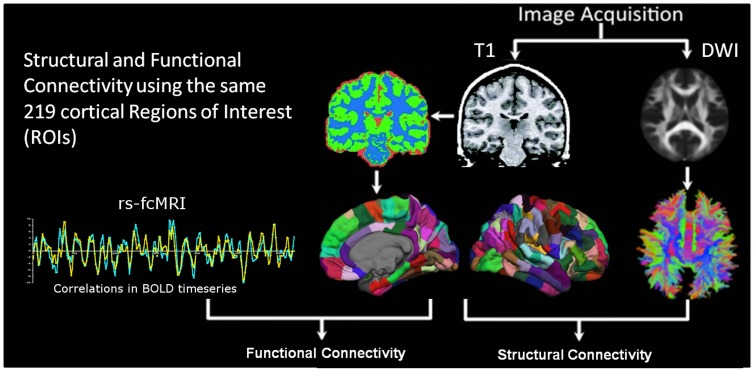
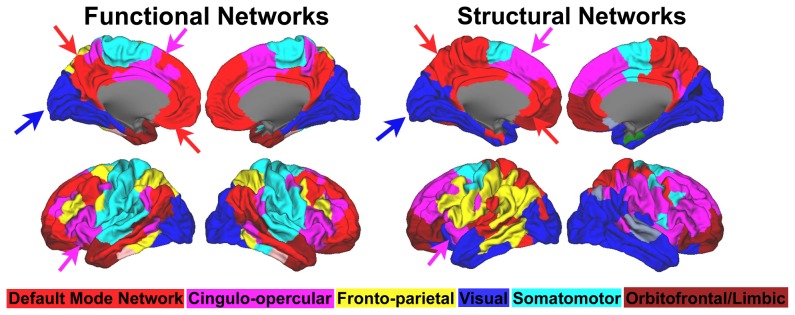
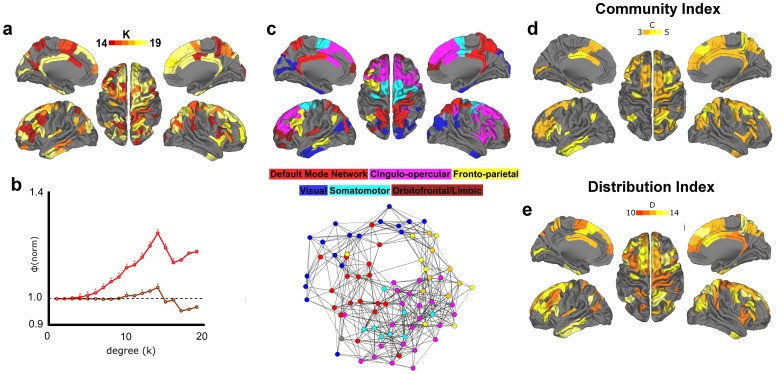
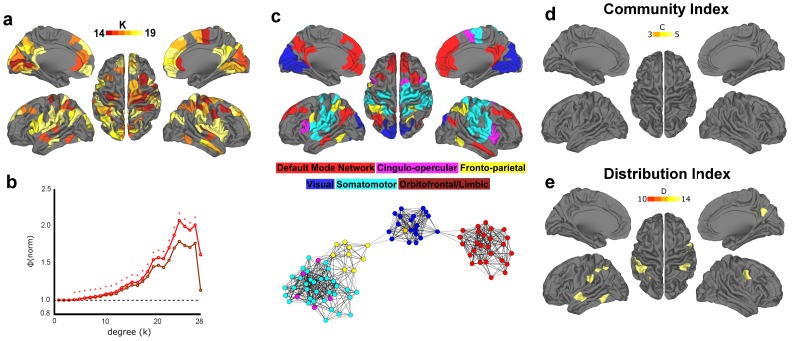
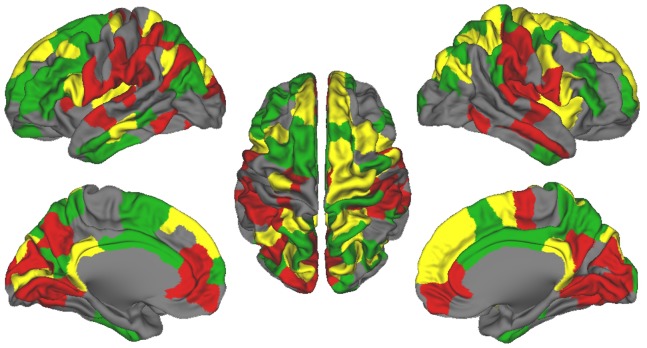
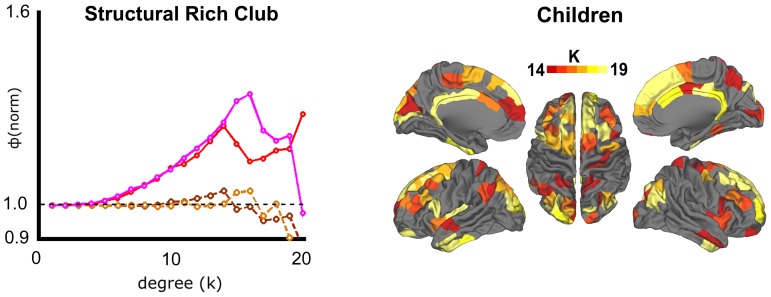
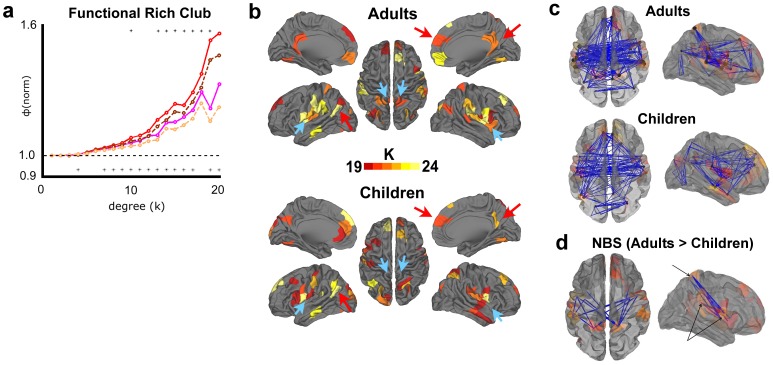
Recent studies using Magnetic Resonance Imaging (MRI) have proposed that the brain's white matter is organized as a rich club, whereby the most highly connected regions of the brain are also highly connected to each other. Here we use both functional and diffusion-weighted MRI in the human brain to investigate whether the rich club phenomena is present with functional connectivity, and how this organization relates to the structural phenomena. We also examine whether rich club regions serve to integrate information between distinct brain systems, and conclude with a brief investigation of the developmental trajectory of rich-club phenomena. In agreement with prior work, both adults and children showed robust structural rich club organization, comprising regions of the superior medial frontal/dACC, medial parietal/PCC, insula, and inferior temporal cortex. We also show that these regions were highly integrated across the brain's major networks. Functional brain networks were found to have rich club phenomena in a similar spatial layout, but a high level of segregation between systems. While no significant differences between adults and children were found structurally, adults showed significantly greater functional rich club organization. This difference appeared to be driven by a specific set of connections between superior parietal, insula, and supramarginal cortex. In sum, this work highlights the existence of both a structural and functional rich club in adult and child populations with some functional changes over development. It also offers a potential target in examining atypical network organization in common developmental brain disorders, such as ADHD and Autism.
Overview
The claims and statistics of this paper haven’t been checked yet.
Run the check — free, no account needed. It reads the open-access text and checks the sources it cites.
Integrity signals
Registry
Cites
Statistics
Figures
Verification
Claims the paper makes
The claims and statistics of this paper haven’t been checked yet.
Run the check — free, no account needed. It reads the open-access text and checks the sources it cites.
Claims other papers make about this one
Each is checked against this paper’s own text: does it say what the citing paper says it does?
In the citing paper
“high strength and betweenness hubs in adulthood are largely located within within the default mode, attentional, sensorimotor, and visual areas (Cao et al., 2014; Fransson et al., 2011; Grayson et al., 2014; Hwang et al., 2013)”
From Development of large-scale functional networks from birth to adulthood: A guide to the neuroimaging literature (2017) · cites this paper as Grayson et al., 2014
In the citing paper
“Among cortical areas, some have reported increasing hubness of frontal nodes (Cao et al., 2014; Wu et al., 2013) while in other lobes there have been mixed reports of increasing (Cao et al., 2014; Grayson et al., 2014) and decreasing (Wu et al., 2013; Zuo et al., 2012), or stable (Hwang et al., 2013) hubness.”
From Development of large-scale functional networks from birth to adulthood: A guide to the neuroimaging literature (2017) · cites this paper as Grayson et al., 2014
In the citing paper
“More detailed network analyses have revealed that specific connections to cortical hub regions increase during childhood and adolescence (Grayson et al., 2014; Hwang et al., 2013) resulting in increased rich club coefficients in adulthood (Cao et al., 2014; Grayson et al., 2014).”
From Development of large-scale functional networks from birth to adulthood: A guide to the neuroimaging literature (2017) · cites this paper as Grayson et al., 2014
In the citing paper
“Returning to the MRI literature, there is convergent evidence that the locations of high-strength and high-betweenness hub regions appear to be stable after 5 years of age (Cao et al., 2014; Grayson et al., 2014; Hwang et al., 2013; Wang et al., 2012; Wu et al., 2013; Zuo et al., 2012).”
From Development of large-scale functional networks from birth to adulthood: A guide to the neuroimaging literature (2017) · cites this paper as Grayson et al., 2014
Self-check
Percentages, sums and reported differences re-computed from the paper’s own numbers.
The self-check needs the paper’s full text.
Citations
Cites
Modularity and community structure in networks
Newman, M. E. J. (2006) · Proceedings of the National Academy of Sciences · doi:10.1073/pnas.0601602103 · Cited by 12,256
Complex brain networks: graph theoretical analysis of structural and functional systems
Bullmore, E., & Sporns, O. (2009) · Nature Reviews Neuroscience · doi:10.1038/nrn2575 · Cited by 11,820
Complex network measures of brain connectivity: Uses and interpretations
Rubinov, M., & Sporns, O. (2010) · NeuroImage · doi:10.1016/j.neuroimage.2009.10.003 · Cited by 11,522
Functional connectivity in the motor cortex of resting human brain using echo‐planar mri
Biswal, B., Zerrin Yetkin, F., Haughton, V. M., & Hyde, J. S. (1995) · Magnetic Resonance in Medicine · doi:10.1002/mrm.1910340409 · Cited by 9,812
The organization of the human cerebral cortex estimated by intrinsic functional connectivity
Thomas Yeo, B. T., Krienen, F. M., Sepulcre, J., Sabuncu, M. R., Lashkari, D., Hollinshead, M., Roffman, J. L., Smoller, J. W., Zöllei, L., Polimeni, J. R., et al. (2011) · Journal of Neurophysiology · doi:10.1152/jn.00338.2011 · Cited by 9,182
The human brain is intrinsically organized into dynamic, anticorrelated functional networks
Fox, M. D., Snyder, A. Z., Vincent, J. L., Corbetta, M., Van Essen, D. C., & Raichle, M. E. (2005) · Proceedings of the National Academy of Sciences · doi:10.1073/pnas.0504136102 · Cited by 8,553
Power, J. D., Barnes, K. A., Snyder, A. Z., Schlaggar, B. L., & Petersen, S. E. (2012) · NeuroImage · doi:10.1016/j.neuroimage.2011.10.018 · Cited by 7,429
The organization of the human cerebellum estimated by intrinsic functional connectivity
Buckner, R. L., Krienen, F. M., Castellanos, A., Diaz, J. C., & Yeo, B. T. T. (2011) · Journal of Neurophysiology · doi:10.1152/jn.00339.2011 · Cited by 7,304
Spontaneous fluctuations in brain activity observed with functional magnetic resonance imaging
Fox, M. D., & Raichle, M. E. (2007) · Nature Reviews Neuroscience · doi:10.1038/nrn2201 · Cited by 6,700
The brainweb: phase synchronization and large-scale integration
Varela, F., Lachaux, J.-P., Rodriguez, E., & Martinerie, J. (2001) · Nature Reviews Neuroscience · doi:10.1038/35067550 · Cited by 4,761
Cited by
Sorted by citations
An Integrative Model of the Maturation of Cognitive Control
Luna, B., Marek, S., Larsen, B., Tervo-Clemmens, B., & Chahal, R. (2015) · Annual Review of Neuroscience · doi:10.1146/annurev-neuro-071714-034054 · Cited by 550
Grayson, D. S., & Fair, D. A. (2017) · NeuroImage · doi:10.1016/j.neuroimage.2017.01.079 · Cited by 411
“Returning to the MRI literature, there is convergent evidence that the locations of high-strength and high-betweenness hub regions appear to be stable after 5 years of age (Cao et al., 2014; Grayson et al., 2014; Hwang et al., 2013; Wang et al., 2012; Wu et al., 2013; Zuo et al., 2012).”
BackgroundInfluentialSelf-citationUnraveling the Miswired Connectome: A Developmental Perspective
Martino, A. D., Fair, D. A., Kelly, C. A. M., Satterthwaite, T. D., Castellanos, F. X., Thomason, M. E., Craddock, R. C., Luna, B., LEVENTHAL, B. L., Zuo, X., et al. (2014) · Neuron · doi:10.1016/j.neuron.2014.08.050 · Cited by 357
Self-citationvan den Heuvel, M. P., Bullmore, E. T., & Sporns, O. (2016) · Trends in Cognitive Sciences · doi:10.1016/j.tics.2016.03.001 · Cited by 328
An update on the comorbidity of ADHD and ASD: a focus on clinical management
Antshel, K. M., Zhang‐James, Y., Wagner, K. E., Ledesma, A., & Faraone, S. V. (2016) · Expert Review of Neurotherapeutics · doi:10.1586/14737175.2016.1146591 · Cited by 276
The development of brain network hubs
Oldham, S., & Fornito, A. (2018) · Developmental Cognitive Neuroscience · doi:10.1016/j.dcn.2018.12.005 · Cited by 257
Correction of respiratory artifacts in MRI head motion estimates
Fair, D. A., Miranda-Domínguez, Ó., Snyder, A. Z., Perrone, A. J., Earl, E., Van, A. N., Koller, J. M., Feczko, E., Tisdall, M. D., van der Kouwe, A. J. W., et al. (2019) · NeuroImage · doi:10.1016/j.neuroimage.2019.116400 · Cited by 226
Self-citationLarge-scale topology and the default mode network in the mouse connectome
Stafford, J. M., Jarrett, B. R., Miranda-Dominguez, O., Mills, B. D., Cain, N., Mihalas, S., Lahvis, G. P., Lattal, K. M., Mitchell, S. H., David, S. V., et al. (2014) · Proceedings of the National Academy of Sciences · doi:10.1073/pnas.1404346111 · Cited by 229
Self-citationUnderstanding Structural-Functional Relationships in the Human Brain
Wang, Z., Dai, Z., Gong, G., Zhou, C., & Yong He, A. (2014) · The Neuroscientist · doi:10.1177/1073858414537560 · Cited by 232
Developmental changes in brain network hub connectivity in late adolescence
Baker, S. T. E., Lubman, D. I., Yucel, M., Allen, N. B., Whittle, S., Fulcher, B. D., Zalesky, A., & Fornito, A. (2015) · Journal of Neuroscience · doi:10.1523/jneurosci.5043-14.2015 · Cited by 168
Subcortical contributions to large-scale network communication
Bell, P. T., & Shine, J. M. (2016) · Neuroscience & Biobehavioral Reviews · doi:10.1016/j.neubiorev.2016.08.036 · Cited by 168
Bertolero, M. A., Yeo, B. T. T., & D’Esposito, M. (2017) · Nature Communications · doi:10.1038/s41467-017-01189-w · Cited by 164
The modular organization of human anatomical brain networks: Accounting for the cost of wiring
Betzel, R. F., Medaglia, J. D., Papadopoulos, L., Baum, G. L., Gur, R. C., Gur, R. E., Roalf, D. R., Satterthwaite, T. D., & Bassett, D. S. (2017) · Network Neuroscience · doi:10.1162/netn_a_00002 · Cited by 148
Ray, S., Miller, M., Karalunas, S., Robertson, C., Grayson, D. S., Cary, R. P., Hawkey, E., Painter, J. G., Kriz, D., Fombonne, E., et al. (2014) · Human Brain Mapping · doi:10.1002/hbm.22603 · Cited by 149
Self-citationToward Developmental Connectomics of the Human Brain
Cao, M., Huang, H., Peng, Y., Dong, Q., & Yong He, A. (2016) · Frontiers in Neuroanatomy · doi:10.3389/fnana.2016.00025 · Cited by 156
Stevens, M. C. G. (2016) · Neuroscience & Biobehavioral Reviews · doi:10.1016/j.neubiorev.2016.07.027 · Cited by 145
Miranda-Dominguez, O., Mills, B. D., Grayson, D., Woodall, A., Grant, K. A., Kroenke, C. D., & Fair, D. A. (2014) · The Journal of Neuroscience · doi:10.1523/jneurosci.4229-13.2014 · Cited by 130
Self-citationMarek, S. A., Tervo‐Clemmens, B., Nielsen, A. N., Wheelock, M. D., Miller, R. L., Laumann, T. O., Earl, E., Foran, W., Cordova, M., Doyle, O. J., et al. (2019) · Developmental Cognitive Neuroscience · doi:10.1016/j.dcn.2019.100706 · Cited by 127
Self-citationWhat have we really learned from functional connectivity in clinical populations?
Zhang, J., Kucyi, A., Raya, J., Nielsen, A. N., Nomi, J. S., Damoiseaux, J. S., Greene, D. J., Horovitz, S. G., Uddin, L. Q., & Whitfield, S. (2021) · NeuroImage · doi:10.1016/j.neuroimage.2021.118466 · Cited by 133
Shared vulnerability for connectome alterations across psychiatric and neurological brain disorders
de Lange, S. C., Scholtens, L. H., Initiative, A. D. N., van den Berg, L. H., Boks, M. P., Bozzali, M., Cahn, W., Dannlowski, U., Durston, S., Geuze, E., et al. (2019) · Nature Human Behaviour · doi:10.1038/s41562-019-0659-6 · Cited by 122
Network topology and functional connectivity disturbances precede the onset of Huntington’s disease
Harrington, D. L., Rubinov, M., Durgerian, S., Mourany, L., Reece, C., Koenig, K. A., Bullmore, E. T., Long, J. D., Paulsen, J. S., for the PREDICT-HD investigators of the Huntington Study Group, et al. (2015) · Brain · doi:10.1093/brain/awv145 · Cited by 122
The impact of in-scanner head motion on structural connectivity derived from diffusion MRI
Baum, G. L., Roalf, D. R., Cook, P. A., Ciric, R., Rosen, A. F. G., Xia, C., Elliott, M. A., Ruparel, K., Verma, R., Tunç, B., et al. (2018) · NeuroImage · doi:10.1016/j.neuroimage.2018.02.041 · Cited by 116
The potential of infant fMRI research and the study of early life stress as a promising exemplar
Graham, A. M., Pfeifer, J. H., Fisher, P. A., Lin, W., Gao, W., & Fair, D. A. (2015) · Developmental Cognitive Neuroscience · doi:10.1016/j.dcn.2014.09.005 · Cited by 114
Self-citationBaldassano, S. N., & Bassett, D. S. (2016) · Scientific Reports · doi:10.1038/srep26087 · Cited by 116
Hilger, K., Ekman, M., Fiebach, C. J., & Basten, U. (2016) · Intelligence · doi:10.1016/j.intell.2016.11.001 · Cited by 113
Constituents and functional implications of the rat default mode network
Hsu, L., Liang, X., Gu, H., Brynildsen, J. K., Stark, J. A., Ash, J. A., Lin, C., Lu, H., Rapp, P. R., Stein, E. A., et al. (2016) · Proceedings of the National Academy of Sciences · doi:10.1073/pnas.1601485113 · Cited by 101
Understanding the Emergence of Neuropsychiatric Disorders With Network Neuroscience
Bassett, D. S., Xia, C. H., & Satterthwaite, T. D. (2018) · Biological Psychiatry Cognitive Neuroscience and Neuroimaging · doi:10.1016/j.bpsc.2018.03.015 · Cited by 98
Transdiagnostic Brain Mapping in Developmental Disorders
Šiugždaitė, R., Bathelt, J., Holmes, J., & Astle, D. E. (2020) · Current Biology · doi:10.1016/j.cub.2020.01.078 · Cited by 100
Zimmermann, J., Ritter, P., Shen, K., Rothmeier, S., Schirner, M., & McIntosh, A. R. (2016) · Human Brain Mapping · doi:10.1002/hbm.23200 · Cited by 99
Functional Connectivity of the Brain Across Rodents and Humans
Xu, N., LaGrow, T. J., Anumba, N., Lee, A., Zhang, X., Yousefi, B., Bassil, Y., Clavijo, P. G., Sharghi, V. K., Maltbie, E. A., et al. (2022) · Frontiers in Neuroscience · doi:10.3389/fnins.2022.816331 · Cited by 100
Sacchet, M. D., Ho, T. C., Connolly, C. G., Tymofiyeva, O., LeWinn, K. Z., Han, L. K. M., Blom, E. H., Tapert, S. F., Max, J. E., Frank, G., et al. (2016) · Neuropsychopharmacology · doi:10.1038/npp.2016.76 · Cited by 99
Simulated rich club lesioning in brain networks: a scaffold for communication and integration?
de Reus, M. A., & van den Heuvel, M. P. (2014) · Frontiers in Human Neuroscience · doi:10.3389/fnhum.2014.00647 · Cited by 89
Preterm birth alters neonatal, functional rich club organization
Scheinost, D., Kwon, S. H., Shen, X., Lacadie, C., Schneider, K. C., Dai, F., Ment, L. R., & Constable, R. T. (2015) · Brain Structure and Function · doi:10.1007/s00429-015-1096-6 · Cited by 91
Maturation trajectories of cortical resting-state networks depend on the mediating frequency band
Khan, S., Hashmi, J. A., Mamashli, F., Michmizos, K. P., Kitzbichler, M. G., Bharadwaj, H., Bekhti, Y., Ganesan, S., Garel, K.-L. A., Whitfield, S., et al. (2018) · NeuroImage · doi:10.1016/j.neuroimage.2018.02.018 · Cited by 86
Connectivity supporting attention in children with attention deficit hyperactivity disorder
Barber, A. D., Jacobson, L. A., Wexler, J. L., Nebel, M. B., Caffo, B. S., Pekar, J. J., & Mostofsky, S. H. (2014) · NeuroImage Clinical · doi:10.1016/j.nicl.2014.11.011 · Cited by 83
Ma, A., & Mondragón, R. J. (2015) · PLoS ONE · doi:10.1371/journal.pone.0119678 · Cited by 82
Leveraging multi-shell diffusion for studies of brain development in youth and young adulthood
Pines, A. R., Cieslak, M., Larsen, B., Baum, G. L., Cook, P. A., Adebimpe, A., Dávila, D. G., Elliott, M. A., Jirsaraie, R. J., Murtha, K. A., et al. (2020) · Developmental Cognitive Neuroscience · doi:10.1016/j.dcn.2020.100788 · Cited by 83
Children's intellectual ability is associated with structural network integrity
Kim, D., Davis, E. P., Sandman, C. A., Sporns, O., O’Donnell, B. F., Buß, C., & Hetrick, W. P. (2015) · NeuroImage · doi:10.1016/j.neuroimage.2015.09.012 · Cited by 81
Richmond, S., Johnson, K. A., Seal, M. L., Allen, N. B., & Whittle, S. (2016) · Neuroscience & Biobehavioral Reviews · doi:10.1016/j.neubiorev.2016.08.024 · Cited by 70
Functional and neurochemical disruptions of brain hub topology in chronic pain
Kaplan, C. M., Schrepf, A., Vatansever, D., Larkin, T. E., Mawla, I., Ichesco, E., Kochlefl, L., Harte, S. E., Clauw, D. J., Mashour, G. A., et al. (2019) · Pain · doi:10.1097/j.pain.0000000000001480 · Cited by 78
Teeuw, J., Brouwer, R. M., Guimaraes, J., Brandner, P., Koenis, M. M. G., Swagerman, S. C., Verwoert, M., Boomsma, D. I., & Pol, H. E. H. (2019) · NeuroImage · doi:10.1016/j.neuroimage.2019.116073 · Cited by 79
Rich-club in the brain’s macrostructure: Insights from graph theoretical analysis
Kim, D.-J., & Min, B.-K. (2020) · Computational and Structural Biotechnology Journal · doi:10.1016/j.csbj.2020.06.039 · Cited by 73
Associated Microscale Spine Density and Macroscale Connectivity Disruptions in Schizophrenia
van den Heuvel, M. P., Scholtens, L. H., de Reus, M. A., & Kahn, R. S. (2015) · Biological Psychiatry · doi:10.1016/j.biopsych.2015.10.005 · Cited by 70
Individualized functional networks reconfigure with cognitive state
Salehi, M., Karbasi, A., Barron, D. S., Scheinost, D., & Constable, R. T. (2019) · NeuroImage · doi:10.1016/j.neuroimage.2019.116233 · Cited by 68
Dimitriadis, S. I., Laskaris, N., & Micheloyannis, S. (2015) · Cognitive Neurodynamics · doi:10.1007/s11571-015-9330-8 · Cited by 67
Yin, Z., Li, J., Zhang, Y., Ren, A., Meneen, K. M. V., & Huang, L. (2016) · Biomedical Signal Processing and Control · doi:10.1016/j.bspc.2016.08.013 · Cited by 67
Transdiagnostic neuroimaging markers of psychiatric risk: A narrative review
Vanes, L. D., & Dolan, R. J. (2021) · NeuroImage Clinical · doi:10.1016/j.nicl.2021.102634 · Cited by 68
Burzynska, A. Z., Wong, C. N., Voss, M. W., Cooke, G. E., McAuley, E., & Kramer, A. F. (2015) · PLoS ONE · doi:10.1371/journal.pone.0120315 · Cited by 61
Increased Functional Connectivity of the Angular Gyrus During Imagined Music Performance
Tanaka, S., & Kirino, E. (2019) · Frontiers in Human Neuroscience · doi:10.3389/fnhum.2019.00092 · Cited by 62
Topological organization of connectivity strength in the rat connectome
van den Heuvel, M. P., Scholtens, L. H., & de Reus, M. A. (2015) · Brain Structure and Function · doi:10.1007/s00429-015-0999-6 · Cited by 58
Zhao, S., Wang, G., Yan, T., Xiang, J., Yu, X., Li, H., & Wang, B. (2020) · Cerebral Cortex · doi:10.1093/cercor/bhaa335 · Cited by 56
Sato, J. R., Salum, G. A., Gadelha, A., Vieira, G., Zugman, A., Picon, F. A., Pan, P. M., Hoexter, M. Q., Anés, M., Moura, L. M., et al. (2015) · NeuroImage · doi:10.1016/j.neuroimage.2014.09.063 · Cited by 54
Rich Club Organization and Cognitive Performance in Healthy Older Participants
Baggio, H. C., Segura, B., Junqué, C., de Reus, M. A., Sala‐Llonch, R., & van den Heuvel, M. P. (2015) · Journal of Cognitive Neuroscience · doi:10.1162/jocn_a_00821 · Cited by 54
Ma, Z., Pérez, P. D., Ma, Z., Liu, Y., Hamilton, C. M., Liang, Z., & Zhang, N. (2016) · NeuroImage · doi:10.1016/j.neuroimage.2016.07.007 · Cited by 55
Preservation of structural brain network hubs is associated with less severe post-stroke aphasia
Gleichgerrcht, E. L., Kocher, M., Nesland, T., Rorden, C., Fridriksson, J., & Bonilha, L. (2015) · Restorative Neurology and Neuroscience · doi:10.3233/rnn-150511 · Cited by 50
Li, R., Liao, W., Li, Y., Yu, Y., Zhang, Z., Lu, G., & Chen, H. (2016) · Human Brain Mapping · doi:10.1002/hbm.23323 · Cited by 48
Saggar, M., Xie, H., Beaty, R. E., Stankov, A. D., Schreier, M., & Reiss, A. L. (2019) · NeuroImage · doi:10.1016/j.neuroimage.2019.03.080 · Cited by 50
Brain imaging research in autism spectrum disorders
Lainhart, J. E. (2015) · Current Opinion in Psychiatry · doi:10.1097/yco.0000000000000130 · Cited by 42
The trend of disruption in the functional brain network topology of Alzheimer’s disease
Fathian, A., Jamali, Y., Raoufy, M. R., Initiative, A. D. N., Weiner, M. W., Schuff, N. W., Rosen, H. J., Miller, B. L., Neylan, T. C., Hayes, J., et al. (2022) · Scientific Reports · doi:10.1038/s41598-022-18987-y · Cited by 45
A multisample study of longitudinal changes in brain network architecture in 4–13‐year‐old children
Wierenga, L. M., van den Heuvel, M. P., Oranje, B., Giedd, J. N., Durston, S., Peper, J. S., Brown, T. T., Crone, E. A., & The Pediatric Longitudinal Imaging, N. (2017) · Human Brain Mapping · doi:10.1002/hbm.23833 · Cited by 44
Development of Network Topology and Functional Connectivity of the Prefrontal Cortex
Lopez, K. C., Kandala, S., Marek, S. A., & Barch, D. M. (2019) · Cerebral Cortex · doi:10.1093/cercor/bhz255 · Cited by 47
Frequency-specific network topologies in the resting human brain
Sasai, S., Homae, F., Watanabe, H., Sasaki, A. T., Tanabe, H. C., Sadato, N., & Taga, G. (2014) · Frontiers in Human Neuroscience · doi:10.3389/fnhum.2014.01022 · Cited by 40
Jung, J., Laverick, R., Nader, K., Brown, T., Morris, H., Wilson, M., Auer, D. P., Rotshtein, P., & Hosseini, A. A. (2021) · NeuroImage Clinical · doi:10.1016/j.nicl.2021.102742 · Cited by 38
Persistency and flexibility of complex brain networks underlie dual‐task interference
Alavash, M., Hilgetag, C. C., Thiel, C. M., & Gießing, C. (2015) · Human Brain Mapping · doi:10.1002/hbm.22861 · Cited by 37
White, T. L., Monnig, M. A., Walsh, E. G., Nitenson, A. Z., Harris, A. D., Cohen, R. A., Porges, E. C., Woods, A. J., Lamb, D. G., Boyd, C. A., et al. (2018) · Neuropsychopharmacology · doi:10.1038/s41386-018-0027-7 · Cited by 38
Chen, Z., Hu, X., Chen, Q., & Feng, T. (2018) · Human Brain Mapping · doi:10.1002/hbm.24374 · Cited by 38
Resting state functional MRI reveals abnormal network connectivity in neurofibromatosis 1
Tomson, S. N., Schreiner, M. J., Narayan, M., Rosser, T. L., Enrique, N., Silva, A. J., Allen, G. I., Bookheimer, S. Y., & Bearden, C. E. (2015) · Human Brain Mapping · doi:10.1002/hbm.22937 · Cited by 37
Burzynska, A. Z., Wong, C. N., Voss, M. W., Cooke, G. E., Gothe, N. P., Fanning, J. T., McAuley, E., & Kramer, A. F. (2015) · PLoS ONE · doi:10.1371/journal.pone.0134819 · Cited by 33
Kolskår, K. K., Alnæs, D., Kaufmann, T., Richard, G., Sanders, A., Ulrichsen, K. M., Moberget, T., Andreassen, O. A., Nordvik, J. E., & Westlye, L. T. (2018) · eNeuro · doi:10.1523/eneuro.0092-18.2018 · Cited by 33
A mega-analysis of functional connectivity and network abnormalities in youth depression
Tse, N. Y., Ratheesh, A., Tian, Y., Connolly, C. G., Davey, C. G., Ganesan, S., Gotlib, I. H., Harrison, B. J., Han, L. K. M., Ho, T. C., et al. (2024) · Nature Mental Health · doi:10.1038/s44220-024-00309-y · Cited by 34
Wagner, G., de la Cruz, F., Köhler, S., Pereira, F., Richard‐Devantoy, S., Turecki, G., Bär, K., & Jollant, F. (2019) · Scientific Reports · doi:10.1038/s41598-019-50881-y · Cited by 35
Functional connections between and within brain subnetworks under resting-state
Parente, F., & Colosimo, A. (2020) · Scientific Reports · doi:10.1038/s41598-020-60406-7 · Cited by 34
Mondragón, R. J. (2020) · Scientific Reports · doi:10.1038/s41598-020-62523-9 · Cited by 30
Leitgeb, E. P., Šterk, M., Petrijan, T., Gradišnik, P., & Gosak, M. (2020) · Epileptic Disorders · doi:10.1684/epd.2020.1203 · Cited by 34
The functional brain connectome of the child and autism spectrum disorders
Mevel, K., & Fransson, P. (2016) · Acta Paediatrica · doi:10.1111/apa.13484 · Cited by 32
Children's academic attainment is linked to the global organization of the white matter connectome
Bathelt, J., Gathercole, S. E., Butterfield, S., the CALM team, & Astle, D. E. (2018) · Developmental Science · doi:10.1111/desc.12662 · Cited by 35
Ferradal, S. L., Gagoski, B. A., Jaimes, C. E., Yi, F., Carruthers, C., Vu, C., Litt, J. S., Larsen, R. J., Sutton, B. P., Grant, P. E., et al. (2018) · Cerebral Cortex · doi:10.1093/cercor/bhy028 · Cited by 30
Δημητρίου, Α., Golino, H. F., Spanoudis, G. C., Makris, Ν., & Greiff, S. (2021) · Intelligence · doi:10.1016/j.intell.2021.101562 · Cited by 29
Roger, É., de Almeida, L. R., Lœvenbruck, H., Perrone‐Bertolotti, M., Cousin, É., Schwartz, J., Perrier, P., Dohen, M., Vilain, A., Baraduc, P., et al. (2022) · NeuroImage · doi:10.1016/j.neuroimage.2022.119672 · Cited by 32
Yip, S. W., & Potenza, M. N. (2016) · Clinical Psychology Review · doi:10.1016/j.cpr.2016.11.003 · Cited by 29
Correction of respiratory artifacts in MRI head motion estimatesPreprint
Fair, D. A., Miranda-Domínguez, Ó., Snyder, A. Z., Perrone, A. J., Earl, E., Van, A. N., Koller, J. M., Feczko, E., Klein, R. L., Mirro, A. E., et al. (2018) · bioRxiv (Cold Spring Harbor Laboratory) · doi:10.1101/337360 · Cited by 28
Self-citationA role for the anterior insular cortex in the global neuronal workspace model of consciousness
Michel, M. (2017) · Consciousness and Cognition · doi:10.1016/j.concog.2017.02.004 · Cited by 30
Network-based approaches to examining stress in the adolescent brain
Ho, T. C., Dennis, E. L., Thompson, P. M., & Gotlib, I. H. (2018) · Neurobiology of Stress · doi:10.1016/j.ynstr.2018.05.002 · Cited by 27
Functional neural network configuration in late childhood varies by age and cognitive state
Le, T. M., Huang, A., O’Rawe, J. F., & Leung, H. (2020) · Developmental Cognitive Neuroscience · doi:10.1016/j.dcn.2020.100862 · Cited by 30
Markett, S. A., de Reus, M. A., Reuter, M., Montag, C., Weber, B., Schoene‐Bake, J., & van den Heuvel, M. P. (2016) · Cerebral Cortex · doi:10.1093/cercor/bhw059 · Cited by 26
Trajectory of rich club properties in structural brain networks
Riedel, L., van den Heuvel, M. P., & Markett, S. A. (2022) · Human Brain Mapping · doi:10.1002/hbm.25950 · Cited by 24
Khalilian, M., Toba, M. N., Roussel, M., Tasseel‐Ponche, S., Godefroy, O., & Aarabi, A. (2024) · Aging Brain · doi:10.1016/j.nbas.2023.100105 · Cited by 26
Age-associated changes in rich-club organisation in autistic and neurotypical human brains
Watanabe, T., & Rees, G. E. (2015) · Scientific Reports · doi:10.1038/srep16152 · Cited by 23
Liu, G., Zheng, W., Liu, H., Guo, M., Ma, L., Hu, W., Ke, M., Sun, Y., Zhang, J., & Zhang, Z. (2022) · Human Brain Mapping · doi:10.1002/hbm.25873 · Cited by 23
Reorganisation of Brain Hubs across Altered States of Consciousness
Vatansever, D., Schröter, M. S., Adapa, R., Bullmore, E. T., Menon, D. K., & Stamatakis, E. A. (2020) · Scientific Reports · doi:10.1038/s41598-020-60258-1 · Cited by 24
Lord, A., Li, M., Demenescu, L. R., van der Meer, J. N., Borchardt, V., Krause, A. L., Heinze, H., Breakspear, M. J., & Walter, M. (2017) · Frontiers in Neuroscience · doi:10.3389/fnins.2017.00184 · Cited by 23
Rich-club ordering and the dyadic effect: Two interrelated phenomena
Cinelli, M., Ferraro, G., & Iovanella, A. (2017) · Physica A Statistical Mechanics and its Applications · doi:10.1016/j.physa.2017.08.122 · Cited by 22
Inner Hemispheric and Interhemispheric Connectivity Balance in the Human Brain
Krupnik, R., Yovel, Y., & Assaf, Y. (2021) · Journal of Neuroscience · doi:10.1523/jneurosci.1074-21.2021 · Cited by 22
Lou, C., Cross, A. M., Peters, L., Ansari, D., & Joanisse, M. F. (2021) · Developmental Cognitive Neuroscience · doi:10.1016/j.dcn.2021.100957 · Cited by 20
Generalized rich-club ordering in networks
Cinelli, M. (2019) · Journal of Complex Networks · doi:10.1093/comnet/cnz002 · Cited by 21
Rawls, E., Kummerfeld, E., Mueller, B. A., Ma, S., & Zilverstand, A. (2022) · NeuroImage · doi:10.1016/j.neuroimage.2022.119211 · Cited by 24
Dynamic structure–function coupling across three major psychiatric disorders
Zhang, Z., Wei, W., Wang, S., Li, M., Li, X., Li, X., Wang, Q., Yu, H., Zhang, Y., Guo, W., et al. (2023) · Psychological Medicine · doi:10.1017/s0033291723003525 · Cited by 20
Chen, J., Huang, X., Liu, S., Lu, C., Dai, Y., Yao, Z., & Chen, Y. (2019) · Andrology · doi:10.1111/andr.12684 · Cited by 18
Chung, A. W., Mannix, R., Feldman, H. A., Grant, P. E., & Im, K. (2019) · Scientific Reports · doi:10.1038/s41598-019-54950-0 · Cited by 20
Bär, K., Köhler, S., de la Cruz, F., Schumann, A., Zepf, F. D., & Wagner, G. (2019) · NeuroImage · doi:10.1016/j.neuroimage.2019.116362 · Cited by 21
Metadata
- Authors
- Grayson, D. S., Ray, S., Carpenter, S., Iyer, S., Dias, T. G. C., Stevens, C., Nigg, J. T., & Fair, D. A.
- Affiliations
- Oregon Health & Science University (US)
- Corresponding author
- Grayson, David S.
- Fair, Damien A.
- Venue
- PLoS ONE
- Publisher
- Public Library of Science (PLoS)
- Published
- 2014-02-05
- Volume
- 9
- Issue
- 2
- Pages
- e88297
- ISSN
- 1932-6203 (ISSN-L)
- PMC
- PMC3915050
- OpenAlex
- W2063751901
- Cited by
- 187
- References
- 59
- Citations by year
- 2026: 4 · 2025: 9 · 2024: 12 · 2023: 14 · 2022: 14 · 2021: 14 · 2020: 13 · 2019: 26 · 2018: 19 · 2017: 14 · 2016: 19 · 2015: 18 · 2014: 11
- FWCI
- 11.52
- Type
- journal article
- Language
- en
- Open access
- gold
- doi.org
- Locations
- PLoS ONE (publishedVersion, cc-by)
- Europe PMC (PubMed Central) (publishedVersion, cc-by)
- PubMed Central (publishedVersion, cc-by)
- PubMed (publishedVersion)
- DOAJ (DOAJ: Directory of Open Access Journals) (submittedVersion, cc-by-sa)
- Figshare (submittedVersion, cc-by)
- Funders
- James S. McDonnell Foundation (R01 MH096773)
- National Institutes of Health (MH091238, MH086654)
- Oregon Clinical and Translational Research Institute
- National Institute of Mental Health (MH086654, MH091238, R01MH115357, R00MH091238, R01MH096773, MH096773, R01MH086654)
- Topics
- Life Sciences › Neuroscience › Cognitive Neuroscience › Functional Brain Connectivity Studies
- Health Sciences › Medicine › Radiology, Nuclear Medicine and Imaging › Advanced Neuroimaging Techniques and Applications
- Physical Sciences › Physics and Astronomy › Statistical and Nonlinear Physics › Complex Network Analysis Techniques
- Keywords
- rich club, brain network organization, functional connectivity, structural connectivity, white matter, brain development, children, adults, default mode network, dorsal anterior cingulate cortex, posterior cingulate cortex, insula, inferior temporal cortex, supramarginal cortex, functional segregation, attention deficit hyperactivity disorder, autism spectrum disorder
- MeSH terms
- Adult, Brain, Brain Mapping, Child, Female, Humans, Magnetic Resonance Imaging, Male, Models, Anatomic, Models, Neurological, Nerve Net, Neural Pathways, Young Adult, Diffusion Tensor Imaging
About these checks
Registry, retraction, Cites and statistics results are computed, not judged, with one exception: a printed reference that no index lists is read once by a model before it counts as a citation error. Claims are extracted by a model and kept only when their quote appears verbatim in the text; each cited source is then checked, with a model’s help, for whether it says what the claim relies on. Those verdicts can be wrong — read the claim’s quote and the cited source before relying on one.
Statistics and arithmetic are recomputed, not judged.
Confidence bands are shown only for fields calibrated on our annotated test set. None is calibrated yet, so no band is shown.
What counts as a claim ›How we measure confidence ›How we check this ›
Are you an author, or do you see a problem with this page? Request a review
