

Machine learning algorithm validation with a limited sample size
Open accessThe DOI matches its Crossref record; 31 of the 32 references it cites were found in a registry or an index.
Abstract
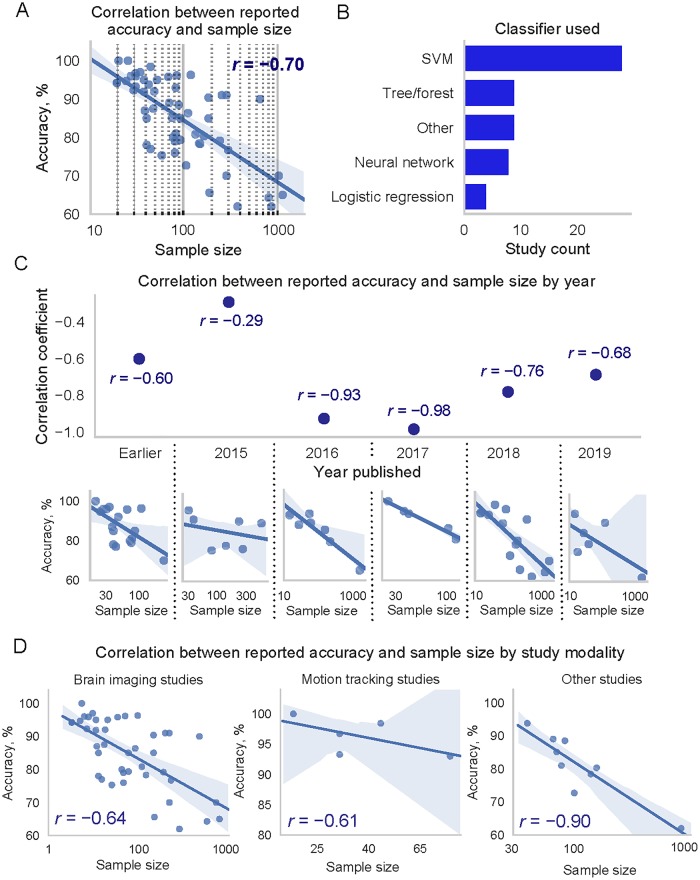
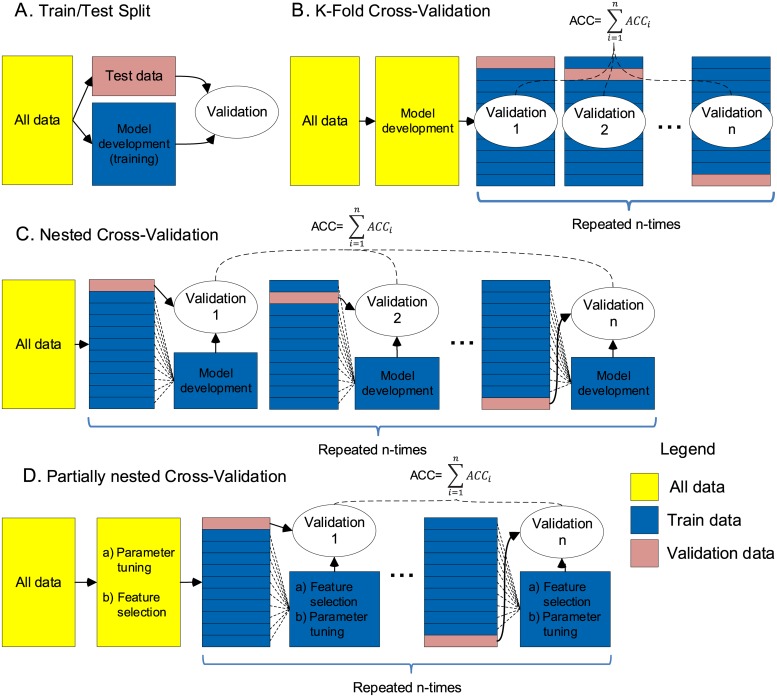
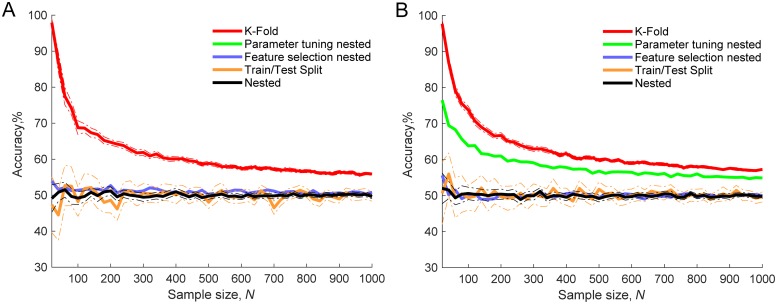
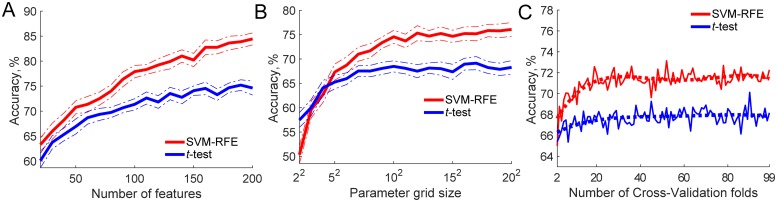
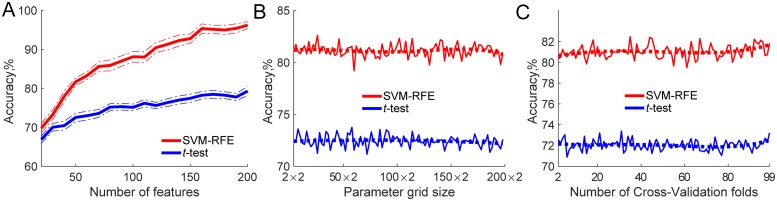
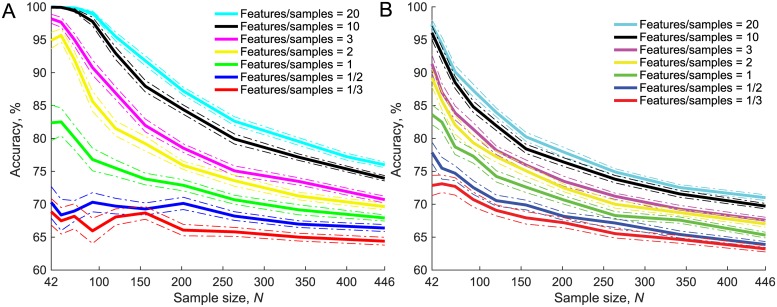
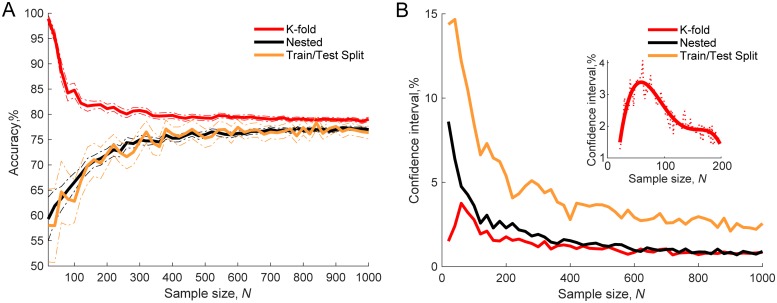
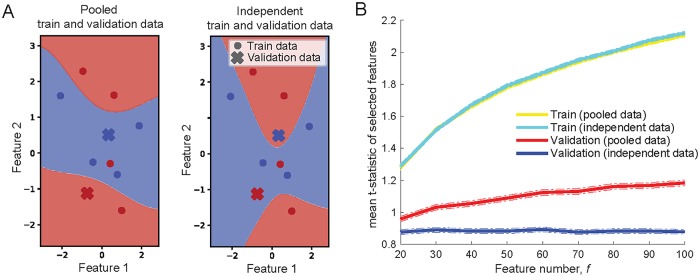
Advances in neuroimaging, genomic, motion tracking, eye-tracking and many other technology-based data collection methods have led to a torrent of high dimensional datasets, which commonly have a small number of samples because of the intrinsic high cost of data collection involving human participants. High dimensional data with a small number of samples is of critical importance for identifying biomarkers and conducting feasibility and pilot work, however it can lead to biased machine learning (ML) performance estimates. Our review of studies which have applied ML to predict autistic from non-autistic individuals showed that small sample size is associated with higher reported classification accuracy. Thus, we have investigated whether this bias could be caused by the use of validation methods which do not sufficiently control overfitting. Our simulations show that K-fold Cross-Validation (CV) produces strongly biased performance estimates with small sample sizes, and the bias is still evident with sample size of 1000. Nested CV and train/test split approaches produce robust and unbiased performance estimates regardless of sample size. We also show that feature selection if performed on pooled training and testing data is contributing to bias considerably more than parameter tuning. In addition, the contribution to bias by data dimensionality, hyper-parameter space and number of CV folds was explored, and validation methods were compared with discriminable data. The results suggest how to design robust testing methodologies when working with small datasets and how to interpret the results of other studies based on what validation method was used.
Overview
The claims and statistics of this paper haven’t been checked yet.
Free: it reads the open-access text and checks the first 5 claims that cite a source we can check. Create a free account to check every claim.
Integrity signals
Registry
Cites
Statistics
Figures
Verification
Claims the paper makes
The claims and statistics of this paper haven’t been checked yet.
Free: it reads the open-access text and checks the first 5 claims that cite a source we can check. Create a free account to check every claim.
Claims other papers make about this one
Each is checked against this paper’s own text: does it say what the citing paper says it does?
The cited source says what the claim attributes to it.
In the citing paper
“According to the simulations in Vabalas et al. 99 , the bias introduced by k-fold CV is still substantial even with a sample size of 1000.”
From Machine learning in concrete science: applications, challenges, and best practices (2022) · cites this paper as [99]
The cited source says what the claim attributes to it.
In the citing paper
“Machine learning in medical imaging often faces a fundamental dilemma, namely, the small sample size problem.”
From Federated learning for medical image analysis: A survey (2024) · cites this paper as [9]
In the citing paper
“An alternative to k-fold CV is n × k nested CV, which can produce robust and unbiased performance estimates regardless of the size of datasets 99 .”
From Machine learning in concrete science: applications, challenges, and best practices (2022) · cites this paper as [99]
Self-check
Percentages, sums and reported differences re-computed from the paper’s own numbers.
The self-check needs the paper’s full text.
Citations
Cites
Scikit-learn: Machine Learning in Python
Pedregosa, F., Varoquaux, G., Gramfort, A., Michel, V., Thirion, B., Grisel, O., Blondel, M., Müller, A., Nothman, J., Louppe, G., et al. (2012) · arXiv · doi:10.48550/arxiv.1201.0490 · Cited by 71,016 · cited 1×
“Logistic regression was implemented using Scikit-learn library [18].”
MethodLIBSVM: A library for support vector machines
Chang, C.-C., & Lin, C.-J. (2011) · ACM Transactions on Intelligent Systems and Technology · doi:10.1145/1961189.1961199 · Cited by 40,918 · cited 1×
“SVM was implemented with Libsvm library [17].”
Sudlow, C., Gallacher, J., Allen, N., Beral, V., Burton, P., Danesh, J., Downey, P., Elliott, P., Green, J., Landray, M., et al. (2015) · PLOS Medicine · doi:10.1371/journal.pmed.1001779 · Cited by 12,728
A training algorithm for optimal margin classifiers
Boser, B. E., Guyon, I. M., & Vapnik, V. N. (1992) · Proceedings of the fifth annual workshop on Computational learning theory · doi:10.1145/130385.130401 · Cited by 11,992 · cited 2×
“One, computationally demanding and complex, where Support Vector Machine (SVM) [12] classifier with Radial Basis Function (RBF) kernel was coupled with Support Vector Machine Recursive Feature Elimination (SVM-RFE) [13] feature selection.”
MethodCross validatory choice and assessment of statistical predictions
Stone, M. (1974) · Journal of the Royal Statistical Society Series B: Statistical Methodology · doi:10.1111/j.2517-6161.1974.tb00994.x · Cited by 10,881 · cited 1×
“Stone [10] pointed out the importance of separating CV used for model development and CV used for model evaluation.”
MethodLibsvm : A library for support vector machines
Ferrari, V. (2008) · Medical Entomology and Zoology · Cited by 10,122
Gene selection for cancer classification using support vector machines
Guyon, I., Weston, J., Barnhill, S., & Vapnik, V. (2002) · Machine Learning · doi:10.1023/a:1012487302797 · Cited by 9,954 · cited 8×
“SVM-RFE algorithm selects features based on how important they are for an SVM classifier to separate classes.”
InfluentialA review of feature selection techniques in bioinformatics
Saeys, Y., Inza, I., & Larrañaga, P. (2007) · Bioinformatics · doi:10.1093/bioinformatics/btm344 · Cited by 5,244
Bias in error estimation when using cross-validation for model selection
Varma, S., & Simon, R. (2006) · BMC Bioinformatics · doi:10.1186/1471-2105-7-91 · Cited by 2,485 · cited 10×
“Varma and Simon [7] suggest that Nested CV provides almost unbiased performance estimates.”
BackgroundMethodResultInfluentialMachine learning applications in genetics and genomics
Libbrecht, M. W., & Noble, W. S. (2015) · Nature Reviews Genetics · doi:10.1038/nrg3920 · Cited by 2,084 · cited 1×
“Then if number of features is large, which is especially true for neuroimaging and gene expression studies [3, 14, 15], feature selection is performed.”
Background
Cited by
Items 501–600 of 1,001
Liu, Y., Gao, X., Zhu, S., Xu, W., We, X., Supriyo, G., & Irving, P. (2024) · Engineering Fracture Mechanics · doi:10.1016/j.engfracmech.2024.110676 · Cited by 15
Akhtar, N., Ismail, A. F., Hanafiah, M. M., Fadzil, S. M., & Park, S. (2025) · Cleaner Engineering and Technology · doi:10.1016/j.clet.2025.100960 · Cited by 15
Large-scale comparison of machine learning algorithms for target prediction of natural products
Liang, L., Liu, Y., Kang, B., Wang, R., Sun, M.-Y., Wu, Q., Meng, X., & Lin, J. (2022) · Briefings in Bioinformatics · doi:10.1093/bib/bbac359 · Cited by 17
Endocrine Tumor Classification via Machine-Learning-Based Elastography: A Systematic Scoping Review
Mao, Y.-J., Zha, L.-W., Tam, A. Y.-C., Lim, H.-J., Cheung, A. K.-Y., Zhang, Y., Ni, M., Cheung, J. C., & Wong, D. W. (2023) · Cancers · doi:10.3390/cancers15030837 · Cited by 17
“Data augmentation, transfer learning, and cross-validation are acceptable measures to accommodate the limitations of sample size and to handle over-fitting and convergence problems [50,73,75,76].”
BackgroundPark, Y., Park, Y. S., Kim, S. T., & Hyun, S. H. (2023) · Molecular Imaging and Biology · doi:10.1007/s11307-023-01832-7 · Cited by 15
“Cross validation is known as one approach to use when the obtainable datasets are limited [24].”
BackgroundChang, C.-C., Liu, T.-C., Lu, C.-J., Chiu, H., & Lin, W. (2023) · Frontiers in Microbiology · doi:10.3389/fmicb.2023.1227300 · Cited by 17
“The primary difference between the two is that k-fold cross-validation involves validation with one of several equally sized folds that have been randomly divided from the data whereas LOOCV involves using a single subset of the data for all rounds of the validation process (Vabalas et al., 2019).”
MethodLi, Y., Guo, M., Qian, X., Lin, W., Zheng, Y., Yu, K., Zeng, B., Zhang, X., Zheng, C., & Xu, M. Q. (2020) · Biomedical Optics Express · doi:10.1364/boe.394929 · Cited by 15
Gholizadeh, N., Simpson, J., Ramadan, S. A., Denham, J., Lau, P., Siddique, S., Dowling, J., Welsh, J. S., Chalup, S. K., & Greer, P. B. (2020) · Journal of Applied Clinical Medical Physics · doi:10.1002/acm2.12992 · Cited by 16
“Overfitting with small sample size is a common problem in ML.(31) To eliminate biased estimation, the training and test data sets were separated for model validation using a leave-one-patient-out approach, all features normalized using the min–max scale method, features selected from training pool using a leave-one-pa…”
MethodInfluentialPredicting Endometriosis Onset Using Machine Learning AlgorithmsPreprint
Kleczyk, E. J., Peri, A., Yadav, T., Komera, R., Peri, M., Guduru, V., Amirtharaj, S., & Huang, M. (2020) · Research Square · doi:10.21203/rs.3.rs-135736/v1 · Cited by 16
Waldock, W. J., Guni, A., Darzi, A. W., & Ashrafian, H. (2026) · PLOS Digital Health · doi:10.1371/journal.pdig.0001310 · Cited by 23
“This review identifies that predictive AI-CDSS achieve moderate diagnostic performance across diverse specialties, with particular strength in specificity [134,135].”
Gutiérrez, N., Rigobon, V. M., Marencin, N. C., Edwards, A. A., Steacy, L. M., & Compton, D. L. (2022) · Scientific Studies of Reading · doi:10.1080/10888438.2022.2121655 · Cited by 14
Uncertainty for fatigue life of low carbon alloy steel based on improved bootstrap method
Su, W., Liu, X., Xu, S., Wang, J., & Wang, Z. (2023) · Fatigue & Fracture of Engineering Materials & Structures · doi:10.1111/ffe.14109 · Cited by 16
Grais, E. M., Nie, L., Zou, B., Wang, X., Rahim, T., Sun, J., Li, S., Wang, J., Jiang, W. H., Cai, Y., et al. (2023) · Biomedical Signal Processing and Control · doi:10.1016/j.bspc.2023.105525 · Cited by 16
Yego, N. K., Nkurunziza, J., & Kasozi, J. (2023) · PLoS ONE · doi:10.1371/journal.pone.0294166 · Cited by 18
On Scalable and Interpretable Autism Detection from Social Interaction Behavior
Saakyan, W., Norden, M., Herrmann, L., Kirsch, S., Lin, M., Guendelman, S., Dziobek, I., & Drimalla, H. (2023) · International Conference on Affective Computing and Intelligent Interaction and workshops · doi:10.1109/acii59096.2023.10388157 · Cited by 20
“This achievement is particularly noteworthy considering the challenges associated with small sample sizes in high-dimensional datasets, which can lead to biased machine learning performance estimates [37] as well as the challenge of replicating results on larger and more balanced datasets [13].”
BackgroundQian, X., Yang, G., Li, F., Zhang, X., Zhu, X., Lai, X., Xiao, X., Wang, T., & Wang, J. (2024) · Frontiers in Immunology · doi:10.3389/fimmu.2024.1345586 · Cited by 18
“Unfortunately, it has been reported that K -fold cross-validation may yield skewed performance estimates when dealing with small sample sizes (17, 37, 38).”
BackgroundSun, J., Caputo, V., & Taylor, H. (2024) · Applied Economic Perspectives and Policy · doi:10.1002/aepp.13446 · Cited by 18
Lal, A., Sharan, A., Sharma, K. K., Ram, A. R., Roy, D. K., & Datta, B. (2024) · Environmental Monitoring and Assessment · doi:10.1007/s10661-024-12794-w · Cited by 18
“For example, in a recent study, Vabalas et al. (2019) established that validation of machine learning models is imperative for developing a robust predictive model.”
Park, I., Ho, C.-H., Kim, J., Kim, J.-H., & Jun, S. (2024) · Atmospheric Research · doi:10.1016/j.atmosres.2024.107576 · Cited by 15
Rocca, A., Brunese, M. C., Santone, A., Varriano, G., Viganò, L., Caiazzo, C., Vallone, G., Brunese, L., Romano, L., Serafino, M. D., et al. (2024) · La radiologia medica · doi:10.1007/s11547-024-01878-9 · Cited by 14
“But another innovation of Formal methodology, despite the most common machine learning methodologies, consists in overcoming the limits of huge sample size and an accurate training set [38, 39].”
BackgroundWang, X., Geng, Y., Zhou, T., Zhao, Y., Li, H., Liu, Y., Li, H., Ren, R., Zhang, Y., Xu, X., et al. (2024) · Soil and Tillage Research · doi:10.1016/j.still.2024.106311 · Cited by 15
Validation of a Mobile App for Remote Autism Screening in Toddlers
Babu, P. R. K., Martino, J. M. D., Aiello, R. E., Eichner, B., Espinosa, S., Green, J., Howard, J., Perochon, S., Spanos, M., Vermeer, S., et al. (2024) · NEJM AI · doi:10.1056/aics2400510 · Cited by 18
Kousar, F., Sultana, A., Albahar, M. A., Shamkuwar, M., Heyat, M. B. B., Hayat, M. A. B., Parveen, S., Lira, J. I. G., Rahman, K., Alammari, A., et al. (2025) · Frontiers in Public Health · doi:10.3389/fpubh.2024.1373883 · Cited by 19
Predicting Sugarcane Yield Through Temporal Analysis of Satellite Imagery During the Growth Phase
Vasconcelos, J. C. S., Arantes, C. S., Speranza, E. A., Antunes, J. F. G., Barbosa, L. A. F., & Cançado, G. M. D. A. (2025) · Agronomy · doi:10.3390/agronomy15040793 · Cited by 15
Machine Learning Applications for Predicting High-Cost Claims Using Insurance Data
Brati, E., Braimllari, A., & Gjeçi, A. (2025) · Data · doi:10.3390/data10060090 · Cited by 15
Applications of Computer Intelligence in Hydrogen Production
Sethi, H., Ahmad, I., Khan, M. M., Qazi, A., Ayub, A., Zulkefal, M., & Shutaywi, M. (2025) · ACS Omega · doi:10.1021/acsomega.5c01602 · Cited by 16
“74,77 At the Industrial Scale, AI adoption encounters additional organizational and regulatory hurdles.”
Optimizing BERT Models with Fine-Tuning for Indonesian Twitter Sentiment Analysis
Afuan, L., Hidayat, N., Hamdani, H., Ismanto, H., Purnama, B. C., & Ramdhani, D. I. (2025) · Journal of Wireless Mobile Networks Ubiquitous Computing and Dependable Applications · doi:10.58346/jowua.2025.i2.016 · Cited by 14
“Moreover, as much as 20% of the data was reserved for validation, which serves to monitor the training process and prevent overfitting (Vabalas et al., 2019).”
Advances in the prediction of mouse liver microsomal studies: From machine learning to deep learning
Renn, A., Su, B., Hsin, L., Sun, J., & Tseng, Y. J. (2020) · Wiley Interdisciplinary Reviews Computational Molecular Science · doi:10.1002/wcms.1479 · Cited by 14
“4,5 To prevent this problem, researchers must vastly reduce the number of chemical descriptors used (from thousands to hundreds) and extract only key descriptors for implementation.”
BackgroundSanti, D., Spaggiari, G., Casonati, A., Casarini, L., Grassi, R., Vecchi, B., Roli, L., Santis, M. C. D., Orlando, G., Gravotta, E., et al. (2020) · Andrology · doi:10.1111/andr.12826 · Cited by 14
“In order to avoid false positive results because of improper sample size 26 or selection bias of potentially informative predictors, 27 the study design did not foresee any patients’ inclusion/exclusion criteria for enrolment.”
BackgroundKawakami, M., Hirata, K., Furuya, S., Kobayashi, K., Sugimori, H., Magota, K., & Katoh, C. (2020) · Frontiers in Medicine · doi:10.3389/fmed.2020.616746 · Cited by 14
“We divided the supervised data into five subsets for nested cross-validation (18).”
MethodRigot, S. K., Boninger, M. L., Ding, D., McKernan, G., Field-Fote, E. C., Hoffman, J. M., Hibbs, R., & Worobey, L. A. (2021) · Archives of Physical Medicine and Rehabilitation · doi:10.1016/j.apmr.2021.02.029 · Cited by 16
Grieve, S., Puvvada, N., Phinyomark, A., Russell, K., Murugesan, A., Zed, E., Hassan, A., Légaré, J., Kienesberger, P. C., Pulinilkunnil, T., et al. (2021) · Nanomedicine · doi:10.2217/nnm-2021-0076 · Cited by 15
Luterbach, C., Qiu, H., Hanafin, P. O., Sharma, R., Piscitelli, J. A., Lin, F., Ilomäki, J., Cober, E., Salata, R. A., Kalayjian, R. C., et al. (2022) · Antimicrobial Agents and Chemotherapy · doi:10.1128/aac.00591-22 · Cited by 14
Zou, K. H., & Li, J. Z. (2022) · Healthcare · doi:10.3390/healthcare10101997 · Cited by 14
“While big data would allow for training, data scientists may apply newer techniques with fewer data points to mine and transfer them [48], despite training on limited labeled information in the data [49,50].”
Tan, M. I. S. M. H., Jamlos, M. F., Omar, A., Kamarudin, K., & Jamlos, M. F. (2022) · Chemometrics and Intelligent Laboratory Systems · doi:10.1016/j.chemolab.2022.104718 · Cited by 20
Pevy, N., Christensen, H., Walker, T., & Reuber, M. (2023) · Epilepsy & Behavior · doi:10.1016/j.yebeh.2023.109217 · Cited by 15
Machine Learning to Identify Monkey Pox Disease
Aldi, F., Nozomi, I., Sentosa, R. B., & Junaidi, A. (2023) · SinkrOn · doi:10.33395/sinkron.v8i3.12524 · Cited by 15
“When the data is broken down into two parts, the first part is used to test or evaluate the data, while the second part is used to train the model (Vabalas et al., 2019).”
MethodLin, S.-C., Chandra, E., Tsao, P., Liao, W., Chen, W. J., Yen, T., Hsu, J. Y.-J., & Jeng, S. (2024) · Physical Therapy · doi:10.1093/ptj/pzad176 · Cited by 14
Augsburger, M., & Galatzer‐Levy, I. R. (2020) · BMC Psychiatry · doi:10.1186/s12888-020-02728-4 · Cited by 15
Scherdel, C., Miller, E., Reichenauer, G., & Schmitt, J. (2021) · Processes · doi:10.3390/pr9040672 · Cited by 15
“Generally, a larger dataset leads to greater statistical power for pattern recognition, but numerous studies performed using a small dataset have also shown a high accuracy (in this case, for brain disorders) [28].”
BackgroundBackdoor learning curves: explaining backdoor poisoning beyond influence functions
Ciná, A. E., Grosse, K., Vascon, S., Demontis, A., Biggio, B., Roli, F., & Pelillo, M. (2024) · International Journal of Machine Learning and Cybernetics · doi:10.1007/s13042-024-02363-5 · Cited by 17
Salih, A. M., Galazzo, I. B., Raisi‐Estabragh, Z., Petersen, S. E., Gkontra, P., Lekadir, K., Menegaz, G., & Radeva, P. I. (2021) · Proceedings - IEEE Symposium on Computer-Based Medical Systems · doi:10.1109/cbms52027.2021.00098 · Cited by 14
Rigorous validation of machine learning in laboratory medicine: guidance toward quality improvement
Miller, H. A., & Valdes, R. (2025) · Critical Reviews in Clinical Laboratory Sciences · doi:10.1080/10408363.2025.2488842 · Cited by 16
“A variety of internal validation strategies exist, such as a single random split, Monte Carlo simulations, k-fold cross validation, nested cross validation, or chronological splitting from the original data [64,65].”
Skin Tone Estimation under Diverse Lighting Conditions
Mbatha, S. K., Booysen, M. J., & Theart, R. P. (2024) · Journal of Imaging · doi:10.3390/jimaging10050109 · Cited by 19
“K-fold cross-validation was avoided due to potential bias with limited samples [29].”
BackgroundWolpert, L., & Omer, I. (2024) · Computers Environment and Urban Systems · doi:10.1016/j.compenvurbsys.2024.102238 · Cited by 16
Extracting interpretable signatures of whole-brain dynamics through systematic comparison
Bryant, A. G., Aquino, K. M., Parkes, L., Fornito, A., & Fulcher, B. (2024) · PLoS Computational Biology · doi:10.1371/journal.pcbi.1012692 · Cited by 14
“Indeed, the ADHD sample ( N = 39) was smaller than that of SCZ ( N = 48), BP ( N = 49), or ASD ( N = 513), though previous studies have reported conflicting findings about the effect of sample size on classification performance [17, 162, 163].”
Choi, E. Y., Kim, D., Kim, J.-Y., Kim, E., Lee, H., Yeo, J., Yoo, T. K., & Kim, M. (2025) · Scientific Reports · doi:10.1038/s41598-025-85777-7 · Cited by 13
“This limited sample size increases the risk of overfitting and reduces the generalizability of findings 30 .”
Wang, K., Lin, H., Fang, N., Xu, J., Zhang, S., Tan, J., Qin, J., & Liang, X. Y. (2025) · Journal of Industrial Information Integration · doi:10.1016/j.jii.2025.100795 · Cited by 14
Deep learning–based detection of generalized convulsive seizures using a wrist‐worn accelerometer
Spahr, A., Bernini, A., Ducouret, P., Baumgartner, C., Koren, J. P., Imbach, L., Beniczky, S., Larsen, S. A., Rheims, S., Fabricius, M. E., et al. (2025) · Epilepsia · doi:10.1111/epi.18406 · Cited by 16
“39 The multi-center origin of the data from eight EMUs and five countries is also likely to promote a greater generalizability of our findings.”
Yang, M., & Zou, Y. (2025) · Humanities and Social Sciences Communications · doi:10.1057/s41599-025-05234-8 · Cited by 13
“Many studies apply ML despite small sample sizes, which undermines the reliability and generalizability of complex models (Flint et al., 2019; Vabalas et al., 2019).”
Machine Learning-Based Identification of Plastic Types Using Handheld Spectrometers
van Hoorn, H., Pourmohammadi, F., de Leeuw, A., Vasulkar, A., de Vos, J., & van den Berg, S. (2025) · Sensors · doi:10.3390/s25123777 · Cited by 15
Liao, X., Li, C., Liu, Q., Wang, X., Liu, Z., Zhu, J., Hu, W., & Hong, Q. (2025) · Frontiers in Nutrition · doi:10.3389/fnut.2025.1584717 · Cited by 13
EEG-Based Dementia Classification Using CS-EMD Synchrony Features and Quantum Machine Learning
Ho, R., Hung, K., Chui, K. T., Fu, Y., & Wu, H. C. (2025) · IEEE Transactions on Consumer Electronics · doi:10.1109/tce.2025.3548303 · Cited by 13
“In addition, according to the Comparison table [43], these results demonstrate that all tested classifiers met the minimum accuracy threshold required for statistically significant classification, with p -values below 10 − 4 , accounting for both sample size and the number of classes.”
Park, S., & Byun, J. (2021) · Applied Sciences · doi:10.3390/app11136225 · Cited by 13
“Data Split for odel Development and Testing To show that small data are not biased, test data must not be used for learning at all, so we divided the dataset into temporal parts to construct these datasets [26].”
MethodFunctional seizures across the adult lifespan: female sex, delay to diagnosis and disability
Kerr, W. T., Sreenivasan, S. S., Allas, C. H., Janio, E. A., Karimi, A. H., Dubey, I., D’Ambrosio, S. R., Smith, J. M., Engel, J., Feusner, J. D., et al. (2021) · Seizure · doi:10.1016/j.seizure.2021.07.025 · Cited by 13
“However, we evaluated a multitude of factors over a wide age range, which could lead to problems with multiple comparisons and statistical variability even with our sample size [74].”
BackgroundThomas, S., de la Peña, P., Butler, L., Akbilgiç, O., Heiferman, D. M., Garg, R., Gill, R., & Serrone, J. C. (2021) · Journal of Clinical Neuroscience · doi:10.1016/j.jocn.2021.07.021 · Cited by 13
Liang, R., Yip, J. Y. W., Fan, Y., Cheung, J. P. Y., & To, K.-T. M. (2022) · International Journal of Environmental Research and Public Health · doi:10.3390/ijerph19031177 · Cited by 13
“The reasons the accuracies were somewhat lacking were: (1) the sample size of 100 participants was not large enough to build this kind of classifier [42], and (2) the set of profile variables used in this study (age, gender, height, weight, ATR, and EMG ratios) did not have a strong-enough correlation with the presenc…”
BackgroundMedical Radiation Exposure Reduction in PET via Super-Resolution Deep Learning Model
Yoshimura, T., Hasegawa, A., Kogame, S., Magota, K., Kimura, R., Watanabe, S., Hirata, K., & Sugimori, H. (2022) · Diagnostics · doi:10.3390/diagnostics12040872 · Cited by 14
“We divided the supervised data into nine subsets for nested cross-validation [31].”
MethodSurvey on the Convergence of Machine Learning and Blockchain
Ding, S., & Hu, C. (2022) · Lecture notes in networks and systems · doi:10.1007/978-3-031-16078-3_10 · Cited by 19
de Lima, R. S., Li, K.-Y., Vain, A., Lang, M., Bergamo, T. F., Kokamägi, K., Burnside, N. G., Ward, R. D., & Sepp, K. (2022) · Remote Sensing · doi:10.3390/rs14102334 · Cited by 13
Zhang, J. K., Jayasekera, D., Javeed, S., Greenberg, J. K., Blum, J., Dibble, C. F., Sun, P., Song, S., & Ray, W. Z. (2022) · The Spine Journal · doi:10.1016/j.spinee.2022.12.003 · Cited by 16
Predictive factors for allergy at 4–6 years of age based on machine learning: A pilot study
Kamphorst, K., Lopez‐Rincon, A., Vlieger, A. M., Garssen, J., Riet, E. V. ‘., & van Elburg, R. M. (2022) · PharmaNutrition · doi:10.1016/j.phanu.2022.100326 · Cited by 19
Banerjee, S., Dumawat, S., Jha, T., Lanka, G., Adhikari, N., & Ghosh, B. (2023) · Journal of Biomolecular Structure and Dynamics · doi:10.1080/07391102.2023.2248509 · Cited by 13
“…this study involves the application of fragment-based non-linear machine learning (Chen et al., 2018; Yang et al., 2017; Idakwo et al., 2019; Vabalas et al., 2019) and chemical space exploration methodologies (Kumar et al., 2021a; Kumar et al., 2021b; Chhabra et al., 2021) combined with the…”
Trinh, C., Tbatou, Y., Lasala, S., Herbinet, O., & Meimaroglou, D. (2023) · Processes · doi:10.3390/pr11123325 · Cited by 19
“…cross-validation (CV) scheme was employed in this work to assess the effect of data splitting on the model performance (represented by error bars or uncertainties in the graphs and tables of this article), and therefore, produce more significant and unbiased performance estimates [32,70,90,91].”
MethodJia, Q., Wang, X., Zhou, R., Ma, B., Fei, F., & Han, H. (2023) · Frontiers in Neuroinformatics · doi:10.3389/fninf.2023.1310400 · Cited by 14
“Vabalas et al. (2019) reviewed studies that have applied ML to predict autism in non-autistic individuals and showed that in contrast to parameter tuning, feature selection significantly contributes to bias.”
Çakar, T. E., & Filiz, G. (2023) · Frontiers in Human Neuroscience · doi:10.3389/fnhum.2023.1293173 · Cited by 13
Halgamuge, M. N. (2020) · International Journal of Environmental Research and Public Health · doi:10.3390/ijerph17124595 · Cited by 14
“[61] has argued K-fold Cross-Validation (CV) exhibits heavily biased performance estimates with small sample sizes.”
BackgroundUsing CatBoost and Other Supervised Machine Learning Algorithms to Predict Alzheimer's Disease
An, J. (2022) · International Conference on Machine Learning and Applications · doi:10.1109/icmla55696.2022.00265 · Cited by 14
“Nested CV provides unbiased performance estimates, which is common in small sample sized ML [29].”
BackgroundMethodIŞIK, Y. E., & Aydın, Z. (2023) · PeerJ · doi:10.7717/peerj.15552 · Cited by 12
“Since machine learning and pattern recognition derive their strength from data, problems of under-or over-fi tting can arise when applying machine learning to small data sets ( Vabalas et al., 2019 ).”
BackgroundEEG-Based Functional Connectivity Analysis for Cognitive Impairment Classification
Echeverri-Ocampo, I., Ardila, K., Molina‐Mateo, J., Buriticá, J. I. P., Carceller, H., Barceló, E., Llamur, S. I., & de la Iglesia-Vayá, M. (2023) · Electronics · doi:10.3390/electronics12214432 · Cited by 13
Label‐Free Blood Typing by Raman Spectroscopy and Artificial Intelligence
Jensen, E. A., Serhatlıoğlu, M., Uyanik, C., Hansen, A. T., Puthusserypady, S. K., Dziegiel, M. H., & Kristensen, A. (2023) · Advanced Materials Technologies · doi:10.1002/admt.202301462 · Cited by 15
Climate Change Will Impact Surface Water Extents and Dynamics Across the Central United States
Vanderhoof, M. K., Christensen, J. R., Alexander, L. C., Lane, C. R., & Golden, H. E. (2024) · Earth s Future · doi:10.1029/2023ef004106 · Cited by 18
“Small sample sizes within each of the models ( n = 60) required consideration of the train‐test split (Vabalas et al., 2019).”
BackgroundMultilayer perceptron and support vector regression models for feline parturition date prediction
Sananmuang, T., Mankong, K., & Chokeshaiusaha, K. (2024) · Heliyon · doi:10.1016/j.heliyon.2024.e27992 · Cited by 12
“This issue was critical, particularly for MLP modeling, for which a large sample size was preferable [27,49].”
BackgroundChanges of serum cortisol during pregnancy and labor initiation: an onsite cross-sectional study
Chai, Y., Wang, H., Tang, D., Wu, Y., Sun, Z., Zeng, Y., Zhang, B., Niu, B., & Dong, X. (2024) · Frontiers in Endocrinology · doi:10.3389/fendo.2024.1379693 · Cited by 14
“A 10-fold cross-validation approach suitable for a limited dataset was used for the performance veri fi cation of each machine-learning method, reducing the risk of over fi tting and increasing the generalization of models (22).”
MethodSu, L., Dong, X., Peng, J., Cheng, H., Craig, N. J., Hu, B., & Li, J. (2024) · Journal of Hazardous Materials · doi:10.1016/j.jhazmat.2024.135564 · Cited by 12
A Neural Network with Physical Mechanism for Predicting Airport Aviation Noise
Zhu, D. Y., Peng, J., & Ding, C. (2024) · Aerospace · doi:10.3390/aerospace11090747 · Cited by 13
Pérez-Lasierra, J. L., Azpíroz-Puente, M., Alfaro-Santafé, J.-V., Almenar-Arasanz, A. J., Alfaro-Santafé, J., & Gómez-Bernal, A. (2024) · BMC Geriatrics · doi:10.1186/s12877-024-05475-3 · Cited by 15
Simone, G. D., Iasevoli, F., Barone, A., Gaudieri, V., Cuocolo, A., Ciccarelli, M., Pappatà, S., & de Bartolomeis, A. (2024) · Schizophrenia · doi:10.1038/s41537-024-00535-4 · Cited by 16
From pixels to prognosis: radiomics and AI in Alzheimer’s disease management
Peng, D., Huang, W., Liu, R. P., & Zhong, W. (2025) · Frontiers in Neurology · doi:10.3389/fneur.2025.1536463 · Cited by 18
Zhou, H., Xie, Q., Gu, S., Li, X., Zhou, Y., Liang, D., & Liu, J. (2025) · Carbon · doi:10.1016/j.carbon.2025.120387 · Cited by 12
Yu, K., Wang, S., Wang, Y., Gu, Z., & Wang, Y. (2025) · IEEE Journal of Selected Topics in Applied Earth Observations and Remote Sensing · doi:10.1109/jstars.2025.3568876 · Cited by 12
“Given the small size of the dataset, we employed K -fold cross validation [24], [25].”
Estimating Trust in Human-Robot Collaboration Through Behavioral Indicators and Explainability
Campagna, G., Lagomarsino, M., Lorenzini, M., Chrysostomou, D., Rehm, M., & Ajoudani, A. (2025) · IEEE Robotics and Automation Letters · doi:10.1109/lra.2025.3600170 · Cited by 14
“This framework employs the PBO algorithm [26] to iteratively refine the interaction parameters that shape the robot’s trajectory, based on repeated explicit trust feedback.”
Hoy, G. E., Cortier, T., Maier, H. E., Kuan, G., López, R., Sánchez, N., Ojeda, S., Plazaola, M., Stadlbauer, D., Shotwell, A., et al. (2025) · Nature Communications · doi:10.1038/s41467-025-65283-0 · Cited by 12
“To minimize the risk of over-fi tting, we implemented 5-fold cross-validation 46 .”
Tao, Y., Yu, Z., Chen, T., Jin, W., Jin, W., & Yu, L. (2026) · iScience · doi:10.1016/j.isci.2026.116883 · Cited by 17
“18,22,23 Because these datasets could not support the complete M0–M6 comparison, only machine learning models were fitted and evaluated.”
InfluentialDynamics of the stream–lake transitional zone affect littoral lake metabolism
Ward, N. K., Brentrup, J. A., Richardson, D. C., Weathers, K. C., Hanson, P. C., Hewett, R. J., & Carey, C. C. (2022) · Aquatic Sciences · doi:10.1007/s00027-022-00854-7 · Cited by 12
“To assess the tuning process itself, we conducted a nested cross-validation model fitting assessment to compensate for biased fit assessments common with smaller sample sizes (n = ~ 50–100; Vabalas et al. 2019).”
BackgroundMethodRapid Interactions of Widespread Brain Networks Characterize Semantic Cognition
Aboud, K. S., Nguyen, T. Q., Tufo, S. N. D., Chang, C., Zald, D. H., Key, A. P. F., Price, G. R., Landman, B. A., & Cutting, L. E. (2022) · Journal of Neuroscience · doi:10.1523/jneurosci.0529-21.2022 · Cited by 14
Automatic Detection of Subjective, Annotated and Physiological Stress Responses from Video Data
Norden, M., Wolf, O. T., Lehmann, L., Langer, K., Lippert, C., & Drimalla, H. (2022) · International Conference on Affective Computing and Intelligent Interaction and workshops · doi:10.1109/acii55700.2022.9953894 · Cited by 15
“Nevertheless, we applied best practices for working with small datasets and reported conservative and robust evaluation metrics across the stress dimensions [50].”
MethodInfluentialFischbein, R. L., Cook, H. L., Baughman, K. R., & Díaz, S. (2022) · Women s Health · doi:10.1177/17455057221139664 · Cited by 15
“60 Vabalas et al. 80 showed that the train/test split approach produces robust and unbiased performance estimates regardless of sample size.”
BackgroundMethodBlankestijn, J. M., Lopez‐Rincon, A., Neerincx, A. H., Vijverberg, S. J. H., Hashimoto, S., Gorenjak, M., Sardón‐Prado, O., Corcuera, P., Korta‐Murua, J., Pino-Yanes, M. D. M., et al. (2023) · Pediatric Allergy and Immunology · doi:10.1111/pai.13919 · Cited by 17
Predicting openness to experience via a multiplex cognitive network approach
Samuel, G., Stella, M., Beaty, R. E., & Kenett, Y. N. (2023) · Journal of Research in Personality · doi:10.1016/j.jrp.2023.104369 · Cited by 16
van Osta, J. M., Dreis, B., Meyer, E. A., Grogan, L. F., & Castley, J. G. (2023) · Ecological Informatics · doi:10.1016/j.ecoinf.2023.102233 · Cited by 17
“P r Each successive model iteration was trained on 70% of the training data and validated against 30% of the training data. l The train/validation split approach minimises potential overfitting of the model on small samples sizes, when compared to a cross-validation approach (Vabalas et al. , 2019).”
MethodYeoh, E. D., Chung, T., & Wang, Y. (2023) · Contemporary Mathematics · doi:10.37256/cm.4420232572 · Cited by 13
“Vabalas et al. [ 19 ] recommend this split for small datasets to ensure that the model has enough data to learn from and that there is enough data to evaluate the model’s performance.”
BackgroundEnhancing EEG-based attachment style prediction: unveiling the impact of feature domains
Laufer, I., Mizrahi, D., & Zuckerman, I. (2024) · Frontiers in Psychology · doi:10.3389/fpsyg.2024.1326791 · Cited by 13
“This approach helps reduce bias, which is especially beneficial as our sample size goes beyond the 1,000-epoch benchmark set for small samples in K-fold validation (Vabalas et al., 2019).”
BackgroundHitsuwari, J., Okano, H., & Nomura, M. (2024) · Scientific Reports · doi:10.1038/s41598-024-59118-z · Cited by 12
“The nested CV has a low bias in estimation accuracy 12 and is particularly effective for machine learning on small samples 13 .”
BackgroundShujaaddeen, A. A., Ba-Alwi, F. M., Zahary, A. T., & Al-Hegami, A. S. (2024) · International Conference on Emerging Smart Technologies and Applications (eSmarTA) · doi:10.1109/esmarta62850.2024.10639022 · Cited by 16
“Authors in [23] The CV approach is popular because it works well with small sample sizes.”
BackgroundWhite matter tracts related to memory and emotion in very preterm children
Kelly, C. E., Thompson, D. K., Cooper, M., Pham, J., Nguyen, T. D., Yang, J. Y., Ball, G., Adamson, C. L., Murray, A. L., Chen, J., et al. (2020) · Pediatric Research · doi:10.1038/s41390-020-01134-6 · Cited by 12
William, B. A., Lawou, S. K., Mfenjou, M. L., & Ngounouno, I. (2022) · Journal of African Earth Sciences · doi:10.1016/j.jafrearsci.2022.104662 · Cited by 13
Role of MRI radiomics for the prediction of MYCN amplification in neuroblastomas
Ghosh, A., Yekeler, E., Teixeira, S. R., Dalal, D. J., & States, L. J. (2023) · European Radiology · doi:10.1007/s00330-023-09628-7 · Cited by 13
A New Epigenetic Model to Stratify Glioma Patients According to Their Immunosuppressive State
Polano, M., Fabbiani, E., Andreuzzi, E., Cintio, F. D., Bedon, L., Gentilini, D., Mongiat, M., Ius, T., Arcicasa, M., Škrap, M., et al. (2021) · Cells · doi:10.3390/cells10030576 · Cited by 12
Chatterjee, S., Kandiah, R., Watts, D. R., Sritharan, S. I., & Osterberg, J. C. (2023) · Remote Sensing · doi:10.3390/rs15205021 · Cited by 11
Metadata
- Authors
- Vabalas, A., Gowen, E., Poliakoff, E., & Casson, A. J.
- Affiliations
- University of Manchester (GB)
- Corresponding author
- Vabalas, Andrius
- Venue
- PLOS ONE
- Publisher
- Public Library of Science (PLoS)
- Published
- 2019-11-07
- Volume
- 14
- Issue
- 11
- Pages
- e0224365
- ISSN
- 1932-6203 (ISSN-L)
- PMC
- PMC6837442
- OpenAlex
- W2981679558
- Cited by
- 1,901
- References
- 32
- Citations by year
- 2026: 497 · 2025: 325 · 2024: 316 · 2023: 280 · 2022: 247 · 2021: 167 · 2020: 66 · 2019: 1
- FWCI
- 55.09
- Type
- journal article
- Language
- en
- Open access
- gold
- doi.org
- Licence
- Locations
- PLoS ONE (publishedVersion, cc-by)
- PubMed Central (publishedVersion, cc-by)
- PubMed (publishedVersion)
- RePEc: Research Papers in Economics (submittedVersion)
- DOAJ (DOAJ: Directory of Open Access Journals) (submittedVersion, cc-by-sa)
- Figshare (submittedVersion, cc-by)
- Research Explorer (The University of Manchester) (submittedVersion, cc-by)
- Funders
- UK Engineering and Physical Sciences Research Council and its Doctoral Training Partnership with the University of Manchester (EP/m507969/1)
- Topics
- Physical Sciences › Computer Science › Artificial Intelligence › Machine Learning and Data Classification
- Physical Sciences › Computer Science › Artificial Intelligence › Imbalanced Data Classification Techniques
- Health Sciences › Health Professions › Health Information Management › Artificial Intelligence in Healthcare
- Keywords
- machine learning validation, small sample size, overfitting, nested cross-validation, train-test split, feature selection, hyperparameter optimization, high-dimensional data, autism classification, biomarker discovery
- MeSH terms
- Machine Learning, Algorithms, Data Interpretation, Statistical, Humans, Sample Size, Biomedical Research
About these checks
Registry, retraction, Cites and statistics results are computed, not judged, with one exception: a printed reference that no index lists is read once by a model before it counts as a citation error. Claims are extracted by a model and kept only when their quote appears verbatim in the text; each cited source is then checked, with a model’s help, for whether it says what the claim relies on. Those verdicts can be wrong — read the claim’s quote and the cited source before relying on one.
Statistics and arithmetic are recomputed, not judged.
Confidence bands are shown only for fields calibrated on our annotated test set. None is calibrated yet, so no band is shown.
What counts as a claim ›How we measure confidence ›How we check this ›
Are you an author, or do you see a problem with this page? Request a review
Data sources
Bibliographic data: Semantic Scholar, OpenAlex, Crossref.
Contains information from the Semantic Scholar Academic Graph Datasets, made available under the ODC Attribution License (ODC-BY 1.0).
Semantic Scholar’s data is described in: Kinney, R., et al. (2023). The Semantic Scholar Open Data Platform. arXiv:2301.10140.
