

Machine learning algorithm validation with a limited sample size
Open accessThe DOI matches its Crossref record; 31 of the 32 references it cites were found in a registry or an index.
Abstract
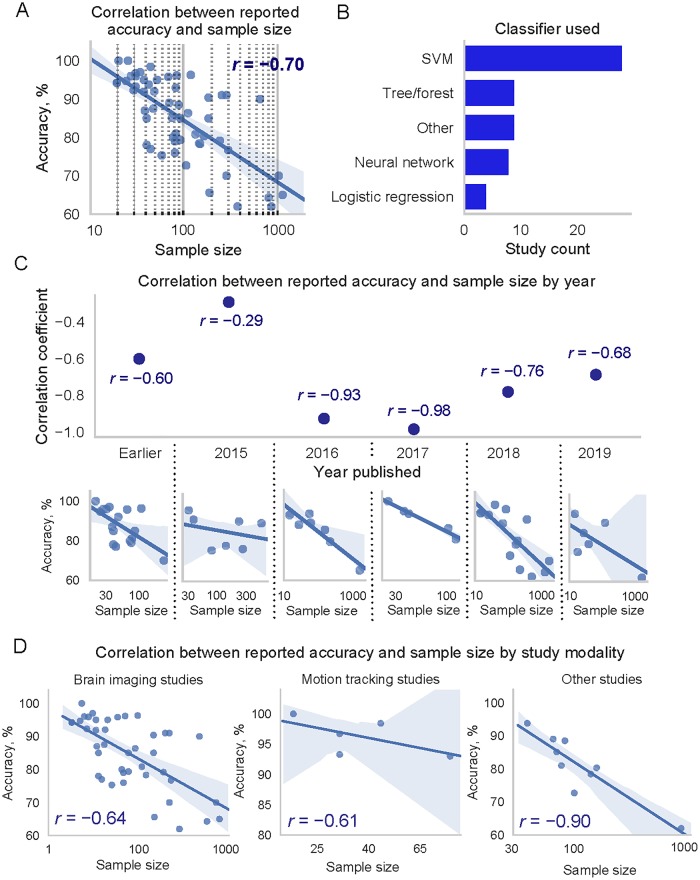
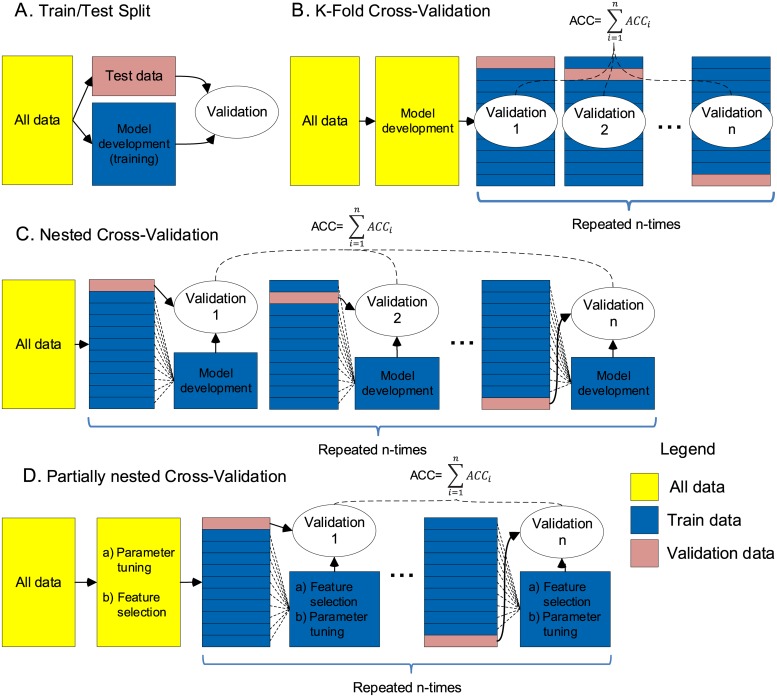
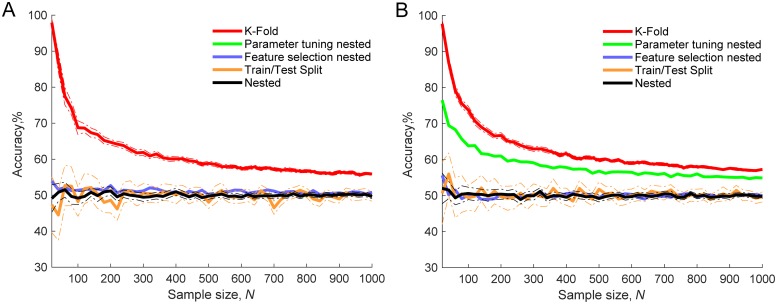
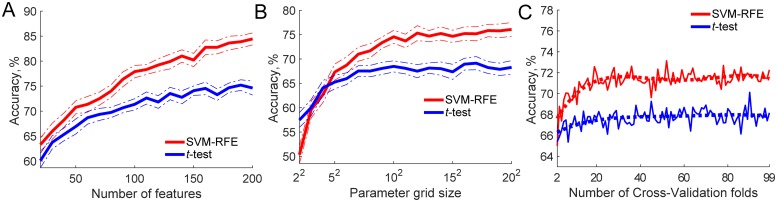
Advances in neuroimaging, genomic, motion tracking, eye-tracking and many other technology-based data collection methods have led to a torrent of high dimensional datasets, which commonly have a small number of samples because of the intrinsic high cost of data collection involving human participants. High dimensional data with a small number of samples is of critical importance for identifying biomarkers and conducting feasibility and pilot work, however it can lead to biased machine learning (ML) performance estimates. Our review of studies which have applied ML to predict autistic from non-autistic individuals showed that small sample size is associated with higher reported classification accuracy. Thus, we have investigated whether this bias could be caused by the use of validation methods which do not sufficiently control overfitting. Our simulations show that K-fold Cross-Validation (CV) produces strongly biased performance estimates with small sample sizes, and the bias is still evident with sample size of 1000. Nested CV and train/test split approaches produce robust and unbiased performance estimates regardless of sample size. We also show that feature selection if performed on pooled training and testing data is contributing to bias considerably more than parameter tuning. In addition, the contribution to bias by data dimensionality, hyper-parameter space and number of CV folds was explored, and validation methods were compared with discriminable data. The results suggest how to design robust testing methodologies when working with small datasets and how to interpret the results of other studies based on what validation method was used.
Overview
The claims and statistics of this paper haven’t been checked yet.
Free: it reads the open-access text and checks the first 5 claims that cite a source we can check. Create a free account to check every claim.
Integrity signals
Registry
Cites
Statistics
Figures
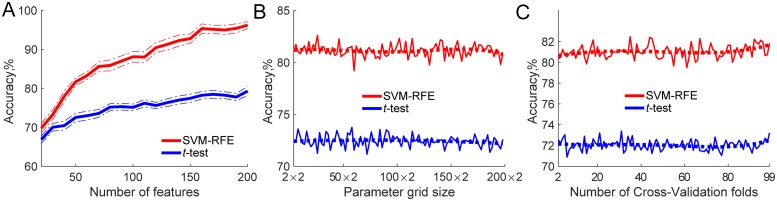
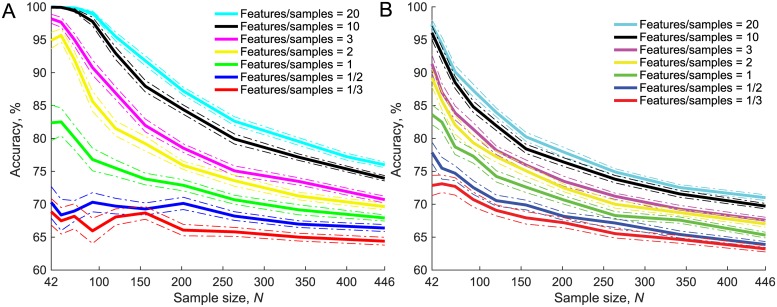
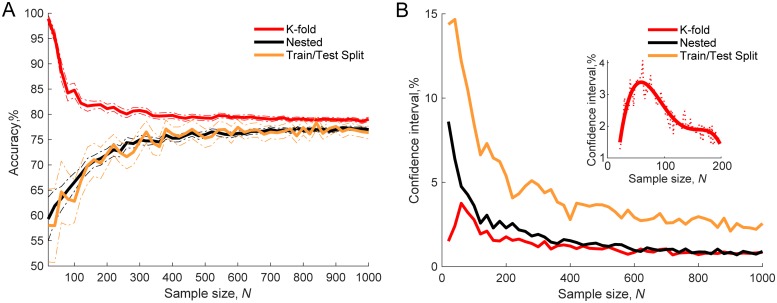
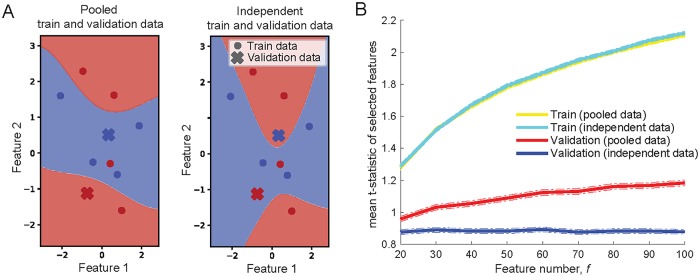
Verification
Claims the paper makes
The claims and statistics of this paper haven’t been checked yet.
Free: it reads the open-access text and checks the first 5 claims that cite a source we can check. Create a free account to check every claim.
Claims other papers make about this one
Each is checked against this paper’s own text: does it say what the citing paper says it does?
The cited source says what the claim attributes to it.
In the citing paper
“According to the simulations in Vabalas et al. 99 , the bias introduced by k-fold CV is still substantial even with a sample size of 1000.”
From Machine learning in concrete science: applications, challenges, and best practices (2022) · cites this paper as [99]
The cited source says what the claim attributes to it.
In the citing paper
“Machine learning in medical imaging often faces a fundamental dilemma, namely, the small sample size problem.”
From Federated learning for medical image analysis: A survey (2024) · cites this paper as [9]
In the citing paper
“An alternative to k-fold CV is n × k nested CV, which can produce robust and unbiased performance estimates regardless of the size of datasets 99 .”
From Machine learning in concrete science: applications, challenges, and best practices (2022) · cites this paper as [99]
Self-check
Percentages, sums and reported differences re-computed from the paper’s own numbers.
The self-check needs the paper’s full text.
Citations
Cites
Scikit-learn: Machine Learning in Python
Pedregosa, F., Varoquaux, G., Gramfort, A., Michel, V., Thirion, B., Grisel, O., Blondel, M., Müller, A., Nothman, J., Louppe, G., et al. (2012) · arXiv · doi:10.48550/arxiv.1201.0490 · Cited by 71,016 · cited 1×
“Logistic regression was implemented using Scikit-learn library [18].”
MethodLIBSVM: A library for support vector machines
Chang, C.-C., & Lin, C.-J. (2011) · ACM Transactions on Intelligent Systems and Technology · doi:10.1145/1961189.1961199 · Cited by 40,918 · cited 1×
“SVM was implemented with Libsvm library [17].”
Sudlow, C., Gallacher, J., Allen, N., Beral, V., Burton, P., Danesh, J., Downey, P., Elliott, P., Green, J., Landray, M., et al. (2015) · PLOS Medicine · doi:10.1371/journal.pmed.1001779 · Cited by 12,728
A training algorithm for optimal margin classifiers
Boser, B. E., Guyon, I. M., & Vapnik, V. N. (1992) · Proceedings of the fifth annual workshop on Computational learning theory · doi:10.1145/130385.130401 · Cited by 11,992 · cited 2×
“One, computationally demanding and complex, where Support Vector Machine (SVM) [12] classifier with Radial Basis Function (RBF) kernel was coupled with Support Vector Machine Recursive Feature Elimination (SVM-RFE) [13] feature selection.”
MethodCross validatory choice and assessment of statistical predictions
Stone, M. (1974) · Journal of the Royal Statistical Society Series B: Statistical Methodology · doi:10.1111/j.2517-6161.1974.tb00994.x · Cited by 10,881 · cited 1×
“Stone [10] pointed out the importance of separating CV used for model development and CV used for model evaluation.”
MethodLibsvm : A library for support vector machines
Ferrari, V. (2008) · Medical Entomology and Zoology · Cited by 10,122
Gene selection for cancer classification using support vector machines
Guyon, I., Weston, J., Barnhill, S., & Vapnik, V. (2002) · Machine Learning · doi:10.1023/a:1012487302797 · Cited by 9,954 · cited 8×
“SVM-RFE algorithm selects features based on how important they are for an SVM classifier to separate classes.”
InfluentialA review of feature selection techniques in bioinformatics
Saeys, Y., Inza, I., & Larrañaga, P. (2007) · Bioinformatics · doi:10.1093/bioinformatics/btm344 · Cited by 5,244
Bias in error estimation when using cross-validation for model selection
Varma, S., & Simon, R. (2006) · BMC Bioinformatics · doi:10.1186/1471-2105-7-91 · Cited by 2,485 · cited 10×
“Varma and Simon [7] suggest that Nested CV provides almost unbiased performance estimates.”
BackgroundMethodResultInfluentialMachine learning applications in genetics and genomics
Libbrecht, M. W., & Noble, W. S. (2015) · Nature Reviews Genetics · doi:10.1038/nrg3920 · Cited by 2,084 · cited 1×
“Then if number of features is large, which is especially true for neuroimaging and gene expression studies [3, 14, 15], feature selection is performed.”
Background
Cited by
Items 401–500 of 1,001
Foroughi, M., Arzehgar, A., Seyedhasani, S. N., Nadali, A., & Benis, K. Z. (2024) · Chemosphere · doi:10.1016/j.chemosphere.2024.142223 · Cited by 24
Predicting Student Performance in a Programming Tutoring System Using AI and Filtering Techniques
Ilić, M., Kekovic, G., Mikić, V., Mangaroska, K., Kopanja, L., & Vesin, B. (2024) · IEEE Transactions on Learning Technologies · doi:10.1109/tlt.2024.3431473 · Cited by 22
“Nevertheless, the study [108] examined the influence of sample size on the accuracy of SVM methods and LR analysis.”
MethodHe, Z., Xie, W., Zhang, S., Gao, Y., Elnaggar, A. Y., Ren, J., Azab, I. H. E., El-Bahy, Z. M., Yang, M., Zhang, H., et al. (2024) · The Journal of Physical Chemistry C · doi:10.1021/acs.jpcc.4c03634 · Cited by 21
Qaiser, A., Manzoor, S., Hashmi, A. H., Javed, H., Zafar, A., & Ashraf, J. (2024) · Advances in Virology · doi:10.1155/2024/5588127 · Cited by 20
“Advances in Virology of small sample sizes on ML algorithm validation, emphasizing the potential for overftting and reduced predictive performance [21].”
BackgroundSpeech as a Biomarker for Disease Detection
Botelho, C., Abad, A., Schultz, T., & Trancoso, I. M. (2024) · IEEE Access · doi:10.1109/access.2024.3506433 · Cited by 29
“Extract the segments between each abrupt change.”
MethodBedon, L., Cecchin, E., Fabbiani, E., Bo, M. D., Buonadonna, A., Polano, M., & Toffoli, G. (2021) · Clinical Pharmacology & Therapeutics · doi:10.1002/cpt.2511 · Cited by 21
“14 Moreover, the small sample size could, at least in part, explain the lack of a significant correlation between biological parameters such as total proteins and any of the pharmacokinetic parameters.”
BackgroundMethodWang, K., Saragadam, A., Kaur, J., Dogra, A., Cao, S. C., Ghafurian, M., Butt, Z. A., Abhari, S., Chumachenko, D., & Morita, P. P. (2025) · Internet of Things · doi:10.1016/j.iot.2025.101502 · Cited by 20
Brügger, V., Kowatsch, T., & Jovanova, M. (2025) · Scientific Reports · doi:10.1038/s41598-025-08003-4 · Cited by 29
“This threshold was selected to balance the trade-off between maximizing data inclusion and maintaining the integrity of the time-series modeling approach, in line with prior studies 80,95,96 .”
Solórzano, J. V., & Gao, Y. (2022) · Remote Sensing · doi:10.3390/rs14030803 · Cited by 20
“However, a smaller sample size in the forest-type specific models may have caused the lower observed accuracies, since the reduction of the size of the training dataset can have repercussions over the accuracy, particularly with an already small dataset [58,59].”
BackgroundMari, T., Asgard, O., Henderson, J. R., Hewitt, D., Brown, C. A., Stančák, A., & Fallon, N. B. (2023) · Scientific Reports · doi:10.1038/s41598-022-27298-1 · Cited by 24
Data-driven predictions of potential Leishmania vectors in the Americas
Vadmal, G. M., Glidden, C. K., Han, B. A., de Carvalho, B. M., Castellanos, A. A., & Mordecai, E. A. (2023) · PLoS neglected tropical diseases · doi:10.1371/journal.pntd.0010749 · Cited by 20
Huang, Z., Xiao, Y., Xiao, Y., Cai, H., & Ni, H. (2023) · International Journal of Food Science & Technology · doi:10.1111/ijfs.16440 · Cited by 20
Ortuño-Miró, S., Molina‐Rodríguez, S., Belmonte, C., & Ibáñez-Ballesteros, J. (2023) · Journal of Neural Engineering · doi:10.1088/1741-2552/acad2b · Cited by 20
“Remarkably, w rappers yielded very simple models with no more than 3 features, meaning a feature-to-sample ratio of 3/30 which is very unlikely to lead to overfitting [114].”
BackgroundLai, D. K.-H., Cheng, E. S.-W., Lim, H.-J., So, B. P.-H., Lam, W., Cheung, D. S. K., Wong, D. W., & Cheung, J. C. (2023) · Frontiers in Bioengineering and Biotechnology · doi:10.3389/fbioe.2023.1205009 · Cited by 22
“While several studies did not conduct hyperparameter tuning, cross-validation techniques were often used and believed to relieve over fi tting but might be prone to data snooping or peeking (Bzdok et al., 2017) and generate biased estimates, especially with small sample size (Vabalas et al., 2019).”
BackgroundChan, P. Z., Ramli, M. A. I. B., & Chew, H. S. J. (2023) · Computers in Biology and Medicine · doi:10.1016/j.compbiomed.2023.107636 · Cited by 22
Exploring device physics of perovskite solar cell via machine learning with limited samples
Zhao, S., Wang, J., Guo, Z., Luo, H., Lu, L., Tian, Y., Jiang, Z., Zhang, J., Chen, M., Li, L., et al. (2024) · Journal of Energy Chemistry · doi:10.1016/j.jechem.2024.03.003 · Cited by 22
Achieving Reproducibility in EEG-Based Machine Learning
Kinahan, S. P., Saidi, P., Daliri, A., Liss, J., & Berisha, V. (2024) · ACM Conference on Fairness, Accountability, and Transparency (FAccT) · doi:10.1145/3630106.3658983 · Cited by 26
“Limited sample sizes increase the variability of performance estimates using ML methods [34].”
MethodCruz-Guerrero, I. A., Campos-Delgado, D. U., Mejia-Rodriguez, A. R., León, R., Ortega, S., Fabelo, H. A., Camacho, R., Plaza, M. D. L. L., & Callicó, G. M. (2024) · Healthcare Technology Letters · doi:10.1049/htl2.12084 · Cited by 21
“Typically, increasing the size of the database can enhance performance, up to a certain point beyond which further augmentation does not yield significant improvements [31, 32].”
BackgroundBeck, K. L., Haiminen, N., Agarwal, A., Carrieri, A. P., Madgwick, M., Kelly, J., Pylro, V. S., Kawas, B., Wiedmann, M., & Ganda, E. (2024) · mSystems · doi:10.1128/msystems.00840-24 · Cited by 19
“…sequencing depth, we recognize the small nature of the sample size (58 samples) when it pertains to testing machine learning algorithms (66– 68), and it may impart limitations on the quantitative and comparative assessments in characterizing the microbiomes of the multiple sample classes.”
Manongga, D., Rahardja, U., Sembiring, I., Aini, Q., & Wahab, A. (2024) · HighTech and Innovation Journal · doi:10.28991/hij-2024-05-03-017 · Cited by 32
Bernardes, R. C., Botina, L. L., Ribas, A., Soares, J. M., & Martins, G. F. (2024) · Journal of Hazardous Materials · doi:10.1016/j.jhazmat.2024.136425 · Cited by 19
Bevilacqua, A., Mottola, M., Ferroni, F., Rossi, A., Gavelli, G., & Barone, D. (2021) · Diagnostics · doi:10.3390/diagnostics11050739 · Cited by 19
“C was then scaled by the weight of the error occurring in each class, which corresponded to its own prior probability [25].”
MethodTurai, P. I., Herold, Z., Nyírő, G., Borka, K., Micsík, T., Tõke, J., Szücs, N., Tóth, M., Patócs, A., & Igaz, P. (2022) · Cancers · doi:10.3390/cancers14040895 · Cited by 21
Held, P., Schubert, R. A., Pridgen, S., Kovacevic, M., Montes, M., Christ, N. M., Banerjee, U., & Smith, D. L. (2022) · Journal of Psychiatric Research · doi:10.1016/j.jpsychires.2022.03.066 · Cited by 20
Unique Deep Radiomic Signature Shows NMN Treatment Reverses Morphology of Oocytes from Aged Mice
Habibalahi, A., Bertoldo, M. J., Mahbub, S. B., Campbell, J. M., Goss, D. M., Ledger, W. J., Gilchrist, R. B., Wu, L. E., & Goldys, E. M. (2022) · Biomedicines · doi:10.3390/biomedicines10071544 · Cited by 19
“[52] is citied in supplementary materials.”
Favreau, E., Geist, K. S., Wyatt, C. D. R., Toth, A. L., Sumner, S., & Rehan, S. M. (2022) · Genome Biology and Evolution · doi:10.1093/gbe/evac174 · Cited by 22
Machine learning predicts histologic type and grade of canine gliomas based on MRI texture analysis
Barge, P., Oevermann, A., Maiolini, A., & Durand, A. (2023) · Veterinary Radiology & Ultrasound · doi:10.1111/vru.13242 · Cited by 25
Prada, E. J. A., & García, J. F. C. (2024) · Sensors · doi:10.3390/s24227193 · Cited by 21
Wang, P., Liu, H., Shi, Y., Liu, A., Zhu, Q., Albu, I., Pacholec, M., Cheng, L. L., Sun, X. S., & Chi, X. (2025) · Med Research · doi:10.1002/mdr2.70017 · Cited by 22
Seghier, M. L. (2021) · International Journal of Imaging Systems and Technology · doi:10.1002/ima.22674 · Cited by 20
Li, X., Marcus, D. M., Russell, J., Aboagye, E. O., Ellis, L. B., Sheeka, A., Park, W.-H. E., Bharwani, N., Ghaem‐Maghami, S., & Rockall, A. (2022) · Journal of Magnetic Resonance Imaging · doi:10.1002/jmri.28544 · Cited by 19
“Specifically, these studies employed a dataset with less than 200 cases, thus with a small number of sample sizes and radiomic features (less than 100 features), which could lead to a large bias for the model estimation.(20,21) Moreover, as these studies did not conduct a validation using independent external testing…”
MethodYuan, X., Zhou, Y., Peng, Q., Yang, Y. P., Li, Y., & Wen, X. (2023) · npj Computational Materials · doi:10.1038/s41524-023-00967-z · Cited by 18
Haute, S. V., Nikkhah, A., Malavi, D., & Kiani, S. (2023) · Scientific Reports · doi:10.1038/s41598-023-31517-8 · Cited by 18
Braund, T. A., O’Dea, B., Bal, D., Maston, K., Larsen, M. E., Werner‐Seidler, A., Tillman, G., & Christensen, H. M. (2023) · JMIR Mental Health · doi:10.2196/44986 · Cited by 19
“And while Bennett et al [20] used a larger sample size with methods to rebalance the data, no previous study used independent data sets to evaluate their models performance, which can strongly bias performance estimates [40].”
Shim, M., Hwang, H.-J., & Lee, S. (2023) · Journal of Affective Disorders · doi:10.1016/j.jad.2023.06.007 · Cited by 18
Kato, C., Uemura, O., Sato, Y., & Tsuji, T. (2023) · Archives of Physical Medicine and Rehabilitation · doi:10.1016/j.apmr.2023.08.010 · Cited by 18
Estimating carbon emissions from thermal power plants based on thermal characteristics
Li, K., Fan, H. M., & Yao, P. (2024) · International Journal of Applied Earth Observation and Geoinformation · doi:10.1016/j.jag.2024.103768 · Cited by 20
Comparing large language models for supervised analysis of students’ lab notes
Fussell, R. K., Flynn, M., Damle, A., Fox, M. F. J., & Holmes, N. G. (2025) · Physical Review Physics Education Research · doi:10.1103/physrevphyseducres.21.010128 · Cited by 21
“If validation data are used to both tune a model’s hyperparameters and report results, there is a risk of overestimating model performance [51].”
Determination of Antiepileptic Drugs Withdrawal Through EEG Hjorth Parameter Analysis
Ouyang, C., Yang, R., Wu, R., Chiang, C., & Lin, L. (2020) · International Journal of Neural Systems · doi:10.1142/s0129065720500367 · Cited by 18
Weintraub, M. J., Posta, F., Arevian, A. C., & Miklowitz, D. J. (2021) · Journal of Psychiatric Research · doi:10.1016/j.jpsychires.2021.01.019 · Cited by 19
“A potential consequence of omitting the test-set step is overfitting (Vabalas et al., 2019).”
BackgroundA survey on the application of deep learning for code injection detection
Abaimov, S., & Bianchi, G. (2021) · Array · doi:10.1016/j.array.2021.100077 · Cited by 20
The Role of Linear Discriminant Analysis for Accurate Prediction of Breast Cancer
Egwom, O. J., Hamada, M., Yusuf, S. I., & Hassan, M. (2021) · IEEE International Symposium on Embedded Multicore/Many-core Systems-on-Chip (MCSoC) · doi:10.1109/mcsoc51149.2021.00057 · Cited by 18
Wang, S., Lin, C. H., Kolomaya, A. E., Ostdiek-Wille, G., Wong, J., Cheng, X., Lei, Y., & Liu, C. (2022) · Technology in Cancer Research & Treatment · doi:10.1177/15330338221126869 · Cited by 20
Yılmaz, M., Cakir, M. C., Oral, O., Oral, M. A., & Arslan, T. (2022) · Aquaculture Research · doi:10.1111/are.16140 · Cited by 23
Galindo, J. A. M., Rosal, J. E. C., & Villaverde, J. F. (2022) · IEEE International Conference on Artificial Intelligence in Engineering and Technology (IICAIET) · doi:10.1109/iicaiet55139.2022.9936807 · Cited by 18
“…of SVM model, Nested Cross validation was also used to validate and test the performance of the model, because of small number of datasets [13], validation and testing the model using K-fold Cross validation and finding the best parameters in the SVM model, The nested cross validation…”
MethodOptimal classification of N-back task EEG data by performing effective feature reduction
Patel, R., Gireesan, K., Baskaran, R., & Shekar, N. V. C. (2022) · Sadhana · doi:10.1007/s12046-022-02015-w · Cited by 18
Multiplex Networks to Characterize Seizure Development in Traumatic Brain Injury Patients
Rocca, M. L., Garner, R., Amoroso, N., Lutkenhoff, E. S., Monti, M. M., Vespa, P. M., Toga, A. W., & Duncan, D. (2020) · Frontiers in Neuroscience · doi:10.3389/fnins.2020.591662 · Cited by 18
“95), was carried out within a machine learning pipeline that includes 1,000 rounds of stratified cross-validation (Vabalas et al., 2019).”
MethodZhang, Y., & Cutumisu, M. (2024) · Studies In Educational Evaluation · doi:10.1016/j.stueduc.2024.101412 · Cited by 21
Keogan, A., Nguyen, T. N. Q., Bouzy, P., Stone, N., Jirström, K., Rahman, A., Gallagher, W. M., & Meade, A. D. (2025) · npj Precision Oncology · doi:10.1038/s41698-024-00772-x · Cited by 24
Bhardwaj, P., Tyagi, A., Tyagi, S., Antão, J., & Deng, Q. (2022) · Journal of Asthma · doi:10.1080/02770903.2022.2059763 · Cited by 20
“Due to the smaller dataset used in this work, k-fold cross-validation was employed for model training and testing instead of the train-test split technique (16).”
BackgroundMethodHuang, J., Lv, P., Lian, Y., Zhang, M., Ge, X., Li, S., Pan, Y., Zhao, J., Xu, Y., Tang, H. D., et al. (2022) · BMC Pregnancy and Childbirth · doi:10.1186/s12884-022-05025-y · Cited by 17
“K-fold is a common cross validation approach as described [17].”
MethodPerez, B. C., Bink, M. C. A. M., Svenson, K. L., Churchill, G. A., & Calus, M. P. L. (2022) · G3 Genes Genomes Genetics · doi:10.1093/g3journal/jkac258 · Cited by 21
“The presence of noise in the data, limited size of the training set and the underlying complexity of the event being modeled are often cited as common causes of overfitting in machine learning models (Vabalas et al. 2019; Ying 2019).”
BackgroundBinas, D. A., Tzanakakis, P., Economopoulos, T. L., Konidari, M., Bourgioti, C. I., Moulopoulos, L. A., & Matsopoulos, G. K. (2023) · Cancers · doi:10.3390/cancers15041058 · Cited by 20
“However, the risk of a possible biased result due to the small number of patients in our dataset is eliminated through the implementation of the specific ten-fold cross-validation method concerning models based on a limited data sample [28].”
MethodHybrid modeling of hetero-agglomeration processes: a framework for model selection and arrangement
Rhein, F., Hibbe, L., & Nirschl, H. (2023) · Engineering With Computers · doi:10.1007/s00366-023-01809-8 · Cited by 17
“The extent of overfitting is greater the smaller the data set [80].”
Patterns of risk—Using machine learning and structural neuroimaging to identify pedophilic offenders
Popovic, D., Wertz, M., Geisler, C., Kaufmann, J., Lähteenvuo, M., Lieslehto, J., Witzel, J. G., Bogerts, B., Walter, M., Falkai, P., et al. (2023) · Frontiers in Psychiatry · doi:10.3389/fpsyt.2023.1001085 · Cited by 19
“First, they can provide misleading results when used on small samples since small samples carry the risk of not being representative of the population of interest and instead being more defined by specific batch effects (106, 107).”
BackgroundAntigen perception in T cells by long-term Erk and NFAT signaling dynamics
Wither, M. J., White, W. L., Pendyala, S., Leanza, P. J., Fowler, D. M., & Kueh, H. Y. (2023) · Proceedings of the National Academy of Sciences · doi:10.1073/pnas.2308366120 · Cited by 20
“Random forest classification models used a fivefold nested cross - validation training and validation workflow (99).”
Härtel, T. M., Schuler, B. A., & Back, M. D. (2024) · Journal of Occupational and Organizational Psychology · doi:10.1111/joop.12531 · Cited by 18
Ouyang, C., Yang, R., Chiang, C., Wu, R., & Lin, L. (2020) · Clinical Neurophysiology · doi:10.1016/j.clinph.2020.04.172 · Cited by 17
QSAR Models for Active Substances against Pseudomonas aeruginosa Using Disk-Diffusion Test Data
Bugeac, C. A., Ancuceanu, R., & Dinu, M. (2021) · Molecules · doi:10.3390/molecules26061734 · Cited by 18
“Nested (double) cross-validation outperforms simple (k-fold) cross-validation and hold-one-out validation in terms of both avoiding overfitting and underfitting [82,83].”
MethodDouble-Jeopardy: scRNA-seq Doublet/Multiplet Detection Using Multi-Omic Profiling
Sun, B., Bugarín-Estrada, E., Overend, L., Walker, C. E., Tucci, F. A., & Bashford-Rogers, R. J. M. (2020) · Cell Reports Methods · doi:10.1016/j.crmeth.2021.100008 · Cited by 20
Zhang‐James, Y., Buitelaar, J. K., The ENIGMA‐ASD Working Group, van Rooij, D., & Faraone, S. V. (2021) · JCPP Advances · doi:10.1002/jcv2.12042 · Cited by 19
“However, even sample sizes of this range are still “small” for most ML applications and small sample sizes are known to be negatively associated with reported accuracies, suggesting inflated estimates from overfitted models (Vabalas et al., 2019; Wolfers et al., 2015; Zhang‐James et al., Preprint).”
BackgroundNikiforuk, A. M., McMillan, B., Bartlett, S., Márquez, A. C., Pidduck, T., Kustra, J., Goldfarb, D. A., Barakauskas, V., Sinclair, G. B., Patrick, D. M., et al. (2022) · Microbiology Spectrum · doi:10.1128/spectrum.01405-21 · Cited by 20
“This sample was not included in the data set from which the thresholds were determined; therefore, the logistic regression model was trained in a sample of unvaccinated participants and tested in vaccinated ones (38).”
MethodZhou, Y., Dowsey, M. M., Spelman, T. D., Choong, P., & Schilling, C. G. (2023) · ANZ Journal of Surgery · doi:10.1111/ans.18250 · Cited by 17
“Fourth, despite our reasonable sample size of 3755 patients, this cohort is likely still too small to generate optimal predictive models, especially with machine learning methods.(69) Complex relationships are more likely to be found in larger datasets using machine learning methods.”
BackgroundResampling methods for class imbalance in clinical prediction models: A scoping review protocol
Abdelhay, O., Shatnawi, A., Najadat, H., & Altamimi, T. (2025) · PLoS ONE · doi:10.1371/journal.pone.0330050 · Cited by 20
Zhu, M., Li, X., Xu, C. W., Yi, X., Ye, F., Li, X., Hu, Z., Zhang, L., Nie, J. J., & Li, X. (2022) · BMC Medical Genomics · doi:10.1186/s12920-022-01252-6 · Cited by 19
“High dimensional data with a small number of samples, which is common for clinical gene expression data, can lead to over-fitting and biased machine learning (ML) performance estimates [45].”
BackgroundMethodInfluentialMaskeliūnas, R., Kulikajevas, A., Damaševičius, R., Griškevičius, J., & Adomavičienė, A. (2023) · Applied Sciences · doi:10.3390/app13021116 · Cited by 20
Embryo ploidy status classification through computer-assisted morphology assessment
Danardono, G. B., Handayani, N., Louis, C. M., Polim, A. A., Sirait, B. I., Periastiningrum, G., Afadlal, S., Boediono, A., & Sini, I. R. (2023) · AJOG Global Reports · doi:10.1016/j.xagr.2023.100209 · Cited by 16
“Separate training and testing datasets would produce unbiased results, especially in cases with limited datasets.(15,16)”
Zaman, N. I. D., Hau, Y. W., Leong, M. C., & Al‐Ashwal, R. H. (2023) · Artificial Intelligence Review · doi:10.1007/s10462-023-10528-x · Cited by 17
“High-frequency medical data will improve the accuracy of disease detection but increase the performance management cost, increase computational power, and reduce the battery life, which is unsuitable for mobile technology implementations (Ali et al. 2015; Vabalas et al. 2019).”
Backgroundde Azevedo, A. L. K., Gomig, T. H. B., Batista, M., Marchini, F. K., Spautz, C., Rabinovich, Í., Sebastião, A. P. M., de Oliveira, J. C., Gradia, D. F., Cavalli, I. J., et al. (2023) · Journal of Proteomics · doi:10.1016/j.jprot.2023.104955 · Cited by 16
Sobri, M. Z. A., Khoo, K. S., Sahrin, N. T., Ardo, F. M., Ansar, S., Hossain, M. S., Kiatkittipong, W., Lin, C., Ng, H. S., Zaini, J., et al. (2023) · Chemosphere · doi:10.1016/j.chemosphere.2023.139526 · Cited by 17
Qi, Q., Cheng, R., & Ge, H. (2023) · Digital Transportation and Safety · doi:10.48130/dts-2023-0002 · Cited by 16
Wu, D., Smith, D., VanBerlo, B., Roshankar, A., Lee, H., Li, B., Ali, F., Rahman, M. A., Basmaji, J., Tschirhart, J. N., et al. (2024) · Diagnostics · doi:10.3390/diagnostics14111081 · Cited by 17
“Despite its purported benefits of reducing overfitting, k-fold cross validation has been demonstrated to introduce biases with small sample sizes [16].”
BackgroundMethodEnhancing dietary analysis: Using machine learning for food caloric and health risk assessment
Adjuik, T. A., Boi‐Dsane, N. A. A., & Kehinde, B. A. (2024) · Journal of Food Science · doi:10.1111/1750-3841.17421 · Cited by 17
Supervised machine learning for microbiomics: Bridging the gap between current and best practices
Dudek, N. K., Chakhvadze, M., Kobakhidze, S., Kantidze, O. L., & Gankin, Y. V. (2024) · Machine Learning with Applications · doi:10.1016/j.mlwa.2024.100607 · Cited by 20
“They found that while HP tuning usually resulted in modest improvements to model performance (3-5%), it had the potential to produce improvements of up to 50%.”
Machine learning algorithms for predicting PTSD: a systematic review and meta-analysis
Vali, M., Motahari-Nezhad, H., Kovács, L., & Gandomi, A. H. (2025) · BMC Medical Informatics and Decision Making · doi:10.1186/s12911-024-02754-2 · Cited by 20
“Inadequate sample size can lead to overfitting, where models perform well on training data but fail on new, unseen data [58].”
Ma, Z., Jiang, G. Y., & Chen, J. (2025) · Building Simulation · doi:10.1007/s12273-025-1269-z · Cited by 17
“However, ML models also present inherent challenges in modeling, particularly the requirement of massive, unbiased, and high-quality training datasets (Vabalas et al. 2019; Brigato and Iocchi 2021).”
Prediction of Function in ABCA4-Related Retinopathy Using Ensemble Machine Learning
Müller, P. L., Treis, T., Odainic, A., Pfau, M., Herrmann, P., Tufail, A., & Holz, F. G. (2020) · Journal of Clinical Medicine · doi:10.3390/jcm9082428 · Cited by 17
Khatouni, A. S., Seddigh, N., Nandy, B., & Zincir-Heywood, N. (2020) · Journal of Network and Systems Management · doi:10.1007/s10922-020-09566-5 · Cited by 17
“We repeat the evaluations by retraining the model using a small part of the unseen (not used in the training) datasets to explore the amount of the data needed under testing conditions [50].”
MethodSmith, C. W., Hizir, M. S., Nandu, N., & Yigit, M. V. (2021) · Analytical Chemistry · doi:10.1021/acs.analchem.1c04379 · Cited by 18
Wang, K., Yan, L., Li, W. Z., Jiang, C., Wang, N. N., Zheng, Q., Dong, N. G., & Shi, J. W. (2022) · Frontiers in Cardiovascular Medicine · doi:10.3389/fcvm.2022.863642 · Cited by 16
“Furthermore, we use linear model and tree-based model to select the features, to build a better model with the least features to ensure not to be fooled by overfitting (19).”
BackgroundMethodLatest Advances in Manufacturing and Machine Learning of Bulk Metallic Glasses
Graeve, O. A., García-Vázquez, M. S., Ramírez‐Acosta, A. Á., & Cadieux, Z. (2023) · Advanced Engineering Materials · doi:10.1002/adem.202201493 · Cited by 18
Fragomeni, S. M., Moro, F., Palluzzi, F., Mascilini, F., Rufini, V., Collarino, A., Inzani, F. S., Giacò, L., Scambia, G., Testa, A. C., et al. (2023) · Cancers · doi:10.3390/cancers15041121 · Cited by 18
“, training, testing), and the fifth subset was used as an independent validation set, according to a nested cross-validation procedure [15].”
MethodSun, B., Li, B., Ma, S., Zhu, M., Dong, C., Xiang, M., Cheng, H., & Yu, Y. (2023) · Journal of Cleaner Production · doi:10.1016/j.jclepro.2023.136702 · Cited by 18
Toki, E. I., Tatsis, G., Tatsis, V., Plachouras, K., Pange, J., & Tsoulos, I. G. (2023) · Signals · doi:10.3390/signals4020021 · Cited by 17
“Furthermore, this study’s sample size is analogous to other research [12,15,93] due to the high costs of collecting the data involving human subjects and the ongoing development of tasks and experimental techniques that can discriminate between various situations to the greatest extent possible.”
ResultSmartASL: "Point-of-Care" Comprehensive ASL Interpreter Using Wearables
Jin, Y., Zhang, S., Gao, Y., Xu, X., Choi, S., Li, Z., Adler, H. J., & Jin, Z. (2023) · Proceedings of the ACM on Interactive Mobile Wearable and Ubiquitous Technologies · doi:10.1145/3596255 · Cited by 19
Accurately predicting hit songs using neurophysiology and machine learning
Merritt, S. H., Gaffuri, K., & Zak, P. J. (2023) · Frontiers in Artificial Intelligence · doi:10.3389/frai.2023.1154663 · Cited by 17
“Small data sets are not appropriate for machine learning as they lead to high bias in their results (Vabalas et al., 2019).”
BackgroundKumar, A., Nadeem, M., & Shameem, M. (2023) · Automated Software Engineering · doi:10.1007/s10515-023-00388-8 · Cited by 19
“Despite using limited sample size, our study that used ML to predict DevOps performance has revealed improved classification accuracy (Vabalas et al. 2019).”
MethodYang, P., Cai, X., & Khanna, M. (2021) · GCB Bioenergy · doi:10.1111/gcbb.12821 · Cited by 19
“In general, Vabalas et al. (2019) and Zhang and Ling (2018) recommended that the minimum sample size for a binary classification machine learning model should be 100– 200.”
BackgroundClassifying oscillatory brain activity associated with Indian Rasas using network metrics
Pandey, P., Tripathi, R., & Miyapuram, K. P. (2022) · Brain Informatics · doi:10.1186/s40708-022-00163-7 · Cited by 22
“The recent article [79] highlights the strong biases observed using solely K-fold cross-validation, and therefore it is significant to use rigorous methods for analysis.”
MethodFinkelstein, A., Faiyaz, A., Weber, M. T., Qiu, X., Uddin, M. N., Zhong, J., & Schifitto, G. (2021) · Frontiers in Neurology · doi:10.3389/fneur.2021.725059 · Cited by 15
Xia, F., Ren, J., Liu, L., Cui, Y., & He, Y. (2025) · Frontiers in Public Health · doi:10.3389/fpubh.2025.1515094 · Cited by 20
Application of machine learning in early childhood development research: a scoping review
Benson, F. N., Chelangat, D., Brink, W., Mwangala, P. N., Waljee, A. K., Moyer, C. A., & Abubakar, A. A. (2025) · BMJ Open · doi:10.1136/bmjopen-2025-100358 · Cited by 16
“Responsibility for the final content remains solely with the authors.”
Maran, P. L., Braquehais, M. D., Vlaic, A., Alonzo-Castillo, T., Vendrell-Serres, J., Ramos‐Quiroga, J. A., & Rodríguez‐Urrutia, A. (2025) · JMIR Mental Health · doi:10.2196/67802 · Cited by 22
“This is particularly critical as small training sets may lead to inflated accuracy estimates due to overfitting or random effects [162,163].”
Nasejje, J. B., Whata, A., & Chimedza, C. (2022) · PLoS ONE · doi:10.1371/journal.pone.0279435 · Cited by 16
“A study by [38] trained machine learning and classical statistical methods using simulations at different sample sizes to provide an insight into whether the tendency to report higher performance estimates with smaller sample sizes could be due to insufficiently reliable validation.”
MethodTsai, M., Jhou, M.-J., Liu, T.-C., Fang, Y., & Lu, C.-J. (2023) · Frontiers in Medicine · doi:10.3389/fmed.2023.1155426 · Cited by 16
“Nest-CV is commonly utilized, and several studies have demonstrated that Nest-CV can overcome the problem of overfitting effectively (44–47).”
MethodWeakly supervised deep learning for diagnosis of multiple vertebral compression fractures in CT
Choi, E., Park, D., Son, G., Bak, S., Eo, T., Youn, D., & Hwang, D. (2023) · European Radiology · doi:10.1007/s00330-023-10394-9 · Cited by 18
“We generated five models for the ensemble technique with nested cross-validation by dividing the training set ( n = 815) into 80% and 20% of the training and validation sets, respectively [26, 27].”
Butera, C. D., Delafield‐Butt, J. T., Lu, S., Sobota, K., McGowan, T., Harrison, L., Kilroy, E., Jayashankar, A., & Aziz‐Zadeh, L. (2023) · Journal of Autism and Developmental Disorders · doi:10.1007/s10803-023-06171-8 · Cited by 21
“Machine learning has previously been used to analyze children’s movements with an iPad serious game (Anzulewicz et al., 2016), a Kinect dance imitation game (Tunçgenç et al., 2021), and kinematic and eye movement features (Vabalas et al., 2019) to distinguish between ASD and TD children and adults.”
Brito, K. D. S., Filho, R. L. C. S., & Adeodato, P. J. L. (2023) · Government Information Quarterly · doi:10.1016/j.giq.2023.101899 · Cited by 16
Should transit-oriented development consider station age effects?
Liu, X., Chen, X., Ya, G., Pan, H., & Tian, M. (2024) · Transportation Research Part D Transport and Environment · doi:10.1016/j.trd.2024.104273 · Cited by 18
Skubleny, D., Purich, K., McLean, D. R., Martins-Filho, S. N., Buttenschoen, K., Haase, E., McCall, M., Ghosh, S., Spratlin, J. L., Schiller, D., et al. (2024) · Clinical Cancer Research · doi:10.1158/1078-0432.ccr-23-3523 · Cited by 17
Metadata
- Authors
- Vabalas, A., Gowen, E., Poliakoff, E., & Casson, A. J.
- Affiliations
- University of Manchester (GB)
- Corresponding author
- Vabalas, Andrius
- Venue
- PLOS ONE
- Publisher
- Public Library of Science (PLoS)
- Published
- 2019-11-07
- Volume
- 14
- Issue
- 11
- Pages
- e0224365
- ISSN
- 1932-6203 (ISSN-L)
- PMC
- PMC6837442
- OpenAlex
- W2981679558
- Cited by
- 1,901
- References
- 32
- Citations by year
- 2026: 497 · 2025: 325 · 2024: 316 · 2023: 280 · 2022: 247 · 2021: 167 · 2020: 66 · 2019: 1
- FWCI
- 55.09
- Type
- journal article
- Language
- en
- Open access
- gold
- doi.org
- Licence
- Locations
- PLoS ONE (publishedVersion, cc-by)
- PubMed Central (publishedVersion, cc-by)
- PubMed (publishedVersion)
- RePEc: Research Papers in Economics (submittedVersion)
- DOAJ (DOAJ: Directory of Open Access Journals) (submittedVersion, cc-by-sa)
- Figshare (submittedVersion, cc-by)
- Research Explorer (The University of Manchester) (submittedVersion, cc-by)
- Funders
- UK Engineering and Physical Sciences Research Council and its Doctoral Training Partnership with the University of Manchester (EP/m507969/1)
- Topics
- Physical Sciences › Computer Science › Artificial Intelligence › Machine Learning and Data Classification
- Physical Sciences › Computer Science › Artificial Intelligence › Imbalanced Data Classification Techniques
- Health Sciences › Health Professions › Health Information Management › Artificial Intelligence in Healthcare
- Keywords
- machine learning validation, small sample size, overfitting, nested cross-validation, train-test split, feature selection, hyperparameter optimization, high-dimensional data, autism classification, biomarker discovery
- MeSH terms
- Machine Learning, Algorithms, Data Interpretation, Statistical, Humans, Sample Size, Biomedical Research
About these checks
Registry, retraction, Cites and statistics results are computed, not judged, with one exception: a printed reference that no index lists is read once by a model before it counts as a citation error. Claims are extracted by a model and kept only when their quote appears verbatim in the text; each cited source is then checked, with a model’s help, for whether it says what the claim relies on. Those verdicts can be wrong — read the claim’s quote and the cited source before relying on one.
Statistics and arithmetic are recomputed, not judged.
Confidence bands are shown only for fields calibrated on our annotated test set. None is calibrated yet, so no band is shown.
What counts as a claim ›How we measure confidence ›How we check this ›
Are you an author, or do you see a problem with this page? Request a review
Data sources
Bibliographic data: Semantic Scholar, OpenAlex, Crossref.
Contains information from the Semantic Scholar Academic Graph Datasets, made available under the ODC Attribution License (ODC-BY 1.0).
Semantic Scholar’s data is described in: Kinney, R., et al. (2023). The Semantic Scholar Open Data Platform. arXiv:2301.10140.
