

Machine learning algorithm validation with a limited sample size
Open accessThe DOI matches its Crossref record; 31 of the 32 references it cites were found in a registry or an index.
Abstract
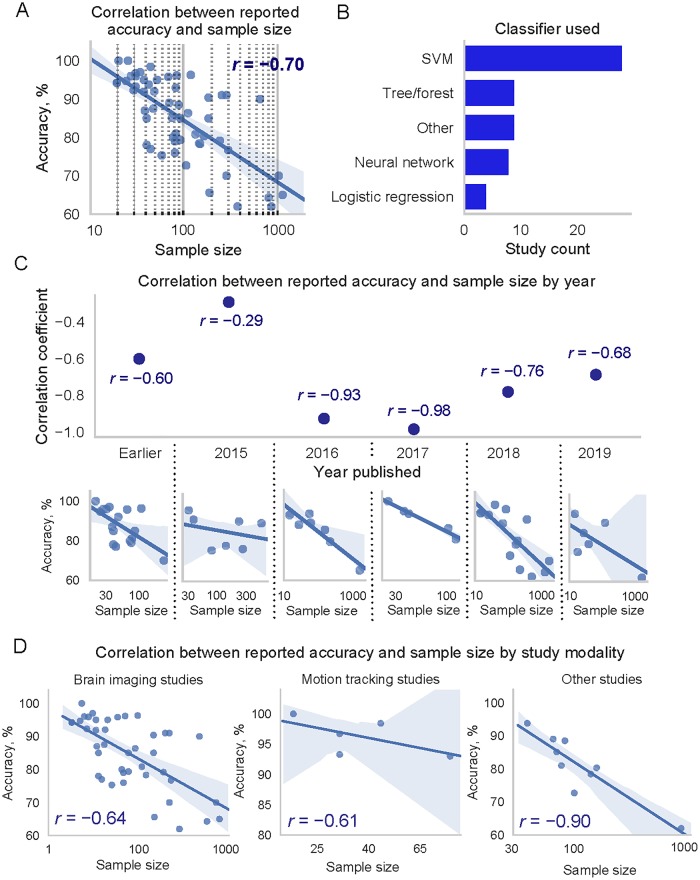
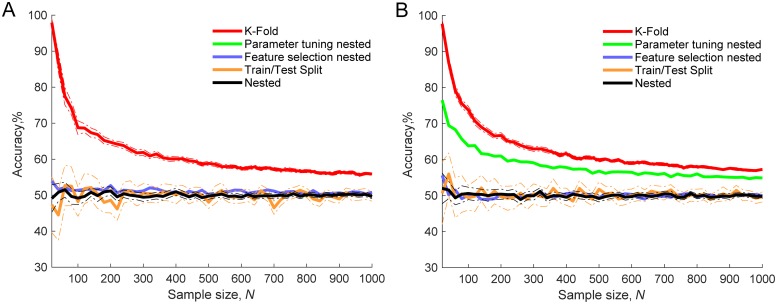
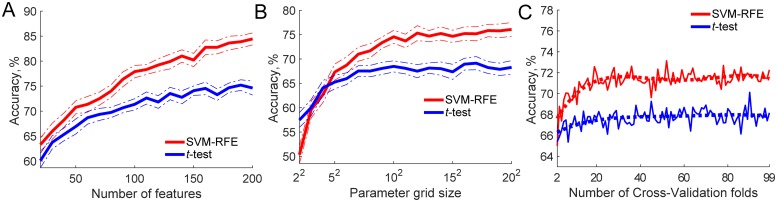
Advances in neuroimaging, genomic, motion tracking, eye-tracking and many other technology-based data collection methods have led to a torrent of high dimensional datasets, which commonly have a small number of samples because of the intrinsic high cost of data collection involving human participants. High dimensional data with a small number of samples is of critical importance for identifying biomarkers and conducting feasibility and pilot work, however it can lead to biased machine learning (ML) performance estimates. Our review of studies which have applied ML to predict autistic from non-autistic individuals showed that small sample size is associated with higher reported classification accuracy. Thus, we have investigated whether this bias could be caused by the use of validation methods which do not sufficiently control overfitting. Our simulations show that K-fold Cross-Validation (CV) produces strongly biased performance estimates with small sample sizes, and the bias is still evident with sample size of 1000. Nested CV and train/test split approaches produce robust and unbiased performance estimates regardless of sample size. We also show that feature selection if performed on pooled training and testing data is contributing to bias considerably more than parameter tuning. In addition, the contribution to bias by data dimensionality, hyper-parameter space and number of CV folds was explored, and validation methods were compared with discriminable data. The results suggest how to design robust testing methodologies when working with small datasets and how to interpret the results of other studies based on what validation method was used.
Overview
The claims and statistics of this paper haven’t been checked yet.
Free: it reads the open-access text and checks the first 5 claims that cite a source we can check. Create a free account to check every claim.
Integrity signals
Registry
Cites
Statistics
Figures
Verification
Claims the paper makes
The claims and statistics of this paper haven’t been checked yet.
Free: it reads the open-access text and checks the first 5 claims that cite a source we can check. Create a free account to check every claim.
Claims other papers make about this one
Each is checked against this paper’s own text: does it say what the citing paper says it does?
The cited source says what the claim attributes to it.
In the citing paper
“According to the simulations in Vabalas et al. 99 , the bias introduced by k-fold CV is still substantial even with a sample size of 1000.”
From Machine learning in concrete science: applications, challenges, and best practices (2022) · cites this paper as [99]
The cited source says what the claim attributes to it.
In the citing paper
“Machine learning in medical imaging often faces a fundamental dilemma, namely, the small sample size problem.”
From Federated learning for medical image analysis: A survey (2024) · cites this paper as [9]
In the citing paper
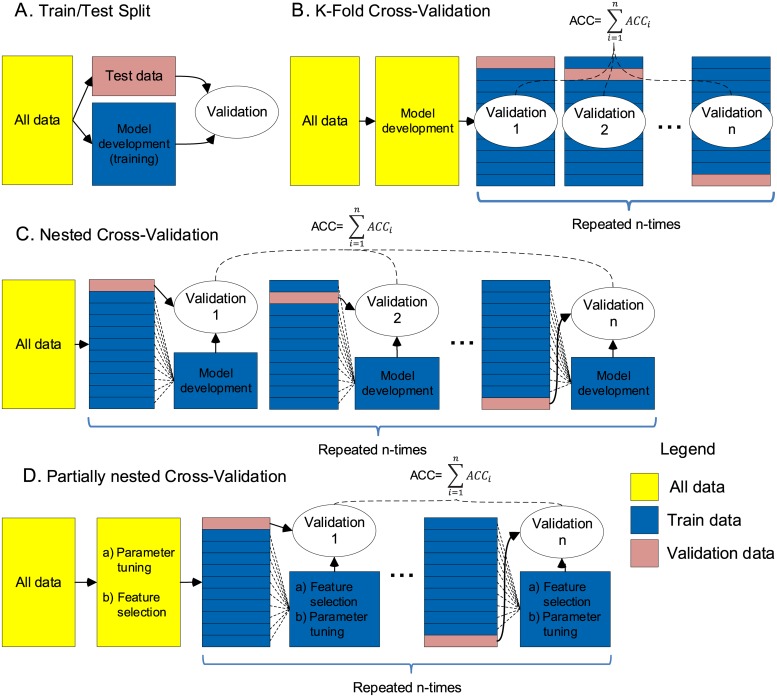
“An alternative to k-fold CV is n × k nested CV, which can produce robust and unbiased performance estimates regardless of the size of datasets 99 .”
From Machine learning in concrete science: applications, challenges, and best practices (2022) · cites this paper as [99]
Self-check
Percentages, sums and reported differences re-computed from the paper’s own numbers.
The self-check needs the paper’s full text.
Citations
Cites
Scikit-learn: Machine Learning in Python
Pedregosa, F., Varoquaux, G., Gramfort, A., Michel, V., Thirion, B., Grisel, O., Blondel, M., Müller, A., Nothman, J., Louppe, G., et al. (2012) · arXiv · doi:10.48550/arxiv.1201.0490 · Cited by 71,016 · cited 1×
“Logistic regression was implemented using Scikit-learn library [18].”
MethodLIBSVM: A library for support vector machines
Chang, C.-C., & Lin, C.-J. (2011) · ACM Transactions on Intelligent Systems and Technology · doi:10.1145/1961189.1961199 · Cited by 40,918 · cited 1×
“SVM was implemented with Libsvm library [17].”
Sudlow, C., Gallacher, J., Allen, N., Beral, V., Burton, P., Danesh, J., Downey, P., Elliott, P., Green, J., Landray, M., et al. (2015) · PLOS Medicine · doi:10.1371/journal.pmed.1001779 · Cited by 12,728
A training algorithm for optimal margin classifiers
Boser, B. E., Guyon, I. M., & Vapnik, V. N. (1992) · Proceedings of the fifth annual workshop on Computational learning theory · doi:10.1145/130385.130401 · Cited by 11,992 · cited 2×
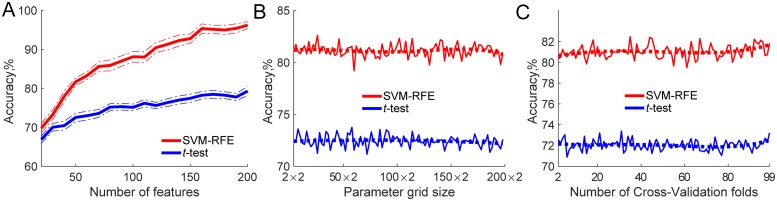
“One, computationally demanding and complex, where Support Vector Machine (SVM) [12] classifier with Radial Basis Function (RBF) kernel was coupled with Support Vector Machine Recursive Feature Elimination (SVM-RFE) [13] feature selection.”
MethodCross validatory choice and assessment of statistical predictions
Stone, M. (1974) · Journal of the Royal Statistical Society Series B: Statistical Methodology · doi:10.1111/j.2517-6161.1974.tb00994.x · Cited by 10,881 · cited 1×
“Stone [10] pointed out the importance of separating CV used for model development and CV used for model evaluation.”
MethodLibsvm : A library for support vector machines
Ferrari, V. (2008) · Medical Entomology and Zoology · Cited by 10,122
Gene selection for cancer classification using support vector machines
Guyon, I., Weston, J., Barnhill, S., & Vapnik, V. (2002) · Machine Learning · doi:10.1023/a:1012487302797 · Cited by 9,954 · cited 8×
“SVM-RFE algorithm selects features based on how important they are for an SVM classifier to separate classes.”
InfluentialA review of feature selection techniques in bioinformatics
Saeys, Y., Inza, I., & Larrañaga, P. (2007) · Bioinformatics · doi:10.1093/bioinformatics/btm344 · Cited by 5,244
Bias in error estimation when using cross-validation for model selection
Varma, S., & Simon, R. (2006) · BMC Bioinformatics · doi:10.1186/1471-2105-7-91 · Cited by 2,485 · cited 10×
“Varma and Simon [7] suggest that Nested CV provides almost unbiased performance estimates.”
BackgroundMethodResultInfluentialMachine learning applications in genetics and genomics
Libbrecht, M. W., & Noble, W. S. (2015) · Nature Reviews Genetics · doi:10.1038/nrg3920 · Cited by 2,084 · cited 1×
“Then if number of features is large, which is especially true for neuroimaging and gene expression studies [3, 14, 15], feature selection is performed.”
Background
Cited by
Items 901–1,000 of 1,001
Spondylidis, S., Giannoulaki, M., Machias, A., Batzakas, I., & Topouzelis, K. (2023) · Frontiers in Marine Science · doi:10.3389/fmars.2023.1117704 · Cited by 5
“The use of such a small dataset could result in biased overfitted results (Vabalas et al., 2019) and it was avoided.”
BackgroundAlfonso, G., & Castillo, R. (2023) · Mathematics · doi:10.3390/math11081795 · Cited by 5
Hosseini-Kivanani, N., Schommer, C., & Leiva, L. A. (2023) · IEEE International Conference on e-Health Networking, Applications and Services (Healthcom) · doi:10.1109/healthcom56612.2023.10472399 · Cited by 8
“Several studies have investigated the impacts of dataset size on the classification performance in the medical domain [18], [20].”
BackgroundGauge-Optimal Approximate Learning for Small Data Classification
Vecchi, E., Bassetti, D., Graziato, F., Pospíšil, L., & Horenko, I. (2024) · Neural Computation · doi:10.1162/neco_a_01664 · Cited by 6
“…potentially represent a biased result, induced by the very same limited size of the training set and by an insufficient con-trol for overfitting (Vabalas et al., 2019), thus opening an additional discussion (beyond the scope of this letter) about which metrics would be best suited to assess the…”
BackgroundYang, Y. C., Sibert, C., & Stocco, A. (2024) · Computational Brain & Behavior · doi:10.1007/s42113-024-00203-x · Cited by 10
“To 611 alleviate the potential problems of small sample size in neuroimaging studies, Vabalas 612 and colleagues [46] used Nested CV approaches to produce robust and unbiased model 613 performance regardless of sample size.”
MethodWillbrand, E. H., Tsai, Y., Gagnant, T., & Weiner, K. S. (2026) · eLife · doi:10.7554/elife.90451 · Cited by 8
Linking interpersonal differences in gut microbiota composition and drug biotransformation activityPreprint
Mastrorilli, E., Herd, P., Rey, F. E., Goodman, A. L., & Zimmermann, M. (2026) · bioRxiv (Cold Spring Harbor Laboratory) · doi:10.64898/2026.01.21.700809 · Cited by 6
“…of all models by measuring Root Mean Square Error (RMSE) and Pearson Correlation Coefficient (PCC) between predicted and observed drug biotransformation rates in a nested cross-validation setting to ensure robust and unbiased performance estimates independent of the sample size 28 (Figure 4A).”
EP-pred: A Machine Learning Tool for Bioprospecting Promiscuous Ester Hydrolases
Xiang, R., Fernandez-Lopez, L., Robles-Martin, A., Ferrer, M., & Guallar, V. (2022) · doi:10.20944/preprints202209.0100.v1 · Cited by 5
Forward and inverse adversarial model applying to well-logging
Zhou, J. W., Zhang, J., Shao, R., Xiao, L., & Liao, G. (2025) · Engineering Applications of Artificial Intelligence · doi:10.1016/j.engappai.2025.110090 · Cited by 4
A computational framework for detecting inter-tissue gene-expression coordination changes with aging
Briller, S., David, G. B., Amir, Y., Atzmon, G., & Somekh, J. (2025) · Scientific Reports · doi:10.1038/s41598-025-94043-9 · Cited by 4
Explainable AI predicting Alzheimer’s disease with latent multimodal deep neural networks
Chen, X., Thompson, J. A., Yao, Z., Cappelleri, J. C., Amponsah, J. K., Mukherjee, R., & Hu, J. (2025) · Journal of Biopharmaceutical Statistics · doi:10.1080/10543406.2025.2511194 · Cited by 4
Zheng, Y., Du, Y., Zhang, B., Zhang, H., Shang, P., & Hou, Z. (2025) · Frontiers in Oncology · doi:10.3389/fonc.2025.1577794 · Cited by 7
O’Dea, B., Batterham, P. J., Braund, T. A., Chakouch, C., Larsen, M. E., Berk, M., Torok, M. H., Christensen, H. M., & Glozier, N. (2025) · npj Mental Health Research · doi:10.1038/s44184-025-00140-y · Cited by 6
“Nestedcross-validationwasselectedasitmaximisestheuseofthewholedatasetfor testingoverallperformancewhilemaintainingthesplitbetweentraining and testing samples, and provides the next best estimate of real-world predictive performance when external datasets are not available 45,48,49 .”
Farrokhi, A., Jalali, M., Jabal, M. S., Abdollahifard, S., Taheri, R., Yousefi, O., Niakan, A., & Khalili, H. (2025) · Computers in Biology and Medicine · doi:10.1016/j.compbiomed.2025.110827 · Cited by 4
González-Martin, A. M., Limón-Villegas, E. S., Reyes-Castillo, Z., Esparza-Ros, F., Hernández-Palma, L. A., Santillán-Rivera, M. S., Herrera-Amante, C. A., Ramos-García, C. O., & Righini, N. (2025) · Journal of Functional Morphology and Kinesiology · doi:10.3390/jfmk10030276 · Cited by 4
“Several studies have reported small sample sizes (with a median of 88 participants), and, in certain cases, higher accuracy has been observed in models trained on smaller datasets [71].”
Lee, T. C., & Ziegler, M. D. (2025) · PLoS ONE · doi:10.1371/journal.pone.0329205 · Cited by 4
Khaled, A. Y., Townsend, P. A., Heberlein, B. C., Hills, W. B., & Wang, Y. (2025) · Smart Agricultural Technology · doi:10.1016/j.atech.2025.101372 · Cited by 4
Gu, Z., Wang, S., Yu, K., Wang, Y., & Zhang, X. (2025) · Remote Sensing · doi:10.3390/rs17213530 · Cited by 4
“Considering the small scale of the dataset, we employed K-fold cross-validation [33,34].”
Ma, B., Zhang, C., Zhou, M., Pan, T., Song, X., & Zhu, Z. (2025) · SPE Journal · doi:10.2118/231168-pa · Cited by 4
Bracher‐Smith, M., & Escott‐Price, V. (2025) · Molecular Psychiatry · doi:10.1038/s41380-025-03330-4 · Cited by 7
“2) addresses this by separating the two processes, with an outer loop for evaluation and an inner loop for model selection, running as many times as there are parameter combinations [69, 70].”
Ni, S.-Y., Lu, C., Wu, C., Hsieh, M.-H., Chen, I., Lin, C., Lai, F., & Chien, Y. (2025) · Journal of the Formosan Medical Association · doi:10.1016/j.jfma.2025.11.026 · Cited by 4
Game-Based Cognitive Aging Assessment: Toward a Digital Biomarker of Cognitive Health
Markovitch, B., Markopoulos, P., & Birk, M. V. (2025) · Digital Biomarkers · doi:10.1159/000548350 · Cited by 4
“This was repeated across 10 hold-out sets, enabling stable and unbiased estimation of out-of-sample predictive performance [30].”
Framework for real-time multimodal container transport risk management
Ouedraogo, C. A., Barlogis, R., Montarnal, A., Gourc, D., & Rosemont, C. (2025) · Engineering Applications of Artificial Intelligence · doi:10.1016/j.engappai.2025.113108 · Cited by 7
Kwon, Y. A., Ji, S., Huh, D., Choi, M., & Lee, M. (2025) · BMC Public Health · doi:10.1186/s12889-025-24999-w · Cited by 4
“…provide statistically sound performance assessment without the computational burden of complex validation schemes, since empirical evidence indicates that substantial sample sizes enable direct performance metrics to yield reliable results comparable to intensive cross-validation approaches [29].”
Zhang, W., Yue, D., Liu, D., Li, X., Lv, F. Z., Cao, Z., Wei, L., Wang, Y., Zhang, Y., Xie, Z., et al. (2025) · Journal of environmental chemical engineering · doi:10.1016/j.jece.2025.121014 · Cited by 4
An, S., Song, Y., Jang, H., & Ahn, K. (2025) · Financial Innovation · doi:10.1186/s40854-025-00874-w · Cited by 8
“ML technologies effectively account for the nonlinearity inherent in datasets; however, the standalone applicability of ML techniques can be limited by insufficient training samples (Vabalas et al. 2019) and/or the demand for transparent decision-making processes (Ali et al. 2023).”
An inflammatory biomarker panel for prediabetes classification using interpretable machine learning
Maalouf, M., Tammam, M. M. S., Kurungadan, S., Alsereidi, A., Afzal, M., & Jelinek, H. F. (2026) · PLoS ONE · doi:10.1371/journal.pone.0341195 · Cited by 4
“The analysis strictly adhered to best practices to avoid data leakage and ensure external validity and generalizability of the findings [34,35].”
Balasubramani, J. (2026) · Psychiatry Research Neuroimaging · doi:10.1016/j.pscychresns.2026.112251 · Cited by 4
周蒙寅, Liu, Q., Wang, Y., 程炳皓, Fan, C., Zhang, X., Liu, Z., Fan, W., & Yang, S. (2026) · Microchemical Journal · doi:10.1016/j.microc.2026.118982 · Cited by 4
Hu, W., Zhang, T., Liu, Z., Jin, C. Z., Lou, Y., Deng, X., & Tan, J. (2022) · Journal of Mechanical Design · doi:10.1115/1.4054877 · Cited by 4
Liyanage, C. R., Mago, V., Schiff, R., Ranta, K., Park, A., Lovato-Day, K., Agnor, E., & Gokani, R. (2023) · JMIR Formative Research · doi:10.2196/43511 · Cited by 4
“Moreover, the use of a complete data set for the k-fold CV can lead to overfitting and overoptimistic results [30].”
BackgroundMethodWang, Y.-C., Luo, Z., Luo, J., Gao, Y., Kong, Y., & Wang, Q. (2023) · International Journal of Environmental Research and Public Health · doi:10.3390/ijerph20065059 · Cited by 4
“As such, it is possible to avoid the leakage of information from data and, therefore, obtain relatively low biases in model scoring [26,27].”
BackgroundGigliotti, H. M., Hodgson, C., Riley, M. C., Marshall, B., Ward‐Ritacco, C. L., Martin, J. R., & Boolani, A. (2023) · Applied Sciences · doi:10.3390/app13074241 · Cited by 5
“Due to small sample sizes and several of the models having 0% accuracy, only accuracy scores are reported, as precision, recall, Area Under the Curve Receiving Operating Characteristics (AUC ROC), and F1 scores were unable to be calculated [68].”
MethodMachine-learning applications to authoritarian selections: The case of China
Lee, J. (2023) · Research & Politics · doi:10.1177/20531680231211640 · Cited by 4
“Recent research has discovered that by incorporating a wide range of features, the limitations posed by small sample sizes can be overcome (Vabalas et al. 2019; Varoquaux 2018).”
BackgroundInfluence of lunar phases and meteorological factors on rainfall in Karachi City, Pakistan
Rasool, U., Yin, X., Xu, Z., Rasool, M. A., Hussain, M., & Iftikhar, F. (2024) · Journal of Hydrology · doi:10.1016/j.jhydrol.2024.130628 · Cited by 7
Impact of Feature Selection and CIR Window Length on NLoS Classification for UWB Systems
Ember, E., Pestana, J., Krisper, M., Stocker, M., Römer, K., Boano, C. A., & Pelegrín, P. C. (2023) · International Conference on Mobility, Sensing and Networking (MSN) · doi:10.1109/msn60784.2023.00024 · Cited by 5
“These k outer assessments provide an unbiased estimate of the performance of the final ML model during deployment [30]–[32].”
Backgroundten Harkel, T. C., Bielevelt, F., Marres, H. A. M., Ingels, K. J. A. O., Maal, T., & Speksnijder, C. M. (2024) · European Annals of Otorhinolaryngology Head and Neck Diseases · doi:10.1016/j.anorl.2024.07.005 · Cited by 4
Magano, D., Taveira‐Gomes, T., Massano, J., & Barros, A. S. (2024) · Journal of Clinical Medicine · doi:10.3390/jcm13175081 · Cited by 4
“Given that PDQ-39 SI is commonly used as an endpoint in clinical trials, the ability to predict this score could offer valuable insights for trial design and patient management.”
BackgroundAccelerating multi-objective catalytic material design: A model-based method
Li, B., Wang, D., Yu, M., He, C., Li, X., Zhai, J., Hasan, M., Zhao, C., Wang, M., & Shen, D. (2024) · Chinese Chemical Letters · doi:10.1016/j.cclet.2024.110454 · Cited by 4
Xu, Z., Li, H., & Yu, J. (2024) · Structural Control and Health Monitoring · doi:10.1155/2024/2341211 · Cited by 4
A Resource Efficient System for On-Smartwatch Audio Processing
Ahmed, M. S., Rahman, A., Wang, Z., Rucker, M., & Barnes, L. E. (2024) · ACM Annual International Conference on Mobile Computing and Networking (MobiCom) · doi:10.1145/3636534.3698866 · Cited by 4
“To develop and validate the models, we utilized a nested cross-validation (CV) approach, which provides an unbiased performance estimate [21].”
Factors that determine hot and cold-water consumption in social housing apartments
Sborz, J., Kalbusch, A., & Henning, E. (2024) · Architectural Engineering and Design Management · doi:10.1080/17452007.2024.2436941 · Cited by 4
Chepkonga, B. J., Koech, L. K., Makomere, R. S., & Rutto, H. L. (2024) · Digital Chemical Engineering · doi:10.1016/j.dche.2024.100214 · Cited by 4
Wannan, C., Scott, I., Dwyer, D., Clark, S. R., Hartmann, S., Ye, R. R., Amminger, G. P., Yuen, H. P., Lavoie, S., Markulev, C., et al. (2024) · Schizophrenia Bulletin · doi:10.1093/schbul/sbae204 · Cited by 5
Islam, M. T., Turja, S. A., Islam, M. S., Rahman, M. M., & Habib, A. (2024) · Quality & Quantity · doi:10.1007/s11135-024-02043-0 · Cited by 6
“We divided the dataset into training and testing phases using the train-test split method (Vabalas et al. 2019).”
Eusebi, R., Su, H., Wu, L., Rong, P., Balaguru, K., Leung, L.-Y. R., Choi, Y., Chan, P. W., Gan, J., DeMaria, M., et al. (2025) · Environmental Research Letters · doi:10.1088/1748-9326/adac7f · Cited by 6
“Also new from S20, data augmentation (e.g. Leave-one-year-out nested cross validation (Vabalas et al 2019) was used to maximize the amount of data that could be used to train and validate the model, while still yielding predictions and evaluation metrics on unseen data for the whole dataset.”
Using Machine Learning to Shorten and Adapt Fall Risk Assessments for Older Adults
Khatib, L., Toledano-Shubi, A., Bahat, H. S., & Hel-Or, H. Z. (2025) · Applied Sciences · doi:10.3390/app15041690 · Cited by 4
Tait, J., Kellett, S., & Delgadillo, J. (2025) · Journal of Anxiety Disorders · doi:10.1016/j.janxdis.2025.103003 · Cited by 4
Martins, C. D., Vergara, R. C., & Khoury, B. (2025) · Journal of Marital and Family Therapy · doi:10.1111/jmft.70026 · Cited by 7
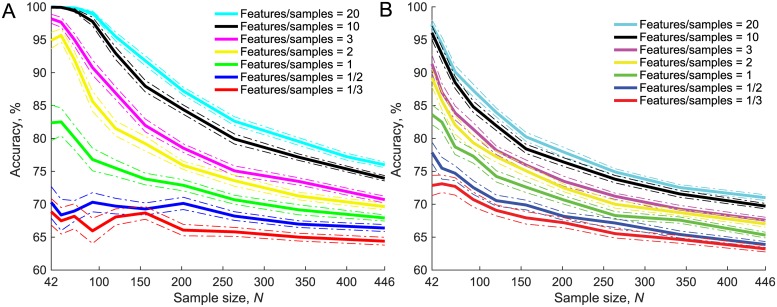
“Although there are currently no definitive guidelines for the sample size required in machine ‐ learning approaches, it is suggested that a 1:2 predictor ‐ to ‐ observation ratio does not introduce major issues with accuracy or overfitting (Vabalas et al. 2019).”
Lee, G.-H., Sung, S. M., Choi, K.-D., Kim, J., Cho, J. W., & Kim, S. H. (2025) · Seizure · doi:10.1016/j.seizure.2025.05.007 · Cited by 5
Bonifaz, A. P., Syed, S., Kassel, M., McKenzie, G. W., Shah, V. M., Forry, B. M., Gaskins, J., Sowards, K. T., Avula, T. B., Masters, A. H., et al. (2025) · PLoS ONE · doi:10.1371/journal.pone.0312208 · Cited by 5
“Due to our sample size, the former was ultimately favored due to it not increasing the number of features, given how an increased features-to-samples ratio has been associated with overfitting the data [32].”
Statistical consideration in nephrology research
Xu, K., & Kang, H. (2025) · Kidney Research and Clinical Practice · doi:10.23876/j.krcp.25.046 · Cited by 5
“In addition, the robust evaluation of ML classification is also important when training and testing sample sizes are small, as it facilitates meaningful comparisons across studies and methods [56–58].”
RSD-15K: A Large-Scale User-Level Annotated Dataset for Suicide Risk Detection on Social Media
Zheng, S., Tao, Y., & Zhou, T. (2025) · IEEE International Conference on Data Engineering Workshops (ICDEW) · doi:10.1109/icdew67478.2025.00029 · Cited by 9
“…this is consistent with previous research findings [24]; and without any optimization, the model on the large-scale dataset has surpassed the fully optimized small-scale dataset model [24], indicating that the increase in data volume has a decisive influence on the improvement of model performance.”
Moura, F. L. L., Santos, J. L. O., Souza, A. S., Coelho, V., Lima, H., Reis, M. L. C. M. D., & Dias, F. D. S. (2025) · Food Research International · doi:10.1016/j.foodres.2025.117419 · Cited by 4
A computational validation for the health concept maturity levels questionnaire
Trognon, A., Habibi, I., Altakroury, H., Mahdar-Recorbet, L., Poli, A., Servais, D., Lambert, J., Béjean, M., & Abraham, D. (2026) · Frontiers in Psychology · doi:10.3389/fpsyg.2025.1555014 · Cited by 4
Arivudaiyanambi, J., Renganathan, G., & Ćuković, S. (2021) · IEEE International Biomedical Instrumentation and Technology Conference (IBITeC) · doi:10.1109/ibitec53045.2021.9649200 · Cited by 4
Limits to the Productivity in Biobased Territorial SMEs
Neira, F. G., & Ramos-Maldonado, M. (2022) · SAGE Open · doi:10.1177/21582440221099294 · Cited by 4
“The algorithm selection depends on the type of problem and the data set (Vabalas et al., 2019).”
BackgroundKupczyk, E., Schorpp, K., Hadian, K., Lin, S., Tziotis, D., Schmitt‐Kopplin, P., & Mueller, C. (2022) · Computational and Structural Biotechnology Journal · doi:10.1016/j.csbj.2022.09.023 · Cited by 5
“There are several ways to tackle this problem, some examples can be seen at Gowen et al. [44] We decided to use a classic train/test split.”
MethodTraining and Serving Machine Learning Models at Scale
Baresi, L., & Quattrocchi, G. (2022) · Lecture notes in computer science · doi:10.1007/978-3-031-20984-0_48 · Cited by 4
A Novel Pulse-Taking Device for Persian Medicine Based on Convolutional Neural Networks
Nafisi, V. R., Ghods, R., & Shojaedini, S. (2022) · Journal of Medical Signals & Sensors · doi:10.4103/jmss.jmss_133_21 · Cited by 4
“[12] Hence, we used it [Figure 4].”
Rojas-Velázquez, D., Tonda, A. P., Rodríguez-Guerra, I., Kraneveld, A. D., & Lopez‐Rincon, A. (2023) · Lecture notes in computer science · doi:10.1007/978-3-031-30229-9_45 · Cited by 5
McGeown, J. P., Pedersen, M., Hume, P. A., Theadom, A., Kara, S., & Russell, B. K. (2023) · Biomechanics · doi:10.3390/biomechanics3020020 · Cited by 5
“Inflated machine learning accuracy is commonly observed with small samples [58], and this may have influenced our results, given our study’s low sample size, imbalanced classes, and cross-validation approach.”
ResultMatros, A., Menz, P., Gill, A. R., Santoscoy, A., Dawson, T., Seiffert, U., & Burton, R. A. (2023) · Plant-Environment Interactions · doi:10.1002/pei3.10116 · Cited by 6
Betancourth, M. P., Ochoa-Gutierrez, V. J., Ferguson, H. M., González‐Jiménez, M., Wynne, K., Baldini, F., & Childs, D. (2023) · Scientific Reports · doi:10.1038/s41598-023-45696-x · Cited by 4
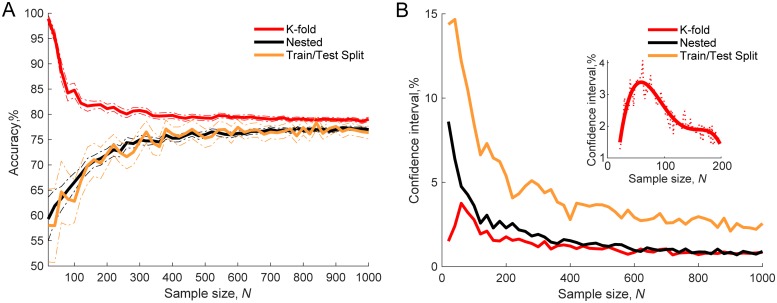
“Nested cross-validation is known to give unbiased performance estimates regardless of sample size 60,61 .”
BackgroundChen, L.-D., Caprio, M. A., Chen, D. M., Kouba, A. J., & Kouba, C. K. (2024) · PLoS Computational Biology · doi:10.1371/journal.pcbi.1011876 · Cited by 4
Yannick, T. L., Constant, E. E. J., Gael, E. P. B., William, B. A., Leroy, M. N. L., Tchamba, A. B., & Ngounouno, I. (2024) · Heliyon · doi:10.1016/j.heliyon.2024.e26288 · Cited by 4
“Cross-validation was used to validate the models [108] .”
MethodZargari, S. A., Khorshidi, N. A., Mirzahossein, H., & Jin, X. (2024) · Iranian Journal of Science and Technology Transactions of Civil Engineering · doi:10.1007/s40996-024-01383-z · Cited by 4
“Vabalas et al. (2019), Cui and Gong (2018), Faber and Fonseca (2014), and Shaikhina and Khovanova (2017).”
Bender, E.-M., Machetanz, L., von Känel, R., Euler, S., Kirchebner, J., & Günther, M. P. (2024) · Frontiers in Psychiatry · doi:10.3389/fpsyt.2024.1356843 · Cited by 4
“While our group sizes are large, considering the speci fi c setting and comorbidity of SUD, the dataset is rather small for a machine learning approach, thereby possibly containing risks of over fi tting or biased performance measurements (31).”
BackgroundData‐Driven Decision Algorithm for Open Caisson Foundation Construction
Tian, W., Li, H., Wang, Y., Zhu, Y., Zhu, H., & Li, K. (2024) · Advances in Civil Engineering · doi:10.1155/2024/9373931 · Cited by 4
Li, W. (2024) · Journal of Physics Condensed Matter · doi:10.1088/1361-648x/ad64a1 · Cited by 4
“Establishing an ML model tailored for small datasets is paramount in this study, mirroring a prevalent need in engineering and manufacturing-related works [35, 36].”
Overcoming the Small Dataset Challenge in Healthcare
Pais, D., Brás, S., & Sebastião, R. (2024) · IEEE Mediterranean Electrotechnical Conference (MELECON) · doi:10.1109/melecon56669.2024.10608708 · Cited by 6
“Furthermore, collecting data from human subjects can be a time-consuming and complex task, and in the early stages of research, resource constraints may further limit the ability to gather data from a large number of subjects [6], [10].”
BackgroundTan, A. S., Ali, F., & Poon, K. K. (2024) · Applied Psychology Health and Well-Being · doi:10.1111/aphw.12625 · Cited by 8
Age group classification based on optical measurement of brain pulsation using machine learning
Ilvesmäki, M., Ferdinando, H., Noponen, K., Seppänen, T., Korhonen, V. O., Kiviniemi, V. V., & Myllylä, T. (2025) · Scientific Reports · doi:10.1038/s41598-025-87645-w · Cited by 4
“The main limitation of our study is the relatively small sample size as in general the use of large datasets increases the statistical power in pattern recognition 25 .”
Szalma, J., Amora, K. K., Vidnyánszky, Z., & Weiss, B. (2021) · Lecture notes in computer science · doi:10.1007/978-3-030-68796-0_34 · Cited by 4
Robust machine learning method for imputing missing values in audiograms collected in children
Pitathawatchai, P., Chaichulee, S., & Kirtsreesakul, V. (2021) · International Journal of Audiology · doi:10.1080/14992027.2021.1884909 · Cited by 5
“It has been reported that the nested CV is sufficient to prevent overfitting, even with a limited sample size, and can produce almost unbiased estimates of performance with low variance (Vabalas et al. 2019; Varma and Simon 2006).”
BackgroundEvaluating the multi-task learning approach for land use regression modelling of air pollution
Dulny, A., Steininger, M., Lautenschlager, F., Krause, A., & Hotho, A. (2021) · Journal of Physics Conference Series · doi:10.1088/1742-6596/1834/1/012004 · Cited by 4
“It is a known observation in machine learning that small sample sizes often lead to overfitting, especially when using complex models like artificial neural networks as compared to traditional models (e.g. linear regression) [47, 25, 39].”
Thermal image-based temperament classification by genetic algorithm and adaboost classifier
Nafisi, V., & Ghods, R. (2022) · Journal of Medical Signals & Sensors · doi:10.4103/jmss.jmss_71_20 · Cited by 4
“discussed on various factors influencing CV performance.[19] There are some variations in the performance when CV fold would vary and the performance could be higher for some folds than others.”
BackgroundMethodIs emotional support the key to improving emotion regulation? A machine learning approach
Schetsche, C., Jaume, L. C., Caccia, P. A., Zelaya, M., & Azzollini, S. (2023) · Health Psychology Report · doi:10.5114/hpr/156937 · Cited by 4
“To decrease the likelihood of committing overfitting, we followed Vabalas et al.’s (2019) suggestions and used the nested (or double) cross-validation method.”
MethodPredicting Astrocytic Nuclear Morphology with Machine Learning: A Tree Ensemble Classifier Study
Grimaldi, P., Lorenzati, M., Ribodino, M., Signorino, E., Buffo, A., & Berchialla, P. (2023) · Applied Sciences · doi:10.3390/app13074289 · Cited by 4
“Kokol et al. [11] and Vabalas et al. [13] have investigated the state of the art of ML applied to a small data set and showed that using k-fold cross validation is not a good technique to estimate error in small sample predictions, since it may produce results that deviate significantly from the…”
Polano, M., Bedon, L., Bo, M. D., Sorio, R., Bartoletti, M., Mattia, E. D., Cecchin, E., Pisano, C., Lorusso, D., Lissoni, A. A., et al. (2023) · Clinical Pharmacology & Therapeutics · doi:10.1002/cpt.2960 · Cited by 6
“For each model, we constructed a multivariate logistic regression model using stepwise model selection (stepAIC function from the “MASS” package, USA).(20) The toxicity probability of each patient was calculated using the final logistic regression model and then patients were stratified into highrisk toxicity and lowr…”
MethodKoh, R. G. L., Khan, M. A., Rashidiani, S., Hassan, S. I., Tucci, V., Liu, T., Nesovic, K., Kumbhare, D. A., & Doyle, T. E. (2023) · IEEE Access · doi:10.1109/access.2023.3316019 · Cited by 6
“Model validation helps to assess the reliability 319 of the model’s predictions and to identify any issues such 320 as overfitting, underfitting, or bias that may impact the 321 model’s performance [89], [90], [91], [92].”
BackgroundLee, J., & Shih, V. (2023) · Proceedings of the National Academy of Sciences · doi:10.1073/pnas.2305143120 · Cited by 4
Harnessing Machine Learning for Effective Cyber security Classifiers
Jena, T., Shankar, A., & Singhdeo, A. (2023) · Asian Journal of Research in Computer Science · doi:10.9734/ajrcos/2023/v16i4405 · Cited by 4
AutoML Approach for Decision Making in a Manufacturing Context
Mallouk, I., Sallez, Y., & Majd, B. A. E. (2024) · Studies in computational intelligence · doi:10.1007/978-3-031-53445-4_13 · Cited by 4
Sayed, B. T., Sari, A., Ghribi, W., Alkurdi, A. A. H., Askar, S. K., & Mohmmed, K. H. (2024) · Proceedings of the Institution of Mechanical Engineers Part E Journal of Process Mechanical Engineering · doi:10.1177/09544089241263455 · Cited by 4
“46,47 Figure 3(a) represents the fundamental architecture of an arti fi cial neural network featuring multiple layers: the initial layer functions as the input, the fi nal layer produces output results, and the intermediate layers are the hidden layers.”
Artifact Detection in Cardiac MRI Data by Deep Learning Methods
Karakamış, K., Özer, C., & Öksüz, İ. (2021) · Signal Processing and Communications Applications Conference (SIU) · doi:10.1109/siu53274.2021.9477844 · Cited by 4
Metagenomics and Machine Learning-Based Precision Medicine Approaches for Autoimmune DiseasesPreprint
Zehrh, I., Habiba, U., Picco, M. R., Bashir, S. H., Rehman, U. A., Haider, O., & Khoso, S. (2023) · Preprints.org · doi:10.20944/preprints202304.0209.v2 · Cited by 4
Akshay, A., Besic, M., Kühn, A., Burkhard, F. C., Bigger-Allen, A., Adam, R. M., Monastyrskaya, K., & Gheinani, A. H. (2024) · bioRxiv (Cold Spring Harbor Laboratory) · doi:10.1101/2024.01.08.574189 · Cited by 4
Pan-cancer virtual spatial transcriptomics from routine histology with PhoenixPreprint
Tran, M., Gindra, R. H., Putze, P., Senbai, 康. K., Palla, G., Šket, T., Falcomatà, C., Wang, C., Guo, R., Boxberg, M., et al. (2026) · bioRxiv (Cold Spring Harbor Laboratory) · doi:10.64898/2026.04.25.720812 · Cited by 7
Zhang, T., Su, M., Huo, X., & Zhao, X. (2025) · International Journal of Clinical and Health Psychology · doi:10.1016/j.ijchp.2025.100628 · Cited by 3
“We employed a 70/30 train-test split following established best practices for moderate sample sizes (Vabalas et al., 2019).”
Structure-Based Multilevel Descriptors for High-throughput Screening of Elastomers
Deng, S., Chen, C., Li, K., Chen, X., Xia, K., & Li, S. (2023) · The Journal of Physical Chemistry B · doi:10.1021/acs.jpcb.3c06025 · Cited by 3
Using non-continuous accelerometry to identify cryptic nesting events of Galapagos giant tortoises
Donovan, E. F., Blake, S., Deem, S. L., Moldowan, P. D., Nieto‐Claudin, A., Cabrera, F., Peñafiel, C., & Bastille‐Rousseau, G. (2024) · Animal Biotelemetry · doi:10.1186/s40317-024-00387-w · Cited by 4
“We tested three different methods for separating training and validation data sets: temporally [84], by individual [85], and randomly [86].”
Methodda Silva, D. H., Ribeiro, C. T., Souza, L. R. D. S., Nardo, J. R. M., & Pereira, A. A. (2025) · International Journal of Online and Biomedical Engineering (iJOE) · doi:10.3991/ijoe.v21i02.50503 · Cited by 3
Mari, T., Ali, H. H., Pacinotti, L., Powsey, S., & Fallon, N. B. (2025) · Cognitive Affective & Behavioral Neuroscience · doi:10.3758/s13415-025-01268-2 · Cited by 5
“Within-epoch interpolation was conducted to maximise the number of observations, as larger datasets are less prone to overfitting during ML model development (Vabalas et al., 2019).”
Deep Learning Amplified Early Stopping Bias: Overestimating Performance on Small Datasets
Rajabi, N., Ribeiro, A. H., Vasco, M., & Kragić, D. (2025) · IEEE International Conference on Acoustics Speech and Signal Processing · doi:10.1109/icassp49660.2025.10890439 · Cited by 4
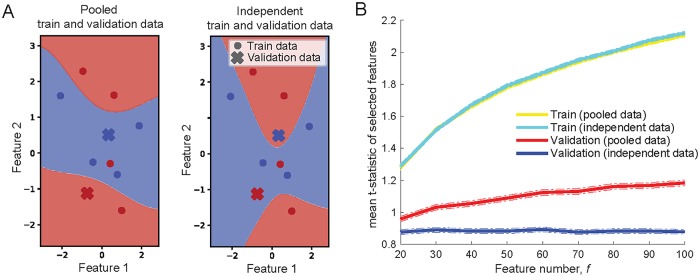
“Similarly, Vabalas et al. [9] and Ambroise and McLachlan [23] show that performance estimates are overly optimistic when cross-validation is used for both model/feature selection and performance evaluation.”
Li, J., Wang, Y., Wang, F., Zhang, R., Wang, N. N., Zhu, Y., & Zhao, T. (2025) · Depression and Anxiety · doi:10.1155/da/5734107 · Cited by 3
“Small sample sizes may also limit the generalizability of the results, leading to overestimated predictive effects [16].”
Distinct neural patterns for various information in working memory: A brain connectivity study
Sazesh, S., Farrokhi, A., Shalchyan, V., Johnson, E. L., & Daliri, M. R. (2025) · PLoS ONE · doi:10.1371/journal.pone.0326449 · Cited by 3
“Values were normalized based on the training set, ensuring consistent scaling across both sets [68].”
Berndt, J. D., Duffy, F. J., D'Ascenzo, M. D., Miller, L. R., Qi, Y., Whitney, G. A., Danziger, S. A., Vachani, A., Massion, P. P., Deppen, S. A., et al. (2025) · The Journal of Liquid Biopsy · doi:10.1016/j.jlb.2025.100313 · Cited by 4
Ke, H., Zhang, H., Jiang, H., Li, S., & Wang, H. ‐. (2025) · Frontiers in Pediatrics · doi:10.3389/fped.2025.1616766 · Cited by 3
Monzón, M., Schoenmacker, I. D., Cina, A., Enz, R., Lanz, C., Galbusera, F., Jutzeler, C. R., & Manjaly, Z. (2025) · Scientific Reports · doi:10.1038/s41598-025-10907-0 · Cited by 3
“To mitigate the potential risk of overfitting associated with the limited sample size, a stratified nested cross-validation (CV) methodology was employed 48 .”
Metadata
- Authors
- Vabalas, A., Gowen, E., Poliakoff, E., & Casson, A. J.
- Affiliations
- University of Manchester (GB)
- Corresponding author
- Vabalas, Andrius
- Venue
- PLOS ONE
- Publisher
- Public Library of Science (PLoS)
- Published
- 2019-11-07
- Volume
- 14
- Issue
- 11
- Pages
- e0224365
- ISSN
- 1932-6203 (ISSN-L)
- PMC
- PMC6837442
- OpenAlex
- W2981679558
- Cited by
- 1,901
- References
- 32
- Citations by year
- 2026: 497 · 2025: 325 · 2024: 316 · 2023: 280 · 2022: 247 · 2021: 167 · 2020: 66 · 2019: 1
- FWCI
- 55.09
- Type
- journal article
- Language
- en
- Open access
- gold
- doi.org
- Licence
- Locations
- PLoS ONE (publishedVersion, cc-by)
- PubMed Central (publishedVersion, cc-by)
- PubMed (publishedVersion)
- RePEc: Research Papers in Economics (submittedVersion)
- DOAJ (DOAJ: Directory of Open Access Journals) (submittedVersion, cc-by-sa)
- Figshare (submittedVersion, cc-by)
- Research Explorer (The University of Manchester) (submittedVersion, cc-by)
- Funders
- UK Engineering and Physical Sciences Research Council and its Doctoral Training Partnership with the University of Manchester (EP/m507969/1)
- Topics
- Physical Sciences › Computer Science › Artificial Intelligence › Machine Learning and Data Classification
- Physical Sciences › Computer Science › Artificial Intelligence › Imbalanced Data Classification Techniques
- Health Sciences › Health Professions › Health Information Management › Artificial Intelligence in Healthcare
- Keywords
- machine learning validation, small sample size, overfitting, nested cross-validation, train-test split, feature selection, hyperparameter optimization, high-dimensional data, autism classification, biomarker discovery
- MeSH terms
- Machine Learning, Algorithms, Data Interpretation, Statistical, Humans, Sample Size, Biomedical Research
About these checks
Registry, retraction, Cites and statistics results are computed, not judged, with one exception: a printed reference that no index lists is read once by a model before it counts as a citation error. Claims are extracted by a model and kept only when their quote appears verbatim in the text; each cited source is then checked, with a model’s help, for whether it says what the claim relies on. Those verdicts can be wrong — read the claim’s quote and the cited source before relying on one.
Statistics and arithmetic are recomputed, not judged.
Confidence bands are shown only for fields calibrated on our annotated test set. None is calibrated yet, so no band is shown.
What counts as a claim ›How we measure confidence ›How we check this ›
Are you an author, or do you see a problem with this page? Request a review
Data sources
Bibliographic data: Semantic Scholar, OpenAlex, Crossref.
Contains information from the Semantic Scholar Academic Graph Datasets, made available under the ODC Attribution License (ODC-BY 1.0).
Semantic Scholar’s data is described in: Kinney, R., et al. (2023). The Semantic Scholar Open Data Platform. arXiv:2301.10140.
