

Machine learning algorithm validation with a limited sample size
Open accessThe DOI matches its Crossref record; 31 of the 32 references it cites were found in a registry or an index.
Abstract
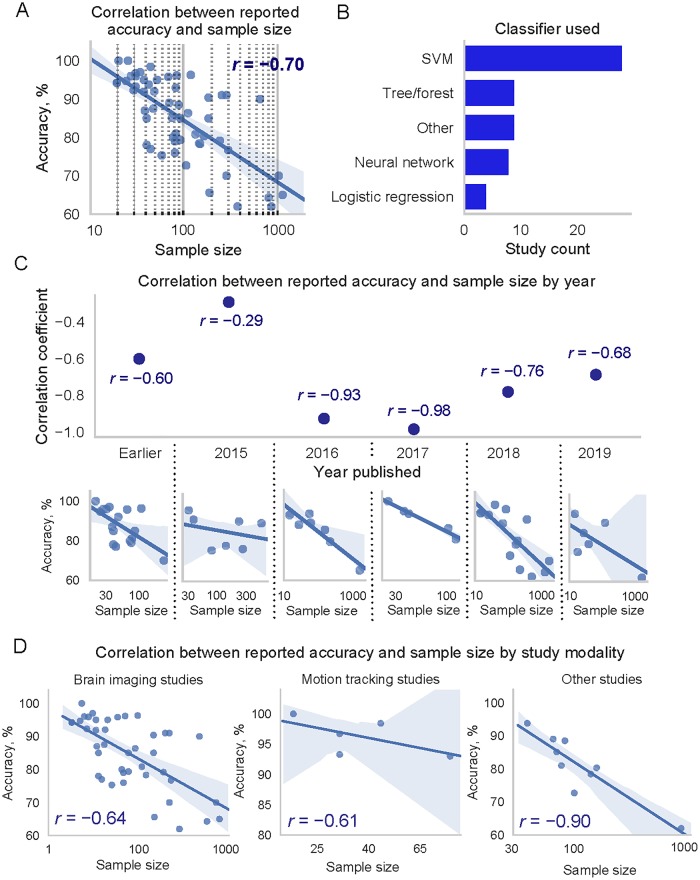
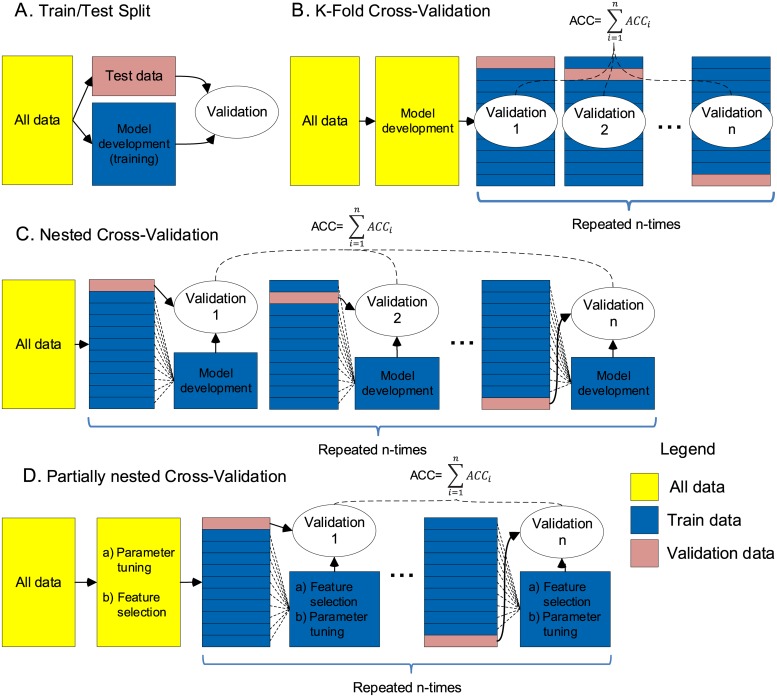
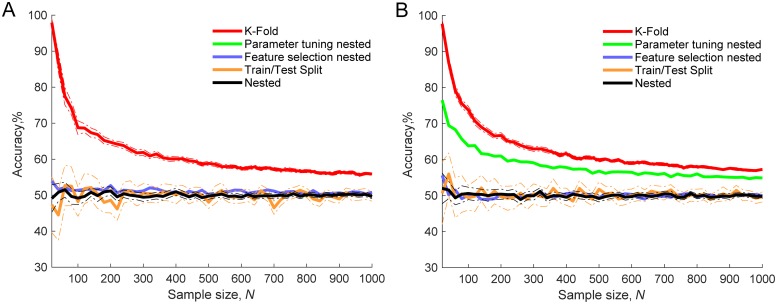
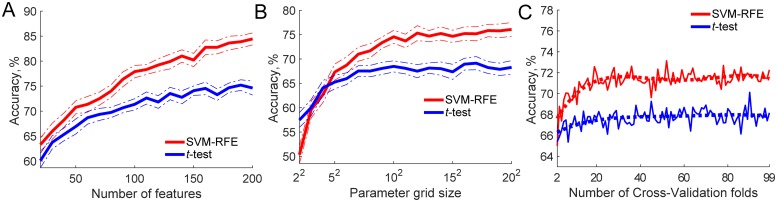
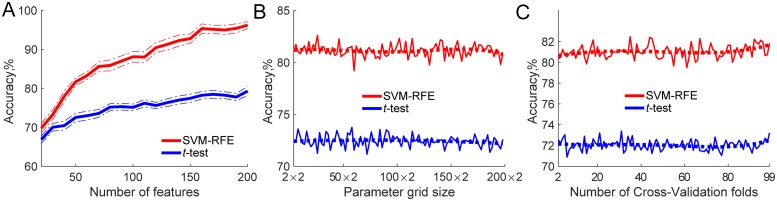
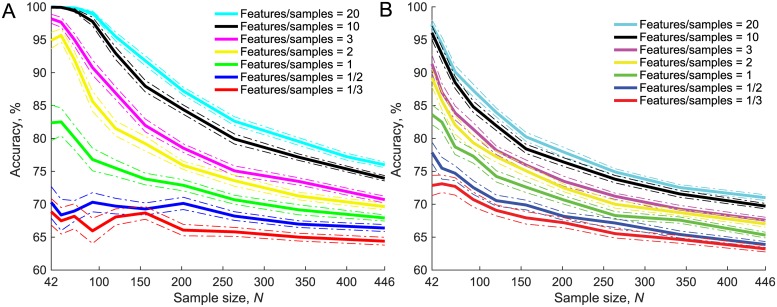
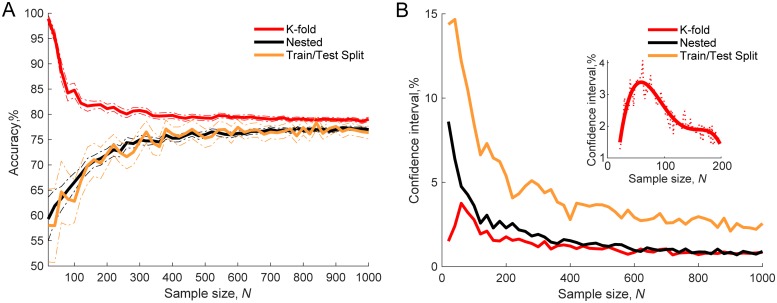
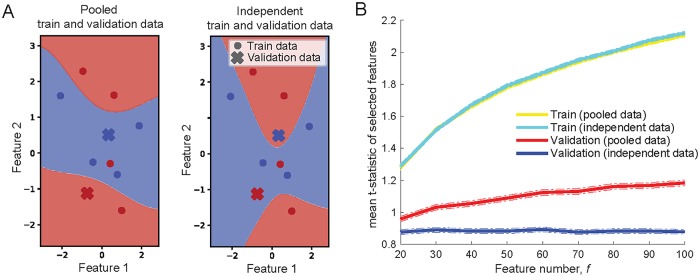
Advances in neuroimaging, genomic, motion tracking, eye-tracking and many other technology-based data collection methods have led to a torrent of high dimensional datasets, which commonly have a small number of samples because of the intrinsic high cost of data collection involving human participants. High dimensional data with a small number of samples is of critical importance for identifying biomarkers and conducting feasibility and pilot work, however it can lead to biased machine learning (ML) performance estimates. Our review of studies which have applied ML to predict autistic from non-autistic individuals showed that small sample size is associated with higher reported classification accuracy. Thus, we have investigated whether this bias could be caused by the use of validation methods which do not sufficiently control overfitting. Our simulations show that K-fold Cross-Validation (CV) produces strongly biased performance estimates with small sample sizes, and the bias is still evident with sample size of 1000. Nested CV and train/test split approaches produce robust and unbiased performance estimates regardless of sample size. We also show that feature selection if performed on pooled training and testing data is contributing to bias considerably more than parameter tuning. In addition, the contribution to bias by data dimensionality, hyper-parameter space and number of CV folds was explored, and validation methods were compared with discriminable data. The results suggest how to design robust testing methodologies when working with small datasets and how to interpret the results of other studies based on what validation method was used.
Overview
The claims and statistics of this paper haven’t been checked yet.
Free: it reads the open-access text and checks the first 5 claims that cite a source we can check. Create a free account to check every claim.
Integrity signals
Registry
Cites
Statistics
Figures
Verification
Claims the paper makes
The claims and statistics of this paper haven’t been checked yet.
Free: it reads the open-access text and checks the first 5 claims that cite a source we can check. Create a free account to check every claim.
Claims other papers make about this one
Each is checked against this paper’s own text: does it say what the citing paper says it does?
The cited source says what the claim attributes to it.
In the citing paper
“According to the simulations in Vabalas et al. 99 , the bias introduced by k-fold CV is still substantial even with a sample size of 1000.”
From Machine learning in concrete science: applications, challenges, and best practices (2022) · cites this paper as [99]
The cited source says what the claim attributes to it.
In the citing paper
“Machine learning in medical imaging often faces a fundamental dilemma, namely, the small sample size problem.”
From Federated learning for medical image analysis: A survey (2024) · cites this paper as [9]
In the citing paper
“An alternative to k-fold CV is n × k nested CV, which can produce robust and unbiased performance estimates regardless of the size of datasets 99 .”
From Machine learning in concrete science: applications, challenges, and best practices (2022) · cites this paper as [99]
Self-check
Percentages, sums and reported differences re-computed from the paper’s own numbers.
The self-check needs the paper’s full text.
Citations
Cites
Scikit-learn: Machine Learning in Python
Pedregosa, F., Varoquaux, G., Gramfort, A., Michel, V., Thirion, B., Grisel, O., Blondel, M., Müller, A., Nothman, J., Louppe, G., et al. (2012) · arXiv · doi:10.48550/arxiv.1201.0490 · Cited by 71,016 · cited 1×
“Logistic regression was implemented using Scikit-learn library [18].”
MethodLIBSVM: A library for support vector machines
Chang, C.-C., & Lin, C.-J. (2011) · ACM Transactions on Intelligent Systems and Technology · doi:10.1145/1961189.1961199 · Cited by 40,918 · cited 1×
“SVM was implemented with Libsvm library [17].”
Sudlow, C., Gallacher, J., Allen, N., Beral, V., Burton, P., Danesh, J., Downey, P., Elliott, P., Green, J., Landray, M., et al. (2015) · PLOS Medicine · doi:10.1371/journal.pmed.1001779 · Cited by 12,728
A training algorithm for optimal margin classifiers
Boser, B. E., Guyon, I. M., & Vapnik, V. N. (1992) · Proceedings of the fifth annual workshop on Computational learning theory · doi:10.1145/130385.130401 · Cited by 11,992 · cited 2×
“One, computationally demanding and complex, where Support Vector Machine (SVM) [12] classifier with Radial Basis Function (RBF) kernel was coupled with Support Vector Machine Recursive Feature Elimination (SVM-RFE) [13] feature selection.”
MethodCross validatory choice and assessment of statistical predictions
Stone, M. (1974) · Journal of the Royal Statistical Society Series B: Statistical Methodology · doi:10.1111/j.2517-6161.1974.tb00994.x · Cited by 10,881 · cited 1×
“Stone [10] pointed out the importance of separating CV used for model development and CV used for model evaluation.”
MethodLibsvm : A library for support vector machines
Ferrari, V. (2008) · Medical Entomology and Zoology · Cited by 10,122
Gene selection for cancer classification using support vector machines
Guyon, I., Weston, J., Barnhill, S., & Vapnik, V. (2002) · Machine Learning · doi:10.1023/a:1012487302797 · Cited by 9,954 · cited 8×
“SVM-RFE algorithm selects features based on how important they are for an SVM classifier to separate classes.”
InfluentialA review of feature selection techniques in bioinformatics
Saeys, Y., Inza, I., & Larrañaga, P. (2007) · Bioinformatics · doi:10.1093/bioinformatics/btm344 · Cited by 5,244
Bias in error estimation when using cross-validation for model selection
Varma, S., & Simon, R. (2006) · BMC Bioinformatics · doi:10.1186/1471-2105-7-91 · Cited by 2,485 · cited 10×
“Varma and Simon [7] suggest that Nested CV provides almost unbiased performance estimates.”
BackgroundMethodResultInfluentialMachine learning applications in genetics and genomics
Libbrecht, M. W., & Noble, W. S. (2015) · Nature Reviews Genetics · doi:10.1038/nrg3920 · Cited by 2,084 · cited 1×
“Then if number of features is large, which is especially true for neuroimaging and gene expression studies [3, 14, 15], feature selection is performed.”
Background
Cited by
Machine learning in healthcare
Habehh, H., & Gohel, S. (2021) · Current Genomics · doi:10.2174/1389202922666210705124359 · Cited by 544
Federated learning for medical image analysis: A survey
Guan, H., Yap, P.-T., Bozoki, A., & Liu, M. (2024) · Pattern Recognition · doi:10.1016/j.patcog.2024.110424 · Cited by 518
Machine Learning for the Diagnosis of Parkinson's Disease: A Review of Literature
Mei, J., Desrosiers, C., & Frasnelli, J. (2021) · Frontiers in Aging Neuroscience · doi:10.3389/fnagi.2021.633752 · Cited by 401
“Nevertheless, collecting data from a large pool of participants remains challenging in clinical studies, and data generated are commonly of high dimensionality and small sample size (Vabalas et al., 2019).”
BackgroundEvaluation of a decided sample size in machine learning applications
Rajput, D., Wang, W.-J., & Chen, C.-C. (2023) · BMC Bioinformatics · doi:10.1186/s12859-023-05156-9 · Cited by 411
“For instance, Vabalas [12] investigated the impact of a range of simulated sub-datasets (20–1000) on the performance of support vector machine (SVM) and logistic regression (LR).”
BackgroundMachine learning in concrete science: applications, challenges, and best practices
Li, Z., Yoon, J., Zhang, R., Rajabipour, F., Srubar III, W. V., Dabo, I., & Radlińska, A. (2022) · npj Computational Materials · doi:10.1038/s41524-022-00810-x · Cited by 388
Digital medicine and the curse of dimensionality
Berisha, V., Krantsevich, C., Hahn, P. R., Hahn, S., Dasarathy, G., Turaga, P., & Liss, J. (2021) · npj Digital Medicine · doi:10.1038/s41746-021-00521-5 · Cited by 344
“Using combined train and test data for feature selection and parameter tuning, followed by k -fold cross validation to estimate model accuracy results in positively biased estimates of model performance, especially for small sample size studies 16 .”
BackgroundMethodA Review of Machine Learning and Deep Learning Approaches on Mental Health Diagnosis
Iyortsuun, N. K., Kim, S.-H., Jhon, M., Yang, H.-J., & Pant, S. (2023) · Healthcare · doi:10.3390/healthcare11030285 · Cited by 276
“[84], small sample sizes are prevalent in the mental health field due to the high expense of data collecting that requires human participation.”
BackgroundThe need to separate the wheat from the chaff in medical informatics
Cabitza, F., & Campagner, A. (2021) · International Journal of Medical Informatics · doi:10.1016/j.ijmedinf.2021.104510 · Cited by 276
“Conversely, practicing medical ML often means dealing with relatively small datasets [25] (much smaller than what would be required to produce generalizable models using deep learning, or other equally complex approaches [26]), which are collected from real-world practice by vetting them for clinical meaning, and pose…”
BackgroundCabitza, F., Campagner, A., Soares, F., García de Guadiana-Romualdo, L., Challa, F., Sulejmani, A., Seghezzi, M., & Carobene, A. (2021) · Computer Methods and Programs in Biomedicine · doi:10.1016/j.cmpb.2021.106288 · Cited by 284
“…e.g. hold-out, bootstrap or cross-validation, that attempt to estimate the performance of the ML models by partitioning the whole training dataset into multiple smaller datasets, and by testing the model, trained on one part of the original dataset, on a different, usually smaller, part [33, 61].”
BackgroundMethodMachine learning on small size samples: A synthetic knowledge synthesis
Kokol, P., Kokol, M., & Zagoranski, S. (2022) · Science Progress · doi:10.1177/00368504211029777 · Cited by 258
Mirbabaie, M., Stieglitz, S., & Frick, N. R. J. (2021) · Health and Technology · doi:10.1007/s12553-021-00555-5 · Cited by 241
“Furthermore, small sample size produce bias even if there are above 1000 records used [94].”
BackgroundUtilization of machine-learning models to accurately predict the risk for critical COVID-19
Assaf, D., Gutman, Y., Neuman, Y., Segal, G., Amit, S., Gefen-Halevi, S., Shilo, N., Epstein, A., Mor-Cohen, R., Biber, A., et al. (2020) · Internal and Emergency Medicine · doi:10.1007/s11739-020-02475-0 · Cited by 274
Robust machine learning algorithms for predicting coastal water quality index
Uddin, M. G., Nash, S., Mahammad Diganta, M. T., Rahman, A., & Olbert, A. I. (2022) · Journal of Environmental Management · doi:10.1016/j.jenvman.2022.115923 · Cited by 248
Mental Health Prediction Using Machine Learning: Taxonomy, Applications, and Challenges
Chung, J., & Teo, J. (2022) · Applied Computational Intelligence and Soft Computing · doi:10.1155/2022/9970363 · Cited by 216
“mentioned that usage of the small sample is common in the field of mental health because of the cost that is related to the data collection that involves the human participants and the experimental rules with different conditions are still under development [51].”
BackgroundTrade-off between training and testing ratio in machine learning for medical image processing
Sivakumar, M., Parthasarathy, S., & Padmapriya, S. (2024) · PeerJ Computer Science · doi:10.7717/peerj-cs.2245 · Cited by 290
“…challenge in managing the tradeoffs involved in splitting data for machine learning lies in fi nding the balance between training and evaluating models and ensuring their abilities are both robust and reliable ( Hou et al., 2024 ; Catania et al., 2022 , Vabalas et al., 2019 ; Tan et al., 2021 ).”
BackgroundTen deep learning techniques to address small data problems with remote sensing
Safonova, A., Ghazaryan, G., Stiller, S., Main-Knorn, M., Nendel, C., & Ryo, M. (2023) · International Journal of Applied Earth Observation and Geoinformation · doi:10.1016/j.jag.2023.103569 · Cited by 196
“Applying an appropriate validation strategy is important for model generalisability and transferability (Vabalas et al., 2019), while preventing”
MethodDeep learning in analytical chemistry
Debus, B., Parastar, H., Harrington, P., & Kirsanov, D. (2021) · TrAC Trends in Analytical Chemistry · doi:10.1016/j.trac.2021.116459 · Cited by 188
Eye Tracking, Usability, and User Experience: A Systematic Review
Novák, J. Š., Masner, J., Benda, P., Šimek, P., & Merunka, V. (2023) · International Journal of Human-Computer Interaction · doi:10.1080/10447318.2023.2221600 · Cited by 238
“…2021; Krol & Krol, 2017; Lee et al., 2019; Li et al., 2021; Melih et al., 2021; Moreno-Esteva et al., 2007; Shi et al., 2021; Tafaj et al., 2013; Vabalas et al., 2019; Vortmann & Putze, 2021; Zammarchi et al., 2021; Zemblys et al., 2018; Zhao et al., 2020 Emotion and visual pattern…”
AL-Jumaili, A. H. A., Muniyandi, R. C., Hasan, M. K., Paw, J. K. S., & Singh, M. S. J. (2023) · Sensors · doi:10.3390/s23062952 · Cited by 234
Machine Learning in Polymer Research
Ge, W., De Silva, R., Fan, Y., Sisson, S. A., & Stenzel, M. H. (2025) · Advanced Materials · doi:10.1002/adma.202413695 · Cited by 167
Machine Learning for Perovskite Solar Cells and Component Materials: Key Technologies and Prospects
Liu, Y., Tan, X., Liang, J., Han, H., Xiang, P., & Yan, W. (2023) · Advanced Functional Materials · doi:10.1002/adfm.202214271 · Cited by 174
Deep metabolome: Applications of deep learning in metabolomics
Pomyen, Y., Wanichthanarak, K., Poungsombat, P., Fahrmann, J., Grapov, D., & Khoomrung, S. (2020) · Computational and Structural Biotechnology Journal · doi:10.1016/j.csbj.2020.09.033 · Cited by 166
“A recent simulation study showed that models trained with nested cross-validation yielded unbiased performance even with small sample sizes [106].”
A Review on Data-Driven Constitutive Laws for Solids
Fuhg, J. N., Padmanabha, G. A., Bouklas, N., Bahmani, B., Sun, W., Vlassis, N. N., Flaschel, M., Carrara, P., & Lorenzis, L. D. (2024) · Archives of Computational Methods in Engineering · doi:10.1007/s11831-024-10196-2 · Cited by 246
“The most common type of validation is built upon validation datasets that can be used for implicit regularization by early stopping (stopping training when the error on the validation dataset increases, as this is a sign of overfitting to the training dataset) [413].”
Sajjadian, M., Lam, R. W. M., Milev, R. V., Rotzinger, S., Frey, B. N., Soares, C. N., Parikh, S. V., Foster, J. A., Turecki, G., Müller, D. J., et al. (2021) · Psychological Medicine · doi:10.1017/s0033291721003871 · Cited by 183
“Larger samples are more likely to generate replicable results because they reduce the problems of dimensionality and underfitting (Vabalas, Gowen, Poliakoff, & Casson, 2019).”
BackgroundVadapalli, S., Abdelhalim, H., Zeeshan, S., & Ahmed, Z. (2022) · Briefings in Bioinformatics · doi:10.1093/bib/bbac191 · Cited by 194
Artificial intelligence in entrepreneurship education: a scoping review
Chen, L., Ifenthaler, D., Yau, J. Y.-K., & Sun, W. (2024) · Education + Training · doi:10.1108/et-05-2023-0169 · Cited by 193
Machine learning for genetic prediction of psychiatric disorders: a systematic review
Bracher-Smith, M., Crawford, K., & Escott-Price, V. (2021) · Molecular Psychiatry · doi:10.1038/s41380-020-0825-2 · Cited by 157
“Nested CV, where hyperparameters are optimised in an inner-fold and evaluated in the outer-fold, has been shown to give more realistic estimates [50, 60] but was not used in any studies.”
BackgroundResultWoodman, R. J., & Mangoni, A. A. (2023) · Aging Clinical and Experimental Research · doi:10.1007/s40520-023-02552-2 · Cited by 129
Training data requirements for fire severity mapping using Landsat imagery and random forest
Collins, L., McCarthy, G., Mellor, A., Newell, G. R., & Smith, L. (2020) · Remote Sensing of Environment · doi:10.1016/j.rse.2020.111839 · Cited by 144
The current status of risk-stratified breast screening
Clift, A. K., Dodwell, D. J., Lord, S., Petrou, S., Brady, M., Collins, G. S., & Hippisley‐Cox, J. (2021) · British Journal of Cancer · doi:10.1038/s41416-021-01550-3 · Cited by 156
Machine Learning Approach to Support the Detection of Parkinson’s Disease in IMU-Based Gait Analysis
Trabassi, D., Serrao, M., Varrecchia, T., Ranavolo, A., Coppola, G., Icco, R. D., Tassorelli, C., & Castiglia, S. F. (2022) · Sensors · doi:10.3390/s22103700 · Cited by 166
“When implementing ML models, reducing the number of features in the dataset to the sample size is a key point because of the risk of overfitting in the model prediction [105].”
MethodEarly detection of autism using digital behavioral phenotyping
Perochon, S., Martino, J. M. D., Carpenter, K. L. H., Compton, S., Davis, N., Eichner, B., Espinosa, S., Franz, L., Babu, P. R. K., Sapiro, G., et al. (2023) · Nature Medicine · doi:10.1038/s41591-023-02574-3 · Cited by 132
Deep Learning for Road Traffic Forecasting: Does it Make a Difference?
Manibardo, E. L., Laña, I., & Ser, J. D. (2021) · IEEE Transactions on Intelligent Transportation Systems · doi:10.1109/tits.2021.3083957 · Cited by 157
Applying machine learning approach in recycling
Özdemir, M. E., Ali, Z., Subeshan, B., & Asmatulu, E. (2021) · Journal of Material Cycles and Waste Management · doi:10.1007/s10163-021-01182-y · Cited by 148
Machine Learning-Assisted Approaches in Modernized Plant Breeding Programs
Yoosefzadeh-Najafabadi, M., Hesami, M., & Eskandari, M. (2023) · Genes · doi:10.3390/genes14040777 · Cited by 149
“Factors include, but are not limited to, data collection, pre-processing, feature extraction, model training, model evaluation, hyperparameter tuning, model deployment, and model monitoring [59,60].”
BackgroundInfluentialOverview of leakage scenarios in supervised machine learning
Sasse, L., Nicolaisen‐Sobesky, E., Dukart, J., Eickhoff, S. B., GOETZ, M. A., Hamdan, S., Komeyer, V., Kulkarni, A. J., Lahnakoski, J. M., Love, B. C., et al. (2025) · Journal Of Big Data · doi:10.1186/s40537-025-01193-8 · Cited by 146
“Empirical demonstrations of such leakage in the literature include performing feature selection on the whole dataset (Figure 5) [60, 70], and oversampling to counter data imbalance [61].”
BackgroundA survey on artificial intelligence assurance
Batarseh, F. A., Freeman, L., & Huang, C. (2021) · Journal Of Big Data · doi:10.1186/s40537-021-00445-7 · Cited by 156
An, C., Park, Y. W., Ahn, S. S., Han, K., Kim, H., & Lee, S. (2021) · PLoS ONE · doi:10.1371/journal.pone.0256152 · Cited by 139
“Several methods have been proposed to obtain the reliable estimates of true model performance [8, 9, 22, 23, 31], supported by our results that using some of these methods—nested CV or bootstrapping—could reduce the optimism in estimating model performance.”
MethodMachine learning for ultrasonic nondestructive examination of welding defects: A systematic review
Sun, H., Ramuhalli, P., & Jacob, R. E. (2022) · Ultrasonics · doi:10.1016/j.ultras.2022.106854 · Cited by 146
Lewis, M., Spiliopoulou, A., Goldmann, K., Pitzalis, C., McKeigue, P., & Barnes, M. R. (2023) · Bioinformatics Advances · doi:10.1093/bioadv/vbad048 · Cited by 149
Mohamed, E. S., Naqishbandi, T. A., Bukhari, S. A. C., Rauf, I., Sawrikar, V., & Hussain, A. (2023) · Healthcare Analytics · doi:10.1016/j.health.2023.100185 · Cited by 148
Spike timing–based coding in neuromimetic tactile system enables dynamic object classification
Chen, L., Karilanova, S., Chaki, S., Wen, C., Wang, L., Winblad, B. G., Zhang, S., Özçelikkale, A., & Zhang, Z. (2024) · Science · doi:10.1126/science.adf3708 · Cited by 129
Gao, Y. N., Wang, J., & Xu, X. (2024) · Automation in Construction · doi:10.1016/j.autcon.2024.105380 · Cited by 134
Text Classification: How Machine Learning Is Revolutionizing Text Categorization
Allam, H., Makubvure, L., Gyamfi, B. K., Kwadwo, G., & Akinwolere, K. (2025) · Information · doi:10.3390/info16020130 · Cited by 138
Hamed, S. K., Aziz, M. J. A., & Yaakub, M. R. (2023) · Sensors · doi:10.3390/s23041748 · Cited by 132
“To prevent the performance of the proposed model from overfitting as well as to increase the generalization of the model to the new data [90,91], and to generate high detection accuracy [92], we used several techniques and methods, including reducing the complexity of model design [93,94], using weight regularization…”
MethodProgress of artificial neural networks applications in hydrogen production
Abdelkareem, M. A., Soudan, B., Mahmoud, M. S., Sayed, E. T., AlMallahi, M. N., Inayat, A., Radi, M. A., & Olabi, A. G. (2022) · Chemical Engineering Research and Design · doi:10.1016/j.cherd.2022.03.030 · Cited by 115
Detecting Careless Responding in Survey Data Using Stochastic Gradient Boosting
Schroeders, U., Schmidt, C., & Gnambs, T. (2021) · Educational and Psychological Measurement · doi:10.1177/00131644211004708 · Cited by 121
“We often rely on small sample sizes, which require special attention to avoid overfitting (Vabalas et al., 2019).”
MethodLi, F., Zhou, Y., Zhang, Y., Yin, J., Qiu, Y., Gao, J., & Zhu, F. (2022) · Briefings in Bioinformatics · doi:10.1093/bib/bbac040 · Cited by 113
Accuracy of artificial intelligence-designed single-molar dental prostheses: A feasibility study
Chau, R. C. W., Hsung, T.-C., McGrath, C. P. J., Pow, E., & Lam, W. Y. H. (2023) · Journal of Prosthetic Dentistry · doi:10.1016/j.prosdent.2022.12.004 · Cited by 122
Oral Microbiota Composition Predicts Early Childhood Caries Onset
Grier, A., Myers, J. A., O’Connor, T. G., Quivey, R. G., Gill, S. R., & Kopycka‐Kędzierawski, D. T. (2020) · Journal of Dental Research · doi:10.1177/0022034520979926 · Cited by 128
“The 56 subjects in this study is approximately the minimum number that is generally considered suitable for the kinds of machine learning models used (Vabalas et al. 2019).”
BackgroundLiu, Y., Méric, G., Havulinna, A. S., Teo, S. M., Åberg, F., Ruuskanen, M., Sanders, J., Zhu, Q., Tripathi, A., Verspoor, K., et al. (2022) · Cell Metabolism · doi:10.1016/j.cmet.2022.03.002 · Cited by 104
“In our study, the imbalanced classification is handled with nested cross-validation design (Vabalas et al., 2019) and stochastic gradient boosting (Friedman, 2002) for producing robust and unbiased estimates of performance.”
MethodThe use of machine learning techniques in trauma-related disorders: a systematic review
Ramos-Lima, L. F., Waikamp, V., Antonelli-Salgado, T., Passos, I. C., & Freitas, L. H. M. (2020) · Journal of Psychiatric Research · doi:10.1016/j.jpsychires.2019.12.001 · Cited by 98
Harnessing machine learning for development of microbiome therapeutics
McCoubrey, L. E., Elbadawi, M., Orlu, M., Gaisford, S., & Basit, A. W. (2021) · Gut Microbes · doi:10.1080/19490976.2021.1872323 · Cited by 93
“This will allow reasonable projection of potential amounts of data required for a given performance score.(42) Though insufficient dataset size is a common problem in the general field of ML, big data have become intrinsic to microbiome research.”
BackgroundDindorf, C., Bartaguiz, E., Gassmann, F., & Fröhlich, M. (2022) · International Journal of Environmental Research and Public Health · doi:10.3390/ijerph20010173 · Cited by 111
“, quality and quantity) of data, which decisively influences the success of AI models [14].”
BackgroundBroomé, S., Feighelstein, M., Zamansky, A., Lencioni, G. C., Andersen, P. H., Pessanha, F., Mahmoud, M., Kjellström, H., & Salah, A. A. (2022) · International Journal of Computer Vision · doi:10.1007/s11263-022-01716-3 · Cited by 106
“Vabalas et al. (2019) also recommended this method to be used with datasets with a sample size of up to 1000, to reduce strongly biased performance.”
MethodSystematic reviews of machine learning in healthcare: a literature review
Kolasa, K., Admassu, B. Y., Hołownia-Voloskova, M. E., Kędzior, K. J., Poirrier, J., & Perni, S. (2023) · Expert Review of Pharmacoeconomics & Outcomes Research · doi:10.1080/14737167.2023.2279107 · Cited by 117
Chávez-Badiola, A., Farias, A. F.-S., Mendizabal‐Ruiz, G., Garcia-Sánchez, R., Drakeley, A., & García-Sandoval, J. P. (2020) · Scientific Reports · doi:10.1038/s41598-020-61357-9 · Cited by 106
The era of big data: Genome-scale modelling meets machine learning
Antonakoudis, A., Barbosa, R., Kotidis, P., & Kontoravdi, C. (2020) · Computational and Structural Biotechnology Journal · doi:10.1016/j.csbj.2020.10.011 · Cited by 89
“Detailed comparisons of the data sampling methods can be found in Varoquaoux [61], Vabalas et al. [62], Kim [63], and Xu & Goodcare [64].”
MethodAn LDA–SVM Machine Learning Model for Breast Cancer Classification
Egwom, O. J., Hassan, M., Tanimu, J. J., Hamada, M., & Ogar, O. M. (2022) · BioMedInformatics · doi:10.3390/biomedinformatics2030022 · Cited by 90
Zhou, H., Qiu, Y., Feng, Y., & Liu, J. (2022) · Renewable Energy · doi:10.1016/j.renene.2022.08.004 · Cited by 90
Vabalas, A., Gowen, E., Poliakoff, E., & Casson, A. J. (2020) · Scientific Reports · doi:10.1038/s41598-020-65384-4 · Cited by 97
“Recent ML study surveys suggest that avoiding fitting noise is particularly important when available sample sizes are small — surveyed studies with smaller sample sizes tended to report higher performance estimates 28,35,36 , while theoretically the opposite should be the case 37–39 .”
BackgroundMethodInfluentialSelf-citationOgami, C., Tsuji, Y., Seki, H., Kawano, H., To, H., Matsumoto, Y., & Hosono, H. (2021) · CPT Pharmacometrics & Systems Pharmacology · doi:10.1002/psp4.12643 · Cited by 92
An introduction to machine learning and analysis of its use in rheumatic diseases
Kingsmore, K. M., Puglisi, C., Grammer, A. C., & Lipsky, P. E. (2021) · Nature Reviews Rheumatology · doi:10.1038/s41584-021-00708-w · Cited by 99
“A portion of the training dataset that is withdrawn to give an estimate of fit while tuning model parameters, or a separate dataset used to estimate model fit and tune parameters.”
BackgroundLuo, Y., Han, X., & Zhang, C. (2022) · Asia Pacific Education Review · doi:10.1007/s12564-022-09749-6 · Cited by 101
“Vabalas et al. (2019) noted, tenfold cross-validation produces strongly biased performance estimates with small sample sizes, and bias is still evident with a sample size of 1000.”
Herbert, C., Bolock, A. E., & Abdennadher, S. (2021) · BMC Psychology · doi:10.1186/s40359-021-00574-x · Cited by 96
Sengupta, K., & Srivastava, P. R. (2021) · BMC Medical Informatics and Decision Making · doi:10.1186/s12911-021-01588-6 · Cited by 99
A machine learning-based on-demand sweat glucose reporting platform
Sankhala, D., Sardesai, A. U., Pali, M. L., Lin, K., Jagannath, B., Muthukumar, S., & Prasad, S. (2022) · Scientific Reports · doi:10.1038/s41598-022-06434-x · Cited by 91
Integration of artificial intelligence in lung cancer: Rise of the machine
Ladbury, C. J., Amini, A., Govindarajan, A., Mambetsariev, I., Raz, D. J., Massarelli, E., Williams, T. M., Rodin, A. S., & Salgia, R. (2023) · Cell Reports Medicine · doi:10.1016/j.xcrm.2023.100933 · Cited by 101
“81 Otherwise, models may be inaccurate, poorly generalizable, and not applicable or reproducible to clinical outcomes.”
Song, J., Gao, Y., Yin, P., Li, Y., Li, Y., Zhang, J., Su, Q., Fu, X., & Pi, H. (2021) · Risk Management and Healthcare Policy · doi:10.2147/rmhp.s297838 · Cited by 85
A review of machine learning with small and limited data
Naser, M. Z. (2026) · Journal Of Big Data · doi:10.1186/s40537-025-01346-9 · Cited by 96
“In scenarios with scarce data, model development becomes more than a means to statistical fitting, as researchers face a fundamental challenge in deriving reliable predictions when observations are few and the risk of overfitting is high [9, 10].”
Artificial intelligence and hybrid imaging: the best match for personalized medicine in oncology
Sollini, M., Bartoli, F., Marciano, A., Zanca, R., Slart, R. H. J. A., & Erba, P. A. (2020) · European Journal of Hybrid Imaging · doi:10.1186/s41824-020-00094-8 · Cited by 88
Review on Facial-Recognition-Based Applications in Disease Diagnosis
Qiang, J., Wu, D., Du, H., Zhu, H., Chen, S., & Pan, H. (2022) · Bioengineering · doi:10.3390/bioengineering9070273 · Cited by 87
“Meanwhile, a systematic review has been performed to figure out algorithm refinement within a limited sample size [91].”
BackgroundRaza, M. L., Hassan, S. T., Jamil, S., Hyder, N., Batool, K., Walji, S., & Abbas, M. K. (2025) · Frontiers in Neuroinformatics · doi:10.3389/fninf.2025.1557177 · Cited by 74
“Moreover, a careful model selection can also prevent overfitting in small sample sizes (Vabalas et al., 2019).”
da Silveira, A. C. M., Sobrinho, Á., da Silva, L. D., Costa, E. D. B., Perkusich, A., & Pinheiro, M. E. (2022) · Applied Sciences · doi:10.3390/app12073673 · Cited by 87
“The first problem is size limitation, in which training models using small datasets can result in skewed performance estimates [18].”
BackgroundGhasemzadeh, H., Hillman, R. E., & Mehta, D. D. (2024) · Journal of Speech, Language, and Hearing Research · doi:10.1044/2023_jslhr-23-00273 · Cited by 72
“Simulated data based on Gaussian distributions have been used to study the effect of different cross-validations in the presence of feature selection and model parameter optimization (Vabalas et al., 2019).”
BackgroundMethodResultMachine learning-based risk prediction model for cardiovascular disease using a hybrid dataset
Karthick, K., Sankaran, D., & Manikandan, R. (2022) · Data & Knowledge Engineering · doi:10.1016/j.datak.2022.102042 · Cited by 76
Jiang, R., Shang, L., Wang, R., Wang, D., & Wei, N. (2023) · Environmental Science & Technology Letters · doi:10.1021/acs.estlett.3c00293 · Cited by 73
A Survey and Perspective on Industrial Cyber-Physical Systems (ICPS): From ICPS to AI-Augmented ICPS
Chae, J., Lee, S., Jang, J., Hong, S., & Park, K. (2023) · IEEE Transactions on Industrial Cyber-Physical Systems · doi:10.1109/ticps.2023.3323600 · Cited by 86
“For high-dimensional data with a small number of samples, machine learning performance estimates can be biased [85].”
BackgroundKim, J.-H., Mun, S., Lee, S., Jeong, K., & Baek, Y. (2022) · BMC Public Health · doi:10.1186/s12889-022-13131-x · Cited by 81
“In order to avoid optimally biased performance estimates in machine learning analysis, it is important to separate training data and test data or to have a sufficient number of samples [45].”
BackgroundGhosh, S. M., & Behera, M. D. (2021) · Computers & Geosciences · doi:10.1016/j.cageo.2021.104737 · Cited by 73
Increasing the reproducibility of fluid biomarker studies in neurodegenerative studies
Mattsson-Carlgren, N., Palmqvist, S., Blennow, K., & Hansson, O. (2020) · Nature Communications · doi:10.1038/s41467-020-19957-6 · Cited by 72
“First, studies with small patient and control samples typically overestimate performance compared to larger studies 23,24 .”
Acoustic and language analysis of speech for suicidal ideation among US veterans
Belouali, A., Gupta, S., Sourirajan, V., Yu, J., Allen, N. J., Alaoui, A., Dutton, M. A., & Reinhard, M. J. (2021) · BioData Mining · doi:10.1186/s13040-021-00245-y · Cited by 87
Khaleghi, M. K., Savizi, I. S. P., Lewis, N. E., & Shojaosadati, S. A. (2021) · Biotechnology Journal · doi:10.1002/biot.202100212 · Cited by 79
“Model evaluation is first conducted on the training dataset to measure how well the model can predict previously unseen data.[99] For instance, k-fold cross-validation is a standard method that evaluates”
MethodVozzi, A., Ronca, V., Aricò, P., Borghini, G., Sciaraffa, N., Cherubino, P., Trettel, A., Babiloni, F., & Flumeri, G. D. (2021) · Sensors · doi:10.3390/s21186088 · Cited by 78
“In addition, also the effect of the time needs to be examined further; for instance, it could be interesting to analyse whether the outcomes change considering different parts of the same task, or maybe with respect to specific events as well as in conditions discriminability, a common problem when employing machinele…”
BackgroundTao, S., Zhang, X., Feng, R., Qi, W., Wang, Y., & Shrestha, B. (2022) · Computers and Electronics in Agriculture · doi:10.1016/j.compag.2022.107537 · Cited by 73
Marzal, L. N. P., Rojas-Velázquez, D., Rigters, D., Prince, N., Garssen, J., Kraneveld, A. D., Perez‐Pardo, P., & Lopez‐Rincon, A. (2024) · Scientific Reports · doi:10.1038/s41598-023-50601-7 · Cited by 77
Temperature excavation to boost machine learning battery thermochemical predictions
Wang, Y., Feng, X., Guo, D., Hsu, H., Hou, J., Zhang, F., Xu, C., Chen, X., Wang, L., Zhang, Q., et al. (2024) · Joule · doi:10.1016/j.joule.2024.07.002 · Cited by 71
Precision Medicine Approaches with Metabolomics and Artificial Intelligence
Barberis, E., Khoso, S., Sica, A., Falasca, M., Gennari, A., Dondero, F., Afantitis, A., & Manfredi, M. (2022) · International Journal of Molecular Sciences · doi:10.3390/ijms231911269 · Cited by 76
“This can be reduced by using a nested cross-validation approach [78].”
MethodAssessing the Utility of artificial intelligence in endometriosis: Promises and pitfalls
Dungate, B., Tucker, D. R., Goodwin, E., & Yong, P. J. (2024) · Women s Health · doi:10.1177/17455057241248121 · Cited by 57
“42,43,49,57 These challenges are driven by the cost and complexity of data acquisition and the need for more AI training among researchers.”
BackgroundMethodInfluentialElujide, I., Fashoto, S. G., Fashoto, B., Mbunge, E., Folorunso, S. O., & Olamijuwon, J. O. (2021) · Informatics in Medicine Unlocked · doi:10.1016/j.imu.2021.100545 · Cited by 68
Annapragada, A. V., Donaruma-Kwoh, M. M., Annapragada, A. V., & Starosolski, Z. A. (2021) · PLOS ONE · doi:10.1371/journal.pone.0247404 · Cited by 61
Using deep learning to predict the outcome of live birth from more than 10,000 embryo data
Huang, B., Zheng, S., Ma, B.-X., Yang, Y., Zhang, S., & Jin, L. (2022) · BMC Pregnancy and Childbirth · doi:10.1186/s12884-021-04373-5 · Cited by 64
“AUC is more In order to comprehensively evaluate the performance of our model, we perform a hold-out test and a 5-fold cross-validation simultaneously [21].”
MethodPranga, J., Borra‐Serrano, I., Aper, J., Swaef, T. D., Ghesquiere, A., Quataert, P., Roldán-Ruíz, I., Janssens, I. A., Ruysschaert, G., & Lootens, P. (2021) · Remote Sensing · doi:10.3390/rs13173459 · Cited by 68
“Previous studies [84,85,87] have demonstrated the need for repeated CV and confirm that this approach produces robust estimates while limiting overfitting effects.”
BackgroundGenome-wide mutational signatures in low-coverage whole genome sequencing of cell-free DNA
Wan, J. C. M., Stephens, D. P., Luo, L., White, J. R., Stewart, C. M., Rousseau, B., Tsui, D. W. Y., & Diaz, L. A. (2022) · Nature Communications · doi:10.1038/s41467-022-32598-1 · Cited by 82
RETRACTED ARTICLE: Predicting cancer prognosis and drug response from the tumor microbiome
Hermida, L. C., Gertz, E. M., & Ruppin, E. (2022) · Nature Communications · doi:10.1038/s41467-022-30512-3 · Cited by 64
RetractedKolk, M. Z. H., Deb, B., Ruipérez-Campillo, S., Bhatia, N. K., Clopton, P., Wilde, A. A. M., Narayan, S. M., Knops, R. E., & Tjong, F. V. Y. (2023) · EBioMedicine · doi:10.1016/j.ebiom.2023.104462 · Cited by 68
“77 Expanding current ad-hoc datasets through the inclusion of more subjects and electro-physiological signals, and subsequently conducting external validation of derived models is paramount for establishing the robustness, reproducibility and generalizability.”
BackgroundIndrasiri, P. L., Halgamuge, M. N., & Mohammad, A. (2021) · IEEE Access · doi:10.1109/access.2021.3124628 · Cited by 59
“For certain ML models, a small sample size typically provides a higher accuracy rate than that of a very large dataset and provides a biased performance while executing k-fold cross-validation and parameter-tuning-related experiments [25].”
BackgroundTutorial: Applying Machine Learning in Behavioral Research
Turgeon, S., & Lanovaz, M. J. (2020) · Perspectives on Behavior Science · doi:10.1007/s40614-020-00270-y · Cited by 64
Overview: recent studies of machine learning in phase prediction of high entropy alloys
Yan, Y., Lü, D., & Wang, K. (2022) · Tungsten · doi:10.1007/s42864-022-00175-0 · Cited by 61
“In contrast to the holdout method, cross-validation methods iteratively develop several models on different portions of the data [79].”
MethodMahlknecht, J., Torres-Martínez, J. A., Kumar, M., Mora, A., Kaown, D., & Loge, F. J. (2023) · The Science of The Total Environment · doi:10.1016/j.scitotenv.2023.166863 · Cited by 63
Metadata
- Authors
- Vabalas, A., Gowen, E., Poliakoff, E., & Casson, A. J.
- Affiliations
- University of Manchester (GB)
- Corresponding author
- Vabalas, Andrius
- Venue
- PLOS ONE
- Publisher
- Public Library of Science (PLoS)
- Published
- 2019-11-07
- Volume
- 14
- Issue
- 11
- Pages
- e0224365
- ISSN
- 1932-6203 (ISSN-L)
- PMC
- PMC6837442
- OpenAlex
- W2981679558
- Cited by
- 1,901
- References
- 32
- Citations by year
- 2026: 497 · 2025: 325 · 2024: 316 · 2023: 280 · 2022: 247 · 2021: 167 · 2020: 66 · 2019: 1
- FWCI
- 55.09
- Type
- journal article
- Language
- en
- Open access
- gold
- doi.org
- Licence
- Locations
- PLoS ONE (publishedVersion, cc-by)
- PubMed Central (publishedVersion, cc-by)
- PubMed (publishedVersion)
- RePEc: Research Papers in Economics (submittedVersion)
- DOAJ (DOAJ: Directory of Open Access Journals) (submittedVersion, cc-by-sa)
- Figshare (submittedVersion, cc-by)
- Research Explorer (The University of Manchester) (submittedVersion, cc-by)
- Funders
- UK Engineering and Physical Sciences Research Council and its Doctoral Training Partnership with the University of Manchester (EP/m507969/1)
- Topics
- Physical Sciences › Computer Science › Artificial Intelligence › Machine Learning and Data Classification
- Physical Sciences › Computer Science › Artificial Intelligence › Imbalanced Data Classification Techniques
- Health Sciences › Health Professions › Health Information Management › Artificial Intelligence in Healthcare
- Keywords
- machine learning validation, small sample size, overfitting, nested cross-validation, train-test split, feature selection, hyperparameter optimization, high-dimensional data, autism classification, biomarker discovery
- MeSH terms
- Machine Learning, Algorithms, Data Interpretation, Statistical, Humans, Sample Size, Biomedical Research
About these checks
Registry, retraction, Cites and statistics results are computed, not judged, with one exception: a printed reference that no index lists is read once by a model before it counts as a citation error. Claims are extracted by a model and kept only when their quote appears verbatim in the text; each cited source is then checked, with a model’s help, for whether it says what the claim relies on. Those verdicts can be wrong — read the claim’s quote and the cited source before relying on one.
Statistics and arithmetic are recomputed, not judged.
Confidence bands are shown only for fields calibrated on our annotated test set. None is calibrated yet, so no band is shown.
What counts as a claim ›How we measure confidence ›How we check this ›
Are you an author, or do you see a problem with this page? Request a review
Data sources
Bibliographic data: Semantic Scholar, OpenAlex, Crossref.
Contains information from the Semantic Scholar Academic Graph Datasets, made available under the ODC Attribution License (ODC-BY 1.0).
Semantic Scholar’s data is described in: Kinney, R., et al. (2023). The Semantic Scholar Open Data Platform. arXiv:2301.10140.
