

Machine learning algorithm validation with a limited sample size
Open accessThe DOI matches its Crossref record; 31 of the 32 references it cites were found in a registry or an index.
Abstract
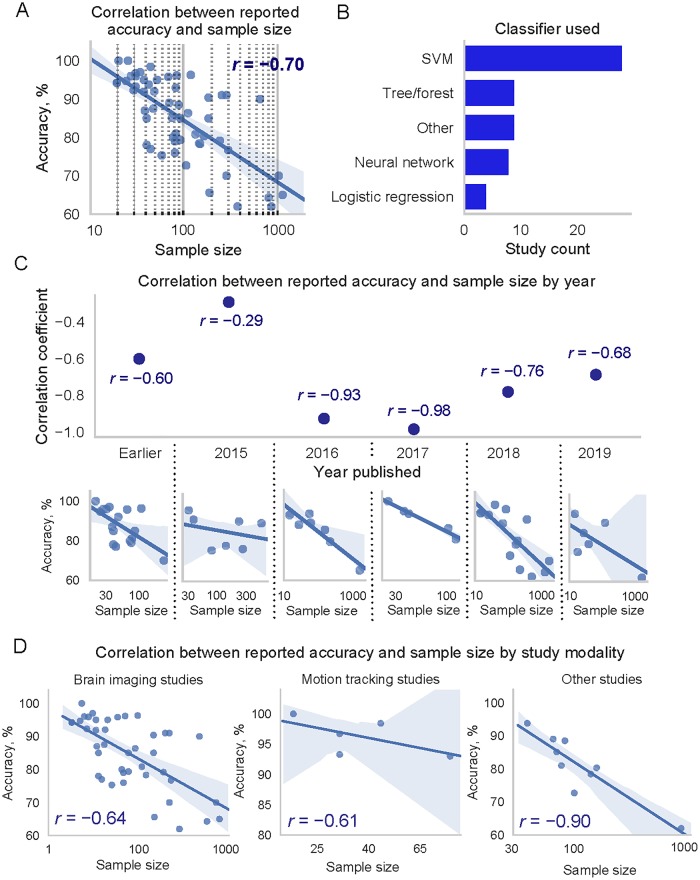
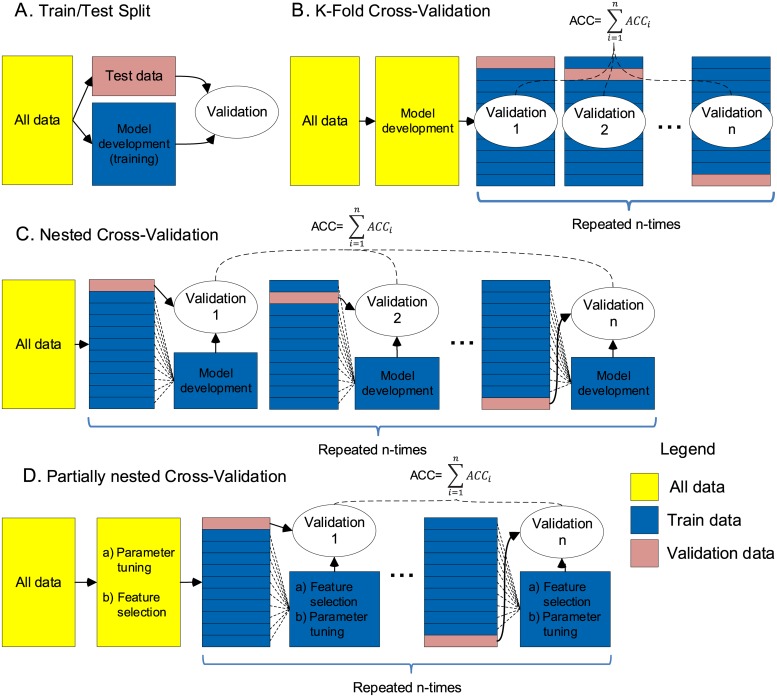
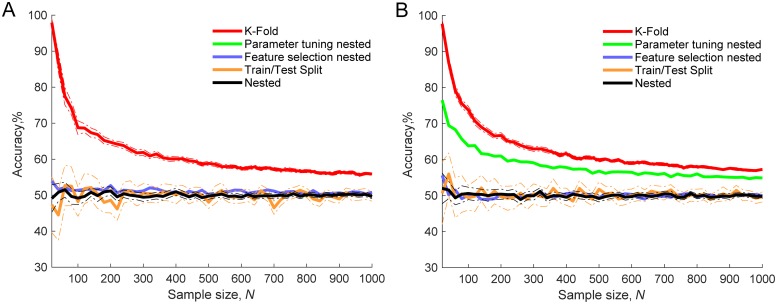
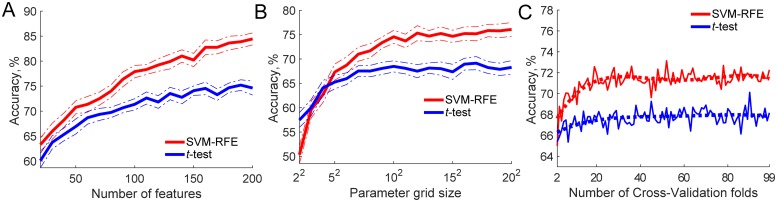
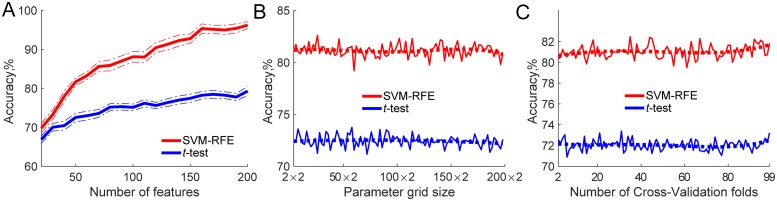
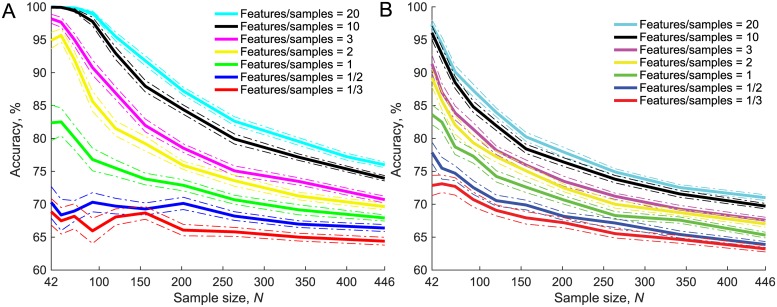
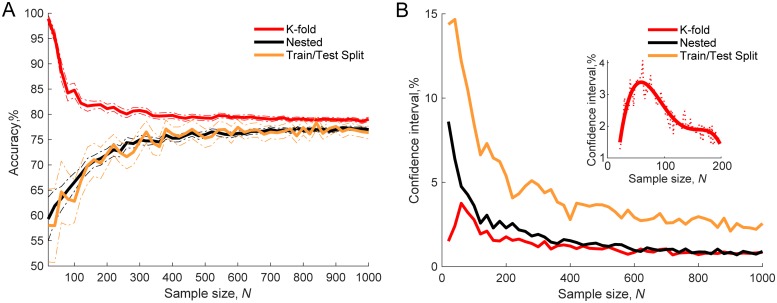
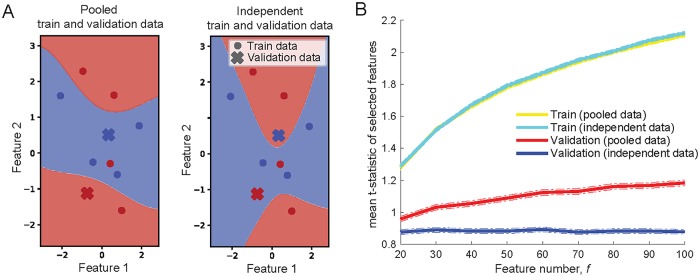
Advances in neuroimaging, genomic, motion tracking, eye-tracking and many other technology-based data collection methods have led to a torrent of high dimensional datasets, which commonly have a small number of samples because of the intrinsic high cost of data collection involving human participants. High dimensional data with a small number of samples is of critical importance for identifying biomarkers and conducting feasibility and pilot work, however it can lead to biased machine learning (ML) performance estimates. Our review of studies which have applied ML to predict autistic from non-autistic individuals showed that small sample size is associated with higher reported classification accuracy. Thus, we have investigated whether this bias could be caused by the use of validation methods which do not sufficiently control overfitting. Our simulations show that K-fold Cross-Validation (CV) produces strongly biased performance estimates with small sample sizes, and the bias is still evident with sample size of 1000. Nested CV and train/test split approaches produce robust and unbiased performance estimates regardless of sample size. We also show that feature selection if performed on pooled training and testing data is contributing to bias considerably more than parameter tuning. In addition, the contribution to bias by data dimensionality, hyper-parameter space and number of CV folds was explored, and validation methods were compared with discriminable data. The results suggest how to design robust testing methodologies when working with small datasets and how to interpret the results of other studies based on what validation method was used.
Overview
The claims and statistics of this paper haven’t been checked yet.
Free: it reads the open-access text and checks the first 5 claims that cite a source we can check. Create a free account to check every claim.
Integrity signals
Registry
Cites
Statistics
Figures
Verification
Claims the paper makes
The claims and statistics of this paper haven’t been checked yet.
Free: it reads the open-access text and checks the first 5 claims that cite a source we can check. Create a free account to check every claim.
Claims other papers make about this one
Each is checked against this paper’s own text: does it say what the citing paper says it does?
The cited source says what the claim attributes to it.
In the citing paper
“According to the simulations in Vabalas et al. 99 , the bias introduced by k-fold CV is still substantial even with a sample size of 1000.”
From Machine learning in concrete science: applications, challenges, and best practices (2022) · cites this paper as [99]
The cited source says what the claim attributes to it.
In the citing paper
“Machine learning in medical imaging often faces a fundamental dilemma, namely, the small sample size problem.”
From Federated learning for medical image analysis: A survey (2024) · cites this paper as [9]
In the citing paper
“An alternative to k-fold CV is n × k nested CV, which can produce robust and unbiased performance estimates regardless of the size of datasets 99 .”
From Machine learning in concrete science: applications, challenges, and best practices (2022) · cites this paper as [99]
Self-check
Percentages, sums and reported differences re-computed from the paper’s own numbers.
The self-check needs the paper’s full text.
Citations
Cites
Scikit-learn: Machine Learning in Python
Pedregosa, F., Varoquaux, G., Gramfort, A., Michel, V., Thirion, B., Grisel, O., Blondel, M., Müller, A., Nothman, J., Louppe, G., et al. (2012) · arXiv · doi:10.48550/arxiv.1201.0490 · Cited by 71,016 · cited 1×
“Logistic regression was implemented using Scikit-learn library [18].”
MethodLIBSVM: A library for support vector machines
Chang, C.-C., & Lin, C.-J. (2011) · ACM Transactions on Intelligent Systems and Technology · doi:10.1145/1961189.1961199 · Cited by 40,918 · cited 1×
“SVM was implemented with Libsvm library [17].”
Sudlow, C., Gallacher, J., Allen, N., Beral, V., Burton, P., Danesh, J., Downey, P., Elliott, P., Green, J., Landray, M., et al. (2015) · PLOS Medicine · doi:10.1371/journal.pmed.1001779 · Cited by 12,728
A training algorithm for optimal margin classifiers
Boser, B. E., Guyon, I. M., & Vapnik, V. N. (1992) · Proceedings of the fifth annual workshop on Computational learning theory · doi:10.1145/130385.130401 · Cited by 11,992 · cited 2×
“One, computationally demanding and complex, where Support Vector Machine (SVM) [12] classifier with Radial Basis Function (RBF) kernel was coupled with Support Vector Machine Recursive Feature Elimination (SVM-RFE) [13] feature selection.”
MethodCross validatory choice and assessment of statistical predictions
Stone, M. (1974) · Journal of the Royal Statistical Society Series B: Statistical Methodology · doi:10.1111/j.2517-6161.1974.tb00994.x · Cited by 10,881 · cited 1×
“Stone [10] pointed out the importance of separating CV used for model development and CV used for model evaluation.”
MethodLibsvm : A library for support vector machines
Ferrari, V. (2008) · Medical Entomology and Zoology · Cited by 10,122
Gene selection for cancer classification using support vector machines
Guyon, I., Weston, J., Barnhill, S., & Vapnik, V. (2002) · Machine Learning · doi:10.1023/a:1012487302797 · Cited by 9,954 · cited 8×
“SVM-RFE algorithm selects features based on how important they are for an SVM classifier to separate classes.”
InfluentialA review of feature selection techniques in bioinformatics
Saeys, Y., Inza, I., & Larrañaga, P. (2007) · Bioinformatics · doi:10.1093/bioinformatics/btm344 · Cited by 5,244
Bias in error estimation when using cross-validation for model selection
Varma, S., & Simon, R. (2006) · BMC Bioinformatics · doi:10.1186/1471-2105-7-91 · Cited by 2,485 · cited 10×
“Varma and Simon [7] suggest that Nested CV provides almost unbiased performance estimates.”
BackgroundMethodResultInfluentialMachine learning applications in genetics and genomics
Libbrecht, M. W., & Noble, W. S. (2015) · Nature Reviews Genetics · doi:10.1038/nrg3920 · Cited by 2,084 · cited 1×
“Then if number of features is large, which is especially true for neuroimaging and gene expression studies [3, 14, 15], feature selection is performed.”
Background
Cited by
Items 701–800 of 1,001
Emotion Recognition Based on the Structure of Narratives
Pólya, T., & Csertő, I. (2023) · Electronics · doi:10.3390/electronics12040919 · Cited by 11
Neto, P. C. D. S., Rodrigues, A. L., Stahlschmidt, A., Helal, L. C. A. S., & Stefani, L. P. C. (2023) · European Journal of Anaesthesiology · doi:10.1097/eja.0000000000001811 · Cited by 9
Ali, S. A., Mohajane, M., Parvin, F., Varasano, A., Hitouri, S., Łupikasza, E. B., & Pham, Q. B. (2023) · Applied Soft Computing · doi:10.1016/j.asoc.2023.110591 · Cited by 10
Kim, T., Ha, B., & Hwangbo, S. (2023) · Machine Learning with Applications · doi:10.1016/j.mlwa.2023.100505 · Cited by 12
Tokareva, A., Chagovets, V., Kononikhin, A. S., Starodubtseva, N. L., Николаев, Е. Н., & Евгеньевич, Ф. В. (2021) · Journal of Mass Spectrometry · doi:10.1002/jms.4702 · Cited by 10
Recognition of industrial machine parts based on transfer learning with convolutional neural network
Li, Q., & Chen, G. (2021) · PLoS ONE · doi:10.1371/journal.pone.0245735 · Cited by 9
Eken, A. (2021) · Biomedical Signal Processing and Control · doi:10.1016/j.bspc.2021.102645 · Cited by 9
Assessment of Delamination Under Insulation Using Ridge Waveguide
Akbar, M. F., Shrifan, N. H. M. M., Jawad, G. N., & Isa, N. A. M. (2022) · IEEE Access · doi:10.1109/access.2022.3163308 · Cited by 9
Machine Learning in Pain Neuromodulation
Harland, T., Elliott, T., Telkes, I., & Pilitsis, J. G. (2024) · Advances in experimental medicine and biology · doi:10.1007/978-3-031-64892-2_31 · Cited by 9
Samadishadlou, M., Rahbarghazi, R., Kavousi, K., & Bani, F. (2024) · Biology Direct · doi:10.1186/s13062-024-00543-5 · Cited by 9
“SVM was chosen for its strong performance with low feature numbers and small sample sizes [27].”
Doyle, J. P., Su, Y., Kelly, S. J., Filo, K., & Kunkel, T. (2024) · Sport Management Review · doi:10.1080/14413523.2024.2442188 · Cited by 8
“To fit the RF model, we used the leave-one-out cross-validation approach (Vabalas et al., 2019), which repeatedly trains models based on ( n -1) dataset and tests on the left-out one observation for ( n -1) times and averages the resulting test errors.”
Eskandarinejad, A., Arellano, D., Nazari, R., & Nikoo, M. R. (2025) · Earth Science Informatics · doi:10.1007/s12145-025-01899-6 · Cited by 11
“Contrarily, underfitting arises when a straight-forward model is trained that fails to thoroughly learn the underlying pattern, delivering poor performance on both training and test sets (Vabalas et al. 2019).”
Prończuk, M., Skalski, D., Łosińska, K. W., Maszczyk, A., & Gołaś, A. (2025) · Frontiers in Sports and Active Living · doi:10.3389/fspor.2025.1634656 · Cited by 10
“Similar concerns have been raised in the literature regarding machine learning applications in small, homogeneous sport science datasets (34 – 36).”
InfluentialTorres, R., Zurita, C., Mellado, D., Nicolis, O., Saavedra, C., Tuesta, M., Salinas, M., Bertini, A., Pedemonte, O., Querales, M., et al. (2023) · Diagnostics · doi:10.3390/diagnostics13030508 · Cited by 9
“However, at this point, there is an issue to overcome: the type of sensors used in the patients at different rehabilitation centers are not the exact [15,16] makes the models not transferable between centers.”
BackgroundSofos, F. D., Dritselis, C. D., Misdanitis, S., Karakasidis, T. E., & Valougeorgis, D. (2023) · Microfluidics and Nanofluidics · doi:10.1007/s10404-023-02689-6 · Cited by 8
Method to assess the trustworthiness of machine coding at scale
Fussell, R. K., Stump, E. M., & Holmes, N. G. (2024) · Physical Review Physics Education Research · doi:10.1103/physrevphyseducres.20.010113 · Cited by 12
Benítez‐Andrades, J. A., Prada‐García, C., Fernández, R. G., Ballesteros-Pomar, M. D., Alonso, M. I. G., & García, A. S. (2024) · Digital Health · doi:10.1177/20552076241239274 · Cited by 10
Phishing Detection Using Machine Learning: A Model Development and Integration
Onih, V. (2024) · International Journal of Scientific and Management Research · doi:10.37502/ijsmr.2024.7403 · Cited by 13
“In this research, the dataset is split such that 90% is employed for the training of the model, with the remaining 10% reserved for testing [2].”
BackgroundMethodInfluentialEfficiently solving the curse of feature-space dimensionality for improved peptide classification
Negovetić, M., Otović, E., Kalafatović, D., & Mauša, G. (2024) · Digital Discovery · doi:10.1039/d4dd00079j · Cited by 11
Huang, T., & Yu, J. C. C. (2024) · Journal of Forensic Sciences · doi:10.1111/1556-4029.15550 · Cited by 12
Turnbull, N., Nghiep, L. K., Butsorn, A., Khotprom, A., & Tudpor, K. (2024) · Frontiers in Nutrition · doi:10.3389/fnut.2024.1411363 · Cited by 9
Schliep, K. C., Thornhill, J., Tschanz, J. T., Facelli, J. C., Østbye, T., Sorweid, M. K., Smith, K. R., Varner, M. W., Boyce, R. D., Brown, C. J. C., et al. (2024) · BMC Medical Informatics and Decision Making · doi:10.1186/s12911-024-02728-4 · Cited by 9
“Nested cross-validation procedures yield robust and unbiased estimates of model performance [28, 29].”
BackgroundTransforming tennis with artificial intelligence: a bibliometric review
Sampaio, T., Oliveira, J. P., Marinho, D. A., Neiva, H. P., & Morais, J. E. (2024) · Frontiers in Sports and Active Living · doi:10.3389/fspor.2024.1456998 · Cited by 7
Optimizing Subsurface Geotechnical Data Integration for Sustainable Building Infrastructure
Ijaz, N., Ijaz, Z., Zhou, N., Rehman, Z. U., Ijaz, H., Ijaz, A., & Hamza, M. (2025) · Buildings · doi:10.3390/buildings15010140 · Cited by 8
Blekić, W., D’Hondt, F., Shalev, A. Y., & Schultebraucks, K. (2025) · Nature Mental Health · doi:10.1038/s44220-024-00365-4 · Cited by 11
“These techniques, particularly with larger sample sizes, have been shown to efficiently learn data patterns and evaluate generalizable model performance 83,84 .”
Erosion-SAM: Semantic segmentation of soil erosion by water
Shokati, H., Engelhardt, A., Seufferheld, K. D., Taghizadeh‐Mehrjardi, R., Fiener, P., Lensch, H. P. A., & Scholten, T. (2025) · CATENA · doi:10.1016/j.catena.2025.108954 · Cited by 6
“This step helps in optimizing hyperparameters (e.g., learning rate and batch size) and preventing overfitting (Vabalas et al., 2019; Ying, 2019).”
Jafrasteh, B., Adeli, E., Pohl, K. M., Kuceyeski, A. F., Sabuncu, M. R., & Zhao, Q. (2025) · Scientific Reports · doi:10.1038/s41598-025-12026-2 · Cited by 14
Automatic Low Back Pain Classification Using Inertial Measurement Units: A Preliminary Analysis
Bacon, Z., Hicks, Y., Al-Amri, M., & Sheeran, L. (2020) · Procedia Computer Science · doi:10.1016/j.procs.2020.09.272 · Cited by 12
“It has also been suggested that the lower is the STV ratio, the higher the chance of the machine learning algorithm fitting to the noise within the model rather than the underlying pattern of the data [14].”
BackgroundInfluentialBaxter, J. S. H., & Jannin, P. (2023) · Intelligence-Based Medicine · doi:10.1016/j.ibmed.2023.100090 · Cited by 12
Sağlam, Y., Öz, A., Yildiz, G., Ermiş, Ç., Kargın, O. A., Arslan, S., & Karaçetin, G. (2023) · Psychiatry Research Neuroimaging · doi:10.1016/j.pscychresns.2023.111696 · Cited by 10
Tagliaferri, S. D., Owen, P. J., Miller, C. T., Angelova, M. N., Fitzgibbon, B. M., Wilkin, T., Massé‐Alarie, H., Oosterwijck, J. V., Trudel, G., Connell, D., et al. (2023) · Scientific Reports · doi:10.1038/s41598-023-40245-y · Cited by 9
Improving Image-Based Precision Medicine with Uncertainty-Aware Causal Models
Durso-Finley, J., Falet, J.-P. R., Mehta, R., Arnold, D. L., Pawlowski, N., & Arbel, T. (2023) · Lecture notes in computer science · doi:10.1007/978-3-031-43904-9_46 · Cited by 8
Farhadi, S., Hasanpur, K., Ghias, J. S., Palangı, V., Maggiolino, A., & Landi, V. (2023) · Animals · doi:10.3390/ani13223475 · Cited by 8
“Decision Tree (DT) is one of the simplest and best models in machine learning, the main purpose of which is to predict the value of the target variable by using learning simple decision rules deduced from data features [57].”
BackgroundChang, Y., Hsu, H.-K., Hsu, T.-H., Chen, T.-T., & Hwang, P.-W. (2023) · Aerospace · doi:10.3390/aerospace10110963 · Cited by 9
Predicting the cause of seizures using features extracted from interactions with a virtual agent
Pevy, N., Christensen, H., Walker, T., & Reuber, M. (2023) · Seizure · doi:10.1016/j.seizure.2023.11.022 · Cited by 8
“Small data sets hinder the identification of reliably discriminating features because it is not possible iteratively to conduct feature engineering and selection without producing bias estimates of performance [29].”
InfluentialTensor Completion for Alzheimer's Disease Prediction From Diffusion Tensor Imaging
Gou, Y., Liu, Y., He, F., Hunyadi, B., & Zhu, C. (2024) · IEEE Transactions on Biomedical Engineering · doi:10.1109/tbme.2024.3365131 · Cited by 9
“Due to the efficiency of support vector machine (SVM) in small sample classification tasks [62], [63], an SVM classifier with a radial basis function (RBF) kernel is adopted in our experiments.”
MethodWang, X., Li, Z., Tan, S., Li, H., Qi, L., Wang, Y., Chen, J., Yang, C., Chen, J., Qin, Y., et al. (2024) · Computers and Electronics in Agriculture · doi:10.1016/j.compag.2024.109070 · Cited by 8
Prediction of Lung Function in Adolescence Using Epigenetic Aging: A Machine Learning Approach
Arefeen, M. A., Nimi, S. T., Rahman, M. S., Arshad, S. H., Holloway, J. W., & Rezwan, F. I. (2020) · Methods and Protocols · doi:10.3390/mps3040077 · Cited by 9
“However, the cross-validation method performs better to break the bias variance trade-off in small datasets [39].”
Towards Dynamic Multi-Modal Intent Sensing Using Probabilistic Sensor Networks
Russell, J., Bergmann, J., & Nagaraja, V. H. (2022) · Sensors · doi:10.3390/s22072603 · Cited by 9
“While this was sufficient to demonstrate the general ideas discussed, small datasets with high dimensionality can lead to bias in performance estimates and inaccuracies in classifiers [34].”
BackgroundCasillas, N., Torres, A. M., Rueda, M. M., Gómez, A., Rius‐Peris, J. M., & Mateo, J. (2022) · Internal and Emergency Medicine · doi:10.1007/s11739-022-03033-6 · Cited by 10
“ML techniques can be valuable for the study of COVID-19, especially because they can uncover complex patterns in large data sets [25–27].”
BackgroundDigitalization in Professional Football: An Opportunity to Estimate Injury Risk
Navarro, L., Dandrieux, P., Hollander, K., & Édouard, P. (2022) · IFIP advances in information and communication technology · doi:10.1007/978-3-031-14844-6_30 · Cited by 8
Machine learning applications for transcription level and phenotype predictions
Chantaraamporn, J., Phumikhet, P., Nguantad, S., Techo, T., & Charoensawan, V. (2022) · IUBMB Life · doi:10.1002/iub.2693 · Cited by 9
“Several strategies are available for avoiding biased model development, including train/test split, K-fold cross-validation, and nested cross-validation, for instance (for more details on ML validation methods, see Reference 10).”
MethodInfluentialApplying Machine Learning to Classify the Origins of Gene Duplications
McKibben, M. T. W., & Barker, M. S. (2023) · Methods in molecular biology · doi:10.1007/978-1-0716-2561-3_5 · Cited by 9
Aluminium Alloy Design and Discovery using Machine LearningPreprint
Mangos, J., & Birbilis, N. (2021) · arXiv (Cornell University) · doi:10.48550/arxiv.2105.14806 · Cited by 8
Bami, Z., Behnampour, A., Bora, A., & Doosti, H. (2025) · arXiv (Cornell University) · doi:10.48550/arxiv.2501.06492 · Cited by 10
Measuring haemolysis in cattle serum by direct UV–VIS and RGB digital image-based methods
Larrán, B., López-Alonso, M., Miranda, M., Pereira, V., Rigueira, L., Suárez, M. L., & Herrero-Latorre, C. (2022) · Scientific Reports · doi:10.1038/s41598-022-17842-4 · Cited by 7
Exploring the feasibility of olfactory brain–computer interfaces
Rajabi, N., Zanettin, I., Ribeiro, A. H., Vasco, M., Björkman, M., Lundström, J. N., & Kragić, D. (2025) · Scientific Reports · doi:10.1038/s41598-025-01488-z · Cited by 8
“41 demonstrated that with limited data, machine learning models can achieve high K-fold cross-validation performance even on random noise.”
Chahal, S., Tian, L., Bilamjian, S., Balogh, F., Leoz, L. D., Anumol, T., Cuthbertson, D. J., & Bayen, S. (2025) · Analytical Chemistry · doi:10.1021/acs.analchem.4c06723 · Cited by 7
A Physics-Informed Variational Autoencoder for Modeling Power Plant Thermal Systems
Zhu, B., Ren, S., Weng, Q., & Si, F. (2025) · Energies · doi:10.3390/en18174742 · Cited by 7
Zhong, Z., Zhu, Q., Liu, X., Pan, S., Luo, L., Zhu, H., Liu, R., & Huang, D. (2025) · Journal of Hazardous Materials · doi:10.1016/j.jhazmat.2025.139952 · Cited by 9
Digitalising cultural heritage through online reviews: a sentiment analysis
Zhang, A., & Xiao, H. (2025) · Current Issues in Tourism · doi:10.1080/13683500.2025.2566861 · Cited by 7
Qiao, M., Yan, Z., Tan, C., Lei, C., Peng, W., Geng, X., Xiang, X., Yang, W. Y. L., Zhang, Y., & Wang, Z. (2025) · Scientific Reports · doi:10.1038/s41598-025-19780-3 · Cited by 7
Rockburst prediction using machine learning: Comparative study of algorithms and features
Cao, R., Xiao, H., Li, J., Chen, Z., Chen, S., & Wang, X. (2025) · Smart Underground Engineering · doi:10.1016/j.sue.2025.09.001 · Cited by 7
Machine Learning for Predicting Stroke Risk Stratification Using Multiomics Data: Systematic Review
Yoo, H. Y., Shin, H., Kim, E. E., & Son, Y.-J. (2026) · Journal of Medical Internet Research · doi:10.2196/85654 · Cited by 8
“Given the small sample size and high-dimensional feature space, this boundary estimate is more appropriately interpreted as an optimistic methodological artifact rather than valid or generalizable predictive performance [48,49].”
An End-to-End Overview of Clinical Speech AI
Ng, S.-I., Xu, L., Siegert, I., Cummins, N., Benway, N. R., Liss, J., & Berisha, V. (2026) · IEEE Transactions on Audio Speech and Language Processing · doi:10.1109/taslpro.2026.3660470 · Cited by 13
“Restrictions apply. have shown that disease prediction models frequently report inflated accuracies that correlate negatively with sample size, suggesting overfitting and limited generalizability [353], [354].”
Anjum, M. N., Nadeem, S., Al-Amin, M., Saalim, M., Siddique, F., Afzal, S., & Nisar, N. (2026) · Computational Biology and Chemistry · doi:10.1016/j.compbiolchem.2026.108960 · Cited by 7
Classification of Alzheimer's disease: application of a transfer learning deep Q‐network method
Ma, H., Wang, Y., Hao, Z., Yu, Y., Jia, X., Li, M., & Chen, L. (2024) · European Journal of Neuroscience · doi:10.1111/ejn.16261 · Cited by 8
“However, in machine learning, a small number of subjects can cause problems such as overfitting, leading to biased machine learning (Vabalas et al., 2019).”
BackgroundMuna, K., & Bahit, M. (2023) · Journal of Innovative Science Education · doi:10.15294/jise.v12i3.76885 · Cited by 7
Jarwal, A., Dhall, A., Arora, A., Patiyal, S., Srivastava, A. K., & Raghava, G. P. S. (2024) · Frontiers in Molecular Biosciences · doi:10.3389/fmolb.2024.1395721 · Cited by 8
“This is a common practice in many types of studies [27,28].”
BackgroundMaciel, G. P., Ribeiro, P. G., Pavão, Q. S., Fernandes, A. R., Gastauer, M., Caldeira, C. F., Guimarães, J. T. F., Andrade, R., Silva, S. H. G., & Ramos, S. J. (2024) · Environmental Geochemistry and Health · doi:10.1007/s10653-024-02233-7 · Cited by 7
“However, if there was overfitting, it may not have been significant, as the cross-validation technique used in this study is a very common solution when the dataset is limited (Vabalas et al., 2019).”
Predicting implementation of response to intervention in math using elastic net logistic regression
Wang, Q., Hall, G. J., Zhang, Q., & Comella, S. (2024) · Frontiers in Psychology · doi:10.3389/fpsyg.2024.1410396 · Cited by 8
Carlson, D., Chavarriaga, R., Liu, Y., Lotte, F., & Lu, B. (2025) · Journal of Neural Engineering · doi:10.1088/1741-2552/adbfbd · Cited by 12
“In fact, despite the common knowledge that ML models improve with more data [53], the reported performance in the literature can decrease with increasing as the bias from the cross-validation procedure decreases [54].”
Jyoti, O., Kibria, H. B., Pear, Z. T., Nahiduzzaman, M., Ahamed, M. F., Islam, K. R., Kumar, J., & Chowdhury, M. E. H. (2025) · IEEE Access · doi:10.1109/access.2025.3586314 · Cited by 9
“Hence, utilizing a Cross Validation (CV) approach is generally considered more dependable [48].”
Brahim, A. B. (2020) · Neural Computing and Applications · doi:10.1007/s00521-020-04971-y · Cited by 7
RANDOM FOREST MODEL TO PREDICT THE HEIGHT OF EUCALYPTUS
Lima, E. D. S., de Souza, Z. M., Oliveira, S. R. D. M., Montanari, R., & Farhate, C. V. V. (2022) · Engenharia Agrícola · doi:10.1590/1809-4430-eng.agric.v42nepe20210153/2022 · Cited by 9
“This was a consistent way to validate the performance of the machine learning model because a portion of the data was separated before developing a model and used only for validation (Vabalas et al., 2019).”
Nogal, P., Buchwald, M., Staśkiewicz, M., Kupiński, S., Pukacki, J., Mazurek, C., Jackowska, J., & Wierzbicka, M. (2022) · Otolaryngologia Polska · doi:10.5604/01.3001.0015.9501 · Cited by 8
Kim, T., Lee, S., & Jang, T. W. (2022) · Thoracic Cancer · doi:10.1111/1759-7714.14694 · Cited by 8
“A previous study assessed the ML algorithm bias related to sample size and suggested that a minimum of 1000 samples were needed to maintain the robustness of ML models.(15) Third, the constraints of the tabular dataset, the most common data type in real-world statistics, may contribute to the poor ML performance in ou…”
MethodDOES MACHINE LEARNING PREDICTION DAMPEN THE INFORMATION ASYMMETRY FOR NON-LOCAL INVESTORS?
Jung, J., Kim, J., & Jin, C. (2022) · International Journal of Strategic Property Management · doi:10.3846/ijspm.2022.17590 · Cited by 7
Machine learning approaches linking brain function to behavior in the ABCD STOP task
Yuan, D., Hahn, S., Allgaier, N. A., Owens, M. M., Chaarani, B., Potter, A., & Garavan, H. (2022) · Human Brain Mapping · doi:10.1002/hbm.26172 · Cited by 7
“Although ML modeling has already been remarkably productive in neuroimaging studies, limited sample sizes and imperfect model validation methodologies have hindered the performance of predictive analytics (Button et al., 2013; Vabalas et al., 2019).”
MethodLi, J., & Xiao, N. (2023) · Annals of the American Association of Geographers · doi:10.1080/24694452.2023.2166010 · Cited by 9
“…us how exactly misidentification occurs, the machine learning literature generally suggests the training data size and the lack of certain representative samples in the training data could play a major role (Raudys and Jain 1991; Jordan and Mitchell 2015; Zhang and Ling 2018; Vabalas et al. 2019).”
BackgroundCan Negation Be Depicted? Comparing Human and Machine Understanding of Visual Representations
Sato, Y., Mineshima, K., & Ueda, K. (2023) · Cognitive Science · doi:10.1111/cogs.13258 · Cited by 7
Biomarker Discovery in Rare Malignancies: Development of a miRNA Signature for RDEB-cSCC
Zauner, R., Wimmer, M. A., Atzmüller, S., Proell, J., Niklas, N., Ablinger, M., Reisenberger, M., Lettner, T., Illmer, J., Dorfer, S., et al. (2023) · Cancers · doi:10.3390/cancers15133286 · Cited by 9
“In such settings, the application of machine learning algorithms predestined to discover useful biomarker combinations in omics datasets, which frequently pursue a split train/test data approach, is challenging, as this would require the division of an already small dataset into even smaller ones [12,13].”
BackgroundGupta, A., Roy, A., & Chauhan, P. (2023) · Arabian Journal of Geosciences · doi:10.1007/s12517-023-11544-5 · Cited by 7
Barzilay, S., Fine, S., Akhavan, S., Haruvi-Catalan, L., Apter, A. S., Klomek, A. B., Carmi, L., Zohar, M., Kinarty, I., Friedman, T., et al. (2023) · JMIR Research Protocols · doi:10.2196/46464 · Cited by 9
Graña-Miraglia, L., Morales-Lizcano, N. P., Wang, P. W., Hwang, D. M., Yau, Y. C. W., Waters, V. J., & Guttman, D. S. (2023) · PLoS Computational Biology · doi:10.1371/journal.pcbi.1011424 · Cited by 9
Liang, G., Ji, Z., Zhong, Q., Huang, Y., & Han, K. (2023) · Sustainability · doi:10.3390/su152014868 · Cited by 8
Bhattacharyya, S., Ehsan, S., & Karacosta, L. G. (2023) · Frontiers in Network Physiology · doi:10.3389/fnetp.2023.1256104 · Cited by 7
“…or strati fi ed cross-validation is essential due to the complexities inherent in single-cell data and multi-omic approaches (James et al., 2017; Vabalas et al., 2019); 3) Baseline Comparisons: comparing advanced algorithms like TRACER and density-driven segmentation against baseline or…”
MethodMethodology for Good Machine Learning with Multi‐Omics Data
Coroller, T. P., Sahiner, B., Amatya, A. K., Gossmann, A., Karagiannis, K., Moloney, C., Samala, R. K., Santana-Quintero, L. V., Solovieff, N., Wang, C., et al. (2024) · Clinical Pharmacology & Therapeutics · doi:10.1002/cpt.3105 · Cited by 9
“The training set can then be split into multiple partitions, and techniques such as k-fold cross-validation 36 or nested k-fold cross-validation 37 can be used within the training data set for model tuning, model selection, and initial performance estimation.”
MethodNdagijimana, S., Kabano, I. H., Masabo, E., & Ntaganda, J. M. (2024) · F1000Research · doi:10.12688/f1000research.141458.1 · Cited by 7
Boelders, S. M., Baene, W. D., Postma, E. O., Gehring, K., & Ong, L. L. (2024) · Neuroinformatics · doi:10.1007/s12021-024-09671-9 · Cited by 7
“Both normalization (zero mean, unit variance) and the selection of hyperparameters were performed within the leave-one-out cross-validation loop to obtain an unbiased performance estimate (Vabalas et al., 2019).”
MethodPermana, A. A., & arsanah, A. (2024) · Journal of Intelligent Computing & Health Informatics · doi:10.26714/jichi.v5i1.11251 · Cited by 7
Yang, J. (2024) · Molecular and Cellular Probes · doi:10.1016/j.mcp.2024.101992 · Cited by 7
Chatterjee, R., & Takahashi, K. (2024) · Annual International Conference of the IEEE Engineering in Medicine and Biology Society (EMBC) · doi:10.1109/embc53108.2024.10782803 · Cited by 8
“In such cases, nested cross-validation (nCV) has emerged as a crucial methodology for mitigating optimistic bias in performance estimates, particularly in the context of small datasets, as substantiated by various studies [6], [7], [8].”
Hao, S., Bai, J., Liu, H., Wang, L., Liu, T., Lin, C., Luo, X., Gao, J., Zhao, J., Li, H., et al. (2020) · Regenerative Therapy · doi:10.1016/j.reth.2020.09.001 · Cited by 7
“…established to predict AMD development, including logistic regression (LR), AdaBoost, random forest (RF) and XGBoost models, considering clinical features and SNPs. Cross validation is a common solution when the available datasets are limited and k-fold is a common cross validation approach [52].”
MethodAbdel-Razik, A., Shabana, W., Nakib, A. M. E., Abdelsalam, M., Abdelwahab, A., Hasan, A. S., Elzehery, R. R., Elhelaly, R. M., Fathy, A. A., Mostafa, S. A., et al. (2021) · Frontiers in Cellular and Infection Microbiology · doi:10.3389/fcimb.2021.662431 · Cited by 7
“Conversely, these methods need someone to hold or collect a considerable amount of records for validation and are rarely utilized in research comprising human individuals, where data collection is usually extraordinarily costly (Vabalas et al., 2019).”
BackgroundJoint Modeling of RNAseq and Radiomics Data for Glioma Molecular Characterization and Prediction
Shboul, Z. A., Diawara, N., Vossough, A., Chen, J. Y., & Iftekharuddin, K. M. (2021) · Frontiers in Medicine · doi:10.3389/fmed.2021.705071 · Cited by 9
“The training set is utilized to build our radiogenomics-NB classifier as shown in steps 1-4 in (38) repeat training and testing analysis for a specific number of times to ensure the robustness of the model performance.”
MethodBuenafe, R. J. Q., Rathnam, A., Añonuevo, J. J. J., Sundar, S., & Sreenivasulu, N. (2021) · Journal of Food Composition and Analysis · doi:10.1016/j.jfca.2021.104137 · Cited by 7
Ramos-Lima, L. F., Waikamp, V., Oliveira-Watanabe, T. T., Recamonde‐Mendoza, M., Teche, S. P., Mello, M. F., Mello, A. F., & Freitas, L. H. M. (2022) · Psychiatry Research · doi:10.1016/j.psychres.2022.114489 · Cited by 8
Kim, H., Jeong, C. W., Kwak, C. H., Song, C., Kang, M., Seo, S. I., Kim, J. K., Lee, H., Chung, J., Hwang, E. C., et al. (2022) · Applied Sciences · doi:10.3390/app12126174 · Cited by 7
A Subset of Secreted Proteins in Ascites Can Predict Platinum-Free Interval in Ovarian Cancer
Carroll, M. J., Kaipio, K., Hynninen, J., Carpén, O., Hautaniemi, S., Page, D. L., & Kreeger, P. K. (2022) · Cancers · doi:10.3390/cancers14174291 · Cited by 7
“A key advance of this study was our approach to address a common challenge in biomedical analysis—a data set that had a higher dimension in analytes relative to sample number [48].”
MethodSultan, L. R., Cary, T. W., Al‐Hasani, M., Karmacharya, M. B., Venkatesh, S. S., Assenmacher, C., Radaelli, E., & Sehgal, C. M. (2022) · AI · doi:10.3390/ai3030043 · Cited by 7
Testing of machine learning models with limited samples: an industrial vacuum pumping application
Chatterjee, A., Ahmed, B. S., Hallin, E., & Engman, A. (2022) · ACM Joint European Software Engineering Conference and Symposium on the Foundations of Software Engineering (ESEC/FSE) · doi:10.1145/3540250.3558943 · Cited by 9
“’s paper [26] show that the k-fold cross-validation produces strongly biased performance estimates with small sample sizes, and the bias is still apparent with sample sizes of 1000.”
BackgroundProvenzano, D., Washington, S. D., Rao, Y. J., Loew, M. H., & Baraniuk, J. N. (2020) · Brain Sciences · doi:10.3390/brainsci10050319 · Cited by 7
“Multiple studies have detailed how cross-validation can be impacted by over-fitting [42].”
BackgroundLow-frequency oscillations in cortical level to help diagnose task-specific dystonia
Chen, C., Macerollo, A., Heng, H.-M., Lu, M., Tsai, C., Daniyal, Wang, W.-J., & Chen, J. (2021) · Neurobiology of Disease · doi:10.1016/j.nbd.2021.105444 · Cited by 7
“We performed feature selection prior to using SVM to reduce the number of features and obtain a favorable feature-tosample ratio (Vabalas et al., 2019).”
Celepli, S., Bigat, I., Karakas, B., Tezcan, H. M., Yar, M. D., Celepli, P., Aksahin, M. F., Hancerliogullari, O., Yilmaz, Y. F., & Erogul, O. (2025) · Diagnostics · doi:10.3390/diagnostics15162065 · Cited by 6
“Therefore, higher test scores compared to validation scores are considered a positive finding in terms of generalizability, and validation scores alone should not guide final conclusions [78].”
(2023) · doi:10.1016/j.str.2023.04.007 · Cited by 6
Shirahata, T., Nardelli, P., Jesudasen, S. J., Estépar, R. S. J., Curiale, A. H., Patel, B., Harder, E. M., Saggar, R., Waxman, A. B., Vanderpool, R. R., et al. (2025) · ERJ Open Research · doi:10.1183/23120541.01057-2024 · Cited by 7
“In RF, the final prediction is obtained by aggregating predictions from all individual trees, a technique that may yield robust and accurate results, particularly in situations with limited data [15, 16].”
Vanhove, A. J., Graham, B. Z., Titareva, T., & Udomvisawakul, A. (2025) · Human Resource Management · doi:10.1002/hrm.70012 · Cited by 7
Farid, D., Saleh, F., Mohammed, T., Nigar, A., & Maaradji, A. (2025) · Diabetes Research and Clinical Practice · doi:10.1016/j.diabres.2025.112403 · Cited by 6
Jia, L., & Du, N. (2025) · International Journal of Human-Computer Interaction · doi:10.1080/10447318.2025.2546046 · Cited by 6
“After selecting the optimal hyperparameters, we rigorously evaluated the models ’ performance using a leave-one-out cross-validation approach (Vabalas et al., 2019).”
Metadata
- Authors
- Vabalas, A., Gowen, E., Poliakoff, E., & Casson, A. J.
- Affiliations
- University of Manchester (GB)
- Corresponding author
- Vabalas, Andrius
- Venue
- PLOS ONE
- Publisher
- Public Library of Science (PLoS)
- Published
- 2019-11-07
- Volume
- 14
- Issue
- 11
- Pages
- e0224365
- ISSN
- 1932-6203 (ISSN-L)
- PMC
- PMC6837442
- OpenAlex
- W2981679558
- Cited by
- 1,901
- References
- 32
- Citations by year
- 2026: 497 · 2025: 325 · 2024: 316 · 2023: 280 · 2022: 247 · 2021: 167 · 2020: 66 · 2019: 1
- FWCI
- 55.09
- Type
- journal article
- Language
- en
- Open access
- gold
- doi.org
- Licence
- Locations
- PLoS ONE (publishedVersion, cc-by)
- PubMed Central (publishedVersion, cc-by)
- PubMed (publishedVersion)
- RePEc: Research Papers in Economics (submittedVersion)
- DOAJ (DOAJ: Directory of Open Access Journals) (submittedVersion, cc-by-sa)
- Figshare (submittedVersion, cc-by)
- Research Explorer (The University of Manchester) (submittedVersion, cc-by)
- Funders
- UK Engineering and Physical Sciences Research Council and its Doctoral Training Partnership with the University of Manchester (EP/m507969/1)
- Topics
- Physical Sciences › Computer Science › Artificial Intelligence › Machine Learning and Data Classification
- Physical Sciences › Computer Science › Artificial Intelligence › Imbalanced Data Classification Techniques
- Health Sciences › Health Professions › Health Information Management › Artificial Intelligence in Healthcare
- Keywords
- machine learning validation, small sample size, overfitting, nested cross-validation, train-test split, feature selection, hyperparameter optimization, high-dimensional data, autism classification, biomarker discovery
- MeSH terms
- Machine Learning, Algorithms, Data Interpretation, Statistical, Humans, Sample Size, Biomedical Research
About these checks
Registry, retraction, Cites and statistics results are computed, not judged, with one exception: a printed reference that no index lists is read once by a model before it counts as a citation error. Claims are extracted by a model and kept only when their quote appears verbatim in the text; each cited source is then checked, with a model’s help, for whether it says what the claim relies on. Those verdicts can be wrong — read the claim’s quote and the cited source before relying on one.
Statistics and arithmetic are recomputed, not judged.
Confidence bands are shown only for fields calibrated on our annotated test set. None is calibrated yet, so no band is shown.
What counts as a claim ›How we measure confidence ›How we check this ›
Are you an author, or do you see a problem with this page? Request a review
Data sources
Bibliographic data: Semantic Scholar, OpenAlex, Crossref.
Contains information from the Semantic Scholar Academic Graph Datasets, made available under the ODC Attribution License (ODC-BY 1.0).
Semantic Scholar’s data is described in: Kinney, R., et al. (2023). The Semantic Scholar Open Data Platform. arXiv:2301.10140.
