

Machine learning algorithm validation with a limited sample size
Open accessThe DOI matches its Crossref record; 31 of the 32 references it cites were found in a registry or an index.
Abstract
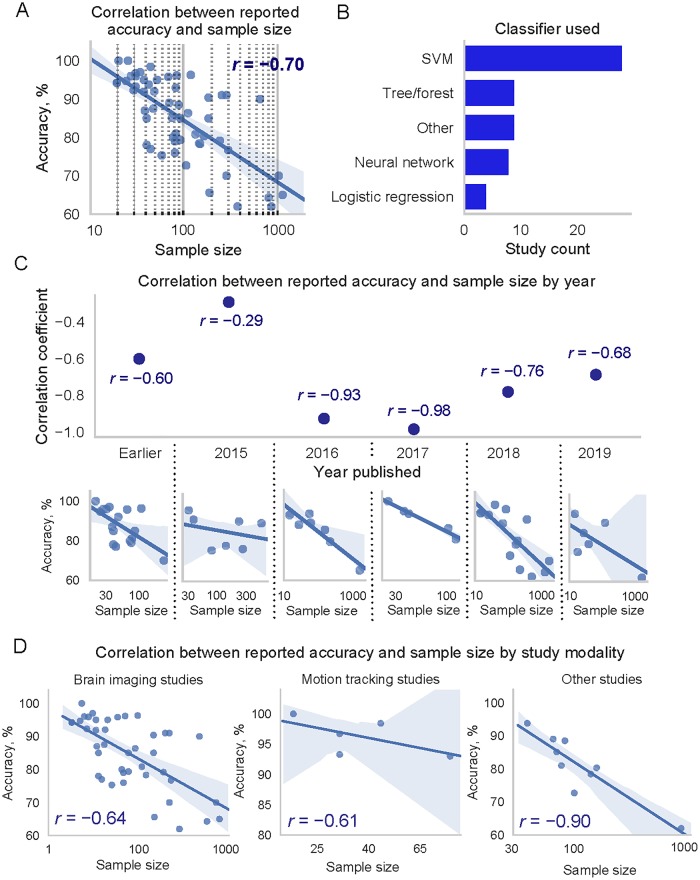
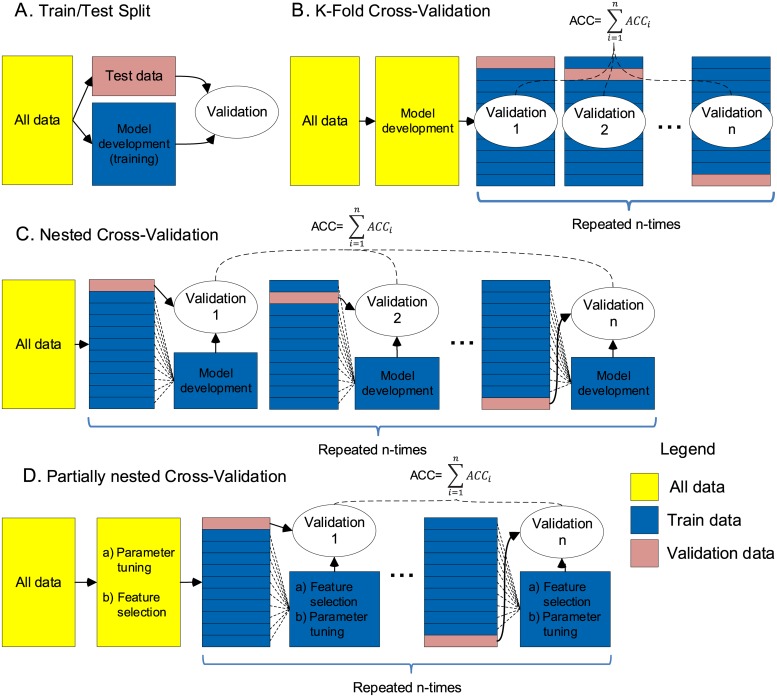
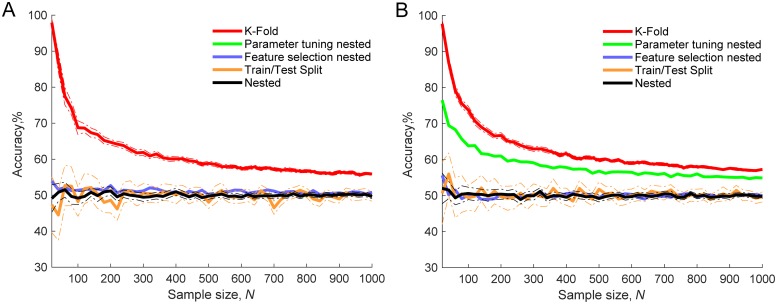
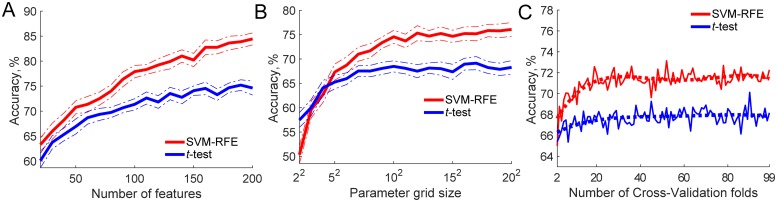
Advances in neuroimaging, genomic, motion tracking, eye-tracking and many other technology-based data collection methods have led to a torrent of high dimensional datasets, which commonly have a small number of samples because of the intrinsic high cost of data collection involving human participants. High dimensional data with a small number of samples is of critical importance for identifying biomarkers and conducting feasibility and pilot work, however it can lead to biased machine learning (ML) performance estimates. Our review of studies which have applied ML to predict autistic from non-autistic individuals showed that small sample size is associated with higher reported classification accuracy. Thus, we have investigated whether this bias could be caused by the use of validation methods which do not sufficiently control overfitting. Our simulations show that K-fold Cross-Validation (CV) produces strongly biased performance estimates with small sample sizes, and the bias is still evident with sample size of 1000. Nested CV and train/test split approaches produce robust and unbiased performance estimates regardless of sample size. We also show that feature selection if performed on pooled training and testing data is contributing to bias considerably more than parameter tuning. In addition, the contribution to bias by data dimensionality, hyper-parameter space and number of CV folds was explored, and validation methods were compared with discriminable data. The results suggest how to design robust testing methodologies when working with small datasets and how to interpret the results of other studies based on what validation method was used.
Overview
The claims and statistics of this paper haven’t been checked yet.
Free: it reads the open-access text and checks the first 5 claims that cite a source we can check. Create a free account to check every claim.
Integrity signals
Registry
Cites
Statistics
Figures
Verification
Claims the paper makes
The claims and statistics of this paper haven’t been checked yet.
Free: it reads the open-access text and checks the first 5 claims that cite a source we can check. Create a free account to check every claim.
Claims other papers make about this one
Each is checked against this paper’s own text: does it say what the citing paper says it does?
The cited source says what the claim attributes to it.
In the citing paper
“According to the simulations in Vabalas et al. 99 , the bias introduced by k-fold CV is still substantial even with a sample size of 1000.”
From Machine learning in concrete science: applications, challenges, and best practices (2022) · cites this paper as [99]
The cited source says what the claim attributes to it.
In the citing paper
“Machine learning in medical imaging often faces a fundamental dilemma, namely, the small sample size problem.”
From Federated learning for medical image analysis: A survey (2024) · cites this paper as [9]
In the citing paper
“An alternative to k-fold CV is n × k nested CV, which can produce robust and unbiased performance estimates regardless of the size of datasets 99 .”
From Machine learning in concrete science: applications, challenges, and best practices (2022) · cites this paper as [99]
Self-check
Percentages, sums and reported differences re-computed from the paper’s own numbers.
The self-check needs the paper’s full text.
Citations
Cites
Scikit-learn: Machine Learning in Python
Pedregosa, F., Varoquaux, G., Gramfort, A., Michel, V., Thirion, B., Grisel, O., Blondel, M., Müller, A., Nothman, J., Louppe, G., et al. (2012) · arXiv · doi:10.48550/arxiv.1201.0490 · Cited by 71,016 · cited 1×
“Logistic regression was implemented using Scikit-learn library [18].”
MethodLIBSVM: A library for support vector machines
Chang, C.-C., & Lin, C.-J. (2011) · ACM Transactions on Intelligent Systems and Technology · doi:10.1145/1961189.1961199 · Cited by 40,918 · cited 1×
“SVM was implemented with Libsvm library [17].”
Sudlow, C., Gallacher, J., Allen, N., Beral, V., Burton, P., Danesh, J., Downey, P., Elliott, P., Green, J., Landray, M., et al. (2015) · PLOS Medicine · doi:10.1371/journal.pmed.1001779 · Cited by 12,728
A training algorithm for optimal margin classifiers
Boser, B. E., Guyon, I. M., & Vapnik, V. N. (1992) · Proceedings of the fifth annual workshop on Computational learning theory · doi:10.1145/130385.130401 · Cited by 11,992 · cited 2×
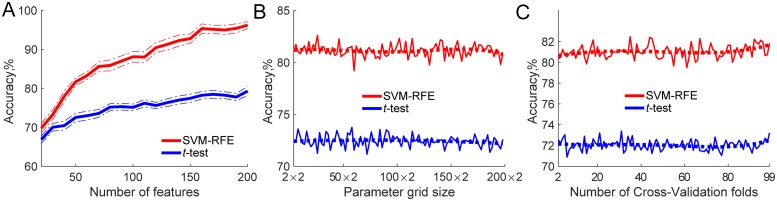
“One, computationally demanding and complex, where Support Vector Machine (SVM) [12] classifier with Radial Basis Function (RBF) kernel was coupled with Support Vector Machine Recursive Feature Elimination (SVM-RFE) [13] feature selection.”
MethodCross validatory choice and assessment of statistical predictions
Stone, M. (1974) · Journal of the Royal Statistical Society Series B: Statistical Methodology · doi:10.1111/j.2517-6161.1974.tb00994.x · Cited by 10,881 · cited 1×
“Stone [10] pointed out the importance of separating CV used for model development and CV used for model evaluation.”
MethodLibsvm : A library for support vector machines
Ferrari, V. (2008) · Medical Entomology and Zoology · Cited by 10,122
Gene selection for cancer classification using support vector machines
Guyon, I., Weston, J., Barnhill, S., & Vapnik, V. (2002) · Machine Learning · doi:10.1023/a:1012487302797 · Cited by 9,954 · cited 8×
“SVM-RFE algorithm selects features based on how important they are for an SVM classifier to separate classes.”
InfluentialA review of feature selection techniques in bioinformatics
Saeys, Y., Inza, I., & Larrañaga, P. (2007) · Bioinformatics · doi:10.1093/bioinformatics/btm344 · Cited by 5,244
Bias in error estimation when using cross-validation for model selection
Varma, S., & Simon, R. (2006) · BMC Bioinformatics · doi:10.1186/1471-2105-7-91 · Cited by 2,485 · cited 10×
“Varma and Simon [7] suggest that Nested CV provides almost unbiased performance estimates.”
BackgroundMethodResultInfluentialMachine learning applications in genetics and genomics
Libbrecht, M. W., & Noble, W. S. (2015) · Nature Reviews Genetics · doi:10.1038/nrg3920 · Cited by 2,084 · cited 1×
“Then if number of features is large, which is especially true for neuroimaging and gene expression studies [3, 14, 15], feature selection is performed.”
Background
Cited by
Items 801–900 of 1,001
Bian, X., Lin, H., Wang, Y., Li, L., Liu, Z., Wang, H., Shi, Z., Qian, Y., Liu, Z., Lan, R., et al. (2025) · Pattern Recognition · doi:10.1016/j.patcog.2025.112396 · Cited by 6
Vos, L., Vergeer, R. N., Goulding, R. P., Weide, G., de Koning, J. J., Jaspers, R. T., & van der Zwaard, S. (2025) · Applied Artificial Intelligence · doi:10.1080/08839514.2025.2565167 · Cited by 7
“Several techniques exist to mitigate overfitting and improve ML modeling (Hecksteden, Kellner, and Donath 2022; Thomas et al. 2020; Vabalas et al. 2019; Ying 2019), such as 1) prior selection of predictors, 2) tuning ML model parameters, 3) using ML algorithms that reduce the number of predictors…”
InfluentialMultistep Machine Learning Pipeline For Polymeric Nanoparticle Design
Fonseca, R., de Santana, I. A., Lima, A. L., Gross, I. P., Gratieri, T., Gelfuso, G. M., & Filho, M. C. (2025) · AAPS PharmSciTech · doi:10.1208/s12249-025-03248-8 · Cited by 6
“Ultimately, these findings reinforce the importance of employing multiple complementary metrics, such as accuracy, LogLoss, and R 2 , to comprehensively evaluate model performance and generalizability [45].”
InfluentialZhang, S., Cho, S., Duan, F., Feng, H., Zhang, Q., & Ma, M. (2026) · Frontiers in Human Neuroscience · doi:10.3389/fnhum.2025.1712662 · Cited by 6
“Many previous neurodevelopmental classification studies achieve high accuracy distinguishing between clinical conditions but fail to separate these from typical development—a critical requirement for screening applications (Vabalas et al., 2019).”
Externally validated yet undertrained: sample size deficits in machine learning-based radiomics
Koçak, B., Banaz, T., Söyleyici, M., Köse, F., Keleş, A., & Meşe, İ. (2026) · European Radiology · doi:10.1007/s00330-026-12543-2 · Cited by 8
“In this high-dimensional setting, ML algorithms are prone to over fi tting, where models effectively memorize the noise and idiosyncrasies of the training data rather than learning robust biological signals [13, 14].”
Kemiveš, A., Barjaktarović, L., Ranđelović, M., Čabarkapa, M., & Ranđelović, D. M. (2024) · Mathematics · doi:10.3390/math12071020 · Cited by 7
The Effect of Training Data Size on Disaster Classification from Twitter
Effrosynidis, D., Sylaios, G. K., & Arampatzis, A. (2024) · Information · doi:10.3390/info15070393 · Cited by 6
“In the context of machine learning algorithm validation with limited sample sizes, in [24] the authors examined simulated datasets ranging from 20 to 1000 samples.”
BackgroundGao, Y., & Chung, W. (2024) · Thermal Science and Engineering Progress · doi:10.1016/j.tsep.2024.103024 · Cited by 6
A Machine-Learning-Based Approach to Informing Student Admission Decisions
Liu, T., Schenk, C., Braun, S., & Frey, A. (2025) · Behavioral Sciences · doi:10.3390/bs15030330 · Cited by 10
“The effectiveness of the suggested approach depends on the availability of a sufficiently large dataset (Vabalas et al., 2019).”
Islam, K., Paul, R., Wang, S., Zhao, Y., Adhikary, P. P., Li, Q., Qin, X., & Liu, Y. (2025) · Microsystems & Nanoengineering · doi:10.1038/s41378-025-00874-x · Cited by 6
da Silva, D. H., Ribeiro, C. T., Souza, L. R. D. S., & Pereira, A. A. (2025) · Brazilian Archives of Biology and Technology · doi:10.1590/1678-4324-2025230860 · Cited by 7
A hybrid deep learning-Bayesian optimization model for enhanced slope stability classification
Allazem, A., & Mohamedelhassan, E. E. (2025) · Geodata and AI. · doi:10.1016/j.geoai.2025.100030 · Cited by 6
Iacobescu, P., & Șușnea, I. (2025) · Algorithms · doi:10.3390/a18080470 · Cited by 6
Cheng, H. C., Liu, B., Sun, X. S., & Qiu, X. (2025) · Expert Systems with Applications · doi:10.1016/j.eswa.2025.129014 · Cited by 7
Bhattarai, B., Leasor, Z. T., & Reis, A. F. D. B. (2025) · Agricultural Water Management · doi:10.1016/j.agwat.2025.109762 · Cited by 9
Jin, Y., Li, X., Cai, B., Yang, L., Zhao, W., Xu, H., Zhang, Y., Liu, Z., Pan, K., & Li, W. (2025) · Cancer Biology and Medicine · doi:10.20892/j.issn.2095-3941.2025.0077 · Cited by 6
“…(e.g., stacking models), while offering potential advantages in integrating diverse models and enhancing overall model performance 22 , may carry limitations, such as potential bias in effect estimation 23 and reduced biological interpretability, compared to traditional statistical models 24 .”
Mosquera, R., Castrillón, Ó. D., Osorio, L. P., de Oliveira, T. C. R., Nováis, P., & Valencia, J. F. (2021) · PeerJ Computer Science · doi:10.7717/peerj-cs.511 · Cited by 7
Classification of Emotive Expression Using Verbal and Non Verbal Components of Speech
Dair, Z., Donovan, R., & O’Reilly, R. (2021) · Irish Signals and Systems Conference · doi:10.1109/issc52156.2021.9467869 · Cited by 6
A review about COVID-19 in the MENA region: environmental concerns and machine learning applications
Meskher, H., Belhouari, S. B., Thakur, A. K., Sathyamurthy, R., Singh, P., Khelfaoui, I., & Saidur, R. (2022) · Environmental Science and Pollution Research · doi:10.1007/s11356-022-23392-z · Cited by 6
“Efficiency and accuracy improve as data amount increases (Vabalas et al. 2019; Guez-zaz et al. 2021; Alsaui et al. 2022; Mirbolouki et al. 2022).”
BackgroundWhite, R., Demirer, M., Gupta, V., Sebro, R., Kusumoto, F. M., & Erdal, B. S. (2022) · Journal of medical imaging · doi:10.1117/1.jmi.9.5.054504 · Cited by 9
Minimum cost‐compression risk in principal component analysis
Chattopadhyay, B., & Banerjee, S. (2022) · Australian & New Zealand Journal of Statistics · doi:10.1111/anzs.12378 · Cited by 8
Nawal, M., Shekar, B., & Jaiswal, P. (2023) · The Leading Edge · doi:10.1190/tle42060421.1 · Cited by 6
Huang, R., Geng, H., Zhu, L., Yan, J. Y., Li, C., & Li, Y. (2023) · Clinical Radiology · doi:10.1016/j.crad.2023.05.022 · Cited by 6
AFNet Algorithm for Automatic Amniotic Fluid Segmentation from Fetal MRI
Costanzo, A., Ertl-Wagner, B. B., & Sussman, D. (2023) · Bioengineering · doi:10.3390/bioengineering10070783 · Cited by 8
Prediction of Blood-Brain Barrier Permeability of Compounds by Machine Learning Algorithms
Feng, T. W., Edros, R. Z., Ghani, N. A., Mokhtar, S. U., & Dong, R. (2023) · Journal of Advanced Research in Applied Sciences and Engineering Technology · doi:10.37934/araset.33.2.269276 · Cited by 6
Fluorescence Spectroscopy for Red Wine Authentication
Ranaweera, R. K. R., Gilmore, A. M., & Jeffery, D. W. (2024) · Methods and protocols in food science · doi:10.1007/978-1-0716-3650-3_3 · Cited by 6
Khokhar, S. A., Shah, M. U., Rehman, F., Cheema, H. B., & Usman, M. (2024) · Elsevier eBooks · doi:10.1016/b978-0-443-13191-2.00002-x · Cited by 7
An inductive transfer regression framework for small sample modeling in power plants
Zhu, B., Ren, S., Wang, P., & Si, F. (2024) · Chemical Engineering Research and Design · doi:10.1016/j.cherd.2024.08.020 · Cited by 6
Predicting adolescent psychopathology from early life factors: A machine learning tutorial
Siddique, F., & Lee, B. K. (2024) · Global Epidemiology · doi:10.1016/j.gloepi.2024.100161 · Cited by 7
“Furthermore, a variety of factors must be considered when training ML models, including limitations associated with model tuning [20], model overfitting [17], small sample populations [21], and model accuracy [17 – 20].”
Islam, A. (2024) · International journal of management information systems and data science. · doi:10.62304/ijmisds.v1i04.208 · Cited by 6
Temporal variational autoencoder model for in-hospital clinical emergency prediction
Nguyen, T.-N., Kim, S.-H., Kho, B., Do, N.-T., Iyortsuun, N. K., Lee, G.-S., & Yang, H.-J. (2024) · Biomedical Signal Processing and Control · doi:10.1016/j.bspc.2024.106975 · Cited by 7
Cobo‐Sánchez, L., Rufà, A., & Cascalheira, J. (2024) · Frontiers in Environmental Archaeology · doi:10.3389/fearc.2024.1473266 · Cited by 6
“However, there are several techniques that can help mitigate this effect, especially feature selection, cross-validation, and hyperparameter tuning (Vabalas et al., 2019).”
MethodGerlein, E. A., Calderón, F., Zequera, M. L., & Naemi, R. (2024) · Algorithms · doi:10.3390/a17110519 · Cited by 7
Klasifikasi Ekspresi Wajah Menggunakan Covolutional Neural Network
Akbar, A. T., Saifullah, S., & Prapcoyo, H. (2024) · Jurnal Teknologi Informasi dan Ilmu Komputer · doi:10.25126/jtiik.1168888 · Cited by 8
Embedded Artificial Intelligence for IoT Applications Using the MAX78000
Balbi, M., Doherty, L., & Watteyne, T. (2025) · IEEE Access · doi:10.1109/access.2025.3546557 · Cited by 8
“This dataset is typically divided into training and validation subsets, with 80% used for training and 20% reserved for validation [17].”
The Detection and Classification of Faults by the Use of Machine Learning Technique
Arnaout, M., Ghizzawi, A., Hassan, A., Koubayssi, A., Kafal, M., & Noun, Z. (2021) · doi:10.1109/icm52667.2021.9664906 · Cited by 6
Individualized identification of sexual dysfunction of psychiatric patients with machine-learning
Liu, Y. S., Hankey, J. R., Chokka, S., Chokka, P. R., & Cao, B. (2022) · Scientific Reports · doi:10.1038/s41598-022-13642-y · Cited by 7
“…use of multiple layers of cross-validation, e.g., an external LOOCV cross-validation in conjunction with an internal five-fold cross-validation for hyperparameter tuning, is referred as nested cross-validation, and has been recommended for small sample pilot studies for unbiased estimates 34,35 .”
BackgroundMethodBakaev, M., Heil, S., Khvorostov, V., & Gaedke, M. (2023) · IT Professional · doi:10.1109/mitp.2023.3262923 · Cited by 10
Johnson, B. J., Weber, M., Al‐Amin, H. M., Geier, M., & Devine, G. J. (2024) · Scientific Reports · doi:10.1038/s41598-024-54233-3 · Cited by 7
“Although small datasets tend to cause problems of model overfitting or under-fitting in machine learning, these problems typically refer to the initial training of the chosen machine learning algorithm 57,58 .”
BackgroundMay, S., Hartmann, S., & Klawonn, F. (2022) · Research Square · doi:10.21203/rs.3.rs-2059858/v1 · Cited by 6
Speck, K.-L., Jankowsky, K., Scharf, F., & Schroeders, U. (2024) · PsyArXiv (OSF Preprints) · doi:10.31234/osf.io/4vjtx · Cited by 6
Schuhmann, R. M., Rausch, A., & Schanze, T. (2021) · Current Directions in Biomedical Engineering · doi:10.1515/cdbme-2021-2031 · Cited by 5
“The publication "Machine learning algorithm validation with a limited sample size" by Vabalas et al. [11] also shows that methods like k-fold CV are not sufficient to control overfitting for a small sample size.”
MethodAntony, A., & Ramanathan, K. (2023) · Journal of Plant Diseases and Protection · doi:10.1007/s41348-023-00784-y · Cited by 6
“A well-defined model is developed by scaling the optimal subset of features and tuning hyperparameters (Vabalas et al. 2019).”
MethodMari, T., Henderson, J., Ali, H. H., Hewitt, D., Brown, C. A., Stančák, A., & Fallon, N. B. (2023) · BMC Neuroscience · doi:10.1186/s12868-023-00819-y · Cited by 6
“Interpolation was selected over data removal to maximise the dataset, as smaller datasets are more prone to overfitting [36].”
BackgroundMethodMychajliw, C., Holz, H., Minuth, N., Dawidowsky, K., Eschweiler, G. W., Metzger, F. G., & Wortha, F. (2024) · JMIR Aging · doi:10.2196/48265 · Cited by 8
“Repeated nested leave-one-out cross-validations were used to optimize hyperparameters and gain unbiased estimates of the model performance (eg, [86]).”
MethodInfluentialHuang, J., Zhang, X., Yang, H., Li, Z., Xue, Z., Wang, Q., Zhang, X., Ding, S., Pan, F., Luo, Z., et al. (2025) · Foods · doi:10.3390/foods14020169 · Cited by 8
“The finding aligns with Vabalas et al. [35], who demonstrated that insufficient sample sizes can significantly impair predictive performance.”
Mamo, D. N., Walle, A. D., Woldekidan, E. K., Adem, J. B., Gebremariam, Y. H., Alemayehu, M. A., Enyew, E. B., & Kebede, S. D. (2025) · PLOS Digital Health · doi:10.1371/journal.pdig.0000707 · Cited by 9
Huang, C., Lo, K., Wu, Y.-L., Wang, F.-C., Shiu, Y.-S., Chen, C., Lin, Y., Kuo, C.-P., Liao, H.-T., Lin, T.-H., et al. (2025) · Atmospheric Pollution Research · doi:10.1016/j.apr.2025.102463 · Cited by 6
Atomic Force Microscopy for Revealing Oncological Nanomechanobiology and Thermodynamics
Guan, G., Coates, D. E., Sun, Q., Cannon, R. D., & Li, M. (2025) · ACS Nano · doi:10.1021/acsnano.4c14837 · Cited by 7
Viceconti, M., Lanubile, F., Carbonaro, A., Mellone, S., Curreli, C., Aldieri, A., Ranciati, S., & Montanari, A. (2025) · IEEE Journal of Biomedical and Health Informatics · doi:10.1109/jbhi.2025.3552320 · Cited by 6
Andari, E., Gopinath, K., O’Leary, E. N., Caceres, G. A., Nishitani, S., Smith, A. K., Ousley, O., Rilling, J. K., Cubells, J. F., & Young, L. J. (2025) · Neuropsychopharmacology · doi:10.1038/s41386-025-02095-2 · Cited by 6
“The model performance was assessed using a nested cross-validation technique [17].”
Predictive survival modelings for HIV-related cryptococcosis: comparing machine learning approaches
Fu, X., Wu, L., Xun, J., Pütz, B., Zheng, Z., Li, Y., Shen, Y., Lu, H., Chen, J., & Müller‐Myhsok, B. (2025) · Frontiers in Cellular and Infection Microbiology · doi:10.3389/fcimb.2025.1542707 · Cited by 5
“More recently, nested cross-validation(nested CV) has emerged as a superior approach, utilizing an inner loop for model tuning and an outer loop for performance evaluation (Vabalas et al., 2019).”
A step towards the integration of machine learning and classic model-based survey methods
Ża̧dło, T., & Chwila, A. (2025) · International Journal of Machine Learning and Cybernetics · doi:10.1007/s13042-025-02718-6 · Cited by 5
“In the case of a limited sample size, researchers can also adjust the applied k-fold cross-validation technique to their needs [32].”
Szymańska, C., & Baszko, A. (2025) · Current Cardiology Reviews · doi:10.2174/011573403x380162250706094642 · Cited by 7
“Results on the effect of the group size are unclear and show inconsistency [96, 97].”
Yuan, J., Luo, X. L., Huang, L., Zhou, Y., Sha, B., Zhang, T., Wang, S., Yu, L., & Xu, X. (2025) · Chronic Respiratory Disease · doi:10.1177/14799731251364875 · Cited by 5
Cheong, Y., Bae, J., Lee, S., Ro, J., Okazawa, H., Kosaka, H., & Jung, M. (2025) · Translational Psychiatry · doi:10.1038/s41398-025-03566-2 · Cited by 6
“…seeking (U = 1852, p 0.0001), but higher scores in Avoidance (U = 550.5, p 0.0001), Low registration (U = 527.5, p 0.0001), Sensitivity (U = 671, p 0.0001), Activity level (U = 504, p < 0.0001), Auditory (U = 452.5, p < 0.0001), and Touch (U = 744.5, p = 0.001) compared to TD group.”
InfluentialIntegrative Federated Learning Framework for Multimodal Parkinson’s Disease Biomarker Fusion
Pratihar, R., & Sankar, R. T. (2025) · Computers · doi:10.3390/computers14090388 · Cited by 6
“Initiated by Google [37], FL allows clients to update local model copies, which are then aggregated centrally via strategies like FedAvg or PFA to build robust global models [38–41].”
Kuai, S., & Liu, J. (2025) · Fuel · doi:10.1016/j.fuel.2025.136929 · Cited by 5
Khazaei, Y., Kodikara, S., Butler, C. A., Messina, N. L., Cao, K. L., Dashper, S. G., & Silva, M. (2025) · BMJ Open · doi:10.1136/bmjopen-2025-105145 · Cited by 5
Rojas-Velázquez, D., Kraneveld, A. D., Tonda, A. P., & Lopez‐Rincon, A. (2025) · Machine Learning with Applications · doi:10.1016/j.mlwa.2025.100757 · Cited by 7
Federated Learning with Patient-Annotated Data in Epileptic Seizure Detection
Aminifar, A., Dan, J., & Atienza, D. (2025) · International Joint Conference on Neural Networks (IJCNN) · doi:10.1109/ijcnn64981.2025.11229372 · Cited by 5
Trustworthy requirements for foundation models—A comprehensive survey and roadmap
Song, P., Ojo, A., & Curry, E. (2025) · Engineering Applications of Artificial Intelligence · doi:10.1016/j.engappai.2025.113111 · Cited by 9
Du, Y., Fan, J.-Y., Liu, G.-Z., Yang, Z., Lei, Y., & Guo, Y. (2025) · JMIR mhealth and uhealth · doi:10.2196/73903 · Cited by 5
“This study used the nested cross-validation method suitable for small-sample ML [30] (Multimedia Appendix 1).”
Kamal, A. M., Rajput, K. S., Dahake, A., Gogoi, G., Ajith, A. K., Vangeti, V. S. N. S., Kiling, D., Vaidya, J. S., & Pandya, H. J. (2025) · Scientific Reports · doi:10.1038/s41598-025-25867-8 · Cited by 5
Zhao, X., Zheng, Y., Cai, X. T., Yao, Y., & Qin, D. (2026) · Pharmaceuticals · doi:10.3390/ph19010092 · Cited by 6
“…to enable independent replication; (4) application of explainable AI (XAI) methods that provide biological interpretability beyond statistical prediction; and (5) integration of ncRNA signatures with established protein biomarkers and clinical scores rather than standalone diagnostic use [161].”
Zhou, S., Ma, X., Lv, Y., Luo, C., Luo, C., & Zhou, H. (2026) · Biomedical Signal Processing and Control · doi:10.1016/j.bspc.2026.109978 · Cited by 5
Shape and Scale in Quantifying Aortic Morphology Evolution and Chronicity
Pugar, J. A., Jiang, D., Kim, J., & Pocivavsek, L. (2026) · Cardiovascular Engineering and Technology · doi:10.1007/s13239-026-00827-z · Cited by 7
“To complement logistic regression’s linear decision surfaces, we fitted Gaussian Process Classification (GPC) with an anisotropic radial-basis-function (RBF) kernel to the feature pair C 1 ∕ 2 , ̃ 𝛿 K [18].”
InfluentialFallahpour, B., Dastjerdi, G., Akbarian, E., Emarati, A., Sadr, Z., Dastgheib, S. A., Shahbazi, A., Bahrami, R., Golshan-Tafti, M., Shiri, A., et al. (2026) · Egyptian Pediatric Association Gazette · doi:10.1186/s43054-026-00530-7 · Cited by 5
A Review of Recent Trends and Industry Prospects for Artificial Intelligence Technologies
Li, G., Wang, X., & Li, M. (2021) · International Conference on Behavioral, Economic, and Socio-Cultural Computing · doi:10.1109/besc53957.2021.9635368 · Cited by 7
Analysing urban trees on verges and slopes along a highway using machine learning methods
Lee, L. S. H., Zhang, H., Ng, K. T. K., Lo, S. C., & Yu, A. S. L. (2022) · Urban forestry & urban greening · doi:10.1016/j.ufug.2022.127786 · Cited by 5
Grecucci, A., Rastelli, C., Bacci, F., Melcher, D., & Pisapia, N. D. (2023) · Sensors · doi:10.3390/s23094199 · Cited by 5
“However, there is also evidence that a bigger sample size does not improve bias in performance estimates when this validation method is used [59,61,99,100].”
Xu, X., Chen, Z., & Chen, S. (2023) · PLoS ONE · doi:10.1371/journal.pone.0293303 · Cited by 5
“As a consequence, the size of the sample becomes a fundamental factor influencing the performance of machine learning models like CNN [14].”
BackgroundOgasawara, T., Mukaino, M., Matsunaga, K., Wada, Y., Suzuki, T., Aoshima, Y., Furuzawa, S., Kono, Y., Saitoh, E., Yamaguchi, M., et al. (2024) · Frontiers in Bioengineering and Biotechnology · doi:10.3389/fbioe.2023.1285945 · Cited by 5
Ho, C. S. H., Tan, T. W. K., Khoe, H. C. H., Chan, Y. L., Tay, G. W. N., & Tang, T. B. (2024) · Journal of Clinical Medicine · doi:10.3390/jcm13051222 · Cited by 5
“Nested cross-validation was used to avoid an over-optimistic prediction performance and to provide an unbiased estimate for a small sample size while simultaneously allowing for hyperparameter optimisation and feature selection [6,7].”
MethodWerheid, J., Münker, S., Klasen, N., Hamann, T., Abdelrazeq, A., & Schmitt, R. H. (2024) · Engineering Reports · doi:10.1002/eng2.12910 · Cited by 5
Data-driven determination of plant growth stages for improved weather index insurance design
Zou, J., Odening, M., & Okhrin, O. (2024) · Agricultural Finance Review · doi:10.1108/afr-01-2024-0015 · Cited by 5
Simmatis, L. E. R., Russo, E. E., Altug, Y., Murugathas, V., Janevski, J., Oh, D., Chiu, Q., Harmsen, I. E., & Samuel, N. (2024) · Neuroscience · doi:10.1016/j.neuroscience.2024.08.017 · Cited by 6
“Small samples are also associated with over-optimistic results in machine learning studies, potentially due to overfitting (An et al., 2021; Vabalas et al., 2019).”
Beam, C. (2025) · Machine Learning · doi:10.1007/s10994-024-06723-8 · Cited by 5
“Sampling uncertainty is a neglected aspect of model evaluation within the field of machine learning (Vabalas et al., 2019), but it is essential to account for when data is limited (Boyd et al., 2013; Dietterich, 1998).”
Adaptive incremental transfer learning for efficient performance modeling of big data workloads
Garralda-Barrio, M., Eiras‐Franco, C., & Bolón‐Canedo, V. (2025) · Future Generation Computer Systems · doi:10.1016/j.future.2025.107730 · Cited by 6
A catalogue of metallic glass-forming alloy systems
Xie, W., Li, M., Sun, Y., Wang, C., Hu, L., & Liu, Y. (2025) · Materialia · doi:10.1016/j.mtla.2025.102375 · Cited by 5
DiCillo, E. B., Kountikov, E. I., Zhu, M., Lanker, S., Harlow, D. E., Piette, E. R., Zhang, W., Hayward, B., Heuler, J., Korich, J., et al. (2025) · Journal of Clinical Investigation · doi:10.1172/jci171948 · Cited by 5
“We used nested cross validation ( K = 4, L = 5) since this method incorporates validating and testing the trained model, optimizes hyperparameters to reduce overfitting, and produces unbiased and robust results irrespective of sample size (42).”
Predicting the Strength of Composites with Computer Vision Using Small Experimental Datasets
Lai, P.-H., Gomez, E. D., Vogt, B. D., & Reinhart, W. F. (2025) · ACS Materials Letters · doi:10.1021/acsmaterialslett.4c02424 · Cited by 5
“Small datasets exacerbate the risk of overfitting, 36,37 where the model becomes biased to the training data and fails to predict new inputs.”
García-Rodríguez, D., Pérez-Hoyos, A., Martínez, B., Ruber, P. C., Samper, J. J., López-Baeza, E., & Martínez, J. J. (2025) · International Journal of Applied Earth Observation and Geoinformation · doi:10.1016/j.jag.2025.104537 · Cited by 9
Salgado, L., Pérez, J. R. R., López-Sánchez, C. A., Mejía-Correal, K. B., Forján, R., & Gallego, J. R. (2025) · Environmental Technology & Innovation · doi:10.1016/j.eti.2025.104288 · Cited by 5
Discovering uncertainty: Gaussian constitutive neural networks with correlated weights
McCulloch, J. A., & Kuhl, E. (2025) · Computational Mechanics · doi:10.1007/s00466-025-02660-y · Cited by 8
“This results in an 80/20 split between the training and development sets, which is common in other machine learning applications [ 33].”
Short-Term Travel Demand Prediction of Online Ride-Hailing Based on Multi-Factor GRU Model
Qi, Q., Cheng, R., & Ge, H. (2022) · Sustainability · doi:10.3390/su14074083 · Cited by 5
Convolutional neural network based prediction of effective diffusivity from microscope images
Sethi, S. R., Kumawat, V., & Ganguly, S. (2022) · Journal of Applied Physics · doi:10.1063/5.0088462 · Cited by 5
Adversarial Learning Improves Vision-Based Perception from Drones with Imbalanced Datasets
Dolph, C. V., Ippolito, C. A., Glaab, L. J., Logan, M. J., Tran, L. D., Allen, B. D., Alam, M., Jiang, L., & Iftekharuddin, K. M. (2023) · Journal of Aerospace Information Systems · doi:10.2514/1.i011185 · Cited by 5
Praveen Kumar, I., Priyanka, P., Uday, K. V., & Dutt, V. (2023) · Communications in computer and information science · doi:10.1007/978-3-031-35644-5_4 · Cited by 5
Yogadasan, N., Doxey, A. C., & Chuong, S. D. X. (2023) · Genome Biology and Evolution · doi:10.1093/gbe/evad129 · Cited by 6
“…exacerbated by competition with oxygen (O2) for fixation by the key photosynthetic enzyme Rubisco and this is suggested to have led to the evolution, expansion, and diversification of C4 plant species across warmer climate regions (Bouchenak-Khelladi et al. 2009; Watcharamongkol et al. 2018).”
BackgroundYasin, P., Cai, X., Mardan, M., Xu, T., Abulizi, Y., Aimaiti, A., Yang, H., Sheng, W., & Mamat, M. (2023) · BMC Musculoskeletal Disorders · doi:10.1186/s12891-023-06822-y · Cited by 7
“Given that many traits have been gathered into this research, it this essential to carry out feature reduction, i.e., variables screening, cause it will lead to overfitting when inputting high-dimensional features [19].”
BackgroundA Comprehensive Review of Various Machine Learning Techniques
Pathak, P., & Choudhary, P. (2023) · Wiley eBooks · doi:10.1002/9781394186570.ch1 · Cited by 8
Akshay, A., Besic, M., Kühn, A., Burkhard, F. C., Bigger-Allen, A., Adam, R. M., Monastyrskaya, K., & Gheinani, A. H. (2024) · International Journal of Molecular Sciences · doi:10.3390/ijms25031568 · Cited by 9
“Nested CV performs hyperparameter tuning and model evaluation using different subsets, which, in turn, lessens, if not eradicates, the likelihood of overfitting or optimistic model evaluation [30].”
BackgroundMethodGagl, B., & Gregorová, K. (2024) · npj Science of Learning · doi:10.1038/s41539-024-00237-7 · Cited by 5
“…ustoevaluatewhichhyperparametersarestableacrossthevalidationloops (i.e.,selectthehyperparametersthathavebeenselectedmostofteninthe innerloop;i.e.,theconsensusoverallloops)andapplythewinningvariantto left-outdata(seerefs.63 ,64andtheSupplementalMethods2forfurther information).”
Liu, L., Liu, J., Wang, J., & Yuan, W. (2021) · Biomarkers · doi:10.1080/1354750x.2021.2016971 · Cited by 5
“The consistency of surgical resection specimens and endoscopic biopsy specimens and possible over-fitting problems in machine learning needs to be further explored (Vabalas et al. 2019).”
BackgroundMachine Learning and Pain Outcomes
Harland, T., Hadanny, A., & Pilitsis, J. G. (2022) · Neurosurgery Clinics of North America · doi:10.1016/j.nec.2022.02.012 · Cited by 8
Sase, T., & Othman, M. (2022) · Lecture notes in networks and systems · doi:10.1007/978-3-031-00828-3_10 · Cited by 5
Sun, S., Shao, K., Lu, J., An, H., Shi, H., Zhou, P., & Chen, B. Y. (2022) · The Journal of Clinical Pharmacology · doi:10.1002/jcph.2176 · Cited by 5
Metaverse in Investment Using Sentiment Analysis and Machine Learning
Yeoh, E. D., Chung, T., & Wang, Y. (2022) · Advances in web technologies and engineering book series · doi:10.4018/978-1-6684-5732-0.ch006 · Cited by 5
Conrad, F., Boos, E., Mälzer, M., Wiemer, H., & Ihlenfeldt, S. (2023) · Lecture notes in production engineering · doi:10.1007/978-3-031-18318-8_47 · Cited by 5
Metadata
- Authors
- Vabalas, A., Gowen, E., Poliakoff, E., & Casson, A. J.
- Affiliations
- University of Manchester (GB)
- Corresponding author
- Vabalas, Andrius
- Venue
- PLOS ONE
- Publisher
- Public Library of Science (PLoS)
- Published
- 2019-11-07
- Volume
- 14
- Issue
- 11
- Pages
- e0224365
- ISSN
- 1932-6203 (ISSN-L)
- PMC
- PMC6837442
- OpenAlex
- W2981679558
- Cited by
- 1,901
- References
- 32
- Citations by year
- 2026: 497 · 2025: 325 · 2024: 316 · 2023: 280 · 2022: 247 · 2021: 167 · 2020: 66 · 2019: 1
- FWCI
- 55.09
- Type
- journal article
- Language
- en
- Open access
- gold
- doi.org
- Licence
- Locations
- PLoS ONE (publishedVersion, cc-by)
- PubMed Central (publishedVersion, cc-by)
- PubMed (publishedVersion)
- RePEc: Research Papers in Economics (submittedVersion)
- DOAJ (DOAJ: Directory of Open Access Journals) (submittedVersion, cc-by-sa)
- Figshare (submittedVersion, cc-by)
- Research Explorer (The University of Manchester) (submittedVersion, cc-by)
- Funders
- UK Engineering and Physical Sciences Research Council and its Doctoral Training Partnership with the University of Manchester (EP/m507969/1)
- Topics
- Physical Sciences › Computer Science › Artificial Intelligence › Machine Learning and Data Classification
- Physical Sciences › Computer Science › Artificial Intelligence › Imbalanced Data Classification Techniques
- Health Sciences › Health Professions › Health Information Management › Artificial Intelligence in Healthcare
- Keywords
- machine learning validation, small sample size, overfitting, nested cross-validation, train-test split, feature selection, hyperparameter optimization, high-dimensional data, autism classification, biomarker discovery
- MeSH terms
- Machine Learning, Algorithms, Data Interpretation, Statistical, Humans, Sample Size, Biomedical Research
About these checks
Registry, retraction, Cites and statistics results are computed, not judged, with one exception: a printed reference that no index lists is read once by a model before it counts as a citation error. Claims are extracted by a model and kept only when their quote appears verbatim in the text; each cited source is then checked, with a model’s help, for whether it says what the claim relies on. Those verdicts can be wrong — read the claim’s quote and the cited source before relying on one.
Statistics and arithmetic are recomputed, not judged.
Confidence bands are shown only for fields calibrated on our annotated test set. None is calibrated yet, so no band is shown.
What counts as a claim ›How we measure confidence ›How we check this ›
Are you an author, or do you see a problem with this page? Request a review
Data sources
Bibliographic data: Semantic Scholar, OpenAlex, Crossref.
Contains information from the Semantic Scholar Academic Graph Datasets, made available under the ODC Attribution License (ODC-BY 1.0).
Semantic Scholar’s data is described in: Kinney, R., et al. (2023). The Semantic Scholar Open Data Platform. arXiv:2301.10140.
