

What is the lived experience of anxiety for people with Parkinson’s? A phenomenological study
Open accessThe DOI matches its Crossref record; 138 of the 141 references it cites were found in a registry or an index, and 1 are not checked yet.
Abstract
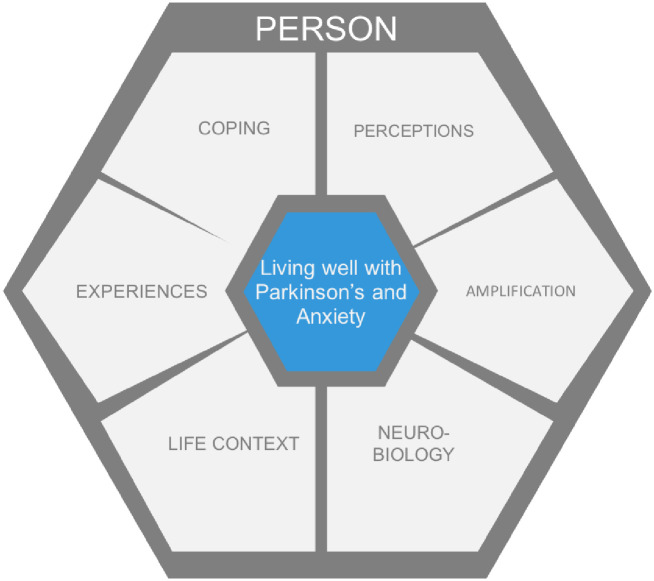
Purpose: Anxiety is a common non-motor symptom of Parkinson’s and there is no specific pharmacological intervention for people with Parkinson’s who experience anxiety. Yet there is little specific research documenting how individuals with this condition experience anxiety. It is important to explore the experiences of people with Parkinson’s to identify potential issues in developing future non-pharmacological interventions. This study explored the lived experience of anxiety for people with Parkinson’s. Materials and methods: Six participants were recruited into a descriptive phenomenological study, through the charity Parkinson’s UK, using a maximum variation sampling strategy. Face to face interviews were conducted. Data analysis employed thematic analysis. Results: Three key themes encapsulated the data: Finding ways to cope to “Try not to let it rule your life”, Amplifies symptoms “It’s emotionally draining it it’s also physically draining” and “Anxiety is a funny thing” experienced in myriad ways. A model of the experience of PWP experience of anxiety is proposed. Conclusions: Anxiety is a complex experience constructed of interlinked parts affecting people with Parkinson’s in myriad ways. Researchers and healthcare professionals should take these findings into account when designing future studies and interventions.
Overview
The claims and statistics of this paper haven’t been checked yet.
Free: it reads the open-access text and checks the first 5 claims that cite a source we can check. Create a free account to check every claim.
Integrity signals
Registry
Cites
Statistics
Figures
Verification
Claims the paper makes
The claims and statistics of this paper haven’t been checked yet.
Free: it reads the open-access text and checks the first 5 claims that cite a source we can check. Create a free account to check every claim.
Claims other papers make about this one
Each is checked against this paper’s own text: does it say what the citing paper says it does?
The cited source says what the claim attributes to it.
In the citing paper
“the study interviewed only six participants, and the causes and symptoms of anxiety described were diverse33”
From The experience of Anxiety for people with Parkinson’s disease (2023) · cites this paper as [33]
The cited source says what the claim attributes to it.
In the citing paper
“To our knowledge, only one qualitative paper has explored the subjective experience of anxiety.”
From The experience of Anxiety for people with Parkinson’s disease (2023) · cites this paper as [33]
Self-check
Percentages, sums and reported differences re-computed from the paper’s own numbers.
The self-check needs the paper’s full text.
Citations
Cites
Using thematic analysis in psychology
Braun, V., & Clarke, V. (2006) · Qualitative Research in Psychology · doi:10.1191/1478088706qp063oa · Cited by 194,414
S., N. L. (2017) · doi:10.1177/1609406917733847 · Cited by 14,051
(2013) · Cited by 12,072
Developing and evaluating complex interventions: the new Medical Research Council guidance
Craig, P., Dieppe, P., Macintyre, S., Michie, S., Nazareth, I., & Petticrew, M. (2008) · BMJ · doi:10.1136/bmj.a1655 · Cited by 10,995 · cited 1×
“Given its prevalence, the lack of a specific pharmacological intervention, and the dearth of specific research, it is vital to gain an understanding of the experience of anxiety for PWPs to inform the development of future complex interventions [33].”
Background(2014) · Medical Entomology and Zoology · Cited by 6,828
The qualitative research interview
DiCicco‐Bloom, B., & Crabtree, B. F. (2006) · Medical Education · doi:10.1111/j.1365-2929.2006.02418.x · Cited by 4,995 · cited 2×
“The aim of this was to increase convenience and privacy as it is suggested, that if participants are comfortable, they are more likely to reveal the nature of their lived experience [47, 48].”
BackgroundMethodEnhancing the quality and credibility of qualitative analysis.
(1999) · PubMed Central · Cited by 4,133
Epidemiology of Parkinson's disease
de Lau, L. M., & Breteler, M. M. (2006) · The Lancet Neurology · doi:10.1016/s1474-4422(06)70471-9 · Cited by 4,110
Member Checking: A Tool to Enhance Trustworthiness or Merely a Nod to Validation?
Birt, L., Scott, S., Cavers, D., Campbell, C., & Walter, F. (2016) · Qualitative Health Research · doi:10.1177/1049732316654870 · Cited by 3,970
The Use of Triangulation in Qualitative Research
Carter, N., Bryant-Lukosius, D., DiCenso, A., Blythe, J., & Neville, A. J. (2014) · Oncology Nursing Forum · doi:10.1188/14.onf.545-547 · Cited by 3,915
What can “thematic analysis” offer health and wellbeing researchers?
Braun, V., & Clarke, V. (2014) · International Journal of Qualitative Studies on Health and Well-being · doi:10.3402/qhw.v9.26152 · Cited by 3,056 · cited 2×
“Braun and Clarke [56, 58] emphasise the importance of transcription as the beginning of the data analysis process.”
BackgroundMethodDownward comparison principles in social psychology
Wills, T. A. (1981) · Psychological Bulletin · doi:10.1037/0033-2909.90.2.245 · Cited by 2,705 · cited 1×
“Wills [77] explains downwards social comparison as a typically defensive propensity whereby the person looks at another individual that they consider worse-off to feel better about their situation.”
BackgroundSocial disconnectedness, perceived isolation, and health among older adults
Cornwell, E. Y., & Waite, L. J. (2009) · Journal of Health and Social Behavior · doi:10.1177/002214650905000103 · Cited by 2,027
Theme development in qualitative content analysis and thematic analysis
Vaismoradi, M., Jones, J., Turunen, H., & Snelgrove, S. (2016) · Journal of Nursing Education and Practice · doi:10.5430/jnep.v6n5p100 · Cited by 1,994 · cited 1×
“‘Coping’—a complex concept—has been defined as habitual and enduring patterns of behaviours displayed by a person when confronted by a situation needing a response [68].”
BackgroundNon-motor symptoms of Parkinson's disease: dopaminergic pathophysiology and treatment
Chaudhuri, K. R., & Schapira, A. H. (2009) · The Lancet Neurology · doi:10.1016/s1474-4422(09)70068-7 · Cited by 1,738
Does Sample Size Matter in Qualitative Research?: A Review of Qualitative Interviews in is Research
Marshall, B., Cardon, P., Poddar, A., & Fontenot, R. (2013) · Journal of Computer Information Systems · doi:10.1080/08874417.2013.11645667 · Cited by 1,636
Descriptive Versus Interpretive Phenomenology: Their Contributions to Nursing Knowledge
Lopez, K. A., & Willis, D. G. (2004) · Qualitative Health Research · doi:10.1177/1049732304263638 · Cited by 1,490 · cited 1×
“The approach that guided this study was descriptive phenomenology—rooted in the philosophy of Edmund Husserl (1859–1938)—which recognises that peoples’ descriptions of their real-world experiences are important, because they shape actions, and so merit being the subject of scientific investigation [35].”
MethodBarone, P., Antonini, A., Colosimo, C., Marconi, R., Morgante, L., Avarello, T. P., Bottacchi, E., Cannas, A., Ceravolo, G., Ceravolo, R., et al. (2009) · Movement Disorders · doi:10.1002/mds.22643 · Cited by 1,445
An Introduction to Sample Selection Bias in Sociological Data
Berk, R. A. (1983) · American Sociological Review · doi:10.2307/2095230 · Cited by 1,213
For better or worse: The impact of upward social comparison on self-evaluations
Collins, R. L. (1996) · Psychological Bulletin · doi:10.1037/0033-2909.119.1.51 · Cited by 1,166 · cited 2×
“Conversely, Collins [78] describes upwards social comparison as a person consciously or subconsciously comparing themselves to those that they perceive as better off or coping better, to create a more positive perception of their reality.”
BackgroundFrom Husserl to van Manen. A review of different phenomenological approaches
Dowling, M. (2007) · International Journal of Nursing Studies · doi:10.1016/j.ijnurstu.2005.11.026 · Cited by 1,061
Salah, H. B. (2015) · Approches inductives Travail intellectuel et construction des connaissances · Cited by 963
Social support and resilience to stress: from neurobiology to clinical practice.
(2007) · PubMed Central · Cited by 904
From normal fear to pathological anxiety.
Rosen, J. B., & Schulkin, J. (1998) · Psychological Review · doi:10.1037//0033-295x.105.2.325 · Cited by 882 · cited 1×
“When dopamine is deficient, this produces neuronal hyper-excitability and exaggerated responses to perceived threats [14, 15].”
BackgroundGenerating best evidence from qualitative research: the role of data analysis
Green, J., Willis, K., Hughes, E., Small, R., Welch, N., Gibbs, L., & Daly, J. (2007) · Australian and New Zealand Journal of Public Health · doi:10.1111/j.1753-6405.2007.00141.x · Cited by 859
Sokolowski, R. (1999) · Cambridge University Press eBooks · doi:10.1017/cbo9780511809118 · Cited by 817
Rigour in qualitative case-study research
Houghton, C., Casey, D., Shaw, D., & Murphy, K. (2013) · Nurse Researcher · doi:10.7748/nr2013.03.20.4.12.e326 · Cited by 803
Debating Phenomenological Research Methods
Finlay, L. (2009) · Phenomenology & Practice · doi:10.29173/pandpr19818 · Cited by 743 · cited 1×
“Thematic analysis was used to develop a deep insight through systematic reflection that could help the emergence of meaningful order from the collected complex, rich data [54, 55].”
MethodAnxiety disorders in older adults: a comprehensive review
Wolitzky-Taylor, K. B., Castriotta, N., Lenze, E. J., Stanley, M. A., & Craske, M. G. (2010) · Depression and Anxiety · doi:10.1002/da.20653 · Cited by 726 · cited 2×
“Gillian’s experience echoes those of other older adults [92, 93].”
BackgroundDeveloping qualitative research questions: A reflective process
Agee, J. (2009) · International Journal of Qualitative Studies in Education · doi:10.1080/09518390902736512 · Cited by 704
The Interview: Data Collection in Descriptive Phenomenological Human Scientific Research
Englander, M. (2012) · Journal of Phenomenological Psychology · doi:10.1163/156916212x632943 · Cited by 684
The relationship between social connectedness and anxiety, self-esteem, and social identity.
Lee, R. M., & Robbins, S. B. (1998) · Journal of Counseling Psychology · doi:10.1037/0022-0167.45.3.338 · Cited by 647
Bias in clinical intervention research.
Gluud, L. L. (2006) · American Journal of Epidemiology · doi:10.1093/aje/kwj069 · Cited by 636
Maher, C., Hadfield, M., Hutchings, M., & de Eyto, A. (2018) · International Journal of Qualitative Methods · doi:10.1177/1609406918786362 · Cited by 632 · cited 1×
“part of the immersion phase, a process whereby the researchers immerse themselves in the collected data by examining the data in depth [59], to involve the researcher in the participant’s experiences and increase their familiarity with the data.”
BackgroundPeer Support Services for Individuals With Serious Mental Illnesses: Assessing the Evidence
Chinman, M., George, P., Dougherty, R. H., Daniels, A. S., Ghose, S. S., Swift, A., & Delphin-Rittmon, M. E. (2014) · Psychiatric Services · doi:10.1176/appi.ps.201300244 · Cited by 592
A Method of Phenomenological Interviewing
Bevan, M. T. (2014) · Qualitative Health Research · doi:10.1177/1049732313519710 · Cited by 583
D’Angiulli, A., Runge, M., Faulkner, A., Zakizadeh, J., Chan, A., & Morcos, S. (2013) · Frontiers in Psychology · doi:10.3389/fpsyg.2013.00001 · Cited by 509
Phenomenology for Therapists: Researching the Lived World
Finlay, L. (2011) · Wiley eBooks · doi:10.1002/9781119975144 · Cited by 497 · cited 1×
“Equally, whilst quantifiable and generalizable conclusions are not the objective, there is potential for an exploration into individual experiences to offer insights into, and understanding of, the human condition [39].”
BackgroundCaeyenberghs, K., Leemans, A., Leunissen, I., Michiels, K., & Swinnen, S. P. (2013) · Frontiers in Human Neuroscience · doi:10.3389/fnhum.2013.00726 · Cited by 463
Theme in Qualitative Content Analysis and Thematic Analysis
Vaismoradi, M., & Snelgrove, S. R. (2019) · Forum qualitative Sozialforschung · doi:10.17169/fqs-20.3.3376 · Cited by 441 · cited 1×
“Codes with common reference points by which ideas can be unified throughout the study phenomenon can be transformed into a theme [57].”
BackgroundBracketing in Phenomenology: Only Undertaken in the Data Collection and Analysis Process
Chan, Z., Fung, Y.-L., & Chien, W.-T. (2015) · The Qualitative Report · doi:10.46743/2160-3715/2013.1486 · Cited by 419
M Reiners, G. (2012) · Journal of Nursing & Care · doi:10.4172/2167-1168.1000119 · Cited by 402
Health‐related quality of life in early Parkinson's disease: The impact of nonmotor symptoms
Duncan, G. W., Khoo, T. K., Yarnall, A. J., O'Brien, J. T., Coleman, S. Y., Brooks, D. J., Barker, R. A., & Burn, D. J. (2014) · Movement Disorders · doi:10.1002/mds.25664 · Cited by 382 · cited 1×
“PWPs who experience anxiety are more at risk of falling, experiencing a lower quality of life, loss of independence, loss of social roles and increased health burden (Karlsen et al., 2000; Hanna and Cronin-Golomb, 2012; Duncan et al., 2014).”
BackgroundData collection and sampling in qualitative research: does size matter?
Cleary, M., Horsfall, J., & Hayter, M. (2014) · Journal of Advanced Nursing · doi:10.1111/jan.12163 · Cited by 377
Moore, O., Peretz, C., & Giladi, N. (2007) · Movement Disorders · doi:10.1002/mds.21659 · Cited by 337 · cited 1×
“The implication is, if PWPs are more anxious, they are likely to find mobilising more difficult and reduced mobility has a negative correlation with quality of life [22, 23].”
BackgroundLifeworld-led healthcare is more than patient-led care: an existential view of well-being
Dahlberg, K., Todres, L., & Galvin, K. (2009) · Medicine, Health Care and Philosophy · doi:10.1007/s11019-008-9174-7 · Cited by 331
Health related quality of life in Parkinson's disease: a prospective longitudinal study
Karlsen, K. H. (2000) · Journal of Neurology, Neurosurgery & Psychiatry · doi:10.1136/jnnp.69.5.584 · Cited by 326 · cited 2×
“96) experience, possibly leading to reduced drive to socialise by PWPs [95].”
BackgroundEngaging Phenomenological Analysis
Finlay, L. (2014) · Qualitative Research in Psychology · doi:10.1080/14780887.2013.807899 · Cited by 317 · cited 2×
“325408 28 Participant information was managed according to the Data Protection Act (1998). Confidentiality was guaranteed through the allocation of anonymised pseudonyms.”
BackgroundMethodThe epidemiology of depersonalisation and derealisation
Sierra, M., David, A. S., & Hunter, E. C. M. (2004) · Social Psychiatry and Psychiatric Epidemiology · doi:10.1007/s00127-004-0701-4 · Cited by 316 · cited 1×
“, 2011; Reynolds, Griffiths and Christensen, 2011). Wills (1981) explains downwards social comparison as a typically defensive propensity where the person looks at another individual they consider worse-off to feel better about their situation.”
BackgroundPrevalence of anxiety disorders and anxiety subtypes in patients with Parkinson's disease
Pontone, G. M., Williams, J. R., Anderson, K. E., Chase, G., Goldstein, S. A., Grill, S., Hirsch, E. S., Lehmann, S., Little, J. T., Margolis, R. L., et al. (2009) · Movement Disorders · doi:10.1002/mds.22611 · Cited by 305 · cited 3×
“Whilst these studies provide insights, generally there is a lack of anxiety-specific research in Parkinson’s [3, 10, 31, 32].”
BackgroundPhenomenology for Therapists: Researching the Lived World
Finlay, L. (2011) · Cited by 298
Debating Phenomenological Methods
Finlay, L. (2012) · SensePublishers eBooks · doi:10.1007/978-94-6091-834-6_2 · Cited by 296
Maillet, A., Krack, P., Lhommée, E., Météreau, E., Klinger, H., Favre, E., Le Bars, D., Schmitt, E., Bichon, A., Pelissier, P., et al. (2016) · Brain · doi:10.1093/brain/aww162 · Cited by 282
Mackey, S. (2005) · International Journal of Nursing Studies · doi:10.1016/j.ijnurstu.2004.06.011 · Cited by 277
Avoiding Common Pitfalls in Qualitative Data Collection and Transcription
Easton, K. L., McComish, J. F., & Greenberg, R. (2000) · Qualitative Health Research · doi:10.1177/104973200129118651 · Cited by 269
Gino, F., Brooks, A. W., & Schweitzer, M. E. (2012) · Journal of Personality and Social Psychology · doi:10.1037/a0026413 · Cited by 263 · cited 1×
“Self-reliance and self-confidence have been identified as essential components in managing anxiety; they empower people to seek out advice as well as implementing coping strategies [85].”
BackgroundKashdan, T. B., Weeks, J. W., & Savostyanova, A. A. (2011) · Clinical Psychology Review · doi:10.1016/j.cpr.2011.03.012 · Cited by 258
Non-motor Parkinson's: integral to motor Parkinson's, yet often neglected
Todorova, A., Jenner, P., & Ray Chaudhuri, K. (2014) · Practical Neurology · doi:10.1136/practneurol-2013-000741 · Cited by 247
Interviewing people about potentially sensitive topics
Elmir, R., Schmied, V., Jackson, D., & Wilkes, L. (2011) · Nurse Researcher · doi:10.7748/nr2011.10.19.1.12.c8766 · Cited by 231 · cited 2×
“The aim of this was to increase convenience and privacy as it is suggested, that if participants are comfortable, they are more likely to reveal the nature of their lived experience [47, 48].”
BackgroundA lifespan view of anxiety disorders
Lenze, E. J., & Wetherell, J. L. (2011) · Dialogues in Clinical Neuroscience · doi:10.31887/dcns.2011.13.4/elenze · Cited by 227
Vytal, K. E., Cornwell, B. R., Letkiewicz, A. M., Arkin, N. E., & Grillon, C. (2013) · Frontiers in Human Neuroscience · doi:10.3389/fnhum.2013.00093 · Cited by 224 · cited 1×
“It might be that participants are encountering an overload of their working memory contributing to their anxiety experience [98].”
BackgroundPsychosis, apathy, depression and anxiety in Parkinson's disease
Gallagher, D. A., & Schrag, A. (2012) · Neurobiology of Disease · doi:10.1016/j.nbd.2011.12.041 · Cited by 211
Daily Dynamics of Personal Identity and Self–Concept Clarity
Schwartz, S. J., Klimstra, T. A., Luyckx, K., Hale, W. W., Frijns, T., Oosterwegel, A., van Lier, P. A. C., Koot, H. M., & Meeus, W. H. J. (2011) · European Journal of Personality · doi:10.1002/per.798 · Cited by 195
Found Poems, Member Checking and Crises of Representation
Reilly, R. C. (2015) · The Qualitative Report · doi:10.46743/2160-3715/2013.1534 · Cited by 194 · cited 1×
“The codes chosen used the participant’s own words as closely as possible with the aim of supporting participant’s voices to come through in the analysis [58, 62].”
Parkinson’s disease and anxiety
Walsh, K., & Bennett, G. (2001) · Postgraduate Medical Journal · doi:10.1136/pmj.77.904.89 · Cited by 193
Anxiety in Parkinson’s disease: A critical review of experimental and clinical studies
Prediger, R. D. S., Matheus, F. C., Schwarzbold, M. L., Lima, M. M. S., & Vital, M. A. B. F. (2012) · Neuropharmacology · doi:10.1016/j.neuropharm.2011.08.039 · Cited by 190 · cited 1×
“This is a significant implication for clinicians and researchers to consider when developing interventions [24, 25], especially as there is no specific pharmacological intervention for PWPs who experience anxiety [26].”
BackgroundDepression, anxiety, and apathy in Parkinson's disease: insights from neuroimaging studies
Wen, M. ‐., Chan, L. L., Tan, L. C. S., & Tan, E. K. (2016) · European Journal of Neurology · doi:10.1111/ene.13002 · Cited by 183 · cited 3×
“While a neurological basis for anxiety in Parkinson's is theorised but not confirmed, psychosocial and situational contributors to anxiety are expressed by PWPs (Soundy, Stubbs and Roskell, 2014; Wen et al., 2016).”
BackgroundInfluentialDopamine in amygdala gates limbic processing of aversive stimuli in humans
Kienast, T., Hariri, A. R., Schlagenhauf, F., Wrase, J., Sterzer, P., Buchholz, H. G., Smolka, M. N., Gründer, G., Cumming, P., Kumakura, Y., et al. (2008) · Nature Neuroscience · doi:10.1038/nn.2222 · Cited by 177 · cited 2×
“Dopamine is a modulator in the amygdala, a brain structure involved in fear and anxiety [14].”
BackgroundDoes Anxiety Cause Freezing of Gait in Parkinson's Disease?
Ehgoetz Martens, K. A., Ellard, C. G., & Almeida, Q. J. (2014) · PLoS ONE · doi:10.1371/journal.pone.0106561 · Cited by 171
Individual Peer Support: A Qualitative Study of Mechanisms of Its Effectiveness
Gidugu, V., Rogers, E. S., Harrington, S., Maru, M., Johnson, G., Cohee, J., & Hinkel, J. (2014) · Community Mental Health Journal · doi:10.1007/s10597-014-9801-0 · Cited by 167
A Cognitive Model of Generalized Anxiety Disorder
Wells, A. (1999) · Behavior Modification · doi:10.1177/0145445599234002 · Cited by 165
Deane, K. H. O., Flaherty, H., Daley, D. J., Pascoe, R., Penhale, B., Clarke, C. E., Sackley, C., & Storey, S. (2014) · BMJ Open · doi:10.1136/bmjopen-2014-006434 · Cited by 163 · cited 3×
“Whilst these studies provide insights, generally there is a lack of anxiety-specific research in Parkinson’s [3, 10, 31, 32].”
BackgroundGoodwin, V. A., Richards, S. H., Henley, W., Ewings, P., Taylor, A. H., & Campbell, J. L. (2011) · Journal of Neurology, Neurosurgery & Psychiatry · doi:10.1136/jnnp-2011-300919 · Cited by 158 · cited 1×
“This is a significant implication for clinicians and researchers to consider when developing interventions [24, 25], especially as there is no specific pharmacological intervention for PWPs who experience anxiety [26].”
BackgroundParkinson's disease motor subtypes and mood
Burn, D. J., Landau, S., Hindle, J. V., Samuel, M., Wilson, K. C., Hurt, C. S., Brown, R. G., & for the PROMS‐PD Study Group (2012) · Movement Disorders · doi:10.1002/mds.24041 · Cited by 148
Anxiety disorders in Parkinson's disease.
Richard, I. H. (2005) · PubMed · Cited by 147
Cognitive decline in Parkinson’s disease: the complex picture
Biundo, R., Weis, L., & Antonini, A. (2016) · npj Parkinson's Disease · doi:10.1038/npjparkd.2016.18 · Cited by 147
Maloney, E. A., Sattizahn, J. R., & Beilock, S. L. (2014) · WIREs Cognitive Science · doi:10.1002/wcs.1299 · Cited by 143 · cited 1×
“Research has described the cognitive consequences of anxiety, particularly in spatial and working memory [96].”
BackgroundAnxious personality predicts an increased risk of Parkinson's disease
Bower, J. H., Grossardt, B. R., Maraganore, D. M., Ahlskog, J. E., Colligan, R. C., Geda, Y. E., Therneau, T. M., & Rocca, W. A. (2010) · Movement Disorders · doi:10.1002/mds.23230 · Cited by 141
Kinds of well-being: A conceptual framework that provides direction for caring
Galvin, K., & Todres, L. (2011) · International Journal of Qualitative Studies on Health and Well-Being · doi:10.3402/qhw.v6i4.10362 · Cited by 140 · cited 1×
“The model should not be understood in a deterministic way [52].”
BackgroundPeterson, D. S., King, L. A., Cohen, R. G., & Horak, F. B. (2015) · Physical Therapy · doi:10.2522/ptj.20140603 · Cited by 133
Hofmann, S. G., Ellard, K. K., & Siegle, G. J. (2012) · Cognition and Emotion · doi:10.1080/02699931.2011.579414 · Cited by 132 · cited 1×
“This can further increase anxiety symptoms which contribute to the maintenance of the hyper-excited neuronal anxiety circuit [18].”
BackgroundPatients’ engagement in primary care: powerlessness and compounding jeopardy. A qualitative study
Sheridan, N. F., Kenealy, T. W., Kidd, J. D., Schmidt‐Busby, J. I. G., Hand, J. E., Raphael, D. L., McKillop, A. M., & Rea, H. H. (2015) · Health Expectations · doi:10.1111/hex.12006 · Cited by 128
A phenomenological exploration of loneliness in the older adult
McInnis, G. J., & White, J. H. (2001) · Archives of Psychiatric Nursing · doi:10.1053/apnu.2001.23751 · Cited by 123
Erro, R., Picillo, M., Vitale, C., Amboni, M., Moccia, M., Longo, K., Cozzolino, A., Giordano, F., De Rosa, A., De Michele, G., et al. (2013) · Journal of Neurology, Neurosurgery & Psychiatry · doi:10.1136/jnnp-2012-303419 · Cited by 116 · cited 1×
“These studies suggest that anxiety is more common in PWPs than previously believed [6].”
BackgroundA conversation with Max van Manen on phenomenology in its original sense
van Manen, M., Higgins, I. J., & van der Riet, P. (2016) · Nursing and Health Sciences · doi:10.1111/nhs.12274 · Cited by 116 · cited 1×
“To this end, phenomenology typically uses small sample sizes because, if an understanding of individual lived experience is the objective, data saturation is irrelevant [38].”
BackgroundOn the Nature of Fear of Falling in Parkinson’s Disease
Rahman, S., Griffin, H. J., Quinn, N. P., & Jahanshahi, M. (2011) · Behavioural Neurology · doi:10.1155/2011/274539 · Cited by 115
The Experience of Parkinson’s Disease: A Systematic Review and Meta-Ethnography
Soundy, A., Stubbs, B., & Roskell, C. (2014) · The Scientific World Journal · doi:10.1155/2014/613592 · Cited by 113
Achieving harmony with oneself: life with a chronic illness
Delmar, C., Bøje, T., Dylmer, D., Forup, L., Jakobsen, C., Møller, M., Sønder, H., & Pedersen, B. D. (2005) · Scandinavian Journal of Caring Sciences · doi:10.1111/j.1471-6712.2005.00334.x · Cited by 107
Neurobiology of Depression and Anxiety in Parkinson's Disease
Kano, O., Ikeda, K., Cridebring, D., Takazawa, T., Yoshii, Y., & Iwasaki, Y. (2011) · Parkinson's Disease · doi:10.4061/2011/143547 · Cited by 107 · cited 1×
“However, PWPs may be more susceptible to anxiety than people with other long-term conditions due to Parkinson’s-associated dopamine deficiency [13].”
BackgroundAnxiety and motor fluctuations in Parkinson's disease: A cross-sectional observational study
Leentjens, A. F. G., Dujardin, K., Marsh, L., Martínez‐Martín, P., Richard, I., & STARKSTEIN, S. E. (2012) · Parkinsonism & Related Disorders · doi:10.1016/j.parkreldis.2012.06.007 · Cited by 104 · cited 4×
“The stories shared by participants suggest a more complex relationship between anxiety and motor symptomology that cannot be explained by ‘wearingoff’ phenomenon alone [9].”
BackgroundInfluentialSexual dysfunction in Parkinson's disease
Meco, G., Rubino, A., Caravona, N., & Valente, M. (2008) · Parkinsonism & Related Disorders · doi:10.1016/j.parkreldis.2007.10.008 · Cited by 103
Causal and mediating factors for anxiety, depression and well-being
Kinderman, P., Tai, S., Pontin, E., Schwannauer, M., Jarman, I., & Lisboa, P. (2015) · British Journal of Psychiatry · doi:10.1192/bjp.bp.114.147553 · Cited by 102 · cited 1×
“Conversely, this support may have potentially adverse consequences for PWPs managing anxiety, such as increased social avoidance due to reliance on others [89, 90].”
BackgroundLiving with Parkinson's disease: Elderly patients’ and relatives’ perspective on daily living
Wressle, E., Turesson, C., & Granérus, A. (2006) · Australian Occupational Therapy Journal · doi:10.1111/j.1440-1630.2006.00610.x · Cited by 101 · cited 9×
“It may be argued that the underlying pathology of Parkinson’s, coupled with the experience of living with an incurable neurodegenerative condition that affects participation in daily occupation, could amplify this experience [30, 101, 102].”
BackgroundResultInfluentialCognitive impairment in Parkinson's disease
Cosgrove, J., Alty, J., & Jamieson, S. (2015) · Postgraduate Medical Journal · doi:10.1136/postgradmedj-2015-133247 · Cited by 99 · cited 1×
“People with Parkinson’s can experience cognitive deficits [41].”
BackgroundExperiences of loss and chronic sorrow in persons with severe chronic illness
Ahlström, G. (2007) · Journal of Clinical Nursing · doi:10.1111/j.1365-2702.2006.01580.x · Cited by 98
Practical approach to quality of life in Parkinson’s disease: the nurse’s role
MacMahon, D. G., & Thomas, S. (1998) · Journal of Neurology · doi:10.1007/pl00007732 · Cited by 91 · cited 1×
“Three men and three women were recruited across the three main stages of the condition according to the Thomas and MacMahon staging (diagnosis/ early, maintenance, and complex) [44].”
MethodImpact of Anxiety on Quality of Life in Parkinson's Disease
Hanna, K. K., & Cronin-Golomb, A. (2012) · Parkinson's Disease · doi:10.1155/2012/640707 · Cited by 89
Non-motor symptoms of Parkinson’s disease: the patient’s perspective
Breen, K. C., & Drutyte, G. (2012) · Journal of Neural Transmission · doi:10.1007/s00702-012-0928-2 · Cited by 87 · cited 1×
“6%) experience nonmotor symptoms and, of these 43–56% experience stress and anxiety [3, 4].”
BackgroundOn the nature of fear of falling in Parkinson's disease.
Rahman, S., Griffin, H. J., Quinn, N. P., et al. (2011) · PubMed · doi:10.3233/ben-2011-0330 · Cited by 87 · cited 3×
“Fluctuating physical symptoms and their impact on independence and safety have previously been associated with causing anxiety in PWPs [27, 30].”
BackgroundResultMood disorders in Parkinson's disease
Tan, L. C. S. (2011) · Parkinsonism & Related Disorders · doi:10.1016/s1353-8020(11)70024-4 · Cited by 84
Clinical issues in the treatment of anxiety and depression in older adults with Parkinson's disease
Pachana, N. A., Egan, S. J., Laidlaw, K., Dissanayaka, N., Byrne, G. J., Brockman, S., Marsh, R., & Starkstein, S. (2013) · Movement Disorders · doi:10.1002/mds.25689 · Cited by 82
Emotional dysfunction in Parkinson's disease.
Blonder, L. X., & Slevin, J. T. (2011) · PubMed · doi:10.3233/ben-2011-0329 · Cited by 82
Coping, treatment planning, and treatment outcome: Discussion
Beutler, L. E., Moos, R. H., & Lane, G. (2003) · Journal of Clinical Psychology · doi:10.1002/jclp.10216 · Cited by 82 · cited 1×
“different ways that participants had found to cope have been identified by other people, across cultures, living with a multitude of health conditions including anxiety [80, 81].”
Background(2004) · PubMed · Cited by 82
Emotional Dysfunction in Parkinson’s Disease
Blonder, L. X., & Slevin, J. T. (2011) · Behavioural Neurology · doi:10.1155/2011/143857 · Cited by 81
Could Sensory Mechanisms Be a Core Factor That Underlies Freezing of Gait in Parkinson’s Disease?
Ehgoetz Martens, K. A., Pieruccini-Faria, F., & Almeida, Q. J. (2013) · PLoS ONE · doi:10.1371/journal.pone.0062602 · Cited by 79
Rapee, R. M., Peters, L., Carpenter, L., & Gaston, J. E. (2015) · Behaviour Research and Therapy · doi:10.1016/j.brat.2015.03.012 · Cited by 79 · cited 2×
“Conversely, this support may have potentially adverse consequences for PWPs managing anxiety, such as increased social avoidance due to reliance on others [89, 90].”
BackgroundA case series of 223 patients with depersonalization-derealization syndrome
Michal, M., Adler, J., Wiltink, J., Reiner, I., Tschan, R., Wölfling, K., Weimert, S., Tuin, I., Subic-Wrana, C., Beutel, M. E., et al. (2016) · BMC Psychiatry · doi:10.1186/s12888-016-0908-4 · Cited by 74 · cited 2×
“This could be interpreted as a protective experience; a disconnect from the anxiety stimulating constant worry (Michal et al., 2016).”
BackgroundKrohne, H. W., & Höck, M. (2010) · Personality and Individual Differences · doi:10.1016/j.paid.2010.08.001 · Cited by 73 · cited 1×
“However, it has similarly been noted that people experiencing anxiety demonstrate impaired cognitive information processing (Krohne and Hock, 2011) which is a known non-motor symptom of Parkinson’s (Hurt et al.”
BackgroundIll health is powerlessness: a phenomenological study about worthlessness, limitations and suffering
Margaretha Strandmark, K. (2004) · Scandinavian Journal of Caring Sciences · doi:10.1111/j.1471-6712.2004.00275.x · Cited by 70
Sexual and relationship dysfunction in people with Parkinson's disease
Hand, A., Gray, W. K., Chandler, B. J., & Walker, R. W. (2009) · Parkinsonism & Related Disorders · doi:10.1016/j.parkreldis.2009.10.007 · Cited by 63
Cognition, coping, and outcome in Parkinson's disease
Hurt, C. S., Landau, S., Burn, D. J., Hindle, J. V., Samuel, M., Wilson, K., & Brown, R. G. (2012) · International Psychogeriatrics · doi:10.1017/s1041610212000749 · Cited by 63 · cited 6×
“Fluctuating physical symptoms and their impact on independence and safety have previously been associated with causing anxiety in PWPs (Wressle, Engstrand and Granérus, 2007; Rahman et al., 2011). Though Sunvisson (2006) suggested that the sense of loss of control manifests in late-stage Parkinson's, the participants’…”
BackgroundMethodInfluentialSpecific design features of an interpretative phenomenological analysis study
Wagstaff, C., & Williams, B. (2014) · Nurse Researcher · doi:10.7748/nr2014.01.21.3.8.e1226 · Cited by 56
Upward and downward social comparisons can decrease prosocial behavior
Yip, J. J., & Kelly, A. E. (2013) · Journal of Applied Social Psychology · doi:10.1111/j.1559-1816.2013.01039.x · Cited by 54 · cited 1×
“As social comparison has been linked to positive and negative outcomes, including those related to anxiety, this may be an area of future research interest when developing a targeted Parkinson’s anxiety intervention [75, 79].”
BackgroundTimed Up and Go, Cognitive, and Quality-of-Life Correlates in Parkinson's Disease
Stegemöller, E. L., Nocera, J. R., Malaty, I. A., Shelley, M., Okun, M. S., & Hass, C. J. (2013) · Archives of Physical Medicine and Rehabilitation · doi:10.1016/j.apmr.2013.10.031 · Cited by 53
Frazier, L. D., & Waid, L. D. (1999) · Aging & Mental Health · doi:10.1080/13607869956163 · Cited by 47 · cited 1×
“Losing the ability to cope, and reduced locus of control, is associated with anxiety [69, 70], and the participants reflected this:”
BackgroundShould uncontrollable worry be removed from the definition of GAD? A test of incremental validity
Hallion, L. S., & Ruscio, A. M. (2013) · Journal of Abnormal Psychology · doi:10.1037/a0031731 · Cited by 47 · cited 1×
“Hallion and Ruscio [11] describe anxiety as a persistent internal feeling of fear and worry that is intrusive in daily life.”
BackgroundResearch Methods in Special Education
Mertens, D. M., & McLaughlin, J. R. (1995) · Sage eBooks · doi:10.4135/9781412985727 · Cited by 47
Proactive coping and preventive coping: Evidence for two distinct constructs?
Drummond, S., & Brough, P. A. (2015) · Personality and Individual Differences · doi:10.1016/j.paid.2015.12.029 · Cited by 45
Coventry, P. A., Dickens, C. M., & Todd, C. J. (2014) · Social Science & Medicine · doi:10.1016/j.socscimed.2014.07.068 · Cited by 44
Anxiety Changes Depersonalization and Derealization Symptoms in Vestibular Patients
Kolev, O. I., Georgieva-Zhostova, S., & Berthoz, A. (2014) · Behavioural Neurology · doi:10.1155/2014/847054 · Cited by 39
Legg, M., Occhipinti, S., Ferguson, M., Dunn, J. C., & Chambers, S. K. (2010) · Psycho-Oncology · doi:10.1002/pon.1862 · Cited by 38 · cited 2×
“As social comparison has been linked to positive and negative outcomes, including those related to anxiety, this may be an area of future research interest when developing a targeted Parkinson’s anxiety intervention [75, 79].”
BackgroundClinical Presentation of Anxiety in Parkinson’s Disease: A Scoping Review
Lutz, S. G., Holmes, J. D., Ready, E. A., Jenkins, M. E., & Johnson, A. M. (2016) · OTJR Occupational Therapy Journal of Research · doi:10.1177/1539449216661714 · Cited by 37
Struggling with meaninglessness: a case study from an experiential–existential perspective
Vanhooren, S. (2019) · Person-Centered & Experiential Psychotherapies · doi:10.1080/14779757.2019.1572029 · Cited by 35
Lifeworld-led care: Is it relevant for well-being and the fifth wave of public health action?
Hemingway, A. (2011) · International Journal of Qualitative Studies on Health and Well-Being · doi:10.3402/qhw.v6i4.10364 · Cited by 34
Investigating emotions in Parkinson's disease: what we know and what we still don't know
Sotgiu, I., & Rusconi, M. L. (2013) · Frontiers in Psychology · doi:10.3389/fpsyg.2013.00336 · Cited by 31
Understanding uncertainty in young-onset Parkinson disease
Ravenek, M. J., Rudman, D. L., Jenkins, M. E., & Spaulding, S. J. (2017) · Chronic Illness · doi:10.1177/1742395317694699 · Cited by 24
Coping strategies, self-esteem and levels of interrogative suggestibility
Bain, S. A., McGroarty, A., & Runcie, M. (2014) · Personality and Individual Differences · doi:10.1016/j.paid.2014.11.003 · Cited by 23
Anxiety Affects Working Memory Only in Left Hemibody Onset Parkinson Disease Patients
Foster, P. S., Drago, V., Yung, R. C., Skidmore, F. M., Skoblar, B. M., Shenal, B. V., Rhodes, R. D., & Heilman, K. M. (2010) · Cognitive and Behavioral Neurology · doi:10.1097/wnn.0b013e3181cc8be9 · Cited by 23 · cited 1×
“In Parkinson’s, the relationship between anxiety and working memory has been noted particularly in PWPs with left hemibody onset [97].”
BackgroundCoping strategies within a personality space
Gárriz, M., Gutiérrez, F., Peri, J. M., Baillés, E., & Torrúbia, R. (2015) · Personality and Individual Differences · doi:10.1016/j.paid.2015.02.024 · Cited by 21
Anxiety: its role in the history of psychiatric epidemiology
Murphy, J. M., & Leighton, A. H. (2008) · Psychological Medicine · doi:10.1017/s0033291708004625 · Cited by 20 · cited 1×
“In conjunction with the other symptoms of Parkinson’s, this can result in eroded self-confidence leading to people trying to reduce uncertainty in their lives and becoming more reliant on others [88].”
BackgroundRak, K. J., Kuza, C. C., Ashcraft, L. E., Morrison, P. K., Angus, D. C., Barnato, A. E., Hravnak, M., Hershey, T. B., & Kahn, J. M. (2017) · International Journal of Qualitative Methods · doi:10.1177/1609406917733387 · Cited by 18
Anxiety disorders in older people
Lindesay, J. E. B., Stewart, R. J., & Bisla, J. (2012) · Reviews in Clinical Gerontology · doi:10.1017/s0959259812000019 · Cited by 17
Stopped within a track: embodied experiences of late-stage Parkinson's disease
Sunvisson, H. (2006) · International Journal of Qualitative Studies on Health and Well-Being · doi:10.1080/17482620500487547 · Cited by 17
Anxiety and depression - online resources and management tools.
Reynolds, J., Griffiths, K. M., & Christensen, H. M. (2011) · PubMed · Cited by 15
Behavioural coping patterns in Parkinson's patients with visual hallucinations
Barnes, J., Connelly, V. J., Boubert, L., & da Silva, K. M. (2013) · Journal of Neuropsychology · doi:10.1111/jnp.12016 · Cited by 13 · cited 1×
“It could be seen that the development of alternative coping strategies is not unique to the Parkinson's anxiety experience and more an expression of human response to confrontation (Barnes et al., 2013; Bain, McGroarty and Runcie, 2015; Drummond and Brough, 2016).”
BackgroundOdiyoor, M., Kobylecki, C., HACKETT, R. J., Silverdale, M., & Kellett, M. (2009) · Movement Disorders · doi:10.1002/mds.22848 · Cited by 12
The involvement of people with Parkinson’s in designing a study of the lived experience of anxiety
Lovegrove, C., Bannigan, K., Cheeseman, D., & Latour, J. M. (2017) · British Journal of Occupational Therapy · doi:10.1177/0308022617700654 · Cited by 12
Self-citationPredicting Illness Behavior: Health Anxiety Mediated by Locus of Control
Skidmore, J. R., Dyson, S. J., Kupper, A. E., & Calabrese, D. (2014) · American Journal of Health Behavior · doi:10.5993/ajhb.38.5.7 · Cited by 10
Movement Deficits in Parkinson's Disease and Restorative Occupational Therapy
Shah, S., & Nolen, A. (2006) · New Zealand journal of occupational therapy · Cited by 2
Research Design and Methodology
(2013) · Palgrave Macmillan eBooks · doi:10.1057/9781137326072.0007 · Cited by 2
Research works printed but not linked: 1
- Husserl E. Ideas. London: Routledge; 1931. 1– 376 p.
Cited by
The experience of Anxiety for people with Parkinson’s disease
Blundell, E. K., Grover, L. E., Stott, J., & Schrag, A. (2023) · npj Parkinson's Disease · doi:10.1038/s41531-023-00512-1 · Cited by 41
“Its fi ndings highlighted the importance of anxiety in the subjective experience of PD; however, the study interviewed only six participants, and the causes and symptoms of anxiety described were diverse 33 .”
Non-motor symptoms of Parkinson’s disease
Carroll, V., Rossiter, R. C., & Blanchard, D. L. (2021) · Australian Journal of General Practice · doi:10.31128/ajgp-07-21-6093 · Cited by 25
Lovegrove, C., Sturkenboom, I. H. W. M., Marsden, J. F., & Bannigan, K. (2023) · Journal of Parkinson s Disease · doi:10.3233/jpd-230150 · Cited by 8
“This is reflected in research exploring the lived experience of anxiety in PD and will be an important consideration for the next stage of intervention development [17].”
InfluentialSelf-citationHodgson, P., Jordan, A., Sinani, C., Charura, D., & Orange, S. T. (2024) · CNS Neuroscience & Therapeutics · doi:10.1111/cns.14562 · Cited by 12
Personal Tools and Psychosocial Resources of Resilient Gender-Based Violence Women
García-Montes, R., Corral‐Liria, I., Fernández, R. J., Vázquez, R. R., Valllejo, R. B. D. B., & Iglesias, M. L. (2021) · International Journal of Environmental Research and Public Health · doi:10.3390/ijerph18168306 · Cited by 6
“This is a qualitative study using Interpretative Phenomenological Analysis, in line with Heidegger's principles [12-15].”
Method
Metadata
- Authors
- Lovegrove, C. J., & Bannigan, K.
- Affiliations
- Glasgow Caledonian University (GB)
- Venue
- PLOS ONE
- Publisher
- Public Library of Science (PLoS)
- Published
- 2021-04-08
- Volume
- 16
- Issue
- 4
- Pages
- e0249390
- ISSN
- 1932-6203 (ISSN-L)
- PMC
- PMC8031398
- OpenAlex
- W2981522886
- Cited by
- 15
- References
- 130
- Citations by year
- 2026: 4 · 2025: 2 · 2024: 4 · 2023: 2 · 2022: 1 · 2021: 2
- FWCI
- 1.08
- Type
- journal article
- Language
- en
- Open access
- gold
- doi.org
- Licence
- Locations
- PLoS ONE (publishedVersion, cc-by)
- PubMed Central (publishedVersion, cc-by)
- PubMed (publishedVersion)
- ResearchOnline (Glasgow Caledonian University) (acceptedVersion, cc-by)
- PEARL (University of Plymouth) (submittedVersion, cc-by-sa)
- DOAJ (DOAJ: Directory of Open Access Journals) (submittedVersion, cc-by-sa)
- Royal Devon and Exeter Research Repository (Royal Devon and Exeter) (submittedVersion, public-domain)
- Newcastle University ePrints (Newcastle Univesity) (cc-by)
- Funders
- National Institute for Health Research (MRES-2015-03-013-105)
- Topics
- Health Sciences › Medicine › Clinical Neurology › Parkinson's Disease Mechanisms and Treatments
- Health Sciences › Medicine › Oncology › Cancer survivorship and care
- Social Sciences › Psychology › Experimental and Cognitive Psychology › Anxiety, Depression, Psychometrics, Treatment, Cognitive Processes
- Keywords
- Parkinson's disease, anxiety, lived experience, non-motor symptoms, coping, non-pharmacological treatment
- MeSH terms
- Adaptation, Psychological, Aged, Anxiety, Female, Humans, Male, Middle Aged, Parkinson Disease
About these checks
Registry, retraction, Cites and statistics results are computed, not judged, with one exception: a printed reference that no index lists is read once by a model before it counts as a citation error. Claims are extracted by a model and kept only when their quote appears verbatim in the text; each cited source is then checked, with a model’s help, for whether it says what the claim relies on. Those verdicts can be wrong — read the claim’s quote and the cited source before relying on one.
Statistics and arithmetic are recomputed, not judged.
Confidence bands are shown only for fields calibrated on our annotated test set. None is calibrated yet, so no band is shown.
What counts as a claim ›How we measure confidence ›How we check this ›
Are you an author, or do you see a problem with this page? Request a review
Data sources
Bibliographic data: Semantic Scholar, OpenAlex, Crossref.
Contains information from the Semantic Scholar Academic Graph Datasets, made available under the ODC Attribution License (ODC-BY 1.0).
Semantic Scholar’s data is described in: Kinney, R., et al. (2023). The Semantic Scholar Open Data Platform. arXiv:2301.10140.
