

Type I Interferons Promote Fatal Immunopathology by Regulating Inflammatory Monocytes and Neutrophils during Candida Infections
Open accessThe DOI matches its Crossref record; 70 of the 70 references it cites were found in a registry or an index.
Abstract
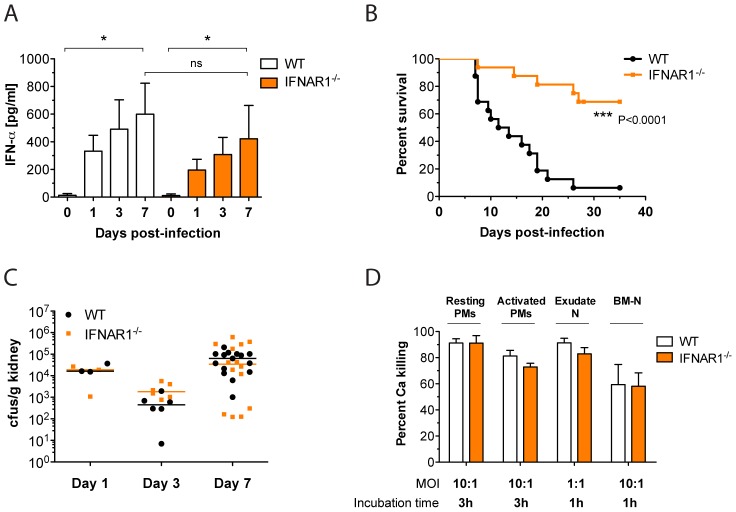
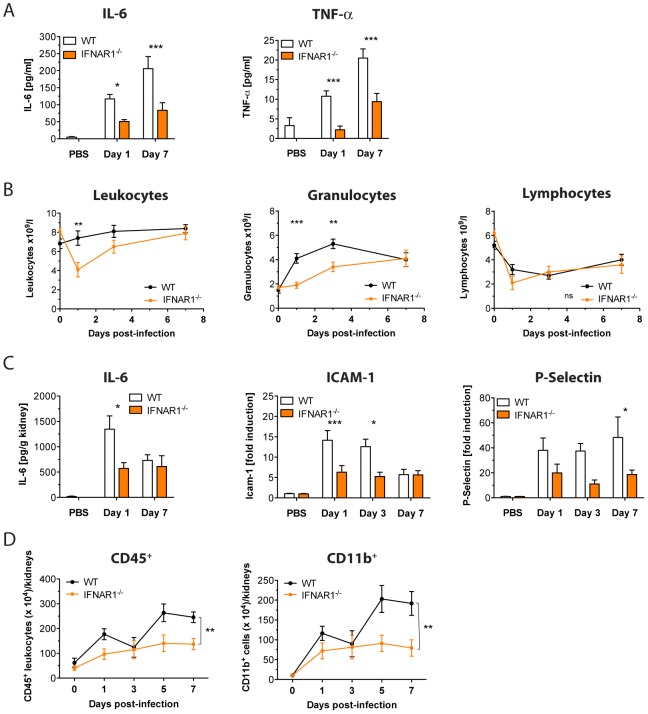
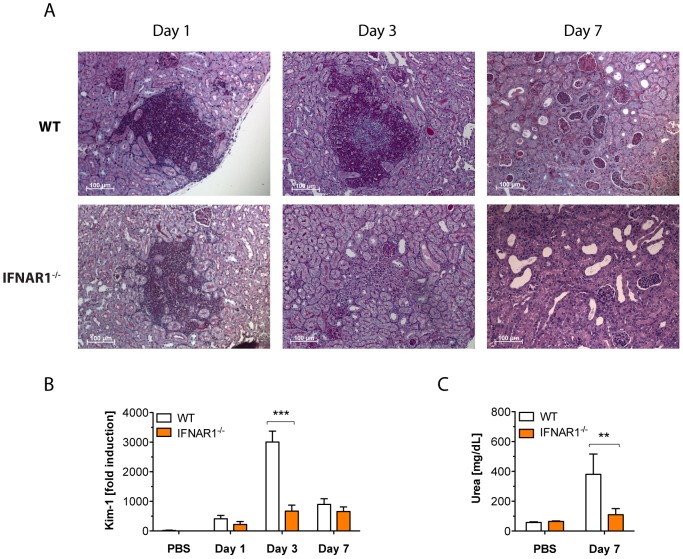
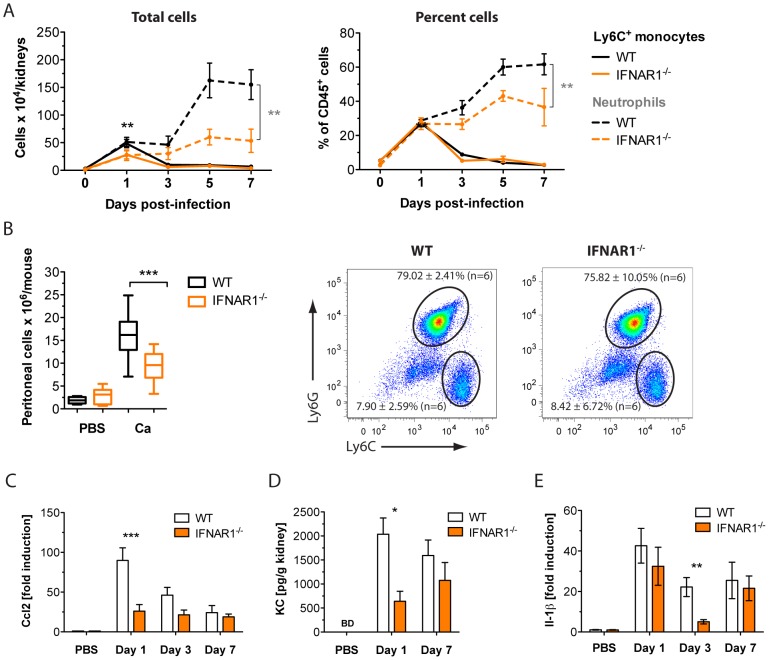
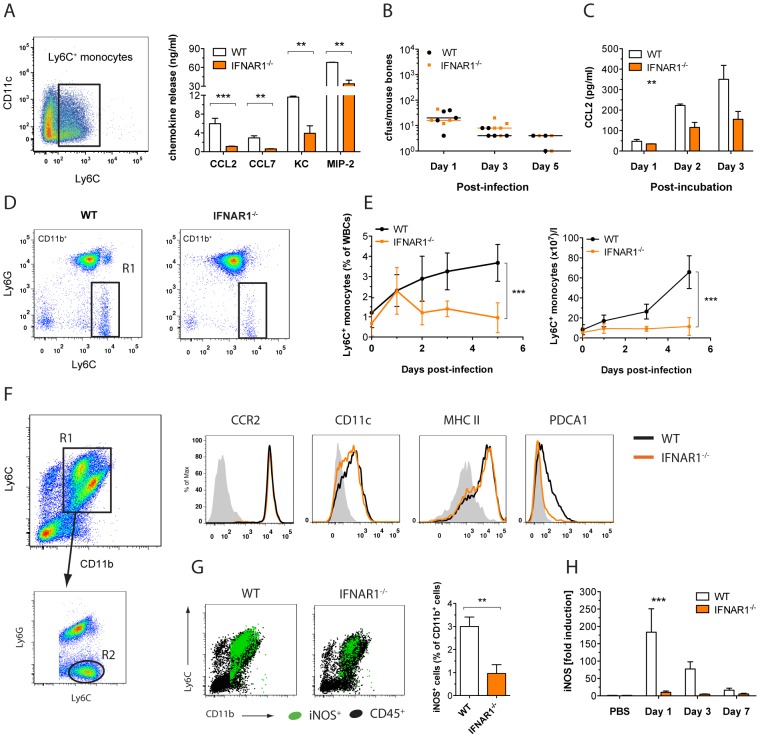
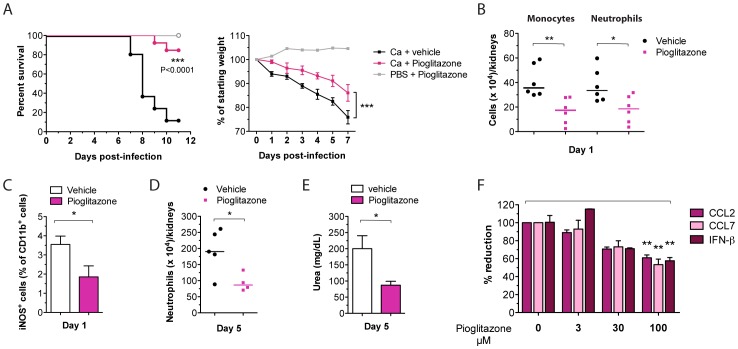
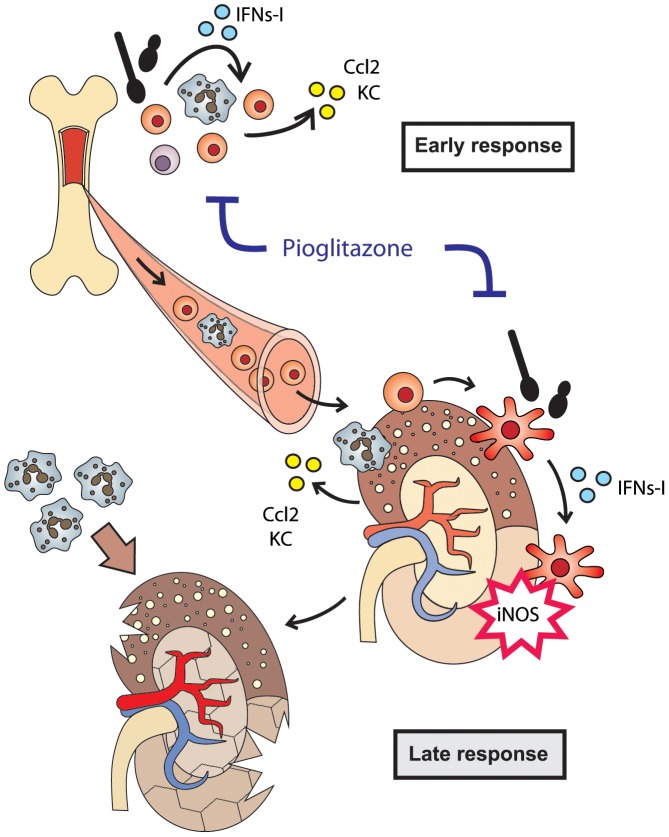
Invasive fungal infections by Candida albicans (Ca) are a frequent cause of lethal sepsis in intensive care unit patients. While a contribution of type I interferons (IFNs-I) in fungal sepsis remains unknown, these immunostimulatory cytokines mediate the lethal effects of endotoxemia and bacterial sepsis. Using a mouse model lacking a functional IFN-I receptor (Ifnar1⁻/⁻), we demonstrate a remarkable protection against invasive Ca infections. We discover a mechanism whereby IFN-I signaling controls the recruitment of inflammatory myeloid cells, including Ly6C(hi) monocytes and neutrophils, to infected kidneys by driving expression of the chemokines CCL2 and KC. Within kidneys, monocytes differentiate into inflammatory DCs but fail to functionally mature in Ifnar1⁻/⁻ mice, as demonstrated by the impaired upregulation of the key activation markers PDCA1 and iNOS. The increased activity of inflammatory monocytes and neutrophils results in hyper-inflammation and lethal kidney pathology. Pharmacological diminution of monocytes and neutrophils by treating mice with pioglitazone, a synthetic agonist of the nuclear receptor peroxisome proliferator-activated receptor-γ (PPAR-γ), strongly reduces renal immunopathology during Ca infection and improves mouse survival. Taken together, our data connect for the first time the sepsis-promoting functions of IFNs-I to the CCL2-mediated recruitment and the activation of inflammatory monocytes/DCs with high host-destructing potency. Moreover, our data demonstrate a therapeutic relevance of PPAR-γ agonists for microbial infectious diseases where inflammatory myeloid cells may contribute to fatal tissue damage.
Overview
The claims and statistics of this paper haven’t been checked yet.
Free: it reads the open-access text and checks the first 5 claims that cite a source we can check. Create a free account to check every claim.
Integrity signals
Registry
Cites
Statistics
Figures
Verification
Claims the paper makes
The claims and statistics of this paper haven’t been checked yet.
Free: it reads the open-access text and checks the first 5 claims that cite a source we can check. Create a free account to check every claim.
Claims other papers make about this one
Each is checked against this paper’s own text: does it say what the citing paper says it does?
The source backs part of the claim, not all of it — or backs it for a different population, condition or comparison.
In the citing paper
“Subsequently, C. albicans that avoid timely killing and elimination by macrophages invade organs and tissues throughout the body through hyphal infiltration into vascular endothelial cells [16,54,55], leading to the induction of systemic inflammatory responses [15,16].”
From The F 1 F o -ATP synthase α subunit of Candida albicans induces inflammatory responses by controlling amino acid catabolism (2023) · cites this paper as [16]
Experimental — accuracy not yet measuredThe cited source says what the claim attributes to it.
In the citing paper
“this response is also induced by bacterial, parasitic (43), and fungal infections (30, 44 – 48).”
From Overlooked Candida glabrata petites are echinocandin tolerant, induce host inflammatory responses, and display poor in vivo fitness (2023) · cites this paper as [44]
Self-check
Percentages, sums and reported differences re-computed from the paper’s own numbers.
The self-check needs the paper’s full text.
Citations
Cites
The peroxisome proliferator-activated receptor-γ is a negative regulator of macrophage activation
Ricote, M., Li, A. C., Willson, T. M., Kelly, C. J., & Glass, C. K. (1998) · Nature · doi:10.1038/34178 · Cited by 3,525 · cited 1×
“In line with previous reports identifying iNOS as one of the main target genes of PPARc mediated repression [41], we detected significantly reduced iNOS inflammatory DCs in kidneys of drug-treated mice (Figure 6C), suggesting that pioglitazone also interferes with the Figure 5.”
ResultFunctional Role of Type I and Type II Interferons in Antiviral Defense
Müller, U., Steinhoff, U., Reis, L. F. L., Hemmi, S., Pavlovic, J., Zinkernagel, R. M., & Aguet, M. (1994) · Science · doi:10.1126/science.8009221 · Cited by 2,453
Serbina, N. V., & Pamer, E. G. (2006) · Nature Immunology · doi:10.1038/ni1309 · Cited by 1,669
IFNα activates dormant haematopoietic stem cells in vivo
Essers, M. A. G., Offner, S., Blanco-Bose, W. E., Waibler, Z., Kalinke, U., Duchosal, M. A., & Trumpp, A. (2009) · Nature · doi:10.1038/nature07815 · Cited by 1,368 · cited 1×
“mice do not show this retention phenotype, most likely because IFN-I signaling might also affect the primary differentiation or proliferation of monocytes within the BM”
BackgroundContribution of Neutrophils to Acute Lung Injury
Grommes, J., & Soehnlein, O. (2011) · Molecular Medicine · doi:10.2119/molmed.2010.00138 · Cited by 1,313
A SUMOylation-dependent pathway mediates transrepression of inflammatory response genes by PPAR-γ
Pascual, G., Fong, A. L., Ogawa, S., Gamliel, A., Li, A. C., Perissi, V., Rose, D. W., Willson, T. M., Rosenfeld, M. G., & Glass, C. K. (2005) · Nature · doi:10.1038/nature03988 · Cited by 1,254
Gillum, A. M., Tsay, E. Y. H., & Kirsch, D. R. (1984) · Molecular and General Genetics MGG · doi:10.1007/bf00328721 · Cited by 1,251
TNF/iNOS-Producing Dendritic Cells Mediate Innate Immune Defense against Bacterial Infection
Serbina, N. V., Salazar-Mather, T. P., Biron, C. A., Kuziel, W. A., & Pamer, E. G. (2003) · Immunity · doi:10.1016/s1074-7613(03)00171-7 · Cited by 1,175
Interferons at age 50: past, current and future impact on biomedicine
Borden, E. C., Sen, G. C., Uze, G., Silverman, R. H., Ransohoff, R. M., Foster, G. R., & Stark, G. R. (2007) · Nature Reviews Drug Discovery · doi:10.1038/nrd2422 · Cited by 1,154 · cited 1×
“cytokines that regulate resistance to viruses, enhance innate and adaptive immunity, and modulate cell survival and apoptosis [2].”
BackgroundTsou, C.-L., Peters, W., Si, Y., Slaymaker, S., Aslanian, A. M., Weisberg, S. P., Mack, M., & Charo, I. F. (2007) · Journal of Clinical Investigation · doi:10.1172/jci29919 · Cited by 1,152 · cited 15×
“Due to a defect of monocyte egression from the BM, mice lacking CCL2 or the cognate receptor CCR2 retain most monocytes in the BM [37,55].”
BackgroundMethodInfluentialSelf-citation
Cited by
Type I interferons in infectious disease
McNab, F., Mayer-Barber, K., Sher, A., Wack, A., & O'Garra, A. (2015) · Nature Reviews Immunology · doi:10.1038/nri3787 · Cited by 2,780
Channappanavar, R., Fehr, A. R., Vijay, R., Mack, M., Zhao, J., Meyerholz, D. K., & Perlman, S. (2016) · Cell Host & Microbe · doi:10.1016/j.chom.2016.01.007 · Cited by 1,419
Self-citationImmune defence against Candida fungal infections
Netea, M. G., Joosten, L. A. B., van der Meer, J. W. M., Kullberg, B.-J., & van de Veerdonk, F. L. (2015) · Nature Reviews Immunology · doi:10.1038/nri3897 · Cited by 642
d'Enfert, C., Kaune, A.-K., Alaban, L.-R., Chakraborty, S., Cole, N., Delavy, M., Kosmala, D., Marsaux, B., Fróis-Martins, R., Morelli, M., et al. (2021) · FEMS Microbiology Reviews · doi:10.1093/femsre/fuaa060 · Cited by 347
The regulation of inflammation by interferons and their STATs
Rauch, I., Müller, M., & Decker, T. (2013) · JAK-STAT · doi:10.4161/jkst.23820 · Cited by 281
Self-citationGoritzka, M., Makris, S., Kausar, F., Durant, L. R., Pereira, C., Kumagai, Y., Culley, F. J., Mack, M., Akira, S., & Johansson, C. (2015) · Journal of Experimental Medicine · doi:10.1084/jem.20140825 · Cited by 279
Self-citationDectin-1 Signaling Update: New Perspectives for Trained Immunity
Mata-Martínez, P., Bergón-Gutiérrez, M., & del Fresno, C. (2022) · Frontiers in Immunology · doi:10.3389/fimmu.2022.812148 · Cited by 238
Dynamic Fungal Cell Wall Architecture in Stress Adaptation and Immune Evasion
Hopke, A., Brown, A. J. P., Hall, R. A., & Wheeler, R. T. (2018) · Trends in Microbiology · doi:10.1016/j.tim.2018.01.007 · Cited by 228
Dorhoi, A., Yeremeev, V., Nouailles, G., Weiner, J., Jörg, S., Heinemann, E., Oberbeck‐Müller, D., Knaul, J. K., Vogelzang, A., Reece, S. T., et al. (2014) · European Journal of Immunology · doi:10.1002/eji.201344219 · Cited by 226
Tucey, T. M., Verma, J., Harrison, P. F., Snelgrove, S. L., Lo, T. L., Scherer, A. K., Barugahare, A. A., Powell, D. R., Wheeler, R. T., Hickey, M. J., et al. (2018) · Cell Metabolism · doi:10.1016/j.cmet.2018.03.019 · Cited by 226
Mayer-Barber, K. D., & Yan, B. (2017) · Cellular & Molecular Immunology · doi:10.1038/cmi.2016.25 · Cited by 213
del Fresno, C., Soulat, D., Roth, S., Blazek, K., Udalova, I., Sancho, D., Ruland, J., & Ardavín, C. (2013) · Immunity · doi:10.1016/j.immuni.2013.05.010 · Cited by 188
Disease Tolerance as an Inherent Component of Immunity
Martins, R., Carlos, A. R., Braza, F., Thompson, J. A., Bastos-Amador, P., Ramos, S., & Soares, M. P. (2019) · Annual Review of Immunology · doi:10.1146/annurev-immunol-042718-041739 · Cited by 166
Goritzka, M., Durant, L. R., Pereira, C., Salek-Ardakani, S., Openshaw, P. J. M., & Johansson, C. (2014) · Journal of Virology · doi:10.1128/jvi.00333-14 · Cited by 160
Lionakis, M. S., Iliev, I. D., & Hohl, T. M. (2017) · JCI Insight · doi:10.1172/jci.insight.93156 · Cited by 153
Candida and Host Determinants of Susceptibility to Invasive Candidiasis
Lionakis, M. S., & Netea, M. G. (2013) · PLoS Pathogens · doi:10.1371/journal.ppat.1003079 · Cited by 149
Inflammatory Monocytes Mediate Early and Organ-Specific Innate Defense During Systemic Candidiasis
Ngo, L. Y., Kasahara, S., Kumasaka, D. K., Knoblaugh, S. E., Jhingran, A., & Hohl, T. M. (2014) · The Journal of Infectious Diseases · doi:10.1093/infdis/jit413 · Cited by 137
Lei, Y., Martinez, C. G., Torres-Odio, S., Bell, S. L., Birdwell, C. E., Bryant, J. D., Tong, C. W.-C., Watson, R. O., West, L. C., & West, A. P. (2021) · Science Advances · doi:10.1126/sciadv.abe7548 · Cited by 137
Immunotherapeutic approaches to treatment of fungal diseases
Armstrong-James, D., Brown, G. D., Netea, M. G., Zelante, T., Gresnigt, M. S., van de Veerdonk, F. L., & Levitz, S. M. (2017) · The Lancet Infectious Diseases · doi:10.1016/s1473-3099(17)30442-5 · Cited by 135
Immunity to Commensal Fungi: Detente and Disease
Wheeler, M. L., Limon, J. J., & Underhill, D. M. (2017) · Annual Review of Pathology Mechanisms of Disease · doi:10.1146/annurev-pathol-052016-100342 · Cited by 131
The Metabolic Basis of Immune Dysfunction Following Sepsis and Trauma
McBride, M. A., Owen, A. M., Stothers, C. L., Hernandez, A., Luan, L., Burelbach, K. R., Patil, T. K., Bohannon, J. K., Sherwood, E. R., & Patil, N. K. (2020) · Frontiers in Immunology · doi:10.3389/fimmu.2020.01043 · Cited by 131
IL-17-mediated antifungal defense in the oral mucosa is independent of neutrophils
Trautwein-Weidner, K., Gladiator, A., Nur, S., Diethelm, P., & LeibundGut‐Landmann, S. (2014) · Mucosal Immunology · doi:10.1038/mi.2014.57 · Cited by 124
The role of Lactobacillus species in the control of Candida via biotrophic interactions
Zangl, I., Pap, I.-J., Aspöck, C., & Schüller, C. (2020) · Microbial Cell · doi:10.15698/mic2020.01.702 · Cited by 124
Candida albicans-Induced NETosis Is Independent of Peptidylarginine Deiminase 4
Guiducci, E., Lemberg, C., Küng, N., Schraner, E. M., Theocharides, A. P. A., & LeibundGut‐Landmann, S. (2018) · Frontiers in Immunology · doi:10.3389/fimmu.2018.01573 · Cited by 121
Fungal pathogens—a sweet and sour treat for toll-like receptors
Bourgeois, C., & Kuchler, K. (2012) · Frontiers in Cellular and Infection Microbiology · doi:10.3389/fcimb.2012.00142 · Cited by 114
Self-citationMalireddi, R. K. S., & Kanneganti, T. (2013) · Frontiers in Cellular and Infection Microbiology · doi:10.3389/fcimb.2013.00077 · Cited by 113
Hebecker, B., Vlaic, S., Conrad, T., Bauer, M. W., Brunke, S., Kapitan, M., Linde, J., Hube, B., & Jacobsen, I. D. (2016) · Scientific Reports · doi:10.1038/srep39423 · Cited by 111
Antifungal Innate Immunity: A Perspective from the Last 10 Years
Salazar, F., & Brown, G. D. (2018) · Journal of Innate Immunity · doi:10.1159/000488539 · Cited by 108
DNGR-1 in dendritic cells limits tissue damage by dampening neutrophil recruitment
del Fresno, C., Saz-Leal, P., Enamorado, M., Wculek, S. K., Martínez-Cano, S., Blanco-Menéndez, N., Schulz, O., Gallizioli, M., Miró-Mur, F., Cano, E., et al. (2018) · Science · doi:10.1126/science.aan8423 · Cited by 100
Host response to Candida albicans bloodstream infection and sepsis
Duggan, S., Leonhardt, I., Hünniger, K., & Kurzai, O. (2015) · Virulence · doi:10.4161/21505594.2014.988096 · Cited by 97
Tomasello, E., Pollet, É., Manh, T. V., Uzé, G., & Dalod, M. (2014) · Frontiers in Immunology · doi:10.3389/fimmu.2014.00526 · Cited by 94
Domínguez‐Andrés, J., Feo-Lucas, L., de la Escalera, M. M., González, L., López‐Bravo, M., & Ardavín, C. (2017) · Immunity · doi:10.1016/j.immuni.2017.05.009 · Cited by 91
Yan, F., Auerbach, D., Chai, Y., Keller, L., Tu, Q., Hüttel, S., Glemser, A., Grab, H. A., Bach, T., Zhang, Y., et al. (2018) · Angewandte Chemie International Edition · doi:10.1002/anie.201802479 · Cited by 88
Jaeger, M., van der Lee, R., Cheng, S.-C., Johnson, M. D., Kumar, V., Ng, A., Plantinga, T. S., Smeekens, S. P., Oosting, M., Wang, X., et al. (2015) · European Journal of Clinical Microbiology & Infectious Diseases · doi:10.1007/s10096-014-2309-2 · Cited by 86
Overview of vertebrate animal models of fungal infection
Hohl, T. M. (2014) · Journal of Immunological Methods · doi:10.1016/j.jim.2014.03.022 · Cited by 84
Candida albicans extracellular vesicles trigger type I IFN signalling via cGAS and STING
Brown Harding, H., Kwaku, G. N., Reardon, C. M., Khan, N. S., Zamith-Miranda, D., Zarnowski, R., Tam, J. M., Bohaen, C. K., Richey, L., Mosallanejad, K., et al. (2024) · Nature Microbiology · doi:10.1038/s41564-023-01546-0 · Cited by 82
Shirley, J. L., Keeler, G. D., Sherman, A., Zolotukhin, I., Markusic, D. M., Hoffman, B. E., Morel, L. M., Wallet, M. A., Terhorst, C., & Herzog, R. W. (2020) · Molecular Therapy · doi:10.1016/j.ymthe.2019.11.011 · Cited by 79
“PDCA-1 is constitutively highly expressed on pDCs but is induced in other cell types by T1 IFNs.(33,34) Thus, heightened detection of PDCA-1 48 h after treatment with AAV provides direct evidence that multiple innate immune cell types are responding to AAV-elicited T1 IFNs.”
BackgroundInterfering with immunity: detrimental role of type I IFNs during infection
Stifter, S. A., & Feng, C. G. (2015) · The Journal of Immunology · doi:10.4049/jimmunol.1402794 · Cited by 78
“albicans–infected Ifnar1 mice show increased survival compared with their WT counterparts that is due to reduced recruitment and activation of inflammatory monocytes and neutrophils (135).”
BackgroundInflammatory monocyte effector mechanisms
Lauvau, G. S., Chorro, L., Spaulding, E., & Soudja, S. M. (2014) · Cellular Immunology · doi:10.1016/j.cellimm.2014.07.007 · Cited by 76
Gabrielli, E., Pericolini, E., Luciano, E., Sabbatini, S., Roselletti, E., Perito, S., Kasper, L., Hube, B., & Vecchiarelli, A. (2015) · Infection and Immunity · doi:10.1128/iai.02895-14 · Cited by 65
Riedelberger, M., Penninger, P., Tscherner, M., Seifert, M., Jenull, S., Brunnhofer, C., Scheidl, B., Tsymala, I., Bourgeois, C., Petryshyn, A., et al. (2020) · Cell Host & Microbe · doi:10.1016/j.chom.2020.01.023 · Cited by 64
Self-citationControl of β-glucan exposure by the endo-1,3-glucanase Eng1 in Candida albicans modulates virulence
Yang, M., Solis, N. V., Marshall, M., Garleb, R., Zhou, T., Wang, D., Swidergall, M., Pearlman, E., Filler, S. G., & Liu, H. (2022) · PLOS Pathogens · doi:10.1371/journal.ppat.1010192 · Cited by 62
“IFN-I signaling controls the recruitment of inflammatory monocytes and neutrophils to infected kidneys [62].”
BackgroundInfluentialPernet, E., Downey, J., Vinh, D. C., Powell, W. S., & Divangahi, M. (2019) · Nature Microbiology · doi:10.1038/s41564-019-0444-3 · Cited by 60
Shivarathri, R., Tscherner, M., Zwolanek, F., Singh, N. K., Chauhan, N., & Kuchler, K. (2019) · Scientific Reports · doi:10.1038/s41598-019-45817-5 · Cited by 58
Self-citationTscherner, M., Zwolanek, F., Jenull, S., Sedlazeck, F. J., Petryshyn, A., Frohner, I. E., Mavrianos, J., Chauhan, N., von Haeseler, A., & Kuchler, K. (2015) · PLOS Pathogens · doi:10.1371/journal.ppat.1005218 · Cited by 57
“albicans survival assays were performed as described earlier [65].”
BackgroundMethodSelf-citationBieber, K., & Autenrieth, S. E. (2014) · Immunobiology · doi:10.1016/j.imbio.2014.10.025 · Cited by 56
Dectin-1 Controls TLR9 Trafficking to Phagosomes Containing β-1,3 Glucan
Khan, N. S., Kasperkovitz, P. V., Timmons, A. K., Mansour, M. K., Tam, J. M., Seward, M. W., Reedy, J. L., Puranam, S., Feliu, M., & Vyas, J. M. (2016) · The Journal of Immunology · doi:10.4049/jimmunol.1401545 · Cited by 56
Cueto, F. J., del Fresno, C., & Sancho, D. (2020) · Frontiers in Immunology · doi:10.3389/fimmu.2019.03146 · Cited by 56
The role of pattern recognition receptors in the innate recognition of Candida albicans
Zheng, N.-X., Wang, Y., Hu, D.-D., Yan, L., & Jiang, Y.-Y. (2015) · Virulence · doi:10.1080/21505594.2015.1014270 · Cited by 52
Hebecker, B., Vlaic, S., Conrad, T., Bauer, M., Brunke, S., Kapitan, M., Linde, J., Hube, B., & Jacobsen, I. D. (2016) · Scientific Reports · doi:10.1038/srep36055 · Cited by 52
Wu, S.-Y., Huang, J.-H., Chen, W.-Y., Chan, Y.-C., Lin, C.-H., Chen, Y.-C., Liu, F.-T., & Wu-Hsieh, B. A. (2017) · Frontiers in Immunology · doi:10.3389/fimmu.2017.00048 · Cited by 52
Gringhuis, S. I., Kaptein, T. M., Remmerswaal, E. B. M., Drewniak, A., Wevers, B. A., Theelen, B., D’Haens, G., Boekhout, T., & Geijtenbeek, T. B. H. (2022) · Nature Immunology · doi:10.1038/s41590-022-01348-2 · Cited by 48
Gander-Bui, H. T. T., Schläfli, J., Baumgartner, J., Walthert, S., Genitsch, V., van Geest, G., Galván, J. A., Cardozo, C., Graham Martinez, C., Grans, M., et al. (2023) · Immunity · doi:10.1016/j.immuni.2023.06.023 · Cited by 47
Phenotypic Plasticity Regulates Candida albicans Interactions and Virulence in the Vertebrate Host
Mallick, E. M., Bergeron, A. C., Jones, S. K., Newman, Z. R., Brothers, K. M., Creton, R., Wheeler, R. T., & Bennett, R. J. (2016) · Frontiers in Microbiology · doi:10.3389/fmicb.2016.00780 · Cited by 47
Guo, Y., Chang, Q., Cheng, L., Xiong, S., Jia, X., Lin, X., & Zhao, X. (2018) · The Journal of Immunology · doi:10.4049/jimmunol.1800620 · Cited by 47
Mundt, S., Basler, M., Buerger, S., Engler, H., & Groettrup, M. (2016) · Scientific Reports · doi:10.1038/srep19434 · Cited by 45
Function and regulation of cGAS-STING signaling in infectious diseases
Du, Y., Hu, Z., Luo, Y., Wang, H. Y., Yu, X. H., & Wang, R. (2023) · Frontiers in Immunology · doi:10.3389/fimmu.2023.1130423 · Cited by 44
Zwolanek, F., Riedelberger, M., Stolz, V., Jenull, S., Istel, F., Köprülü, A. D., Ellmeier, W., & Kuchler, K. (2014) · PLoS Pathogens · doi:10.1371/journal.ppat.1004525 · Cited by 43
Self-citationMcCarthy, M. K., Reynoso, G. V., Winkler, E. S., Mack, M., Diamond, M., Hickman, H. D., & Morrison, T. E. (2020) · PLoS Pathogens · doi:10.1371/journal.ppat.1008292 · Cited by 42
Self-citationFungal KATs/KDACs: A New Highway to Better Antifungal Drugs?
Kuchler, K., Jenull, S., Shivarathri, R., & Chauhan, N. (2016) · PLOS Pathogens · doi:10.1371/journal.ppat.1005938 · Cited by 40
Self-citationUyangaa, E., Kim, J. H., Patil, A. M., Choi, J., Kim, S. B., & Eo, S. K. (2015) · PLoS Pathogens · doi:10.1371/journal.ppat.1005256 · Cited by 40
Myeloid cell deficiency of p38γ/p38δ protects against candidiasis and regulates antifungal immunity
Alsina‐Beauchamp, D., Escós, A., Fajardo, P., González‐Romero, D., Díaz‐Mora, E., Risco, A., Martín-Serrano, M. A., del Fresno, C., Domínguez‐Andrés, J., Aparicio, N., et al. (2018) · EMBO Molecular Medicine · doi:10.15252/emmm.201708485 · Cited by 39
Protection from Systemic Candida albicans Infection by Inactivation of the Sts Phosphatases
Naseem, S., Frank, D., Konopka, J. B., & Carpino, N. (2015) · Infection and Immunity · doi:10.1128/iai.02789-14 · Cited by 36
A sustained type I IFN-neutrophil-IL-18 axis drives pathology during mucosal viral infection
Lebratti, T. J., Lim, Y. S., Cofie, A., Andhey, P. S., Jiang, X., Scott, J. M., Fabbrizi, M. R., Ozantürk, A. N., Pham, C. T. N., Clemens, R. A., et al. (2021) · eLife · doi:10.7554/elife.65762 · Cited by 36
Bromodomain inhibitor I‐BET151 suppresses immune responses during fungal–immune interaction
Domínguez‐Andrés, J., Ferreira, A. V., Jansen, T., Smithers, N. N., Prinjha, R. K., Furze, R. C., & Netea, M. G. (2019) · European Journal of Immunology · doi:10.1002/eji.201848081 · Cited by 35
Type I IFN Induction via Poly-ICLC Protects Mice against Cryptococcosis
Sionov, E., Mayer-Barber, K. D., Chang, Y. C., Kauffman, K. D., Eckhaus, M. A., Salazar, A. M., Barber, D. L., & Kwon-Chung, K. J. (2015) · PLOS Pathogens · doi:10.1371/journal.ppat.1005040 · Cited by 34
Wang, X., Caffrey-Carr, A. K., Liu, K.-W., Espinosa, V., Croteau, W., Dhingra, S., Rivera, A., Cramer, R. A., & Obar, J. J. (2020) · The Journal of Immunology · doi:10.4049/jimmunol.2000802 · Cited by 35
Transcriptomic Signatures of Tacaribe Virus-Infected Jamaican Fruit Bats
Gerrard, D. L., Hawkinson, A., Sherman, T. J., Modahl, C. M., Hume, G., Campbell, C. L., Schountz, T., & Frietze, S. E. (2017) · mSphere · doi:10.1128/msphere.00245-17 · Cited by 32
Bruno, M., Dewi, I. M. W., Matzaraki, V., ter Horst, R., Pekmezovic, M. G., Rösler, B., Groh, L. A., Röring, R. J., Kumar, V., Li, Y., et al. (2020) · Computational and Structural Biotechnology Journal · doi:10.1016/j.csbj.2020.12.036 · Cited by 32
Modulation of the Fungal-Host Interaction by the Intra-Species Diversity of C. albicans
Braunsdorf, C., & LeibundGut‐Landmann, S. (2018) · Pathogens · doi:10.3390/pathogens7010011 · Cited by 31
A human commensal-pathogenic fungus suppresses host immunity via targeting TBK1
Luo, G., Zhang, J., Wang, T., Cui, H., Bai, Y., Luo, J., Zhang, J., Zhang, M., Di, L., Yuan, Y., et al. (2024) · Cell Host & Microbe · doi:10.1016/j.chom.2024.07.003 · Cited by 30
Dorhoi, A., Iannaccone, M., Maertzdorf, J., Nouailles, G., Weiner, J. M., & Kaufmann, S. H. E. (2014) · Frontiers in Immunology · doi:10.3389/fimmu.2014.00036 · Cited by 29
Tran, V. G., Kim, H. J., Kim, J., Kang, S. W., Moon, U. J., Cho, H. R., & Kwon, B. (2015) · The Journal of Immunology · doi:10.4049/jimmunol.1402986 · Cited by 29
Borriello, F., Zanoni, I., & Granucci, F. (2020) · European Journal of Immunology · doi:10.1002/eji.201848054 · Cited by 28
Arastehfar, A., Daneshnia, F., Hovhannisyan, H., Fuentes, D., Cabrera, N., Quinteros, C., Ilkit, M., Ünal, N., Hilmioğlu-Polat, S., Jabeen, K., et al. (2023) · mBio · doi:10.1128/mbio.01180-23 · Cited by 27
“Although classically associated with viral infection, this response is also induced by bacterial, parasitic (43), and fungal infections (30, 44–48).”
BackgroundModulating Host Signaling Pathways to Promote Resistance to Infection by Candida albicans
Carpino, N., Naseem, S., Frank, D. M., & Konopka, J. B. (2017) · Frontiers in Cellular and Infection Microbiology · doi:10.3389/fcimb.2017.00481 · Cited by 28
Microbial Egress: A Hitchhiker's Guide to Freedom
Traven, A., & Naderer, T. (2014) · PLoS Pathogens · doi:10.1371/journal.ppat.1004201 · Cited by 28
Modulatory role of vitamin A on the Candida albicans-induced immune response in human monocytes
Klassert, T. E., Hanisch, A., Bräuer, J., Klaile, E., Heyl, K. A., Mansour, M. K., Tam, J. M., Vyas, J. M., & Slevogt, H. (2014) · Medical Microbiology and Immunology · doi:10.1007/s00430-014-0351-4 · Cited by 26
Inflammatory ER stress responses dictate the immunopathogenic progression of systemic candidiasis
Awasthi, D., Chopra, S., Cho, B. A., Emmanuelli, A., Sandoval, T. A., Hwang, S.-M., Chae, C.-S., Salvagno, C., Tan, C., Vasquez-Urbina, L., et al. (2023) · Journal of Clinical Investigation · doi:10.1172/jci167359 · Cited by 24
Liu, J., Lai, X., Yu, R., Ding, H., Bai, H., Yang, Z., Yin, Y., Xu, F., & Cao, J. (2022) · PLoS Pathogens · doi:10.1371/journal.ppat.1010873 · Cited by 24
Riedelberger, M., Penninger, P., Tscherner, M., Hadriga, B., Brunnhofer, C., Jenull, S., Stoiber, A., Bourgeois, C., Petryshyn, A., Glaser, W., et al. (2020) · iScience · doi:10.1016/j.isci.2020.101121 · Cited by 23
Self-citationGroup A Streptococcal DNase Sda1 Impairs Plasmacytoid Dendritic Cells’ Type 1 Interferon Response
Keller, N., Woytschak, J., Heeb, L. E. M., Maggio, E. M., Shambat, S. M., Snäll, J., Hyldegaard, O., Boyman, O., Norrby‐Teglund, A., & Zinkernagel, A. S. (2018) · Journal of Investigative Dermatology · doi:10.1016/j.jid.2018.11.027 · Cited by 23
Pathogenic Effects of IFIT2 and Interferon-β during Fatal Systemic Candida albicans Infection
Stawowczyk, M., Naseem, S., Montoya, V., Baker, D. P., Konopka, J., & Reich, N. C. (2018) · mBio · doi:10.1128/mbio.00365-18 · Cited by 22
Modifying Dielectrophoretic Response of Nonviable Yeast Cells by Ionic Surfactant Treatment
Tang, S., Zhang, W., Baratchi, S., Nasabi, M., Kalantar‐Zadeh, K., & Khoshmanesh, K. (2013) · Analytical Chemistry · doi:10.1021/ac400741v · Cited by 22
Klassert, T. E., Bräuer, J., Hölzer, M., Stock, M., Riege, K., Zubiría-Barrera, C., Müller, M. M., Rummler, S., Skerka, C., Marz, M., et al. (2017) · Scientific Reports · doi:10.1038/srep40599 · Cited by 22
Self-citationJenull, S., Mair, T., Tscherner, M., Penninger, P., Zwolanek, F., Silao, F. G. S., Vicente, K. M. D. S., Riedelberger, M., Bandari, N. C., Shivarathri, R., et al. (2021) · Cell Reports · doi:10.1016/j.celrep.2021.109406 · Cited by 20
Self-citationInterferon downstream signaling is activated early in pre-symptomatic Niemann-Pick disease type C
Shin, S. D., Shin, A. N., Mayagoitia, K., Wilson, C. G., Bellinger, D. L., & Soriano, S. (2019) · Neuroscience Letters · doi:10.1016/j.neulet.2019.05.005 · Cited by 20
Hong, E., Cho, J., Ahn, J.-H., Kwon, B.-E., Kweon, M., Seo, S., Yoon, B., Chang, S., & Ko, H. (2020) · Cancer Letters · doi:10.1016/j.canlet.2020.08.007 · Cited by 19
Xu, H., Li, H., Cao, D., Wu, Y., & Chen, Y. (2013) · Immunology Letters · doi:10.1016/j.imlet.2013.11.008 · Cited by 18
Zhong, J., Peng, L., Wang, B., Zhang, H., Li, S., Yang, R., Deng, Y., Huang, H., & Yuan, J. (2018) · PubMed Central · Cited by 18
Morel, J., & Singer, M. (2014) · Intensive Care Medicine Experimental · doi:10.1186/2197-425x-2-9 · Cited by 18
Gontijo, A. V. L., Sampaio, A. D. G., Koga‐Ito, C. Y., & Salvador, M. J. (2019) · Future Microbiology · doi:10.2217/fmb-2019-0107 · Cited by 18
CD137 Signaling Is Critical in Fungal Clearance during Systemic Candida albicans Infection
Tran, V. G., Nguyen, N. Z. N., & Kwon, B. (2021) · Journal of Fungi · doi:10.3390/jof7050382 · Cited by 17
Role of peroxisomes in the pathogenesis and therapy of renal fibrosis
Zhang, D., Zhang, Y.-H., Liu, B., Yang, H., Li, G., Zhou, H., & Wang, Y. (2025) · Metabolism · doi:10.1016/j.metabol.2025.156173 · Cited by 18
Fungistatic activity of all-trans retinoic acid against Aspergillus fumigatus and Candida albicans
Campione, E., Marino, D., Orlandi, A., & Gaziano, R. (2016) · Drug Design Development and Therapy · doi:10.2147/dddt.s93985 · Cited by 17
Shankar, M., Uwamahoro, N., Backman, E., Holmberg, S. M., Niemiec, M. J., Roth, J., Vogl, T., & Urban, C. F. (2021) · Frontiers in Immunology · doi:10.3389/fimmu.2021.553911 · Cited by 16
Chen, Y., Jiang, Q., Qing, F., Xue, J., Xiao, Q., He, W., Sui, L., & Liu, Z. (2023) · Inflammation · doi:10.1007/s10753-023-01903-5 · Cited by 16
Schleicher, U., Liese, J., Justies, N., Mischke, T., Haeberlein, S., Sebald, H., Kalinke, U., Weiß, S., & Bogdan, C. (2018) · Frontiers in Immunology · doi:10.3389/fimmu.2018.00079 · Cited by 15
Nguyen, N. Z. N., Tran, V. G., Lee, S., Kim, M., Kang, S. W., Kim, J., Kim, H. J., Lee, J. S., Cho, H. R., & Kwon, B. (2020) · Immune Network · doi:10.4110/in.2020.20.e49 · Cited by 15
An Omics Perspective on Candida Infections: Toward Next-Generation Diagnosis and Therapy
Smeekens, S. P., van de Veerdonk, F. L., & Netea, M. G. (2016) · Frontiers in Microbiology · doi:10.3389/fmicb.2016.00154 · Cited by 15
Metadata
- Authors
- Majer, O., Bourgeois, C., Zwolanek, F., Lassnig, C., Kerjaschki, D., Mack, M., Müller, M., & Kuchler, K.
- Affiliations
- Max Perutz Labs (AT)
- University of Veterinary Medicine Vienna (AT)
- Vienna General Hospital (AT)
- University Hospital Regensburg (DE)
- Corresponding author
- Kuchler, Karl
- Venue
- PLoS Pathogens
- Publisher
- Public Library of Science (PLoS)
- Published
- 2012-07-26
- Volume
- 8
- Issue
- 7
- Pages
- e1002811
- ISSN
- 1553-7366 (ISSN-L)
- 1553-7374
- PMC
- PMC3406095
- OpenAlex
- W2073067684
- Cited by
- 156
- References
- 70
- Citations by year
- 2026: 7 · 2025: 11 · 2024: 11 · 2023: 8 · 2022: 8 · 2021: 7 · 2020: 15 · 2019: 9 · 2018: 16 · 2017: 10 · 2016: 12 · 2015: 14 · 2014: 19 · 2013: 7 · 2012: 1
- FWCI
- 9.05
- Type
- journal article
- Language
- en
- Open access
- gold
- doi.org
- Locations
- PLoS Pathogens (publishedVersion, cc-by)
- Europe PMC (PubMed Central) (publishedVersion, cc-by)
- PubMed Central (publishedVersion, cc-by)
- PubMed (publishedVersion)
- DOAJ (DOAJ: Directory of Open Access Journals) (submittedVersion, cc-by-sa)
- Figshare (submittedVersion, cc-by)
- MPG.PuRe (Max Planck Society) (submittedVersion, other-oa)
- Funders
- Österreichischen Akademie der Wissenschaften
- Austrian Science Fund (SFB‐F28)
- Bundesministerium für Wissenschaft und Forschung
- Topics
- Health Sciences › Medicine › Infectious Diseases › Antifungal resistance and susceptibility
- Life Sciences › Immunology and Microbiology › Immunology › interferon and immune responses
- Life Sciences › Immunology and Microbiology › Immunology › Inflammation biomarkers and pathways
- Keywords
- type I interferon, Candida albicans, invasive fungal infections, fungal sepsis, immunopathology, inflammatory monocytes, neutrophils, dendritic cell maturation, MCP-1, KC chemokine, IFNAR1, PPARγ agonists, pioglitazone, hyperinflammation, myeloid cell recruitment
- MeSH terms
- Bone Marrow Stromal Antigen 2, Pioglitazone, Animals, Antigens, Ly, Candida albicans, Candidiasis, Dendritic Cells, Inflammation, Interferon Type I, Kidney, Male, Membrane Glycoproteins, Mice, Inbred C57BL, Monocytes, Neutrophils, Signal Transduction, Antigens, CD, Receptors, Interferon, Mice, Knockout, Chemokine CCL2, Thiazolidinediones, PPAR gamma, Mice, Nitric Oxide Synthase Type II, Chemokine CXCL1, Candidemia
About these checks
Registry, retraction, Cites and statistics results are computed, not judged, with one exception: a printed reference that no index lists is read once by a model before it counts as a citation error. Claims are extracted by a model and kept only when their quote appears verbatim in the text; each cited source is then checked, with a model’s help, for whether it says what the claim relies on. Those verdicts can be wrong — read the claim’s quote and the cited source before relying on one.
Statistics and arithmetic are recomputed, not judged.
Confidence bands are shown only for fields calibrated on our annotated test set. None is calibrated yet, so no band is shown.
What counts as a claim ›How we measure confidence ›How we check this ›
Are you an author, or do you see a problem with this page? Request a review
Data sources
Bibliographic data: Semantic Scholar, OpenAlex, Crossref.
Contains information from the Semantic Scholar Academic Graph Datasets, made available under the ODC Attribution License (ODC-BY 1.0).
Semantic Scholar’s data is described in: Kinney, R., et al. (2023). The Semantic Scholar Open Data Platform. arXiv:2301.10140.
