

Insulin-Like Growth Factor-1 Deficiency and Cirrhosis Establishment
Open accessThe DOI matches its Crossref record; 159 of the 159 references it cites were found in a registry or an index.
Abstract
Cirrhosis represents the final stage of chronic liver damage, which can be due to different factors such as alcohol, metabolic syndrome with liver steatosis, autoimmune diseases, drugs, toxins, and viral infection, among others. Nowadays, cirrhosis is an important health problem and it is an increasing cause of morbidity and mortality, being the 14th most common cause of death worldwide. The physiopathological pathways that lead to fibrosis and finally cirrhosis partly depend on the etiology. Nevertheless, some common features are shared in this complex mechanism. Recently, it has been demonstrated that cirrhosis is a dynamic process that can be altered in order to delay or revert fibrosis. In addition, when cirrhosis has been established, insulin-like growth factor-1 (IGF-1) deficiency or reduced availability is a common condition, independently of the etiology of chronic liver damage that leads to cirrhosis. IGF-1 deprivation seriously contributes to the progressive malnutrition of cirrhotic patient, increasing the vulnerability of the liver to establish an inflammatory and oxidative microenvironment with mitochondrial dysfunction. In this context, IGF-1 deficiency in cirrhotic patients can justify some of the common characteristics of these individuals. Several studies in animals and humans have been done in order to test the replacement of IGF-1 as a possible therapeutic option, with promising results.
Overview
The claims and statistics of this paper haven’t been checked yet.
Free: it reads the open-access text and checks the first 5 claims that cite a source we can check. Create a free account to check every claim.
Integrity signals
Registry
Cites
Statistics
Figures
Verification
Claims the paper makes
The claims and statistics of this paper haven’t been checked yet.
Free: it reads the open-access text and checks the first 5 claims that cite a source we can check. Create a free account to check every claim.
Claims other papers make about this one
Each is checked against this paper’s own text: does it say what the citing paper says it does?
In the citing paper
“In advanced liver cirrhosis, IGF-1 serum levels decrease as a result of diminished hepatocellular biosynthetic function and progressive loss of GH receptors on hepatocytes [65,72].”
From Bone diseases in patients with chronic liver disease (2019) · cites this paper as [72]
Self-check
Percentages, sums and reported differences re-computed from the paper’s own numbers.
The self-check needs the paper’s full text.
Citations
Cites
Bataller, R., & Brenner, D. A. (2005) · Journal of Clinical Investigation · doi:10.1172/jci24282 · Cited by 4,958
Insulin-Like Growth Factors and Their Binding Proteins: Biological Actions*
JONES, J. I., & CLEMMONS, D. R. (1995) · Endocrine Reviews · doi:10.1210/edrv-16-1-3 · Cited by 4,710 · cited 1×
“In summary, the common functions of IGFBPs are: 1) acting as carrier proteins for circulating IGF-1 and controller of its flow from the vascular space to tissues; 2) increasing IGF-1 half-life and regulating its metabolic clearance [34]; 3) modulating the interaction between IGF-1 and its receptor, and thus indirectly…”
BackgroundNonalcoholic Fatty Liver Disease: From Steatosis to Cirrhosis
Farrell, G. C., & Larter, C. Z. (2006) · Hepatology · doi:10.1002/hep.20973 · Cited by 2,414 · cited 1×
“Non-alcoholic liver disease is also increasing in developed countries [20, 21].”
BackgroundCornier, M.-A., Dabelea, D., Hernandez, T. L., Lindstrom, R. C., Steig, A. J., Stob, N. R., Van Pelt, R. E., Wang, H., & Eckel, R. H. (2008) · Endocrine Reviews · doi:10.1210/er.2008-0024 · Cited by 2,162
Schuppan, D., & Afdhal, N. H. (2008) · The Lancet · doi:10.1016/s0140-6736(08)60383-9 · Cited by 2,089
Insulin-like growth factors and their binding proteins: biological actions
Jones, J. I. (1995) · Endocrine Reviews · doi:10.1210/er.16.1.3 · Cited by 2,060
Diseases of the Liver and Biliary System
(2001) · Wiley eBooks · doi:10.1002/9780470986820 · Cited by 1,825
Cellular Actions of the Insulin-Like Growth Factor Binding Proteins
Firth, S. M., & Baxter, R. C. (2002) · Endocrine Reviews · doi:10.1210/er.2001-0033 · Cited by 1,750 · cited 1×
“In summary, the common functions of IGFBPs are: 1) acting as carrier proteins for circulating IGF-1 and controller of its flow from the vascular space to tissues; 2) increasing IGF-1 half-life and regulating its metabolic clearance [34]; 3) modulating the interaction between IGF-1 and its receptor, and thus indirectly…”
BackgroundTsochatzis, E. A., Bosch, J., & Burroughs, A. K. (2014) · The Lancet · doi:10.1016/s0140-6736(14)60121-5 · Cited by 1,740
Grundy, S. M. (2008) · Arteriosclerosis, Thrombosis, and Vascular Biology · doi:10.1161/atvbaha.107.151092 · Cited by 1,563 · cited 1×
“Moreover, it is well known that metabolic syndrome (MetS) is increasing worldwide [17], in part related to the occidentalization of lifestyle habits [18, 19].”
BackgroundActions of Insulin-Like Growth Factors
Froesch, E. R., Schmid, C., Schwander, J., & Zapf, J. (1985) · Annual Review of Physiology · doi:10.1146/annurev.ph.47.030185.002303 · Cited by 1,153 · cited 1×
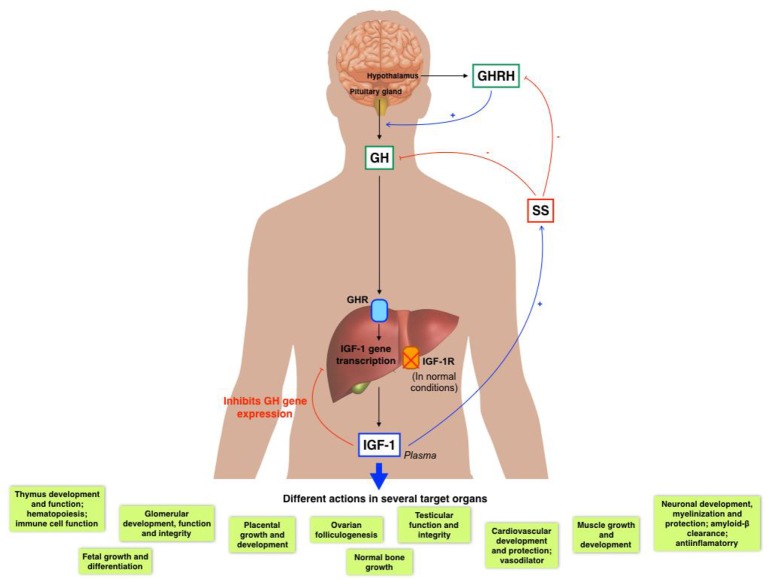
“It is well known that IGF-1 is mainly produced by the liver (accounting for 75% of circulating IGF-1), but almost every tissue is able to secrete IGF-1 for autocrine/paracrine purposes [24-27].”
BackgroundPoynard, T., McHutchison, J., Manns, M., Trepo, C., Lindsay, K., Goodman, Z., Ling, M., & Albrecht, J. (2002) · Gastroenterology · doi:10.1053/gast.2002.33023 · Cited by 1,146
Liver cirrhosis mortality in 187 countries between 1980 and 2010: a systematic analysis
Mokdad, A. A., Lopez, A. D., Shahraz, S., Lozano, R., Mokdad, A. H., Stanaway, J., Murray, C. J., & Naghavi, M. (2014) · BMC Medicine · doi:10.1186/s12916-014-0145-y · Cited by 1,129 · cited 5×
“On average, there were twice as much male deaths compared to women [16].”
BackgroundInfluentialThe Insulin-Like Growth Factor-Binding Protein (IGFBP) Superfamily*
Hwa, V., Oh, Y., & Rosenfeld, R. G. (1999) · Endocrine Reviews · doi:10.1210/edrv.20.6.0382 · Cited by 1,079 · cited 2×
“In summary, the common functions of IGFBPs are: 1) acting as carrier proteins for circulating IGF-1 and controller of its flow from the vascular space to tissues; 2) increasing IGF-1 half-life and regulating its metabolic clearance [34]; 3) modulating the interaction between IGF-1 and its receptor, and thus indirectly…”
BackgroundThe metabolic syndrome: prevalence in worldwide populations
Cameron, A. J., Shaw, J. E., & Zimmet, P. Z. (2004) · Endocrinology and Metabolism Clinics of North America · doi:10.1016/j.ecl.2004.03.005 · Cited by 1,000 · cited 1×
“Moreover, it is well known that metabolic syndrome (MetS) is increasing worldwide [17], in part related to the occidentalization of lifestyle habits [18, 19].”
BackgroundHepatic inflammation and fibrosis: Functional links and key pathways
Seki, E., & Schwabe, R. F. (2015) · Hepatology · doi:10.1002/hep.27332 · Cited by 972 · cited 1×
“Table 2 resumes the inflammatory mediators that are involved in the regulation of fibrogenesis in the liver [85].”
BackgroundSjögren, K., Liu, J.-L., Blad, K., Skrtic, S., Vidal, O., Wallenius, V., LeRoith, D., Törnell, J., Isaksson, O. G. P., Jansson, J.-O., et al. (1999) · Proceedings of the National Academy of Sciences · doi:10.1073/pnas.96.12.7088 · Cited by 938 · cited 1×
“It is well known that IGF-1 is mainly produced by the liver (accounting for 75% of circulating IGF-1), but almost every tissue is able to secrete IGF-1 for autocrine/paracrine purposes [24-27].”
BackgroundGeneral and Comparative Endocrinology
(1961) · Nature · doi:10.1038/1901061d0 · Cited by 930
Le Roith, D. (1997) · New England Journal of Medicine · doi:10.1056/nejm199702273360907 · Cited by 897
IGF-I is required for normal embryonic growth in mice.
Powell-Braxton, L., Hollingshead, P., Warburton, C., Dowd, M., Pitts-Meek, S., Dalton, D., Gillett, N., & Stewart, T. A. (1993) · Genes & Development · doi:10.1101/gad.7.12b.2609 · Cited by 795 · cited 1×
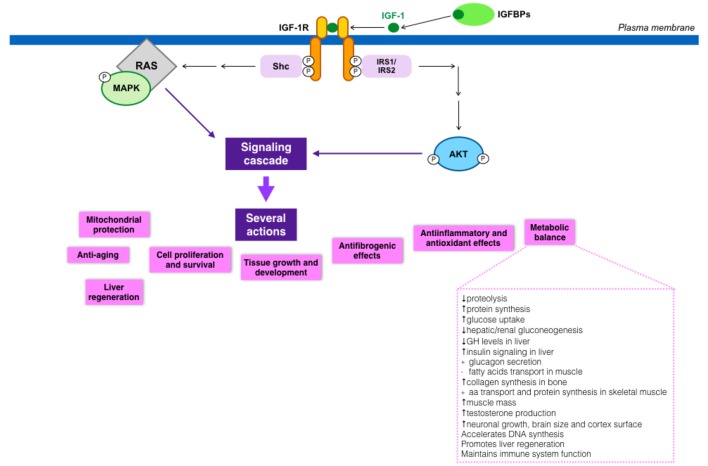
“activities are partly summarized in Figure 3 [22, 43-68].”
BackgroundThe epidemiology of nonalcoholic fatty liver disease in adults.
Clark, J. M. (2006) · PubMed · doi:10.1097/01.mcg.0000168638.84840.ff · Cited by 762 · cited 1×
“Non-alcoholic liver disease is also increasing in developed countries [20, 21].”
BackgroundNonalcoholic fatty liver disease: Improvement in liver histological analysis with weight loss
Dixon, J. B., Bhathal, P. S., Hughes, N. R., & O'Brien, P. E. (2004) · Hepatology · doi:10.1002/hep.20251 · Cited by 727
Histological outcome during long-term lamivudine therapy
Dienstag, J. L., Goldin, R. D., Heathcote, E. J., Hann, H. W. L., Woessner, M., Stephenson, S. L., Gardner, S., Gray, D. F., & Schiff, E. R. (2003) · Gastroenterology · doi:10.1053/gast.2003.50013 · Cited by 726 · cited 1×
“) [130-134]; secondary therapy, in order to revert fibrosis developing intrinsic antifibrotic drugs that target the fibrogenesis mechanism.”
BackgroundLiver regeneration and repair: Hepatocytes, progenitor cells, and stem cells
Fausto, N. (2004) · Hepatology · doi:10.1002/hep.20214 · Cited by 720 · cited 1×
“On the other hand, the reconstitution of functional parenchymal mass in conjunction with fibrosis treatment can lead to a better prognosis [138-140].”
BackgroundOxford textbook of clinical hepatology
(2000) · Digestive and Liver Disease · doi:10.1016/s1590-8658(00)80409-0 · Cited by 697
Insulin-like growth factor 1 (IGF-1): a growth hormone
Laron, Z. (2001) · Molecular Pathology · doi:10.1136/mp.54.5.311 · Cited by 608
Fernández, M., Semela, D., Bruix, J., Colle, I., Pinzani, M., & Bosch, J. (2009) · Journal of Hepatology · doi:10.1016/j.jhep.2008.12.011 · Cited by 600 · cited 1×
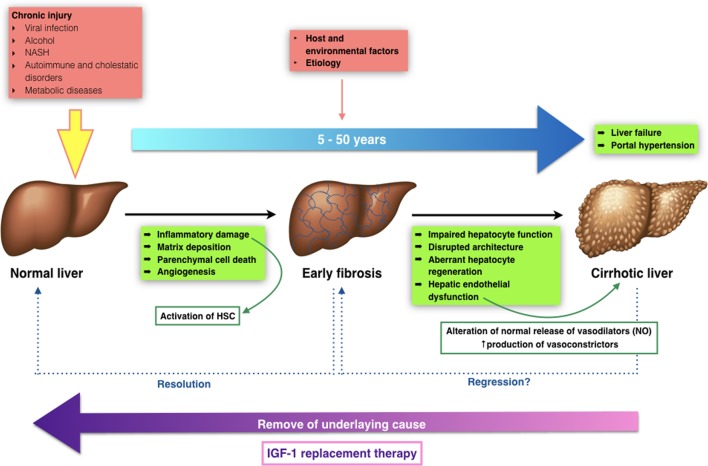
“These changes produce hepatic microvascular rearrangement, such as sinusoidal remodeling, formation of intrahepatic shunts, and hepatic endothelial dysfunction [9].”
BackgroundGarcia‐Tsao, G., Friedman, S., Iredale, J., & Pinzani, M. (2010) · Hepatology · doi:10.1002/hep.23478 · Cited by 538 · cited 1×
“Cirrhosis is a dynamic process that has to be monitored frequently, in order to avoid progression and/or reverse fibrosis [12, 13].”
BackgroundMechanisms of Disease: mechanisms of hepatic fibrosis and therapeutic implications
Friedman, S. L. (2004) · Nature Clinical Practice Gastroenterology & Hepatology · doi:10.1038/ncpgasthep0055 · Cited by 498 · cited 2×
“In this scenario, many drugs have been tested so far in experimental animals, but clinical tests of some of them are still pending [76, 135-137].”
BackgroundThe Insulin-Like Growth Factor-Binding Protein (IGFBP) Superfamily
Hwa, V. (1999) · Endocrine Reviews · doi:10.1210/er.20.6.761 · Cited by 466
Evidence that somatomedin is synthesized by multiple tissues in the fetus
D'Ercole, A. J., Applewhite, G. T., & Underwood, L. E. (1980) · Developmental Biology · doi:10.1016/0012-1606(80)90166-9 · Cited by 437 · cited 1×
“It is well known that IGF-1 is mainly produced by the liver (accounting for 75% of circulating IGF-1), but almost every tissue is able to secrete IGF-1 for autocrine/paracrine purposes [24-27].”
BackgroundWanless, I. R., Wong, F., Blendis, L. M., Greig, P., Heathcote, J. E., & Levy, G. (1995) · Hepatology · doi:10.1002/hep.1840210505 · Cited by 434
Cellular and molecular mechanisms in the pathogenesis of liver fibrosis: An update
Elpek, G. Ö. (2014) · World Journal of Gastroenterology · doi:10.3748/wjg.v20.i23.7260 · Cited by 382 · cited 4×
“Hepatic fibrosis is the result of the liver’s response to a repeated injury that can be due to viral infection, MetS with insulin resistance, autoimmune disease, toxins, or alcohol [77].”
BackgroundInfluentialSynthesis and Characterization of Insulin-like Growth Factor-binding Protein (IGFBP)-7
Oh, Y., Nagalla, S. R., Yamanaka, Y., Kim, H.-S., Wilson, E., & Rosenfeld, R. G. (1996) · Journal of Biological Chemistry · doi:10.1074/jbc.271.48.30322 · Cited by 375 · cited 9×
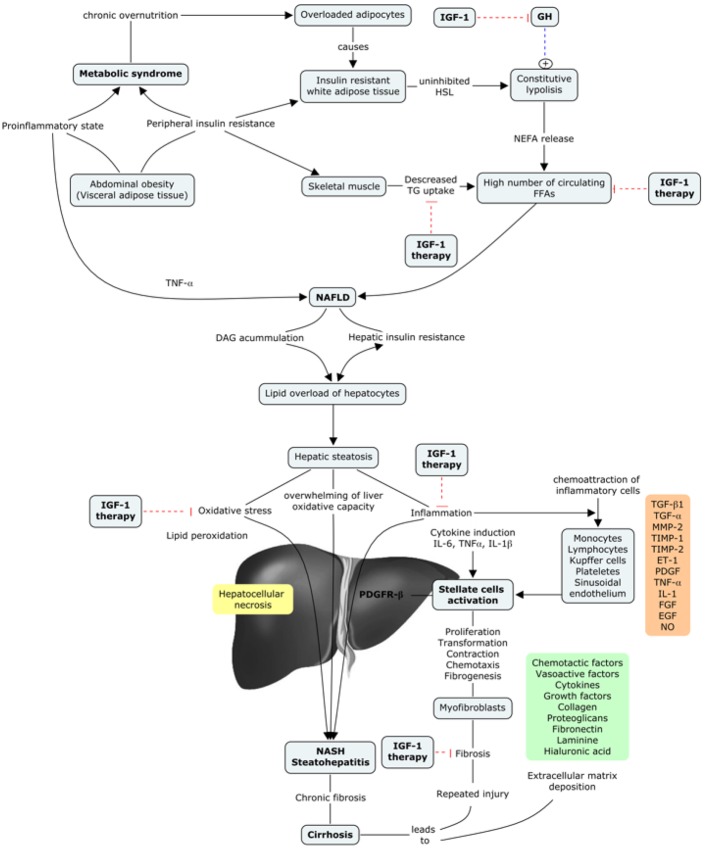
“ECM: extracellular matrix; GH: growth hormone; GHRH: growth hormone-releasing hormone; HSCs: hepatic stellate cells; IGFBPs: IGF binding proteins; IGFBP-rPs: IGF related proteins; IGF-1: insulin-like growth factor-1; IGF-1R: IGF-1 receptor; MetS: metabolic syndrome; NASH: non-alcoholic steatohepatitis; NAFLD: non-alco…”
BackgroundInfluentialFunctional inactivation of the IGF-I and insulin receptors in skeletal muscle causes type 2 diabetes
Fernández, A. M., Kim, J. K., Yakar, S., Dupont, J., Hernandez-Sanchez, C., Castle, A. L., Filmore, J., Shulman, G. I., & Le Roith, D. (2001) · Genes & Development · doi:10.1101/gad.908001 · Cited by 369 · cited 1×
“activities are partly summarized in Figure 3 [22, 43-68].”
BackgroundReduction of Plasma Immunoreactive Somatomedin C during Fasting in Humans*
CLEMMONS, D. R., KLIBANSKI, A., UNDERWOOD, L. E., McARTHUR, J. W., RIDGWAY, E. C., BEITINS, I. Z., & VAN WYK, J. J. (1981) · The Journal of Clinical Endocrinology & Metabolism · doi:10.1210/jcem-53-6-1247 · Cited by 364
Roles of insulin-like growth factor (IGF) binding proteins in regulating IGF actions
Duan, C., & Xu, Q. (2005) · General and Comparative Endocrinology · doi:10.1016/j.ygcen.2004.12.022 · Cited by 355
Kim, H.-S., Nagalla, S. R., Oh, Y., Wilson, E., Roberts, C. T., & Rosenfeld, R. G. (1997) · Proceedings of the National Academy of Sciences · doi:10.1073/pnas.94.24.12981 · Cited by 347 · cited 1×
“Nonetheless, the physiological role of these proteins in the IGF system is not completely defined, but their structural relationship with IGFBPs allows some of these proteins to bind IGF-1, controlling its activity [39, 40].”
BackgroundLiver-Specific igf-1 Gene Deletion Leads to Muscle Insulin Insensitivity
Yakar, S., Liu, J.-L., Fernandez, A. M., Wu, Y., Schally, A. V., Frystyk, J., Chernausek, S. D., Mejia, W., & Le Roith, D. (2001) · Diabetes · doi:10.2337/diabetes.50.5.1110 · Cited by 343
Effect of GH/IGF-1 on Bone Metabolism and Osteoporsosis
Locatelli, V., & Bianchi, V. E. (2014) · International Journal of Endocrinology · doi:10.1155/2014/235060 · Cited by 307 · cited 1×
“activities are partly summarized in Figure 3 [22, 43-68].”
BackgroundInsulin-like growth factor-1 deficiency and metabolic syndrome
Aguirre, G. A., De Ita, J. R., de la Garza, R. G., & Castilla-Cortazar, I. (2016) · Journal of Translational Medicine · doi:10.1186/s12967-015-0762-z · Cited by 295 · cited 12×
“Moreover, IGF-1 deficiency has been described in both entities, so it could represent a common pathway between MetS and hepatic steatosis [78] (Fig.”
BackgroundInfluentialFunctional aspects on the pathophysiology of portal hypertension in cirrhosis
García-Pagán, J.-C., Gracia-Sancho, J., & Bosch, J. (2012) · Journal of Hepatology · doi:10.1016/j.jhep.2012.03.007 · Cited by 290 · cited 1×
“In addition, there is an increased production of vasoconstrictors [10].”
BackgroundReversibility of Hepatic Fibrosis in Autoimmune Hepatitis
Dufour, J.-F., DeLellis, R., & Kaplan, M. M. (1997) · Annals of Internal Medicine · doi:10.7326/0003-4819-127-11-199712010-00006 · Cited by 290 · cited 1×
“) [130-134]; secondary therapy, in order to revert fibrosis developing intrinsic antifibrotic drugs that target the fibrogenesis mechanism.”
BackgroundJacob, R., Barrett, E., Plewe, G., Fagin, K. D., & Sherwin, R. S. (1989) · Journal of Clinical Investigation · doi:10.1172/jci114072 · Cited by 290 · cited 1×
“activities are partly summarized in Figure 3 [22, 43-68].”
BackgroundControl of cell survival by IGF signaling pathways
Vincent, A. M., & Feldman, E. L. (2002) · Growth Hormone & IGF Research · doi:10.1016/s1096-6374(02)00017-5 · Cited by 289 · cited 1×
“activities are partly summarized in Figure 3 [22, 43-68].”
BackgroundFibrosis in chronic liver diseases: diagnosis and management
Pinzani, M., Rombouts, K., & Colagrande, S. (2005) · Journal of Hepatology · doi:10.1016/j.jhep.2004.12.008 · Cited by 267
Fan, Y., Menon, R. K., Cohen, P., Hwang, D., Clemens, T., DiGirolamo, D. J., Kopchick, J. J., Le Roith, D., Trucco, M., & Sperling, M. A. (2009) · Journal of Biological Chemistry · doi:10.1074/jbc.m109.014308 · Cited by 255 · cited 1×
“Liver-specific deletion of GH receptor in mice (GHRLD) resulted in a reduction of > 90% of serum IGF-1 levels, contributing to those previously discussed effects [105].”
BackgroundThe morphology of cirrhosis: definition, nomenclature, and classification.
Anthony, P. P., Ishak, K. G., Nayak, N. C., Poulsen, H. E., Scheuer, P. J., & Sobin, L. H. (1977) · Europe PMC (PubMed Central) · Cited by 252
Bedossa, P., Houglum, K., Trautwein, C., Holstege, A., & Chojkier, M. (1994) · Hepatology · doi:10.1002/hep.1840190527 · Cited by 249
Gallego-Rojo, F. J., Gonzalez-Calvin, J. L., Muñoz-Torres, M., Mundi, J. L., Fernandez-Perez, R., & Rodrigo-Moreno, D. (1998) · Hepatology · doi:10.1002/hep.510280315 · Cited by 241 · cited 1×
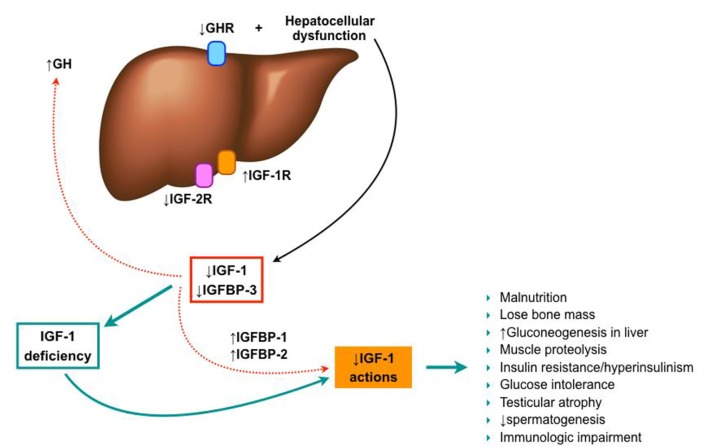
“Additionally, low IGF-1 levels contribute to the loss of bone mass seen in cirrhotic patients [109].”
BackgroundReversibility of liver fibrosis and cirrhosis following treatment for hepatitis C
Arthur, M. J. P. (2002) · Gastroenterology · doi:10.1053/gast.2002.33367 · Cited by 241
MURPHY, L. J., & FRIESEN, H. G. (1988) · Endocrinology · doi:10.1210/endo-122-1-325 · Cited by 234 · cited 1×
“It is well known that IGF-1 is mainly produced by the liver (accounting for 75% of circulating IGF-1), but almost every tissue is able to secrete IGF-1 for autocrine/paracrine purposes [24-27].”
BackgroundKelley, K. W., Weigent, D. A., & Kooijman, R. (2007) · Brain, Behavior, and Immunity · doi:10.1016/j.bbi.2006.11.010 · Cited by 217 · cited 1×
“activities are partly summarized in Figure 3 [22, 43-68].”
Schiff's Diseases of the Liver
(2011) · Wiley eBooks · doi:10.1002/9781119950509 · Cited by 200
Aging, Atherosclerosis, and IGF-1
Higashi, Y., Sukhanov, S., Anwar, A., Shai, S.-Y., & Delafontaine, P. (2012) · The Journals of Gerontology Series A: Biological Sciences and Medical Sciences · doi:10.1093/gerona/gls102 · Cited by 193 · cited 1×
“activities are partly summarized in Figure 3 [22, 43-68].”
BackgroundWANLESS, I. (1995) · Hepatology · doi:10.1016/0270-9139(95)90043-8 · Cited by 175
Sherlock's Diseases of the Liver and Biliary System
Dooley, J. S., & Sherlock, S. (2011) · Wiley eBooks · doi:10.1002/9781444341294 · Cited by 161 · cited 1×
“It represents the final stage of a wide number of chronic liver conditions, whose common effect is necroinflammation, fibrosis and regeneration nodules that modify the normal liver structure reducing its functional mass and altering the vascular liver architecture [1-3].”
BackgroundDonaghy, A., Ross, R., Gimson, A., Hughes, S. C., Holly, J., & Williams, R. (1995) · Hepatology · doi:10.1002/hep.1840210313 · Cited by 148 · cited 1×
“of IGF-1 in tissues [94, 99, 100], since IGFBP-3 carries up”
BackgroundCastilla‐Cortázar, I., Garcia‐Fernandez, M. I., Muguerza, B., Quiroga, J. A., Pérez, R. B., Santidrián, S., & Prìeto, J. (1997) · Gastroenterology · doi:10.1053/gast.1997.v113.pm9352873 · Cited by 140 · cited 4×
“5) Reduced portal pressure, endotoxemia, and bacterial translocation [119], possibly due to the improvement in fibrosis (decreased collagen in liver tissue and histological fibrosis score) [69].”
BackgroundInfluentialHepatocyte transplantation in rats with decompensated cirrhosis
Kobayashi, N., Ito, M., Nakamura, J., Cai, J., Gao, C., Hammel, J. M., & Fox, I. J. (2000) · Hepatology · doi:10.1053/he.2000.5636 · Cited by 136 · cited 1×
“In this aspect, hepatocyte transplantation as well as infusion of hepatocyte growth factor, has shown to improve liver function [141, 142].”
BackgroundKim, S. O., Park, J. G., & Lee, Y. I. (1996) · PubMed · Cited by 128
Antifibrotic therapy in chronic liver disease
Rockey, D. C. (2005) · Clinical Gastroenterology and Hepatology · doi:10.1016/s1542-3565(04)00445-8 · Cited by 120 · cited 2×
“In this scenario, many drugs have been tested so far in experimental animals, but clinical tests of some of them are still pending [76, 135-137].”
BackgroundConchillo, M., de Knegt, R. J., Payeras, M., Quiroga, J. A., Sangro, B., Herrero, J.-I., Castilla‐Cortázar, I., Frystyk, J., Flyvbjerg, A., YOSHIZAWA, C. N., et al. (2005) · Journal of Hepatology · doi:10.1016/j.jhep.2005.03.025 · Cited by 120 · cited 1×
“In human cirrhotic patients, one clinical trial has been conducted, being a pilot, double-blind, randomized, placebo-controlled study in order to evaluate the effects of rhIGF-1 administration in patients with primary biliary cirrhosis or alcohol-related cirrhosis [129].”
BackgroundMauras, N., O’Brien, K. O., Welch, S., Rini, A., Helgeson, K., Vieira, N. E., & Yergey, A. L. (2000) · The Journal of Clinical Endocrinology & Metabolism · doi:10.1210/jcem.85.4.6541 · Cited by 115 · cited 1×
“activities are partly summarized in Figure 3 [22, 43-68].”
BackgroundGrowth hormone stimulates proliferation of old-aged regenerating liver through forkhead box m1b
Krupczak-Hollis, K. (2003) · Hepatology · doi:10.1053/jhep.2003.08052 · Cited by 115
Low Doses of Insulin-Like Growth Factor-I Induce Mitochondrial Protection in Aging Rats
Puche, J. E., García-Fernández, M., Muntané, J., Rioja, J., González-Barón, S., & Castilla Cortazar, I. (2008) · Endocrinology · doi:10.1210/en.2007-1563 · Cited by 112 · cited 1×
“activities are partly summarized in Figure 3 [22, 43-68].”
BackgroundDesbois‐Mouthon, C., Wendum, D., Cadoret, A., Rey, C., Leneuve, P., Blaise, A., Housset, C., Tronche, F., Le Bouc, Y., & Holzenberger, M. (2006) · The FASEB Journal · doi:10.1096/fj.05-4704fje · Cited by 112 · cited 1×
“activities are partly summarized in Figure 3 [22, 43-68].”
BackgroundHytiroglou, P., Snover, D. C., Alves, V. A. F., Balabaud, C. P., Bhathal, P. S., Bioulac‐Sage, P., Crawford, J. M., Dhillon, A. P., Ferrell, L. D., Guido, M., et al. (2011) · American Journal of Clinical Pathology · doi:10.1309/ajcp2t2ohtapbtmp · Cited by 109
Insulin-like growth factor-I and the liver
Bonefeld, K., & Møller, S. (2011) · Liver International · doi:10.1111/j.1478-3231.2010.02428.x · Cited by 107 · cited 1×
“Two studies have been done so far to evaluate this possibility, and Table 3 summarizes the different findings [128].”
BackgroundArturi, F., Succurro, E., Procopio, C., Pedace, E., Mannino, G. C., Lugarà, M., Procopio, T., Andreozzi, F., Sciacqua, A., Hribal, M. L., et al. (2011) · The Journal of Clinical Endocrinology & Metabolism · doi:10.1210/jc.2011-1227 · Cited by 103
Sobrevals, L., Rodriguez, C., Romero-Trevejo, J. L., Gondi, G., Monreal, I., Pañeda, A., Juanarena, N., Arcelus, S., Razquin, N., Guembe, L., et al. (2010) · Hepatology · doi:10.1002/hep.23412 · Cited by 99 · cited 2×
“The results showed that this therapy activated different mechanisms for fibrolysis, down-regulated profibrogenic factors, and induced cytoprotective molecules that lead to an improvement of hepatocellular function and reduced fibrosis [127].”
BackgroundNishizawa, H., Takahashi, M., Fukuoka, H., Iguchi, G., Kitazawa, R., & Takahashi, Y. (2012) · Biochemical and Biophysical Research Communications · doi:10.1016/j.bbrc.2012.05.115 · Cited by 97 · cited 1×
“hepatocytes, which improves with IGF-1 administration [88].”
García-Fernández, M., Delgado, G., Puche, J. E., González-Barón, S., & Castilla Cortázar, I. (2008) · Endocrinology · doi:10.1210/en.2007-1190 · Cited by 95 · cited 2×
“2) In vivo and in vitro studies showed recovery of cirrhosis-associated micro-villi atrophy [111-113], as well as carbohydrates and aminoacids intestinal absorption, but no lipid absorption recovery [49, 70, 112, 114, 115].”
BackgroundGalvan, V., Logvinova, A., Sperandio, S., Ichijo, H., & Bredesen, D. E. (2003) · Journal of Biological Chemistry · doi:10.1074/jbc.m211398200 · Cited by 93 · cited 1×
“activities are partly summarized in Figure 3 [22, 43-68].”
BackgroundSarin, S. K., Dhingra, N., Bansal, A., Malhotra, S., & Guptan, R. C. (1997) · PubMed · Cited by 92
Laager, R., Ninnis, R., & Keller, U. (1993) · Journal of Clinical Investigation · doi:10.1172/jci116783 · Cited by 91 · cited 1×
“activities are partly summarized in Figure 3 [22, 43-68].”
BackgroundBurren, C. P., Wilson, E. M., Hwa, V., Oh, Y., & Rosenfeld, R. G. (1999) · The Journal of Clinical Endocrinology & Metabolism · doi:10.1210/jcem.84.3.5577 · Cited by 90
LeRoith, D., & Bondy, C. A. (1996) · Growth factors and cytokines in health and disease · doi:10.1016/s1874-5687(96)80003-6 · Cited by 90
Lam, C. S. P., Chen, M.-H., Lacey, S. M., Yang, Q., Sullivan, L. M., Xanthakis, V., Safa, R., Smith, H. M., Peng, X., Sawyer, D. B., et al. (2010) · Arteriosclerosis, Thrombosis, and Vascular Biology · doi:10.1161/atvbaha.110.203943 · Cited by 89 · cited 11×
“Moreover, IGF-1 deficiency has been described in both entities, so it could represent a common pathway between MetS and hepatic steatosis [78] (Fig.”
BackgroundInfluentialOsteopenia in rats with liver cirrhosis: Beneficial effects of IGF-I treatment
Cemborain, A., Castilla-Cortázar, I., García, M., Quirog, J., Muguerza, B., Picardi, A., Santidrián, S., & Prieto, J. (1998) · Journal of Hepatology · doi:10.1016/s0168-8278(98)80211-0 · Cited by 88
Self-citationActions of Insulin-Like Growth Factors
Froesch, E. (1985) · Annual Review of Physiology · doi:10.1146/annurev.physiol.47.1.443 · Cited by 86
Role of Growth Hormone (GH) in Liver Regeneration
Pennisi, P. A., Kopchick, J. J., Thorgeirsson, S., LeRoith, D., & Yakar, S. (2004) · Endocrinology · doi:10.1210/en.2004-0655 · Cited by 85 · cited 2×
“Furthermore, these mice also showed insulin resistance, glucose intolerance, increased fatty acids, decreased triglyceride efflux, severe steatosis, as well as impaired liver regeneration, which proposes that GH may regulate hepatocyte proliferation [65, 106, 107].”
BackgroundAssociation between hepatic steatosis and serum IGF1 and IGFBP-3 levels in a population-based sample
Völzke, H., Nauck, M., Rettig, R., Dörr, M., Higham, C., Brabant, G., & Wallaschofski, H. (2009) · European Journal of Endocrinology · doi:10.1530/eje-09-0374 · Cited by 84
Hepatocyte transplantation: New possibilities for therapy
Strom, S. C., & Fisher, R. A. (2003) · Gastroenterology · doi:10.1053/gast.2003.50072 · Cited by 80 · cited 1×
“On the other hand, the reconstitution of functional parenchymal mass in conjunction with fibrosis treatment can lead to a better prognosis [138-140].”
BackgroundCaregaro, L., Alberino, F., Amodio, P., Merkel, C., Angeli, P., Plebani, M., Bolognesi, M., & Gatta, A. (1997) · Nutrition · doi:10.1016/s0899-9007(96)00399-1 · Cited by 80
Takahashi, Y. (2012) · Endocrine Journal · doi:10.1507/endocrj.ej12-0322 · Cited by 80 · cited 2×
“1) In both cases (NAFLD and NASH), the insulin resistance plays a major role in the development of liver damage, even though different factors are also implicated (obesity, type 2 diabetes, MetS, and hyperlipidemia, among others) [78].”
BackgroundLEWITT, M. S., Saunders, H., Phuyal, J. L., & Baxter, R. C. (1994) · Endocrinology · doi:10.1210/en.134.6.2404 · Cited by 77 · cited 1×
“IGFBP-3, which binds 90% of circulating IGF-1, forms a ternary complex consisting of one molecule of IGF-1, one molecule of IGFBP3 and one molecule of the so-called acid labile subunit [31].”
BackgroundInsulin-like growth factor I improves intestinal barrier function in cirrhotic rats
Lorenzo-Zúñiga, V, Rodríguez-Ortigosa, C. M., Bartolí, R., Martínez-Chantar, M.-L., Martínez-Peralta, L., Pardo, A., Ojanguren, I., Quiroga, J., Planas, R., & Prieto, J. (2006) · Gut · doi:10.1136/gut.2005.079988 · Cited by 74 · cited 1×
“5) Reduced portal pressure, endotoxemia, and bacterial translocation [119], possibly due to the improvement in fibrosis (decreased collagen in liver tissue and histological fibrosis score) [69].”
BackgroundYin, P., Xu, Q., & Duan, C. (2004) · Journal of Biological Chemistry · doi:10.1074/jbc.m401378200 · Cited by 72 · cited 1×
“In summary, the common functions of IGFBPs are: 1) acting as carrier proteins for circulating IGF-1 and controller of its flow from the vascular space to tissues; 2) increasing IGF-1 half-life and regulating its metabolic clearance [34]; 3) modulating the interaction between IGF-1 and its receptor, and thus indirectly…”
BackgroundInsulin-like growth factor-I reverts testicular atrophy in rats with advanced cirrhosis
Castilla-Cortazar, I., Garcia, M., Quiroga, J., Diez, N., Diez-Caballero, F., Calvo, A., Diaz, M., & Prieto, J. (2000) · Hepatology · doi:10.1002/hep.510310308 · Cited by 71 · cited 1×
“barrier is altered from early stages of liver cirrhosis and IGF1 therapy was able to recover its integrity [117].”
BackgroundCuneo, R. C., Hickman, P. E., Wallace, J. D., Teh, B. T., Ward, G., Veldhuis, J. D., & Waters, M. J. (1995) · Clinical Endocrinology · doi:10.1111/j.1365-2265.1995.tb02031.x · Cited by 69 · cited 1×
“ing more severe as the disease progresses) [90-94], despite the”
BackgroundCastilla‐Cortázar, I., Prìeto, J., Urdaneta, E., Pascual, M., Nunez, M., Zudaire, E., Garcia‐Fernandez, M. I., Quiroga, J. A., & Santidrián, S. (1997) · Gastroenterology · doi:10.1053/gast.1997.v113.pm9322513 · Cited by 69
Walsh, P. T., Smith, L. M., & O'Connor, R. (2002) · Immunology · doi:10.1046/j.1365-2567.2002.01525.x · Cited by 68 · cited 1×
“activities are partly summarized in Figure 3 [22, 43-68].”
BackgroundAbsence of Growth–Hormone Receptor in Hepatocellular Carcinoma and Cirrhotic Liver
Chang, T., Lin, J.-J., Shan-chang, Y., & Chang, T. (1990) · Hepatology · doi:10.1002/hep.1840110121 · Cited by 68 · cited 1×
“decrease in GH receptors on the liver of these patients [96-98],”
BackgroundAntioxidant effects of insulin-like growth factor-I (IGF-I) in rats with advanced liver cirrhosis
Garcia‐Fernandez, M. I., Castilla‐Cortázar, I., Díaz-Sánchez, M., Navarro-Blasco, Í., Puche, J. E., Castilla, A., Casares, A. D., Frutos, E. C., & González-Barón, S. (2005) · BMC Gastroenterology · doi:10.1186/1471-230x-5-7 · Cited by 67 · cited 2×
“activities are partly summarized in Figure 3 [22, 43-68].”
BackgroundEkberg, S., Luther, M., Nakamura, T., & Jansson, J. (1992) · Journal of Endocrinology · doi:10.1677/joe.0.1350059 · Cited by 66 · cited 1×
“Furthermore, these mice also showed insulin resistance, glucose intolerance, increased fatty acids, decreased triglyceride efflux, severe steatosis, as well as impaired liver regeneration, which proposes that GH may regulate hepatocyte proliferation [65, 106, 107].”
BackgroundDonaghy, A. J., Delhanty, P. J. D., Ho, K. K. Y., Williams, R. L., & Baxter, R. C. (2002) · Journal of Hepatology · doi:10.1016/s0168-8278(02)00049-1 · Cited by 66 · cited 1×
“decrease in GH receptors on the liver of these patients [96-98],”
BackgroundTherapeutic potential of hepatocyte transplantation
Gupta, S. K., & Chowdhury, J. R. (2002) · Seminars in Cell and Developmental Biology · doi:10.1016/s1084952102001325 · Cited by 65 · cited 1×
“On the other hand, the reconstitution of functional parenchymal mass in conjunction with fibrosis treatment can lead to a better prognosis [138-140].”
BackgroundAntifibrogenic effect in vivo of low doses of insulin-like growth factor-I in cirrhotic rats
Muguerza, B., Castilla‐Cortázar, I., Garcia‐Fernandez, M. I., Quiroga, J. A., Santidrián, S., & Prìeto, J. (2001) · Biochimica et Biophysica Acta (BBA) - Molecular Basis of Disease · doi:10.1016/s0925-4439(01)00045-x · Cited by 65 · cited 2×
“activities are partly summarized in Figure 3 [22, 43-68].”
BackgroundIGF-I/IGFBP-3 ratio: a mechanistic insight into the metabolic syndrome
Sierra-Johnson, J., Romero-Corral, A., Somers, V. K., Lopez-Jimenez, F., Mälarstig, A., Brismar, K., Hamsten, A., Fisher, R. M., & Hellénius, M.-L. (2009) · Clinical Science · doi:10.1042/cs20080382 · Cited by 63 · cited 11×
“Moreover, IGF-1 deficiency has been described in both entities, so it could represent a common pathway between MetS and hepatic steatosis [78] (Fig.”
BackgroundInfluentialAssy, N., Hochberg, Z., Amit, T., Shen‐Orr, Z., Enat, R., & Baruch, Y. (1997) · Journal of Hepatology · doi:10.1016/s0168-8278(97)80315-7 · Cited by 63 · cited 1×
“ing more severe as the disease progresses) [90-94], despite the”
BackgroundMitochondrial protection by low doses of insulin-like growth factor-Iin experimental cirrhosis
Pérez, R., García-Fernández, M., Díaz-Sánchez, M., Puche, J. E., Delgado, G., Conchillo, M., Muntané, J., & Castilla-Cortázar, I. (2008) · World Journal of Gastroenterology · doi:10.3748/wjg.14.2731 · Cited by 63 · cited 3×
“Even with the limitations of the study, there were three main findings in the patients receiving rhIGF-1: 1) an increase in serum albumin levels, which has never been achieved by any other treatment, 2) a trend towards increased resting energy expenditure and total IGF-1, which can be due to an increased amount of ava…”
BackgroundMuscle-Specific Overexpression of CD36 Reverses the Insulin Resistance and Diabetes of MKR Mice
Héron-Milhavet, L., Haluzik, M., Yakar, S., Gavrilova, O., Pack, S., Jou, W. C., Ibrahimi, A., Kim, H., Hunt, D., Yau, D., et al. (2004) · Endocrinology · doi:10.1210/en.2003-1543 · Cited by 62 · cited 1×
“activities are partly summarized in Figure 3 [22, 43-68].”
BackgroundCaufriez, A., Reding, P., Urbain, D., GOLSTEIN, J., & Copinschi, G. (1991) · Journal of Endocrinological Investigation · doi:10.1007/bf03346823 · Cited by 62
Aleem, E., Nehrbass, D., Klimek, F., Mayer, D., & Bannasch, P. (2011) · Toxicologic Pathology · doi:10.1177/0192623310396905 · Cited by 62 · cited 1×
“However, IGF-1R overexpression in hepatocytes has been described in chronic hepatitis C, chronic hepatitis B, and liver cirrhosis [101-103], when compared with normal livers, suggesting the potential role of IGF-1 in the liver damage under these conditions [104].”
BackgroundPicardi, A., de Oliveira, A. C., Muguerza, B., Tosar, A., Quiroga, J. A., Castilla‐Cortázar, I., Santidrián, S., & Prìeto, J. (1997) · Journal of Hepatology · doi:10.1016/s0168-8278(97)80026-8 · Cited by 61 · cited 1×
“Experimental CCl4-induced cirrhosis animals have been treated with rhIGF-1 (20 μg/kg/day for 14 - 21 days) versus placebo, showing the following results: 1) Increased food ingestion, nitrogen balance and the uptake of dietary nitrogen by muscle, leading to increased muscle mass [110, 111].”
Acute effects of insulin-like growth factor I and insulin on glucose metabolism in vivo
Moxley, R. T., Arner, P., Moss, A., Skottner, A., Fox, M., James, D. E., & Livingston, J. N. (1990) · American Journal of Physiology-Endocrinology and Metabolism · doi:10.1152/ajpendo.1990.259.4.e561 · Cited by 60 · cited 1×
“activities are partly summarized in Figure 3 [22, 43-68].”
BackgroundKanety, H., Karasik, A., Klinger, B., Silbergeld, A., & Laron, Z. (1993) · Acta Endocrinologica · doi:10.1530/acta.0.1280144 · Cited by 59 · cited 4×
“IGFBP-3, which binds 90% of circulating IGF-1, forms a ternary complex consisting of one molecule of IGF-1, one molecule of IGFBP3 and one molecule of the so-called acid labile subunit [31].”
BackgroundInfluentialTu, W., Cheung, P., & Lau, Y. (2000) · The Journal of Immunology · doi:10.4049/jimmunol.165.3.1331 · Cited by 59 · cited 1×
“activities are partly summarized in Figure 3 [22, 43-68].”
BackgroundEffect of IGF-I on FFA and glucose metabolism in control and type 2 diabetic subjects
Pratipanawatr, T., Pratipanawatr, W., Rosen, C., Berria, R., Bajaj, M., Cusi, K., Mandarino, L., Kashyap, S., Belfort, R., & DeFronzo, R. A. (2002) · American Journal of Physiology-Endocrinology and Metabolism · doi:10.1152/ajpendo.00335.2001 · Cited by 59
Burren, C. P. (1999) · The Journal of Clinical Endocrinology & Metabolism · doi:10.1210/jc.84.3.1096 · Cited by 59
Growth hormone therapy in patients with cirrhosis: A pilot study of efficacy and safety
Donaghy, A. J., Ross, R. J. M., Wicks, C., Hughes, S., Holly, J. M. P., Gimson, A. E., & Williams, R. L. (1997) · Gastroenterology · doi:10.1053/gast.1997.v113.pm9352864 · Cited by 57
Mauras, N. (2000) · The Journal of Clinical Endocrinology & Metabolism · doi:10.1210/jc.85.4.1686 · Cited by 57
Hao, C., Geng, Y., Li, F., Tong, Y., Su, D., Duan, J.-L., & Li, Y. (2011) · APOPTOSIS · doi:10.1007/s10495-011-0634-9 · Cited by 56 · cited 1×
“6) Regularization of mitochondrial function in the liver [69, 86, 87, 120] and ATPase function, as well as decrease in oxidative stress parameters and free radicals [69].”
BackgroundDonaghy, A. J. (1995) · Hepatology · doi:10.1016/0270-9139(95)90518-9 · Cited by 56
Scharf, J., Schmitz, F., Frystyk, J., Skjærbæk, C. B., Moesus, H., Blum, W. F., Ramadori, G. P., & Hartmann, H. (1996) · Journal of Hepatology · doi:10.1016/s0168-8278(96)80240-6 · Cited by 55 · cited 2×
“of IGF-1 in tissues [94, 99, 100], since IGFBP-3 carries up”
BackgroundThe Insulin-Like Growth Factor System, Metabolic Syndrome, and Cardiovascular Disease Risk
Akanji, A. O., & Smith, R. J. (2011) · Metabolic Syndrome and Related Disorders · doi:10.1089/met.2011.0083 · Cited by 53 · cited 11×
“Moreover, IGF-1 deficiency has been described in both entities, so it could represent a common pathway between MetS and hepatic steatosis [78] (Fig.”
BackgroundInfluentialDíaz, V. J. L., Castilla‐Cortázar, I., Martín‐Estal, I., García‐Magariño, M., Aguirre, G. A., Puche, J., de la Garza, R. G., Morales, L., & Muñoz, Ú. (2017) · Journal of Physiology and Biochemistry · doi:10.1007/s13105-016-0545-x · Cited by 53
Skrtic, S., Wallenius, K., Gressner, A. M., & Jansson, J. (1999) · Endocrinology · doi:10.1210/endo.140.12.7166 · Cited by 52
Mirpuri, E., García–Trevijano, E. R., Castilla‐Cortázar, I., Berasain, C., Quiroga, J. A., Rodríguez‐Ortigosa, C. M., Mato, J. M., Prìeto, J., & Avila, M. A. (2002) · The International Journal of Biochemistry & Cell Biology · doi:10.1016/s1357-2725(01)00123-6 · Cited by 51 · cited 1×
“Furthermore, the expression of several genes that were altered in CCl4-induced cirrhosis, was normalized after rhIGF-1 replacement therapy [124].”
BackgroundPennisi, P., Gavrilova, O., Setser-Portas, J., Jou, W., Santopietro, S., Clemmons, D., Yakar, S., & LeRoith, D. (2006) · Endocrinology · doi:10.1210/en.2005-1556 · Cited by 51 · cited 1×
“activities are partly summarized in Figure 3 [22, 43-68].”
BackgroundIta, J. R. D., Castilla‐Cortázar, I., Aguirre, G. A., Sanchez-Yago, C., Santos-Ruiz, M. O., Guerra-Menéndez, L., Martín‐Estal, I., García‐Magariño, M., Díaz, V. J. L., Puche, J. E., et al. (2015) · Journal of Translational Medicine · doi:10.1186/s12967-015-0684-9 · Cited by 50 · cited 2×
“activities are partly summarized in Figure 3 [22, 43-68].”
BackgroundHigh Insulin–Like Growth Factor Binding Protein 1 Levels in Cirrhosis: Link With Insulin Resistance
Shmueli, E., MIELL, J. P., Stewart, M. W., Alberti, K. G. M. M., & Record, C. O. (1996) · Hepatology · doi:10.1002/hep.510240122 · Cited by 47 · cited 2×
“Several causes have been proposed so far, but none of them have been yet confirmed [29, 99, 108].”
BackgroundModulation of Intracellular Reactive Oxygen Species Level in Chondrocytes by IGF-1, FGF, and TGF-β1
Jallali, N., Ridha, H., Thrasivoulou, C., Butler, P. E. M., & Cowen, T. (2007) · Connective Tissue Research · doi:10.1080/03008200701331516 · Cited by 46 · cited 1×
“activities are partly summarized in Figure 3 [22, 43-68].”
BackgroundFactor de crecimiento semejante a la insulina tipo I (IGF-I) y cirrosis hepática
Conchillo, M., Prìeto, J., & Quiroga, J. A. (2007) · Revista Española de Enfermedades Digestivas · doi:10.4321/s1130-01082007000300007 · Cited by 46 · cited 2×
“Several causes have been proposed so far, but none of them have been yet confirmed [29, 99, 108].”
BackgroundThe GH/IGF-1 Axis in Obesity: Physiological and Pathological Aspects
Franco, C., Bengtsson, B., & Johannsson, G. (2006) · Metabolic Syndrome and Related Disorders · doi:10.1089/met.2006.4.51 · Cited by 41
Castilla-Cortázar, I., Picardi, A., Tosar, A., Ainzúa, J., Urdaneta, E., García, M., Pascual, M., Quiroga, J., & Prieto, J. (1999) · American Journal of Physiology-Gastrointestinal and Liver Physiology · doi:10.1152/ajpgi.1999.276.1.g37 · Cited by 40
Cirrhotic Liver Expresses Low Levels of the Full-Length and Truncated Growth Hormone Receptors1
Shen, X., Holt, R. I. G., MIELL, J. P., Justice, S., Portmann, B. C., Postel-Vinay, M. C., & Ross, R. J. M. (1998) · The Journal of Clinical Endocrinology & Metabolism · doi:10.1210/jcem.83.7.4983 · Cited by 39
Pascual, M., Castilla‐Cortázar, I., Urdaneta, E., Quiroga, J. A., Garcı́a, M., Picardi, A., & Prìeto, J. (2000) · American Journal of Physiology-Gastrointestinal and Liver Physiology · doi:10.1152/ajpgi.2000.279.2.g319 · Cited by 39 · cited 1×
“2) In vivo and in vitro studies showed recovery of cirrhosis-associated micro-villi atrophy [111-113], as well as carbohydrates and aminoacids intestinal absorption, but no lipid absorption recovery [49, 70, 112, 114, 115].”
BackgroundLiver mitochondrial dysfunction is reverted by insulin-like growth factor II (IGF-II) in aging rats
Garcia‐Fernandez, M. I., Sierra, I., Puche, J. E., Guerra-Menéndez, L., & Castilla‐Cortázar, I. (2011) · Journal of Translational Medicine · doi:10.1186/1479-5876-9-123 · Cited by 38 · cited 1×
“6) Regularization of mitochondrial function in the liver [69, 86, 87, 120] and ATPase function, as well as decrease in oxidative stress parameters and free radicals [69].”
BackgroundCirrhotic Liver Expresses Low Levels of the Full-Length and Truncated Growth Hormone Receptors
Shen, X. Y. (1998) · The Journal of Clinical Endocrinology & Metabolism · doi:10.1210/jc.83.7.2532 · Cited by 35
Insulin-like growth factor-I in liver cirrhosis
Blomsma, M. C., de Knegt, R. J., Dullaart, R. P. F., & Jansen, P. L. M. (1997) · Journal of Hepatology · doi:10.1016/s0168-8278(97)80161-4 · Cited by 33 · cited 1×
“IGF-1R expression in the organism [30].”
IGF-1 levels in different stages of liver steatosis and its association with metabolic syndrome.
Mallea-Gil, S., Ballarino, M. C., Spiraquis, A., Iriarte, M., Kura, M., Gimenez, S., Oneto, A., Guitelman, M. A., Machado, R. A., & Miguel, C. M. (2012) · PubMed · Cited by 33
Increased hepatic expression of insulin-like growth factor-I receptor in chronic hepatitis C
Stefano, J. T., Correa-Giannella, M. L., Ribeiro, C. M. F., Alves, V. A. F., Massarollo, P. C. B., Machado, M. C. C., & Giannella-Neto, D. (2006) · World Journal of Gastroenterology · doi:10.3748/wjg.v12.i24.3821 · Cited by 32 · cited 1×
“However, IGF-1R overexpression in hepatocytes has been described in chronic hepatitis C, chronic hepatitis B, and liver cirrhosis [101-103], when compared with normal livers, suggesting the potential role of IGF-1 in the liver damage under these conditions [104].”
BackgroundLaron, Z., Suikkari, A., Klinger, B., Silbergeld, A., Pertzelan, A., Seppälä, M. T., & Koivisto, V. A. (1992) · European Journal of Endocrinology · doi:10.1530/acta.0.1270351 · Cited by 29 · cited 1×
“GH mainly regulates the IGFBP-3 [32], while IGFBP-1 is mostly regulated by insulin and IGF-1 [33].”
BackgroundVera, M., Sobrevals, L., Zaratiegui, M., Martinez, L., Palencia, B., Rodríguez‐Ortigosa, C. M., Prìeto, J., & Fortes, P. (2006) · Gene Therapy · doi:10.1038/sj.gt.3302858 · Cited by 27 · cited 2×
“It was found that rSV40 encoding IGF-1 reduced liver cells damage - showing a decrease in serum transaminases and bilirubin levels - fibrogenesis, and ascites formation as well as improved hypogonadism, showing cytoprotective and antifibrogenic effects [126].”
BackgroundInsulin Resistance and Type 2 Diabetes mellitus: Is There a Therapeutic Role for IGF-1?
Moses, A. C. (2005) · KARGER eBooks · doi:10.1159/000085762 · Cited by 26
Castilla‐Cortázar, I., Pascual, M., Urdaneta, E., Pardo, J., Puche, J. E., Vivas, B., Díaz-Casares, A., Garcia‐Fernandez, M. I., Díaz-Sánchez, M., Varela‐Nieto, I., et al. (2004) · BMC Gastroenterology · doi:10.1186/1471-230x-4-12 · Cited by 25 · cited 1×
“2) In vivo and in vitro studies showed recovery of cirrhosis-associated micro-villi atrophy [111-113], as well as carbohydrates and aminoacids intestinal absorption, but no lipid absorption recovery [49, 70, 112, 114, 115].”
BackgroundThorén, M. C., Wivall-Helleryd, I.-L., Blum, W. F., & Hall, K. E. (1994) · European Journal of Endocrinology · doi:10.1530/eje.0.1310033 · Cited by 24 · cited 1×
“activities are partly summarized in Figure 3 [22, 43-68].”
BackgroundComplications of Chronic Liver Disease
(1992) · Annals of Internal Medicine · doi:10.7326/0003-4819-117-6-543_4 · Cited by 22
Skrtic, S. (1999) · Endocrinology · doi:10.1210/en.140.12.5729 · Cited by 22 · cited 1×
“Additionally, the regenerating activity increases with the proliferation of cell nuclear antigen expression, the restoration of GH receptor gene expression, and the stimulation of hepatocyte growth factor production (a potent mitogen and liver protecting agent), as well as the down-regulation of transforming growth fa…”
BackgroundEffect of IGF-I on total serum antioxidant status in cirrhotic rats
Garcia‐Fernandez, M. I., Castilla‐Cortázar, I., Díaz-Sánchez, M., Caballero, F. D., Castilla, A., Casares, A. D., Varela‐Nieto, I., & González-Barón, S. (2003) · Journal of Physiology and Biochemistry · doi:10.1007/bf03179879 · Cited by 21 · cited 1×
“activities are partly summarized in Figure 3 [22, 43-68].”
BackgroundAhmad, T. A. A., Eguchi, S., Yanaga, K. K., Miyamoto, S., Kamohara, Y., Fujioka, H., Furui, J., & Kanematsu, T. (2002) · Cell Transplantation · doi:10.3727/000000002783985729 · Cited by 21 · cited 1×
“In this aspect, hepatocyte transplantation as well as infusion of hepatocyte growth factor, has shown to improve liver function [141, 142].”
BackgroundCastilla‐Cortázar, I., Aliaga‐Montilla, M. A., Salvador, J., Garcia‐Fernandez, M. I., Delgado, G., González-Barón, S., Quiroga, J. A., & Prìeto, J. (2001) · Liver International · doi:10.1034/j.1600-0676.2001.210607.x · Cited by 20 · cited 1×
“Moreover, it produces restoration of the somatoninergic tone, which is reduced in cirrhosis and facilitates the inhibition of GH secretion [118].”
BackgroundGómez, F. T., Rodríguez‐Ortigosa, C. M., Puche, J. E., Juanarena, N., Monreal, I., Garcia‐Fernandez, M. I., Frutos, E. C., Castilla, A., & Castilla‐Cortázar, I. (2008) · Liver International · doi:10.1111/j.1478-3231.2008.01770.x · Cited by 17
Effects of insulin-like growth factor I on glucose metabolism in rats with liver cirrhosis
Petersen, K. F., Jacob, R. J., West, A. B., Sherwin, R. S., & Shulman, G. I. (1997) · American Journal of Physiology-Endocrinology and Metabolism · doi:10.1152/ajpendo.1997.273.6.e1189 · Cited by 16 · cited 1×
“Several causes have been proposed so far, but none of them have been yet confirmed [29, 99, 108].”
BackgroundYamada, S., Yamada, M., Murawaki, Y., & Chisato, H. (1990) · Biochemical Pharmacology · doi:10.1016/0006-2952(90)90487-6 · Cited by 15
Tao, X., Shen, D.-M., Ren, H., Zhang, X., Zhang, D., Ye, J., & Gu, B. (2000) · PubMed · Cited by 14
Larrea, C. D. C., Inma, & coaut. (1999) · Cited by 13
Hyperlipidemia is associated with altered levels of insulin-like growth factor-I
Malík, J., Štulc, T., Wichterle, D., Melenovský, V., Chytilova, E., Lacinová, Z., Marek, J., & Češka, R. (2008) · Physiological Research · doi:10.33549/physiolres.931281 · Cited by 11
The Insulin-Like Growth Factor I Receptor: Molecular Biology, Heterogeneity, and Regulation
Werner, H., Woloschak, M., STANNARD, B. S., Shen‐Orr, Z., Roberts, C. T., & LeRoith, D. (2024) · CRC Press eBooks · doi:10.1201/9781003574583-2 · Cited by 10
Kudo, Y., Iwashita, M., Iguchi, T., & Takeda, Y. (1996) · Pflügers Archiv - European Journal of Physiology · doi:10.1007/s004240050153 · Cited by 9 · cited 1×
“activities are partly summarized in Figure 3 [22, 43-68].”
BackgroundIGF-I does not improve fat malabsorption in cirrhotic rats
Pérez, R. B., Castilla‐Cortázar, I., Núñez, M., Prado, A., Mirpuri, E., Garcı́a, M., Barón, S. G., & Picardi, A. (2001) · Journal of Physiology and Biochemistry · doi:10.1007/bf03179813 · Cited by 5 · cited 2×
“2) In vivo and in vitro studies showed recovery of cirrhosis-associated micro-villi atrophy [111-113], as well as carbohydrates and aminoacids intestinal absorption, but no lipid absorption recovery [49, 70, 112, 114, 115].”
Background[The growth hormone and insulin-like growth factors axis in liver failure patients].
Min, J., Yu, H., Yan, H., He, L., Liu, H., & Zhao, C. (2001) · PubMed · Cited by 5
Mitochondrial protection by low doses of insulin-like growth factor- I in experimental cirrhosis
Raquel, R., Pérez, Fragaki, M., García-Fernández, Matias, M., Díaz-Sánchez, Juan, J., Puche, Gloria, G., Delgado, ⁄., et al. (2008) · World Journal of Gastroenterology · Cited by 5
High insulin-like growth factor binding protein 1 levels in cirrhosis: Link with insulin resistance
Shmueli, E. (1996) · Hepatology · doi:10.1053/jhep.1996.v24.pm0008707251 · Cited by 5
Picardi, A., de Oliveira, A. C., Muguerza, B., Tosar, A., Quiroga, J., Cortazar, I. C., Santidrián, S., & Prieto, J. M. (2017) · Revista de medicina de la Universidad de Navarra · doi:10.15581/021.6686 · Cited by 5
[Protective effects of IGF-1 on cortical nerve cells of neonatal rats under oxidative stress].
Liu, W., Li, W., Chen, Z.-J., Rong, Z., & Chang, L.-W. (2014) · PubMed · Cited by 3
Møller, S., Becker, U., Juul, A., Skakkebæk, N. E., & Christensen, E. (1997) · PubMed · Cited by 2
Research works printed but not linked: 1
- [14]Quiroga J Beloqui O Castilla A Cirrhosis Prieto J Rodes J Schafritz DA Hepatobiliary Diseases Berlin Springer-Verlag 1992
Cited by
Li, B., Zhang, C., & Zhan, Y.-T. (2018) · Canadian Journal of Gastroenterology and Hepatology · doi:10.1155/2018/2784537 · Cited by 159
“Cirrhosis is the end stage of a wide number of chronic liver conditions that share common features of necroinflammation, fibrosis, and regenerative nodules, which modify the normal liver structure to reduce its functional mass and alter the vascular architecture [1].”
BackgroundLonardo, A., Mantovani, A., Lugari, S., & Targher, G. (2019) · International Journal of Molecular Sciences · doi:10.3390/ijms20112841 · Cited by 120
Frailty in advanced liver disease
Laube, R., Wang, H., Park, L., Heyman, J. K., Vidot, H., Majumdar, A., Strasser, S. I., McCaughan, G. W., & Liu, K. (2018) · Liver International · doi:10.1111/liv.13917 · Cited by 133
Bone diseases in patients with chronic liver disease
Jeong, H., & Kim, D. (2019) · International Journal of Molecular Sciences · doi:10.3390/ijms20174270 · Cited by 113
Yang, Y. J., & Kim, D. J. (2021) · International Journal of Molecular Sciences · doi:10.3390/ijms22052604 · Cited by 112
“In end-stage liver disease, hepatocellular dysfunction and reduced GH receptors lead to low serum IGF-1 levels, subsequently causing osteoporosis [87].”
Background
Metadata
- Authors
- de la Garza, R. G., Morales-Garza, L. A., Martin-Estal, I., & Castilla-Cortazar, I.
- Affiliations
- Tecnológico de Monterrey (MX)
- Venue
- Journal of Clinical Medicine Research
- Publisher
- Elmer Press, Inc.
- Published
- 2017
- Volume
- 9
- Issue
- 4
- Pages
- 233-247
- ISSN
- 1918-3003 (ISSN-L)
- 1918-3011
- PMC
- PMC5330765
- OpenAlex
- W2589573515
- Cited by
- 55
- References
- 157
- Citations by year
- 2026: 5 · 2025: 9 · 2024: 12 · 2023: 4 · 2022: 3 · 2021: 9 · 2020: 3 · 2019: 6 · 2018: 4
- FWCI
- 0.51
- Type
- journal article
- Language
- en
- Open access
- diamond
- doi.org
- Licence
- cc-by-nc
- Locations
- Journal of Clinical Medicine Research (publishedVersion, cc-by-nc)
- PubMed Central (publishedVersion, cc-by-nc)
- PubMed (publishedVersion)
- Topics
- Health Sciences › Medicine › Hepatology › Liver Disease and Transplantation
- Health Sciences › Medicine › Endocrinology, Diabetes and Metabolism › Growth Hormone and Insulin-like Growth Factors
- Health Sciences › Medicine › Hepatology › Liver physiology and pathology
- Keywords
- insulin-like growth factor I, IGF-1 deficiency, liver cirrhosis, liver fibrosis, malnutrition, mitochondrial dysfunction, oxidative stress, liver inflammation, chronic liver disease
About these checks
Registry, retraction, Cites and statistics results are computed, not judged, with one exception: a printed reference that no index lists is read once by a model before it counts as a citation error. Claims are extracted by a model and kept only when their quote appears verbatim in the text; each cited source is then checked, with a model’s help, for whether it says what the claim relies on. Those verdicts can be wrong — read the claim’s quote and the cited source before relying on one.
Statistics and arithmetic are recomputed, not judged.
Confidence bands are shown only for fields calibrated on our annotated test set. None is calibrated yet, so no band is shown.
What counts as a claim ›How we measure confidence ›How we check this ›
Are you an author, or do you see a problem with this page? Request a review
Data sources
Bibliographic data: Semantic Scholar, OpenAlex, Crossref.
Contains information from the Semantic Scholar Academic Graph Datasets, made available under the ODC Attribution License (ODC-BY 1.0).
Semantic Scholar’s data is described in: Kinney, R., et al. (2023). The Semantic Scholar Open Data Platform. arXiv:2301.10140.
