

Lead toxicity: a review
Open accessThe DOI matches its Crossref record; 88 of the 90 references it cites were found in a registry or an index.
Abstract
Lead toxicity is an important environmental disease and its effects on the human body are devastating. There is almost no function in the human body which is not affected by lead toxicity. Though in countries like US and Canada the use of lead has been controlled up to a certain extent, it is still used vehemently in the developing countries. This is primarily because lead bears unique physical and chemical properties that make it suitable for a large number of applications for which humans have exploited its benefits from historical times and thus it has become a common environmental pollutant. Lead is highly persistent in the environment and because of its continuous use its levels rise in almost every country, posing serious threats. This article reviews the works listed in the literature with recent updates regarding the toxicity of lead. Focus is also on toxic effects of lead on the renal, reproductive and nervous system. Finally the techniques available for treating lead toxicity are presented with some recent updates.
Overview
The claims and statistics of this paper haven’t been checked yet.
Free: it reads the open-access text and checks the first 5 claims that cite a source we can check. Create a free account to check every claim.
Integrity signals
Registry
Cites
Statistics
Figures
Verification
Claims the paper makes
The claims and statistics of this paper haven’t been checked yet.
Free: it reads the open-access text and checks the first 5 claims that cite a source we can check. Create a free account to check every claim.
Claims other papers make about this one
Each is checked against this paper’s own text: does it say what the citing paper says it does?
The cited source says what the claim attributes to it.
In the citing paper
“The human body is exposed to various toxic metals through inhalation, ingestion, and skin such as arsenic (As) (28), cadmium (Cd) (29), chromium (Cr) (30), lead (Pb) (31), and mercury (Hg) (23).”
From The dark side of beauty: an in-depth analysis of the health hazards and toxicological impact of synthetic cosmetics and personal care products (2024) · cites this paper as [30]
The check wasn’t confident either way, so it gives no verdict — never disputed.
In the citing paper
“These heavy metals are mostly found in these products such as sunscreens, moisturizers, whitening toothpaste, nail polish, concealer, lipstick, and eyeliner (30).”
From The dark side of beauty: an in-depth analysis of the health hazards and toxicological impact of synthetic cosmetics and personal care products (2024) · cites this paper as [30]
Experimental — accuracy not yet measured
Self-check
Percentages, sums and reported differences re-computed from the paper’s own numbers.
The self-check needs the paper’s full text.
Citations
Cites
Toxicity of lead: a review with recent updates
Flora, G., Gupta, D., & Tiwari, A. (2012) · Interdisciplinary Toxicology · doi:10.2478/v10102-012-0009-2 · Cited by 2,144 · cited 1×
“A new technique called nano-encapsulation of antioxidants may provide improved biodistribution and bioavailability of poorly soluble therapeutics through solubilisation (Flora et al., 2012).”
MethodGoyer, R. A., & Clarkson, T. W. (1991) · Cited by 1,200
The Long-Term Effects of Exposure to Low Doses of Lead in Childhood: An 11-Year Follow-up Report
Needleman, H. L., Schell, A., Bellinger, D., Leviton, A., & Allred, E. N. (1990) · New England Journal of Medicine · doi:10.1056/nejm199001113220203 · Cited by 1,158
Needleman, H. (2004) · Annual Review of Medicine · doi:10.1146/annurev.med.55.091902.103653 · Cited by 1,144
Lead Exposure and Cardiovascular Disease—A Systematic Review
Navas-Acien, A., Guallar, E., Silbergeld, E. K., & Rothenberg, S. J. (2007) · Environmental Health Perspectives · doi:10.1289/ehp.9785 · Cited by 1,112 · cited 2×
“Activities like motility and the general morphology of sperm are also affected at this level (Navas-Acien et al., 2007).”
BackgroundNeurotoxic Effects and Biomarkers of Lead Exposure: A Review
Sanders, T., Liu, Y., Buchner, V., & Tchounwou, P. B. (2009) · Reviews on Environmental Health · doi:10.1515/reveh.2009.24.1.15 · Cited by 1,076 · cited 3×
“With increased lead exposure in children, an increase in neuropsychiatric disorders like attention deficit hyperactivity disorder and antisocial behaviour were found (Sanders et al., 2009).”
BackgroundLead toxicity, a review of the literature. Part 1: Exposure, evaluation, and treatment.
Patrick, L. (2006) · PubMed · Cited by 927
(2008) · PubMed · Cited by 886
Longitudinal Analyses of Prenatal and Postnatal Lead Exposure and Early Cognitive Development
Bellinger, D., Leviton, A., Waternaux, C., Needleman, H., & Rabinowitz, M. (1987) · New England Journal of Medicine · doi:10.1056/nejm198704233161701 · Cited by 855
Barbosa, F., Tanus-Santos, J. E., Gerlach, R. F., & Parsons, P. J. (2005) · Environmental Health Perspectives · doi:10.1289/ehp.7917 · Cited by 761 · cited 1×
“It has been found to impair development and have harmful effects even at lower levels (Rossi, 2008; Barbosa et al., 2005).”
Background
Research works printed but not linked: 5
- Henretig FM Golgfrank LR Lead Goldfrank’s Toxicoliogic Emergencies 2006 8th ed. McGraw Hill Professional
- Kosnett MJ Olson K.R Lead Poisoning and Drug Overdose 2006 5th ed. McGraw Hill Professional
- Kosnett MJ Heavy metal Intoxication and chelators In Katzung BG 2007 Basic and clinical Pharmocology. McGraw Hill Professional
- Merill JC Morton JJP Soileau SD Hayes A.W Metals Principles and Methods of Toxicology 2007 5th ed. CRC Press
- Pearson HA Schonfeld DJ Rudolph CD Lead Rudolph’s Pediatrics 2003 21st ed. McGraw Hill professional
Cited by
Items 601–700 of 1,000
Comparative plasma metabolomic analysis to identify biomarkers for lead-induced cognitive impairment
Wang, Y., Nong, Y., Zhang, X., Mai, T., Cai, J., Liu, J., Lai, K. P., & Zhang, Z. (2022) · Chemico-Biological Interactions · doi:10.1016/j.cbi.2022.110143 · Cited by 17
Analysis of Zebrafish contamination with heavy metals using a FF-XRF imaging system based on a MPGD
Leite, F. D., Carvalho, P. M., Oliveira, R. G., Lopes, M. C. R., Domingues, I., Correia, P. M. M., Carramate, L. F. N. D., Pessanha, S., Veloso, J. F. C. A., & Silva, A. L. M. (2022) · Spectrochimica Acta Part B Atomic Spectroscopy · doi:10.1016/j.sab.2022.106545 · Cited by 19
Impact of E-Waste Toxicity on Health and Nature: Trends, Biases, and Future Directions
Silva, J. A. D. P., Lima, G. G., Camilo-Cotrim, C. F., Bailão, E. F. L. C., Caramori, S. S., Nabout, J. C., & Almeida, L. M. (2023) · Water Air & Soil Pollution · doi:10.1007/s11270-023-06328-2 · Cited by 18
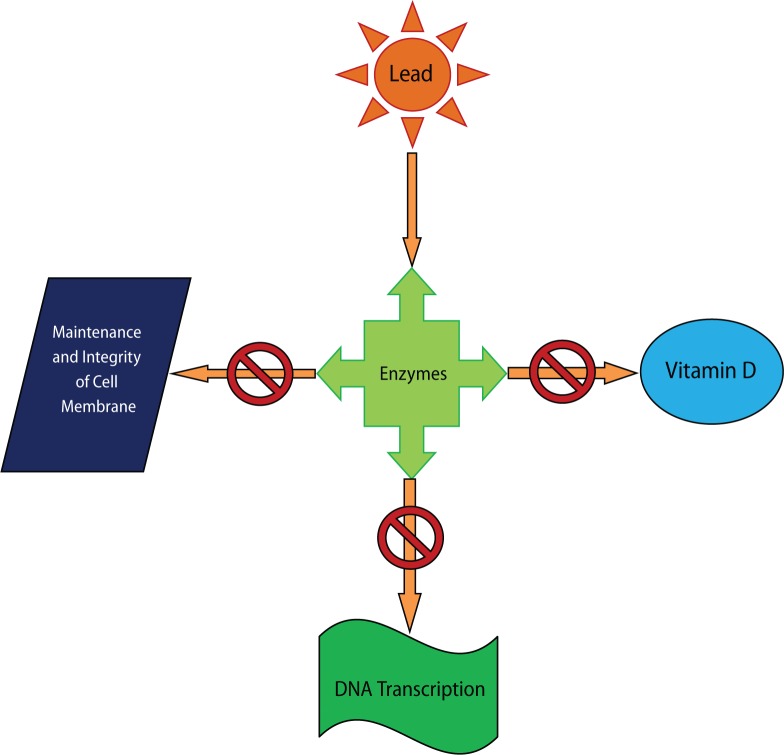
“Pb is a highly poisonous metal that affects almost every organ of the body, causes bone disability, and disrupts the normal DNA transcription process as well as the functions of the digestive, nervous, respiratory, and reproductive systems (Wani et al., 2015).”
BackgroundSong, G., Guo, X., Li, Q., Liao, J., Wang, D., Yuan, T., Li, L., Fang, R., Zhang, M., Shen, Q., et al. (2023) · Food Control · doi:10.1016/j.foodcont.2023.109846 · Cited by 17
Boultif, W., Dehchar, C., Belhocine, Y., Zouaoui, E., Rahali, S., Zouari, S. E., Sbei, N., & Seydou, M. (2023) · Separations · doi:10.3390/separations10090479 · Cited by 17
Lead-Free Halide Perovskite Nanocrystals for Light-Emitting Diodes
Kim, D., Jung, J.-G., Lee, Y., & Park, M.-H. (2023) · Materials · doi:10.3390/ma16186317 · Cited by 17
Environmental exposure to heavy metals in ambient air and its human health implications
Mohankumar, T., Dhananjayan, V., Jayanthi, P., Beerappa, R., Elango, D., & Velu, S. (2024) · Elsevier eBooks · doi:10.1016/b978-0-323-95282-8.00028-6 · Cited by 22
Olowoyo, J. O., Mutemula, M., Agboola, O., Mugivhisa, L. L., Olatunji, O., & Oladeji, O. (2024) · Toxicology Reports · doi:10.1016/j.toxrep.2024.03.007 · Cited by 17
“Pb poisoning can cause anemia, lethargy, kidney and brain damage, as well as death [41].”
BackgroundKong, Y. Y. S., Wang, Q., Lu, J., & Poon, C. S. (2024) · Journal of Cleaner Production · doi:10.1016/j.jclepro.2024.144118 · Cited by 17
Zhang, Y., Wan, Y., Zheng, Y., Yang, Y., Huang, J., Chen, H., Chen, J., Mosa, A. A., & Gao, B. (2024) · Water · doi:10.3390/w16233387 · Cited by 20
“Pb(II) exposure poses serious risks to human health, particularly damaging the brain and nervous system in children [9].”
Alruwaili, A. S., & Shalaby, M. S. (2024) · Journal of Materials Science Materials in Electronics · doi:10.1007/s10854-024-13932-3 · Cited by 17
“Thus, lead is unsuitable for satisfying the requirements for a product that is both environmentally permissible and compact in nuclear installations [4, 5].”
Nezhad, M. F., Foroozandeh, A., Amoli, H. S., & Hasanzadeh, M. (2024) · TrAC Trends in Analytical Chemistry · doi:10.1016/j.trac.2024.118104 · Cited by 17
Xiao, L., Yue, C., Lu, G., Qiu, G., Guo, M., & Zhang, M. (2025) · Journal of Water Process Engineering · doi:10.1016/j.jwpe.2025.107051 · Cited by 17
Gouda, A., Merhi, N., Hmadeh, M., Cecchi, T., Santato, C., & Sain, M. M. (2025) · Global Challenges · doi:10.1002/gch2.202400240 · Cited by 27
Understanding Graphene Response to Neutral and Charged Lead Species: Theory and Experiment
Shtepliuk, I., Santangelo, M. F., Vagin, M. Y., Ivanov, I. G., Khranovskyy, V., Iakimov, T., Eriksson, J., & Yakimova, R. (2018) · Materials · doi:10.3390/ma11102059 · Cited by 17
“The negative impact on human health is originating from its significant toxicity [6] and ability to accumulate in the body [7].”
BackgroundRadzymińska-Lenarcik, E., & Witt, K. (2019) · Polymers · doi:10.3390/polym11030513 · Cited by 17
Safaei, P., Seilani, F., Eslami, F., Sajedi, S. R., & Mohajer, A. (2020) · International Journal of Environmental & Analytical Chemistry · doi:10.1080/03067319.2019.1702171 · Cited by 17
Mailafiya, M. M., Abubakar, K., Chiroma, S. M., Danmaigoro, A., Rahim, E. B. A., Moklas, M. A. M., & Zakaria, Z. A. B. (2020) · Saudi Journal of Biological Sciences · doi:10.1016/j.sjbs.2020.03.009 · Cited by 17
Oya‐Silva, L. F., Vicari, T., Disner, G. R., Lirola, J. R., Klingelfus, T., Gonçalves, H. D. L. S., Leite, T. P. B., Calado, S. L. D. M., Voigt, C. L., de Assis, H. C. S., et al. (2020) · Environmental Toxicology and Pharmacology · doi:10.1016/j.etap.2020.103551 · Cited by 17
Occupational hazard in Malaysian traffic police: special focus on air pollutants
Jamil, P. A. S. M., Karuppiah, K., Rasdi, I. B., How, V., Tamrin, S. B. M., Mani, K. K., Sambasivam, S., Naeini, H. S., Yusof, N. A. D. M., & Hashim, N. M. (2021) · Reviews on Environmental Health · doi:10.1515/reveh-2020-0107 · Cited by 17
Huang, H., Jin, Y., Chen, C., Feng, M., Wang, Q., Li, D., Chen, W. L., Xing, X., Yu, D., & Xiao, Y. (2021) · Environmental Research · doi:10.1016/j.envres.2021.111328 · Cited by 17
Samekova, K., Firbas, C., Irrgeher, J., Opper, C., PROHASKA, T. R., Retzmann, A., Tschegg, C., Meisslitzer, C., Tchaikovsky, A., Gouya, G., et al. (2021) · Scientific Reports · doi:10.1038/s41598-021-94245-x · Cited by 17
elfakharany, Y., Mohamed, E. M., Etewa, R. L., & Hamid, O. I. A. (2022) · Journal of Biochemical and Molecular Toxicology · doi:10.1002/jbt.23017 · Cited by 18
Otieno, J., Kowal, P., & Mąkinia, J. (2022) · International Journal of Environmental Research and Public Health · doi:10.3390/ijerph19095195 · Cited by 19
“However, lead is still heavily used in developing countries due to a combination of different social, economic and political factors [6].”
BackgroundResearch progress in the removal of heavy metals by modified chitosan
Ji, Z., Zhang, Y., Wang, H., & Li, C. (2022) · Tenside Surfactants Detergents · doi:10.1515/tsd-2021-2414 · Cited by 18
Lead and Aquatic Ecosystems, Biomarkers, and Implications for Humankind
Sarkar, O., Dey, K. K., Islam, S., & Chattopadhyay, A. (2022) · Biomarkers in disease · doi:10.1007/978-3-030-87225-0_58-1 · Cited by 17
Mailafiya, M. M., Abubakar, K., Chiroma, S. M., Danmaigoro, A., Zyoud, T. Y. T., Rahim, E. B. A., Moklas, M. A. M., & Zakaria, Z. A. B. (2022) · Food Science & Nutrition · doi:10.1002/fsn3.3096 · Cited by 17
“Neurotoxins such as lead produces an adverse effect on the nervous system resulting in several neuropathological and neurological disorders (Wani et al., 2015).”
BackgroundKamaruzzaman, W. M. I. W. M., Shaifudin, M. S., Nasir, N. A. M., Hamidi, N. A. S. M., Yusof, N., Adnan, A., Lee, O. J., Nik, W. B. W., & Ghazali, M. S. M. (2022) · Journal of Materials Research and Technology · doi:10.1016/j.jmrt.2022.10.135 · Cited by 18
Soil contamination in community gardens of Philadelphia and Pittsburgh, Pennsylvania
Bassetti, O., McDonough, R. A., & Shakya, K. M. (2023) · Environmental Monitoring and Assessment · doi:10.1007/s10661-023-11329-z · Cited by 18
Trust and subjective knowledge influence perceived risk of lead exposure
Goebel, M., & Wardropper, C. B. (2023) · Risk Analysis · doi:10.1111/risa.14212 · Cited by 22
“Used historically in paint, gasoline, and pipes, lead is a potent neurotoxin with additional effects throughout the human body (Wani et al., 2015).”
BackgroundMabrouk, A. (2018) · Andrologia · doi:10.1111/and.13014 · Cited by 17
Joshi, N. C., Singh, A., & Rajput, H. (2018) · Oriental Journal Of Chemistry · doi:10.13005/ojc/340542 · Cited by 17
NaYF4@Yb,Ho,Au/GO-nanohybrid materials for SERS applications—Pb(II) detection and prediction
Annavaram, V., Kutsanedzie, F. Y. H., Agyekum, A. A., Shah, S. A., Zareef, M., Hassan, M. M., Ahmad, W., Ouyang, Q., & Chen, Q. (2018) · Colloids and Surfaces B Biointerfaces · doi:10.1016/j.colsurfb.2018.11.039 · Cited by 17
Garg, A., Chauhan, P., Kaur, C., Arora, P. K., Garg, S. K., Singh, V. P., Singh, K. P., & Srivastava, A. (2025) · Biodegradation · doi:10.1007/s10532-025-10165-x · Cited by 18
“Major exposure routes are inhalation and ingestion, it accumulates in the body, affecting the cardiovascular system, and (Wani et al. 2015; Ekramul Mah-mud et al. 2016; Afzal et al. 2024; Shaheen et al. 2024) kidneys, and causing mitochondrial damage (Qasem et al. 2021; Khan et al. 2022).”
Radbakhsh, S., Butler, A. E., Moallem, S. A., & Sahebkar, A. (2023) · Current Medicinal Chemistry · doi:10.2174/0929867330666230602145817 · Cited by 19
Turmeric products: Evaluation of curcumin and trace elements
Fioravanti, M. I. A., Pizano, F. P., Rebellato, A. P., Milani, R. F., Morgano, M. A., & Bragotto, A. P. A. (2024) · Food Research International · doi:10.1016/j.foodres.2024.115028 · Cited by 18
Lead content in cinnamon and its health risk assessment for Ecuadorian consumers
Yánez-Jácome, G. S., Romero‐Estévez, D., Rosero-Jácome, A. P., Cipriani-Ávila, I., Navarrete, H., & Vélez-Terreros, P. Y. (2024) · Food and Chemical Toxicology · doi:10.1016/j.fct.2024.115010 · Cited by 16
Trace level detection of Pb2+ ion using organic ligand as fluorescent-on probes in aqueous media
Sadia, M., Khan, J., Khan, R., Shah, S. W. A., Zada, A., Zahoor, M., Ullah, R., & Ali, E. A. (2024) · Heliyon · doi:10.1016/j.heliyon.2024.e41125 · Cited by 16
“According to Wani et al., in 2015, this incursion seriously hampers crucial plant activities such as photosynthesis, water management, nitrogen metabolism, and cell division [6].”
Exploring the toxic effects and mechanism of lead-loaded ultrafine carbon black on lysozyme
Qu, W., Xu, M., Pan, J., Liu, Y., Yuan, D., & Liu, R. (2020) · Journal of Molecular Liquids · doi:10.1016/j.molliq.2020.112780 · Cited by 16
X‐ray shielding parameters of lanthanum oxide added waste soda‐lime glass
Akkurt, İ., Günoğlu, K., Kurtuluş, R., & Kavas, T. (2020) · X-Ray Spectrometry · doi:10.1002/xrs.3210 · Cited by 16
Toyomaki, H., Yabe, J., Nakayama, S. M. M., Yohannes, Y. B., Muzandu, K. M., Mufune, T., Nakata, H., Ikenaka, Y., Kuritani, T., Nakagawa, M., et al. (2021) · Environmental Pollution · doi:10.1016/j.envpol.2021.117456 · Cited by 16
Hwang, I. M., & Ha, J. (2021) · Journal of Food Composition and Analysis · doi:10.1016/j.jfca.2021.104046 · Cited by 16
Isvoran, A., Roman, D. L., Dascălu, D., Vlad-Oros, B., Ciorsac, A. A., Pitulice, L., Jonović, R., Stevanović, Z., & Ostafe, V. (2021) · Ecological Chemistry and Engineering S · doi:10.2478/eces-2021-0025 · Cited by 17
Hayder, R., Hafeez, M., & Zaheer, M. (2022) · Journal of Cleaner Production · doi:10.1016/j.jclepro.2022.131166 · Cited by 18
Joshi, D. J., Lalrinhlupuii, Malek, N. I., Muthukumaran, R. B., & Kailasa, S. K. (2022) · Applied Spectroscopy · doi:10.1177/00037028221100544 · Cited by 16
“Higher Pb levels > 70 μg/dL are responsible for devastating health issues, including seizures, coma, and eventually death.(18) In modern times, Pb exposure is”
BackgroundCarbon dots derived from frankincense soot for ratiometric and colorimetric detection of lead (II)
John, V. L., Fasila, P. M., Chaithra, K. P., & Vinod, T. P. (2022) · Nanotechnology · doi:10.1088/1361-6528/ac8e76 · Cited by 16
“The behavioural and neurological effects of lead are irreversible [ 24 ] .”
Santana, C. M., de Souza, T. L., Latif, A. L. O., Lobo, L. S., da Silva, G. R., Magalhães, H. I. F., Lopes, M. V., Benevides, C. M. D. J., Araújo, R. G. O., Santos, D. C. M. B., et al. (2022) · BioMetals · doi:10.1007/s10534-022-00444-y · Cited by 16
“Permanent exposure to low levels of lead can cause eczema and skin contact allergies (Witkowska et al. 2021; Wani et al. 2015).”
BackgroundSaadati, T., Eftekhari, M., Rezazadeh, N., & Karimi‐Nazarabad, M. (2022) · International Journal of Environmental Science and Technology · doi:10.1007/s13762-022-04627-5 · Cited by 16
Gomes, W. R., Devóz, P. P., de Araújo, M. L., Batista, B. L., Barbosa, F., & Barcelos, G. R. M. (2016) · Biological Trace Element Research · doi:10.1007/s12011-016-0913-y · Cited by 16
Shukla, A. K., Tripathi, S. N., Talukdar, S., Murari, V., Gaddamidi, S., Manousakas, M. I., Lalchandani, V., Dixit, K. K., Ruge, V. M., Khare, P., et al. (2025) · Atmospheric chemistry and physics · doi:10.5194/acp-25-3765-2025 · Cited by 17
Choudhury, A. R., & Dey, N. (2023) · ChemPhotoChem · doi:10.1002/cptc.202200306 · Cited by 16
Zhao, J., Wang, L., & Chu, G. (2023) · Agronomy · doi:10.3390/agronomy13051282 · Cited by 19
Involvement of Nrf2 Signaling in Lead-induced Toxicity
Arabnezhad, M., Haghani, F., Ghaffarian‐Bahraman, A., Jafarzadeh, E., Mohammadi, H., Yadegari, J. G., Farkhondeh, T., Aschner, M., Darroudi, M., Marouzi, S., et al. (2023) · Current Medicinal Chemistry · doi:10.2174/0929867330666230522143341 · Cited by 15
Mouri, H., Malepe, R. E., & Candeias, C. (2023) · Environmental Geochemistry and Health · doi:10.1007/s10653-023-01551-6 · Cited by 15
“Lead is classified as carcinogen () with a range of symptoms and toxic effects including anemia, impacts on nervous system, premature birth, babies with a low birth weight and even death (Wani et al., 2015).”
BackgroundIhsani, R. N., Heryanto, H., Gareso, P. L., & Tahir, D. (2024) · Polymer-Plastics Technology and Materials · doi:10.1080/25740881.2024.2303338 · Cited by 15
“[64] 7.”
El-Khatib, A. M., Elesh, E., Hamada, M. S., Sabry, E. M., & Gouda, M. M. (2024) · Silicon · doi:10.1007/s12633-024-02847-7 · Cited by 15
“The average distance a photon travels inside the sample without encountering any interactions is known as the MFP (cm) [39].”
Eddy, N. O., Garg, R., Ukpe, R. A., Ameh, P. O., Garg, R., Runde, M., Kwanchi, I. D., Wabaidur, S. M., Aftab, S., Ogbodo, R., et al. (2024) · Biomass Conversion and Biorefinery · doi:10.1007/s13399-024-05285-y · Cited by 17
Blood lead levels in pregnant women and their newborn infants at an Indian teaching hospital
Sahu, M. C., Yogeshbhai, M. R., Oza, H., Upadhyay, K. D., Chanania, K., & Pati, S. (2024) · Journal of Family Medicine and Primary Care · doi:10.4103/jfmpc.jfmpc_963_23 · Cited by 15
“Whereas, there was no statistical significance on the type of drinking water with blood levels ( P = 0.284) [Table 3].”
BackgroundMethodInfluentialBAYKAL, D. Ş. (2024) · International Journal of Computational and Experimental Science and Engineering · doi:10.22399/ijcesen.304 · Cited by 17
Endocrine Disruptors Chemicals: Impacts of Bisphenol A, Tributyltin and Lead on Thyroid Function
Dias, G. R. M., Ferreira, A. C. F., Miranda‐Alves, L., Graceli, J. B., & de Carvalho, D. P. (2025) · Molecular and Cellular Endocrinology · doi:10.1016/j.mce.2025.112467 · Cited by 15
Carrier-mediated liquid membrane systems for lead (II) ion separations
Albaraka, Z. (2019) · Chemical Papers · doi:10.1007/s11696-019-00868-w · Cited by 15
Sawe, S. F., Shilla, D. A., & Machiwa, J. F. (2020) · Environmental Forensics · doi:10.1080/15275922.2020.1805823 · Cited by 15
Human health risk assessment of heavy metals in different soils and sediments
Pandey, N., & Tiwari, A. (2020) · Elsevier eBooks · doi:10.1016/b978-0-12-821656-9.00008-0 · Cited by 15
Ujueta, F., Navas‐Acién, A., Mann, K. K., Prashad, R., & Lamas, G. A. (2021) · Toxicological Sciences · doi:10.1093/toxsci/kfab026 · Cited by 15
The ghost nets phenomena from the chemical perspective
Dąbrowska, A., Łopata, I., & Osial, M. E. (2021) · Pure and Applied Chemistry · doi:10.1515/pac-2020-1102 · Cited by 17
Calixresorcin[4]arene-Mediated Transport of Pb(II) Ions through Polymer Inclusion Membrane
Kończyk, J., & Ciesielski, W. (2021) · Membranes · doi:10.3390/membranes11040285 · Cited by 15
“Exposing the body to higher daily doses of lead may cause severe intoxication, multi-organ disease, or in extreme cases—death [2].”
BackgroundLamidi, I. Y., Mikail, H. G., Adamu, S., Akefe, I. O., Tijjani, M. B., Salihu, S. I., Olatunji, A. O., Hassan, A., Daniel, N., & Adegoke, V. A. (2021) · Toxicological Research · doi:10.1007/s43188-020-00084-9 · Cited by 15
RetractedMuciño-Sandoval, K., Ariza, A. C., Ortiz‐Panozo, E., Pizano-Zárate, M. L., Mercado‐García, A., Wright, R. O., Téllez‐Rojo, M. M., Sanders, A. P., & Tamayo‐Ortiz, M. (2021) · Frontiers in Pediatrics · doi:10.3389/fped.2021.750316 · Cited by 16
“Moreover, results from in vitro and animal models suggest that Pb can modify the differentiation of progenitor cells, increase adipogenesis, and alter glucose homeostasis, accounting for some of the observed comorbidities present in metabolic syndrome (MetS) (2, 12).”
BackgroundMethod for analysis of environmental lead contamination in soils
Beardsley, C. A., Fuller, K. Z., Reilly, T. H., & Henry, C. S. (2021) · The Analyst · doi:10.1039/d1an01744f · Cited by 16
Coffin, B., & Duboc, H. (2022) · Alimentary Pharmacology & Therapeutics · doi:10.1111/apt.17064 · Cited by 16
Islam, J., Shila, T. T., Islam, Z., Kabir, E., Haque, N., Khatun, M., Khan, S., Jubayar, A. M., Islam, F., Nikkon, F., et al. (2022) · Journal of Ethnopharmacology · doi:10.1016/j.jep.2022.116024 · Cited by 18
Vukelić, D., Djordjević, A. B., Anđelković, M., Repić, A., Baralić, K., Ćurčić, M., Đukić-Ćosić, D., Boričić, N., Antonijević, B., & Bulat, Z. (2023) · Toxicology Letters · doi:10.1016/j.toxlet.2023.01.001 · Cited by 15
Aminzare, M., Jiang, J., Mandl, G. A., Mahshid, S., Capobianco, J. A., & Courchesne, N. D. (2023) · Nanoscale · doi:10.1039/d2nr05565a · Cited by 16
Red fox as a potential bioindicator of metal contamination in a European environment
Kalisińska, E., Kot, K., & Łanocha-Arendarczyk, N. (2023) · Chemosphere · doi:10.1016/j.chemosphere.2023.138037 · Cited by 18
James, V. R., Panchal, H. J., & Shah, A. P. (2023) · Environmental Monitoring and Assessment · doi:10.1007/s10661-023-11965-5 · Cited by 15
“It may cause damage in the kidney and the brain that may result in death (Bozalan et al., 2019; Wani et al., 2015; Yuksel et al., 2017).”
BackgroundKumar, A., Aswal, S., Semwal, R. B., Chauhan, A., & Semwal, D. K. (2018) · Phytochemistry Reviews · doi:10.1007/s11101-018-9589-6 · Cited by 15
The microbial community in an alkaline saline sediment of a former maar lake bed
Ibarra-Sánchez, C. L., Prince, L., Aguirre‐Noyola, J. L., Sánchez-Cerda, K. E., Navarro‐Noya, Y. E., Luna-Guido, M. L., Conde-Barajas, E., Dendooven, L., & Gómez-Acata, S. (2019) · Journal of Soils and Sediments · doi:10.1007/s11368-019-02371-x · Cited by 15
Heavy metal mobility in soil under futuristic climatic conditions
Grobelak, A., & Kowalska, A. (2020) · Elsevier eBooks · doi:10.1016/b978-0-12-818032-7.00016-3 · Cited by 19
Risk identification of Hg and Pb in soil: a case study from Pangkep Regency, Indonesia
Astuti, R. D. P., Mallongi, A., & Rauf, A. U. (2021) · Soil Science Annual · doi:10.37501/soilsa/135394 · Cited by 22
Annaç, E. E., Uçkun, M., Özkaya, A., Yoloğlu, E., Pekmez, H., Bulmuş, Ö., & Aydın, A. (2021) · Journal of Food Biochemistry · doi:10.1111/jfbc.13881 · Cited by 15
True Colors: Unmasking Hidden Lead in Cosmetics from Low- and Middle-Income Countries
Lewis, J. (2022) · Environmental Health Perspectives · doi:10.1289/ehp9220 · Cited by 15
“Other associated health effects in adults include hypertension, coronary heart disease, and other cardiovascular-related diseases.(7,14) “Everywhere on Earth, I think, people are familiar with the fact that lead can poison and that people are poisoned by lead,” says Andrew McCartor, the vice president of strategy and…”
BackgroundMaternal Nutrition, Toxicants, and Epigenetic Programming of Obesity Across Generations
Alum, E., Aloh, H., Obasi, D., Okoroh, P., Aniokete, U., & Emeruwa, A. (2025) · Diabetes, Metabolic Syndrome and Obesity · doi:10.2147/dmso.s579409 · Cited by 14
“82”
Ionic liquids and deep eutectic solvents in wastewater treatment: recent endeavours
Sarkar, A., & Pandey, S. (2024) · International Journal of Environmental Science and Technology · doi:10.1007/s13762-023-04865-1 · Cited by 14
“Lead contamination is nowadays a great concern among environmental scientists due to their detrimental effects on human being even in very meagre quantity causing diseases related to respiratory system, brain, bones and liver (Chandra et al. 2009; Alothman et al. 2016; Wani et al. 2015).”
Priyantha, N., Lim, L. B. L., Mansor, N. H. M., & Liyandeniya, A. B. (2019) · Water Science & Technology · doi:10.2166/wst.2019.414 · Cited by 14
Bioaccessibility data of potentially toxic elements in complementary foods for infants: A review
de Paiva, E. L., Ali, S., Vasco, E. R., Alvito, P., & de Oliveira, C. A. F. (2023) · Food Research International · doi:10.1016/j.foodres.2023.113485 · Cited by 14
Wenting, E., Siepel, H., & Jansen, P. A. (2023) · Biological Trace Element Research · doi:10.1007/s12011-023-03879-7 · Cited by 14
“Often described symptoms of Pb toxicity include disturbed muscular coordination, reduced cognitive performance and anemia [e.g. 162, 163].”
Pernicious effects and management of lead leakage from perovskite solar cells
Yin, Y., Li, Y., Zhang, X., & Zhang, J. (2023) · Journal of Materials Chemistry A · doi:10.1039/d3ta04782b · Cited by 14
Patel, M., Bharti, P., Prabhakar, P., Shrivastava, S., Mehar, P., Kumar, P., Mondal, D. P., Srivastava, A. K., Dhand, C., & Dwivedi, N. (2024) · Chemical Engineering Journal · doi:10.1016/j.cej.2024.149441 · Cited by 14
Sobczak, J., Truszkiewicz, A., Cwynar, K., Ruczka, S., Kolanowska, A., Jędrysiak, R. G., Waśkiewicz, S., Dzida, M., Boncel, S., & Żyła, G. (2024) · Materials Advances · doi:10.1039/d4ma00359d · Cited by 14
Vadia, F. Y., Malek, N. I., Park, T. J., & Kailasa, S. K. (2024) · Luminescence · doi:10.1002/bio.70040 · Cited by 14
“Prolonged exposure to Pb 2+ can harm the central nervous, hematopoietic, reproductive, and endocrine systems, whereas acute exposure may cause gastrointestinal, kidney, and brain damage [4, 5].”
Akindele, A. F. I., & Joseph, A. P. (2024) · Environmental Monitoring and Assessment · doi:10.1007/s10661-024-13324-4 · Cited by 16
“Given that high levels of metals of public health importance among children have been well documented (Wani et al., 2015; Hauptman et al., 2017; Apanpa-Qasim et al., 2016; Apanpa-Qasim & Adeyi, 2017; Karakis et al., 2021; Heng et al., 2022; Mbunga et al., 2022; Zaynab et al., 2022), the present…”
Sümbül, A., Uzun, A., Yaman, M., Tunç, Y., Khadivi, A., Keçe, Y. M., Yıldız, E., Yılmaz, K. U., GUNES, A., & Turgunbaev, K. (2025) · BMC Plant Biology · doi:10.1186/s12870-025-06284-5 · Cited by 14
Pal, P., Ghosh, S. K., Mondal, S., & Maiti, T. K. (2025) · Journal of Hazardous Materials · doi:10.1016/j.jhazmat.2025.138017 · Cited by 15
Sharma, A., Tomer, A., Singh, J., & Chhikara, B. S. (2019) · Chemical Biology Letters · Cited by 28
Kim, R., Youn, Y., Kang, M., & Kim, E. (2020) · Scientific Reports · doi:10.1038/s41598-020-77449-5 · Cited by 14
Xu, X., Wu, J., Jian, X., Liu, F., Xie, A., Liu, J., & Zhang, M. (2022) · Rare Metals · doi:10.1007/s12598-021-01958-z · Cited by 14
Iqbal, M., Muneer, M., Raza, R., & Jamal, M. A. (2022) · Ceramics International · doi:10.1016/j.ceramint.2022.03.105 · Cited by 14
Jayan, N., & Bhatlu, M. L. D. (2022) · Biomass Conversion and Biorefinery · doi:10.1007/s13399-022-02534-w · Cited by 14
“But its distinctive physicochemical properties such as malleability, resistance to corrosion, poor conductivity, ductility and softness make it very much acceptable and considered a priority pollutant [2].”
Significant Role of Counterion for Lead(Ⅱ) Ion Adsorption on Carbon Pore Surface
Horikawa, T., Okamoto, M., Kuroki-Matsumoto, A., & Yoshida, K. (2022) · Carbon · doi:10.1016/j.carbon.2022.05.031 · Cited by 14
High Heat Resistance of the Structural Coloration of Colloidal Arrays with Inorganic Black Additives
Yamanaka, T., Tarutani, N., Katagiri, K., Inumaru, K., Takeoka, Y., & Masui, T. (2022) · ACS Applied Materials & Interfaces · doi:10.1021/acsami.2c08649 · Cited by 14
Metadata
- Authors
- Wani, A. L., Ara, A., & Usmani, J. A.
- Affiliations
- Aligarh Muslim University (IN)
- Jawaharlal Nehru Medical College Hospital (IN)
- Corresponding author
- Wani, Ab Latif
- Venue
- Interdisciplinary Toxicology
- Publisher
- Walter de Gruyter GmbH
- Published
- 2015-06-01
- Volume
- 8
- Issue
- 2
- Pages
- 55-64
- ISSN
- 1337-6853 (ISSN-L)
- 1337-9569
- PMC
- PMC4961898
- OpenAlex
- W2522138202
- Cited by
- 1,964
- References
- 90
- Citations by year
- 2026: 208 · 2025: 273 · 2024: 282 · 2023: 308 · 2022: 271 · 2021: 264 · 2020: 207 · 2019: 96 · 2018: 42 · 2017: 10 · 2016: 1
- FWCI
- 1.68
- Type
- journal article
- Language
- en
- Open access
- diamond
- doi.org
- Licence
- Locations
- Interdisciplinary Toxicology (publishedVersion, cc-by-nc-nd)
- PubMed Central (publishedVersion, cc-by)
- PubMed (publishedVersion)
- DOAJ (DOAJ: Directory of Open Access Journals) (submittedVersion, cc-by-sa)
- Funders
- U.S. Department of Health and Human Services
- University Grants Commission
- Aligarh Muslim University
- Centers for Disease Control and Prevention
- Topics
- Physical Sciences › Environmental Science › Health, Toxicology and Mutagenesis › Heavy Metal Exposure and Toxicity
- Physical Sciences › Environmental Science › Pollution › Heavy metals in environment
- Physical Sciences › Environmental Science › Health, Toxicology and Mutagenesis › Environmental Toxicology and Ecotoxicology
- Keywords
- lead toxicity, lead exposure, environmental pollution, nephrotoxicity, reproductive toxicity, neurotoxicity, lead poisoning treatment, developing countries
About these checks
Registry, retraction, Cites and statistics results are computed, not judged, with one exception: a printed reference that no index lists is read once by a model before it counts as a citation error. Claims are extracted by a model and kept only when their quote appears verbatim in the text; each cited source is then checked, with a model’s help, for whether it says what the claim relies on. Those verdicts can be wrong — read the claim’s quote and the cited source before relying on one.
Statistics and arithmetic are recomputed, not judged.
Confidence bands are shown only for fields calibrated on our annotated test set. None is calibrated yet, so no band is shown.
What counts as a claim ›How we measure confidence ›How we check this ›
Are you an author, or do you see a problem with this page? Request a review
Data sources
Bibliographic data: Semantic Scholar, OpenAlex, Crossref.
Contains information from the Semantic Scholar Academic Graph Datasets, made available under the ODC Attribution License (ODC-BY 1.0).
Semantic Scholar’s data is described in: Kinney, R., et al. (2023). The Semantic Scholar Open Data Platform. arXiv:2301.10140.
