

Lead toxicity: a review
Open accessThe DOI matches its Crossref record; 88 of the 90 references it cites were found in a registry or an index.
Abstract
Lead toxicity is an important environmental disease and its effects on the human body are devastating. There is almost no function in the human body which is not affected by lead toxicity. Though in countries like US and Canada the use of lead has been controlled up to a certain extent, it is still used vehemently in the developing countries. This is primarily because lead bears unique physical and chemical properties that make it suitable for a large number of applications for which humans have exploited its benefits from historical times and thus it has become a common environmental pollutant. Lead is highly persistent in the environment and because of its continuous use its levels rise in almost every country, posing serious threats. This article reviews the works listed in the literature with recent updates regarding the toxicity of lead. Focus is also on toxic effects of lead on the renal, reproductive and nervous system. Finally the techniques available for treating lead toxicity are presented with some recent updates.
Overview
The claims and statistics of this paper haven’t been checked yet.
Free: it reads the open-access text and checks the first 5 claims that cite a source we can check. Create a free account to check every claim.
Integrity signals
Registry
Cites
Statistics
Figures
Verification
Claims the paper makes
The claims and statistics of this paper haven’t been checked yet.
Free: it reads the open-access text and checks the first 5 claims that cite a source we can check. Create a free account to check every claim.
Claims other papers make about this one
Each is checked against this paper’s own text: does it say what the citing paper says it does?
The cited source says what the claim attributes to it.
In the citing paper
“The human body is exposed to various toxic metals through inhalation, ingestion, and skin such as arsenic (As) (28), cadmium (Cd) (29), chromium (Cr) (30), lead (Pb) (31), and mercury (Hg) (23).”
From The dark side of beauty: an in-depth analysis of the health hazards and toxicological impact of synthetic cosmetics and personal care products (2024) · cites this paper as [30]
The check wasn’t confident either way, so it gives no verdict — never disputed.
In the citing paper
“These heavy metals are mostly found in these products such as sunscreens, moisturizers, whitening toothpaste, nail polish, concealer, lipstick, and eyeliner (30).”
From The dark side of beauty: an in-depth analysis of the health hazards and toxicological impact of synthetic cosmetics and personal care products (2024) · cites this paper as [30]
Experimental — accuracy not yet measured
Self-check
Percentages, sums and reported differences re-computed from the paper’s own numbers.
The self-check needs the paper’s full text.
Citations
Cites
Toxicity of lead: a review with recent updates
Flora, G., Gupta, D., & Tiwari, A. (2012) · Interdisciplinary Toxicology · doi:10.2478/v10102-012-0009-2 · Cited by 2,144 · cited 1×
“A new technique called nano-encapsulation of antioxidants may provide improved biodistribution and bioavailability of poorly soluble therapeutics through solubilisation (Flora et al., 2012).”
MethodGoyer, R. A., & Clarkson, T. W. (1991) · Cited by 1,200
The Long-Term Effects of Exposure to Low Doses of Lead in Childhood: An 11-Year Follow-up Report
Needleman, H. L., Schell, A., Bellinger, D., Leviton, A., & Allred, E. N. (1990) · New England Journal of Medicine · doi:10.1056/nejm199001113220203 · Cited by 1,158
Needleman, H. (2004) · Annual Review of Medicine · doi:10.1146/annurev.med.55.091902.103653 · Cited by 1,144
Lead Exposure and Cardiovascular Disease—A Systematic Review
Navas-Acien, A., Guallar, E., Silbergeld, E. K., & Rothenberg, S. J. (2007) · Environmental Health Perspectives · doi:10.1289/ehp.9785 · Cited by 1,112 · cited 2×
“Activities like motility and the general morphology of sperm are also affected at this level (Navas-Acien et al., 2007).”
BackgroundNeurotoxic Effects and Biomarkers of Lead Exposure: A Review
Sanders, T., Liu, Y., Buchner, V., & Tchounwou, P. B. (2009) · Reviews on Environmental Health · doi:10.1515/reveh.2009.24.1.15 · Cited by 1,076 · cited 3×
“With increased lead exposure in children, an increase in neuropsychiatric disorders like attention deficit hyperactivity disorder and antisocial behaviour were found (Sanders et al., 2009).”
BackgroundLead toxicity, a review of the literature. Part 1: Exposure, evaluation, and treatment.
Patrick, L. (2006) · PubMed · Cited by 927
(2008) · PubMed · Cited by 886
Longitudinal Analyses of Prenatal and Postnatal Lead Exposure and Early Cognitive Development
Bellinger, D., Leviton, A., Waternaux, C., Needleman, H., & Rabinowitz, M. (1987) · New England Journal of Medicine · doi:10.1056/nejm198704233161701 · Cited by 855
Barbosa, F., Tanus-Santos, J. E., Gerlach, R. F., & Parsons, P. J. (2005) · Environmental Health Perspectives · doi:10.1289/ehp.7917 · Cited by 761 · cited 1×
“It has been found to impair development and have harmful effects even at lower levels (Rossi, 2008; Barbosa et al., 2005).”
Background
Research works printed but not linked: 5
- Henretig FM Golgfrank LR Lead Goldfrank’s Toxicoliogic Emergencies 2006 8th ed. McGraw Hill Professional
- Kosnett MJ Olson K.R Lead Poisoning and Drug Overdose 2006 5th ed. McGraw Hill Professional
- Kosnett MJ Heavy metal Intoxication and chelators In Katzung BG 2007 Basic and clinical Pharmocology. McGraw Hill Professional
- Merill JC Morton JJP Soileau SD Hayes A.W Metals Principles and Methods of Toxicology 2007 5th ed. CRC Press
- Pearson HA Schonfeld DJ Rudolph CD Lead Rudolph’s Pediatrics 2003 21st ed. McGraw Hill professional
Cited by
Items 101–200 of 1,000
Hamad, M. K. (2023) · Annals of Nuclear Energy · doi:10.1016/j.anucene.2023.109687 · Cited by 88
Neolaka, Y. A. B., Lawa, Y., Naat, J. N., Riwu, A. A. P., Darmokoesoemo, H., Widyaningrum, B. A., Iqbal, M., & Kusuma, H. S. (2021) · Environmental Technology & Innovation · doi:10.1016/j.eti.2021.101997 · Cited by 104
Ghosh, T., & Das, A. K. (2023) · Coordination Chemistry Reviews · doi:10.1016/j.ccr.2023.215170 · Cited by 92
Alnuqaydan, A. M. (2024) · Frontiers in Public Health · doi:10.3389/fpubh.2024.1439027 · Cited by 84
“According to Ara et al. (30), acute lead poisoning causes many symptoms in the human body and affects the human body badly.”
BackgroundAL-Megrin, W. A., Soliman, D., Kassab, R. B., Metwally, D. M., Moneim, A. E. A., & El-Khadragy, M. F. (2020) · Frontiers in Physiology · doi:10.3389/fphys.2020.00064 · Cited by 84
Khan, A., Ali, N., Bilal, M., Malik, S., Badshah, S. L., & Iqbal, H. M. N. (2019) · Applied Sciences · doi:10.3390/app9235138 · Cited by 84
“Lead is mostly released from factories, metal recycling, lead–acid batteries, and pipes [3].”
BackgroundPal, A., Bhatta, S. R., & Thakur, A. (2020) · Coordination Chemistry Reviews · doi:10.1016/j.ccr.2020.213685 · Cited by 84
Sharma, H. B., Vanapalli, K. R., Barnwal, V. K., Dubey, B., & Bhattacharya, J. (2021) · The Science of The Total Environment · doi:10.1016/j.scitotenv.2021.146645 · Cited by 84
El‐Naggar, N. E., Rabei, N. H., & El-Malkey, S. E. (2020) · Scientific Reports · doi:10.1038/s41598-020-73031-1 · Cited by 85
İleritürk, M., Benzer, F., Aksu, E. H., Yıldırım, S., Kandemır, F. M., Doğan, T., Dörtbudak, M. Y., & Genç, A. (2020) · Journal of Food Biochemistry · doi:10.1111/jfbc.13593 · Cited by 83
Carbon monoxide as a potential therapeutic agent: a molecular analysis of its safety profiles
Bansal, S., Liu, D., Mao, Q., Bauer, N., & Wang, B. (2024) · Journal of Medicinal Chemistry · doi:10.1021/acs.jmedchem.4c00823 · Cited by 82
Guar gum, a low-cost sustainable biopolymer, for wastewater treatment: A review
Mandal, S., Hwang, S. S., & Shi, S. Q. (2022) · International Journal of Biological Macromolecules · doi:10.1016/j.ijbiomac.2022.12.039 · Cited by 85
Jarkov, V., Allan, S. J., Bowen, C., & Khanbareh, H. (2021) · International Materials Reviews · doi:10.1080/09506608.2021.1988194 · Cited by 85
“[362] and therefore devices based on lead are being”
BackgroundFalsification of biotechnology drugs: current dangers and/or future disasters?
Janvier, S., Spiegeleer, B. M. J. D., Vanhee, C., & Deconinck, E. (2018) · Journal of Pharmaceutical and Biomedical Analysis · doi:10.1016/j.jpba.2018.08.037 · Cited by 86
Trace Element Status and Hypothyroidism: A Systematic Review and Meta-analysis
Talebi, S., Ghaedi, E., Sadeghi, E., Mohammadi, H., Hadi, A., Clark, C. C. T., & Askari, G. (2019) · Biological Trace Element Research · doi:10.1007/s12011-019-01963-5 · Cited by 78
Kurtuluş, R., Kavas, T., Akkurt, İ., & Günoğlu, K. (2020) · Ceramics International · doi:10.1016/j.ceramint.2020.05.188 · Cited by 78
Bioremediation of Heavy Metals by Rhizobacteria
Riseh, R. S., Vazvani, M. G., Hajabdollahi, N., & Thakur, V. K. (2022) · Applied Biochemistry and Biotechnology · doi:10.1007/s12010-022-04177-z · Cited by 82
Sharma, A. K., Sharma, M., Sharma, S., Malik, D. S., Sharma, M., Sharma, M., & Sharma, A. K. (2024) · Journal of Geochemical Exploration · doi:10.1016/j.gexplo.2024.107472 · Cited by 86
Oni, A. A., Babalola, S. O., Adeleye, A. D., Olagunju, T. E., Amama, I. A., Omole, E. O., Adegboye, E. A., & Ohore, O. G. (2022) · Heliyon · doi:10.1016/j.heliyon.2022.e10688 · Cited by 77
Yabe, J., Nakayama, S. M. M., Nakata, H., Toyomaki, H., Yohannes, Y. B., Muzandu, K. M., Kataba, A., Zyambo, G., Hiwatari, M., Narita, D., et al. (2019) · Chemosphere · doi:10.1016/j.chemosphere.2019.125412 · Cited by 75
Lead: properties, history, and applications
Boldyrev, M. L. (2018) · WikiJournal of Science · doi:10.15347/wjs/2018.007 · Cited by 85
Signes‐Pastor, A. J., Doherty, B. T., Romano, M. E., Gleason, K. M., Gui, J., Baker, E., & Karagas, M. R. (2019) · Environmental Epidemiology · doi:10.1097/ee9.0000000000000068 · Cited by 76
A Review of the Role of Curcumin in Metal Induced Toxicity
Smirnova, E., Moniruzzaman, M., Chin, S., Sureshbabu, A., Karthikeyan, A., Do, K., & Min, T. (2023) · Antioxidants · doi:10.3390/antiox12020243 · Cited by 80
Conjugated polymer based fluorescent probes for metal ions
Pak, Y. L., Wang, Y., & Xu, Q. (2021) · Coordination Chemistry Reviews · doi:10.1016/j.ccr.2020.213745 · Cited by 74
Firoozichahak, A., Rahimnejad, S., Rahmani, A., Parvizimehr, A., Aghaei, A., & Rahimpoor, R. (2022) · Toxicology Reports · doi:10.1016/j.toxrep.2022.02.009 · Cited by 72
“Autopsy researches on the humans exposed to Pb showed that the liver is the most important reservoir of lead among soft tissues of the human body (approximately 33%) [2,6].”
BackgroundJayakumar, S., Saravanan, T., & Philip, J. (2023) · Hybrid Advances · doi:10.1016/j.hybadv.2023.100100 · Cited by 72
Malidarre, R. B., Kulalı, F., İnal, A., & Öz, A. (2020) · Emerging Materials Research · doi:10.1680/jemmr.20.00202 · Cited by 71
Nie, J., Wang, Q., Gao, S., Poon, C. S., Zhou, Y., & Li, J. (2021) · Journal of Environmental Management · doi:10.1016/j.jenvman.2021.112382 · Cited by 74
PVD for Decorative Applications: A Review
Vorobyova, M., Biffoli, F., Giurlani, W., Martinuzzi, S. M., Linser, M., Caneschi, A., & Innocenti, M. (2023) · Materials · doi:10.3390/ma16144919 · Cited by 71
Hassan, E. M., El-Neweshy, M. S., Hassan, M. M., & Noreldin, A. E. (2019) · Life Sciences · doi:10.1016/j.lfs.2019.05.067 · Cited by 71
Therapeutic role of garlic and vitamins C and E against toxicity induced by lead on various organs
Mumtaz, S., Ali, S., Khan, R., Shakir, H. A., Tahir, H. M., Mumtaz, S., & Andleeb, S. (2020) · Environmental Science and Pollution Research · doi:10.1007/s11356-020-07654-2 · Cited by 80
Sonoelectrochemical processes for the degradation of persistent organic pollutants
Ang, W. L., McHugh, P. J., & Symes, M. D. (2022) · Chemical Engineering Journal · doi:10.1016/j.cej.2022.136573 · Cited by 73
3D printed electrochemical devices for bio-chemical sensing: A review
Sharma, A., Faber, H. A., Khosla, A., & Anthopoulos, T. D. (2023) · Materials Science and Engineering R Reports · doi:10.1016/j.mser.2023.100754 · Cited by 73
Abubakar, K., Mailafiya, M. M., Danmaigoro, A., Chiroma, S. M., Rahim, E. B. A., & Zakaria, M. Z. A. B. (2019) · Biomolecules · doi:10.3390/biom9090453 · Cited by 72
“These could be due to specific kinetics, where a proportion of the absorbed Pb accumulates in the bone [11,30,82] and is gradually released to soft tissues, such as the brain, kidneys, and liver [30,82,83].”
BackgroundDedecker, K., & Grancini, G. (2020) · Advanced Energy Materials · doi:10.1002/aenm.202001471 · Cited by 73
Rotkovich, A. A., Tishkevich, D. I., Razanau, I. U., Vershinina, T. N., Bondaruk, A. A., German, S. A., Zubar, T. I., Sayyed, M. I., Dong, M., Yao, Y., et al. (2024) · Journal of Materials Research and Technology · doi:10.1016/j.jmrt.2024.03.187 · Cited by 69
Ahamed, M., Akhtar, M. J., & Alhadlaq, H. A. (2019) · Toxicology in Vitro · doi:10.1016/j.tiv.2019.02.004 · Cited by 68
Determining the microbial and chemical contamination in Ecuador’s main rivers
Rivera, D. L. V., Ochoa‐Herrera, V., Maurice, L., Tamayo, E., Mejía, L., Tejera, E., & Machado, A. (2021) · Scientific Reports · doi:10.1038/s41598-021-96926-z · Cited by 74
Toxicity and bioremediation of the lead: a critical review
Kumar, K., & Singh, D. (2023) · International Journal of Environmental Health Research · doi:10.1080/09603123.2023.2165047 · Cited by 73
A review on algal biosorbents for heavy metal remediation with different adsorption isotherm models
Kumar, A., Sidharth, S., & Kandasubramanian, B. (2023) · Environmental Science and Pollution Research · doi:10.1007/s11356-023-25710-5 · Cited by 68
Barium titanate-based thermistors: Past achievements, state of the art, and future perspectives
Bell, J. G., Graule, T. J., & Stuer, M. (2021) · Applied Physics Reviews · doi:10.1063/5.0048697 · Cited by 67
Effects of environmental and occupational lead toxicity and its association with iron metabolism
Słota, M., Wąsik, M., Stołtny, T., Machoń‐Grecka, A., & Kasperczyk, S. (2021) · Toxicology and Applied Pharmacology · doi:10.1016/j.taap.2021.115794 · Cited by 67
Cytoprotective remedies for ameliorating nephrotoxicity induced by renal oxidative stress
Ranasinghe, R., Mathai, M. L., & Zulli, A. (2023) · Life Sciences · doi:10.1016/j.lfs.2023.121466 · Cited by 74
“Lead toxicity commonly occurs by ingestion or occupational and/or accidental exposure [220].”
Zhan, C., Sharma, P. R., He, H., Sharma, S. K., McCauley-Pearl, A., Wang, R., & Hsiao, B. S. (2020) · Environmental Science Water Research & Technology · doi:10.1039/d0ew00545b · Cited by 75
Association Between Blood Lead Level With High Blood Pressure in US (NHANES 1999–2018)
Huang, Z. (2022) · Frontiers in Public Health · doi:10.3389/fpubh.2022.836357 · Cited by 69
“A half-life of blood lead is about a month, while bone lead is more than 10 years old (29).”
BackgroundWang, M., Hossain, F., Sulaiman, R., & Ren, X. (2019) · Chemical Research in Toxicology · doi:10.1021/acs.chemrestox.9b00134 · Cited by 67
Liang, Y., Li, F., & Zheng, R. (2020) · Advanced Electronic Materials · doi:10.1002/aelm.202000137 · Cited by 65
Akkurt, İ., Malidarre, R. B., Kartal, İ., & Günoğlu, K. (2021) · Polymer Composites · doi:10.1002/pc.26185 · Cited by 65
Heavy metals in vegetables: a review of status, human health concerns, and management options
Manwani, S., Devi, P., Singh, T., Yadav, C. S., Awasthi, K. K., Bhoot, N., & Awasthi, G. (2022) · Environmental Science and Pollution Research · doi:10.1007/s11356-022-22210-w · Cited by 71
“Some of these effects include stunting a child's development, nerve damage, and learning disabilities, while experiences observed in adults were memory loss, nausea, insomnia, anorexia, and joint weakness (Ara and Usmani 2015).”
BackgroundAn Overview of Lead, Tin, and Mixed Tin–Lead‐Based ABI3 Perovskite Solar Cells
Seo, J., Song, T., Rasool, S., Park, S., & Kim, J. Y. (2023) · Advanced Energy and Sustainability Research · doi:10.1002/aesr.202200160 · Cited by 70
Blood lead levels and cognitive functioning: A meta-analysis
Vlasak, T., Jordakieva, G., Gnambs, T., Augner, C., Crevenna, R., Winker, R., & Barth, A. (2019) · The Science of The Total Environment · doi:10.1016/j.scitotenv.2019.03.052 · Cited by 65
Althobaiti, N. A. (2025) · Behavioural Brain Research · doi:10.1016/j.bbr.2024.115212 · Cited by 64
Nano and microcomposites as gamma and X-ray ionizing radiation shielding materials — A review
Sobczak, J., & Żyła, G. (2024) · Energy · doi:10.1016/j.energy.2023.130210 · Cited by 66
Shaban, N. Z., El-Kader, S. E. A., Mogahed, F. A. K., Elkersh, M. A., & Habashy, N. H. (2021) · Scientific Reports · doi:10.1038/s41598-020-80669-4 · Cited by 70
Priyadarshanee, M., & Das, S. (2021) · Journal of Earth System Science · doi:10.1007/s12040-021-01627-w · Cited by 64
Bismuth-based halide perovskite and perovskite-inspired light absorbing materials for photovoltaics
Ünlü, F., Deo, M. S., Mathur, S., Kirchartz, T., & Kulkarni, A. (2021) · Journal of Physics D Applied Physics · doi:10.1088/1361-6463/ac3033 · Cited by 65
Rahman, S. U., Yasin, G., Nawaz, M., Cheng, H., Azhar, M. F., Riaz, L., Javed, A., & Lu, Y. (2022) · Journal of Environmental Management · doi:10.1016/j.jenvman.2022.115801 · Cited by 65
Potential Carcinogens in Makeup Cosmetics
Balwierz, R. J., Biernat, P., Jasińska-Balwierz, A., Siodłak, D., Kusakiewicz-Dawid, A., Kurek-Górecka, A., Olczyk, P., & Ochędzan‐Siodłak, W. (2023) · International Journal of Environmental Research and Public Health · doi:10.3390/ijerph20064780 · Cited by 71
Development of Lead-Free Materials for Radiation Shielding in Medical Settings: A Review
Safari, A., Rafie, P., Taeb, S., Najafi, M., & Mortazavi, S. M. J. (2024) · Journal of Biomedical Physics and Engineering · doi:10.31661/jbpe.v0i0.2404-1742 · Cited by 111
“It has been found that lead exposure can cause neurolog - ic and psychiatric morbidity, developmental disorders, and thus, it may be responsible for various clinical conditions, especially in deprived areas [4-6].”
BackgroundThe Fate of Chemical Contaminants in Soil with a View to Potential Risk to Human Health: A Review
Petruzzelli, G., Pezzarossa, B., & Pedron, F. (2025) · Environments · doi:10.3390/environments12060183 · Cited by 68
Calcium carbonate as sorbent for lead removal from wastewaters
Fiorito, E., Porcedda, G. E., Brundu, L., Passiu, C., Atzei, D., Ennas, G., Elsener, B., Fantauzzi, M., & Rossi, A. M. (2022) · Chemosphere · doi:10.1016/j.chemosphere.2022.133897 · Cited by 61
Signal transduction associated with lead-induced neurological disorders: A review
Fang, Y., Lu, L., Liang, Y., Peng, D., Aschner, M., & Jiang, Y. (2021) · Food and Chemical Toxicology · doi:10.1016/j.fct.2021.112063 · Cited by 66
Organic and Inorganic Pollutants in Industrial Wastes
Saxena, G., & Bharagava, R. N. (2017) · CRC Press eBooks · doi:10.1201/b22171-2 · Cited by 77
Gamma photon-neutron attenuation parameters of marble concrete by MCNPX code
Akkurt, İ., & Malidarre, R. B. (2021) · Radiation effects and defects in solids · doi:10.1080/10420150.2021.1975708 · Cited by 60
Dybaś, J., Alcicek, F. C., Wajda, A., Kaczmarska, M. J., Zimna, A., Bułat, K., Blat, A., Степаненко, Т., Mohaissen, T., Szczęsny-Małysiak, E., et al. (2021) · TrAC Trends in Analytical Chemistry · doi:10.1016/j.trac.2021.116481 · Cited by 68
“bin SC disease [99], lead poisoning [100], arsenic poisoning [101], iron deficiency [102]).”
BackgroundArrifano, G. D. P., Lopez, M. E. C., Lopes-Araújo, A., Santos-Sacramento, L., Barthelemy, J. L., Leal-Nazaré, C. G., de Freitas, L. G. D. R., & Augusto‐Oliveira, M. (2022) · Neurochemical Research · doi:10.1007/s11064-022-03725-7 · Cited by 64
“In the CNS, lead can disrupt neuronal migration, synaptic formation, glutamate metabolism and neurotransmitters release, ultimately leading to neurological disturbances [22, 58].”
BackgroundHossain, R., Nekouei, R. K., Mansuri, I. A., & Sahajwalla, V. (2018) · ACS Sustainable Chemistry & Engineering · doi:10.1021/acssuschemeng.8b04657 · Cited by 60
Liu, C., Zhang, W., Song, S., & Li, H. (2019) · Minerals Engineering · doi:10.1016/j.mineng.2019.105859 · Cited by 60
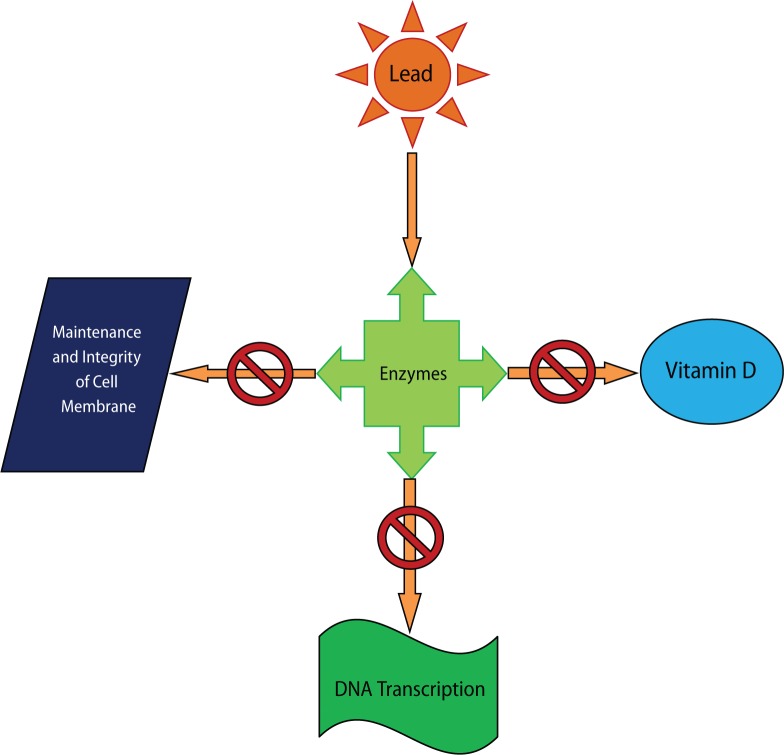
“Lead toxicity disrupts the functions of digestive systems, nervous system, respiratory system, reproductive system, etc., and it also prevents enzymes from performing their normal activities (Wani et al., 2015).”
BackgroundDas, C., Singh, S., Bhakta, S., Mishra, P., & Biswas, G. K. (2021) · Chemosphere · doi:10.1016/j.chemosphere.2021.132673 · Cited by 61
Shukla, S., Saxena, A. K., Khan, R., & Li, P. (2021) · Environmental Earth Sciences · doi:10.1007/s12665-021-10109-7 · Cited by 59
“Moreover, their developing immunity, nervous system, growing internal and external organs are at the stage of development (Wani et al. 2015), make them more susceptible to the potential non-carcinogenic health risks.”
BackgroundHussain, D., Khan, S. A., Alharthi, S. S., & Khan, T. A. (2022) · Arabian Journal of Chemistry · doi:10.1016/j.arabjc.2022.103925 · Cited by 60
Arachchige, M. P. M., Mu, T., & Ma, M. (2020) · Chemosphere · doi:10.1016/j.chemosphere.2020.128102 · Cited by 62
Zhu, P., Thapa, S., Zhu, H., Wheat, S., Yue, Y., & Venugopal, D. (2023) · Journal of Alloys and Compounds · doi:10.1016/j.jallcom.2023.170836 · Cited by 58
Rahman, M. M., Shaikh, M. A. A., Yeasmin, M. S., Gafur, M. A., Hossain, M. I., Alam, M. A., Khan, M. S., Paul, T., & Quddus, M. S. (2024) · Groundwater for Sustainable Development · doi:10.1016/j.gsd.2024.101244 · Cited by 59
Leal, L. T. C., Güney, M., & Zagury, G. J. (2018) · Chemosphere · doi:10.1016/j.chemosphere.2018.01.008 · Cited by 58
Chung, S. M., Moon, J. S., Yoon, J. S., Won, K. C., & Lee, H. W. (2020) · Journal of Trace Elements in Medicine and Biology · doi:10.1016/j.jtemb.2020.126601 · Cited by 61
Lead: A concise review of its toxicity, mechanism and health effect
Sani, A. H., & Musa, A. (2021) · GSC Biological and Pharmaceutical Sciences · doi:10.30574/gscbps.2021.15.1.0096 · Cited by 75
“Human exposure to lead and its compounds occurs mostly in lead related occupations with various sources like leaded gasoline, industrial processes such as smelting of lead and its combustion, pottery, boat building, lead based painting, lead containing pipes, battery recycling, grids, arm industry, pigments, printing…”
BackgroundAkila, M., Anbalagan, S., Lakshmisri, N. M., Janaki, V., Ramesh, T., Merlin, R. J., & Kamala‐Kannan, S. (2022) · Environmental Technology & Innovation · doi:10.1016/j.eti.2022.102744 · Cited by 57
Megarajan, S., Kamlekar, R. K., & Veerappan, A. (2020) · Spectrochimica Acta Part A Molecular and Biomolecular Spectroscopy · doi:10.1016/j.saa.2020.118485 · Cited by 57
Tsoi, M. F., Lo, C. W. H., Cheung, T. T., & Cheung, B. M. Y. (2021) · Scientific Reports · doi:10.1038/s41598-021-82435-6 · Cited by 61
Functional nucleic acid-based fluorescent probes for metal ion detection
Xu, J., Jiang, R., Feng, Y., Liu, Z., Huang, J. L., Ma, C., & Wang, K. (2022) · Coordination Chemistry Reviews · doi:10.1016/j.ccr.2022.214453 · Cited by 58
El‐Sharkawy, R. M., Allam, E. A., El‐Taher, A., Elsaman, R., Massoud, E. E. S., & Mahmoud, M. E. (2021) · Ceramics International · doi:10.1016/j.ceramint.2021.11.290 · Cited by 59
Alabsy, M. T., Abbas, M. I., El-khatib, A. Y., & El-Khatib, A. M. (2024) · Scientific Reports · doi:10.1038/s41598-024-51551-4 · Cited by 56
Putative impacts of phytogenic additives to ameliorate lead toxicity in animal feed
El-Hack, M. E. A., Abdelnour, S. A., El-Moneim, A. E.-M. E. A., Arif, M. A., Khafaga, A. F., Shaheen, H. M., Samak, D. H., & Swelum, A. A. (2019) · Environmental Science and Pollution Research · doi:10.1007/s11356-019-05805-8 · Cited by 60
“…more sensitive to even low levels of lead, which may contribute to behavioral problems, learning deficits and lowered IQ (Rubin and Strayer 2008; Wani et al. 2015) Morphological and behavioral pattern for lead toxicity in animal Symptoms apparent of Pb toxicity have been welldocumented by…”
BackgroundUmejuru, E. C., Prabakaran, E., & Pillay, K. (2021) · ACS Omega · doi:10.1021/acsomega.0c04194 · Cited by 56
Functional consequences of lead and mercury exposomes in the heart
Ferreira, G., Santander, A., Chavarría, L., Cardozo, R., Savio, F., Sobrevía, L., & Nicolson, G. L. (2021) · Molecular Aspects of Medicine · doi:10.1016/j.mam.2021.101048 · Cited by 59
Egbueri, J. C., Ayejoto, D. A., & Agbasi, J. C. (2022) · Toxin Reviews · doi:10.1080/15569543.2021.2025401 · Cited by 55
“Lead is a dangerous substance that can harm people’s health (Wani et al. 2015).”
BackgroundRahman, A. (2024) · Water · doi:10.3390/w16010184 · Cited by 65
Rajpoot, A., Aggarwal, T., & Sharma, V. (2024) · Toxicology · doi:10.1016/j.tox.2024.153984 · Cited by 59
Design and simulation of a highly efficient eco-friendly, non-toxic perovskite solar cell
S, A. G., John, H. V. D., Moni, D. J., Sagayam, K. M., Pandey, B. K., Pandey, D., & Lelisho, M. E. (2025) · Discover Nano · doi:10.1186/s11671-025-04190-1 · Cited by 55
“The solar cell consists of multiple materials, some are lead-based and harmful to humans, animals, and the environment, which cause serious health issues and even death, to overcome this, we should move to lead-free material [23].”
Kalak, T., Anna, K., & Cierpiszewski, R. (2018) · Microchemical Journal · doi:10.1016/j.microc.2018.12.005 · Cited by 57
Aziz, M. A., Chowdhury, I. R., Mazumder, M. A. J., & Chowdhury, S. (2019) · Environmental Science and Pollution Research · doi:10.1007/s11356-019-05556-6 · Cited by 60
Third‐Generation Solar Cells: Toxicity and Risk of Exposure
Buitrago, E., Novello, A. M., & Meyer, T. (2020) · Helvetica Chimica Acta · doi:10.1002/hlca.202000074 · Cited by 61
Alimohammadi, V., Maghfouri, M., Nourmohammadi, D., Azarsa, P., Gupta, R., & Saberian, M. (2021) · Sustainability · doi:10.3390/su13158552 · Cited by 59
Jang, W., Kim, K., Kim, B. G., Nam, J., Jeon, I., & Wang, D. H. (2022) · Advanced Functional Materials · doi:10.1002/adfm.202207713 · Cited by 54
Microfluidic devices for the detection of contamination in water samples: A review
Rai, P. K., Islam, M., & Gupta, A. (2022) · Sensors and Actuators A Physical · doi:10.1016/j.sna.2022.113926 · Cited by 56
Alsaab, A. H., & Zeghib, S. (2023) · Polymers · doi:10.3390/polym15092142 · Cited by 54
“Studies have shown that the effects of lead toxicity on the human body are devastating and may include developmental problems in behavior, growth, learning, hearing, and speech [7].”
BackgroundRahman, M. M., Maniruzzaman, M., Yeasmin, M. S., Gafur, M. A., Shaikh, M. A. A., Alam, M. A., Uddin, M. J., Hasan, M., Bashera, M. A., Chowdhury, T. A., et al. (2023) · Groundwater for Sustainable Development · doi:10.1016/j.gsd.2023.101028 · Cited by 60
Pandey, K., Tiwari, A., Singh, J., Bhatia, P., Das, P., Kumar, D., & Shreeve, J. M. (2024) · Organic Letters · doi:10.1021/acs.orglett.4c00398 · Cited by 54
Metal Profiles in Autism Spectrum Disorders: A Crosstalk between Toxic and Essential Metals
Błażewicz, A., & Grabrucker, A. M. (2022) · International Journal of Molecular Sciences · doi:10.3390/ijms24010308 · Cited by 52
“However, some commercial goods, such as jewelry, kid’s toys, and cosmetics, may also contain lead [40].”
Background
Metadata
- Authors
- Wani, A. L., Ara, A., & Usmani, J. A.
- Affiliations
- Aligarh Muslim University (IN)
- Jawaharlal Nehru Medical College Hospital (IN)
- Corresponding author
- Wani, Ab Latif
- Venue
- Interdisciplinary Toxicology
- Publisher
- Walter de Gruyter GmbH
- Published
- 2015-06-01
- Volume
- 8
- Issue
- 2
- Pages
- 55-64
- ISSN
- 1337-6853 (ISSN-L)
- 1337-9569
- PMC
- PMC4961898
- OpenAlex
- W2522138202
- Cited by
- 1,964
- References
- 90
- Citations by year
- 2026: 208 · 2025: 273 · 2024: 282 · 2023: 308 · 2022: 271 · 2021: 264 · 2020: 207 · 2019: 96 · 2018: 42 · 2017: 10 · 2016: 1
- FWCI
- 1.68
- Type
- journal article
- Language
- en
- Open access
- diamond
- doi.org
- Licence
- Locations
- Interdisciplinary Toxicology (publishedVersion, cc-by-nc-nd)
- PubMed Central (publishedVersion, cc-by)
- PubMed (publishedVersion)
- DOAJ (DOAJ: Directory of Open Access Journals) (submittedVersion, cc-by-sa)
- Funders
- U.S. Department of Health and Human Services
- University Grants Commission
- Aligarh Muslim University
- Centers for Disease Control and Prevention
- Topics
- Physical Sciences › Environmental Science › Health, Toxicology and Mutagenesis › Heavy Metal Exposure and Toxicity
- Physical Sciences › Environmental Science › Pollution › Heavy metals in environment
- Physical Sciences › Environmental Science › Health, Toxicology and Mutagenesis › Environmental Toxicology and Ecotoxicology
- Keywords
- lead toxicity, lead exposure, environmental pollution, nephrotoxicity, reproductive toxicity, neurotoxicity, lead poisoning treatment, developing countries
About these checks
Registry, retraction, Cites and statistics results are computed, not judged, with one exception: a printed reference that no index lists is read once by a model before it counts as a citation error. Claims are extracted by a model and kept only when their quote appears verbatim in the text; each cited source is then checked, with a model’s help, for whether it says what the claim relies on. Those verdicts can be wrong — read the claim’s quote and the cited source before relying on one.
Statistics and arithmetic are recomputed, not judged.
Confidence bands are shown only for fields calibrated on our annotated test set. None is calibrated yet, so no band is shown.
What counts as a claim ›How we measure confidence ›How we check this ›
Are you an author, or do you see a problem with this page? Request a review
Data sources
Bibliographic data: Semantic Scholar, OpenAlex, Crossref.
Contains information from the Semantic Scholar Academic Graph Datasets, made available under the ODC Attribution License (ODC-BY 1.0).
Semantic Scholar’s data is described in: Kinney, R., et al. (2023). The Semantic Scholar Open Data Platform. arXiv:2301.10140.
