

Lead toxicity: a review
Open accessThe DOI matches its Crossref record; 88 of the 90 references it cites were found in a registry or an index.
Abstract
Lead toxicity is an important environmental disease and its effects on the human body are devastating. There is almost no function in the human body which is not affected by lead toxicity. Though in countries like US and Canada the use of lead has been controlled up to a certain extent, it is still used vehemently in the developing countries. This is primarily because lead bears unique physical and chemical properties that make it suitable for a large number of applications for which humans have exploited its benefits from historical times and thus it has become a common environmental pollutant. Lead is highly persistent in the environment and because of its continuous use its levels rise in almost every country, posing serious threats. This article reviews the works listed in the literature with recent updates regarding the toxicity of lead. Focus is also on toxic effects of lead on the renal, reproductive and nervous system. Finally the techniques available for treating lead toxicity are presented with some recent updates.
Overview
The claims and statistics of this paper haven’t been checked yet.
Free: it reads the open-access text and checks the first 5 claims that cite a source we can check. Create a free account to check every claim.
Integrity signals
Registry
Cites
Statistics
Figures
Verification
Claims the paper makes
The claims and statistics of this paper haven’t been checked yet.
Free: it reads the open-access text and checks the first 5 claims that cite a source we can check. Create a free account to check every claim.
Claims other papers make about this one
Each is checked against this paper’s own text: does it say what the citing paper says it does?
The cited source says what the claim attributes to it.
In the citing paper
“The human body is exposed to various toxic metals through inhalation, ingestion, and skin such as arsenic (As) (28), cadmium (Cd) (29), chromium (Cr) (30), lead (Pb) (31), and mercury (Hg) (23).”
From The dark side of beauty: an in-depth analysis of the health hazards and toxicological impact of synthetic cosmetics and personal care products (2024) · cites this paper as [30]
The check wasn’t confident either way, so it gives no verdict — never disputed.
In the citing paper
“These heavy metals are mostly found in these products such as sunscreens, moisturizers, whitening toothpaste, nail polish, concealer, lipstick, and eyeliner (30).”
From The dark side of beauty: an in-depth analysis of the health hazards and toxicological impact of synthetic cosmetics and personal care products (2024) · cites this paper as [30]
Experimental — accuracy not yet measured
Self-check
Percentages, sums and reported differences re-computed from the paper’s own numbers.
The self-check needs the paper’s full text.
Citations
Cites
Toxicity of lead: a review with recent updates
Flora, G., Gupta, D., & Tiwari, A. (2012) · Interdisciplinary Toxicology · doi:10.2478/v10102-012-0009-2 · Cited by 2,144 · cited 1×
“A new technique called nano-encapsulation of antioxidants may provide improved biodistribution and bioavailability of poorly soluble therapeutics through solubilisation (Flora et al., 2012).”
MethodGoyer, R. A., & Clarkson, T. W. (1991) · Cited by 1,200
The Long-Term Effects of Exposure to Low Doses of Lead in Childhood: An 11-Year Follow-up Report
Needleman, H. L., Schell, A., Bellinger, D., Leviton, A., & Allred, E. N. (1990) · New England Journal of Medicine · doi:10.1056/nejm199001113220203 · Cited by 1,158
Needleman, H. (2004) · Annual Review of Medicine · doi:10.1146/annurev.med.55.091902.103653 · Cited by 1,144
Lead Exposure and Cardiovascular Disease—A Systematic Review
Navas-Acien, A., Guallar, E., Silbergeld, E. K., & Rothenberg, S. J. (2007) · Environmental Health Perspectives · doi:10.1289/ehp.9785 · Cited by 1,112 · cited 2×
“Activities like motility and the general morphology of sperm are also affected at this level (Navas-Acien et al., 2007).”
BackgroundNeurotoxic Effects and Biomarkers of Lead Exposure: A Review
Sanders, T., Liu, Y., Buchner, V., & Tchounwou, P. B. (2009) · Reviews on Environmental Health · doi:10.1515/reveh.2009.24.1.15 · Cited by 1,076 · cited 3×
“With increased lead exposure in children, an increase in neuropsychiatric disorders like attention deficit hyperactivity disorder and antisocial behaviour were found (Sanders et al., 2009).”
BackgroundLead toxicity, a review of the literature. Part 1: Exposure, evaluation, and treatment.
Patrick, L. (2006) · PubMed · Cited by 927
(2008) · PubMed · Cited by 886
Longitudinal Analyses of Prenatal and Postnatal Lead Exposure and Early Cognitive Development
Bellinger, D., Leviton, A., Waternaux, C., Needleman, H., & Rabinowitz, M. (1987) · New England Journal of Medicine · doi:10.1056/nejm198704233161701 · Cited by 855
Barbosa, F., Tanus-Santos, J. E., Gerlach, R. F., & Parsons, P. J. (2005) · Environmental Health Perspectives · doi:10.1289/ehp.7917 · Cited by 761 · cited 1×
“It has been found to impair development and have harmful effects even at lower levels (Rossi, 2008; Barbosa et al., 2005).”
Background
Research works printed but not linked: 5
- Henretig FM Golgfrank LR Lead Goldfrank’s Toxicoliogic Emergencies 2006 8th ed. McGraw Hill Professional
- Kosnett MJ Olson K.R Lead Poisoning and Drug Overdose 2006 5th ed. McGraw Hill Professional
- Kosnett MJ Heavy metal Intoxication and chelators In Katzung BG 2007 Basic and clinical Pharmocology. McGraw Hill Professional
- Merill JC Morton JJP Soileau SD Hayes A.W Metals Principles and Methods of Toxicology 2007 5th ed. CRC Press
- Pearson HA Schonfeld DJ Rudolph CD Lead Rudolph’s Pediatrics 2003 21st ed. McGraw Hill professional
Cited by
Items 201–300 of 1,000
Salahshoori, I., Nobre, M. A. L., Yazdanbakhsh, A., Malekshah, R. E., Asghari, M., Khonakdar, H. A., & Mohammadi, A. H. (2024) · Journal of Molecular Liquids · doi:10.1016/j.molliq.2024.125592 · Cited by 53
Role of autophagy in environmental neurotoxicity
Pellacani, C., & Costa, L. G. (2018) · Environmental Pollution · doi:10.1016/j.envpol.2017.12.102 · Cited by 53
Khan, M. M. R., Mitra, T., & Sahoo, D. (2020) · RSC Advances · doi:10.1039/c9ra09985a · Cited by 53
Neuroprotective role of luteolin against lead acetate-induced cortical damage in rats
Baty, R. S., Hassan, K., Alsharif, K. F., El‐Hennamy, R. E., Elmahallawy, E. K., Hafez, M., Moneim, A. E. A., & Kassab, R. B. (2020) · Human & Experimental Toxicology · doi:10.1177/0960327120913094 · Cited by 54
“Human may also expose to Pb from industrial products including cosmetics, pipes, pigments, and paints.(2) Pb is known to affect all the body organs, and its accumulation is associated with pathological changes.”
BackgroundEL-Fattah, M. E. A., Sobhy, H. M., Reda, A., & Abdelrazek, H. M. A. (2020) · Environmental Science and Pollution Research · doi:10.1007/s11356-020-10161-z · Cited by 64
Kanan, S., & Malkawi, A. (2020) · Comments on Inorganic Chemistry · doi:10.1080/02603594.2020.1805319 · Cited by 53
Wu, J., Hu, J., Feng, Y., Fan, H., Wang, K., & Deng, Z. (2023) · Chemical Engineering Journal · doi:10.1016/j.cej.2023.141400 · Cited by 55
A Recent Update on Rhodamine Dye Based Sensor Molecules: A Review
Sarkar, S., Chatterjee, A., & Biswas, K. (2023) · Critical Reviews in Analytical Chemistry · doi:10.1080/10408347.2023.2169598 · Cited by 52
“15] There are various ways that pollutants or metal ions from the atmosphere might invade a living organism and create problems.”
Sachdeva, C., Thakur, K., Sharma, A., & Sharma, K. K. (2017) · Indian Journal of Clinical Biochemistry · doi:10.1007/s12291-017-0680-3 · Cited by 52
George, F., Mahieux, S., Daniel, C., Titécat, M., Beauval, N., Houcke, I., Neut, C., Allorge, D., Borges, F., Jan, G., et al. (2021) · Microorganisms · doi:10.3390/microorganisms9020456 · Cited by 52
“disorders, including encephalopathy, delirium, convulsions and even coma in severe cases [3,4].”
BackgroundHealth repercussions of environmental exposure to lead: Methylation perspective
Shiek, S. S., Mani, M. S., Kabekkodu, S. P., & Dsouza, H. S. (2021) · Toxicology · doi:10.1016/j.tox.2021.152927 · Cited by 53
Rahman, M. L., Fui, C. J., Sarjadi, M. S., Arshad, S. E., Musta, B., Abdullah, M. H., Sarkar, S. M., & O’Reilly, E. J. (2020) · Environmental Science and Pollution Research · doi:10.1007/s11356-020-09462-0 · Cited by 52
Karunaratne, T. N., Nayanathara, R. M. O., Navarathna, C. M., Rodrigo, P. M., Thirumalai, R. V. K. G., Pittman, C. U., Kim, Y., Mlsna, T., Zhang, J., & Zhang, X. (2022) · Biochar · doi:10.1007/s42773-022-00196-5 · Cited by 51
Anchidin-Norocel, L., Gutt, G., Tătăranu, E., & Amariei, S. (2024) · International Journal of Electrochemical Science · doi:10.1016/j.ijoes.2024.100643 · Cited by 50
Vagnoni, G., Bortolotti, E., Checchi, S., Saieva, C., Berti, G., Doccioli, C., & Caini, S. (2024) · Cancer Epidemiology · doi:10.1016/j.canep.2024.102630 · Cited by 50
The science of microrecycling: a review of selective synthesis of materials from electronic waste
Sahajwalla, V., & Hossain, R. (2020) · Materials Today Sustainability · doi:10.1016/j.mtsust.2020.100040 · Cited by 60
(Ascorb)ing Pb Neurotoxicity in the Developing Brain
Ahmad, F., & Liu, P. (2020) · Antioxidants · doi:10.3390/antiox9121311 · Cited by 53
Lignin-based adsorbent for effective removal of toxic heavy metals from wastewater
Ruthran, V. B., Barman, P., Kadam, R., & Kumar, A. (2021) · Emergent Materials · doi:10.1007/s42247-021-00311-5 · Cited by 56
“Lead also interferes with the development of neurochemicals, including neurotransmitters, and the organization of ion channels [161].”
BackgroundMetabolomics: a promising tool for deciphering metabolic impairment in heavy metal toxicities
Akash, M. S. H., Yaqoob, A., Rehman, K., Imran, M., Assiri, M. A., Al‐Rashed, F., Al‐Mulla, F., Ahmad, R., & Sindhu, S. T. A. K. (2023) · Frontiers in Molecular Biosciences · doi:10.3389/fmolb.2023.1218497 · Cited by 54
Mercury and arsenic attenuate canonical and non-canonical NLRP3 inflammasome activation
Ahn, H., Kim, J., Kang, S. G., Yoon, S., Ko, H., Kim, P.-H., Hong, E., An, B., Lee, E., & Lee, G. (2018) · Scientific Reports · doi:10.1038/s41598-018-31717-7 · Cited by 50
Electrochemical CO2 reduction at room temperature: Status and perspectives
Senocrate, A., & Battaglia, C. (2021) · Journal of Energy Storage · doi:10.1016/j.est.2021.102373 · Cited by 53
“and are simultaneously cheap [5,14,15], but the acute toxicity of Pb disqualifies its use as catalyst [34,35].”
BackgroundWater toxicants: a comprehension on their health concerns, detection, and remediation
Sarkar, S., Gill, S. S., Gupta, G. D., & Verma, S. K. (2022) · Environmental Science and Pollution Research · doi:10.1007/s11356-022-20384-x · Cited by 55
“2014), birth defects, mental retardation (Srivastav and Ranjan 2020), brain damage, hyperactivity, allergies, dyslexia, weight loss, paralysis, muscular weakness, delayed reaction time (Wani et al. 2015), renal tubular damage (Gidlow 2004), and even death.”
BackgroundGul, I., Adil, M., Lv, F., Li, T., Chen, Y., Lu, H., Ahamad, M. I., Lu, S., & Feng, W. (2024) · Frontiers in Microbiology · doi:10.3389/fmicb.2024.1434921 · Cited by 48
“Previous research has shown that Pb poisoning can result in anemia, developmental issues, neurological disorders, and deaths in different animals (Wani et al., 2015) Similarly, Mitra et al. (2021) discovered that children in almost four million families globally are subjected to increased Pb…”
BackgroundPotential Application of Living Microorganisms in the Detoxification of Heavy Metals
Chen, R., Tu, H., & Chen, T. (2022) · Foods · doi:10.3390/foods11131905 · Cited by 53
Wang, Z., Wang, H., Nie, Q., Ding, Y., Lei, Z., Zhang, Z., Shimizu, K., & Yuan, T. (2022) · Journal of Hazardous Materials · doi:10.1016/j.jhazmat.2022.130452 · Cited by 48
Ambitious EV policy expedites the e-waste and socio-environmental impacts in India
Asokan, V. A., Heng, Y.-T.-A., Kawazu, E., & Hotta, Y. (2023) · Resources, Conservation and Recycling · doi:10.1016/j.resconrec.2022.106829 · Cited by 37
Design, synthesis, and density functional theory studies of a new selective chemosensor for Pb2+
HADI, H. A., Gassoumi, B., Nasr, S., Ghalla, H., Chaâbane, R. B., & Ayachi, S. (2023) · Heliyon · doi:10.1016/j.heliyon.2023.e20206 · Cited by 52
“Lead (Pb 2 + ) is a heavy toxic metal that has no useful physiological role in the human body [1 – 3].”
BackgroundRecent Advances toward Enhanced Photocatalytic Proprieties of BiFeO3-Based Materials
Nassereddine, Y., Benyoussef, M., Asbani, B., Marssi, M. E., & Jouiad, M. (2023) · Nanomaterials · doi:10.3390/nano14010051 · Cited by 51
“However, lead is a toxic element with known environmental e ff ects [56].”
BackgroundLead‐Free Perovskite Light‐Emitting Diodes
Tang, W., Liu, S., Zhang, G., Ren, Z., Liu, Z., Zhang, M., Zhang, S., Zou, C., Zhao, B., & Di, D. (2024) · Advanced Materials · doi:10.1002/adma.202411020 · Cited by 52
Shooto, N. D., Thabede, P. M., Bhila, B., Moloto, H., & Naidoo, E. B. (2019) · Journal of environmental chemical engineering · doi:10.1016/j.jece.2019.103557 · Cited by 49
Ali, A. A., Ahmed, I. S., & Elfiky, E. M. (2020) · Journal of Inorganic and Organometallic Polymers and Materials · doi:10.1007/s10904-020-01695-3 · Cited by 48
Schindler, M., Santosh, M., Dotto, G. L., Silva, L. F. O., & Hochella, M. F. (2021) · Gondwana Research · doi:10.1016/j.gr.2021.07.011 · Cited by 53
Machado, C. D. C., & Dinis‐Oliveira, R. J. (2023) · Journal of Clinical Medicine · doi:10.3390/jcm12072591 · Cited by 53
Boni, M. R., Chiavola, A., & Marzeddu, S. (2020) · Water Air & Soil Pollution · doi:10.1007/s11270-020-04496-z · Cited by 50
Liu, X., & Wang, J. (2020) · Frontiers of Environmental Science & Engineering · doi:10.1007/s11783-020-1276-3 · Cited by 48
Nilkarnjanakul, W., Watchalayann, P., & Chotpantarat, S. (2021) · Environmental Research · doi:10.1016/j.envres.2021.111838 · Cited by 49
Protective effect of luteolin against chemical and natural toxicants by targeting NF‐κB pathway
Mahdiani, S., Omidkhoda, N., Heidari, S., Hayes, A. W., & Karimi, G. (2022) · BioFactors · doi:10.1002/biof.1876 · Cited by 50
“Lead is a heavy metal neurotoxin that is found in numerous industrial products, such as cosmetics, pipes, pigments, and paints.(89) It accumulates in soft tissues and bones.”
BackgroundTchekwagep, P. M. S., Crapnell, R. D., Banks, C. E., Betlem, K., Rinner, U., Canfarotta, F., Lowdon, J. W., Eersels, K., van Grinsven, B., Peeters, M., et al. (2022) · Chemosensors · doi:10.3390/chemosensors10080296 · Cited by 46
“As a highly hazardous heavy metal, lead can accumulate in living organisms and cause severe poisoning [59].”
BackgroundA Review on Biochar as an Adsorbent for Pb(II) Removal from Water
Kumkum, P., & Kumar, S. (2024) · Biomass · doi:10.3390/biomass4020012 · Cited by 50
“Their brains and nervous systems are also more sensitive to the damaging effects of lead [32].”
InfluentialNeurotoxicity of Combined Exposure to the Heavy Metals (Pb and As) in Zebrafish (Danio rerio)
Liu, M., Deng, P., Li, G., Liu, H., Zuo, J., Cui, W., Zhang, H., Chen, X., Yao, J., Peng, X., et al. (2024) · Toxics · doi:10.3390/toxics12040282 · Cited by 47
“Among these, Pb and As are of concern as environmental contaminants and potential neurotoxicological hazards [3,4].”
BackgroundRawat, H., Bhat, S. A., Dhanjal, D. S., Singh, R. R., Gandhi, Y., Mishra, S. K., Kumar, V., Shakya, S. K., Narasimhaji, C. V., Singh, A., et al. (2024) · Talanta Open · doi:10.1016/j.talo.2024.100341 · Cited by 51
Lead‐Free Perovskites: Metals Substitution towards Environmentally Benign Solar Cell Fabrication
Shalan, A. E., Kazim, S., & Ahmad, S. (2019) · ChemSusChem · doi:10.1002/cssc.201901296 · Cited by 46
A review of the health implications of heavy metals and pesticide residues on khat users
Oyugi, A. M., Kibet, J. K., & Adongo, J. O. (2021) · Bulletin of the National Research Centre/Bulletin of the National Research Center · doi:10.1186/s42269-021-00613-y · Cited by 50
Mai, C., Mojiri, A., Palanisami, S., Altaee, A., Huang, Y., & Zhou, J. L. (2023) · Water · doi:10.3390/w15142614 · Cited by 53
“Lead (Pb), for instance, can adversely affect the human nervous system, particularly leading to learning deficits and a decline in IQ among infants and young children [5].”
BackgroundLead (Pb) induced ATM-dependent mitophagy via PINK1/Parkin pathway
Gu, X., Qi, Y., Feng, Z., Ma, L., Gao, K., & Zhang, Y. (2018) · Toxicology Letters · doi:10.1016/j.toxlet.2018.04.012 · Cited by 46
Nanda, K. P., Kumari, C., Dubey, M., & Firdaus, H. (2019) · Chemosphere · doi:10.1016/j.chemosphere.2019.124349 · Cited by 45
Fetal and early postnatal lead exposure measured in teeth associates with infant gut microbiota
Sitarik, A. R., Arora, M., Austin, C. E., Bielak, L. F., Eggers, S. I., Johnson, C. C., Lynch, S. V., Park, S. K., Wu, K.-H., Yong, G. J. M., et al. (2020) · Environment International · doi:10.1016/j.envint.2020.106062 · Cited by 45
“Lead (Pb) is considered the most important toxic heavy element and is ubiquitous in the environment, with potential sources of exposure including food, water, air, dust, soil, and lead-based paint (Wani et al., 2015).”
BackgroundMethodLead and zinc interactions – An influence of zinc over lead related toxic manifestations
Wani, A. L., Shadab, G. G. H. A., & Afzal, M. (2020) · Journal of Trace Elements in Medicine and Biology · doi:10.1016/j.jtemb.2020.126702 · Cited by 49
Self-citationSynthesis and adsorption applications of PPY/Fe3O4 nanocomposite based material
Joshi, N. C., Κaur, K., Kumar, N., Bhandari, N. S., & Thakur, A. (2021) · Nano-Structures & Nano-Objects · doi:10.1016/j.nanoso.2021.100669 · Cited by 46
Sarvestani, M. R. J., Madrakian, T., & Afkhami, A. (2022) · Food Chemistry · doi:10.1016/j.foodchem.2022.134246 · Cited by 45
Solution-processed next generation thin film solar cells for indoor light applications
Mishra, S., Ghosh, S., Boro, B., Kumar, D., Porwal, S., Paul, M., Dixit, H., & Singh, T. (2022) · Energy Advances · doi:10.1039/d2ya00075j · Cited by 50
Microbial remediation mechanisms and applications for lead-contaminated environments
Shan, B., Hao, R., Zhang, J., Li, J., Ye, Y., & Lu, A. (2022) · World Journal of Microbiology and Biotechnology · doi:10.1007/s11274-022-03484-1 · Cited by 44
“Several studies have shown that lead poisoning can cause neurological disorders, anemia, bradygenesis, and even death in living organisms (Flora et al. 2012; Wani et al. 2015).”
BackgroundEnvironmental lead risk in the 21st century
Chen, M., Gazzè, L., DiTraglia, F. J., Das, R., Nriagu, J. O., Erel, Y., Boyle, E. A., Taylor, C. M., & Weiss, D. J. (2025) · Communications Earth & Environment · doi:10.1038/s43247-025-02735-x · Cited by 48
Baratta, M., Mastropietro, T. F., Bruno, R., Tursi, A., Negro, C., Ferrando–Soria, J., Машин, А. И., Nezhdanov, A. V., Nicoletta, F. P., Filpo, G. D., et al. (2022) · ACS Applied Nano Materials · doi:10.1021/acsanm.2c00280 · Cited by 46
Zhou, N., Huang, Y., Li, M., Zhou, L., & Jin, H. (2022) · Frontiers in Public Health · doi:10.3389/fpubh.2022.1036398 · Cited by 43
“Besides, lead can injure other systems like reproductive and hematopoietic systems (5, 13, 14).”
BackgroundThe Role of Trace Elements in Cardiovascular Diseases
Wechselberger, C., Meßner, B., & Bernhard, D. (2023) · Toxics · doi:10.3390/toxics11120956 · Cited by 46
“However, no physiologic role in biological systems has yet been described [83].”
BackgroundShooto, N. D., Thabede, P. M., & Naidoo, E. B. (2019) · South African Journal of Chemical Engineering · doi:10.1016/j.sajce.2019.07.002 · Cited by 53
Uugwanga, M. N., & Kgabi, N. A. (2020) · Environmental Advances · doi:10.1016/j.envadv.2020.100006 · Cited by 43
Samuel, V. R., & Rao, K. J. (2023) · Chemical Physics Impact · doi:10.1016/j.chphi.2023.100161 · Cited by 43
Zergui, A., Boudalia, S., Ababou, A., & Marlie-Landy, J. (2023) · Biological Trace Element Research · doi:10.1007/s12011-023-03582-7 · Cited by 44
“(2015) lead is among the most important toxic heavy element, with devastating effects on the human body, adverse health effects occurs at blood lead level above 10 μg/dL [60, 61] and long-time exposure may damage the heart, kidneys, brain, affect intelligence, cause lung, and bladder cancer; this heavy metal is classi…”
BackgroundHeavy metals in contact dermatitis: A review
Chamani, S., Mobasheri, L., Rostami, Z., Zare, I., Naghizadeh, A., & Mostafavi, E. (2023) · Journal of Trace Elements in Medicine and Biology · doi:10.1016/j.jtemb.2023.127240 · Cited by 43
Glial Perturbation in Metal Neurotoxicity: Implications for Brain Disorders
Ijomone, O. K., Inelo, U. I., Aneke, V. O., Olajide, T. S., Inyang, H. O., Omotosho, O. I., Oyerinde, T. O., Anadu, V. E., Gbayisomore, T. J., Okeowo, O. M., et al. (2025) · Neuroglia · doi:10.3390/neuroglia6010004 · Cited by 44
Glutamate-Mediated Neural Alterations in Lead Exposure: Mechanisms, Pathways, and Phenotypes
Tamagno, W. A., & Freeman, J. L. (2025) · Toxics · doi:10.3390/toxics13070519 · Cited by 48
“Unlike synthetic chemicals that can degrade over time, metals cannot be created or destroyed by human activity; they are simply moved around the environment [11].”
Heavy Metals in Cosmetics: The Notorious Daredevils and Burning Health Issues
Mohiuddin, A. K. (2019) · American Journal of Biomedical Science & Research · doi:10.34297/ajbsr.2019.04.000829 · Cited by 49
Associations of Heavy Metals with Metabolic Syndrome and Anthropometric Indices
Wen, W., Wang, C., Wu, D., Chen, S., Hung, C., & Kuo, C. (2020) · Nutrients · doi:10.3390/nu12092666 · Cited by 42
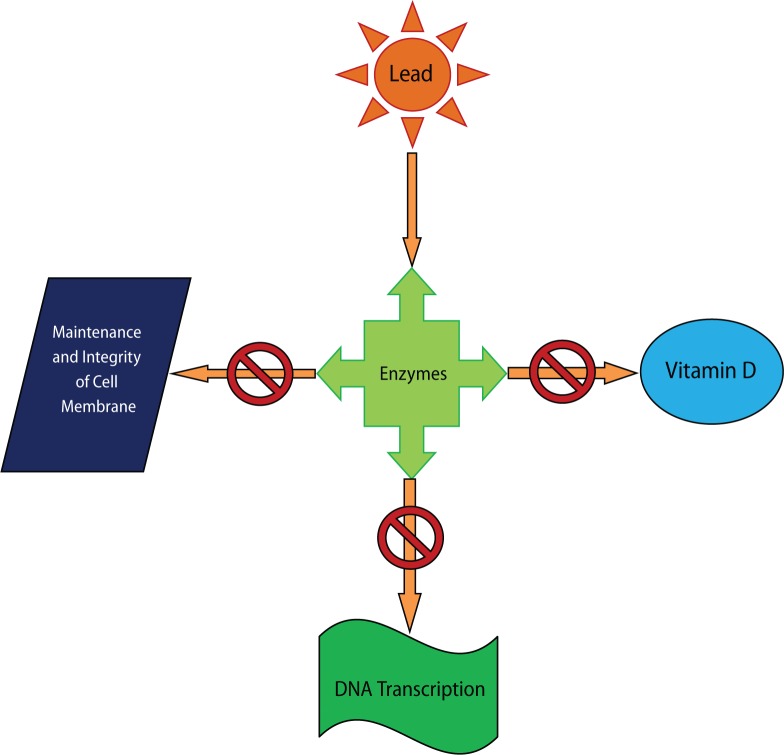
“Similar to Ni, Pb has not been found to play any physiological role in the human body; the effects of Pb poisoning include generating ROS, damaging cell membrane integrity by interfering with vitamin D synthesis, and interfering with DNA transcription [52].”
BackgroundFasaee, M. A. K., Berglund, E. Z., Pieper, K. J., Ling, E., Benham, B. L., & Edwards, M. A. (2020) · Water Research · doi:10.1016/j.watres.2020.116641 · Cited by 42
Wahil, M. S. A., Jaáfar, M. H., & Isa, Z. M. (2021) · Biological Trace Element Research · doi:10.1007/s12011-021-02654-w · Cited by 43
“Compared to an adult, children’s digestive system has a higher oral intake [3] and Pb absorption rate [4] which may increase further when they are fasting or lack of essential trace elements [5, 6].”
BackgroundAlterations in gene expression due to chronic lead exposure induce behavioral changes
Hernández-Coro, A., Sánchez-Hernández, B. E., Montes, S., Martínez‐Lazcano, J. C., González‐Guevara, E., & Pérez‐Severiano, F. (2021) · Neuroscience & Biobehavioral Reviews · doi:10.1016/j.neubiorev.2021.03.031 · Cited by 44
Jeon, I., Kim, K., Jokar, E., Park, M., Lee, H.-W., & Diau, E. W. (2021) · Nanomaterials · doi:10.3390/nano11082066 · Cited by 42
“through metabolism, and children are at a particularly high risk of Pb poisoning [16,17].”
BackgroundHui, C.-Y., Ma, B.-C., Wang, Y.-Q., Yang, X., & Cai, J.-M. (2023) · Ecotoxicology and Environmental Safety · doi:10.1016/j.ecoenv.2023.115662 · Cited by 41
Gmochowska, W., Pietranik, A., Tyszka, R., Ettler, V., Mihaljevič, M., Długosz, M., & Walenczak, K. (2019) · Geochemistry · doi:10.1016/j.chemer.2019.07.002 · Cited by 42
Giri, D. D., Alhazmi, A., Mohammad, A., Haque, S., Srivastava, N., Thakur, V. K., Gupta, V. K., & Pal, D. B. (2021) · Chemosphere · doi:10.1016/j.chemosphere.2021.132016 · Cited by 43
Positive temperature coefficient materials for intelligent overload protection in the new energy era
Bakhtiar, S. U. H., Dong, T., Xue, B., Ali, S., Sattar, H., Dong, W. D., & Fu, Q. (2023) · Materials Today · doi:10.1016/j.mattod.2023.11.009 · Cited by 40
Rahman, M. M., Hossain, M. I., Ghos, B. C., Uddin, J., Knani, S., & Waliullah (2025) · Journal of environmental chemical engineering · doi:10.1016/j.jece.2025.115908 · Cited by 42
Hassan, E. M., Kahilo, K. A., Kamal, T., El-Neweshy, M. S., & Hassan, M. M. (2019) · Life Sciences · doi:10.1016/j.lfs.2019.04.020 · Cited by 40
Lead poisoning from ingestion of fishing gear: A review
Grade, T. J., Campbell, P. M., Cooley, T., Kneeland, M. R., Leslie, E. F., MacDonald, B. S., Melotti, J., Okoniewski, J. C., Parmley, E. J., Perry, C., et al. (2019) · AMBIO · doi:10.1007/s13280-019-01179-w · Cited by 40
Mobility and accessibility of Zn, Pb, and As in abandoned mine tailings of northwestern Mexico
Loredo-Portales, R., Bustamante-Arce, J., González-Villa, H. N., Moreno-Rodríguez, V., Rio-Salas, R. E. D., Molina‐Freaner, F. E., González-Méndez, B., & Archundia, D. (2020) · Environmental Science and Pollution Research · doi:10.1007/s11356-020-09051-1 · Cited by 43
“According to the assessment performed in the studied groups (children and adults), children show higher vulnerability, associated with growth and childish activities (Wani et al. 2015), potentially absorbing PTE between 40 and 90% more than adults (Del Rio et al. 2017).”
MethodSubramanyan, K., Natarajan, S., Lee, Y., & Aravindan, V. (2020) · Chemical Engineering Journal · doi:10.1016/j.cej.2020.125472 · Cited by 42
Javorac, D., Antonijević, B., Anđelković, M., Repić, A., Bulat, P., Djordjević, A. B., Baralić, K., Đukić-Ćosić, D., Antonić, T., & Bulat, Z. (2021) · Environmental Pollution · doi:10.1016/j.envpol.2021.118103 · Cited by 43
Shen, Y., Xu, L., Wang, Q., Zhao, Z., Dong, Z., Liu, J., Zhong, C. M., & Hu, W. (2021) · ACS Applied Materials & Interfaces · doi:10.1021/acsami.1c17204 · Cited by 40
Biomimetic electroactive materials and devices for regenerative engineering
Liu, Y., Bai, Y., Heng, B. C., Wang, Y., Zhang, X., Nguyen, T. D., & Deng, X. (2025) · Nature Reviews Electrical Engineering · doi:10.1038/s44287-025-00145-x · Cited by 44
Heme bioavailability and signaling in response to stress in yeast cells
Hanna, D. A., Hu, R., Kim, H.-J., Martinez-Guzman, O., Torres, M. P., & Reddi, A. R. (2018) · Journal of Biological Chemistry · doi:10.1074/jbc.ra118.002125 · Cited by 39
Epitaxial Graphene Sensors Combined with 3D-Printed Microfluidic Chip for Heavy Metals Detection
Santangelo, M. F., Shtepliuk, I., Filippini, D., Puglisi, D., Vagin, M. Y., Yakimova, R., & Eriksson, J. (2019) · Sensors · doi:10.3390/s19102393 · Cited by 39
Jafari, Z., Avargani, V. M., Rahimi, M. R., & Mosleh, S. (2020) · Journal of Molecular Liquids · doi:10.1016/j.molliq.2020.113987 · Cited by 39
Hammo, M. M., Akar, T., Sayın, F., Çelik, S., & Akar, S. T. (2021) · Journal of Environmental Management · doi:10.1016/j.jenvman.2021.112490 · Cited by 39
Castro-Bedriñana, J. I., Chirinos-Peinado, D. M., Ríos-Ríos, E., Machuca-Campuzano, M., & Gómez-Ventura, E. (2021) · Ecotoxicology and Environmental Safety · doi:10.1016/j.ecoenv.2021.112382 · Cited by 41
NMR spectroscopy of wastewater: A review, case study, and future potential
Anaraki, M. T., Lysak, D. H., Downey, K., Kock, F. V. C., You, X., Majumdar, R. D., Barison, A., Lião, L. M., Ferreira, A. G., Decker, V., et al. (2021) · Progress in Nuclear Magnetic Resonance Spectroscopy · doi:10.1016/j.pnmrs.2021.08.001 · Cited by 41
Loría, K. C., Emiliani, J., Bergara, C. D., Herrero, M. S., Salvatierra, L. M., & Pérez, L. M. (2019) · Aquatic Toxicology · doi:10.1016/j.aquatox.2019.02.019 · Cited by 39
Habila, M. A., AlMasoud, N., Alomar, T. S., AlOthman, Z. A., Yilmaz, E., & Soylak, M. (2020) · Molecules · doi:10.3390/molecules25204794 · Cited by 38
“The possibility of the circulating lead binding with erythrocytes is high, leading to its rapid distribution throughout the body, including in organs such as the liver and brain, and in the bones [6].”
BackgroundObsa, A. L., Shibeshi, N. T., Mulugeta, E., & Workneh, G. A. (2024) · Results in Engineering · doi:10.1016/j.rineng.2024.101756 · Cited by 44
Cao, Y., Zhao, W., Zhong, Y., Jiang, X., Mei, H., Chang, Y., Wu, D., Dou, J., Vasquez, E., Shi, X., et al. (2024) · The Science of The Total Environment · doi:10.1016/j.scitotenv.2024.170317 · Cited by 38
Jadaa, W. (2024) · Clean Technologies · doi:10.3390/cleantechnol6010013 · Cited by 44
Kataba, A., Botha, T. L., Nakayama, S. M. M., Yohannes, Y. B., Ikenaka, Y., Wepener, V., & Ishizuka, M. (2020) · Aquatic Toxicology · doi:10.1016/j.aquatox.2020.105607 · Cited by 41
Benalia, A., Atime, L., Baatache, O., Khalfaoui, A., Ghomrani, A. F., Derbal, K., Pizzi, A., Pánico, A., Bouchareb, E. M., Bouchareb, R., et al. (2024) · Environmental Monitoring and Assessment · doi:10.1007/s10661-024-12412-9 · Cited by 40
“Lead is thought to be rapidly absorbed in the blood stream and is considered to have adverse effects on certain bodily systems, such as the central nervous system, the cardiovascular system, the kidneys, and the immune system (Wani et al., 2015).”
Integrated microfluidic platforms for heavy metal sensing: a comprehensive review
Nadumane, S. S., Biswas, R., & Mazumder, N. (2024) · Analytical Methods · doi:10.1039/d4ay00293h · Cited by 38
The toxicological effects of lead and its analytical trends: an update from 2000 to 2018
Ravipati, E. S., Mahajan, N. N., Sharma, S., Hatware, K. V., & Patil, K. D. (2019) · Critical Reviews in Analytical Chemistry · doi:10.1080/10408347.2019.1678381 · Cited by 37
“This study based on light of insufficient confirmation from investigational studies in people and animals.([2,3,6,7])”
BackgroundFactors associated with lead (Pb) exposure on dogs around a Pb mining area, Kabwe, Zambia
Toyomaki, H., Yabe, J., Nakayama, S. M. M., Yohannes, Y. B., Muzandu, K. M., Liazambi, A., Ikenaka, Y., Kuritani, T., Nakagawa, M., & Ishizuka, M. (2020) · Chemosphere · doi:10.1016/j.chemosphere.2020.125884 · Cited by 37
Lakshminarayana, G., Elmahroug, Y., Kumar, A., Dong, M., Lee, D., Yoon, J., & Park, T. (2020) · Ceramics International · doi:10.1016/j.ceramint.2020.03.235 · Cited by 37
Functional Bio-inorganic Hybrids from Silicon Quantum Dots and Biological Molecules
Robidillo, C. J. T., & Veinot, J. G. C. (2020) · ACS Applied Materials & Interfaces · doi:10.1021/acsami.0c14199 · Cited by 37
Metadata
- Authors
- Wani, A. L., Ara, A., & Usmani, J. A.
- Affiliations
- Aligarh Muslim University (IN)
- Jawaharlal Nehru Medical College Hospital (IN)
- Corresponding author
- Wani, Ab Latif
- Venue
- Interdisciplinary Toxicology
- Publisher
- Walter de Gruyter GmbH
- Published
- 2015-06-01
- Volume
- 8
- Issue
- 2
- Pages
- 55-64
- ISSN
- 1337-6853 (ISSN-L)
- 1337-9569
- PMC
- PMC4961898
- OpenAlex
- W2522138202
- Cited by
- 1,964
- References
- 90
- Citations by year
- 2026: 208 · 2025: 273 · 2024: 282 · 2023: 308 · 2022: 271 · 2021: 264 · 2020: 207 · 2019: 96 · 2018: 42 · 2017: 10 · 2016: 1
- FWCI
- 1.68
- Type
- journal article
- Language
- en
- Open access
- diamond
- doi.org
- Licence
- Locations
- Interdisciplinary Toxicology (publishedVersion, cc-by-nc-nd)
- PubMed Central (publishedVersion, cc-by)
- PubMed (publishedVersion)
- DOAJ (DOAJ: Directory of Open Access Journals) (submittedVersion, cc-by-sa)
- Funders
- U.S. Department of Health and Human Services
- University Grants Commission
- Aligarh Muslim University
- Centers for Disease Control and Prevention
- Topics
- Physical Sciences › Environmental Science › Health, Toxicology and Mutagenesis › Heavy Metal Exposure and Toxicity
- Physical Sciences › Environmental Science › Pollution › Heavy metals in environment
- Physical Sciences › Environmental Science › Health, Toxicology and Mutagenesis › Environmental Toxicology and Ecotoxicology
- Keywords
- lead toxicity, lead exposure, environmental pollution, nephrotoxicity, reproductive toxicity, neurotoxicity, lead poisoning treatment, developing countries
About these checks
Registry, retraction, Cites and statistics results are computed, not judged, with one exception: a printed reference that no index lists is read once by a model before it counts as a citation error. Claims are extracted by a model and kept only when their quote appears verbatim in the text; each cited source is then checked, with a model’s help, for whether it says what the claim relies on. Those verdicts can be wrong — read the claim’s quote and the cited source before relying on one.
Statistics and arithmetic are recomputed, not judged.
Confidence bands are shown only for fields calibrated on our annotated test set. None is calibrated yet, so no band is shown.
What counts as a claim ›How we measure confidence ›How we check this ›
Are you an author, or do you see a problem with this page? Request a review
Data sources
Bibliographic data: Semantic Scholar, OpenAlex, Crossref.
Contains information from the Semantic Scholar Academic Graph Datasets, made available under the ODC Attribution License (ODC-BY 1.0).
Semantic Scholar’s data is described in: Kinney, R., et al. (2023). The Semantic Scholar Open Data Platform. arXiv:2301.10140.
