

sTREM2 cerebrospinal fluid levels are a potential biomarker for microglia activity in early‐stage Alzheimer's disease and associate with neuronal injury markers
Open accessThe DOI matches its Crossref record; 53 of the 54 references it cites were found in a registry or an index.
Abstract
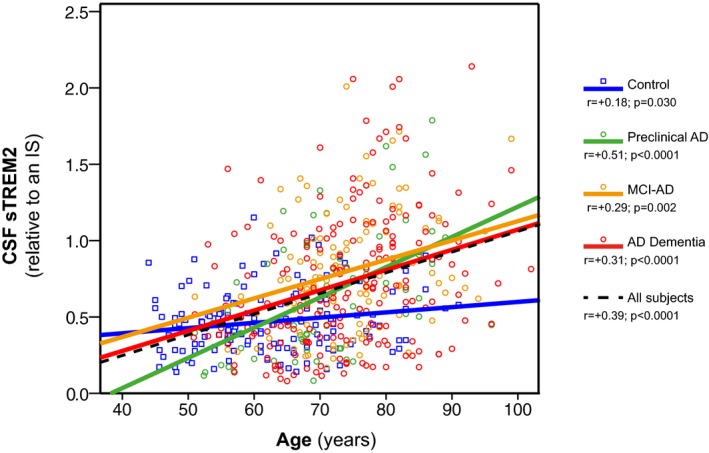
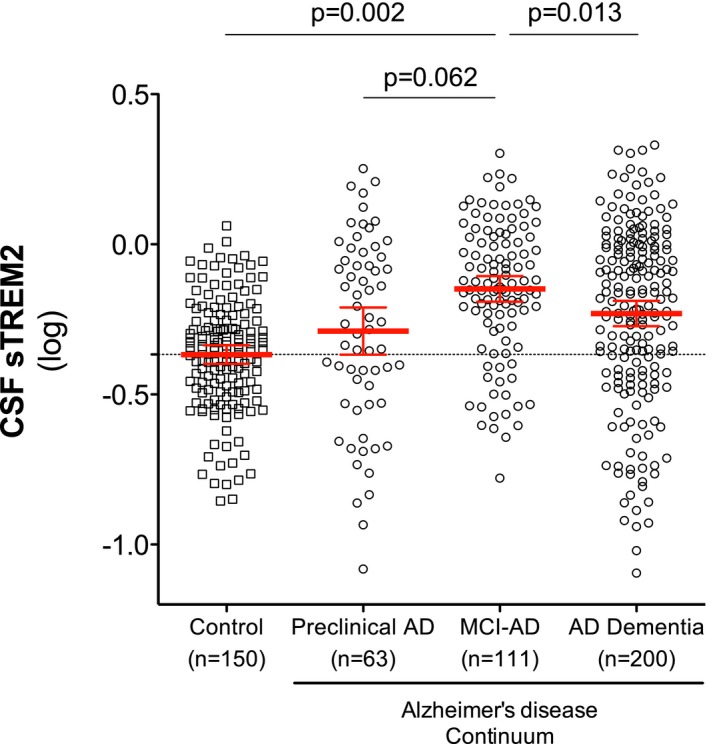
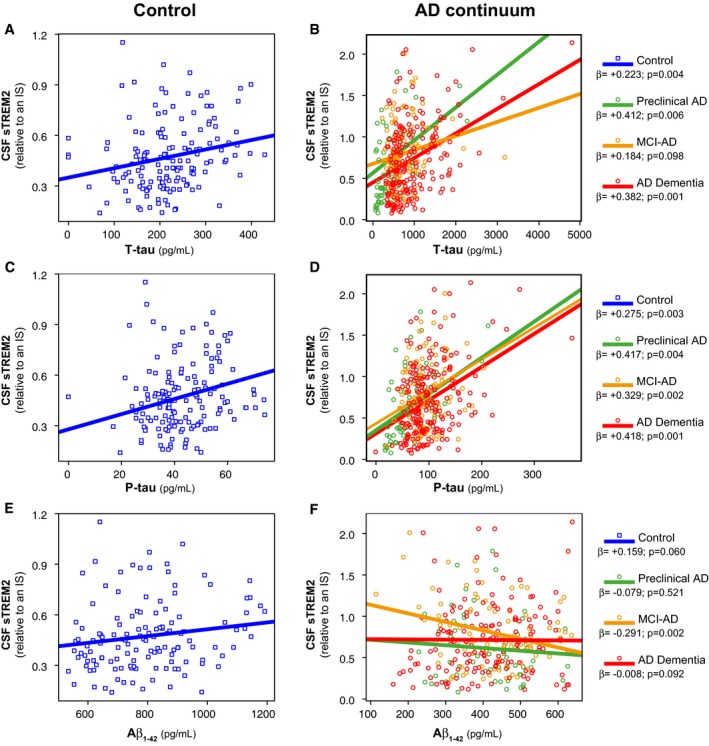
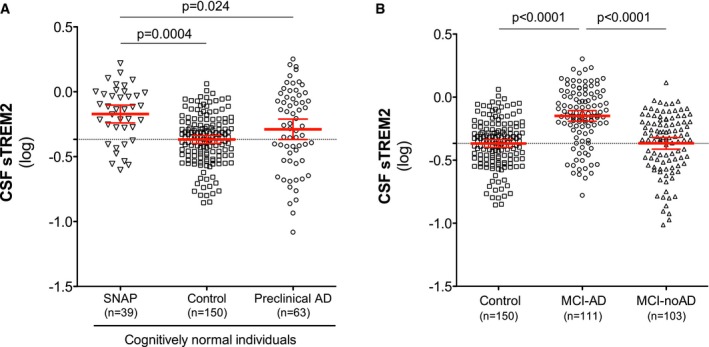
TREM2 is an innate immune receptor expressed on the surface of microglia. Loss-of-function mutations of TREM2 are associated with increased risk of Alzheimer's disease (AD). TREM2 is a type-1 protein with an ectodomain that is proteolytically cleaved and released into the extracellular space as a soluble variant (sTREM2), which can be measured in the cerebrospinal fluid (CSF). In this cross-sectional multicenter study, we investigated whether CSF levels of sTREM2 are changed during the clinical course of AD, and in cognitively normal individuals with suspected non-AD pathology (SNAP). CSF sTREM2 levels were higher in mild cognitive impairment due to AD than in all other AD groups and controls. SNAP individuals also had significantly increased CSF sTREM2 compared to controls. Moreover, increased CSF sTREM2 levels were associated with higher CSF total tau and phospho-tau181P, which are markers of neuronal degeneration and tau pathology. Our data demonstrate that CSF sTREM2 levels are increased in the early symptomatic phase of AD, probably reflecting a corresponding change of the microglia activation status in response to neuronal degeneration.
Overview
The claims and statistics of this paper haven’t been checked yet.
Free: it reads the open-access text and checks the first 5 claims that cite a source we can check. Create a free account to check every claim.
Integrity signals
Registry
Cites
Statistics
Figures
Verification
Claims the paper makes
The claims and statistics of this paper haven’t been checked yet.
Free: it reads the open-access text and checks the first 5 claims that cite a source we can check. Create a free account to check every claim.
Claims other papers make about this one
Each is checked against this paper’s own text: does it say what the citing paper says it does?
The cited source says what the claim attributes to it.
In the citing paper
“cerebrospinal fluid levels of soluble TREM2 are a potential biomarker for microglia activity in early-stage AD and correlate with neuronal injury markers (135, 136).”
From Microglia Function in the Central Nervous System During Health and Neurodegeneration (2017) · cites this paper as [135]
In the citing paper
“Moreover, an increase in secreted extracellular fragment of TREM2 appears to be a CSF biomarker of disease progression in AD (Suárez-Calvet et al., 2016).”
From Elevated TREM2 Gene Dosage Reprograms Microglia Responsivity and Ameliorates Pathological Phenotypes in Alzheimer’s Disease Models (2018) · cites this paper as Suárez-Calvet et al., 2016
Self-check
Percentages, sums and reported differences re-computed from the paper’s own numbers.
The self-check needs the paper’s full text.
Citations
Cites
McKhann, G. M., Knopman, D. S., Chertkow, H., Hyman, B. T., Jack, C. R., Kawas, C. H., Klunk, W. E., Koroshetz, W. J., Manly, J. J., Mayeux, R., et al. (2011) · Alzheimer's & Dementia · doi:10.1016/j.jalz.2011.03.005 · Cited by 18,657 · cited 7×
“Likewise, AD dementia was defined following NIA-AA criteria (McKhann et al, 2011) for probable AD, with the requirment of decreased Ab1–42 and increased T-tau and/or P-tau181P.”
BackgroundMethodInfluentialAlbert, M. S., DeKosky, S. T., Dickson, D., Dubois, B., Feldman, H. H., Fox, N. C., Gamst, A., Holtzman, D. M., Jagust, W. J., Petersen, R. C., et al. (2011) · Alzheimer's & Dementia · doi:10.1016/j.jalz.2011.03.008 · Cited by 10,152 · cited 8×
“Therefore, the diagnostic criteria of the present study were based both on the clinical diagnosis and on the AD CSF core biomarker profile, following NIA-AA recommendations (Albert et al, 2011; McKhann et al, 2011; Sperling et al, 2011).”
BackgroundMethodInfluentialSperling, R. A., Aisen, P. S., Beckett, L. A., Bennett, D. A., Craft, S., Fagan, A. M., Iwatsubo, T., Jack, C. R., Kaye, J., Montine, T. J., et al. (2011) · Alzheimer's & Dementia · doi:10.1016/j.jalz.2011.03.003 · Cited by 7,155 · cited 4×
“…AD, mild cognitive impairment (MCI) due to AD (MCI-AD), and AD dementia and controls, defined by clinical and CSF biomarker criteria as recommended by the National Institute on Aging-Alzheimer’s Association (NIA-AA) criteria (Albert et al, 2011; McKhann et al, 2011; Sperling et al, 2011).”
MethodInfluentialNeuroinflammation in Alzheimer's disease
Heneka, M. T., Carson, M. J., Khoury, J. E., Landreth, G. E., Brosseron, F., Feinstein, D. L., Jacobs, A. H., Wyss-Coray, T., Vitorica, J., Ransohoff, R. M., et al. (2015) · The Lancet Neurology · doi:10.1016/s1474-4422(15)70016-5 · Cited by 6,226 · cited 3×
“Increased microglial activation and neuroinflammation frequently accompanies the early development of Ab and tau pathology (Mosher & WyssCoray, 2014; Streit et al, 2014; Heneka et al, 2015; Tanzi, 2015).”
BackgroundInfluentialSelf-citationWinblad, B., Palmer, K., Kivipelto, M., Jelic, V., Fratiglioni, L., Wahlund, L. ‐., Nordberg, A., Bäckman, L., Albert, M., Almkvist, O., et al. (2004) · Journal of Internal Medicine · doi:10.1111/j.1365-2796.2004.01380.x · Cited by 4,946 · cited 1×
“In brief, these subjects were clinically diagnosed as MCI (following standard criteria) (Winblad et al, 2004) or with CDR = 0.5 or CDR-SOB = 0.5–4, in combination with decreased Ab1–42 and increased T-tau and/or P-tau181P.”
BackgroundInfluentialSelf-citationTREM2 Variants in Alzheimer's Disease
Guerreiro, R., Wojtas, A., Bras, J., Carrasquillo, M., Rogaeva, E., Majounie, E., Cruchaga, C., Sassi, C., Kauwe, J. S. K., Younkin, S., et al. (2013) · New England Journal of Medicine · doi:10.1056/nejmoa1211851 · Cited by 3,020 · cited 4×
“However, it is very unlikely that the possibility of TREM2 mutations in the current patient sample affected our results because TREM2 mutations show a low prevalence in the population and even in AD dementia patients (Guerreiro et al, 2013a; Jonsson et al, 2013).”
BackgroundInfluentialAlbert, M. S., DeKosky, S. T., Dickson, D., Dubois, B., Feldman, H. H., Fox, N. C., Gamst, A., Holtzman, D. M., Jagust, W. J., Petersen, R. C., et al. (2013) · Focus · doi:10.1176/appi.focus.11.1.96 · Cited by 2,621
Variant of TREM2 Associated with the Risk of Alzheimer's Disease
Jonsson, T., Stefansson, H., Steinberg, S., Jonsdottir, I., Jonsson, P. V., Snaedal, J., Bjornsson, S., Huttenlocher, J., Levey, A. I., Lah, J. J., et al. (2013) · New England Journal of Medicine · doi:10.1056/nejmoa1211103 · Cited by 2,558 · cited 3×
“However, it is very unlikely that the possibility of TREM2 mutations in the current patient sample affected our results because TREM2 mutations show a low prevalence in the population and even in AD dementia patients (Guerreiro et al, 2013a; Jonsson et al, 2013).”
BackgroundCerebrospinal fluid biomarker signature in Alzheimer's disease neuroimaging initiative subjects
Shaw, L. M., Vanderstichele, H., Knapik‐Czajka, M., Clark, C. M., Aisen, P. S., Petersen, R. C., Blennow, K., Soares, H., Simon, A., Lewczuk, P., et al. (2009) · Annals of Neurology · doi:10.1002/ana.21610 · Cited by 2,065 · cited 1×
“…has clearly demonstrated to increase the accuracy of the diagnosis of AD, to predict whether AD is the underlying pathology responsible of the cognitive symptoms and has shown to be valuable in detecting the earlier stages of the disease (Clark et al, 2003; Shaw et al, 2009; Molinuevo et al, 2014).”
BackgroundSelf-citationCerebrospinal fluid and plasma biomarkers in Alzheimer disease
Blennow, K., Hampel, H., Weiner, M., & Zetterberg, H. (2010) · Nature Reviews Neurology · doi:10.1038/nrneurol.2010.4 · Cited by 1,863 · cited 3×
“Published under the terms of the CC BY 4.0 license466”
BackgroundMethodInfluentialSelf-citation
Cited by
Items 201–300 of 575
Wagemann, O., Liu, H., Wang, G., Shi, X., Bittner, T., Scelsi, M. A., Farlow, M. R., Clifford, D. B., Supnet, C. B., Santacruz, A. M., et al. (2024) · JAMA Neurology · doi:10.1001/jamaneurol.2024.0991 · Cited by 43
VALZ‐Pilot: High‐dose valacyclovir treatment in patients with early‐stage Alzheimer's disease
Weidung, B., Hemmingsson, E., Olsson, J., Sundström, T., Blennow, K., Zetterberg, H., Ingelsson, M., Elgh, F., & Lövheim, H. (2022) · Alzheimer s & Dementia Translational Research & Clinical Interventions · doi:10.1002/trc2.12264 · Cited by 43
Self-citationXu, W., Han, S., Zhang, C. M., Li, J., Wang, Y., Tan, C., Li, H.-Q., Dong, Q., Mei, C., Tan, L., et al. (2020) · Science Advances · doi:10.1126/sciadv.abb3063 · Cited by 42
Roles of TREM2 in Alzheimer’s disease
Qi, X., Zhu, K., Ke, W., Wang, J., Mao, S., & Chen, G. (2025) · Translational Neurodegeneration · doi:10.1186/s40035-025-00515-3 · Cited by 42
“Studies in the United States, Sweden, the United Kingdom, and Poland all revealed that CSF sTREM2 levels in AD patients are significantly higher than those in cognitively normal controls, with MCI patients exhibiting highest concentrations [185, 187, 194, 196].”
Early microglial and astrocyte reactivity in preclinical Alzheimer's disease
Fernández‐Matarrubia, M., Barrero, A. V., Renuncio‐García, M., Aguilella, M., Lage, C., López‐García, S., Ocejo-Vinyals, J. G., Martínez‐Dubarbie, F., Molfetta, G. D., Pozueta‐Cantudo, A., et al. (2025) · Alzheimer s & Dementia · doi:10.1002/alz.70502 · Cited by 41
Self-citationMeprin β cleaves TREM2 and controls its phagocytic activity on macrophages
Berner, D. K., Wessolowski, L., Armbrust, F., Schneppenheim, J., Schlepckow, K., Koudelka, T., Scharfenberg, F., Lucius, R., Tholey, A., Kleinberger, G., et al. (2020) · The FASEB Journal · doi:10.1096/fj.201902183r · Cited by 36
Self-citationThe sTREM2 Concentrations in the Blood: A Marker of Neurodegeneration?
Ferri, E., Rossi, P. D., Geraci, A., Ciccone, S., Cesari, M., & Arosio, B. (2021) · Frontiers in Molecular Biosciences · doi:10.3389/fmolb.2020.627931 · Cited by 41
“Indeed, CSF sTREM2 levels seem to reach a peak in the early symptomatic phase of AD and then decrease when the disease becomes overt (Suarez-Calvet et al., 2016; Ma et al., 2020).”
BackgroundTargeting TREM2 for Parkinson’s Disease: Where to Go?
Li, X.-X., & Zhang, F. (2021) · Frontiers in Immunology · doi:10.3389/fimmu.2021.795036 · Cited by 36
“Moreover, sTREM2 was reflected in the activation of microglia during neuronal degeneration (68).”
BackgroundFalcón, C., Monté, G. C., Grau‐Rivera, O., Suárez‐Calvet, M., Sánchez‐Valle, R., Rami, L., Bosch, B., Haass, C., Gispert, J. D., & Molinuevo, J. L. (2019) · NeuroImage Clinical · doi:10.1016/j.nicl.2019.101801 · Cited by 40
“sTREM2 measurements in the current study were previously published in the context of a broader multicenter study [19].”
BackgroundMethodSelf-citationReduced TREM2 activation in microglia of patients with Alzheimer's disease
Okuzono, Y., Sakuma, H., Miyakawa, S., Ifuku, M., Lee, J. H., Das, D., Banerjee, A., Zhao, Y., Yamamoto, K., Ando, T., et al. (2021) · FEBS Open Bio · doi:10.1002/2211-5463.13300 · Cited by 40
Zhou, H., Li, J., Hu, L., Yu, J., Fu, X., Liang, F., Yan, F., & Chen, G. (2022) · Journal of Advanced Research · doi:10.1016/j.jare.2022.03.011 · Cited by 40
“186 inflammatory cytokines production and enhanced amyloid-b plaque engulfment [20-22].”
BackgroundThe Specific Mechanism of TREM2 Regulation of Synaptic Clearance in Alzheimer’s Disease
Qin, Q., Wang, M., Yin, Y., & Tang, Y. (2022) · Frontiers in Immunology · doi:10.3389/fimmu.2022.845897 · Cited by 42
“In the cerebrospinal fluid (CSF) of AD patients, soluble TREM2 has been shown to correlate with total tau and phosphorylated tau (p-tau, Thr181) levels (51).”
BackgroundRuhnau, J., Müller, J., Nowak, S., Strack, S., Sperlich, D., POHL, A. W., Dilz, J., Saar, A., Veser, Y., Behr, F., et al. (2023) · International Journal of Molecular Sciences · doi:10.3390/ijms241210335 · Cited by 40
Neuroimaging biomarkers and CSF sTREM2 levels in Alzheimer’s disease: a longitudinal study
Nabizadeh, F., Seyedmirzaei, H., & Karami, S. (2024) · Scientific Reports · doi:10.1038/s41598-024-66211-w · Cited by 40
“The correlation between CSF sTREM2 and tau accumulation (in the absence of CSF sTREM2 and Aβ plaques association) has been described repeatedly in other studies 21,25,27,45 .”
ResultSekiya, M., Wang, M., Fujisaki, N., Sakakibara, Y., Quan, X., Ehrlich, M. E., De Jager, P. L., Bennett, D. A., Schadt, E. E., Gandy, S., et al. (2018) · Genome Medicine · doi:10.1186/s13073-018-0530-9 · Cited by 38
Gao, H., Di, J., Clausen, B. H., Wang, N., Zhu, X., Zhao, T., Chang, Y., Pang, M., Yang, Y., He, R., et al. (2023) · Cell Reports · doi:10.1016/j.celrep.2023.112629 · Cited by 38
Neurodegenerative diseases and immune system: From pathogenic mechanism to therapy
Chen, Y., Yin, P., Chen, Q., Zhang, Y., Tang, Y., Jin, W., & Yu, L. (2025) · Neural Regeneration Research · doi:10.4103/nrr.nrr-d-25-00274 · Cited by 38
Cisbani, G., Koppel, A., Knezevic, D., Suridjan, I., Mizrahi, R., & Bazinet, R. P. (2020) · Brain Behavior and Immunity · doi:10.1016/j.bbi.2020.02.014 · Cited by 38
Tanaka, M., Yamakage, H., Masuda, S., Inoue, T., Ohue‐Kitano, R., Araki, R., Matoba, Y., Saito, M. H., Nagaoka, T., Yonezawa, K., et al. (2017) · Diabetes & Metabolism · doi:10.1016/j.diabet.2017.06.006 · Cited by 37
PET imaging of microglia in Alzheimer's disease using copper-64 labeled TREM2 antibodies
Shojaei, M., Schaefer, R., Schlepckow, K., Kunze, L. H., Struebing, F. L., Brunner, B., Willem, M., Bartos, L. M., Feiten, A., Palumbo, G., et al. (2024) · Theranostics · doi:10.7150/thno.97149 · Cited by 36
Self-citationMicroglia and its Genetics in Alzheimer's Disease
Liang, X., Wu, H., Colt, M., Guo, X., Pluimer, B. R., Zeng, J., Dong, S., & Zhao, Z. (2021) · Current Alzheimer Research · doi:10.2174/1567205018666211105140732 · Cited by 36
Shue, F., White, L. J., Hendrix, R. D., Ulrich, J. D., Henson, R. L., Knight, W., Martens, Y. A., Wang, N., Roy, B., Starling, S. C., et al. (2024) · Science Advances · doi:10.1126/sciadv.adk3674 · Cited by 35
“CSF chitinase-3 like-1, cartilage glycoprotein-39 (YKL40) ( 11 , 12 ) and soluble triggering receptor expressed on myeloid cells 2 (sTREM2) ( 13 , 14 ) associate with astrocyte and microglia activation, respectively, and increase from the stage of preclinical AD to mild cognitive impairment (MCI).”
Biological correlates of elevated soluble TREM2 in cerebrospinal fluid
Winfree, R. L., Dumitrescu, L., Blennow, K., Zetterberg, H., Gifford, K. A., Pechman, K. R., Jefferson, A. L., & Hohman, T. J. (2022) · Neurobiology of Aging · doi:10.1016/j.neurobiolaging.2022.06.013 · Cited by 31
Self-citationCai, Y. Q., Shi, D., Lan, G., Chen, L., Jiang, Y., Zhou, L., Guo, T., & Initiative, A. D. N. (2024) · Neurology · doi:10.1212/wnl.0000000000209205 · Cited by 34
Wang, R., Zhan, Y., Zhu, W., Yang, Q., & Pei, J. (2024) · Frontiers in Aging Neuroscience · doi:10.3389/fnagi.2024.1407980 · Cited by 34
Pinpointing Brain TREM2 Levels in Two Mouse Models of Alzheimer’s Disease
Meier, S. R., Sehlin, D., Hultqvist, G., & Syvänen, S. (2021) · Molecular Imaging and Biology · doi:10.1007/s11307-021-01591-3 · Cited by 34
The role of TREM2 N-glycans in trafficking to the cell surface and signal transduction of TREM2
Shirotani, K., Hatta, D., Wakita, N., Watanabe, K., & Iwata, N. (2022) · The Journal of Biochemistry · doi:10.1093/jb/mvac073 · Cited by 33
Biomarcadores en la enfermedad de Alzheimer
Janeiro, M. H., Ardanaz, C. G., Sola-Sevilla, N., Dong, J., Cortés-Erice, M., Solas, M., Puerta, E., & Ramírez, M. J. (2021) · Advances in Laboratory Medicine / Avances en Medicina de Laboratorio · doi:10.1515/almed-2020-0109 · Cited by 33
“Además, se ha observado que existe una relación entre niveles elevados de sTREM2 en el LCR y mayores niveles de tau total y p-Tau (Thr-181) [13].”
BackgroundIntracellular DAMPs in Neurodegeneration and Their Role in Clinical Therapeutics
Kaur, J., Singh, H., & Naqvi, S. (2023) · Molecular Neurobiology · doi:10.1007/s12035-023-03289-9 · Cited by 33
Sadlon, A., Takousis, P., Ankli, B., Alexopoulos, P., Perneczky, R., & Initiative, A. D. N. (2023) · Annals of Neurology · doi:10.1002/ana.26804 · Cited by 34
TREM2 expression in the brain and biological fluids in prion diseases
Diaz-Lucena, D., Kruse, N., Thüne, K., Schmitz, M., Villar-Piqué, A., da Cunha, J. E. G., Hermann, P., López-Pérez, Ó., Andrés-Benito, P., Ladogana, A., et al. (2021) · Acta Neuropathologica · doi:10.1007/s00401-021-02296-1 · Cited by 32
“Previous studies have shown slightly or moderately increased sTREM2 levels in the CSF in patients with AD [22, 24, 55, 67, 68].”
BackgroundSelf-citationA Therapeutic Strategy for Alzheimer's Disease Focused on Immune-inflammatory Modulation
Kim, S. H., Noh, M. Y., Kim, H.-J., Oh, K.-W., Park, J., Lee, S., Moon, Y., Kim, Y.-E., Bae, J. S., Jin, H. K., et al. (2019) · Dementia and Neurocognitive Disorders · doi:10.12779/dnd.2019.18.2.33 · Cited by 30
Bernhardt, A. M., Tiedt, S., Teupser, D., Dichgans, M., Meyer, B., Gempt, J., Kuhn, P., Simons, M., Palleis, C., Weidinger, E., et al. (2023) · EBioMedicine · doi:10.1016/j.ebiom.2023.104456 · Cited by 32
Self-citationTREMs in Alzheimer's disease: Genetic and clinical investigations
Cheng, J. R., Guo, X., Zhang, T., Zhong, L., Bu, G., & Chen, X. (2016) · Clinica Chimica Acta · doi:10.1016/j.cca.2016.10.022 · Cited by 32
Erythromyeloid-Derived TREM2: A Major Determinant of Alzheimer’s Disease Pathology in Down Syndrome
Raha-Chowdhury, R., Henderson, J. W., Raha, A. A., Stott, S. R. W., Vuono, R., Foscarin, S., Wilson, L., Annus, T., Fincham, R., Allinson, K., et al. (2018) · Journal of Alzheimer’s Disease · doi:10.3233/jad-170814 · Cited by 31
“biomarker to assess disease progression in AD [49].”
Cerebrospinal fluid neurogranin and TREM2 in Huntington’s disease
Byrne, L. M., Rodrigues, F. B., Johnson, E. B., Vita, E. D., Blennow, K., Scahill, R. I., Zetterberg, H., Heslegrave, A., & Wild, E. J. (2018) · Scientific Reports · doi:10.1038/s41598-018-21788-x · Cited by 32
Self-citationThe blood biomarkers puzzle – A review of protein biomarkers in neurodegenerative diseases
Barro, C., & Zetterberg, H. (2021) · Journal of Neuroscience Methods · doi:10.1016/j.jneumeth.2021.109281 · Cited by 32
Self-citationCSF sTREM2 in neurological diseases: a two-sample Mendelian randomization study
Dong, M.-H., Zhou, L.-Q., Tang, Y., Chen, M., Xiao, J., Shang, K., Deng, G., Qin, C., & Tian, D.-S. (2022) · Journal of Neuroinflammation · doi:10.1186/s12974-022-02443-9 · Cited by 31
“Accumulating evidences have stated that Aβ, ptau, and t-tau in CSF are well performed as disease progression markers [49, 50], while the diagnostic potential of sTREM2 as a biomarker of microglial cell activity in early Alzheimer’s disease was also described [47], similar with MS [2].”
BackgroundResultPeng, G., Qiu, J., Liu, H., Zhou, M., Huang, S., Guo, W., Lin, Y., Chen, X. '., Li, Z., Li, G., et al. (2019) · Journal of Molecular Neuroscience · doi:10.1007/s12031-019-01424-7 · Cited by 31
Fluid Candidate Biomarkers for Alzheimer’s Disease: A Precision Medicine Approach
Prete, E. D., Beatino, M. F., Campese, N., Giampietri, L., Siciliano, G., Ceravolo, R., & Baldacci, F. (2020) · Journal of Personalized Medicine · doi:10.3390/jpm10040221 · Cited by 31
“CSF YKL-40 showed no ability in differentiating stable and progressing MCI [164,165], although it may predict progression to overt dementia in MCI [165] (Table 2).”
BackgroundSalvadó, G., Milà‐Alomà, M., Shekari, M., Minguillon, C., Fauria, K., Niñerola‐Baizán, A., Perissinotti, A., Kollmorgen, G., Buckley, C., Farrar, G., et al. (2021) · Alzheimer's & Dementia · doi:10.1002/alz.12245 · Cited by 30
Self-citationQin, Q., Wan, H., Wang, D., Li, J., Qu, Y., Zhao, J., Li, J., & Xue, Z. (2022) · Frontiers in Aging Neuroscience · doi:10.3389/fnagi.2022.892493 · Cited by 31
“…α-syn (Ren et al., 2018; Zhang et al., 2018; Guo et al., 2019). sTREM2 in CSF is a surrogate measure of TREM2-triggered microglial activity, and recent studies noted that it increased in early symptomatic stages of patients with AD and aging adults (Henjum et al., 2016; Suárez-Calvet et al., 2016).”
BackgroundCui, S., Jiang, Q., & Chen, S. (2023) · Ageing Research Reviews · doi:10.1016/j.arr.2023.101918 · Cited by 31
Wang, Q., Schindler, S. E., Chen, G., McKay, N. S., McCullough, A. A., Flores, S. E., Liu, J., Sun, Z., Wang, S., Wang, W., et al. (2024) · Neurology · doi:10.1212/wnl.0000000000208013 · Cited by 32
Lu, Y., Zhao, Y., Zhang, Q., Fang, C., Bao, A., Dong, W., Peng, Y., Peng, H. Y., Ju, Z., He, J., et al. (2022) · Journal of Neuroinflammation · doi:10.1186/s12974-022-02440-y · Cited by 30
“The soluble form of TREM2 (sTREM2) released by proteolytic cleavage of the cell surface receptor has been reported as a potential biomarker for microglia activity and closely associated with neuronal injury [5, 6].”
BackgroundPaoletti, F. P., Gaetani, L., Bellomo, G., Chipi, E., Salvadori, N., Montanucci, C., Mancini, A., Filidei, M., Nigro, P., Simoni, S., et al. (2023) · npj Parkinson's Disease · doi:10.1038/s41531-023-00509-w · Cited by 31
TREM2 in Alzheimer's disease: Structure, function, therapeutic prospects, and activation challenges
Zgórzyńska, E. (2024) · Molecular and Cellular Neuroscience · doi:10.1016/j.mcn.2024.103917 · Cited by 30
Early detection and personalized medicine: Future strategies against Alzheimer's disease
Meco, A. D., & Vassar, R. J. (2020) · Progress in molecular biology and translational science · doi:10.1016/bs.pmbts.2020.10.002 · Cited by 29
Luo, L., & Qiao, S. (2026) · European journal of medical research · doi:10.1186/s40001-026-03840-z · Cited by 29
“The elevation of soluble TREM2 (sTREM2), a microglia-derived protein released into the cerebrospinal fluid, reflects glial activation in response to neuronal injury or degeneration and has been shown to indicate early pathological changes in AD [148].”
Sheng, X., Yao, Y., Huang, R., Xu, Y., Zhu, Y., Chen, L., Zhang, L., Wang, W., Zhuo, R., Can, D., et al. (2021) · Journal of Neuroinflammation · doi:10.1186/s12974-021-02340-7 · Cited by 28
“The levels of sTREM2 in the cerebrospinal fluid (CSF) are increased in AD years before the onset of dementia symptoms, and peak at the mild cognitive impairment (MCI) stage of AD [10].”
BackgroundGenome-Wide Association Studies for Cerebrospinal Fluid Soluble TREM2 in Alzheimer’s Disease
Liu, C., & Yu, J. (2019) · Frontiers in Aging Neuroscience · doi:10.3389/fnagi.2019.00297 · Cited by 27
“The assay is based on the MSD platform and it is comprehensively described in their previous publications (Suárez-Calvet et al., 2016a,b).”
BackgroundMethodLin, C., Kong, Y., Chen, Q., Zeng, J., Pan, X., & Miao, J. (2024) · Frontiers in Aging Neuroscience · doi:10.3389/fnagi.2024.1420731 · Cited by 27
Weinstock, M. (2025) · Antioxidants · doi:10.3390/antiox14070769 · Cited by 28
Rosner, D., Sun, J., Cacace, R., Yee, A., Wagh, C., Rychkova, A., Dunlap, M., Gulbranson, D. R., Ibrahim, A., Wang, X., et al. (2025) · Neuron · doi:10.1016/j.neuron.2025.11.022 · Cited by 28
Zhu, Y., Zhao, Y., Lu, Y., Fang, C., Zhang, Q., Zhang, J., Ju, Z., Zhang, Y., Xu, T., & Zhong, C. (2021) · Journal of Affective Disorders · doi:10.1016/j.jad.2021.12.011 · Cited by 27
Weber, G. E., Koenig, K. A., Khrestian, M., Shao, Y., Tuason, E. D., Gramm, M., Lal, D., Leverenz, J. B., & Bekris, L. M. (2020) · The Journal of Immunology · doi:10.4049/jimmunol.1901166 · Cited by 26
The age-related microglial transformation in Alzheimer's disease pathogenesis
Yuan, C., Aierken, A., Xie, Z., Li, N., Zhao, J., & Qing, H. (2020) · Neurobiology of Aging · doi:10.1016/j.neurobiolaging.2020.03.024 · Cited by 28
Knowledge gaps in Alzheimer's disease immune biomarker research
Morgan, D., & Mielke, M. M. (2021) · Alzheimer s & Dementia · doi:10.1002/alz.12342 · Cited by 27
TREM2-expressing macrophages in liver diseases
Wang, X., Qiu, Z., Zhong, Z., & Liang, S. (2025) · Trends in Endocrinology and Metabolism · doi:10.1016/j.tem.2025.04.009 · Cited by 27
Chen, Y.-H., Lin, R.-R., Huang, H.-F., Xue, Y.-Y., & Tao, Q.-Q. (2022) · Frontiers in Aging Neuroscience · doi:10.3389/fnagi.2022.848180 · Cited by 22
Astroglial and microglial pathology in Down syndrome: Focus on Alzheimer's disease
García, O., & Aguilar, L. F. (2022) · Frontiers in Cellular Neuroscience · doi:10.3389/fncel.2022.987212 · Cited by 26
“Such biphasic expression, also reported in AD (Kleinberger et al., 2014; Suarez-Calvet et al., 2016), might influence microglial activity at different stages of AD in DS, as exemplified in an AD mouse model (Jay et al.”
BackgroundMicroglia in motor neuron disease: Signaling evidence from last 10 years
Wang, M., Lu, K., Wang, Y., Yang, B., Zhang, C., Lu, Y., & Kang, L. (2022) · Developmental Neurobiology · doi:10.1002/dneu.22905 · Cited by 27
“…et al., 2018] C1q classical component ↓ TNF-α ↓ IL-1β↓ IL-6 Leads to microglia-mediated synaptic elimination, a general anti-inflammatory role of C1q MN is incapable to maintain high-frequency discharge and may induce SMA [Suárez-Calvet et al., 2016-Tsuda & Inoue, 2016] KCa 3.1 (+) Ca2+ (+) K+…”
BackgroundInfluentialTREM2 signaling in Parkinson’s disease: Regulation of microglial function and α-synuclein pathology
Yin, S., Chi, X., Wan, F. J., Li, Y., Zhou, Q., Kou, L., Sun, Y., Wu, J., Zou, W., Wang, Y., et al. (2024) · International Immunopharmacology · doi:10.1016/j.intimp.2024.113446 · Cited by 26
Guo, F., Sheng, Z.-H., Fu, Y., Wang, Z., Xue, R., Tan, L., Tan, M., & Wang, Z.-T. (2025) · Translational Psychiatry · doi:10.1038/s41398-025-03458-5 · Cited by 25
“Additionally, we plan to explore the effects of CSF C1q and CSF Glial fi brillary acidic protein (GFAP) [19] or soluble TREM2 (sTREM2) [20] on AD pathology using a mediation model.”
TREM2 in Neurodegenerative Diseases: Mechanisms and Therapeutic Potential
Li, L., Zheng, X., Ma, H., Zhu, M., Li, X., Sun, X., & Feng, X. (2025) · Cells · doi:10.3390/cells14171387 · Cited by 25
Aichholzer, F., Klafki, H., Ogorek, I., Vogelgsang, J. S., Wiltfang, J., Scherbaum, N., Weggen, S., & Wirths, O. (2021) · Alzheimer s Research & Therapy · doi:10.1186/s13195-021-00828-1 · Cited by 25
Repurposing of pexidartinib for microglia depletion and renewal
Weyer, M.-P., Strehle, J., Schäfer, M. K. E., & Tegeder, I. (2023) · Pharmacology & Therapeutics · doi:10.1016/j.pharmthera.2023.108565 · Cited by 25
Current understanding on TREM-2 molecular biology and physiopathological functions
Bharadwaj, S., Groza, Y., Mierzwicka, J. M., & Malý, P. (2024) · International Immunopharmacology · doi:10.1016/j.intimp.2024.112042 · Cited by 25
Molinuevo, J. L., Minguillón, C., Rami, L., & Gispert, J. D. (2018) · Journal of Alzheimer s Disease · doi:10.3233/jad-170698 · Cited by 25
“We also found that CSF sTREM2 levels were associated with markers of neuronal injury and tau pathology [68].”
BackgroundSelf-citationInflammatory markers of CHMP2B-mediated frontotemporal dementia
Roos, P., von Essen, M. R., Nielsen, T. T., Johannsen, P., Stokholm, J., Bie, A. S., Waldemar, G., Simonsen, A. H., Heslegrave, A., Zetterberg, H., et al. (2018) · Journal of Neuroimmunology · doi:10.1016/j.jneuroim.2018.08.009 · Cited by 25
Self-citationBiechele, G., Wind-Mark, K., Blume, T., Sacher, C., Beyer, L., Eckenweber, F., Franzmeier, N., Ewers, M., Zott, B., Lindner, S., et al. (2020) · NeuroImage · doi:10.1016/j.neuroimage.2020.117707 · Cited by 25
Self-citationSignatures of glial activity can be detected in the CSF proteome
Eninger, T., Müller, S. A., Bacioglu, M., Schweighauser, M., Lambert, M., Maia, L. F., Neher, J. J., Hornfeck, S. M., Obermüller, U., Kleinberger, G., et al. (2022) · Proceedings of the National Academy of Sciences · doi:10.1073/pnas.2119804119 · Cited by 25
Self-citationKhan, M. I., Khan, M. Z., Shin, J. H., Shin, T. S., Lee, Y. B., Kim, M. Y., & Kim, J. D. (2022) · Molecules · doi:10.3390/molecules27072079 · Cited by 25
Basha, S. C., Ramaiah, M. J., & Rao, K. S. J. (2023) · Journal of Alzheimer s Disease · doi:10.3233/jad-221070 · Cited by 24
Sadlon, A., Takousis, P., Εvangelou, Ε., Prokopenko, I., Alexopoulos, P., Udeh‐Momoh, C. T., Price, G. J., Middleton, L. T., & Perneczky, R. (2023) · The Journal of Prevention of Alzheimer s Disease · doi:10.14283/jpad.2023.99 · Cited by 24
“Soluble triggering receptor expressed on myeloid cells 2 (sTREM2) was measured using a previously described ELISA protocol (28).”
CSF glial biomarkers are associated with cognition in individuals at risk of Alzheimer's disease
Warmenhoven, N., Sánchez‐Benavides, G., González‐Escalante, A., Milà‐Alomà, M., Shekari, M., López‐Martos, D., Ortiz‐Romero, P., Kollmorgen, G., Quijano‐Rubio, C., Minguillón, C., et al. (2024) · Alzheimer s & Dementia · doi:10.1002/alz.13862 · Cited by 25
Self-citationMumtaz, I., Ayaz, M. O., Khan, M. S., Manzoor, U., Ganayee, M. A., Bhat, A. Q., Dar, G. H., Alghamdi, B. S. A., Hashem, A. M., Dar, M. J., et al. (2022) · Frontiers in Aging Neuroscience · doi:10.3389/fnagi.2022.977411 · Cited by 24
Small molecule therapeutics for neuroinflammation-mediated neurodegenerative disorders
Miller, S., & Blanco, M.-J. (2021) · RSC Medicinal Chemistry · doi:10.1039/d1md00036e · Cited by 23
Bonomi, C. G., Assogna, M., Donna, M. G. D., Bernocchi, F., Lucia, V. D., Nuccetelli, M., Fiorelli, D., Loizzo, S., Mercuri, N. B., Koch, G., et al. (2023) · Journal of Alzheimer s Disease · doi:10.3233/jad-221010 · Cited by 23
The innate immune response in tauopathies
Johnson, A. M., & Lukens, J. R. (2023) · European Journal of Immunology · doi:10.1002/eji.202250266 · Cited by 23
Brinkmalm, A., Portelius, E., Brinkmalm, G., Pannee, J., Dahlén, R., Gobom, J., Blennow, K., & Zetterberg, H. (2018) · Journal of Neurochemistry · doi:10.1111/jnc.14594 · Cited by 23
Self-citationTau-Mediated Dysregulation of Neuroplasticity and Glial Plasticity
Koller, E. J., & Chakrabarty, P. (2020) · Frontiers in Molecular Neuroscience · doi:10.3389/fnmol.2020.00151 · Cited by 24
Pillai, J. A., Khrestian, M., Bena, J., Leverenz, J. B., & Bekris, L. M. (2021) · Frontiers in Aging Neuroscience · doi:10.3389/fnagi.2021.676744 · Cited by 23
Blood-Based Biomarkers and Risk of Onset of Mild Cognitive Impairment Over the Short and Long Term
Soldan, A., Pettigrew, C. A., Wang, J., Albert, M., Blennow, K., Bittner, T., & Moghekar, A. (2024) · Neurology · doi:10.1212/wnl.0000000000210225 · Cited by 22
Self-citationAyyubova, G. (2023) · European Journal of Neuroscience · doi:10.1111/ejn.15914 · Cited by 23
“Indeed, the increased CSF levels of sTREM2 were in a positive correlation with increased tau levels in the CSF of AD patients (Su arez-Calvet et al., 2016).”
BackgroundNordengen, K., Kirsebom, B., Richter, G., Pålhaugen, L., Gísladóttir, B., Siafarikas, N., Nakling, A. E., Rongve, A., Bråthen, G., Grøntvedt, G. R., et al. (2023) · Journal of Neuroinflammation · doi:10.1186/s12974-023-02973-w · Cited by 22
Self-citationInnovative Biomarkers for Alzheimer’s Disease: Focus on the Hidden Disease Biomarkers
Ghidoni, R., Squitti, R., Siotto, M., & Benussi, L. (2018) · Journal of Alzheimer s Disease · doi:10.3233/jad-170953 · Cited by 22
Stoiljković, M., Gutierrez, K. O., Kelley, C., Horváth, T. L., & Hajós, M. (2021) · Journal of Alzheimer s Disease · doi:10.3233/jad-210041 · Cited by 22
Microglia-Synapse Pathways: Promising Therapeutic Strategy for Alzheimer’s Disease
Xie, J., Wang, H., Lin, T., & Bi, B. (2017) · BioMed Research International · doi:10.1155/2017/2986460 · Cited by 22
“[112] measured the level of CSFTREM2 in subjects with preclinical AD, mild cognitive impairment due to AD (MCI-AD), and AD case-controls and found that the levels of CSF sTREM2”
Serrano‐Pozo, A., Escott‐Price, V., Grinberg, L. T., Pascoal, T. A., Suárez‐Calvet, M., Dubois, B., & Sperling, R. A. (2026) · The Lancet · doi:10.1016/s0140-6736(26)00198-4 · Cited by 22
Self-citationŠpanić, E., Leko, M. B., Horvat, L. L., Brgić, K., Vogrinc, Ž., Boban, M., Klepac, N., Borovečki, F., & Šimić, G. (2023) · Neurology International · doi:10.3390/neurolint15030053 · Cited by 21
“The MCI group had the highest levels of sTREM2, which may be indicative of microglia’s response to early neuronal death [35] and efferocytosis [48].”
BackgroundLiu, W., Zhang, Y.-R., Ge, Y., Wang, H.-F., Cheng, W., & Yu, J. (2023) · Molecular Neurobiology · doi:10.1007/s12035-023-03648-6 · Cited by 22
“TREM2 is reported to be protective at the early and middle phases of AD while shifts toward an adverse impact on AD via activating adaptive immunity [51, 52].”
CSF sTREM2 and Tau Work Together in Predicting Increased Temporal Lobe Atrophy in Older Adults
Halaas, N. B., Henjum, K., Blennow, K., Dakhil, S., Idland, A., Nilsson, L. N. G., Sederevičius, D., Dídac Vidal-piñeiro, A., Walhovd, K. B., Wyller, T. B., et al. (2019) · Cerebral Cortex · doi:10.1093/cercor/bhz240 · Cited by 21
Self-citationThe pathway to secondary prevention of Alzheimer's disease
McDade, E., Bednar, M. M., Brashear, H. R., Miller, D. S., Maruff, P., Randolph, C., Ismail, Z., Carrillo, M. C., Weber, C. J., Bain, L. J., et al. (2020) · Alzheimer's & Dementia: Translational Research & Clinical Interventions · doi:10.1002/trc2.12069 · Cited by 20
Nabizadeh, F. (2023) · Brain Communications · doi:10.1093/braincomms/fcad286 · Cited by 20
“14,32 The sTREM2 data are available in the ADNI database in the ADNI_HAASS_WASHU_LAB.csv file under the variable ‘MSD_STREM2CORRECTED’.”
Khoury, R., & Grossberg, G. T. (2020) · Expert Opinion on Therapeutic Targets · doi:10.1080/14728222.2020.1790530 · Cited by 20
Intelligent management information system of urban planning based on GIS
Chen, Z., Chen, R., & Chen, S. (2020) · Journal of Intelligent & Fuzzy Systems · doi:10.3233/jifs-189440 · Cited by 20
Evidence of upregulation of the cholinergic anti-inflammatory pathway in late-life depression
Pomara, N., Bruno, D., Plaska, C. R., Pillai, A., Ramos‐Cejudo, J., Osorio, R. S., Imbimbo, B. P., Heslegrave, A., Zetterberg, H., & Blennow, K. (2021) · Journal of Affective Disorders · doi:10.1016/j.jad.2021.03.012 · Cited by 20
Self-citationGoikolea, J., Gereñu, G., Daniilidou, M., Mangialasche, F., Mecocci, P., Ngandu, T., Rinne, J. O., Solomon, A., Kivipelto, M., Cedazo-Mínguez, Á., et al. (2022) · Alzheimer s Research & Therapy · doi:10.1186/s13195-022-00979-9 · Cited by 21
Microglial Reactivity Correlates with Presynaptic Loss Independent of β‐Amyloid and Tau
Lan, G., Chen, X., Yang, J., Sun, P., Cai, Y. Q., Li, A., Zhu, Y., Liu, Z., Ma, S., Guo, T., et al. (2024) · Annals of Neurology · doi:10.1002/ana.26885 · Cited by 20
Metadata
- Authors
- Suárez‐Calvet, M., Kleinberger, G., Araque Caballero, M. Á., Brendel, M., Rominger, A., Alcolea, D., Fortea, J., Lleó, A., Blesa, R., Gispert, J. D., Sánchez‐Valle, R., Antonell, A., Rami, L., Molinuevo, J. L., Brosseron, F., Traschütz, A., Heneka, M. T., Struyfs, H., Engelborghs, S., Sleegers, K., Van Broeckhoven, C., Zetterberg, H., Nellgård, B., Blennow, K., Crispin, A., Ewers, M., & Haass, C.
- Affiliations
- German Center for Neurodegenerative Diseases (DE)
- Munich Cluster for Systems Neurology (DE)
- LMU Klinikum (DE)
- Universitat Autònoma de Barcelona (ES)
- Biomedical Research Networking Center in Bioengineering, Biomaterials and Nanomedicine (ES)
- Hospital Clínic de Barcelona (ES)
- Pasqual Maragall Foundation (ES)
- University Hospital Bonn (DE)
- University of Antwerp (BE)
- UCL Queen Square Institute of Neurology (GB)
- University of Gothenburg (SE)
- Institut für Medizinische Informationsverarbeitung, Biometrie und Epidemiologie (DE)
- Corresponding author
- Ewers, Michael
- Haass, Christian
- ORCID
- Suárez‐Calvet, Marc
- Kleinberger, Gernot
- Brendel, Matthias
- Rominger, Axel
- Alcolea, Daniel
- Fortea, Juan
- Lleó, Alberto
- Blesa, Rafael
- Gispert, Juan Domingo
- Sánchez‐Valle, Raquel
- Antonell, Anna
- Rami, Lorena
- Molinuevo, José L
- Brosseron, Frederic
- Traschütz, Andreas
- Heneka, Michael T
- Engelborghs, Sebastiaan
- Sleegers, Kristel
- Zetterberg, Henrik
- Nellgård, Bengt
- Blennow, Kaj
- Crispin, Alexander
- Ewers, Michael
- Haass, Christian
- Venue
- EMBO Molecular Medicine
- Published
- 2016-03-03
- Volume
- 8
- Issue
- 5
- Pages
- 466-476
- ISSN
- 1757-4676 (ISSN-L)
- 1757-4684
- PMC
- PMC5120370
- OpenAlex
- W2289098957
- Cited by
- 522
- References
- 54
- Citations by year
- 2026: 46 · 2025: 45 · 2024: 66 · 2023: 52 · 2022: 59 · 2021: 63 · 2020: 67 · 2019: 42 · 2018: 43 · 2017: 27 · 2016: 11
- FWCI
- 22.46
- Type
- journal article
- Language
- en
- Open access
- gold
- doi.org
- Licence
- other-oa
- creativecommons.org/licenses/by/4.0/ (tdm)
- creativecommons.org/licenses/by/4.0/ (vor)
- Locations
- EMBO Molecular Medicine (publishedVersion, other-oa)
- PubMed Central (publishedVersion, cc-by)
- PubMed (publishedVersion)
- LA Referencia (Red Federada de Repositorios Institucionales de Publicaciones Científicas) (publishedVersion, cc-by)
- Dipòsit Digital de Documents de la UAB (Universitat Autònoma de Barcelona) (submittedVersion, cc-by)
- Open Repository and Bibliography (University of Luxembourg) (submittedVersion, other-oa)
- DOAJ (DOAJ: Directory of Open Access Journals) (submittedVersion)
- UCL Discovery (University College London) (submittedVersion)
- DZNE Pub (submittedVersion, cc-by)
- Funders
- European Commission (PCIG12‐GA‐2012‐334259)
- European Research Council (FP7/2007–2013, 321366)
- Deutsche Forschungsgemeinschaft (115372)
- Cure Alzheimer's Fund
- MetLife Foundation Award
- Swedish Research Council
- Torsten Söderberg Foundation
- Royal Swedish Academy of Sciences
- Knut and Alice Wallenberg Foundation
- Frimurarestiftelsen (115372)
- University Research Fund of the University of Antwerp
- Institute Born‐Bunge
- Foundation for Alzheimer Research
- Neurosearch Antwerp
- Research Foundation—Flanders
- Agency for Innovation by Science and Technology
- Interuniversity Attraction Poles (IAP) Program of the Belgian Science Policy Office
- Flemish Government Methusalem Excellence Program, Belgium
- Flanders Impulse Program on Networks for Dementia Research
- EU Joint Program for Neurodegenerative Disease Research (321366)
- EU/EFPIA Innovative Medicines Initiative Joint Undertaking (115372)
- Belgian Science Policy Office Interuniversity Attraction Poles Program
- Flanders Government Initiated Impulse Program on Networks for Dementia Research
- Flemish government Initiated Methusalem Excellence Program
- University of Antwerp Research Fund, Belgium
- Janssen
- ADx Neurosciences
- Innogenetics/Fujirebio Europe
- Lundbeck
- Pfizer (115372)
- Novartis
- UCB
- Roche Diagnostics
- Nutricia/Danone (115372)
- Topics
- Life Sciences › Neuroscience › Neurology › Neuroinflammation and Neurodegeneration Mechanisms
- Life Sciences › Neuroscience › Cellular and Molecular Neuroscience › Alzheimer's disease research and treatments
- Health Sciences › Medicine › Psychiatry and Mental health › Dementia and Cognitive Impairment Research
- Keywords
- soluble TREM2, sTREM2, TREM2, microglial activation, Alzheimer's disease, cerebrospinal fluid biomarkers, mild cognitive impairment, tau protein, neuronal injury, innate immunity, early Alzheimer's disease, cognitively normal individuals
- MeSH terms
- Aged, Aged, 80 and over, Alzheimer Disease, Cerebrospinal Fluid, Cross-Sectional Studies, Female, Humans, Male, Membrane Glycoproteins, Middle Aged, Receptors, Immunologic, Biomarkers, Microglia
About these checks
Registry, retraction, Cites and statistics results are computed, not judged, with one exception: a printed reference that no index lists is read once by a model before it counts as a citation error. Claims are extracted by a model and kept only when their quote appears verbatim in the text; each cited source is then checked, with a model’s help, for whether it says what the claim relies on. Those verdicts can be wrong — read the claim’s quote and the cited source before relying on one.
Statistics and arithmetic are recomputed, not judged.
Confidence bands are shown only for fields calibrated on our annotated test set. None is calibrated yet, so no band is shown.
What counts as a claim ›How we measure confidence ›How we check this ›
Are you an author, or do you see a problem with this page? Request a review
Data sources
Bibliographic data: Semantic Scholar, OpenAlex, Crossref.
Contains information from the Semantic Scholar Academic Graph Datasets, made available under the ODC Attribution License (ODC-BY 1.0).
Semantic Scholar’s data is described in: Kinney, R., et al. (2023). The Semantic Scholar Open Data Platform. arXiv:2301.10140.
