

Administration of 3,5-diiodothyronine (3,5-T2) causes central hypothyroidism and stimulates thyroid-sensitive tissues
Open accessThe DOI matches its Crossref record; 54 of the 54 references it cites were found in a registry or an index; 13 of the 54 sources its claims cite were checked for support.
Abstract
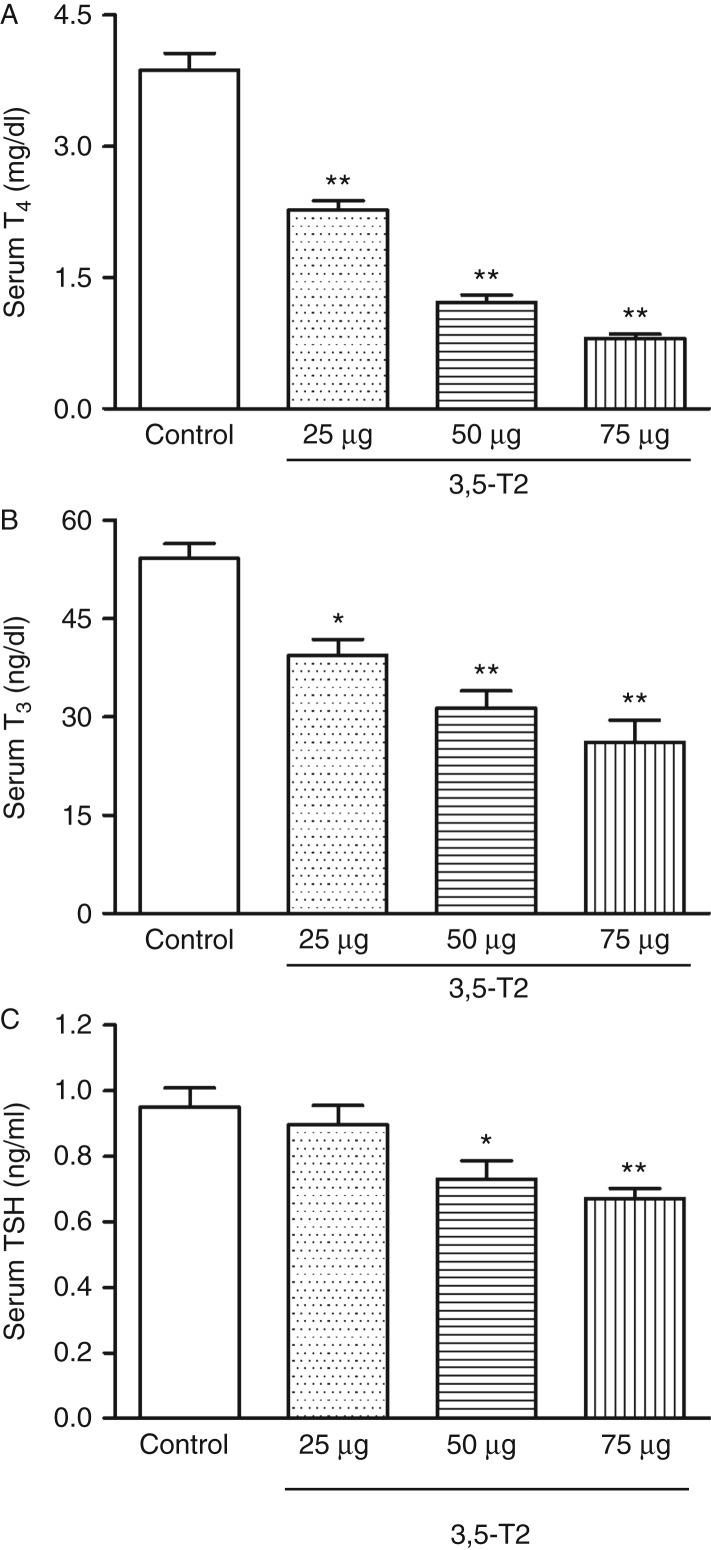
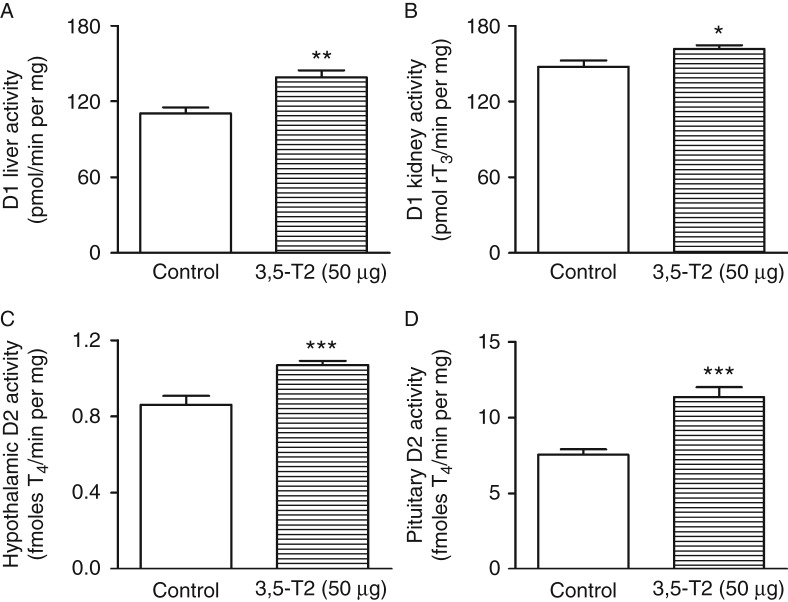
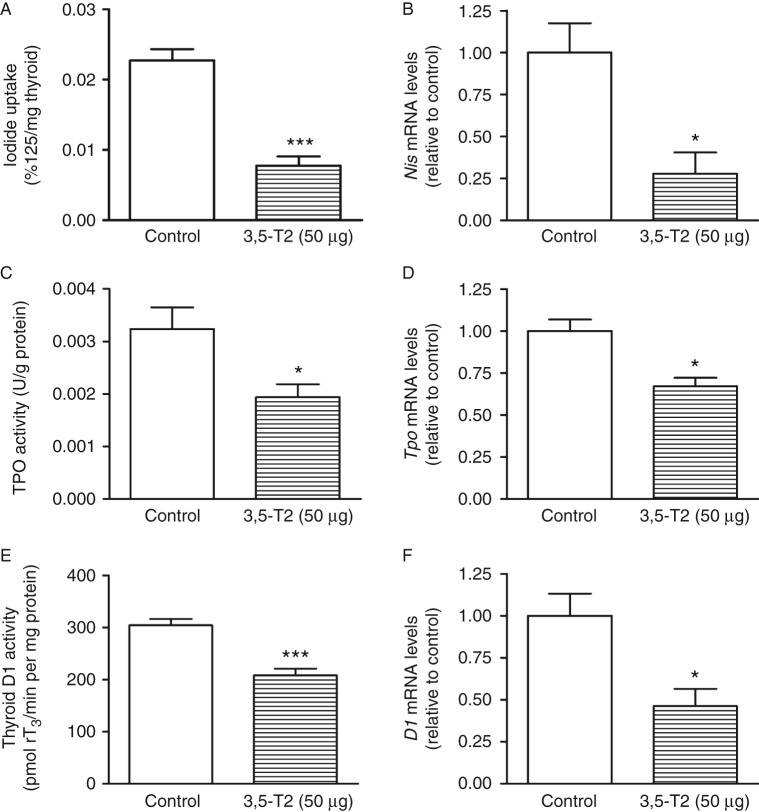
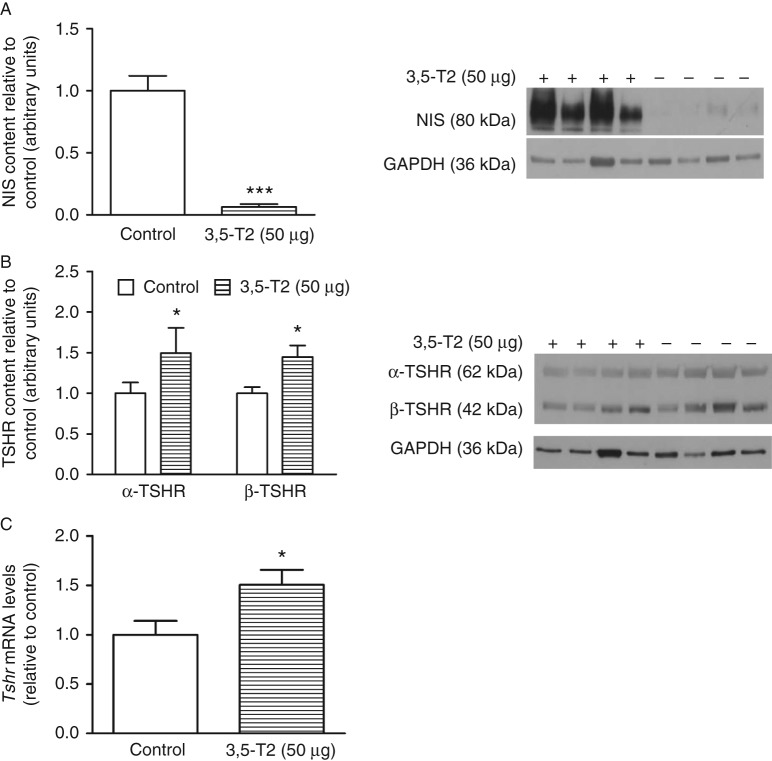
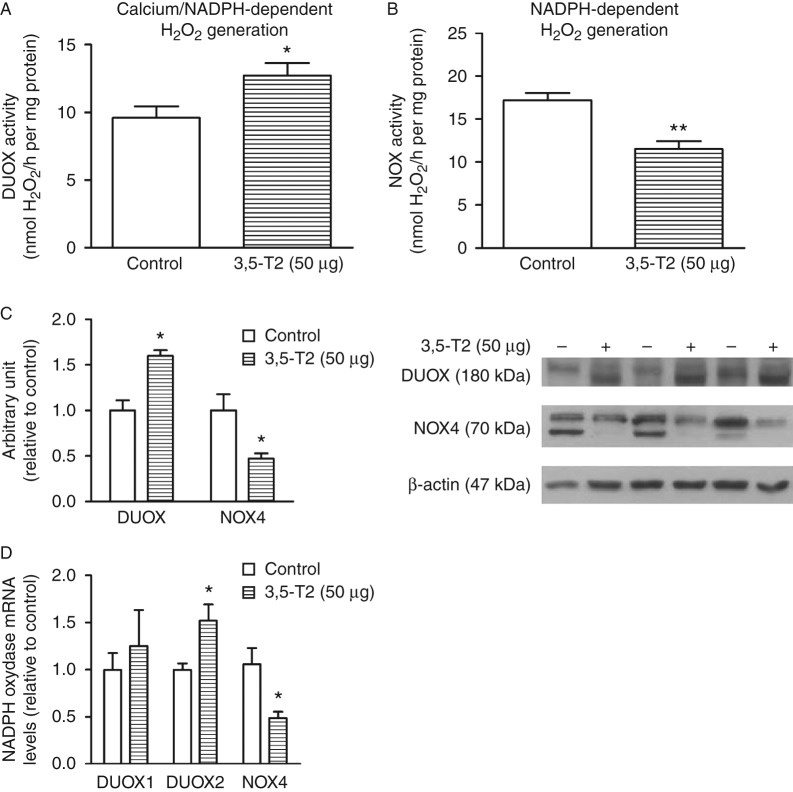
In general, 3,5-diiodothyronine (3,5-T2) increases the resting metabolic rate and oxygen consumption, exerting short-term beneficial metabolic effects on rats subjected to a high-fat diet. Our aim was to evaluate the effects of chronic 3,5-T2 administration on the hypothalamus-pituitary-thyroid axis, body mass gain, adipose tissue mass, and body oxygen consumption in Wistar rats from 3 to 6 months of age. The rats were treated daily with 3,5-T2 (25, 50, or 75 μg/100 g body weight, s.c.) for 90 days between the ages of 3 and 6 months. The administration of 3,5-T2 suppressed thyroid function, reducing not only thyroid iodide uptake but also thyroperoxidase, NADPH oxidase 4 (NOX4), and thyroid type 1 iodothyronine deiodinase (D1 (DIO1)) activities and expression levels, whereas the expression of the TSH receptor and dual oxidase (DUOX) were increased. Serum TSH, 3,3',5-triiodothyronine, and thyroxine were reduced in a 3,5-T2 dose-dependent manner, whereas oxygen consumption increased in these animals, indicating the direct action of 3,5-T2 on this physiological variable. Type 2 deiodinase activity increased in both the hypothalamus and the pituitary, and D1 activities in the liver and kidney were also increased in groups treated with 3,5-T2. Moreover, after 3 months of 3,5-T2 administration, body mass and retroperitoneal fat pad mass were significantly reduced, whereas the heart rate and mass were unchanged. Thus, 3,5-T2 acts as a direct stimulator of energy expenditure and reduces body mass gain; however, TSH suppression may develop secondary to 3,5-T2 administration.
Overview
CoChat Summary
TL;DR
Chronic 3,5-diiodothyronine (3,5-T2) administration to aging male Wistar rats reduced body mass gain and retroperitoneal fat, improved glucose tolerance, and increased oxygen consumption despite lowering serum T3 and T4. It also suppressed TSH and thyroid function, indicating that 3,5-T2 can cause central hypothyroidism while stimulating some thyroid-sensitive tissues.
Key findings
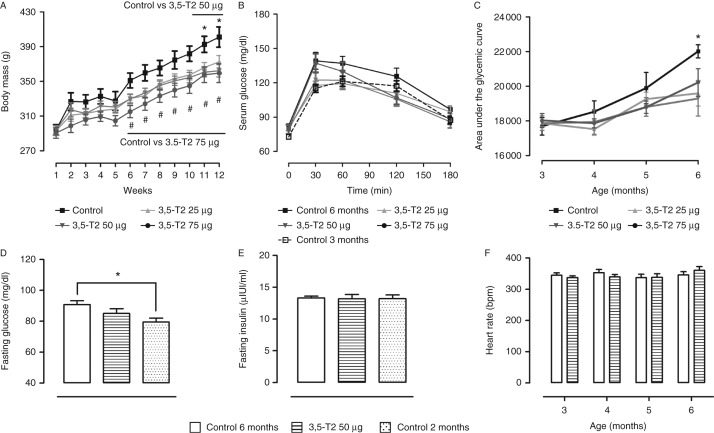
- Daily s.c. 3,5-T2 (25, 50, or 75 μg/100 g body weight for 90 days) reduced body mass gain by ≈30% versus controls, significantly reduced retroperitoneal fat pad mass at all doses, and did not change epididymal fat mass; heart rate and absolute heart mass were unchanged, though relative heart mass increased at 75 μg due to lower body mass.
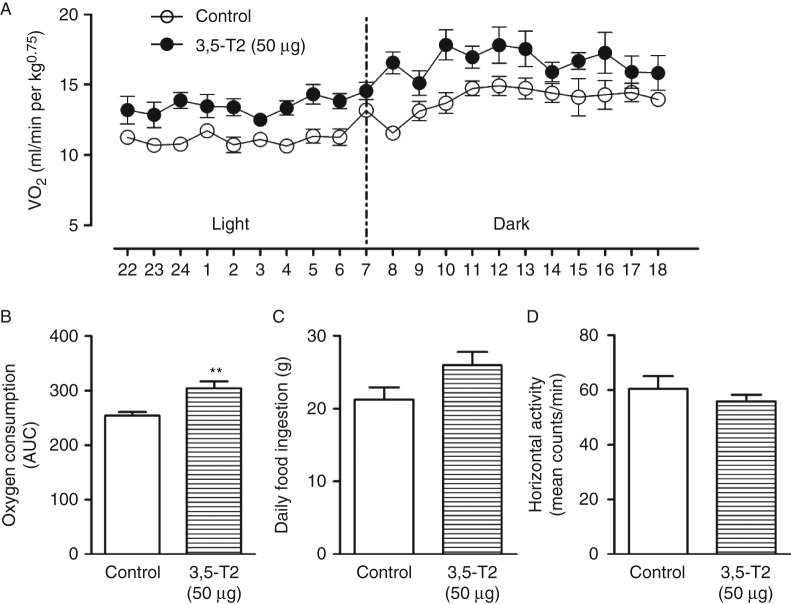
- 3,5-T2 lowered serum total T3 and T4 dose-dependently; TSH remained normal at 25 μg but was significantly lower at 50 and 75 μg. Oxygen consumption increased in rats treated with 50 μg 3,5-T2/100 g BW, and food intake did not differ.
- Thyroid function was suppressed: thyroid iodide uptake, TPO activity, NOX4, and thyroid D1 activity/expression were reduced, while TSHR and DUOX were increased. Liver and kidney D1 activities increased, and hypothalamic and pituitary D2 activities increased.
- Glucose tolerance improved: areas under the glycemic curve after 3 months of 3,5-T2 were ∼10% lower than paired 6-month-old controls, with no difference in fasting serum insulin.
Methods
- Three-month-old male Wistar rats were treated for 3 months (to 6 months of age) with vehicle or 3,5-T2 at 25, 50, or 75 μg/100 g BW daily s.c.; the 50 μg dose was selected for detailed thyroid, hormone-metabolism, and oxygen-consumption studies.
- Outcomes included body, heart, and fat mass; serum TSH, T3, T4, and insulin by RIA; glucose tolerance testing; resting metabolic rate by open-circuit indirect calorimetry; electrocardiography; thyroid iodide uptake; TPO activity; H2O2 production; D1/D2 activities; immunoblotting for NIS, TSHR, DUOX, and NOX4; and real-time PCR for thyroid and hypothalamic transcripts.
- Statistical analyses used one-way ANOVA with Dunnett’s or Bonferroni tests, two-way ANOVA with Bonferroni post-test, Kruskal–Wallis with Dunn’s test, or unpaired t-tests, with significance at P<0.05.
Limitations
- Stated: the authors did not analyze whether treated animals lost lean body mass; they could not explain why serum thyroid hormones decreased at 25 μg 3,5-T2/100 g BW while TSH remained normal, speculating that TSH might be less bioactive; and they call for future studies on possible deleterious hypothyroid effects in tissues where 3,5-T2 may not act as a thyromimetic.
- Evident: the study is limited to male Wistar rats and pharmacological 3,5-T2 doses, so human or physiological-dose implications are not established; oxygen-consumption measurements were performed only with the 50 μg dose; and the proposed TRβ agonism is inferred from physiological responses rather than directly demonstrated by receptor-binding or knockout experiments.
Model-written summary. Check it against the paper before relying on it.
Integrity signals
Registry
Cites
Statistics
Figures
Verification
Claims the paper makes
12 Valid · 0 Not valid · 30 Not checked · 72 Own results and interpretations
Every source the paper cites for this claim was checked and supports it.
In the paper
“Heart rate did not differ among the groups (Fig. 1F), as described previously (Lanni et al. 2005).”
- Also stated in: § Abstract · plain
“Moreover, after 3 months of 3,5-T2 administration, body mass and retroperitoneal fat pad mass were significantly reduced, whereas the heart rate and mass were unchanged.”
§ Administration of 3,5-diiodothyronine (3,5-T2) causes central hypothyroidism and stimulates thyroid-sensitive tissues > Results > Body, heart, and fat mass
What the sources say
- Supportedcites Lanni et al. 2005 matched to “3,5‐Diiodo‐ L ‐thyronine powerfully reduces adiposity in rats by increasing the burning of fats” (2005) source
In the Results section, the paper reports that heart rate did not change after T₂ administration, either midway through or at the end of treatment. This supports the cited statement for the rat groups studied; no page number is available in our copy. (LLM, conf=0.91)
plain- Asserted: passes — The authors put it forward as true.
- Checkable: passes — It can be checked against evidence.
- Load-bearing: unclear — It is unclear whether the paper’s conclusions depend on it.
- Based: passes — The paper gives a reason why it holds.
- Also stated in: § Abstract · plain
The sources with a verdict support this claim; the rest weren’t checked yet, have no full text we could read, or their verdicts aren’t rated yet.
In the paper
“Compound 3,5-T2 by itself increases the rate of oxygen consumption in perfused rat liver (Horst et al. 1989), blood mononuclear cells (Kvetny 1992), and rat liver mitochondria (Lanni et al. 1992, 1993, O'Reilly & Murphy 1992)”
§ Administration of 3,5-diiodothyronine (3,5-T2) causes central hypothyroidism and stimulates thyroid-sensitive tissues > Introduction
What the sources say
- Supportedcites Horst et al. 1989 matched to “Rapid stimulation of hepatic oxygen consumption by 3,5-di-iodo-l-thyronine” (1989) source
The Abstract (page not supplied) reports that 3,5-T2 stimulated oxygen consumption in isolated perfused livers from hypothyroid rats. Horst et al. is cited only for the perfused-rat-liver portion of the sentence; the other tissues have separate citations. (LLM, conf=0.93)
- Not checked — no full text of the sourcecites Kvetny 1992 matched to “3,5-T2Stimulates Oxygen Consumption, But Not Glucose Uptake in Human Mononuclear Blood Cells” (1992) source
- Not checked — no full text of the sourcecites Lanni et al. 1992 matched to “Effect of 3,3′-diiodothyronine and 3,5-diiodothyronine on rat liver oxidative capacity” (1992) source
plainstates a cause- Asserted: passes — The authors put it forward as true.
- Checkable: passes — It can be checked against evidence.
- Load-bearing: passes — The paper’s conclusions depend on it.
- Based: passes — The paper gives a reason why it holds.
- Supported
Every source the paper cites for this claim was checked and supports it.
In the paper
“We had previously demonstrated that the measurement of radioiodide uptake 15 min after 125I-NaI administration (short-term iodide uptake) reflects iodide transport through the sodium–iodide symporter (NIS) without the influence of in vivo thyroid iodine organification activity (Ferreira et al. 2005).”
§ Administration of 3,5-diiodothyronine (3,5-T2) causes central hypothyroidism and stimulates thyroid-sensitive tissues > Materials and methods > Thyroid iodide uptake
What the sources say
- Supportedcites Ferreira et al. 2005 matched to “Rapid regulation of thyroid sodium–iodide symporter activity by thyrotrophin and iodine” (2005) source
The “Short-term radioiodide uptake: NIS activity” section reports that thyroid uptake 15 minutes after [¹²⁵I]NaI administration was unchanged by an organification inhibitor, indicating that iodide was not significantly incorporated into proteins. The Discussion concludes that the 15-minute measurement is an efficient measure of iodide transport through NIS. (LLM, conf=0.94)
boosted- Asserted: passes — The authors put it forward as true.
- Checkable: passes — It can be checked against evidence.
- Load-bearing: passes — The paper’s conclusions depend on it.
- Based: passes — The paper gives a reason why it holds.
- Supported
Every source the paper cites for this claim was checked and supports it.
In the paper
“It has been shown that TSH exerts inhibitory effects on Tshr promoter activity (Ikuyama et al. 1997).”
§ Administration of 3,5-diiodothyronine (3,5-T2) causes central hypothyroidism and stimulates thyroid-sensitive tissues > Discussion
What the sources say
- Supportedcites Ikuyama et al. 1997 matched to “Cloning and Characterization of the 4.2kb Region of the Rat Thyrotropin Receptor Promoter.” (1997) source
The Results section, “TSH-induced down-regulation of the 4.2 kb promoter activity,” reports higher promoter activity after TSH withdrawal and identifies a promoter region that mediates a TSH-induced suppressive effect. This directly supports the cited claim in the rat TSHR promoter constructs studied. (LLM, conf=0.94)
plainstates a cause- Asserted: passes — The authors put it forward as true.
- Checkable: passes — It can be checked against evidence.
- Load-bearing: passes — The paper’s conclusions depend on it.
- Based: passes — The paper gives a reason why it holds.
- Supported
The cited sources support only part of this claim — read each source’s verdict below.
In the paper
“As T3 is the main stimulator of hepatic and kidney D1 activities (Koenig 2005, Gereben et al. 2008) through genomic actions, our results reinforce the idea of a T3-like genomic effect of 3,5-T2 on D1 regulation (rather than a non-genomic action).”
§ Administration of 3,5-diiodothyronine (3,5-T2) causes central hypothyroidism and stimulates thyroid-sensitive tissues > Discussion
What the sources say
- Supportedcites Koenig 2005 matched to “Regulation of Type 1 Iodothyronine Deiodinase in Health and Disease” (2005) source
The “Regulation of D1 by T3” section reports that T3 induces D1 gene transcription and that T3 induction of hepatic and renal D1 is severely blunted in mice lacking the TRβ1 receptor. The abstract describes T3 as perhaps the most important regulator of D1 activity in human pathophysiology. Together, these passages support the claim’s emphasis on T3 and a genomic mechanism. (LLM, conf=0.90)
- Partly supportedcites Gereben et al. 2008 matched to “Cellular and Molecular Basis of Deiodinase-Regulated Thyroid Hormone Signaling1” (2008) sourceExperimental — accuracy not yet measured
The section ‘Maintenance of plasma T3 in healthy individuals’ (page not provided) says D1 activity is reduced in hypothyroidism, consistent with a positive relationship between thyroid hormone levels and D1 activity. It does not establish that T3 is the main stimulator of D1 activity specifically in the liver and kidney, or that this stimulation occurs through genomic actions. (LLM, conf=0.78)
plainstates a cause- Asserted: passes — The authors put it forward as true.
- Checkable: passes — It can be checked against evidence.
- Load-bearing: passes — The paper’s conclusions depend on it.
- Based: passes — The paper gives a reason why it holds.
- Supported
88 more claims · 1 with their cited sources checked
Create a free account to see all 114 claims and to verify the 2 references still open.
- It may state two separate claims as one. 15
- Probably not a substantial claim. 12
Claims other papers make about this one
Each is checked against this paper’s own text: does it say what the citing paper says it does?
The source backs part of the claim, not all of it — or backs it for a different population, condition or comparison.
In the citing paper
“While the effect of non-classical thyroid hormones on the overall behavior of thyroid homeostasis is still to be elucidated in more detail, some molecules including 3,5-T2, TRIAC, and TETRAC have thyromimetic effects at TR-β receptors, thereby exerting TSH-suppressive actions (156, 157, 161–163).”
From Homeostatic control of the thyroid-pituitary axis: perspectives for diagnosis and treatment (2015) · cites this paper as [162]
Experimental — accuracy not yet measuredThe source backs part of the claim, not all of it — or backs it for a different population, condition or comparison.
In the citing paper
“several other teams reported that administration of 3,5-T2 in rodent models (rat and mice, regular or high-fat diet, euthyroid or hypothyroid) dose-dependently resulted in significant suppression of the HPT axis as reflected by decreased TSH serum concentrations and/or pituitary beta-TSH transcript levels (6, 39, 87, 94, 95).”
From 3,5-T2—A Janus-Faced Thyroid Hormone Metabolite Exerts Both Canonical T3-Mimetic Endocrine and Intracrine Hepatic Action (2020) · cites this paper as [94]
Experimental — accuracy not yet measured
Self-check
Percentages, sums and reported differences re-computed from the paper’s own numbers.
Each contradiction between two passages listed here was confirmed by an independent check.
Rated minor: it would not touch a result — a value no result rests on, a p-value that stays on the same side of the significance level, or a conflict that is clerical, resolved elsewhere in the paper, or outside its own findings.
In the paper
§ Administration of 3,5-diiodothyronine (3,5-T2) causes central hypothyroidism and stimulates thyroid-sensitive tissues > Results > Resting metabolic rate
“Figure 3A summarizes the oxygen consumption results collected over a 21-h period of time, from 1800 1 day to 2200 the following day.”
§ Administration of 3,5-diiodothyronine (3,5-T2) causes central hypothyroidism and stimulates thyroid-sensitive tissues > Materials and methods > Resting metabolic rate
“The RMR was measured using open-circuit indirect calorimetry for 24 h, after 90 days of treatment.”
Citations
Cites
Bradford, M. M. (1976) · Analytical Biochemistry · doi:10.1016/0003-2697(76)90527-3 · Cited by 255,302 · cited 3×
“The protein concentration in the homogenates was measured by the Bradford method (Bradford 1976) after incubation of the homogenates with NaOH (2.5 M).”
InfluentialCloning and characterization of the thyroid iodide transporter
Dai, G., Levy, O., & Carrasco, N. (1996) · Nature · doi:10.1038/379458a0 · Cited by 1,109 · cited 1×
“Iodide uptake is a fundamental step in thyroid hormone biosynthesis, and TPO is a key enzyme in thyroid hormone biosynthesis (Dai et al. 1996, Carvalho & Ferreira 2007); therefore, the decreased thyroid hormone levels appear to be secondary to the decreased NIS function and TPO activity.”
Cellular and Molecular Basis of Deiodinase-Regulated Thyroid Hormone Signaling1
Gereben, B., Zavacki, A. M., Ribich, S., Kim, B. W., Huang, S. A., Simonides, W. S., Zeöld, A., & Bianco, A. C. (2008) · Endocrine Reviews · doi:10.1210/er.2008-0019 · Cited by 891 · cited 1×
“As T3 is the main stimulator of hepatic and kidney D1 activities (Koenig 2005, Gereben et al. 2008) through genomic actions, our results reinforce the idea of a T3-like genomic effect of 3,5-T2 on Published by Bioscientifica Ltd Jo u rn a l o f E n d o cr in o lo g y D1 regulation (rather than a…”
Real-time PCR quantification of precursor and mature microRNA
Schmittgen, T. D., Lee, E. J., Jiang, J., Sarkar, A., Yang, L., Elton, T. S., & Chen, C. (2008) · Methods · doi:10.1016/j.ymeth.2007.09.006 · Cited by 616 · cited 1×
“After DNase treatment, RT was carried out followed by real-time PCR as described previously (Schmittgen et al. 2008).”
Journal of Biological Regulators and Homeostatic Agents
Bolognesi, A. (2006) · Archivio istituzionale della ricerca (Alma Mater Studiorum Università di Bologna) · Cited by 548
The Deiodinase Family of Selenoproteins
GERMAIN, D. L. S., & GALTON, V. A. (1997) · Thyroid · doi:10.1089/thy.1997.7.655 · Cited by 342 · cited 1×
“By contrast, in the thyroid gland, D1 activity is under the positive control of TSH through the cAMP pathway (St Germain & Galton 1997).”
The Deiodination of the Iodothyronines and of Their Derivatives in Man
ENGLER, D., & BURGER, A. G. (1984) · Endocrine Reviews · doi:10.1210/edrv-5-2-151 · Cited by 237 · cited 1×
“In these previous studies, pharmacological doses of 3,5-T2 were administered, as Engler & Burger (1984) reported 3,5-T2 physiological serum concentrations to be around 1 ng/dl in men,withadailyproductionrateestimatedtobearound1 mg (Engler & Burger 1984, Engler et al. 1984).”
Berry, M. J., Kieffer, J. D., Harney, J. W., & Larsen, P. R. (1991) · Journal of Biological Chemistry · doi:10.1016/s0021-9258(18)98657-6 · Cited by 202
Arnold, S., Goglia, F., & Kadenbach, B. (1998) · European Journal of Biochemistry · doi:10.1046/j.1432-1327.1998.2520325.x · Cited by 198 · cited 1×
“…metabolism, including a-glycerophosphate dehydrogenase (Lombardi et al. 2000), cytochrome oxidase (Lanni et al. 1992, 1993, Goglia et al. 1994, Arnold et al. 1998), malate dehydrogenase (Ball et al. 1997, Lombardi et al. 2000), glucose-6-phosphate dehydrogenase (Lombardi et al. 2000), and…”
Gereben, B., Goncalves, C., Harney, J. W., Larsen, P. R., & Bianco, A. C. (2000) · Molecular Endocrinology · doi:10.1210/mend.14.11.0558 · Cited by 161
Cited by
Nongenomic actions of thyroid hormone
Davis, P. J., Goglia, F., & Leonard, J. L. (2016) · Nature Reviews Endocrinology · doi:10.1038/nrendo.2015.205 · Cited by 465
Thyroid hormone biosynthesis and release
Carvalho, D. P., & Dupuy, C. (2017) · Molecular and Cellular Endocrinology · doi:10.1016/j.mce.2017.01.038 · Cited by 346
Self-citationSinha, R. A., Bruinstroop, E., Singh, B. K., & Yen, P. M. (2019) · Thyroid · doi:10.1089/thy.2018.0664 · Cited by 271
“T2 also seems to have a favorable safety profile compared with T3, although it suppresses the axis by decreasing serum TSH and T3/T4 in rodents in a dose-dependent manner (64,146,147).”
The role of thyroglobulin in thyroid hormonogenesis
Citterio, C. E., Targovnik, H. M., & Arvan, P. (2019) · Nature Reviews Endocrinology · doi:10.1038/s41574-019-0184-8 · Cited by 216
Chemistry and Biology in the Biosynthesis and Action of Thyroid Hormones
Mondal, S., Raja, K., Schweizer, U., & Mugesh, G. (2016) · Angewandte Chemie International Edition · doi:10.1002/anie.201601116 · Cited by 211
Homeostatic control of the thyroid-pituitary axis: perspectives for diagnosis and treatment
Hoermann, R., Midgley, J. E. M., Larisch, R., & Dietrich, J. W. (2015) · Frontiers in Endocrinology · doi:10.3389/fendo.2015.00177 · Cited by 143
Jonas, W., Lietzow, J., Wohlgemuth, F., Hoefig, C. S., Wiedmer, P., Schweizer, U., Köhrle, J., & Schürmann, A. (2015) · Endocrinology · doi:10.1210/en.2014-1604 · Cited by 90
Giammanco, M., Liegro, C. M. D., Schiera, G., & Liegro, I. D. (2020) · International Journal of Molecular Sciences · doi:10.3390/ijms21114140 · Cited by 99
The colorful diversity of thyroid hormone metabolites
Köhrle, J. (2019) · European Thyroid Journal · doi:10.1159/000497141 · Cited by 67
Similarities and differences in the peripheral actions of thyroid hormones and their metabolites
Louzada, R. A., & Carvalho, D. P. (2018) · Frontiers in Endocrinology · doi:10.3389/fendo.2018.00394 · Cited by 60
“(39) 25-50-75 μg Euthyroid rats Increased H/b.”
BackgroundInfluentialSelf-citation3,5-diiodothyronine: a novel thyroid hormone metabolite and potent modulator of energy metabolism
Senese, R., de Lange, P., Petito, G., Moreno, M., Goglia, F., & Lanni, A. (2018) · Frontiers in Endocrinology · doi:10.3389/fendo.2018.00427 · Cited by 52
“Administration of 3,5-T2 [subcutaneously injected at doses of 25, 50, or 75 μg/100 g BW for 90 days] to chow-fed rats aged 3–6 months significantly reduces body mass and improves glucose tolerance, while heart rate and mass remain unchanged, TSH levels remain normal in rats receiving 25 μg of 3,5-T2 /100 g BW but are…”
Background3,5-Diiodo-L-Thyronine Activates Brown Adipose Tissue Thermogenesis in Hypothyroid Rats
Lombardi, A., Senese, R., De Matteis, R., Busiello, R. A., Cioffi, F., Goglia, F., & Lanni, A. (2015) · PLOS ONE · doi:10.1371/journal.pone.0116498 · Cited by 48
“On the other hand, we [26–31] and other groups [52, 58–61] reported that, T2 chronically administered to rats at a dose of 25 mg/100 g bw was able to induce metabolic effects; moreover it was devoided of side effects on heart mass (present paper and refs [28, 30, 31, 58]), heart rate [28, 61] and TSH levels [58].”
ResultMassolt, E. T., van der Windt, M., Korevaar, T. I. M., Kam, B. L. R., Burger, J. W., Franssen, G. J. H., Lehmphul, I., Köhrle, J., Visser, W. E., & Peeters, R. P. (2016) · Clinical Endocrinology · doi:10.1111/cen.13101 · Cited by 47
Thyroid hormones and derivatives: endogenous thyroid hormones and their targets
Köhrle, J. (2018) · Methods in Molecular Biology · doi:10.1007/978-1-4939-7902-8_9 · Cited by 47
Yu, F., Lam, T. C., Sze, Y. H., Li, K. K., Chun, R. K. M., Shan, S. W., & To, C. H. (2020) · Journal of Proteomics · doi:10.1016/j.jprot.2020.103684 · Cited by 46
Evolution of Nuclear Receptors and Ligand Signaling
Holzer, G., Markov, G. V., & Laudet, V. (2017) · Current topics in developmental biology/Current Topics in Developmental Biology · doi:10.1016/bs.ctdb.2017.02.003 · Cited by 52
Emerging role of thyroid hormone metabolites
Gnocchi, D., Steffensen, K. R., Bruscalupi, G., & Parini, P. (2016) · Acta Physiologica · doi:10.1111/apha.12648 · Cited by 50
“Unfortunately, recent findings have demonstrated important side effects on HPT axis and cardiovascular system in rodents (Padron et al. 2014, Jonas et al. 2015).”
BackgroundInfluentialNew avenues for regulation of lipid metabolism by thyroid hormones and analogs
Senese, R., Lasala, P., Leanza, C., & de Lange, P. (2014) · Frontiers in Physiology · doi:10.3389/fphys.2014.00475 · Cited by 42
“Indeed, very recently, Padron et al. (2014) reported that T2 administration (25, 50, and 75 μg/100 g BW) to aging Wistar rats reduced body- and retroperitoneal fat mass gain, increased resting metabolic rate (RMR), ameliorated glucose tolerance, did not alter heart mass and heart rate, and only…”
BackgroundEffect of Iodothyronines on Thermogenesis: Focus on Brown Adipose Tissue
Cioffi, F., Gentile, A., Silvestri, E., Goglia, F., & Lombardi, A. (2018) · Frontiers in Endocrinology · doi:10.3389/fendo.2018.00254 · Cited by 50
The effects of 3,5-diiodothyronine on energy balance
Goglia, F. (2015) · Frontiers in Physiology · doi:10.3389/fphys.2014.00528 · Cited by 39
“Recently, most of these results have been confirmed also in animals with a standard laboratory diet and with a prolonged time of treatment (Padron et al., 2014).”
ResultZucchi, R., Rutigliano, G., & Saponaro, F. (2019) · Endocrine · doi:10.1007/s12020-019-02018-4 · Cited by 41
Cardiac actions of thyroid hormone metabolites
Rutigliano, G., & Zucchi, R. (2017) · Molecular and Cellular Endocrinology · doi:10.1016/j.mce.2017.01.003 · Cited by 35
Petito, G., Cioffi, F., Magnacca, N., de Lange, P., Senese, R., & Lanni, A. (2023) · Pharmaceuticals · doi:10.3390/ph16040572 · Cited by 36
Giacco, A., Paoli, G. D., Senese, R., Cioffi, F., Silvestri, E., Moreno, M., Ruoppolo, M., Caterino, M., Costanzo, M., Lombardi, A., et al. (2018) · The FASEB Journal · doi:10.1096/fj.201800724r · Cited by 34
“In vivo, the effect of T2 andT3 on insulin sensitivity through phosphorylationofAkt in skeletalmuscle (1, 2) isvery likely the result of a multitude of metabolic changes induced in skeletalmuscle aswell as in liver (4, 6–10), andwhite (4, 6, 7, 10) andbrown (10, 11) adipose tissue.”
BackgroundTissue thyroid hormones and thyronamines
Accorroni, A., Saponaro, F., & Zucchi, R. (2016) · Heart Failure Reviews · doi:10.1007/s10741-016-9553-8 · Cited by 29
Ittermann, T., Dörr, M., Völzke, H., Tost, F., Lehmphul, I., Köhrle, J., & Jürgens, C. (2014) · Thyroid · doi:10.1089/thy.2014.0190 · Cited by 32
“Previous studies in hypothyroid rats furthermore showed that 3,5-T2 treatment results in prevention of fat accumulation (33) and reduced adiposity (31,34).”
3,5-T2 alters murine genes relevant for xenobiotic, steroid, and thyroid hormone metabolism
Lietzow, J., Golchert, J., Homuth, G., Völker, U., Jonas, W., & Köhrle, J. (2016) · Journal of Molecular Endocrinology · doi:10.1530/jme-15-0159 · Cited by 28
“Such observations on doserelated thyromimetic actions, among others also on the pituitary and the heart, are in agreement with published results on mice and rats treated with 3,5-T2 (Horst et al. 1995, Goldberg et al. 2012, Padron et al. 2014).”
ResultKrause, G., & Hinz, K. M. (2017) · Molecular and Cellular Endocrinology · doi:10.1016/j.mce.2017.03.018 · Cited by 27
Senese, R., Cioffi, F., de Lange, P., Leanza, C., Iannucci, L. F., Silvestri, E., Moreno, M., Lombardi, A., Goglia, F., & Lanni, A. (2017) · Frontiers in Physiology · doi:10.3389/fphys.2017.00706 · Cited by 29
“In the same animal model used here, an increase in heart rate was observed starting from a dose of 75µg/100 g BW during a 3- month treatment period (Padron et al., 2014).”
MethodResultDirect and rapid effects of 3,5-diiodo-L-thyronine (T2)
Moreno, M., Giacco, A., Di Munno, C., & Goglia, F. (2017) · Molecular and Cellular Endocrinology · doi:10.1016/j.mce.2017.02.012 · Cited by 25
Marsan, E. S., & Bayse, C. A. (2017) · Chemistry - A European Journal · doi:10.1002/chem.201700407 · Cited by 28
Köhrle, J., Lehmphul, I., Pietzner, M., Renko, K., Rijntjes, E., Richards, K., Anselmo, J., Danielsen, M., & Jonklaas, J. (2020) · Frontiers in Endocrinology · doi:10.3389/fendo.2019.00787 · Cited by 23
Kinne, A., Wittner, M., Wirth, E. K., Hinz, K. M., Schülein, R., Köhrle, J., & Krause, G. (2015) · European Thyroid Journal · doi:10.1159/000381542 · Cited by 22
Structural Insights Into Thyroid Hormone Transport Mechanisms of the L-Type Amino Acid Transporter 2
Hinz, K. M., Meyer, K., Kinne, A., Schülein, R., Köhrle, J., & Krause, G. (2015) · Molecular Endocrinology · doi:10.1210/me.2015-1044 · Cited by 21
Senese, R., Cioffi, F., Matteis, R. D., Petito, G., de Lange, P., Silvestri, E., Lombardi, A., Moreno, M., Goglia, F., & Lanni, A. (2019) · Cells · doi:10.3390/cells8030256 · Cited by 23
“showed that the daily administration of T2, at the same dose, induced a significant decrease of about 20% in TSH levels and a state of hypothyroidism [42].”
BackgroundChemie und Biologie der Schilddrüsenhormon‐Biosynthese und ‐Wirkung
Mondal, S., Raja, K., Schweizer, U., & Mugesh, G. (2016) · Angewandte Chemie · doi:10.1002/ange.201601116 · Cited by 21
Sacripanti, G., Nguyen, N. M., Lorenzini, L., Frascarelli, S., Saba, A., Zucchi, R., & Ghelardoni, S. (2018) · Frontiers in Endocrinology · doi:10.3389/fendo.2018.00282 · Cited by 20
“(24)], and with the observation that T2 has a low affinity for nuclear TH receptors (25), and in any case it is relatively selective for TR beta, while TR alpha is the predominant cardiac isoform (26, 27).”
BackgroundŠošić‐Jurjević, B., Ajdžanović, V. Z., Miljić, D., Trifunović, S. L., Filipović, B. R., Stankovic, S. D., Bolevich, S., Jakovljevic, V. L., & Milošević, V. (2020) · International Journal of Molecular Sciences · doi:10.3390/ijms21062024 · Cited by 26
Vatner, D. F., Snikeris, J., Popov, V., Perry, R. J., Rahimi, Y., & Samuel, V. T. (2015) · PLOS ONE · doi:10.1371/journal.pone.0140837 · Cited by 19
“These physiological effects are consistent with TRβ activation and reminiscent of the toxicities associated with thyroid hormone excess [23].”
BackgroundHuman adaptative behavior to Antarctic conditions: A review of physiological aspects
Spinelli, E., & Werner, J. (2022) · WIREs Mechanisms of Disease · doi:10.1002/wsbm.1556 · Cited by 24
Incerpi, S., Gionfra, F., Luca, R. D., Candelotti, E., Vito, P. D., Percario, Z. A., Leone, S., Gnocchi, D., Rossi, M., Caruso, F., et al. (2022) · Frontiers in Endocrinology · doi:10.3389/fendo.2022.961744 · Cited by 19
“Of note, it was reported long-term administration to rats of 3,5-T2 resulted in suppressed thyroid function and central hypothyroidism (34).”
BackgroundConformational Flexibility and Halogen Bonding in Thyroid Hormones and Their Metabolites
Mondal, S., & Mugesh, G. (2016) · Crystal Growth & Design · doi:10.1021/acs.cgd.6b00945 · Cited by 17
Silvestri, E., Senese, R., Cioffi, F., Matteis, R. D., Lattanzi, D., Lombardi, A., Giacco, A., Salzano, A. M., Scaloni, A., Ceccarelli, M., et al. (2019) · Nutrients · doi:10.3390/nu11020278 · Cited by 16
“However, administration of higher doses of 3,5-T2 (75–1250 μg/100 g) to rodents suggested a possible interference of 3,5-T2 on the corresponding HPT axis and heart [31,36,37].”
BackgroundCioffi, F., Senese, R., Petito, G., Lasala, P., de Lange, P., Silvestri, E., Lombardi, A., Moreno, M., Goglia, F., & Lanni, A. (2019) · Frontiers in Endocrinology · doi:10.3389/fendo.2019.00216 · Cited by 16
Richards, K. H., Schanze, N., Monk, R., Rijntjes, E., Rathmann, D., & Köhrle, J. (2017) · PLOS ONE · doi:10.1371/journal.pone.0183482 · Cited by 15
Silvestri, E., Cioffi, F., Matteis, R. D., Senese, R., de Lange, P., Coppola, M., Salzano, A. M., Scaloni, A., Ceccarelli, M., Goglia, F., et al. (2018) · Frontiers in Physiology · doi:10.3389/fphys.2018.00194 · Cited by 16
“Indeed, the current literature clearly suggests that the actions of T2 might be dose-, specie-, diet-, and age-specific (Padron et al., 2014; Vatner et al., 2015; Coppola et al., 2016; da Silva Teixeira et al., 2016; for recent review, see Goglia, 2015).”
BackgroundGiacco, A., Petito, G., Silvestri, E., Scopigno, N., Vigliotti, M., Mercurio, G., de Lange, P., Lombardi, A., Moreno, M., Goglia, F., et al. (2024) · Frontiers in Endocrinology · doi:10.3389/fendo.2024.1432819 · Cited by 16
Petito, G., Cioffi, F., Silvestri, E., Matteis, R. D., Lattanzi, D., de Lange, P., Lombardi, A., Moreno, M., Goglia, F., Lanni, A., et al. (2021) · Frontiers in Endocrinology · doi:10.3389/fendo.2021.703170 · Cited by 15
Sane, R., Wirth, E. K., & Köhrle, J. (2022) · Metabolites · doi:10.3390/metabo12070582 · Cited by 14
“Direct administration of 100 nM and 1 µM 3,5-T2 to isolated perfused rat pituitaries decreased TSH secretion after a TRH pulse [43].”
BackgroundInfluentialMondal, S., & Mugesh, G. (2016) · Organic & Biomolecular Chemistry · doi:10.1039/c6ob01375a · Cited by 16
Cavallo, A., Taurino, F., Damiano, F., Siculella, L., Sardanelli, A. M., & Gnoni, A. (2016) · Journal of Bioenergetics and Biomembranes · doi:10.1007/s10863-016-9686-4 · Cited by 17
“2009), and decreases aging-related body mass gain by a direct stimulation of energy expenditure (Padron et al. 2014).”
BackgroundInfluentialPietzner, M., Köhrle, J., Lehmphul, I., Budde, K., Kastenmüller, G., Brabant, G., Völzke, H., Artati, A., Adamski, J., Völker, U., et al. (2019) · Thyroid® · doi:10.1089/thy.2018.0549 · Cited by 13
Effects of 3,5-diiodo-L-thyronine on the liver of high fat diet fed rats
Giammanco, M., Aiello, S., Casuccio, A., Guardia, M. L., Cicero, L. L., Puleio, R., Vazzana, I., Tomasello, G., Cassata, G., Leto, G., et al. (2016) · Journal of Biological Research - Bollettino della Società Italiana di Biologia Sperimentale · doi:10.4081/jbr.2016.5667 · Cited by 11
Ittermann, T., Lorbeer, R., Dörr, M., Schneider, T., Quadrat, A., Heßelbarth, L., Wenzel, M., Lehmphul, I., Köhrle, J., Mensel, B., et al. (2016) · European Radiology · doi:10.1007/s00330-016-4316-4 · Cited by 11
“lipid profile in serum, liver and muscle in rodent animal experimental models [26].”
BackgroundGalton, V. A., Martinez, M. E., Dragon, J. A., Germain, D. L. S., & Hernández, A. (2021) · Thyroid · doi:10.1089/thy.2020.0508 · Cited by 11
Nongenomic Actions of Thyroid Hormones
Incerpi, S., Davis, P. J., Pedersen, J. Z., & Lanni, A. (2016) · Endocrinology · doi:10.1007/978-3-319-27318-1_32-1 · Cited by 10
Silvestri, E., Coppola, M., Cioffi, F., & Goglia, F. (2014) · Frontiers in Physiology · doi:10.3389/fphys.2014.00491 · Cited by 9
“Importantly, a more recent study has reported that T2 administration stimulates energy expenditure and reduces body mass gain also in standard diet fed aging rats (Padron et al., 2014).”
3,5-Diiodo-L-Thyronine (T2) in Dietary Supplements: What Are the Physiological Effects?
Hernández, A. (2014) · Endocrinology · doi:10.1210/en.2014-1933 · Cited by 12
Lietzow, J., Golchert, J., Pietzner, M., Völker, U., POUTANEN, M. H., Ohlsson, C., Homuth, G., & Köhrle, J. (2021) · Thyroid · doi:10.1089/thy.2020.0160 · Cited by 7
Takaguchi, K., Ono, S., Tanoue, R., Kunisue, T., Tanabe, S., & Nomiyama, K. (2021) · Journal of Chromatography A · doi:10.1016/j.chroma.2021.462686 · Cited by 7
Moreno, M., Silvestri, E., Coppola, M., Goldberg, I. J., Huang, L., Salzano, A. M., D’Angelo, F., Ehrenkranz, J. R. L., & Goglia, F. (2016) · Frontiers in Physiology · doi:10.3389/fphys.2016.00545 · Cited by 8
“This would require further analyses above all considering the well-known insulin antagonizing effect of T3 and the recently described insulin sensitizing action of T2 (de Lange et al., 2011; Moreno et al., 2011; Padron et al., 2014).”
Background3,5‐Diiodothyronine protects against cardiac ischaemia–reperfusion injury in male rats
Louzada, R. A. N., Padron, A. S., Neto, S. R. M., Maciel, L., Werneck‐de‐Castro, J. P., Ferreira, A. C. F., Nascimento, J. H. M., & de Carvalho, D. P. (2021) · Experimental Physiology · doi:10.1113/ep089589 · Cited by 5
“…into three groups: control (daily injections of vehicle administered subcutaneously (S.C.)), 3,5-T2 (daily injections of 50 μg of 3,5-T2/100 g body weight, S.C.) (Padron et al., 2014) and 3,5-T2 with thyroxine (T4) (daily injections of 1 μg of T4/100 g body weight, S.C.) (Araujo et al., 2008).”
BackgroundMethodInfluentialSelf-citationNongenomic Actions of Thyroid Hormones
Incerpi, S., Davis, P. J., Pedersen, J. Z., & Lanni, A. (2018) · Endocrinology · doi:10.1007/978-3-319-44675-2_32 · Cited by 6
Bagchi, D., Downs, B. W., Bagchi, M., Banik, S. P., Kushner, S. W., Morrison, B. J., Chakraborty, S., & Hesson, S. (2023) · Royal Society of Chemistry eBooks · doi:10.1039/bk9781839166112-00130 · Cited by 2
The Evolution of Hypothalamic-Pituitary-Thyroid Axis
Lazcano, I., Joseph‐Bravo, P., & Orozco, A. (2025) · Masterclass in neuroendocrinology · doi:10.1007/978-3-031-80209-6_7 · Cited by 1
Metabolic effects of 3,5-Diiodo-L-Thyronine
Giammanco, M., Giammanco, M. M., Leto, G., & Marini, H. R. (2021) · Journal of Biological Research - Bollettino della Società Italiana di Biologia Sperimentale · doi:10.4081/jbr.2020.9182 · Cited by 1
Iodothyronines as Lipid-lowering Agents
Demori, I., Voci, A., & Grasselli, E. (2018) · Elsevier eBooks · doi:10.1016/b978-0-12-811297-7.00028-7 · Cited by 1
Cadegiani, F. (2020) · Springer eBooks · doi:10.1007/978-3-030-52628-3_13 · Cited by 1
Beyond T3: The Emerging Role of 3,5-Diiodothyronine in Mitochondrial Thyroid Hormone Signaling
Mazza, A. D. (2026) · Endocrines · doi:10.3390/endocrines7030055
“T 2 to rats resulted in suppression of serum TSH together with reductions in circulating thyroid hormone concentrations consistent with central suppression of thyroid hormone regulation [11].”
Influential
Metadata
- Authors
- Padron, A. S., Neto, R. A. L., Pantaleão, T. U., de Souza dos Santos, M. C., Araujo, R. L., de Andrade, B. M., da Silva Leandro, M., de Castro, J. P. S. W., Ferreira, A. C. F., & de Carvalho, D. P.
- Affiliations
- Universidade Federal do Rio de Janeiro (BR)
- Corresponding author
- de Carvalho, Denise Pires
- Venue
- Journal of Endocrinology
- Publisher
- Bioscientifica
- Published
- 2014-04-01
- Volume
- 221
- Issue
- 3
- Pages
- 415-427
- ISSN
- 0022-0795 (ISSN-L)
- 1479-6805
- PMC
- PMC4045230
- OpenAlex
- W2150335827
- Cited by
- 69
- References
- 54
- Citations by year
- 2026: 1 · 2025: 1 · 2024: 1 · 2023: 2 · 2022: 3 · 2021: 5 · 2020: 6 · 2019: 8 · 2018: 9 · 2017: 8 · 2016: 13 · 2015: 7 · 2014: 5
- FWCI
- 8.85
- Type
- journal article
- Language
- en
- Open access
- hybrid
- doi.org
- Locations
- Journal of Endocrinology (publishedVersion, cc-by)
- Europe PMC (PubMed Central) (publishedVersion, cc-by)
- PubMed Central (publishedVersion, cc-by)
- PubMed (publishedVersion)
- Funders
- Conselho Nacional de Desenvolvimento Científico e Tecnológico
- Fundação Carlos Chagas Filho de Amparo à Pesquisa do Estado do Rio de Janeiro
- Instituto de Pesquisa Translacional em Saúde e Ambiente na Região Amazônica
- National Institutes of Health
- Topics
- Health Sciences › Medicine › Endocrinology, Diabetes and Metabolism › Thyroid Disorders and Treatments
- Life Sciences › Neuroscience › Endocrine and Autonomic Systems › Regulation of Appetite and Obesity
- Health Sciences › Medicine › Physiology (medical) › Adipose Tissue and Metabolism
- Keywords
- 3,5-diiodothyronine, central hypothyroidism, hypothalamic-pituitary-thyroid axis, thyroid hormone action, iodothyronine deiodinase, type 2 deiodinase, thyroid peroxidase, NOX4, dual oxidase, TSH receptor, thyroid iodide uptake, oxygen consumption, energy expenditure, weight gain, adipose tissue
- MeSH terms
- Dual Oxidases, NADPH Oxidase 4, Iodothyronine Deiodinase Type II, Animals, Basal Metabolism, Diiodothyronines, Flavoproteins, Hypothalamo-Hypophyseal System, Hypothyroidism, Iodide Peroxidase, Iodides, Kidney, Liver, Male, Oxygen Consumption, Receptors, Thyrotropin, Thyroid Gland, Thyrotropin, Thyroxine, Triiodothyronine, Immunoblotting, Rats, Wistar, NADPH Oxidases, Reverse Transcriptase Polymerase Chain Reaction, Rats
About these checks
Registry, retraction, Cites and statistics results are computed, not judged, with one exception: a printed reference that no index lists is read once by a model before it counts as a citation error. Claims are extracted by a model and kept only when their quote appears verbatim in the text; each cited source is then checked, with a model’s help, for whether it says what the claim relies on. Those verdicts can be wrong — read the claim’s quote and the cited source before relying on one.
The claim verdicts this report counts are experimental: their accuracy is not yet measured.
A language model drew the claims from the paper on 2026-11-03, under version 3 of the claim definition (model deepseek-v4.1-flash, prompt extract-v3).
A second model labelled each claim on 2026-11-03 (model jev-1.13-20260917, definition revision gold-guideline-v0.2).
Cited sources are checked with a language model’s help (gpt-6-sol).
Statistics and arithmetic are recomputed, not judged.
Confidence bands are shown only for fields calibrated on our annotated test set. None is calibrated yet, so no band is shown.
What counts as a claim ›How we measure confidence ›How we check this ›
Are you an author, or do you see a problem with this page? Request a review
Data sources
Bibliographic data: Semantic Scholar, OpenAlex, Crossref.
Contains information from the Semantic Scholar Academic Graph Datasets, made available under the ODC Attribution License (ODC-BY 1.0).
Semantic Scholar’s data is described in: Kinney, R., et al. (2023). The Semantic Scholar Open Data Platform. arXiv:2301.10140.
