

First report of autochthonous transmission of Zika virus in Brazil
Open accessThe DOI matches its Crossref record; 17 of the 17 references it cites were found in a registry or an index.
Abstract
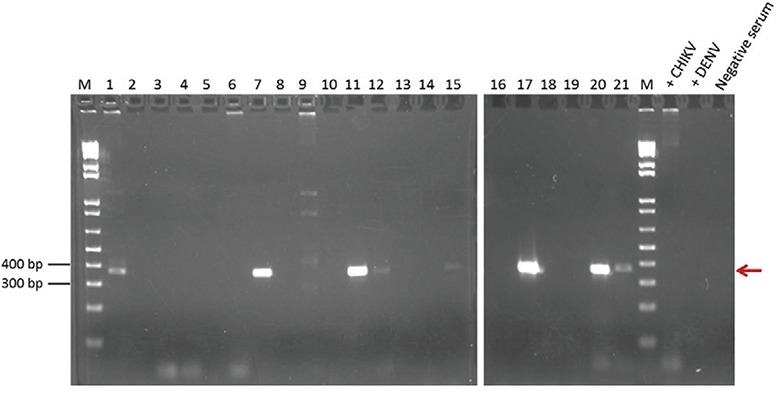
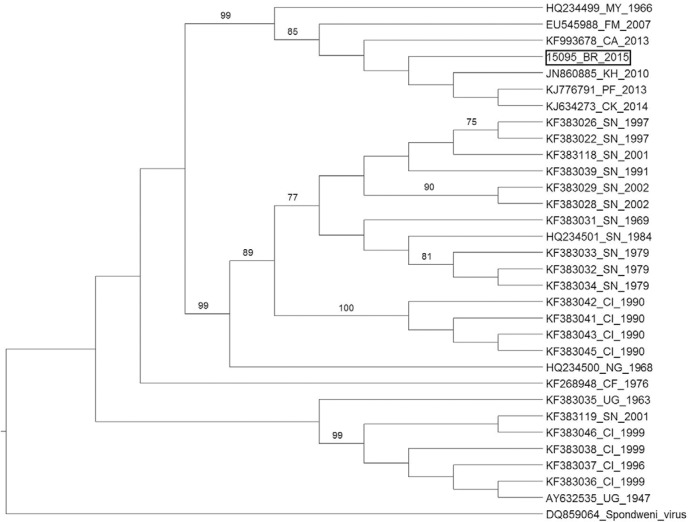
In the early 2015, several cases of patients presenting symptoms of mild fever, rash, conjunctivitis and arthralgia were reported in the northeastern Brazil. Although all patients lived in a dengue endemic area, molecular and serological diagnosis for dengue resulted negative. Chikungunya virus infection was also discarded. Subsequently, Zika virus (ZIKV) was detected by reverse transcription-polymerase chain reaction from the sera of eight patients and the result was confirmed by DNA sequencing. Phylogenetic analysis suggests that the ZIKV identified belongs to the Asian clade. This is the first report of ZIKV infection in Brazil.
Overview
The claims and statistics of this paper haven’t been checked yet.
Free: it reads the open-access text and checks the first 5 claims that cite a source we can check. Create a free account to check every claim.
Integrity signals
Registry
Cites
Statistics
Figures
Verification
Claims the paper makes
The claims and statistics of this paper haven’t been checked yet.
Free: it reads the open-access text and checks the first 5 claims that cite a source we can check. Create a free account to check every claim.
Claims other papers make about this one
Each is checked against this paper’s own text: does it say what the citing paper says it does?
The check wasn’t confident either way, so it gives no verdict — never disputed.
In the citing paper
“Zika was declared a national public health emergency in 2015 [24].”
From Recruitment of low-income pregnant women into a dietary and dental care intervention: lessons from a feasibility trial (2020) · cites this paper as [24]
Experimental — accuracy not yet measured
Self-check
Percentages, sums and reported differences re-computed from the paper’s own numbers.
The self-check needs the paper’s full text.
Citations
Cites
Zika Virus Outbreak on Yap Island, Federated States of Micronesia
Duffy, M. R., Chen, T.-H., Hancock, W. T., Powers, A. M., Kool, J. L., Lanciotti, R. S., Pretrick, M., Marfel, M., Holzbauer, S., Dubray, C., et al. (2009) · New England Journal of Medicine · doi:10.1056/nejmoa0805715 · Cited by 3,132 · cited 1×
“For half a century, the virus was described as causing sporadic human infections in Africa and Asia, until 2007 when a Zika fever epidemics took place in Yap Island, Micronesia (Duffy et al. 2009).”
BackgroundZika Virus (I). Isolations and serological specificity
Dick, G. W. A., Kitchen, S. F., & Haddow, A. J. (1952) · Transactions of the Royal Society of Tropical Medicine and Hygiene · doi:10.1016/0035-9203(52)90042-4 · Cited by 2,692 · cited 1×
“ZIKV was first isolated from a rhesus monkey in the Zika Forest of Uganda, in 1947 (Dick et al. 1952).”
BackgroundLanciotti, R. S., Calisher, C. H., Gubler, D. J., Chang, G. J., & Vorndam, A. V. (1992) · Journal of Clinical Microbiology · doi:10.1128/jcm.30.3.545-551.1992 · Cited by 1,818 · cited 5×
“Moreover, all samples rendered negative results in RT-PCR assays for CHIKV infection (Lanciotti et al. 2007).”
ResultInfluentialPotential Sexual Transmission of Zika Virus
Musso, D., Roche, C., Robin, E., Nhan, T., Teissier, A., & Cao-Lormeau, V.-M. (2015) · Emerging Infectious Diseases · doi:10.3201/eid2102.141363 · Cited by 1,176 · cited 1×
“Further studies are needed to unveil whether co-infection and subsequent infection by different arboviruses can affect the course of the disease, the occurrence of severe cases and the ways of transmission (vertical, perinatal, sexual) (Foy et al. 2011, Besnard et al. 2014, Musso et al. 2015).”
BackgroundProbable Non–Vector-borne Transmission of Zika Virus, Colorado, USA
Foy, B. D., Kobylinski, K. C., Foy, J. L. C., Blitvich, B. J., Travassos da Rosa, A., Haddow, A. D., Lanciotti, R. S., & Tesh, R. B. (2011) · Emerging Infectious Diseases · doi:10.3201/eid1705.101939 · Cited by 1,156 · cited 1×
“Further studies are needed to unveil whether co-infection and subsequent infection by different arboviruses can affect the course of the disease, the occurrence of severe cases and the ways of transmission (vertical, perinatal, sexual) (Foy et al. 2011, Besnard et al. 2014, Musso et al. 2015).”
BackgroundZika Virus, French Polynesia, South Pacific, 2013
Cao-Lormeau, V.-M., Roche, C., Teissier, A., Robin, E., Berry, A.-L., Mallet, H.-P., Sall, A. A., & Musso, D. (2014) · Emerging Infectious Diseases · doi:10.3201/eid2006.140138 · Cited by 874
Molecular Evolution of Zika Virus during Its Emergence in the 20th Century
Faye, O., Freire, C. C. M., Iamarino, A., Faye, O., de Oliveira, J. V. C., Diallo, M., Zanotto, P. M. A., & Sall, A. A. (2014) · PLoS Neglected Tropical Diseases · doi:10.1371/journal.pntd.0002636 · Cited by 819 · cited 1×
“The virus belongs to the genus Flavivirus, family Flaviviridae, and is closely related to other flaviviruses of public health relevance including dengue (DENV), yellow fever and West Nile viruses (Pierson & Diamond 2013, Faye et al. 2014).”
BackgroundEvidence of perinatal transmission of Zika virus, French Polynesia, December 2013 and February 2014
Besnard, M., Lastère, S., Teissier, A., Cao-Lormeau, V. M., & Musso, D. (2014) · Eurosurveillance · doi:10.2807/1560-7917.es2014.19.13.20751 · Cited by 814
Detection of Zika Virus in Urine
Gourinat, A.-C., O’Connor, O., Calvez, E., Goarant, C., & Dupont-Rouzeyrol, M. (2015) · Emerging Infectious Diseases · doi:10.3201/eid2101.140894 · Cited by 764 · cited 1×
“Of interest, recent paper by Gourinat et al. (2015) shows evidence of virus secretion in urine for more than 10 days after onset of disease.”
BackgroundRapid spread of emerging Zika virus in the Pacific area
Musso, D., Nilles, E. J., & Cao-Lormeau, V.-M. (2014) · Clinical Microbiology and Infection · doi:10.1111/1469-0691.12707 · Cited by 686 · cited 1×
“These results corroborate previously published data about the spread of the ZIKV Asian lineage that was first reported in the outbreaks of the Pacific Islands (Musso et al. 2014).”
Result
Research works printed but not linked: 1
- Pierson TC, 2013, Flaviviruses, 747
Cited by
Items 901–1,000 of 1,000
Negi, V., Kuhn, R. J., & Fekete, D. M. (2023) · Viruses · doi:10.3390/v15010247 · Cited by 4
Neto, J. P. D. M., Albuquerque, C. C. M. X., Yahouédéhou, S. C. M. A., Francisco, M. V. L. D. O., Fraiji, N. A., de Siqueira, I. C., & Gonçalves, M. D. S. (2024) · The Brazilian Journal of Infectious Diseases · doi:10.1016/j.bjid.2024.103741 · Cited by 3
Samri, A., Bandeira, A. C., Gois, L. L., da Silva, C. G. R., Rousseau, A., Corneau, A., Tarantino, N., Maucourant, C., Queiroz, G. A. N., Vieillard, V., et al. (2024) · PLoS ONE · doi:10.1371/journal.pone.0302684 · Cited by 3
“The first Brazilian cases were detected in the state of Bahia, in the Northeast region of the country, followed by a subsequent spread in other regions [4,5].”
BackgroundZika virus: skin is commonly involved
Andersen, L. K., Azulay‐Abulafia, L., & Davis, M. D. P. (2017) · International Journal of Dermatology · doi:10.1111/ijd.13509 · Cited by 3
Ledezma, A. L. P. (2017) · Jangwa Pana · doi:10.21676/16574923.2020 · Cited by 3
Zika Vírus e o Futuro da Odontologia no Atendimento a Pacientes com Microcefalia
Pereira, S. M. D. S., Borba, A. S. M., Rosa, J. D. F. L., Carvalho, C. N., Filho, E. M. M., Ferreira, M. C., Monteiro, C. D. A., & Moffa, E. B. (2017) · Revista de Investigação Biomédica · doi:10.24863/rib.v9i1.89 · Cited by 3
Fukutani, E. R., Rodrigues, M. M. D. S., Kasprzykowski, J. I., de Araújo, C. F., Paschoal, A. R., Ramos, P. I. P., Fukutani, K. F., & Queiroz, A. T. L. (2018) · Memórias do Instituto Oswaldo Cruz · doi:10.1590/0074-02760180053 · Cited by 3
The effect of the Zika virus outbreak on fertility and female labour market outcomes
Ryu, H. (2019) · Applied Economics Letters · doi:10.1080/13504851.2019.1624913 · Cited by 3
“In addition, according to PAHO (2016) and Zanluca et al. (2015), potential symptoms of Zika virus infection appeared from the beginning of 2015.”
BackgroundScientific policies and ethical economies in the development of vaccines against Zika
Castro, R., & Fleischer, S. (2020) · Ilha Revista de Antropologia · doi:10.5007/2175-8034.2020v22n2p63 · Cited by 3
“Laboratories from different Brazilian states ran tests and, still in 2015, scientists involved in varied efforts revealed to the press and the scientific community that the Zika virus was behind the outbreak (CAMPOS et al., 2015; ZANLUCA et al., 2015).”
BackgroundSabino, C. P. (2022) · Publication Server of Goethe University Frankfurt am Main (Goethe University Frankfurt) · doi:10.21248/gups.71583 · Cited by 3
Ruiz-Burga, E., de Siqueira, I. C., Melbourne-Chambers, R., Bologna, R., Christie, C. D. C., Berberian, G., Soriano‐Arandes, A., Bailey, H., Palmer, P., Oletto, A., et al. (2021) · Research Square · doi:10.21203/rs.3.pex-1577/v1 · Cited by 3
“In Brazil, the transmission of Zika virus was con rmed in May 2015(36).”
BackgroundBarata, R. B. (2024) · Saúde e Sociedade · doi:10.1590/s0104-129020242203104en · Cited by 2
Multi-omics analysis of antiviral interactions of Elizabethkingia anophelis and Zika virus
Omme, S., Wang, J., Sifuna, M., Rodriguez, J., Owusu, N. R., Goli, M., Jiang, P., Waziha, P., Nwaiwu, J. I., Brelsfoard, C. L., et al. (2024) · Scientific Reports · doi:10.1038/s41598-024-68898-3 · Cited by 3
ZIKA Virus, an Emerging Arbovirus in India: A Glimpse of Global Genetic Lineages
Paramasivan, R., Gupta, B., & Muniaraj, M. (2025) · Microorganisms · doi:10.3390/microorganisms13030544 · Cited by 2
Serra, L., Rios, D. P., Rios, M. C., de Almeida, B. L., Fernandes, K. D. S., Lucena, R., & de Siqueira, I. C. (2025) · Frontiers in Pediatrics · doi:10.3389/fped.2025.1483959 · Cited by 2
Miranda-Filho, D. D. B., Ximenes, R. A. D. A., Montarroyos, U. R., Bernardino, M. R. A., Brickley, E. B., Martelli, C. M. T., Rodrigues, L. C., de Araújo, T. V. B., Ventura, L. O., Leal, M. D. C., et al. (2025) · PLOS Global Public Health · doi:10.1371/journal.pgph.0005425 · Cited by 3
Elbamtari, F., Belghalia, E., Zaki, K., Alaqarbeh, M., Guendouzi, A., Choukrad, M., Sbai, A., Bouachrıne, M., & Lakhlifi, T. (2026) · Journal of Molecular Modeling · doi:10.1007/s00894-025-06558-7 · Cited by 2
“…more prominently, triggering four notable outbreaks: the first occurred in 2007 on the island of Yap in Micronesia [12]; the second in French Polynesia during 2013–2014 [13]; followed by an outbreak in New Caledonia in 2014 [14]; and finally, the major epidemic that began in Brazil in 2015 [7].”
Visualized analysis of core themes and emerging frontiers in global chikungunya virus studies
Tian, J., Li, Y., Zhao, Y., & Tao, X. (2026) · Frontiers in Microbiology · doi:10.3389/fmicb.2025.1707833 · Cited by 2
“In addition, other highly cited articles focused on Zika virus detection, sequencing, and phylogenetic evolution (Musso and Gubler, 2016; Zanluca et al., 2015; Calvet et al., 2016), overviews of the epidemiology, diagnosis, and treatment of CHIKV and dengue viruses (Guzman et al., 2016; Weaver and…”
Análise espaço-temporal da expansão e persistência da chikungunya no Nordeste do Brasil (2015–2023)
de Lima, S. S., Silva, A. P. D. S. C., Luna, C. F., de Souza, W. V., & Braga, C. (2026) · Revista Panamericana de Salud Pública · doi:10.26633/rpsp.2026.66 · Cited by 2
New threat on the horizon: The Zika virus
Granato, C. F. H., Lázari, C. D. S., & Serafini, P. C. (2016) · International Journal of Gynecology & Obstetrics · doi:10.1016/j.ijgo.2016.03.006 · Cited by 2
“⁎ Corresponding author at: Huntington Medicina Reprodutiva, Disciplina de Ginecologia da Faculdade de Medicina da Universidade de São Paulo, Avenida República do Líbano, 529, Ibirapuera, São Paulo, São Paulo 04501000, Brazil.”
BackgroundInfluentialWard, M. J., Carter, B. H., Walsh, C. E. S., Yukich, J. O., Wesson, D. M., & Christofferson, R. C. (2020) · PLoS ONE · doi:10.1371/journal.pone.0233309 · Cited by 2
“The effects of these and other factors have been made particularly obvious with the recent emergence and subsequent epidemic of Zika virus in the Americas and Caribbean during 2015 [2].”
BackgroundPerfil epidemiológico dos casos com microcefalia atendidos em maternidade de alto risco em Sergipe
Almeida, Â. S., da Silva, E. F., dos Santos, R. D. F. R., Almeida, T. F., Oliveira, F. K. F., & Prado, L. O. M. (2021) · Revista Enfermagem Contemporânea · doi:10.17267/2317-3378rec.v10i1.3558 · Cited by 2
Seguimiento neurológico de niños con exposición prenatal al virus del Zika
Mejía-Wimar, R., Vega, M. C. V., Rodríguez, J. A., Narváez, C. F., Vega, M. R., Salgado, D. M., & Ortíz, Á. (2022) · Revista Mexicana de Pediatría · doi:10.35366/111690 · Cited by 2
Morabito, K. M., Milutinovic, P. S., Graham, B. S., & Pierson, T. C. (2023) · Elsevier eBooks · doi:10.1016/b978-0-323-79058-1.00065-7 · Cited by 2
Dynamics and optimal control of a stochastic Zika virus model with spatial diffusion
Shao, M., & Zhao, H. (2023) · Mathematical Biosciences & Engineering · doi:10.3934/mbe.2023778 · Cited by 2
The impact of ZIKV infection on gene expression in neural cells over time
Rodrigues, M. M. D. S., Júnior, A. M. P., Fukutani, E. R., Bergamaschi, K. B., Araújo‐Pereira, M., Salgado, V. R., & Queiroz, A. T. L. (2024) · PLoS ONE · doi:10.1371/journal.pone.0290209 · Cited by 2
“In Brazil, the first confirmed case of ZIKV was reported in 2015 [4], followed by the swift spread of the virus [5].”
BackgroundMarins, G. D. O., Pires, T. D. O., Souza‐Santos, R., de Almeida, A. S., França, R. F. D. O., Azevedo, E. D. A. N., Sena, M. D. A., Oliveira, R. A., & Périssé, A. R. S. (2025) · Cadernos de Saúde Pública · doi:10.1590/0102-311xpt127424 · Cited by 2
Pereira-Palacio, J. C., Gaviria-Mejía, L. J., Zea-Castrillón, S., Arbeláez, P. E. J., & Bedoya, A. M. (2018) · Nova · doi:10.22490/24629448.2838 · Cited by 2
“La dificultad en que el diagnóstico sea solo por clínica, es que hay similitudes en los síntomas producidos por otras infecciones acusadas por arbovirus, por lo tanto, la confirmación de laboratorio es de suma importancia (12, 13,14).”
BackgroundThe Recent Epidemic Spread of Zika Virus Disease
Lim, C. (2018) · Uirusu · doi:10.2222/jsv.68.1 · Cited by 2
Knowledge of the Boarded Population About Zika Virus
de Faria, J. M. L., Teodósio, R. M. F., & Teodoro, M. F. (2019) · Lecture notes in computer science · doi:10.1007/978-3-030-24302-9_8 · Cited by 2
Zika virus in Brazil: an overview of public health policies
da Silva, H. V. C., Agrelli, A., de Oliveira, A. S. L. E., de Moura, R. R., Crovella, S., & Brandão, L. A. C. (2020) · Revista Eletrônica Acervo Saúde · doi:10.25248/reas.e4597.2020 · Cited by 2
Integrated Intervention Program for Pregnant Women Toward ZIKΑ Virus Infection in Upper Egypt
Sheha, E. A. A. E. M., Hassan, H. E., & Elsherbeny, E. M. M. (2021) · International Journal of Studies in Nursing · doi:10.20849/ijsn.v6i1.870 · Cited by 2
“[9] ZIKА virus infection during pregnancy has been linked to stillbirths and to congenital ZIKА syndrome (CZS).”
Backgroundde Andrade, A. B. C. A., Gonçalves, M. J. F., Redivo, E. D. F., Alecrim, M. D. G. C., & Martínez-Espinosa, F. E. (2021) · Viruses · doi:10.3390/v13040710 · Cited by 2
“The concentration of patients who manifested symptoms from the second trimester of pregnancy may be related to the occurrence of asymptomatic [28] or oligosymptomatic cases during other gestational periods in other women, which may have decreased their likelihood of actively searching for the referral service and cont…”
BackgroundNavigators’ KAP About Zika infection
Teodoro, M. F., & Faria, J. (2023) · Biometrics & Biostatistics International Journal · doi:10.15406/bbij.2023.12.00380 · Cited by 2
Emerging infectious diseases and globalization—travel, trade, and invasive species
Salkeld, D., Hopkins, S. R., & Hayman, D. T. S. (2023) · Oxford University Press eBooks · doi:10.1093/oso/9780198825920.003.0009 · Cited by 2
Exploring Iguape Virus—A Lesser-Known Orthoflavivirus
Saivish, M. V., Nogueira, M. L., Rossi, S. L., & Vasilakis, N. (2024) · Viruses · doi:10.3390/v16060960 · Cited by 3
Villegas-Trejo, A., Alarcón‐Elbal, P. M., Castañeda-Gómez, J., Pruñonosa-Santana, J., Arce-Vega, R., & Álvarez-Hernández, G. (2024) · InterAmerican Journal of Medicine and Health · doi:10.31005/iajmh.v7i.261 · Cited by 3
Caetano, G. D. C., Xavier, S. C. D. C., & David, M. R. (2025) · Insects · doi:10.3390/insects16080869 · Cited by 14
“Recently, CHIKV and ZIKV arrived in the country and caused massive epidemics [6,7].”
El virus Zika: una revisión de literatura
Maguiña, C., & Galán-Rodas, E. (2016) · ACTA MEDICA PERUANA · doi:10.35663/amp.2016.331.16 · Cited by 24
“La enfermedad del Zika fue descrita en la sangre de un mono Rhesus 766 de África en abril de 1947, en un bosque conocido con el nombre de Zika en Uganda, posteriormente a través de estudios serológicos en 1952 (Uganda y República Unida de Tanzania) se detectó la infección en seres humanos, la cual en poco tiempo duran…”
InfluentialAdvanced understandings for Zika virus
Yoon, H. J. (2016) · Journal of Korean Medical Association · doi:10.5124/jkma.2016.59.6.443 · Cited by 2
“당하며 이 중 120례가 사망하였고, 2례는 지카바이러스 관 련이었으며[10,11] Asian lineage였다.”
Chanes, I. R., & de Sá, N. M. (2016) · CADERNOS IBERO-AMERICANOS DE DIREITO SANITÁRIO · doi:10.17566/ciads.v5i2.293 · Cited by 3
Simon, R. B., & Carpenetti, T. L. (2016) · Nursing · doi:10.1097/01.nurse.0000484957.70486.d0 · Cited by 2
Zanluca, C., Nunes, C., & dos Santos, D. (2016) · Cited by 2
Self-citationZika-Virus-Infektion in der Gynäkologie und Geburtshilfe
Mylonas, I. G., Dieterle, S., Hampl, M., Hoyme, U. B., Jückstöck, J., Mendling, W., Neumann, G., & Friese, K. (2016) · Der Gynäkologe · doi:10.1007/s00129-016-3966-2 · Cited by 2
ZIKA VIRUS: PUBLIC HEALTH NOTICE
Tosepu, R. (2016) · Public Health of Indonesia · doi:10.36685/phi.v2i3.82 · Cited by 2
Zika virus and its clinical implications: a comprehensive review
Baid, R., & Agarwal, R. (2017) · International Journal of Research in Medical Sciences · doi:10.18203/2320-6012.ijrms20171219 · Cited by 2
“Other neurological manifestations linked to ZIKV include encephalitis, meningoencephalitis, myelitis, paresthesia, vertigo, facial paralysis, and ophthalmological (photophobia, hypertensive iridocyclitis) and auditory manifestations.(20,35,36,39-43)”
BackgroundLes arbovirus ont aussi leur « rêve américain »
Rodhain, F. (2017) · Bulletin de la Société de pathologie exotique · doi:10.1007/s13149-017-0557-y · Cited by 4
Letter to editor: Humidity is an ambient parameter to development of Zika virus: an Indonesian case
Tosepu, R. (2017) · African Health Sciences · doi:10.4314/ahs.v17i2.39 · Cited by 2
Alves, A. M. B., & del Angel, R. M. (2017) · Springer eBooks · doi:10.1007/978-3-319-54567-7_8 · Cited by 2
Age and Sex in the Zika Pandemic Era
Rossi, S. L., Estofolete, C. F., Nogueira, M. L., & Vasilakis, N. (2017) · The Journal of Infectious Diseases · doi:10.1093/infdis/jix631 · Cited by 2
“The first documented evidence of ZIKV autochthonous transmission in Brazil occurred in May 2015, after some patients presented with a dengue-like syndrome in the city of Natal, located in the state of Rio Grande do Norte [6].”
BackgroundTeale, A., Payne, M., England, J. T., Morshed, M. G., & Hull, M. (2016) · Canada Communicable Disease Report · doi:10.14745/ccdr.v42i03a04 · Cited by 2
“Cases of Zika virus infection were first identified in the Americas in Brazil in 2014, and autochthonous transmission has been seen in northeastern regions of that country (14-15).”
BackgroundHistorical and Epidemiological Aspects of Some Human Diseases Just to Zika Virus, a Short Review
(2016) · International journal of research studies in biosciences · doi:10.20431/2349-0365.0404006 · Cited by 2
“Phylogenetic analysis of Brazilian sequences described the first case of autoctone transmission of Zika virus in Brazil (Zanluca et al. 2015) and Pan American Health Organization (PAHO) confirmed that the autoctone circulated in 18 Brazilian states.”
BackgroundRonca, S. E., Gulas–Wroblewski, B. E., Kairis, R. B., & Murray, K. O. (2021) · Elsevier eBooks · doi:10.1016/b978-0-12-820267-8.00023-6 · Cited by 2
Slenczka, W. (2016) · ASM Press eBooks · doi:10.1128/9781555819453.ch9 · Cited by 3
Duarte, R. F., Rodriguez, R. O., Gavilanes, F. E. Z., Cardenas, J. W. A., Yoelvys de la Fe Rodríguez, P., Iannacone, J., Gonzalez, F. M. W., & Garcia, R. A. (2021) · International Journal of Zoology and Animal Biology · doi:10.23880/izab-16000273 · Cited by 2
Dias, T. T., Tauro, L. B., Macêdo, L. E. N., Brito, L. D. O., Ribeiro, V. H. D. O., Santos, C. S., Jacob-Nascimento, L. C., Vilas-Boas, L. S., Amado, C. M., Barbosa, P. S., et al. (2022) · Frontiers in Tropical Diseases · doi:10.3389/fitd.2022.1023588 · Cited by 4
Self-citationRodriguez-Morales, A. J., Acevedo-Mendoza, W. F., Villamil‐Gómez, W. E., & Escalera-Antezana, J. P. (2016) · Hechos Microbiológicos · doi:10.17533/udea.hm.323271 · Cited by 3
Nanoemulsions and Solid Microparticles Containing Pentyl Cinnamate to Control Aedes aegypti
de Almeida, A. R., de Morais, W. A., Oliveira, N. D., Silva, W., Gomes, A., Espíndola, L. S., de Araújo, M. O., Araújo, R. M., Albernaz, L. C., de Sousa, D. P., et al. (2023) · International Journal of Molecular Sciences · doi:10.3390/ijms241512141 · Cited by 2
“Additionally, in 2016, Zika caused a major public health crisis in Brazil, leading to numerous cases of microcephaly [3].”
Backgrounddos Santos, M. L. B., Lima, L. C. S. D. S., Zin, A., Moreira, M. E. L., de Vasconcelos, Z. F. M., Neves, L., Pereira, M. B., Vianna, R. A. D. O., Velarde, L. G. C., de Oliveira, S. A., et al. (2023) · Journal of Tropical Pediatrics · doi:10.1093/tropej/fmad030 · Cited by 2
Zika Virus: An Arboviral Disease
(2023) · International Journal of Agriculture and Biosciences · doi:10.47278/book.zoon/2023.97 · Cited by 3
Guidez, A., Fontaine, A., Yousfi, L., Moutailler, S., Carinci, R., Issaly, J., Gaborit, P., Cannet, A., de Laval, F., Matheus, S., et al. (2024) · Journal of Medical Entomology · doi:10.1093/jme/tjae016 · Cited by 2
Nielsen‐Saines, K., Brasil, P., & Fuller, T. L. (2024) · Elsevier eBooks · doi:10.1016/b978-0-323-79525-8.00051-2 · Cited by 2
A Ciência no uso de produtos naturais para controle do vetor do vírus Zika (ZIKV).
Guilhermino, J. D. F., Guerrero, A. T. G., de Almeida, F. S., & Grillo, Z. D. C. F. (2016) · Revista Fitos · doi:10.5935/2446-4775.20160001 · Cited by 2
Zika Virus: Current Status, Protective Vaccine Trials, and Antiviral Treatment Alternatives
Şahiner, F., TEKİN, K., & Gümral, R. (2017) · Türk Mikrobiyoloji Cemiyeti Dergisi · doi:10.5222/tmcd.2017.097 · Cited by 2
Congenital Zika Virus Infection Paradigm: What is in the Wardrobe? A Narrative Review
Mirambo, M. M., Matemba, L. E., Majigo, M. V., & Mshana, S. E. (2019) · East Africa Science · doi:10.24248/easci.v1.iss1.13 · Cited by 3
Medicinal Applications of Cannabidiol from the Genus Cannabis L.
Bag, D., Tabassum, A., Arora, N., Verma, P. K., & Sawant, S. D. (2020) · Springer eBooks · doi:10.1007/978-981-15-5917-4_10 · Cited by 2
Hills, S. L., & Fischer, M. (2017) · Elsevier eBooks · doi:10.1016/b978-0-323-40181-4.00218-8 · Cited by 2
A Zika virus-associated microcephaly case with background exposure to STORCH agentsPreprint
Hanaoka, M. M., Kanas, A. F., Braconi, C. T., Mendes, É. A., Andreata‐Santos, R., Ferreira, L. C. D. S., Cunha, M. D. P., Braga, P. B., Dias, J. L. R. M., Polonio, C. M., et al. (2016) · bioRxiv (Cold Spring Harbor Laboratory) · doi:10.1101/052340 · Cited by 3
“A 32-year-old woman and her child, from Santos, São Paulo State, Southeast of Brazil reported having had dengue fever in the first trimester of 2013, coinciding with a massive DENV-4 outbreak in Santos.”
BackgroundInfluentialHealth Education for Awareness and Behavioral Change and Influence
Campos, R., & Fernandes, L. D. O. (2018) · Encyclopedia of the UN sustainable development goals · doi:10.1007/978-3-319-69627-0_99-1 · Cited by 2
Barrio-Nuevo, K. M. (2019) · Digital Library of Theses and Dissertations (Universidade de São Paulo) · doi:10.11606/d.6.2019.tde-14062019-095549 · Cited by 4
“Entretanto, após a descoberta de arboviroses como Chikungunya e Zika, causadoras de epidemias e surtos recentes, ganharam atenção da Saúde Pública mundialmente (KUNO e CHANG, 2005; VAZEILLE et al., 2007; LANCIOTTI et al., 2008; ZANLUCA et al., 2015; LIMA-CAMARA et al., 2016; DONALISIO et al., 2017).”
BackgroundThrusfield, M. V., Christley, R., Brown, H., Diggle, P. J., French, N. P., Howe, K. S., Kelly, L. A., O'Connor, A. M. C., Sargeant, J. M., & Wood, H. (2018) · Wiley eBooks · doi:10.1002/9781118280249.refs · Cited by 2
McHale, T. C., Romero-Vivas, C. M., Fronterrè, C., Arango-Padilla, P., Falconar, A. K. I., Waterlow, N. R., Nix, C. D., & Cano, J. (2019) · Preprints.org · doi:10.20944/preprints201902.0062.v1 · Cited by 2
ZIKV Transmission and Prevention
da Silva, S. R., Fan, C., & Gao, S. (2018) · Wiley eBooks · doi:10.1002/9781119408673.ch3 · Cited by 2
Zikavirus (ZIKV): Stellungnahmen des Arbeitskreises Blut des Bundesministeriums für Gesundheit
(2016) · Bundesgesundheitsblatt - Gesundheitsforschung - Gesundheitsschutz · doi:10.1007/s00103-016-2411-y · Cited by 3
“2014–15, probably via Easter Island with an estimated 440000–1300000 cases currently in Brazil alone.([15,16])”
Leão, J. A., Pacheco, C. M., & Francisco, T. M. (2016) · Enciclopédia Biosfera · doi:10.18677/encibio_2016b_124 · Cited by 1
Aedes aegypti: modelo experimental de atividade biológica de fitoprodutos
Serdeiro, M. T., Honório, N. A., & Maleck, M. (2017) · Revista de Saúde · doi:10.21727/rs.v8i1.908 · Cited by 1
Les émergences d’arboviroses : Chikungunya et zika
Failloux, A. (2016) · Bulletin de l Académie Nationale de Médecine · doi:10.1016/s0001-4079(19)30570-9 · Cited by 1
“La microcéphalie est une complication connue des infections à Zika, au Brésil.”
BackgroundInfluentialDuplex One-Step RT-PCR for the detection of Dengue and Zika viruses
Monteiro, D. C. S., Teixeira, L. P. R., de Souza, N. V., Santiago, L., Martins, L. T., Tavares, K. C. S., & Lima, D. M. (2023) · Cuadernos de Educación y Desarrollo · doi:10.55905/cuadv15n9-059 · Cited by 1
“The first autochthonous cases of ZIKV were confirmed in 2015 (4).”
BackgroundEvidence of Natural Zika Virus Infection in Captive Cervid Species in Brazil
dos Santos, F. D. S. L., Oliveira, S., Romaldini, A. H. D. C. N., Shimozako, H. J., Freire, B. C., Baldini, M. H. M., Duarte, J. M. B., Zanetti, E. D. S., & Okuda, L. H. (2024) · Journal of Wildlife Diseases · doi:10.7589/jwd-d-23-00169 · Cited by 1
“In 2015, circulation of Zika virus (ZIKV) in northeastern Brazil was confirmed (Zanluca et al. 2015).”
Reigoto, L., Maciel‐de‐Freitas, R., Sikulu-Lord, M. T., Garcia, G. A., Araújo, G., & Lima, A. A. D. (2025) · Tropical Medicine and Infectious Disease · doi:10.3390/tropicalmed10110308 · Cited by 1
Unveiling the impact of dengue fever on hearing health: a case control study
Soni, K. D., Agrawal, Y., Swathi Krishna, M., Bohra, G. K., Goyal, A., & Sharma, V. (2025) · The Journal of Laryngology & Otology · doi:10.1017/s0022215125104106 · Cited by 1
Islam, M. S., Haque, M. A., Hossain, M. S., Amin, M. A., & Mahmud, S. (2026) · Journal of Genetic Engineering and Biotechnology · doi:10.1016/j.jgeb.2025.100641 · Cited by 1
do Rosário, M. S., Sampaio, M. P. D. S., Martins, L. C., Trindade, L. V. L., CARREIRO, G. F., Castro, B. P. D. A. F. E., Costa, B. G. G., Vasconcelos, G. A., Dias, J. D. S., Duarte, A. O., et al. (2026) · International Journal of Infectious Diseases · doi:10.1016/j.ijid.2026.108664 · Cited by 1
Arboviruses and Pregnancy (Zika, Dengue, Chikungunya, and Yellow Fever)
Marinho, P. S., da Cunha, A. J. L. A., Amim, J., & Prata‐Barbosa, A. (2021) · Springer eBooks · doi:10.1007/978-3-030-83434-0_47 · Cited by 1
da Silva, K. R., Zequi, J. A. C., Palacio-Cortés, A. M., Vilas-Bôas, G. T., Vilas-Bôas, L. A., & Navarro-Silva, M. A. (2024) · Revista Brasileira de Entomologia · doi:10.1590/1806-9665-rbent-2023-0090 · Cited by 2
FAIRESTEIN, G. B., SENA, A. K. L. S., LEAL, W. S., & BARBOSA, R. M. R. (2025) · Anais da Academia Brasileira de Ciências · doi:10.1590/0001-3765202520240399 · Cited by 1
African strains of Zika virus resist ISG-mediated restriction
Bribes, I., Zoladek, J., Cannac, M., Salinas, S., Wilson, S. J., & Nisole, S. (2025) · PLoS neglected tropical diseases · doi:10.1371/journal.pntd.0013326 · Cited by 2
“From 2015, a ZIKV epidemic of unprecedented scale occurred in Brazil and spread rapidly across the Americas and the Caribbean [4,5].”
Patel, P., Acharya, T. R., Lenka, S. S., Ghosh, S., Mukherjee, S., Lamichhane, P., Jaiswal, A., Verma, S. K., Kaushik, N., Choi, E. H., et al. (2025) · Journal of Hazardous Materials · doi:10.1016/j.jhazmat.2025.139961 · Cited by 1
Soares, A. P., Chávez-Olórtegui, C., Neto, D. F. D. L., Cunha, M. D. P., Fajardo, T. C. G., da Silva, M. F., da Silva, A. C. B., Bertozzi, A. P. A. P., Bonafé, C. F. S., Passos, S. D., et al. (2025) · Scientific Reports · doi:10.1038/s41598-025-16702-1 · Cited by 1
Ten years of Zika in Brazil: achievements, challenges and perspectives
Sasazaki, F. Y., Tudella, G. C. N., de Oliveira-Filho, E. F., Lopes, T. R. R., do Carmo, R. F., Flores, E. F., & Júnior, J. V. J. S. (2026) · Virology Journal · doi:10.1186/s12985-026-03093-6 · Cited by 1
Vial, P., & Rafael Araos, B. (2016) · Revista chilena de pediatría · doi:10.1016/j.rchipe.2016.02.005 · Cited by 1
Delwiche, F. A. (2016) · Science & Technology Libraries · doi:10.1080/0194262x.2016.1192007 · Cited by 1
“is essentially identical with the strain that caused the 2013–2014 French Polynesia outbreak and is of Asian lineage (Musso 2015; Zanluca et al. 2015).”
Background[Clinical features of Zika virus].
Cabrera-Gaytán, D. A., & Galván-Hernández, S. A. (2016) · PubMed · Cited by 1
Yoon, H. J., & Yeom, J. (2016) · Korean Journal of Medicine · doi:10.3904/kjm.2016.91.1.5 · Cited by 1
Zika virus. A teratogenic agent for the eyes
Pinazo-Duran, M. D., & Silva, E. D. (2017) · Archivos de la Sociedad Española de Oftalmología (English Edition) · doi:10.1016/j.oftale.2016.12.001 · Cited by 1
Epidemiological characteristics of a Zika outbreak in Portoviejo, Ecuador, 2016
Fors, M. M., Silva, E., & González, P. (2018) · Revista Panamericana de Salud Pública · doi:10.26633/rpsp.2018.68 · Cited by 1
Fontes, A. C. P. E. L., Bezerra, Í. M. P., & de Abreu, L. C. (2018) · Journal of Human Growth and Development · doi:10.7322/jhgd.152196 · Cited by 1
Genetic diversity of Zika virus in Thailand: How does this compare with other countries
Phumee, A., & Siriyasatien, P. (2021) · Elsevier eBooks · doi:10.1016/b978-0-12-820268-5.00033-x · Cited by 1
An Approach to Information Management as a Subsidy of Global Health Actions
Silveira, C., Hir, M. E. L. A., & Chaves, H. K. (2021) · Advances in data mining and database management book series · doi:10.4018/978-1-7998-8011-0.ch012 · Cited by 1
Metadata
- Authors
- Zanluca, C., Melo, V. C. A. D., Mosimann, A. L. P., Santos, G. I. V. D., Santos, C. N. D. D., & Luz, K.
- Affiliations
- Fundação Oswaldo Cruz (BR)
- Secretaria Estadual de Saúde do Rio Grande do Norte, Brasil
- Universidade Federal do Rio Grande do Norte, Brasil
- Corresponding author
- Santos, Claudia Nunes Duarte dos
- ORCID
- Venue
- Memórias do Instituto Oswaldo Cruz
- Publisher
- FapUNIFESP (SciELO)
- Published
- 2015-06-09
- Volume
- 110
- Issue
- 4
- Pages
- 569-572
- ISSN
- 0074-0276 (ISSN-L)
- 1678-8060
- PMC
- PMC4501423
- OpenAlex
- W1558143285
- Cited by
- 1,320
- References
- 17
- Citations by year
- 2026: 17 · 2025: 42 · 2024: 69 · 2023: 85 · 2022: 86 · 2021: 92 · 2020: 126 · 2019: 129 · 2018: 160 · 2017: 172 · 2016: 316 · 2015: 20
- FWCI
- 238.26
- Type
- journal article
- Language
- en
- Open access
- diamond
- doi.org
- Licence
- cc-by-nc
- Locations
- Memórias do Instituto Oswaldo Cruz (publishedVersion, cc-by-nc)
- PubMed Central (publishedVersion, cc-by-nc)
- PubMed (publishedVersion)
- Americanae (AECID Library) (publishedVersion, other-oa)
- LA Referencia (Red Federada de Repositorios Institucionales de Publicaciones Científicas) (publishedVersion, other-oa)
- Portuguese National Funding Agency for Science, Research and Technology (RCAAP Project by FCT) (publishedVersion)
- Bioline International (Bioline International) (submittedVersion)
- Americanae (AECID Library) (submittedVersion, other-oa)
- Arca - Repositório Institucional da Fiocruz (submittedVersion, other-oa)
- DOAJ (DOAJ: Directory of Open Access Journals) (submittedVersion)
- LA Referencia (Red Federada de Repositorios Institucionales de Publicaciones Científicas) (submittedVersion, other-oa)
- Funders
- Universidade Federal do Paraná
- Topics
- Health Sciences › Medicine › Public Health, Environmental and Occupational Health › Mosquito-borne diseases and control
- Health Sciences › Medicine › Infectious Diseases › Viral Infections and Vectors
- Health Sciences › Medicine › Infectious Diseases › Viral Infections and Outbreaks Research
- Keywords
- Zika virus, autochthonous transmission, Northeast Brazil, joint pain, phylogenetic analysis, molecular diagnosis
- MeSH terms
- Zika Virus Infection, Zika Virus, Adolescent, Adult, Aedes, Aged, Animals, Brazil, Female, Humans, Insect Vectors, Male, Middle Aged, Phylogeny, RNA, Viral, Polymerase Chain Reaction, Sequence Analysis, DNA, Young Adult
About these checks
Registry, retraction, Cites and statistics results are computed, not judged, with one exception: a printed reference that no index lists is read once by a model before it counts as a citation error. Claims are extracted by a model and kept only when their quote appears verbatim in the text; each cited source is then checked, with a model’s help, for whether it says what the claim relies on. Those verdicts can be wrong — read the claim’s quote and the cited source before relying on one.
Statistics and arithmetic are recomputed, not judged.
Confidence bands are shown only for fields calibrated on our annotated test set. None is calibrated yet, so no band is shown.
What counts as a claim ›How we measure confidence ›How we check this ›
Are you an author, or do you see a problem with this page? Request a review
Data sources
Bibliographic data: Semantic Scholar, OpenAlex, Crossref.
Contains information from the Semantic Scholar Academic Graph Datasets, made available under the ODC Attribution License (ODC-BY 1.0).
Semantic Scholar’s data is described in: Kinney, R., et al. (2023). The Semantic Scholar Open Data Platform. arXiv:2301.10140.
