

The Cambridge Behavioural Inventory revised
Open accessThe DOI matches its Crossref record; 29 of the 29 references it cites were found in a registry or an index.
Abstract
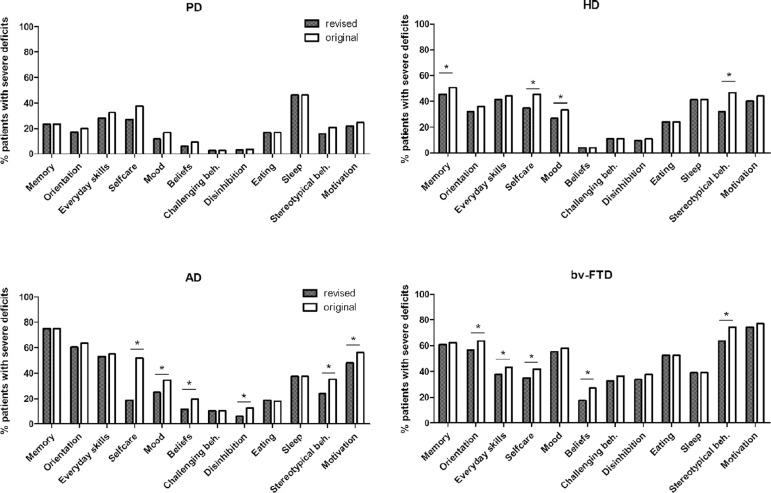
Abstract Neurobehavioural and psychiatric symptoms are common in a range of neurodegenerative disorders with distinct profiles which are helpful in the diagnosis and monitoring of these disorders. The Cambridge Behavioural Inventory (CBI) has been shown to distinguish frontotemporal dementia (FTD), Alzheimer's disease (AD), Huntington's disease (HD) and Parkinson's disease (PD), but it is lengthy. Objective: To develop a shorter version of the 81 item CBI. Methods: CBI data from 450 participants with behavioural variant frontotemporal dementia (bv-FTD) (64), AD (96), PD (215) and HD (75) were analysed using Principal Components Analysis and measures of internal consistency (Cronbach alpha). Results: A reduced 45-item questionnaire was developed. The instrument identified distinct behavioural profiles and performed as well as the original version. Conclusions: A shorter (45 item) version of the CBI is capable of differentiating bv-FTD and AD from PD and HD. It may be useful in delineating the type and extent of problems in these disorders as well as monitoring therapeutic interventions.
Overview
The claims and statistics of this paper haven’t been checked yet.
Free: it reads the open-access text and checks the first 5 claims that cite a source we can check. Create a free account to check every claim.
Integrity signals
Registry
Cites
Statistics
Figures
Verification
Claims the paper makes
The claims and statistics of this paper haven’t been checked yet.
Free: it reads the open-access text and checks the first 5 claims that cite a source we can check. Create a free account to check every claim.
Claims other papers make about this one
Each is checked against this paper’s own text: does it say what the citing paper says it does?
The cited source says what the claim attributes to it.
In the citing paper
“Similar to the FBI, the Cambridge Behavioral Inventory-Revised (CBI-R) assesses frequency of FTD-related symptoms (Nagahama et al., 2006; Wear et al., 2008).”
From The pursuit for markers of disease progression in behavioral variant frontotemporal dementia: a scoping review to optimize outcome measures for clinical trials (2024) · cites this paper as Wear et al., 2008
Self-check
Percentages, sums and reported differences re-computed from the paper’s own numbers.
The self-check needs the paper’s full text.
Citations
Cites
Folstein, M. F., Folstein, S. E., & McHugh, P. R. (1975) · Journal of Psychiatric Research · doi:10.1016/0022-3956(75)90026-6 · Cited by 88,282
McKhann, G., Drachman, D., Folstein, M., Katzman, R., Price, D., & Stadlan, E. M. (1984) · Neurology · doi:10.1212/wnl.34.7.939 · Cited by 27,915
Hirono, N., Mori, E., Ikejiri, Y., Imamura, T., Shimomura, T., Hashimoto, M., Yamashita, H., & Ikeda, M. (1997) · Brain and nerve · Cited by 21,030
Kok, J. S., Berg, I. J., & Scherder, E. J. A. (2013) · Dementia and Geriatric Cognitive Disorders Extra · doi:10.1159/000353441 · Cited by 20,589
Older Adults' Reasons for Using Technology while Aging in Place
Peek, S. T. M., Luijkx, K. G., Rijnaard, M. D., Nieboer, M. E., van der Voort, C. S., Aarts, S., van Hoof, J., Vrijhoef, H. J. M., & Wouters, E. J. M. (2016) · Gerontology · doi:10.1159/000430949 · Cited by 19,690
Sensitivity and False Alarm Rate of a Fall Sensor in Long-Term Fall Detection in the Elderly
Kangas, M., Korpelainen, R., Vikman, I., Nyberg, L., & Jämsä, T. (2015) · Gerontology · doi:10.1159/000362720 · Cited by 18,909
The Neuropsychiatric Inventory: Comprehensive assessment of psychopathology in dementia
Cummings, J. L., Mega, M., Gray, K., Rosenberg-Thompson, S., Carusi, D. A., & Gornbein, J. (1994) · Neurology · doi:10.1212/wnl.44.12.2308 · Cited by 7,568 · cited 1×
“Several scales are available to detect behavioural change, perhaps the best known of which is the Neuropsychiatric Inventory (NPI).(9) The NPI is a carer-based interview designed DOI: 10.”
BackgroundStatistics notes: Cronbach's alpha: Table 1
Bland, J. M., & Altman, D. G. (1997) · BMJ · doi:10.1136/bmj.314.7080.572 · Cited by 5,300
Frontotemporal lobar degeneration: A consensus on clinical diagnostic criteria
Neary, D., Snowden, J. S., Gustafson, L., Passant, U., Stuss, D., Black, S., Freedman, M., Kertesz, A., Robert, P. H., Albert, M., et al. (1998) · Neurology · doi:10.1212/wnl.51.6.1546 · Cited by 5,047
Non-motor symptoms of Parkinson's disease: diagnosis and management
Chaudhuri, K. R., Healy, D. G., & Schapira, A. H. (2006) · The Lancet Neurology · doi:10.1016/s1474-4422(06)70373-8 · Cited by 2,807 · cited 2×
“In PD, the overall rate of symptom endorsement by caregivers is low, although the high rate of sleep dysfunction deserves further exploration.(6) Seriously disruptive and challenging behaviour had a surprisingly low prevalence in HD except for stereotypic patterns of behaviour and poor motivation, which may reflect se…”
Background
Cited by
Items 101–200 of 250
Singh, N. A., Goodrich, A. W., Graff‐Radford, J., Machulda, M. M., Sintini, I., Carlos, A. F., Robinson, C. G., Reid, R. I., Lowe, V. J., Jack, C. R., et al. (2024) · NeuroImage · doi:10.1016/j.neuroimage.2024.120564 · Cited by 22
“…1994; Seckin et al., 2020), the Cognitive Behavioral Inventory-revised version (CBI-R) subtest to evaluate presence or absence of hallucinations (Wear et al., 2008), the Rey Auditory Verbal Learning Test – Recognition Percent Correct (AVLT-RPC) to measure episodic memory (Rey, 1958) and the…”
MethodWilson, N., Ahmed, R. M., Piguet, O., & Irish, M. (2024) · Journal of the Neurological Sciences · doi:10.1016/j.jns.2024.122902 · Cited by 21
A memory clinic v. traditional community mental health team service: comparison of costs and quality
Rubinsztein, J. S., van Rensburg, M. J., Al‐Salihy, Z., Girling, D. M., Lafortune, L., Radhakrishnan, M., & Brayne, C. (2015) · BJPsych Bulletin · doi:10.1192/pb.bp.113.044263 · Cited by 22
“Some structured questionnaires (e.g. EQ-5D, 33 Cambridge Behavioural Inventory 31 ) were sent to patients and carers before the actual appointment in the MCS group.”
Behavioural changes in frontotemporal dementia and their cognitive and neuroanatomical correlates
Rouse, M. A., Husain, M., Garrard, P., Patterson, K. E., Rowe, J. B., & Ralph, M. A. L. (2025) · Brain · doi:10.1093/brain/awaf061 · Cited by 22
“The Cambridge Behavioural Inventory-Revised (CBI-R) measures behavioural change in neurodegenerative disorders 12,43 and includes 45 items that cover 10 domains: Memory and Orientation; Everyday Skills; Self-Care; Abnormal Behaviour; Mood, Beliefs; Eating Habits; Sleep; Stereotypic and Motor…”
Whitwell, J. L., Martin, P. R., Graff-Radford, J., Machulda, M. M., Sintini, I., Buciuc, M., Senjem, M. L., Schwarz, C. G., Botha, H., Carrasquillo, M. M., et al. (2022) · Neurology · doi:10.1212/wnl.0000000000200336 · Cited by 19
Cerebellar and subcortical atrophy contribute to psychiatric symptoms in frontotemporal dementia
Bussy, A., Levy, J. P., Best, T., Patel, R., Cupo, L., Langenhove, T. V., Nielsen, J. E., Pijnenburg, Y. A. L., Waldö, M. L., Remes, A. M., et al. (2023) · Human Brain Mapping · doi:10.1002/hbm.26220 · Cited by 21
Lima-Silva, T. B., Mioshi, E., Bahia, V. S., Cecchini, M. A., Cassimiro, L., Guimarães, H. C., Gambogi, L. B., Caramelli, P., Balthazar, M., Damasceno, B., et al. (2021) · Journal of Geriatric Psychiatry and Neurology · doi:10.1177/0891988720944239 · Cited by 18
Self-citationWhiteside, D. J., Holland, N., Tsvetanov, K. A., Mak, E., Malpetti, M., Savulich, G., Jones, P. S., Naessens, M., Rouse, M. A., Fryer, T. D., et al. (2023) · Nature Communications · doi:10.1038/s41467-023-44307-7 · Cited by 19
“Participants underwent study-speci fi c clinical and neuropsychological assessment including the Mini-mental State Exam (MMSE 57 , revised Addenbrooke ’ s Cognitive Examination (ACE-R) 58 , Progressive Supranuclear Palsy Rating Scale (PSPRS) 59 , and the Cambridge Behavioural Inventory-Revised 60 .”
MethodCognitive impairment in Parkinson's disease is multifactorial: A neuropsychological study
Smith, C., Cullen, B., Sheridan, M. P., Cavanagh, J., Grosset, K. A., & Grosset, D. G. (2020) · Acta Neurologica Scandinavica · doi:10.1111/ane.13226 · Cited by 19
Evidence for a pervasive autobiographical memory impairment in Logopenic Progressive Aphasia
Ramanan, S., Foxe, D., El-Omar, H., Ahmed, R. M., Hodges, J. R., Piguet, O., & Irish, M. (2021) · Neurobiology of Aging · doi:10.1016/j.neurobiolaging.2021.09.004 · Cited by 18
Self-citationLagarde, J., Olivieri, P., Tonietto, M., Gervais, P., Comtat, C., Caillé, F., Bottlaender, M., & Sarazin, M. (2021) · Translational Psychiatry · doi:10.1038/s41398-021-01628-9 · Cited by 19
“We defined a verbal episodic memory score as the sum of the scores obtained for the free and cued recalls of the FCSRT. Behavioural changes in daily living were assessed by the response provided by an informant to the revised version of the Cambridge Behavioural Inventory [28].”
MethodInfluentialVivash, L. E., Malpas, C. B., Meletis, C., Gollant, M., Eratne, D., Li, Q., McDonald, S. J., O’Brien, W. T., Brodtmann, A. G., Darby, D., et al. (2022) · Alzheimer s & Dementia Translational Research & Clinical Interventions · doi:10.1002/trc2.12299 · Cited by 18
Olfactory bulb integrity in frontotemporal dementia and Alzheimer’s disease
Carnemolla, S. E., Kumfor, F., Liang, C. T., Foxe, D., Ahmed, R. M., & Piguet, O. (2022) · Journal of Alzheimer’s Disease · doi:10.3233/jad-220080 · Cited by 16
“Symptoms of smell loss were established from items from the Cam-bridge Behavioural Inventory Revised (CBI-R) [63] and the Appetite and Eating Habits Questionnaire (APEHQ)[64].”
Martins, A. P., Prado, L. D. G. R., Lillo, P., Mioshi, E., Teixeira, A. L., & de Souza, L. C. (2018) · Journal of Neuropsychiatry · doi:10.1176/appi.neuropsych.18040086 · Cited by 18
Self-citationDefining repetitive behaviours in frontotemporal dementia
Restrepo-Martínez, M., Ramirez-Bermudez, J., Chacon-Gonzalez, J., Ruiz-Garcia, R., Malik, R., & Finger, E. (2024) · Brain · doi:10.1093/brain/awad431 · Cited by 15
Kumfor, F., Liang, C. T., Hazelton, J. L., Leyton, C. E., Kaizik, C., Devenney, E. M., Connaughton, E., Langdon, R. A., Mioshi, E., Kwok, J. B., et al. (2022) · International Journal of Geriatric Psychiatry · doi:10.1002/gps.5692 · Cited by 15
“Behavioural change was assessed using the Cambridge Behavioural Inventory‐Revised informant questionnaire (CBI‐R).(29)”
MethodSelf-citationVivash, L. E., Malpas, C. B., Churilov, L. P., Walterfang, M., Brodtmann, A. G., Piguet, O., Ahmed, R. M., Bush, A. I., Hovens, C. M., Kalinčík, T., et al. (2020) · BMJ Open · doi:10.1136/bmjopen-2020-040100 · Cited by 15
Perry, A., Hughes, L. E., Adams, N., Naessens, M., Murley, A. G., Rouse, M. A., Street, D., Jones, P. S., Cope, T., Kocagöncü, E., et al. (2022) · Translational Psychiatry · doi:10.1038/s41398-022-02114-6 · Cited by 19
“A close informant completed the revised Cambridge Behavioural Inventory (CBI-R) [62] and Frontotemporal Dementia Rating Scale (FRS) [63].”
MethodFieldhouse, J. L. P., van Dijk, G., Gillissen, F., van Engelen, M. E., de Boer, S. C. M., Dols, A., van der Waal, H., Regeer, B. J., Vijverberg, E. G. B., & Pijnenburg, Y. A. L. (2022) · Psychogeriatrics · doi:10.1111/psyg.12898 · Cited by 17
da Silva, T. B. L., Bahia, V. S., Cecchini, M. A., Cassimiro, L., Guimarães, H. C., Gambogi, L. B., Caramelli, P., Balthazar, M. L. F., Damasceno, B. P., Brucki, S. M. D., et al. (2018) · Alzheimer Disease & Associated Disorders · doi:10.1097/wad.0000000000000246 · Cited by 15
Self-citationImpaired semantic control in the logopenic variant of primary progressive aphasia
Henderson, S. K., Ramanan, S., Rouse, M. A., Cope, T., Halai, A. D., Patterson, K. E., Rowe, J. B., & Ralph, M. A. L. (2024) · Brain Communications · doi:10.1093/braincomms/fcae463 · Cited by 17
Piguet, O., Clarke, A. J., Foxe, D., Tse, N. Y., Teng, C., Burrell, J. R., Cheung, S. C., Carrick, J., Devenney, E. M., Halliday, G. M., et al. (2025) · Alzheimer s & Dementia · doi:10.1002/alz.70604 · Cited by 14
“E) were assessed using one clinician-basedinstrument:theCambridgeBehaviouralInventory-Revised(CBI-R; covering Criteria A, B, D, and E), 27 and three informant-based instruments: the Interpersonal Reactivity Index (IRI; covering Criterion C), 28 the Frontal Systems Behavior Scale Family Rating…”
Self-citationDevelopments in the assessment of non-motor disease progression in amyotrophic lateral sclerosis
Chiò, A., Canosa, A., Calvo, A., Moglia, C., Cicolin, A., & Mora, G. (2021) · Expert Review of Neurotherapeutics · doi:10.1080/14737175.2021.1984883 · Cited by 14
“Psychosis assessment tools used for ALS patients include the beliefs subscale of the Cambridge Behavioral InventoryRevised (CBI-R) completed by the caregiver [73], and the Cardiff Anomalous Perceptions Questionnaire (CAPS) [74], a validated questionnaire developed to probe psychosis proneness and abnormal perceptions…”
MethodQuality of Life Ratings and Proxy Bias in Primary Progressive Aphasia: Two Sides to the Story?
Ruggero, L., Croot, K., & Nickels, L. (2023) · American Journal of Alzheimer s Disease & Other Dementias® · doi:10.1177/15333175231177668 · Cited by 14
“26 For proxy participants, brief demographic details were collected with the Cambridge Behavioural Inventory-Revised Edition , 27 a measure of proxy-rated behavioral symptoms with reference to the person with PPA.”
MethodWhiteside, D. J., Street, D., Murley, A. G., Jones, P. S., Malpetti, M., Ghosh, B. C. P., Coyle-Gilchrist, I. T. S., Gerhard, A., Hu, M. T., Klein, J. C., et al. (2023) · Human Brain Mapping · doi:10.1002/hbm.26342 · Cited by 15
“For the PSPRS, Component 1 was included in the final model (Table S3), with Component 2 in the final model for ACER (Table S4), and both components for the CBIR (Table S5).”
MethodHorne, K., Ahmed, R. M., Piguet, O., & Irish, M. (2023) · European Journal of Neurology · doi:10.1111/ene.16132 · Cited by 15
“In the absence of a validated instrument measuring rigidity in dementia, we derived a composite ‘rigidity index’ from selected items of the Cambridge Behavioural Inventory-Revised (CBI-R) [12].”
MethodSingh, N. A., Graff‐Radford, J., Machulda, M. M., Carlos, A. F., Schwarz, C. G., Senjem, M. L., Jack, C. R., Lowe, V. J., Josephs, K. A., & Whitwell, J. L. (2024) · Journal of Neurology · doi:10.1007/s00415-024-12297-1 · Cited by 14
“…general cognitive function [23], Ishihara test to assess color vision [24], Cambridge Behavioral Inventory (CBI) to assess behavioral changes [25], the Neuropsychiatric Inventory questionnaire (NPI-Q) to assess for neuropsychiatric features [26] and the WAB ideomotor apraxia (WAB praxis)…”
Rabin, L. A., Quinn, C. G., Nester, C. O., Ellis, L., & Paré, N. (2021) · Aging Neuropsychology and Cognition · doi:10.1080/13825585.2020.1859081 · Cited by 14
“…et al., 2005), Brief Informant Form of Neurobehavioral Symptomatology (BINS; Paré et al., 2020); Cambridge Behavioural Inventory (CBI-revised; Wear et al., 2008), Cognitive Change Index (CCI; Rattanabannakit et al., 2016); Measurement of Everyday Cognition (ECog; Farias et al., 2008), and…”
BackgroundJiskoot, L. C., Russell, L. L., Peakman, G., Convery, R. S., Greaves, C. V., Bocchetta, M., Poos, J. M., Seelaar, H., Giannini, L., Swieten, J. C. V., et al. (2023) · Journal of the Neurological Sciences · doi:10.1016/j.jns.2023.120590 · Cited by 14
“Knowledgeable informants answered questions about behavioural and cognitive symptoms as well as the participant's activities of daily living in a structured interview which included two questionnaires (Cambridge Behavioural Inventory – Revised (CBI-R) [24] and Frontotemporal Dementia Rating Scale (FRS) [25].”
InfluentialBasta, M., Simos, N. J., Zioga, M., Zaganas, I. V., Panagiotakis, S., Lionis, C. D., & Vgontzas, A. N. (2022) · International Journal of Medical Informatics · doi:10.1016/j.ijmedinf.2022.104966 · Cited by 14
Williams, R. S., Adams, N., Hughes, L. E., Rouse, M. A., Murley, A. G., Naessens, M., Street, D., Holland, N., & Rowe, J. B. (2023) · Scientific Reports · doi:10.1038/s41598-023-35758-5 · Cited by 13
Cognitive and neuropsychiatric profiles distinguish atypical parkinsonian syndromes
Hu, M. T., Querejeta, A., Rowe, J. B., Zerenner, T., Church, A., Fumi, R., Costantini, A. A., Jabbari, E., Jensen, M. T., Gerhard, A., et al. (2025) · Brain · doi:10.1093/brain/awaf132 · Cited by 12
“Most patients with PSP, CBS and MSA (PROSPECT-M cohort) had the Cambridge Behavioural Inventory Revised (CBI-R) assessment, 29,30 which provided more detailed observations of neuropsychiatric features including apathy and impulsivity.”
Devenney, E. M., McErlean, K., Tse, N. Y., Caga, J., Dharmadasa, T., Huynh, W., Mahoney, C., Zoing, M. C., Mazumder, S., Dobson‐Stone, C., et al. (2021) · Frontiers in Neurology · doi:10.3389/fneur.2021.743688 · Cited by 12
“ACE, Addenbrooke’s Cognitive Examination; CBI-R, the revised Cambridge behavioral Inventory.”
MethodSelf-citationKrishnadas, N., Chew, M., Sutherland, A., Christensen, M., Rogers, K., Kyndt, C., Islam, F., Darby, D., & Brodtmann, A. G. (2024) · Neurology Clinical Practice · doi:10.1212/cpj.0000000000200360 · Cited by 13
Cushing, N., Jang, J. Y., O’Connor, C. M. C., Burrell, J. R., Clemson, L. M., Hodges, J. R., & Mioshi, E. (2013) · Parkinsonism & Related Disorders · doi:10.1016/j.parkreldis.2013.01.002 · Cited by 12
“had undergone the Addenbrooke’s cognitive examination revised (ACE-R) [18] and the Cambridge behavioural inventory-revised (CBI-R) [19] within 6 months of ADL assessment, and 4) had no confounding variables such as major depression or major physical disability such as being wheelchair bound at home.”
MethodSelf-citationDisease-modifying effects of TMEM106B in genetic frontotemporal dementia: a longitudinal GENFI study
Mirza, S. S., Pasternak, M. M., Paterson, A. D., Rogaeva, E. A., Tartaglia, M. C., Mitchell, S. B., Black, S. E., Freedman, M., Tang‐Wai, D. F., Bouzigues, A., et al. (2025) · Brain · doi:10.1093/brain/awaf019 · Cited by 11
Jiskoot, L. C., Russell, L. L., Greaves, C. V., van Schaik, E., van den Berg, E., Poos, J. M., de Boer, L., Kaat, L. D., Seelaar, H., Pijnenburg, Y. A. L., et al. (2023) · Journal of Neurology · doi:10.1007/s00415-023-11596-3 · Cited by 11
“Additionally, we administrated the Mini-Mental State Examination [27], FTD Rating Scale (FRS; [19]), and Cambridge Behavioural Inventory Revised (CBI-R; [17]) to all participants apart from patients with logopenic variant PPA and primary psychiatric disorders.”
Borrego‐Écija, S., Juncà‐Parella, J., Vandebergh, M., Pérez‐Millan, A., Balasa, M., Lladó, A., Bouzigues, A., Russell, L. L., Foster, P. H., Ferry‐Bolder, E., et al. (2024) · Neurology · doi:10.1212/wnl.0000000000209944 · Cited by 11
Go, C., Mioshi, E., Yew, B., Hodges, J. R., & Hornberger, M. (2012) · Dementia & Neuropsychologia · doi:10.1590/s1980-57642012dn06010003 · Cited by 11
Self-citationSpanish Adaptation of the Dimensional Apathy Scale (DAS) in Amyotrophic Lateral Sclerosis
Salas, T., Radaković, R., Rodriguez-Castillo, V., Marín, S., Chaverri, D., & Rodríguez-Santos, F. (2020) · Frontiers in Neurology · doi:10.3389/fneur.2020.562837 · Cited by 10
“This symptom is measured using tests that do not take into consideration the physical impairment of patients, such as the Frontal Systems Behavior Scale (FrSBe) (7), or it is assessed globally as part of other behavioral and psychiatric disorders as is the case of the Cambridge Behavioral Inventory revised (CBIR) (8),…”
MethodLongitudinal changes in functional capacity in frontotemporal dementia and Alzheimer's disease
Foxe, D., Irish, M., Cheung, S. C., D’Mello, M., Hwang, Y. T., Muggleton, J., Cordato, N. J., & Piguet, O. (2024) · Alzheimer s & Dementia Diagnosis Assessment & Disease Monitoring · doi:10.1002/dad2.70028 · Cited by 10
Kwan, E., Draper, B., Endre, Z. H., Harvey, S. B., & Brown, M. A. (2020) · Internal Medicine Journal · doi:10.1111/imj.14976 · Cited by 10
Olivieri, P., Hamelin, L., Lagarde, J., Hahn‐Barma, V., Guichart-Gomez, E., Roué-Jagot, C., & Sarazin, M. (2021) · Alzheimer s Research & Therapy · doi:10.1186/s13195-021-00829-0 · Cited by 10
“In addition, we assessed social life changes and cognitive (memory) anosognosia by the Cambridge Behavioural Inventory Revised Scale (CBI-R) [7] and the Mc Nair scale, which were filled both by the patients and their caregiver.”
Methodde Boer, S. C. M., Riedl, L., Fenoglio, C., Rue, I., Landín-Romero, R., Matis, S., Chatterton, Z., Galimberti, D., Halliday, G. M., Diehl‐Schmid, J., et al. (2023) · Journal of Alzheimer s Disease · doi:10.3233/jad-230829 · Cited by 10
“The Cambridge Behavioral Inventory Revised (CBI-R) is a 45-item questionnaire to determine the frequency and severity of the neuropsychiatric and psychiatric symptoms in neurodegenerative disorders [26]. monitors the presence and frequency of autonomic symptoms, often reported in bvFTD [29, 30].”
Trucco, A. P., Backhouse, T., & Mioshi, E. (2024) · Current Opinion in Neurology · doi:10.1097/wco.0000000000001293 · Cited by 9
“Stakeholder consultation revealed overall agreement in the proposed seven categories, except for one, which initially was called ‘sexual dysfunction’ and combined both increased and decreased interest in sex.”
Self-citationMild cognitive impairment in Aboriginal Australians
Derrig, H., Lavrencic, L. M., Broe, G. A., Draper, B., Cumming, R. G., Garvey, G., Hill, T. Y., Daylight, G., Chalkley, S., Mack, H. A., et al. (2020) · Alzheimer s & Dementia Translational Research & Clinical Interventions · doi:10.1002/trc2.12054 · Cited by 10
Fieldhouse, J. L. P., van Paassen, D. N., van Engelen, M.-P. E., De Boer, S. C. M., Hartog, W. L., Braak, S., Schoonmade, L. J., Schouws, S. N. T. M., Krudop, W. A., Oudega, M. L., et al. (2024) · Frontiers in Aging Neuroscience · doi:10.3389/fnagi.2024.1382593 · Cited by 8
GABAergic modulation of beta power enhances motor adaptation in frontotemporal lobar degeneration
Hughes, L. E., Adams, N., Rouse, M. A., Naessens, M., Shaw, A. D., Murley, A. G., Cope, T., Holland, N., Nesbitt, D., Street, D., et al. (2025) · Alzheimer s & Dementia · doi:10.1002/alz.14531 · Cited by 9
Best, P. T., Swieten, J. C. V., Jiskoot, L. C., Moreno, F., Sánchez‐Valle, R., Laforce, R. J., Graff, C., Masellis, M., Tartaglia, M. C., Rowe, J. B., et al. (2024) · Neurology · doi:10.1212/wnl.0000000000209829 · Cited by 8
Heterogeneity of behavioural and language deficits in FTD–MND
Long, Z., Irish, M., Foxe, D., Hodges, J. R., Piguet, O., & Burrell, J. R. (2021) · Journal of Neurology · doi:10.1007/s00415-021-10451-7 · Cited by 9
“FTD–MND patients demonstrated greater overall levels of behavioural disturbance than nfvPPA (CBI-R total: p < 0.001; CBI-R subdomains: all p ≤ 0.005).”
MethodInfluentialSelf-citationCamino, J., Kishita, N., Brígola, A. G., Rubinsztein, J. S., Khondoker, M. R., & Mioshi, E. (2021) · International Journal of Geriatric Psychiatry · doi:10.1002/gps.5607 · Cited by 8
Self-citationA single centre prospective study of three device-assisted therapies for Parkinson’s disease
Morales‐Briceño, H., Ha, A. D., Chiang, H., Tai, Y., Chang, F., Tsui, D. S., Griffith, J., Galea, D., Kim, S. D., Cruse, B., et al. (2023) · npj Parkinson s Disease · doi:10.1038/s41531-023-00525-w · Cited by 8
Clough, A. J., Hilmer, S. N., Naismith, S. L., & Gnjidic, D. (2019) · Healthcare · doi:10.3390/healthcare7040161 · Cited by 8
“It has 45 questions, scored on a scale of 0 to 4 with larger scores indicating more frequent problems [22].”
BackgroundThe CBI‐R detects early behavioural impairment in genetic frontotemporal dementia
Nelson, A., Russell, L. L., Peakman, G., Convery, R. S., Bouzigues, A., Greaves, C. V., Bocchetta, M., Cash, D. M., Swieten, J. C. V., Jiskoot, L. C., et al. (2022) · Annals of Clinical and Translational Neurology · doi:10.1002/acn3.51544 · Cited by 8
“…(NPI) 6 which do not encompass all the core diagnostic features of FTD, the Cam-bridge Behavioural Inventory was specifically designed to focus on the changes seen in those with bvFTD. 7 The revised version (CBI-R) is a 45-item questionnaire measuring the severity of symptoms across 10 domains.”
de Alcântara, C., Cruzeiro, M. M., França, M. C., Alencar, M. A., Jaeger, A., de Araújo, C. M., da Gama, N. A. S., Camargos, S., & de Souza, L. C. (2023) · Muscle & Nerve · doi:10.1002/mus.27927 · Cited by 9
Shaw, A. D., Hughes, L. E., Moran, R., Coyle-Gilchrist, I. T. S., Rittman, T., & Rowe, J. B. (2018) · bioRxiv (Cold Spring Harbor Laboratory) · doi:10.1101/416388 · Cited by 8
“These scores are qualitatively similar to those of the bvFTD cohort reported by Wear et al. (2008), and are higher than typical CBI scores in Parkinson ’ s disease, Huntington ’ s disease and Alzheimer ’ s disease.”
MethodResultInfluentialVolumetric analysis of hippocampal subregions and subfields in left and right semantic dementia
Carlos, A. F., Weigand, S. D., Duffy, J. R., Clark, H. M., Utianski, R. L., Machulda, M. M., Botha, H., Pham, N. T. T., Lowe, V. J., Schwarz, C. G., et al. (2024) · Brain Communications · doi:10.1093/braincomms/fcae097 · Cited by 8
“Standardized tests performed during the neurological evaluation included the Frontal Assessment Battery (FAB) 61 to assess frontal lobe functions; the Movement Disorder Society-sponsored revision of the Unified Parkinson’s Disease Rating scale (MDS-UPDRS) 62 part III to evaluate parkinsonism and gait disturbances; the…”
Caregiver perspectives enable accurate diagnosis of neurodegenerative disease
Murley, A. G., Bowns, L., Camacho, M., Williams‐Gray, C. H., Tsvetanov, K. A., Rittman, T., Barker, R. A., O'Brien, J. T., & Rowe, J. B. (2024) · Alzheimer s & Dementia · doi:10.1002/alz.14377 · Cited by 7
Self-citationLiu, X., Jones, P. S., Pasternak, M. M., Masellis, M., Bouzigues, A., Russell, L. L., Foster, P. H., Ferry‐Bolder, E., Swieten, J. C. V., Jiskoot, L. C., et al. (2024) · Alzheimer s & Dementia · doi:10.1002/alz.14299 · Cited by 7
Saracino, D., & Ber, I. L. (2022) · Revue Neurologique · doi:10.1016/j.neurol.2022.03.007 · Cited by 7
“When feasible, repeated assessments with appropriate and sensitive tools, such as the Cambridge Behavioral Inventory (CBI-R) [99], could aid to provide quantitative assessments of this often elusive constellation of symptoms [62].”
MethodAtypical Alzheimer’s disease phenotypes with normal or borderline PET biomarker profiles
Singh, N. A., Graff‐Radford, J., Machulda, M. M., Schwarz, C. G., Baker, M., Rademakers, R., Ertekin‐Taner, N., Lowe, V. J., Josephs, K. A., & Whitwell, J. L. (2022) · Journal of Neurology · doi:10.1007/s00415-022-11330-5 · Cited by 7
“The neurological evaluations performed on the PCA and LPA patients included the Montreal Cognitive Assessment Battery (MoCA) for assessing general cognitive function [38], Clinical Dementia Rating sum of boxes (CDR-SB) to assess functional impairment [39], Ishihara test to assess color vision [40], Cambridge Behaviora…”
MethodToś, M., Grażyńska, A., Antoniuk, S., & Siuda, J. S. (2024) · Brain Sciences · doi:10.3390/brainsci14020181 · Cited by 7
“…coming from the ICDs themselves, and used questionnaires such as Addenbrooke’s Cognitive Examination-Revised (ACE-R), Frontal Assessment Battery (FAB), and Cambridge Behavioral Inventory-revised (CBI-R), which are not questionnaires intended for the detailed assessment of individual ICDs [51–53].”
MethodThe Usage of Cognitive Screening Instruments: Test Characteristics and Suspected Diagnosis
Larner, A. J. (2016) · Springer eBooks · doi:10.1007/978-3-319-44775-9_15 · Cited by 9
Regional cerebral blood flow correlates eating abnormalities in frontotemporal dementia
Zhou, Z., Li, X., Jin, Y. J., Zheng, Y., Jia, S., Jiao, J., & Zheng, X. (2019) · Neurological Sciences · doi:10.1007/s10072-019-03910-7 · Cited by 7
Robinson, G. A., & Radaković, R. (2021) · Elsevier eBooks · doi:10.1016/b978-0-12-819641-0.00113-4 · Cited by 7
Rodriguez‐Vieitez, E., Rydell, M. T., Ullgren, A., Montal, V., Illán‐Gala, I., Fortea, J., Jelić, V., Bouzigues, A., Russell, L. L., Foster, P. H., et al. (2025) · Molecular Psychiatry · doi:10.1038/s41380-025-03280-x · Cited by 6
“The CBI-R total score [24 – 26] was used as a marker of FTD-speci fi c functional and/or behavioural changes.”
Lansdall, C. J., Williams, R. S., Coyle-Gilchrist, I. T. S., Murley, A. G., Rouse, M., Bateman, A., & Rowe, J. B. (2026) · PLoS ONE · doi:10.1371/journal.pone.0345545 · Cited by 6
“Carers were invited to complete the CamQUAIT, the Cambridge Behavioural Inventory-Revised (CBI-R) [52] and the Apa-thy Evaluation Scale (AES) [53].”
Zhang, X., Irish, M., Piguet, O., & Ahmed, R. M. (2025) · Journal of Neurology · doi:10.1007/s00415-025-13025-z · Cited by 6
“As an informant-based quantitative questionnaire, it efficiently captures the diverse behavioural manifestations of dementia syndromes and has demonstrated clinical utility in discriminating bvFTD from AD [18].”
Thomas, S. T., Palanikumar, L., Darby, D., & Brodtmann, A. G. (2025) · Cerebral Circulation - Cognition and Behavior · doi:10.1016/j.cccb.2025.100404 · Cited by 6
“In-formants completed the Cambridge Behavioural Inventory – Revised (CBI-R), which includes questions on motivation and apathy, motor stereotypies and emotional changes [19].”
Quality of life implications for elevated trait impulsivity in people with Parkinson’s disease
Jeyadevan, A., Bakeberg, M. C., Byrnes, M. L., Kenna, J. E., McGregor, S., Ghosh, S., Horne, M. K., Stell, R., Evans, T., Mastaglia, F. L., et al. (2023) · Quality of Life Research · doi:10.1007/s11136-022-03321-w · Cited by 6
“The CBI-R is an informant based 45-item questionnaire assessing a range of affective, behavioural, and cognitive symptoms in individuals with neurodegenerative brain diseases [27].”
BackgroundFieldhouse, J. L. P., van Engelen, M. E., Handgraaf, D., de Boer, S. C. M., Hooft, J. J. V. ’., Schouws, S. N. T. M., van Grootheest, D., Kerssens, C. J., Duits, F. H., van Harten, A. C., et al. (2024) · European Journal of Neurology · doi:10.1111/ene.16426 · Cited by 6
“…assessed the frequency of a range of behaviors, through 45 items on a 5-point scale, covering 10 domains (memory and orientation, instrumental activities of daily life, self-care, abnormal behavior, mood, perception, eating habits, sleep, stereo - typical and motor behavior, motivation) [ 23, 24 ].”
BackgroundTröger, J., Baltes, J., Baykara, E., Kasper, E., Kring, M., Linz, N., Robin, J., Schäfer, S., Schneider, A., & Hermann, A. (2023) · Amyotrophic Lateral Sclerosis and Frontotemporal Degeneration · doi:10.1080/21678421.2023.2239312 · Cited by 7
“Clinical Dementia Rating FTD ((35) CDRFTD) [DESCRIBE-FTD only] Consortium to Establish a Registry for Alzheimer’s Disease ((36) CERAD) [DESCRIBE-FTD only] A modified version of the Cambridge Behavioral Inventory ((37) CBI) [DESCRIBEFTD only] Edinburgh Cognitive and Behavioral ALS Screen ((38) ECAS) [DESCRIBE-ALS only]…”
MethodHooft, J. J. V. ’., Benhamou, E., Herreros, C. A., Jiang, J., Levett, B. A., Core, L. B., Requena‐Komuro, M., Hardy, C. J. D., Tijms, B. M., Pijnenburg, Y. A. L., et al. (2024) · Frontiers in Neurology · doi:10.3389/fneur.2024.1341661 · Cited by 6
“Scores on tests assessing musical skills (pitch discrimination, melody recognition) were not significantly associated with CBI-R or MIRI scores in the bvFTD cohort (all p > 0.05).”
BackgroundInfluentialSelf-awareness of memory impairment in Parkinson’s disease: a review of the literature
Bloomfield, J. G., Woods, D. T., & Ludington, J. D. (2016) · Working with Older People · doi:10.1108/wwop-08-2015-0019 · Cited by 6
Wong, J. X. W., Foxe, D., Carrick, J., Ahmed, R. M., Burrell, J. R., & Piguet, O. (2025) · International Journal of Language & Communication Disorders · doi:10.1111/1460-6984.70095 · Cited by 5
Modeling contributions of cognition and apathy to functional impairment in younger‐onset dementia
Warren, S. L., Ahmed, R. M., Piguet, O., Foxe, D., & Irish, M. (2026) · Alzheimer s & Dementia Diagnosis Assessment & Disease Monitoring · doi:10.1002/dad2.70249 · Cited by 5
“37 Apathy was measured using the motivation subscale of the Cam-bridge Behavioural Inventory Revised (CBI-R), 38 which comprises five items probing the frequency of carer-rated motivational disturbances experienced by the patient over the last month.”
Dyer, A. H., Dolphin, H., O’Connor, A., Morrison, L., Sedgwick, G., McFeely, A., Killeen, E., Gallagher, C., Davey, N., Connolly, E., et al. (2023) · BMJ Open · doi:10.1136/bmjopen-2023-077772 · Cited by 5
Lee, K., Kim, S., & Liu, W. (2024) · Geriatric Nursing · doi:10.1016/j.gerinurse.2024.05.005 · Cited by 6
Amyotrophic lateral sclerosis features predict TDP-43 pathology in frontotemporal lobar degeneration
Long, Z., Irish, M., Hodges, J. R., Halliday, G. M., Piguet, O., & Burrell, J. R. (2021) · Neurobiology of Aging · doi:10.1016/j.neurobiolaging.2021.07.004 · Cited by 5
Self-citationDynamic Aphasia as a Variant of Frontotemporal Dementia
Chandregowda, A., Clark, H. M., Duffy, J. R., Machulda, M. M., Lowe, V. J., Whitwell, J. L., & Josephs, K. A. (2021) · Cognitive and Behavioral Neurology · doi:10.1097/wnn.0000000000000289 · Cited by 5
Long, Z., Irish, M., Hodges, J. R., Piguet, O., & Burrell, J. R. (2022) · European Journal of Neurology · doi:10.1111/ene.15518 · Cited by 6
“Behavioural changes were assessed using the Cambridge Behavioural Inventory– Revised (CBI- R) [20].”
MethodSelf-citationTemporal dynamics predict symptom onset and cognitive decline in familial frontotemporal dementia
Whiteside, D. J., Malpetti, M., Jones, P. S., Ghosh, B. C. P., Coyle-Gilchrist, I. T. S., Swieten, J. C. V., Seelaar, H., Jiskoot, L. C., Borroni, B., Sánchez‐Valle, R., et al. (2022) · Alzheimer s & Dementia · doi:10.1002/alz.12824 · Cited by 6
Kumfor, F., & Hodges, J. R. (2017) · doi:10.20584/neuropsychology.33.1_9 · Cited by 4
Self-citation“The DESCRIBE-ALS-FTD study: a prospective multicenter observational study of the ALS-FTD spectrum”
Hermann, A., Prudlo, J., Kasper, E., Synofzik, M., Peters, O., Priller, J., Dinter, E., Wiltfang, J., Zerr, I., Flöel, A., et al. (2025) · Amyotrophic Lateral Sclerosis and Frontotemporal Degeneration · doi:10.1080/21678421.2025.2509617 · Cited by 4
“Patients with bvFTD are diagnosed according to the revised Rascovsky criteria (16), and according to Gorno-Tempini criteria, in the case of primary progressive aphasia (17) (21), the brief questionnaire of the Neuropsychiatric Interview (NPI-Q) (22), and the functional scales CDR-SB, CDR plus NACC FTLD, Functional Act…”
Horne, K., Chen, T., & Irish, M. (2024) · British Journal of Clinical Psychology · doi:10.1111/bjc.12505 · Cited by 4
Wilson, N., Ahmed, R. M., Piguet, O., & Irish, M. (2021) · Brain Sciences · doi:10.3390/brainsci12010020 · Cited by 4
“CBI-R data unavailable for 3 Controls.”
MethodInfluentialFrontotemporal-spectrum disorders and functional independence in non-demented ALS patients
Aiello, E. N., Solca, F., Torre, S., Gentile, F., Scheveger, F., Olivero, M., Colombo, E., Maranzano, A., Manzoni, M., Morelli, C., et al. (2023) · Neurological Sciences · doi:10.1007/s10072-023-07074-3 · Cited by 4
“…degree of FI in ALS is consistent with Mioshi et al.’s [4] results—where the Motivation subscale of the Cambridge Behavioural Inventory-Revised [24] proved to be, along with its Abnormal behaviour subscale and ALSFRS-R-Spinal scores, a significant predictor of the Disability Assessment of…”
ResultFrontostriatal grey matter atrophy in amyotrophic lateral sclerosis A visual rating study
Radaković, R., Puthusseryppady, V., Flanagan, E. C., Kiernan, M. C., Mioshi, E., & Hornberger, M. (2018) · Dementia & Neuropsychologia · doi:10.1590/1980-57642018dn12-040008 · Cited by 4
Self-citationRelationship between tau-PET and quantitative susceptibility mapping in atypical Alzheimer’s disease
Singh, N. A., Satoh, R., Graff‐Radford, J., Machulda, M. M., Lowe, V. J., Josephs, K. A., & Whitwell, J. L. (2025) · Frontiers in Aging Neuroscience · doi:10.3389/fnagi.2025.1615718 · Cited by 3
“…vision (Pache et al., 2003), the Cognitive Behavioral Inventory-revised version (CBI) subtest to evaluate presence or absence of hallucinations (Wear et al., 2008) and a battery of tests to assess simultanagnosia: (i) Ishihara color plates; (ii) images of overlapping line drawings, (iii) color…”
Role of behavioral problems in carer burden in young-onset dementia
Velayudhan, L. (2024) · International Psychogeriatrics · doi:10.1017/s1041610224000127 · Cited by 3
“For the patients, cognition was evaluated with Neuropsychiatry Unit Cognitive Assessment tool (NUCOG) (Walterfang et al ., 2006) and behavioral changes with the Cambridge Behavioral Inventory-Revised (CBI-R) (Wear et al ., 2008).”
Ryan, B., Baker, A. O., Ilse, C., Brickell, K. L., Kersten, H. M., Williams, J. M., Addis, D. R., Tippett, L. J., & Curtis, M. A. (2022) · Journal of the Royal Society of New Zealand · doi:10.1080/03036758.2022.2101483 · Cited by 3
“Study Partners completed the Cambridge Behavioural Inventory Revised (CBI-R; Wear et al. 2008) to measure functional and/or behavioural changes in the previous month; and the Apathy Evaluation Scale Informant (AES-I; Marin et al. 1991a) to measure apathy in the previous month.”
MethodInfluentialKang, M. J., Farrand, S., Evans, A. H., Chiu, W.-H. M., Eratne, D., Kelso, W. M., Walterfang, M., Velakoulis, D., & Loi, S. M. (2023) · International Psychogeriatrics · doi:10.1017/s1041610222001259 · Cited by 4
“The CBI-R is a caregiver-based questionnaire comprising 45 questions divided into ten domains: memory and orientation; everyday skills; self-care; abnormal behavior; mood; beliefs; eating habits; sleep; stereotypic and motor behaviors; and motivation.”
InfluentialSutherland, A., Kyndt, C., Darby, D., Christensen, M., Islam, F., Loi, S. M., & Brodtmann, A. G. (2025) · Alzheimer s & Dementia Diagnosis Assessment & Disease Monitoring · doi:10.1002/dad2.70120 · Cited by 5
White matter hyperintensities in dementia with lewy bodies and posterior cortical atrophy
Singh, N. A., Pham, N. T. T., Graff‐Radford, J., Machulda, M. M., Spychalla, A. J., Senjem, M. L., Petersen, R. C., Lowe, V. J., Boeve, B. F., Jack, C. R., et al. (2025) · Neurobiology of Aging · doi:10.1016/j.neurobiolaging.2025.03.002 · Cited by 3
Durcan, R., Paula, H., Ghosh, B. C. P., Street, D., High, J., McAlister, C., Shepstone, L., Russell, C., Grant, K., Igosheva, N., et al. (2025) · BMJ Open · doi:10.1136/bmjopen-2025-099577 · Cited by 2
Benatar, M. G., Huey, E. D., Onyike, C. U., McHutchison, C. A., Tartaglia, M. C., Barker, M. S., Abrahams, S., Vocht, J. D., Rhodes, E., Pijnenburg, Y. A. L., et al. (2026) · Brain · doi:10.1093/brain/awag300 · Cited by 2
Spilioti, M. G., Kiryttopoulos, A., Panou, Τ., Simos, P. G., Alexopoulos, H., Karafyles, G., Geroukis, T., Kalevrosoglou, I., & Kimiskidis, V. Κ. (2022) · Cognitive and Behavioral Neurology · doi:10.1097/wnn.0000000000000313 · Cited by 2
Robinson, C. G., Coleman, T., Buciuc, M., Singh, N. A., Pham, N. T. T., Machulda, M. M., Graff‐Radford, J., Whitwell, J. L., & Josephs, K. A. (2023) · Journal of Alzheimer s Disease · doi:10.3233/jad-230652 · Cited by 3
“Behavioral and ADL assessment was completed with the Cognitive Behavioral Inventory-revised version (CBI-R) [35] by the caregivers.”
Behavior Symptoms in Primary Progressive Aphasia Variants
Maruta, C., Marôco, J. P., de Mendonça, A., & Guerreiro, M. (2016) · Neuropsychiatric symptoms of neurological disease · doi:10.1007/978-3-319-39138-0_3 · Cited by 3
Roncero, C. T., Popov, A., & Chertkow, H. M. (2021) · Brain stimulation · doi:10.1016/j.brs.2021.02.001 · Cited by 2
“These categories were derived from the Cambridge Behaviour Inventory (CBI), an informant-based questionnaire that assesses behavioural changes across a range of neurodegenerative disorders [2].”
Method
Metadata
- Authors
- Wear, H. J., Wedderburn, C. J., Mioshi, E., Williams-Gray, C. H., Mason, S. L., Barker, R. A., & Hodges, J. R.
- Affiliations
- University of Cambridge (GB)
- Neuroscience Research Australia (AU)
- University of Cambridge, United Kingdom; Addenbrooke's Hospital, United Kingdom
- Corresponding author
- Hodges, John R.
- Venue
- Dementia & Neuropsychologia
- Publisher
- FapUNIFESP (SciELO)
- Published
- 2008-06
- Volume
- 2
- Issue
- 2
- Pages
- 102-107
- ISSN
- 1980-5764 (ISSN-L)
- PMC
- PMC5619578
- OpenAlex
- W2112275614
- Semantic Scholar
- 2387068066d70b90a6e8093ab27d1a68403190c0
- Cited by
- 225
- References
- 29
- Citations by year
- 2026: 9 · 2025: 16 · 2024: 26 · 2023: 22 · 2022: 22 · 2021: 25 · 2020: 19 · 2019: 20 · 2018: 10 · 2017: 4 · 2016: 18 · 2015: 7 · 2014: 8 · 2013: 7 · 2012: 8
- FWCI
- 0.94
- Type
- journal article
- Language
- en
- Open access
- diamond
- doi.org
- Licence
- cc-by
- Locations
- Dementia & Neuropsychologia (publishedVersion, cc-by)
- Europe PMC (PubMed Central) (publishedVersion, cc-by)
- PubMed Central (publishedVersion, cc-by)
- PubMed (publishedVersion)
- LA Referencia (Red Federada de Repositorios Institucionales de Publicaciones Científicas) (publishedVersion, other-oa)
- Americanae (AECID Library) (submittedVersion, other-oa)
- DOAJ (DOAJ: Directory of Open Access Journals) (submittedVersion, cc-by-sa)
- Redalyc (Universidad Autónoma del Estado de México) (submittedVersion)
- UEA Digital Repository (University of East Anglia) (submittedVersion)
- Topics
- Health Sciences › Medicine › Psychiatry and Mental health › Dementia and Cognitive Impairment Research
- Social Sciences › Psychology › Clinical Psychology › Historical and Modern Theater Studies
- Social Sciences › Psychology › Applied Psychology › Psychological Testing and Assessment
- Keywords
- short-form questionnaire, behavioral variant frontotemporal dementia, Alzheimer's disease, Parkinson's disease, Huntington's disease, psychiatric symptoms, neurodegenerative diseases, behavioral profiles, instrument development, internal consistency
About these checks
Registry, retraction, Cites and statistics results are computed, not judged, with one exception: a printed reference that no index lists is read once by a model before it counts as a citation error. Claims are extracted by a model and kept only when their quote appears verbatim in the text; each cited source is then checked, with a model’s help, for whether it says what the claim relies on. Those verdicts can be wrong — read the claim’s quote and the cited source before relying on one.
Statistics and arithmetic are recomputed, not judged.
Confidence bands are shown only for fields calibrated on our annotated test set. None is calibrated yet, so no band is shown.
What counts as a claim ›How we measure confidence ›How we check this ›
Are you an author, or do you see a problem with this page? Request a review
Data sources
Bibliographic data: Semantic Scholar, OpenAlex, Crossref.
Contains information from the Semantic Scholar Academic Graph Datasets, made available under the ODC Attribution License (ODC-BY 1.0).
Semantic Scholar’s data is described in: Kinney, R., et al. (2023). The Semantic Scholar Open Data Platform. arXiv:2301.10140.
