

The Cambridge Behavioural Inventory revised
Open accessThe DOI matches its Crossref record; 29 of the 29 references it cites were found in a registry or an index.
Abstract
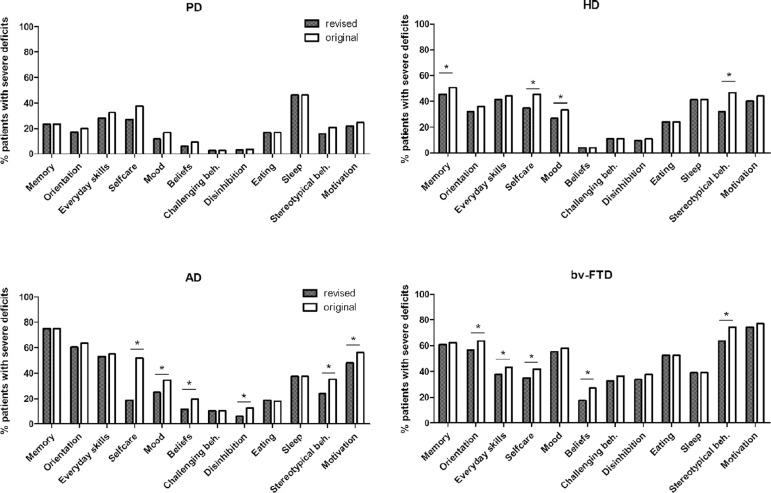
Abstract Neurobehavioural and psychiatric symptoms are common in a range of neurodegenerative disorders with distinct profiles which are helpful in the diagnosis and monitoring of these disorders. The Cambridge Behavioural Inventory (CBI) has been shown to distinguish frontotemporal dementia (FTD), Alzheimer's disease (AD), Huntington's disease (HD) and Parkinson's disease (PD), but it is lengthy. Objective: To develop a shorter version of the 81 item CBI. Methods: CBI data from 450 participants with behavioural variant frontotemporal dementia (bv-FTD) (64), AD (96), PD (215) and HD (75) were analysed using Principal Components Analysis and measures of internal consistency (Cronbach alpha). Results: A reduced 45-item questionnaire was developed. The instrument identified distinct behavioural profiles and performed as well as the original version. Conclusions: A shorter (45 item) version of the CBI is capable of differentiating bv-FTD and AD from PD and HD. It may be useful in delineating the type and extent of problems in these disorders as well as monitoring therapeutic interventions.
Overview
The claims and statistics of this paper haven’t been checked yet.
Free: it reads the open-access text and checks the first 5 claims that cite a source we can check. Create a free account to check every claim.
Integrity signals
Registry
Cites
Statistics
Figures
Verification
Claims the paper makes
The claims and statistics of this paper haven’t been checked yet.
Free: it reads the open-access text and checks the first 5 claims that cite a source we can check. Create a free account to check every claim.
Claims other papers make about this one
Each is checked against this paper’s own text: does it say what the citing paper says it does?
The cited source says what the claim attributes to it.
In the citing paper
“Similar to the FBI, the Cambridge Behavioral Inventory-Revised (CBI-R) assesses frequency of FTD-related symptoms (Nagahama et al., 2006; Wear et al., 2008).”
From The pursuit for markers of disease progression in behavioral variant frontotemporal dementia: a scoping review to optimize outcome measures for clinical trials (2024) · cites this paper as Wear et al., 2008
Self-check
Percentages, sums and reported differences re-computed from the paper’s own numbers.
The self-check needs the paper’s full text.
Citations
Cites
Folstein, M. F., Folstein, S. E., & McHugh, P. R. (1975) · Journal of Psychiatric Research · doi:10.1016/0022-3956(75)90026-6 · Cited by 88,282
McKhann, G., Drachman, D., Folstein, M., Katzman, R., Price, D., & Stadlan, E. M. (1984) · Neurology · doi:10.1212/wnl.34.7.939 · Cited by 27,915
Hirono, N., Mori, E., Ikejiri, Y., Imamura, T., Shimomura, T., Hashimoto, M., Yamashita, H., & Ikeda, M. (1997) · Brain and nerve · Cited by 21,039
Kok, J. S., Berg, I. J., & Scherder, E. J. A. (2013) · Dementia and Geriatric Cognitive Disorders Extra · doi:10.1159/000353441 · Cited by 20,589
Older Adults' Reasons for Using Technology while Aging in Place
Peek, S. T. M., Luijkx, K. G., Rijnaard, M. D., Nieboer, M. E., van der Voort, C. S., Aarts, S., van Hoof, J., Vrijhoef, H. J. M., & Wouters, E. J. M. (2016) · Gerontology · doi:10.1159/000430949 · Cited by 19,690
Sensitivity and False Alarm Rate of a Fall Sensor in Long-Term Fall Detection in the Elderly
Kangas, M., Korpelainen, R., Vikman, I., Nyberg, L., & Jämsä, T. (2015) · Gerontology · doi:10.1159/000362720 · Cited by 18,909
The Neuropsychiatric Inventory: Comprehensive assessment of psychopathology in dementia
Cummings, J. L., Mega, M., Gray, K., Rosenberg-Thompson, S., Carusi, D. A., & Gornbein, J. (1994) · Neurology · doi:10.1212/wnl.44.12.2308 · Cited by 7,568 · cited 1×
“Several scales are available to detect behavioural change, perhaps the best known of which is the Neuropsychiatric Inventory (NPI).(9) The NPI is a carer-based interview designed DOI: 10.”
BackgroundStatistics notes: Cronbach's alpha: Table 1
Bland, J. M., & Altman, D. G. (1997) · BMJ · doi:10.1136/bmj.314.7080.572 · Cited by 5,300
Frontotemporal lobar degeneration: A consensus on clinical diagnostic criteria
Neary, D., Snowden, J. S., Gustafson, L., Passant, U., Stuss, D., Black, S., Freedman, M., Kertesz, A., Robert, P. H., Albert, M., et al. (1998) · Neurology · doi:10.1212/wnl.51.6.1546 · Cited by 5,047
Non-motor symptoms of Parkinson's disease: diagnosis and management
Chaudhuri, K. R., Healy, D. G., & Schapira, A. H. (2006) · The Lancet Neurology · doi:10.1016/s1474-4422(06)70373-8 · Cited by 2,807 · cited 2×
“In PD, the overall rate of symptom endorsement by caregivers is low, although the high rate of sleep dysfunction deserves further exploration.(6) Seriously disruptive and challenging behaviour had a surprisingly low prevalence in HD except for stereotypic patterns of behaviour and poor motivation, which may reflect se…”
Background
Cited by
Hsieh, S., Schubert, S., Hoon, C., Mioshi, E., & Hodges, J. R. (2013) · Dementia and Geriatric Cognitive Disorders · doi:10.1159/000351671 · Cited by 973
Self-citationRohrer, J. D., Nicholas, J. M., Cash, D. M., van Swieten, J., Dopper, E., Jiskoot, L., van Minkelen, R., Rombouts, S. A., Cardoso, M. J., Clegg, S., et al. (2015) · The Lancet Neurology · doi:10.1016/s1474-4422(14)70324-2 · Cited by 538
Ducharme, S., Dols, A., Laforce, R., Devenney, E., Kumfor, F., van den Stock, J., Dallaire-Théroux, C., Seelaar, H., Gossink, F., Vijverberg, E., et al. (2020) · Brain · doi:10.1093/brain/awaa018 · Cited by 320
Self-citationOn the right side? A longitudinal study of left- versus right-lateralized semantic dementia
Kumfor, F., Landin-Romero, R., Devenney, E., Hutchings, R., Grasso, R., Hodges, J. R., & Piguet, O. (2016) · Brain · doi:10.1093/brain/awv387 · Cited by 224
Self-citationPlasma extracellular vesicle tau and TDP-43 as diagnostic biomarkers in FTD and ALS
(2024) · doi:10.1038/s41591-024-02937-4 · Cited by 217
How common are behavioural changes in amyotrophic lateral sclerosis?
Lillo, P., Mioshi, E., Zoing, M. C., Kiernan, M. C., & Hodges, J. R. (2011) · Amyotrophic Lateral Sclerosis · doi:10.3109/17482968.2010.520718 · Cited by 192
“The CBI-R assesses the following domains: memory and orientation, everyday skills, self care, abnormal behaviour, mood, delusions and hallucinations, eating habits, sleep, stereotypical and motor behaviour and motivation (see Appendix 1, which is only available in the online version of the journal.”
BackgroundMethodInfluentialSelf-citationThe Impact of Dementia Severity on Caregiver Burden in Frontotemporal Dementia and Alzheimer Disease
Mioshi, E., Foxe, D., Leslie, F., Savage, S., Hsieh, S., Miller, L., Hodges, J. R., & Piguet, O. (2013) · Alzheimer Disease & Associated Disorders · doi:10.1097/wad.0b013e318247a0bc · Cited by 166
“Patient: Behavioral Change Patients’ behavioral changes were evaluated with the Cambridge Behavioral Inventory Revised (CBI-R).(13) The CBI-R is a caregiver-based questionnaire that comprises 45 questions divided into 10 different domains: memory and orientation; everyday skills; self-care; abnormal behavior; mood; be…”
MethodSelf-citationDermody, N., Wong, S., Ahmed, R., Piguet, O., Hodges, J. R., & Irish, M. (2016) · Journal of Alzheimer's Disease · doi:10.3233/jad-160175 · Cited by 148
“The Cambridge Behavioural Inventory-Revised (CBI-R) [51] was completed by each patient’s carer as an index of behavioral change.”
Self-citationRedefining the multidimensional clinical phenotypes of frontotemporal lobar degeneration syndromes
Murley, A. G., Coyle-Gilchrist, I., Rouse, M. A., Jones, P. S., Li, W., Wiggins, J., Lansdall, C., Rodríguez, P. V., Wilcox, A., Tsvetanov, K. A., et al. (2020) · Brain · doi:10.1093/brain/awaa097 · Cited by 162
“All patients had a clinical phenotypic assessment but other measures (including ACE-R and CBI-R) were subject to missing data.”
InfluentialMultidimensional apathy in ALS: validation of the Dimensional Apathy Scale
Radakovic, R., Stephenson, L., Colville, S., Swingler, R., Chandran, S., & Abrahams, S. (2016) · Journal of Neurology, Neurosurgery & Psychiatry · doi:10.1136/jnnp-2015-310772 · Cited by 126
Alcolea, D., Clarimón, J., Carmona‐Iragui, M., Illán‐Gala, I., Morenas‐Rodríguez, E., Barroeta, I., Ribosa‐Nogué, R., Sala, I., Sánchez‐Saudinós, M. B., Videla, L., et al. (2019) · Alzheimer's & Dementia: Translational Research & Clinical Interventions · doi:10.1016/j.trci.2019.09.005 · Cited by 119
“Extended phonemic verbal fluency test [78,79] Narrative writing of the Boston cookie theft picture [84] and free extensive narrative writing without time constraints (1 full A4 page) Spanish adaptation of the New Adult Reading Test named “Test de acentuaci on de palabras” [104] ttention/executive functions Design flue…”
MethodCations, M., Withall, A., Horsfall, R., Denham, N., White, F., Trollor, J. N., Loy, C. T., Brodaty, H., Sachdev, P. S., Gonski, P. N., et al. (2017) · PLoS ONE · doi:10.1371/journal.pone.0180935 · Cited by 138
When One Loses Empathy: Its Effect on Carers of Patients With Dementia
Hsieh, S., Irish, M., Daveson, N., Hodges, J. R., & Piguet, O. (2013) · Journal of Geriatric Psychiatry and Neurology · doi:10.1177/0891988713495448 · Cited by 121
Self-citationPreventing amyotrophic lateral sclerosis: insights from pre-symptomatic neurodegenerative diseases
Benatar, M. G., Wuu, J., McHutchison, C. A., Postuma, R. B., Boeve, B. F., Petersen, R. C., Ross, C. A., Rosen, H. J., Arias, J. J., Fradette, S., et al. (2021) · Brain · doi:10.1093/brain/awab404 · Cited by 135
“If an interview is not possible, the informant may provide information about behavioural changes using a validated self-completed form (e.g. Cambridge Behaviour Inventory–Revised, 152 Beaumont Behavioural Inventory, 153 Frontal Lobes Systems Behaviour Scale 154 ).”
Neuropsychiatric changes precede classic motor symptoms in ALS and do not affect survival
Mioshi, E., Caga, J., Lillo, P., Hsieh, S., Ramsey, E., Devenney, E., Hornberger, M., Hodges, J. R., & Kiernan, M. C. (2014) · Neurology · doi:10.1212/wnl.0000000000000023 · Cited by 111
Self-citationRice, G. E., Caswell, H., Moore, P., Hoffman, P., & Lambon Ralph, M. A. (2018) · Cerebral Cortex · doi:10.1093/cercor/bhx362 · Cited by 113
“Data from the WASI, the HADS and CBI are reported in Table 2.”
MethodInfluentialDegradation of emotion processing ability in corticobasal syndrome and Alzheimer’s disease
Kumfor, F., Sapey-Triomphe, L.-A., Leyton, C. E., Burrell, J. R., Hodges, J. R., & Piguet, O. (2014) · Brain · doi:10.1093/brain/awu246 · Cited by 99
“The Cambridge Behavioural Inventory-Revised was completed by each participant’s informant to measure behaviour change (Wear et al., 2008).”
MethodSelf-citationGABA and glutamate deficits from frontotemporal lobar degeneration are associated with disinhibition
Murley, A. G., Rouse, M. A., Jones, P. S., Ye, R., Hezemans, F. H., O’Callaghan, C., Frangou, P., Kourtzi, Z., Rua, C., Carpenter, T. A., et al. (2020) · Brain · doi:10.1093/brain/awaa305 · Cited by 100
“Each participant’s closest relative completed the Cambridge Behavioural Inventory-Revised (CBI-R) (Wear et al., 2008) and Frontotemporal Dementia Rating Scale (FRS) (Mioshi et al., 2010).”
MethodCaregiver burden in mild cognitive impairment
Paradise, M., McCade, D., Hickie, I. B., Diamond, K., Lewis, S. J. G., & Naismith, S. L. (2014) · Aging & Mental Health · doi:10.1080/13607863.2014.915922 · Cited by 106
“A measure of participant behaviour and function were obtained using the Cambridge Behavioural Inventory Revised (CBI-R (Wear, 2008)).”
MethodCognitive training for freezing of gait in Parkinson’s disease: a randomized controlled trial
Walton, C. C., Mowszowski, L., Gilat, M., Hall, J. M., O’Callaghan, C., Muller, A. J., Georgiades, M., Szeto, J. Y. Y., Martens, K. A. E., Shine, J. M., et al. (2018) · npj Parkinson s Disease · doi:10.1038/s41531-018-0052-6 · Cited by 105
Bowen, M., Edgar, D. F., Hancock, B., Haque, S. M., Shah, R., Buchanan, S., Iliffe, S., Maskell, S., Pickett, J., Taylor, J., et al. (2016) · Health Services and Delivery Research · doi:10.3310/hsdr04210 · Cited by 117
“The two questionnaires employed were established tools: the Bristol Activities of Daily Living Scale (BADLS)(93) and the Cambridge Behavioural Inventory – Revised (CBI-R).(94) The BADLS was selected as it is a well-established, validated, carer-rated instrument.”
MethodKumfor, F., Zhen, A., Hodges, J. R., Piguet, O., & Irish, M. (2018) · Cortex · doi:10.1016/j.cortex.2018.03.019 · Cited by 87
Self-citationNeuronal pentraxin 2: a synapse-derived CSF biomarker in genetic frontotemporal dementia
van der Ende, E. L., Xiao, M., Xu, D., Poos, J. M., Panman, J. L., Jiskoot, L. C., Meeter, L. H., Dopper, E. G., Papma, J. M., Heller, C., et al. (2020) · Journal of Neurology, Neurosurgery & Psychiatry · doi:10.1136/jnnp-2019-322493 · Cited by 94
Linse, K., Aust, E., Joos, M., & Hermann, A. (2018) · Frontiers in Neurology · doi:10.3389/fneur.2018.00603 · Cited by 84
“These syndromes were reported by caregivers in the questionnaire CBI-R (148), which assesses motivation mainly according to social motivation, e.”
Detailed volumetric analysis of the hypothalamus in behavioral variant frontotemporal dementia
Bocchetta, M., Gordón, E., Manning, E. N., Barnes, J., Cash, D. M., Espak, M., Thomas, D. L., Modat, M., Rossor, M. N., Warren, J. D., et al. (2015) · Journal of Neurology · doi:10.1007/s00415-015-7885-2 · Cited by 95
“Age at scan (years) 56.4 (14.3) 63.3 (9.1) 59.5 (9.0) 65.1 (7.2) Disease duration (years) N/A 9.1 (5.5) 8.0 (5.6) 10.8 (6.4) FRS (/100) N/A 33 (24) 38 (26) 28 (25) Range 3–73 Range 7–73 Range 3–67 Age at onset (years) N/A 54.3 (8.5) 51.4 (6.3) 54.3 (9.8) Education (years) 14.2 (3.0) 14.3 (4.3) 14.2 (4.8) 13.3 (3.9) MM…”
MethodInfluentialFair play: social norm compliance failures in behavioural variant frontotemporal dementia
O’Callaghan, C., Bertoux, M., Irish, M., Shine, J. M., Wong, S., Spiliopoulos, L., Hodges, J. R., & Hornberger, M. (2016) · Brain · doi:10.1093/brain/awv315 · Cited by 83
“The Cambridge Behavioural Inventory-Revised (CBI-R; Wear et al., 2008) was used to assess behavioural disturbance in the patients.”
MethodSelf-citationRamanan, S., Bertoux, M., Flanagan, E., Irish, M., Piguet, O., Hodges, J. R., & Hornberger, M. (2017) · Journal of the International Neuropsychological Society · doi:10.1017/s1355617716000837 · Cited by 90
“All caregivers completed the revised Cambridge Behavioral Inventory (CBI-R: Wear et al., 2008) to determine the severity of behavioral symptoms.”
MethodSelf-citationIdentifying behavioural changes in ALS: Validation of the Beaumont Behavioural Inventory (BBI)
Elamin, M., Pinto‐Grau, M., Burke, T., Bede, P., Rooney, J. P. K., O’Sullivan, M., Lonergan, K., Kirby, E., Quinlan, E., Breen, N., et al. (2016) · Amyotrophic Lateral Sclerosis and Frontotemporal Degeneration · doi:10.1080/21678421.2016.1248976 · Cited by 91
ALS and frontotemporal dysfunction: a review
Achi, E. Y., & Rudnicki, S. A. (2012) · Neurology Research International · doi:10.1155/2012/806306 · Cited by 74
A novel tool to detect behavioural symptoms in ALS
Mioshi, E., Hsieh, S., Caga, J., Ramsey, E., Chen, K., Lillo, P., Simon, N., Vucic, S., Hornberger, M., Hodges, J. R., et al. (2014) · Amyotrophic Lateral Sclerosis and Frontotemporal Degeneration · doi:10.3109/21678421.2014.896927 · Cited by 71
Self-citationLongitudinal change in everyday function and behavioral symptoms in frontotemporal dementia
O'Connor, C. M., Clemson, L., Hornberger, M., Leyton, C. E., Hodges, J. R., Piguet, O., & Mioshi, E. (2016) · Neurology Clinical Practice · doi:10.1212/cpj.0000000000000264 · Cited by 73
“CBI-R data for bvFTD declined across visits: n 5 21, n 5 20, n 5 8, and n 5; for svPPA: n 18, n 15, n 11, and n 5.”
MethodInfluentialSelf-citationApathy is associated with poor prognosis in amyotrophic lateral sclerosis
Caga, J., Turner, M. R., Hsieh, S., Ahmed, R. M., Devenney, E. M., Ramsey, E., Zoing, M. C., Mioshi, E., & Kiernan, M. C. (2016) · European Journal of Neurology · doi:10.1111/ene.12959 · Cited by 77
“These data were supplemented by information obtained from standardized tests and questionnaires that assessed physical status [20], global cognitive function [21], apathy [22] and depression [23].”
MethodSelf-citationComparing Longitudinal Behavior Changes in the Primary Progressive Aphasias
Van Langenhove, T., Leyton, C. E., Piguet, O., & Hodges, J. R. (2016) · Journal of Alzheimer's Disease · doi:10.3233/jad-160010 · Cited by 64
“In this study, we set to investigate the prevalence and course of behavior changes, in a well-characterized cohort of PPA patients, using the Cambridge Behavioural Inventory Revised (CBI-R) questionnaire to assess the typical FTD-like behavior changes [19].”
MethodSelf-citationPrognostic importance of apathy in syndromes associated with frontotemporal lobar degeneration
Lansdall, C. J., Coyle-Gilchrist, I. T. S., Vázquez Rodríguez, P., Wilcox, A., Wehmann, E., Robbins, T. W., & Rowe, J. B. (2019) · Neurology · doi:10.1212/wnl.0000000000007249 · Cited by 66
Cognitive and behavioural inhibition deficits in neurodegenerative dementias
Migliaccio, R., Tanguy, D., Bouzigues, A., Sezer, I., Dubois, B., Ber, I. L., Batrancourt, B. M., Godefroy, V., & Lévy, R. (2020) · Cortex · doi:10.1016/j.cortex.2020.08.001 · Cited by 71
Young, A. L., Bocchetta, M., Russell, L. L., Convery, R. S., Peakman, G., Todd, E., Cash, D. M., Greaves, C. V., van Swieten, J., Jiskoot, L., et al. (2021) · Neurology · doi:10.1212/wnl.0000000000012410 · Cited by 62
“The revised version of the Cambridge Behavioural Inventory (CBI-R) was also performed.(11) The neuropsychological battery included the Wechsler Memory Scale–Revised Digit Span forward and backward (total score), the Trail Making Test (TMT) A and B (total time to complete and number of errors noted), Wechsler Adult Int…”
MethodXu, Z., Alruwaili, A. R., Henderson, R. D., & McCombe, P. (2017) · Journal of the Neurological Sciences · doi:10.1016/j.jns.2017.02.061 · Cited by 64
“However another study found that the apathy measured with the revised version of the Cambridge behavioral inventory (CBI-R) is good indicator of survival [60].”
BackgroundQuality of life in primary progressive aphasia: What do we know and what can we do next?
Ruggero, L., Nickels, L., & Croot, K. (2019) · Aphasiology · doi:10.1080/02687038.2019.1568135 · Cited by 63
“In one study, 35 caregivers to individuals with lvPPA or nfvPPA up to 12 years postdiagnosis reported on the individuals’ mood using the Cambridge Behavioural Inventory (Wear et al., 2008).”
MethodO’Connor (2017) · doi:10.1212/wnl.0000000000004215 · Cited by 60
Presymptomatic studies in genetic frontotemporal dementia
Rohrer, J. D., Warren, J. D., Fox, N. C., & Rossor, M. N. (2013) · Revue Neurologique · doi:10.1016/j.neurol.2013.07.010 · Cited by 56
“Subjects undergo a standardized clinical and neuropsychological assessment (including the revised Cambridge Behavioural Inventory (CBI-R) (Wear et al., 2008), Frontotemporal dementia Rating Scale (FRS) (Mioshi et al., 2010) and the Uniform Data Set (UDS) psychometric battery (Morris et al., 2006))…”
MethodAmyloid- and FDG-PET imaging in amyotrophic lateral sclerosis
Matías‐Guiu, J. A., Pytel, V., Cabrera‐Martín, M. N., Galán, L., Valles‐Salgado, M., Guerrero, A., Moreno‐Ramos, T., Matías‐Guiu, J., & Carreras, J. L. (2016) · European Journal of Nuclear Medicine and Molecular Imaging · doi:10.1007/s00259-016-3434-1 · Cited by 57
Improving Burden and Coping Skills in Frontotemporal Dementia Caregivers: A Pilot Study
Mioshi, E., McKinnon, C., Savage, S. A., O’Connor, C. M. C., & Hodges, J. R. (2012) · Alzheimer Disease & Associated Disorders · doi:10.1097/wad.0b013e31824a7f5b · Cited by 52
“5) 13 (5-69) NS Patient sex, % males 100 67 ** Patients living at home, % 89 92 ** Patient age 64.”
Self-citationFunctional cognitive disorder: what is it and what to do about it?
Pennington, C., Newson, M., Hayre, A., & Coulthard, E. (2015) · Practical Neurology · doi:10.1136/practneurol-2015-001127 · Cited by 49
Wong, S., Flanagan, E., Savage, G., Hodges, J. R., & Hornberger, M. (2014) · PLoS ONE · doi:10.1371/journal.pone.0087778 · Cited by 46
“Based on CBI-R scores, both patient groups showed significantly more symptoms of overall behavioural disturbance compared to age-matched controls (p’s,.001), with a trend towards more severe symptoms in bvFTD compared to AD patients, though this did not survive correction for multiple comparisons (p= .039).”
MethodInfluentialSelf-citationMitchell, E., Tavares, T. P., Palaniyappan, L., & Finger, E. C. (2019) · Cortex · doi:10.1016/j.cortex.2019.09.012 · Cited by 40
The Koori Growing Old Well Study: investigating aging and dementia in urban Aboriginal Australians
Radford, K. A., Mack, H. A., Robertson, H. A., Draper, B., Chalkley, S., Daylight, G., Cumming, R. G., Bennett, H. P., Pulver, L. J., & Broe, G. A. (2014) · International Psychogeriatrics · doi:10.1017/s1041610213002561 · Cited by 53
Locus coeruleus pathology in progressive supranuclear palsy, and its relation to disease severity
Kaalund, S. S., Passamonti, L., Allinson, K. S. J., Murley, A. G., Robbins, T. W., Spillantini, M. G., & Rowe, J. B. (2020) · Acta Neuropathologica Communications · doi:10.1186/s40478-020-0886-0 · Cited by 50
GABAergic cortical network physiology in frontotemporal lobar degeneration
Adams, N. E., Hughes, L. E., Rouse, M. A., Phillips, H. N., Shaw, A. D., Murley, A. G., Cope, T. E., Bevan-Jones, W. R., Passamonti, L., Street, D., et al. (2021) · Brain · doi:10.1093/brain/awab097 · Cited by 47
“, 2000) and the Revised Cambridge Behavioural Inventory (CBI-R) (Wear et al., 2008).”
MethodRadaković, R., Colville, S., Cranley, D., Starr, J. M., Pal, S., & Abrahams, S. (2020) · Journal of Geriatric Psychiatry and Neurology · doi:10.1177/0891988720924716 · Cited by 49
Wong, S., Irish, M., Leshikar, E. D., Duarte, A., Bertoux, M., Savage, G. R., Hodges, J. R., Piguet, O., & Hornberger, M. (2016) · Cortex · doi:10.1016/j.cortex.2016.09.013 · Cited by 49
“In addition, the Cambridge Behavioural Inventory revised (CBI-R) (Wear et al., 2008) was completed by the family or carer, to quantify symptoms of behavioural disturbance, with higher scores indicative of more severe behavioural disturbance.”
Self-citationPredicting loss of independence and mortality in frontotemporal lobar degeneration syndromes
Murley, A. G., Rouse, M. A., Coyle-Gilchrist, I. T. S., Jones, P. S., Li, W., Wiggins, J., Lansdall, C. J., Rodríguez, P. V., Wilcox, A., Patterson, K. E., et al. (2021) · Journal of Neurology Neurosurgery & Psychiatry · doi:10.1136/jnnp-2020-324903 · Cited by 50
Addenbrooke's Cognitive Examination‐Revised for mild cognitive impairment in Parkinson's disease
McColgan, P., Evans, J., Breen, D. P., Mason, S., Barker, R. A., & Williams‐Gray, C. H. (2012) · Movement Disorders · doi:10.1002/mds.25084 · Cited by 48
Self-citationClinical outcomes in the surgical treatment of idiopathic normal pressure hydrocephalus
Shaw, R., Everingham, E., Mahant, N., Jacobson, E. E., & Owler, B. (2016) · Journal of Clinical Neuroscience · doi:10.1016/j.jocn.2015.10.044 · Cited by 50
“Finally, a carer of each patient was asked to rate the patient on the Cambridge Behavioural Inventory Revised (CBI-R) [14].”
MethodRamanan, S., Flanagan, E. C., Leyton, C. E., Villemagne, V. L., Rowe, C. C., Hodges, J. R., & Hornberger, M. (2016) · Journal of Alzheimer s Disease · doi:10.3233/jad-150752 · Cited by 46
“Carersofpatientscompletedaneuropsychi-atricscreeningquestionnaire(CambridgeBehavioral Inventoryrevised,CBI-R[10]).”
Self-citationPremi, E., Calhoun, V. D., Diano, M., Gazzina, S., Cosseddu, M., Alberici, A., Archetti, S., Paternicò, D., Gasparotti, R., van Swieten, J., et al. (2019) · NeuroImage · doi:10.1016/j.neuroimage.2019.01.080 · Cited by 43
“Thus, we considered assessment of behavioural symptoms with the Cambridge Behavioural Inventory Revised version (CBI-R) (Wear et al., 2008), general cognitive function with the Mini-Mental State Examination (MMSE) (Morris et al.”
MethodInfluentialThe prevalence and clinical features of epileptic seizures in a memory clinic population
Baker, J., Libretto, T., Henley, W., & Zeman, A. Z. (2019) · Seizure · doi:10.1016/j.seizure.2019.06.016 · Cited by 45
Atri, A., Dickerson, B. C., Clevenger, C. K., Karlawish, J. H., Knopman, D. S., Lin, P., Norman, M., Onyike, C. U., Sano, M., Scanland, S., et al. (2024) · Alzheimer s & Dementia · doi:10.1002/alz.14335 · Cited by 51
Emotion Evaluation and Social Inference Impairments in Huntington’s Disease
Philpott, A. L., Andrews, S. C., Staios, M., Churchyard, A., & Fisher, F. (2016) · Journal of Huntington s Disease · doi:10.3233/jhd-160190 · Cited by 44
“The CBI-R is a 45-item test with 10 subscales: memory and orientation, everyday skills, self-care, abnormal behaviour, mood, beliefs, eating habits, sleep, stereotypic and motor behaviours, and motivation [28].”
A transdiagnostic review of neuroimaging studies of apathy and disinhibition in dementia
Jenkins, L. M., Wang, L., Rosen, H. J., & Weıntraub, S. (2022) · Brain · doi:10.1093/brain/awac133 · Cited by 51
Early symptoms in symptomatic and preclinical genetic frontotemporal lobar degeneration
Tavares, T. P., Mitchell, D. G. V., Coleman, K. K., Coleman, B. L., Shoesmith, C. L., Butler, C. R., Santana, I., Danek, A., Gerhard, A., de Mendonca, A., et al. (2020) · Journal of Neurology, Neurosurgery & Psychiatry · doi:10.1136/jnnp-2020-322987 · Cited by 39
Evolving brain structural changes in PSEN1 mutation carriers
Sala‐Llonch, R., Lladó, A., Fortea, J., Bosch, B., Antonell, A., Balasa, M., Bargalló, N., Bartrés‐Faz, D., Molinuevo, J. L., & Sánchez‐Valle, R. (2014) · Neurobiology of Aging · doi:10.1016/j.neurobiolaging.2014.12.022 · Cited by 41
The Neuropsychiatric Examination of the Young-Onset Dementias
Ducharme, S., & Dickerson, B. C. (2015) · Psychiatric Clinics of North America · doi:10.1016/j.psc.2015.01.002 · Cited by 44
Memory Compensation Strategies in Older People with Mild Cognitive Impairment
Lin, P., LaMonica, H. M., Naismith, S. L., & Mowszowski, L. (2020) · Journal of the International Neuropsychological Society · doi:10.1017/s1355617719000912 · Cited by 39
“…a 45-item questionnaire relating to cognitive and behavioural changes, whereby higher scores indicate higher frequency of symptoms (Wear et al., 2008), and the Revised Memory and Behaviour Checklist, a 24-item questionnaire assessing observable cognitive and behavioural problems…”
BackgroundMethodSablonnière, J. D. L., Tastevin, M., Lavoie, M., & Laforce, R. J. (2021) · Brain Sciences · doi:10.3390/brainsci11091209 · Cited by 42
“The Cambridge Behavioural Inventory-Revised (CBI-R) [43]”
MethodInfluentialPronounced Impairment of Everyday Skills and Self-Care in Posterior Cortical Atrophy
Shakespeare, T. J., Yong, K. X. X., Foxe, D., Hodges, J. R., & Crutch, S. J. (2014) · Journal of Alzheimer s Disease · doi:10.3233/jad-141071 · Cited by 38
“Since its inception, it has been revised (CBI-R) to reduce the number of items from 81 to 45, while retaining the most informative items for comparing tAD with frontotemporal dementia [7].”
Self-citationSani, T. P., Bond, R. L., Marshall, C. R., Hardy, C. J. D., Russell, L. L., Moore, K. M., Slattery, C. F., Paterson, R. W., Woollacott, I., Wendi, I. P., et al. (2019) · eNeurologicalSci · doi:10.1016/j.ensci.2019.100212 · Cited by 38
Blanc, G. L., Pomerleau, V. J., McCarthy, J., Borroni, B., Swieten, J. C. V., Galimberti, D., Sánchez‐Valle, R., Laforce, R. J., Moreno, F., Synofzik, M., et al. (2020) · Annals of Neurology · doi:10.1002/ana.25748 · Cited by 38
Neurodevelopmental effects of genetic frontotemporal dementia in young adult mutation carriers
Finger, E. C., Malik, R., Bocchetta, M., Coleman, K. K. L., Graff, C., Borroni, B., Masellis, M., Laforce, R. J., Greaves, C. V., Russell, L. L., et al. (2022) · Brain · doi:10.1093/brain/awac446 · Cited by 40
Wilson, N., Ramanan, S., Roquet, D., Goldberg, Z.-L., Hodges, J. R., Piguet, O., & Irish, M. (2019) · Neuropsychologia · doi:10.1016/j.neuropsychologia.2019.107327 · Cited by 32
Self-citationHow well do caregivers detect mild cognitive change in Parkinson's disease?
Naismith, S. L., Pereira, M., Shine, J. M., & Lewis, S. J. G. (2010) · Movement Disorders · doi:10.1002/mds.23331 · Cited by 32
A Touchscreen Motivation Assessment Evaluated in Huntington's Disease Patients and R6/1 Model Mice
Heath, C. J., O’Callaghan, C., Mason, S., Phillips, B. U., Saksida, L. M., Robbins, T. W., Barker, R. A., Bussey, T. J., & Sahakian, B. J. (2019) · Frontiers in Neurology · doi:10.3389/fneur.2019.00858 · Cited by 33
“The Addenbrooke’s Cognitive Examination-Revised [ACE-R; (47)] was administered as a measure of general cognition and the Cambridge Behavioral Inventory-Revised [CBI-R; (48)] was used to evaluate behavioral symptoms.”
MethodSelf-citationMichaelian, J. C., Mowszowski, L., Guastella, A. J., Henry, J. D., Duffy, S. L., McCade, D., & Naismith, S. L. (2019) · Journal of the International Neuropsychological Society · doi:10.1017/s1355617719000870 · Cited by 32
“Higher scores indicate a greater severity of symptoms. b) Behavioural changes: To determine any current neurobehavioural changes, close informants (spouse/familymember/friend/carer) of both MCI and control participants completed the CBI-R (Wear et al., 2008).”
BackgroundInfluentialApathy and its impact on carer burden and psychological wellbeing in primary progressive aphasia
Wong, S., Irish, M., Husain, M., Hodges, J. R., Piguet, O., & Kumfor, F. (2020) · Journal of the Neurological Sciences · doi:10.1016/j.jns.2020.117007 · Cited by 34
Self-citationPressman, P. S., Matlock, D., & Ducharme, S. (2021) · The Journal of Neuropsychiatry and Clinical Neurosciences · doi:10.1176/appi.neuropsych.20090238 · Cited by 30
Shaw, A. D., Hughes, L. E., Moran, R., Coyle-Gilchrist, I., Rittman, T., & Rowe, J. B. (2021) · Cerebral Cortex · doi:10.1093/cercor/bhz024 · Cited by 30
Activities of daily living in motor neuron disease: role of behavioural and motor changes
Mioshi, E., Lillo, P., Kiernan, M., & Hodges, J. (2012) · Journal of Clinical Neuroscience · doi:10.1016/j.jocn.2011.07.042 · Cited by 30
Self-citationMcCarthy, L., Rubinsztein, J. S., Lowry, E., Flanagan, E. C., Menon, V., Vearncombe, S., Mioshi, E., & Hornberger, M. (2023) · BJPsych Bulletin · doi:10.1192/bjb.2023.27 · Cited by 29
Self-citationJang, J., Cushing, N., Clemson, L. M., Hodges, J. R., & Mioshi, E. (2012) · Dementia and Geriatric Cognitive Disorders · doi:10.1159/000339670 · Cited by 30
Self-citationAwareness impairment in Alzheimer’s disease and frontotemporal dementia: a systematic MRI review
Leocadi, M., Canu, E., Paldino, A., Agosta, F., & Filippi, M. (2022) · Journal of Neurology · doi:10.1007/s00415-022-11518-9 · Cited by 28
Chokesuwattanaskul, A., Jiang, H., Bond, R. L., Jiménez, D., Russell, L. L., Sivasathiaseelan, H., Johnson, J. C. S., Benhamou, E., Agustus, J. L., van Leeuwen, J. E. P., et al. (2023) · Brain Communications · doi:10.1093/braincomms/fcad027 · Cited by 28
“11,29 Behavioural phenomena such as disinhibition and apathy could be assessed using standardized instruments such as the Cambridge Behavioural Inventory 84 but themselves require experimental deconstruction to determine which facets are most relevant to altered reward behaviour and how these may link together mechani…”
Mapping behavioural, cognitive and affective transdiagnostic dimensions in frontotemporal dementia
Ramanan, S., El-Omar, H., Roquet, D., Ahmed, R. M., Hodges, J. R., Piguet, O., Ralph, M. A. L., & Irish, M. (2022) · Brain Communications · doi:10.1093/braincomms/fcac344 · Cited by 31
Self-citationDiffusion tensor imaging analysis in three progressive supranuclear palsy variants
Whitwell, J. L., Tosakulwong, N., Clark, H. M., Ali, F., Botha, H., Weigand, S. D., Sintini, I., Machulda, M. M., Schwarz, C. G., Reid, R. I., et al. (2021) · Journal of Neurology · doi:10.1007/s00415-020-10360-1 · Cited by 29
“1 3 Behavioral Inventory [24] to assess behavioral abnormalities, and the Montreal Cognitive assessment [25] to assess general cognitive impairment.”
MethodBocchetta, M., Todd, E. G., Bouzigues, A., Cash, D. M., Nicholas, J. M., Convery, R. S., Russell, L. L., Thomas, D. L., Malone, I. B., Iglesias, J. E., et al. (2023) · Brain Communications · doi:10.1093/braincomms/fcad061 · Cited by 27
Sustained attention failures on a 3-min reaction time task is a sensitive marker of dementia
Manuel, A. L., Foxe, D., Bradshaw, N., Cordato, N. J., Hodges, J. R., Burrell, J. R., & Piguet, O. (2019) · Journal of Neurology · doi:10.1007/s00415-019-09261-9 · Cited by 26
Self-citationRamanan, S., Marstaller, L., Hodges, J. R., Piguet, O., & Irish, M. (2020) · Cortex · doi:10.1016/j.cortex.2019.12.026 · Cited by 28
Self-citationNeural mechanisms of psychosis vulnerability and perceptual abnormalities in the ALS‐FTD spectrum
Devenney, E. M., Tu, S., Caga, J., Ahmed, R. M., Ramsey, E., Zoing, M. C., Kwok, J. B., Halliday, G. M., Piguet, O., Hodges, J. R., et al. (2021) · Annals of Clinical and Translational Neurology · doi:10.1002/acn3.51363 · Cited by 26
“Behavioural changes were assessed with the Cambridge Behavioral Inventory-Revised (CBI-R).(39) All participants including controls were assessed by means of the CBI-R, the ACEIII, a battery of neuropsychological assessments and MRI Brain.”
MethodSelf-citationCo‐Occurrence of Apathy and Impulsivity in Progressive Supranuclear Palsy
Kok, Z. Q., Murley, A. G., Rittman, T., Rowe, J. B., & Passamonti, L. (2021) · Movement Disorders Clinical Practice · doi:10.1002/mdc3.13339 · Cited by 27
The Plight of Caring for Young Patients With Frontotemporal Dementia
Chemali, Z. N., Withall, A., & Daffner, K. R. (2010) · American Journal of Alzheimer s Disease & Other Dementias® · doi:10.1177/1533317509352335 · Cited by 28
Yi, D. S., Bertoux, M., Mioshi, E., Hodges, J. R., & Hornberger, M. (2013) · Dementia & Neuropsychologia · doi:10.1590/s1980-57642013dn70100012 · Cited by 26
Self-citationWong, S., Strudwick, J., Devenney, E. M., Hodges, J. R., Piguet, O., & Kumfor, F. (2019) · Neurocase · doi:10.1080/13554794.2019.1609523 · Cited by 25
“For all patients and controls, the Cambridge Behavioural Inventory-Revised (CBI-R; Wear et al., 2008) was used to assess the frequency of behavioral symptoms across 10 domains: memory and orientation, everyday skills, self-care, abnormal behaviour, mood, abnormal beliefs, eating habits, sleep, stereotypical/motor beha…”
MethodSelf-citationLongitudinal Brain Atrophy Rates in Presymptomatic Carriers of Genetic Frontotemporal Dementia
Poos, J. M., Grandpierre, L. D. M., van der Ende, E. L., Panman, J. L., Papma, J. M., Seelaar, H., van den Berg, E., Klooster, R. V. ’., Bron, E. E., Steketee, R. M. E., et al. (2022) · Neurology · doi:10.1212/wnl.0000000000201292 · Cited by 27
Diagnostic Evaluation and Monitoring of Patients With Posterior Cortical Atrophy
Wong, B., Lucente, D. E., MacLean, J., Padmanabhan, J. L., Quimby, M., Brandt, K. D., Putcha, D., Sherman, J. C., Frosch, M. P., McGinnis, S. M., et al. (2019) · Neurodegenerative Disease Management · doi:10.2217/nmt-2018-0052 · Cited by 26
Bocchetta, M., Iglesias, J. E., Russell, L. L., Greaves, C. V., Marshall, C. R., Scelsi, M. A., Cash, D. M., Ourselin, S., Warren, J. D., & Rohrer, J. D. (2019) · Alzheimer s Research & Therapy · doi:10.1186/s13195-019-0489-9 · Cited by 26
Using informant reports to detect cognitive decline in mild cognitive impairment
Tsang, R. S. M., Diamond, K., Mowszowski, L., Lewis, S. J. G., & Naismith, S. L. (2012) · International Psychogeriatrics · doi:10.1017/s1041610211002900 · Cited by 24
Kumfor, F., Teo, D., Miller, L. A., Lah, S. S., Mioshi, E., Hodges, J. R., Piguet, O., & Irish, M. (2016) · Journal of Alzheimer s Disease · doi:10.3233/jad-150740 · Cited by 28
“Assessment of behavioral symptoms and functional impairment Presence of behavioral change was measured using the informant-rated Cambridge Behavioural Inventory-Revised (CBI-R) [40].”
Self-citationAndrews, S. C., Pavlis, A., Staios, M., & Fisher, F. (2016) · Psychology Health & Medicine · doi:10.1080/13548506.2016.1164871 · Cited by 29
“Behavioural disturbances were measured using the Cambridge Behavioural Inventory Revised (CBI-R; Wear et al., 2008; Wedderburn et al., 2008), an informant-based 45-item questionnaire aimed at assessing behavioural change across a range of neurodegenerative diseases.”
Methodde Alcântara, C., Cruzeiro, M. M., França, M. C., Camargos, S., & de Souza, L. C. (2019) · Journal of Neurology · doi:10.1007/s00415-019-09369-y · Cited by 24
Foxe, D., Irish, M., Ramanan, S., Stark, S., Cordato, N. J., Burrell, J. R., & Piguet, O. (2021) · European Journal of Neuroscience · doi:10.1111/ejn.15557 · Cited by 23
In vivo hypothalamic regional volumetry across the frontotemporal dementia spectrum
Shapiro, N. L., Todd, E. G., Billot, B., Cash, D. M., Iglesias, J. E., Warren, J. D., Rohrer, J. D., & Bocchetta, M. (2022) · NeuroImage Clinical · doi:10.1016/j.nicl.2022.103084 · Cited by 21
“Both FTD-MND and bvFTD showed high scores in all CBI-R eating items, whilst svPPA showed rather rigid eating behaviours and preference for sweets, rather than increase in appetite, as previously shown (Shinagawa et al., 2009; Ahmed et al., 2016a; Snowden et al., 2001; Bozeat et al., 2000).”
InfluentialSingh, N. A., Goodrich, A. W., Graff‐Radford, J., Machulda, M. M., Sintini, I., Carlos, A. F., Robinson, C. G., Reid, R. I., Lowe, V. J., Jack, C. R., et al. (2024) · NeuroImage · doi:10.1016/j.neuroimage.2024.120564 · Cited by 22
“…1994; Seckin et al., 2020), the Cognitive Behavioral Inventory-revised version (CBI-R) subtest to evaluate presence or absence of hallucinations (Wear et al., 2008), the Rey Auditory Verbal Learning Test – Recognition Percent Correct (AVLT-RPC) to measure episodic memory (Rey, 1958) and the…”
Method
Metadata
- Authors
- Wear, H. J., Wedderburn, C. J., Mioshi, E., Williams-Gray, C. H., Mason, S. L., Barker, R. A., & Hodges, J. R.
- Affiliations
- University of Cambridge (GB)
- Neuroscience Research Australia (AU)
- University of Cambridge, United Kingdom; Addenbrooke's Hospital, United Kingdom
- Corresponding author
- Hodges, John R.
- Venue
- Dementia & Neuropsychologia
- Publisher
- FapUNIFESP (SciELO)
- Published
- 2008-06
- Volume
- 2
- Issue
- 2
- Pages
- 102-107
- ISSN
- 1980-5764 (ISSN-L)
- PMC
- PMC5619578
- OpenAlex
- W2112275614
- Cited by
- 225
- References
- 29
- Citations by year
- 2026: 9 · 2025: 16 · 2024: 26 · 2023: 22 · 2022: 22 · 2021: 25 · 2020: 19 · 2019: 20 · 2018: 10 · 2017: 4 · 2016: 18 · 2015: 7 · 2014: 8 · 2013: 7 · 2012: 8
- FWCI
- 0.94
- Type
- journal article
- Language
- en
- Open access
- diamond
- doi.org
- Licence
- cc-by
- Locations
- Dementia & Neuropsychologia (publishedVersion, cc-by)
- Europe PMC (PubMed Central) (publishedVersion, cc-by)
- PubMed Central (publishedVersion, cc-by)
- PubMed (publishedVersion)
- LA Referencia (Red Federada de Repositorios Institucionales de Publicaciones Científicas) (publishedVersion, other-oa)
- Americanae (AECID Library) (submittedVersion, other-oa)
- DOAJ (DOAJ: Directory of Open Access Journals) (submittedVersion, cc-by-sa)
- Redalyc (Universidad Autónoma del Estado de México) (submittedVersion)
- UEA Digital Repository (University of East Anglia) (submittedVersion)
- Topics
- Health Sciences › Medicine › Psychiatry and Mental health › Dementia and Cognitive Impairment Research
- Social Sciences › Psychology › Clinical Psychology › Historical and Modern Theater Studies
- Social Sciences › Psychology › Applied Psychology › Psychological Testing and Assessment
- Keywords
- short-form questionnaire, behavioral variant frontotemporal dementia, Alzheimer's disease, Parkinson's disease, Huntington's disease, psychiatric symptoms, neurodegenerative diseases, behavioral profiles, instrument development, internal consistency
About these checks
Registry, retraction, Cites and statistics results are computed, not judged, with one exception: a printed reference that no index lists is read once by a model before it counts as a citation error. Claims are extracted by a model and kept only when their quote appears verbatim in the text; each cited source is then checked, with a model’s help, for whether it says what the claim relies on. Those verdicts can be wrong — read the claim’s quote and the cited source before relying on one.
Statistics and arithmetic are recomputed, not judged.
Confidence bands are shown only for fields calibrated on our annotated test set. None is calibrated yet, so no band is shown.
What counts as a claim ›How we measure confidence ›How we check this ›
Are you an author, or do you see a problem with this page? Request a review
Data sources
Bibliographic data: Semantic Scholar, OpenAlex, Crossref.
Contains information from the Semantic Scholar Academic Graph Datasets, made available under the ODC Attribution License (ODC-BY 1.0).
Semantic Scholar’s data is described in: Kinney, R., et al. (2023). The Semantic Scholar Open Data Platform. arXiv:2301.10140.
