

Recent Advancements in Pathogenesis, Diagnostics and Treatment of Alzheimer’s Disease
Open accessThe DOI matches its Crossref record; 134 of the 136 references it cites were found in a registry or an index; 22 of the 198 sources its claims cite were checked for support.
Abstract
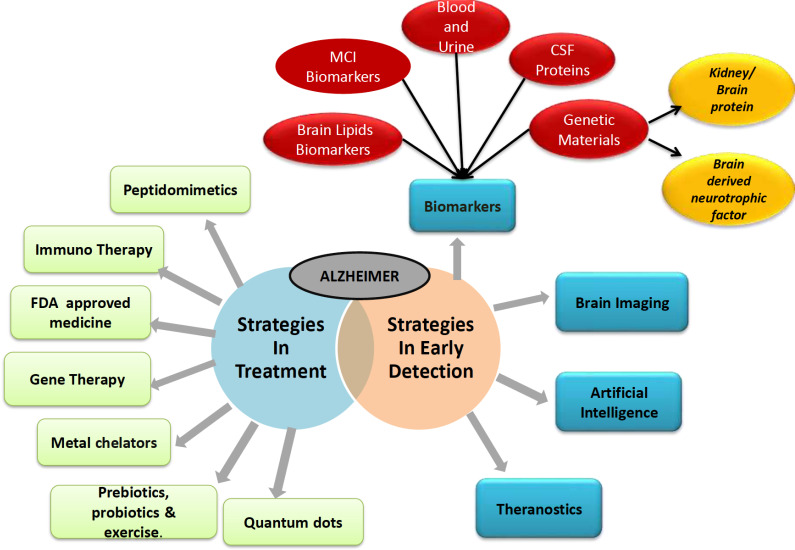
BACKGROUND: The only conclusive way to diagnose Alzheimer's is to carry out brain autopsy of the patient's brain tissue and ascertain whether the subject had Alzheimer's or any other form of dementia. However, due to the non-feasibility of such methods, to diagnose and conclude the conditions, medical practitioners use tests that examine a patient's mental ability. OBJECTIVE: Accurate diagnosis at an early stage is the need of the hour for initiation of therapy. The cause for most Alzheimer's cases still remains unknown except where genetic distinctions have been observed. Thus, a standard drug regimen ensues in every Alzheimer's patient, irrespective of the cause, which may not always be beneficial in halting or reversing the disease progression. To provide a better life to such patients by suppressing existing symptoms, early diagnosis, curative therapy, site-specific delivery of drugs, and application of hyphenated methods like artificial intelligence need to be brought into the main field of Alzheimer's therapeutics. METHODS: In this review, we have compiled existing hypotheses to explain the cause of the disease, and highlighted gene therapy, immunotherapy, peptidomimetics, metal chelators, probiotics and quantum dots as advancements in the existing strategies to manage Alzheimer's. CONCLUSION: Biomarkers, brain-imaging, and theranostics, along with artificial intelligence, are understood to be the future of the management of Alzheimer's.
Overview
CoChat Summary
TL;DR
This narrative review summarizes proposed mechanisms of Alzheimer’s disease (AD), current diagnostic approaches, and emerging therapeutic strategies including gene therapy, immunotherapy, peptidomimetics, metal chelators, probiotics, theranostics/quantum dots, and artificial intelligence. It argues that early diagnosis and multimodal, mechanism-targeted approaches are needed because existing treatments only relieve symptoms and no available drug halts or reverses disease progression.
Key findings
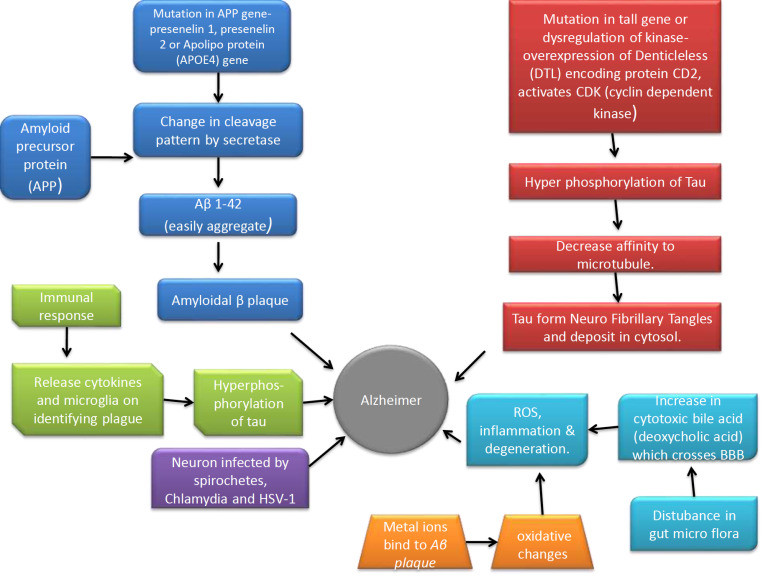
- AD pathogenesis is described through multiple hypotheses: Aβ plaque formation, tau hyperphosphorylation and neurofibrillary tangles, synaptic dysfunction and neurotransmitter imbalance, neuroinflammation, infectious disease, gut microbiome disruption, genetic mutations, oxidative stress, and autophagy dysfunction. The review notes that amyloid-targeting drugs have shown no effect in reversing or halting cognitive decline, suggesting either the hypothesis is incorrect or the brain becomes refractory after a certain time.
- For diagnosis, the paper reports that specialized PET scanning exhibits 100% specificity and 96% sensitivity in AD and milder conditions, while CSF analysis for p-tau, Aβ42, and total tau has 85–90% accuracy. It also states that pathological changes are initiated two decades before symptoms appear, and that P-tau181 can serve as a confirmatory and prognostic biomarker.
- Currently approved drugs target cholinergic or glutamatergic neurotransmission: donepezil, rivastigmine, and galantamine are acetylcholinesterase inhibitors effective in mild to moderate AD; memantine, approved by the FDA in 2003, is an NMDA receptor antagonist for moderate to severe AD. These drugs only relieve symptoms, and no drug is available with a curative effect.
- Emerging strategies include gene therapy, immunotherapy, peptidomimetics, metal chelators, probiotics/prebiotics/exercise, theranostics with quantum dots, and AI-based diagnosis. Examples include deep learning with 18F-FDG PET achieving 82% specificity and 100% sensitivity at an average of 75.8 months ahead of final diagnosis, and voice/speech machine-learning classifiers reporting accuracies from 74% to 94.71%.
Methods
- Design: narrative review compiling existing hypotheses and highlighting gene therapy, immunotherapy, peptidomimetics, metal chelators, probiotics, and quantum dots as advancements in AD management.
- Data/sample: no primary data collection; the paper synthesizes prior literature, including human trials, animal models, and biomarker studies.
- Main analysis: qualitative synthesis of mechanisms, diagnostics, current FDA-approved medicines, and future therapeutic/diagnostic approaches, including artificial intelligence.
Limitations
- Stated in the paper: various hypotheses are unable to explain the complete picture of AD pathogenesis; the cause in many cases remains untraceable; no treatment options can halt or reverse disease progression; gene therapy and quantum dots are recent additions but are yet to be clinically approved; most immunotherapeutics are in Phase 3 clinical trials; peptidomimetics, speech as an indicator, and metal ion chelators are still under investigation and not widely used.
- Evident from the text: this is a narrative review without a described systematic search strategy, formal inclusion/exclusion criteria, or meta-analysis; it relies on cited studies that include animal models, small cohorts, and preliminary human data, and it does not perform a formal risk-of-bias or quality assessment.
Model-written summary. Check it against the paper before relying on it.
Integrity signals
Registry
Cites
Statistics
Figures
Verification
Claims the paper makes
20 Valid · 2 Not valid · 159 Not checked · 11 Own results and interpretations
Every source the paper cites for this claim was checked and supports it.
In the paper
“Alteration in the activity of any of these gut microbes along with increase nitrate intake, can lead to overproduction of NO, which can cause axonal degeneration, neuro inflammation and neurodegenerative disorders [24].”
§ Recent Advancements in Pathogenesis, Diagnostics and Treatment of Alzheimer’s Disease > Introduction > Mechanisms of Alzheimer’s Disease
What the sources say
- Supportedcites [24] Luca M. Di Mauro M. Di Mauro M. Luca A. Gut microbiota in alzheimer’s disease, depression, and type 2 diabetes mellitus: the role of oxidative stress. Oxid. Med. Cell. Longev. 2019 2019 4730539 10.1155/2019/4730539 31178961 PMC6501164 source
Section 1.3 (Microbiota, Inflammation, and Oxidative Stress) of our copy states the full chain the claim attributes: a high nitrate intake increases nitrite concentration and NO, gut lactobacilli and bifidobacteria convert nitrate and nitrite into NO (streptomycetes and bacilli make NO via NOS), and 'excessive NO production is noxious, being associated with neuroinflammation, cellular damage, axonal degeneration, and neurodegenerative disorders'. Section 3.1 adds that an altered microbiota can stimulate NO synthesis, covering the 'alteration in the activity of gut microbes' element. Luca et al. is a review that reports these points (crediting the microbial NO chemistry to their ref [23], Oleskin & Shenderov, and the NO-toxicity consequences to their ref [10]), so it supports the paraphrase as a secondary source rather than as the original study. (LLM, conf=0.82)
plainstates a cause- Asserted: passes — The authors put it forward as true.
- Checkable: passes — It can be checked against evidence.
- Load-bearing: unclear — It is unclear whether the paper’s conclusions depend on it.
- Based: passes — The paper gives a reason why it holds.
- Supported
The cited sources support only part of this claim — read each source’s verdict below.
In the paper
“Metal ions specifically zinc and copper may bind to the Aβ plaque and produce ROS.”
§ Recent Advancements in Pathogenesis, Diagnostics and Treatment of Alzheimer’s Disease > Introduction > Mechanisms of Alzheimer’s Disease
What the sources say
- Partly supportedcites [24] Luca M. Di Mauro M. Di Mauro M. Luca A. Gut microbiota in alzheimer’s disease, depression, and type 2 diabetes mellitus: the role of oxidative stress. Oxid. Med. Cell. Longev. 2019 2019 4730539 10.1155/2019/4730539 31178961 PMC6501164 sourceExperimental — accuracy not yet measured
Section 2.1 identifies copper and zinc accumulated in neuritic plaques as sources of ROS production. It does not specifically say that those ions bind to Aβ, so the proposed binding mechanism is not established by this paper. (LLM, conf=0.84)
- Partly supportedcites [29] Moreira P.I. Carvalho C. Zhu X. Smith M.A. Perry G. Mitochondrial dysfunction is a trigger of Alzheimer’s disease pathophysiology. Biochim. Biophys. Acta 2010 1802 1 2 10 10.1016/j.bbadis.2009.10.006 19853658 sourceExperimental — accuracy not yet measured
Section 3 reports that Aβ exposure stimulates hydrogen peroxide generation, supporting the broader link between Aβ and reactive oxygen species. Sections 2 and 3 do not say that zinc or copper binds Aβ plaques or that such binding produces ROS; the paper instead discusses mitochondrial ROS generation and, separately, reactions involving reduced transition metals. (LLM, conf=0.82)
- Partly supportedcites [30] Cheignon C. Tomas M. Bonnefont-Rousselot D. Faller P. Hureau C. Collin F. Oxidative stress and the amyloid beta peptide in Alzheimer’s disease. Redox Biol. 2018 14 450 464 10.1016/j.redox.2017.10.014 29080524 PMC5680523 sourceExperimental — accuracy not yet measured
Section 2.2 says copper and zinc can bind Aβ, but identifies copper-containing aggregates—not zinc-containing ones—as capable of producing ROS. Section 4.2 likewise discusses ROS production by Cu–Aβ complexes. The claim is therefore supported for copper binding and ROS production, but not for zinc producing ROS. (LLM, conf=0.88)
hedgedstates a possible cause- Asserted: passes — The authors put it forward as true.
- Checkable: passes — It can be checked against evidence.
- Load-bearing: unclear — It is unclear whether the paper’s conclusions depend on it.
- Based: passes — The paper gives a reason why it holds.
- Partly supported
Every source the paper cites for this claim was checked and supports it.
In the paper
“An increase in tau acetylation was linked to the loss of KIBRA in AD patients with dementia.”
§ Recent Advancements in Pathogenesis, Diagnostics and Treatment of Alzheimer’s Disease > Newer strategies in early detection of Alzheimer’s disease > Kidney/Brain (KIBRA) Protein, a Memory-Associated Protein
What the sources say
- Supportedcites [76] Tracy T.E. Sohn P.D. Minami S.S. Wang C. Min S.W. Li Y. Zhou Y. Le D. Lo I. Ponnusamy R. Cong X. Schilling B. Ellerby L.M. Huganir R.L. Gan L. Acetylated tau obstructs KIBRA-mediated signaling in synaptic plasticity and promotes tauopathy related memory loss. Neuron 2016 90 2 245 260 10.1016/j.neuron.2016.03.005 27041503 PMC4859346 source
The Results section reports that elevated tau acetylation at K274 or K281 correlates strongly with reduced KIBRA protein in AD, and that KIBRA levels are significantly lower in severely demented cases. The Discussion likewise states that dementia in AD is associated with elevated acetylation at those sites and negatively correlated KIBRA levels. (LLM, conf=0.95)
plainstates an association- Asserted: passes — The authors put it forward as true.
- Checkable: passes — It can be checked against evidence.
- Load-bearing: passes — The paper’s conclusions depend on it.
- Based: passes — The paper gives a reason why it holds.
- Supported
The sources with a verdict support this claim; the rest weren’t checked yet, have no full text we could read, or their verdicts aren’t rated yet.
In the paper
“The strongest and most reliable genetic association involves the epsilon 4 (ε4) allele at the ApoE locus for increased risk of late-onset AD [68, 69].”
§ Recent Advancements in Pathogenesis, Diagnostics and Treatment of Alzheimer’s Disease > Newer strategies in early detection of Alzheimer’s disease > Genetic Markers
What the sources say
- Supportedcites [68] Harold D. Abraham R. Hollingworth P. Sims R. Gerrish A. Hamshere M.L. Pahwa J.S. Moskvina V. Dowzell K. Williams A. Jones N. Thomas C. Stretton A. Morgan A.R. Lovestone S. Powell J. Proitsi P. Lupton M.K. Brayne C. Rubinsztein D.C. Gill M. Lawlor B. Lynch A. Morgan K. Brown K.S. Passmore P.A. Craig D. McGuinness B. Todd S. Holmes C. Mann D. Smith A.D. Love S. Kehoe P.G. Hardy J. Mead S. Fox N. Rossor M. Collinge J. Maier W. Jessen F. Schürmann B. Heun R. van den Bussche H. Heuser I. Kornhuber J. Wiltfang J. Dichgans M. Frölich L. Hampel H. Hüll M. Rujescu D. Goate A.M. Kauwe J.S. Cruchaga C. N source
The paper’s introductory discussion (page unavailable) calls APOE the only unequivocally established susceptibility gene for the common form of AD and says its association is stronger than those found for other genes. The Secondary Analyses section identifies the APOE ε4 allele and reports substantially more ε4-positive AD cases than controls, supporting the claim that it is associated with increased risk. (LLM, conf=0.90)
- Not checked yetcites [69] Poirier J. Davignon J. Bouthillier D. Kogan S. Bertrand P. Gauthier S. Apolipoprotein E polymorphism and Alzheimer’s disease. Lancet 1993 342 8873 697 699 10.1016/0140-6736(93)91705-Q 8103819 source
boostedstates an association- Asserted: passes — The authors put it forward as true.
- Checkable: passes — It can be checked against evidence.
- Load-bearing: unclear — It is unclear whether the paper’s conclusions depend on it.
- Based: passes — The paper gives a reason why it holds.
- Supported
Every source the paper cites for this claim was checked and supports it.
In the paper
“In another study, an immuno‐infrared‐sensor was used for the extraction of the total Aβ fraction from plasma samples, wherein the biomarker amide I band were significantly lower for AD individuals.”
§ Recent Advancements in Pathogenesis, Diagnostics and Treatment of Alzheimer’s Disease > Newer strategies in early detection of Alzheimer’s disease > Blood and Urine Biomarkers of AD
What the sources say
- Supportedcites [60] Nabers A. Perna L. Lange J. Mons U. Schartner J. Güldenhaupt J. Saum K.U. Janelidze S. Holleczek B. Rujescu D. Hansson O. Gerwert K. Brenner H. Amyloid blood biomarker detects Alzheimer’s disease. EMBO Mol. Med. 2018 10 5 e8763 10.15252/emmm.201708763 29626112 PMC5938617 source
The ESTHER Results state that the immuno-infrared sensor extracted the total Aβ fraction from plasma and that the amide I biomarker band was significantly lower in AD cases than controls (P < 0.001). The BioFINDER Results also report a significantly lower band in prodromal AD cases. The measured decrease is in the band's position or frequency, not the amount of Aβ. (LLM, conf=0.95)
plainstates an association- Asserted: passes — The authors put it forward as true.
- Checkable: passes — It can be checked against evidence.
- Load-bearing: passes — The paper’s conclusions depend on it.
- Based: passes — The paper gives a reason why it holds.
- Supported
89 more claims · 5 with their cited sources checked
Create a free account to see all 192 claims and to verify the 176 references still open.
- It may state two separate claims as one. 90
- Probably not a substantial claim. 12
- The quote only partly states this claim. 1
Claims other papers make about this one
Each is checked against this paper’s own text: does it say what the citing paper says it does?
The source backs part of the claim, not all of it — or backs it for a different population, condition or comparison.
In the citing paper
“Chronic neuroinflammation—driven by activated microglia and oxidative stress from protein aggregates—creates a vicious cycle that worsens proteopathy and impairs autophagy [7].”
From Theranostic Nanoplatforms for Alzheimer's Disease: A Critical Analysis of Conceptual Contradictions (2026) · cites this paper as [7]
Experimental — accuracy not yet measured
Self-check
Percentages, sums and reported differences re-computed from the paper’s own numbers.
Each contradiction between two passages listed here was confirmed by an independent check.
Rated minor: it would not touch a result — a value no result rests on, a p-value that stays on the same side of the significance level, or a conflict that is clerical, resolved elsewhere in the paper, or outside its own findings.
In the paper
“The dementia group included 314 patients (249 diagnosed with probable AD, 21 suffering from possible AD, 5 with VD (Vascular dementia), 3 with problems related to memory, 43 with Mild cognitive impairment and 4 with undiscovered form of dementia)”
§ Recent Advancements in Pathogenesis, Diagnostics and Treatment of Alzheimer’s Disease > Current strategies in the treatment of Alzheimer’s disease > Voice as a Biomarker Using Artificial Intelligence
Reported 314 · recomputed 325
Rated minor: it would not touch a result — a value no result rests on, a p-value that stays on the same side of the significance level, or a conflict that is clerical, resolved elsewhere in the paper, or outside its own findings.
In the paper
§ Recent Advancements in Pathogenesis, Diagnostics and Treatment of Alzheimer’s Disease > Introduction > Diagnostics of Alzheimer’s Disease
“PET scanning and CSF analysis revealed that the pathological changes are initiated two decades before the appearance of symptoms”
§ Recent Advancements in Pathogenesis, Diagnostics and Treatment of Alzheimer’s Disease > Current strategies in the treatment of Alzheimer’s disease
“the emergence of AD-related pathologic changes begins quite early, almost a decade before the person shows the symptoms.”
Rated minor: it would not touch a result — a value no result rests on, a p-value that stays on the same side of the significance level, or a conflict that is clerical, resolved elsewhere in the paper, or outside its own findings.
In the paper
§ Recent Advancements in Pathogenesis, Diagnostics and Treatment of Alzheimer’s Disease > Introduction
“were the nine countries in descending order of incidence of people suffering from dementia in 2010”
§ Recent Advancements in Pathogenesis, Diagnostics and Treatment of Alzheimer’s Disease > Introduction
“China, USA, India, Japan, Germany, Russia, France and Brazil”
Citations
Cites
Diagnostic and Statistical Manual of Mental Disorders
Williams, J. B. W., & First, M. (2013) · Encyclopedia of Social Work · doi:10.1093/acrefore/9780199975839.013.104 · Cited by 109,519
McKhann, G. M., Knopman, D. S., Chertkow, H., Hyman, B. T., Jack, C. R., Kawas, C. H., Klunk, W. E., Koroshetz, W. J., Manly, J. J., Mayeux, R., et al. (2011) · Alzheimer's & Dementia · doi:10.1016/j.jalz.2011.03.005 · Cited by 18,657
Albert, M. S., DeKosky, S. T., Dickson, D., Dubois, B., Feldman, H. H., Fox, N. C., Gamst, A., Holtzman, D. M., Jagust, W. J., Petersen, R. C., et al. (2011) · Alzheimer's & Dementia · doi:10.1016/j.jalz.2011.03.008 · Cited by 10,152 · cited 1×
“This criterion set is the prevailing standard for the MCI syndrome in current times, and is reflected in the NIAAA work group guidelines for the diagnosis of MCI due to AD [87].”
BackgroundMild Cognitive Impairment: Clinical Characterization and Outcome
Petersen, R. C., Smith, G. E., Waring, S. C., Ivnik, R. J., Tangalos, E. G., & Kokmen, E. (1999) · Archives of Neurology · doi:10.1001/archneur.56.3.303 · Cited by 8,980
Winblad, B., Palmer, K., Kivipelto, M., Jelic, V., Fratiglioni, L., Wahlund, L. ‐., Nordberg, A., Bäckman, L., Albert, M., Almkvist, O., et al. (2004) · Journal of Internal Medicine · doi:10.1111/j.1365-2796.2004.01380.x · Cited by 4,946
Clinical and biomarker changes in dominantly inherited Alzheimer's disease
Bateman, R. J., Xiong, C., Benzinger, T. L. S., Fagan, A. M., Goate, A., Fox, N. C., Marcus, D. S., Cairns, N. J., Xie, X., Blazey, T. M., et al. (2012) · New England Journal of Medicine · doi:10.1056/nejmoa1202753 · Cited by 3,814
Harold, D., Abraham, R., Hollingworth, P., Sims, R., Gerrish, A., Hamshere, M. L., Pahwa, J. S., Moskvina, V., Dowzell, K., Williams, A., et al. (2009) · Nature Genetics · doi:10.1038/ng.440 · Cited by 3,326
Blennow, K., de Leon, M. J., & Zetterberg, H. (2006) · The Lancet · doi:10.1016/s0140-6736(06)69113-7 · Cited by 3,134
Albert, M. S., DeKosky, S. T., Dickson, D., Dubois, B., Feldman, H. H., Fox, N. C., Gamst, A., Holtzman, D. M., Jagust, W. J., Petersen, R. C., et al. (2013) · Focus · doi:10.1176/appi.focus.11.1.96 · Cited by 2,621
Inflammation as a central mechanism in Alzheimer's disease
Kinney, J. W., Bemiller, S. M., Murtishaw, A. S., Leisgang, A. M., Salazar, A. M., & Lamb, B. T. (2018) · Alzheimer's & Dementia: Translational Research & Clinical Interventions · doi:10.1016/j.trci.2018.06.014 · Cited by 2,253 · cited 1×
“Due to the dysregulation of GABAergic mechanism in AD, the inhibitory role of GABA on activated microglia is also lost which further contributes to the release of pro-inflammatory cytokines [17].”
Background
Research works printed but not linked: 4
- Grimm M.O.W. Hartmann T. Recent understanding of the molecular mechanisms of Alzheimer’s disease. J. Addict. Res. Ther. 2012 004 S5
- Wong C.B. Kobayashi Y. Xiao J-Z. Probiotics for preventing cognitive impairment in Alzheimer’s Disease. Gut Microbiota - Brain Axis; Evrensel, A.; Ünsalver, B.O. Neuroscience 2018 ••• 85 104
- De Brito Sanchez R. de Barros L. Rodrigues S.C.M. Fernandes J.C.L. Bondioli A.C.V. de Campos Mundin H.A. de Sousa V.D.S. da Silva L.H.B.O. 2019
- Farooq A. Anwar S.M. Awais M. Alnowami M. Proceedings of the IEEE International Smart Cities Conference Wuxi, China 2017 1 4
Cited by
Vatansever, S., Schlessinger, A., Wacker, D., Kaniskan, H. Ü., Jin, J., Zhou, M., & Zhang, B. (2021) · Medicinal Research Reviews · doi:10.1002/med.21764 · Cited by 429
“In recent years, AI/ML‐based models have become popular in AD research, mostly utilizing for AD diagnosis and prognosis in dealing with electronic health records and images.(412) On the contrary, AI/ML techniques have not been widely employed in AD drug discovery.”
BackgroundGFAP as a Potential Biomarker for Alzheimer’s Disease: A Systematic Review and Meta-Analysis
Kim, K. Y., Shin, K. Y., & Chang, K.-A. (2023) · Cells · doi:10.3390/cells12091309 · Cited by 309
Wnt signaling pathways in biology and disease: mechanisms and therapeutic advances
Xue, C., Chu, Q., Shi, Q., Zeng, Y., Lu, J., & Li, L. (2025) · Signal Transduction and Targeted Therapy · doi:10.1038/s41392-025-02142-w · Cited by 281
The role of probiotics and prebiotics in modulating of the gut-brain axis
Ansari, F., Neshat, M., Pourjafar, H., Jafari, S. M., Samakkhah, S. A., & Mirzakhani, E. (2023) · Frontiers in Nutrition · doi:10.3389/fnut.2023.1173660 · Cited by 200
“The basis of the definite diagnosis of AD is through pathological examinations and includes; observation of extracellular plaques with depositions of β-amyloid/Aβ, presence of Aβ in the brain vessels (cerebral amyloid angiopathy (CAA)), and protein forming neurofibrillary tangles associated with intraneural accumulati…”
BackgroundACSL4-Mediated Ferroptosis and Its Potential Role in Central Nervous System Diseases and Injuries
Jia, B., Li, J., Song, Y., & Luo, C. (2023) · International Journal of Molecular Sciences · doi:10.3390/ijms241210021 · Cited by 177
“The abnormal folding and aggregation of Aβ in the brain is one of the hallmark pathological changes of Alzheimer’s disease [104].”
BackgroundGut microbiome-targeted therapies for Alzheimer’s disease
Zhang, T., Gao, G., Kwok, L. Y., & Sun, Z. (2023) · Gut Microbes · doi:10.1080/19490976.2023.2271613 · Cited by 182
Signal pathways in the treatment of Alzheimer’s disease with traditional Chinese medicine
Ding, M.-R., Qu, Y.-J., Hu, B., & An, H. (2022) · Biomedicine & Pharmacotherapy · doi:10.1016/j.biopha.2022.113208 · Cited by 159
Fields, M., Marcuzzi, A., Gonelli, A., Celeghini, C., Maximova, N., & Rimondi, E. (2023) · International Journal of Molecular Sciences · doi:10.3390/ijms24043739 · Cited by 157
The mechanism and efficacy of GLP-1 receptor agonists in the treatment of Alzheimer’s disease
Du, H., Meng, X., Yao, Y., & Xu, J. (2022) · Frontiers in Endocrinology · doi:10.3389/fendo.2022.1033479 · Cited by 125
“While GLP-1(7-36)amide and GLP-1(7-37) are equally effective in stimulating insulin and Cpeptide secretion, GLP-1(1-37) is much lower insulinotropic efficacy (88, 90, 94).”
BackgroundInfluentialRecent Research Trends in Neuroinflammatory and Neurodegenerative Disorders
Cohen, J., Mathew, A., Dourvetakis, K. D., Sanchez-Guerrero, E., Pangeni, R. P., Gurusamy, N., Aenlle, K. K., Ravindran, G., Twahir, A., Isler, D., et al. (2024) · Cells · doi:10.3390/cells13060511 · Cited by 103
“Further, amyloid-beta plaques contribute to hypersensitivity and excitotoxicity of NDMA receptors, a glutamate receptor that plays a key role in synaptic plasticity [44].”
BackgroundLasoń, W., Jantas, D., Leśkiewicz, M., Regulska, M., & Basta‐Kaim, A. (2023) · Cells · doi:10.3390/cells12040660 · Cited by 117
Glucose metabolism, neural cell senescence and Alzheimer's disease
Wang, Q., Duan, L., Li, X., Wang, Y., Guo, W., Guan, F., & Ma, S. (2022) · International Journal of Molecular Sciences · doi:10.3390/ijms23084351 · Cited by 90
Astragaloside IV: A promising natural neuroprotective agent for neurological disorders
Yao, M., Zhang, L., & Wang, L. (2023) · Biomedicine & Pharmacotherapy · doi:10.1016/j.biopha.2023.114229 · Cited by 98
Anti-inflammatory role of gold nanoparticles in the prevention and treatment of Alzheimer's disease
Aili, M., Zhou, K., Zhan, J., Zheng, H., & Luo, F. (2023) · Journal of Materials Chemistry B · doi:10.1039/d3tb01023f · Cited by 80
Ağagündüz, D., Bingöl, F. G., Çelik, E., Cemali, Ö., Özenir, Ç., Özoğul, F., & Capasso, R. (2022) · Journal of Translational Medicine · doi:10.1186/s12967-022-03609-y · Cited by 82
“While Aβ accumulates in the extracellular, neutrophil clumps are formed in the intracellular [87, 90, 91].”
BackgroundFrom degenerative disease to malignant tumors: Insight to the function of ApoE
Miao, G., Zhuo, D., Han, X. N., Yao, W., Liu, C., Liu, H., Cao, H., Sun, Y., Chen, Z., & Feng, T. (2022) · Biomedicine & Pharmacotherapy · doi:10.1016/j.biopha.2022.114127 · Cited by 81
Short-chain fatty acids: Important components of the gut-brain axis against AD
Huang, Y., Wang, Y. F., Miao, J., Zheng, R. F., & Li, J. Y. (2024) · Biomedicine & Pharmacotherapy · doi:10.1016/j.biopha.2024.116601 · Cited by 70
Decandia, D., Gelfo, F., Landolfo, E., Balsamo, F., Petrosini, L., & Cutuli, D. (2023) · International Journal of Molecular Sciences · doi:10.3390/ijms24065921 · Cited by 71
“The incidence of dementia rises with age [1].”
BackgroundKaempferol as a therapeutic agent in Alzheimer’s disease: Evidence from preclinical studies
Dong, X., Zhou, S., & Nao, J. (2023) · Ageing Research Reviews · doi:10.1016/j.arr.2023.101910 · Cited by 76
Pathophysiology of Alzheimer’s Disease
Yarns, B. C., Holiday, K. A., Carlson, D. M., Cosgrove, C. K., & Melrose, R. J. (2022) · Psychiatric Clinics of North America · doi:10.1016/j.psc.2022.07.003 · Cited by 68
Liang, J., Wang, C., Zhang, H., Huang, J., Xie, J., & Chen, N. (2021) · Frontiers in Aging Neuroscience · doi:10.3389/fnagi.2021.755665 · Cited by 77
Hypometabolism, Alzheimer’s Disease, and Possible Therapeutic Targets: An Overview
Raut, S., Bhalerao, A., Powers, M., Gonzalez, M., Mancuso, S., & Cucullo, L. (2023) · Cells · doi:10.3390/cells12162019 · Cited by 65
Therapeutic potential of natural molecules against Alzheimer's disease via SIRT1 modulation
Zhang, M., & Tang, Z. (2023) · Biomedicine & Pharmacotherapy · doi:10.1016/j.biopha.2023.114474 · Cited by 74
Mitochondrial disorders leading to Alzheimer’s disease—perspectives of diagnosis and treatment
Pszczołowska, M., Walczak, K., Miśków, W., Mroziak, M., Chojdak-Łukasiewicz, J., & Leszek, J. (2024) · GeroScience · doi:10.1007/s11357-024-01118-y · Cited by 70
Microglial response to aging and neuroinflammation in the development of neurodegenerative diseases
Han, T., Xu, Y., Sun, L., Hashimoto, M., & Wei, J. (2023) · Neural Regeneration Research · doi:10.4103/1673-5374.385845 · Cited by 72
“The only conclusive way to diagnose AD is to perform a brain autopsy on the patient’s brain tissue and determine whether the subject has AD or any other form of dementia (Khan et al., 2020).”
BackgroundThe Burden of Alzheimer’s Disease Mortality in the United States, 1999-2018
Zhao, X., Li, C., Ding, G., Heng, Y., Li, A., Wang, W., Hou, H., Wen, J., & Zhang, Y. (2021) · Journal of Alzheimer s Disease · doi:10.3233/jad-210225 · Cited by 61
Kong, F., Wu, T., Dai, J., Zhai, Z., Cai, J., Zhu, Z., Xu, Y., & Sun, T. (2023) · Frontiers in Pharmacology · doi:10.3389/fphar.2023.1205207 · Cited by 54
“Tau proteins are microtubule neuronal proteins involved in the polymerization and stabilization of microtubule assembly to maintain the integrity of the cytoskeleton (Khan et al., 2020).”
BackgroundYadav, K., Sahu, K. K., Sucheta, Gnanakani, S. P. E., Sure, P., Vijayalakshmi, R., Sundar, V. D., Sharma, V., Antil, R., Jha, M., et al. (2023) · International Journal of Biological Macromolecules · doi:10.1016/j.ijbiomac.2023.124582 · Cited by 58
Genetic Phenotypes of Alzheimer’s Disease: Mechanisms and Potential Therapy
Quan, M., Cao, S., Wang, Q., Wang, S., & Jia, J. (2023) · Phenomics · doi:10.1007/s43657-023-00098-x · Cited by 66
Biomedical application of 2D nanomaterials in neuroscience
Li, K., Ji, Q., Liang, H., Hua, Z., Hang, X., Zeng, L., & Han, H. (2023) · Journal of Nanobiotechnology · doi:10.1186/s12951-023-01920-4 · Cited by 59
“Although symptomatic, neuropsychological, and neuroimaging tests are now widely used in clinical, AD still cannot be accurately diagnosed at an early stage [151], and the introduction of clinical testing of 2D nanomaterials may improve the diagnosis of AD.”
BackgroundZhou, Z., Shi, B., Xu, Y., Zhang, J., Liu, X., Zhou, X., Feng, B., Ma, J., & Cui, H. (2023) · Stem Cell Research & Therapy · doi:10.1186/s13287-022-03231-1 · Cited by 50
“Alzheimer’s disease is a progressive neurodegenerative disorder, which is a major cause of dementia [46], so we chose cognitive function as outcome indicate.”
BackgroundTargeting Alzheimer’s Disease: The Critical Crosstalk between the Liver and Brain
Huang, Z., Lin, H. W. (., Zhang, Q., & Zong, X. (2022) · Nutrients · doi:10.3390/nu14204298 · Cited by 50
Trace Elements in Alzheimer’s Disease and Dementia: The Current State of Knowledge
Tyczyńska, M., Gędek, M., Brachet, A., Stręk, W., Flieger, J., Teresiński, G., & Baj, J. (2024) · Journal of Clinical Medicine · doi:10.3390/jcm13082381 · Cited by 56
Myelin Pathology in Alzheimer's Disease: Potential Therapeutic Opportunities
Huang, Z., Jordan, J. D., & Zhang, Q. (2023) · Aging and Disease · doi:10.14336/ad.2023.0628 · Cited by 62
“This has led to a paradigm shift in AD research, and several other mechanisms have been proposed to explain the pathophysiology of AD [3, 4].”
BackgroundChaperones—A New Class of Potential Therapeutic Targets in Alzheimer’s Disease
Batko, J., Antosz, K., Miśków, W., Pszczołowska, M., Walczak, K., & Leszek, J. (2024) · International Journal of Molecular Sciences · doi:10.3390/ijms25063401 · Cited by 51
“There are also changes in the cerebrospinal fluid, such as low A β , high tau, and phospho-tau levels [6].”
BackgroundSharma, A., Angnes, L., Sattarahmady, N., Negahdary, M., & Heli, H. (2023) · Biosensors · doi:10.3390/bios13070742 · Cited by 55
“This enables early and precise identification of AD, assisting with prompt therapy and intervention [94,95].”
Backgroundp62: Friend or Foe? Evidences for OncoJanus and NeuroJanus Roles
Emanuele, S., Lauricella, M., D’Anneo, A., Carlisi, D., Blasio, A. D., Liberto, D. D., & Giuliano, M. (2020) · International Journal of Molecular Sciences · doi:10.3390/ijms21145029 · Cited by 53
“The molecular basis of AD is related with β -amyloid (A β ) plaques accumulation in the brain and hyperphosphorylated tau-containing neurofibrillary tangles within the neurons [100].”
Li, W., Chen, Q., Peng, C., Yang, D., Liu, S., Lv, Y., Jiang, L., Xu, S., & Li-hua, H. (2025) · International Journal of Molecular Sciences · doi:10.3390/ijms26010403 · Cited by 59
“The primary component of A β is produced by the abnormal degradation of APP in the neuronal cytoplasm [15].”
Chen, P., Guo, Z., Lei, J., & Wang, Y. (2024) · Phytotherapy Research · doi:10.1002/ptr.8219 · Cited by 54
“It is defined by the onset of aging-associated dementia (progressive memory loss and cognitive impairment) and becomes more common as the population ages (Khan et al., 2020).”
Luo, L., Yan, T., Yang, L., & Zhao, M. (2024) · Computational and Structural Biotechnology Journal · doi:10.1016/j.csbj.2024.05.036 · Cited by 64
Fołta, J., Rzepka, Z., & Wrześniok, D. M. (2025) · International Journal of Molecular Sciences · doi:10.3390/ijms26115177 · Cited by 56
“Also, inflammation in the central nervous system, which can accelerate degenerative processes, plays an important role in the pathogenesis of AD [84,90,91].”
Targeting of Extracellular Vesicle-Based Therapeutics to the Brain
Williams, A., Branscome, H., Kashanchi, F., & Batrakova, E. V. (2025) · Cells · doi:10.3390/cells14070548 · Cited by 51
“These disorders include stroke [10,11], neurological diseases such as Alzheimer’s and Parkinson’s [12–14], infectious diseases (e.g., meningitis, encephalitis, prion disease, and HIV-related dementia) [15–20], and brain tumors [21,22].”
Novel roles of PIWI proteins and PIWI-interacting RNAs in human health and diseases
Wu, Z., Yu, X., Zhang, S., He, Y., & Guo, W. (2023) · Cell Communication and Signaling · doi:10.1186/s12964-023-01368-x · Cited by 44
“Alzheimer’s disease (AD), the most common form of dementia, is characterized by progressive memory loss and other cognitive abilities [259, 351].”
BackgroundResearch Advances of Bioactive Sesquiterpenoids Isolated from Marine-Derived Aspergillus sp.
Sun, L., Wang, H., Yan, M., Sai, C., & Zhang, Z. (2022) · Molecules · doi:10.3390/molecules27217376 · Cited by 46
Lv, J., Xing, L., Zhong, X., Li, K., Liu, M., & Du, K. (2023) · Biomedicine & Pharmacotherapy · doi:10.1016/j.biopha.2023.114583 · Cited by 44
He, C., Jiang, J., Liu, J., Zhou, L., Ge, Y., & Yang, Z. (2024) · International Journal of Biological Macromolecules · doi:10.1016/j.ijbiomac.2024.132372 · Cited by 53
Kandeel, M. K., Morsy, M. A., Alkhodair, K. M., & Alhojaily, S. (2023) · Biomolecules · doi:10.3390/biom13081250 · Cited by 42
Bashir, B., Gulati, M., Vishwas, S., Gupta, G., Dhanasekaran, M., Paudel, K. R., Chellappan, D. K., Anand, K., Negi, P., Singh, P. K., et al. (2025) · Ageing Research Reviews · doi:10.1016/j.arr.2025.102689 · Cited by 48
Myelin dysfunction in aging and brain disorders: mechanisms and therapeutic opportunities
Huang, Z., Zhang, Y., Zou, P., Zong, X., & Zhang, Q. (2025) · Molecular Neurodegeneration · doi:10.1186/s13024-025-00861-w · Cited by 54
“As one of the most prevalent age-related neurodegenerative disorders, AD is characterized by amyloid-beta (Aβ) plaque deposits, tau neurofibrillary tangle formation, and progressive cognitive decline [98, 99].”
Spina, E., Ferrari, R. R., Pellegrini, E., Colombo, M. M., Poloni, T. E., Guaita, A., & Davin, A. (2025) · Cells · doi:10.3390/cells14030229 · Cited by 48
Matsuki, H., Mandai, S., Shiwaku, H., Koide, T., Takahashi, N., Yanagi, T., Inaba, S., Ida, S., Fujiki, T., Mori, Y., et al. (2023) · Aging · doi:10.18632/aging.205164 · Cited by 48
Liu, P., Zhang, T., Wu, Y., Chen, Q., Sun, T., & Jiang, C. (2024) · Advanced Materials · doi:10.1002/adma.202408729 · Cited by 46
Zhang, Y., Tang, C., He, Y., Zhang, Y., Li, Q., Zhang, T., Zhao, B., Tong, A., Zhong, Q., & Zhong, Z. (2024) · Biomedicine & Pharmacotherapy · doi:10.1016/j.biopha.2024.117540 · Cited by 36
Targeted drug delivery in neurodegenerative diseases: the role of nanotechnology
Dhariwal, R., Jain, M., Mir, Y. R., Singh, A., Jain, B., Kumar, P., Tariq, M., Verma, D., Deshmukh, K., Yadav, V. K., et al. (2025) · Frontiers in Medicine · doi:10.3389/fmed.2025.1522223 · Cited by 55
“Genetic factors, such as mutations in glycogen synthase kinase-3 β and CDK5, further drive this process (31).”
Tipa, R. O., Bălan, D.-G., Géorgescu, M., Ignat, L. A., Văcăroiu, I. A., Georgescu, D. E., Răducu, L., Mihai, D. A., Chiperi, L. V., & Balcangiu‐Stroescu, A.-E. (2024) · International Journal of Molecular Sciences · doi:10.3390/ijms25094972 · Cited by 49
“Researchers in endocrinology, neurology, and psychiatry should collaborate to explore the therapeutic potential of semaglutide in preserving cognitive function and mitigating neurodegenerative diseases [52,60].”
BackgroundYadav, K., Vijayalakshmi, R., Sahu, K. K., Sure, P., Chahal, K., Yadav, R. K., Sucheta, Dubey, A., Jha, M., & Pradhan, M. (2024) · European Journal of Pharmaceutics and Biopharmaceutics · doi:10.1016/j.ejpb.2024.114298 · Cited by 41
The mechanisms, hallmarks, and therapies for brain aging and age-related dementia
Jin, S., Lü, W., Zhang, J., Zhang, L., Tao, F., Zhang, Y., Hu, X., & Liu, Q. (2024) · Science Bulletin · doi:10.1016/j.scib.2024.09.005 · Cited by 44
Salvo, C. D., D’Antongiovanni, V., Benvenuti, L., d’Amati, A., Ippolito, C., Segnani, C., Pierucci, C., Bellini, G., Annese, T., Virgintino, D., et al. (2024) · Food & Function · doi:10.1039/d4fo02075h · Cited by 38
Jarek, D. J., Mizerka, H., Nuszkiewicz, J., & Szewczyk‐Golec, K. (2024) · Biomedicines · doi:10.3390/biomedicines12040786 · Cited by 44
“Currently, three main stages of AD are recognized as preclinical AD, AD with mild cognitive impairment (MCI), and dementia [3,8,9].”
BackgroundSystematic evaluation of urinary formic acid as a new potential biomarker for Alzheimer’s disease
Wang, Y., Wang, Y., Zhu, J., Guan, Y., Xie, F., Cai, X., Deng, J., Wei, Y., He, R., Fang, Z., et al. (2022) · Frontiers in Aging Neuroscience · doi:10.3389/fnagi.2022.1046066 · Cited by 36
“Progression from subjective cognitive decline (SCD) to mild cognitive impairment (MCI) occurs before the irreversible dementia stage of AD, and this is the golden window for intervention and treatment (Khan et al., 2020).”
BackgroundThe Latest Advances in the Diagnosis and Treatment of Dementia
Hafiz, R., Alajlani, L., Ali, A., Algarni, G. A., Aljurfi, H., Alammar, O. A. M., Ashqan, M. Y., & Alkhashan, A. Y. (2023) · Cureus · doi:10.7759/cureus.50522 · Cited by 58
“Therefore, symptomatic management remains the mainstay of treatment: treatment of behavioral disturbances, environmental manipulations that support function, and counseling about safety concerns [32].”
BackgroundMultiple Metabolites Derived from Mushrooms and Their Beneficial Effect on Alzheimer’s Diseases
Tong, Z., Chu, G., Wan, C., Wang, Q., Yang, J., Meng, Z., Du, L., Yang, J., & Ma, H. (2023) · Nutrients · doi:10.3390/nu15122758 · Cited by 41
Nanotechnology in the diagnostic and therapy for Alzheimer's disease
Panghal, A., & Flora, S. J. S. (2024) · Biochimica et Biophysica Acta (BBA) - General Subjects · doi:10.1016/j.bbagen.2024.130559 · Cited by 31
DUBs in Alzheimer’s disease: mechanisms and therapeutic implications
Qin, B., Chen, X., Wang, F., & Wang, Y. (2024) · Cell Death Discovery · doi:10.1038/s41420-024-02237-3 · Cited by 38
“Current research has identi fi ed neuroin fl ammation, autophagy induction, UPS abnormalities, cell death, genetic mutations, oxidative stress, synaptic dysfunction, and neurotransmitter imbalance as key factors contributing to the onset of AD [8].”
Hong, W., Hu, C., Wang, C., Zhu, B., Tian, M., & Qin, H. (2023) · Aging · doi:10.18632/aging.205174 · Cited by 32
Ankul Singh, S., Suresh, S., Singh, A., Chandran, L., & Vellapandian, C. (2022) · Environmental Pollution · doi:10.1016/j.envpol.2022.120136 · Cited by 34
Li, X., Ding, Q., Wan, X., Wu, Q., Ye, S., & Lou, Y. (2025) · Behavioral and Brain Functions · doi:10.1186/s12993-024-00265-8 · Cited by 35
Mechanisms of cuproptosis and its relevance to distinct diseases
Lou, Q.-M., Lai, F., Li, J., Mao, K., Wan, H., & He, Y. G. (2024) · APOPTOSIS · doi:10.1007/s10495-024-01983-0 · Cited by 39
“Treatment of AD has always been arduous, and as FDA-approved drugs, acetylcholinesterase inhibitors and memantine target cholinergic or glutamatergic neurotransmission for therapeutic purposes [141, 152].”
Role of succinylation modification in central nervous system diseases
Wang, C., Cui, W., Yu, B., Zhou, H., Cui, Z., Pin, G., Yu, T., & Feng, Y. (2024) · Ageing Research Reviews · doi:10.1016/j.arr.2024.102242 · Cited by 40
Zou, D., Huang, X., Lan, Y., Pan, M., Xie, J., Huang, Q., Zeng, J., Zou, C., Pei, Z., Zou, C., et al. (2024) · Pharmacological Research · doi:10.1016/j.phrs.2024.107098 · Cited by 31
Shan, X., Lv, S., Huang, P., Zhang, W., Jin, C., Liu, Y., Li, Y., Jia, Y., Chu, X., Peng, C., et al. (2023) · Molecular Neurobiology · doi:10.1007/s12035-023-03707-y · Cited by 34
“Patients will develop progressive memory loss, multi-domain cognitive impairment, and executive function loss, with personality and behavioral changes and psychiatric symptoms [3].”
Unveiling the Therapeutic Potentials of Mushroom Bioactive Compounds in Alzheimer’s Disease
Li, N., Li, H., Liu, Z., Feng, G., Shi, C., & Wu, Y. (2023) · Foods · doi:10.3390/foods12152972 · Cited by 36
“Various hypotheses, including cholinergic, inflammation, oxidative stress, mitochondrial dysfunction, and gut microbiome have also attracted much research and attention [4].”
BackgroundBonvicini, M., Travaglini, S., Lelli, D., Incalzi, R. A., & Pedone, C. (2023) · Nutrients · doi:10.3390/nu15020386 · Cited by 35
“Cit col n wa ei h r used as a i gle in ervent on [46,47,50] or in ad it on to standar therapy [4 , 5,48,49]; the c ntrol g p was ither compose of plac bo [46,47,50] or stan ard herapy [4 , 5, 8,49].”
BackgroundMethodPomegranate (Punica granatum L.) Extract Effects on Inflammaging
Cordiano, R., Gammeri, L., Salvo, E. D., Gangemi, S., & Minciullo, P. L. (2024) · Molecules · doi:10.3390/molecules29174174 · Cited by 49
“AD is the most widespread form of dementia and is a progressive neurodegenerative disease characterized by deficits in mnemonic functions, language, and thinking skills [42].”
BackgroundNFE2L1/Nrf1 serves as a potential therapeutical target for neurodegenerative diseases
Łuczyńska, K., Zhang, Z., Pietras, T., Zhang, Y., & Taniguchi, H. (2023) · Redox Biology · doi:10.1016/j.redox.2023.103003 · Cited by 35
“AD is typically characterized by extracellular A β protein plaques and neurofibrillary tangles composed of the hyperphosphorylated tau protein [77, 78].”
BackgroundRadiation-Induced Brain Injury: Mechanistic Insights and the Promise of Gut–Brain Axis Therapies
Li, M., Tong, F., Wu, B., & Dong, X. (2024) · Brain Sciences · doi:10.3390/brainsci14121295 · Cited by 34
“The etiology of AD remains unclear, with primary hypotheses including neuroin-flammation, Tau protein phosphorylation, and A β protein deposition [195].”
Investigating the effects of Ginkgo biloba leaf extract on cognitive function in Alzheimer's disease
Zhu, C., Liu, J., Lin, J., Xu, J., & Yu, E. (2024) · CNS Neuroscience & Therapeutics · doi:10.1111/cns.14914 · Cited by 32
Guan, Y., Shi, D., Wang, S., Sun, Y., Song, W., Liu, S., & Wang, C. (2023) · Nutrients · doi:10.3390/nu15173799 · Cited by 32
The role of exosomes in adult neurogenesis: implications for neurodegenerative diseases
Yu, Z., Teng, Y., Yang, J., & Yang, L. (2023) · Neural Regeneration Research · doi:10.4103/1673-5374.379036 · Cited by 28
“In 2013, a report on the epidemiology of AD was published by the World Health Organization; this report predicted that the global number of subjects with dementia could double by 2050 (Khan et al., 2020).”
BackgroundAlzheimer's disease: Potential pathogenesis and imaging findings
Zhang, Y., Zhang, C., Liu, J., & Shao, H. (2023) · View · doi:10.1002/viw.20230025 · Cited by 33
Huang, Y. X., Xu, J., Zhang, X., Liu, Y., & Yu, E. (2023) · Frontiers in Aging Neuroscience · doi:10.3389/fnagi.2023.1153918 · Cited by 32
“The amyloid cascade hypothesis and tau protein pathogenesis theory are the two main pathogeneses of AD (Sun et al., 2017; Khan et al., 2020).”
BackgroundRole of MicroRNA-502-3p in Human Diseases
Devara, D., Choudhary, Y., & Kumar, S. (2023) · Pharmaceuticals · doi:10.3390/ph16040532 · Cited by 28
“Other methods include positron emission tomography and analysis of cerebrospinal fluid for p-tau, Aβ42, and total tau protein content [6].”
BackgroundMethodThe Potential Roles of Exosomes Carrying APP and Tau Cleavage Products in Alzheimer’s Disease
Zhao, Y., Gu, Y., Zhang, Q., Liu, H., & Liu, Y. (2023) · Journal of Clinical Medicine · doi:10.3390/jcm12051883 · Cited by 31
Chen, B., Wu, J., Hu, S. H., Liu, Q., Yang, H., & You, Y. (2022) · Neurochemical Research · doi:10.1007/s11064-022-03844-1 · Cited by 33
“expression, and infection, causing high morbidity and mortality in the elderly [1].”
BackgroundThe evolution of Alzheimer’s disease: From mitochondria to microglia
Yang, F., Liang, Y., Wang, X., Wang, J.-T., Gao, W., Ye, Q.-Y., Li, X., Yu, Y., & Li, H. (2025) · Ageing Research Reviews · doi:10.1016/j.arr.2025.102838 · Cited by 33
Study insights in the role of PGC-1α in neurological diseases: mechanisms and therapeutic potential
Tang, M., Liu, Y.-X., Hu, Z., Luo, H., Zhang, S., Shi, C.-H., & Xu, Y.-M. (2025) · Frontiers in Aging Neuroscience · doi:10.3389/fnagi.2024.1454735 · Cited by 33
“Khan et al., 2020).”
Li, J., Song, J., Jia, L., Wang, M., Ji, X., Meng, R., & Zhou, D. (2024) · Biomolecules · doi:10.3390/biom14121519 · Cited by 29
The complex effects of miR-146a in the pathogenesis of Alzheimer’s disease
Long, Y., Liu, J., Wang, Y., Guo, H.-D., & Cui, G.-H. (2024) · Neural Regeneration Research · doi:10.4103/nrr.nrr-d-23-01566 · Cited by 40
Joshi, N. J., & Alavala, R. R. (2024) · Results in Chemistry · doi:10.1016/j.rechem.2024.101500 · Cited by 41
Wahlberg, K. E., Winblad, B. G., Cole, A., Herring, W. L., Ramsberg, J., Torontali, I., Visser, P. J., Wimo, A. B., Wollaert, L., & Jönsson, L. (2023) · Journal of Internal Medicine · doi:10.1111/joim.13759 · Cited by 28
“These processes have therefore gained attention as promising targets for the development of early AD diagnostics [8] and disease-modifying therapies (DMTs) that can prevent or slow the progression of AD [9, 10].”
BackgroundImpact of common ALDH2 inactivating mutation and alcohol consumption on Alzheimer’s disease
Seike, T., Chen, C., & Mochly‐Rosen, D. (2023) · Frontiers in Aging Neuroscience · doi:10.3389/fnagi.2023.1223977 · Cited by 28
“The world population is aging, which is of particular concern because of increase in the number of dementia patients (Khan et al., 2020); one of 5 people over the age of 75 are expected to have Alzheimer’s disease (AD) (Hebert et al.”
BackgroundLiu, S., Chen, L., Li, J., Sun, Y., Xu, Y., Li, Z., Zhu, Z., & Li, X. (2023) · International Journal of Molecular Sciences · doi:10.3390/ijms241511976 · Cited by 31
“However, these drugs only relieve symptoms, and do not reverse the progress of AD [26].”
BackgroundZhuang, X., Zhang, G., Bao, M., Jiang, G., Wang, H., Li, S., Wang, Z., & Sun, X. (2023) · Frontiers in Immunology · doi:10.3389/fimmu.2023.1147501 · Cited by 28
“In current clinical work, the diagnosis of AD is mainly based on the clinical manifestations of typical cognitive decline, with imaging manifestations such as atrophy of the hippocampus and other structures as an auxiliary diagnosis (5, 6).”
BackgroundA Diagnostic Model for Alzheimer’s Disease Based on Blood Levels of Autophagy-Related Genes
Qin, Q., Gu, Z., Li, F., Pan, Y., Zhang, T., Yang, F., & Zhang, L. (2022) · Frontiers in Aging Neuroscience · doi:10.3389/fnagi.2022.881890 · Cited by 26
Zhu, C., Zhang, Z., Zhu, Y., Du, Y., Han, C., Zhao, Q., Li, Q., Hou, J., Zhang, J., He, W., et al. (2024) · Journal of Ethnopharmacology · doi:10.1016/j.jep.2024.118859 · Cited by 41
Zhao, Y., He, C., Hu, S., Ni, H., Tan, X., Zhi, Y., Yi, L., Na, R., Li, Y., Du, Q., et al. (2024) · Experimental Neurology · doi:10.1016/j.expneurol.2024.114881 · Cited by 24
Liu, W., Yu, Y., Zang, J., Liu, Y., Li, F.-R., Zhang, L., Guo, R., Kong, L., Ma, L.-Y., & Li, X. (2024) · ACS Chemical Neuroscience · doi:10.1021/acschemneuro.4c00109 · Cited by 26
Wu, X., Xia, P., Yang, L., Lü, C., & Lu, Z. (2024) · Non-coding RNA Research · doi:10.1016/j.ncrna.2024.03.008 · Cited by 29
“In 2010, the countries with the highest incidence of individuals experiencing dementia, in descending order, were China, the USA, India, Japan, Germany, Russia, France, and Brazil, and the numbers surpassed one million for each of these countries [5].”
BackgroundThapar, N., Eid, M. A. F., Raj, N., Kantas, T., Billing, H. S., & Sadhu, D. (2023) · Annals of Medicine and Surgery · doi:10.1097/ms9.0000000000001500 · Cited by 31
“The hyperphosphorylated tau gets deposited in the cytosol as neuro fi brillary tangles (NFTs) negatively affecting synaptic transmission, axonal transport, and signal transduction [7,23] .”
BackgroundDarbandi, Z. K., Amirahmadi, S., Goudarzi, I., Hosseini, M., & Rajabian, A. (2023) · Inflammopharmacology · doi:10.1007/s10787-023-01314-w · Cited by 28
“Activation of inflammatory responses in brain tissue is associated with oxidative stress, synaptic impairment, and cognitive dysfunction (Zhao et al. 2019a, b; Khan et al. 2020).”
Influential
Metadata
- Authors
- Khan, S., Barve, K. H., & Kumar, M. S.
- Affiliations
- Narsee Monjee Institute of Management Studies (IN)
- Corresponding author
- Kumar, Maushmi S.
- Venue
- Current Neuropharmacology
- Publisher
- Bentham Science Publishers Ltd.
- Published
- 2020-11-09
- Volume
- 18
- Issue
- 11
- Pages
- 1106-1125
- ISSN
- 1570-159X (ISSN-L)
- PMC
- PMC7709159
- OpenAlex
- W3030743313
- Semantic Scholar
- 8d466027a75c39f17e7ad5ecc5f8e37042c6bc87
- Cited by
- 820
- References
- 136
- Citations by year
- 2026: 106 · 2025: 242 · 2024: 234 · 2023: 193 · 2022: 38 · 2021: 4 · 2020: 3
- FWCI
- 7.59
- Type
- journal article
- Language
- en
- Open access
- green
- www.ncbi.nlm.nih.gov
- Licence
- cc-by-nc
- Locations
- Current Neuropharmacology (publishedVersion)
- PubMed Central (publishedVersion, cc-by-nc)
- PubMed (publishedVersion)
- Topics
- Life Sciences › Neuroscience › Cellular and Molecular Neuroscience › Alzheimer's disease research and treatments
- Health Sciences › Medicine › Psychiatry and Mental health › Dementia and Cognitive Impairment Research
- Health Sciences › Medicine › Pharmacology (medical) › Cholinesterase and Neurodegenerative Diseases
- Keywords
- Alzheimer's disease, pathogenesis, early diagnosis, biomarkers, neuroimaging, theranostics, gene therapy, immunotherapy, peptidomimetics, metal chelators, probiotics, quantum dots, artificial intelligence, drug delivery
- MeSH terms
- Alzheimer Disease, Animals, Brain, Humans, Biomarkers, Disease Progression, Early Diagnosis, Neuroimaging
About these checks
Registry, retraction, Cites and statistics results are computed, not judged, with one exception: a printed reference that no index lists is read once by a model before it counts as a citation error. Claims are extracted by a model and kept only when their quote appears verbatim in the text; each cited source is then checked, with a model’s help, for whether it says what the claim relies on. Those verdicts can be wrong — read the claim’s quote and the cited source before relying on one.
The claim verdicts this report counts are experimental: their accuracy is not yet measured.
A language model drew the claims from the paper on 2026-09-29, under version 3 of the claim definition (model deepseek-v4.1-flash, prompt extract-v3).
A second model labelled each claim on 2026-09-29 (model jev-1.13-20260917, definition revision gold-guideline-v0.2).
Cited sources are checked with a language model’s help (qwen3.8-omni-flash and gpt-6-sol).
Statistics and arithmetic are recomputed, not judged.
Confidence bands are shown only for fields calibrated on our annotated test set. None is calibrated yet, so no band is shown.
What counts as a claim ›How we measure confidence ›How we check this ›
Are you an author, or do you see a problem with this page? Request a review
Data sources
Bibliographic data: Semantic Scholar, OpenAlex, Crossref.
Contains information from the Semantic Scholar Academic Graph Datasets, made available under the ODC Attribution License (ODC-BY 1.0).
Semantic Scholar’s data is described in: Kinney, R., et al. (2023). The Semantic Scholar Open Data Platform. arXiv:2301.10140.
