

Recent Advancements in Pathogenesis, Diagnostics and Treatment of Alzheimer’s Disease
Open accessThe DOI matches its Crossref record; 134 of the 136 references it cites were found in a registry or an index; 22 of the 198 sources its claims cite were checked for support.
Abstract
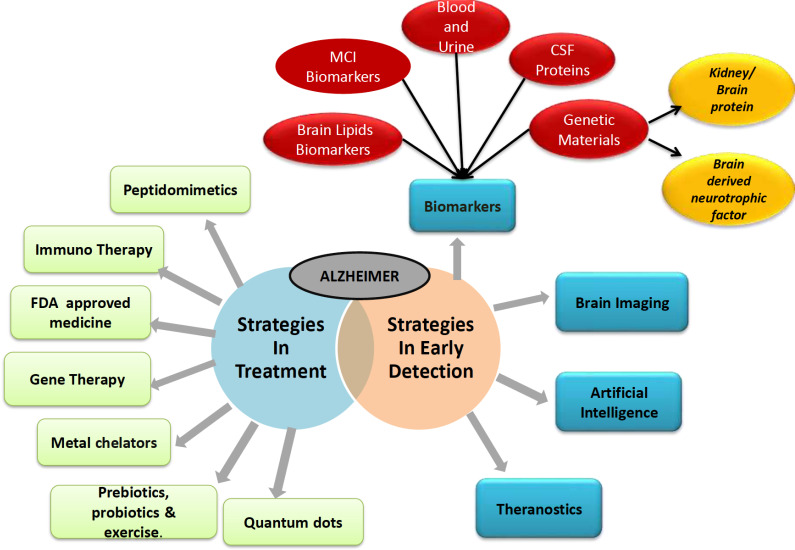
BACKGROUND: The only conclusive way to diagnose Alzheimer's is to carry out brain autopsy of the patient's brain tissue and ascertain whether the subject had Alzheimer's or any other form of dementia. However, due to the non-feasibility of such methods, to diagnose and conclude the conditions, medical practitioners use tests that examine a patient's mental ability. OBJECTIVE: Accurate diagnosis at an early stage is the need of the hour for initiation of therapy. The cause for most Alzheimer's cases still remains unknown except where genetic distinctions have been observed. Thus, a standard drug regimen ensues in every Alzheimer's patient, irrespective of the cause, which may not always be beneficial in halting or reversing the disease progression. To provide a better life to such patients by suppressing existing symptoms, early diagnosis, curative therapy, site-specific delivery of drugs, and application of hyphenated methods like artificial intelligence need to be brought into the main field of Alzheimer's therapeutics. METHODS: In this review, we have compiled existing hypotheses to explain the cause of the disease, and highlighted gene therapy, immunotherapy, peptidomimetics, metal chelators, probiotics and quantum dots as advancements in the existing strategies to manage Alzheimer's. CONCLUSION: Biomarkers, brain-imaging, and theranostics, along with artificial intelligence, are understood to be the future of the management of Alzheimer's.
Overview
CoChat Summary
TL;DR
This narrative review summarizes proposed mechanisms of Alzheimer’s disease (AD), current diagnostic approaches, and emerging therapeutic strategies including gene therapy, immunotherapy, peptidomimetics, metal chelators, probiotics, theranostics/quantum dots, and artificial intelligence. It argues that early diagnosis and multimodal, mechanism-targeted approaches are needed because existing treatments only relieve symptoms and no available drug halts or reverses disease progression.
Key findings
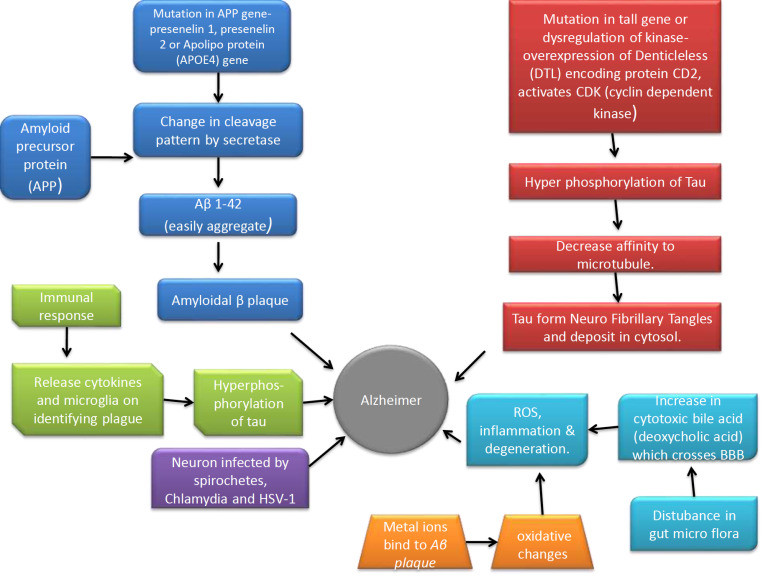
- AD pathogenesis is described through multiple hypotheses: Aβ plaque formation, tau hyperphosphorylation and neurofibrillary tangles, synaptic dysfunction and neurotransmitter imbalance, neuroinflammation, infectious disease, gut microbiome disruption, genetic mutations, oxidative stress, and autophagy dysfunction. The review notes that amyloid-targeting drugs have shown no effect in reversing or halting cognitive decline, suggesting either the hypothesis is incorrect or the brain becomes refractory after a certain time.
- For diagnosis, the paper reports that specialized PET scanning exhibits 100% specificity and 96% sensitivity in AD and milder conditions, while CSF analysis for p-tau, Aβ42, and total tau has 85–90% accuracy. It also states that pathological changes are initiated two decades before symptoms appear, and that P-tau181 can serve as a confirmatory and prognostic biomarker.
- Currently approved drugs target cholinergic or glutamatergic neurotransmission: donepezil, rivastigmine, and galantamine are acetylcholinesterase inhibitors effective in mild to moderate AD; memantine, approved by the FDA in 2003, is an NMDA receptor antagonist for moderate to severe AD. These drugs only relieve symptoms, and no drug is available with a curative effect.
- Emerging strategies include gene therapy, immunotherapy, peptidomimetics, metal chelators, probiotics/prebiotics/exercise, theranostics with quantum dots, and AI-based diagnosis. Examples include deep learning with 18F-FDG PET achieving 82% specificity and 100% sensitivity at an average of 75.8 months ahead of final diagnosis, and voice/speech machine-learning classifiers reporting accuracies from 74% to 94.71%.
Methods
- Design: narrative review compiling existing hypotheses and highlighting gene therapy, immunotherapy, peptidomimetics, metal chelators, probiotics, and quantum dots as advancements in AD management.
- Data/sample: no primary data collection; the paper synthesizes prior literature, including human trials, animal models, and biomarker studies.
- Main analysis: qualitative synthesis of mechanisms, diagnostics, current FDA-approved medicines, and future therapeutic/diagnostic approaches, including artificial intelligence.
Limitations
- Stated in the paper: various hypotheses are unable to explain the complete picture of AD pathogenesis; the cause in many cases remains untraceable; no treatment options can halt or reverse disease progression; gene therapy and quantum dots are recent additions but are yet to be clinically approved; most immunotherapeutics are in Phase 3 clinical trials; peptidomimetics, speech as an indicator, and metal ion chelators are still under investigation and not widely used.
- Evident from the text: this is a narrative review without a described systematic search strategy, formal inclusion/exclusion criteria, or meta-analysis; it relies on cited studies that include animal models, small cohorts, and preliminary human data, and it does not perform a formal risk-of-bias or quality assessment.
Model-written summary. Check it against the paper before relying on it.
Integrity signals
Registry
Cites
Statistics
Figures
Verification
Claims the paper makes
20 Valid · 2 Not valid · 159 Not checked · 11 Own results and interpretations
Every source the paper cites for this claim was checked and supports it.
In the paper
“Alteration in the activity of any of these gut microbes along with increase nitrate intake, can lead to overproduction of NO, which can cause axonal degeneration, neuro inflammation and neurodegenerative disorders [24].”
§ Recent Advancements in Pathogenesis, Diagnostics and Treatment of Alzheimer’s Disease > Introduction > Mechanisms of Alzheimer’s Disease
What the sources say
- Supportedcites [24] Luca M. Di Mauro M. Di Mauro M. Luca A. Gut microbiota in alzheimer’s disease, depression, and type 2 diabetes mellitus: the role of oxidative stress. Oxid. Med. Cell. Longev. 2019 2019 4730539 10.1155/2019/4730539 31178961 PMC6501164 source
Section 1.3 (Microbiota, Inflammation, and Oxidative Stress) of our copy states the full chain the claim attributes: a high nitrate intake increases nitrite concentration and NO, gut lactobacilli and bifidobacteria convert nitrate and nitrite into NO (streptomycetes and bacilli make NO via NOS), and 'excessive NO production is noxious, being associated with neuroinflammation, cellular damage, axonal degeneration, and neurodegenerative disorders'. Section 3.1 adds that an altered microbiota can stimulate NO synthesis, covering the 'alteration in the activity of gut microbes' element. Luca et al. is a review that reports these points (crediting the microbial NO chemistry to their ref [23], Oleskin & Shenderov, and the NO-toxicity consequences to their ref [10]), so it supports the paraphrase as a secondary source rather than as the original study. (LLM, conf=0.82)
plainstates a cause- Asserted: passes — The authors put it forward as true.
- Checkable: passes — It can be checked against evidence.
- Load-bearing: unclear — It is unclear whether the paper’s conclusions depend on it.
- Based: passes — The paper gives a reason why it holds.
- Supported
The cited sources support only part of this claim — read each source’s verdict below.
In the paper
“Metal ions specifically zinc and copper may bind to the Aβ plaque and produce ROS.”
§ Recent Advancements in Pathogenesis, Diagnostics and Treatment of Alzheimer’s Disease > Introduction > Mechanisms of Alzheimer’s Disease
What the sources say
- Partly supportedcites [24] Luca M. Di Mauro M. Di Mauro M. Luca A. Gut microbiota in alzheimer’s disease, depression, and type 2 diabetes mellitus: the role of oxidative stress. Oxid. Med. Cell. Longev. 2019 2019 4730539 10.1155/2019/4730539 31178961 PMC6501164 sourceExperimental — accuracy not yet measured
Section 2.1 identifies copper and zinc accumulated in neuritic plaques as sources of ROS production. It does not specifically say that those ions bind to Aβ, so the proposed binding mechanism is not established by this paper. (LLM, conf=0.84)
- Partly supportedcites [29] Moreira P.I. Carvalho C. Zhu X. Smith M.A. Perry G. Mitochondrial dysfunction is a trigger of Alzheimer’s disease pathophysiology. Biochim. Biophys. Acta 2010 1802 1 2 10 10.1016/j.bbadis.2009.10.006 19853658 sourceExperimental — accuracy not yet measured
Section 3 reports that Aβ exposure stimulates hydrogen peroxide generation, supporting the broader link between Aβ and reactive oxygen species. Sections 2 and 3 do not say that zinc or copper binds Aβ plaques or that such binding produces ROS; the paper instead discusses mitochondrial ROS generation and, separately, reactions involving reduced transition metals. (LLM, conf=0.82)
- Partly supportedcites [30] Cheignon C. Tomas M. Bonnefont-Rousselot D. Faller P. Hureau C. Collin F. Oxidative stress and the amyloid beta peptide in Alzheimer’s disease. Redox Biol. 2018 14 450 464 10.1016/j.redox.2017.10.014 29080524 PMC5680523 sourceExperimental — accuracy not yet measured
Section 2.2 says copper and zinc can bind Aβ, but identifies copper-containing aggregates—not zinc-containing ones—as capable of producing ROS. Section 4.2 likewise discusses ROS production by Cu–Aβ complexes. The claim is therefore supported for copper binding and ROS production, but not for zinc producing ROS. (LLM, conf=0.88)
hedgedstates a possible cause- Asserted: passes — The authors put it forward as true.
- Checkable: passes — It can be checked against evidence.
- Load-bearing: unclear — It is unclear whether the paper’s conclusions depend on it.
- Based: passes — The paper gives a reason why it holds.
- Partly supported
Every source the paper cites for this claim was checked and supports it.
In the paper
“An increase in tau acetylation was linked to the loss of KIBRA in AD patients with dementia.”
§ Recent Advancements in Pathogenesis, Diagnostics and Treatment of Alzheimer’s Disease > Newer strategies in early detection of Alzheimer’s disease > Kidney/Brain (KIBRA) Protein, a Memory-Associated Protein
What the sources say
- Supportedcites [76] Tracy T.E. Sohn P.D. Minami S.S. Wang C. Min S.W. Li Y. Zhou Y. Le D. Lo I. Ponnusamy R. Cong X. Schilling B. Ellerby L.M. Huganir R.L. Gan L. Acetylated tau obstructs KIBRA-mediated signaling in synaptic plasticity and promotes tauopathy related memory loss. Neuron 2016 90 2 245 260 10.1016/j.neuron.2016.03.005 27041503 PMC4859346 source
The Results section reports that elevated tau acetylation at K274 or K281 correlates strongly with reduced KIBRA protein in AD, and that KIBRA levels are significantly lower in severely demented cases. The Discussion likewise states that dementia in AD is associated with elevated acetylation at those sites and negatively correlated KIBRA levels. (LLM, conf=0.95)
plainstates an association- Asserted: passes — The authors put it forward as true.
- Checkable: passes — It can be checked against evidence.
- Load-bearing: passes — The paper’s conclusions depend on it.
- Based: passes — The paper gives a reason why it holds.
- Supported
The sources with a verdict support this claim; the rest weren’t checked yet, have no full text we could read, or their verdicts aren’t rated yet.
In the paper
“The strongest and most reliable genetic association involves the epsilon 4 (ε4) allele at the ApoE locus for increased risk of late-onset AD [68, 69].”
§ Recent Advancements in Pathogenesis, Diagnostics and Treatment of Alzheimer’s Disease > Newer strategies in early detection of Alzheimer’s disease > Genetic Markers
What the sources say
- Supportedcites [68] Harold D. Abraham R. Hollingworth P. Sims R. Gerrish A. Hamshere M.L. Pahwa J.S. Moskvina V. Dowzell K. Williams A. Jones N. Thomas C. Stretton A. Morgan A.R. Lovestone S. Powell J. Proitsi P. Lupton M.K. Brayne C. Rubinsztein D.C. Gill M. Lawlor B. Lynch A. Morgan K. Brown K.S. Passmore P.A. Craig D. McGuinness B. Todd S. Holmes C. Mann D. Smith A.D. Love S. Kehoe P.G. Hardy J. Mead S. Fox N. Rossor M. Collinge J. Maier W. Jessen F. Schürmann B. Heun R. van den Bussche H. Heuser I. Kornhuber J. Wiltfang J. Dichgans M. Frölich L. Hampel H. Hüll M. Rujescu D. Goate A.M. Kauwe J.S. Cruchaga C. N source
The paper’s introductory discussion (page unavailable) calls APOE the only unequivocally established susceptibility gene for the common form of AD and says its association is stronger than those found for other genes. The Secondary Analyses section identifies the APOE ε4 allele and reports substantially more ε4-positive AD cases than controls, supporting the claim that it is associated with increased risk. (LLM, conf=0.90)
- Not checked yetcites [69] Poirier J. Davignon J. Bouthillier D. Kogan S. Bertrand P. Gauthier S. Apolipoprotein E polymorphism and Alzheimer’s disease. Lancet 1993 342 8873 697 699 10.1016/0140-6736(93)91705-Q 8103819 source
boostedstates an association- Asserted: passes — The authors put it forward as true.
- Checkable: passes — It can be checked against evidence.
- Load-bearing: unclear — It is unclear whether the paper’s conclusions depend on it.
- Based: passes — The paper gives a reason why it holds.
- Supported
Every source the paper cites for this claim was checked and supports it.
In the paper
“In another study, an immuno‐infrared‐sensor was used for the extraction of the total Aβ fraction from plasma samples, wherein the biomarker amide I band were significantly lower for AD individuals.”
§ Recent Advancements in Pathogenesis, Diagnostics and Treatment of Alzheimer’s Disease > Newer strategies in early detection of Alzheimer’s disease > Blood and Urine Biomarkers of AD
What the sources say
- Supportedcites [60] Nabers A. Perna L. Lange J. Mons U. Schartner J. Güldenhaupt J. Saum K.U. Janelidze S. Holleczek B. Rujescu D. Hansson O. Gerwert K. Brenner H. Amyloid blood biomarker detects Alzheimer’s disease. EMBO Mol. Med. 2018 10 5 e8763 10.15252/emmm.201708763 29626112 PMC5938617 source
The ESTHER Results state that the immuno-infrared sensor extracted the total Aβ fraction from plasma and that the amide I biomarker band was significantly lower in AD cases than controls (P < 0.001). The BioFINDER Results also report a significantly lower band in prodromal AD cases. The measured decrease is in the band's position or frequency, not the amount of Aβ. (LLM, conf=0.95)
plainstates an association- Asserted: passes — The authors put it forward as true.
- Checkable: passes — It can be checked against evidence.
- Load-bearing: passes — The paper’s conclusions depend on it.
- Based: passes — The paper gives a reason why it holds.
- Supported
89 more claims · 5 with their cited sources checked
Create a free account to see all 192 claims and to verify the 176 references still open.
- It may state two separate claims as one. 90
- Probably not a substantial claim. 12
- The quote only partly states this claim. 1
Claims other papers make about this one
Each is checked against this paper’s own text: does it say what the citing paper says it does?
The source backs part of the claim, not all of it — or backs it for a different population, condition or comparison.
In the citing paper
“Chronic neuroinflammation—driven by activated microglia and oxidative stress from protein aggregates—creates a vicious cycle that worsens proteopathy and impairs autophagy [7].”
From Theranostic Nanoplatforms for Alzheimer's Disease: A Critical Analysis of Conceptual Contradictions (2026) · cites this paper as [7]
Experimental — accuracy not yet measured
Self-check
Percentages, sums and reported differences re-computed from the paper’s own numbers.
Each contradiction between two passages listed here was confirmed by an independent check.
Rated minor: it would not touch a result — a value no result rests on, a p-value that stays on the same side of the significance level, or a conflict that is clerical, resolved elsewhere in the paper, or outside its own findings.
In the paper
“The dementia group included 314 patients (249 diagnosed with probable AD, 21 suffering from possible AD, 5 with VD (Vascular dementia), 3 with problems related to memory, 43 with Mild cognitive impairment and 4 with undiscovered form of dementia)”
§ Recent Advancements in Pathogenesis, Diagnostics and Treatment of Alzheimer’s Disease > Current strategies in the treatment of Alzheimer’s disease > Voice as a Biomarker Using Artificial Intelligence
Reported 314 · recomputed 325
Rated minor: it would not touch a result — a value no result rests on, a p-value that stays on the same side of the significance level, or a conflict that is clerical, resolved elsewhere in the paper, or outside its own findings.
In the paper
§ Recent Advancements in Pathogenesis, Diagnostics and Treatment of Alzheimer’s Disease > Introduction > Diagnostics of Alzheimer’s Disease
“PET scanning and CSF analysis revealed that the pathological changes are initiated two decades before the appearance of symptoms”
§ Recent Advancements in Pathogenesis, Diagnostics and Treatment of Alzheimer’s Disease > Current strategies in the treatment of Alzheimer’s disease
“the emergence of AD-related pathologic changes begins quite early, almost a decade before the person shows the symptoms.”
Rated minor: it would not touch a result — a value no result rests on, a p-value that stays on the same side of the significance level, or a conflict that is clerical, resolved elsewhere in the paper, or outside its own findings.
In the paper
§ Recent Advancements in Pathogenesis, Diagnostics and Treatment of Alzheimer’s Disease > Introduction
“were the nine countries in descending order of incidence of people suffering from dementia in 2010”
§ Recent Advancements in Pathogenesis, Diagnostics and Treatment of Alzheimer’s Disease > Introduction
“China, USA, India, Japan, Germany, Russia, France and Brazil”
Citations
Cites
Diagnostic and Statistical Manual of Mental Disorders
Williams, J. B. W., & First, M. (2013) · Encyclopedia of Social Work · doi:10.1093/acrefore/9780199975839.013.104 · Cited by 109,519
McKhann, G. M., Knopman, D. S., Chertkow, H., Hyman, B. T., Jack, C. R., Kawas, C. H., Klunk, W. E., Koroshetz, W. J., Manly, J. J., Mayeux, R., et al. (2011) · Alzheimer's & Dementia · doi:10.1016/j.jalz.2011.03.005 · Cited by 18,657
Albert, M. S., DeKosky, S. T., Dickson, D., Dubois, B., Feldman, H. H., Fox, N. C., Gamst, A., Holtzman, D. M., Jagust, W. J., Petersen, R. C., et al. (2011) · Alzheimer's & Dementia · doi:10.1016/j.jalz.2011.03.008 · Cited by 10,152 · cited 1×
“This criterion set is the prevailing standard for the MCI syndrome in current times, and is reflected in the NIAAA work group guidelines for the diagnosis of MCI due to AD [87].”
BackgroundMild Cognitive Impairment: Clinical Characterization and Outcome
Petersen, R. C., Smith, G. E., Waring, S. C., Ivnik, R. J., Tangalos, E. G., & Kokmen, E. (1999) · Archives of Neurology · doi:10.1001/archneur.56.3.303 · Cited by 8,980
Winblad, B., Palmer, K., Kivipelto, M., Jelic, V., Fratiglioni, L., Wahlund, L. ‐., Nordberg, A., Bäckman, L., Albert, M., Almkvist, O., et al. (2004) · Journal of Internal Medicine · doi:10.1111/j.1365-2796.2004.01380.x · Cited by 4,946
Clinical and biomarker changes in dominantly inherited Alzheimer's disease
Bateman, R. J., Xiong, C., Benzinger, T. L. S., Fagan, A. M., Goate, A., Fox, N. C., Marcus, D. S., Cairns, N. J., Xie, X., Blazey, T. M., et al. (2012) · New England Journal of Medicine · doi:10.1056/nejmoa1202753 · Cited by 3,814
Harold, D., Abraham, R., Hollingworth, P., Sims, R., Gerrish, A., Hamshere, M. L., Pahwa, J. S., Moskvina, V., Dowzell, K., Williams, A., et al. (2009) · Nature Genetics · doi:10.1038/ng.440 · Cited by 3,326
Blennow, K., de Leon, M. J., & Zetterberg, H. (2006) · The Lancet · doi:10.1016/s0140-6736(06)69113-7 · Cited by 3,134
Albert, M. S., DeKosky, S. T., Dickson, D., Dubois, B., Feldman, H. H., Fox, N. C., Gamst, A., Holtzman, D. M., Jagust, W. J., Petersen, R. C., et al. (2013) · Focus · doi:10.1176/appi.focus.11.1.96 · Cited by 2,621
Inflammation as a central mechanism in Alzheimer's disease
Kinney, J. W., Bemiller, S. M., Murtishaw, A. S., Leisgang, A. M., Salazar, A. M., & Lamb, B. T. (2018) · Alzheimer's & Dementia: Translational Research & Clinical Interventions · doi:10.1016/j.trci.2018.06.014 · Cited by 2,253 · cited 1×
“Due to the dysregulation of GABAergic mechanism in AD, the inhibitory role of GABA on activated microglia is also lost which further contributes to the release of pro-inflammatory cytokines [17].”
BackgroundOxidative stress and the amyloid beta peptide in Alzheimer’s disease
Cheignon, C., Tomas, M., Bonnefont-Rousselot, D., Faller, P., Hureau, C., & Collin, F. (2018) · Redox Biology · doi:10.1016/j.redox.2017.10.014 · Cited by 2,185 · cited 1×
“ROS thus produced brings about oxidative change in the Aβ peptide itself making its removal difficult and also cause lipid and protein oxidation of the cell membrane making it permeable and hence susceptible to degeneration [24, 29, 30].”
BackgroundImmune attack: the role of inflammation in Alzheimer disease
Heppner, F. L., Ransohoff, R. M., & Becher, B. (2015) · Nature Reviews Neuroscience · doi:10.1038/nrn3880 · Cited by 2,134 · cited 1×
“Immune molecules like IL1β, IL-6 and CCL2 are produced by brain endothelial cells against Aβ plaque [18].”
BackgroundStrimbu, K., & Tavel, J. A. (2010) · Current Opinion in HIV and AIDS · doi:10.1097/coh.0b013e32833ed177 · Cited by 2,062 · cited 1×
“In the case of AD, a biomarker can be used to assess the overall health and diseased condition of aged patients [39, 40].”
BackgroundThe cholinergic system in the pathophysiology and treatment of Alzheimer’s disease
Hampel, H., Mesulam, M.-M., Cuello, A. C., Farlow, M. R., Giacobini, E., Grossberg, G. T., Khachaturian, A. S., Vergallo, A., Cavedo, E., Snyder, P. J., et al. (2018) · Brain · doi:10.1093/brain/awy132 · Cited by 1,918 · cited 1×
“Cholinergic deficit also alters the permeability of the blood brain barrier causing erroneous transportation of metabolites and hampering the removal of amyloid plaque, worsening the disease condition [8].”
BackgroundAlzheimer's disease: Targeting the Cholinergic System
H. Ferreira-Vieira, T., M. Guimaraes, I., R. Silva, F., & M. Ribeiro, F. (2016) · Current Neuropharmacology · doi:10.2174/1570159x13666150716165726 · Cited by 1,551 · cited 1×
“AchE also interacts with Aβ peptide and promotes plaque formation [9].”
BackgroundJanelidze, S., Mattsson, N., Palmqvist, S., Smith, R., Beach, T. G., Serrano, G. E., Chai, X., Proctor, N. K., Eichenlaub, U., Zetterberg, H., et al. (2020) · Nature Medicine · doi:10.1038/s41591-020-0755-1 · Cited by 1,247 · cited 1×
“It gets deposited in the brain and secreted in CSF which crosses blood brain barrier to enter the blood where it can be used as a biomarker for AD [35, 36].”
BackgroundApolipoprotein E polymorphism and Alzheimer's disease
Poirier, J., Bertrand, P., Poirier, J., Kogan, S., Gauthier, S., Poirier, J., Gauthier, S., Davignon, J., Bouthillier, D., & Davignon, J. (1993) · The Lancet · doi:10.1016/0140-6736(93)91705-q · Cited by 1,108 · cited 1×
“The strongest and most reliable genetic association involves the epsilon 4 (ε4) allele at the ApoE locus for increased risk of late-onset AD [68, 69].”
BackgroundCurrent understanding of Alzheimer’s disease diagnosis and treatment
Weller, J., & Budson, A. (2018) · F1000Research · doi:10.12688/f1000research.14506.1 · Cited by 1,083 · cited 1×
“However, both PET imaging and CSF analysis exhibit similar accuracy, and suggest that the optimum test for the diagnosis will depend upon patient/provider preference, cost and availability of facilities [37].”
BackgroundBrain Cholesterol: Long Secret Life Behind a Barrier
Björkhem, I., & Meaney, S. (2004) · Arteriosclerosis, Thrombosis, and Vascular Biology · doi:10.1161/01.atv.0000120374.59826.1b · Cited by 1,044 · cited 1×
“Out of all the brain lipids, the most abundant are cholesterol, ceramides, glucosyl ceramides, phosphatidylcholine, sphingomyelin, and sulfatides [61, 62].”
BackgroundBiomarkers for Alzheimer's disease: current status and prospects for the future
Blennow, K., & Zetterberg, H. (2018) · Journal of Internal Medicine · doi:10.1111/joim.12816 · Cited by 1,000 · cited 2×
“An ELISA assay called as INNOTEST has been used for two decades for quantification of t-tau, p-tau and Aβ42 in CSF which gives a unique ‘Alzheimer’s CSF profile’ where an increased level of t-tau and p-tau is observed with decreased Aβ42 level [45, 46].”
BackgroundMethodPrevalence and severity of cognitive impairment with and without dementia in an elderly population
Graham, J. E., Rockwood, K., Beattie, B. L., Eastwood, R., Gauthier, S., Tuokko, H., & McDowell, I. (1997) · The Lancet · doi:10.1016/s0140-6736(97)01007-6 · Cited by 999 · cited 1×
“A related concept, known as Cognitive Impairment, No Dementia (CIND) has the presence of cognitive impairment with the absence of dementia [82].”
BackgroundInnate immunity in Alzheimer's disease
Heneka, M. T., Golenbock, D. T., & Latz, E. (2015) · Nature Immunology · doi:10.1038/ni.3102 · Cited by 902 · cited 1×
“This increases the peptide’s ability to aggregate and makes it more potent in suppressing synaptic plasticity [16].”
BackgroundBrain Imaging in Alzheimer Disease
Johnson, K. A., Fox, N. C., Sperling, R. A., & Klunk, W. E. (2012) · Cold Spring Harbor Perspectives in Medicine · doi:10.1101/cshperspect.a006213 · Cited by 875 · cited 1×
“Other MRI techniques in development that are also adding to the knowledge of AD are diffusion tensor imaging (DTI) and associated tractography technologies, arterial spin labeling measures of cerebral blood flow and PET tracers targeted at the cholinergic system, microglial activation and other tracers [78].”
BackgroundThe genetic landscape of Alzheimer disease: clinical implications and perspectives
Van Cauwenberghe, C., Van Broeckhoven, C., & Sleegers, K. (2016) · Genetics in Medicine · doi:10.1038/gim.2015.117 · Cited by 863 · cited 1×
“Other genes involved are presenilin 1, presenelin 2 and mutations in β amyloid precursor protein [28].”
BackgroundMild cognitive impairment in the elderly: Predictors of dementia
Flicker, C., Ferris, S. H., & Reisberg, B. (1991) · Neurology · doi:10.1212/wnl.41.7.1006 · Cited by 838
Oxidative Stress in Neurodegenerative Diseases: From Molecular Mechanisms to Clinical Applications
Liu, Z., Zhou, T., Ziegler, A. C., Dimitrion, P., & Zuo, L. (2017) · Oxidative Medicine and Cellular Longevity · doi:10.1155/2017/2525967 · Cited by 810 · cited 1×
“Aβ proteins can directly activate nicotinamide adenine dinucleotide phosphate hydrogen (NADPH) oxidase to initiate the synthesis of free radicals [31].”
BackgroundHansson, O., Seibyl, J., Stomrud, E., Zetterberg, H., Trojanowski, J. Q., Bittner, T., Lifke, V., Corradini, V., Eichenlaub, U., Batrla, R., et al. (2018) · Alzheimer's & Dementia · doi:10.1016/j.jalz.2018.01.010 · Cited by 808
Linguistic Features Identify Alzheimer’s Disease in Narrative Speech
Fraser, K. C., Meltzer, J. A., & Rudzicz, F. (2015) · Journal of Alzheimer's Disease · doi:10.3233/jad-150520 · Cited by 797 · cited 2×
“Accuracy of 92% was obtained in distinguishing people suffering from AD and healthy control group using top 25 ranked features [134].”
BackgroundMolecular mechanisms of neurodegeneration in Alzheimer's disease
Crews, L., & Masliah, E. (2010) · Human Molecular Genetics · doi:10.1093/hmg/ddq160 · Cited by 772 · cited 1×
“Due to cytosolic calcium overload, p35 splits into p25, which hyperactivates cyclin-dependent kinase-5 (CDK5) and leads to hyper phosphorylation of tau [6].”
BackgroundAdvancing Research and Treatment for Frontotemporal Lobar Degeneration (ARTFL) investigators, Thijssen, E. H., La Joie, R., Wolf, A., Strom, A., Wang, P., Iaccarino, L., Bourakova, V., Cobigo, Y., Heuer, H., et al. (2020) · Nature Medicine · doi:10.1038/s41591-020-0762-2 · Cited by 761
Mitochondrial dysfunction is a trigger of Alzheimer's disease pathophysiology
Moreira, P. I., Carvalho, C., Zhu, X., Smith, M. A., & Perry, G. (2010) · Biochimica et Biophysica Acta (BBA) - Molecular Basis of Disease · doi:10.1016/j.bbadis.2009.10.006 · Cited by 734 · cited 1×
“ROS thus produced brings about oxidative change in the Aβ peptide itself making its removal difficult and also cause lipid and protein oxidation of the cell membrane making it permeable and hence susceptible to degeneration [24, 29, 30].”
BackgroundMahmoudianDehkordi, S., Arnold, M., Nho, K., Ahmad, S., Jia, W., Xie, G., Louie, G., Kueider‐Paisley, A., Moseley, M. A., Thompson, J. W., et al. (2019) · Alzheimer's & Dementia · doi:10.1016/j.jalz.2018.07.217 · Cited by 706 · cited 1×
“Disturbance in the gut microflora results in increased production of secondary cytotoxic bile acid, mainly deoxycholic acid, which can cross the blood brain barrier and get deposited in the brain leading to apoptosis, generation of reactive oxygen species, inflammation and neurodegeneration [21].”
BackgroundQuantum dots in imaging, drug delivery and sensor applications
Matea, C., Mocan, T., Tabaran, F., Pop, T., Mosteanu, O., Puia, C., Iancu, C., & Mocan, L. (2017) · International Journal of Nanomedicine · doi:10.2147/ijn.s138624 · Cited by 666 · cited 1×
“Recently there has been a lot of interest in developing theranostics application of QDs where simultaneous imaging, diagnosis and therapy is possible [111].”
BackgroundAmyloid cascade hypothesis: Pathogenesis and therapeutic strategies in Alzheimer's disease
Barage, S. H., & Sonawane, K. D. (2015) · Neuropeptides · doi:10.1016/j.npep.2015.06.008 · Cited by 579 · cited 2×
“The Aβ plaque comprises of Aβ peptides obtained from amyloid precursor protein (APP) by the enzymatic cleavage via secretases (α, β and γ) [2].”
BackgroundA Deep Learning Model to Predict a Diagnosis of Alzheimer Disease by Using 18 F-FDG PET of the Brain
Ding, Y., Sohn, J. H., Kawczynski, M. G., Trivedi, H., Harnish, R., Jenkins, N. W., Lituiev, D., Copeland, T. P., Aboian, M. S., Mari Aparici, C., et al. (2019) · Radiology · doi:10.1148/radiol.2018180958 · Cited by 577
Anti-Amyloid-β Monoclonal Antibodies for Alzheimer’s Disease: Pitfalls and Promise
van Dyck, C. H. (2018) · Biological Psychiatry · doi:10.1016/j.biopsych.2017.08.010 · Cited by 568 · cited 1×
“But majority of these drugs have severe side effects like ARIA (Amyloid related imaging abnormalities), which are associated with vasogenic edema (ARIA-E) or indicate micro haemorrhage and hemosiderosis (ARIA-H) [120].”
BackgroundRole of gut microbiota and nutrients in amyloid formation and pathogenesis of Alzheimer disease
Pistollato, F., Sumalla Cano, S., Elio, I., Masias Vergara, M., Giampieri, F., & Battino, M. (2016) · Nutrition Reviews · doi:10.1093/nutrit/nuw023 · Cited by 496 · cited 1×
“As a result, proinflammatory miRNA-34a is up regulated, causing downregulation of TREM-2 (trigger receptor expressed in microglial/myeloid cell-2), which can cause deposition of Aβ-42 peptide [25].”
BackgroundIdentifying and validating biomarkers for Alzheimer's disease
Humpel, C. (2011) · Trends in Biotechnology · doi:10.1016/j.tibtech.2010.09.007 · Cited by 484 · cited 1×
“In the case of AD, a biomarker can be used to assess the overall health and diseased condition of aged patients [39, 40].”
BackgroundAntibiotics, gut microbiota, and Alzheimer’s disease
Angelucci, F., Cechova, K., Amlerova, J., & Hort, J. (2019) · Journal of Neuroinflammation · doi:10.1186/s12974-019-1494-4 · Cited by 454 · cited 1×
“It was identified that patients infected with bacteria (like Chlamydia pneumonia, Borrelia burgdorferi and Helicobacter pylori) showed increased levels of Aβ-40 and Aβ-42 as well as an increase in levels of inflammatory mediators associated with AD [26].”
BackgroundA Plaque-Specific Antibody Clears Existing β-amyloid Plaques in Alzheimer's Disease Mice
DeMattos, R. B., Lu, J., Tang, Y., Racke, M. M., DeLong, C. A., Tzaferis, J. A., Hole, J. T., Forster, B. M., McDonnell, P. C., Liu, F., et al. (2012) · Neuron · doi:10.1016/j.neuron.2012.10.029 · Cited by 442
Amyloid-β immunotherapy for Alzheimer's disease: the end of the beginning
Schenk, D. (2002) · Nature Reviews Neuroscience · doi:10.1038/nrn938 · Cited by 436 · cited 1×
“Other immunotherapy includes passive administration of monoclonal antibodies (mAb) [119].”
BackgroundAutomatic speech analysis for the assessment of patients with predementia and Alzheimer's disease
König, A., Satt, A., Sorin, A., Hoory, R., Toledo‐Ronen, O., Derreumaux, A., Manera, V., Verhey, F., Aalten, P., Robert, P. H., et al. (2015) · Alzheimer's & Dementia: Diagnosis, Assessment & Disease Monitoring · doi:10.1016/j.dadm.2014.11.012 · Cited by 380 · cited 2×
“Konig et al. (2015) using four short vocal tasks performed an experiment.”
MethodMcEvoy, L. K., Fennema-Notestine, C., Roddey, J. C., Hagler, D. J., Holland, D., Karow, D. S., Pung, C. J., Brewer, J. B., & Dale, A. M. (2009) · Radiology · doi:10.1148/radiol.2511080924 · Cited by 330
[Apolipoprotein E polymorphism and Alzheimer disease].
van der Weide, J., Steijns, L. S. W., Jl, T., Wj, N., & Klaverwijden, G. (1996) · PubMed · Cited by 297
Hampel, H., Teipel, S. J., Fuchsberger, T., Andreasen, N., Wiltfang, J., Otto, M., Shen, Y., Dodel, R., Du, Y., Farlow, M., et al. (2004) · Molecular Psychiatry · doi:10.1038/sj.mp.4001473 · Cited by 287 · cited 1×
“Aβ1–42 and CSF tau showed a sensitivity of 59% and 83% with a specificity of 100% and 90% respectively [91].”
BackgroundNerve Growth Factor Gene Therapy: Activation of Neuronal Responses in Alzheimer Disease
Tuszynski, M. H., Yang, J. H., Barba, D., U, H.-S., Bakay, R. A. E., Pay, M. M., Masliah, E., Conner, J. M., Kobalka, P., Roy, S., et al. (2015) · JAMA Neurology · doi:10.1001/jamaneurol.2015.1807 · Cited by 287 · cited 2×
“In an effort to test the ability to degenerate neurons in AD towards a nervous system growth factor (NGF), Tuszynski et al. (2015) subjected ten patients with early AD with NGF gene ex vivo or in vivo therapy [101].”
BackgroundMethodDendritic Tau in Alzheimer’s Disease
Ittner, A., & Ittner, L. M. (2018) · Neuron · doi:10.1016/j.neuron.2018.06.003 · Cited by 278 · cited 1×
“synaptic dysfunction contributing to dementia and neurodegeneration [15].”
BackgroundTracy, T. E., Sohn, P. D., Minami, S. S., Wang, C., Min, S.-W., Li, Y., Zhou, Y., Le, D., Lo, I., Ponnusamy, R., et al. (2016) · Neuron · doi:10.1016/j.neuron.2016.03.005 · Cited by 277
Probiotic Supplementation in Patients with Alzheimer’s Dementia - An Explorative Intervention Study
Leblhuber, F., Steiner, K., Schuetz, B., Fuchs, D., & Gostner, J. M. (2018) · Current Alzheimer Research · doi:10.2174/1389200219666180813144834 · Cited by 269 · cited 1×
“The probiotic supplements should be mild and not very intensive as it can lead to disruption of gut microbiota activating the immune system and leading to neuroinflammation [129].”
REVIEWThe Gene Defects Responsible for Familial Alzheimer's Disease
Tanzi, R. E., Kovacs, D. M., Kim, T.-W., Moir, R. D., Guenette, S. Y., & Wasco, W. (1996) · Neurobiology of Disease · doi:10.1006/nbdi.1996.0016 · Cited by 265
Abraham, D., Feher, J., Scuderi, G. L., Szabo, D., Dobolyi, A., Cservenak, M., Juhasz, J., Ligeti, B., Pongor, S., Gomez-Cabrera, M. C., et al. (2019) · Experimental Gerontology · doi:10.1016/j.exger.2018.12.005 · Cited by 260
Synaptic dysfunction in Alzheimer's disease: Mechanisms and therapeutic strategies
Chen, Y., Fu, A. K. Y., & Ip, N. Y. (2019) · Pharmacology & Therapeutics · doi:10.1016/j.pharmthera.2018.11.006 · Cited by 258 · cited 1×
“These newly developed molecules target the amyloid and tau proteins [97].”
BackgroundWolk, D. A., Dickerson, B. C., Initiative, T. A. D. N., Weiner, M., Aiello, M., Aisen, P., Albert, M. S., Alexander, G., Anderson, H. S., Anderson, K., et al. (2010) · Proceedings of the National Academy of Sciences · doi:10.1073/pnas.1001412107 · Cited by 248
Jedynak, B. M., Lang, A., Liu, B., Katz, E., Zhang, Y., Wyman, B. T., Raunig, D., Jedynak, C. P., Caffo, B., & Prince, J. L. (2012) · NeuroImage · doi:10.1016/j.neuroimage.2012.07.059 · Cited by 243
Molecular biomarkers of Alzheimer's disease: progress and prospects
Lashley, T., Schott, J. M., Weston, P., Murray, C. E., Wellington, H., Keshavan, A., Foti, S. C., Foiani, M., Toombs, J., Rohrer, J. D., et al. (2018) · Disease Models & Mechanisms · doi:10.1242/dmm.031781 · Cited by 230
Oxysterols: A world to explore
Otaegui-Arrazola, A., Menéndez-Carreño, M., Ansorena, D., & Astiasarán, I. (2010) · Food and Chemical Toxicology · doi:10.1016/j.fct.2010.09.023 · Cited by 228
Goyal, D., Shuaib, S., Mann, S., & Goyal, B. (2017) · ACS Combinatorial Science · doi:10.1021/acscombsci.6b00116 · Cited by 227
Peripheral Aβ subspecies as risk biomarkers of Alzheimer's disease
Schupf, N., Tang, M. X., Fukuyama, H., Manly, J., Andrews, H., Mehta, P., Ravetch, J., & Mayeux, R. (2008) · Proceedings of the National Academy of Sciences · doi:10.1073/pnas.0805902105 · Cited by 225
Bivalent Brain Shuttle Increases Antibody Uptake by Monovalent Binding to the Transferrin Receptor
Hultqvist, G., Syvänen, S., Fang, X. T., Lannfelt, L., & Sehlin, D. (2017) · Theranostics · doi:10.7150/thno.17155 · Cited by 224 · cited 1×
“Due to this fusion, the shuttle selectively permeates the BBB and delivers mAb158 in the brain which works as Aβ immunotherapy and also as a radio-ligand for PET diagnosis, aiding in the evaluation of the therapy simultaneously [108].”
BackgroundRafii, M. S., Tuszynski, M. H., Thomas, R. G., Barba, D., Brewer, J. B., Rissman, R. A., Siffert, J., Aisen, P. S., & for the AAV2-NGF Study Team (2018) · JAMA Neurology · doi:10.1001/jamaneurol.2018.0233 · Cited by 219 · cited 1×
“Recently, Rafii et al. (2018) reported the results of a multicentre randomized clinical trial of intracerebral gene delivery in Alzheimer’s disease (AD) patients [103].”
BackgroundRobert, A., Liu, Y., Nguyen, M., & Meunier, B. (2015) · Accounts of Chemical Research · doi:10.1021/acs.accounts.5b00119 · Cited by 212 · cited 2×
“They include pyrrolidine dithiocarbonate (PDTC), pyridine derivatives, reduced Schiff base derivatives, Bis(hydrazide), bis(thiosemicarbazones) (BTSC), peptides and multifunctional ligands [126].”
BackgroundMitochondrial Dysfunction and Synaptic Transmission Failure in Alzheimer’s Disease
Guo, L., Tian, J., & Du, H. (2017) · Journal of Alzheimer’s Disease · doi:10.3233/jad-160702 · Cited by 211 · cited 1×
“Apart from this, Aβ induces hypersensitivity of NMDA receptors and also disrupts the regulatory control of NMDA activity causing excitotoxicity [12].”
BackgroundMetal ions, Alzheimer's disease and chelation therapy
Budimir, A. (2011) · Acta Pharmaceutica · doi:10.2478/v10007-011-0006-6 · Cited by 202 · cited 2×
“Chelators do not exhibit strong specific activity towards metal ions as it can deplete its level and lead to abnormal metal ion concentration [125].”
BackgroundLuca, M., Di Mauro, M., Di Mauro, M., & Luca, A. (2019) · Oxidative Medicine and Cellular Longevity · doi:10.1155/2019/4730539 · Cited by 190 · cited 12×
“This increase in calcium levels depletes glutathione and over-accumulation of ROS inside the cells.”
BackgroundInfluentialNew Approaches for the Treatment of Alzheimer’s Disease
Fish, P. V., Steadman, D., Bayle, E. D., & Whiting, P. (2019) · Bioorganic & Medicinal Chemistry Letters · doi:10.1016/j.bmcl.2018.11.034 · Cited by 189
Amyloid blood biomarker detects Alzheimer's disease
Nabers, A., Perna, L., Lange, J., Mons, U., Schartner, J., Güldenhaupt, J., Saum, K., Janelidze, S., Holleczek, B., Rujescu, D., et al. (2018) · EMBO Molecular Medicine · doi:10.15252/emmm.201708763 · Cited by 185 · cited 1×
“9 (ESTHER: Alzheimer’s society in Toronto), which indicated good evidence of this biomarker to identify AD in the general population [60].”
BackgroundAmyloid‐β immunotherapy for alzheimer disease: Is it now a long shot?
Panza, F., Lozupone, M., Seripa, D., & Imbimbo, B. P. (2019) · Annals of Neurology · doi:10.1002/ana.25410 · Cited by 178 · cited 1×
“There are several other mechanisms like direct method (in which Aβ plaque are unbundled) and peripheral sink mechanism (removal of Aβ from the brain to plasma) [118].”
Aided diagnosis of dementia type through computer-based analysis of spontaneous speech
Jarrold, W., Peintner, B., Wilkins, D., Vergryi, D., Richey, C., Gorno-Tempini, M. L., & Ogar, J. (2014) · Proceedings of the Workshop on Computational Linguistics and Clinical Psychology: From Linguistic Signal to Clinical Reality · doi:10.3115/v1/w14-3204 · Cited by 178 · cited 2×
“Jarrold et al. (2014) differentiated between different types of dementia.”
MethodThe Possibility of an Infectious Etiology of Alzheimer Disease
Ashraf, G. M., Tarasov, V. V., Makhmutovа, A., Chubarev, V. N., Avila-Rodriguez, M., Bachurin, S. O., & Aliev, G. (2019) · Molecular Neurobiology · doi:10.1007/s12035-018-1388-y · Cited by 175 · cited 1×
“Thus, the persistent untreated infection could be one of the causes of AD [19].”
BackgroundLipid Biomarkers in Alzheimer's Disease
Zarrouk, A., Debbabi, M., Bezine, M., Karym, E. M., Badreddine, A., Rouaud, O., Moreau, T., Cherkaoui-Malki, M., El Ayeb, M., Nasser, B., et al. (2018) · Current Alzheimer Research · doi:10.2174/1567205014666170505101426 · Cited by 170
Graphene quantum dots conjugated neuroprotective peptide improve learning and memory capability
Xiao, S., Zhou, D., Luan, P., Gu, B., Feng, L., Fan, S., Liao, W., Fang, W., Yang, L., Tao, E., et al. (2016) · Biomaterials · doi:10.1016/j.biomaterials.2016.08.021 · Cited by 169
Hu, B., Dai, F., Fan, Z., Ma, G., Tang, Q., & Zhang, X. (2015) · Advanced Materials · doi:10.1002/adma.201502227 · Cited by 155 · cited 1×
“plaque by magnetic resonance imaging but also achieve controlled release of drugs and prevent oxidative damage [110].”
BackgroundRajasekhar, K., & Govindaraju, T. (2018) · RSC Advances · doi:10.1039/c8ra03620a · Cited by 150 · cited 1×
“Various growing factors for AD like presenelin 1 proteins, oxidative stress, tau neurofibrillary tangles can cause dysfunction of autophagic vacuoles and hence can contribute in the pathogenesis of AD [32, 33].”
BackgroundKatsouri, L., Lim, Y. M., Blondrath, K., Eleftheriadou, I., Lombardero, L., Birch, A. M., Mirzaei, N., Irvine, E. E., Mazarakis, N. D., & Sastre, M. (2016) · Proceedings of the National Academy of Sciences · doi:10.1073/pnas.1606171113 · Cited by 146 · cited 1×
“Those that had not been treated had multiple plaques in their brain [102].”
BackgroundRelevance of gutmicrobiota in cognition, behaviour and Alzheimer’s disease
de J.R. De-Paula, V., Forlenza, A. S., & Forlenza, O. V. (2018) · Pharmacological Research · doi:10.1016/j.phrs.2018.07.007 · Cited by 145 · cited 1×
“Gut microbes influence the formation, absorption and transport of serotonin and GABA in the brain, moreover some bacterial species influence the formation of amyloid plaque which initiates the inflammatory cascade and hence susceptibility to AD [23].”
BackgroundZaudig, M. (1992) · International Psychogeriatrics · doi:10.1017/s1041610292001273 · Cited by 145 · cited 1×
“MCI is always referred at an early stage of AD on the global deterioration scale [83] and to another factor comprising DSM-III-R (Diagnostic and Statistical Manual of Mental Disorder, third edition, Revised) and ICD-10 (International Classification of Diseases, Tenth Revision)diagnostic criteria [84], its most popular…”
BackgroundCell “Self‐Eating” (Autophagy) Mechanism in Alzheimer's Disease
Funderburk, S. F., Marcellino, B. K., & Yue, Z. (2010) · Mount Sinai Journal of Medicine: A Journal of Translational and Personalized Medicine · doi:10.1002/msj.20161 · Cited by 139 · cited 1×
“Various growing factors for AD like presenelin 1 proteins, oxidative stress, tau neurofibrillary tangles can cause dysfunction of autophagic vacuoles and hence can contribute in the pathogenesis of AD [32, 33].”
BackgroundLipids in the nervous system: From biochemistry and molecular biology to patho-physiology
Cermenati, G., Mitro, N., Audano, M., Melcangi, R. C., Crestani, M., De Fabiani, E., & Caruso, D. (2015) · Biochimica et Biophysica Acta (BBA) - Molecular and Cell Biology of Lipids · doi:10.1016/j.bbalip.2014.08.011 · Cited by 137 · cited 1×
“Out of all the brain lipids, the most abundant are cholesterol, ceramides, glucosyl ceramides, phosphatidylcholine, sphingomyelin, and sulfatides [61, 62].”
BackgroundLópez-de-Ipiña, K., Alonso, J. B., Solé-Casals, J., Barroso, N., Henriquez, P., Faundez-Zanuy, M., Travieso, C. M., Ecay-Torres, M., Martínez-Lage, P., & Eguiraun, H. (2015) · Cognitive Computation · doi:10.1007/s12559-013-9229-9 · Cited by 132 · cited 3×
“Therefore, speech or voice analysis along with analysis of emotional temperature of patients suffering from AD is very important and can be used as a diagnostic tool for detecting Alzheimer's in its preliminary stage [130].”
BackgroundMethodInfluentialMars, A., Hamami, M., Bechnak, L., Patra, D., & Raouafi, N. (2018) · Analytica Chimica Acta · doi:10.1016/j.aca.2018.06.075 · Cited by 127 · cited 2×
“(2018) described a sensitive method based on dual electrochemical and fluorescence detection of APOE4 DNA, responsible of Alzheimer and coronary artery diseases [114].”
MethodBDNF Val66Met, Aβ amyloid, and cognitive decline in preclinical Alzheimer's disease
Lim, Y. Y., Villemagne, V. L., Laws, S. M., Ames, D., Pietrzak, R. H., Ellis, K. A., Harrington, K. D., Bourgeat, P., Salvado, O., Darby, D., et al. (2013) · Neurobiology of Aging · doi:10.1016/j.neurobiolaging.2013.05.006 · Cited by 124
Medina‐Sánchez, M., Miserere, S., Morales‐Narváez, E., & Merkoçi, A. (2013) · Biosensors and Bioelectronics · doi:10.1016/j.bios.2013.10.069 · Cited by 117 · cited 1×
“They used them within a magnetic zone with magnetic beads for sample purification and concentration [116].”
MethodOrimaye, S. O., Wong, J. S.-M., & Golden, K. J. (2014) · Proceedings of the Workshop on Computational Linguistics and Clinical Psychology: From Linguistic Signal to Clinical Reality · doi:10.3115/v1/w14-3210 · Cited by 116 · cited 1×
“Orimaye et al. (2014) also performed a diagnostic method to identify patients suffering from Alzheimer.”
MethodSlevin, M., Matou, S., Zeinolabediny, Y., Corpas, R., Weston, R., Liu, D., Boras, E., Di Napoli, M., Petcu, E., Sarroca, S., et al. (2015) · Scientific Reports · doi:10.1038/srep13281 · Cited by 115 · cited 1×
“Monomeric CRP acts as a linker between vascular trauma and inflammation and also is associated with other events like plaque generation, neuronal injury, and dementia [52].”
BackgroundThe dendritic hypothesis for Alzheimer's disease pathophysiology
Cochran, J. N., Hall, A. M., & Roberson, E. D. (2014) · Brain Research Bulletin · doi:10.1016/j.brainresbull.2013.12.004 · Cited by 114 · cited 1×
“Aβ, tau, and AD genetic risk factors affect dendritic integrity and disease progression [14].”
BackgroundBrosseron, F., Traschütz, A., Widmann, C. N., Kummer, M. P., Tacik, P., Santarelli, F., Jessen, F., & Heneka, M. T. (2018) · Alzheimer's Research & Therapy · doi:10.1186/s13195-018-0353-3 · Cited by 113
Fatty Acids - Induced Lipotoxicity and Inflammation
Savary, S., Trompier, D., Andreoletti, P., Le Borgne, F., Demarquoy, J., & Lizard, G. (2012) · Current Drug Metabolism · doi:10.2174/138920012803762729 · Cited by 111 · cited 1×
“Besides them, cholesterol oxide derivatives and other long chain derivatives of fatty acids including prostaglandins, leukotrienes and neuroprotectins are present [63, 64].”
BackgroundLim, Y. Y., Villemagne, V. L., Laws, S. M., Ames, D., Pietrzak, R. H., Ellis, K. A., Harrington, K., Bourgeat, P., Bush, A. I., Martins, R. N., et al. (2014) · PLoS ONE · doi:10.1371/journal.pone.0086498 · Cited by 110 · cited 1×
“, (2014) provided a preliminary report and linked high Aβ and BDNF Val66Met polymorphism in prodromal AD suggesting them as important prognostic markers of increased memory decline and hippocampal atrophy [73].”
BackgroundLohith, T. G., Bennacef, I., Vandenberghe, R., Vandenbulcke, M., Salinas, C. A., Declercq, R., Reynders, T., Telan-Choing, N. F., Riffel, K., Celen, S., et al. (2019) · Journal of Nuclear Medicine · doi:10.2967/jnumed.118.208215 · Cited by 107
Albright, J., & Initiative, A. D. N. (2019) · Alzheimer's & Dementia: Translational Research & Clinical Interventions · doi:10.1016/j.trci.2019.07.001 · Cited by 104 · cited 2×
“866) at predicting the progression of Alzheimer in normal and mild cognitive impairment diagnosed patients [143].”
BackgroundMethodDecreased C-Reactive Protein Levels in Alzheimer Disease
O'Bryant, S. E., Waring, S. C., Hobson, V., Hall, J. R., Moore, C. B., Bottiglieri, T., Massman, P., & Diaz-Arrastia, R. (2010) · Journal of Geriatric Psychiatry and Neurology · doi:10.1177/0891988709351832 · Cited by 103
Li, Y., Xu, D., Ho, S.-L., Li, H.-W., Yang, R., & Wong, M. S. (2016) · Biomaterials · doi:10.1016/j.biomaterials.2016.03.047 · Cited by 102 · cited 1×
“It effectively prevents the aggregation of Aβ1-40 and Aβ1-42 fragments providing therapy for AD [107].”
BackgroundFerreira, L. K., & Busatto, G. F. (2011) · Clinics · doi:10.1590/s1807-59322011001300003 · Cited by 102 · cited 1×
“MRI, single photon emission computed tomography and 18Ffluorodeoxyglucose-positron emission tomography (18FFDG PET) are currently available for clinical use [80].”
MethodMullane, K., & Williams, M. (2018) · Biochemical Pharmacology · doi:10.1016/j.bcp.2018.09.026 · Cited by 98
Strang, F., Scheichl, A., Chen, Y., Wang, X., Htun, N., Bassler, N., Eisenhardt, S. U., Habersberger, J., & Peter, K. (2012) · Brain Pathology · doi:10.1111/j.1750-3639.2011.00539.x · Cited by 94 · cited 1×
“The CRP has a role in amyloid pathology as studied and shown in APP/PS1 (amyloid precursor protein/presenilin 1) mice; pentameric CRP dissociation takes place into monomeric forms prompted by amyloid plaque [50, 51].”
BackgroundTemporal-spatial expression and novel biochemical properties of the memory-related protein KIBRA
Johannsen, S., Duning, K., Pavenstädt, H., Kremerskothen, J., & Boeckers, T. M. (2008) · Neuroscience · doi:10.1016/j.neuroscience.2008.06.054 · Cited by 91
Shi, L., Baird, A. L., Westwood, S., Hye, A., Dobson, R., Thambisetty, M., & Lovestone, S. (2018) · Journal of Alzheimer’s Disease · doi:10.3233/jad-170531 · Cited by 90 · cited 1×
“Recently there has been a surge in finding blood biomarkers appropriate for repeated evaluations throughout the disease progression over a time-frame for an interventional/treatment study [57].”
BackgroundLi, M., Guan, Y., Zhao, A., Ren, J., & Qu, X. (2017) · Theranostics · doi:10.7150/thno.18459 · Cited by 90 · cited 1×
“Depending on the process of Aβ aggregation, the absorbance of gold nanorods changes and hence the progression of the disease can be monitored [105].”
BackgroundSharma, S., Verma, S., Kapoor, M., Saini, A., & Nehru, B. (2016) · Neurological Research · doi:10.1080/01616412.2016.1209337 · Cited by 89 · cited 1×
“With blood samples being used for diagnosis, it can help in analysing different types of blood cells (mononuclear cells, lymphocytes, monocytes or platelets), which can be categorically associated with AD pathologies [56].”
MethodHubacek, J. A., Peasey, A., Pikhart, H., Stavek, P., Kubinova, R., Marmot, M., & Bobak, M. (2010) · Human Immunology · doi:10.1016/j.humimm.2010.01.008 · Cited by 83
Cui, Z., Bu, W., Fan, W., Zhang, J., Ni, D., Liu, Y., Wang, J., Liu, J., Yao, Z., & Shi, J. (2016) · Biomaterials · doi:10.1016/j.biomaterials.2016.06.056 · Cited by 83
Yang, Y.-W., Liou, S.-H., Hsueh, Y.-M., Lyu, W.-S., Liu, C.-S., Liu, H.-J., Chung, M.-C., Hung, P.-H., & Chung, C.-J. (2018) · Toxicology and Applied Pharmacology · doi:10.1016/j.taap.2018.07.015 · Cited by 82 · cited 3×
“Some of the previous studies carried out in vitro and human trials have indicated the role of non-essential heavy metals cadmium (Cd), mercury (Hg), lead (Pb), and arsenic (As) in causing Aβ protein aggregation along with worrisome levels of tau hyper phosphorylation [44].”
BackgroundMethodInfluentialKIBRA Polymorphism Is Related to Enhanced Memory and Elevated Hippocampal Processing
Kauppi, K., Nilsson, L.-G., Adolfsson, R., Eriksson, E., & Nyberg, L. (2011) · The Journal of Neuroscience · doi:10.1523/jneurosci.3292-11.2011 · Cited by 81 · cited 1×
“It interacts with several postsynaptic proteins including dendrin and synaptopodin and function in memoryrelated processes through these interactions [75].”
BackgroundBegcevic, I., Brinc, D., Brown, M., Martinez-Morillo, E., Goldhardt, O., Grimmer, T., Magdolen, V., Batruch, I., & Diamandis, E. P. (2018) · Journal of Proteomics · doi:10.1016/j.jprot.2018.04.027 · Cited by 81 · cited 4×
“Both Aβ and tau aggregates and cause impaired synaptic plasticity and neuronal cell death [4].”
BackgroundInfluentialDao, P., Ye, F., Liu, Y., Du, Z. Y., Zhang, K., Dong, C. Z., Meunier, B., & Chen, H. (2017) · ACS Chemical Neuroscience · doi:10.1021/acschemneuro.6b00380 · Cited by 80 · cited 2×
“(2017) have synthesized phenothiazine derivatives which work as near infra-red fluorescent probes, having a high affinity for the amyloid plaque and can detect it in the brain and retinal tissue of transgenic mice [106].”
BackgroundMorales-Narváez, E., Montón, H., Fomicheva, A., & Merkoçi, A. (2012) · Analytical Chemistry · doi:10.1021/ac301369e · Cited by 79 · cited 2×
“(2012) studied the biosensing ability of QDs (QD655) and a fluorescent dye (A647) recruited in the sandwich ELISA as reporters in microarray format and compared it with a conventional ELISA by using ApoE as model analyte [115].”
MethodDesign and Synthesis of Statine-Based Cell-Permeable Peptidomimetic Inhibitors of Human β-Secretase
Hom, R. K., Fang, L. Y., Mamo, S., Tung, J. S., Guinn, A. C., Walker, D., Davis, D. L., Gailunas, A. F., Thorsett, E. D., Sinha, S., et al. (2003) · Journal of Medicinal Chemistry · doi:10.1021/jm025619l · Cited by 78
Hybrid Multifunctional Modulators Inhibit Multifaceted Aβ Toxicity and Prevent Mitochondrial Damage
Rajasekhar, K., Mehta, K., & Govindaraju, T. (2018) · ACS Chemical Neuroscience · doi:10.1021/acschemneuro.8b00033 · Cited by 69 · cited 4×
“TGR86 also increases cell viability [122].”
BackgroundInfluentialFantoni, E. R., Chalkidou, A., O’ Brien, J. T., Farrar, G., & Hammers, A. (2018) · Journal of Alzheimer’s Disease · doi:10.3233/jad-171093 · Cited by 68 · cited 1×
“The PET imaging has utility of diagnostic decision making, confidence in diagnosis and management planning for patients with cognitive impairment [79].”
BackgroundWatanabe, Y., Kitamura, K., Nakamura, K., Sanpei, K., Wakasugi, M., Yokoseki, A., Onodera, O., Ikeuchi, T., Kuwano, R., Momotsu, T., et al. (2016) · Dementia and Geriatric Cognitive Disorders Extra · doi:10.1159/000442585 · Cited by 65 · cited 3×
“Elevated CRP is found to be associated with decreased cognition in “The Project in Sado for Total Health” (PROST) study in the Japanese population.”
BackgroundNeurogranin as a predictor of memory and executive function decline in MCI patients
Headley, A., De Leon-Benedetti, A., Dong, C., Levin, B., Loewenstein, D., Camargo, C., Rundek, T., Zetterberg, H., Blennow, K., Wright, C. B., et al. (2018) · Neurology · doi:10.1212/wnl.0000000000005057 · Cited by 62 · cited 1×
“CSF Ng level can be used to determine and assess the effect of treatment as well as during the progression of AD [96].”
MethodSerotonin 6 receptor controls alzheimer’s disease and depression
Yun, H.-M., Park, K.-R., Kim, E.-C., Kim, S., & Hong, J. T. (2015) · Oncotarget · doi:10.18632/oncotarget.5777 · Cited by 62 · cited 1×
“The same molecule also reduces the formation of amyloid plaque since it reduces the gamma-secretase activity without having any effect on β secretase [13].”
BackgroundKauppi, K., Fan, C. C., McEvoy, L. K., Holland, D., Tan, C. H., Chen, C.-H., Andreassen, O. A., Desikan, R. S., Dale, A. M., & Initiative, T. A. D. N. (2018) · Frontiers in Neuroscience · doi:10.3389/fnins.2018.00260 · Cited by 60
Noradrenergic Hypothesis Linking Neurodegeneration-Based Cognitive Decline and Astroglia
Leanza, G., Gulino, R., & Zorec, R. (2018) · Frontiers in Molecular Neuroscience · doi:10.3389/fnmol.2018.00254 · Cited by 54 · cited 1×
“Further it is reported that noradrenergic receptors are densely present on the astrocytes, the activation of which improves synaptic plasticity and hence learning and memory [10].”
BackgroundGurevich, P., Stuke, H., Kastrup, A., Stuke, H., & Hildebrandt, H. (2017) · Frontiers in Aging Neuroscience · doi:10.3389/fnagi.2017.00114 · Cited by 53 · cited 1×
“With samples of 158 patients divided on the basis of Mini Mental State Examination (MMSE) into early and a late stage group (labelled as non-AD and AD), around 82% patients were clearly differentiated as AD and non-AD in total group and the accuracy increased to 89% [144].”
MethodBiomarkers for early detection of Alzheimer disease.
Barber, R. C. (2010) · PubMed · Cited by 50
Molecular mechanisms of the genetic risk factors in pathogenesis of Alzheimer disease
Tomita, T. (2017) · Frontiers in Bioscience · doi:10.2741/4480 · Cited by 48 · cited 1×
“APOE gene has been closely related to the incidence of AD in most cases [27].”
BackgroundCDT2‐controlled cell cycle reentry regulates the pathogenesis of Alzheimer's disease
Huang, F., Wang, M., Liu, R., Wang, J., Schadt, E., Haroutunian, V., Katsel, P., Zhang, B., & Wang, X. (2019) · Alzheimer's & Dementia · doi:10.1016/j.jalz.2018.08.013 · Cited by 47 · cited 1×
“The reason stated for the hyper phosphorylation is a mutation in the tau genes or dysregulation of kinases as mentioned below and phosphatases which catalyze the phosphorylation process [7].”
BackgroundThe Link Between C-Reactive Protein and Alzheimer's Disease Among Mexican Americans
O'Bryant, S. E., for the Texas Alzheimer's Research & Care Consortium, Johnson, L., Edwards, M., Soares, H., Devous, M. D., Ross, S., Rohlfing, G., & Hall, J. (2013) · Journal of Alzheimer's Disease · doi:10.3233/jad-122071 · Cited by 47
Bi, B.-T., Lin, H.-B., Cheng, Y.-F., Zhou, H., Lin, T., Zhang, M.-Z., Li, T.-J., & Xu, J.-P. (2012) · Neurochemistry International · doi:10.1016/j.neuint.2011.12.007 · Cited by 42
Zhang, T., Han, Y., Wang, J., Hou, D., Deng, H., Deng, Y. L., & Song, Z. (2018) · Frontiers in Aging Neuroscience · doi:10.3389/fnagi.2018.00176 · Cited by 38
Another step forward in blood-based diagnostics for Alzheimer’s disease
Bateman, R. J., Barthélemy, N. R., & Horie, K. (2020) · Nature Medicine · doi:10.1038/s41591-020-0797-4 · Cited by 37 · cited 1×
“Currently, the diagnosis of AD is primarily dependent on positron emission tomography (PET) of tracer molecules and analysis of cerebrospinal fluid (CSF) protein [34].”
BackgroundAlzheimer’s Disease: The Alternative Serotonergic Hypothesis of Cognitive Decline
Vakalopoulos, C. (2017) · Journal of Alzheimer's Disease · doi:10.3233/jad-170364 · Cited by 34 · cited 1×
“A dysfunction of this pathway causes memory loss [11].”
BackgroundPorter, T., Villemagne, V. L., Savage, G. R., Milicic, L., Lim, Y. Y., Maruff, P. T., Masters, C. L., Ames, D. J., Bush, A. I., Martins, R. N., et al. (2018) · Personalized Medicine in Psychiatry · doi:10.1016/j.pmip.2018.03.001 · Cited by 32 · cited 2×
“Porter et al. (2018) emphasized on determining the gene risk profiling for preclinical trials in AD with cognition to assess the therapeutic efficacy [77].”
BackgroundRoles of Toll-Like Receptors in Pathophysiology of Alzheimer’s Disease and Multiple Sclerosis
Bir, S. C., Chernyshev, O. Y., & Minagar, A. (2018) · Elsevier eBooks · doi:10.1016/b978-0-12-811709-5.00033-8 · Cited by 30 · cited 1×
“A component of the innate immune system referred to as “Toll like proteins” as mentioned above, is activated due to it [20].”
BackgroundNanoparticle-emitted light attenuates amyloid-β-induced superoxide and inflammation in astrocytes
Bungart, B. L., Dong, L., Sobek, D., Sun, G. Y., Yao, G., & Lee, J. C.-M. (2014) · Nanomedicine: Nanotechnology, Biology and Medicine · doi:10.1016/j.nano.2013.10.007 · Cited by 27 · cited 1×
“This low-level laser therapy (LLLT) can be further exploited to treat other diseases that involve inflammation and oxidative stress pathologies [113].”
BackgroundCerebrospinal Fluid Biomarkers in Alzheimer’s Disease—From Brain Starch to Bench and Bedside
Pawlowski, M., Meuth, S., & Duning, T. (2017) · Diagnostics · doi:10.3390/diagnostics7030042 · Cited by 25 · cited 1×
“An ELISA assay called as INNOTEST has been used for two decades for quantification of t-tau, p-tau and Aβ42 in CSF which gives a unique ‘Alzheimer’s CSF profile’ where an increased level of t-tau and p-tau is observed with decreased Aβ42 level [45, 46].”
MethodAntibody Engineering for Optimized Immunotherapy in Alzheimer's Disease
Sumner, I. L., Edwards, R. A., Asuni, A. A., & Teeling, J. L. (2018) · Frontiers in Neuroscience · doi:10.3389/fnins.2018.00254 · Cited by 24 · cited 1×
“These antibodies are mainly engineered and have low binding activity at Fcγ regions which are mainly involved in side effects of first line monoclonal antibodies [121].”
BackgroundCRP gene variation affects early development of Alzheimer's disease-related plaques
Kok, E., Alanne-Kinnunen, M., Isotalo, K., Luoto, T., Haikonen, S., Goebeler, S., Perola, M., Hurme, M. A., Haapasalo, H., & Karhunen, P. J. (2011) · Journal of Neuroinflammation · doi:10.1186/1742-2094-8-96 · Cited by 16 · cited 1×
“Creactive protein (CRP) levels are majorly associated with ApoE genotype and the CSF amyloid levels [47].”
BackgroundThe unbearable lightness of MCI
Ganguli, M. (2013) · International Psychogeriatrics · doi:10.1017/s1041610213002275 · Cited by 14
Artificial intelligence and risk prediction in geriatric mental health: what happens next?
Graham, S. A., & Depp, C. A. (2019) · International Psychogeriatrics · doi:10.1017/s1041610219000954 · Cited by 13
Plasma lipid biomarkers for early-stage Alzheimer disease
Beal, E. (2011) · Nature Reviews Neurology · doi:10.1038/nrneurol.2011.125 · Cited by 11
Brain imaging and artificial intelligence
Maoz, U., & Linstead, E. J. (2019) · Elsevier eBooks · doi:10.1016/b978-0-12-816179-1.00017-7 · Cited by 3 · cited 1×
“Further artificial intelligence and artificial neural network can be used to analyse petabyte of data from each neuron and model other biological factors like glial cells, hormones and even microbiome which affect the functioning of neuron [146].”
MethodRahmanian, M., Mosalanejad, L., & Abdolallahifard, S. (2018) · DOAJ (DOAJ: Directory of Open Access Journals) · Cited by 2
Research works printed but not linked: 4
- Grimm M.O.W. Hartmann T. Recent understanding of the molecular mechanisms of Alzheimer’s disease. J. Addict. Res. Ther. 2012 004 S5
- Wong C.B. Kobayashi Y. Xiao J-Z. Probiotics for preventing cognitive impairment in Alzheimer’s Disease. Gut Microbiota - Brain Axis; Evrensel, A.; Ünsalver, B.O. Neuroscience 2018 ••• 85 104
- De Brito Sanchez R. de Barros L. Rodrigues S.C.M. Fernandes J.C.L. Bondioli A.C.V. de Campos Mundin H.A. de Sousa V.D.S. da Silva L.H.B.O. 2019
- Farooq A. Anwar S.M. Awais M. Alnowami M. Proceedings of the IEEE International Smart Cities Conference Wuxi, China 2017 1 4
Cited by
Vatansever, S., Schlessinger, A., Wacker, D., Kaniskan, H. Ü., Jin, J., Zhou, M., & Zhang, B. (2021) · Medicinal Research Reviews · doi:10.1002/med.21764 · Cited by 429
“In recent years, AI/ML‐based models have become popular in AD research, mostly utilizing for AD diagnosis and prognosis in dealing with electronic health records and images.(412) On the contrary, AI/ML techniques have not been widely employed in AD drug discovery.”
BackgroundGFAP as a Potential Biomarker for Alzheimer’s Disease: A Systematic Review and Meta-Analysis
Kim, K. Y., Shin, K. Y., & Chang, K.-A. (2023) · Cells · doi:10.3390/cells12091309 · Cited by 309
Wnt signaling pathways in biology and disease: mechanisms and therapeutic advances
Xue, C., Chu, Q., Shi, Q., Zeng, Y., Lu, J., & Li, L. (2025) · Signal Transduction and Targeted Therapy · doi:10.1038/s41392-025-02142-w · Cited by 281
The role of probiotics and prebiotics in modulating of the gut-brain axis
Ansari, F., Neshat, M., Pourjafar, H., Jafari, S. M., Samakkhah, S. A., & Mirzakhani, E. (2023) · Frontiers in Nutrition · doi:10.3389/fnut.2023.1173660 · Cited by 200
“The basis of the definite diagnosis of AD is through pathological examinations and includes; observation of extracellular plaques with depositions of β-amyloid/Aβ, presence of Aβ in the brain vessels (cerebral amyloid angiopathy (CAA)), and protein forming neurofibrillary tangles associated with intraneural accumulati…”
BackgroundACSL4-Mediated Ferroptosis and Its Potential Role in Central Nervous System Diseases and Injuries
Jia, B., Li, J., Song, Y., & Luo, C. (2023) · International Journal of Molecular Sciences · doi:10.3390/ijms241210021 · Cited by 174
“The abnormal folding and aggregation of Aβ in the brain is one of the hallmark pathological changes of Alzheimer’s disease [104].”
Background
Metadata
- Authors
- Khan, S., Barve, K. H., & Kumar, M. S.
- Affiliations
- Narsee Monjee Institute of Management Studies (IN)
- Corresponding author
- Kumar, Maushmi S.
- Venue
- Current Neuropharmacology
- Publisher
- Bentham Science Publishers Ltd.
- Published
- 2020-11-09
- Volume
- 18
- Issue
- 11
- Pages
- 1106-1125
- ISSN
- 1570-159X (ISSN-L)
- PMC
- PMC7709159
- OpenAlex
- W3030743313
- Cited by
- 820
- References
- 136
- Citations by year
- 2026: 106 · 2025: 242 · 2024: 234 · 2023: 193 · 2022: 38 · 2021: 4 · 2020: 3
- FWCI
- 7.59
- Type
- journal article
- Language
- en
- Open access
- green
- www.ncbi.nlm.nih.gov
- Licence
- cc-by-nc
- Locations
- Current Neuropharmacology (publishedVersion)
- PubMed Central (publishedVersion, cc-by-nc)
- PubMed (publishedVersion)
- Topics
- Life Sciences › Neuroscience › Cellular and Molecular Neuroscience › Alzheimer's disease research and treatments
- Health Sciences › Medicine › Psychiatry and Mental health › Dementia and Cognitive Impairment Research
- Health Sciences › Medicine › Pharmacology (medical) › Cholinesterase and Neurodegenerative Diseases
- Keywords
- Alzheimer's disease, pathogenesis, early diagnosis, biomarkers, neuroimaging, theranostics, gene therapy, immunotherapy, peptidomimetics, metal chelators, probiotics, quantum dots, artificial intelligence, drug delivery
- MeSH terms
- Alzheimer Disease, Animals, Brain, Humans, Biomarkers, Disease Progression, Early Diagnosis, Neuroimaging
About these checks
Registry, retraction, Cites and statistics results are computed, not judged, with one exception: a printed reference that no index lists is read once by a model before it counts as a citation error. Claims are extracted by a model and kept only when their quote appears verbatim in the text; each cited source is then checked, with a model’s help, for whether it says what the claim relies on. Those verdicts can be wrong — read the claim’s quote and the cited source before relying on one.
The claim verdicts this report counts are experimental: their accuracy is not yet measured.
A language model drew the claims from the paper on 2026-09-29, under version 3 of the claim definition (model deepseek-v4.1-flash, prompt extract-v3).
A second model labelled each claim on 2026-09-29 (model jev-1.13-20260917, definition revision gold-guideline-v0.2).
Cited sources are checked with a language model’s help (qwen3.8-omni-flash and gpt-6-sol).
Statistics and arithmetic are recomputed, not judged.
Confidence bands are shown only for fields calibrated on our annotated test set. None is calibrated yet, so no band is shown.
What counts as a claim ›How we measure confidence ›How we check this ›
Are you an author, or do you see a problem with this page? Request a review
Data sources
Bibliographic data: Semantic Scholar, OpenAlex, Crossref.
Contains information from the Semantic Scholar Academic Graph Datasets, made available under the ODC Attribution License (ODC-BY 1.0).
Semantic Scholar’s data is described in: Kinney, R., et al. (2023). The Semantic Scholar Open Data Platform. arXiv:2301.10140.
