

Optimizing outcomes in EGFR Mutation-Positive Nsclc: Which Tyrosine Kinase Inhibitor and When?
Open accessThe DOI matches its Crossref record; 75 of the 75 references it cites were found in a registry or an index.
Abstract
Despite the efficacy of standard-of-care EGFR tyrosine kinase inhibitors (TKIs), erlotinib, gefitinib and afatinib, in EGFR mutation-positive non-small-cell lung cancer, resistance develops, most commonly due to the T790M mutation. Osimertinib showed clinical activity in the treatment of T790M-positive disease following progression on a first-line TKI, and is approved in this setting. Recently, osimertinib improved efficacy versus first-generation TKIs (erlotinib and gefitinib) in the first-line setting. Multiple factors can influence first-line treatment decisions, including subsequent therapy options, presence of brain metastases and tolerability, all of which should be considered in the long-term treatment plan. Further research into treatment sequencing is also needed, to optimize outcomes in EGFR mutation-positive non-small-cell lung cancer.
Overview
The claims and statistics of this paper haven’t been checked yet.
Free: it reads the open-access text and checks the first 5 claims that cite a source we can check. Create a free account to check every claim.
Integrity signals
Registry
Cites
Statistics
Figures
Verification
Claims the paper makes
The claims and statistics of this paper haven’t been checked yet.
Free: it reads the open-access text and checks the first 5 claims that cite a source we can check. Create a free account to check every claim.
Claims other papers make about this one
Each is checked against this paper’s own text: does it say what the citing paper says it does?
The cited source says what the claim attributes to it.
In the citing paper
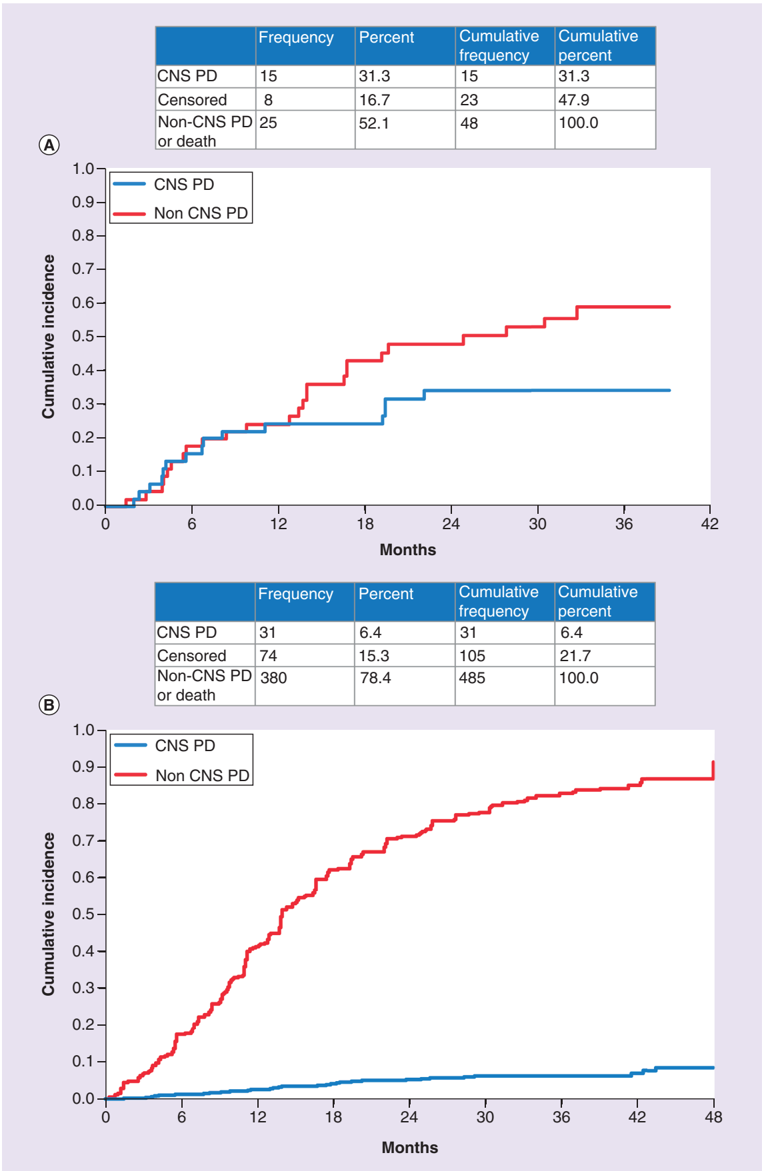
“Competing risk analyses of LUX-Lung 3 and 6 showed that in patients with baseline brain metastases the cumulative incidence of CNS progression (31.3%) was lower than that of non-CNS progression (52.1%; Figure 2).”
From Afatinib for the treatment of EGFR mutation-positive NSCLC: A review of clinical findings (2020) · cites this paper as [28]
Self-check
Percentages, sums and reported differences re-computed from the paper’s own numbers.
The self-check needs the paper’s full text.
Citations
Cites
Gefitinib or Carboplatin–Paclitaxel in Pulmonary Adenocarcinoma
Mok, T. S., Wu, Y.-L., Thongprasert, S., Yang, C.-H., Chu, D.-T., Saijo, N., Sunpaweravong, P., Han, B., Margono, B., Ichinose, Y., et al. (2009) · New England Journal of Medicine · doi:10.1056/nejmoa0810699 · Cited by 8,261
Gefitinib or Chemotherapy for Non–Small-Cell Lung Cancer with Mutated EGFR
Maemondo, M., Inoue, A., Kobayashi, K., Sugawara, S., Oizumi, S., Isobe, H., Gemma, A., Harada, M., Yoshizawa, H., Kinoshita, I., et al. (2010) · New England Journal of Medicine · doi:10.1056/nejmoa0909530 · Cited by 5,525
Osimertinib in Untreated EGFR -Mutated Advanced Non–Small-Cell Lung Cancer
Soria, J.-C., Ohe, Y., Vansteenkiste, J., Reungwetwattana, T., Chewaskulyong, B., Lee, K. H., Dechaphunkul, A., Imamura, F., Nogami, N., Kurata, T., et al. (2018) · New England Journal of Medicine · doi:10.1056/nejmoa1713137 · Cited by 5,508
Rosell, R., Carcereny, E., Gervais, R., Vergnenegre, A., Massuti, B., Felip, E., Palmero, R., Garcia-Gomez, R., Pallares, C., Sanchez, J. M., et al. (2012) · The Lancet Oncology · doi:10.1016/s1470-2045(11)70393-x · Cited by 5,489
Mitsudomi, T., Morita, S., Yatabe, Y., Negoro, S., Okamoto, I., Tsurutani, J., Seto, T., Satouchi, M., Tada, H., Hirashima, T., et al. (2010) · The Lancet Oncology · doi:10.1016/s1470-2045(09)70364-x · Cited by 4,090
Zhou, C., Wu, Y.-L., Chen, G., Feng, J., Liu, X.-Q., Wang, C., Zhang, S., Wang, J., Zhou, S., Ren, S., et al. (2011) · The Lancet Oncology · doi:10.1016/s1470-2045(11)70184-x · Cited by 4,081
Genotypic and Histological Evolution of Lung Cancers Acquiring Resistance to EGFR Inhibitors
Sequist, L. V., Waltman, B. A., Dias-Santagata, D., Digumarthy, S., Turke, A. B., Fidias, P., Bergethon, K., Shaw, A. T., Gettinger, S., Cosper, A. K., et al. (2011) · Science Translational Medicine · doi:10.1126/scitranslmed.3002003 · Cited by 3,499
Osimertinib or Platinum–Pemetrexed in EGFR T790M–Positive Lung Cancer
Mok, T. S., Wu, Y.-L., Ahn, M.-J., Garassino, M. C., Kim, H. R., Ramalingam, S. S., Shepherd, F. A., He, Y., Akamatsu, H., Theelen, W. S. M. E., et al. (2017) · New England Journal of Medicine · doi:10.1056/nejmoa1612674 · Cited by 3,379
Sequist, L. V., Yang, J. C.-H., Yamamoto, N., O'Byrne, K., Hirsh, V., Mok, T., Geater, S. L., Orlov, S., Tsai, C.-M., Boyer, M., et al. (2013) · Journal of Clinical Oncology · doi:10.1200/jco.2012.44.2806 · Cited by 3,228
Novello, S., Barlesi, F., Califano, R., Cufer, T., Ekman, S., Levra, M. G., Kerr, K., Popat, S., Reck, M., Senan, S., et al. (2016) · Annals of Oncology · doi:10.1093/annonc/mdw326 · Cited by 2,631
Yu, H. A., Arcila, M. E., Rekhtman, N., Sima, C. S., Zakowski, M. F., Pao, W., Kris, M. G., Miller, V. A., Ladanyi, M., & Riely, G. J. (2013) · Clinical Cancer Research · doi:10.1158/1078-0432.ccr-12-2246 · Cited by 2,454
Cross, D. A. E., Ashton, S. E., Ghiorghiu, S., Eberlein, C., Nebhan, C. A., Spitzler, P. J., Orme, J. P., Finlay, M. R. V., Ward, R. A., Mellor, M. J., et al. (2014) · Cancer Discovery · doi:10.1158/2159-8290.cd-14-0337 · Cited by 2,246
AZD9291 in EGFR Inhibitor–Resistant Non–Small-Cell Lung Cancer
Jänne, P. A., Yang, J. C.-H., Kim, D.-W., Planchard, D., Ohe, Y., Ramalingam, S. S., Ahn, M.-J., Kim, S.-W., Su, W.-C., Horn, L., et al. (2015) · New England Journal of Medicine · doi:10.1056/nejmoa1411817 · Cited by 2,116
Wu, Y.-L., Zhou, C., Hu, C.-P., Feng, J., Lu, S., Huang, Y., Li, W., Hou, M., Shi, J. H., Lee, K. Y., et al. (2014) · The Lancet Oncology · doi:10.1016/s1470-2045(13)70604-1 · Cited by 1,978
Thress, K. S., Paweletz, C. P., Felip, E., Cho, B. C., Stetson, D., Dougherty, B., Lai, Z., Markovets, A., Vivancos, A., Kuang, Y., et al. (2015) · Nature Medicine · doi:10.1038/nm.3854 · Cited by 1,589
Fukuoka, M., Wu, Y.-L., Thongprasert, S., Sunpaweravong, P., Leong, S.-S., Sriuranpong, V., Chao, T.-Y., Nakagawa, K., Chu, D.-T., Saijo, N., et al. (2011) · Journal of Clinical Oncology · doi:10.1200/jco.2010.33.4235 · Cited by 1,581
Yang, J. C.-H., Wu, Y.-L., Schuler, M., Sebastian, M., Popat, S., Yamamoto, N., Zhou, C., Hu, C.-P., O'Byrne, K., Feng, J., et al. (2015) · The Lancet Oncology · doi:10.1016/s1470-2045(14)71173-8 · Cited by 1,574
BIBW2992, an irreversible EGFR/HER2 inhibitor highly effective in preclinical lung cancer models
Li, D., Ambrogio, L., Shimamura, T., Kubo, S., Takahashi, M., Chirieac, L. R., Padera, R. F., Shapiro, G. I., Baum, A., Himmelsbach, F., et al. (2008) · Oncogene · doi:10.1038/onc.2008.109 · Cited by 1,447
Wu, Y.-L., Cheng, Y., Zhou, X., Lee, K. H., Nakagawa, K., Niho, S., Tsuji, F., Linke, R., Rosell, R., Corral, J., et al. (2017) · The Lancet Oncology · doi:10.1016/s1470-2045(17)30608-3 · Cited by 1,216
Park, K., Tan, E.-H., O'Byrne, K., Zhang, L., Boyer, M., Mok, T., Hirsh, V., Yang, J. C.-H., Lee, K. H., Lu, S., et al. (2016) · The Lancet Oncology · doi:10.1016/s1470-2045(16)30033-x · Cited by 1,183
Solca, F., Dahl, G., Zoephel, A., Bader, G., Sanderson, M., Klein, C., Kraemer, O., Himmelsbach, F., Haaksma, E., & Adolf, G. R. (2012) · The Journal of Pharmacology and Experimental Therapeutics · doi:10.1124/jpet.112.197756 · Cited by 865
Oxnard, G. R., Thress, K. S., Alden, R. S., Lawrance, R., Paweletz, C. P., Cantarini, M., Yang, J. C.-H., Barrett, J. C., & Jänne, P. A. (2016) · Journal of Clinical Oncology · doi:10.1200/jco.2016.66.7162 · Cited by 850
Seto, T., Kato, T., Nishio, M., Goto, K., Atagi, S., Hosomi, Y., Yamamoto, N., Hida, T., Maemondo, M., Nakagawa, K., et al. (2014) · The Lancet Oncology · doi:10.1016/s1470-2045(14)70381-x · Cited by 750
Wu, Y.-L., Zhou, C., Liam, C.-K., Wu, G., Liu, X., Zhong, Z., Lu, S., Cheng, Y., Han, B., Chen, L., et al. (2015) · Annals of Oncology · doi:10.1093/annonc/mdv270 · Cited by 738
Riely, G. J., Pao, W., Pham, D., Li, A. R., Rizvi, N., Venkatraman, E. S., Zakowski, M. F., Kris, M. G., Ladanyi, M., & Miller, V. A. (2006) · Clinical Cancer Research · doi:10.1158/1078-0432.ccr-05-1846 · Cited by 731
Ballard, P., Yates, J. W. T., Yang, Z., Kim, D.-W., Yang, J. C.-H., Cantarini, M., Pickup, K., Jordan, A., Hickey, M., Grist, M., et al. (2016) · Clinical Cancer Research · doi:10.1158/1078-0432.ccr-16-0399 · Cited by 718
Targeted therapy for non-small cell lung cancer: current standards and the promise of the future.
(2015) · Europe PMC (PubMed Central) · doi:10.3978/j.issn.2218-6751.2014.05.01 · Cited by 716
Goss, G., Tsai, C.-M., Shepherd, F. A., Bazhenova, L., Lee, J. S., Chang, G.-C., Crino, L., Satouchi, M., Chu, Q., Hida, T., et al. (2016) · The Lancet Oncology · doi:10.1016/s1470-2045(16)30508-3 · Cited by 645
Jackman, D. M., Yeap, B. Y., Sequist, L. V., Lindeman, N., Holmes, A. J., Joshi, V. A., Bell, D. W., Huberman, M. S., Halmos, B., Rabin, M. S., et al. (2006) · Clinical Cancer Research · doi:10.1158/1078-0432.ccr-06-0462 · Cited by 584
Niederst, M. J., Hu, H., Mulvey, H. E., Lockerman, E. L., Garcia, A. R., Piotrowska, Z., Sequist, L. V., & Engelman, J. A. (2015) · Clinical Cancer Research · doi:10.1158/1078-0432.ccr-15-0560 · Cited by 583
Yang, J. C.-H., Ahn, M.-J., Kim, D.-W., Ramalingam, S. S., Sequist, L. V., Su, W.-C., Kim, S.-W., Kim, J.-H., Planchard, D., Felip, E., et al. (2017) · Journal of Clinical Oncology · doi:10.1200/jco.2016.70.3223 · Cited by 571
Osimertinib As First-Line Treatment of EGFR Mutation–Positive Advanced Non–Small-Cell Lung Cancer
Ramalingam, S. S., Yang, J. C.-H., Lee, C. K., Kurata, T., Kim, D.-W., John, T., Nogami, N., Ohe, Y., Mann, H., Rukazenkov, Y., et al. (2018) · Journal of Clinical Oncology · doi:10.1200/jco.2017.74.7576 · Cited by 547
Inoue, A., Kobayashi, K., Maemondo, M., Sugawara, S., Oizumi, S., Isobe, H., Gemma, A., Harada, M., Yoshizawa, H., Kinoshita, I., et al. (2013) · Annals of Oncology · doi:10.1093/annonc/mds214 · Cited by 540
Paz-Ares, L., Tan, E.-H., O’Byrne, K., Zhang, L., Hirsh, V., Boyer, M., Yang, J. C.-H., Mok, T., Lee, K. H., Lu, S., et al. (2017) · Annals of Oncology · doi:10.1093/annonc/mdw611 · Cited by 524
Zhou, C., Wu, Y. L., Chen, G., Feng, J., Liu, X.-Q., Wang, C., Zhang, S., Wang, J., Zhou, S., Ren, S., et al. (2015) · Annals of Oncology · doi:10.1093/annonc/mdv276 · Cited by 464
Janjigian, Y. Y., Smit, E. F., Groen, H. J. M., Horn, L., Gettinger, S., Camidge, D. R., Riely, G. J., Wang, B., Fu, Y., Chand, V. K., et al. (2014) · Cancer Discovery · doi:10.1158/2159-8290.cd-14-0326 · Cited by 362
Schuler, M., Wu, Y.-L., Hirsh, V., O’Byrne, K., Yamamoto, N., Mok, T., Popat, S., Sequist, L. V., Massey, D., Zazulina, V., et al. (2016) · Journal of Thoracic Oncology · doi:10.1016/j.jtho.2015.11.014 · Cited by 361
Yang, J. C.-H., Hirsh, V., Schuler, M., Yamamoto, N., O'Byrne, K. J., Mok, T. S. K., Zazulina, V., Shahidi, M., Lungershausen, J., Massey, D., et al. (2013) · Journal of Clinical Oncology · doi:10.1200/jco.2012.46.1764 · Cited by 325
Park, S. J., Kim, H. T., Lee, D. H., Kim, K. P., Kim, S.-W., Suh, C., & Lee, J. S. (2012) · Lung Cancer · doi:10.1016/j.lungcan.2012.05.092 · Cited by 321
EGFR-independent mechanisms of acquired resistance to AZD9291 in EGFR T790M-positive NSCLC patients
Planchard, D., Loriot, Y., André, F., Gobert, A., Auger, N., Lacroix, L., & Soria, J. C. (2015) · Annals of Oncology · doi:10.1093/annonc/mdv319 · Cited by 311
Eberlein, C. A., Stetson, D., Markovets, A. A., Al-Kadhimi, K. J., Lai, Z., Fisher, P. R., Meador, C. B., Spitzler, P., Ichihara, E., Ross, S. J., et al. (2015) · Cancer Research · doi:10.1158/0008-5472.can-14-3167 · Cited by 301
Togashi, Y., Masago, K., Masuda, S., Mizuno, T., Fukudo, M., Ikemi, Y., Sakamori, Y., Nagai, H., Kim, Y. H., Katsura, T., et al. (2012) · Cancer Chemotherapy and Pharmacology · doi:10.1007/s00280-012-1929-4 · Cited by 282
Heterogeneous Mechanisms of Primary and Acquired Resistance to Third-Generation EGFR Inhibitors
Ortiz-Cuaran, S., Scheffler, M., Plenker, D., Dahmen, L., Scheel, A. H., Fernandez-Cuesta, L., Meder, L., Lovly, C. M., Persigehl, T., Merkelbach-Bruse, S., et al. (2016) · Clinical Cancer Research · doi:10.1158/1078-0432.ccr-15-1915 · Cited by 259
Iuchi, T., Shingyoji, M., Sakaida, T., Hatano, K., Nagano, O., Itakura, M., Kageyama, H., Yokoi, S., Hasegawa, Y., Kawasaki, K., et al. (2013) · Lung Cancer · doi:10.1016/j.lungcan.2013.08.016 · Cited by 257
Oncogene addiction as a foundational rationale for targeted anti‐cancer therapy: promises and perils
Torti, D., & Trusolino, L. (2011) · EMBO Molecular Medicine · doi:10.1002/emmm.201100176 · Cited by 246
Mechanisms of Acquired Resistance to AZD9291
Kim, T. M., Song, A., Kim, D.-W., Kim, S., Ahn, Y.-O., Keam, B., Jeon, Y. K., Lee, S.-H., Chung, D. H., & Heo, D. S. (2015) · Journal of Thoracic Oncology · doi:10.1097/jto.0000000000000688 · Cited by 222
Wang, Z., Yang, J.-J., Huang, J., Ye, J.-Y., Zhang, X.-C., Tu, H.-Y., Han-Zhang, H., & Wu, Y.-L. (2017) · Journal of Thoracic Oncology · doi:10.1016/j.jtho.2017.06.017 · Cited by 221
Acquired BRAF V600E Mutation as Resistant Mechanism after Treatment with Osimertinib
Ho, C.-C., Liao, W.-Y., Lin, C.-A., Shih, J.-Y., Yu, C.-J., & Chih-Hsin Yang, J. (2017) · Journal of Thoracic Oncology · doi:10.1016/j.jtho.2016.11.2231 · Cited by 219
Clarke, J. L., Pao, W., Wu, N., Miller, V. A., & Lassman, A. B. (2010) · Journal of Neuro-Oncology · doi:10.1007/s11060-010-0128-6 · Cited by 214
Yang, J. C.-H., Sequist, L. V., Zhou, C., Schuler, M., Geater, S. L., Mok, T., Hu, C.-P., Yamamoto, N., Feng, J., O'Byrne, K., et al. (2016) · Annals of Oncology · doi:10.1093/annonc/mdw322 · Cited by 194
Rosell, R., Dafni, U., Felip, E., Curioni-Fontecedro, A., Gautschi, O., Peters, S., Massutí, B., Palmero, R., Aix, S. P., Carcereny, E., et al. (2017) · The Lancet Respiratory Medicine · doi:10.1016/s2213-2600(17)30129-7 · Cited by 182
Clinical implications of the mechanism of epidermal growth factor receptor inhibitors
Marshall, J. (2006) · Cancer · doi:10.1002/cncr.22133 · Cited by 175
L718Q Mutation as New Mechanism of Acquired Resistance to AZD9291 in EGFR -Mutated NSCLC
Bersanelli, M., Minari, R., Bordi, P., Gnetti, L., Bozzetti, C., Squadrilli, A., Lagrasta, C. A. M., Bottarelli, L., Osipova, G., Capelletto, E., et al. (2016) · Journal of Thoracic Oncology · doi:10.1016/j.jtho.2016.05.019 · Cited by 167
Peters, S., Zimmermann, S., & Adjei, A. A. (2014) · Cancer Treatment Reviews · doi:10.1016/j.ctrv.2014.06.010 · Cited by 155
Mitsudomi, T., Morita, S., Yatabe, Y., Negoro, S., Okamoto, I., Seto, T., Satouchi, M., Tada, H., Hirashima, T., Asami, K., et al. (2012) · Journal of Clinical Oncology · doi:10.1200/jco.2012.30.15_suppl.7521 · Cited by 145
Hendriks, L. E. L., Smit, E. F., Vosse, B. A. H., Mellema, W. W., Heideman, D. A. M., Bootsma, G. P., Westenend, M., Pitz, C. C. M., de Vries, G. J., Houben, R. M. A., et al. (2014) · Lung Cancer · doi:10.1016/j.lungcan.2014.01.006 · Cited by 127
Osimertinib in the treatment of non-small-cell lung cancer: design, development and place in therapy
Santarpía, M., Liguori, A., Karachaliou, N., González‐Cao, M., Daffinà, M. G., D’Aveni, A., Marabello, G., Altavilla, G., & Rosell, R. (2017) · Lung Cancer Targets and Therapy · doi:10.2147/lctt.s119644 · Cited by 124
Lee, E., Keam, B., Kim, D., Kim, T. M., Lee, S., Chung, D. H., & Heo, D. S. (2013) · Journal of Thoracic Oncology · doi:10.1097/jto.0b013e318294c8e8 · Cited by 123
Deng, Y., Feng, W., Wu, J. T., Chen, Z., Tang, Y., Zhang, H., Liang, J., Xian, H., & Zhang, S. (2013) · Molecular and Clinical Oncology · doi:10.3892/mco.2013.190 · Cited by 103
Zhuang, H., Yuan, Z., Wang, J., wang, J., Li, F., & Song, Y. (2013) · Drug Design Development and Therapy · doi:10.2147/dddt.s53011 · Cited by 81
Zeng, Y.-D., Zhang, L., Liao, H., Liang, Y., Xu, F., Liu, J., Dinglin, X.-X., & Chen, L.-K. (2012) · Asian Pacific Journal of Cancer Prevention · doi:10.7314/apjcp.2012.13.3.909 · Cited by 78
Transformation to small-cell carcinoma as an acquired resistance mechanism to AZD9291: A case report
Li, L., Wang, H., Li, C., Wang, Z., Zhang, P., & Xu, Y. (2017) · Oncotarget · doi:10.18632/oncotarget.14506 · Cited by 64
Liquid biopsy genotyping in lung cancer: ready for clinical utility?
Huang, W.-L., Chen, Y.-L., Yang, S., Ho, C., Wei, F., Wong, D. T., Su, W., & Lin, C. (2017) · Oncotarget · doi:10.18632/oncotarget.14613 · Cited by 60
MET amplification (amp) as a resistance mechanism to osimertinib.
Piotrowska, Z., Thress, K. S., Mooradian, M., Heist, R. S., Azzoli, C. G., Temel, J. S., Rizzo, C., Nagy, R. J., Lanman, R. B., Gettinger, S. N., et al. (2017) · Journal of Clinical Oncology · doi:10.1200/jco.2017.35.15_suppl.9020 · Cited by 56
Hata, A., Kaji, R., Fujita, S., & Katakami, N. (2011) · Journal of Thoracic Oncology · doi:10.1097/jto.0b013e3181d899bb · Cited by 50
Zhu, Q., Sun, Y., Cui, Y., Ye, K., Yang, C., Yang, D., Ma, J., Liu, X., Yu, J., & Ge, H. (2017) · Oncotarget · doi:10.18632/oncotarget.14515 · Cited by 48
Yoshioka, H., Mitsudomi, T., Morita, S., Yatabe, Y., Negoro, S., Okamoto, I., Seto, T., Satouchi, M., Tada, H., Hirashima, T., et al. (2014) · Journal of Clinical Oncology · doi:10.1200/jco.2014.32.15_suppl.8117 · Cited by 48
Conforti, F., Catania, C., Toffalorio, F., Duca, M., Spitaleri, G., Barberis, M. C. P., Noberasco, C., Delmonte, A., Santarpía, M., Lazzari, C., et al. (2013) · Lung Cancer · doi:10.1016/j.lungcan.2013.05.019 · Cited by 44
Ramalingam, S., Reungwetwattana, T., Chewaskulyong, B., Dechaphunkul, A., Lee, K. H., Imamura, F., Nogami, N., Ohe, Y., Cheng, Y., Cho, B. C., et al. (2017) · Annals of Oncology · doi:10.1093/annonc/mdx440.050 · Cited by 36
Corallo, S., D’Argento, E., Strippoli, A., Basso, M., Monterisi, S., Rossi, S., Cassano, A., & Barone, C. M. (2017) · Targeted Oncology · doi:10.1007/s11523-017-0479-4 · Cited by 22
León, L. F., Golsorkhi, A. A., Liu, S., Drozdowskyj, A., & Rosell, R. (2014) · Annals of Oncology · doi:10.1093/annonc/mdu349.52 · Cited by 19
Mitsudomi, T., Ahn, M.-J., Bazhenova, L. A., Blackhall, F. H., Hida, T., Tarruella, M. M., Vowler, S. L., Laus, G., Janne, P. A., & Yang, J. C.-H. (2017) · Annals of Oncology · doi:10.1093/annonc/mdx380.050 · Cited by 18
Yang, J.-B., Wu, Y.-L. L. C., Saijo, N., Thongprasert, S., Chu, D., Chen, Y. M., Duffield, E. L., Rukazenkov, Y., Mok, T. S. K., & Fukuoka, M. (2011) · European Journal of Cancer · doi:10.1016/s0959-8049(11)72444-3 · Cited by 13
Watanabe, S., Inoue, A., Nukiwa, T., & Kobayashi, K. (2015) · PubMed · Cited by 12
Ahn, M., Han, J., Tsai, C., Delmonte, A., Hsia, T.-C., Laskin, J., Kim, S., He, Y., Hida, T., Maemondo, M., et al. (2017) · Institutional Repositories DataBase (IRDB) · Cited by 5
Research works printed but not linked: 6
- Wu YL, Cheng Y, Zhou X et al. Dacomitinib versus gefitinib as first-line treatment for patients with EGFR-mutation-positive non-small-cell lung cancer (ARCHER 1050): a randomised, open-label, Phase III trial. Lancet Oncol. 18 (11 ), 1454 -1466 (2017). · DOI · Paper page
- Gray J, Okamoto I, Sriuranpong V et al. Osimertinib vs SoC EGFR TKI as first-line treatment in patients with EGFRm advanced NSCLC (FLAURA): plasma ctDNA analysis. Presented at: IASLC 18th World Conference on Lung Cancer (WCLC). Yokohama, Japan, 15-18 October (2017).
- Sequist L, Wu Y, Schuler M et al. Subsequent therapies post-afatinib among patients with EGFR mutation-positive NSCLC in LUX-Lung (LL) 3, 6 and 7. Ann. Oncol. 28(Suppl. 5), v460-v496 (2017). •• Retrospective analysis of subsequent therapy post-afatinib in patients with EGFR mutation-positive (Del19/L858R) NSCLC, illustrating high rates of subsequent therapy and highly encouraging overall survival data for thesequence of afatinib followed by osimertinib.
- Yang JC, Yu C, Shih J et al. Genomic analysis of tumor and plasma in T790M mutant positive EGFR lung cancer patients before and after osimertinib treatment. Presented at: IASLC 18th World Conference on Lung Cancer (WCLC). Yokohama, Japan, 15-18 October (2017).
- Hirsh V, Yang JC-H, Tan EH et al. First-line afatinib versus gefitinib for patients with EGFR mutation-positive NSCLC (LUX-Lung 7): patient-reported outcomes and impact of dose modifications on efficacy and adverse events. J. Clin. Oncol. 34(Suppl. 15), abstract 9046 (2016).
- Corral J, Park K, Yang JC-H et al. Afatinib versus gefitinib in patients with EGFR mutation-positive (EGFRm+) NSCLC: updated overall survival data from the Phase IIb trial LUX-Lung 7. Ann. Oncol. 28(Suppl. 2), ii28-ii51 (2017).
Cited by
Zhong, Q., Xiao, X., Qiu, Y., Xu, Z., Chen, C., Chong, B., Zhao, X., Hai, S., Li, S., An, Z., et al. (2023) · MedComm · doi:10.1002/mco2.261 · Cited by 442
EGFR signaling pathway as therapeutic target in human cancers
Levantini, E., Maroni, G., Del Re, M., & Tenen, D. G. (2022) · Seminars in Cancer Biology · doi:10.1016/j.semcancer.2022.04.002 · Cited by 356
Zhou, Q., Xu, C.-R., Cheng, Y., Liu, Y.-P., Chen, G.-Y., Cui, J.-W., Yang, N., Song, Y., Li, X.-L., Lu, S., et al. (2021) · Cancer Cell · doi:10.1016/j.ccell.2021.07.005 · Cited by 228
Passaro, A., Mok, T., Peters, S., Popat, S., Ahn, M.-J., & de Marinis, F. (2021) · Journal of Thoracic Oncology · doi:10.1016/j.jtho.2020.12.002 · Cited by 213
Ahn, M.-J., Han, J.-Y., Lee, K. H., Kim, S.-W., Kim, D.-W., Lee, Y.-G., Cho, E. K., Kim, J.-H., Lee, G.-W., Lee, J.-S., et al. (2019) · The Lancet Oncology · doi:10.1016/s1470-2045(19)30504-2 · Cited by 143
Metadata
- Authors
- Girard, N.
- Affiliations
- Lyon 1 Université (FR)
- Corresponding author
- Girard, Nicolas
- ORCID
- Girard, Nicolas
- Venue
- Future Oncology
- Publisher
- Informa UK Limited
- Published
- 2018-01-16
- Volume
- 14
- Issue
- 11
- Pages
- 1117-1132
- ISSN
- 1479-6694 (ISSN-L)
- 1744-8301
- OpenAlex
- W2783694051
- Cited by
- 103
- References
- 75
- Citations by year
- 2025: 5 · 2024: 8 · 2023: 7 · 2022: 15 · 2021: 14 · 2020: 20 · 2019: 23 · 2018: 11
- FWCI
- 3.03
- Type
- journal article
- Language
- en
- Open access
- hybrid
- doi.org
- Licence
- Locations
- Future Oncology (publishedVersion, cc-by-nc-nd)
- PubMed (publishedVersion)
- Topics
- Health Sciences › Medicine › Pulmonary and Respiratory Medicine › Lung Cancer Treatments and Mutations
- Health Sciences › Medicine › Pulmonary and Respiratory Medicine › Lung Cancer Diagnosis and Treatment
- Health Sciences › Medicine › Oncology › HER2/EGFR in Cancer Research
- Keywords
- EGFR-mutant non-small cell lung cancer, EGFR tyrosine kinase inhibitors, osimertinib, T790M mutation, first-line therapy, treatment sequencing, erlotinib, gefitinib, afatinib, drug resistance, brain metastases, tolerability
- MeSH terms
- Erlotinib Hydrochloride, Gefitinib, Afatinib, Acrylamides, Aniline Compounds, Carcinoma, Non-Small-Cell Lung, Humans, Indoles, Mutation, Piperazines, Pyrimidines, Quinazolines, Drug Resistance, Neoplasm, Protein Kinase Inhibitors, ErbB Receptors
About these checks
Registry, retraction, Cites and statistics results are computed, not judged, with one exception: a printed reference that no index lists is read once by a model before it counts as a citation error. Claims are extracted by a model and kept only when their quote appears verbatim in the text; each cited source is then checked, with a model’s help, for whether it says what the claim relies on. Those verdicts can be wrong — read the claim’s quote and the cited source before relying on one.
Statistics and arithmetic are recomputed, not judged.
Confidence bands are shown only for fields calibrated on our annotated test set. None is calibrated yet, so no band is shown.
What counts as a claim ›How we measure confidence ›How we check this ›
Are you an author, or do you see a problem with this page? Request a review
Data sources
Bibliographic data: Semantic Scholar, OpenAlex, Crossref.
Contains information from the Semantic Scholar Academic Graph Datasets, made available under the ODC Attribution License (ODC-BY 1.0).
Semantic Scholar’s data is described in: Kinney, R., et al. (2023). The Semantic Scholar Open Data Platform. arXiv:2301.10140.
