

Fully Integrated Artificial Pancreas in Type 1 Diabetes
Open accessThe DOI matches its Crossref record; 34 of the 34 references it cites were found in a registry or an index.
Abstract
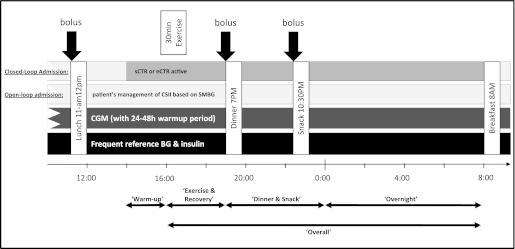
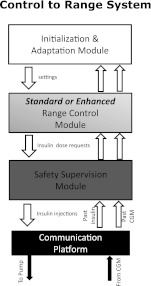
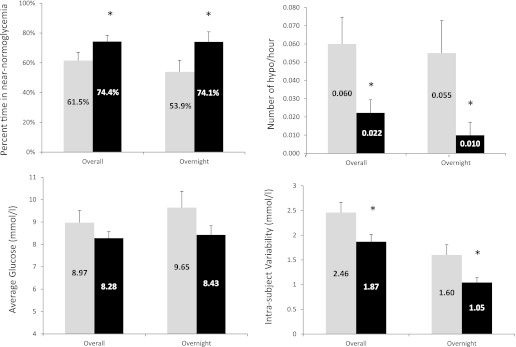
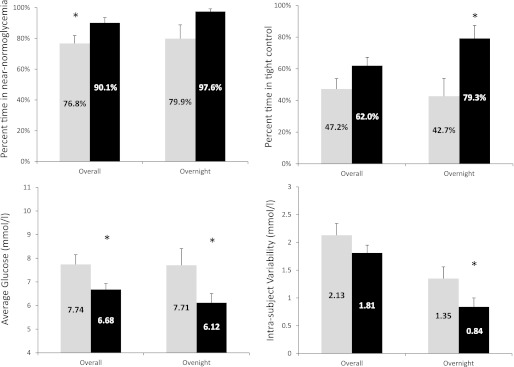
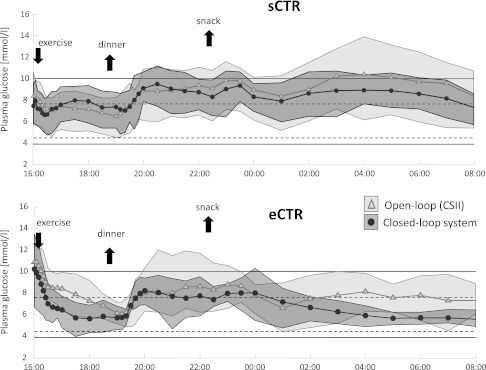
Integrated closed-loop control (CLC), combining continuous glucose monitoring (CGM) with insulin pump (continuous subcutaneous insulin infusion [CSII]), known as artificial pancreas, can help optimize glycemic control in diabetes. We present a fundamental modular concept for CLC design, illustrated by clinical studies involving 11 adolescents and 27 adults at the Universities of Virginia, Padova, and Montpellier. We tested two modular CLC constructs: standard control to range (sCTR), designed to augment pump plus CGM by preventing extreme glucose excursions; and enhanced control to range (eCTR), designed to truly optimize control within near normoglycemia of 3.9-10 mmol/L. The CLC system was fully integrated using automated data transfer CGM→algorithm→CSII. All studies used randomized crossover design comparing CSII versus CLC during identical 22-h hospitalizations including meals, overnight rest, and 30-min exercise. sCTR increased significantly the time in near normoglycemia from 61 to 74%, simultaneously reducing hypoglycemia 2.7-fold. eCTR improved mean blood glucose from 7.73 to 6.68 mmol/L without increasing hypoglycemia, achieved 97% in near normoglycemia and 77% in tight glycemic control, and reduced variability overnight. In conclusion, sCTR and eCTR represent sequential steps toward automated CLC, preventing extremes (sCTR) and further optimizing control (eCTR). This approach inspires compelling new concepts: modular assembly, sequential deployment, testing, and clinical acceptance of custom-built CLC systems tailored to individual patient needs.
Overview
The claims and statistics of this paper haven’t been checked yet.
Free: it reads the open-access text and checks the first 5 claims that cite a source we can check. Create a free account to check every claim.
Integrity signals
Registry
Cites
Statistics
Figures
Verification
Claims the paper makes
The claims and statistics of this paper haven’t been checked yet.
Free: it reads the open-access text and checks the first 5 claims that cite a source we can check. Create a free account to check every claim.
Claims other papers make about this one
Each is checked against this paper’s own text: does it say what the citing paper says it does?
The cited source says what the claim attributes to it.
In the citing paper
“The integrated closed-loop systems tested so far have reported favourable results;97”
From Type 1 diabetes (2014) · cites this paper as [97]
Self-check
Percentages, sums and reported differences re-computed from the paper’s own numbers.
The self-check needs the paper’s full text.
Citations
Cites
(1993) · New England Journal of Medicine · doi:10.1056/nejm199309303291401 · Cited by 24,667
Turner, R. C., Fox, C., Matthews, McElroy, H. H., Cull, C. A., Holman, R. R., Neil, P., Hadden, D. R., Wright, D., Manley, E., et al. (1998) · The Lancet · Cited by 8,419
In Silico Preclinical Trials: A Proof of Concept in Closed-Loop Control of Type 1 Diabetes
Kovatchev, B. P., Breton, M., Dalla Man, C., & Cobelli, C. (2009) · Journal of Diabetes Science and Technology · doi:10.1177/193229680900300106 · Cited by 760 · cited 1×
“The control algorithms used by studies 1 and 2—sCTR and eCTR, respectively—were designed and tested in silico using computer simulation (26), and each algorithm had a different focus: in study 1, the”
MethodSelf-citationArtificial Pancreas: Past, Present, Future
Cobelli, C., Renard, E., & Kovatchev, B. (2011) · Diabetes · doi:10.2337/db11-0654 · Cited by 600 · cited 3×
“The rationale behind MPC was presented in detail in a recent review (7).”
BackgroundMethodSelf-citationAbnormal patterns of insulin secretion in non-insulin-dependent diabetes mellitus.
Polonsky, K. S., Given, B. D., Hirsch, L. J., Tillil, H., Shapiro, E. T., Beebe, C., Frank, B. H., Galloway, J. A., & Van Cauter, E. (1988) · New England Journal of Medicine · doi:10.1056/nejm198805123181903 · Cited by 567 · cited 1×
“Diabetes 61:2230–2237, 2012 The maintenance of close-to-normal blood glucose (BG) levels slows the onset and progression of long-term microvascular complications in patients with type 1 diabetes (1); therefore, the ultimate therapeutic goal of type 1 diabetes is to restore near normoglycemia (2).”
BackgroundWeinzimer, S. A., Steil, G. M., Swan, K. L., Dziura, J., Kurtz, N., & Tamborlane, W. V. (2008) · Diabetes Care · doi:10.2337/dc07-1967 · Cited by 567
Diabetes: Models, Signals, and Control
Cobelli, C., Dalla Man, C., Sparacino, G., Magni, L., De Nicolao, G., & Kovatchev, B. P. (2009) · IEEE Reviews in Biomedical Engineering · doi:10.1109/rbme.2009.2036073 · Cited by 511
Self-citationFeasibility of Automating Insulin Delivery for the Treatment of Type 1 Diabetes
Steil, G. M., Rebrin, K., Darwin, C., Hariri, F., & Saad, M. F. (2006) · Diabetes · doi:10.2337/db06-0419 · Cited by 473 · cited 1×
“The development of both CGM and portable devices for continuous subcutaneous insulin infusion (CSII) incited the implementation of subcutaneous CLC systems (13).”
BackgroundHovorka, R., Allen, J. M., Elleri, D., Chassin, L. J., Harris, J., Xing, D., Kollman, C., Hovorka, T., Larsen, A. M. F., Nodale, M., et al. (2010) · The Lancet · doi:10.1016/s0140-6736(09)61998-x · Cited by 450 · cited 2×
“Previous studies report significant increase in time within target overnight (15) and reduction in glucose variability as shown by a recent across-trial meta-analysis (35).”
Background
Research works printed but not linked: 1
- Renard EM Farret A Place J Cobelli C Kovatchev BP Breton MD Closed-loop insulin delivery using subcutaneous infusion and glucose sensing, and equipped with a dedicated safety supervision algorithm, improves safety of glucose control in type 1 diabetes. Diabetologia 2010; 53(Suppl. 1): S25
Cited by
Items 201–300 of 354
Use of Automated Bolus Calculators for Diabetes Management
Schwartz, F., & Marling, C. R. (2010) · touchREVIEWS in Endocrinology · doi:10.17925/ee.2013.09.02.92 · Cited by 11
Model predictive control with event-triggered communication for an embedded artificial pancreas
Chakrabarty, A., Zavitsanou, S., Doyle, F. J., & Dassau, E. (2017) · IEEE Conference on Control Technology and Applications (CCTA) · doi:10.1109/ccta.2017.8062517 · Cited by 11
Self-citationRecent Advances in Insulin Therapy for Diabetes
Ahmad, A. (2014) · International Journal of Diabetes and Clinical Research · doi:10.23937/2377-3634/1410006 · Cited by 11
Hajizadeh, I., Turksoy, K., Cengiz, E., & Çınar, A. (2017) · Proceedings of the ... American Control Conference/Proceedings of the American Control Conference · doi:10.23919/acc.2017.7963761 · Cited by 11
“Closed-loop control of blood glucose concentration, known as artificial pancreas (AP) system, is an alternative treatment for people with type 1 diabetes (T1D) for automatic regulating blood glucose levels [1-7].”
BackgroundMetabolic Models, in Silico Trials, and Algorithms
Çınar, A., Basu, A., Bequette, B. W., Breton, M. D., Buckingham, B. A., Cengiz, E., Cobelli, C., Dassau, E., Doyle, F. J., Fabris, C., et al. (2025) · Journal of Diabetes Science and Technology · doi:10.1177/19322968251338300 · Cited by 10
Self-citationRoquemen-Echeverri, V., Kushner, T., Jacobs, P. G., & MOSQUERA-LOPEZ, C. M. (2026) · Neural Computing and Applications · doi:10.1007/s00521-026-12018-x · Cited by 10
Radziuk, J. (2012) · Diabetes · doi:10.2337/db12-0647 · Cited by 10
Hypoglycemia Prevention Using Low Glucose Suspend Systems
Bequette, B. W. (2014) · Lecture notes in bioengineering · doi:10.1007/978-3-642-54464-4_3 · Cited by 10
Real-Time Insulin Bolusing for Unannounced Meals Using CGM Measurements
Turksoy, K., & Çınar, A. (2015) · IFAC-PapersOnLine · doi:10.1016/j.ifacol.2015.10.142 · Cited by 10
Physiological models for artificial pancreas development
VISENTIN, R., Schiavon, M., Basu, R., Basu, A., Man, C. D., & Cobelli, C. (2019) · Elsevier eBooks · doi:10.1016/b978-0-12-815655-1.00015-6 · Cited by 11
Self-citationEvaluating the Performance of a Novel Embedded Closed-loop System
Leelarathna, L., Thabit, H., Allen, J. M., Nodale, M., Wilinska, M. E., Powell, K., Lane, S., Evans, M. L., & Hovorka, R. (2014) · Journal of Diabetes Science and Technology · doi:10.1177/1932296813519882 · Cited by 10
Castillo, A., Pryor, E. C., Fathi, A. E., Kovatchev, B. P., & Breton, M. D. (2025) · IEEE Transactions on Cybernetics · doi:10.1109/tcyb.2025.3562032 · Cited by 9
Self-citationPerformance Assessment of Model-Based Artificial Pancreas Control Systems
Feng, J., Turksoy, K., & Çınar, A. (2015) · Lecture notes in bioengineering · doi:10.1007/978-3-319-25913-0_13 · Cited by 9
“Significant progress has been made in AP systems [2, 4, 7, 17, 25, 30].”
BackgroundSensitivity of the Predictive Hypoglycemia Minimizer System to the Algorithm Aggressiveness Factor
Finan, D. A., Dassau, E., Breton, M. D., Patek, S. D., McCann, T. W., Kovatchev, B. P., Doyle, F. J., Levy, B. L., & Venugopalan, R. (2015) · Journal of Diabetes Science and Technology · doi:10.1177/1932296815593292 · Cited by 9
Self-citationGarcia‐Tirado, J., Colmegna, P. H., Corbett, J. P., Özaslan, B., & Breton, M. D. (2019) · Proceedings of the ... American Control Conference/Proceedings of the American Control Conference · doi:10.23919/acc.2019.8814728 · Cited by 9
Self-citationIntroduction to biomechatronics/biomedical engineering
Garza-Ulloa, J. (2018) · Elsevier eBooks · doi:10.1016/b978-0-12-812594-6.00001-9 · Cited by 8
Controlling the AP Controller: Controller Performance Assessment and Modification
Hajizadeh, I., Hobbs, N., Samadi, S., Sevil, M., Rashid, M. M., Brandt, R., Askari, M. R., Maloney, Z., & Çınar, A. (2019) · Journal of Diabetes Science and Technology · doi:10.1177/1932296819877217 · Cited by 8
Andreu-Pérez, J., Poon, C., Merrifield, R. D., Wong, S. T. C., & Yang, G. (2015) · Figshare · doi:10.6084/m9.figshare.1504021 · Cited by 8
Mahmoudi, Z., Boiroux, D., Cameron, F. M., Poulsen, N. K., Bequette, B. W., & Jørgensen, J. B. (2018) · IFAC-PapersOnLine · doi:10.1016/j.ifacol.2018.11.648 · Cited by 8
IoT technologies combining glucose control with physiological signal: comparative study
Arbi, K. F., SOULIMANE, O., & Saffih, F. (2020) · doi:10.1109/icee49691.2020.9249843 · Cited by 8
“Smart control Algorithm are demanded to control these devices, leading to integrate the PID (proportional–integral– derivative control) controller in the artificial pancreas [8-9], then a successful control strategy has been introduced widely MPC (Model predictive controller) [10-11] which given better control of the…”
MethodVilla-Tamayo, M. F., Maira, G., Vargas, F. M. L., & Rivadeneira, P. S. (2022) · Frontiers in Endocrinology · doi:10.3389/fendo.2022.796521 · Cited by 8
“A dynamic IOB constraint with estimated insulin action decay curves was first incorporated into the MPC problem by (20) and introduced in the safety module of the strategy proposed in (24).”
MethodWhat would surgeons like from materials scientists?
Grundfest-Broniatowski, S. F. (2013) · Wiley Interdisciplinary Reviews Nanomedicine and Nanobiotechnology · doi:10.1002/wnan.1220 · Cited by 8
Artificial Pancreas: from Control-to-Range to Control-to-Target
Incremona, G. P., Messori, M., Toffanin, C., Cobelli, C., & Magni, L. (2017) · IFAC-PapersOnLine · doi:10.1016/j.ifacol.2017.08.1152 · Cited by 8
“…studies promoted by the Juvenile Diabetes Research Foundation, the European Commission, and the National Institutes of Health [Bequette, 2012; Cobelli et al., 2009; Breton et al., 2012; Doyle et al., 2014; Russell et al., 2014; Del Favero et al., 2015; Thabit et al., 2014; Kropff et al., 2015].”
BackgroundSelf-citationResearch Gaps, Challenges, and Opportunities in Automated Insulin Delivery Systems
Jacobs, P. G., Levy, C. J., Brown, S. A., Riddell, M. C., Çınar, A., Boughton, C. K., Breton, M. D., Dassau, E., Forlenza, G. P., Henderson, R. J., et al. (2025) · Diabetes Technology & Therapeutics · doi:10.1089/dia.2025.0129 · Cited by 7
Self-citationPrediction of Critical Pulmonary Shunts in Infants
Ivanov, R., Weimer, J. E., Allan F. Simpao, M., Rehman, M., & Lee, I. (2016) · IEEE Transactions on Control Systems Technology · doi:10.1109/tcst.2016.2538207 · Cited by 7
Ngo, P. D., Tejedor, M., Tayefi, M., Chomutare, T., & Godtliebsen, F. (2020) · Applied Sciences · doi:10.3390/app10228037 · Cited by 7
Ray, M. K., McMichael, A., Rivera-Santana, M. V., Noel, J., & Hershey, T. G. (2021) · JMIR Diabetes · doi:10.2196/27027 · Cited by 6
Modified control algorithms for patients with type 1 diabetes mellitus undergoing exercise
Liu, S.-W., Huang, H., Lin, C.-H., & Chien, I. (2014) · Journal of the Taiwan Institute of Chemical Engineers · doi:10.1016/j.jtice.2014.06.005 · Cited by 6
Messori, M., Toffanin, C., Favero, S. D., Nicolao, G. D., Cobelli, C., & Magni, L. (2015) · IFAC-PapersOnLine · doi:10.1016/j.ifacol.2015.10.143 · Cited by 6
“(2010), Breton et al. (2012), Luijf et al. (2013), and Zisser et al. (2014)), and outside the hospital (see Leelarathna et al. (2014), Hovorka et al. (2014), Thabit et al. (2014), Kovatchev et al. (2014), Russel et al. (2014), Del Favero et al. (2014), and Del Favero et al. (2015)). Since diabetic patients are charact…”
BackgroundMethodInfluentialSelf-citationA Portable Low-Power Platform for Ambulatory Closed Loop Control of Blood Glucose in Type 1 Diabetes
El-Sharkawy, M., Daniels, J., Pesl, P., Reddy, M., Oliver, N. S., Herrero, P., & Georgiou, P. (2018) · IEEE International Symposium on Circuits and Systems proceedings · doi:10.1109/iscas.2018.8351695 · Cited by 6
Meal Detection for Type 1 Diabetes Using Moving Horizon Estimation
Mahmoudi, Z., Boiroux, D., & Jørgensen, J. B. (2018) · IEEE Conference on Control Technology and Applications (CCTA) · doi:10.1109/ccta.2018.8511537 · Cited by 7
Modeling glucose and subcutaneous insulin dynamics in critical care
Pritchard‐Bell, A., Clermont, G., Knab, T. D., Maalouf, J., Vilkhovoy, M., & Parker, R. S. (2016) · Control Engineering Practice · doi:10.1016/j.conengprac.2016.07.005 · Cited by 6
Continuous Glucose Monitoring and Tight Glycaemic Control in Critically Ill Patients
Signal, M. (2013) · UC Research Repository (University of Canterbury) · doi:10.26021/3559 · Cited by 6
Handling Exercise During Closed Loop Control
Breton, M. D. (2017) · Diabetes Technology & Therapeutics · doi:10.1089/dia.2017.0191 · Cited by 6
Self-citationOngoing Debate About Models for Artificial Pancreas Systems and In Silico Studies
Forlenza, G. P. (2018) · Diabetes Technology & Therapeutics · doi:10.1089/dia.2018.0038 · Cited by 6
Metabolic Models, in Silico Trials, and Algorithms
Çınar, A., Basu, A., Bequette, B. W., Breton, M. D., Buckingham, B. A., Cengiz, E., Cobelli, C., Dassau, E., Doyle, F. J., Fabris, C., et al. (2025) · Diabetes Technology & Therapeutics · doi:10.1089/dia.2025.18800.ac · Cited by 5
Self-citationPlasma Insulin Cognizant Predictive Control for Artificial Pancreas
Rashid, M. M., Hajizadeh, I., & Çınar, A. (2018) · Proceedings of the ... American Control Conference/Proceedings of the American Control Conference · doi:10.23919/acc.2018.8431587 · Cited by 5
Artificial Pancreas: The First 20 Years
Doyle, F. J., & Kovatchev, B. P. (2025) · Journal of Diabetes Science and Technology · doi:10.1177/19322968251330920 · Cited by 5
Self-citationCyber-Physical Platform Development for Multivariable Artificial Pancreas Systems
Lazaro, C., Oruklu, E., & Çınar, A. (2015) · International Journal of Handheld Computing Research · doi:10.4018/ijhcr.2015070101 · Cited by 5
“…with glucose and insulin estimators (Steil et al., 2006; Steil et al., 2011), others use model-based and model-predictive control (Cobelli, Renard & Kovatchev, 2011; Breton et al., 2012; Bequette, 2012) or rule-based fuzzy logic (Mauseth et al., 2013; Phillip et al., 2013) mental “models”.”
MethodUse of intraperitoneal insulin delivery for artificial pancreas
Renard, É., Farret, A., & Place, J. (2019) · Elsevier eBooks · doi:10.1016/b978-0-12-815655-1.00014-4 · Cited by 5
Self-citationEvaluation of Stochastic Adjustment for Glucose Sensor Bias During Closed-Loop Insulin Delivery
Kollman, C., Calhoun, P. M., Lum, J. W., Sauer, W., & Beck, R. W. (2013) · Diabetes Technology & Therapeutics · doi:10.1089/dia.2013.0133 · Cited by 5
Hajizadeh, I., Rashid, M. M., & Çınar, A. (2018) · Annual International Conference of the IEEE Engineering in Medicine and Biology Society (EMBC) · doi:10.1109/embc.2018.8513296 · Cited by 5
Model-Based Sensor-Augmented Pump Therapy
Grosman, B., Voskanyan, G. R., Loutseiko, M., Roy, A., Mehta, A., Kurtz, N., Parikh, N., KAUFMAN, F. R., Mastrototaro, J. J., & Keenan, D. B. (2013) · Journal of Diabetes Science and Technology · doi:10.1177/193229681300700224 · Cited by 5
Guilhem, I., Penet, M., Paillard, A., Carpentier, M., Esvant, A., Lefebvre, M.-A., & Poirier, J.-Y. (2017) · Journal of Diabetes Science and Technology · doi:10.1177/1932296817717503 · Cited by 5
Pharmacological aspects of closed loop insulin delivery for type 1 diabetes
Uduku, C. N., & Oliver, N. S. (2017) · Current Opinion in Pharmacology · doi:10.1016/j.coph.2017.07.006 · Cited by 5
Karsaz, A. (2019) · IET Systems Biology · doi:10.1049/iet-syb.2018.5019 · Cited by 5
Distributed aspects of the artificial pancreas
Patek, S. D., Chen, S., Keith-Hynes, P., & Lee, I. (2013) · Allerton Conference on Communication, Control, and Computing · doi:10.1109/allerton.2013.6736572 · Cited by 5
Self-citationTechnology and Type 1 Diabetes: Closed-Loop Therapies
Ly, T. T., & Buckingham, B. A. (2015) · Current Pediatrics Reports · doi:10.1007/s40124-015-0083-y · Cited by 5
“Control to range strategies [21, 22] is intended to keep the glucose within a predetermined range with ranges being variable at different times of the day.”
BackgroundInfluentialModel-Based Control of Type 1 Diabetes in “Risk Space”
Patek, S. D., Breton, M. D., Vereshchetin, P., Jiang, B., & Kovatchev, B. P. (2014) · IFAC Proceedings Volumes · doi:10.3182/20140824-6-za-1003.02105 · Cited by 4
Self-citationType 1 Diabetes Mellitus and Exercise
Roberts, A. J. C., Forlenza, G. P., Maahs, D. M., & Taplin, C. E. (2017) · Contemporary diabetes · doi:10.1007/978-3-319-61013-9_19 · Cited by 4
Closed-loop control for pediatric Type 1 diabetes mellitus
Wadams, H., Cherñavvsky, D. R., Lteif, A. N., Basu, A., Kovatchev, B. P., Kudva, Y. C., & DeBoer, M. D. (2015) · Diabetes Management · doi:10.2217/dmt.14.48 · Cited by 4
Self-citationDiabetes reversal via gene transfer: building on successes in animal models
Simpson, A. M., Gerace, D., & Martiniello‐Wilks, R. (2015) · Research and Reports in Endocrine Disorders · doi:10.2147/rred.s51644 · Cited by 4
Georga, E. I., Fotiadis, D. I., & Tigas, S. K. (2017) · Elsevier eBooks · doi:10.1016/b978-0-12-804831-3.00001-7 · Cited by 4
Pathophysiology and Management of Type 1 Diabetes
Georga, E. I., Fotiadis, D. I., & Tigas, S. K. (2017) · Elsevier eBooks · doi:10.1016/b978-0-12-804831-3.00002-9 · Cited by 4
Computational tools in the assistance of personalized healthcare
Papathanasiou, M. M., Onel, M., Naşcu, I., & Pistikopoulos, E. N. (2018) · Computer-aided chemical engineering/Computer aided chemical engineering · doi:10.1016/b978-0-444-63964-6.00006-4 · Cited by 4
Meal Size Estimation Using a Personalized Glucose-Insulin Model for Diabetic Patients
O'Brien, R. T., Dilks, A. E., & Lukas, D. J. (2019) · Proceedings of the ... American Control Conference/Proceedings of the American Control Conference · doi:10.23919/acc.2019.8815114 · Cited by 4
“The Virtual Physician project at the United States Naval Academy aims to bridge the gap between the current practice of periodic in-office visits to the endocrinologist and the eventual development of a wearable artifical pancreas [2-3].”
BackgroundNew technologies in insulin delivery
Taylor, M., & Sahota, T. S. (2013) · Practical Diabetes · doi:10.1002/pdi.1736 · Cited by 4
Artificial Pancreas: The First 20 Years*
Doyle, F. J., & Kovatchev, B. P. (2025) · Diabetes Technology & Therapeutics · doi:10.1089/dia.2025.0134 · Cited by 4
Self-citationExisting and Potential Applications of Glucose Prediction Models
Georga, E. I., Fotiadis, D. I., & Tigas, S. K. (2017) · Elsevier eBooks · doi:10.1016/b978-0-12-804831-3.00009-1 · Cited by 3
Early Stages of Automated Insulin Delivery
Zisser, H., Hovorka, R., Basu, A., Battelino, T., Boughton, C. K., Breton, M. D., Buckingham, B. A., Brown, S. A., Cherñavvsky, D. R., Dassau, E., et al. (2025) · Diabetes Technology & Therapeutics · doi:10.1089/dia.2025.18802.hz · Cited by 3
Self-citationGene Therapy for Type 1 Diabetes Moves a Step Closer to Reality
O’Brien, T. (2013) · Diabetes · doi:10.2337/db13-0348 · Cited by 3
Personalization of a Glucose-Insulin Model for Diabetic Patients
O'Brien, R. T., Dilks, A. E., & Lukas, D. J. (2018) · Proceedings of the ... American Control Conference/Proceedings of the American Control Conference · doi:10.23919/acc.2018.8431057 · Cited by 3
“The Virtual Physician project at the United States Naval Academy aims to bridge the gap between the current practice of periodic in-office visits to the endocrinologist and the eventual development of a wearable artifical pancreas [2-3].”
BackgroundTowards the Development of Intelligent Insulin Injection Controller For Diabetic Patients
Adedigba, A. P., Zubair, A. R., Aibinu, A. M., Adeshina, S. A., Okubadejo, O., & Folorunso, T. A. (2019) · International Conference on Electronics, Computer and Computation · doi:10.1109/icecco48375.2019.9043247 · Cited by 3
Predictive Control with Variable Delays in Plasma Insulin Action for Artificial Pancreas
Rashid, M. M., Hajizadeh, I., & Çınar, A. (2018) · IEEE Conference on Decision and Control (CDC) · doi:10.1109/cdc.2018.8619230 · Cited by 3
Manrique-Córdoba, J., Romero-Ante, J. D., Albán, Ó. A. V., Vicente-Samper, J. M., & Sabater-Navarro, J. M. (2020) · Revista Iberoamericana de Automática e Informática Industrial RIAI · doi:10.4995/riai.2019.11161 · Cited by 3
“…(Steil et al., 2011), (Weinzimer et al., 2012), control basado en modelo y predictivo de modelo (MPC) (Bruttomesso et al., 2009), (Clarke et al., 2009), (Breton et al., 2012), control por lógica difusa (Nimri et al., 2012), (Mauseth et al., 2013) y control adaptativo (Turksoy and Cinar, 2014).”
BackgroundArtificial Pancreas: A Review of Fundamentals and Inpatient and Outpatient Studies
Favero, S. D., Bruttomesso, D., & Cobelli, C. (2014) · Frontiers in diabetes · doi:10.1159/000363512 · Cited by 3
Self-citationGondhalekar, R., Dassau, E., & Doyle, F. J. (2014) · IFAC Proceedings Volumes · doi:10.3182/20140824-6-za-1003.01085 · Cited by 3
Self-citationA model-based clinically-relevant chemotherapy scheduling algorithm for anticancer agents
Ho, T. (2014) · D-Scholarship@Pitt (University of Pittsburgh) · Cited by 3
Methodology for Developing a Glucose Prediction Model
Georga, E. I., Fotiadis, D. I., & Tigas, S. K. (2017) · Elsevier eBooks · doi:10.1016/b978-0-12-804831-3.00003-0 · Cited by 3
External artificial pancreas for type 1 diabetes: modeling and control
Haidar, A. (2013) · eScholarship@McGill (McGill) · doi:10.82308/36968 · Cited by 3
Sawyer, A., Forlenza, G. P., & Wadwa, R. P. (2025) · Expert Review of Medical Devices · doi:10.1080/17434440.2025.2585061 · Cited by 2
Zhang, C., & Ma, Y. (2026) · Computer Methods and Programs in Biomedicine · doi:10.1016/j.cmpb.2026.109335 · Cited by 2
Mohammadzadeh, A., & Alattas, K. A. (2025) · Biomedical Signal Processing and Control · doi:10.1016/j.bspc.2024.107444 · Cited by 2
Nonlinear identification of glucose absorption related to Diabetes Mellitus
Eigner, G., Koppany, K., Pausits, P., & Kovács, L. (2017) · IEEE International Conference on Intelligent Engineering Systems (INES) · doi:10.1109/ines.2017.8118567 · Cited by 2
Early Stages of Automated Insulin Delivery
Zisser, H., Hovorka, R., Basu, A., Battelino, T., Boughton, C. K., Breton, M. D., Buckingham, B. A., Brown, S. A., Cherñavvsky, D. R., Dassau, E., et al. (2025) · Journal of Diabetes Science and Technology · doi:10.1177/19322968251335685 · Cited by 2
Self-citationMathematical Modeling in Systems Medicine: New Paradigms for Glucose Control in Critical Care
Pritchard‐Bell, A. (2016) · D-Scholarship@Pitt (University of Pittsburgh) · Cited by 2
Embedded implementation of modular closed-loop control of diabetes and in silico validation
Gentili, M., Caltabiano, D., Sannino, R., Toffanin, C., Palma, F. D., Magni, L., & Lane, S. (2013) · IEEE International Conference on e-Health Networking, Applications and Services (Healthcom) · doi:10.1109/healthcom.2013.6720730 · Cited by 2
“As demonstrated in [12], [13], [14], [15] and [16] a Model Predictive Control (MPC) strategy is a very promising control technique for the development of an Artificial Pancreas.”
BackgroundSelf-citationEstablishing a good pump clinic: successes and challenges
Bratina, N., & Battelino, T. (2013) · Diabetes Management · doi:10.2217/dmt.13.1 · Cited by 2
Multivariable AP with adaptive control
Hajizadeh, I., Rashid, M. M., Samadi, S., Sevil, M., Hobbs, N., Brandt, R., & Çınar, A. (2019) · Elsevier eBooks · doi:10.1016/b978-0-12-815655-1.00012-0 · Cited by 2
Validación clínica inicial de un sistema de páncreas artificial con controlador basado en reglas
Capel, I., & de Medicina, U. A. D. B. D. (2017) · Tesis Doctorals en Xarxa (Consorci de Serveis Universitaris de Catalunya) · Cited by 2
Analysis and boundary control of subcutaneous insulin kinetics PDE model for type one diabetes
Aguilar, L. A. (2026) · Communications in Nonlinear Science and Numerical Simulation · doi:10.1016/j.cnsns.2026.109722 · Cited by 1
Prince, S., Walvisch, J., Baum, M., Hai, T., Pacaud, D., Savulescu, J., & Cameron, F. J. (2026) · AJOB Neuroscience · doi:10.1080/21507740.2026.2686620 · Cited by 1
Diabetes and Driving: How Predictive Technologies Will Alter Ethical and Legal Responsibilities
Prince, S., Walvisch, J., Baum, M. L., Hai, T., Pacaud, D., Savulescu, J., & Cameron, F. J. (2026) · Journal of Diabetes Science and Technology · doi:10.1177/19322968261468763 · Cited by 1
Insulinothérapie en boucle fermée : vers le pancréas artificiel ambulatoire
Renard, É., Place, J., Pelletier, M.-É., & Farret, A. (2012) · Médecine des Maladies Métaboliques · doi:10.1016/s1957-2557(12)70468-6 · Cited by 1
Self-citationBloomgarden, Z. T. (2015) · Canadian Journal of Diabetes · doi:10.1016/j.jcjd.2015.02.001 · Cited by 1
Research Update—Closed Loop/Artificial Pancreas
Ilkowitz, J. T., & Ramchandani, N. (2016) · US Endocrinology · doi:10.17925/use.2016.12.01.31 · Cited by 1
“All findings were non-significant because the study was not powered to find significance, but the results look promising.(19)”
ResultDesigning of a Low-Cost Optical Density Meter for Medical Applications
Sharma, A., Patnaik, P. K., Subhadarshini, S., Nayak, S. K., Ray, S. S., Tibarewala, D. N., & Pal, K. (2017) · Energy, environment, and sustainability · doi:10.1007/978-981-10-7751-7_12 · Cited by 1
Development of physiological metabolic models in diabetes based on data mining techniques
Georga, E. I. (2019) · University of Ioannina · doi:10.26268/heal.uoi.1420 · Cited by 1
“threshold-based or predictive low-glucose insulin suspension [56, 57].”
BackgroundGlucose - Responsive Smart Insulin
Krishnamurthy, A., & Goswami, R. (2018) · Annals of the National Academy of Medical Sciences (India) · doi:10.1055/s-0040-1712788 · Cited by 1
“Therefore, the current algorithms need fine tuning to provide insulin dosages appropriate for prevailing blood glucose in relation to the interstitial blood glucose (13-16).”
L'insulinothérapie au xxie siècle : une symphonie de plus en plus harmonieuse
Benhamou, P., Hanaire, H. P., & Renard, É. (2021) · Médecine des Maladies Métaboliques · doi:10.1016/s1957-2557(21)00179-6 · Cited by 1
Automated Glucose Control: A Review
Bhat, O., Khan, D. A., & Yousuf, R. (2021) · International Journal of E-Health and Medical Communications · doi:10.4018/ijehmc.20211101.oa12 · Cited by 1
Targeting Signal 1 of T cell Activation to Restore Self Tolerance in Type 1 Diabetes
Schroder, P. M. (2014) · OhioLink ETD Center (Ohio Library and Information Network) · Cited by 1
Use of Automated Bolus Calculators for Diabetes Management
Schwartz, F., & Marling, C. R. (2013) · US Endocrinology · doi:10.17925/use.2013.09.02.124 · Cited by 1
Benefícios do exercício físico aos portadores de diabetes
Dantas, J. L. D. S., Rodrigues, L. P., & Azeredo, J. P. S. (2022) · Research Society and Development · doi:10.33448/rsd-v11i8.30655 · Cited by 1
System identification for T1D via artificial intelligence algorithms: Evolutionary or swarm
Flores‐Gutiérrez, C., Quiroz, G., Rentería-Vidales, O., Torres‐Treviño, L., Ruiz-Velazquez, E., & Femat, R. (2023) · Biomedical Signal Processing and Control · doi:10.1016/j.bspc.2023.105077 · Cited by 1
Esercizio fisico nel diabete mellito di tipo 1
Haxhi, J., & Bellini, A. (2024) · L Endocrinologo · doi:10.1007/s40619-024-01488-7 · Cited by 1
Dosing Algorithms for Insulin Pumps
Çınar, A. (2025) · Diabetes Spectrum · doi:10.2337/dsi25-0004 · Cited by 1
Blauw, H., & DeVries, J. H. (2013) · Diabetes Technology & Therapeutics · doi:10.1089/dia.2013.0196 · Cited by 1
Glycaemic control in pregnancies complicated by type 1 diabetes
Stewart, Z. A. (2018) · Apollo (University of Cambridge) · doi:10.17863/cam.23269 · Cited by 1
Tissue Engineering and Biosensing, Towards Cure and Control of Diabetes
Najdahmadi, A. (2018) · eScholarship (California Digital Library) · doi:10.13140/rg.2.2.23316.73605 · Cited by 1
Metadata
- Authors
- Breton, M., Farret, A., Bruttomesso, D., Anderson, S., Magni, L., Patek, S., Dalla Man, C., Place, J., Demartini, S., Del Favero, S., Toffanin, C., Hughes-Karvetski, C., Dassau, E., Zisser, H., Doyle, F. J., De Nicolao, G., Avogaro, A., Cobelli, C., Renard, E., Kovatchev, B., & on behalf of The International Artificial Pancreas (iAP) Study Group
- Affiliations
- University of Virginia (US)
- Centre National de la Recherche Scientifique (FR)
- University of Padua (IT)
- University of Pavia (IT)
- Department of Information Engineering, University of Padova, Padova, Italy
- University Hospital of Montpellier, Department of Endocrinology, Diabetes, and Nutrition, INSERM Clinical Investigation Center 1001, Institute of Functional Genomics, CNRS UMR5203, INSERM U661, University of Montpellier, Montpellier, France
- University of Virginia, Center for Diabetes Technology, Charlottesville, Virginia
- University of California, Santa Barbara (US)
- Department of Computer Engineering and System Sciences, University of Pavia, Pavia, Italy
- Corresponding author
- Breton, Marc
- ORCID
- Venue
- Diabetes
- Publisher
- American Diabetes Association
- Published
- 2012-08-17
- Volume
- 61
- Issue
- 9
- Pages
- 2230-2237
- ISSN
- 0012-1797 (ISSN-L)
- 1939-327X
- PMC
- PMC3425406
- OpenAlex
- W2145097544
- Cited by
- 315
- References
- 34
- Citations by year
- 2026: 8 · 2025: 13 · 2024: 4 · 2023: 9 · 2022: 6 · 2021: 15 · 2020: 7 · 2019: 23 · 2018: 28 · 2017: 33 · 2016: 27 · 2015: 36 · 2014: 52 · 2013: 45 · 2012: 7
- FWCI
- 35.94
- Type
- journal article
- Language
- en
- Open access
- hybrid
- doi.org
- Licence
- Locations
- Diabetes (publishedVersion, cc-by-nc-nd)
- Europe PMC (PubMed Central) (publishedVersion, cc-by-nc-nd)
- PubMed Central (publishedVersion, cc-by-nc-nd)
- PubMed (publishedVersion)
- Padua Research Archive (University of Padova) (submittedVersion)
- Funders
- National Institute of Diabetes and Digestive and Kidney Diseases (R21DK085641, 5-R21-DK-85641)
- Topics
- Health Sciences › Medicine › Endocrinology, Diabetes and Metabolism › Diabetes Management and Research
- Health Sciences › Medicine › Endocrinology, Diabetes and Metabolism › Diabetes Management and Education
- Health Sciences › Medicine › Endocrinology, Diabetes and Metabolism › Pancreatic function and diabetes
- Keywords
- artificial pancreas, feedback control, type 1 diabetes, continuous glucose monitoring, insulin pump therapy, glycemic control, hypoglycemia prevention, time in range, automated data transfer, adolescents and adults
- MeSH terms
- Adolescent, Adult, Algorithms, Automation, Blood Glucose, Computer Simulation, Diabetes Mellitus, Type 1, Humans, Hypoglycemic Agents, Insulin Infusion Systems, Middle Aged, Cross-Over Studies, Pancreas, Artificial
About these checks
Registry, retraction, Cites and statistics results are computed, not judged, with one exception: a printed reference that no index lists is read once by a model before it counts as a citation error. Claims are extracted by a model and kept only when their quote appears verbatim in the text; each cited source is then checked, with a model’s help, for whether it says what the claim relies on. Those verdicts can be wrong — read the claim’s quote and the cited source before relying on one.
Statistics and arithmetic are recomputed, not judged.
Confidence bands are shown only for fields calibrated on our annotated test set. None is calibrated yet, so no band is shown.
What counts as a claim ›How we measure confidence ›How we check this ›
Are you an author, or do you see a problem with this page? Request a review
Data sources
Bibliographic data: Semantic Scholar, OpenAlex, Crossref.
Contains information from the Semantic Scholar Academic Graph Datasets, made available under the ODC Attribution License (ODC-BY 1.0).
Semantic Scholar’s data is described in: Kinney, R., et al. (2023). The Semantic Scholar Open Data Platform. arXiv:2301.10140.
